
The changes range from fluted adhesive film on glass-front doors, which peels off, to a checkerboard tile floor, and the surface you can actually change decides where to start.
Give the room only one loud piece, whether the floor, glossy black tile or black cabinets, because a second makes the scheme look crowded, not intentional.
1. A Patterned Black-and-White Floor
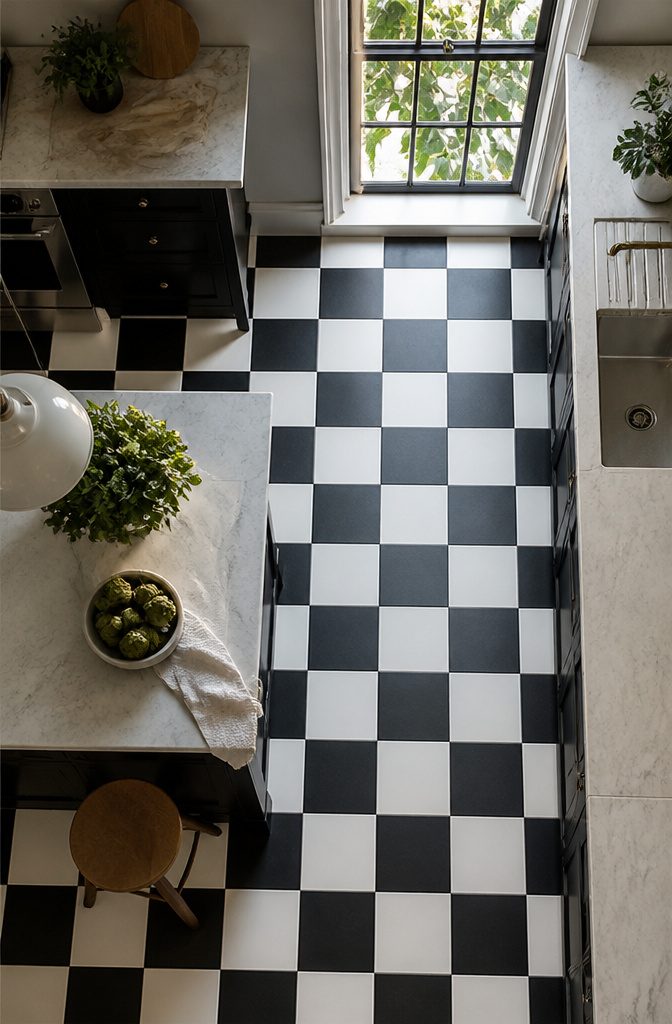
A checkerboard floor in crisp black and white tile sets a bold, classic tone before anyone looks at the cabinets.
It reads as timeless, and it can carry the room by itself. That lets the cabinets and walls stay plain, and simple cabinet fronts keep the pattern from tipping into retro.
A loud floor has a cost: everything around it has to be quieter. Skip a patterned backsplash, ornate hardware, and heavily veined countertops in the same room, or the pattern stops looking intentional and starts looking crowded.
Pick one statement piece for the kitchen, make it the floor, and keep the other surfaces clean.
Recommended Products
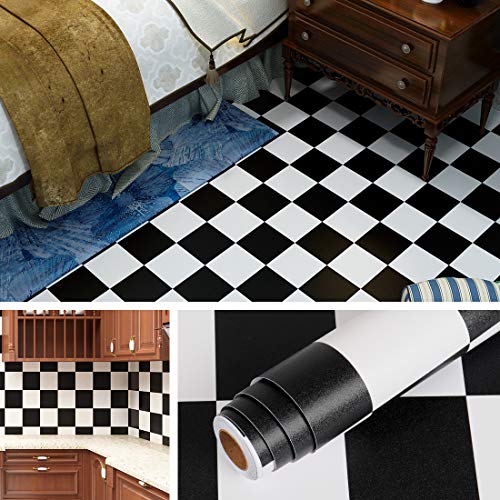
🏠Details: 15.8x78.8 Inch,3.8x3.8 inch per checkered, total 8.65 sq.ft (40cmX2m). Self adhesive. Made of durable vinyl. Checkered black and white contact paper peel and stick waterproof. Oil proof. Fully removable.

【Versatile Usage】: Black&White marble peel-and-stick flooring stickers provide a wide range of design options, effortlessly complementing various interior styles such as modern luxury, minimalist, and art deco. Adhesive and peel-and-stick floor tiles are ideal for refreshing indoor floors and surfaces, including laundry rooms, living rooms, offices, furniture, cabinets, RVs floors and more.

Peel and Stick Floor Tiles 12x12 for Instant Floor Transformation: No grout, glue, adhesive, or special tools required. Simply clean the surface, peel off the backing, and press each self adhesive stick on tile firmly into place for a fast and durable floor upgrade in under an hour.
2. Dark Cabinets, White Walls
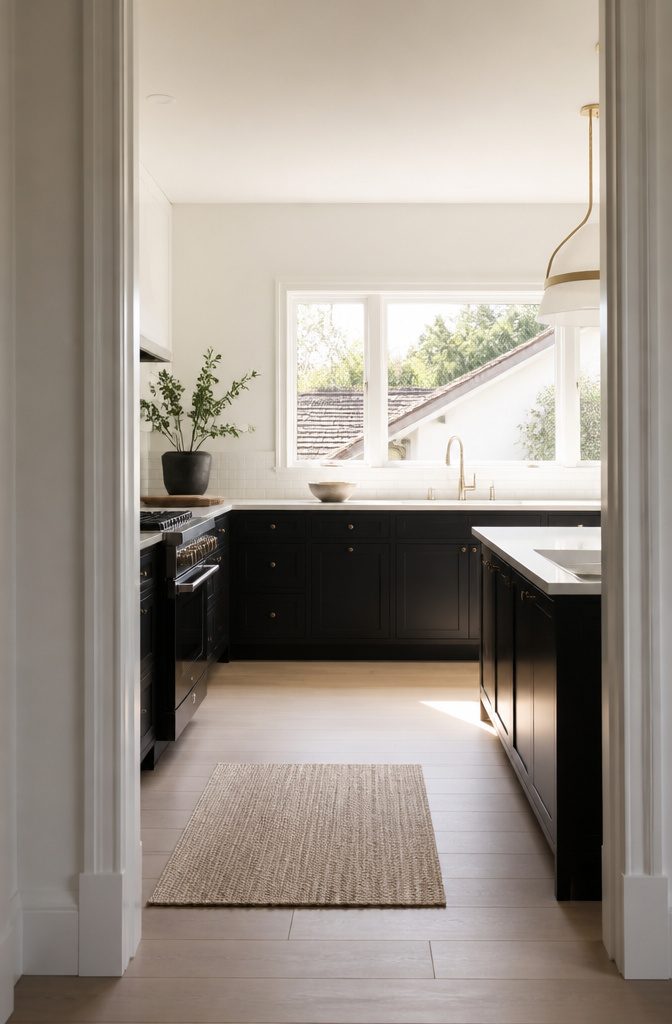
Contrast is the main tool in a black and white palette, and dark cabinets against white walls puts it to work immediately.
The dark cabinetry adds depth and drama, while the white surfaces keep the room grounded and functional. White walls are what stop dark cabinets from closing the room in, because they reflect light and give the eye somewhere to rest.
Keep the white on the walls, backsplash, and counters, and let the cabinets carry the dark. If you paint the walls dark as well, the balance is gone and the kitchen starts to feel like a cave.
The result is structured and a little moody, and it makes a statement without needing much else in the room.
Recommended Products

Minimalist Design: The simple design is timeless and won't cause aesthetic fatigue, as simplicity often exudes a more sophisticated charm

✿ 1.4 Times Coverage Area: 10 sheets thickened self-adhesive tiles, 12" X 12" each (The small piece is 3.3" X 1.8"), which covers 40% more area than 10"x10" tile

Detial Parameters: Price for Box, 32 pieces/box, 4 sq.ft/box. Pieces Size: 3 x 6 x 0.31 Inch (75 x 150 x 8mm)
3. Countertops That Set the Contrast
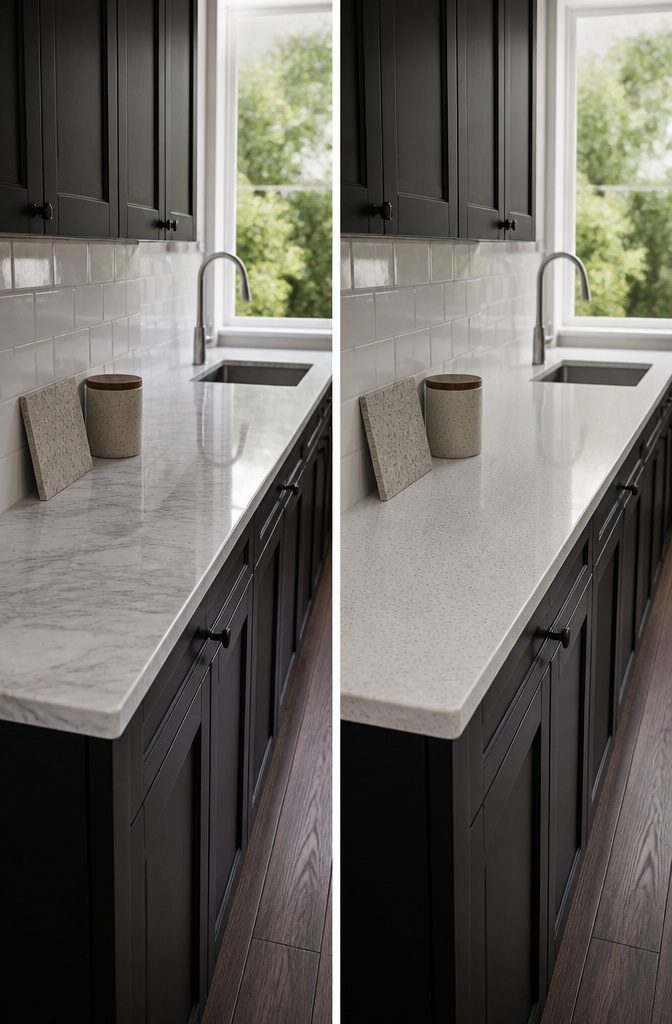
Gray and white marble against pure black cabinets is the pairing to copy, because the veining breaks up the flat black.
If you worry that all-black cabinets will shrink the room, a glossy white countertop with a light subway tile backsplash bounces light around and keeps the space open.
Reverse it for a different look. Black countertops on white cabinets and white walls add drama without darkening the room, since the white still does most of the brightening.
Granite and quartz both come in pale and dark versions, so either can handle the job in both layouts.
Choose the countertop first, then match the cabinet color to it. Countertops are the hardest piece to swap later.
Recommended Products

【Ample Storage Space】This kitchen storage cabinet features a spacious drawer and a two-door cabinet with an adjustable shelf, providing ample storage space for coffee beans, spices, and various sundries. The wide tabletop offers easy access for displaying a microwave, toaster, and coffee makers.

COMPATIBILITY — Trash cabinet foot pull allows you to open the cabinet door hands-free and works perfectly as a cabinet foot pull for trash drawer setups. Compatible with most cabinets, it’s ideal for (nearly) full-overlay designs where door fronts are flush or nearly flush with the frame. NOT for use on recessed/inset cabinets — please check your cabinet type before purchasing

COMPATIBILITY - Suitable for cabinets where the bottom of the door is flush or nearly flush with the cabinet frame, and the bottom of the door is at least 3.54 inches (90mm) above the floor; not suitable for recessed or inset cabinets (see example pictures for details)
4. Tile as the Focal Point
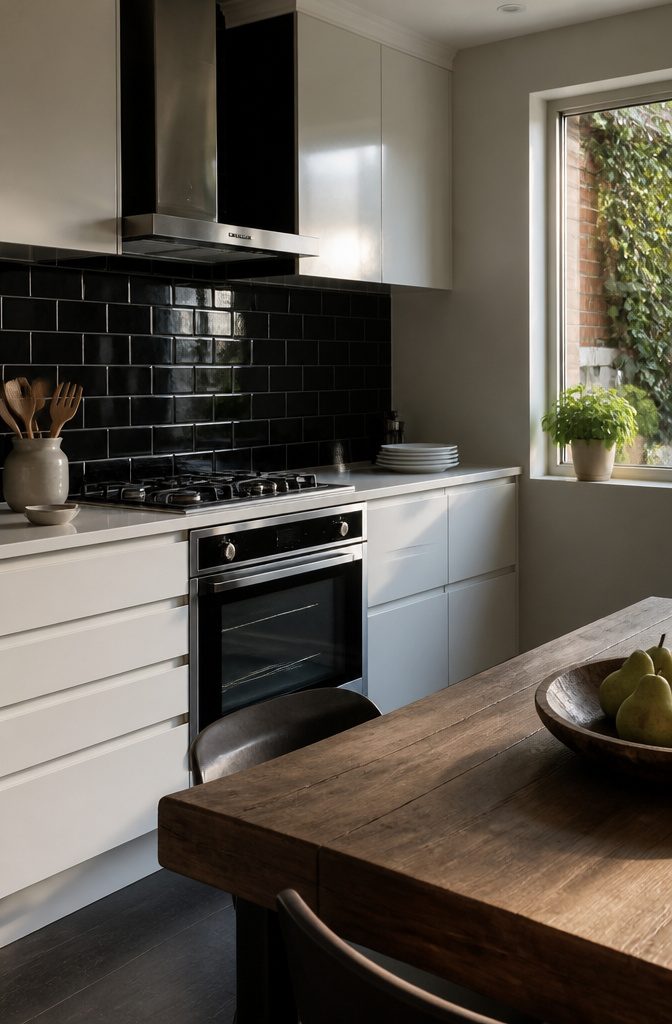
White cabinets leave room for one loud surface, and glossy black metro tile is the cleanest way to add it.
The shine catches light, and the rectangular shape keeps the black from feeling heavy. If you prefer pattern, black-and-white tile gives a plain monochrome kitchen character, and it looks striking beside dark wooden cabinets.
Limit the tile to the backsplash or a single wall.
Patterned tile on every surface competes with itself, while one run behind the range reads as a deliberate focal point. With all-black cabinets, switch to a light subway tile and glossy white countertops so the room stays open.
Recommended Products

𝐏𝐫𝐞𝐦𝐢𝐮𝐦 𝐌𝐚𝐭𝐞𝐫𝐢𝐚𝐥𝐬:Made of PVC composite laminate, anti-scratch, high impact, color fadeless, more durable and stronger than other plastic self-adhesive tiles. Glossy/Poished surface finishing with realistic ceramic look, high waterproof and stain-resistant performance, protect the walls from splash and iol.

𝐏𝐫𝐞𝐦𝐢𝐮𝐦 𝐏𝐞𝐫𝐟𝐨𝐫𝐦𝐚𝐧𝐜𝐞: Our peel and stick wall tiles are designed with high-performance PVC polymer material, offering waterproof, heat-resistant, stain-resistant, anti-scratch, and fadeless properties. Rest assured, the super-strong adhesive ensures the tiles stay securely in place!

10-Piece Set with Coverage Guide: each piece measures 2 x 6 inches; 10 tiles cover approximately 0.83 sq ft, ideal for estimating trim needed per linear foot of exposed edge; Bull nose trim seals and protects bare tile edges from chipping, water penetration, and daily impact, delivering a clean professional finish without grout lines or raw cuts
5. Warm Wood Against Monochrome
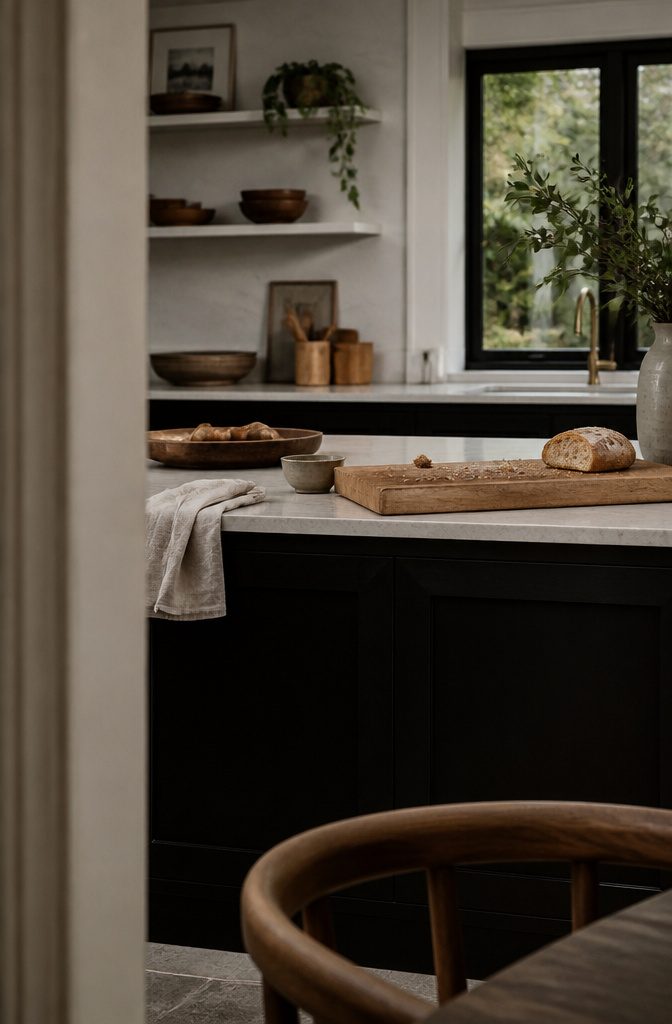
Black and white alone reads stark, and wood is the fastest way to change the mood.
A light wooden countertop, a wood floor, or open shelves in a warm tone add grain and color variation that painted cabinets and tile can’t. Crisp black-and-white cabinetry stays minimal without turning cold.
Renters can get most of this without touching a surface. A wooden chopping board left out on the counter, plus a wood tray or bowl, adds the same warmth.
Against dark cabinets, keep the wood light so the contrast stays calm. Wood, stone, and a few soft fabrics together make the room feel lived in instead of staged.
Recommended Products

➤ REMOVABLE WALLPAPER: Easy to remove and reposition, no sticky residue left, it is absolutely renter friendly wallpaper. 𝗜𝗳 𝘆𝗼𝘂 𝘄𝗮𝗻𝘁 𝘁𝗼 𝗿𝗲𝗺𝗼𝘃𝗲, 𝗵𝗲𝗮𝘁 𝗶𝘁 𝘄𝗶𝘁𝗵 𝗮 𝗵𝗮𝗶𝗿 𝗱𝗿𝘆𝗲𝗿 𝘁𝗼 𝘀𝗼𝗳𝘁𝗲𝗻 𝘁𝗵𝗲 𝗮𝗱𝗵𝗲𝘀𝗶𝘃𝗲, 𝘁𝗵𝗲𝗻 𝗴𝗲𝗻𝘁𝗹𝘆 𝗽𝘂𝗹𝗹 𝗶𝘁 𝗼𝗳𝗳.

📸𝐌𝐚𝐫𝐛𝐥𝐞 𝐂𝐨𝐧𝐭𝐚𝐜𝐭 𝐏𝐚𝐩𝐞𝐫: Peel and stick marble contact paper, self adhesive, removable, bubble free, repositionable. Not sticky residue left, not damage the surface.

PEEL AND STICK WALLPAPER for countertops is a type of self-adhesive wallpaper that is specially designed to be applied on countertops. It is waterproof and easy to apply, as it does not require any extra glue or adhesive. Instead, the wallpaper has a pre-applied adhesive backing that allows it to stick securely to the countertop surface.
6. Shaker and Farmhouse Style
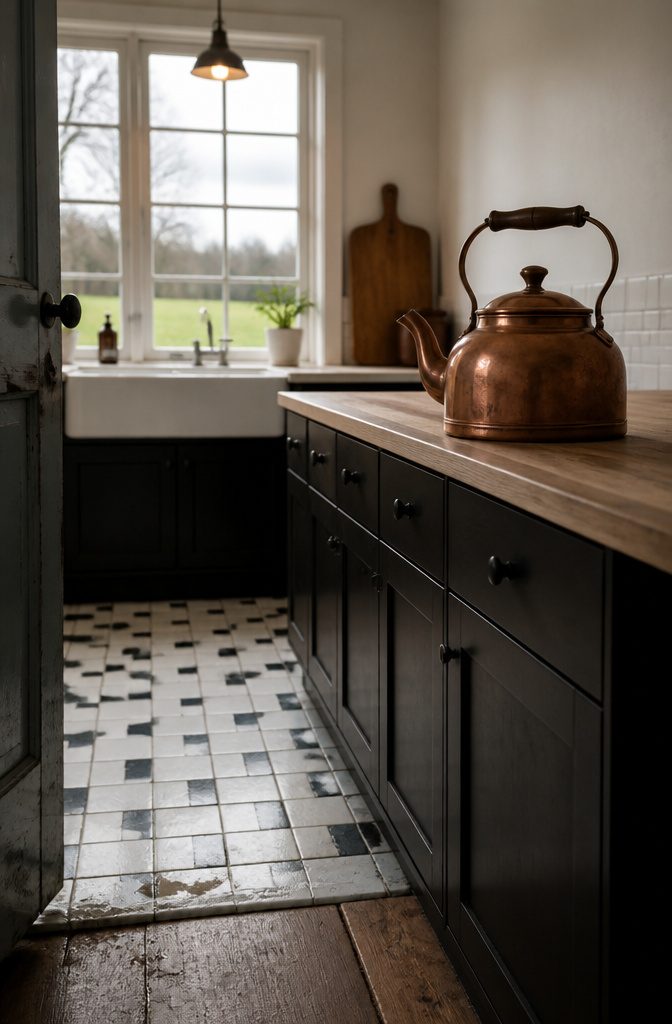
Shaker doors give a black-and-white kitchen a soft, farmhouse feel, and they suit older and cottage-style homes better than flat slab fronts. Black and white tiled flooring adds a timeless layer.
It is a busy surface, so keep the walls plain. Pure black and white can read stark in a farmhouse room, so add light wood countertops to break up the contrast.
Keep the rustic touches to a few pieces: a wooden chopping board, copper teapots, a metal light fixture. Brass hardware warms black or charcoal doors, and parquet flooring does the same underfoot.
Recommended Products

Features a sophisticated "checkerboard" design by alternating colors of each 12"x12" piece.

EASY PEEL-AND-STICK – NO GLUE, NO TOOLS Simply peel, align, and press onto any clean, smooth surface. No grout, no messy glue, no special tools – just a quick weekend project anyone can handle.

COMPLETE FLOOR KIT: Interlocking 12 x 12 x 0.5 in. diamond-plate tiles in a checkered - black/white layout for a finished, showroom-quality garage floor
7. A Modern Edge for Traditional Cabinets
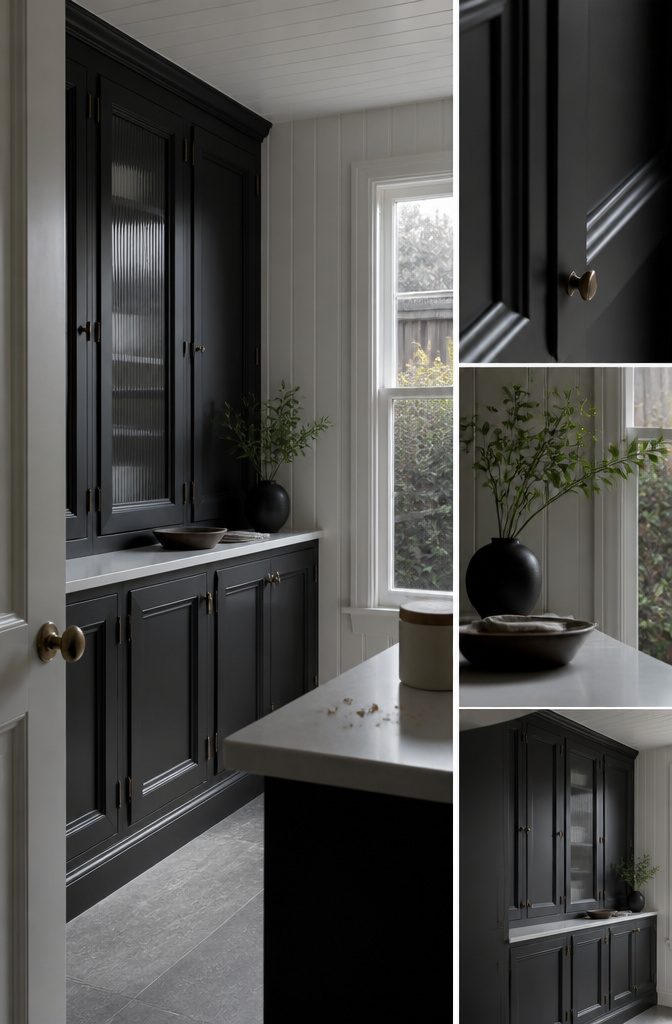
Matte black suits traditional raised-panel doors because the flat finish hides brush marks and turns the molding profile into soft shadow instead of shine.
Degrease, sand lightly, prime, and use a cabinet-grade paint. Paint the doors lying flat and a weekend is enough.
Pair the black with white paneling, such as beadboard or applied molding on an end wall, so the dark doors have a crisp edge to sit against.
Fluted glass adds the modern touch. Fluted-look adhesive film on glass-front doors costs far less than new doors and peels off later, so it works for renters.
A fluted pendant shade or a few canisters do the same job. Check your lease before painting.
Recommended Products

𝐏𝐫𝐞𝐦𝐢𝐮𝐦 𝐌𝐚𝐭𝐞𝐫𝐢𝐚𝐥𝐬:Made of PVC composite laminate, anti-scratch, high impact, color fadeless, more durable and stronger than other plastic self-adhesive tiles. Brushed surface finishing with realistic look, high waterproof and stain-resistant performance, protect the walls from splash and iol.

𝗨𝗽𝗴𝗿𝗮𝗱𝗲𝗱 𝗧𝗵𝗶𝗰𝗸𝗲𝗿 𝗗𝗲𝘀𝗶𝗴𝗻:With about 2.5mm thicker peel and stick backsplash tiles, made of high-quality vinyl material, waterproof and oil-proof, it can resist heat and water, and can protect the wall from moisture and oil stains.

Timeless Elegance: this glossy tile features a classic square design with a high gloss reflective finish; Each ceramic tile measures 4.25 x 4.25 inches and has an 8mm thickness for added strength; The black tile amplifies light and adds a sleek, modern touch to any wall tile installation
8. Sleek Cabinets, Matte or Gloss
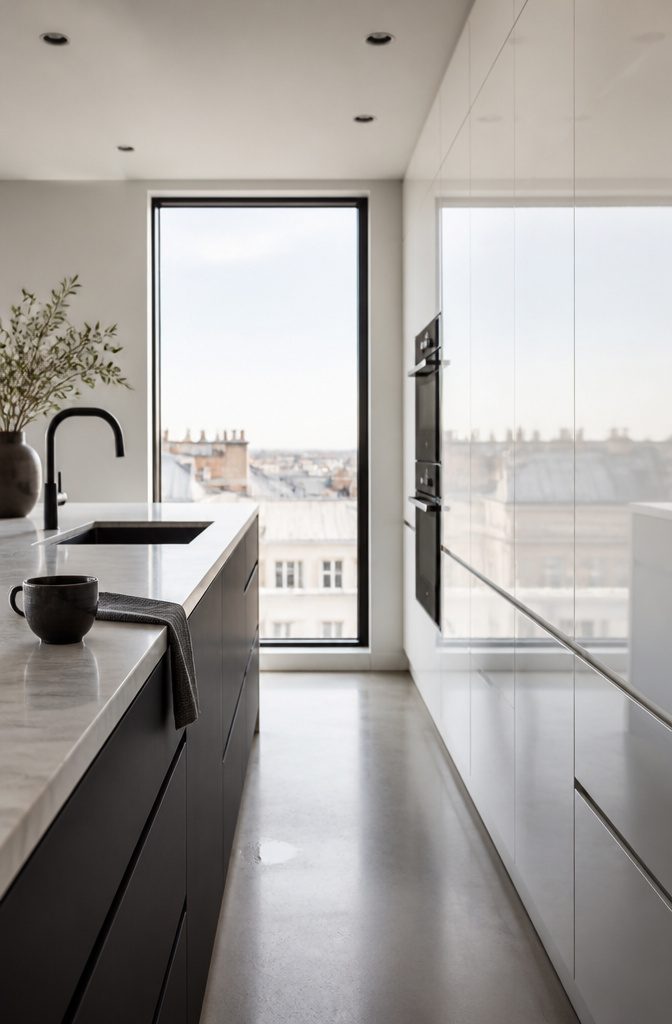
Handleless fronts keep the lines flat and unbroken, which is what makes black and white cabinets look sleek instead of busy.
Push-to-open hardware or a shallow finger groove along the door edge replaces the pulls, so each color reads as one clean plane.
Gloss bounces light around the room and brightens a small kitchen, but it shows fingerprints and water spots, and it exaggerates any uneven door. Matte absorbs light, shows fewer smudges, and gives black a soft, velvety depth.
For most kitchens, gloss on the white cabinets and matte on the black works best: gloss where you want light, matte where hands land. Glossy black is the hardest to keep clean.
Recommended Products

Belong To Your kitchen: The kitchen cabinet features 2 large door cabinets and 2 full extension drawers great for storing coffee beans, seasoner, spare kitchen paper, or some sundries. Meanwhile, your coffee maker, toaster, can sit on our wide tabletop

Versatile Storage Solution: This storage cabinet, available in black and white, features two doors and offers ample space for organizing various items. It is suitable for office supplies, non-perishable food, and miscellaneous belongings
COMPATIBILITY - Suitable for cabinets where the bottom of the door is flush or nearly flush with the cabinet frame, and the bottom of the door is at least 3.54 inches (90mm) above the floor; not suitable for recessed or inset cabinets (see example pictures for details)
9. Moody Charcoal Cabinets
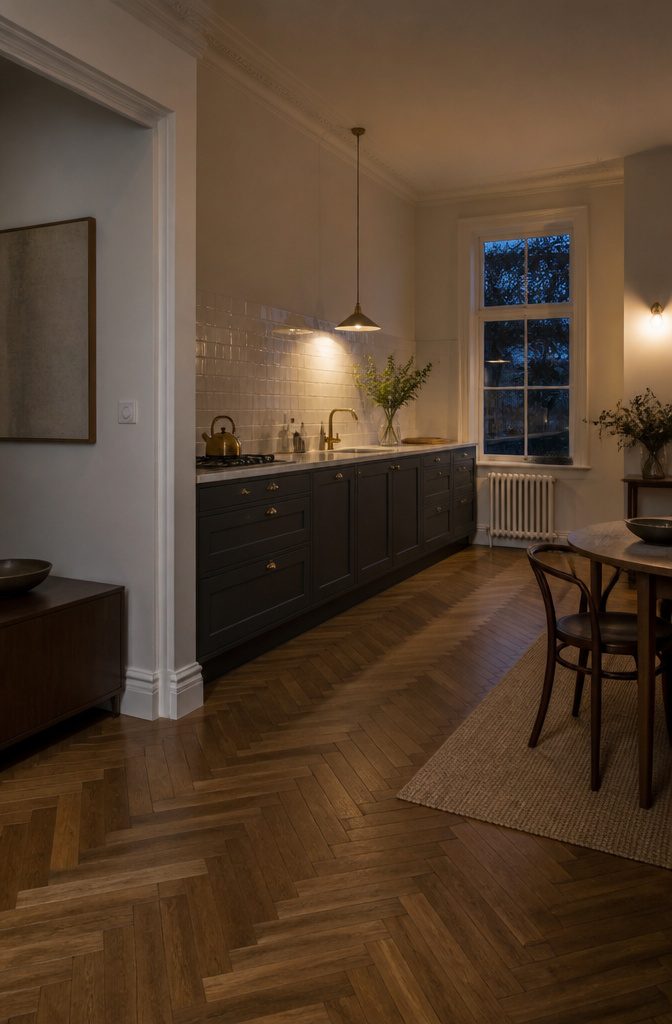
Charcoal cabinets look moody only when something nearby stays bright. Pair them with crisp white walls and glossy tile, and keep the counters pale so the dark doors have a clean edge to read against.
Cold is the risk, and texture and lighting fix it. Brass hardware, a parquet floor and warm light over the counter make the room feel welcoming instead of untouchable.
An all-black kitchen is the bolder version, and many people avoid it because they expect it to shrink the room. Glossy white countertops and a light subway tile backsplash bounce light around the space and keep it open.
Recommended Products

Premium Performance: Our peel and stick wall tiles are designed with high-performance PVC polymer material, offering waterproof, heat-resistant, stain-resistant, anti-scratch, and fadeless properties. Rest assured, the super-strong adhesive ensures the tiles stay securely in place!
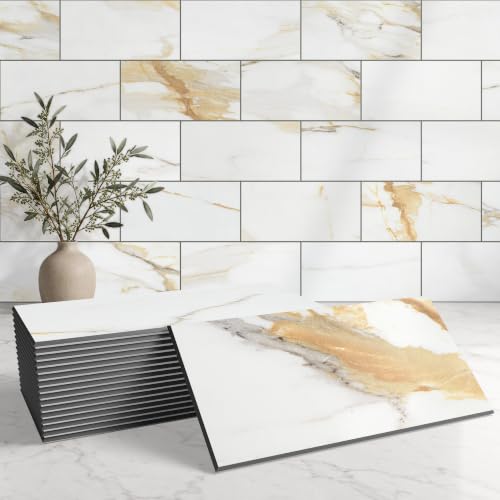
𝐏𝐫𝐞𝐦𝐢𝐮𝐦 𝐏𝐞𝐫𝐟𝐨𝐫𝐦𝐚𝐧𝐜𝐞: Our peel and stick wall tiles are designed with high-performance PVC polymer material, offering waterproof, heat-resistant, stain-resistant, anti-scratch, and fadeless properties. Rest assured, the super-strong adhesive ensures the tiles stay securely in place!
10. Light and Airy White
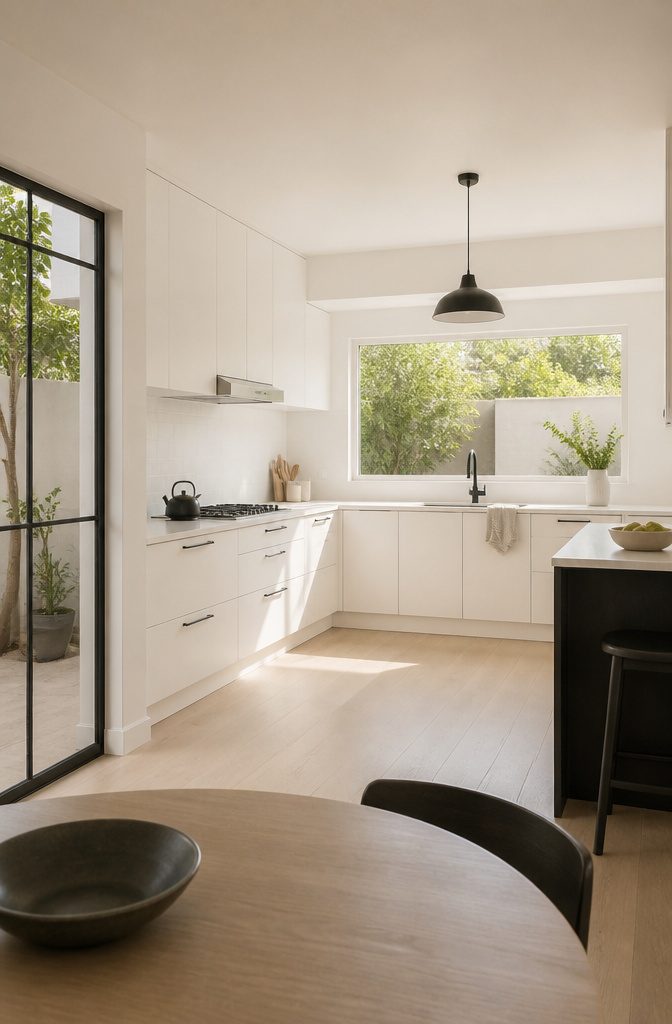
White cabinets against white walls bounce light around the room, so a small or dim kitchen feels bigger and more open. With nothing to anchor it, though, an all-white room can look flat and washed out.
Add a few dark accents to give the eye somewhere to land: black cabinet pulls, a black faucet, a dark window frame, or one black pendant light. Hardware and fixtures are easy weekend swaps, which suits renters and first-time owners.
Light flooring, such as pale wood or a soft gray tile, keeps the airy feel going. Dark floors add more contrast but take away some of the openness, so choose them only if the room gets plenty of natural light.
Recommended Products

PEEL AND STICK WALLPAPER for countertops is a type of self-adhesive wallpaper that is specially designed to be applied on countertops. It is waterproof and easy to apply, as it does not require any extra glue or adhesive. Instead, the wallpaper has a pre-applied adhesive backing that allows it to stick securely to the countertop surface.

Upgrade material: We have upgraded the traditional marble contact paper by thickening the material. The thickness of our marble wallpaper peel and stick is 0.24mm, avoiding the trouble of tearing easily due to thinness

Size: 11.8 inches x 78.7 inches, (30cm×2m)covering an area of 6.45 square feet
11. A Black Feature Wall
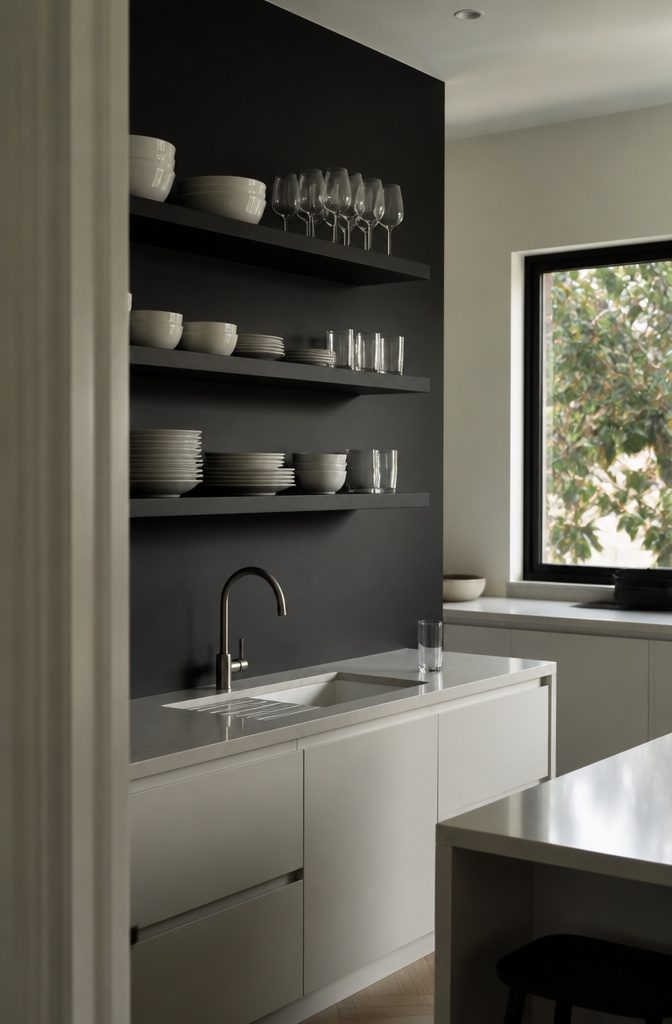
Paint one wall black and leave the rest white.
The dark surface pulls the eye to a single spot, and the white around it keeps the room bright. A second black wall starts to close the space in, and the focal point becomes a color scheme.
The best walls already have a job. Behind open shelving, black makes white dishes and glassware stand out like a gallery display.
Behind the range, it frames the hood and gives the cooking area a clear center. If you can see the wall from the doorway, that is usually the one to pick.
Choose a wall that has something on it, such as shelves, a range or a piece of art. A bare black wall just reads as a dark patch.
12. Metal Details
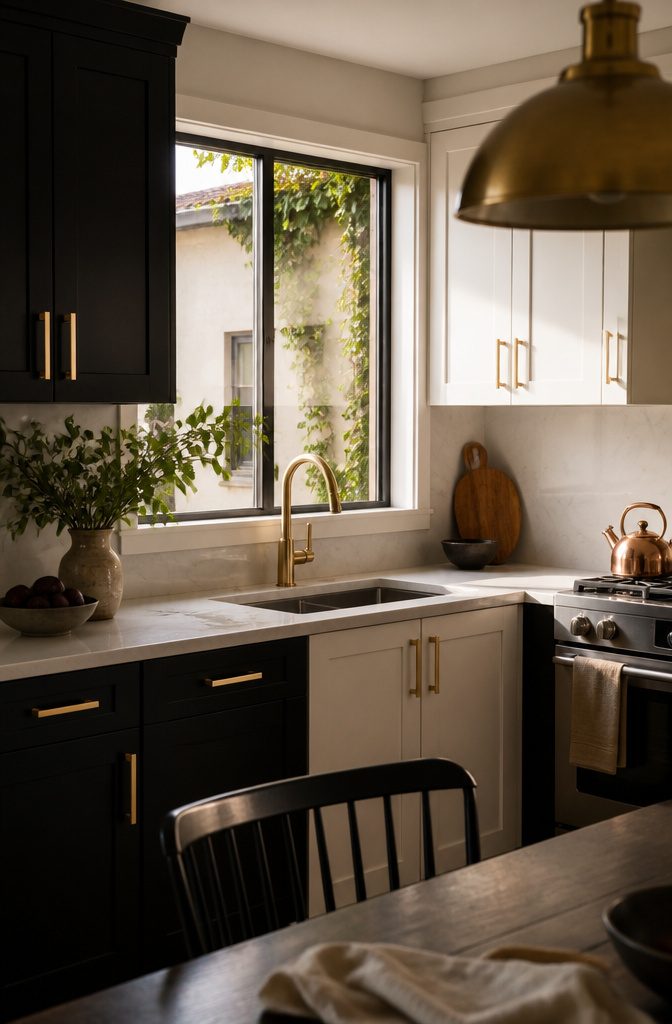
Hardware changes how cabinets read more than almost any other detail.
The same black or white door looks custom with a slim pull on it and plain without one. Brass or gold hardware warms a black and white kitchen and gives it a polished look.
Silver does the same job in a cooler, cleaner way. For a rustic or industrial feel, choose darker, rougher metal: a copper teapot on the stove and metal pendant lights over the counter.
Stick to one or two metals, and repeat each in at least two places, such as cabinet pulls and a light fixture, so the finish looks planned and not scattered.
13. Rugs and Soft Textures
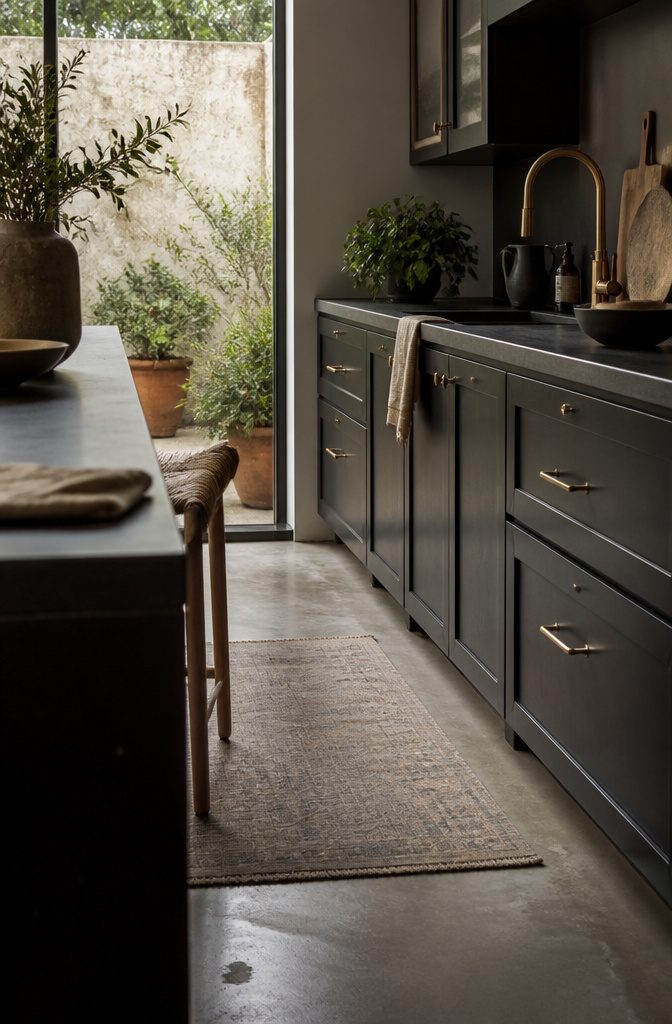
Black and white kitchens lean on hard surfaces: tile, stone, glossy cabinet fronts. A soft rug in front of the sink or along the island breaks that up underfoot and to the eye.
Soft rugs, dark cabinetry and warm brass make the combination to copy, because the brass warms the black and the rug gives the cabinets something soft to sit against. The room stays grounded without feeling heavy.
Add a few more soft pieces, such as a stool cushion or a set of dish towels, and keep each one simple so nothing competes with the cabinets.
The result should look lived-in and polished at once, cozy enough for a slow Sunday dinner and practical enough for a weekday rush.
14. Refresh Instead of Replace
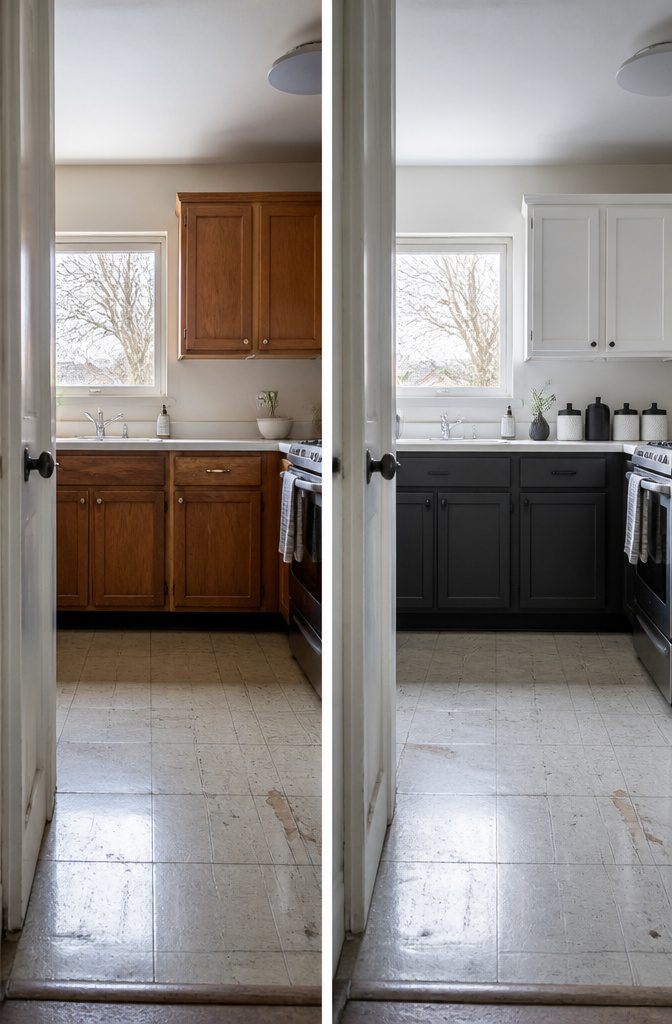
A kitchen with a layout that already works rarely needs a gut job. Paint is the first move: clean cabinet fronts and bright surfaces in black or white give the room a finished look without touching the floor plan.
Hardware and accessories come next.
New pulls, black or white canisters, and towels in the same two shades tie the room together. Keep all the extras in black and white, because a third color breaks the scheme.
Black and white is a neutral base, so you can restyle it as trends shift. Swapping decor later is easy, and renters can keep the original hardware in a drawer and put it back before moving out.
Watch Your Undertones
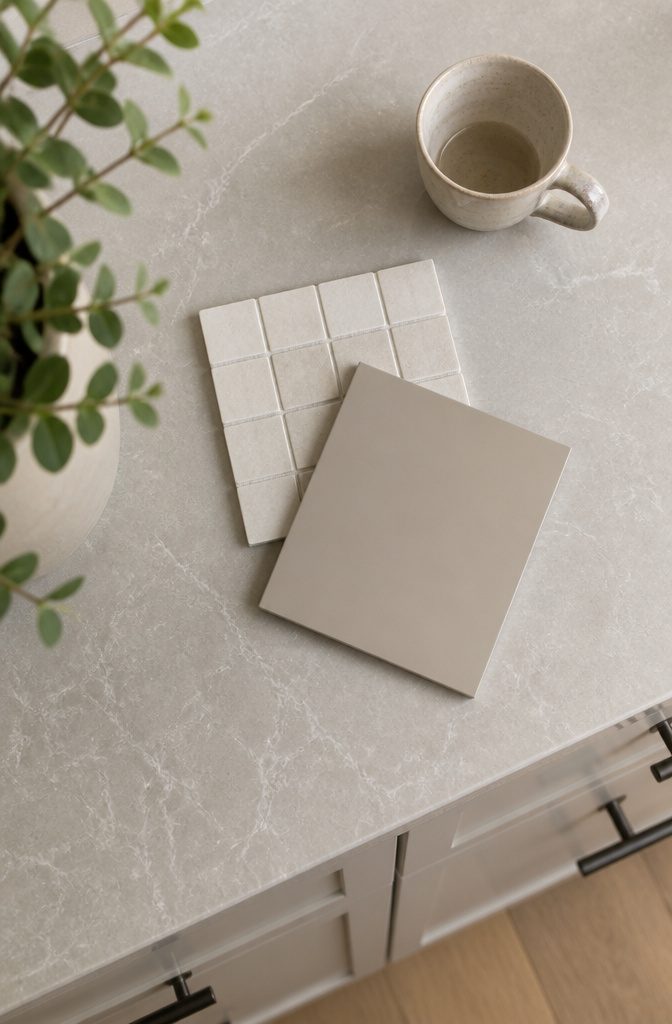
Whites, grays and blacks all carry undertones, and a layered kitchen stays calm when those undertones agree. A creamy white cabinet next to a blue-white tile looks off even though both count as white.
Hold paint chips, tile samples and a countertop sample together in the room’s own light, and pick one temperature, warm or cool, then match every white and gray to it.
Soft taupe with black is the warm-neutral alternative to strict black and white.
Taupe on the walls or lower cabinets takes the edge off black hardware, a black range or black window frames, so the contrast reads softer and less graphic.
Pair it with warm whites, since a cool, blue-leaning white will make the taupe look muddy.