
A black kitchen can mean every door painted black, or only an island, the lower cabinets, or thin frames on glass-front uppers. Black absorbs light, so small or dim rooms feel cramped.
Black lowers under light uppers keep them open. Stained wood also hides scratches that stand out on paint.
Two-Tone Kitchens
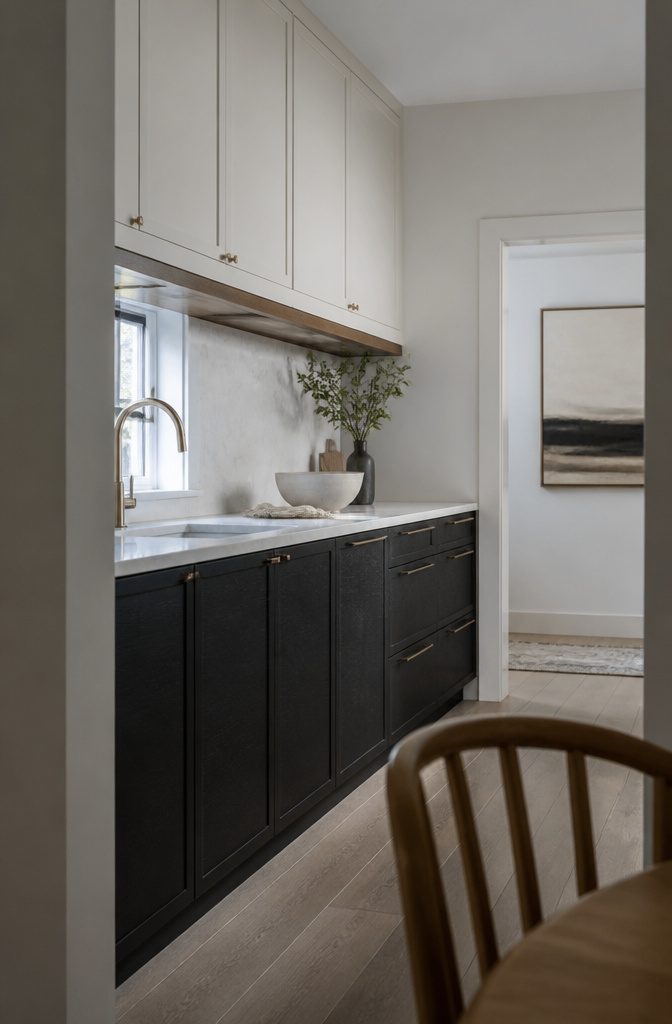
Black lowers with white or light uppers are the easiest way to keep a dark kitchen from feeling heavy. The black base grounds the room, while the pale cabinets above keep the walls open.
That makes the layout a good fit for small kitchens too. It’s often called a tuxedo kitchen.
If you want warmth instead of high contrast, pair black cabinets with natural wood and white stone.
Break up the black with wood or light surfaces so the eye has somewhere to rest. Walnut, a white stone countertop, and crisp light walls around them make a reliable template.
Recommended Products

𝙉𝙊𝙏𝙀: Intentional headspace allows room for stirring, dipping, and transit. The stated paint quantity remains unchanged. If you have any questions, please contact our customer service team.
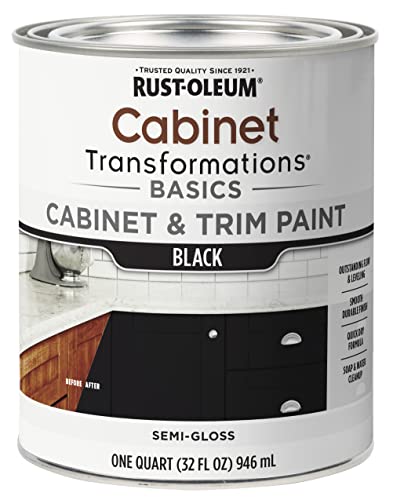
CABINET TRANSFORMATION: Refresh outdated cabinets, vanities, furniture and trim with rich Black color and a smooth semi-gloss finish

ALL-IN-ONE Paint - NO Sanding, NO Priming, NO Top Coat Required, Low Luster, Velvet Sheen Finish
A Black Island
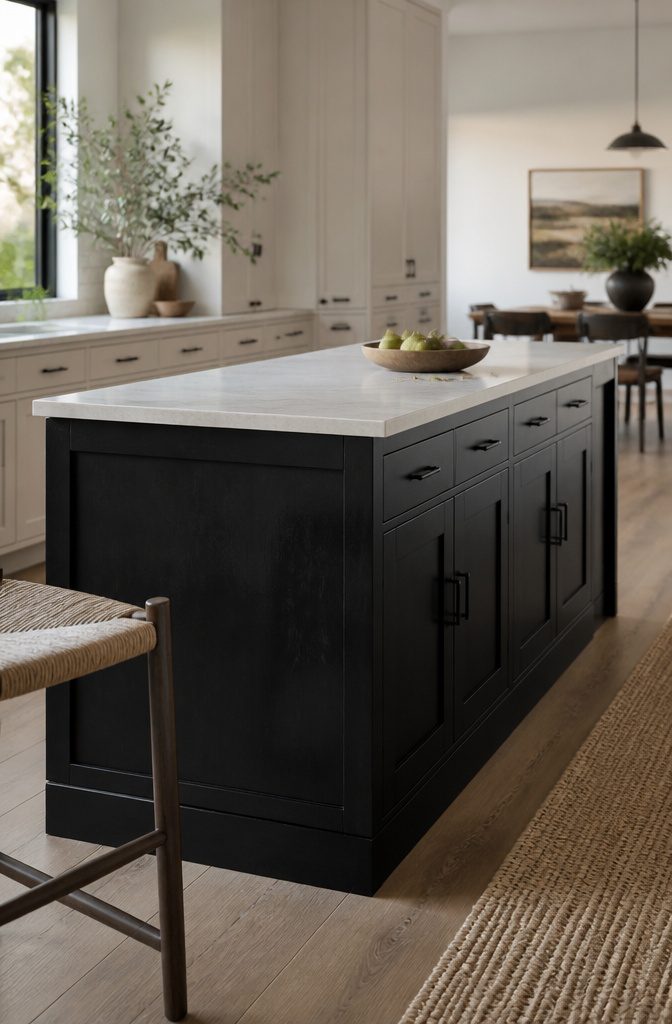
A black island with neutral cabinets around the perimeter gives you the full black look in one piece.
It’s also a familiar pairing: 41% of homeowners use or plan to use contrasting colors for their islands. Open layouts suit it best, since the island sits in view from every side.
This is the lowest-risk way to test black cabinets. Live with the island through a few months of morning light, evening lamps, and daily fingerprints before you decide anything bigger.
If you love it, black lower cabinets under lighter uppers are the natural next step. If you don’t, repainting one island is a much smaller job than redoing every door in the room.
Recommended Products

【Ultra Absorbent & Quick Drying】The dish drying pad is super absorbent and can absorb water quickly within minutes to bidding farewell to issues of dampness, keep the countertop consistently dry and pristine

[100% GENUINE SOLID NATURAL MARBLE] – Meticulously hand-carved from a single block of premium natural stone, each AUSAULAC tray boasts unique organic veining. No two pieces are identical, offering a one-of-a-kind functional art piece that brings the raw beauty of nature into your home.
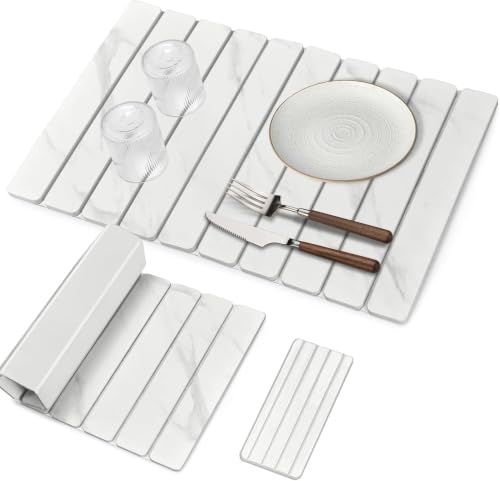
【Versatile Large Size & 2-Piece Set】 Measuring a generous 24" x 16", this large drying mat provides ample space to accommodate a full rack of dishes, pots, pans or cutting boards. The set includes a bonus small 8" x 4" mat, perfect for placing next to the sink for sponges, soap dispensers, or small utensils. This versatile is ideal not just for the kitchen, but also for coffee bars, laundry rooms, or pet feeding stations
Black Accents Only
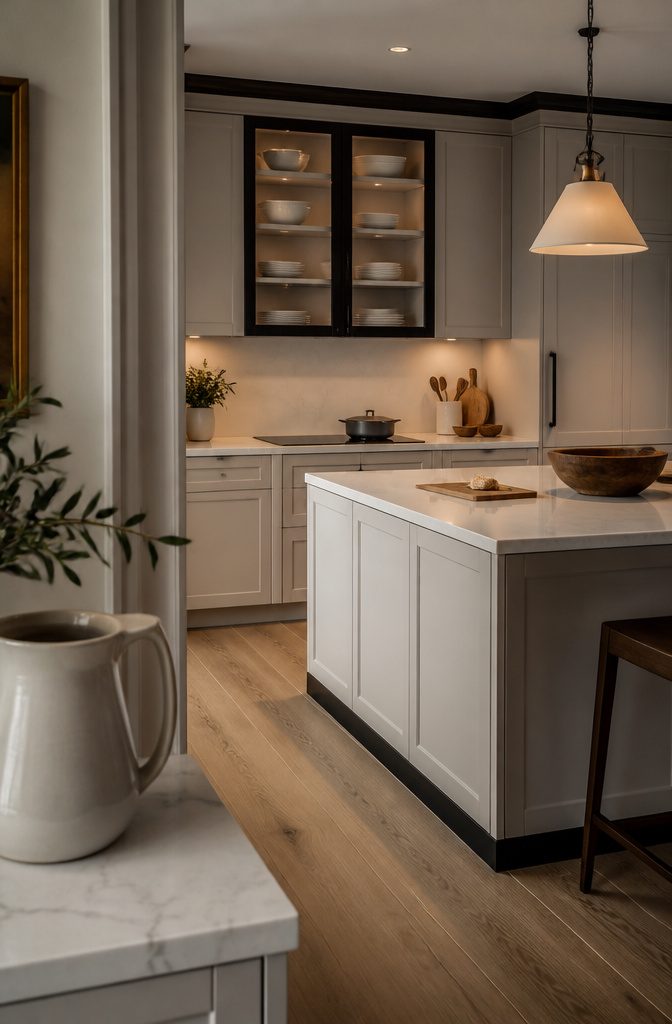
Black does not have to cover every door. Thin black frames around glass-front uppers, a recessed black base under the island, or a black touch at the crown give you the contrast with far less commitment.
Designer Samantha Pratt used all three in one kitchen to pull the eye upward:
"By using these black accents sparingly, it ensures they stand out as striking focal points, enhancing the overall design."
Limit the black to two or 3 spots so it reads as planned. Black grained oak, as in that kitchen, adds texture and keeps the look less formal.
This approach suits a kitchen that can’t carry a full dark color, such as one with little natural light. Painting frames or one island base is also a smaller job to redo if you tire of it.
Recommended Products

【Modern & Stylish Design】The Otterease fluted sideboard buffet cabinet features a sleek, modern design with fluted cabinet doors and brushed metal handles. Its brown wood finish enhances any living room, entryway, or dining area, becoming an elegant focal point. This walnut sideboard is also a small buffet cabinet, blending practicality with modern style.

【Ample Storage Space】 Featuring upper and lower compartments with 4 doors, this bathroom cabinet provides sufficient space for towels, toiletries, cosmetics, or kitchen essentials, keeping your bathrooms, living rooms, or kitchens tidy and organized
Black-on-Black
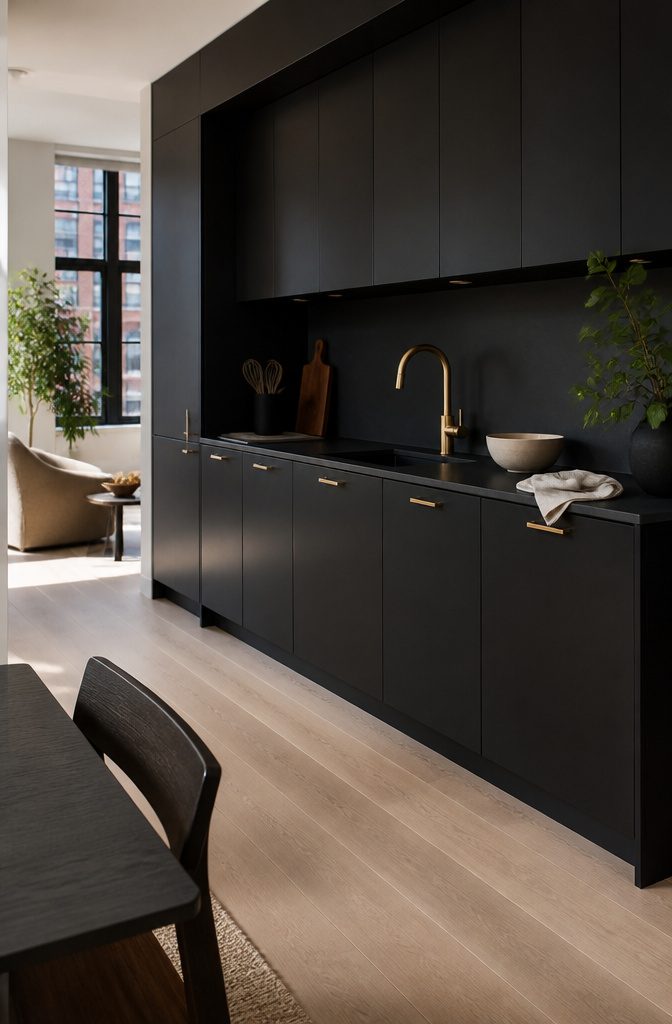
Black cabinets with black counters read as one continuous dark surface. Honed black quartz gives the smoothest version, with a modern look from base cabinet to countertop.
Black granite adds texture. A Chicago condo pairs custom black cabinetry from Demeter Millwork with leathered black granite from TM Supply, then punctuates the ebony with brass accents.
Add brass or another warm metal, or the room can read as a flat block.
This is the heaviest look on light and the least forgiving.
In a small or dim kitchen, black on black swallows what little light you have, so skip it unless the room gets strong daylight or you can add plenty of fixtures.
Recommended Products
365-Day Evaluation: We believe you'll find value in your Ravinte handles. Use them for a full year, and if they don't meet your needs, we're here to help

365-Day Evaluation: We believe you'll value these cabinet pulls. Use them for a full year, and if they don't meet your needs, we're here to assist

Modern Square Cabinet Handles: The cabinet pulls are designed with a matte black finish. You can use it to decorate your furniture in different style types. These pulls can also be used to replace old drawer pulls and dresser handles so that when you enjoy the pleasure of new cabinet hardware at the same time can also enhance the fashion sense of your home. The elegant appearance can better match different occasions, such as the kitchen, living room, bedroom, bathroom, and office
Matte Black Finishes
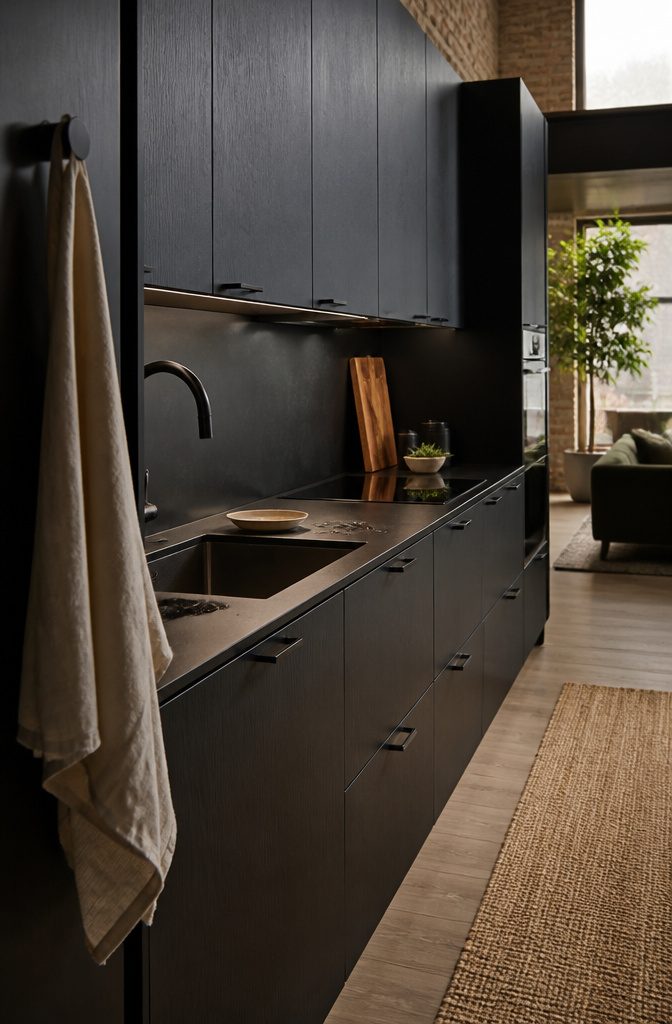
Matte black hides fingerprints and smudges better than gloss, and it gives a softer, more muted look.
Gloss shows every fingerprint and dust speck on its mirror-like surface. In exchange, it bounces light around the room and reads as dramatic and high-end.
If kids or pets use the kitchen daily, matte wins. If you choose gloss, keep a cleaning cloth within reach.
Matte also works well in a fully dark scheme.
One galley-style loft kitchen pairs an oak cabinet system from Bontempo in a matte black lacquer finish in charcoal with black quartz countertops and blackened steel hardware. The flat surface keeps the room moody instead of shiny.
Recommended Products

Kitchen Cabinet with Charging Station: This kitchen island with a 15"D x 26"W island top offers you the additional space for your delicious meals. Your kitchen essentials can find the right place to stay and the power strip including 3 sockets and a 59" long cord facilitates your free charging of various kitchen appliances

Farmhouse Warmth, Everyday Joy: Square silhouettes, floor-standing cabinet forms, and subtle round hardware define the HAINS Collection, bringing rustic warmth, visual balance, and everyday function to modern homes

[Multi-Level Storage Solution] Create a more organized home with rolling coffee cart that combines an open top shelf, middle drawer, and lower cabinet with mesh doors. Coffee stand helps separate cookware, snacks, coffee supplies, tableware, turning unused corners into practical storage space for your small kitchen island needs
White or Light Countertops
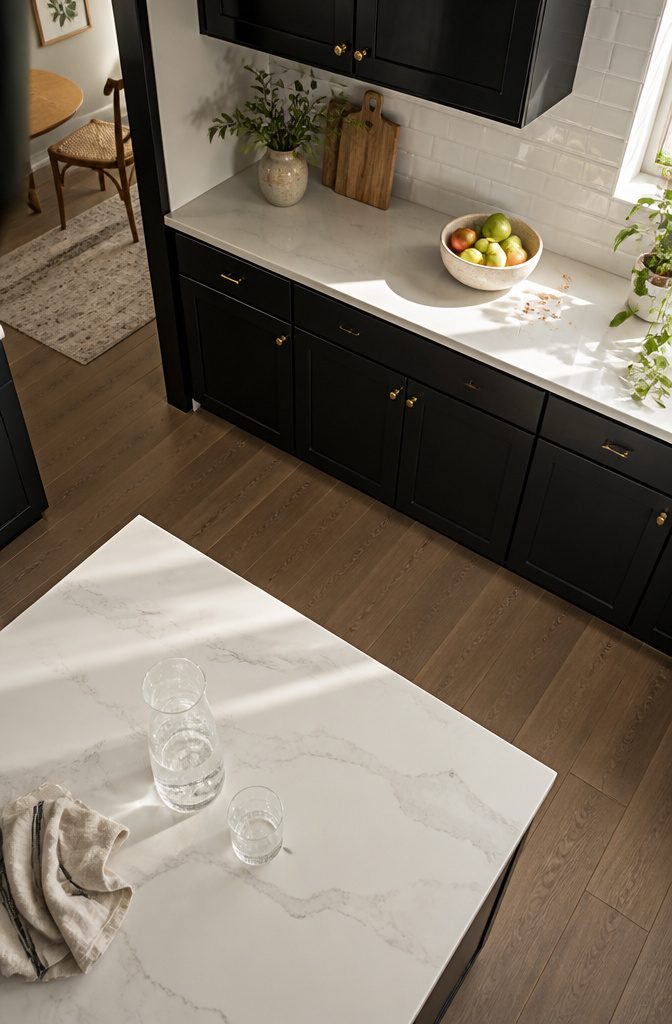
Light counters keep black cabinets from feeling heavy, because a reflective white surface bounces light back into the room. Here is what each option does:
- Bright white quartz gives the sharpest contrast of the four, and it stays current. Pick it if you want the black to stand out.
- Veined marble adds interest, since white veining pops against black. Gold or brown veins also pair well with brass hardware.
- Butcher block adds warmth against the cool black.
- Honed black quartz skips contrast and gives one smooth, modern look from top to bottom.
With marble or white quartz, a plain white subway tile backsplash keeps the focus on the cabinets and counter.
Recommended Products

Black Deco is an ultra black, satin finish cabinet paint - part of our Modern Collection.
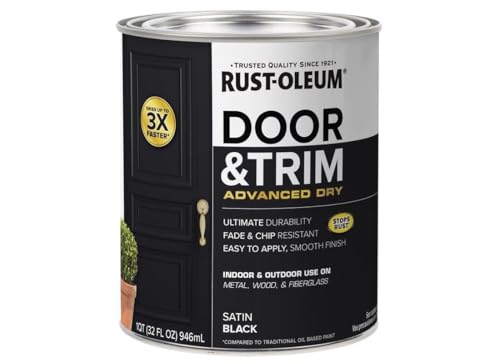
Ready to use, pre-mixed door and trim paint offers a fresh new look on interior or exterior metal, wood and fiberglass

Bold Ultra Black: Black Deco offers an intense, ultra-black shade, evoking the dense hardwood of the West African Ebony tree, perfect for contemporary decor.
Brass or Gold Hardware
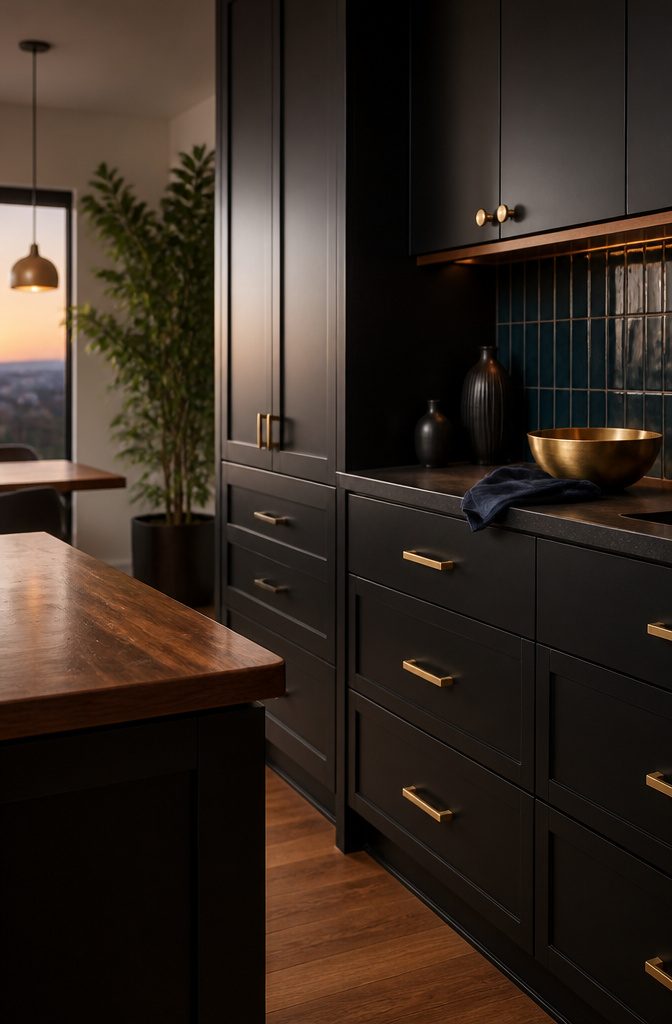
Warm metal gives black cabinets something to push against.
Industrial brass hardware from Buster & Punch worked in a midcentury kitchen with black built-ins, navy and teal backsplash tile, and a walnut and black island. The brass was the one bright accent in a deep, dark room.
The brass accents in the Demeter Millwork kitchen follow the same logic. Brass pulls and knobs on black doors are also an easy swap for a weekend project, since you only change the hardware.
For a quieter look, go tone-on-tone. Custom blackened steel hardware by Nick Lippert Furniture sat on matte black lacquer cabinets next to black quartz counters, so the pulls read as texture rather than contrast.
Choose brass if you want a focal point, and blackened steel if you want the kitchen to stay moody and uniform.
Recommended Products

Epoxy Undercoat Essential - Enhance your epoxy projects with our Epoxy Undercoat. Apply two coats to create a firm, sealed foundation that gives your surface a denser, thicker look and extends its lifespan.

Perfect Design Created for the Modern Home, to make life clean, comfortable and orderly.

【3Pack Zoned Design】Large Stone Dish Mat (24x16in)Many Uses: large mat works for dish drying, bathroom drainage, and as a pet food mat; 2 small pieces are perfect for soap at the sink and drying cups. Each layer has its own job, so the counter-contact layer stays dry and your cups and bowls never sit in water.
Wood, Stone, and Warm Textures
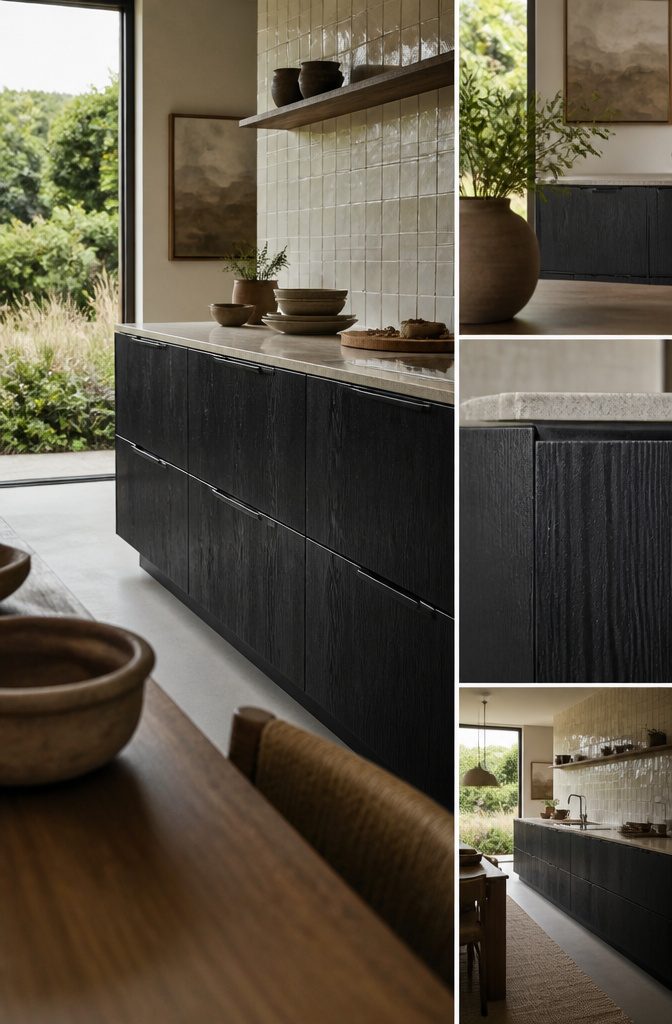
Black-stained oak plywood fronts keep the cabinets dark while the grain stays visible.
That tactile texture softens the black without weakening it, so the doors read as wood rather than a flat block of color. It’s also a good fit if you want a kitchen that feels closer to nature.
For the rest of the room, bring in stone or ceramics. A stone counter or a ceramic backsplash adds variation and blends traditional and modern looks, which keeps a black kitchen from feeling like a single note.
Lighter tones in these materials raise the eye and keep the room looking clean and tidy.
Recommended Products

【Flexible Storage Solutions】This sideboard buffet cabinet features adjustable shelves, allowing you to customize the space for all your favorite items, from oversized serving platters to delicate décor pieces. Imagine hosting a family gathering and effortlessly storing everything from snacks to dinnerware, maximizing your storage potential. Plus, the soft-close pads on the cabinet doors ensure a quiet closing, making your home a peaceful haven for you and your loved ones.

【Built-in Charging Station】Features a side power strip with 1 AC outlet, 1 USB port, and 1 Type-C port. With a 4.9ft cord, this coffee bar cabinet offers freedom to plug in devices anywhere, making it a highly functional [small buffet cabinet] for your kitchen.

Compact Walnut Watch Showcase: This lacquered “walnut” wood watch box gives your favorite timepieces a refined home with a warm, furniture-like presence. The rich wood grain and high-gloss finish pair with clean lines for a classic look that suits both modern and traditional spaces. It sits comfortably on a dresser, nightstand or office credenza, keeping your everyday watches gathered in one elegant place.
Jewel Tones
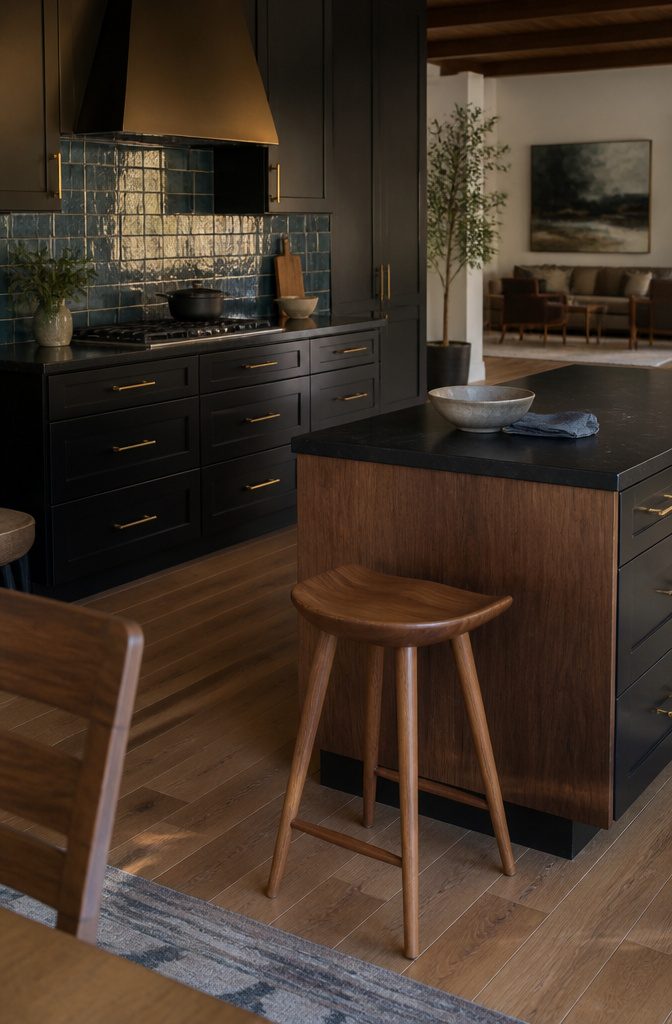
Emerald green and deep navy are the two jewel tones that hold their own beside black cabinets, and they give the room a rich, slightly luxurious mood instead of a stark one.
Keep the color on the walls, the backsplash, and small accents, and leave the cabinets black.
For a backsplash, look at the navy and teal tiles by Patricia Urquiola for Mutina, used in a midcentury kitchen with black built-ins, brass hardware, and a walnut and black island.
Choose one dominant color first, then let the black cabinets act as the anchor while the jewel tone plays around them.
Navy sits closer to black and reads quieter. Emerald contrasts more sharply.
Recommended Products
365-Day Evaluation: We believe you'll find value in your Ravinte handles. Use them for a full year, and if they don't meet your needs, we're here to help
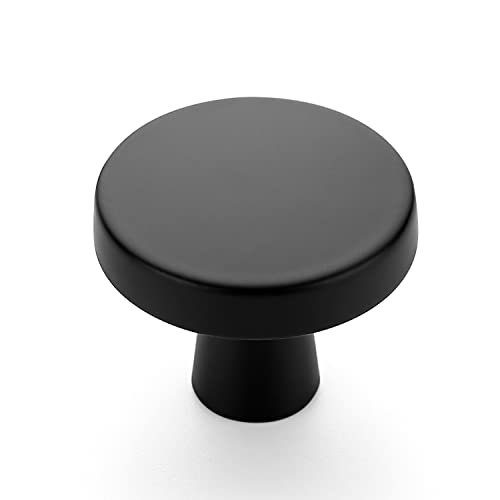
Dimensions: The heavy circular cabinet knob measures 1-1/4 inch (32mm) top diameter, 1/2 inch (12.7mm) base diameter, and projects 1inch(25mm) from the front of the cabinet door or drawer

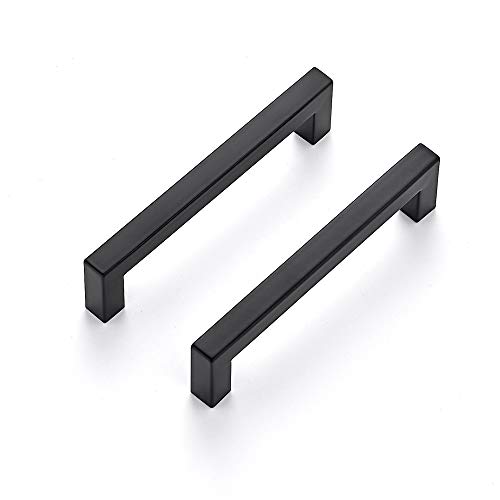
Size of Cabinet Pulls: Screw-hole center: 3 inch(76mm). Overall Length:3-5/16 inch(85mm); Width: 11/32 inch(9mm); Projection: 1-3/32 inch(28mm)
Patterned Tile
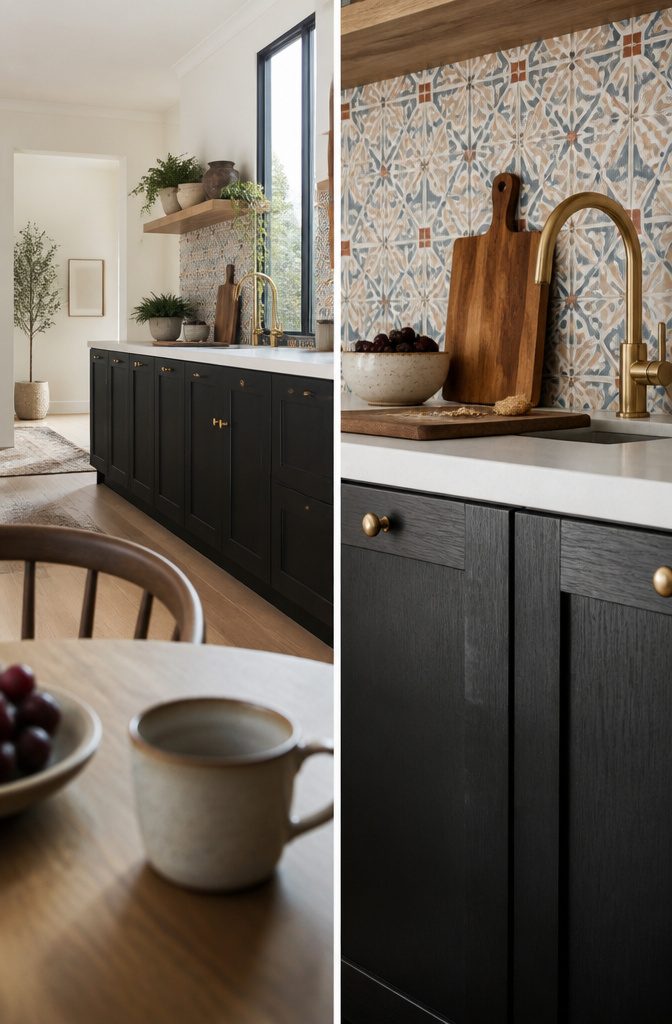
Black-stained wood fronts make a quiet backdrop for ornate tile. The stain flattens the look of the wood, so the pattern on the wall gets the attention, and the black still has enough weight to balance an elaborate design.
Tiles by Patricia Urquiola for Mutina are the kind of decorative pattern that suits this pairing.
A busy tile works best against plain black fronts. Flat or simple doors let the backsplash carry all the pattern, while carved or heavily detailed doors compete with it.
Stain also beats solid paint here, because it keeps some of the wood’s warmth. The kitchen stays dramatic without feeling cold.
Recommended Products

[Multi-Tier Coffee Bar Functionality] Organize your space like a pro with this all-in-one coffee bar that blends vertical shelving with multi-use compartments. Ideal for setting up a small coffee bar or casual coffee corner, it adds smart organization and charm to your home while standing out among typical coffee bars

Foldable Kitchen Counter: This kitchen island's innovative foldable top effortlessly unfolds into 23.7"L x 15.8"W and stands 33.3" high. The top can easily fold away to save space when not in use, offering flexibility in any kitchen layout
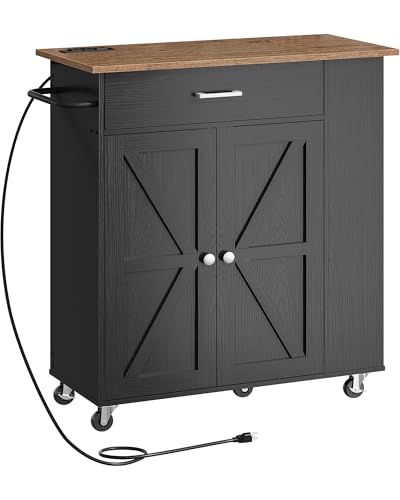
Ample Storage Space: This kitchen island cart features a spacious countertop, a large drawer, and a double-door cabinet with an adjustable middle shelf. The right side comes with a 3-tier spice rack, while the left side has a towel rack that doubles as a push handle
Open Shelving
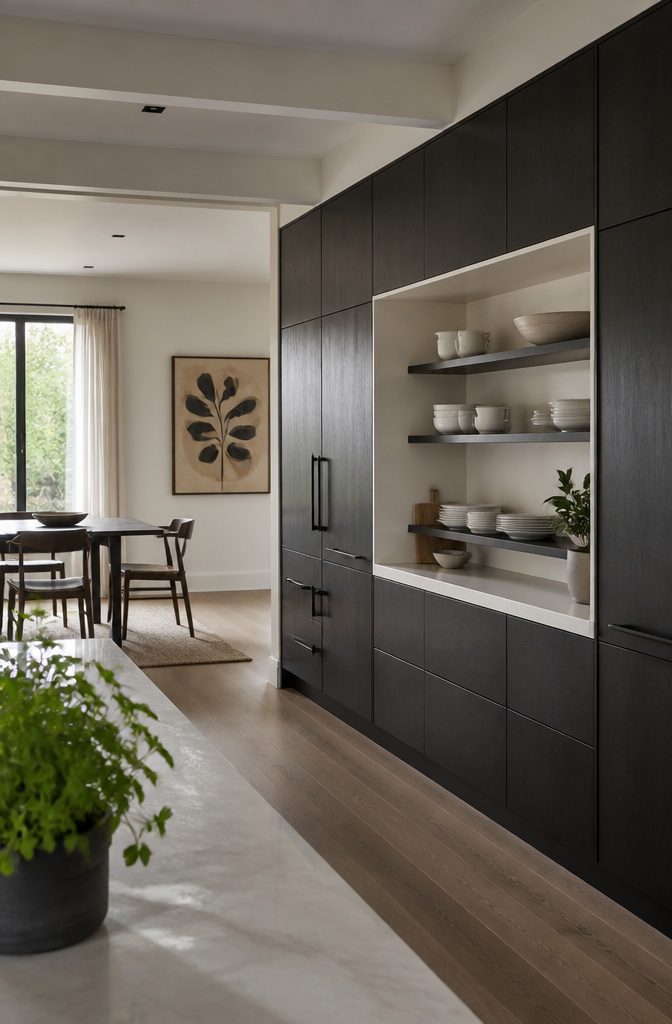
Solid runs of black cabinets feel heavy, and open shelves break that up by swapping some doors for air and a lighter backdrop. One good example uses charcoal-stained walnut cabinets with a Corian box inset.
The stain keeps the wood grain visible, and the inset reads as an open, lighter pocket in the dark run. Glossy white counters below bounce light back up onto the dark fronts.
Open shelves have a cost. Everything on them is on display, and it all collects dust and cooking film, so you will wipe them more often than closed cabinets.
Stock them with a few dishes you like looking at, and keep the mismatched mugs behind doors.
Room Size and Light
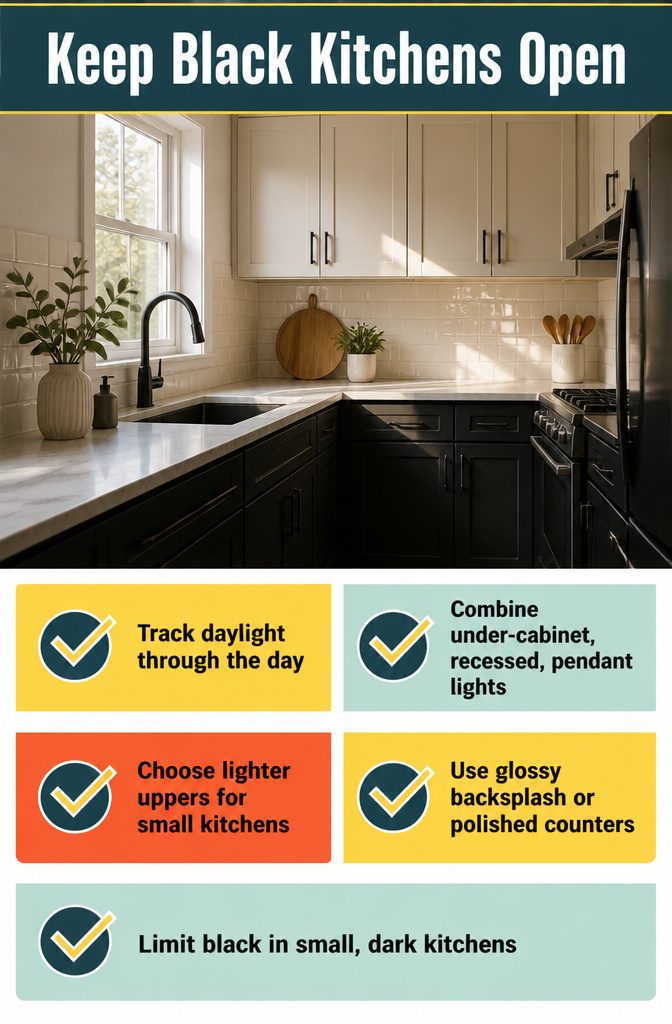
Black cabinets absorb light, so a dim or small kitchen can start to feel cramped. These fixes keep the room open:
- Natural light: Windows or skylights let a kitchen carry dark cabinetry well. Watch how bright the room stays through the day before you commit.
- Layered lighting: For a dim room, combine under-cabinet fixtures, recessed ceiling lights, and pendant lamps so no single source has to do all the work.
- Lighter uppers: Black lowers with light uppers ground the space without closing it in. This is the best answer for a small kitchen.
- Reflective surfaces: A glossy backsplash or polished countertop bounces light back into the room.
- Black as an accent: If the kitchen is both small and dark, use black on one element instead of the whole set.
Paint, Stain, and Upkeep
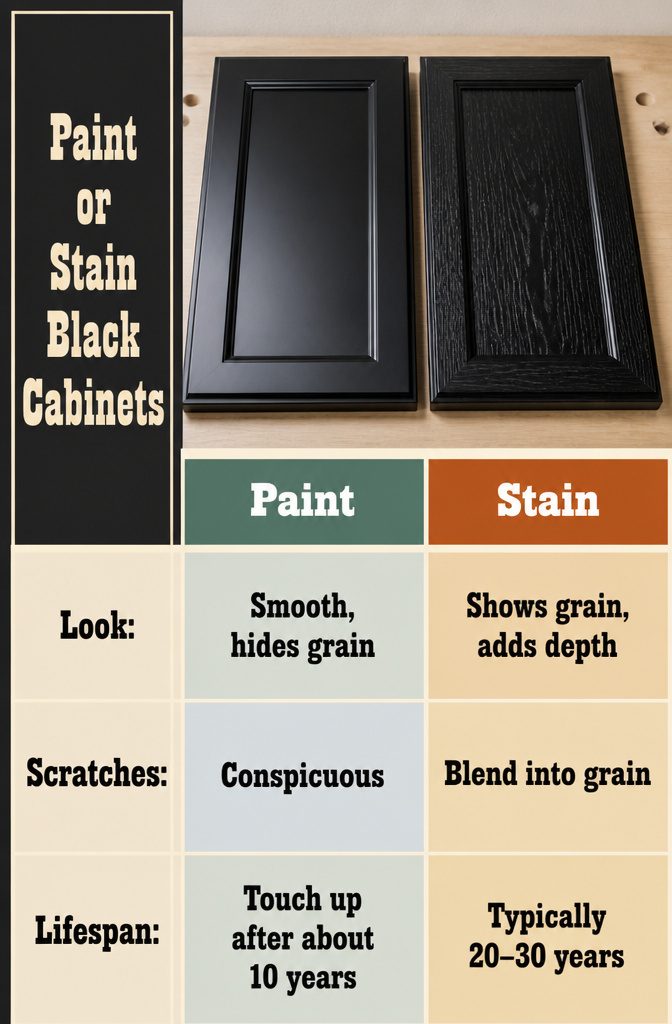
Stain shows the wood grain and blends in minor damage. Paint looks smooth and uniform, but scratches stand out against it.
| Paint | Stain | |
|---|---|---|
| Look | Smooth, hides grain | Shows grain, adds depth |
| Scratches | Conspicuous | Blend into grain |
| Lifespan | Touch up after about 10 years | Typically 20–30 years |
Owners of semigloss painted black cabinets report nicks and scratches on the edges within a few months, plus chips, fingerprints, dust, and steam streaks.
If that sounds like too much upkeep, a light natural wood or light stain is the more forgiving choice.
Frequently Asked Questions
Are black kitchen cabinets still in style?
Yes.
Designer Bob Thomas says black cabinets add dramatic flair and sophistication, and that the dark color gives them a polished, custom built-in look. They work in styles from modern to traditional, so they are not tied to one passing look.
What are the downsides of black kitchen cabinets?
Black absorbs light, so a small or dim kitchen can feel cramped. Black cabinets also show wear: painted semigloss doors pick up edge nicks and scratches within a few months, along with fingerprints and dust.
Pairing them with wood, stone, and lighter surfaces softens the effect, and a black island is the cheapest way to test the look first.
Do black cabinets make a small kitchen look smaller?
They can, because dark surfaces soak up light.
The best fix is black lower cabinets under light uppers, or black on a single element such as the island. Layered lighting and a reflective surface like a glossy backsplash keep the room from closing in.
How hard are black kitchen cabinets to keep clean?
Matte black hides fingerprints and smudges better than gloss, which shows every print and speck of dust.
Finish matters again for scratches: they stand out on paint, which needs touching up after about 10 years, and blend into the grain of stained wood, which typically lasts 20–30 years.
What countertops go best with black cabinets?
Bright white quartz gives the sharpest contrast, and veined marble adds interest, especially with gold or brown veining.
Butcher block brings warmth, and honed black quartz gives a smooth, all-dark modern look. A plain white subway tile backsplash keeps attention on the cabinets and counter.
Are black-stained wood cabinets a good option?
Yes.
Stain keeps the cabinets dark while the wood grain stays visible, which softens the black and adds warmth. It also works well behind a busy patterned backsplash, since the stained fronts stay a quiet backdrop.