
Muted greens like sage and olive work as neutrals, so they outlast saturated mint and emerald, which date fastest.
Light changes them more than most colors. Sage can turn swampy at 7 p.m. under warm bulbs, and dark shades like Pewter Green (LRV 12) can read close to charcoal in low light.
Choose a Shade and Mood
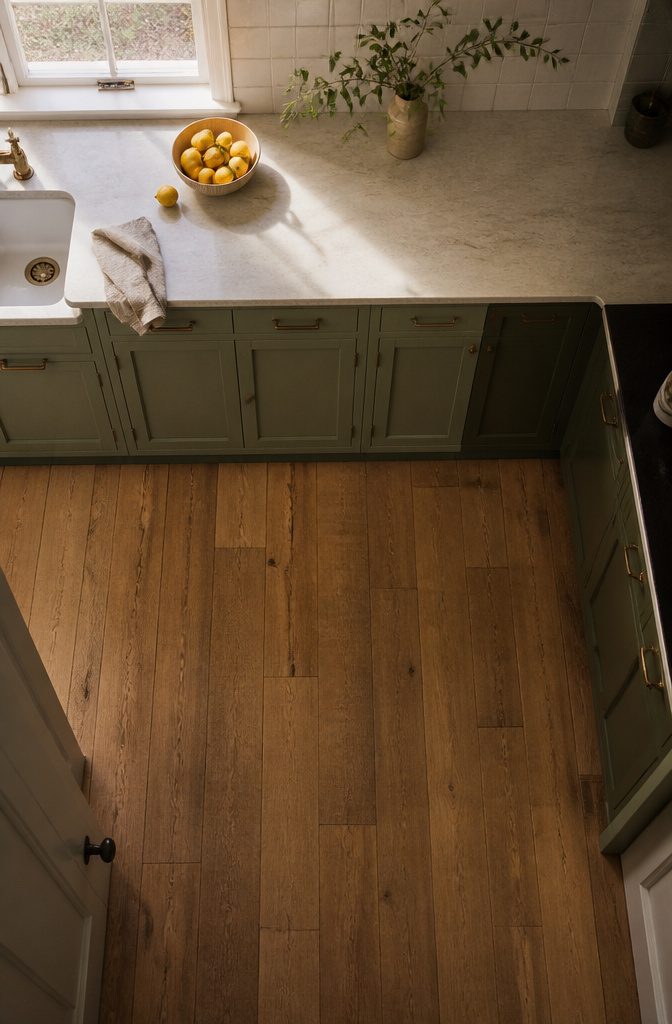
Muted, gray-leaning greens read as new neutrals, so start with sage or olive if you want cabinets that outlast a trend. Benjamin Moore October Mist 1495 (LRV about 46.5) and Saybrook Sage HC-114 (about 45) are soft and light.
Sherwin-Williams Evergreen Fog (LRV 30) sits a step deeper. For an earthy, grounded olive, Pewter Green SW 6208 (LRV 12) and Ripe Olive SW 6209 (LRV 6) are dark and moody.
Mint looks vintage next to wood tones, and seafoam looks breezy and coastal.
Both are fun, but saturated mint and emerald date fastest. Teal gives a calm blue-green mood, and moss sits between olive and forest.
Recommended Products

GENEROUS STORAGE: Featuring one large drawer and six door cabinets with shelves, this kitchen pantry cabinet offers tons of space and multiple options for your storage needs while transforming your chaotic space into something completely tidy and organized

Ample Storage: Revamp your kitchen with this kitchen pantry, designed for all kinds of storage. Upper featuring 4 glass doors, curved wine racks, mug hooks, and stemware racks to keep items within easy reach, it also has a spacious countertop, two deep drawers, and a 4-door cabinet that integrates all in one to supply copious storage solutions

Belong To Your kitchen: The kitchen cabinet features 2 large door cabinets and 2 full extension drawers great for storing coffee beans, seasoner, spare kitchen paper, or some sundries. Meanwhile, your coffee maker, toaster, can sit on our wide tabletop
Two-Tone Cabinets
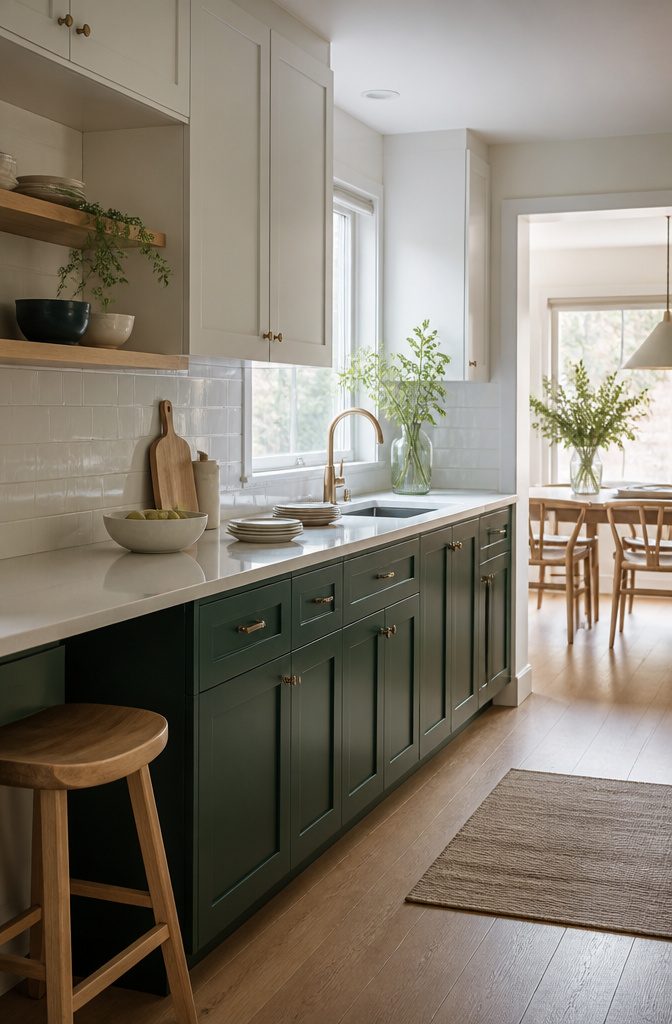
Put the darker color below. Green lowers with white uppers is the split that works most reliably, and reversing it makes the kitchen look top-heavy.
Open shelving, a bright backsplash, or white walls above the green keep the room light while the lowers anchor it with deep color.
Benjamin Moore’s Forest Green 2047-10 and Farrow & Ball’s Inchyra Blue both hold up well against white countertops and walls.
If you’d rather run green around the whole perimeter, a natural wood island breaks it up and adds warmth.
Both layouts use less green than a full set of cabinets, so they make an easier first step if you’re unsure about committing to the color.
Pair Green With Natural Wood
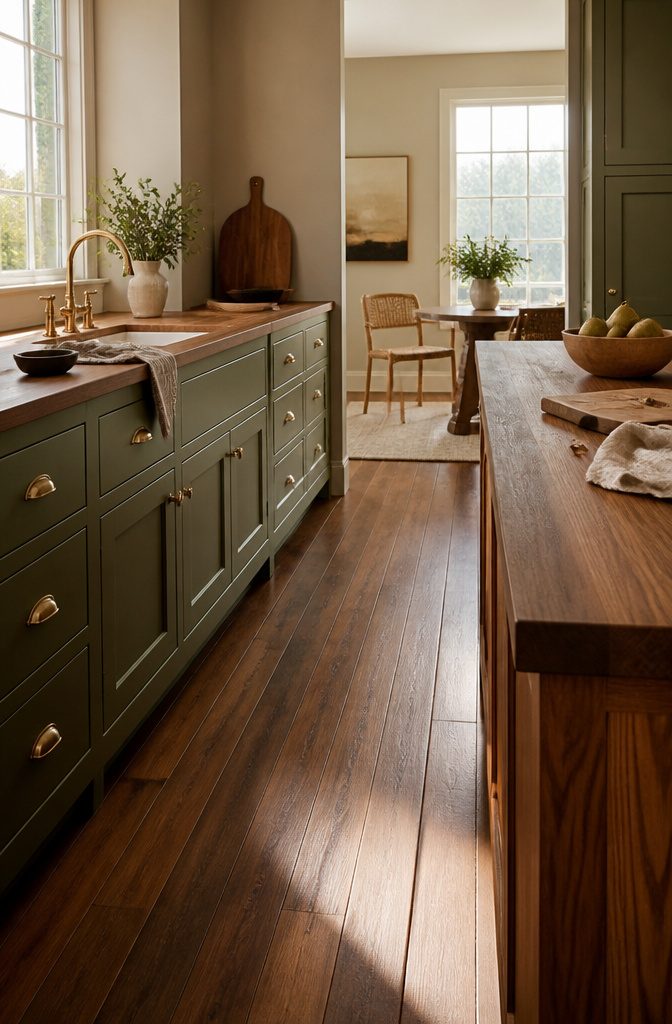
Olive is the safest green beside warm wood. Its yellow-green undertone sits comfortably next to walnut floors, while sage can pick up a green cast from warm floors and start looking mossy.
If your floors lean warm, choose olive over sage. Sage still works with butcher block countertops, which soften the green and give you the farmhouse look you’ve likely saved on Pinterest.
For a lighter, minimalist room, pair pale green like pistachio with open shelving and light wood.
Deep earthy greens do better with mixed wood tones, such as a wood island, shelves, and floors together. Brass accents tie the two together.
Pair Green With White
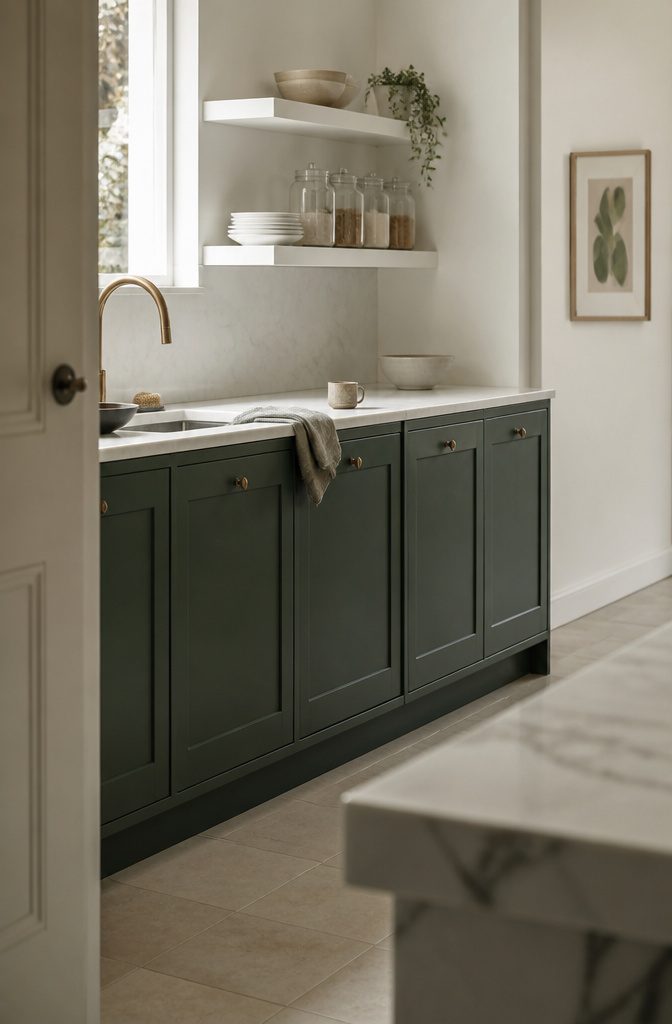
White walls, counters, backsplashes and open shelves brighten a green kitchen and sharpen the contrast, most of all against darker greens. Cream gives the same lift with a softer edge, though it looks less crisp beside deep shades.
Farrow & Ball’s Inchyra Blue cabinets with Pointing white show how this works. The deep color looks richer because the pale surround stays clean and quiet around it.
In a darker kitchen, choose a white or light neutral with a gray undertone.
Warmer creams can turn yellow in low light and make the room feel heavy. A gray-leaning white keeps the green’s depth without competing with it.
Brass, Gold, or Black Hardware
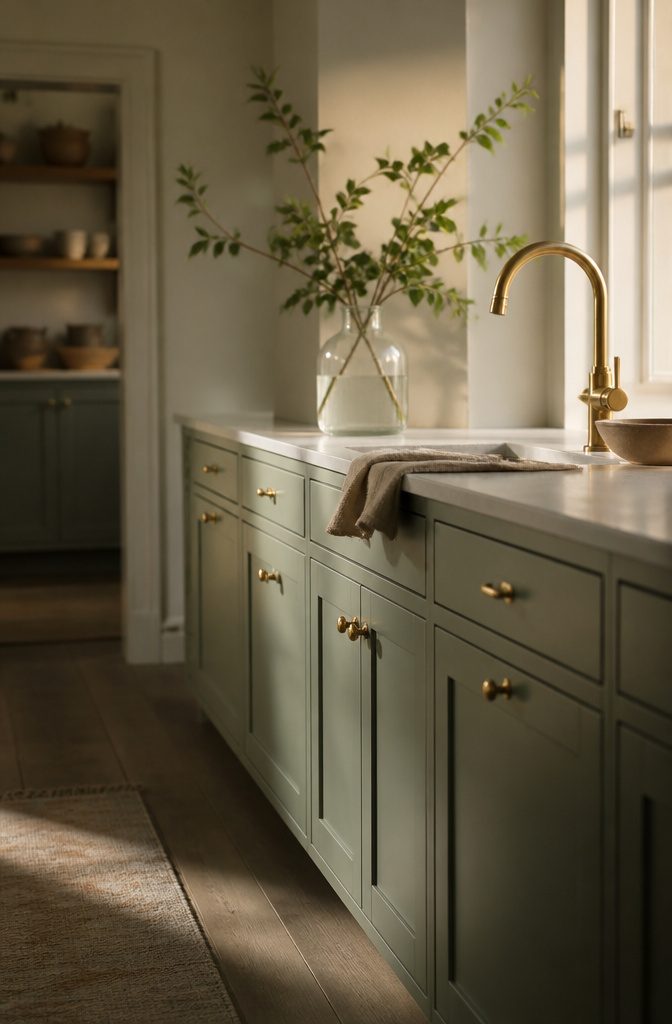
Hardware changes the mood of the same paint. On sage, satin or unlacquered brass is the safest choice: the warm metal picks up the yellow in the green and adds polish.
Gray-greens look best with polished nickel or chrome, which keep the room cool and quiet. Brass works there too, but it warms the room.
Deep olives take matte black or oil-rubbed bronze for a grounded look, while aged brass gives them an English-kitchen feel. Matte black on a lighter sage pushes it toward modern.
Copper adds warmth in the same way brass does. Stainless steel pairs easily with green and matches most appliances.
A Green Island or Small Section
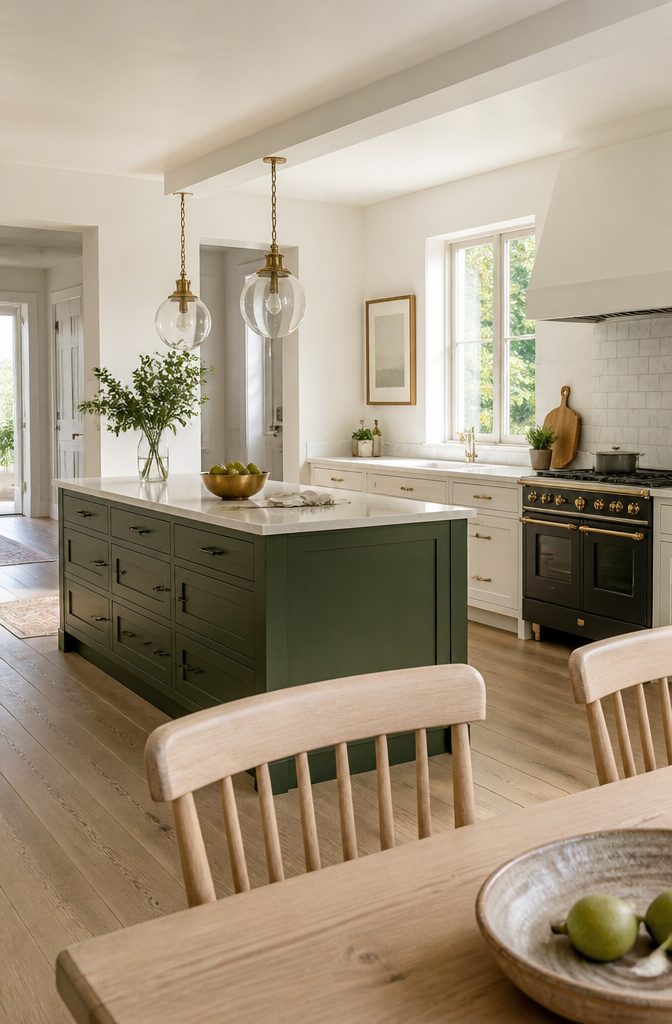
A green island is the lowest-commitment way to get the color.
Keep the perimeter neutral and let one piece carry it: a green island or green lowers with neutral uppers looks deliberate, and you repaint far less if you change your mind.
Emerald holds its own against crisp white, dark gray, or black.
If the room also has green cabinets, paint the island a lighter or darker shade so the two don’t match exactly, which adds depth. Keep the darker color below, because reversing the split looks top-heavy.
Other small moves work too: a forest green and brass range in a mostly white kitchen, a corner painted muted mint, or green walls behind white cabinets as a cheap test.
Match Your Design Style
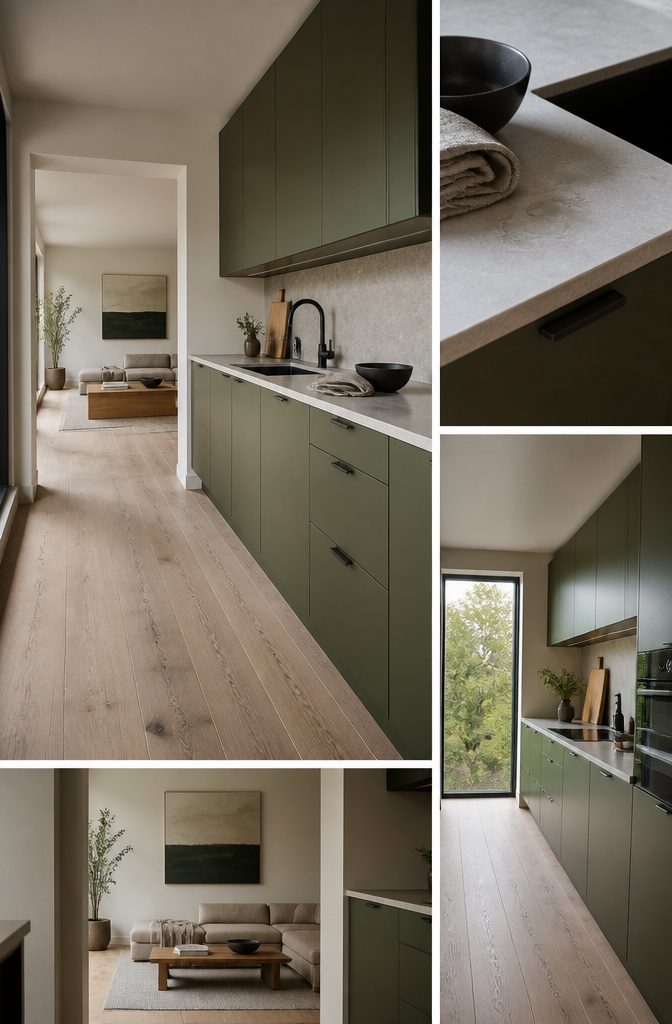
Modern kitchens suit deep forest or olive green in a matte finish. Use slab or flat-panel shaker doors, thin quartz counters, and matte black hardware, so the green is the only loud element.
Farmhouse pairs shaker doors with an apron sink, butcher block or soapstone counters, and a warm off-white wall. Use beadboard sparingly, because too much turns the room into pastiche.
Rustic adds wire-brushed white oak and heavier iron hardware. Olive looks settled there, but confused against polished concrete floors.
Mint, the 1950s revival shade, brightens vintage, farmhouse, and coastal kitchens. For a 1970s look, choose soft avocado and add retro lighting and terrazzo surfaces.
Texture and Pattern
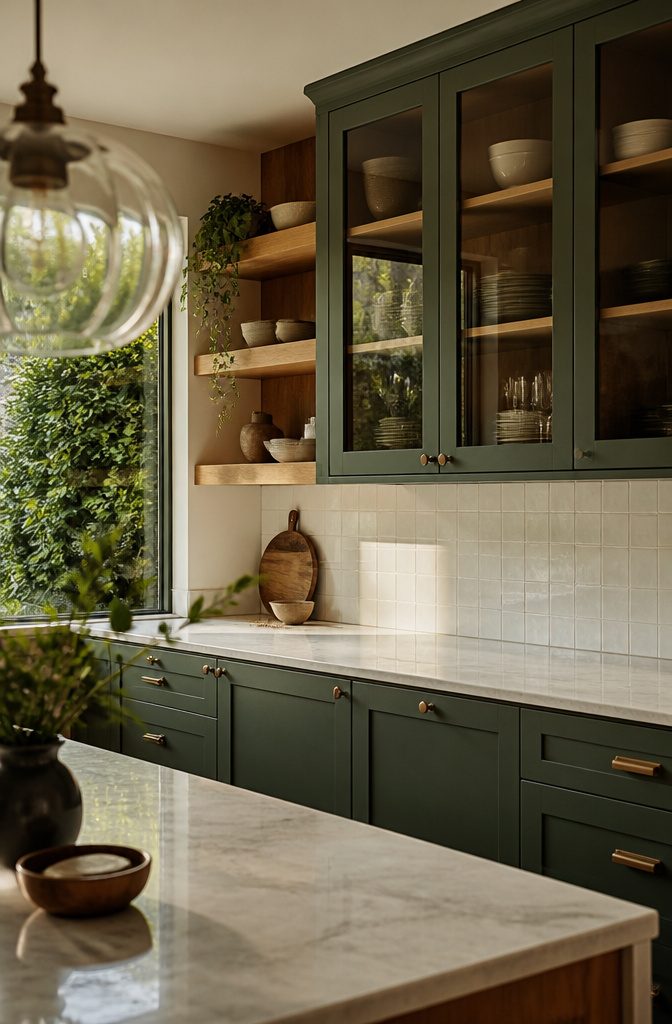
Marble is the easiest texture to add. White or gray-veined stone gives green cabinets a polished look, and a slab with faint green veining picks up the paint color.
Glossy subway tile behind sage cabinets adds shine to a flat finish. Matte dark green with oak shelving or counters adds warmth.
Glass fronts on a few upper cabinets break up a solid run of green and suit open kitchens.
If you add patterned wallpaper or a patterned accent wall, keep the countertops mostly clear so the room doesn’t look cluttered. For lighting, 3 large globe pendants over an island give a dark green kitchen drama without any extra pattern.
Dark Green for Drama
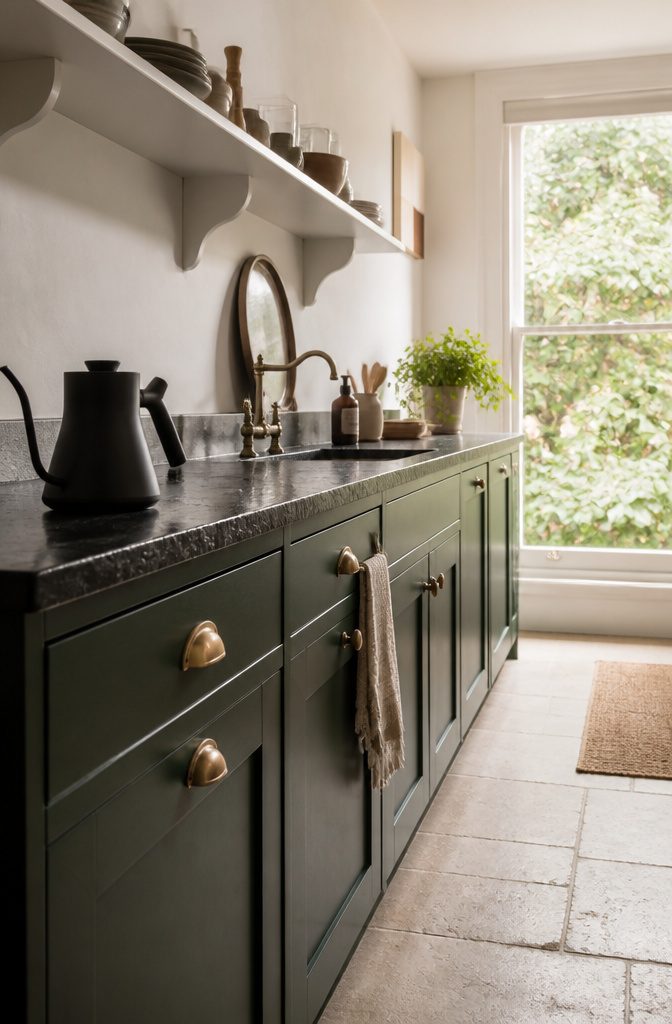
Forest green runs slightly bluer and cooler than hunter, which is warmer and closer to British racing green. Benjamin Moore Forest Green 2047-10, Black Forest Green and Pratt & Lambert Sierra Night all make a moody kitchen, especially beside dark surfaces.
These shades need a big window or strong overhead lighting.
In low light they read charcoal and the room closes in. Painting only the lowers, with white walls or open shelving above, keeps the drama without the weight.
Designer Jessica D’Itri Marés chose Narragansett Green for its range:
I wanted a color that was still a color, but could read neutral.
— Sunset
Beside black or white it reads as color; beside brights or pastels it steps back.
Combine Multiple Greens
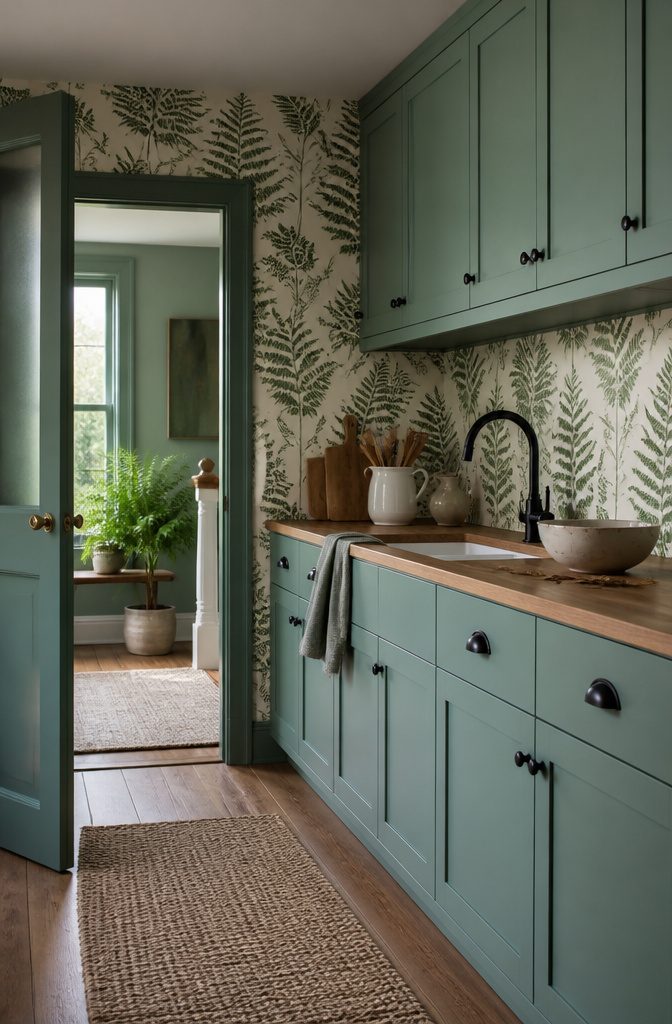
Greens look related when they share an undertone. Stay on one side of the color wheel, blue-greens with blue-greens or yellow-greens with yellow-greens.
A kitchen with blue-green cabinets, a green door and green fern wallpaper holds together because nothing in it leans yellow, and a bright chartreuse accent would look off beside it.
If you’re starting from tile, choose one with several shades of green, such as glass subway tile, and match the cabinets to its darkest shade.
Renters who can’t repaint can add the second green with plants or a runner in the same color family. Keep the remaining accents to white, black and wood, so the greens supply all the variety.
Light Green for Airy Kitchens
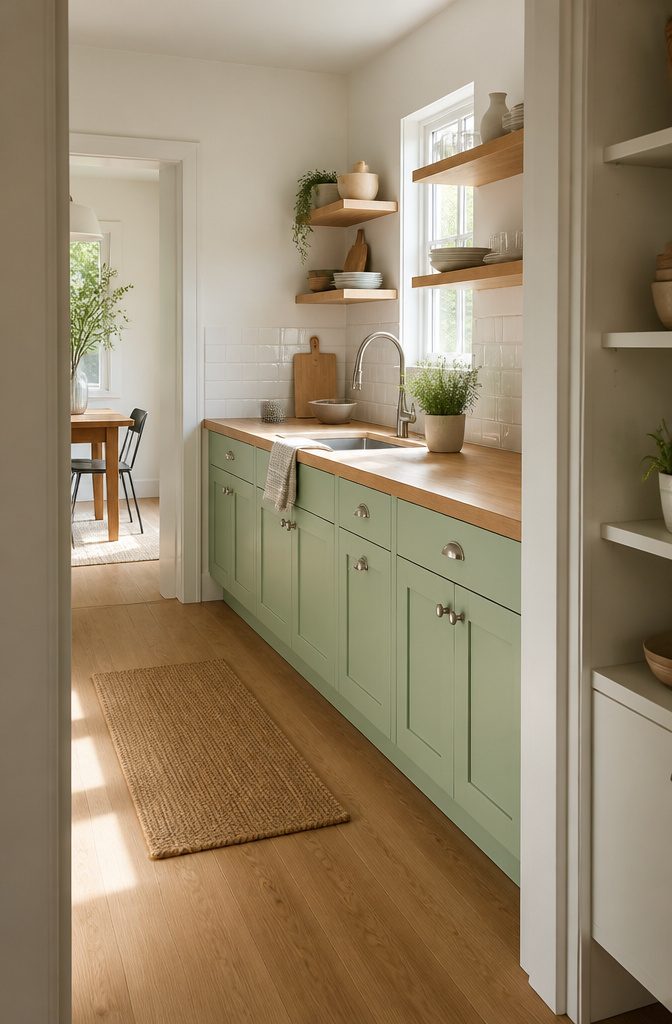
Mint, seafoam, pistachio and pale sage make a small kitchen feel open.
In daylight they read almost like a neutral, and the color shows up more at night. Mint works best in small kitchens or nooks; across a large open-plan room it can start to look childish.
Pair it with clean warm whites (not cool ones), butcher block or wood counters, and brushed nickel hardware. White tile or light wood floors stretch the space further.
Pistachio suits open shelving and light wood for a retro look. Seafoam gives a breezy, coastal feel in bright rooms.
Pale sage leans toward pistachio and looks good with white marble or quartz. Lighter tones show wear more, so clean them with gentle, non-abrasive cleaners.
Test Samples in Your Light
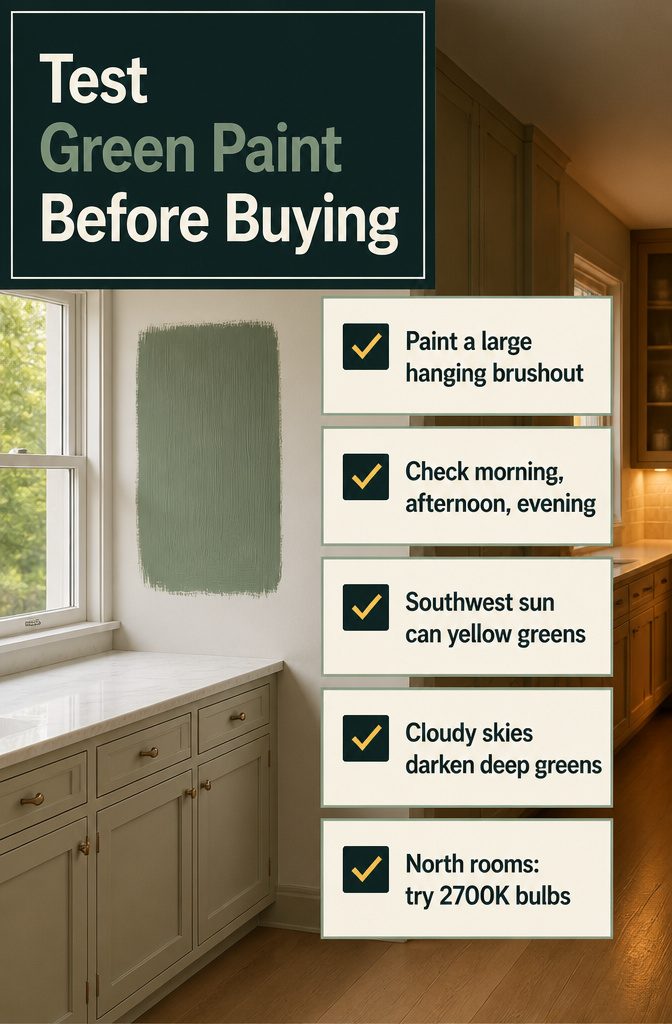
Green shifts with the light more than most colors, so test it before you buy a gallon.
- Skip the paint chip. A 1-inch sample under fluorescent light tells you very little, so paint a large brushout and hang it in the kitchen.
- Look at it morning, afternoon, and evening. Sage that looks right at noon can turn swampy at 7 p.m. under warm bulbs.
- In south- and west-facing rooms, warm sun pushes green yellower. A gray-green can look herbal by 4 p.m.
- Check dark greens on a cloudy day and at night, when they can read close to charcoal.
- In a north-facing kitchen, cool bulbs drain warmth from green. Try 2700K bulbs first, or pick a warmer green like olive or forest.
DIY or Pro Painting Costs
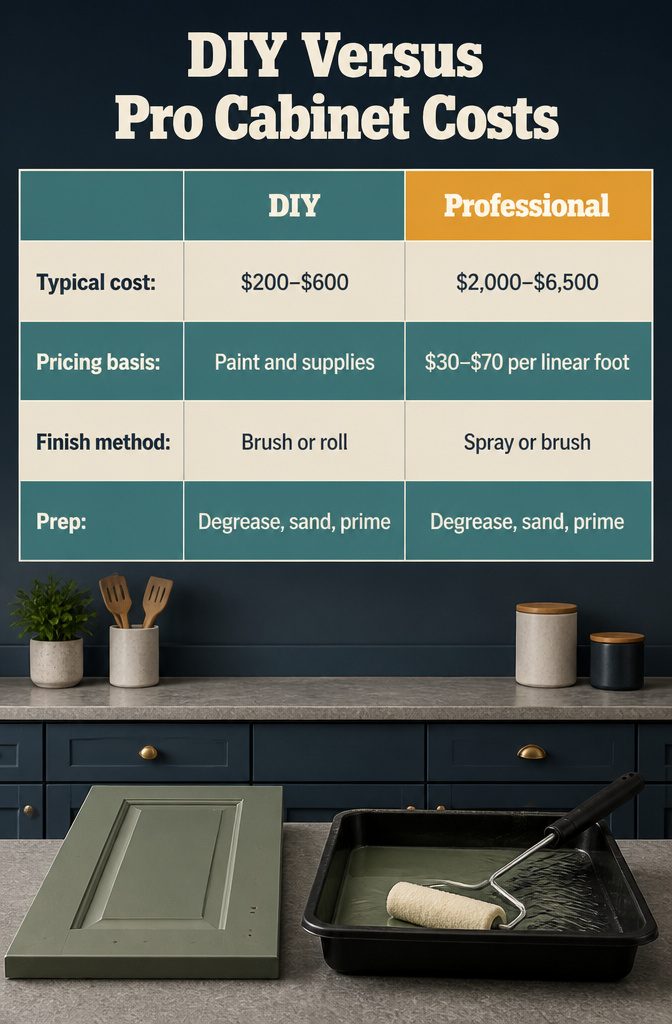
Professional painting runs $30–$70 per linear foot, which comes to $2,000–$6,500 for a typical kitchen.
Doing it yourself costs $200–$600 for paint and supplies. Green costs the same as any other color, so the shade never changes the quote.
Most of the work is prep. Degrease every door and frame, sand lightly, then roll on a bonding primer so the paint grips.
Spraying gives a smoother, brush-free finish, while brushing takes patience and thin coats. If you hire out, ask which method the quote includes.
Zillow’s June 2025 findings linked olive-green kitchens to about $1,597 more in buyer offers, so the color is unlikely to hurt resale.
Frequently Asked Questions
What is the best green for kitchen cabinets?
Muted, gray-leaning sage or olive is the safest pick because it reads as a neutral and outlasts trends.
For sage, try Benjamin Moore October Mist or Saybrook Sage, or Sherwin-Williams Evergreen Fog. For a deeper, earthier look, Pewter Green SW 6208 and Ripe Olive SW 6209 both work.
Are green kitchen cabinets still in style?
Yes.
Muted sage and olive behave like neutrals, while saturated mint and emerald date fastest. Zillow’s June 2025 findings linked olive-green kitchens to about $1,597 more in buyer offers.
What colors go well with green kitchen cabinets?
White is the most reliable partner, whether on walls, counters, backsplash, or open shelves, and it sharpens the contrast most against darker greens. Cream gives a softer lift but looks less crisp beside deep shades.
In a darker kitchen, choose a white or light neutral with a gray undertone, since warm creams can turn yellow in low light. Natural wood and marble also suit green.
What hardware goes with green kitchen cabinets?
On sage, satin or unlacquered brass is the safest choice.
Gray-greens look best with polished nickel or chrome, and deep olives take matte black or oil-rubbed bronze. Copper warms a green kitchen much as brass does, and stainless steel pairs easily with most greens.
Do green kitchen cabinets work in small kitchens?
Yes. Light shades such as mint, seafoam, pistachio, and pale sage make a small kitchen feel open, and mint works best in small kitchens or nooks.
A dark green can also work if you paint only the lowers and keep the walls white or the uppers open shelving.
Is green a good color for a kitchen?
Yes, because green covers a wide range of moods.
Dark shades like forest green give a dramatic kitchen but need a big window or strong overhead lighting, or they read close to charcoal. Light greens like mint and pistachio make the room feel airy.
What shade of green is best for a modern kitchen?
Deep forest green or olive in a matte finish suits a modern kitchen best. Pair it with slab or flat-panel shaker doors, thin quartz counters, and matte black hardware so the green is the only loud element.
Should I paint all my cabinets green or just the island?
Painting just the island, or the lowers with neutral uppers, is the lower-commitment route.
It uses less green and takes far less repainting if you change your mind. Keep the darker color below, since reversing the split looks top-heavy.
How much does it cost to have cabinets painted green?
Professional painting runs $30–$70 per linear foot, or about $2,000–$6,500 for a typical kitchen.
Doing it yourself costs roughly $200–$600 for paint and supplies. The shade does not change the price, so green costs the same as any other color.
How do I clean and maintain painted green kitchen cabinets?
Wipe them with a soft cloth and mild soap, and skip harsh chemicals and abrasive cleaners.
Matte finishes may need dusting more often, while glossy finishes resist stains more easily. Lighter greens show wear more, so gentle, non-abrasive cleaning matters most on them.