
Keep everything around light wood white, and pair black only with honey-toned wood.
Gray or very dark wood loses the warmth that makes black work. In Jenna Malar’s 1949 duplex, ash-tone IKEA cabinets sit against a white countertop, backsplash tile, open shelving and a frosted white light fixture.
1. Light Wood With White Accents
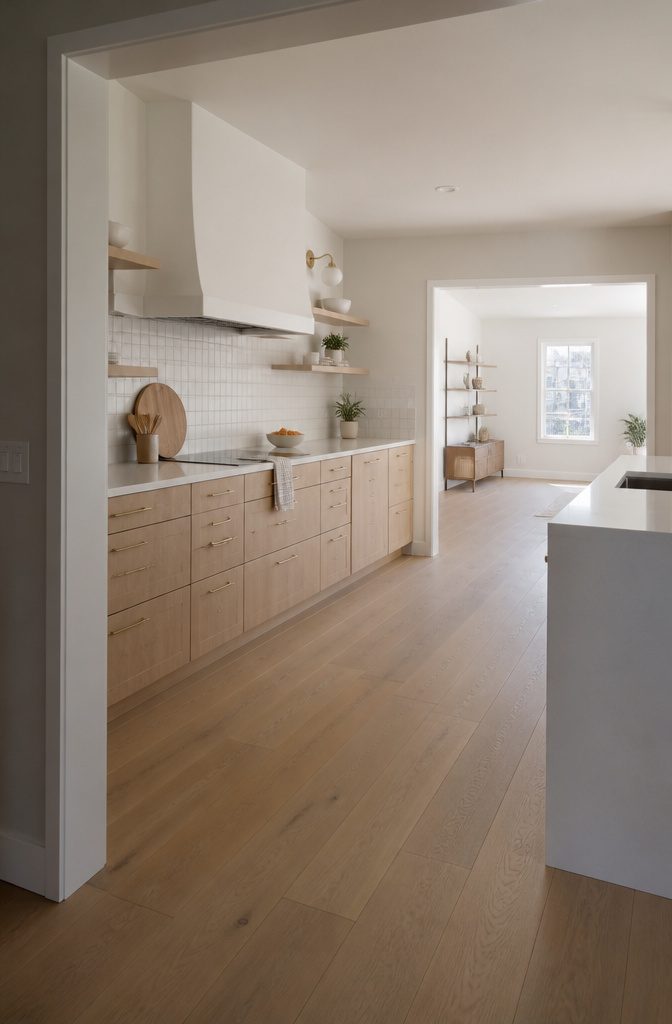
Light wood can brighten a kitchen the way white paint does, as Jenna Malar’s 1949 duplex shows.
She and her husband Luke knocked out a wall to expand the room, then chose light ash-tone cabinets from IKEA. They’re a stock product, so you can buy the same look off the shelf.
Everything around the cabinets is white: the countertop, the backsplash tile, the open shelving, and a frosted white light fixture. With the wood as the only color in the room, it reads as the feature instead of a heavy block.
Slim-profile hardware keeps that effect intact. Chunky pulls would compete with the grain, so choose thin ones.
2. Walnut Flat-Front Doors
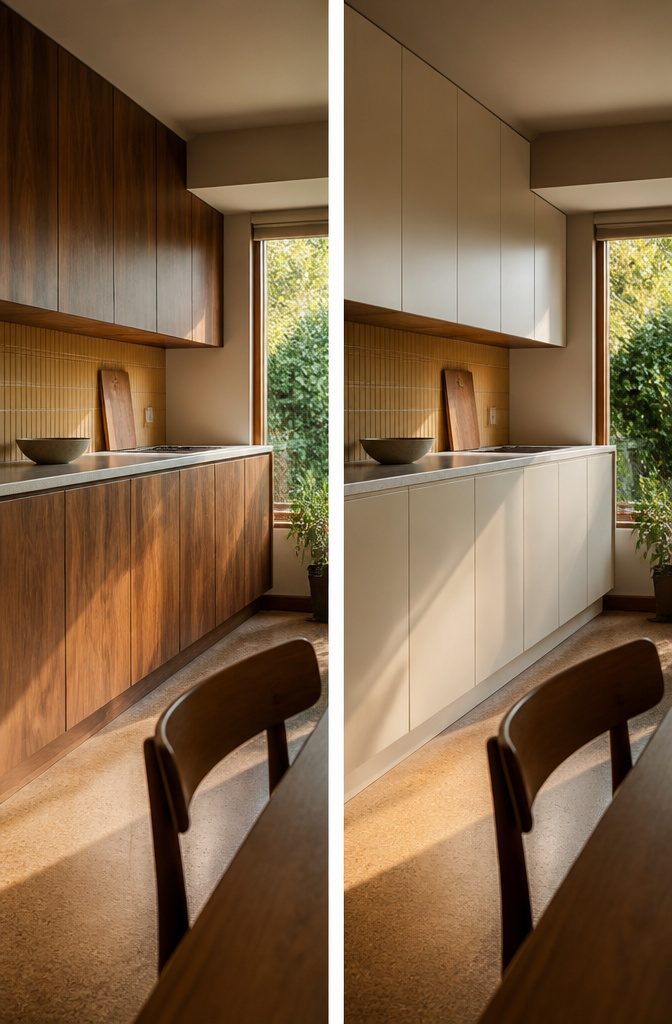
Suzanna Smith’s 1960s kitchen went from natural wood to natural wood, and the two versions look nothing alike. The original doors had raised panels with a cathedral-shaped arch, a profile that reads as 1990s or 2000s rather than mid-century.
She swapped them for flat-front cabinets in a rich walnut finish. The kitchen regained the retro character the house was built with and kept the warmth of real wood.
Door profile carries an era as much as wood color does.
If your cabinets are the right tone but the wrong decade, a flat-front door in a deeper, richer finish will do more for a mid-century house than a lighter stain on the same arched panels.
3. Keep Your Existing Cabinets
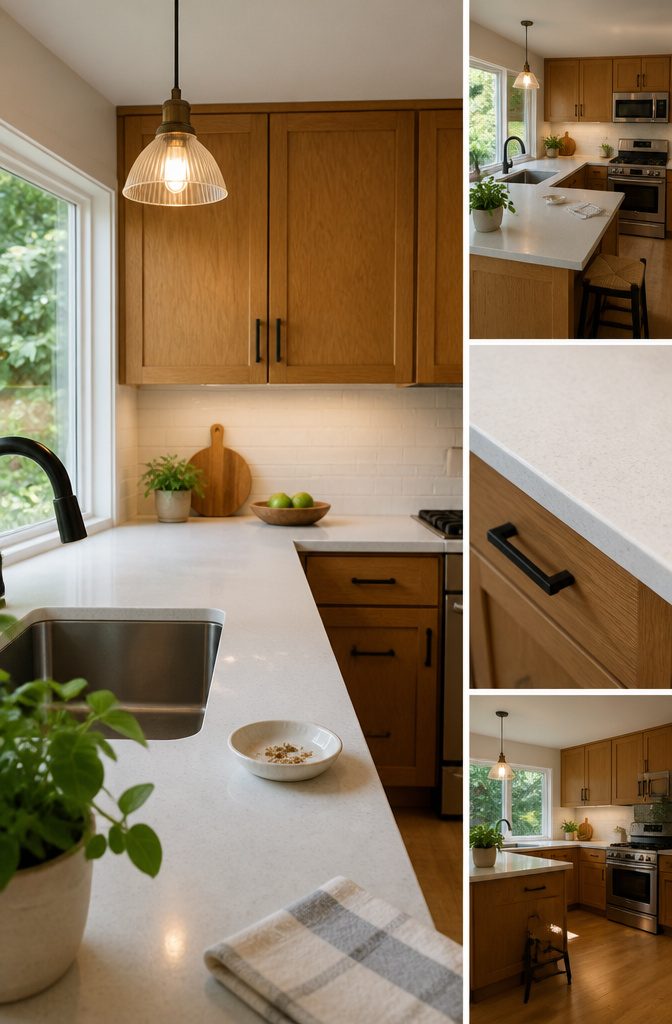
If the cabinet boxes and layout already work, leave them alone and change what surrounds them.
One kitchen kept the placement and the color of its wood cabinets exactly as they were. The real problems were the speckled, wood-trimmed countertops, the dull hardware, and a bare wall where a backsplash should be.
The owners put the bulk of their money into a white quartz countertop, which modernized the room immediately. Spend the most on the countertop, since it is the largest surface beside the wood and sets the tone for everything else.
Black pulls came next, then a backsplash and pendant lighting. With that frame around them, the cabinets look like a deliberate choice instead of a leftover.
4. Light Wood With Black
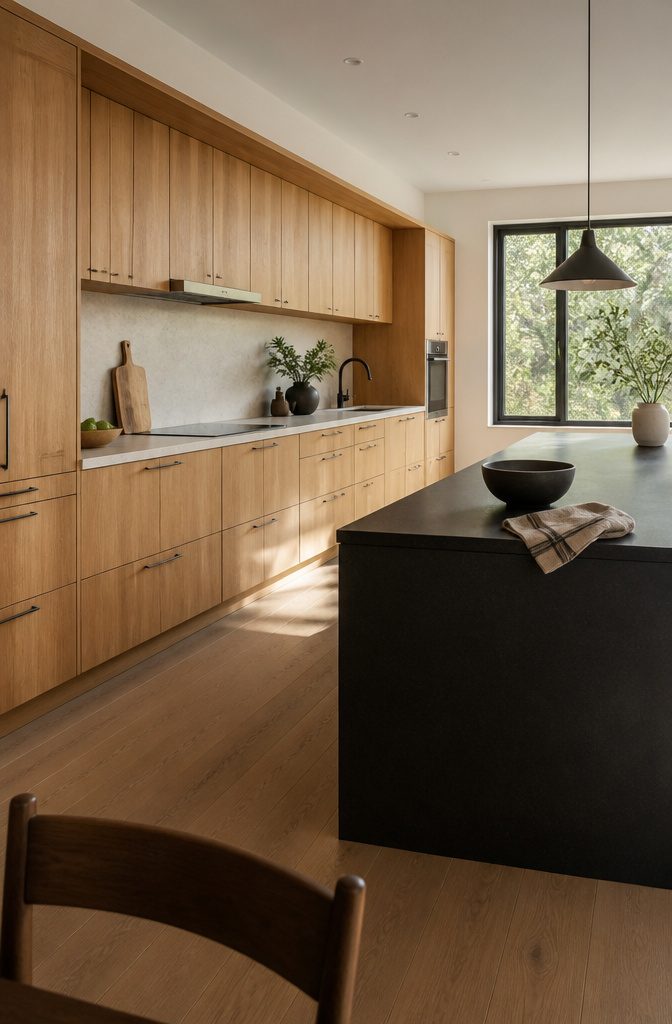
An all-black kitchen can feel intense. Light-toned wood fixes that.
A honey-toned hue adds warmth, so the black reads sleek instead of heavy, and the room feels open and welcoming. One homeowner’s gut renovation swapped cottagey white-painted cabinets for black and light wood, and the kitchen came out completely contemporary.
If you copy the pairing, keep the wood honey-toned and let black play the supporting role.
Gray or very dark wood removes the warmth that makes the black work. A full gut is beyond most weekend budgets, so start with the split: wood on the main run of cabinets, black on one contrasting piece.
How Wood Tone Changes the Room
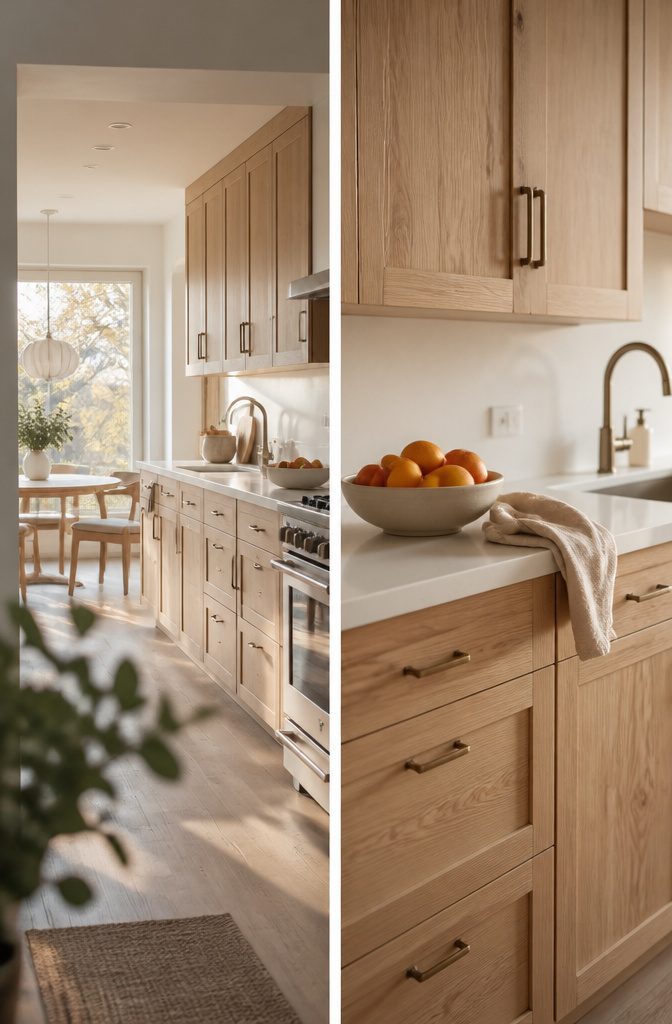
Light wood brightens a room and makes it feel bigger, the same job white paint does on cabinets. Light ash tones get you that breezy look and keep the grain visible, which paint hides.
Richer walnut and honey tones go the other way. They add warmth and lean retro, so they suit a home with mid-century bones.
To make the wood the main event, choose doors with expressive grain and keep the surrounding finishes white and quiet.
In one 1967 home, bulky original cabinets and several walls came out, and the family kitchen was rebuilt around new grain-forward cabinets. Against white finishes, the wood became the focal point of a room that had been dark and dreary.
Pairing Finishes With Wood
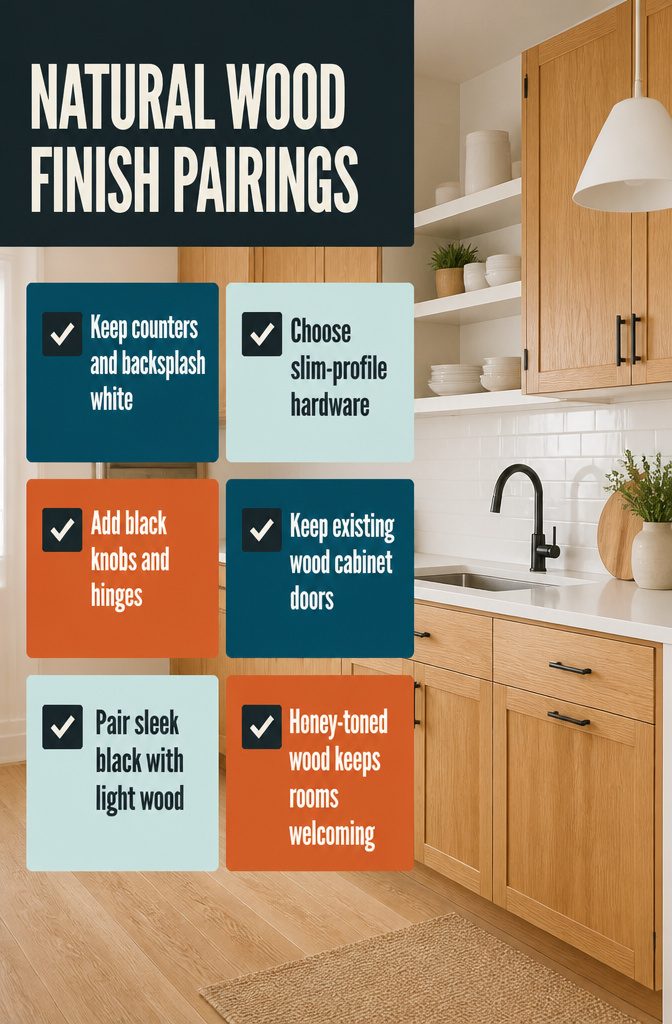
Each of these pairings gives a different feel:
- White surfaces with light wood feel breezy and simple. Keep the countertop, backsplash tile, open shelving and even the light fixture white, and choose slim-profile hardware so the wood stays on display.
- Black knobs and hinges on existing wood cabinets are the lowest-effort update. One Reddit owner added them to 1950s solid wood doors without replacing anything.
- Sleek black beside light-toned wood looks contemporary and warm. All-black kitchens can feel intense, but honey-toned wood keeps the room open and welcoming.