
Cabinet colors run from white to navy, black, and a painted island, and your kitchen’s light and existing undertones should pick the shade.
Dark colors read heavy in a small, low-light kitchen and need at least 2 coats. Expect to spend $200–$600, then let the doors dry 48 hours before reassembly.
1. White Cabinets
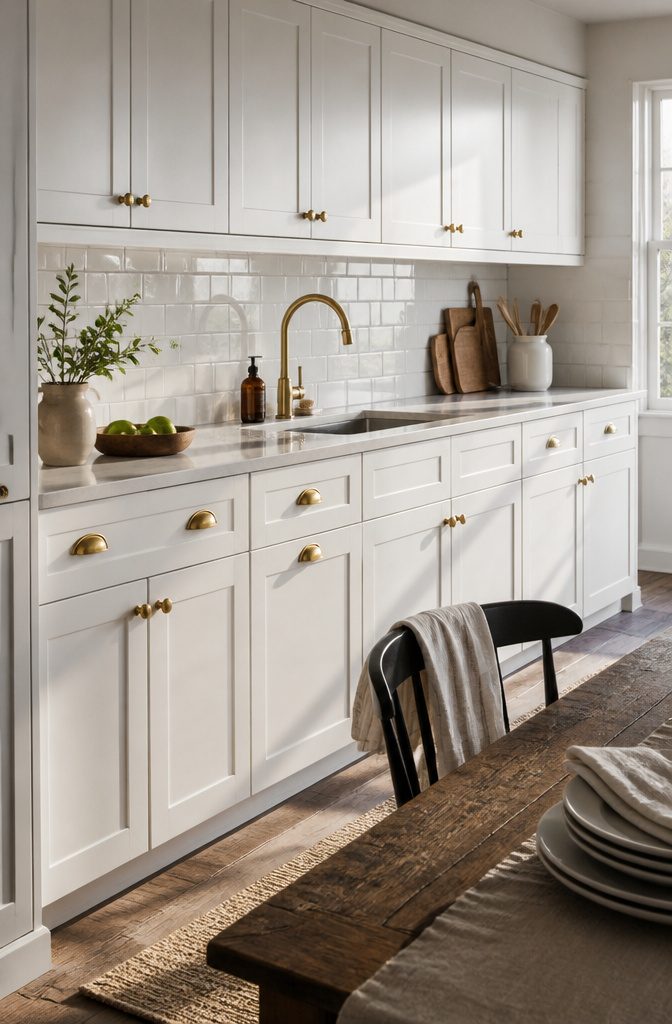
A bright white gives the crispest look and bounces the most light around the room.
That is why it suits small or dim kitchens, and it works with almost any countertop or backsplash. Subway tile and aged brass hardware give it the classic look.
White shows grease, water splashes, and fingerprints quickly, so expect to wipe the doors down often.
With young kids in the house, that is worth weighing before you commit. Satin or semi-gloss is the finish to choose, since both clean more easily than a flat sheen.
For hardware, brushed nickel, matte black, and brass all pair well. Matte black gives the sharpest contrast, and brass warms the look.
Recommended Products

CABINET TRANSFORMATION: Refresh outdated cabinets, vanities, furniture and trim with rich Pure White color and a smooth semi-gloss finish
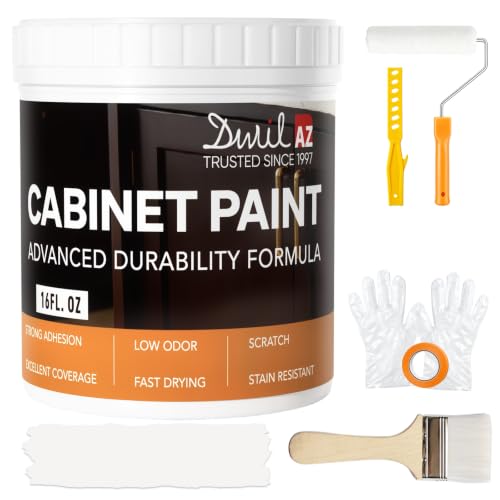
𝙉𝙊𝙏𝙀: Intentional headspace allows room for stirring, dipping, and transit. The stated paint quantity remains unchanged. If you have any questions, please contact our customer service team.
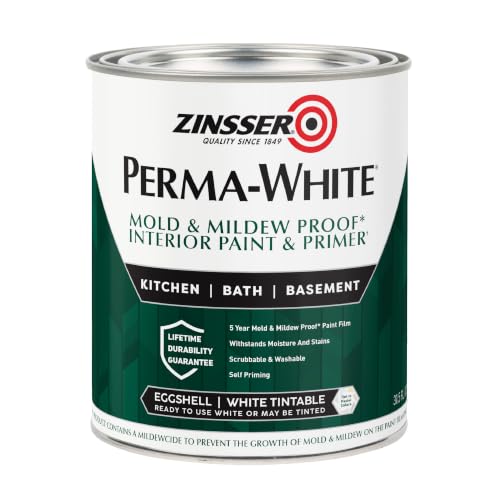
Self-Priming formula - requires no sanding
2. Cream or Warm Off-White
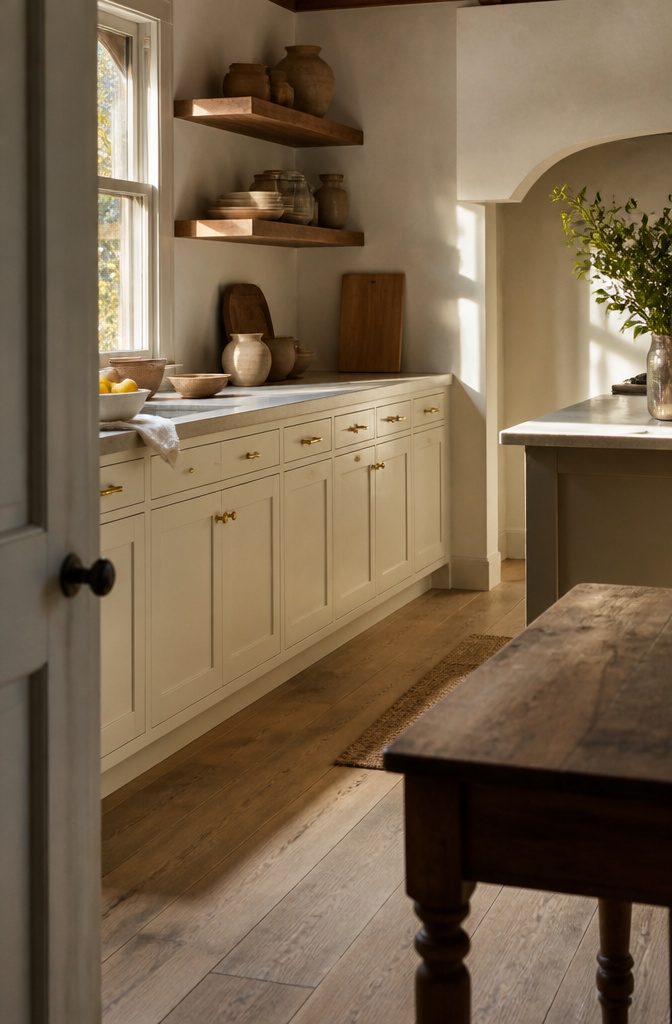
Cream sits between bright white and beige, so it reads relaxed where bright white reads stark. It beats white when your flooring or countertops have warm undertones, because the cabinets then match the room instead of fighting it.
Aged wood shelves or beams and brass pulls suit it well, especially in a farmhouse-style kitchen. Brushed nickel and matte black also work if brass feels too traditional.
Use satin for the finish.
Cream is also a safe choice if you may sell soon, since it goes with many materials without competing with them. Any bold color can go on accessories, where it sits easily against the warm base.
Recommended Products

ALL-IN-ONE Paint - NO Sanding, NO Priming, NO Top Coat Required, Low Luster, Velvet Sheen Finish

Warm Cream Elegance: Antique White offers a warm, light cream shade reminiscent of ancient Egyptian Ivory, perfect for both classic and contemporary settings.
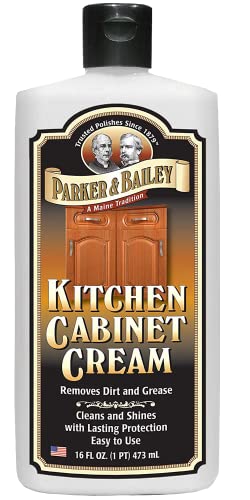
Cleans years of built-up grease and food stains from kitchen cabinets without harsh chemicals or sticky residue
3. Greige Cabinets
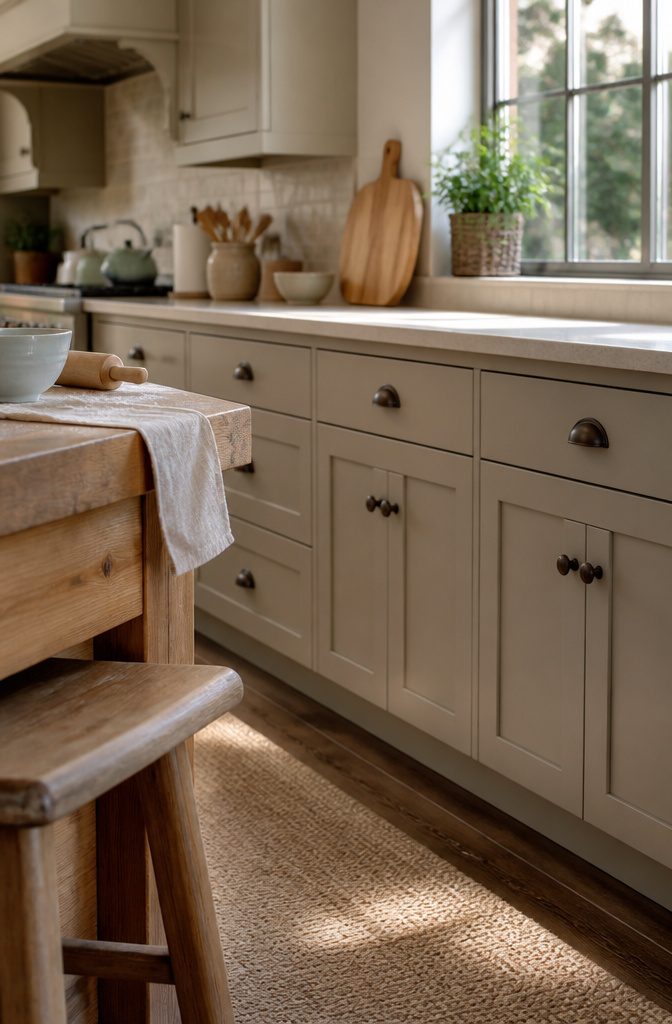
Greige is a gray-beige blend, and the beige side gives it a warmth that hides minor dirt and smudges. In a house with kids, pets, or a lot of cooking, you spend less time wiping fingerprints off the doors.
It also works with almost any countertop material.
That makes it the safer pick over pure gray if your kitchen already has warm finishes, since a cool gray can clash with them while greige reads as part of the same family.
Choose a satin finish, and pair it with oil-rubbed bronze or warm gold hardware to keep the palette warm.
Recommended Products

Hearthstone is a warm greige, satin finish cabinet paint - part of our Rustic Collection.

CABINET TRANSFORMATION: Refresh outdated cabinets, vanities, furniture and trim with rich Dark Gray color and a smooth semi-gloss finish

Includes Three Shades to Match 90% of Surfaces: We offer two color shades of Matte Beige and one Matte White to instantly achieve the perfect color match. Eliminating the need for color charts, returns, and waiting for the right color to arrive. Instead, match to one of the two beige colors or mix colors and match to your desired shade.
4. Gray Cabinets
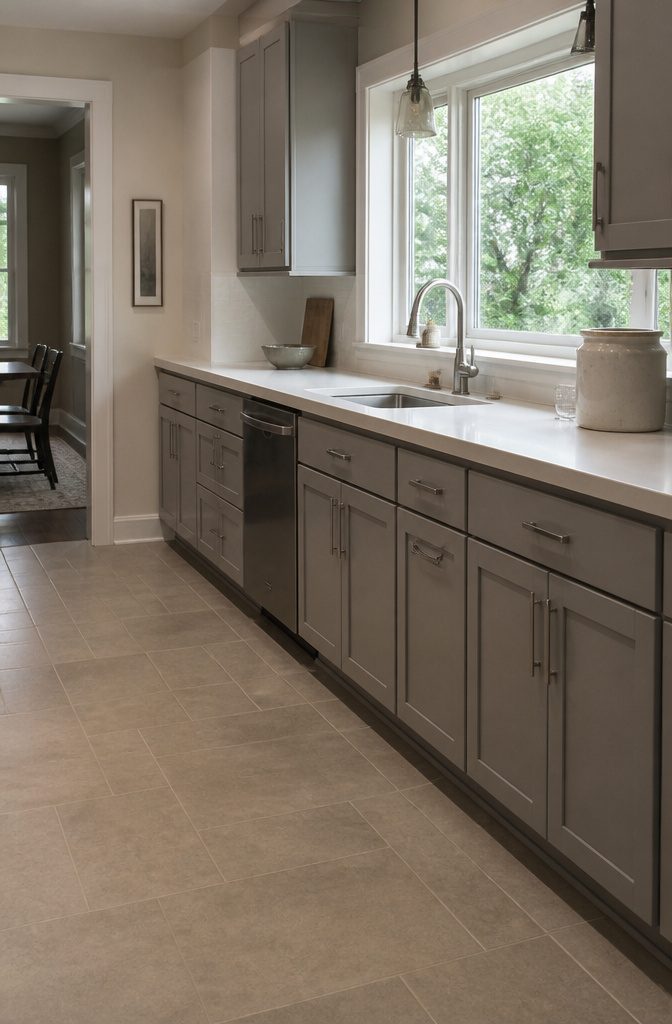
Gray reads modern without demanding much from the rest of the kitchen, which makes it a safe pick for a first paint job.
Check the undertone before you buy. Cool, blue-leaning grays can feel cold in a north-facing kitchen, so if yours gets little direct light, choose a gray with warm undertones instead.
Warm grays also sit well beside taupe floors and off-white countertops, so they blend into those tones rather than clashing with them.
Satin is the finish to ask for. For hardware, brushed nickel or chrome keeps the look soft and bright, while matte black adds contrast and makes the gray look sharper.
Recommended Products

ALL-IN-ONE Paint - NO Sanding, NO Priming, NO Top Coat Required, Low Luster, Velvet Sheen Finish
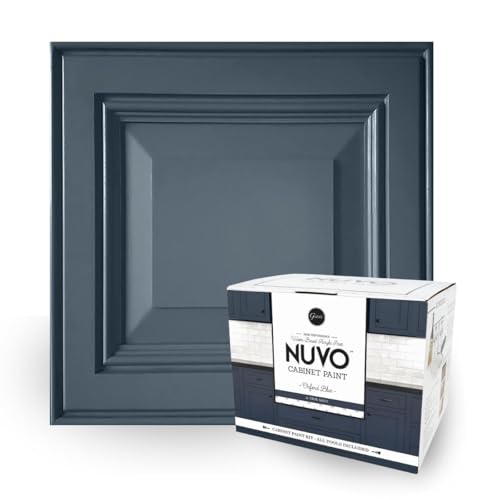
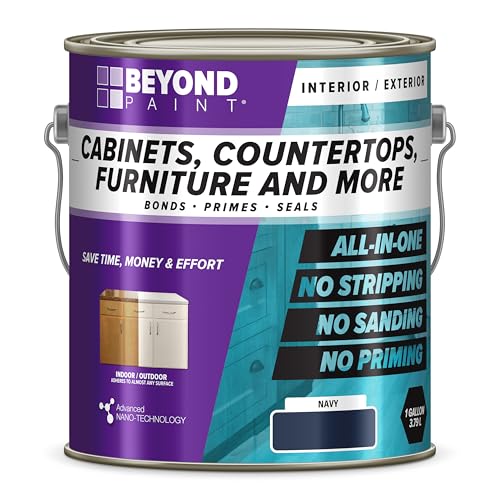
Regal Navy Elegance: Oxford Blue, a bold, true navy, mirrors the official color of the prestigious English University, ideal for both modern and classic decor.

Oxford Blue is a true navy, satin finish cabinet paint - part of our Modern Collection.
5. Navy Blue Cabinets
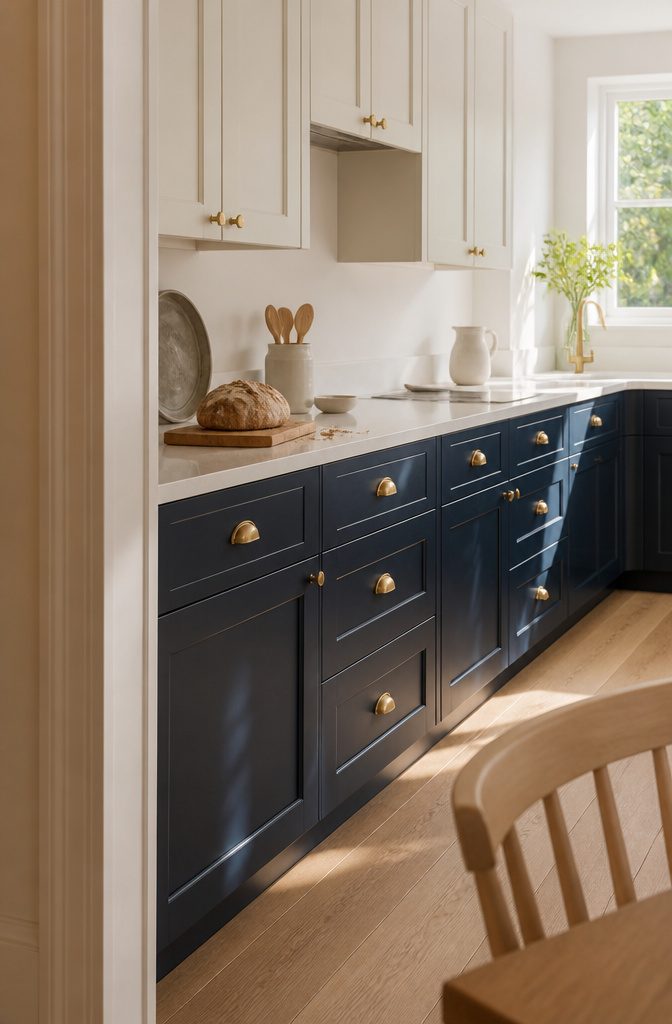
Navy is bolder than it needs to be, so control where it goes.
Paint the lower cabinets navy and keep the uppers white or cream, and the color looks sharp without darkening the whole room. White or cream walls and countertops work the same way, and gray is a classic partner too.
Dark colors usually need at least two coats to cover, so plan paint and drying time for that. Satin is the finish to choose.
Brushed brass or aged bronze hardware makes one of the most timeless combinations in kitchen design. Skip navy on every cabinet in a small, low-light kitchen unless the uppers stay light.
Recommended Products

Size & Tips: We'd better suggest you check & confirm the size of the cabinet handles you need before purchasing.

WHAT YOU WILL GET: Each package contain 6 cabinet handles, and each handle comes with 2 sets of mounting screws.

Durability: Heavy-duty zinc alloy material gives cabinet handles exceptional durability, capable of withstanding wear and tear from daily use. Compared to plastic or lighter materials, zinc alloy offers greater strength, making handles less prone to deformation or damage even with frequent use, significantly extending their lifespan.
6. Black Cabinets
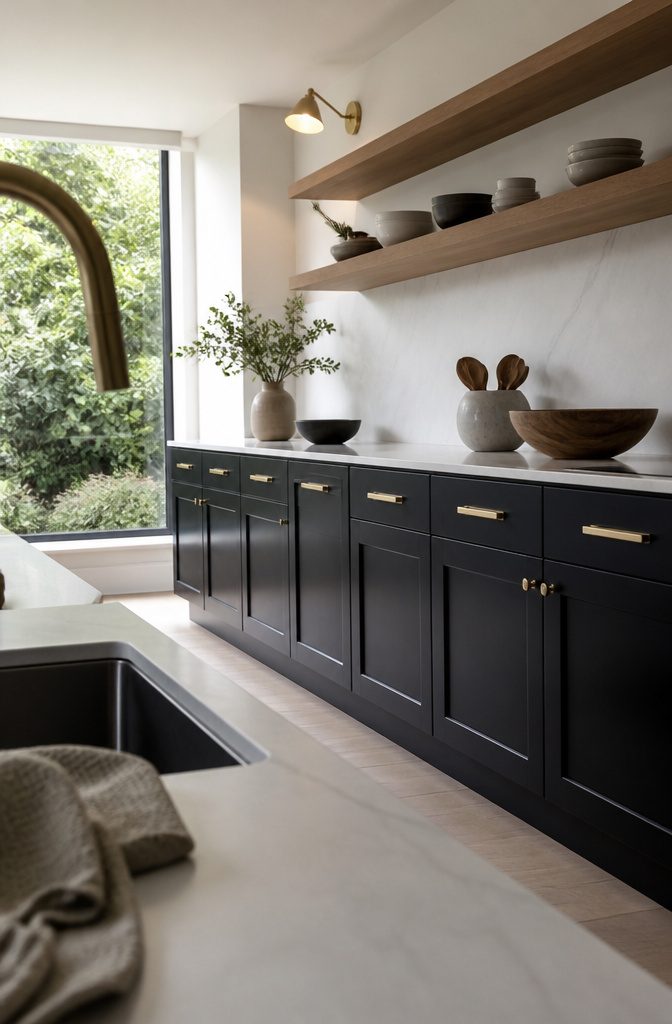
Black works when something light sits next to it.
Pair black lower cabinets with light countertops, a bright backsplash, or open shelving above, and the kitchen reads modern instead of dim. Painting only the lowers is a smaller commitment than black on both rows.
Plan on at least two coats of dark paint.
Pick satin over high-gloss, because satin hides smudges better, while high-gloss shows watermarks and fingerprints within the first week. Even in satin, black shows dust, so expect to wipe the doors more often than you would on white.
Brushed gold looks warm against black. Polished chrome or matte silver keeps it cool, and matte black hardware gives a tone-on-tone look.
Recommended Products

Easy Renovation: The white paint pen features a built-in brush head, requiring no additional tools—simply open the cap and apply. It quickly covers and repairs surface imperfections, creating a clean, like-new finish with ease. Ideal for non-professionals tackling home improvement projects

Use for a variety of indoor and outdoor project surfaces including wood, metal, plaster, masonry or unglazed ceramic

Easy Renovation: Our innovative bottle with a built-in brush makes your renovation projects a breeze. No need to hire professionals, as anyone can use this fast-drying, DIY-friendly product
7. Forest Green Cabinets
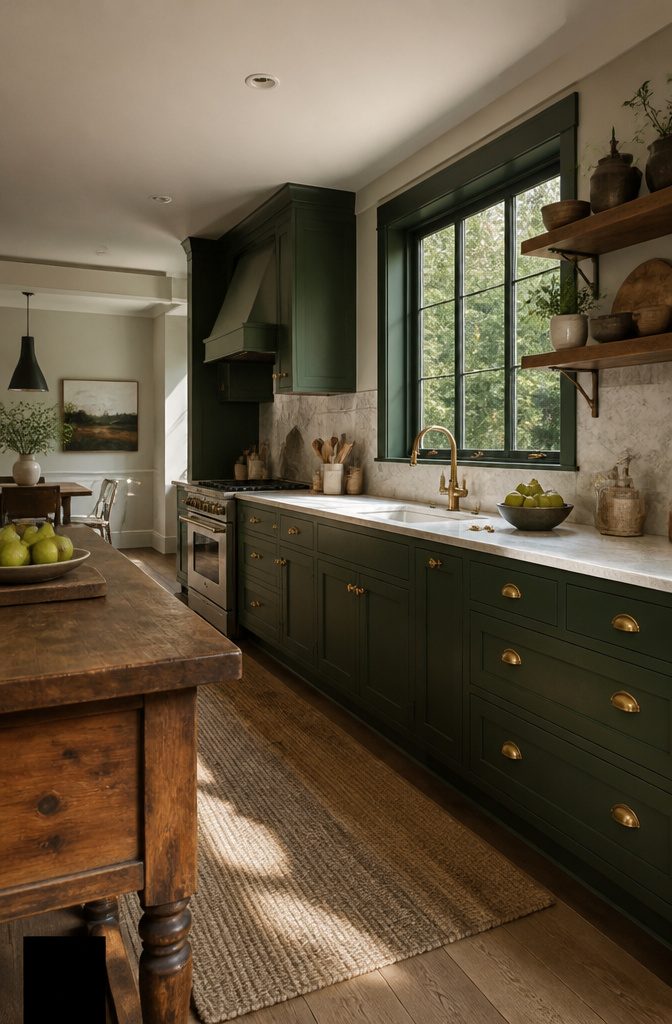
Deep forest green suits kitchens with natural light, wood accents and a stone backsplash. Oak open shelving, a butcher block island top, or a marble or granite backsplash gives the green something to sit against.
In a kitchen with a small window or none, it reads dark and makes the room feel smaller, so skip it there.
Pair it with brass or gold pulls and knobs and light countertops. The metal warms the green, and the pale surface keeps the room from feeling heavy.
Satin or eggshell is the finish to ask for. Smoky jades and grounded greens have also turned up in major paint brands’ color-of-the-year picks, so the shade is not a passing fad.
Recommended Products

Wood Cabinet Cleaner - Parker & Bailey Kitchen Cabinet Cleaner has a safe, easy to use formula that gently works as a degreaser, spot cleaner and build-up remover. Rejuvenate cabinets to their original beauty and natural loo

Cleans years of built-up grease and food stains from kitchen cabinets without harsh chemicals or sticky residue

Easy Application: The innovative bottle design features a built-in precision brush, eliminating the need for extra tools. The fine brush allows for accurate and detailed repair of small blemishes and scratches, making the touch-up process effortless and worry-free. Suitable for both beginners and experienced DIY enthusiasts.
8. Sage and Pastel Cabinets
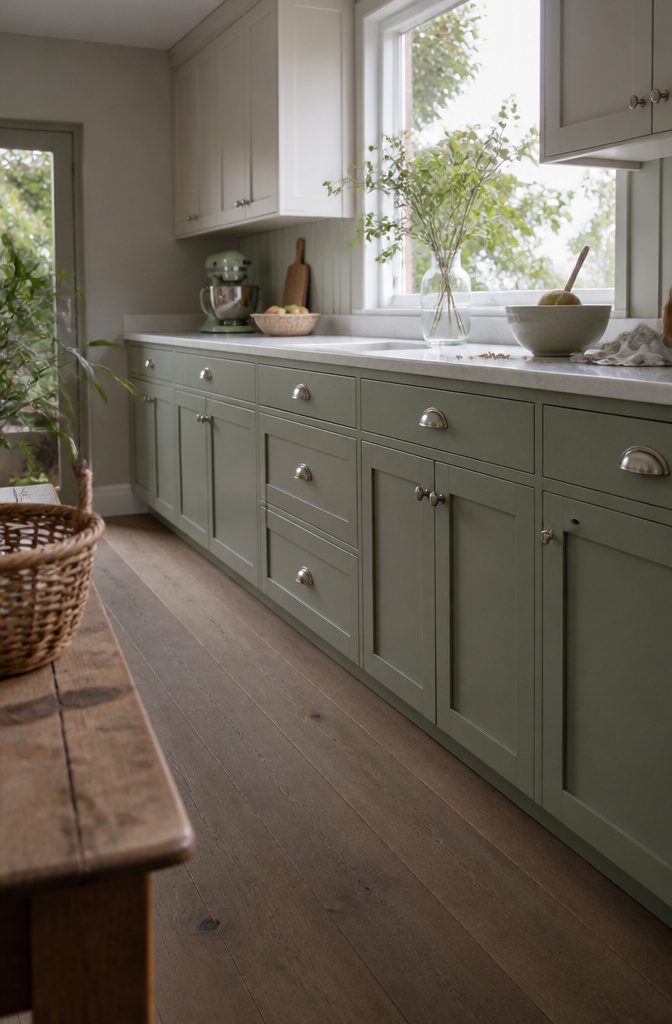
Sage sits between blue and green with a soft gray cast, so it reads calm where forest green reads heavy.
It holds up as natural light shifts through the day without looking washed out, and it fits farmhouse and transitional kitchens naturally.
You can paint the full kitchen or just the lower cabinets, which is the smaller commitment if you want the color without covering every door. Choose a satin finish and pair it with matte black or brushed nickel hardware.
For a more playful look, go with a pale green or teal. It reads retro, and colorful appliances add contrast against it.
Recommended Products

CABINET TRANSFORMATION: Refresh outdated cabinets, vanities, furniture and trim with rich Cadet Gray color and a smooth semi-gloss finish

ALL-IN-ONE Paint - NO Sanding, NO Priming, NO Top Coat Required, Low Luster, Velvet Sheen Finish
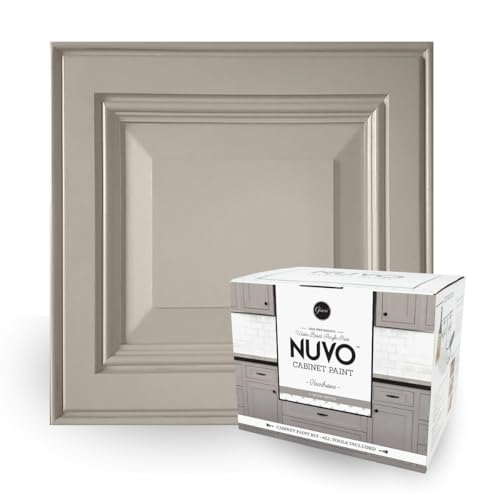
Versatile Greige Charm: Hearthstone, a soft, warm greige, adapts to grey or beige depending on its surroundings, echoing the natural stone fireplaces of the Irish countryside.
9. Dusty Coastal Blue
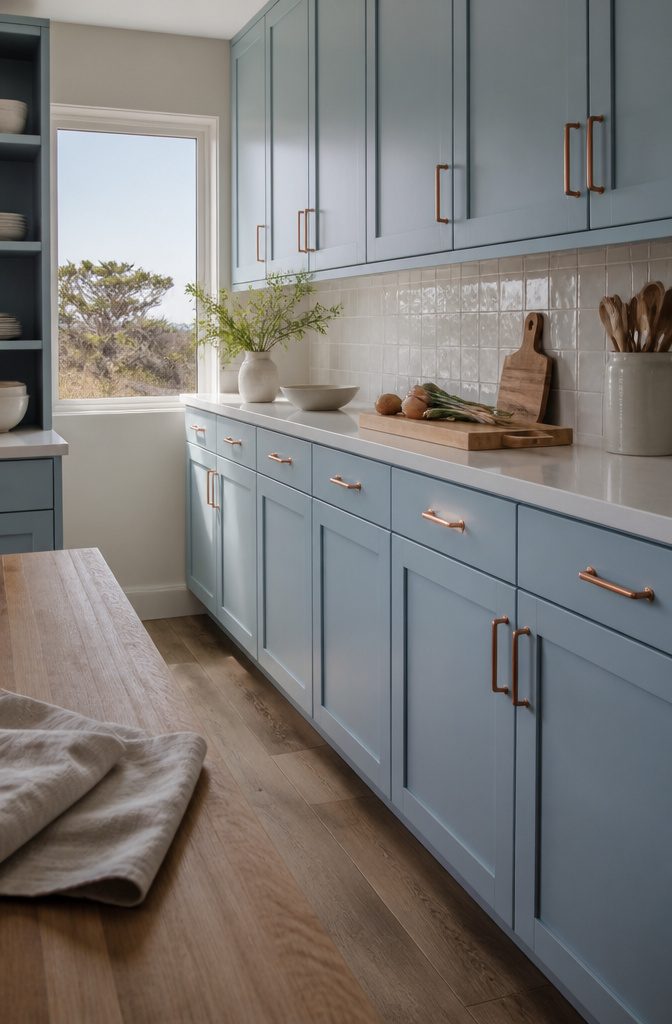
Dusty blue is a muted, softened shade that reads as calm rather than bold, so it suits coastal, farmhouse and cottage kitchens.
Next to navy, it is lighter and more relaxed, and it is easier on a small room, where a deep color can feel heavy.
Pair it with white countertops and warm wood accents.
For hardware, brushed nickel or copper both work without overpowering the color. Brushed nickel keeps the look cool and crisp.
Copper wins if your kitchen has a lot of wood, because its warmth picks up the grain. Use a satin finish on the cabinets.
Recommended Products

All-surface uniquely formulated paint solution: Easily refinish furniture, cabinets, countertops, doors, trim, floors and more

ALL-IN-1 PAINT & PRIMER: A hardy multi-purpose and multi-surface one-coat paint and primer in one for almost any indoor or outdoor surface. A wall, ceiling, floor, skirting board, cabinet, furniture and door paint for your bathroom, kitchen, home and garden.
All-surface uniquely formulated paint solution: Easily refinish furniture, cabinets, countertops, doors, trim, floors and more
10. Bold Colors and Yellow
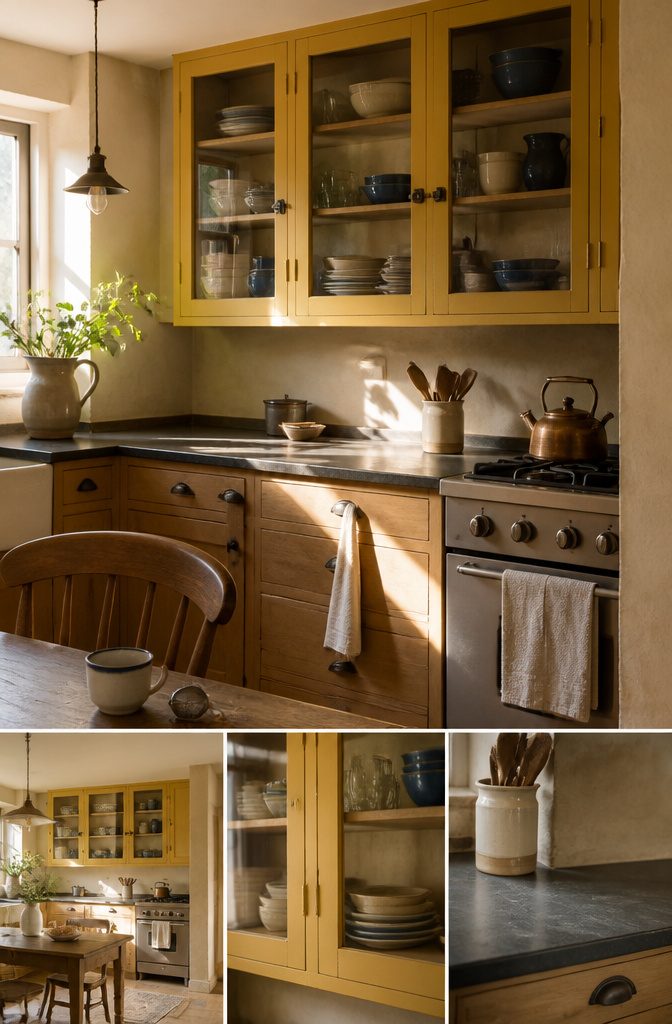
Yellow is the bold color most likely to look intentional, because it reads as vintage instead of loud.
Pair sunny cabinets with antique pendant lights and soapstone countertops, and keep the door style simple, as in a cottage kitchen. With any vivid color, keep fixtures and appliances in natural tones so the room doesn’t turn dark or cluttered.
If a full kitchen of color feels like too much, paint only the frames of glass-front or open-shelf cabinets. Navy, forest green, and deep charcoal all work, since the color shows behind your dishes.
Pick dishware that complements the paint, and the shelves look planned. Painting a few boxes is also a smaller commitment than painting every door.
Recommended Products

[Aftersales Service]: Two-year aftersales guarantee, if any problems please contact us for replacement or refund.

STYLE: Easily update your kitchen and bathroom cabinets or furniture with our casual cabinet hardware collection.
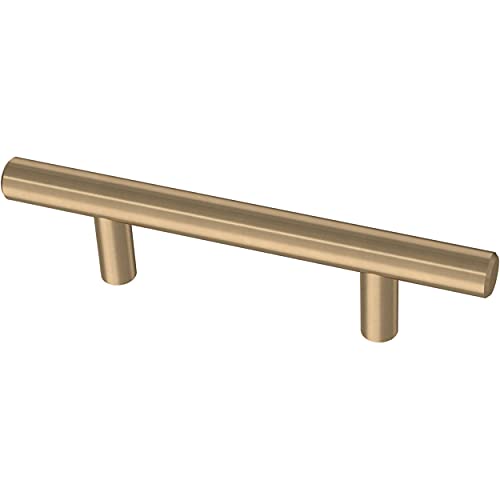
STYLE: Modern handles add a sleek look to kitchen cabinets, dressers, furniture
11. Muted Red Cabinets
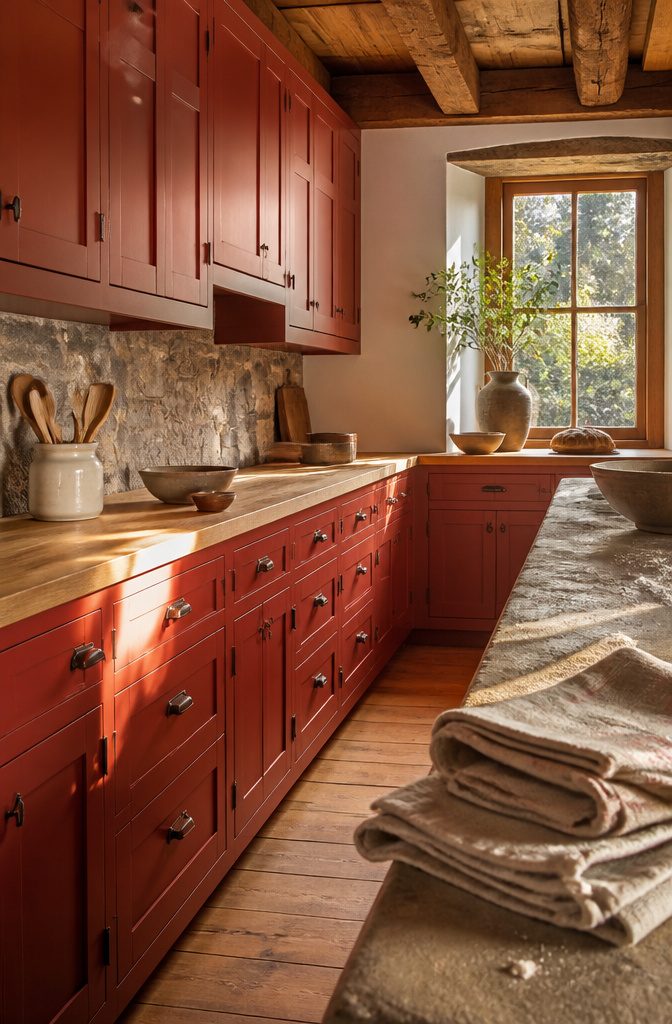
Muted red brings warmth to a rustic kitchen in a way white or gray can’t. Pick an orange-red with some brown or gray in it, a shade that looks lived in rather than fresh from the can.
A bright, pure red competes with everything around it and reads as loud. A muted orange-red stays rich and sophisticated while still drawing the eye.
It looks best beside natural, authentic materials: bare wood floorboards, a wood countertop or beams, iron pulls and hinges, and a stone counter or backsplash.
If your kitchen has those, red cabinets will feel like they belong there. If it’s mostly glossy laminate and chrome, skip this one.
12. Two-Tone Cabinets
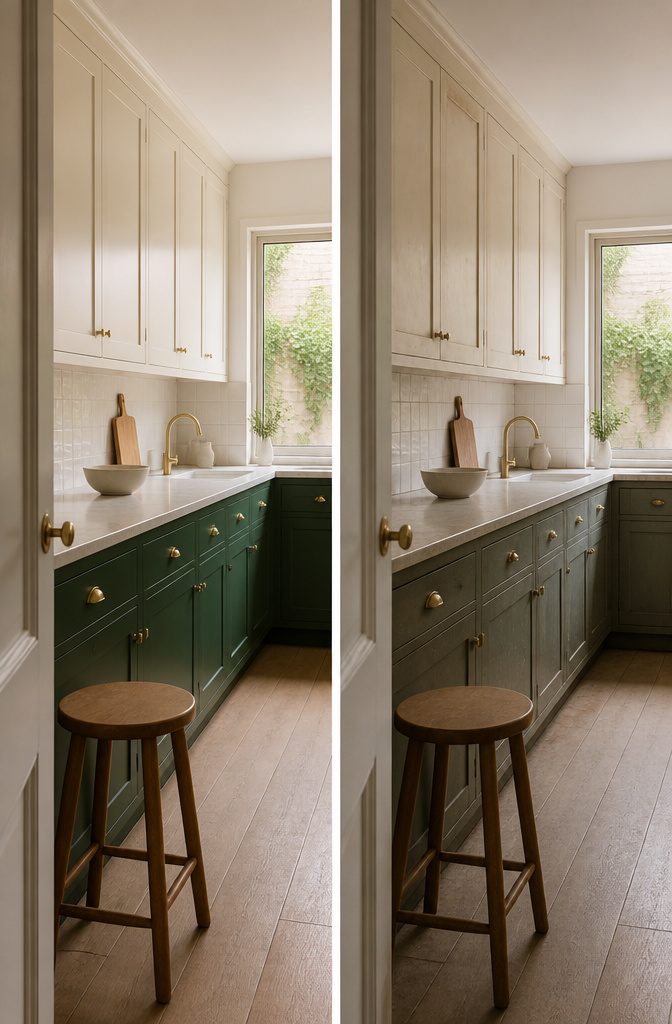
Two-tone cabinets give you depth and contrast without painting the whole kitchen a bold color. There are two ways to split them.
Light on top and dark below keeps the room grounded and open. White uppers over navy lowers, cream over forest green, and gray over charcoal all follow that rule.
The reverse also works: a bold color on the upper cabinets with natural tones below. That suits you if you want the color at eye level and a calmer base.
To keep either version cohesive, stick to one dark tone, one light tone, and one hardware finish on every door and drawer. A single finish, whether all brass or all black, makes the two colors look planned rather than mismatched.
13. Paint Only the Island
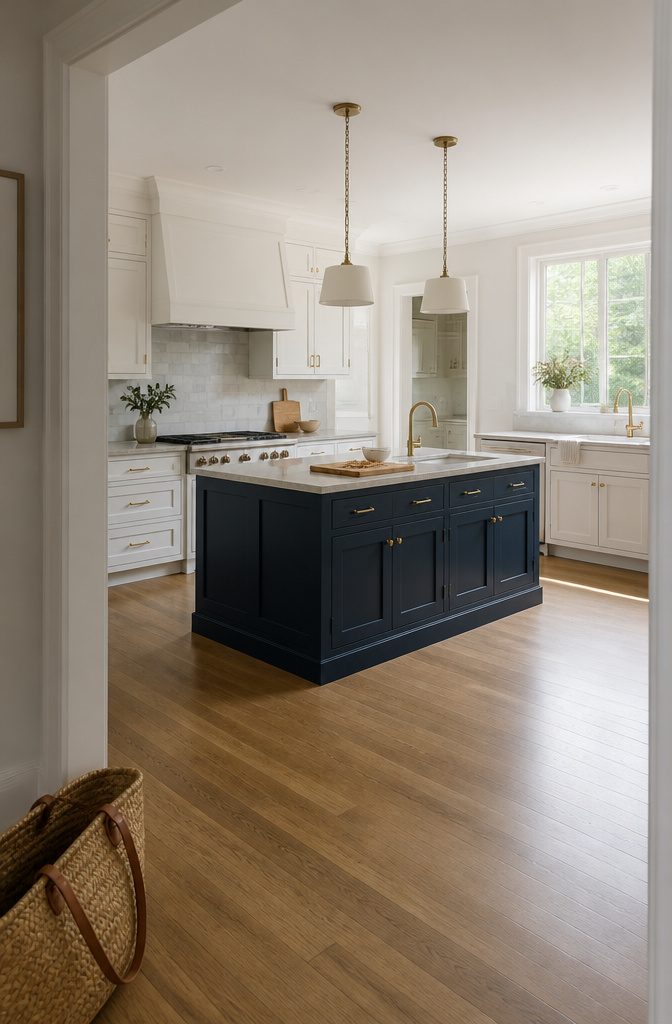
Painting only the island is the smallest job on this list. You skip the perimeter cabinets entirely, so the work fits in a weekend and the paint bill stays small.
Navy, forest green, black, and a rich warm yellow all work against white or cream perimeter cabinets.
Blue also adds a cool, coastal feel to a white kitchen. The island sits in the middle of the room and draws the eye first, so choose the color you most want to see from the doorway.
Keep the hardware finish the same on the island and the perimeter cabinets. Matching pulls and knobs make the contrast read as a design choice instead of a leftover project.
Choose the Right Finish
Water-based latex is the most popular cabinet paint and the easier one to work with. Oil-based paint is less common but more durable.
With either, choose satin for most kitchens. It handles daily wiping, hides fingerprints, and still looks finished.
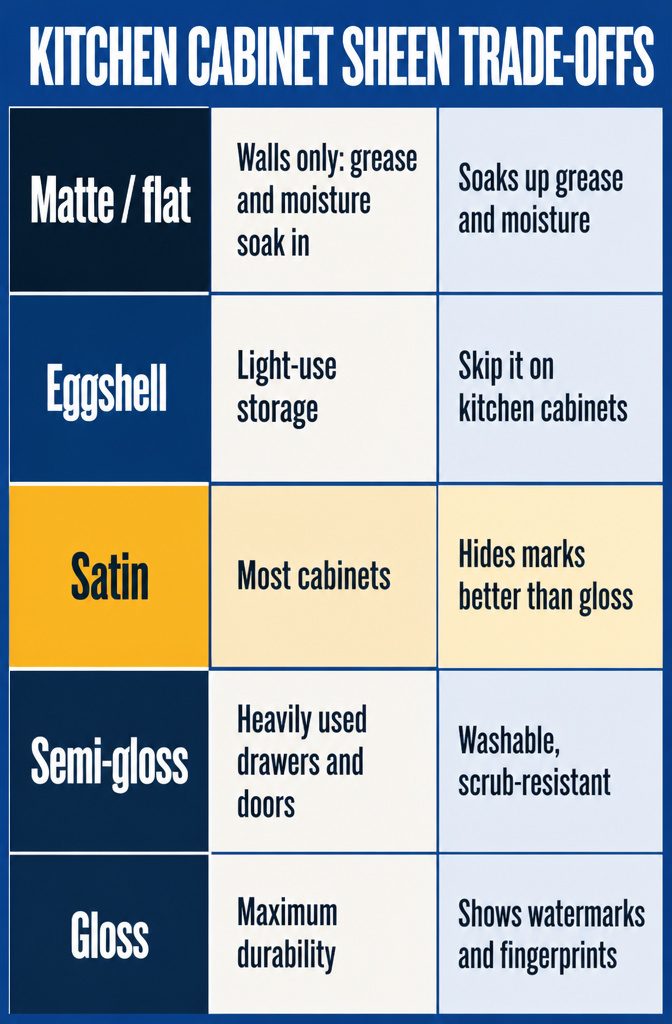
Sheen decides how cabinets handle grease, splashes and fingerprints:
| Finish | Best for | Trade-off |
|---|---|---|
| Matte/flat | Walls only | Soaks up grease and moisture |
| Eggshell | Light-use storage | Skip it on kitchen cabinets |
| Satin | Most cabinets | Hides marks better than gloss |
| Semi-gloss | Heavily used drawers and doors | Washable, scrub-resistant |
| Gloss | Maximum durability | Shows watermarks and fingerprints |
Prep, Cost and Timing
Set the budget first, since the total swings with kitchen size and hardware.
You can expect to spend anywhere between $200-$600 on average, depending on the size of your kitchen, tools you need to buy, whether you’re replacing pulls or not.
Reusing your old pulls keeps the total lower.
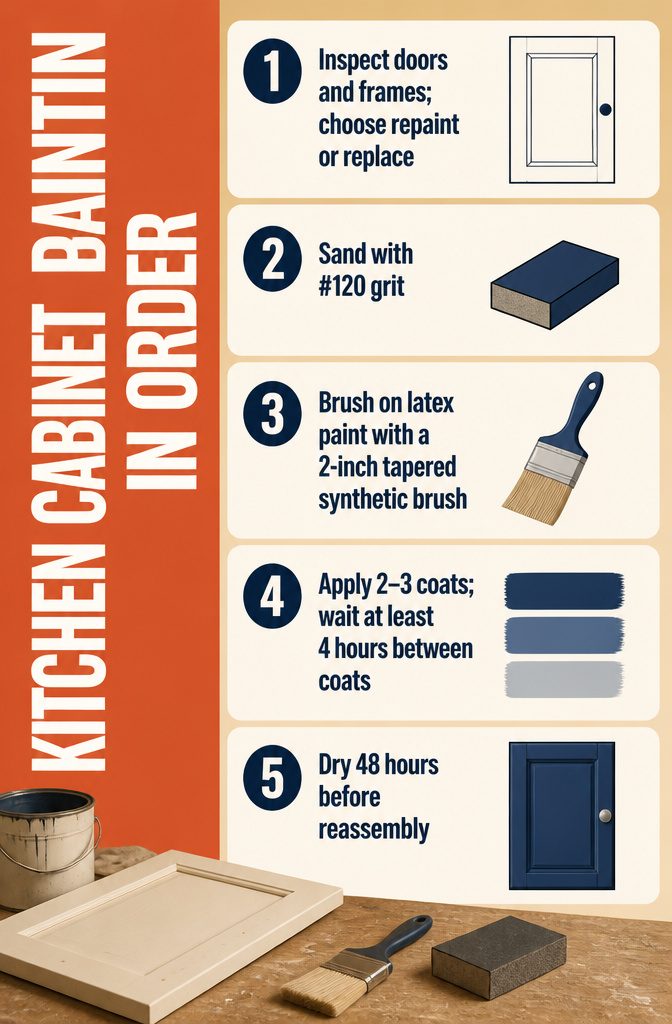
- Check every door and frame for damage or rot, then decide whether to repaint or replace.
- Sand with #120 grit.
- Brush on latex paint with a 2-inch tapered synthetic brush.
- Apply 2–3 coats, waiting at least 4 hours between them.
- Let everything dry 48 hours before reassembly.
Plan on the kitchen being out of commission for several days.
Frequently Asked Questions
What is the best color to paint kitchen cabinets?
No single color wins for every kitchen, so start with your countertops, flooring, natural light, and room size. White suits small or dim kitchens because it reflects the most light, while greige hides fingerprints and smudges in a busy household.
Dark colors like navy, black, and forest green work best in kitchens with plenty of light, or on the lower cabinets only.
Can I just paint over my kitchen cabinets?
Yes, if the doors and frames are in good shape. Check them for damage or rot first, sand with #120 grit, then brush on latex paint in 2–3 coats, waiting at least 4 hours between coats.
Let everything dry 48 hours before you reassemble. Expect the kitchen to be out of commission for several days.
What are common mistakes when painting kitchen cabinets?
The most frequent errors are choosing a color before checking it against your countertops and flooring, and putting dark paint on every cabinet in a small, low-light kitchen.
Finish is another trap: flat and eggshell soak up grease and moisture, while gloss shows watermarks and fingerprints, so satin suits most kitchens.
Dark colors also need at least 2 coats, and rushing the 48-hour dry time before reassembly can damage the new paint.