
The ideas run from a weekend hardware swap to a marble waterfall island, and the deciding factor is how much upkeep you’ll tolerate.
Gloss shows every fingerprint, marble etches from lemon juice and wine, and open shelves collect grease. Renters can stick to accessories, a patterned runner, and plug-in strip lights.
1. Shaker-Style Doors
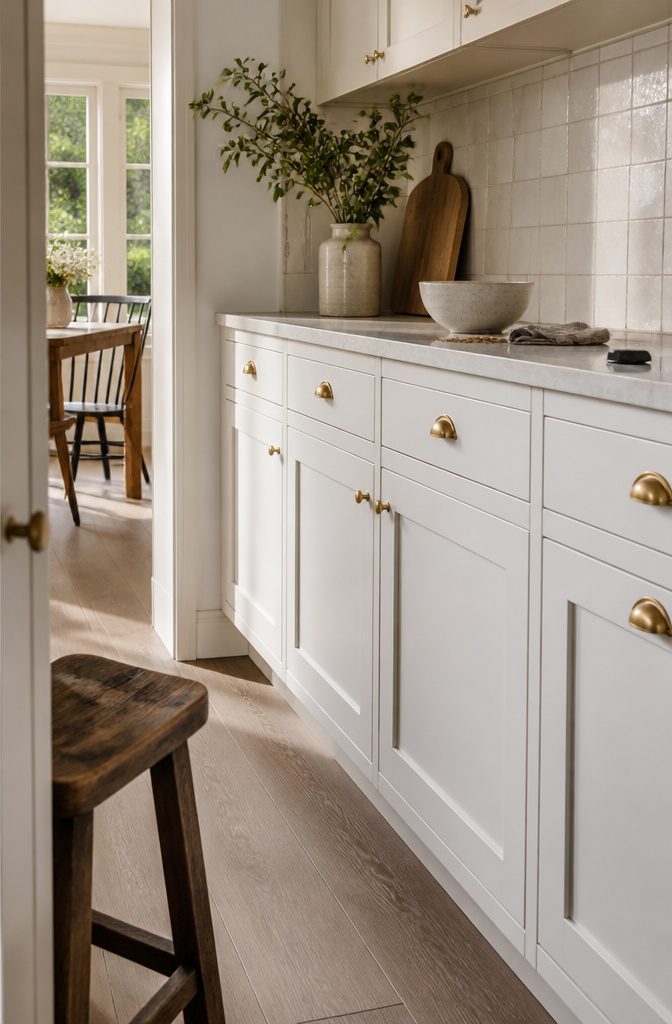
Recessed-panel doors, with a flat center framed by a narrow rail, are the white cabinet that fits almost any kitchen.
Paint them a warm white such as Benjamin Moore Chantilly Lace and they read softer than a stark builder white, which suits farmhouse and transitional rooms alike.
The doors stay plain, so hardware does the restyling. Aged brass cup pulls lean farmhouse, and swapping them is a weekend job.
Shaker is the safest pick for renters and first-home owners because it’s simple enough not to date quickly and it works with whatever countertop or backsplash you add later.
If you spend on one upgrade, make it soft-close hinges. They cost little and make the doors feel better built.
Recommended Products

Click "Customize Now " and follow the steps to create your custom cabinet doors today!

Design House offers furniture, lights, cabinetry, hardware, locks, rugs, mirrors and more for your home.
2. Sleek High-Gloss Fronts
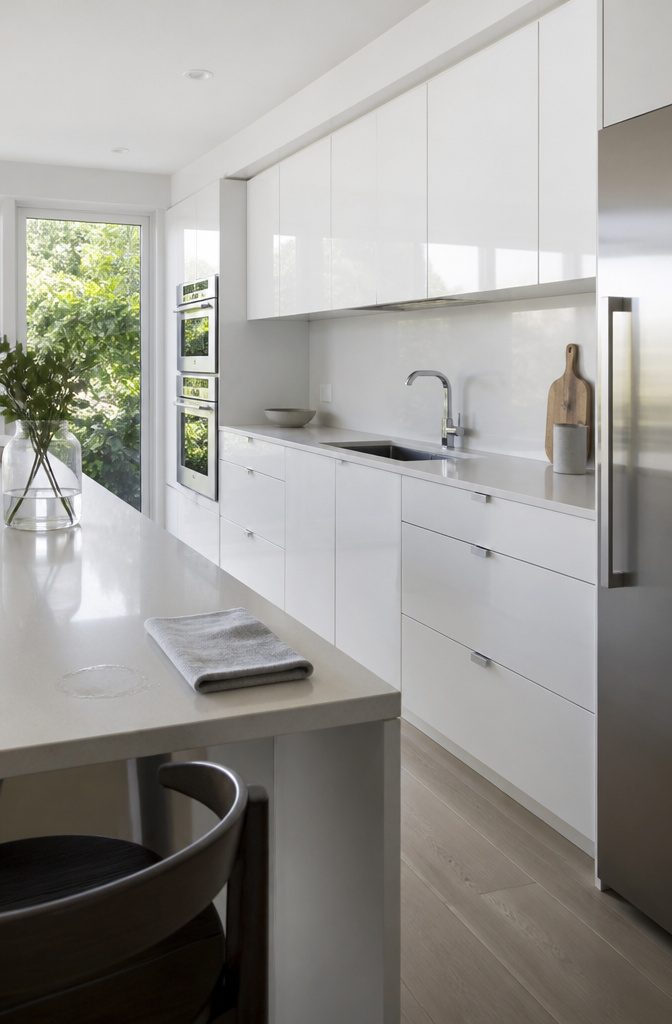
High-gloss white lacquer or laminate on flat-panel doors bounces light around the room, so a small kitchen feels bigger and brighter. This look suits minimalist kitchens best, especially with handleless doors or concealed recessed pulls, so nothing interrupts the surface.
Stainless steel appliances and shiny hardware pair well with it, and a single vase or bowl is all the decor it needs.
Gloss shows every streak and fingerprint, so these fronts need a wipe-down after cooking and after small hands have been near them.
Wipe the fronts regularly with a microfiber cloth so streaks don’t build up. If you cook daily and don’t want to wipe, a matte flat-panel door will frustrate you less.
3. White-on-White Layers
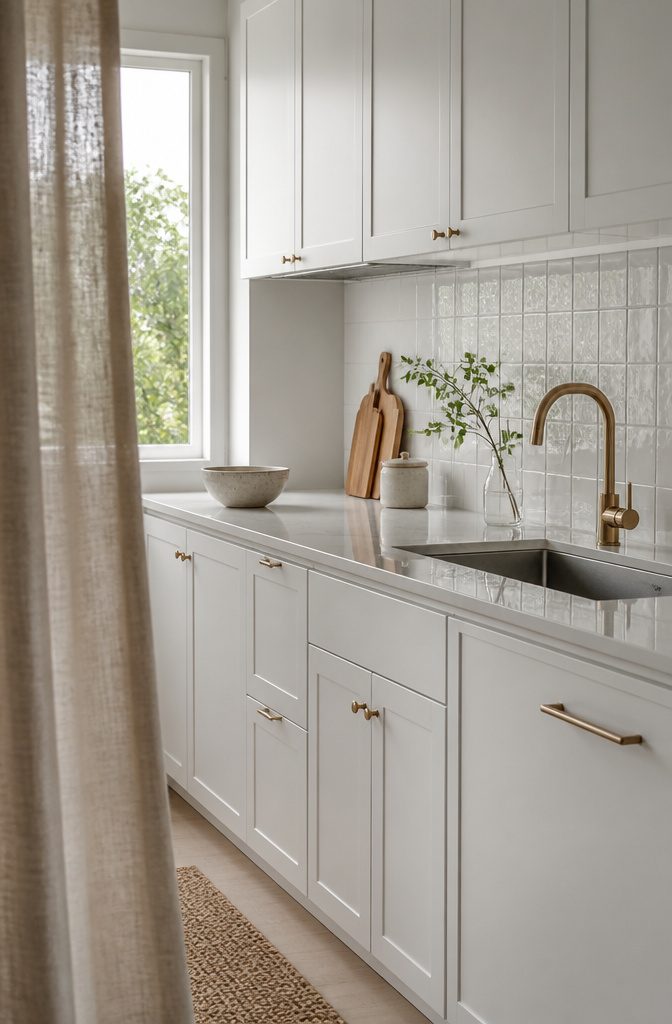
Matte cabinet paint, glossy tile, and a stone counter can all be white and still read as three different surfaces. That difference keeps a white-on-white kitchen from looking flat.
With one finish everywhere, light bounces back evenly and the room turns sterile. Mixing matte, gloss, and marble gives the eye something to catch, so the space stays calm without going blank.
Keep the cabinets matte and let one element carry the shine, such as the backsplash tile. Painted wood adds a softer layer between the two.
Keep accessories light and natural, because heavy metals break the quiet. This look suits minimalists and Scandinavian-style rooms, and it makes architectural details stand out.
4. Wood Accents and Two-Tone Cabinets
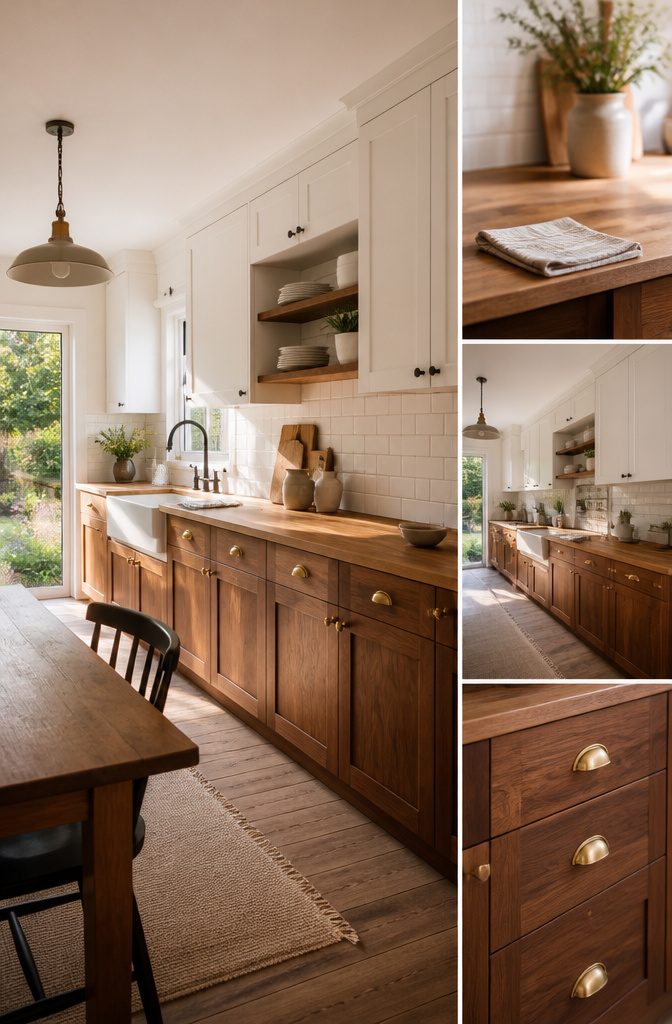
White cabinets can feel cold on their own, and wood is the simplest fix.
A butcher block countertop or a pair of open wood shelves adds warmth without crowding the room. A wood island suits a farmhouse look, especially with simple black handles and vintage-style light fixtures.
For a bigger change, try white uppers over stained walnut or oak lower cabinets. The white keeps the room open, and the wood grounds it.
Matte paint on the uppers works well, and open shelves in the same wood tone tie the two halves together. Brass hardware suits the warm lowers.
Wood needs upkeep. Oil a butcher block counter regularly so it doesn’t dry out, and wipe the white cabinet faces monthly to prevent yellowing.
5. Open Shelving and Glass Fronts
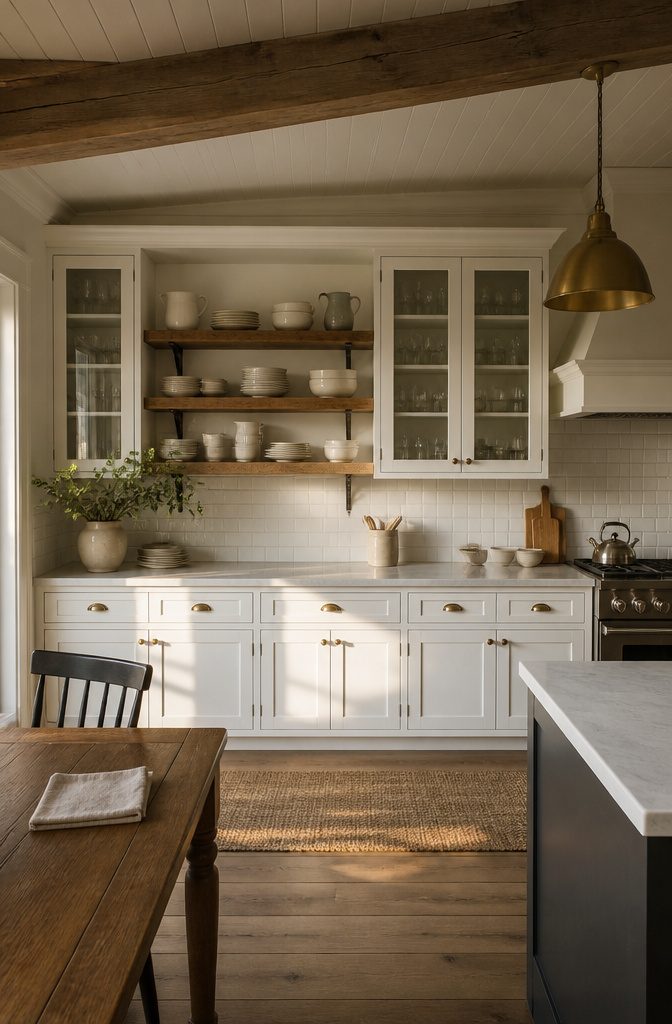
Remove the doors from a few upper cabinets and fill the gap with reclaimed wood planks on sturdy brackets. Keep everyday plates, bowls, and mugs on these shelves so they sit one reach away.
Save the most visible spots for favorites like enamelware, ceramic pitchers, or a vacation mug. Seal the wood so spills wipe off.
Glass-front doors suit the cabinets you’d rather keep closed.
Clear glass shows off glassware, while frosted glass softens the view and forgives a messy shelf. Put them on a few uppers to break up a long run of white.
Open shelves cost you upkeep: dust and kitchen grease settle on everything, so plan to wipe the shelves and the dishes regularly. Glass fronts protect what’s inside.
6. A Statement Backsplash
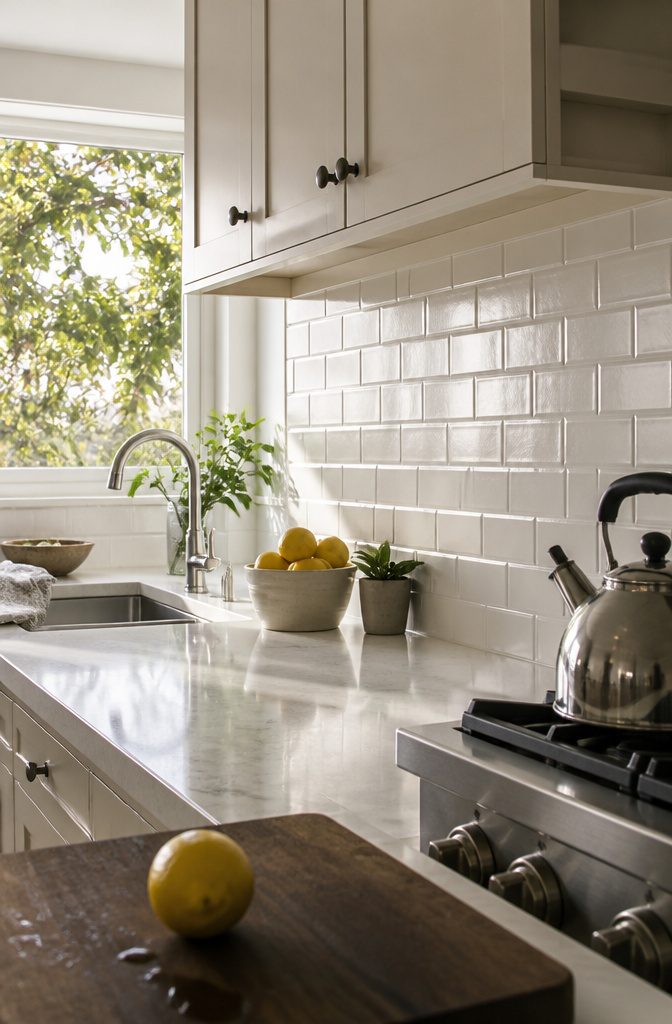
White cabinets work with almost any color, so the backsplash is the place to go loud.
A bold geometric tile, a mosaic, or a saturated color becomes the first thing anyone sees, as long as you keep the rest of the wall quiet.
For a weekend and a modest budget, white subway tile, 3×6, with matte grout is the better pick.
It wipes clean, suits granite or quartz counters, and the matte grout keeps the wall soft instead of stark. A standard brick pattern is the easiest layout.
Herringbone looks more interesting but takes more cuts and patience. If you want a mosaic or pattern, limit it to one small wall.
7. Dark Elements for Contrast
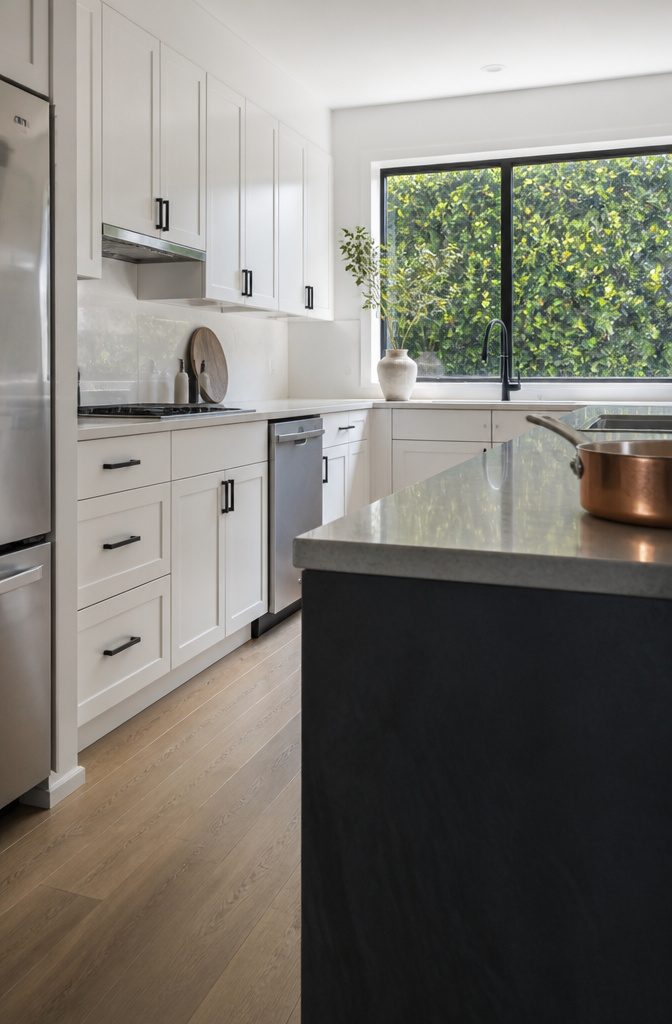
White cabinets look their best with something dark to anchor them. Choose one or two of these:
- Start with the hardware. Matte black or matte gold pulls and knobs are the cheapest way to test the look, and you can unscrew them if you don’t like the result.
- Dark counters. Dark granite, marble, or deep wood gives the strongest contrast. Dark surfaces also hide stains and scratches better than light ones.
- Concrete or honed quartz. Both suit a modern, industrial kitchen.
- Black faucets. Match them to black hardware for a consistent look.
- Mixed metals. Brass, brushed nickel, and black can share one kitchen.
- Appliances. Stainless steel or black finishes carry the dark tone across the room.
- A charcoal or deep green island. It adds contrast without touching the main cabinets.
8. Color Through Accents
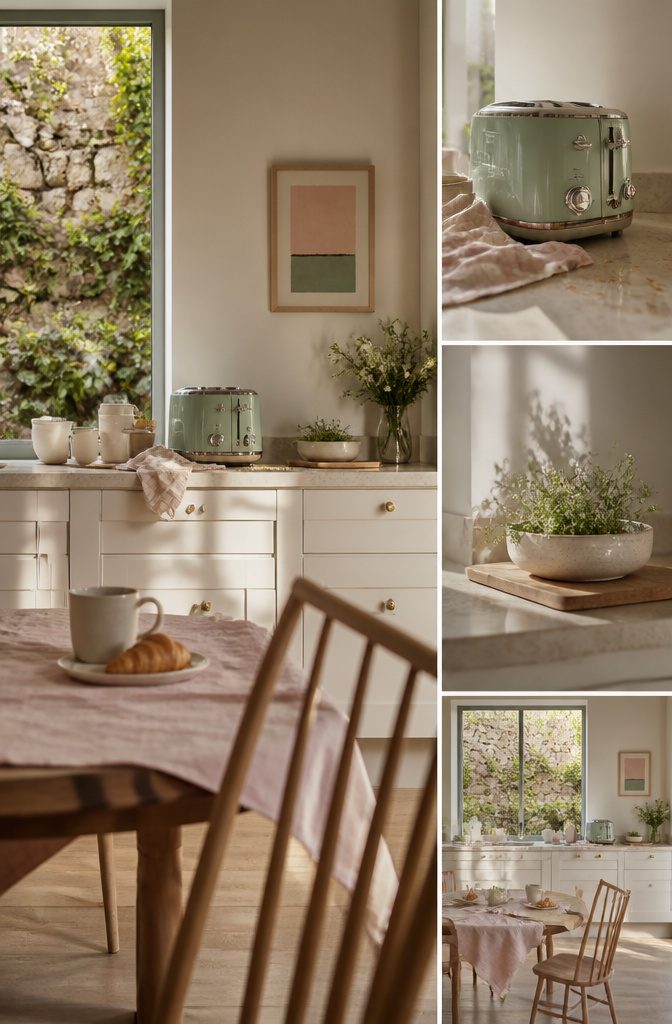
White cabinets give you a blank base, so color can come from things you can pick up and move.
Framed art, a small retro-inspired appliance, and the pieces you set on the kitchen table each add a clear hit of color without touching a cabinet door.
Soft pastels work best here. Mint, blush, or butter yellow look cozy and a little nostalgic against white, which suits older homes especially.
Pick one and repeat it in a couple of spots so it reads as a choice. A painted island is the bolder version, and it’s better suited to owners than renters.
If you rent, keep the color in accessories and textiles. They cost little, leave no marks, and can change with the season.
9. Marble and a Waterfall Island
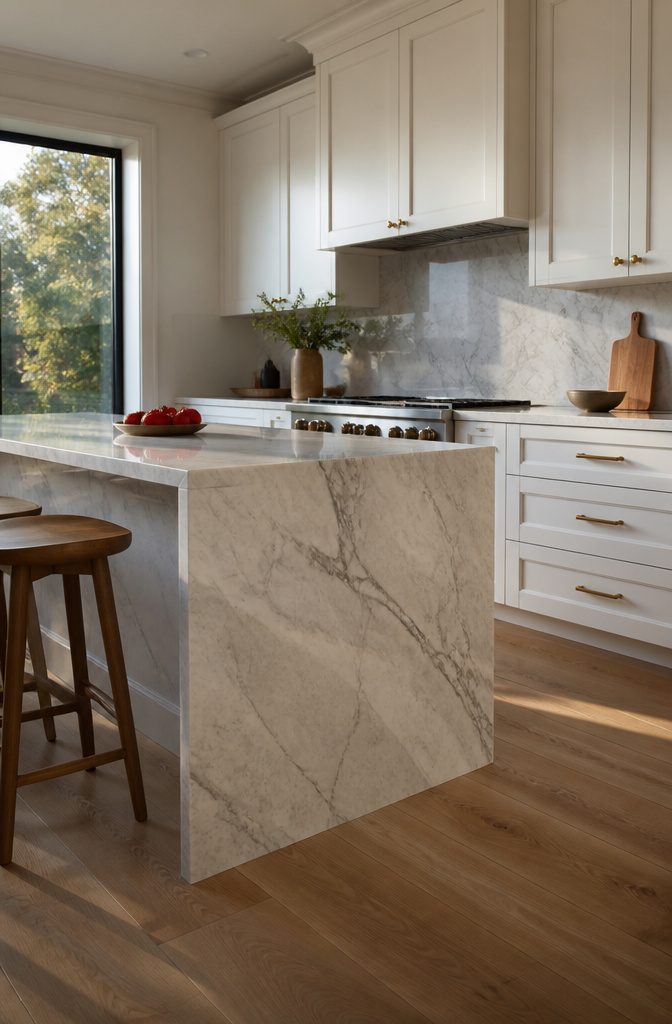
Veined marble against white cabinets adds soft gray movement that flat white can’t. Use it on the counters, or limit it to the backsplash on a tighter budget.
A waterfall island carries the same slab down both sides to the floor, so the veining reads as one piece and the island becomes the room’s focal point.
Marble costs more than quartz and needs more care. It’s porous, so it needs sealing, and acids like lemon juice, wine, and tomato sauce leave dull etched spots.
If you cook a lot and dislike patina, choose quartz. Marble-look quartz repeats its veining more evenly, but it needs no sealing.
10. A Bold Hood and Lighting
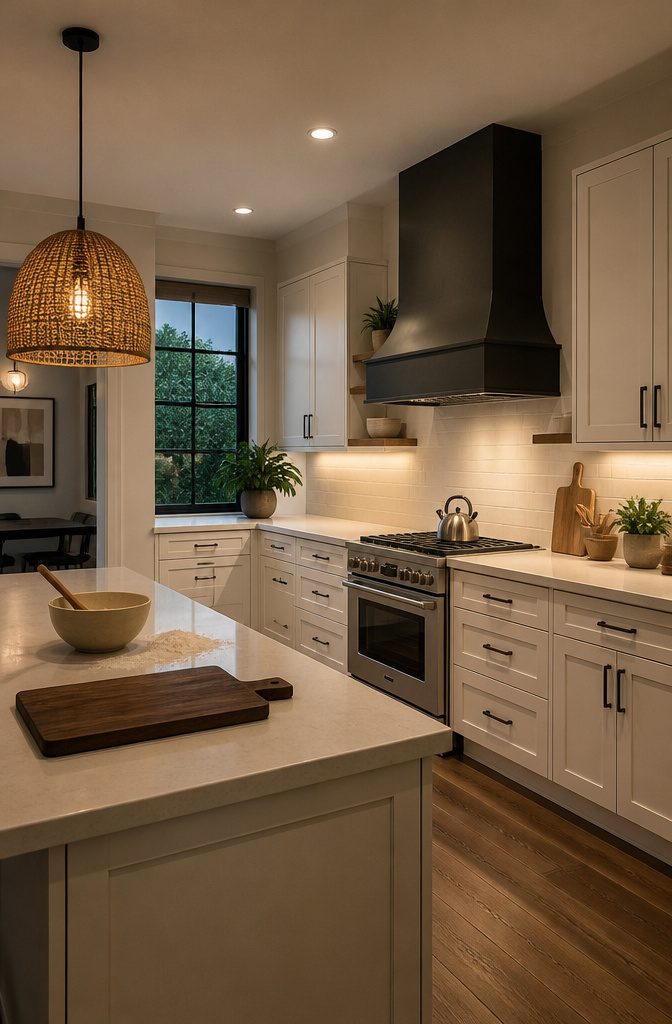
White cabinets make the range wall the easiest place to add contrast. A hood in black, charcoal, or warm wood gives the eye a place to land, and a wood-framed cooking alcove does the same with a softer look.
Repeat that finish once elsewhere, such as on a stool or shelf, so the hood looks planned.
Pendants do the same job from above. Pick a shape with character, like a woven shade, an aged brass dome, or an oversized globe, and keep the rest of the room quiet.
Statement fixtures light a counter poorly, though.
Add LED strip lights under the upper cabinets for working light on the prep surface. Stick-on and plug-in strips suit renters, and a warm white tone keeps white doors from looking cold.
11. Patterned Flooring
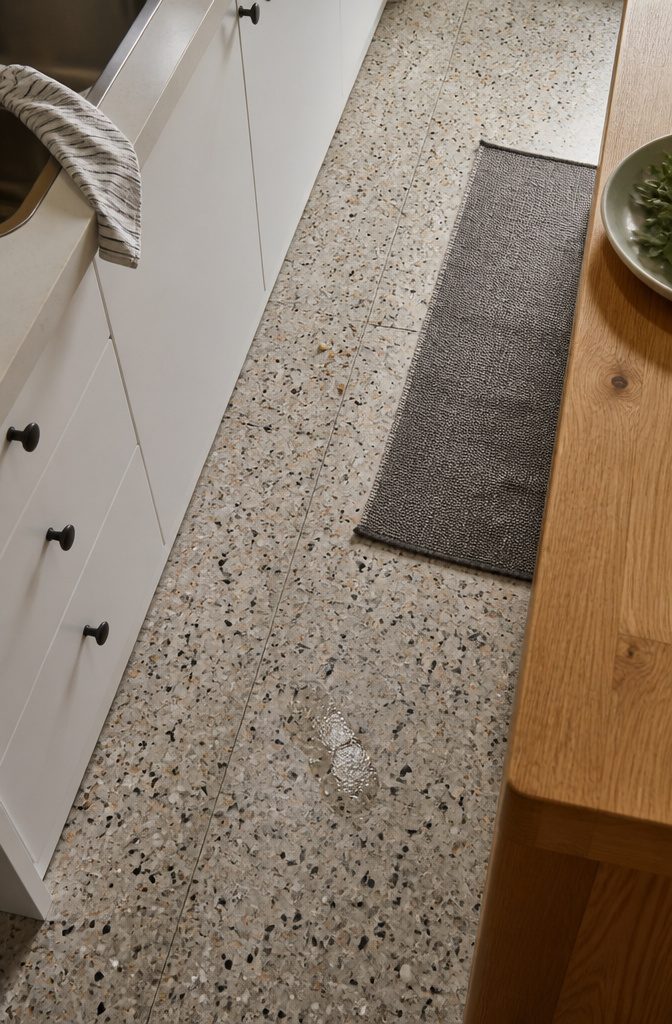
White cabinets leave the floor free to carry the personality. Terrazzo or patterned tile gives a plain run of white fronts something to play against, and it works best when the cabinet doors stay flat and simple.
If you want less noise, honey-toned hardwood warms the white without adding any pattern.
Renters can skip the tile. A patterned runner or mat near the sink brings the same contrast and rolls up when the lease ends.
Pick one that repeats a color already in the room, such as the island or the hardware, so it looks planned instead of tossed down.
12. Retro Details
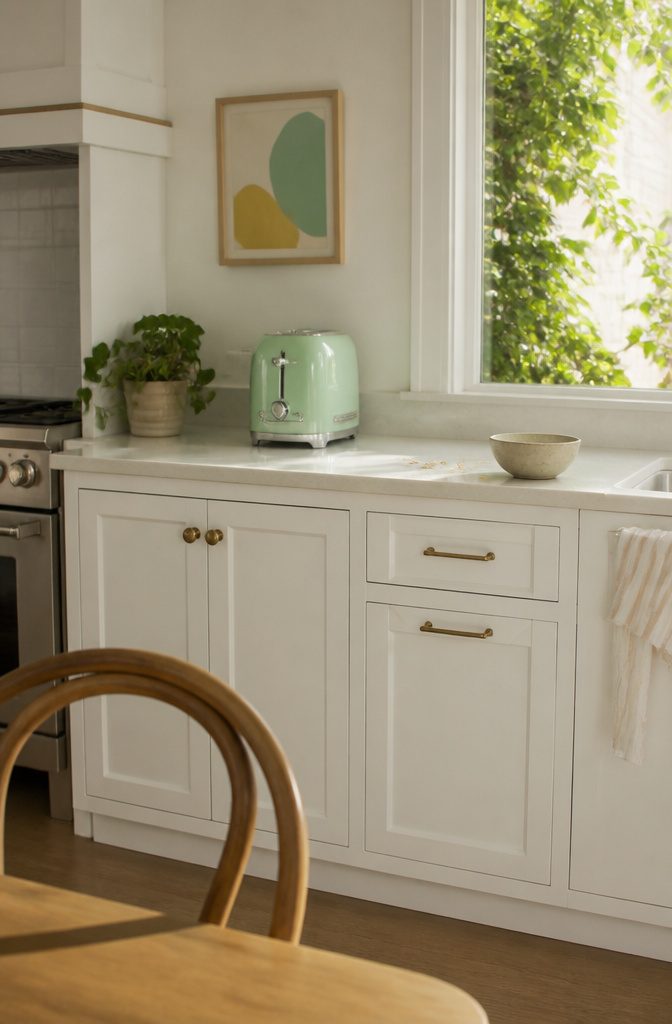
Vintage-inspired appliances, a black and white checkerboard floor, and colorful accents are the three details that make white cabinets feel nostalgic. Use one or two, not all three, or the kitchen starts to look like a set.
For a budget and a weekend, a small retro-inspired appliance is the easiest start.
White cabinets give it a plain backdrop, so its shape and color stand out. Add a bright accent nearby, such as framed artwork, to carry the look without more purchases.
The checkerboard floor is the biggest commitment. Skip it unless you’re already replacing the flooring, and renters can leave it out entirely.
13. Hidden Appliances
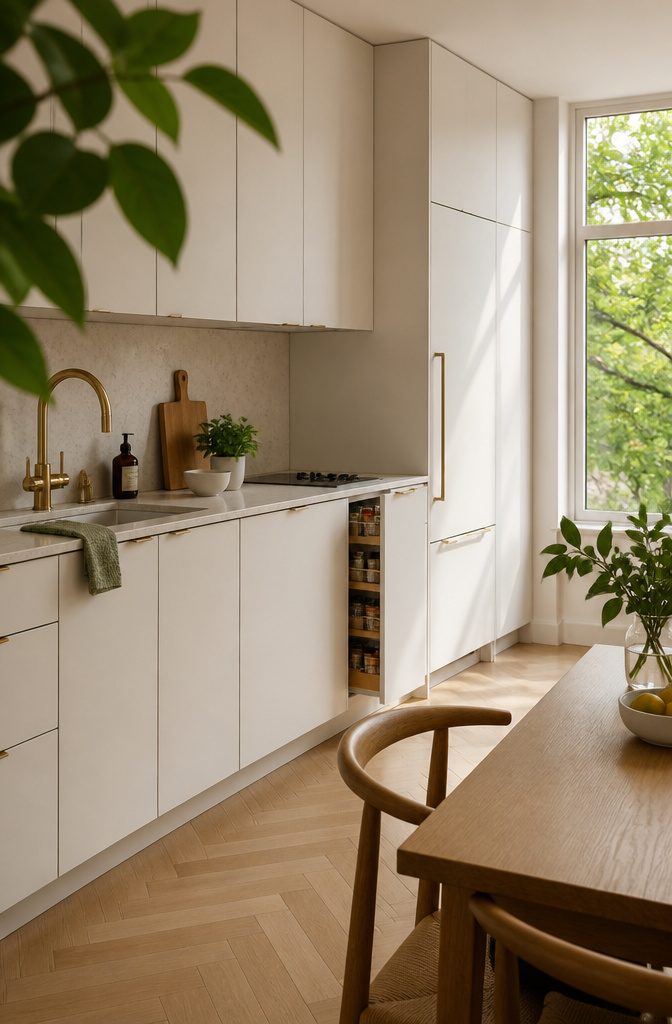
Matching cabinet panels on the dishwasher or refrigerator make a white kitchen read as one unbroken run of doors, and they work best with flat-panel or handleless fronts.
Appliances made for this are called panel-ready, and panel-ready models cost more than standard ones. Spend that extra on the dishwasher beside the sink or a fridge on the main wall, and skip it for anything tucked out of sight.
Inside the cabinets, a pull-out waste and recycling drawer keeps bins off the floor and behind a white door.
A pull-out spice rack does the same for jars, so the counter stays clear. Soft-close drawer systems keep both quiet.
14. Cabinets to the Ceiling
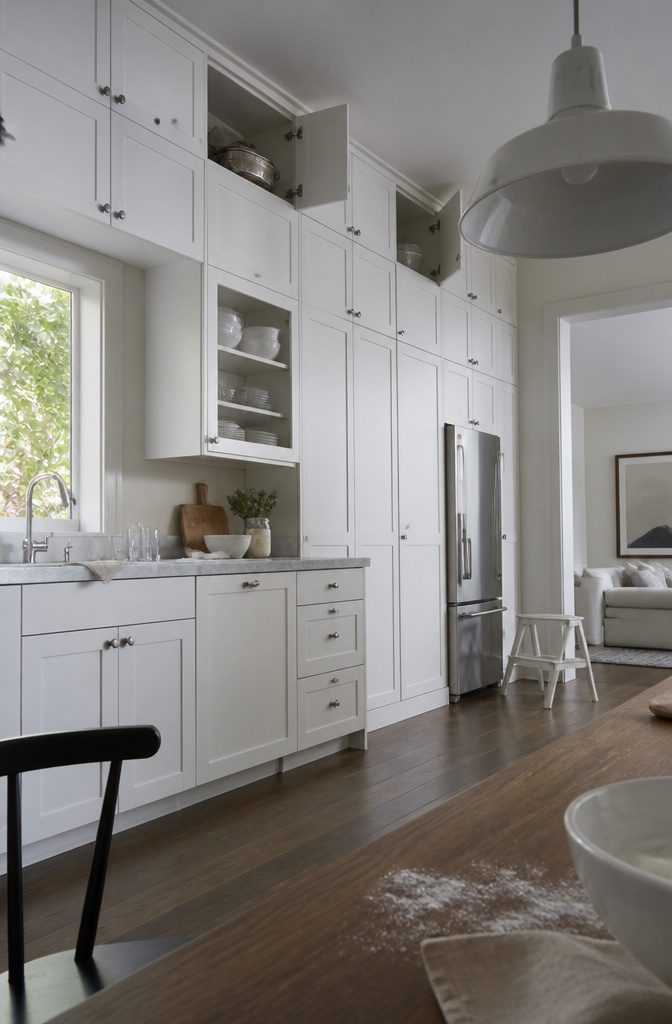
Running white cabinets all the way to the ceiling puts the dead space above standard wall cabinets to work and gives the eye one unbroken vertical line to follow.
The room reads taller, and the gap where dust and cooking grease settle disappears.
The top shelves hold things you reach for a few times a year: holiday platters, a punch bowl, large roasting pans, backup small appliances. Keep everyday dishes and glasses at arm level.
This setup comes with one condition: you will need a step stool.
Pick a slim one that fits in the pantry or beside the refrigerator. If climbing for a plate every day sounds like a chore, put only seasonal items in the upper row.
Cleaning Each Finish
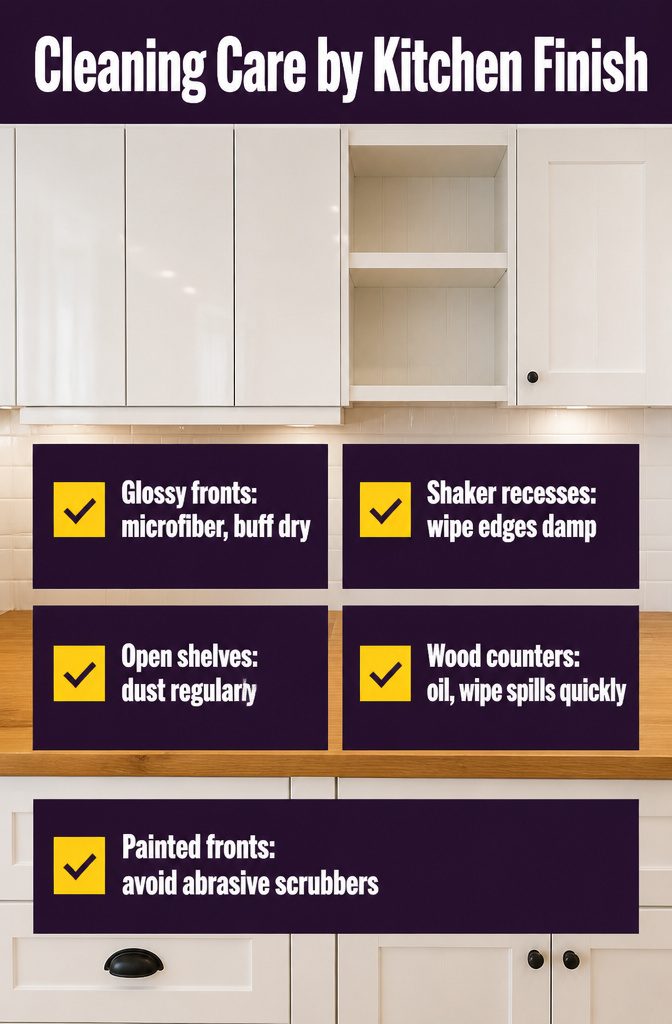
Each finish shows dirt differently, so match the cleaning to the surface:
- Glossy fronts: Wipe with a soft microfiber cloth and buff dry right away. Water left to air-dry leaves streaks, and fingerprints show most on white gloss.
- Shaker doors: Run a damp cloth along the recessed panel edges, where crumbs and cooking grease collect.
- Open shelves: Dust regularly. Dishes left out pick up a film of dust and kitchen grease that a quick wipe can’t remove once it builds up.
- Wood counters: Oil them on a regular schedule so the surface stays sealed, and wipe spills quickly so water doesn’t leave dark marks.
- Painted white fronts: Skip abrasive scrubbers, which dull the finish and leave scratches that catch dirt.
Frequently Asked Questions
How do you design a kitchen with white cabinets?
Treat the white as a neutral base and build contrast, texture, and color around it.
Matte black or brass hardware and a black faucet add contrast, wood or mixed matte and gloss surfaces add warmth, and a backsplash, patterned floor, or a few accessories bring in color.
Add LED strip lights under the upper cabinets for the prep surface, and consider how much natural light the room gets.
Is white a good choice for kitchen cabinets?
Yes. White is popular and versatile, gives a bright, clean, timeless look, and works as a neutral backdrop for almost any counter, backsplash, or hardware.
It does need upkeep: gloss fronts show fingerprints and streaks, and painted white faces should be wiped monthly to prevent yellowing.
How do you make a white kitchen look modern?
Use flat-panel fronts, ideally handleless or with concealed pulls, in high-gloss white, and keep the styling minimal.
Stainless steel appliances, shiny or matte black hardware, and concrete or honed quartz counters push the look further toward modern. If you cook daily and don’t want to wipe fingerprints, a matte flat-panel door gives the same clean lines.