
The options run from a weekend of matte paint and brass hardware to olive tile on the floor or half the wall, and the deciding factor is how much you can change.
In a rental or small bathroom, stick to a vanity, towels and plants. Matte walls show water marks, so keep the sink area wipeable.
1. Matte Olive Walls With Brass
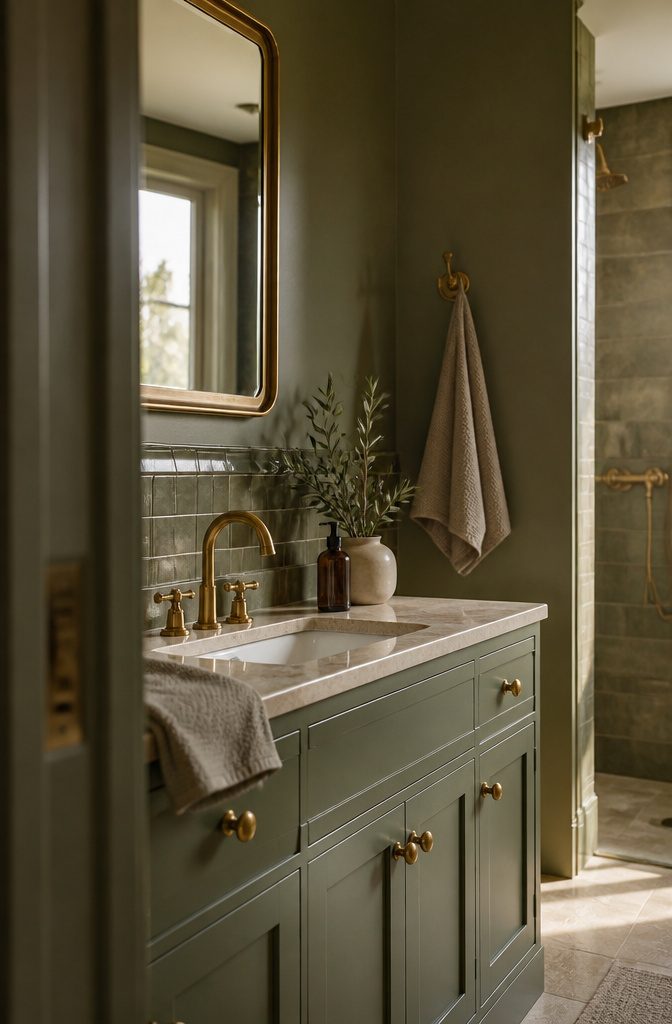
Matte olive paint gives a bathroom a warm, calm backdrop, and aged brass faucets, hooks and mirror frames bring out the green in it.
The finish also forgives minor wall imperfections, so a weekend of painting looks even without perfect prep. Swapping the faucet, towel hooks and mirror frame for brass versions fits in the same weekend and keeps the cost down.
Matte shows water marks, though. Keep the wall around the sink wipeable, either with a tile splash or a washable finish painted only in that zone, and leave the rest of the room matte.
Choose durable brass with a proper seal so splashes don’t dull it.
2. Olive Subway Tile Half-Wall
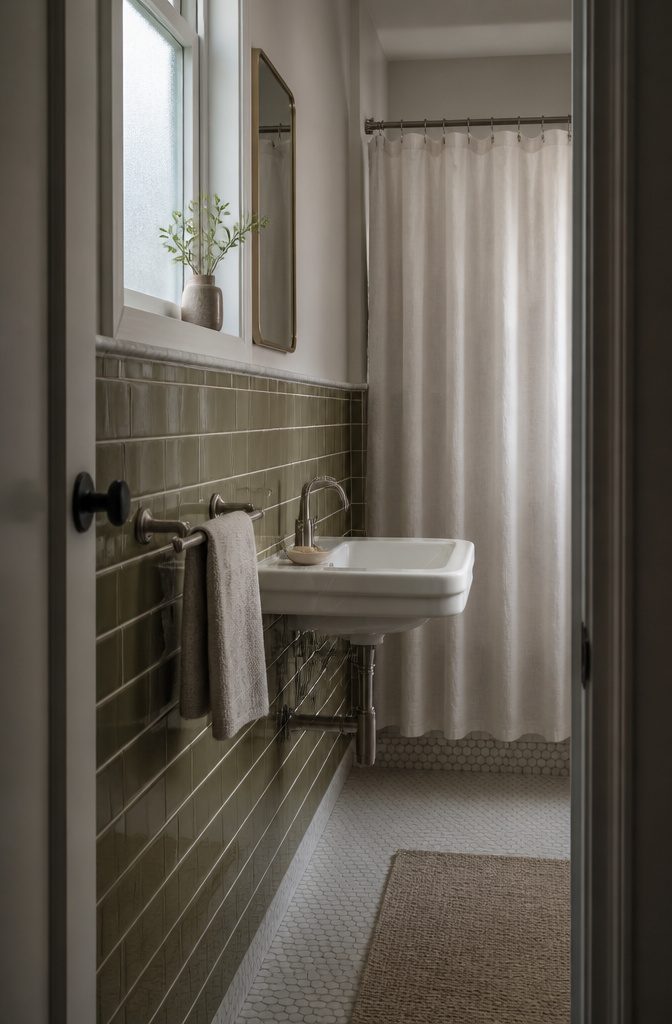
Run olive subway tile only up the lower half of the wall, then cap it with light marble or quartz and paint the upper wall a lighter color.
The contrast adds depth without the heaviness of olive from floor to ceiling. In a small bathroom, the pale upper half reflects light, so the room doesn’t feel cave-like.
Glazed tile is typically low-maintenance, and a wipe-down handles most of it. Textured or porous tile needs sealing and regular grout care.
Grout is the weak spot, so choose a slightly darker grout to mask stains. If you pick porous stone for the top, put sealant in the budget from the start.
3. Monochrome Olive With Texture
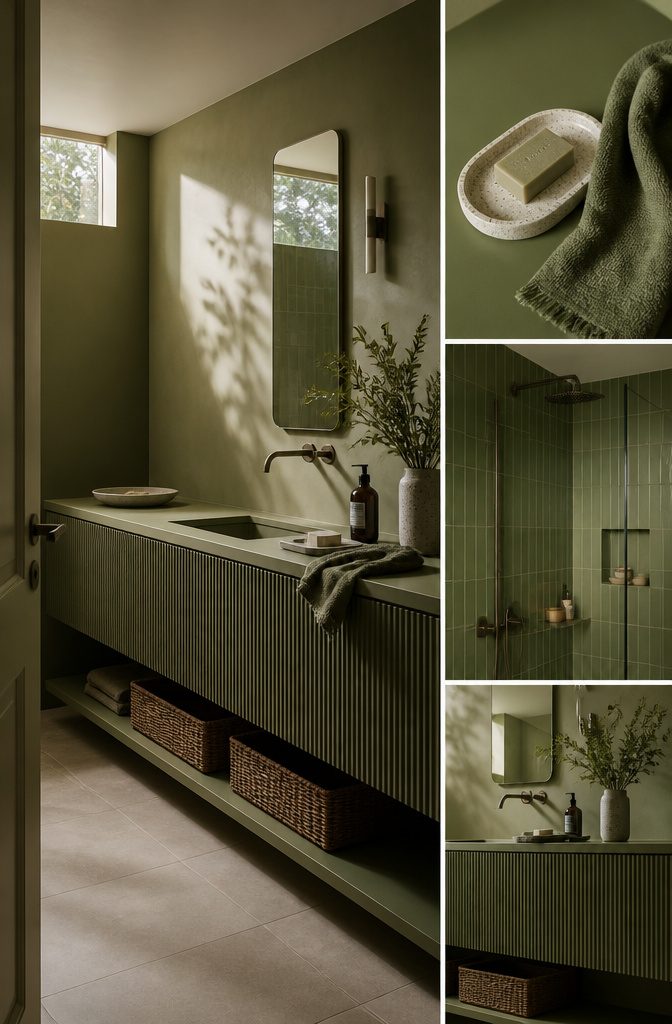
A one-color olive bathroom reads flat without texture, because every surface bounces light the same way. Textured wallpaper, a fluted vanity, or woven baskets break that up and add depth without a second color.
Pick one texture to lead, though.
An overload of textures can be overwhelming, so select a dominant texture while keeping others understated.
If you own, the fluted vanity can be the lead.
If you rent, removable wallpaper can lead and a couple of woven baskets can play the quiet second texture. Both come off without touching the walls or cabinets.
4. Olive Floor Tiles
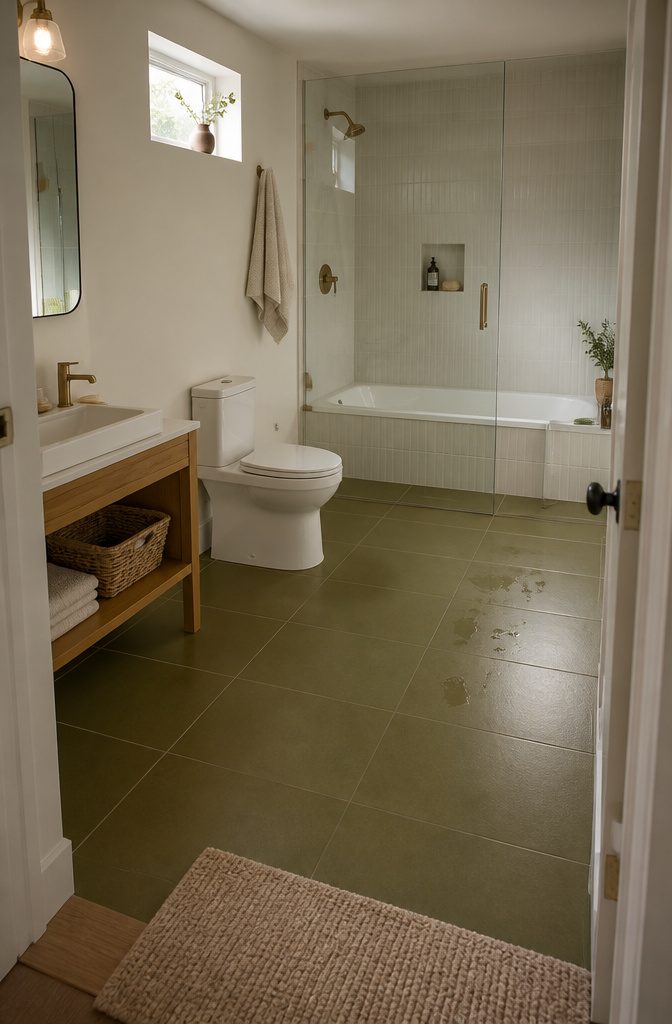
Olive tile on the floor under neutral walls makes the floor the focal point. The walls can stay warm white or greige, and you can repaint them later without touching the tile.
Patterned olive tile, such as encaustic, makes the room’s layout stand out.
The toilet, vanity and drain placement all show against the pattern and can look busy. In a small bathroom, choose a solid or simple olive tile and save pattern for a larger room.
Glazed tile is low-maintenance and wipes clean.
Porous or textured tile needs sealing. Grout color matters too: a shade close to the tile hides dirt, while a light grout outlines every tile and shows wear sooner.
5. Olive Accents and Smart Lighting
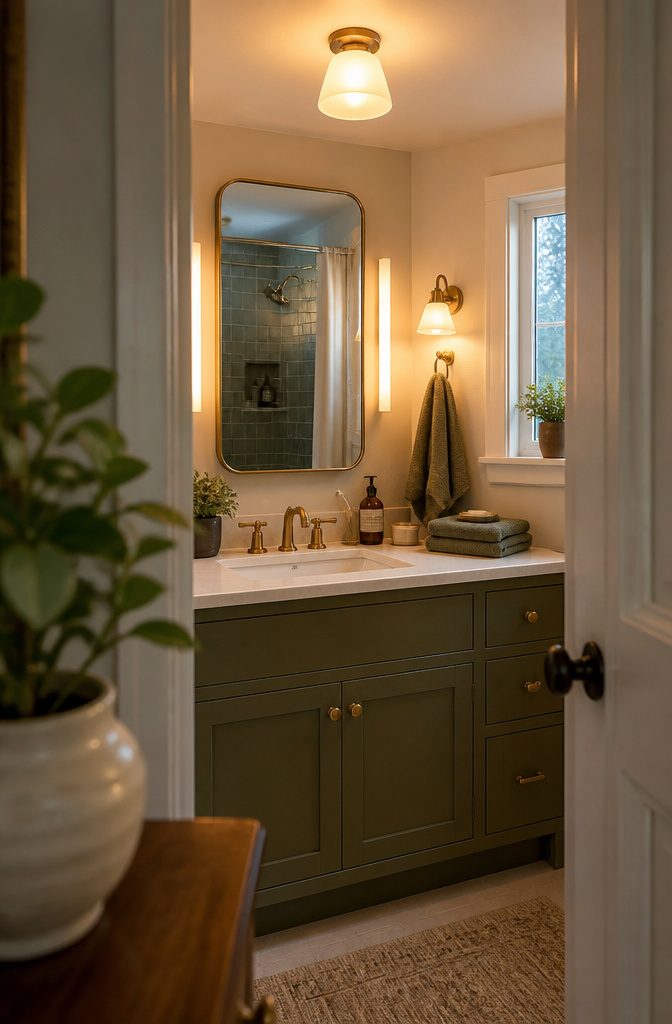
Olive does not have to cover four walls. In a small bathroom or a rental, bring it in through the vanity, a single feature wall, plants, or textiles instead of whole-room paint.
These choices cost little and are easy to reverse, and a hardware swap on a vanity you already have is the cheapest place to start.
Accents look deliberate when you limit them. Pick 2 focal pieces, such as an olive vanity and a matching towel set, and let them set the rest of the palette.
Light the room in 3 layers: ambient overhead light, task light at the mirror, and an accent like a sconce. Choose warm LED bulbs at 2700–3000K, which suit both olive and brass.
What Pairs With Olive
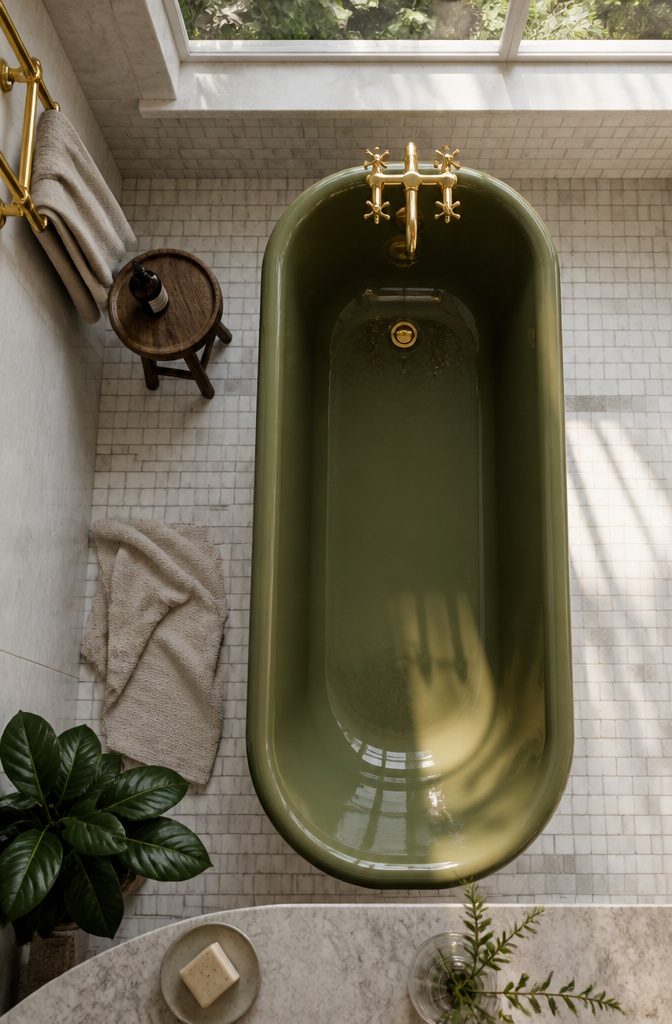
Olive reads calm and fresh. In a small bathroom it turns cozy and a little luxurious, provided you balance it with light elements and plenty of light.
White, warm neutrals, wood, marble and natural stone keep it from going heavy, and brass, copper or bronze adds warmth.
Use less green than you’d expect.
Pick one olive piece, like the bath or the vanity, instead of a full colored suite. Or keep everything white and bring olive in through towels, accessories and plants.
For vintage, pair an olive bath with marble metro tile and brass fittings.
For rustic, mix glossy and matte finishes with terracotta and aged metal. For modern, use white fixtures, or rosy pink walls with glossy olive tile.
Test Your Shade First
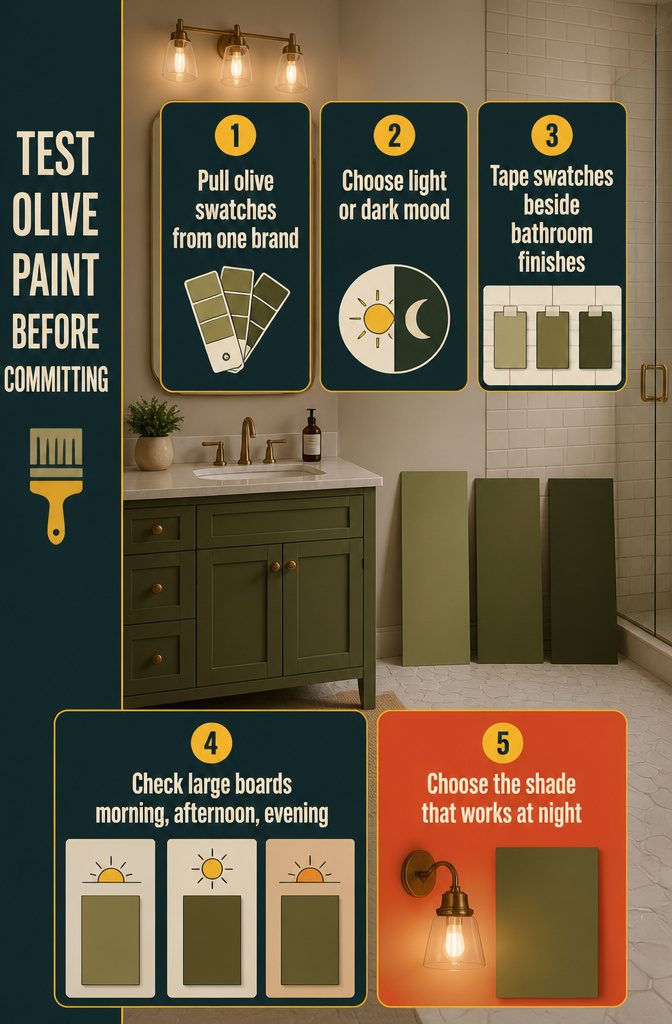
- Pull a few olive swatches from one brand’s palette. Sherwin-Williams offers palettes and undertone guidance, which helps you tell a yellow-leaning olive from a gray-leaning one before you buy paint.
- Decide on the mood. Light olives read soft and airy. Dark olives read bold.
- Tape the swatches beside the vanity, mirror, and tile, and look at them under the bathroom’s own bulbs. Olive shifts warmer or grayer depending on the light.
- Paint large boards and prop them on different walls. Check them in morning light, afternoon light, and evening.
- Pick the shade that still looks right at night with the lights on, since that is when most people use the room.
Frequently Asked Questions
Is olive green a good color for a small bathroom?
Yes, as long as you balance it with light elements and plenty of light. Keep olive to the lower half of the wall under a paler upper wall, or limit it to a vanity, one feature wall, plants or textiles.
Choose a solid or simple olive tile over a pattern, which can look busy in a tight room.
What colors and finishes go with olive green in a bathroom?
White, warm neutrals, wood, marble and natural stone pair well with olive, and brass, copper or bronze add warmth.
Matte ceramics also work. The lighter materials keep the green from feeling heavy.
Are olive green tiles hard to maintain?
Glazed olive tile is typically low-maintenance and wipes clean.
Textured or porous tile needs sealing and regular grout care. A grout shade close to the tile color, or slightly darker, hides stains better than a light grout.
Does an olive green bathroom add to a home’s value?
Color alone may not directly change a home’s value. A timeless design with neutral accents and quality materials can make the room more appealing to buyers.
How do I choose the right shade of olive for my bathroom?
Tape a few swatches from one brand beside the vanity, mirror and tile, then check large painted boards in morning, afternoon and evening light.
Olive looks warmer or grayer depending on the bulbs, so judge it under the bathroom’s own lighting. Pick the shade that still looks right at night with the lights on.
What type of lighting works best with olive green walls?
Layer 3 kinds of light: ambient overhead light, task light at the mirror, and an accent such as a sconce. Use warm LED bulbs at 2700–3000K, which suit both olive and brass without overpowering the green.
What are budget-friendly ways to add olive green to a bathroom?
Start with small accents such as towels, plants or a vanity refresh, then phase in larger changes.
Repainting and replacing hardware cost relatively little for the impact. Swapping the hardware on a vanity you already own is the cheapest place to begin.
Where can I get help pairing colors with olive green?
Paint manufacturers such as Sherwin-Williams publish palettes and undertone guidance. Their material helps you tell a yellow-leaning olive from a gray-leaning one before you buy paint.