
The range runs from a single accent wall to a fully color-drenched room, and how much daylight the bathroom gets decides where you land.
Deep green on every wall feels enclosed in a small, dim room. Running dark tile only about 3/4 of the way up leaves a white band above it that keeps the space open.
1. Subway and Stacked Tile
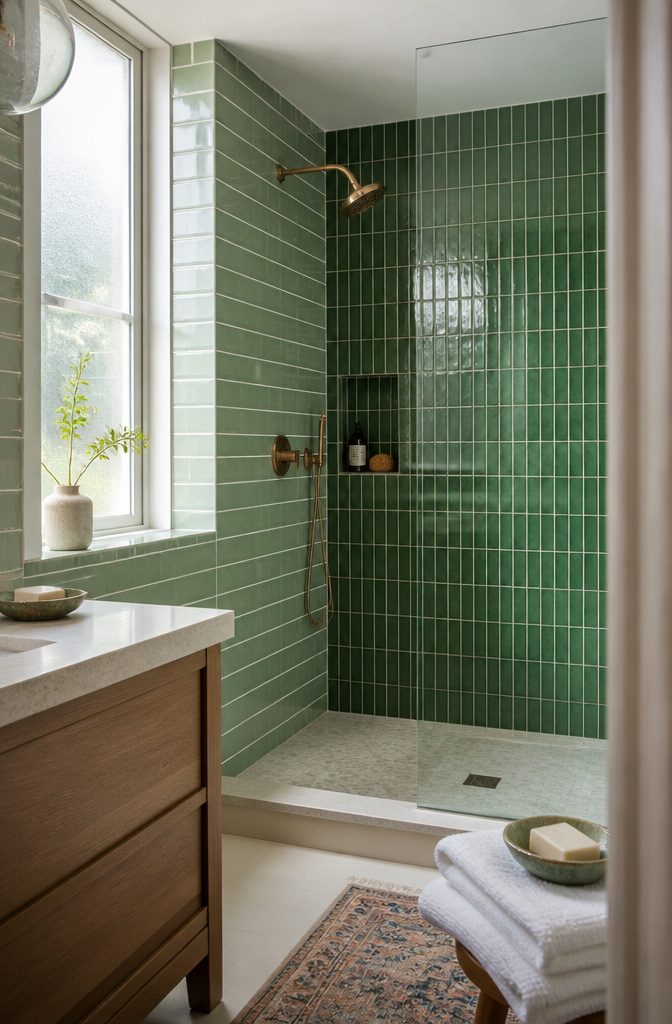
Dark forest green subway tile with white grout is the dramatic version.
The white lines outline every tile, so the color looks deeper and the details stay crisp. Running it from floor to ceiling makes the room feel fully wrapped in color.
Glossy sage green ceramic subway is the calmer choice. Lay it horizontally in a 50% offset, and it works on bathroom walls, shower walls, and steam rooms.
Direction matters as much as shade: horizontal tile makes a bathroom look wider, and vertical tile makes the ceiling look taller. In a narrow bathroom with a low ceiling, stack bright emerald zellige vertically in the walk-in shower.
Recommended Products
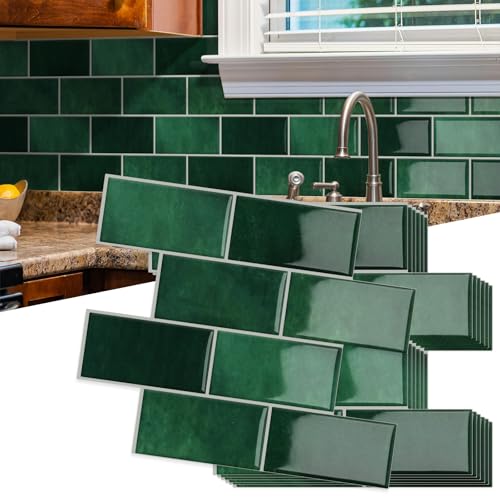
What You Get:10 sheets dark green self-adhesive wall tiles,12.6" x 10.6" each tile, total covers around 9.3 square feet area

𝗦𝘂𝗯𝘄𝗮𝘆 𝗧𝗶𝗹𝗲 - Includes 10 tiles per box, 11.3" x 10.8" x 0.12" for each tile, covers approximately 8.56 sq. ft. *ATTENTION: Please confirm the size before installation and verify the color upon receipt. We recommend you purchase a minimum of 10% overage to account for design cuts and pattern matching.

What You Get:10 sheets thicker self-adhesive wall tiles,12" x 12" each tile, total covers around 10 square feet area.
2. Green Herringbone
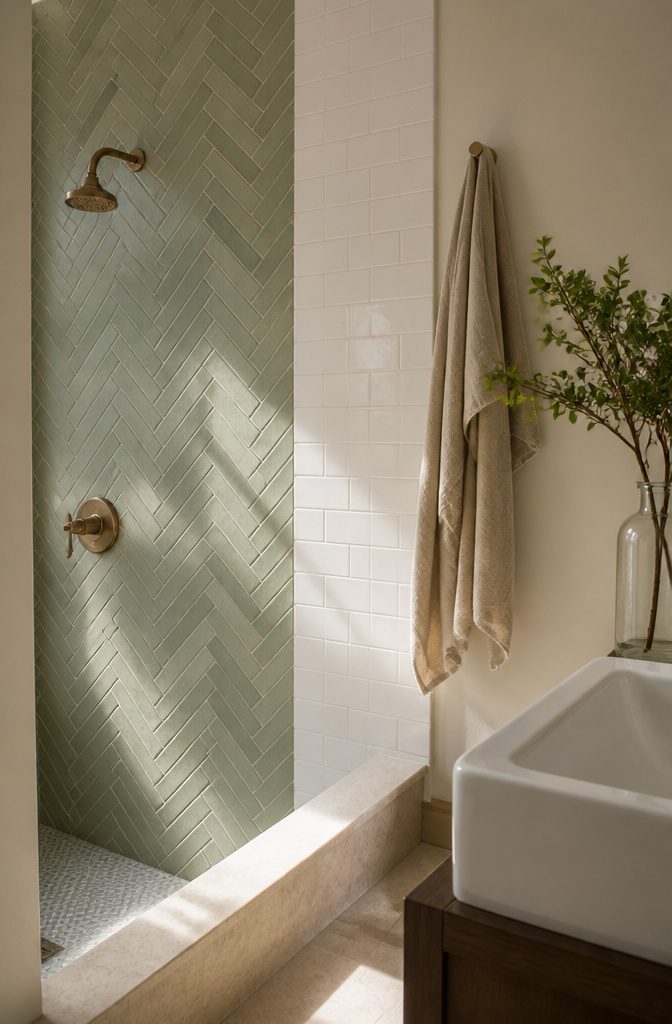
Herringbone sets tiles in a zigzag, so even a single color gets built-in movement.
The shade decides how loud that movement reads. A light green with a slight marbled effect and ivory or creamy white mixed in keeps the pattern soft, a look that isn’t too modern or cold.
Next to white paint, it gives a subtle pop of color without overwhelming the room.
Gray-green sage brick tiles sit in the middle. Laid in herringbone on one shower wall beside classic white subway, they feel contemporary but stay understated.
For a bolder version, choose a deep, glossy green.
Shine catches light along each angled edge, so the zigzag stands out. Keep it to one wall.
Recommended Products
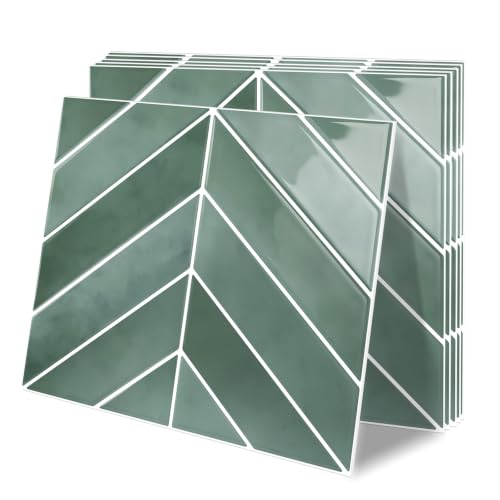
【Highlighted 3D Herringbone Art Design, Elevate Your Home Decor】:These stylish self-adhesive herringbone wall decals offer greater artistic expression than ordinary wall decals. The geometric, three-dimensional lines add visual depth to your space, while the luxurious orange glossy finish effortlessly complements any interior style. Transform your walls affordably and create a unique, personalized wall design.(NOT ceramic tile or natural stone)

【Highlighted 3D Herringbone Art Design, Elevate Your Home Decor】:These stylish self-adhesive herringbone wall decals offer greater artistic expression than ordinary wall decals. The geometric, three-dimensional lines add visual depth to your space, while the luxurious orange glossy finish effortlessly complements any interior style. Transform your walls affordably and create a unique, personalized wall design.(NOT ceramic tile or natural stone)
3. Mosaics and Geometric Shapes
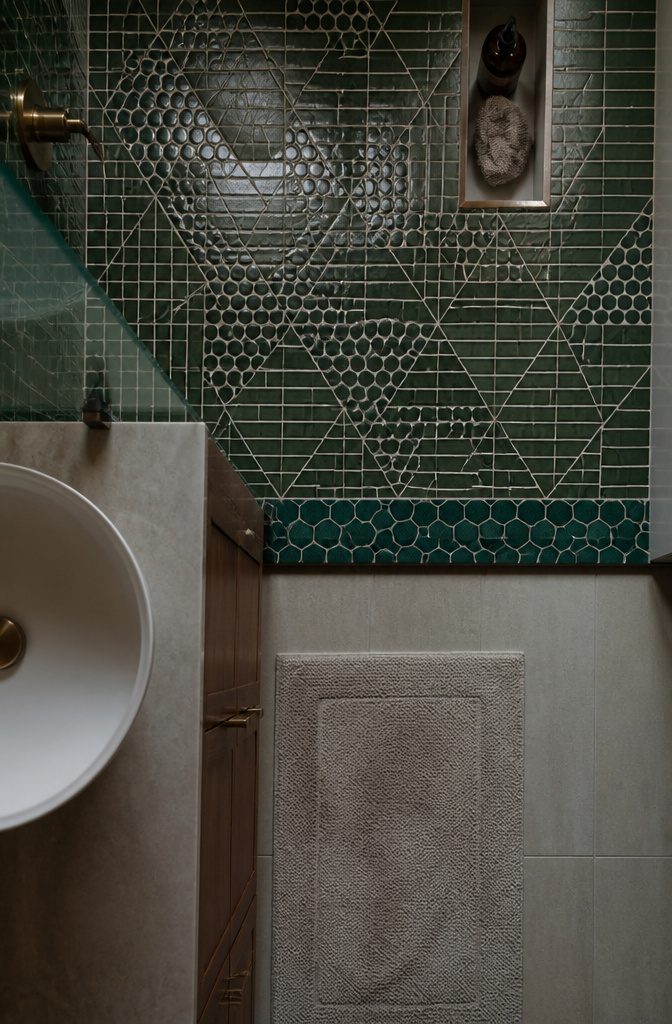
Small tiles let you choose a shape as well as a shade.
Turquoise porcelain penny rounds read as tropical water and clear sky, so they work best on a single shower wall or a vanity backsplash rather than across the whole room.
For a deeper look, forest green mosaics come in triangles, rectangular bricks and 2-inch penny rounds.
Mixing those shapes in one color builds a custom pattern from a single shade. Teal green hexagons sit between the two moods and work well as a floor or a feature wall.
Pine green matte picket tile is the strongest pick for a steam shower. This ceramic is suitable for walls, floors, steam rooms and fireplace surrounds, and its elongated shape adds depth without a busy pattern.
Recommended Products

11.5 Sq.Ft High-Value Coverage (12.9" Sheets) Each box contains 10 extra-large sheets measuring 12.9" x 12.9" (327mm), providing a massive 11.5 sq.ft of coverage. Unlike standard 12" options, our larger format allows you to cover more area with fewer sheets (just 10 sheets vs. typical 11 sheets), significantly speeding up the installation process for large shower walls or backsplashes.

1. PREMIUM 3D MOSAIC TILES Transform kitchens or bathrooms instantly with MIQIDUO 3D mosaic peel and stick backsplash tiles. Unlike thin paper wallpaper, our 0.04-inch self-adhesive vinyl tiles are solid, durable, and built to deliver an authentic, high-end mosaic look.

【The Perfect Mosaic DIY Kit】 We offer a wide variety of mosaic kits, and we believe it will be a great help when you're making a kit.
4. A Single Green Accent Wall
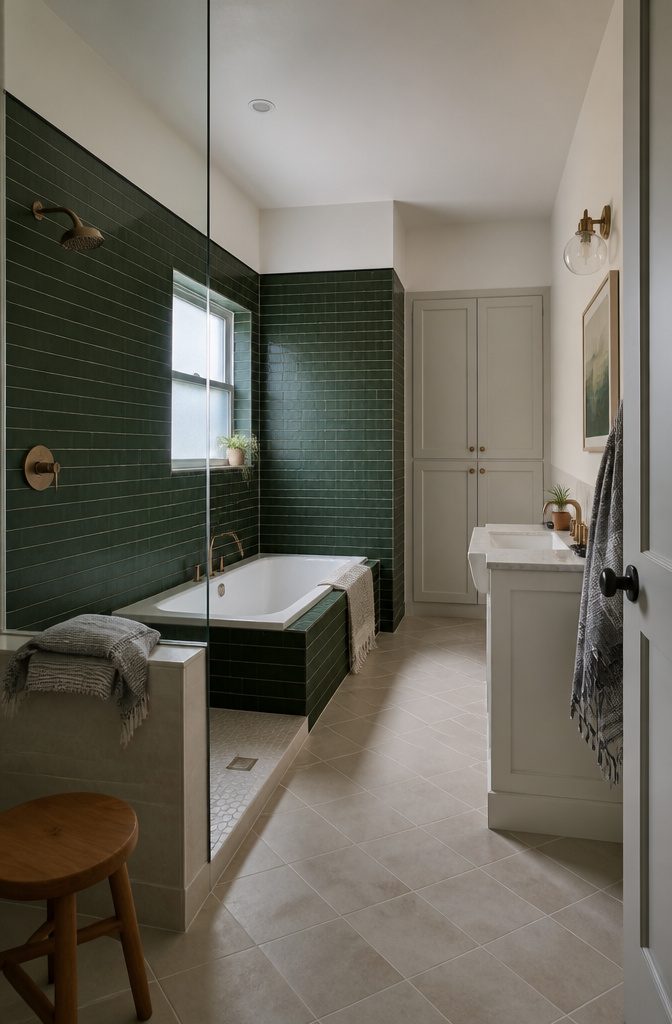
Dark green tile run about 3/4 of the way up the wall and stopped short of the ceiling leaves a white band above it.
That band keeps the tile from swallowing a small bathroom, and the room looks a bit larger than it would with green all the way up. Floor-to-ceiling coverage in a deep shade closes in the walls on every side.
For a bolder look, confine the green to one zone.
Thin rectangular tile in deep green across a single corner and through the shower, with the shower floor left out, becomes the focal point. Neutral diamond-shaped floor tile and a white sink give it something to contrast against.
Recommended Products

Realistic Ceramic Tile Look: Glossy and shiny hexagon tile is scratch-resistant, high-impact and fade-resistant, creating a high-end look for you, long hexagon design can be installed vertically or horizontally.

Unique Copper Hexagons: The rich copper and bronze tones create an industrial-chic vibe, adding sophistication to modern spaces.

Green and pink floral Old World inspired peel and stick floor tiles by FloorPops
5. Green Tile on Floors
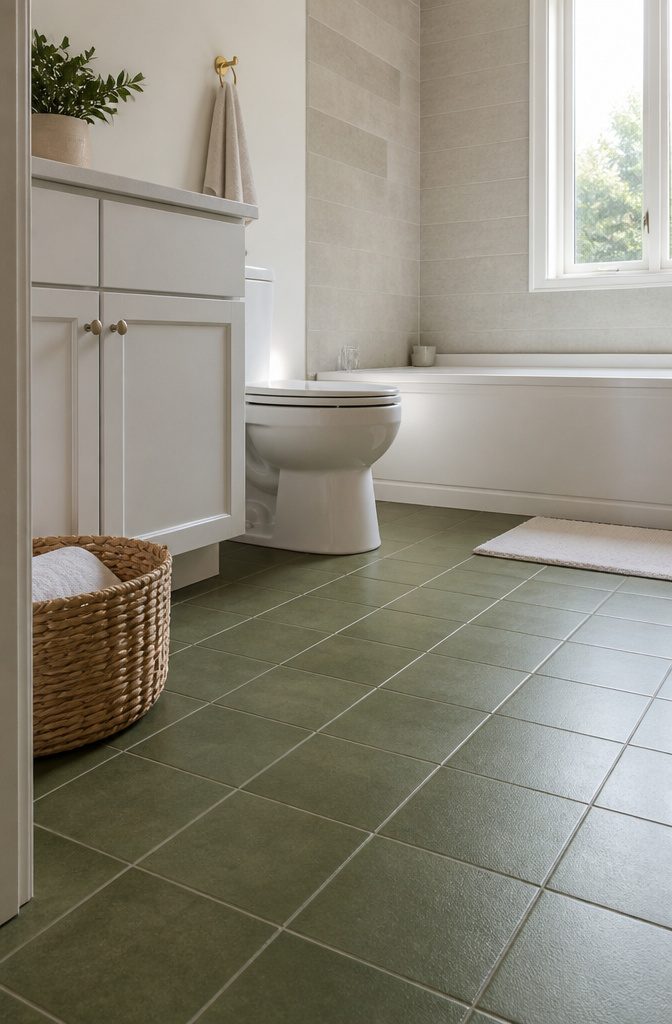
A green floor under white or pale walls makes the floor the one colored surface in the room, so everything above it can stay quiet. Moss green field tile suits this well.
It has a traditional look, goes down with standard adhesive, and is lighter and easier to handle and cut than you might expect, which helps around a toilet flange and tub edge on a weekend job.
For the strongest contrast, keep the walls white or pale and let the floor carry all the color.
The same tile also works on walls, countertops and backsplashes. If the floor feels cut off from the rest of the room, repeat it on a vanity top or a short strip of wall.
Recommended Products
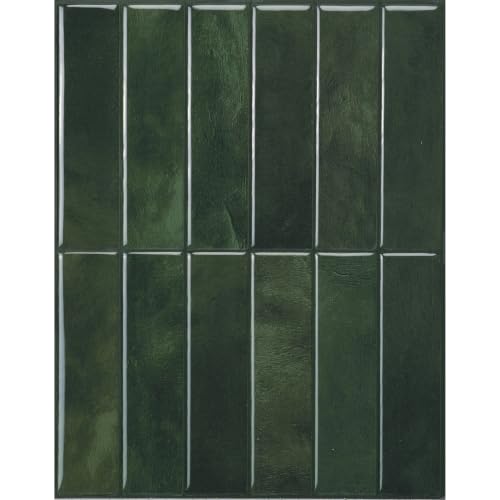
High-quality peel-and-stick tiles made in North America: Buy locally from the market leader in self-adhesive wall tiles. At Smart Tiles, we offer a wide range of easy to install, high quality tile designs. Each pack of 5 tiles covers 0.33 square metres.
𝐀𝐥𝐥-𝐢𝐧-𝐎𝐧𝐞 𝐓𝐫𝐚𝐯𝐞𝐥 𝐓𝐨𝐢𝐥𝐞𝐭𝐫𝐢𝐞𝐬 𝐒𝐨𝐥𝐮𝐭𝐢𝐨𝐧 Designed for travelers, this travel size toiletries set combines functionality and style. It includes 4 refillable travel toiletry containers in one sleek bottle system, ideal for travel shampoo and conditioner bottles, body wash, lotion, and more. The compact design ensures a stress-free journey, whether you're heading to the airport, gym, or on a road trip.
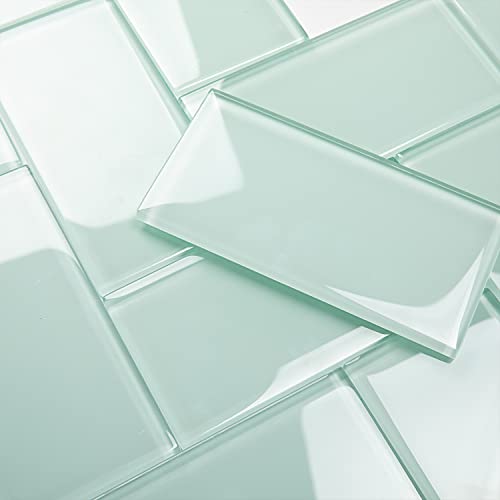
Tile Size & Coverage Area: 3 x 6 Inch (75 x 150 x 8mm), 32 sheets/box, totally 4 sq.ft.
6. Green Marble or Marble-Look Tile
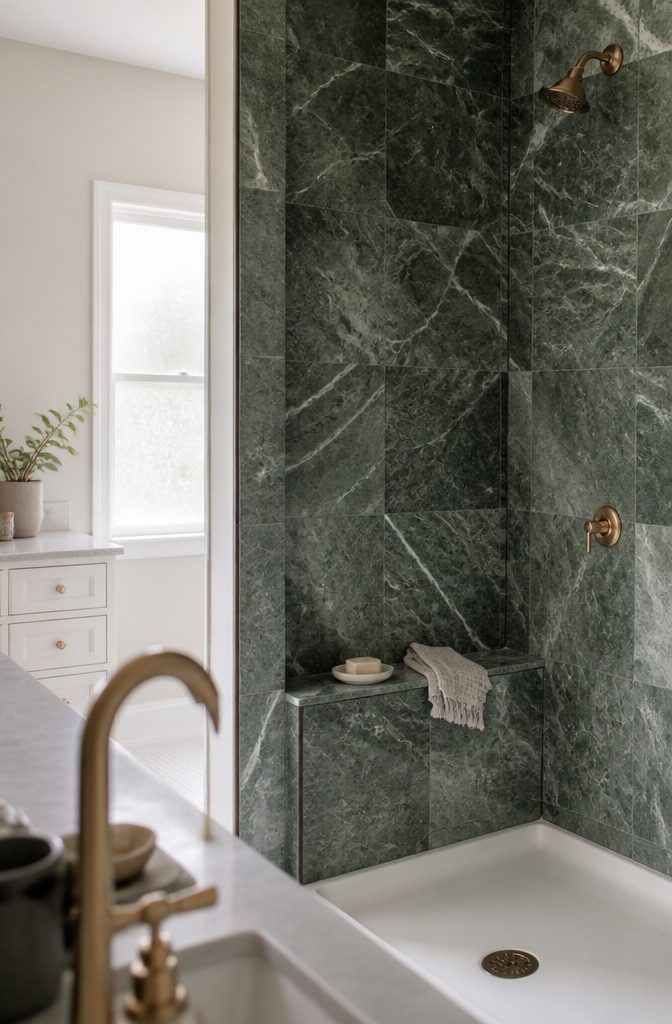
Green marble gives a bathroom swirled, uneven veining that solid-color tile can’t copy.
Green Tinos Marble costs $14.17 per square foot in an approximate 12 by 12 inch size, which keeps real stone within reach for a small floor or a single shower wall.
Natural stone is porous, so seal it and reseal on the schedule the sealer’s label gives. Unsealed marble picks up stains from soap and toothpaste, and acidic cleaners dull the surface.
Marble-look porcelain gives similar veining and needs no sealing.
Choose real stone if you want every tile to differ. Choose the look-alike for a shower you’d rather not baby.
Recommended Products

Minimalist Design: The simple design is timeless and won't cause aesthetic fatigue, as simplicity often exudes a more sophisticated charm
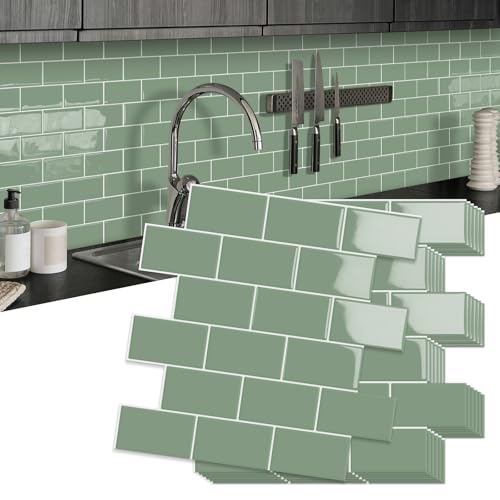
What You Get:10 sheets green self-adhesive wall tiles,12" x 12" each tile, total covers around 10 square feet area

𝗦𝘂𝗯𝘄𝗮𝘆 𝗧𝗶𝗹𝗲 - SUNWINGS subway backsplash mosaic tile, made of stone composite, color fadeless, anti-scratch, easy to maintain. 6 x 3 x 0.12 inch per piece.100 pieces = 12.2 sq. ft. Please ensure that you measure your space before installation and verify the color upon receipt. We recommend purchasing a minimum of 10% overage to account for design cuts and pattern.
7. Pair Green With Contrasting Materials
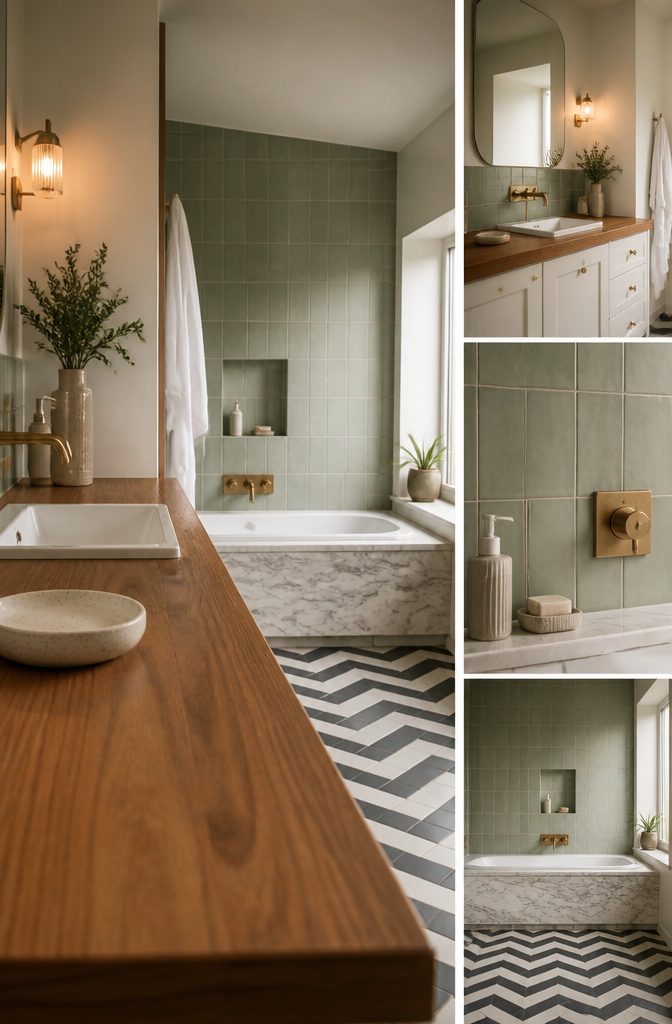
Green on every surface reads flat, so give it at least one partner material.
White cabinets and fixtures break up the walls so the room doesn’t feel monochrome. Black and white chevron flooring under half-height green walls makes a white tub stand out.
Marble on the floor or tub surround adds swirling pattern, and a teak or other wood vanity warms soft sage. Brass, gold, or copper fittings finish the look.
Color choice follows the shade. Soothing greens take bold, warm accents like yellow or orange, while energetic, vivid greens need neutrals such as white, cream, or gray to balance them.
Recommended Products

✔【UNIQUE AESTHETICS】Modern herringbone peel and stick wall tiles offer greater artistic expression than normal tiles. They can be arranged in diverse patterns to create personalized designs. This adds movement and depth to spaces, making small areas appear more refined and spacious.

Tile Size & Coverage Area: 4 x 12 Inch (100 x 305 x 8mm), 12 sheets/box, totally 4 sq.ft.
8. A Color-Drenched Green Bathroom
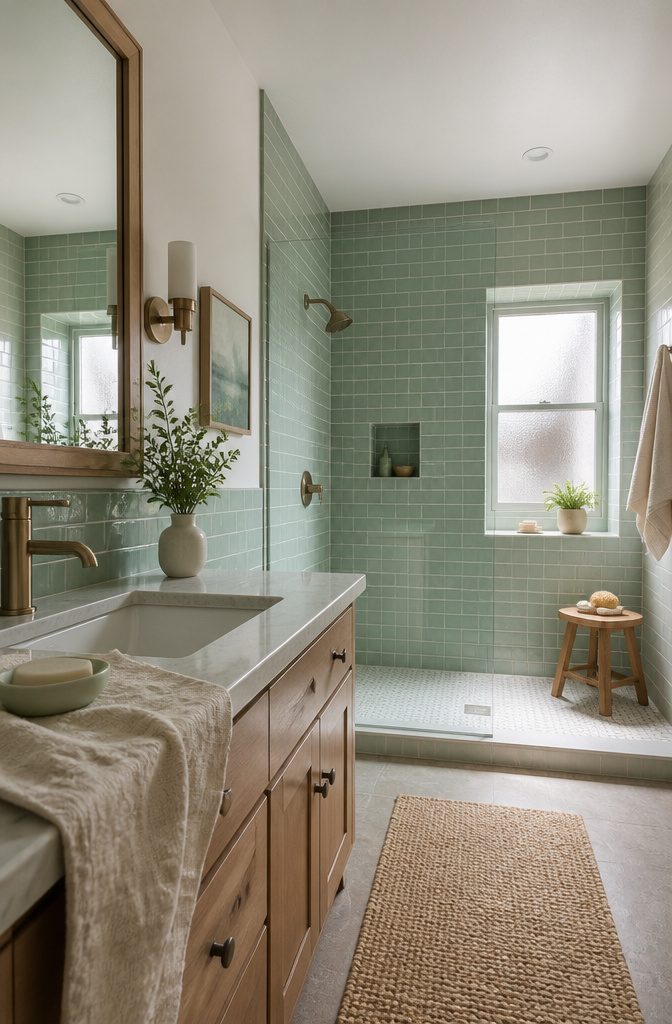
Color drenching means one green runs across the shower walls and keeps going, even onto recessed window trim.
Olive and moss read as calm and earthy, and ceramic with plenty of color variation from tile to tile keeps a big area from looking flat.
For a lighter, beachy room, seafoam or mint subway tile can run from the vanity backsplash into a walk-in shower.
This is a bigger commitment than a single accent wall. You buy more tile, spend more time setting it, and live with the shade for years.
Hold a full-size sample in the room’s actual light before ordering. If dark green feels like too much, seafoam is the easier shade to live with across that much surface.
Recommended Products

3D Metal Mosaic Tiles: This is self adhesive wall tile, made of aluminum, non-fading, scratch-resistant, easy to maintain. Each piece is 12 inch x 12 inch x 0.2 inch, 1pc = 1 sq ft, 8pcs = 8self-adhesive sq ft. *Note: Please measure dimensions before installation, and confirm the color you want after receiving the items. If there is any questions, please contact us

【The Perfect Mosaic DIY Kit】 We offer a wide variety of mosaic kits, and we believe it will be a great help when you're making a kit.

Natural Stone Tile - These are peel and stick backsplash tiles, made of natural stone, fade-resistant, scratch-resistant, and easy to maintain. 11.5" x 10.7" x 0.32" for each piece, 1pc=0.861 sq ft, 5pcs=4.3 sq ft. Please measure the area before installation and confirm whether the color you want is available after receiving the items.
9. Two-Tone and Layered Greens
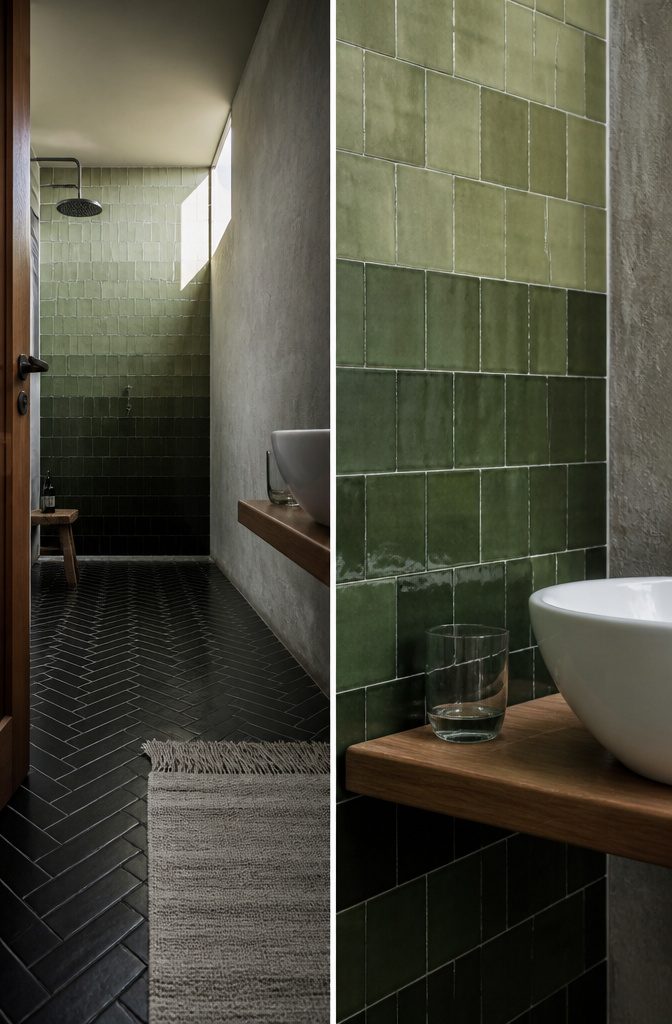
Layering greens means the tile itself changes shade, so the wall reads as depth rather than one flat field. A run that grades from sage at the top to deep forest below is the clearest version.
Drenching puts a single color on every surface, while layering depends on contrast between neighbors, so keep one end of the range light and the other dark. Otherwise the shades blur into a muddy middle.
Give the gradient something to rest against.
Black herringbone on the floor anchors it, and a raw concrete wall adds a matte, chalky texture that keeps the greens from feeling overly decorated. Pairing sage with emerald works the same way if one shade clearly leads.
Recommended Products

Nexus Tiles: Refresh your home for a low cost and no hassle with the Nexus Vinyl Floor Tiles. These tiles can be used in any room in your home from the kitchen to the bedroom. No messy glue or adhesives needed. Includes 20 vinyl tiles.


【Size】-- Sample self adhesive PVC tiles, 10.1''x11.7''x0.12" each, cover about 8.2 square feet. Please consider cutting loss 3-5% in every DIY project.To save your time , we recommend to buy 1 sample sheet then buy more.
Green Shades and the Moods They Set
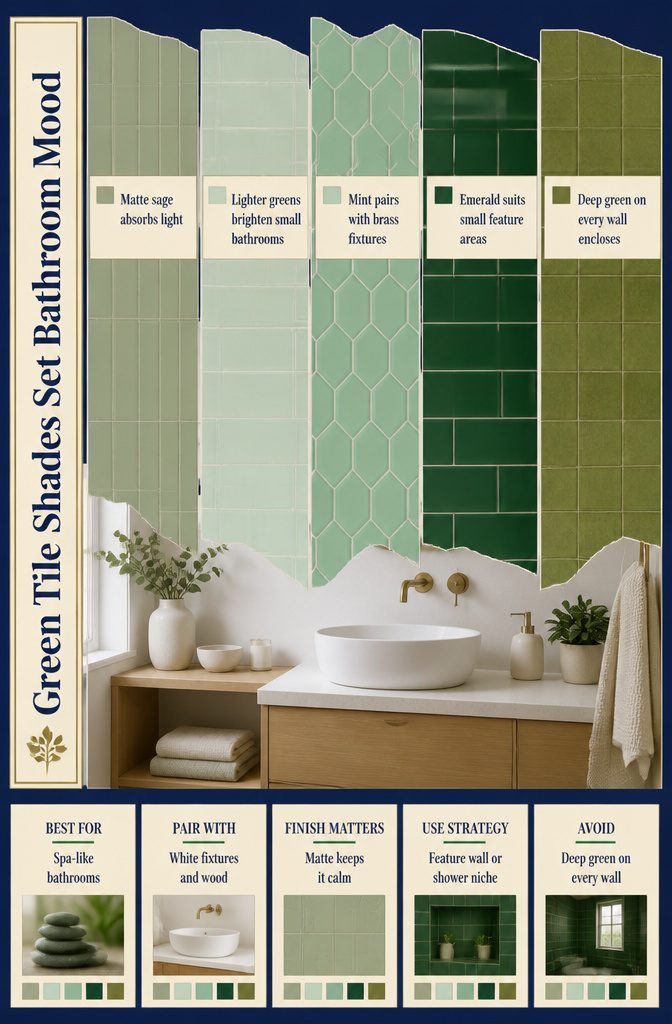
Pale sage and seafoam give a bathroom a quiet, spa-like feel, especially next to white fixtures and a little wood.
Matte sage absorbs light instead of bouncing it, so the room stays calm. Mint and pistachio are lighter still: lighter greens brighten a small bathroom, and mint looks good with brass fixtures.
Emerald and forest green push the other way, toward drama and a boutique-hotel feel. Emerald is strongest on a feature wall or in a shower niche, where a small area carries the color.
Olive and other earthy greens read as organic and suit rustic or boho rooms. In a small bathroom with little daylight, deep green on every wall will feel enclosed, so use it in a smaller dose.
Recommended Products
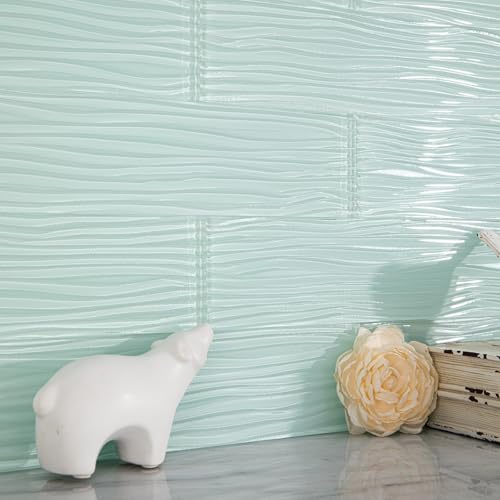
DETAIL PARAMETERS: Individual pieces, 3 x 12 x 0.3 inch (75 x 300 x 8 mm),totally 16pcs / 4 sq.ft, more flexible for your project

7 pack grout cleaning brushes with multiple usages includes 2 scrub brushes, 1 tile lines brush, 3 groove gap brushes, 1 scouring pad brush.
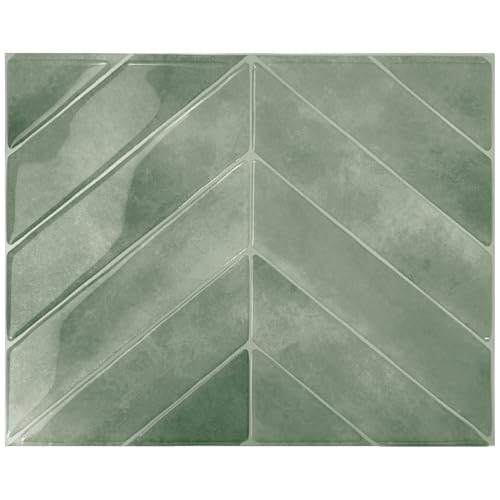
PREMIUM PEEL AND STICK TILES MADE IN NORTH AMERICA: Buy local from the market leader in self-adhesive wall tiles. At Smart Tiles, we offer a large selection of easy-to-install, high-quality backsplash tile designs. This 5-pack of tile sheets covers 3.50 sq ft.
Grout Color and Cleaning
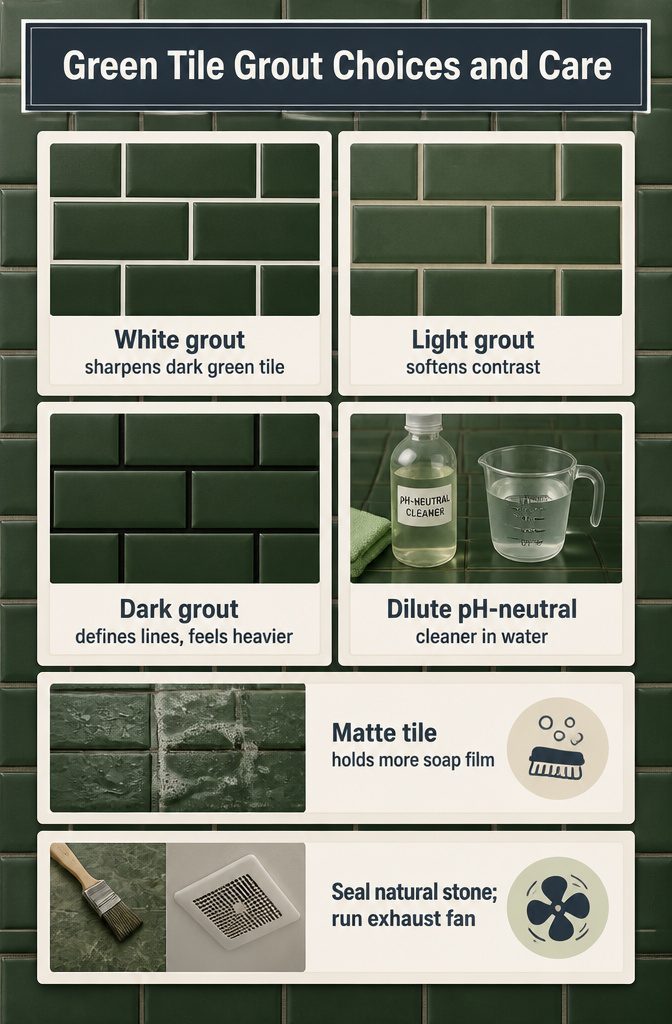
White grout against dark green subway tile makes the color pop and sharpens every edge of the pattern.
Gray, beige or other light grout softens the contrast. Black or dark grout gives the most defined lines, but it reads heavier, so save it for a bathroom that already leans bold.
Clean with a mild pH-neutral cleaner diluted in water, since harsher products can discolor or stain tile. Glossy tile wipes fastest, while matte and textured finishes hold soap film and dirt in their surface and take more scrubbing.
Run the exhaust fan to keep mold off the grout lines. Natural stone needs sealing to hold up over time.
Frequently Asked Questions
What color grout looks best with green tile?
White grout is the usual choice for dark green tile, because it outlines each tile and makes the green look deeper.
Gray or beige grout gives a softer, lower-contrast look. Black or dark grout draws the sharpest lines but looks heavier, so it suits a bathroom that is already bold.
What colors go with green tile in a bathroom?
It depends on the green. Soothing greens such as sage pair well with warm, bold accents like yellow or orange, while vivid, energetic greens are balanced by neutrals like white, cream, or gray.
White cabinets, a wood vanity, and brass, gold, or copper fittings also work with most greens.
What shade of green is best for a bathroom?
Choose the shade by the mood you want. Pale sage and seafoam give a quiet, spa-like feel, emerald and forest green give a dramatic, boutique-hotel feel, and olive reads as earthy and organic.
Mint and pistachio brighten a small bathroom, while deep green on every wall can make a small, dim room feel enclosed.
Is green tile easy to clean?
Yes. The green color does not make tile harder to clean; the finish does.
Glossy tile wipes clean fastest, while matte and textured finishes hold soap film and dirt and need more scrubbing. Use a mild pH-neutral cleaner diluted in water, since harsher products can discolor or stain tile.