
Where the tile goes decides which one to buy. Glossy glazed ceramic, such as a $9.95 per sq. ft. white subway, wipes clean on walls but turns slippery on floors.
Porous choices like cement need a fresh sealer coat every 6–12 months, and acidic cleaners damage them, so match the upkeep to the room.
1. Ceramic Tile
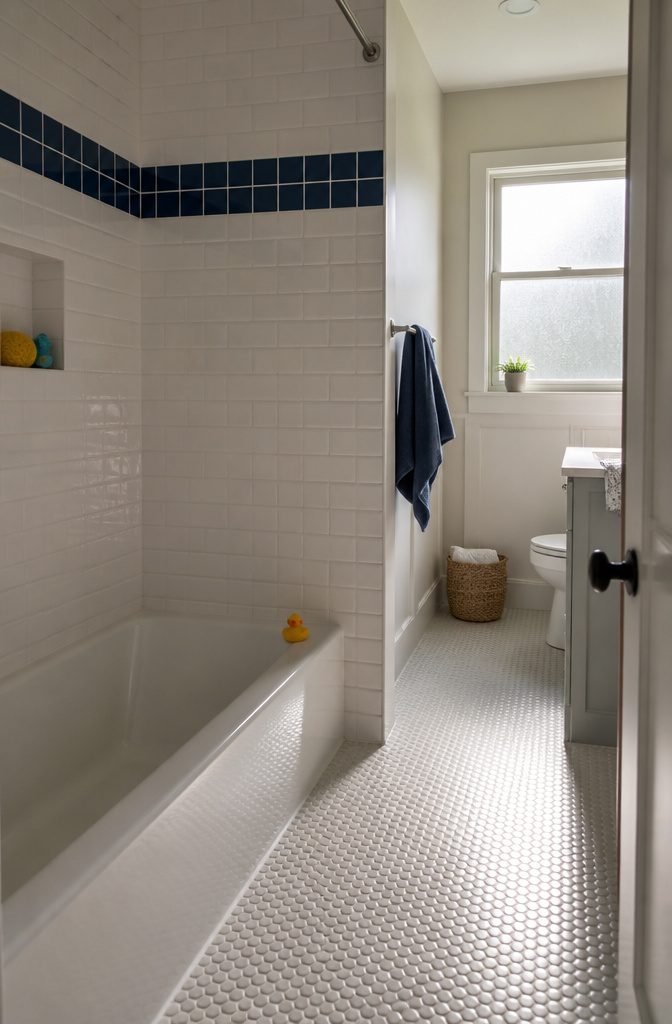
Ceramic is clay-based and kiln-fired, and glazed white subway is the version most people picture.
A 3"x8" glossy white like Portmore White runs $9.95 per sq. ft., which gives you a baseline for budgeting. Hand-painted and artisan-shaped tiles add pattern, and unglazed options bring more color and texture.
On shower walls, the glazed surface wipes clean and usually costs less than other tile, which is why it suits a kids’ bathroom.
Pairing 3"x3" Denim with 3"x8" White subway gives a playful look. For other looks, order samples of 2"x4" Denim or 4"x8" Vermont Pine.
Keep glossy ceramic on walls, because it gets slippery when wet. On a floor, use small penny rounds, whose extra grout lines add traction.
Recommended Products

4 1/4"x4 1/4" White Ceramic tile, thickness: 1/4"

Coverage and Quantity: Listing is for 12.5 square feet, which is 100 pieces of 3x6 tiles

Includes 15 Pieces per Case | 4.845 Square Ft. Per Case | Case Weight 13.95 lb |TILE SIZE: 12 in. W x 4 in. L x 0.39 in. T
2. Porcelain Tile
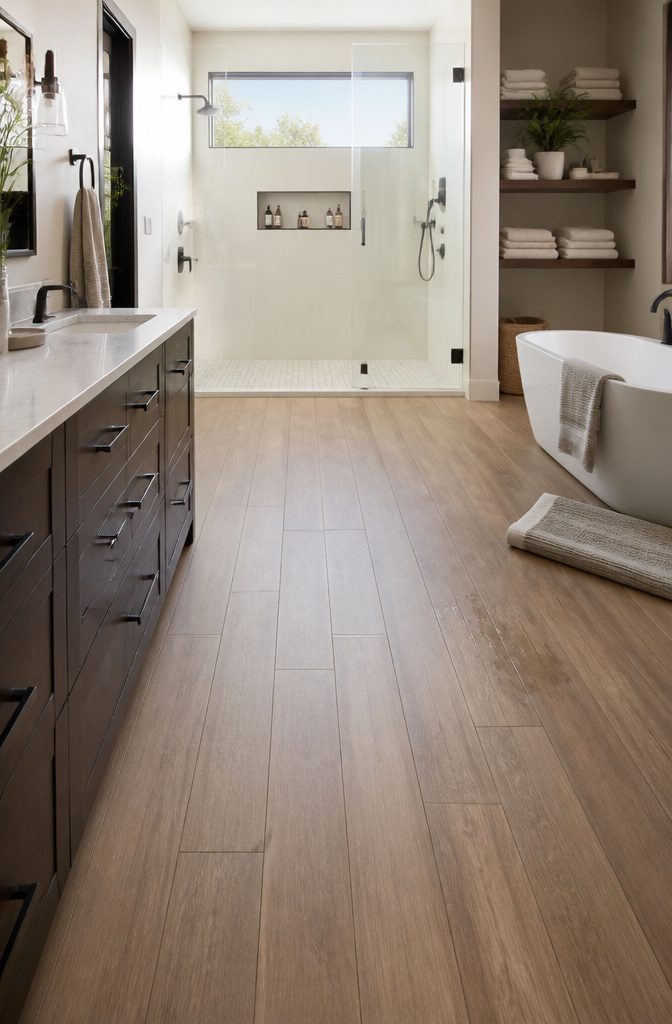
Porcelain is ceramic made from more refined clay and fired longer at higher temperatures, which leaves it smoother, denser, and less porous.
That density is why it holds up in busy bathrooms with constant foot traffic and wet floors. Modern porcelain also appears in shower designs, and wood-look porcelain gives you the warmth of planks without real wood near water.
The trade-off against ceramic is effort and cost: porcelain is harder to cut and usually runs more per square foot.
Spend the extra on floors and showers, and save ceramic for walls, where the added durability does little. On the floor, skip glossy glazed tile unless it’s a small format like penny rounds.
Recommended Products
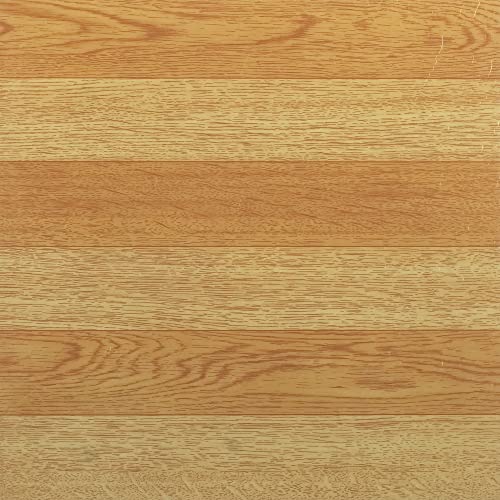
Nexus Vinyl Tiles: Refresh your home for a low cost and no hassle with the Nexus Vinyl Floor Tiles. Our tiles can be used in any room in your home including the kitchen, dining room, bedrooms, bathrooms, foyers, and basements. No messy glue or adhesives needed. Includes 20 vinyl tiles.

Safe for All Natural Stone – Gently cleans marble, travertine, granite, slate, limestone, ceramic, and porcelain tile without damage or dulling the surface.

Plank Porcelain Tile Dimensions: 6" x 24" plank porcelain tile suitable for kitchen backsplashes, walls, and floors
3. Marble Tile
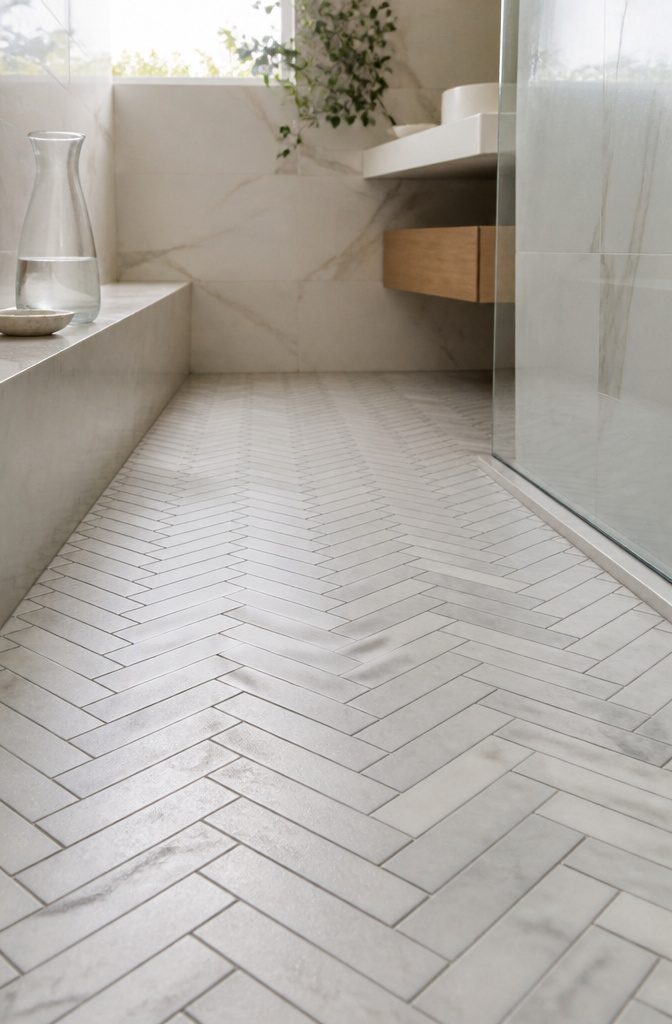
Carrara and white dolomite are the safe choices, in white or gray, and beige marble is available too.
You can pick how much contrast you want in the veining. For more drama, put velvety Calacatta Gold on the walls of a small bathroom, or purplish Calacatta Viola behind the sink.
On the floor, choose a honed finish over polished.
It grips better and hides wear. Penny rounds or narrow herringbone tile add more grout lines, which improves traction further.
Marble is natural stone, so it needs a penetrating sealer, especially on a shower floor.
White marble can rust if it’s installed or treated poorly, and green marble can warp when drainage is wrong. For a shower, hire an installer who knows waterproofing and drainage sloping.
Recommended Products

【Mesh Backing】Penny Tile Italian Carrara marble 1 inch round tile honed mounted on a sturdy mesh, easy to install and cut with a wet saw

Size: 10.6''(268mm)x10.6''(268mm)x0.3''(8mm), 5 sheets/box, 3.86 sq.ft/box, chip size: 1 inch

Premium Marble: Natural carrara marble from Italy, premium quality, carefully selected, consistent in size and color
4. Brick Tile
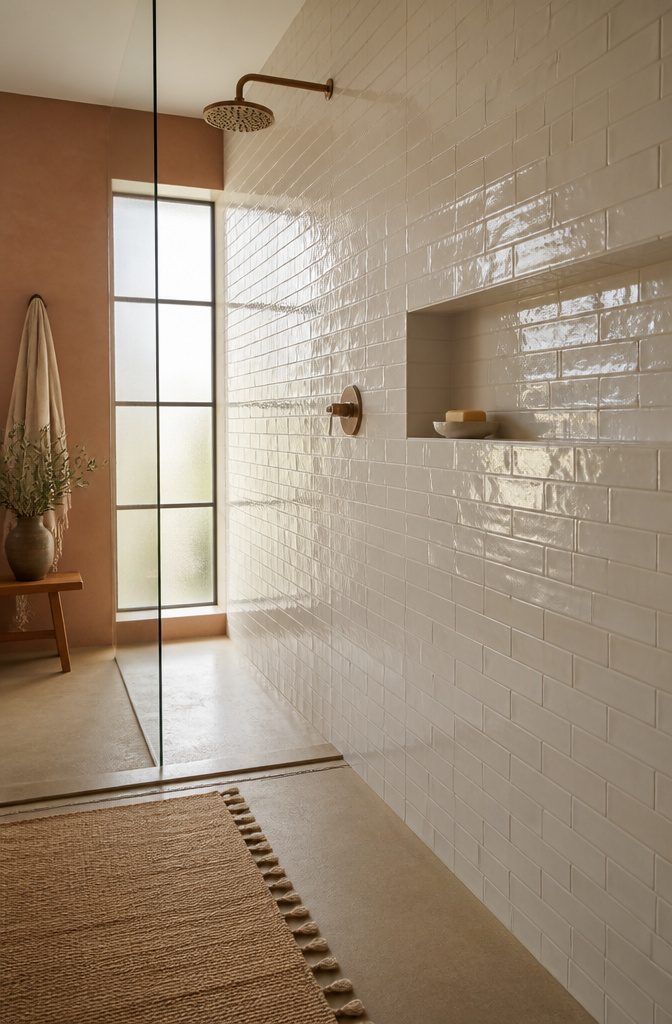
Unglazed brick tile has the earthy, rustic texture brick is known for. Glazed brick comes in thin, elongated forms that stretch the classic subway tile into a more modern, textural look.
The finish decides the upkeep. Unglazed tile needs ongoing coats of waterproof sealer to protect it from splashes and moisture, so keep it on a dry wall, such as an accent wall across from the sink.
Glazed brick is easy to clean, which makes it the better pick for walls that get wet, like the ones around the shower.
Seal its grout lines as the last step of installation. Use glazed brick on walls rather than floors.
5. Cement Tile
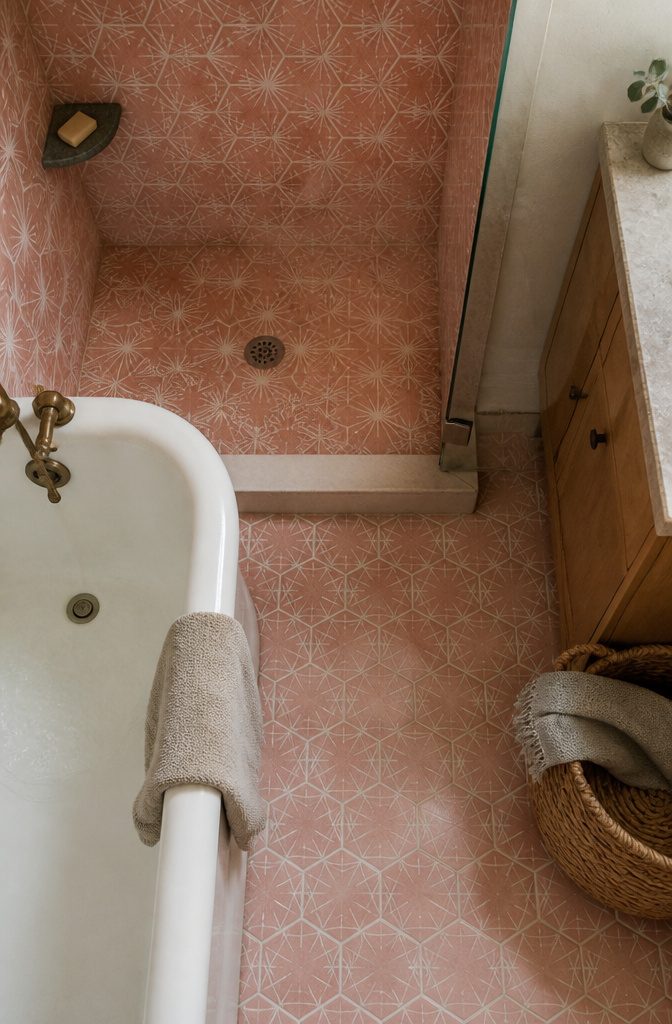
Cement tile has lined homes, hotels, and cafés for at least a century, and it offers the boldest patterns in this lineup: pink hex on a shower wall, or star-studded tiles on the floor.
Repeat a bright floor tile inside a shower nook to tie the room together. It grips underfoot and develops a patina over time, which suits a lived-in look better than a showroom finish.
The porous surface needs a penetrating sealer after grouting and a fresh coat every 6–12 months, depending on traffic.
Acidic cleaners damage it. Hire an experienced installer, since poor drainage causes staining and efflorescence, and improper sealing causes etching.
6. Terracotta Tile
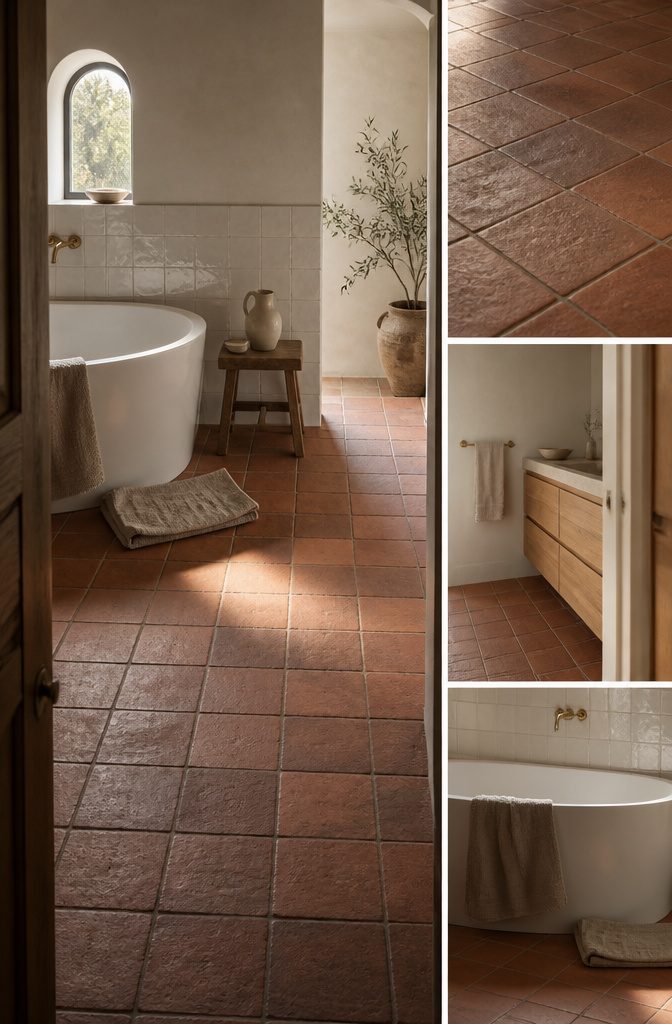
Terracotta brings Mediterranean warmth to a bathroom, and the finish decides how it behaves.
Unglazed tile is naturally slip resistant, so it suits a floor, but it must be sealed as the last step of installation and resealed regularly to prevent staining.
It also develops a strong patina over time, and acidic cleaners can damage the surface.
Glazed tile wipes clean easily and works best on walls.
Seal its grout lines anyway. A darker Belgian reproduction floor looks good against soft-white glazed wall tile.
If you’d rather not tile the walls, a terracotta-toned paint color gives you the same warmth.
7. Zellige Tile
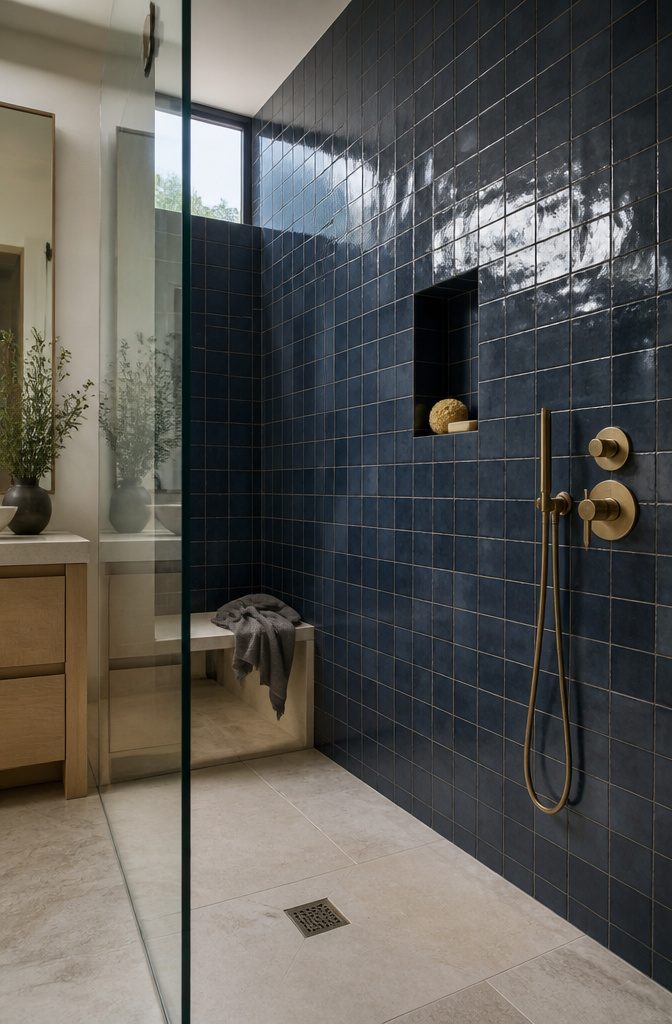
Zellige is made by artisans in northern Morocco, who shape local clay, cut each tile by hand, and glaze it. Expect uneven edges, color that shifts from tile to tile, and small chips, pits, and cracks.
That irregularity is the appeal, and it is also the installation challenge: tiles won’t line up like machine-made ones, so grout joints vary and the layout takes patience.
Keep it on walls. The glaze offers little slip resistance, so for a floor choose a smaller tile with more grout lines, or an unglazed one.
Colors run from warm white to midnight blue, even gold, and a whole shower wall works without trim. In wet areas, seal the tile and grout regularly to prevent stains.
8. Terrazzo Tile
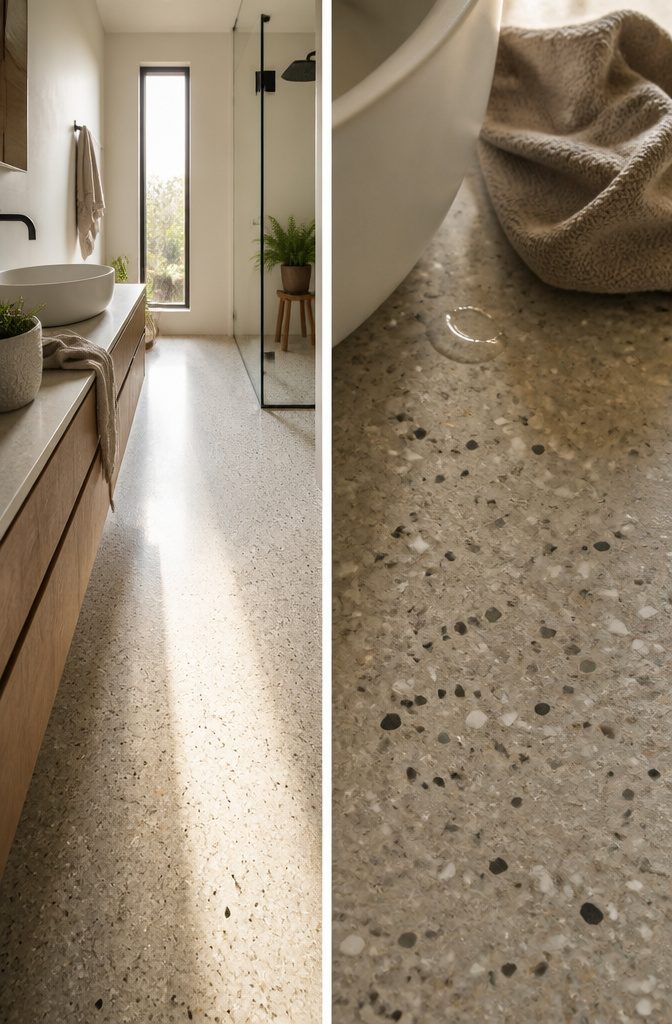
Terrazzo is a composite tile made from chips of stone, marble, or glass set in a cement base.
The speckles act as a playful neutral, giving you the calm of a solid tile with more going on. It works on floors and walls, and it has more traction than many bathroom tiles, which helps on a wet floor.
Keep the pattern to one surface. Terrazzo floors next to patterned wall tile or a busy vanity top will compete, so pair them with plain walls and simple fixtures.
The tile resists stains and water and lasts for decades, but it needs a waterproof, penetrating sealer at installation and regular upkeep after that. Over time it develops a patina.
9. Limestone Tile
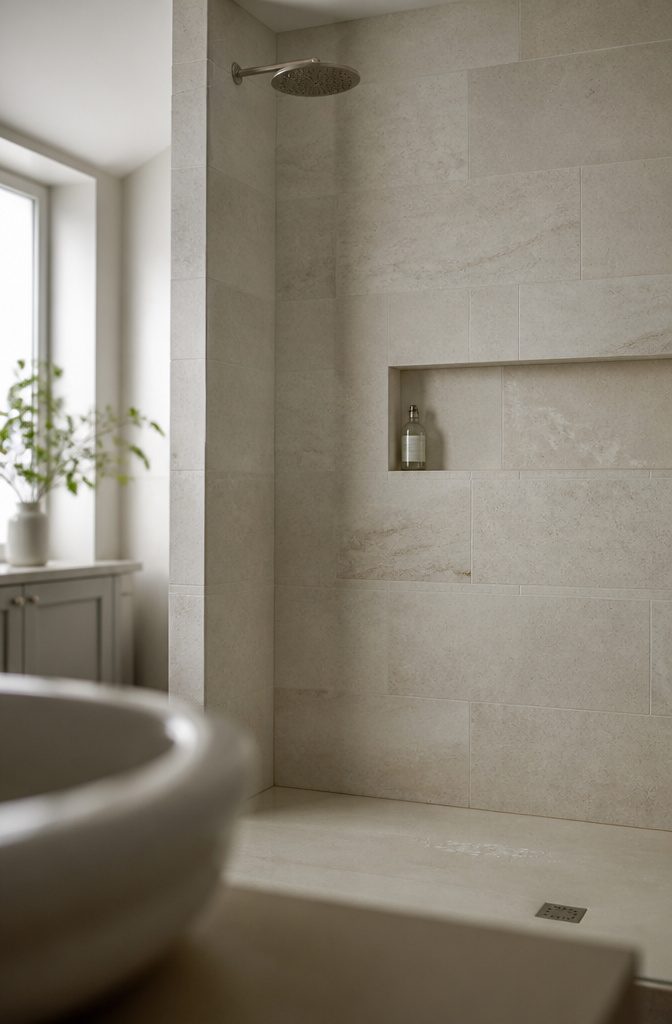
Limestone looks quiet and weathered: soft veining, the occasional fossil, and colors from cream to deep grey. It fits traditional bathrooms and modern subway-tile layouts, and large tiles give a slab-like surface.
The calm look comes with upkeep. Limestone is porous, so seal it regularly with a penetrating sealer, especially in a shower.
Skip acidic cleaners, which etch the surface. Tiles vary a lot from piece to piece, so order samples and blend the tiles before setting any.
Poor drainage causes staining and efflorescence, and bad sealing causes etching, so hire an experienced installer. If you want a surface you can wipe and forget, porcelain is less porous and easier to clean.
10. Slate Tile
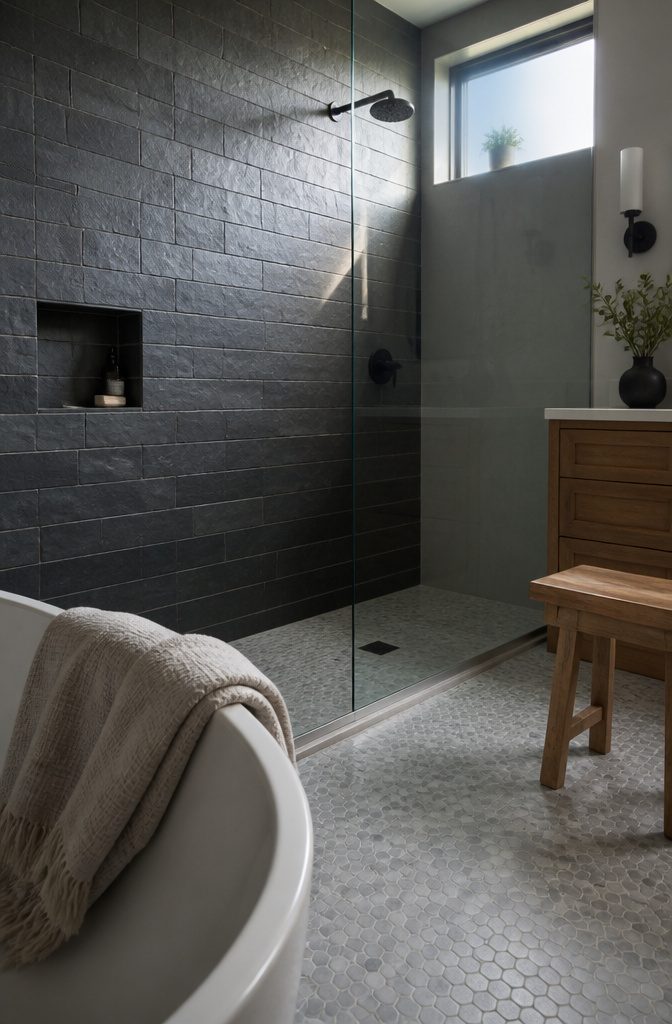
Slate is nonporous and water-resistant, which is why it works on both bathroom walls and floors.
Its natural surface is slightly uneven, so bare feet get grip even when the tile is wet. That makes it a better pick than polished stone for a shower floor or a bathmat-free zone by the tub.
The texture also holds a little more soap residue than glazed tile, so expect to scrub rather than just wipe. Slate ages well only with care: seal it regularly with a penetrating sealer to guard against stains, scratches, and moisture.
For a pairing, try slate subway tiles on the walls with marble penny rounds on the floor. Or cut large slate tiles into smaller squares for a calmer, more uniform look.
Five Tile Layouts
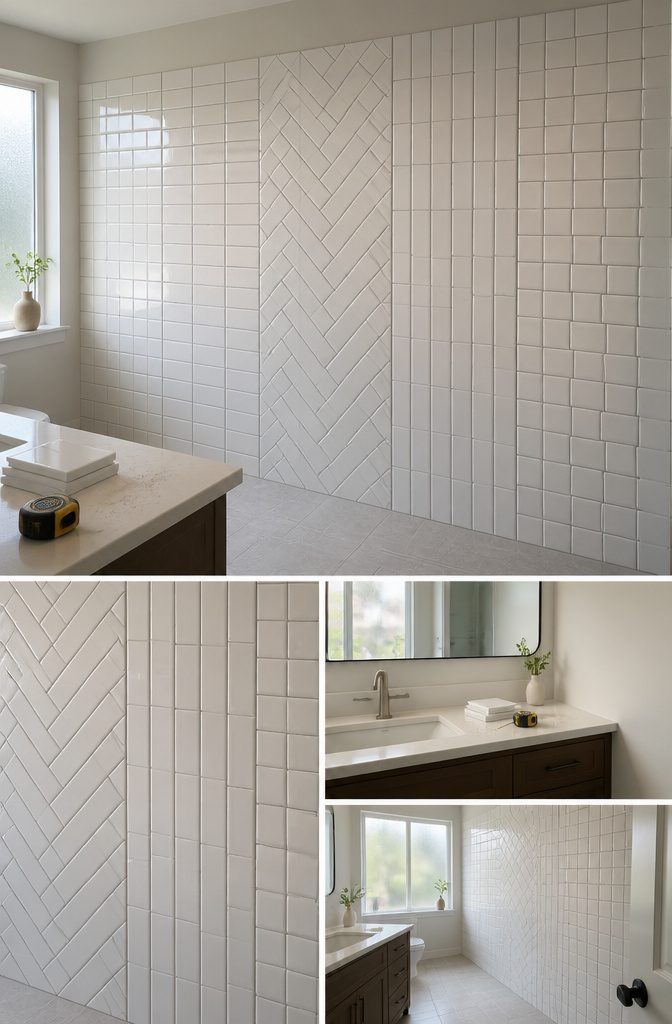
Five layouts work with one plain tile:
- Brick Lay: classic, with slightly off-center tiles that add interest.
- Straight Lay: the familiar subway look.
- Herringbone: extra drama, still timeless.
- Vertical Slack Bond: tile stood on end, classic and unusual.
- Crosshatch: strongest in a minimal tile color, with a large statement.
Standard brick lay staggers each row by half a tile. A 1/3 offset shifts each row by one-third of the tile length, which reads as more dynamic.
An ordinary tile in an unusual layout often costs less than patterned tile, and the layout gives it a pricier look.
In a small bathroom, light colors and reflective finishes bounce light, and a mix of tile sizes adds contrast. Set a few sample tiles in the actual room before you buy.
Tile for Floors, Walls, and Showers
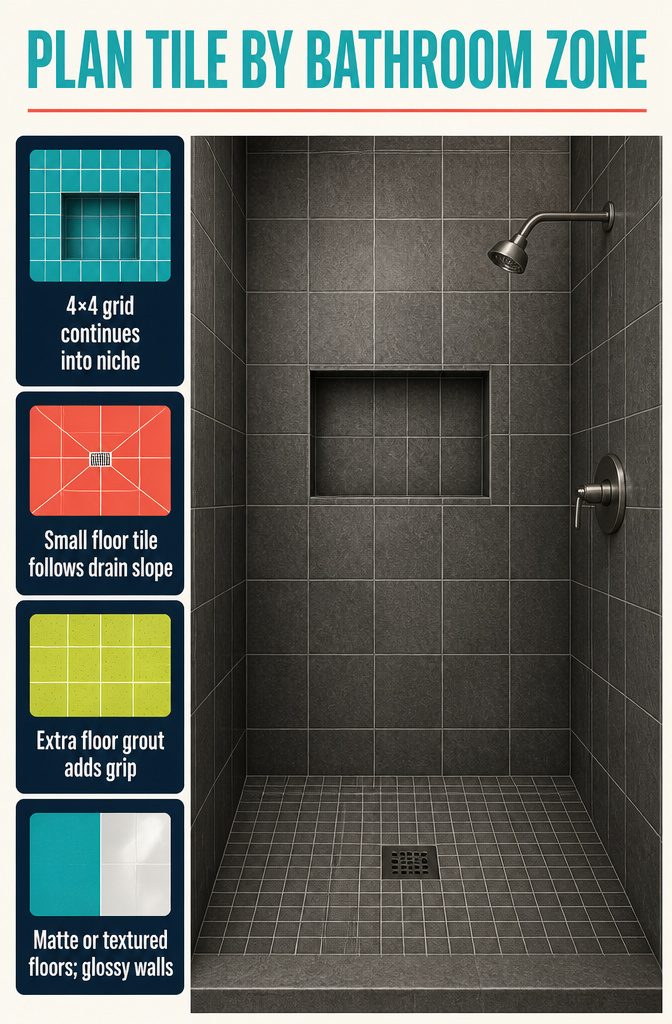
Use 4×4 square tile in the shower alcove and inside the niche. The square grid keeps joint lines consistent from the wall into the niche, so the shelf looks built in.
For the floor, pair small tile underfoot with larger tile on the walls.
Small pieces follow the slope toward the drain more easily, and the extra grout lines add grip. Larger wall tile means fewer joints to scrub.
Mark the drain, valve, and shower arm locations before you set any tile, then plan the layout so cuts around them look deliberate.
Fit accessories like the trim plate and soap dish on a grout joint or the center of a tile.
Choose finish by zone: matte or textured on floors for traction, glossy on walls where it wipes clean and bounces light.
Frequently Asked Questions
How does a 1/3 offset tile pattern differ from a standard brick layout?
In a 1/3 offset, each row slides over by one-third of a tile’s length.
A standard brick lay staggers each row by half a tile. The smaller shift gives the wall a more dynamic look.
What type of tile is best for a bathroom?
No single tile is best; the choice balances style, performance, and upkeep.
Porcelain and ceramic are the usual picks for wet areas because they are less porous and easy to clean, with porcelain suited to floors and showers and ceramic to walls.
Marble, slate, cement, and terracotta add more character but need sealing and regular resealing.
How do I pick a bathroom tile design if I can’t decide?
Look at how the light in the room changes through the day and decide what mood you want.
Then lean toward the idea you keep coming back to, or a classic look if every option feels overwhelming. Set a few sample tiles in the actual bathroom before you buy.