
These ideas run from a weekend of textile swaps in a mid-century living room to a dark chevron accent wall in a home gym, and the room you’re styling decides which one applies.
Several rooms share a problem: white, black and gray palettes read cold. Rich Walnut faux beams or a cream throw warm them up.
1. Mid-Century Modern Living Room
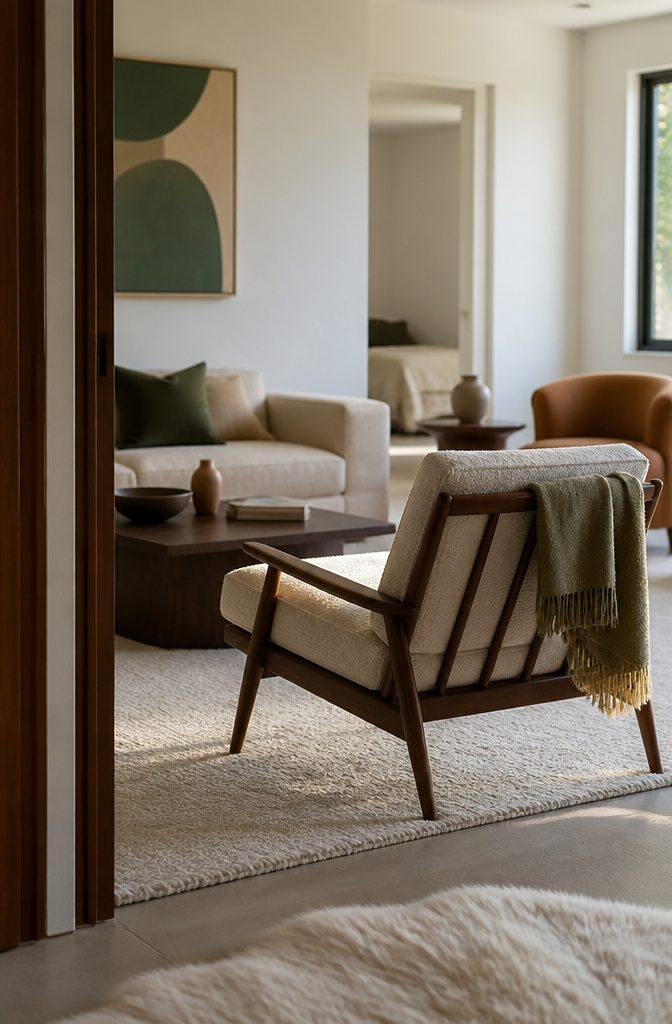
Mid-century modern relies on clean lines and sculptural, low-slung furniture, the silhouette behind Eames chairs and Mies van der Rohe’s Barcelona chair.
White, uncluttered walls let the furniture carry the room, and plush textiles keep all that structure from feeling cold.
A renter can get this look in a weekend without touching the walls.
Swap bulky seating for low-profile chairs or a low sofa, add a boxy coffee table or a rounded side table, then layer a rug, upholstery and a throw blanket.
Textiles are the cheapest part, so spend there first and save for one good chair later. Skip matching sets, since a few distinct shapes read as more sculptural.
2. Industrial Living Room Elements
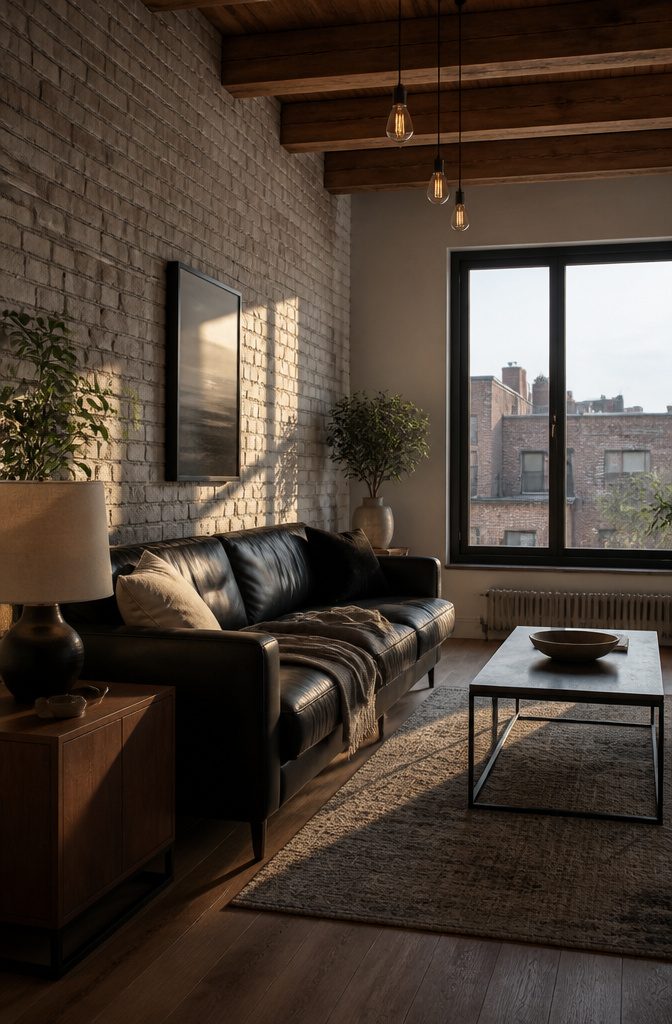
Brick and wood set the industrial tone, and sleek furniture keeps the room from feeling heavy.
Pair the rough surfaces with smooth, modern pieces in contrasting tones, such as a dark, clean-lined sofa against pale brick. The contrast adds warmth and visual balance.
Faux materials make this look practical for renters. Old Chicago faux brick wall panels in Glacier give you a brick wall without masonry.
Rough Sawn or Reclaimed faux wood beams in Caramel add a timber ceiling look at a light weight. Edison bulbs tie the brick and wood together.
Most projects like this can be finished in a weekend with basic tools and some planning.
3. Calm Home Office
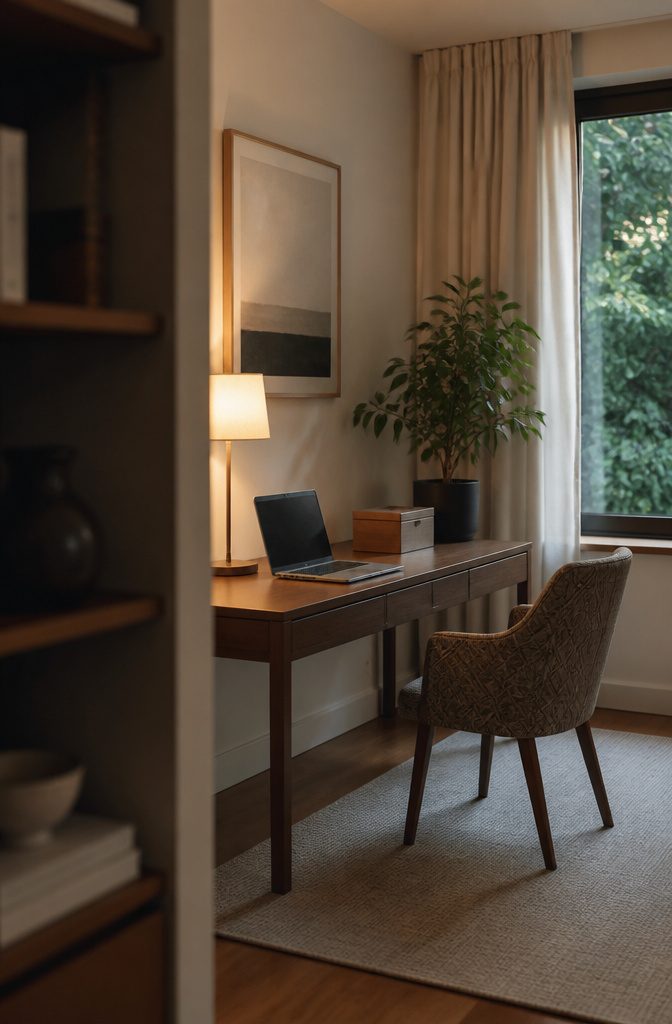
A plain, flat-topped desk with straight legs and nothing on it but a laptop and a lamp does most of the work.
Keep paper in one closed box so the surface stays clear. A round mirror or a single armchair with a geometric pattern adds shape without adding clutter.
Three cheap moves keep that simplicity from feeling clinical:
- Set one leafy plant at the corner of the desk or on a shelf.
- Swap a harsh overhead bulb for a lamp with a soft, warm bulb.
- Choose cream for walls, curtains, or a throw.
An all-white office can read cold, especially on gray days. Cream costs the same as white and gives the room warmth while keeping the clean look.
4. Modern Home Gym
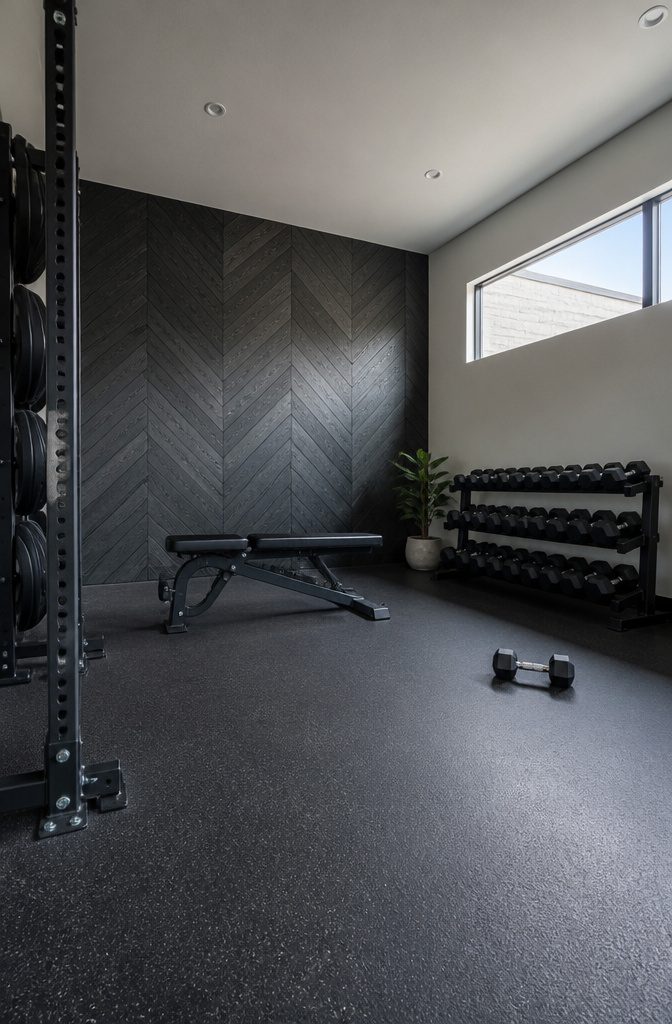
Home gyms stay bare because most decor clashes with free weights and machines.
An accent wall in Chevron Faux Wood Panels in Graphite Lead avoids that problem. The dark tone sits behind sleek equipment without competing with it, so racks, benches, and dumbbells look like part of the plan.
The chevron pattern adds texture and movement, enough to give your eyes something to follow between sets without becoming a dizzying distraction.
Use the wall you face while lifting, or the one behind the rack, and keep the other walls plain. In a spare room, that gives you one focal wall.
In a garage corner, it marks off the workout zone. Skip posters on top of it, since the pattern already fills that role.
5. Kitchen With Clean Contrasts
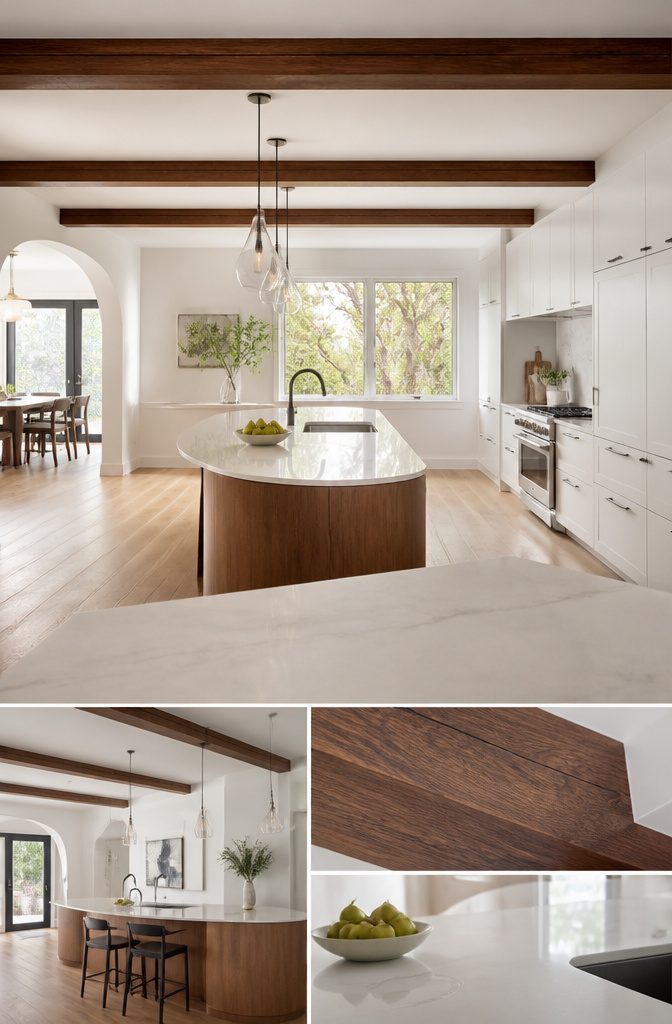
Crisp white cabinetry, walls, and ceiling give you the clean base, and richly grained wood keeps it from feeling sterile.
A curving island and teardrop pendant lights bring in the mid-century shape, while sleek surfaces and open floor space keep the room looking current.
The ceiling is the easiest place to add the wood. A flat white ceiling is one large blank block, and Timber Faux Wood Beams in Rich Walnut or Heritage beams break it up with warm grain.
An all-white kitchen shows every smudge, splash, and scuff.
Because of that, the wood has to carry the warmth. Without it, the room reads cold.
6. Modern Bedroom
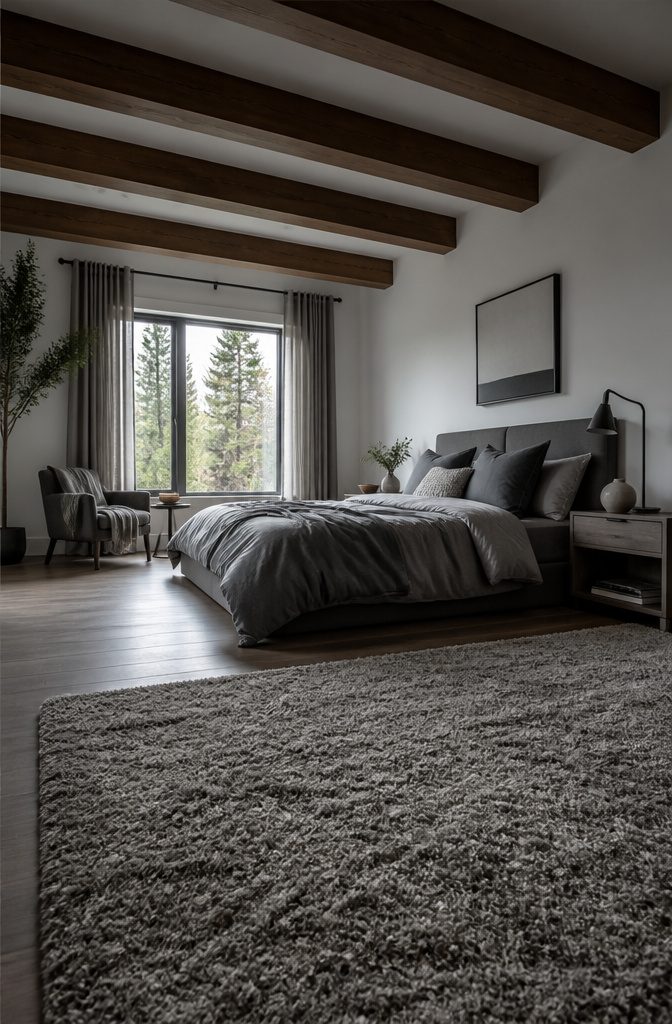
Black, white, and layered grays give a modern bedroom its calm, but that palette can tip toward cold on its own.
Wood beams overhead fix that. Faux beams in a rich walnut tone add warmth and structure to the ceiling, and their straight lines reinforce the room’s linear flow.
Softness comes from the bed and the floor. Plush bedding, a thick area rug, and a few understated decor pieces take the sharp edge off all that clean geometry.
Keep the textiles in the gray family so the palette stays quiet, and let the walnut be the one warm note. The room ends up restrained but not cold.
What Makes a Room Modern
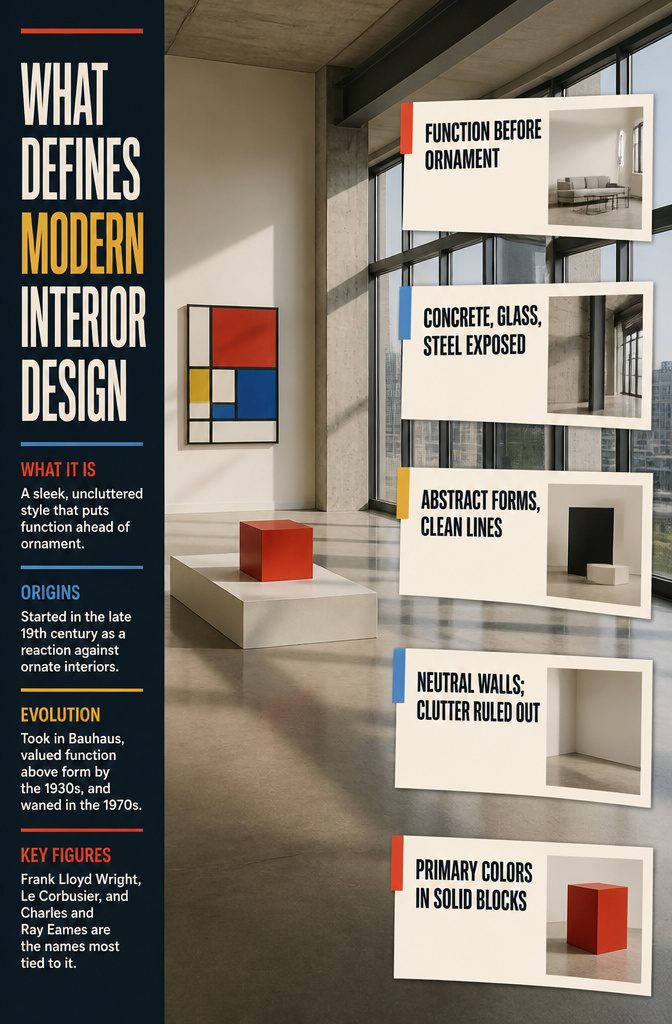
Modern design is a sleek, uncluttered style that puts function ahead of ornament.
It started in the late 19th century as a reaction against ornate interiors, took in Bauhaus, valued function above form by the 1930s, and waned in the 1970s.
Frank Lloyd Wright, Le Corbusier, and Charles and Ray Eames are the names most tied to it.
A room reads as modern when it has these 8 elements:
- Modern art
- Glass, concrete and steel, with industrial materials left in plain view
- Abstract forms
- Neutral walls as a quiet backdrop
- Clean lines
- No clutter
- Pops of primary colors used as solid blocks, since patterns are rare
- Large windows, which reinforced concrete and steel made possible
Modern vs. Contemporary Design
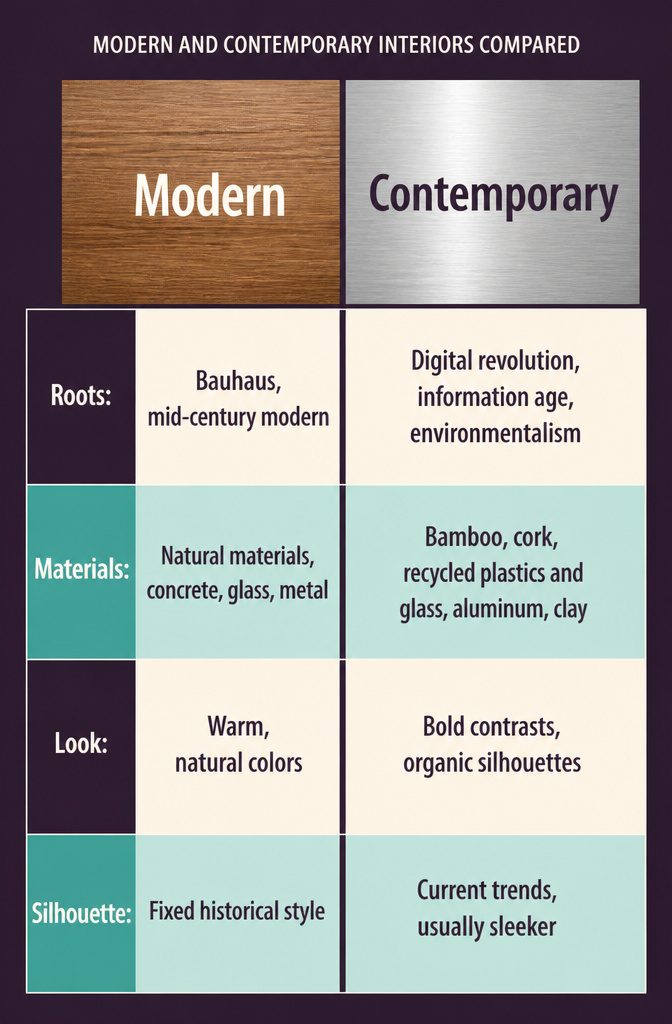
Modern is a fixed historical style, while contemporary shifts with current trends. Both lean minimalist, but contemporary usually looks sleeker.
| Modern | Contemporary | |
|---|---|---|
| Roots | Bauhaus, mid-century modern | Digital revolution, information age, environmentalism |
| Materials | Natural materials, concrete, glass, metal | Bamboo, cork, recycled plastics and glass, aluminum, clay |
| Look | Warm, natural colors | Bold contrasts, organic silhouettes |
| Lighting | n/a | n/a |
Mixing the two works if you choose complementary elements, such as a natural-wood modern chair beside a sleek aluminum table.
Materials and Color
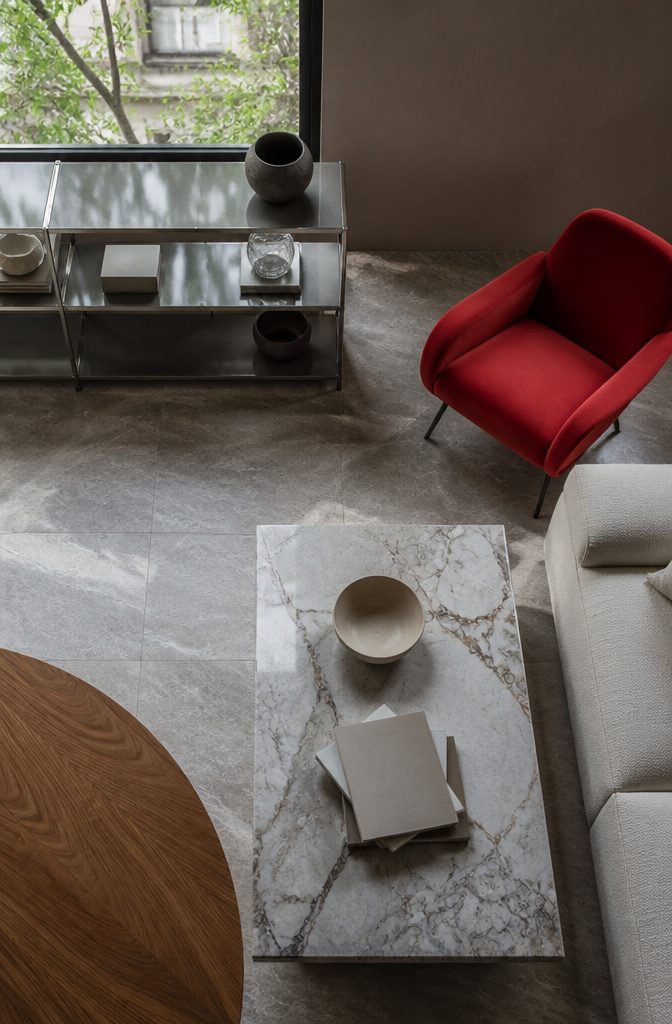
Start with the walls.
White, taupe, soft blue and blush pink all make a quiet backdrop, and they let you swap furniture and decor later without repainting. That flexibility matters most if you rent.
Then add materials with some weight: wood, marble, glass, concrete and steel. Pairing a warm one with a cool one, like a wood table beside a steel-framed shelf, keeps a neutral room from looking flat.
Modern doesn’t have to mean all neutral. One or two primary-color accents, such as a red chair or a blue pillow, add contrast, a habit borrowed from Bauhaus and De Stijl.
To fit the style into an older or more traditional home, lean on earth tones and rounded, organic shapes. They soften the clean lines.
Frequently Asked Questions
What is modern interior design?
It began in the late 19th century as a reaction to ornate interiors and later absorbed Bauhaus ideas. Typical features include clean lines, neutral walls, large windows, and glass, concrete and steel left in plain view.
What is the difference between modern and contemporary interior design?
Modern is a fixed historical style rooted in Bauhaus and mid-century modern, while contemporary shifts with current trends.
Modern uses natural materials, concrete, glass and metal in warm, natural colors. Contemporary favors bold contrasts and organic silhouettes, with materials like bamboo, cork, recycled glass and aluminum.
Can I mix modern and contemporary styles in one room?
Yes.
Choose pieces that complement each other so the room reads as one plan. A natural-wood modern chair next to a sleek aluminum table is one example.
Which is more minimalist, modern or contemporary design?
Both lean minimalist. Contemporary design usually looks sleeker, with more polished finishes.
Can modern design work in any home?
Yes, because the style adapts well.
In an older or more traditional home, earth tones and rounded, organic shapes soften the clean lines. Biophilic elements, which bring natural features into the room, also help the style fit.
What role do lighting and room layout play in modern design?
They support natural light, flow and function.
Large windows are a hallmark of modern rooms, made possible by reinforced concrete and steel. An open, uncluttered layout lets that light move through the space.
What are some iconic furniture pieces in modern design?
Mies van der Rohe’s Barcelona chair is the standard example, along with Eames chairs. Both show the clean lines and sculptural shapes that define mid-century modern furniture.