
The ideas run from a framed blanket above the sofa to custom pendant clusters under a 30-foot ceiling, and what picks yours is whether the change touches the structure.
Windows, doors, ceiling beams and fireplaces fall under building codes, so check local permits before you buy anything.
1. Start With a Focal Point
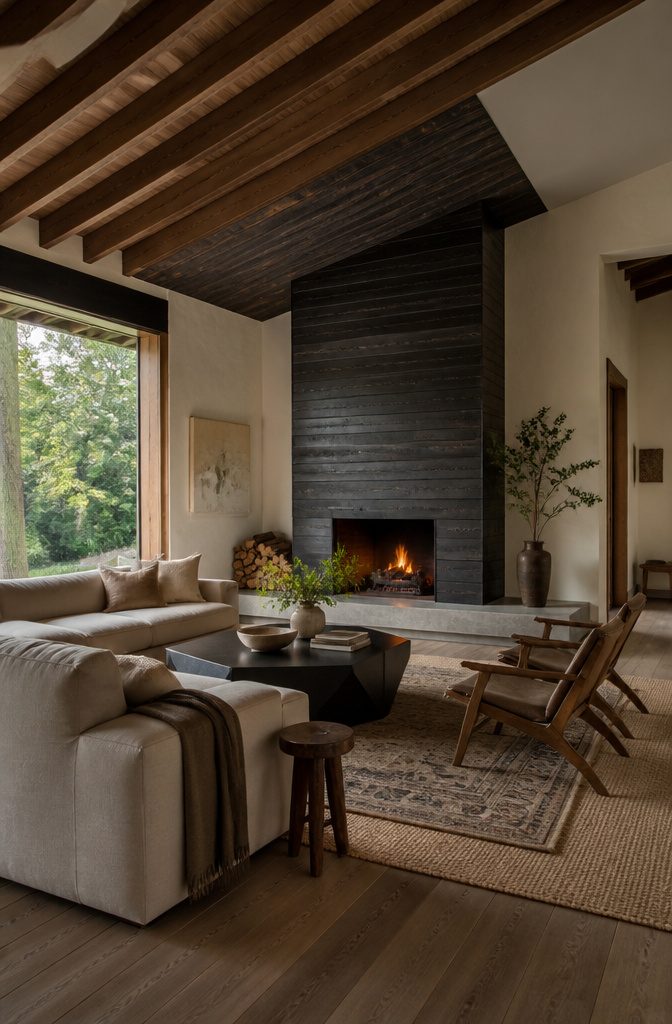
Pick one feature that catches your eye when you walk in, and let everything else support it. Without a single focal point, a room turns into competing themes that all demand attention at once.
A fireplace is the easiest anchor because it’s already there.
In a Woodstock home, the hearth and the ceiling around it were covered in shou sugi ban cypress, and angular furniture in tactile fabrics gave the rustic surface a more contemporary edge.
No fireplace? Hang one large, loud piece of art and build the room’s colors from it, or point the seating toward a big window and its view.
Pulling the sofa and chairs off the walls into a group, even on a diagonal, makes the arrangement itself the anchor.
Recommended Products

Perfectly Sized: Our Halloween mantle scarf measures a generous 21x79 inches, ensuring it fits most standard fireplaces and mantels. Say goodbye to small and lackluster decorations as our scarf instantly enhances the look of your fireplace and becomes the captivating focal point.

Realistic Christmas Garland: Elevate your holiday decor with realistic 2pcs 6ft(72 inch) cedar garland, handcrafted with highly concentrated layers of fine pine needles. Its cedar green tone and lifelike appearance will make you think you've just cut it fresh from the forest. Paired with This garland adds a touch of timeless charm to your home, perfect for hanging on your mantle, door, or as a striking focal point in your living room.

Fall Decorations for Home: Bring warm harvest character to your space with 1 pre-assembled 51.18 in fall garland featuring 2 felt pumpkins, 4 maple leaves, 1 pinecone accent, wood beads and 2 rust-orange ribbon bows. The layered shapes create a cozy seasonal focal point for a mantel, shelf or wall without needing a large decorating set.
2. Seating for Gathering
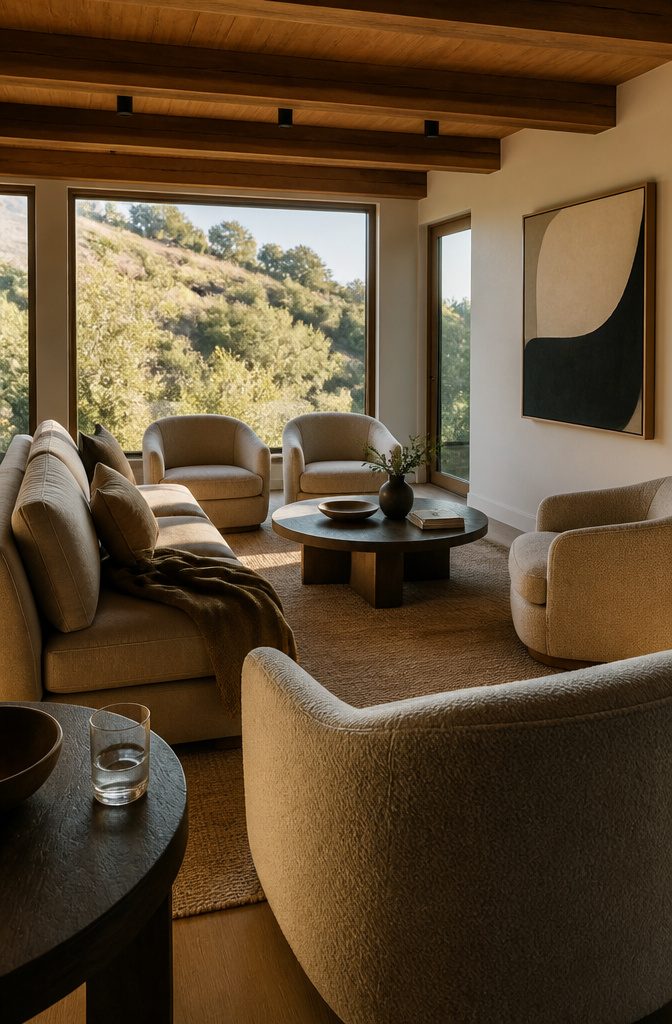
Arrange seating in a loop, with a sofa facing two armchairs, so people look at each other instead of at a wall.
Guests then always have a place to land, and a chair pulled in from another room covers the overflow.
Repeated furniture seats a crowd and looks planned. A Hollywood Hills living room under Douglas fir ceiling beams holds a run of sofas and armchairs by Nickey Kehoe, so there’s a seat for nearly everyone.
In Palm Beach, a 20-foot-long white CB2 sofa stretches along contemporary art, and the long, plain line works like a gallery.
On a weekend budget, pick matching chairs or tables in sets of 2 or 4 and line them up, since repetition looks deliberate.
Recommended Products

VERSATILE DESIGN: This outdoor rug has a soft texture that adds comfort to indoor and outdoor spaces alike.

Modern, artistic: Add a piece of modern charm from ODIKA to your bedroom collection. Designed with the art of minimalism, this rug is sure to provide your bedroom with coziness.

Vintage Floral Patchwork Design: Distressed purple floral blocks with soft lavender tones create a warm vintage look that adds rich color and character to spacious rooms
3. Comfort Over Formality
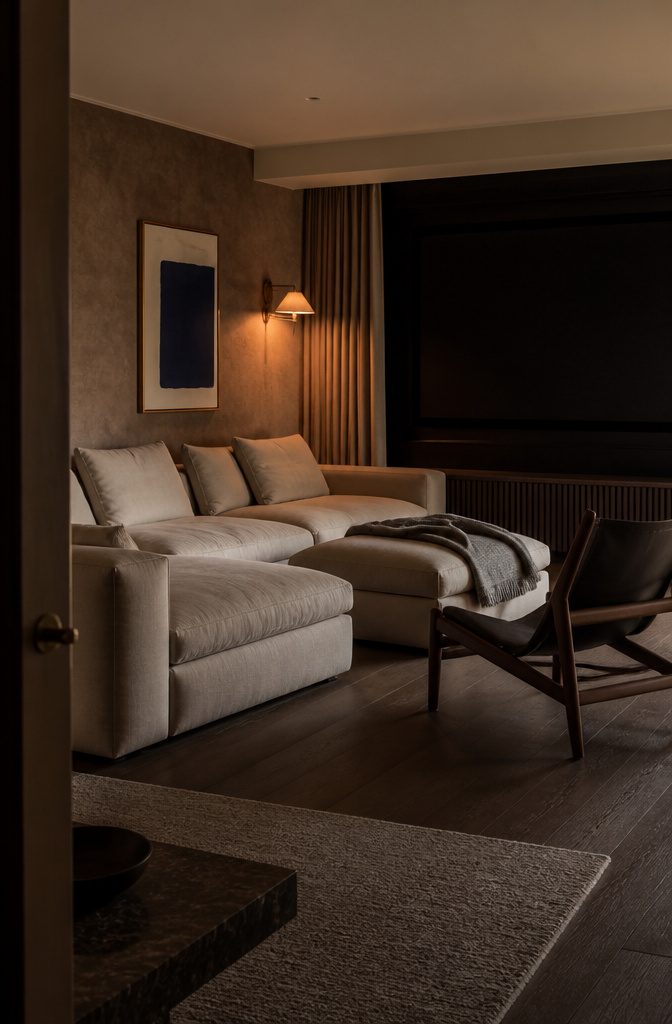
A formal room asks people to sit up straight; a relaxed one lets them stretch out. For movie nights and family time, a deep sectional over a large rug works better than a matched sofa and armchairs.
A great room built around a B&B Italia sectional by Patricia Urquiola and a motorized screen is the high-end version of this idea: one big place where everyone can sink in.
Physical comfort and visual comfort count equally.
A moody Upper West Side apartment gets both from a suede wallpaper by Holly Hunt, a custom ottoman and a Daniel Wenger lounge chair. The textures make the room look soft before anyone sits down.
Recommended Products

Captivating Design: Featuring multiple wooden hanging bars suspended from a flush mount ceiling disc, this chandelier creates a captivating visual display that effortlessly blends rustic charm with modern design. The perfect balance of simplicity and intricacy will make a statement in any room.

Complete 8-foot Coverage for Versatile Installations: this set includes two 48-inch beams, offering a combined 8 feet of coverage; Ideal for ceiling spans, entryways, hallways, or accent walls, you can install them side by side for a continuous run or use them separately for creative, staggered layouts; This flexibility allows you to tailor the faux wood beams for ceiling projects to fit various architectural spaces without needing custom sizing

Natural Wood Aesthetics: Bring warmth and character to your home with this semi-flush mount ceiling light. A solid wood frame pairs with elegant brushed gold accents and a white fabric drum shade to create a soft, inviting glow. The combination of natural wood and refined gold details adds a warm, modern touch that complements a variety of interior styles.
4. Mix Old and New
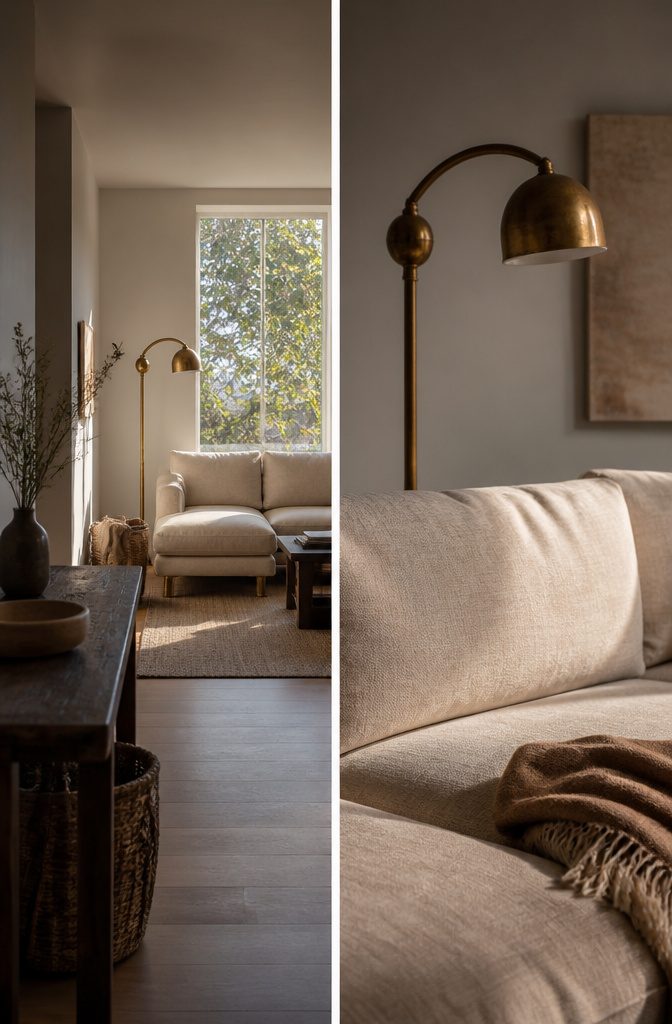
A 1940s brass Stiffel lamp sits comfortably beside a low-slung chenille sectional in warm oyster with brushed brass feet, because the brass ties the two eras together.
Repeating one material or color across old and new makes the mix look planned.
A 1957 Pacific Palisades house restored by Studio Shamshiri shows the other approach. The architecture stays as it is, and the new element, a wet bar in technicolor tile, gets all the color.
You can run a unified theme or a plain backdrop that holds pieces from many styles.
For a real budget, the backdrop wins: keep the walls and sofa simple, then add one vintage or inherited piece at a time. Chintz next to something contemporary works the same way.
Recommended Products

Timeless Elegance & Warm Ambiance: Adorned with a delicate floral fabric shade and an ornate antique brass finish resin base, this Victorian table lamp emits a soft, eye-comforting warm glow. Perfect for creating a cozy, romantic, and inviting atmosphere in your bedroom, living room, or study

MODERN CONTEMPORARY DESIGN: a textured resin base with a natural-look finish pairs perfectly with a white fabric shade to complement any décor

【Gold Glass Lamp Single】The gold table lamp features high quality glass and a metal texture base, featuring unique elegant style. The perfect fusion of classic and modern, can add artistic atmosphere to your living room and bedroom. The modern living room lamp single is perfect for bedroom, bedside, end tables, desks and beside sofas. An ideal gift choice for your family and friend.(Note: Lamp shades require simple assembly)
5. Collected Objects and Art
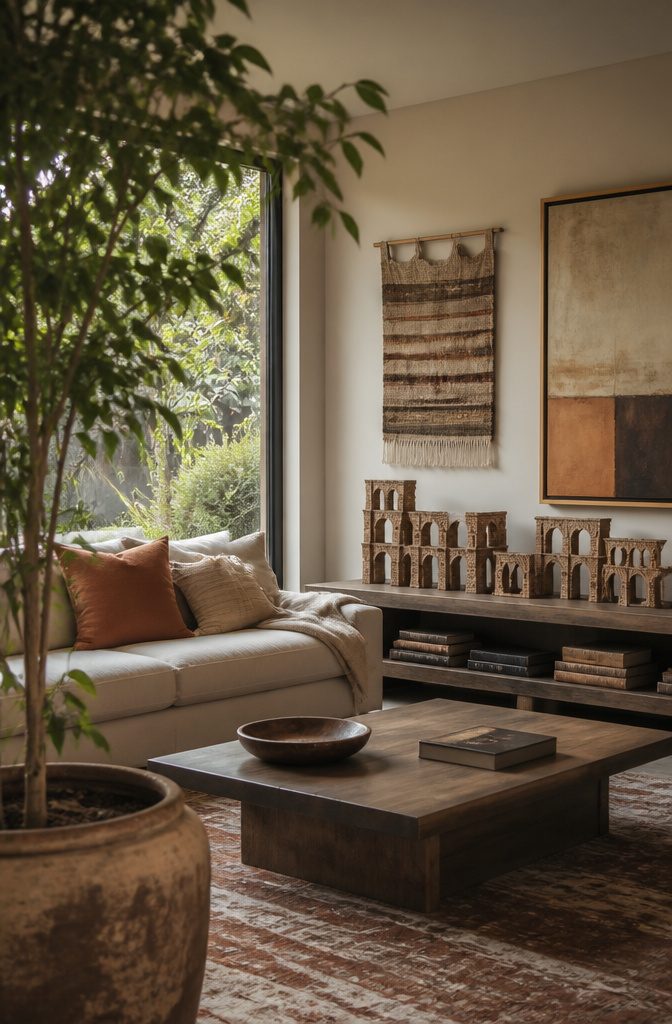
Objects carried over from earlier homes give a room character that new purchases can’t.
One designer keeps vintage models of Mexican aqueducts in her living room, and they read as personality, not clutter. A home should look like the people who live in it.
Let one artwork set the direction. A single painting can supply the palette, so pull your pillow, curtain, and rug colors from it.
A large piece over the sofa also keeps bare white walls from feeling sterile. On a tight budget, a framed blanket above the sofa works as art.
For whimsy, add one odd, lovable piece, like Isamu Noguchi’s Akari 75A paper pendant, which loosens an otherwise disciplined room.
Recommended Products

Classic Design: this pet Christmas stocking adopts a pink cable knit pattern embroidered with a festive red paw print, perfectly echoing the holiday spirit and adding a warm, cozy farmhouse charm to your holiday decor

CHRISTMAS FELT GARLAND WITH SANTA & SNOWFLAKES: Includes 1 pre-strung Christmas garland with 4 layered Santa Claus felt pieces, 3 white snowflake ornaments, wood beads and twine. Santa pieces are about 4 in tall and snowflakes about 3 in across. The repeating red, white and natural-tone design turns a blank mantel, fireplace or wall into a coordinated holiday focal point and pairs easily with stockings, greenery and wreaths

【2 PACK Light Up Ghost Decor】 Bring a cute spooky Halloween focal point to your seasonal setup with 2 lighted up ghost decorations featuring bow accents, warm string lights and a festive fabric look for tabletops, mantels, shelves, fireplaces and party displays.
6. Layered Texture
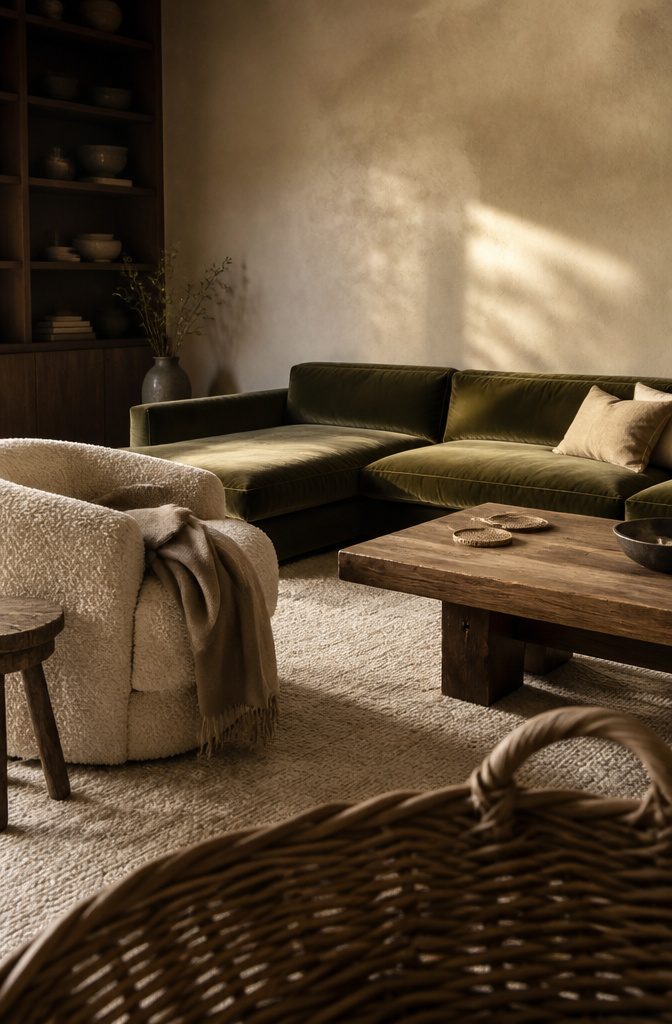
Pair materials that feel different under your hand: a velvet sectional beside a bouclé chair, a wicker basket, a wood coffee table, and a plaster-look wall behind them.
Smooth against nubby and soft against rough keeps a neutral room from going flat. Let one material dominate and the others support it, or the room reads as busy.
Walls can carry texture too. A plaster finish, a swirl effect, or Mediterranean and Spanish knife textures add depth without extra furniture.
If you rent, plaster-look wallpaper gets you most of the softness without a trowel. Texture one wall, not all four.
Recommended Products

SOFT, STAIN-RESISTANT COMFORT: This pink 9x12 area rug features ultra-soft skin-friendly fibers, delivering cozy underfoot comfort for daily relaxation. Designed with superior stain-resistant performance, this indoor rug effectively resists daily spills, stains, and dirt buildup, perfectly fitting family room, large bedroom girls, living room, dining room, or home office

【Modern Design】An 8x10 ft tie-dye grey rug that fits seamlessly under sectionals or a king-size bed. The neutral tones invite family time, creativity, or weekend lounging in comfort.

No-pile & Non-Slip Design: Crafted from premium chenille fiber, this pileless surface stays dry and comfortably soft. Equipped with TPR non-slip backing, it tightly grips hardwood, tile and laminate floors to prevent slipping and shifting.
7. Pattern in Fabric and Rugs
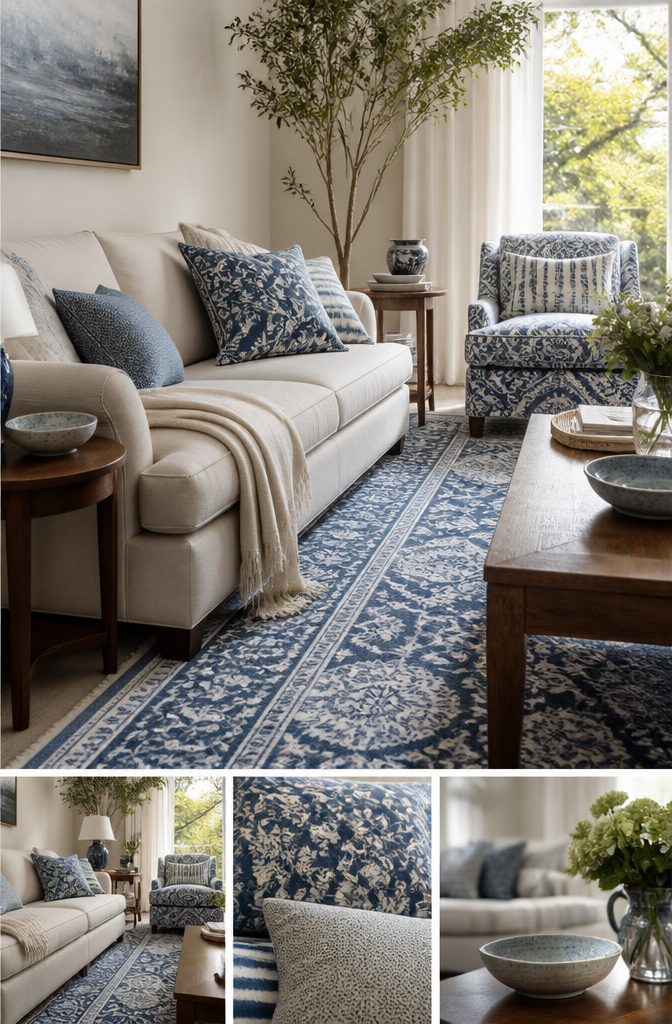
Pattern stays friendly when every print shares a color family. A Palm Beach living room by Mark D. Sikes stacks a long run of prints, yet it reads as eye-catching rather than overwhelming because each repeat is blue and white.
Mix as many patterns as you like, but keep them all in the same one or two colors.
If that feels like too much, let one piece carry the pattern. In a Vancouver apartment with an all-white shell, an ombré rug brings in blue, green and gold, and the furniture and art around it stay quiet.
A geometric rug does the same job. Keep the sofa and walls calmer so the pattern supports your focal point instead of competing with it.
Recommended Products

Complete 8-foot Coverage for Versatile Installations: this set includes two 48-inch beams, offering a combined 8 feet of coverage; Ideal for ceiling spans, entryways, hallways, or accent walls, you can install them side by side for a continuous run or use them separately for creative, staggered layouts; This flexibility allows you to tailor the faux wood beams for ceiling projects to fit various architectural spaces without needing custom sizing

Farmhouse Style Rattan Chandelier: Features a classic of traditional iron structure with pure natural solid wood and paired with 100% handmade rattan shades, this boho dining room light fixture offers a signature focal point for a variety of interior decor. With its unique hollow design that projects a 360° light effect, our kitchen island lighting can maximize its light and bright your entire space.

Indoor Outdoor Ceiling Fan no Light: This farmhouse ceiling fan is designed with 3 wood blades and 3 rustproof downrods(5", 10", 24"), it is suitable for a variety of interior decoration styles and house/room of different heights. You can choose the most suitable downrod size according to your room style/height. You can also use it at outdoor, garden, patio, porch, garage and more.
8. Bold Color
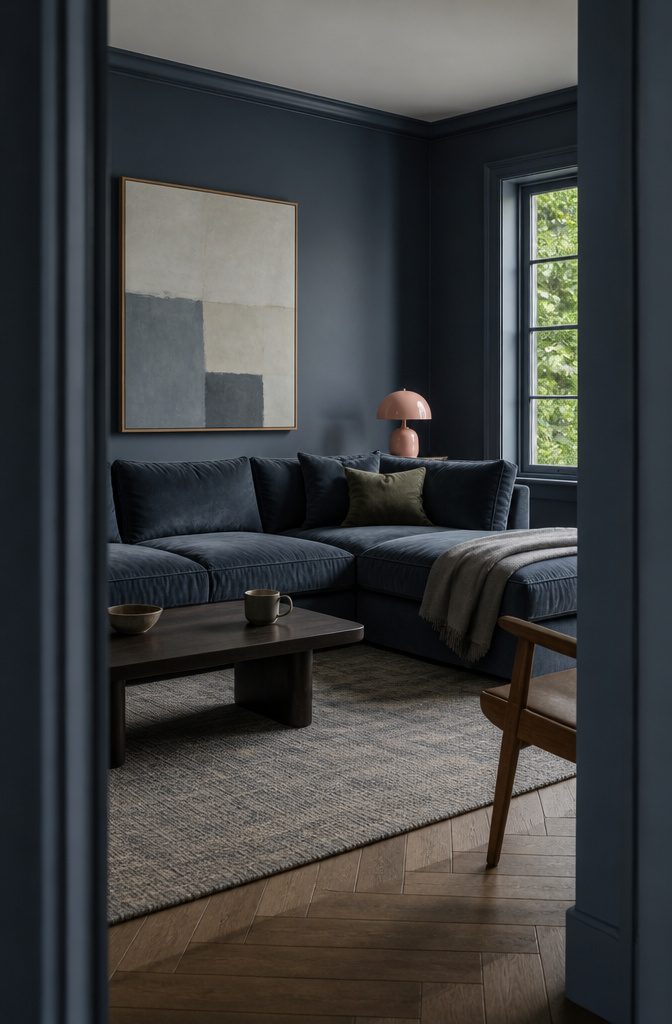
Paint is one of the fastest and cheapest ways to change a living room, and it lets color lead before you buy anything new. Wrap the whole room in one strong hue when neutrals feel flat.
Farrow & Ball’s Blue Gray looks grown-up around a velvet sectional, and a rosé room painted with Portola Paints, paired with an Art Deco rug, feels warm and cohesive. A single candy-colored lamp adds a playful note.
If a full room of color is too much, paint one accent wall and keep the others neutral.
This suits a small room that a bright tone would overwhelm, or an eclectic room where the wall can pick up a color your pieces already share.
Recommended Products

UL listed. 18" high overall. Base is 3 3/4" wide on each side. Shade is 4 1/2" across the top x 8 1/2" across the bottom x 8" high.

【Specifications】 Set of 2 lamps. Each is 24 3/4" high overall. Shades are 10" across the top x 12" across the bottom x 9" high. Weighs 3.8 lbs. Each lamp uses a maximum 100 watt standard-medium base bulb (not included). On-off switches on the sockets.

【Specifications】 Lamp set. Floor lamp is 56 3/4" high x 13" high. Base is 9" wide x 1" high. Shade is 10 3/4" across the top x 13" across the bottom x 9" high. Table lamps are 28 3/4" high x 11" wide. Bases are 5 1/2" wide x 3/4" high. Shades are 8 7/8" across the top x 11" across the bottom x 9 1/8" high.
9. Neutrals With Variation
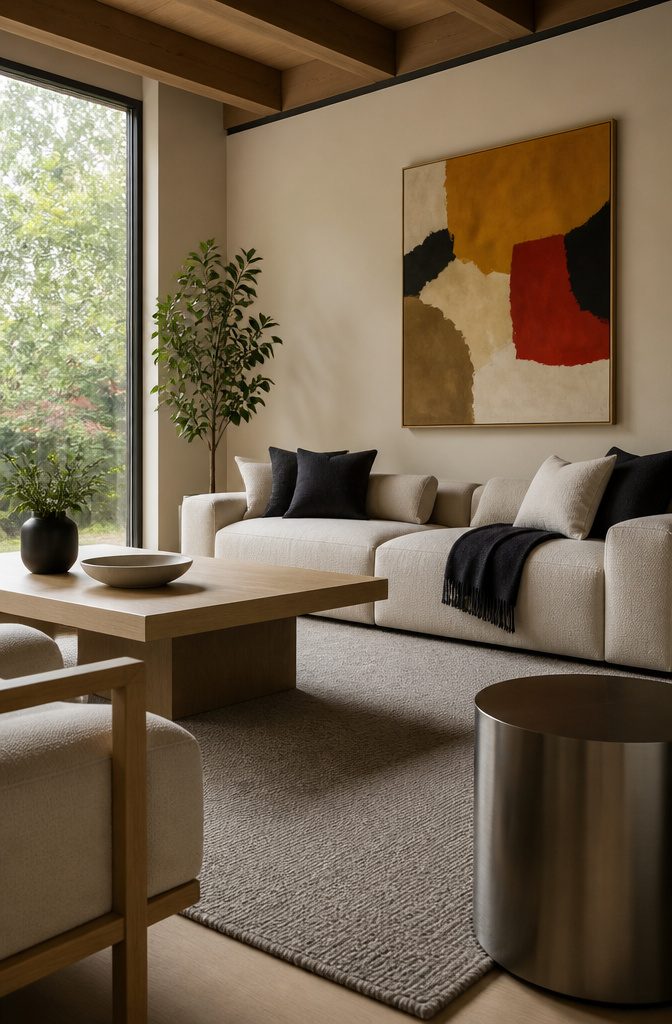
Benjamin Moore’s Cloud White is a good wall color for this look because it stays quiet and lets everything else in the room do the talking. An all-neutral room needs texture or it reads flat.
Vary the tones, such as a cream sofa, a greige rug and charcoal pillows. Then vary the materials: wood, linen, wool and metal.
For contrast, add one colorful piece. In a Hollywood Hills living room by Studio Mellone, a colorful Doug Aitken artwork gives the neutral space a modern twist against the wood architecture.
The furniture doesn’t have to be modern. A single large canvas on a pale wall, or one colorful chair, will do the job without a full redo.
Recommended Products

【Nativity Themed Mantel Scarf】This Christmas mantel scarf showcases printed nativity artwork with holy family, sheep, pine trees and winter landscape. Multiple pattern selections are available, including Santa, deer and snowman motifs to match varied holiday styling preferences.

Classic Design: this pet Christmas stocking adopts a green cable knit pattern embroidered with a festive red paw print, perfectly echoing the holiday spirit and adding a warm, cozy farmhouse charm to your holiday decor

1. Warm and Elegant Design This mother and child bird sculpture is inspired by the warm relationship between parents and children. Its smooth lines and lifelike form, combined with a smooth glaze and elegant white color, add an artistic touch and warmth to your modern home, office, or bookshelf, making it a visual focal point of the space.
10. Sculptural Furniture
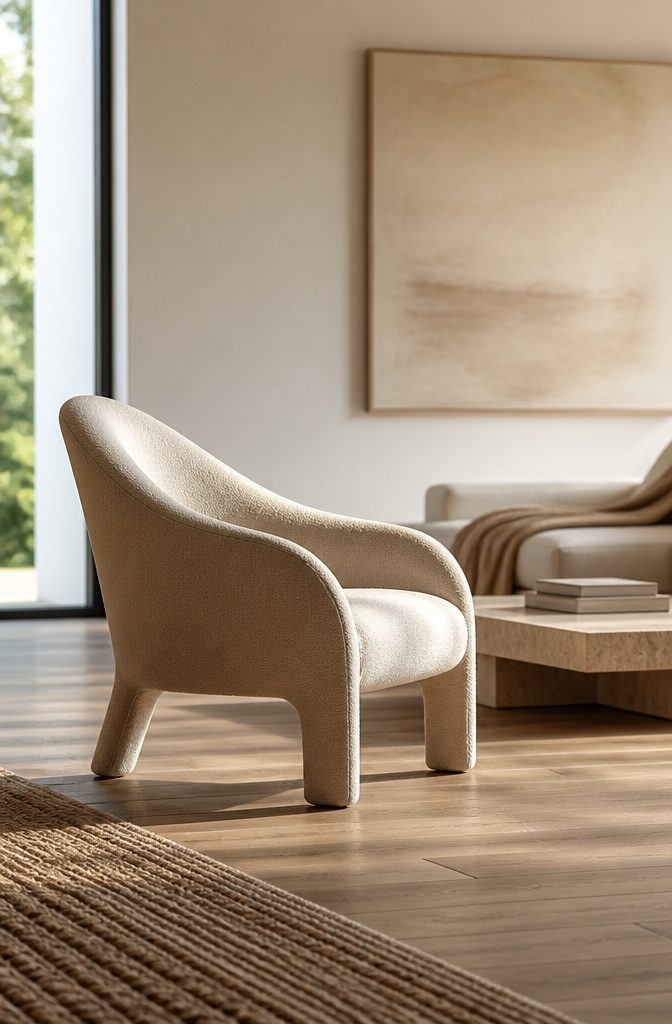
A chair with a curved back, a coffee table with a carved base, or a sofa with a rounded arm reads as art before anyone sits on it.
Choose the piece whose outline you could recognize from across the room, and keep its fabric or finish plain so the shape does the work. A busy print hides a curve, while a solid color shows every line.
Limit yourself to one sculptural piece per seating area. Two can share a room if they repeat the same idea, such as a round table beside a rounded chair.
A curved sofa, an angular chair, and a twisting floor lamp in the same corner compete for attention, and the room starts to feel like a showroom.
Surround the standout with quiet, straight-lined furniture and leave open floor around it so the silhouette can breathe.
Recommended Products

Soft Low Pile: Made of premium polyester, this washable rug offers ultra soft, skin-friendly comfort for bare feet. Sleek low pile comes with reinforced edges, feeling cozy underfoot without being bulky. Smooth placement under doors and furniture avoids blocking daily traffic

Stain Resistant Rug Surface: The living room rug is made of anti stain material, conventional liquids such as water, coffee, milk, and pet urine will not permeate the carpet, you just need to wipe it clean easily.

【Washable Rugs】Washable rugs makes cleanups effortless. Its stain-resistant surface lets you wipe spills away with a damp cloth, or vacuum for quick daily maintenance. For a deeper clean, toss it in the washing machine (gentle cycle, cold water) and air dry. Lightweight for quick drying and crafted from durable, colorfast material that resists shedding, it keeps your room looking fresh with minimal effort
11. Furniture That Works Hard
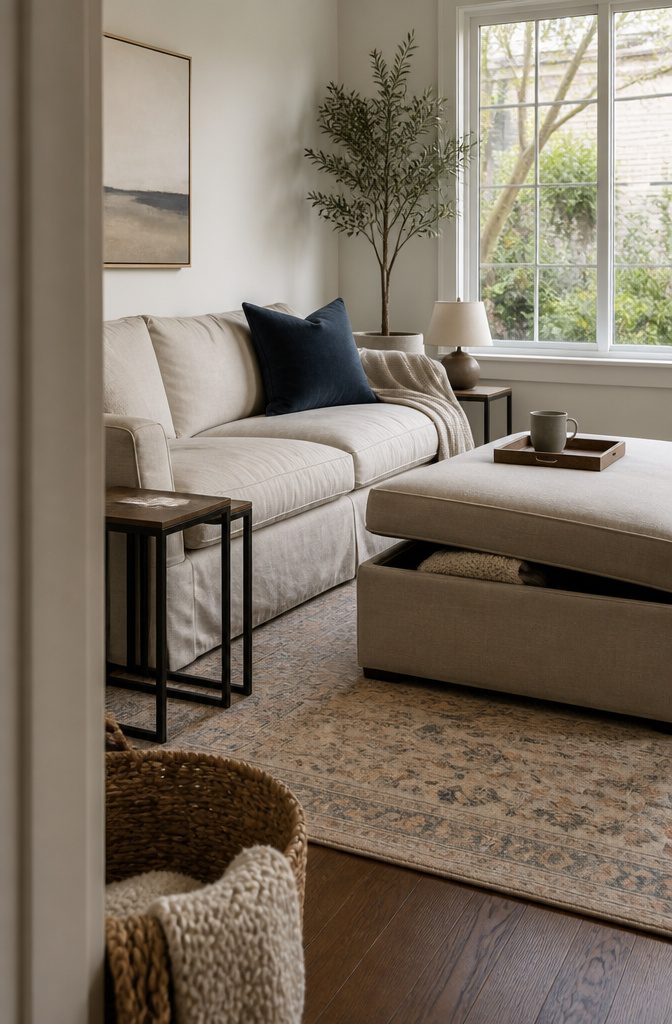
Start with how the room gets used. A sofa that serves as the TV spot, the nap spot and the guest bed takes far more wear than an accent chair by the window, so put most of your budget there.
Choose tightly woven, durable fabric for that piece, and consider a washable slipcover, which also moves with you to the next rental.
Multipurpose pieces earn their floor space.
A storage ottoman is a footrest, extra seating and a hiding place for blankets. Nesting tables tuck away until guests arrive.
Keep the big pieces in colors that outlast décor changes, like gray, oatmeal or navy.
Holidays and seasons then show up in pillows and throws, which are cheap to swap. A solid secondhand frame is worth buying and covering.
12. Small-Room Strategies
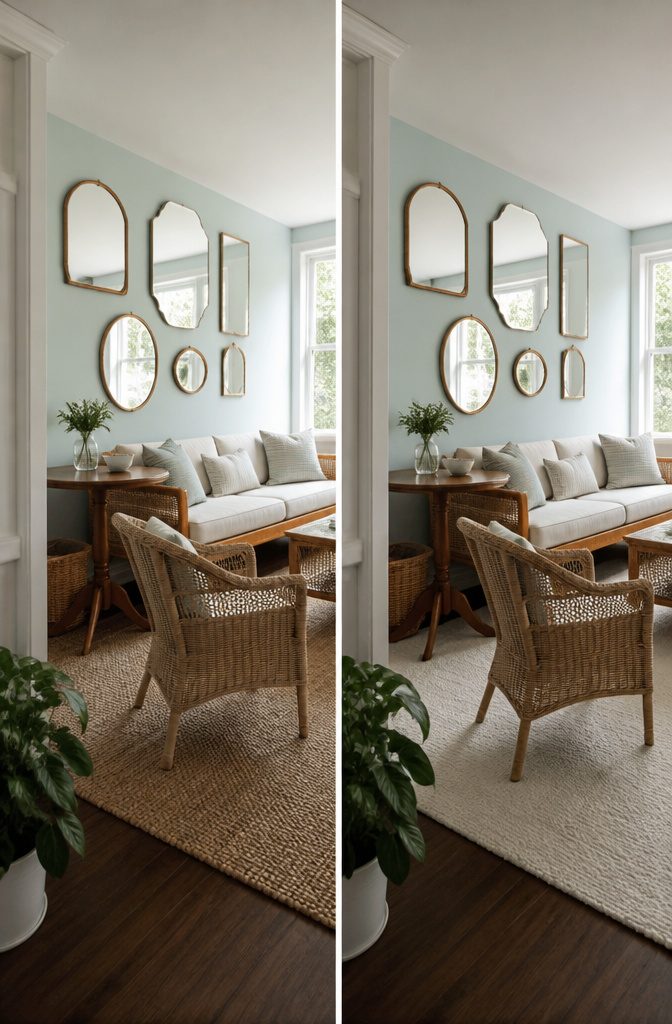
Oversized furniture makes a small living room feel even tighter, so pick smaller pieces that look delicate. Wicker or Victorian-era wooden furniture opens up a cramped space quickly.
Paint works the same way. Highly saturated colors make walls look like they are closing in, while neutrals, light blues, and pale yellows make the room seem larger.
Clear the bric-a-brac from tables and walls, and let in as much natural light as you can.
For the walls, skip the usual framed art and hang a group of decorative mirrors. They bounce light around the room and suggest extra space.
13. Statement Lighting
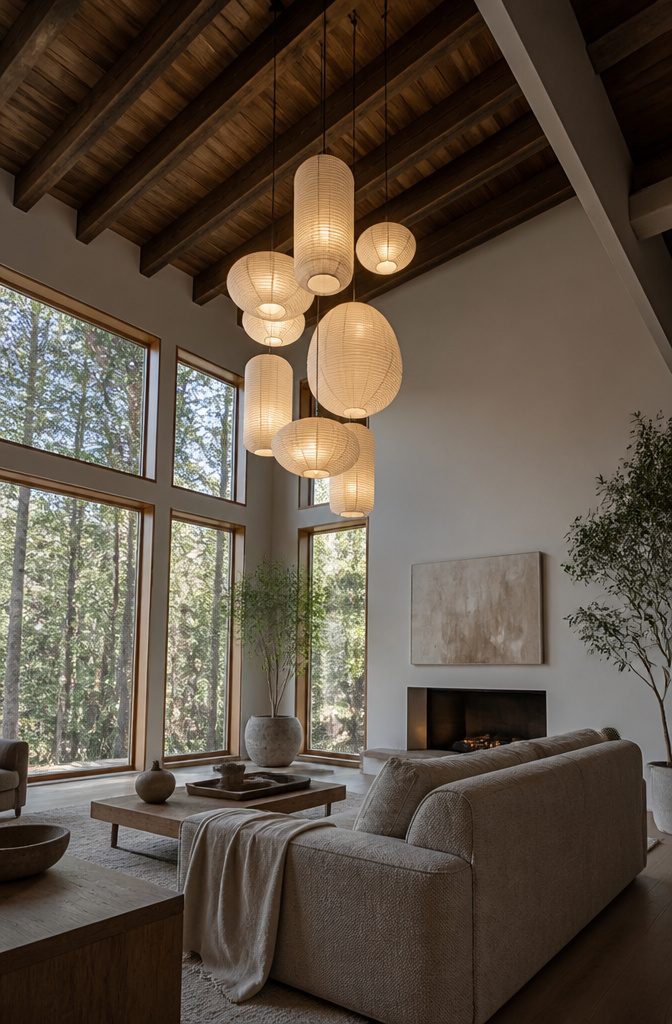
A fixture can be the main decoration in a room. In a living room with a 30-foot-tall ceiling, two clusters of custom pendants draw the eye upward and keep the space light and airy instead of cavernous.
Grouping several pendants into a cluster gives tall walls a visual anchor, and a single small fixture can’t do that.
Custom clusters are a big spend. On a weekend budget, the Noguchi Akari 75A paper pendant is the lower-cost, lighter route.
Its paper shade reads as sculpture and gives off a soft glow. Hang it low enough to be seen as an object, not tucked up against the ceiling.
14. Rugs and Floors
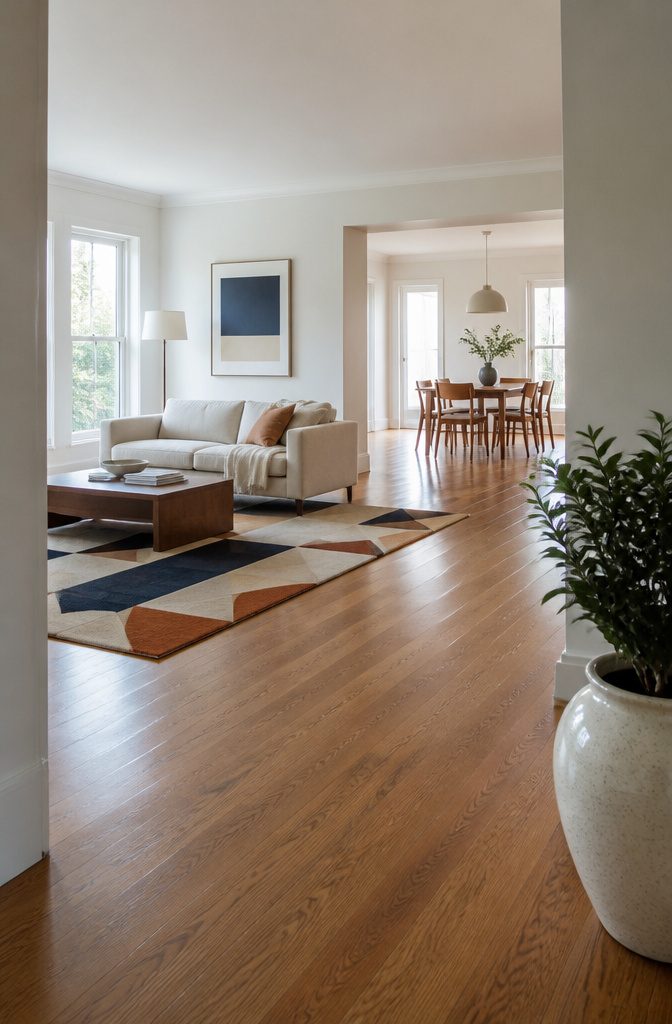
In an open-plan space, an area rug is the simplest way to mark where the living room starts. Use a different flooring type than the surrounding area and the rug works like a wall you can walk across.
In a small living room, go the other way: carry the same flooring into the adjoining rooms so the space reads as larger.
Style and color change the feel of a room as much as material does. A vivid geometric pattern suits a modernist room, and a rug gets a renter that look without touching the floor underneath.
Refinished hardwood recalls a historic home’s past, but it’s a project for owners. Choose floor colors that complement your wall colors, and most of the palette is settled.
Permits and Building Rules
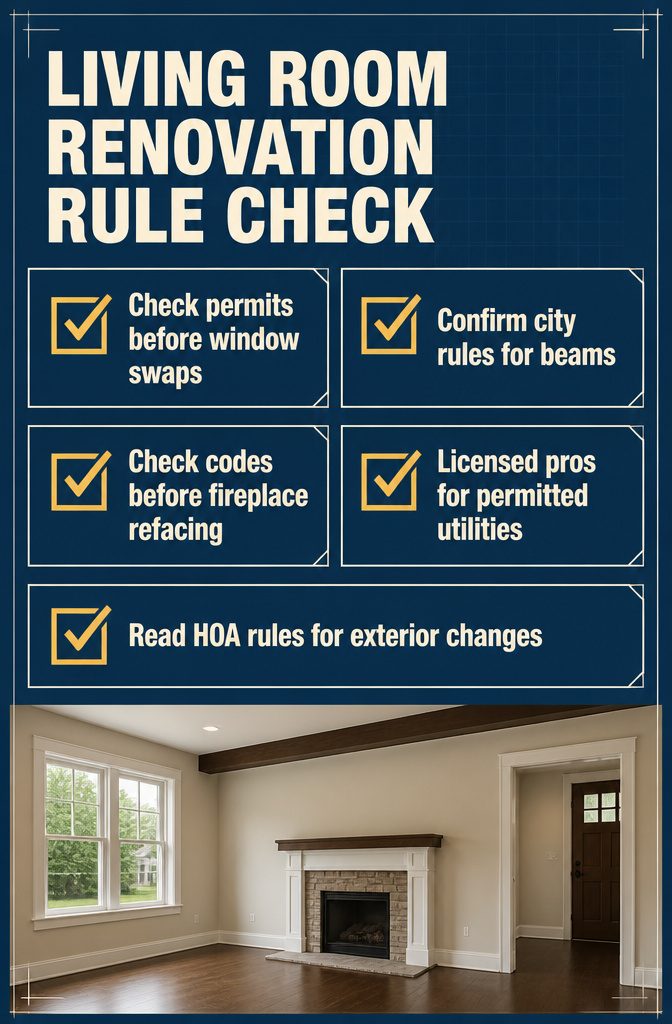
These living room changes go beyond decorating and can fall under building rules:
- Windows and doors: swapping them out changes the structure and the exterior, so check local building codes and permits before you buy anything.
- Walls and ceiling beams: replacing a wall with a ceiling beam is structural work. Confirm what your city requires before anyone picks up a tool.
- Fireplaces: refacing or replacing one is covered by the same codes, so check first.
- Electrical and plumbing: some of this work requires a licensed professional working under a special permit. Skip it as a DIY job.
- Exterior changes: if a project alters how the outside looks, read your homeowner-association rules first.
Frequently Asked Questions
How do I start decorating an interior design living room?
Choose one focal point and build everything else around it. A fireplace is the easiest anchor, but a large piece of art or a big window with a view works too.
You can also pull the seating off the walls into a group, even on a diagonal, so the arrangement itself draws the eye.
How should I arrange living room seating for conversation?
Set the seating in a loop, such as a sofa facing 2 armchairs, so guests look at each other instead of at a wall.
A chair borrowed from another room covers the overflow. For a bigger crowd, repeat the same pieces, like matching chairs or tables in sets of 2 or 4.
How do I add texture to a neutral living room?
Vary both the tones and the materials.
Pair a cream sofa, a greige rug and charcoal pillows, then mix wood, linen, wool and metal. Let one material lead and the others support it, and texture 1 wall instead of all 4.
How do I mix patterns in a living room without it looking busy?
Keep every pattern in the same one or two colors, and you can mix as many as you like.
If that still feels like too much, let a single piece such as an ombré or geometric rug carry the pattern, and keep the sofa and walls calmer.
How can I make a small living room look bigger?
Choose smaller, lighter-looking furniture, because oversized pieces make a small room feel tighter. Paint the walls a neutral, light blue or yellow, clear the clutter from tables and walls, and hang a group of decorative mirrors to bounce light around.
Carrying the same flooring into the adjoining rooms also makes the space read as larger.
How do I decorate a living room on a budget?
Keep the walls and sofa simple, then add one vintage or inherited piece at a time.
Matching chairs or tables in sets of 2 or 4 look deliberate, a framed blanket above the sofa works as art, and a paper Noguchi Akari 75A pendant costs less than custom lighting.
Paint is also one of the fastest and cheapest changes.
Should I paint the whole living room a bold color or just one wall?
Paint the whole room in one strong hue when neutrals feel flat. If that is too much color, paint 1 accent wall and keep the others neutral.
The accent wall suits a small room that a bright tone would overwhelm, or an eclectic room where the wall can pick up a color your pieces already share.
Do I need a permit to change my living room?
Decorating does not need one, but structural and some other changes can. Check local building codes and permits before replacing windows, doors, a wall with a ceiling beam, or a fireplace.
Electrical and plumbing work may require a licensed professional under a special permit, and exterior changes may fall under your homeowner-association rules.