
These changes range from swapping a pillow or rug to installing shiplap and ceiling beams, and how much you can alter the room decides where you start.
Beams often can’t be added to a rental, and shiplap, typically about 7 inches wide, is labor-intensive to install. Settle those before buying decor.
1. A Stone Fireplace Focal Point
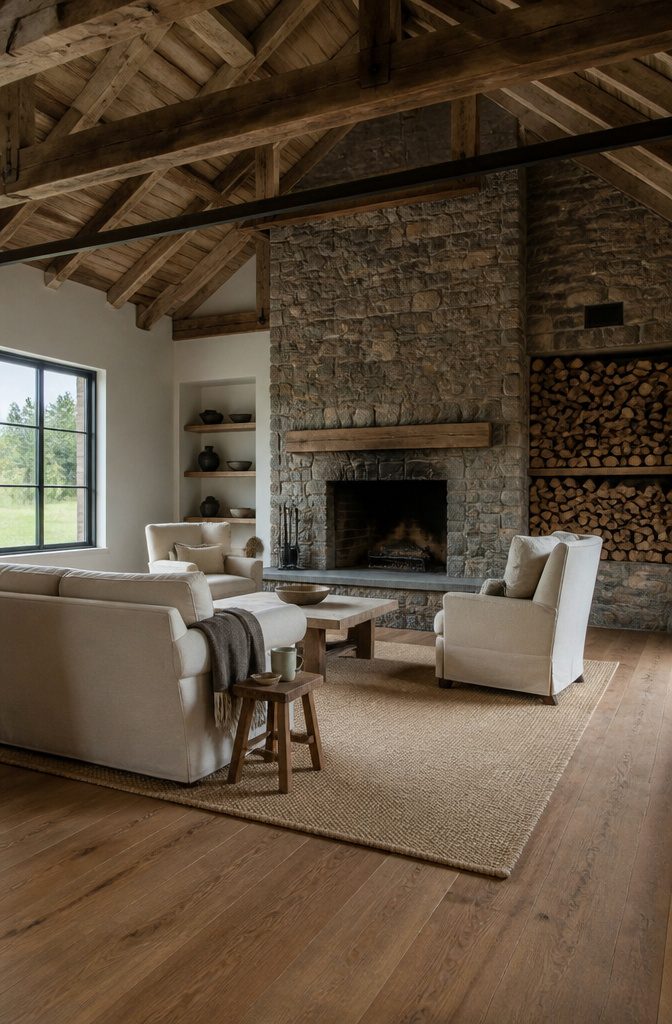
A stone fireplace does two jobs in a farmhouse living room: it warms the space, and it gives the whole room something to face.
If yours works, angle the sofa and armchairs toward it and leave the stone bare. Its rough texture already counts as the rustic material the style calls for.
No fireplace?
A large piece of artwork can anchor the room instead. Hang it on the main seating wall and pick one big piece over a cluster of small frames, which reads as clutter instead of a focal point.
Add this step third, after the seating and the rustic materials. Once the furniture is in place, you can see which wall the room points toward.
Recommended Products

【Handcrafted Ceramic Artistry】Made of high-quality, 100% hand-painted ceramic with high-temperature firing, this vase combines durability with unique artistry. Its waterproof interior allows for fresh flowers, while the rustic terracotta finish adds timeless charm.

【Home Decor Ceramic Vases Set】More than vases, they are wonderful home decor. This vases set of 3 is perfect for artificial flowers or dries plants, can be placed individually or in combination, as a decorative vase for centerpieces, mantel, fireplace, dining table, living room, bedroom, desktop, bookshelf, entryway, minimalist side table and so on.

【Handcrafted Ceramic Artistry】Made of high-quality, 100% hand-painted ceramic with high-temperature firing, this vase combines durability with unique artistry. Its waterproof interior allows for fresh flowers, while the rustic terracotta finish adds timeless charm.
2. Neutral Palette, Restrained Color
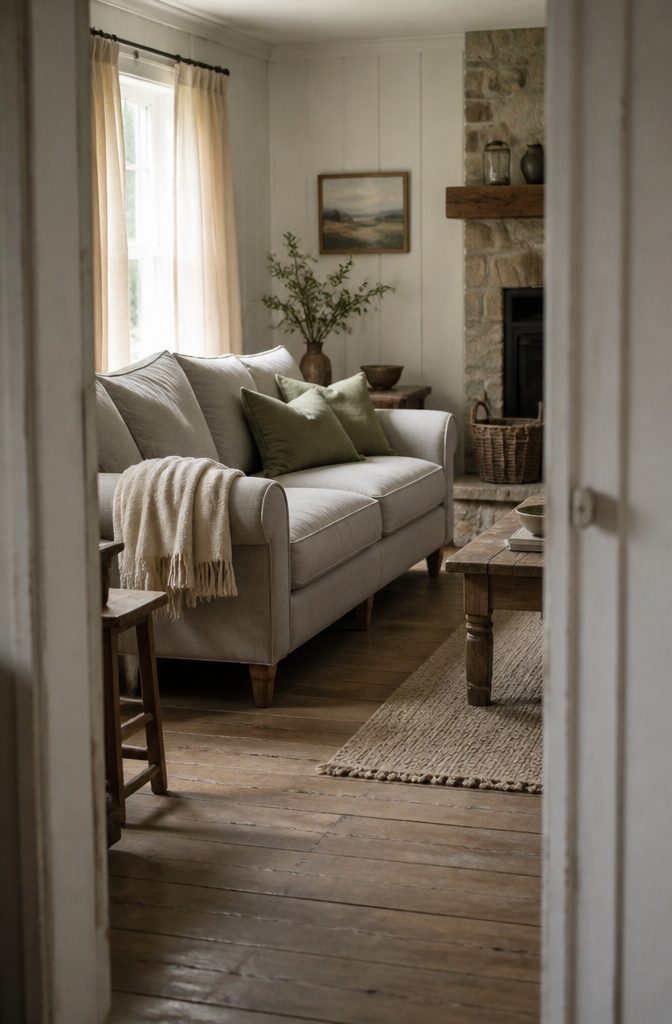
Pale, earthy furnishings keep a farmhouse living room calm.
White, beige, greige, warm gray and soft white all let the wood and stone take center stage. Pick two or three of them and repeat them across the sofa, curtains and walls.
"Soft whites, warm grays, and muted beiges create a calm, inviting backdrop, while natural greens or rich navy blues offer a subtle pop of color."
Color goes in small doses.
Soft blue, muted green or navy on a pillow, throw or single armchair breaks up the neutrals, so limit yourself to one or two accent colors. Bright accents fight the wood.
For a paint pairing to copy, use Mantra by Sherwin-Williams on the walls and Extra White by Sherwin-Williams on the paneling.
Recommended Products

Unique Live Edge Real Wood Tabletop: This live edge coffee table features premium natural fir wood top with organic irregular live edge and distinct tactile grain. As a genuine real wood coffee table and reclaimed wood coffee table, it delivers one-of-a-kind vintage texture, also works as a textured driftwood coffee table to bring raw rustic charm to your space.

Rustic Wood Coffee Table: The rectangle wood coffee table is equipped with thick wooden legs in a block-like design, presenting a natural and simple rural style. The natural grain of the wood and its unadorned appearance enhance this rural atmosphere

【Robust and Stable】: Solid reclaimed wood consists of reused timbers such as teak, mango wood, pinewood, and beech. These materials are recycled from old buildings such as factories, sheds, and boats. The iron frame of table legs enhances your interior with an industrial style and provides exceptional durability and stability.
3. Reclaimed Wood Furniture
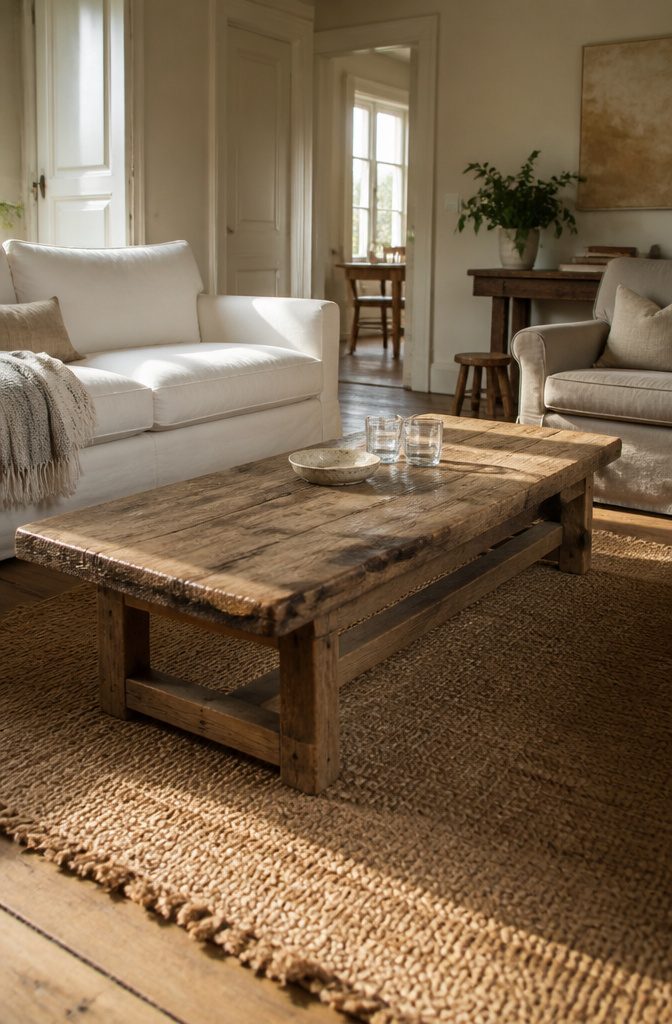
A reclaimed wood coffee table in front of a new white sofa is the modern farmhouse formula in one picture: weathered grain against clean, neutral upholstery. Reclaimed wood brings a sense of history and craftsmanship that new pieces lack.
Use it modestly, though. One or two rustic pieces, maybe an antique ottoman as a footrest, keep the room looking collected instead of themed.
With a large sectional, a single table leaves some seats out of reach. Two low tables give every guest a spot for plates and glasses.
Thrift stores and secondhand listings are the cheapest route to a weathered table or dining-style piece. Look for a solid top with plenty of character, then keep the other furniture simple so the wood stands out.
Recommended Products

【Comfortable Seat & Backrest】-The seat and back are filled with high-density sponge, which is very soft to sit. Just imagine, after finishing tired day's work, you sit in a soft chair and hold a pillow in your arms, for napping or reading or playing mobile, what a pleasure it is?

PREMIUM PU LEATHER: Our accent chair is upholstered in high-quality PU leather that is soft to the touch and easy to clean, ensuring durability and longevity.

Unique Mid-century Modern Style: This Oversized single sofa features a unique mid-century modern style, which is visually appealing and versatile, with sleek lines that can complement any interior decor style.offering excellent support and a comfortable sitting posture, allowing users to feel relaxed and comfortable during use.
4. Leather Seating
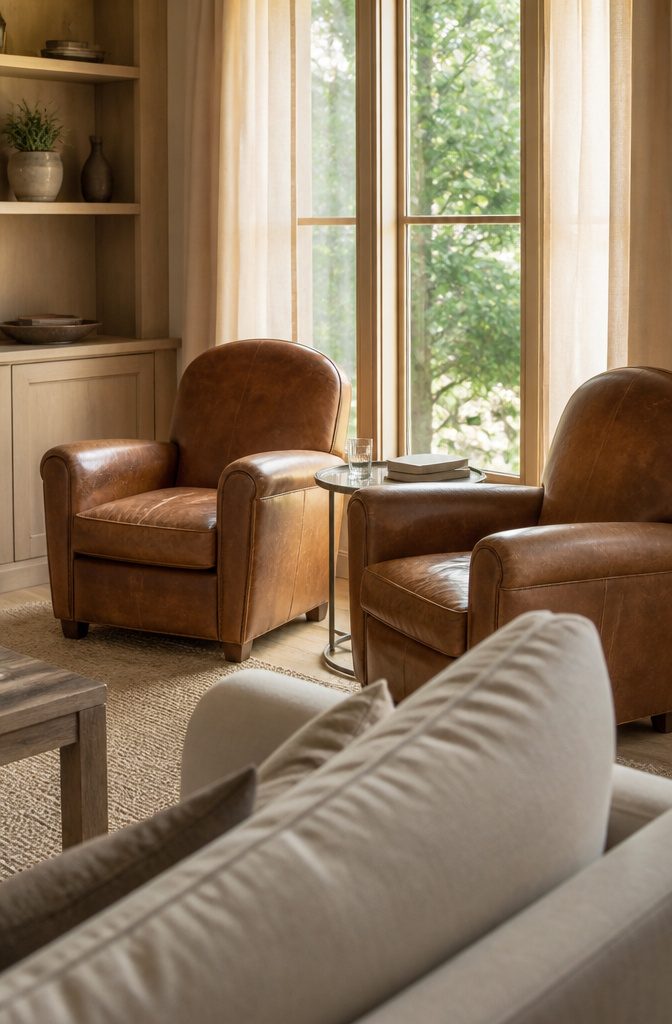
Worn leather gives a room of linen, cotton and light wood something new fabric can’t: age.
A pair of caramel leather armchairs by a window adds history and texture without feeling formal, and spills and scuffs become part of the story, so the chairs look better over time.
The costs are a higher price up front and a heavy look that can dominate lighter decor. Glass pieces nearby keep the room feeling open.
Matching is where leather gets tricky. A layout that put a green sofa across from a leather sofa, plus two non-matching accent chairs, read as messy, even though the leather sofa and one of the chairs looked great together.
Limit leather to one piece or one pair, and keep the rest of the seating plain.
Recommended Products

【REAL WOOD】– Made of 100% dried fir wood imitating vintage reclaimed barnwood appearance for interior finish. The colors will vary from browns to grays depending on the batch.

MATERIALS AND FEATURES: Vinyl wall panels with realistic wooden textures bring natural beauty, especially suitable for bedrooms, living rooms, etc. Due to its use of PU material, it also has advantages such as waterproofing.

Transform your space effortlessly without searching for separate parts. Each package comes complete with 8 premium main wall panels and 2 perfectly matching finishing trims. This curated set provides everything you need to create a cohesive, designer-level accent wall or elegant half-wall paneling right out of the box.
5. Slipcovered Sofas and Extra Seating
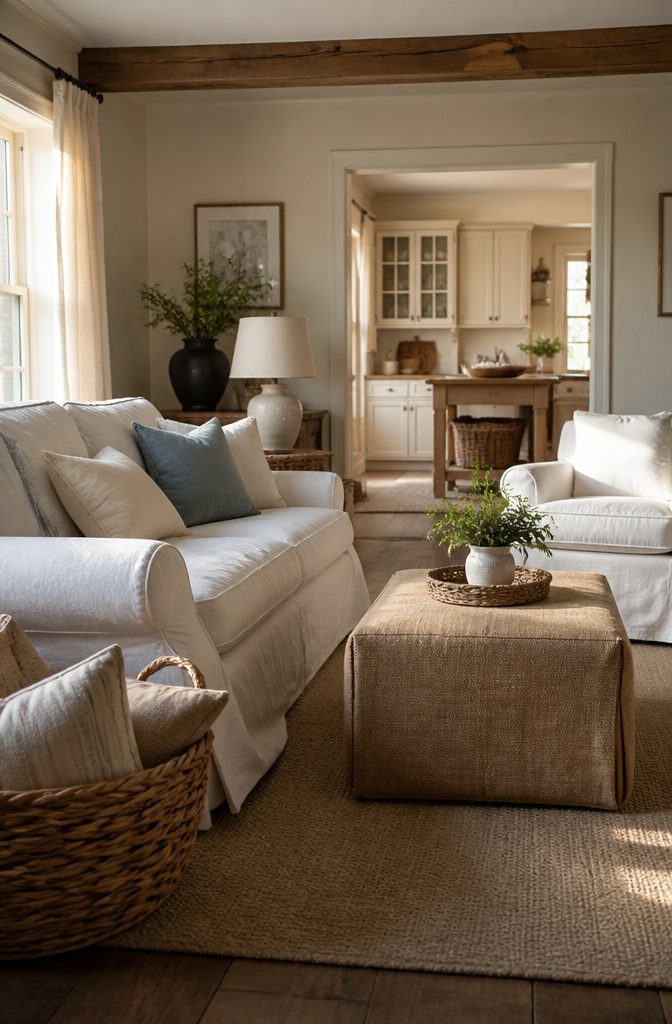
A white or cream slipcovered sofa suits a casual farmhouse room because the cover comes off and goes in the washing machine, which helps with kids and pets.
Light fabric stains easily, though, and frequent washing wears the material down over time.
Buy a second set of covers so one can stay on while the other is washed. The spare also covers a seasonal change or a night with guests.
Comfort carries the rest. Pile on fluffy square pillows for back and head support, and keep a few more in a basket by the coffee table.
A burlap-covered ottoman gives guests a place to put their feet up. Add a sectional if you want room to stretch out, and pick any extra chairs for how they feel to sit in first.
Recommended Products

THICK TEXTURED CHENILLE: Made from durable 100% polyester chenille with a dense, dimensional surface, these pillow covers add softness, depth and a cozy layered look to your home.

Machine Washable & Easy Care – This washable cotton rug can be vacuumed, shaken, or machine washed on a gentle cycle with cold water. Cotton material may shrink or wrinkle after washing. If needed, use low heat ironing to restore shape

Boho & Modern Farmhouse Aesthetic: Elevate your home decor with this bohemian-inspired throw pillow cover, featuring organic vertical stripes and irregular dot clusters in warm rust and muted taupe tones. The neutral earthy palette effortlessly blends with modern farmhouse, minimalist, or global-inspired spaces, adding a cozy, artisanal touch to any room.
6. Layered Texture and Rugs
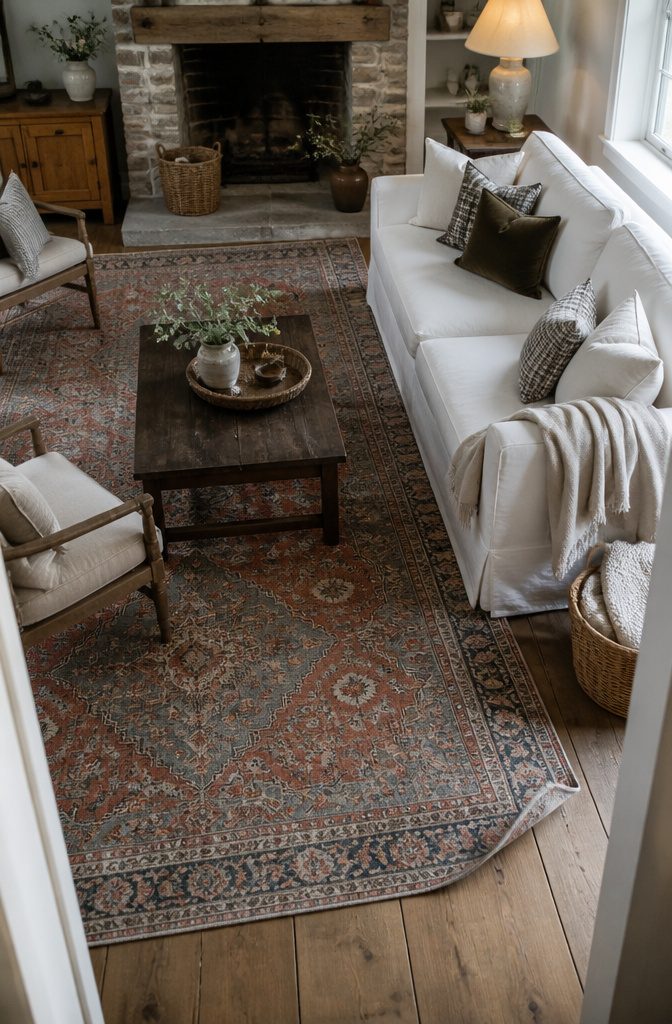
Start with a jute rug on wood floors. It is durable and natural, and it gathers a white slipcovered sofa and a dark wood coffee table into one seating group.
If the room needs color, a Persian or Turkish-style rug does more: its pattern defines the seating area and hides minor flooring flaws.
Authentic vintage rugs cost more and need special care, so a Persian-style pattern is the safer buy if the budget is tight.
Layer the rest by feel. Linen and cotton cover the sofa and pillows, velvet adds one dressier cushion, and wicker and burlap show up in baskets and trays.
Drape a soft throw over an arm. Keep patterns to French stripes and buffalo check, one of each, so the textures stay the focus.
Recommended Products

【Non-Slip Bottom Neutral Vase】 The large vases for decor living room is 11 inches tall and 6.3 inches wide. The bottom of the tall vase is equipped with a non-slip pad, which prevents the flower vase from scratching the table or floor during movement during placement.

RUSTIC VINTAGE FARMHOUSE STYLE HOME DECOR: Designed to bring warmth and character into your space, this rustic ceramic vase features an intentionally distressed, vintage-inspired finish—perfect for farmhouse table decor, cozy home decor accents, and rustic modern interiors. Even empty, it adds texture and charm.

Small Fake Plants: Safe and durable material, the eucalyptus leaves of fake plants are made of plastic. Vivid colors and realistic leaves making these fake plants more life-like and look natural. After receiving the fake plants, it is necessary to adjust the branches and trunks of the simulation plants to achieve a beautiful appearance
7. Coffee-Table Styling
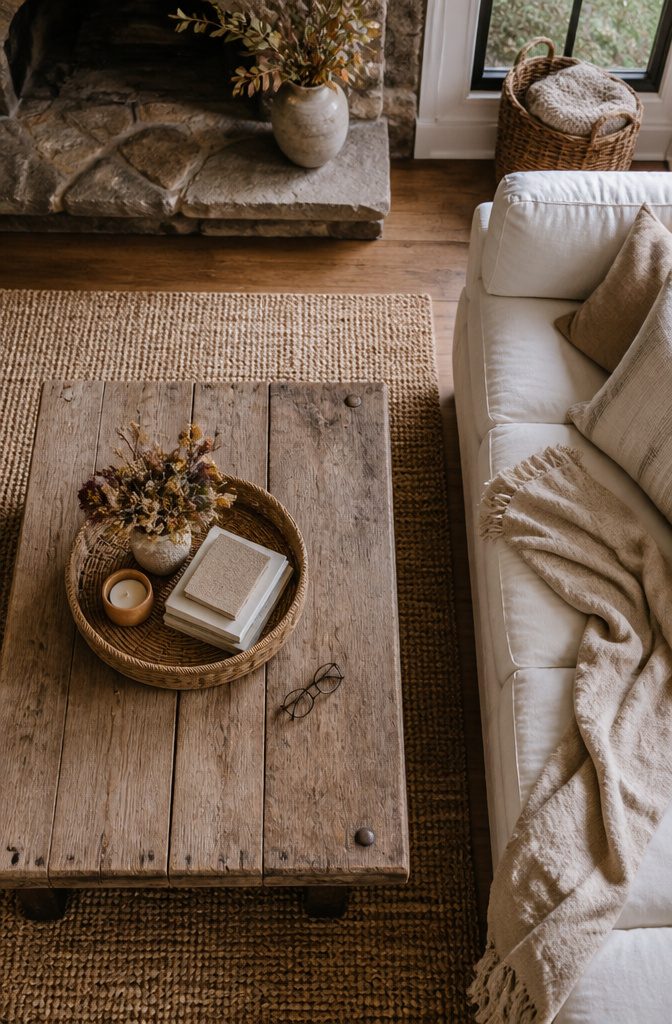
A woven jute tray does the most work on a farmhouse coffee table.
It gathers a stack of books, a candle, and a small vase of flowers into one group, and you can lift everything off in one move when you need the surface.
Dried florals in rich hues add color without watering, so they beat fresh stems for a busy household. Keep the arrangement low enough to see over, so conversation across the table stays easy.
Spacing matters as much as styling. Leave 14–18 inches between the sofa and the table so a drink is within reach without a stretch and your knees still clear the edge.
Recommended Products

Elevate your living room with LINSY HOME's Farmhouse Coffee Table. Enjoy charming details such as an enhanced base and curved design, while benefiting from the added storage space with open display and drawers.

BEAUTIFUL UNIQUE PIECES: Each piece of wood is uniquely weathered and aged for a genuine vintage artifact you can use in any way you want. Incorporate the rustic style of barn wood into your home for a stylish piece like no other. *Reclaimed wood is a natural product with unique aged characteristics. The sample images are used to demonstrate the general look of the products. Color variations, markings, and stains may not exactly match the images.

Recessed Storage Center Design – Style, Storage & Visual Balance: The sunken center tabletop design creates a dedicated display area for plants, decorative stones, crystals, candles, or diffusers. This rustic coffee table with storage keeps items visually organized while adding depth, balance, and character to your living space—beautifully styled, never cluttered.
8. A Table Behind the Sofa
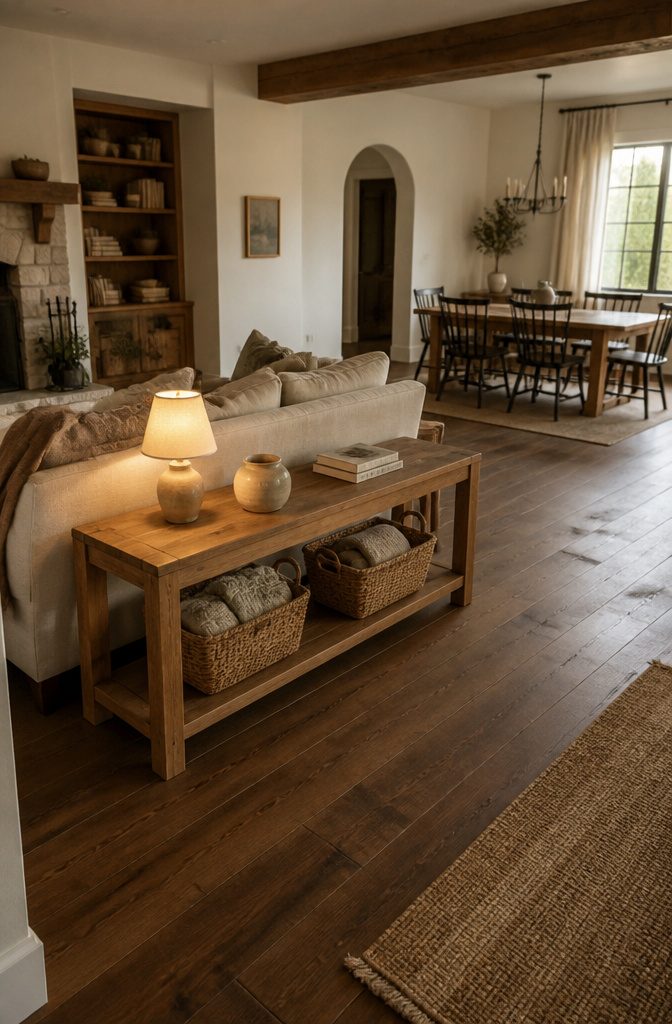
A wooden table behind the sofa adds storage and a display surface in one piece.
Pick a wood that matches the other tones in the room, such as the coffee table, beams, or side tables. A console in the same family looks like part of the room, while a mismatched one looks added later.
If your living room opens onto a hallway, dining area, or kitchen, the table also marks where the seating area ends.
The sofa back faces the open space and the table finishes that edge, so the room reads as its own zone without a wall.
Mix useful and decorative pieces. Baskets or lidded boxes hold throws and remotes, and a lamp, a stack of books, or a small vase gives the surface some height.
Recommended Products


【Modern Retro Design】Mid-Century Retro Modern upholstered accent chair, classical leather and solid wood armrests, combined with button-tufted design, perfect addition to the living room, bedroom, waiting room, guest room.

【Comfort TYBOATLE Accent Chair】Enhance any room with our Simple Sofa Chair, beautifully crafted from premium PU faux leather. This stylish accent chairs, with its rounded armrests and classic mid-century modern tufted stitching, is perfect for a variety of spaces. Whether you're furnishing a cozy reading nook, styling an elegant living room, upgrading a sophisticated office, optimizing a compact dorm room, decorating a tranquil bedroom, or adding comfort to a boutique hotel lobby, this chair's dimensions of 33.07"(W) x 29.13"(D) x 32.28"(H) ensure it fits perfectly and elevates the decor of any setting
9. A Chandelier and 2 Metal Finishes
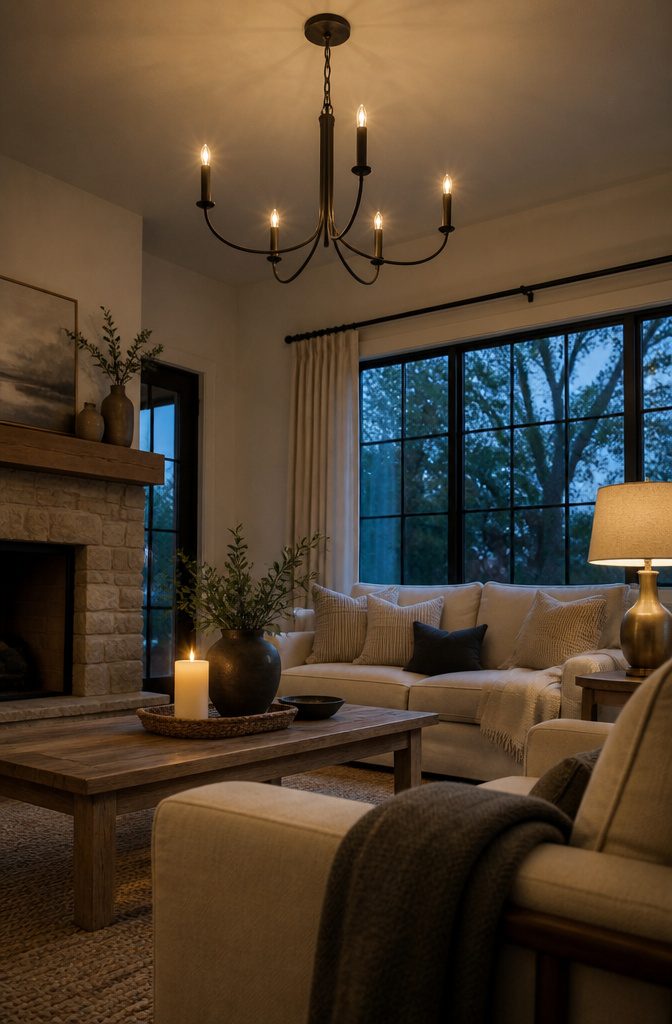
A chandelier is the strongest single move in a farmhouse living room.
It works as a focal point and can double as art. Wrought iron, brass, and wagon-wheel styles all fit the look.
A wagon-wheel chandelier needs a higher ceiling to sit comfortably, so skip it in a standard-height room. In a small room, an oversized fixture overwhelms the space, and a slimmer iron or brass piece is the better pick.
Add lanterns or sconces with warm bulbs on the sides of the room to soften the light.
Keep the metals to two finishes. Black iron curtain rods with brushed brass lamp bases is a pairing that adds depth, and a third finish tends to make the room look uncoordinated.
Recommended Products

[Luxdecor Real Wood Wall Planks]:100% Real Pine Wood Wall Planks With Natural Knots and Dents, the Surface Of Wood Shiplap Planks Is Processed With High Temperature Carbonization, the Real Wood Wall Shiplap Planks Is Non-Toxic, Sterilized and More Safe For Children,Voc Free Process Ensures These Stick on Shiplap Planks For Walls Are Safe To Use In Home

PVC WALL PANELS, 7-PIECE KIT: Elevate your walls with Plastpro’s 8-ft wainscoting panel kit. The complete solution for bathrooms, kitchens, bedrooms & living rooms. Each set includes 7 reversible PVC panels plus trim. Simply snap tongue-and-groove edges together for a seamless professional finish in hours. No special tools required.

Shiplap Peel and Stick Wallpaper--【SIZE & MATERIAL】--17.7In x 118.1In = 14.75 sq.ft/roll. Color aberration is allowed in different light. Upgraded thickness and adhesion, surface has a slight texture, looks real wood grain. easy to clean.
10. Shiplap and Wood Beams
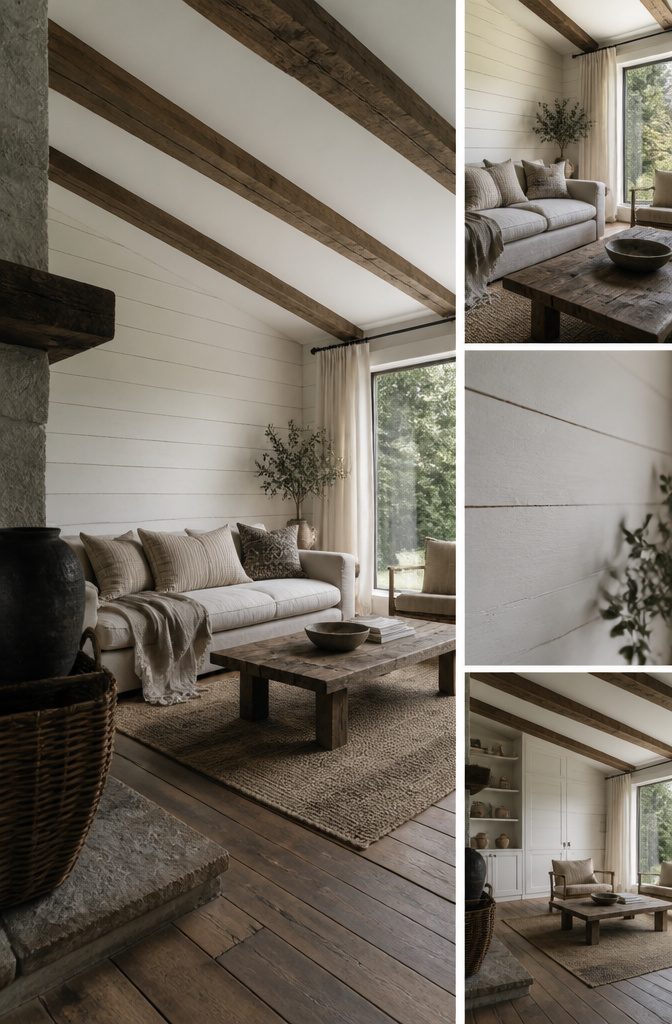
Shiplap is long boards run horizontally across a wall, typically about 7 inches wide, with the thickness up to you. White paint is the farmhouse default, but the wood can also stay natural.
Blend it with other textures, like a linen sofa and a rustic wood coffee table, so the wall stays current instead of becoming the only idea in the room.
Installation is labor-intensive, and dust collects in the grooves, so plan on wiping them down.
Exposed ceiling beams add height and warmth, and they contrast nicely with a white ceiling.
You often can’t add them to a rental or an existing room. Both shiplap and beams are heavier, costlier changes than swapping pillows, lamps, or a rug, so settle them before you spend on decor.
Recommended Products

CLASSIC VINTAGE AESTHETIC BEIGE RUG: The area rug 8x10 features a harmonious blend of beige tones that evoke a timeless vintage charm, making it an ideal addition for any room in your home—from retro bohemian and rustic farmhouse to modern minimalism. Perfect rugs for living room, bedrooms, dining room rugs for under table, entryways, playrooms, or home offices, this 8x10 rug serves as the finishing touch to your interior flooring decor

【Thickened Material】Our decorative books are made of high quality cardboard and copper paperboard. The prints and colors are beautiful and durable, which can bring a sense of comfort to your space and enhance the atmosphere of your home.Please note that the decorative books are not real books and need to be assembled.

Pinch Pleat Design: Pinch pleated curtains use more fabric than regular curtains, creating a luxury curtain with elegant folds. Each panel has 7 pinch pleats, which bring a touch of sophistication. Hanging Aersas pinch pleated linen curtains flow in harmony throughout your home, helping you to create nurturing spaces that feel soothing and calm
11. Barn or Sliding Doors
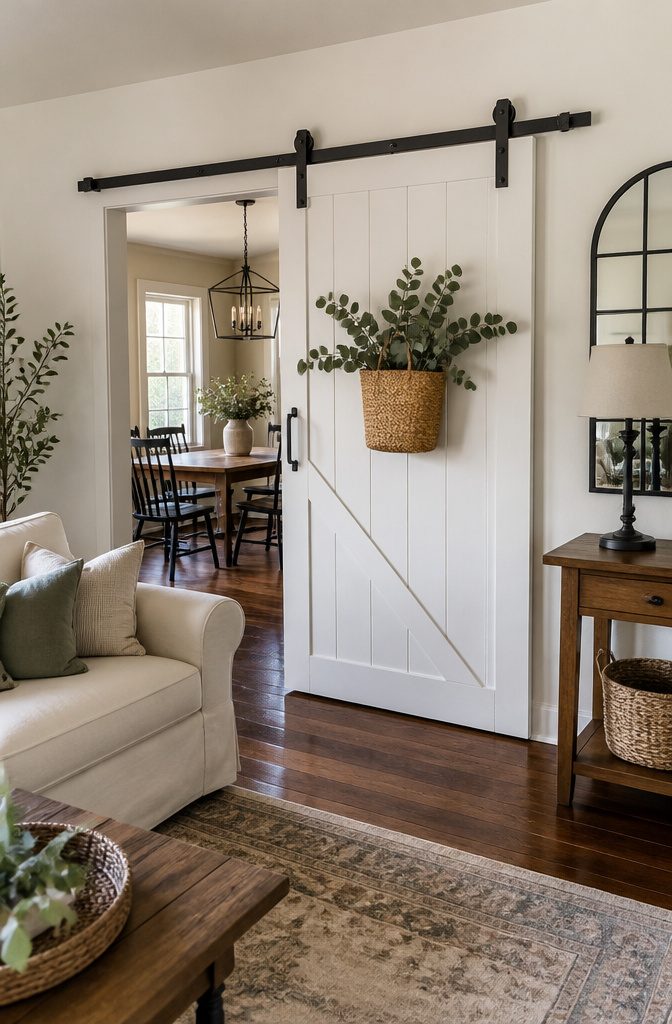
A sliding barn door does two jobs in a farmhouse living room: it closes off the room next to it, and when it’s open, it gives a plain wall something to look at.
It costs more than most interior doors, so put it in the main family room, where the most people will see it.
White doors on black metal tracking read as farmhouse on their own and pick up the iron in other pieces, such as an iron-framed mirror.
Hang a jute basket with eucalyptus stems in the center of each door to add texture. Against chestnut-brown hardwood floors, the white panels and dark track make a clear line between the living space and the rooms beyond.
12. Open Shelving With Vintage Pieces
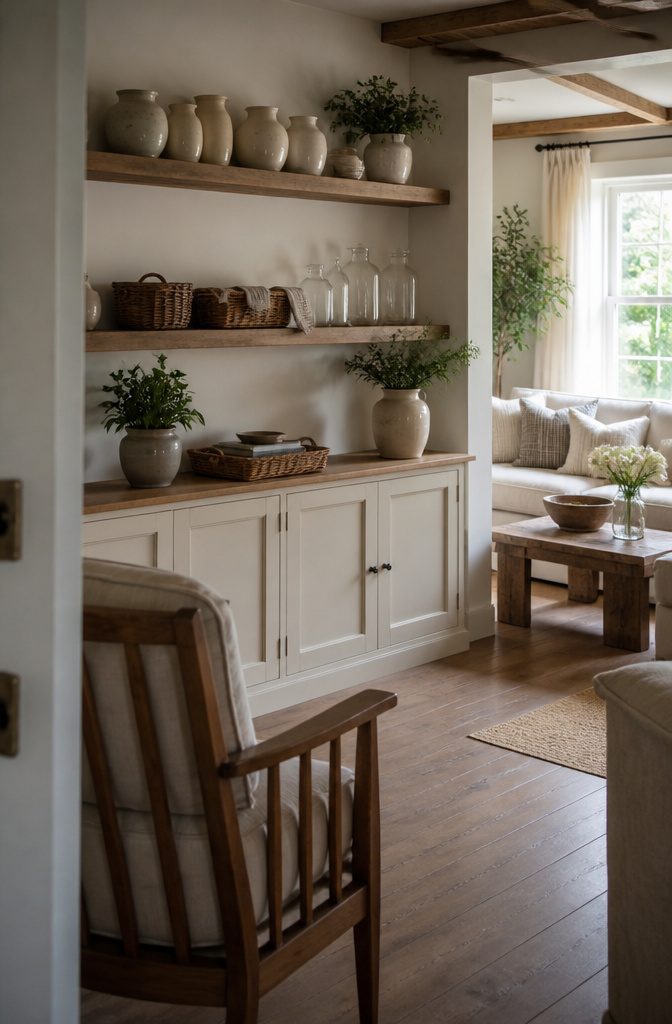
Open shelves hold vintage jars, ceramics and wicker baskets without using any floor space, and they make a small living room look larger.
Thrifted pieces do most of the work, so repeat one material or color across the shelf: a run of cream ceramics, a few glass jars, one or two wicker baskets for texture.
A symmetrical layout, with matching groupings on each side, suits a farmhouse room and keeps the display from looking like clutter.
The cost is upkeep. Open shelves need regular dusting and careful arrangement, and a crowded shelf of mismatched finds goes messy quickly.
If you won’t keep up with that, use lidded baskets on the lower shelves and save the open display for your best pieces.
13. Indoor Greenery
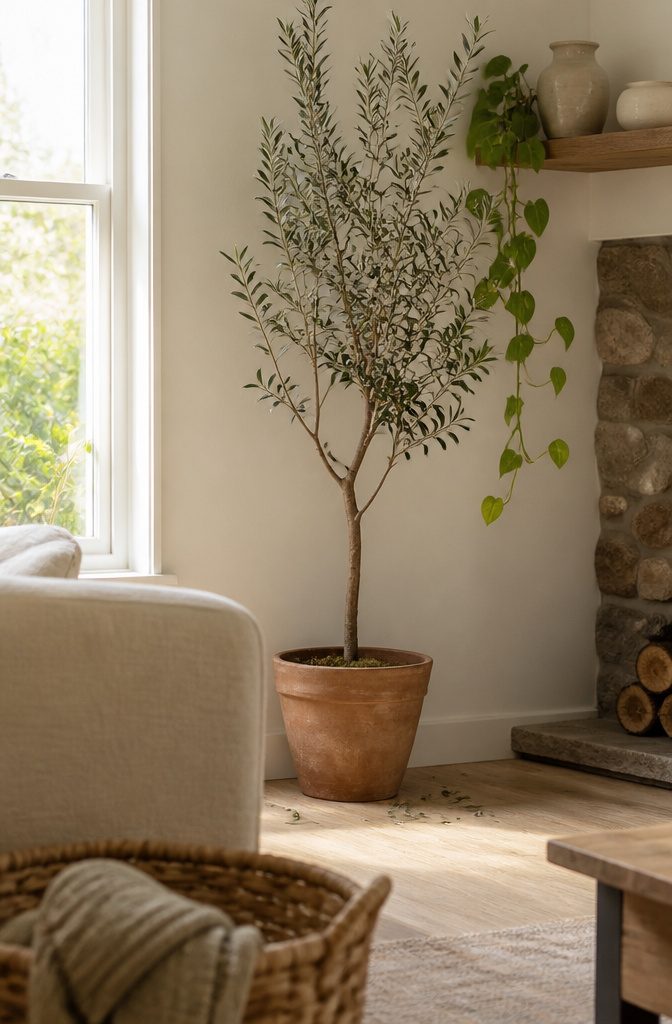
An olive tree in a corner and pothos trailing off a shelf edge soften the hard lines of wood and stone. Both pair well with natural materials, and plants also improve air quality.
Plants come with upkeep. They need regular care, and not all of them thrive in a dim room, so check the light in your corner before you buy.
If the room is dark, or you know watering will slip, a terra-cotta vase filled with branches is the easier choice.
It gives you the same organic look with no maintenance. Dried florals in rich hues work the same way and keep their color without any care.
Four Layouts for a Long Room
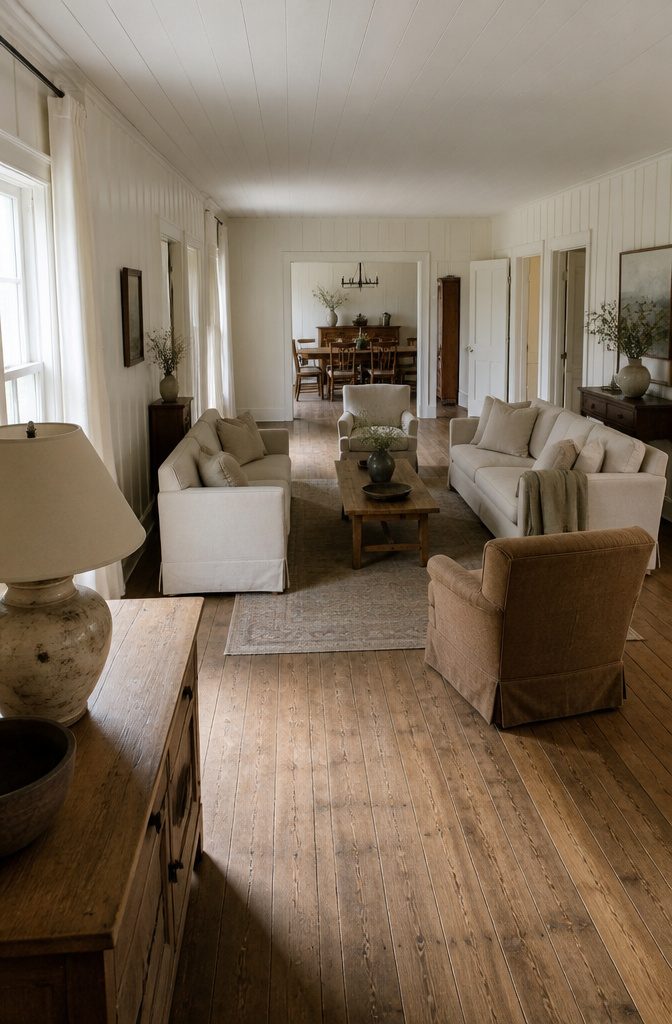
A long pass-through room with several doorways has to keep walking paths open and still let people talk.
Four arrangements were tried in one, and facing sofas felt cozy. The room is still in progress, so treat the notes below as a running tally, not a ruling.
| Layout | Sofas | Chairs | Result |
|---|---|---|---|
| 1 | 2 matching | 2 matching | n/a |
| 2 | 2 matching, perpendicular | 2 matching | High sofa arms cut off conversation; chairs were fine |
| 3 | 2 non-matching | 2 non-matching | Felt messy, though the leather sofa and one chair paired well |
| 4 | 2 matching | 2 different | Favored for simplicity |
Perpendicular sofas can work, but only with low arms.
Small Room Choices
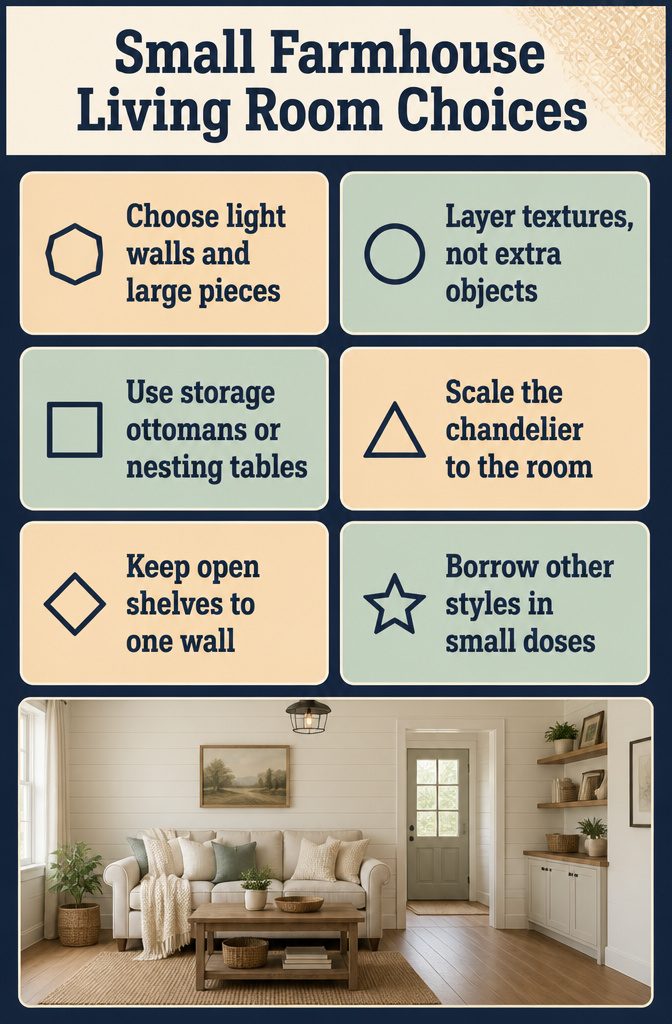
A small farmhouse living room comes down to a few choices:
- Paint walls and choose big pieces in light shades such as white, beige, or greige. Soft blues or muted greens add color without darkening the room.
- Layer textures instead of adding more objects. A knit throw on a linen sofa and a woven rug give warmth without taking up floor space.
- Pick furniture that does two jobs, like a storage ottoman or nesting tables.
- Size the light fixture to the room. A large chandelier can overwhelm a small space, so choose a smaller one or use sconces with warm bulbs.
- Limit open shelves to one wall. They need regular dusting and editing, and clutter shows.
- Borrow from industrial, coastal, or bohemian styles in small doses, such as a metal lamp or a woven basket.
Frequently Asked Questions
What styles of farmhouse living room are there?
The two main variations are modern farmhouse and coastal farmhouse.
Modern farmhouse is sleek and pared back, pairing rustic warmth with clean lines, while coastal farmhouse adds a nautical feel. Farmhouse doesn’t have to mean all rustic.
How can I design a farmhouse living room?
Choose the seating first, then add rustic natural materials and vintage or antique finds, and finish with a focal point.
A stone fireplace is the classic focal point. Without one, hang a single large piece of art on the main seating wall instead of a cluster of small frames.
What are the hallmark features of a farmhouse living room?
Typical features are a wooden coffee table, brass lighting, striped or windowpane textiles, neutral furniture, and a chandelier, often wagon-wheel shaped.
Natural textures, muted colors, and distressed or vintage pieces round it out. The look depends on mixing old and new, such as reclaimed wood beside contemporary furniture.
What materials work best in a farmhouse living room?
Reclaimed wood, linen, cotton, and leather are the core materials, with iron or brass in light fixtures and hardware for contrast.
Use reclaimed wood and leather in small amounts, such as 1 or 2 wood pieces and 1 leather piece or pair. Limit metals to 2 finishes so the room stays coordinated.
What colors are best for a farmhouse living room?
Soft white, beige, greige, and warm gray are the base colors.
Pick 2 or 3 and repeat them on the sofa, curtains, and walls. Add soft blue, muted green, or navy in small doses, keeping it to 1 or 2 accent colors.
Is farmhouse style suitable for small living rooms?
Yes. Use light shades like white, beige, or greige, layer textures such as a knit throw and woven rug, and choose furniture that does 2 jobs, like a storage ottoman.
Pick a smaller chandelier or use sconces with warm bulbs, since a large fixture overwhelms a small space.
Is shiplap still in style for a farmhouse living room?
Yes, as long as you blend it with other textures, like a linen sofa and a rustic wood coffee table.
That keeps the wall from being the only idea in the room. Installation is labor-intensive and dust collects in the grooves, so plan to wipe them down.
How can I decorate a farmhouse living room on a budget?
Mix a few investment pieces, such as a quality sofa, with thrifted finds and DIY projects.
Thrift stores and secondhand listings are the cheapest route to a weathered table. For a rug, a Persian-style pattern costs less and needs less care than an authentic vintage one.
What lighting works best in a farmhouse living room?
Chandeliers, lanterns, and sconces with warm bulbs suit the style.
Wrought iron, brass, and wagon-wheel chandeliers all fit, but wagon-wheel styles need a higher ceiling. In a small room, a slimmer iron or brass fixture is the better choice.
Can I mix farmhouse style with other design styles?
Yes.
Industrial, coastal, and bohemian elements blend in well when added thoughtfully. Small doses work best, such as a metal lamp or a woven basket.