
The fixes run from a weekend of swapping handles for brass or copper to refinishing a whole row of cabinets for two-tone, and your budget and lease decide where you start.
A painted wall in Farrow & Ball’s Dead Salmon is the cheapest test: if it reads too pink in your light, you repaint one wall, not the cabinets.
1. Light Walls and Surfaces
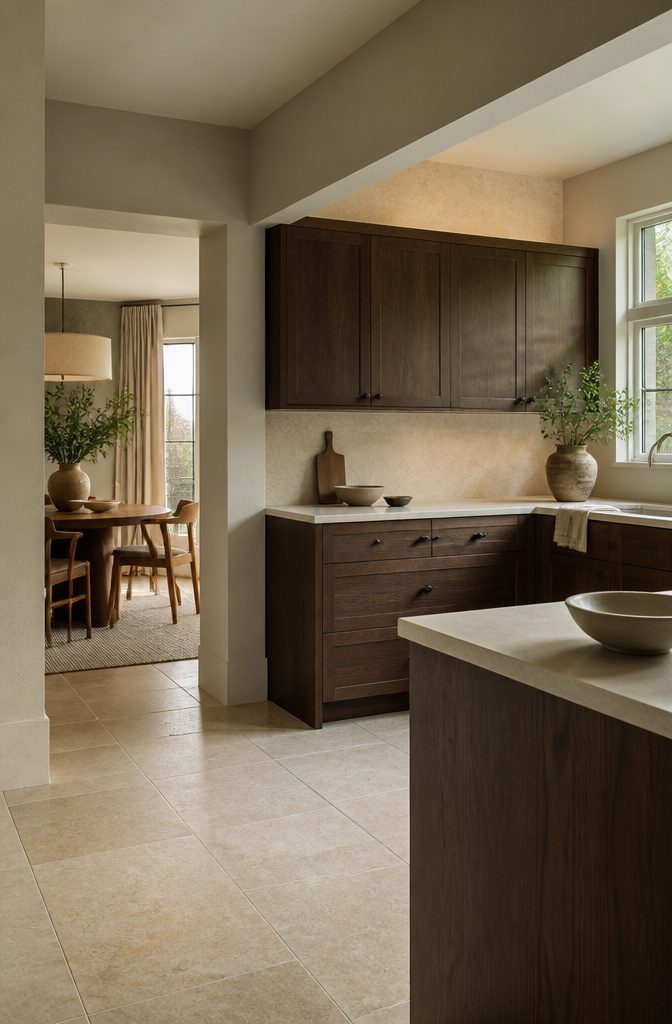
White, beige, gray or cream on the walls, counters, backsplash and floors keeps dark cabinets from feeling heavy. Choose lighter walls over darker ones.
Dark walls around dark cabinets close the room in and make it feel cramped. Beige wallpaper above the counters works well, and a white ceiling adds more contrast.
Match the floor’s undertone to the cabinets. Cool-toned cabinets look best with a cool floor, and cherry or other warm wood looks best with a warm one.
A narrow kitchen needs the lightest touch: light gray walls, light wood floors and upper cabinets that stop short of the ceiling.
The bare strip of wall above the cabinets draws the eye up, so the dark wood reads as less of a block.
Recommended Products

Includes Three Shades to Match 90% of Surfaces: We offer two color shades of Matte Beige and one Matte White to instantly achieve the perfect color match. Eliminating the need for color charts, returns, and waiting for the right color to arrive. Instead, match to one of the two beige colors or mix colors and match to your desired shade.

Light Beige Grout Touch-Up: Includes one light beige grout paint pen for recoloring stained or discolored indoor grout lines in bathrooms, kitchens, floors, shower walls and backsplashes
2. Marble or Stone Counters
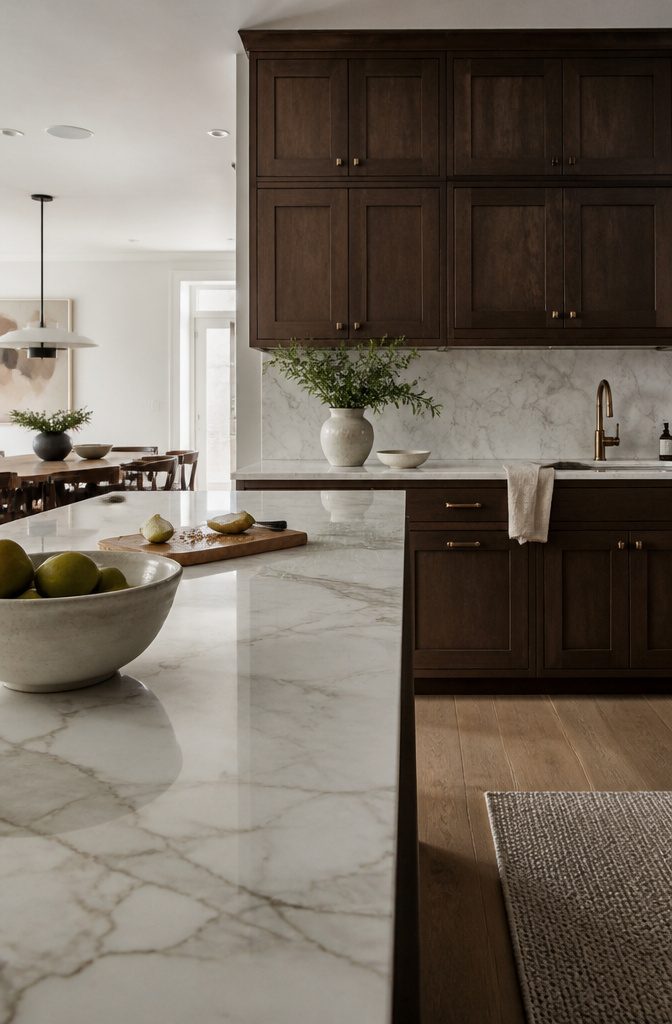
White marble gives dark wood the sharpest contrast. Run it across the island, countertop and backsplash, and the stone takes the focus while the cabinets stay a quiet backdrop.
White quartz does the same job with a plainer surface. Limestone and terrazzo soften the contrast with a speckled, matte look.
For a coordinated dark palette, green marble is the richest choice. Used on the island, counter and backsplash, it deepens the cabinets instead of competing with them.
Gray, black and viola marble go further in that direction, and white marble or white quartz reads lightest, while black or viola marble reads moodiest.
Granite follows its slab color: a pale one lightens the room, a dark one deepens it.
Recommended Products

Transform the look of outdated countertops with a faux marble kit

REALISTIC MARBLE AESTHETIC – Grey stickers features a high-definition matte finish with delicate gray veining that authentically replicates the luxurious look of natural marble, adding elegance to any space without the high cost or permanent commitment
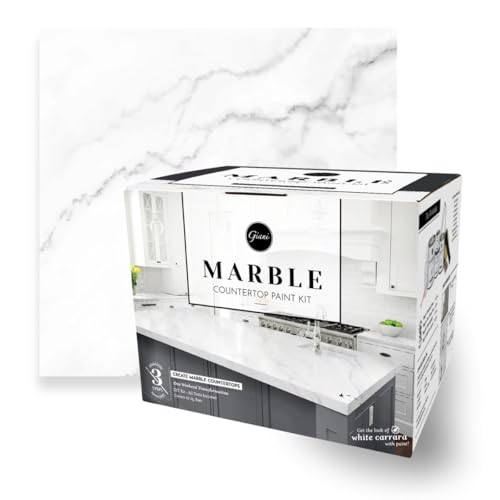
Giani Countertop Paint is a simple, three-step application that will transform Formica, laminate, Corian, ceramic tile, butcher block, cultured marble, and traditional granite in a single weekend.
3. A Dark Island or Two-Tone
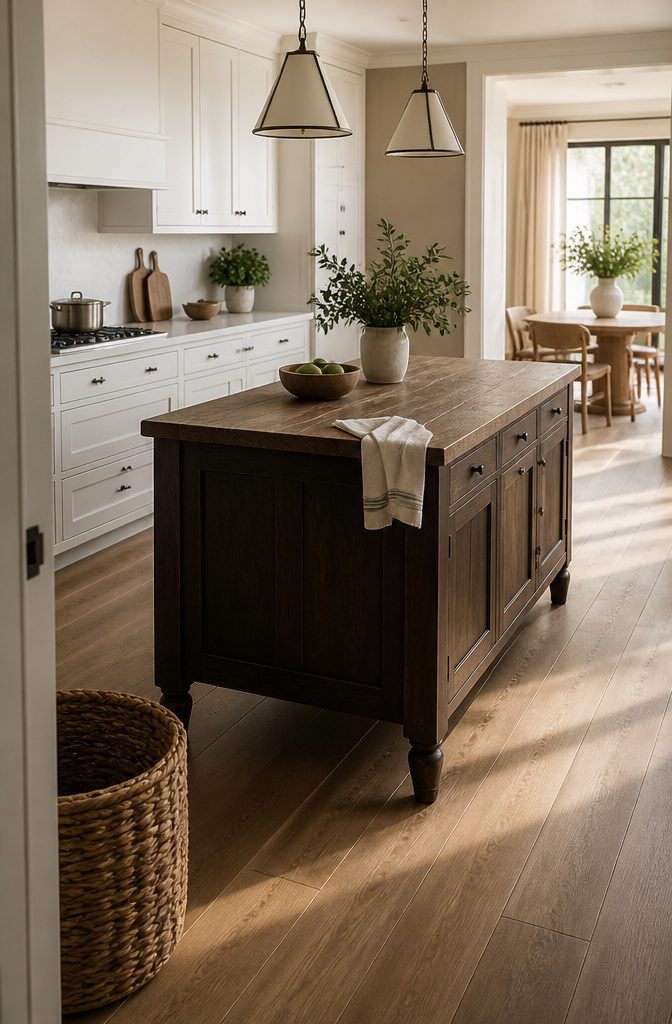
A dark island among white cabinets gives the eye one place to land, so the room reads as light with a single anchor.
Two-tone cabinets, with lighter uppers and darker lowers, spread the dark wood along the base of the room and feel calmer.
For a renter or first-time owner on a small budget, the dark island is the better pick. It is one piece instead of a full run of cabinets, and a freestanding dark wood island or cart can move with you.
Two-tone means refinishing or replacing a whole row of cabinets, which costs more and is hard to undo.
Recommended Products

SPECS: Solid wood shaker doors with soft-close, 6-way adjustable, fully concealed hinges. Full overlay with solid wood rails & stiles. Painted finish

Comprehensive Kitchen Organization - Featuring a complete storage system with both a wall-mounted cupboard and a floor-standing sideboard, this 63-inch set maximizes your kitchen's horizontal and vertical capacity to keep appliances and pantry items neatly categorized

Kitchen Wall Cabinet W2430: Measures 30-inches H by 24-inches W and features 2 doors, 2 adjustable shelves
4. Wood Grain and Texture
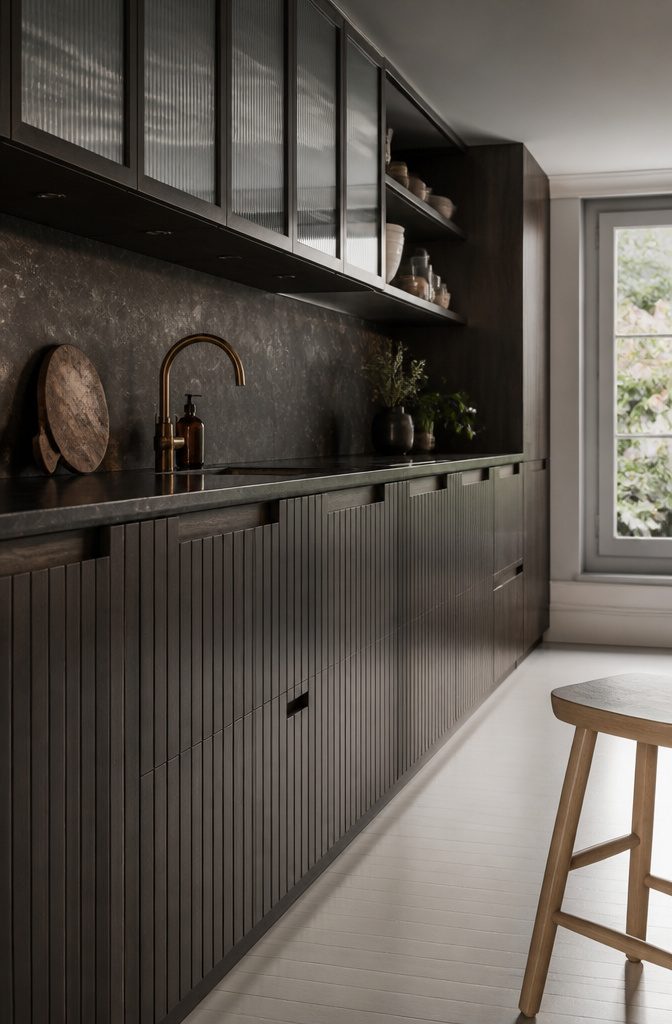
A flat run of dark wood with nothing else going on can feel confining, and texture is what opens it up.
Fluted or paneled fronts, integrated handles and reeded glass break the surface into light and shadow without changing the color. Swap a few solid doors for reeded glass-fronted cabinets: the glass reflects light and interrupts the wall of wood.
Visible grain does the same work quietly.
Walnut, wenge, oak and cherry all show it, so skip heavy opaque finishes that bury it. In a Rotterdam townhouse, dark-stained bamboo lower cabinets sit against white walls and white-soaped floors, with open shelving in the same dark tone.
Recommended Products
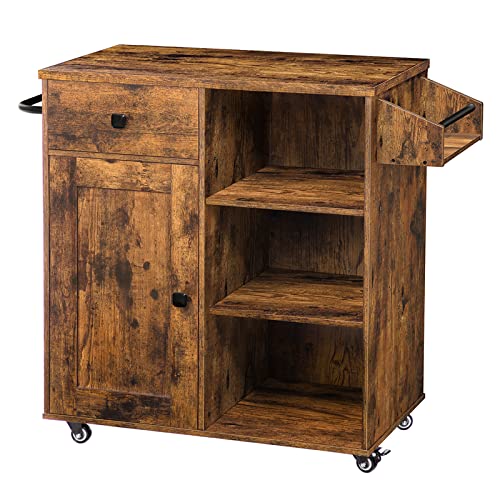
The Ideal Solution for Kitchen Island: This kitchen island is equipped with a drawer, cabinets, and a spice rack, and the inner shelf of the island can be adjusted, which allows you to place more tableware or food. The wide layout space of the countertop is also available for your use to keep the kitchen out of chaos

Generous Storage Solution: This kitchen island boasts an expansive storage capacity, effectively addressing the challenge of limited countertop and kitchen space. By relocating small appliances to the cabinet, you'll enjoy an abundance of workspace while cooking. Maximize the utility of your space to maintain a tidy and well-organized kitchen.

Kitchen Cabinet with Charging Station: This kitchen island with a 15"D x 26"W island top offers you the additional space for your delicious meals. Your kitchen essentials can find the right place to stay and the power strip including 3 sockets and a 59" long cord facilitates your free charging of various kitchen appliances
5. Brass or Copper Accents
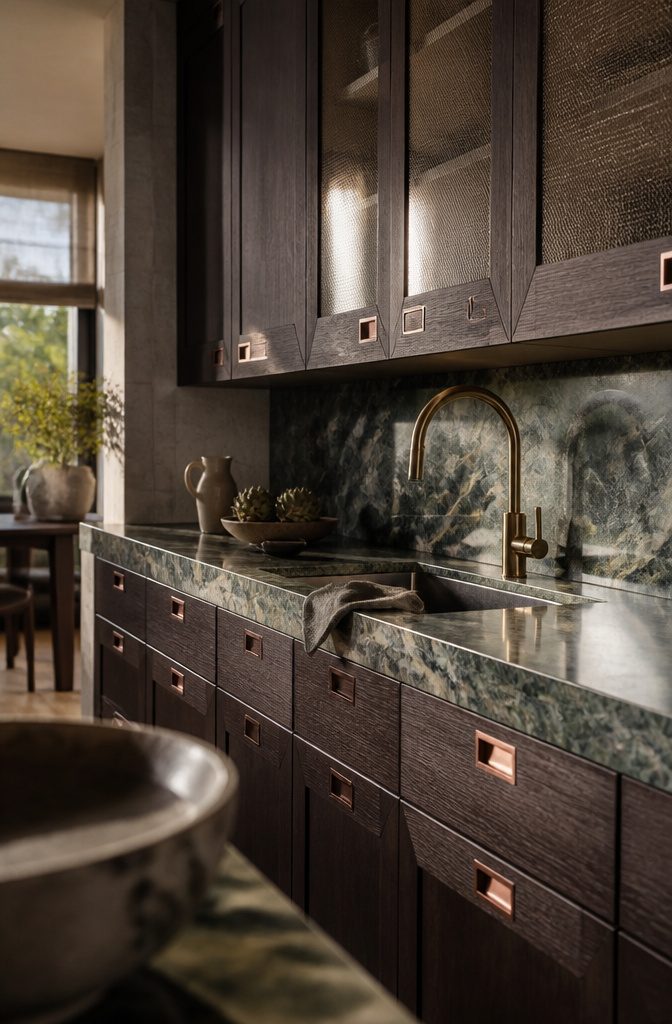
Brass hardware or a brass faucet gives dark wood a warmer, more traditional look.
Brushed brass leans country, but set against clean lines and stone it reads contemporary. Metal also breaks up the mass of timber:
One solid block of dark wood without any other details can result in a feeling of confinement and an awkward kitchen layout.
Pfeiffer Design answered that with green-veined marble worktops, copper in-set handles, and a brass mesh insert behind the glass in the upper cabinets, matched to the handles.
For a weekend project, swap the handles for brass or copper, using one finish throughout so they read as a set.
Recommended Products

VERSATILE STORAGE CABINET - FoverOne Bathroom Bamboo Storage Cabinet is a versatile and aesthetically pleasing solution for organizing your home. With its freestanding design, this cabinet offers functionality and elegance for various spaces, including bathrooms, living rooms, bedrooms, hallways, and kitchens. The warm tones and smooth finish of the bamboo create a visually appealing addition to any room.

Versatile storage for any room – This Whole Housewares bamboo cabinet is perfect for organizing bathrooms, kitchens, bedrooms, and entryways. Store toiletries, towels, pantry goods, or everyday items with ease.

EXTENDED STORAGE SPACE – Maximize your space with this versatile cabinet featuring a 11.8" wide tabletop, an open compartment and 2-tier hidden fixed storage inside. This rattan storage cabinet provides ample storage space for daily essentials. Great to store books, toilet paper, shower gel, shampoo, art & crafts, plants or kitchen supplies- all within easy reach
6. Layered Wood Tones
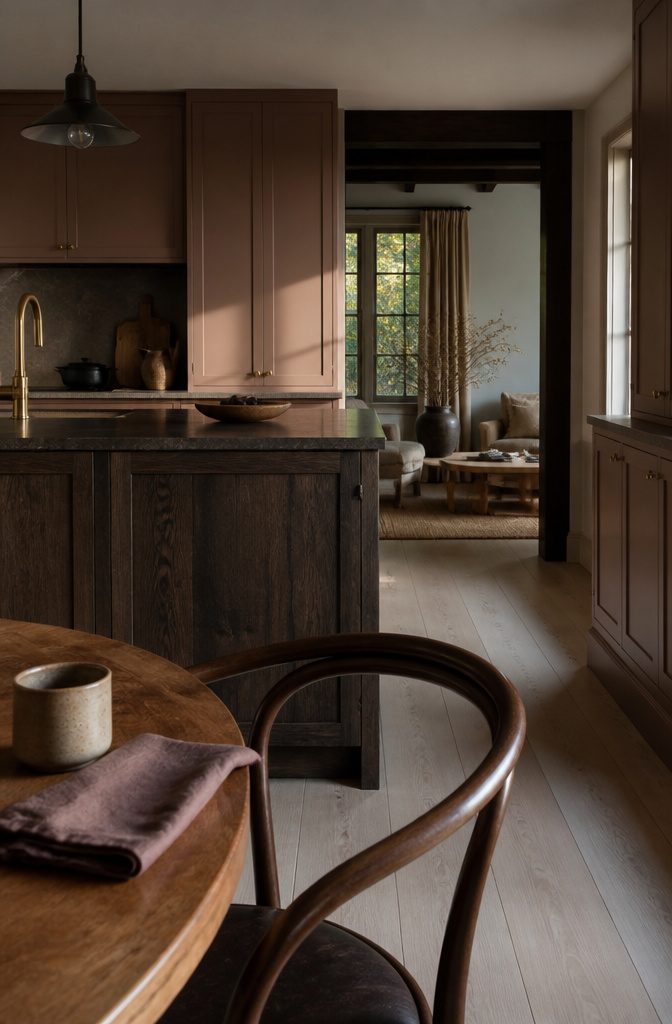
Vary the woods instead of matching them exactly. Matching the floor to dark cabinets in tone and texture does give a cohesive look, but it also stacks the weight in one place.
A white-soaped hardwood floor balances the cabinets, and the warm tone can come back in bentwood chairs around a round dining table, which ties the kitchen to the next room.
Exposed ceiling beams in a similar dark tone work the same way.
Keep undertones and grain patterns related so the mix reads as rhythm, not clutter, and choose clean planks for a contemporary kitchen or rustic boards for a country one.
Then add color: a muted pinky-brown like Farrow & Ball’s Dead Salmon on painted cabinets softens a dark timber island.
Recommended Products

Easy Renovation: Our innovative bottle with a built-in brush makes your renovation projects a breeze. No need to hire professionals, as anyone can use this fast-drying, DIY-friendly product

ALL-IN-ONE Paint - NO Sanding, NO Priming, NO Top Coat Required, Low Luster, Velvet Sheen Finish

100% hand-painted high quality oil paintings made by professional artist.
7. Open Shelves
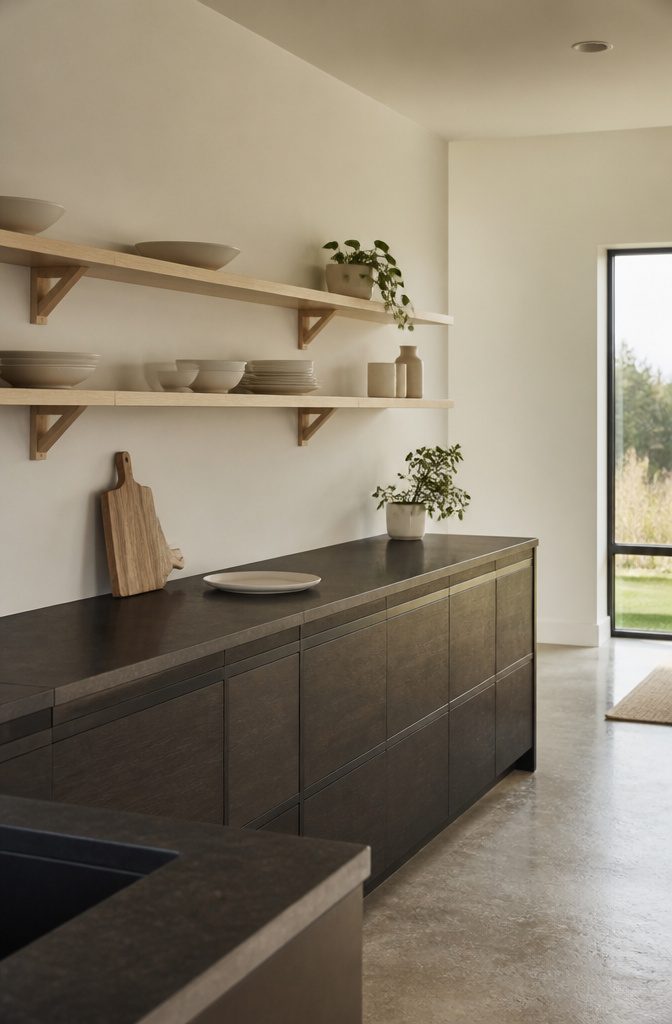
Open shelves break up a wall of dark upper cabinets, or replace it, so the eye has somewhere to rest.
Shelves cut from wood in the same tone as the cabinets tie the room together. Lighter wood or painted shelves against a pale wall add contrast instead.
In a layout where the lower cabinets carry most of the weight, a few shelves in place of upper cabinets keep the room from feeling bottom-heavy.
They also cost far less than a full run of uppers and are easier to install.
Stick to white dishes, a plant, and a cutting board, and leave gaps so the wall shows through.
Recommended Products

➤ BUBBLE FREE DESIGN: Small grooves on back of matte white marble contact paper make it bubble free when applying!
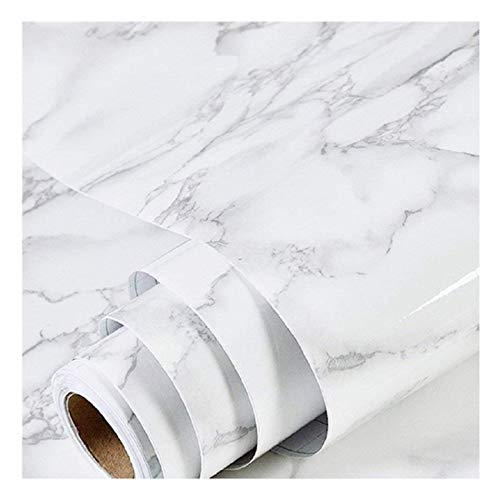
Real Marble: Faux marble wallpaper peel and stick, designed according to the real marble texture, is beautifully designed in white and grey. Its delicate texture, rich color and excellent finish make it a calm atmosphere, luxurious texture looks very real, allowing you to enjoy the real marble scene at a cost-effective price
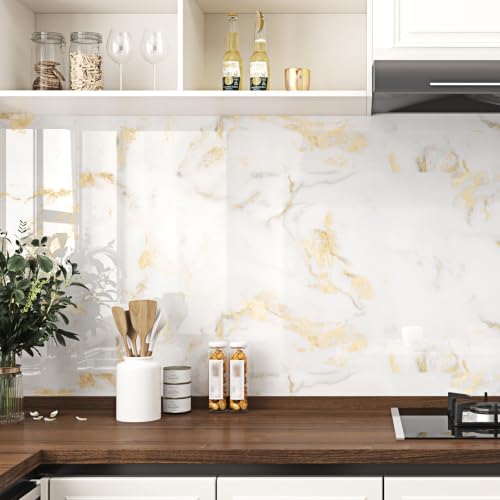
Ⅰ. 【Faux Marble】 The marble pattern in white and gold looks very beautiful in person. White/gold marble contact paper looks realistic with just the right amount of shine. The smooth glossy finish looks upscale, and the subtle gold give it a touch of elegance without being too busy, and crackled marble features distinct, natural veining that brings more depth.
8. Limit Visual Weight
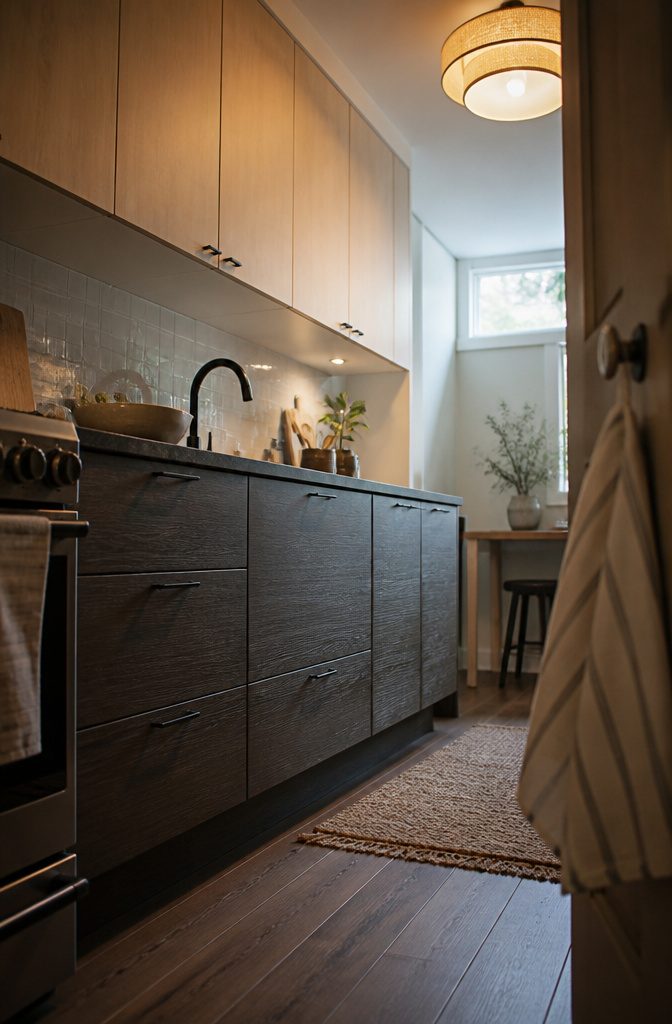
Dark wood on the lower cabinets only keeps the heavy color at knee height, where it grounds the room and leaves the eye line clear. Leaving the upper walls empty goes further.
With no cabinets there, the wall color or tile shows, and the room reads taller and more open. Lighter upper cabinets, in white or pale wood, keep the storage and split the visual weight between top and bottom.
In a small or windowless kitchen, lighter uppers over dark lowers is the best choice.
You keep the storage a tight room needs, and the pale tier bounces back whatever light the fixtures give. Empty uppers suit a kitchen with a window and another place to store dishes.
Recommended Products

【Ample Storage Space】: This pantry cabinet creates multiple storage options, including a wide countertop, 3 cabinets, 2 open compartment and 3 deep drawers, to keep your kitchen clean and tidy. To fulfill your customized storage needs, 2 shelves can be easily adjusted to 5 heights or removed according to the size of items.

【Ample Storage】 This multi-functional kitchen cabinet comes with 8 door shelves and 4 sliding drawers, offering ample space for snacks, cookware, seasonings, and dry goods — keeping your kitchen neatly organized. With 4 shelves, it's perfect for large appliances, dinnerware, and daily essentials, maximizing every inch of space for greater kitchen efficiency.

[Maximize Your Space]: This modern sideboard cabinet features a 38" x 15.5" spacious countertop and 4-cube inner space, creating a neat living space for you. It's perfect for storing a coffee maker, kitchenware, tableware, snacks and more.
9. Stainless Steel and Chrome
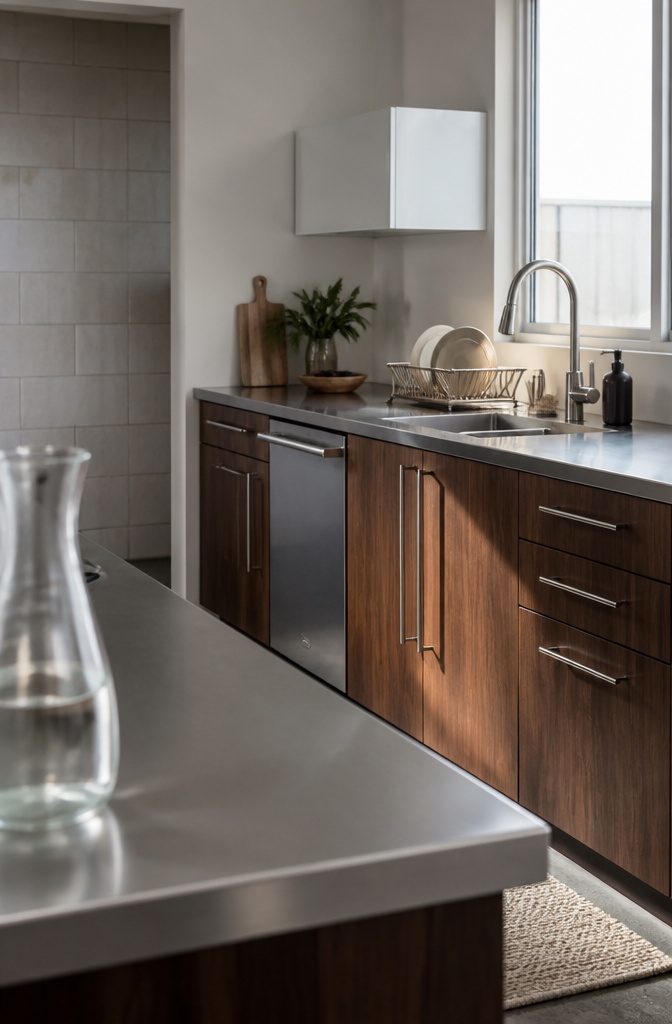
Stainless steel gives dark wood a modern note because its cool, flat tone sits against warm grain. Appliances do most of the work, and a stainless island repeats the effect in the middle of the room.
Chrome on the faucet and sink does the same in a smaller dose, and cool metal sets off the warm grain without competing with it.
Brass and copper take the opposite route. They echo the warmth of the wood, where steel and chrome contrast with it, so pick the finish based on which look you want.
Keep the surroundings light. A pale gray wall and a white upper cabinet over the sink stop the steel and wood from feeling heavy.
Recommended Products

Generous Storage Solution: This kitchen island boasts an expansive storage capacity, effectively addressing the challenge of limited countertop and kitchen space. By relocating small appliances to the cabinet, you'll enjoy an abundance of workspace while cooking. Maximize the utility of your space to maintain a tidy and well-organized kitchen.

Premium Quality: The mobile kitchen island features a top made of high-quality solid rubberwood and MDF material, making the surface stain-resistant, waterproof, sturdy, and durable.

Sufficient and flexible storage options: Our kitchen island carts have one drawer, one door, one tray, and two shelves, with rich storage options and plenty of space. Cabinets with doors are more flexible to use than full drawers, and open storage space is more flexible to use than fully enclosed space
10. A Complementary Paint Color
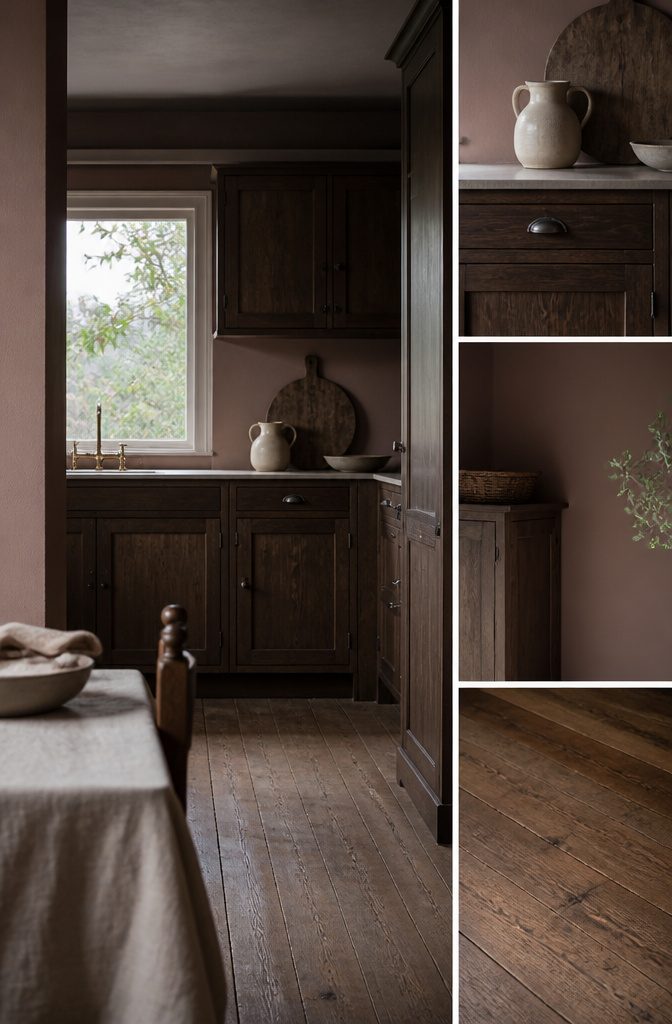
Dark wood feels heavy when every surface is brown, and a muted color breaks that up without making the room glaring.
A pink-brown like Farrow & Ball’s Dead Salmon sits close to the warmth of the wood, so the two read as related.
White can fight dark cabinets, but this shade softens them. It also suits the English country farmhouse look, where aged wood sits beside soft, earthy color and the kitchen feels lived in rather than staged.
Color can go on walls, on a run of units, or on hardware.
A painted wall is the cheapest way to try it, and if the shade reads too pink in your light, you repaint one wall instead of a set of cabinets.
Recommended Products

HIGH-QUALITY SOLID BAMBOO-This storage cabinet is made of eco-friendly and solid bamboo with waterproof painting which is sturdy and strong. The surface of bamboo cabinet is polished, and the bamboo bathroom storage cabinet is of high quality and has a long service life. This compact cabinet would be the perfect solution for bathroom storage, ideal for toiletries, towels, and bath accessories.

AMPLE STORAGE SPACE - 26" W x 13" D cm a spacious worktop can hold a coffee maker, cups or some decorative items, 3 side open cube shelves offer plenty of space for spice bottles, towels, shower gels, shampoos, and basket boxes with easy access, the internal fixed shelves with slatted door provide the perfect storage for toilet paper and personal items to keep your bathroom supplies neatly organized

【Natural Bamboo Bathroom Cabinet】 Crafted from bamboo with a warm natural finish, this freestanding bathroom storage cabinet adds a clean and inviting look to your home. The simple slatted-door design blends well with modern, farmhouse, rustic and minimalist decor.
Why Dark Wood Works
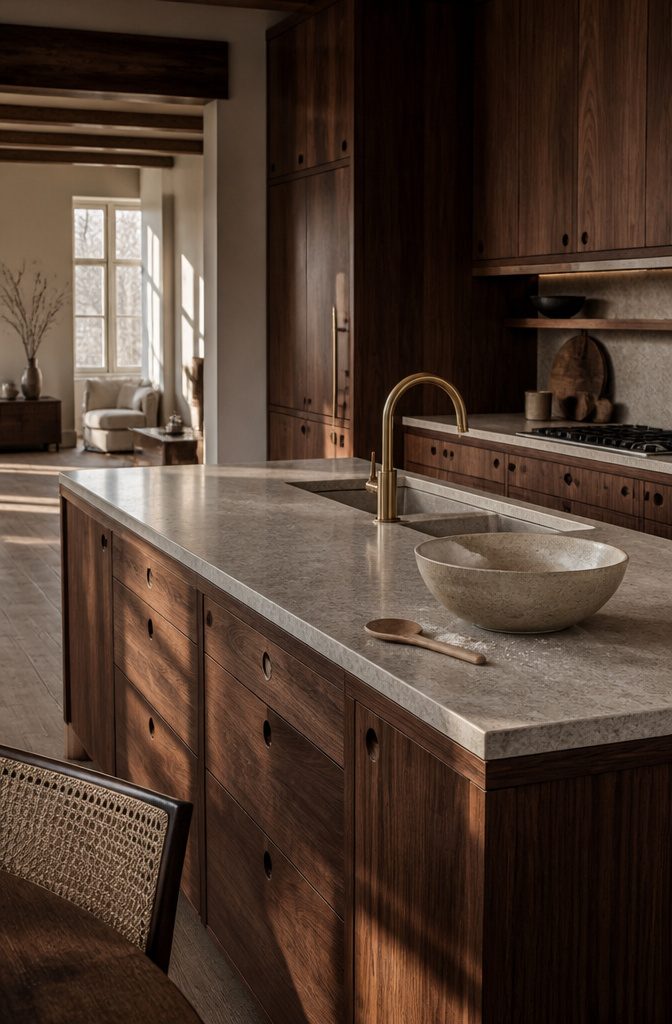
Dark wood adds a depth that painted white or pale oak cabinets can’t.
Walnut, wenge, and stained oak bring warmth, and the grain gives a kitchen character and a sense of craftsmanship without looking showy. The mood is moodier and more personal, so the room feels grounded and lived in rather than catalog-clean.
Dark wood is back in style. After several years of Scandi blonde wood, soft gray, and pastel paint, tastes have moved toward richer, layered interiors, and dark cabinets fit that shift.
Dark wood stays timeless when you pick it for the grain and build quality, not because it’s trending.
Styles That Suit Dark Wood
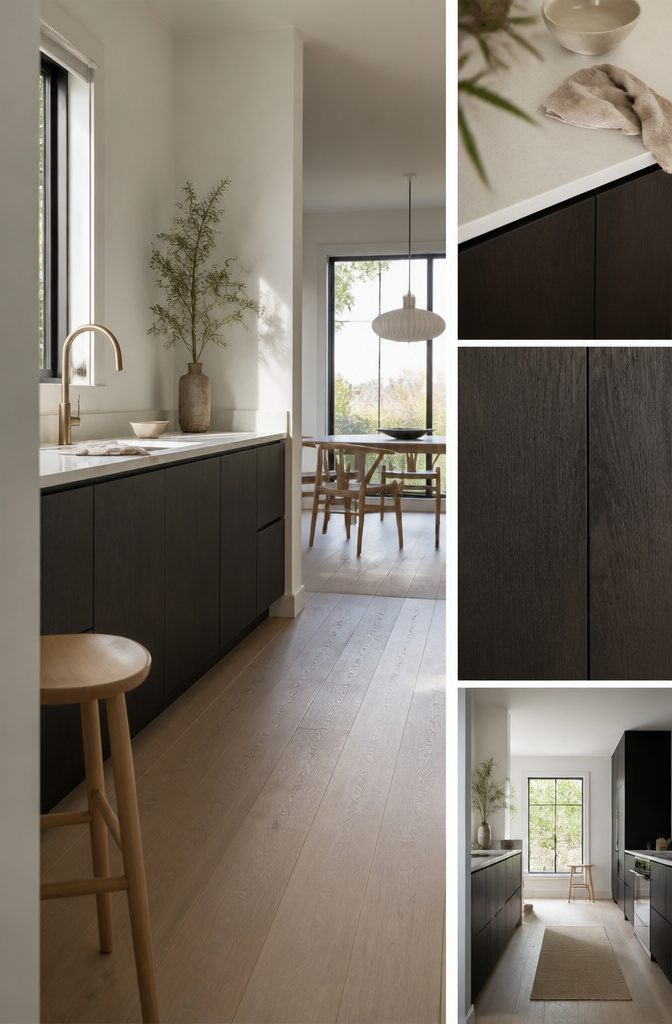
Dark wood fits several kitchen styles, and each one pairs it with something different.
- Traditional: Dark wood reads as classic when whites and greys surround it, which keeps the cabinets from overpowering the room.
- Transitional: Dark doors sit between old and new, so keep the hardware and counters simple and let the wood carry the warmth.
- Modern: Dark wood works as a bold, flat block of color against pale surroundings.
- Minimal: Use dark cabinets as the single contrast against white walls, light wood flooring and thin white quartz counters.
- Contemporary: Marble counters and ivory walls give dark wood a polished, upscale look.
Cleaning and Painting Dark Cabinets
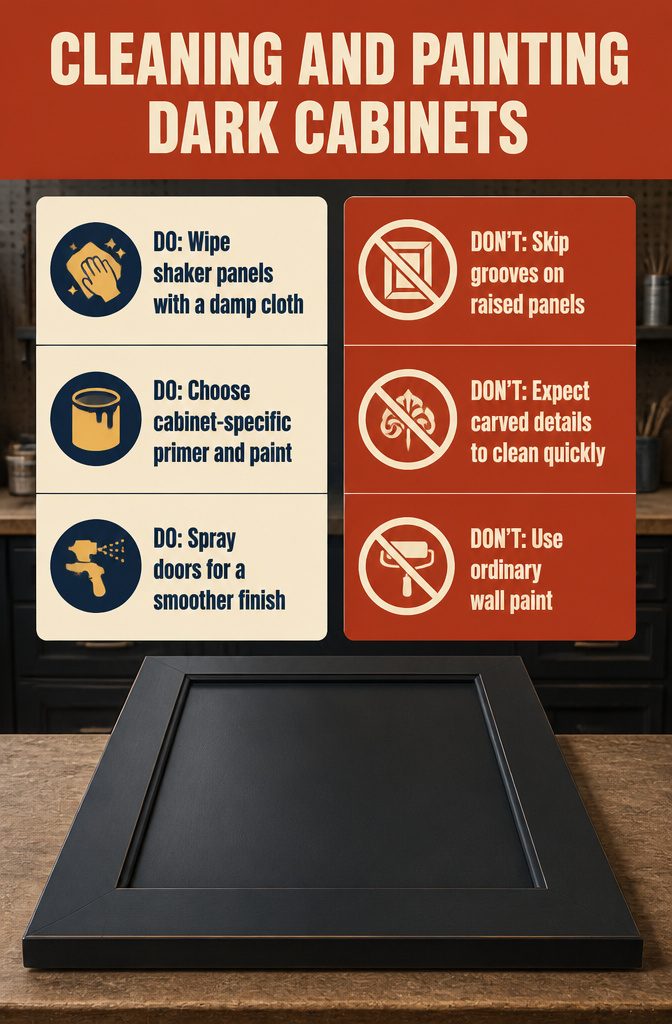
Door style decides how much scrubbing you do. Dark shaker cabinets are the easiest to clean, because the flat center panel and simple frame give grease and dust very little to settle into.
Raised panels and carved detail collect grime along every edge, so plan on working a damp cloth into each groove.
Dark finishes also hide dirt, fingerprints, and light scratches better than pale ones. That makes them a practical pick for a kitchen that gets daily use.
If you paint dark cabinets instead of staining them, use a primer and paint made for cabinets. Some remodelers spray the doors, which gives a smoother finish than a brush leaves behind.
Frequently Asked Questions
Why choose dark wood kitchens?
Dark wood gives a kitchen a depth and warmth that painted white or pale oak cabinets can’t match.
The visible grain adds character and a sense of craftsmanship without looking showy. It holds up best when you pick it for the grain and build quality instead of the trend.
Are dark wood kitchens still in style?
Yes, dark wood kitchens are making a comeback.
After several years of Scandi blonde wood, soft gray, and pastel paint, tastes have moved toward richer, layered interiors. Dark cabinets stay timeless when you choose them for craftsmanship instead of as a passing look.
Can dark wood cabinets work in a small kitchen?
Yes, as long as everything around them is light.
Use pale walls, backsplash, counters, and flooring so the room doesn’t feel boxed in. In a small or windowless kitchen, dark lower cabinets under lighter uppers keep the storage and bounce back the available light.
Are dark cabinets easy to keep clean?
It depends on the door style. Dark shaker cabinets are the easiest, since the flat center panel and simple frame leave little for grease and dust to settle into.
Raised panels and carved detail trap grime along every edge. Dark finishes also hide dirt, fingerprints, and light scratches better than pale ones.
What colors go well with dark wood cabinets?
White, beige, gray, and cream are the safest choices for walls, counters, backsplash, and floors, because they contrast with the wood and keep it from feeling heavy.
For a softer accent, a muted pink-brown like Farrow & Ball’s Dead Salmon sits close to the wood’s warmth. Brass or copper hardware adds a warm note as well.
Should walls be lighter or darker than dark wood cabinets?
Lighter.
Dark walls around dark cabinets close the room in and make it feel cramped. Pale walls with a white ceiling add contrast and keep the space open.