
The ideas run from layout and frameless glass to a copper soaking tub set against Thassos Gold marble, and the size of your room decides which ones fit.
A freestanding tub needs floor space; squeezed into a tight bathroom it looks forced, and a larger Roman shower gives the high-end look without taking over the floor.
1. Layout Before Finishes
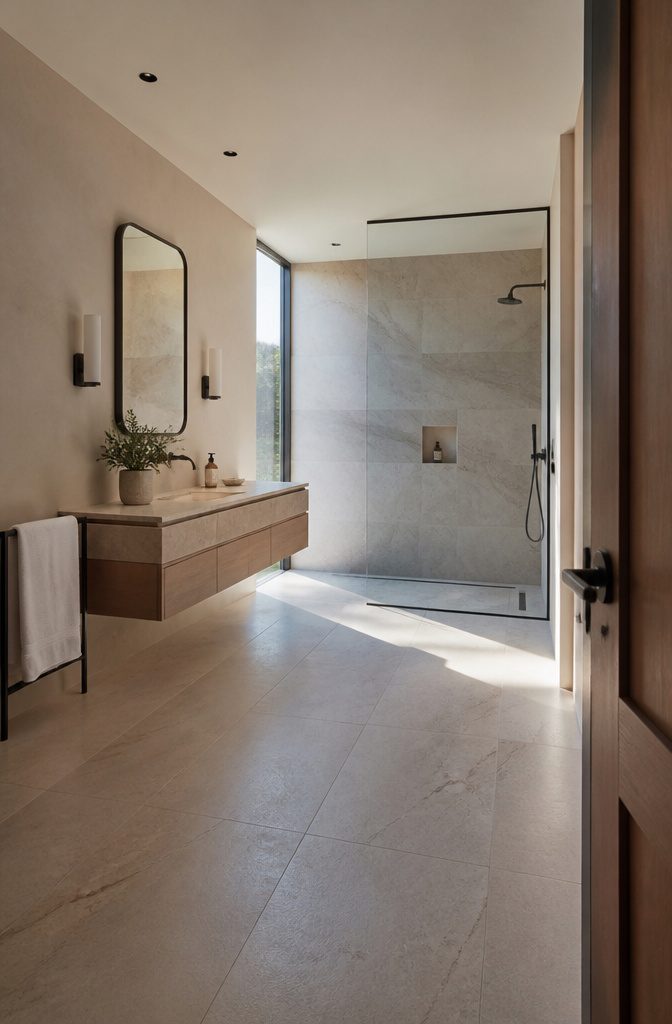
Walk through the room in your head before you pick a single tile.
Does the door open onto clear floor, or straight into the vanity? Can you reach a towel from the shower without dripping across the room?
Is the vanity where you would actually stand to brush your teeth, and does the shower feel comfortable to step into, or squeezed into whatever space was left?
A bathroom has to work on an ordinary weekday morning, not just in a photo.
Open floor and easy movement between the door, vanity and shower matter more than any finish. A settled layout makes plain materials look more expensive, while an awkward one stays awkward under costly tile.
Recommended Products

【DIMENSION】GETPRO sliding shower door oversize 60” W x 72” H, the width can be adjusted from 57" to 60" by cutting guide rail,providing a customizable fit for flexible installation.

【Premium Design & Perfect Sizing 】Designed with dimensions of 36" wide × 78" high, this framless walk-in shower screen features a modern open style and reversible installation for left or right mounting. Its matte black finish paired with clear tempered glass brings refined sophistication to your bathroom. This fixed shower glass panel has a clean stylish look that fits perfectly with modern, traditional and transitional bathroom decors

【60 Shower Door】60" W x 76" H. Entrance height of shower door is 72 inches to avoid the risk of hitting your head. This glass shower door features an adjustable width, offering flexibility to fit various bathroom layouts. Width Adjustment: 55" to 60" (cut top and bottom tracks to fit your needs). Elevate your bathroom with our stylish black matte finish shower sliding door.
2. A Frameless Glass Shower
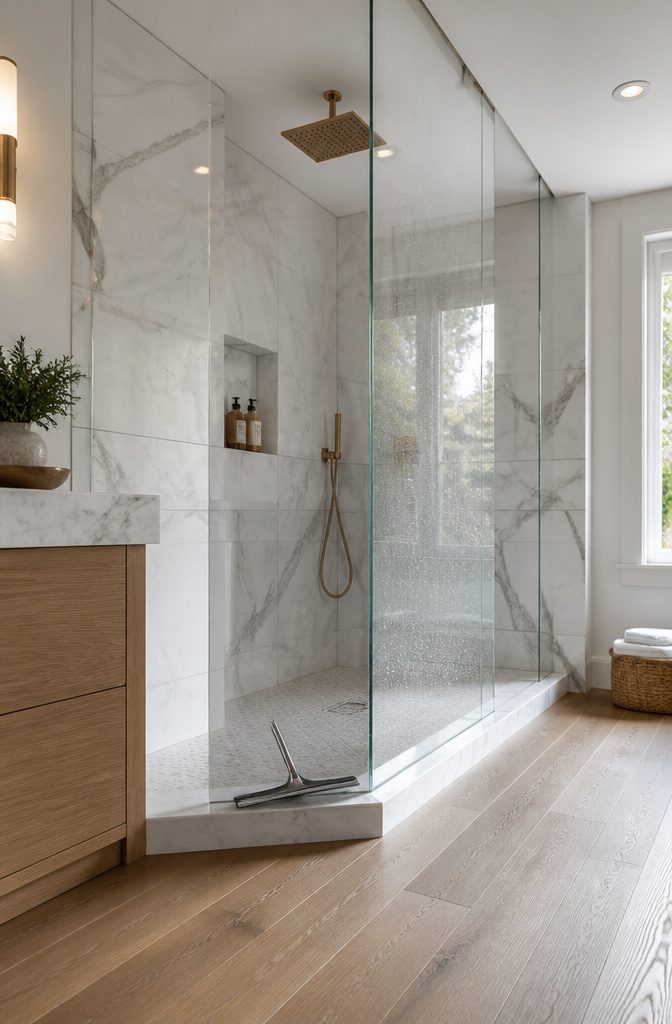
Frameless glass panels keep sightlines open, so light and the eye travel straight through the shower to the far wall.
In a compact bathroom, that stops a framed or curtained shower from cutting the room in half. Add a large mirror and polished finishes, and the room reads brighter and larger.
Clear glass also lets the materials show. A marble-wrapped shower looks best with something warm beside it, and white oak flooring does that job by softening all that cool stone.
The cost is upkeep.
Clear glass shows every water spot and soap streak, so a squeegee pass after each shower is part of the deal. If you won’t do that, frosted glass hides more, but it gives back the openness you were paying for.
Recommended Products

Dimension & Diameter: Ogonbrick tub drain cover diameter 2-3/4 inch.Drain for freestanding tub Height 3-1/2 inch with Pop-up Close & 3-15/16 with Pop-up Open.Tub drain chrome thread diameter 1-7/8 inch,fits for NPSM bathtub waste drain joint.
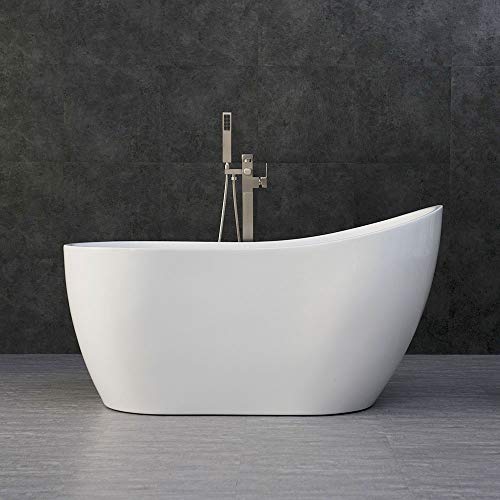
DIMENSIONS AND SPECIFICATIONS: Exterior Dimension: 54" Long x 28 3/8" Wide x 28 7/8" Deep – Effective Tub Capacity: 55 Gallons

Certified Safety & Durability: This cUPC certified bathtub meets rigorous safety standards, ensuring a high-quality soaking tub built to last with stain-resistant acrylic reinforced by fiberglass
3. A Freestanding Tub, Space Permitting
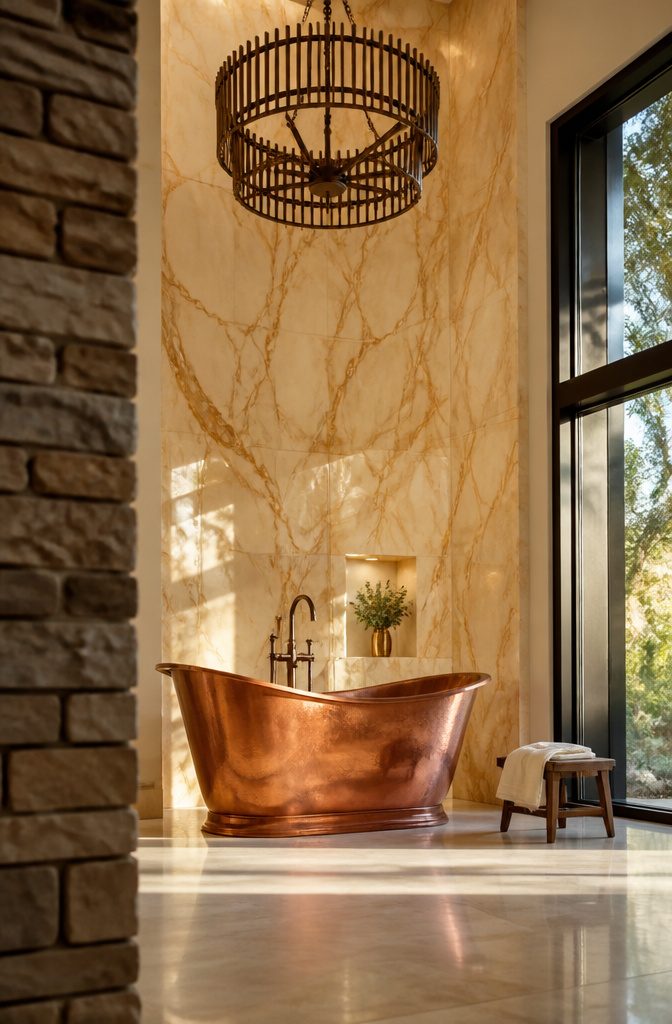
A freestanding tub earns its floor space only when the room gives it room to breathe. Set at the center of a primary bath, a floating tub becomes the focal point, especially under a bronze chandelier.
A copper soaking tub from Amoretti Brothers, set against floor-to-ceiling Thassos Gold marble, makes the same point in a bolder way: one sculptural piece with nothing crowding it.
Skip the tub if the room is tight. Squeezed in, it throws off the proportions and makes the space feel forced instead of luxurious.
A larger Roman shower gives you the high-end look without taking over the floor, and it is the better call in a small or narrow bathroom.
Recommended Products

【Premium Design & Perfect Sizing 】Designed with dimensions of 32" wide × 78" high, this framless walk-in shower screen features a modern open style and reversible installation for left or right mounting. Its matte black finish paired with clear tempered glass brings refined sophistication to your bathroom. This fixed shower glass panel has a clean stylish look that fits perfectly with modern, traditional and transitional bathroom decors

TEMPERED GLASS SHOWER PANEL: Engineered to withstand daily wear, moisture, and temperature changes, our 3/8-inch (10mm) SGCC certified tempered glass guarantees long-term durability.

Tempered Glass Shower Door: Tempered safety shower glass panel, 3/8 inches (10mm) thick. Designed to provide effective protection and prevent rupture in dangerous situations.
4. Vanity and Concealed Storage
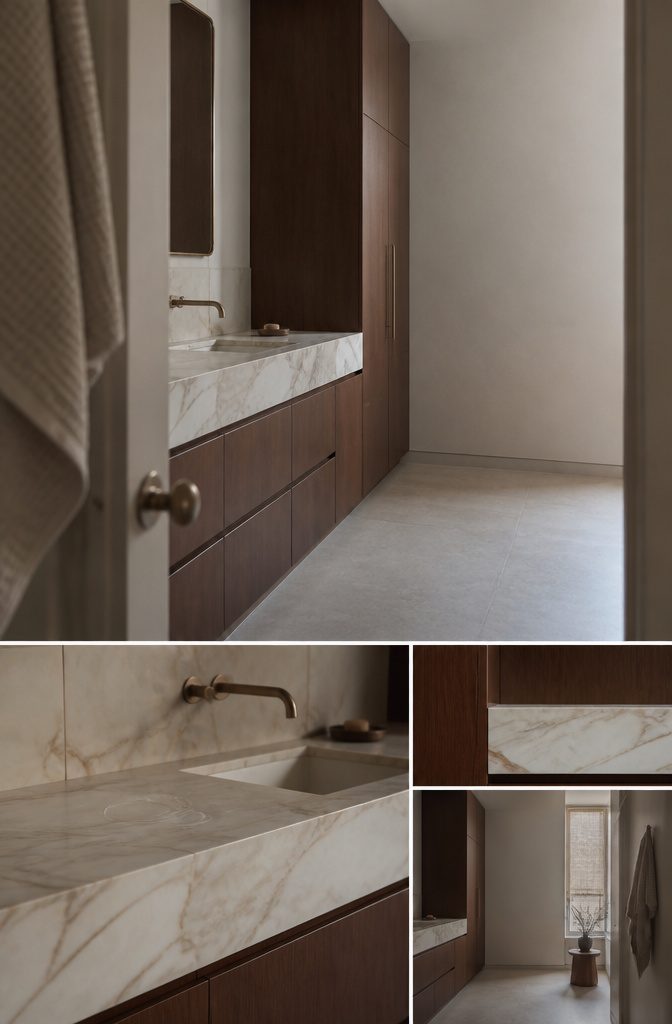
Treat the vanity as the largest piece of furniture in the room. Carrying marble from the counter onto the trim gives a drenched, tone-on-tone look, as Rosso Collemandina (ABC Stone) does against mahogany walls.
Calacatta Oro (Marmi) can wrap the vanity completely, and a matching tub finishes the effect. In a small bathroom, one sculpted vanity with smooth finishes and well-chosen hardware can carry the whole room if everything around it stays quiet.
The cabinetry matters as much as the stone.
Drawers, built-in cabinetry, and tall storage that hide everyday items keep clutter off the counter, and clutter is what breaks the elevated look fastest. If the room has space, a double vanity also makes busy mornings easier.
5. Layered Lighting
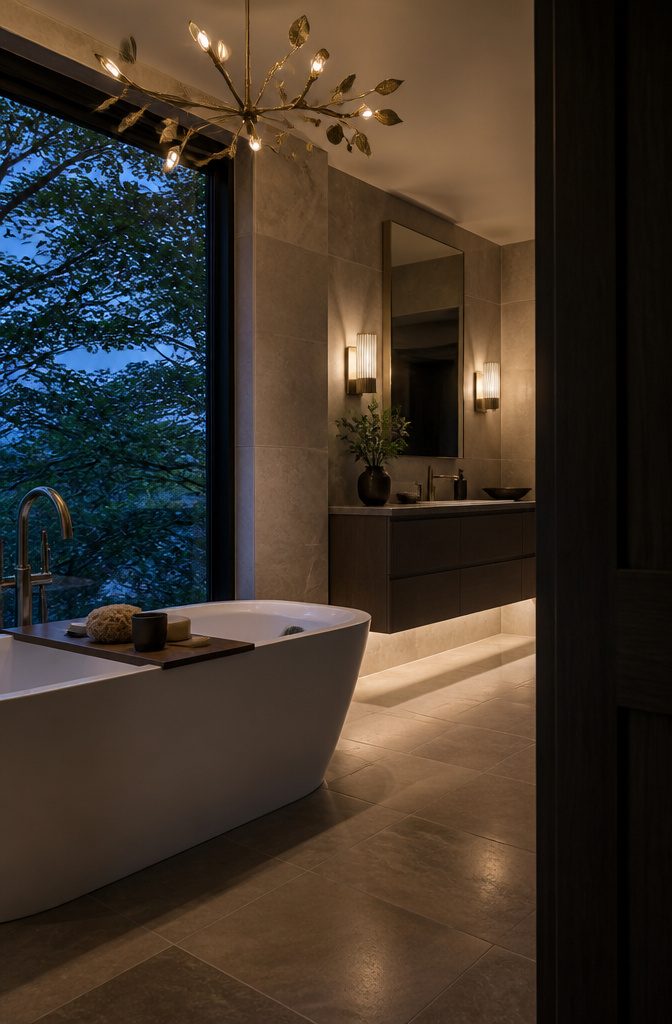
A chandelier can serve as the general layer if it lights the whole room.
The 1920s Italian crystal chandelier in a Los Angeles bathroom does this, and so does the bronze chandelier by Claude Lalanne above a floating tub, which also mimics the flora outside the window.
A chandelier alone leaves faces in shadow, so add task light at the mirror. Sconces on both sides at face height light you evenly and avoid shadows under the eyes.
Accent light is the third layer: a low strip under the vanity or a lit niche gives a soft glow at night. Put each layer on its own dimmer so the chandelier can drop low during a long soak.
6. Materials, Textures, and Tile
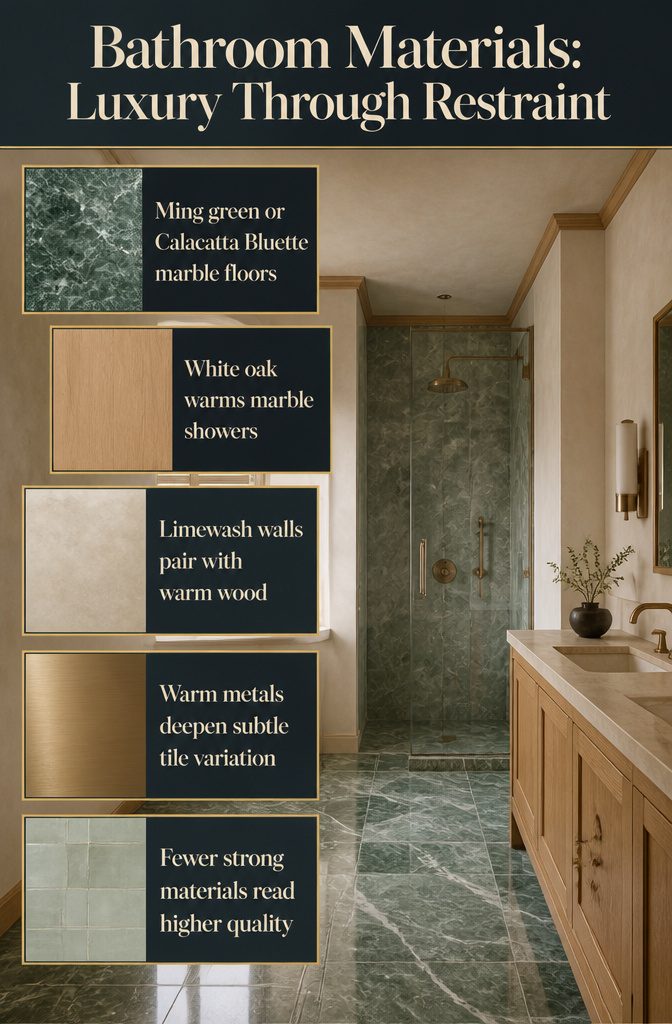
Choose two or three materials and let them carry the room. These pairings work:
- Ming green or Calacatta Bluette marble on the floor gives you color where white and gray marble is the usual choice.
- White oak floors warm up a marble-wrapped shower and look good next to polished nickel fixtures.
- Limewash walls with a warm wood vanity make a bathroom feel calm instead of clinical.
- Warm metals and subtle tile variation add depth without making the room busy.
- Accent trim on the ceiling adds a finished look without adding noise.
Resist making every surface a feature. A few strong materials read as higher quality than many, because the richness comes from texture and restraint.
Recommended Products

🏆【Space-Saving Round Corner Shower Door】The Corner Shower Enclosure is ideal for smaller bathrooms and walkin showers. With the size of 36" x 36" inches, it suits well in a corner, and its double sliding door style takes up minimal space compared to the swinging doors.Perfectly fit compact bathrooms, rental apartments, guest washrooms and renovation projects, it solves limited-space troubles without sacrificing stylish aesthetics.It gives the bathroom a more upscale appearance and feels like a quality product.

【Space-Saving Corner Shower Design】34 3/4" - 35 9/16" width adjustment ( fits 36"x36" shower base). Walk-in width of the neo-angle enclosure: 21 1/16". Corner shower door height: 72". (Shower base not included) Designed for compact bathrooms in small apartments, this neo-angle shower door fits perfectly in a 35.56" x 35.56" corner while optimizing floor space. Its combines aesthetics and practicality, making it ideal for small bathrooms, allowing you to enjoy a spacious and refreshing shower experience.

【Adjustable Width & Frameless Design】The width of this glass shower door is adjustable from 56 to 60 inches via track trimming, enabling flexible adaptation to different bathroom layouts. The sleek frameless design of the brushed nickel shower door also elevates the bathroom aesthetics and boosts a sense of interior spaciousness
7. A Calm or Bold Palette
A calm neutral palette is the safer choice.
Nothing clashes, and it suits a room of any size. A color statement carries more risk, because wall paint is slow and costly to redo if the shade turns out wrong.
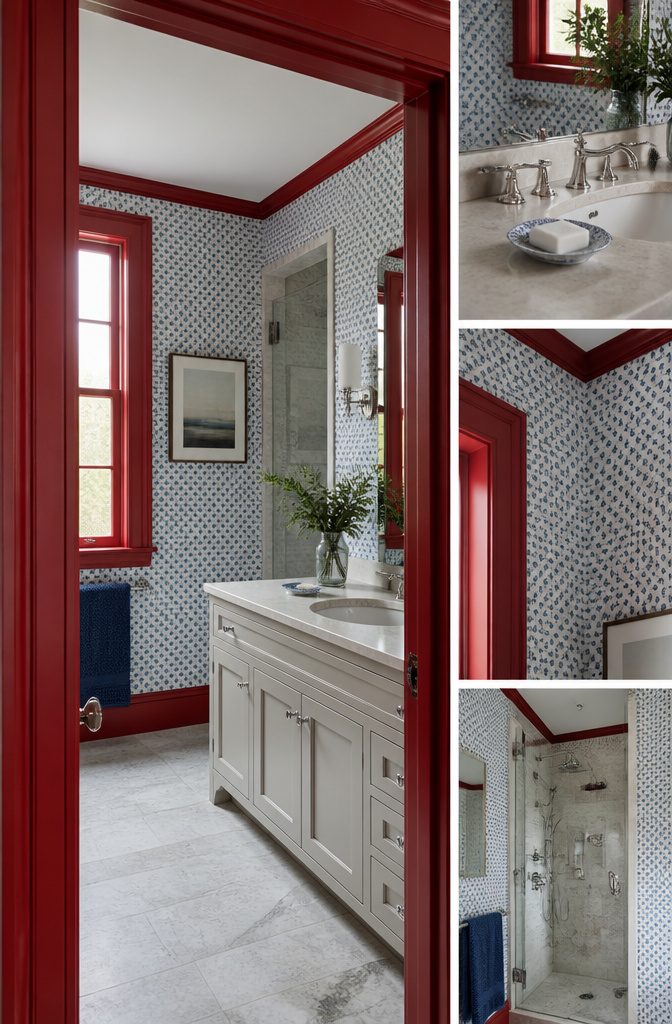
If you go bold, give the color one job. Paint only the trim in a strong red like Blazer by Farrow & Ball, then add a blue-and-white wallcovering to temper the fiery shade so the room stays restful.
For a gentler move, Churlish Green by Farrow & Ball is a light olive wall that wakes up an existing blue claw-foot tub. Keep the tub, change the wall, and hang something leafy overhead.
Mint, black, or soft blue follow the same rule: one strong anchor, one quieter pattern beside it.
Recommended Products

DURABLE CONSTRUCTION: This freestanding tub filler is made of top cu59 brass + 304 SS, with the cUPC certified cartridge ensuring durability and long-lasting performance. Triple-thick electroplated coating finish resists hard water stains, scratches and rust. No cracking or dripping leakage under long-term daily bathing, durable for decades of bathroom use.

【Luxury Design & Comfort】Experience the elegance of our free standing tub with a classic design and soft curves. The ergonomic, tilted lumbar support ensures a comfortable soak, while the wide, deep basin allows for full body immersion. Perfect for a relaxing soak, this freestanding bathtub enhances any bathroom decor.

✅ Superior Heat Performance: Designed with thick solid walls to retain warmth longer for a relaxing soak. The rim, walls, and base stay warm, while the spacious 87-gallon capacity allows deep, shoulder-high immersion.
8. Make Small Rooms Feel Open
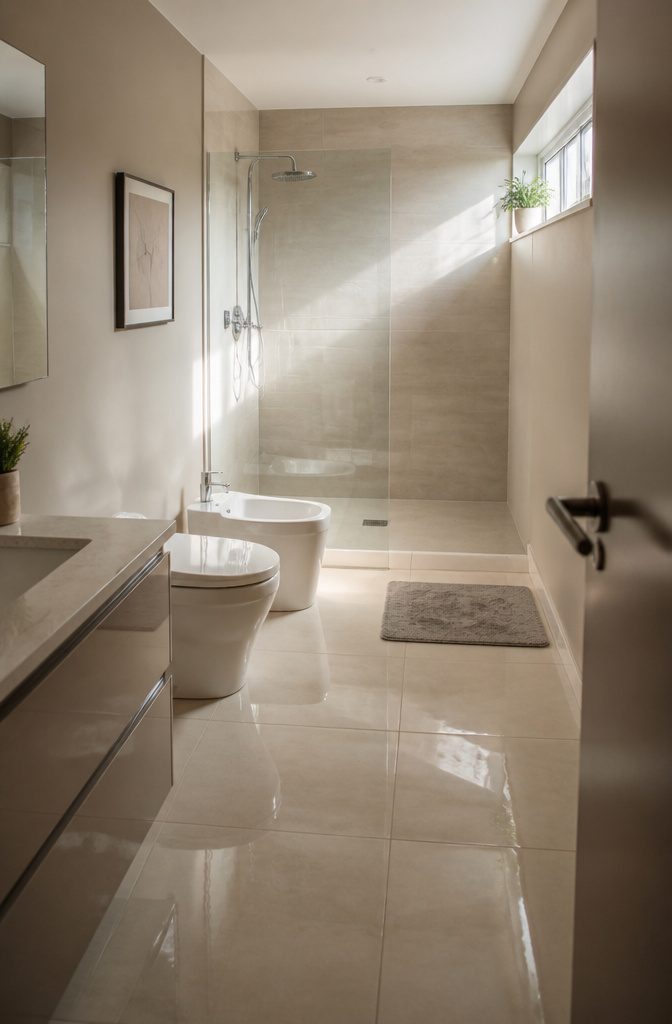
A large mirror does more for a compact bathroom than any other single swap, because it sends the light from the window or fixture back into the room.
Polished finishes do the same job: glossy tile, chrome, and glass reflect light, while matte dark surfaces soak it up. Keep walls and fixtures in soft neutrals so nothing interrupts the sightline.
Frameless glass panels remove the visual barrier a frame or curtain creates, so light travels across the full room. Fewer visual barriers make a small bathroom read larger.
Proportion and circulation matter as much as finish.
Choose fixtures sized to the room and keep a clear path from the door to each fixture. One oversized piece will crowd the space no matter how much glass surrounds it.
Recommended Products

Superior Safety & Substantial Glass - SGCC & ANSI-certified 10mm tempered glass provides shatter-safe protection and is 25% thicker than standard panels, giving a noticeably heavier, more substantial feel compared to other glass thicknesses. Extra height at 80 inches improves water containment and keeps your bathroom cleaner and drier.

Tempered Glass Shower Door: Tempered safety shower glass panel, 3/8 inches (10mm) thick. Designed to provide effective protection and prevent rupture in dangerous situations.

Shower Door Dimensions - Width 20.5 inch, height 78.75 inch, color matte black, single shower door panel, installed on the left or the right, suitable for the decoration and protection of your bathroom.
9. Wallpaper, Chandeliers, and Rugs
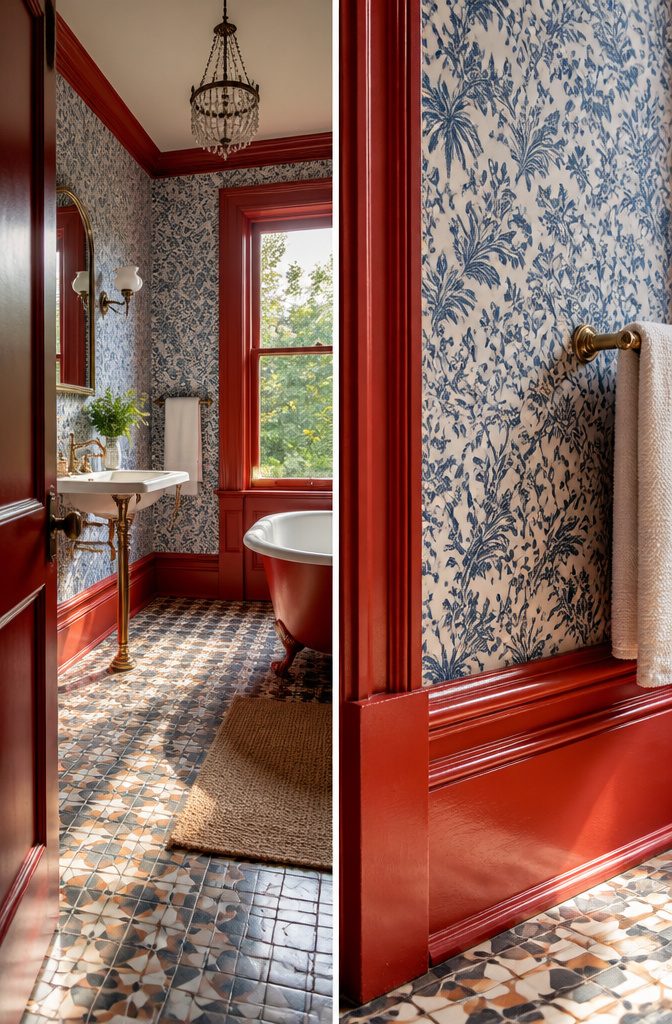
Wallpaper does the most work in a bathroom that should feel layered. In a New Orleans house by Ware Porter, the trim is painted Blazer by Farrow & Ball, a fiery red that would overpower the room alone.
A blue-and-white wallcovering by Peter Dunham tempers it and turns the space into a retreat. Pair a bold trim color with a quieter patterned wallcovering, and each keeps the other in check.
In an English castle cloakroom, designer Mia Reay kept the original Edwardian tiles and hung her whimsical Pichwai Lotus wallpaper beside them.
Working around tile you already have skips demolition, which makes this the easier route for a weekend project. Only the wallpaper is new.
Recommended Products

MULTI-PURPOSE STORAGE SHELF: This countertop organizer is perfect for adding extra storage to small areas like your dresser, sink or kitchen. The modern and simple design of this vanity shelf makes it a great way to declutter and organize your home in a cinch.

MULTI-PURPOSE STORAGE SHELF: This countertop organizer is perfect for adding extra storage to small areas like your dresser, sink or kitchen. The modern and simple design of this vanity shelf makes it a great way to declutter and organize your home in a cinch.

Unique Natural Marble Texture - Crafted of premium natural marble with exclusive dark brown veined texture, each tray features one-of-a-kind natural grain for timeless luxury. The polished glossy finish delivers a sophisticated high-end look to elevate your entire home decor style
Built-In Niches Cut Clutter
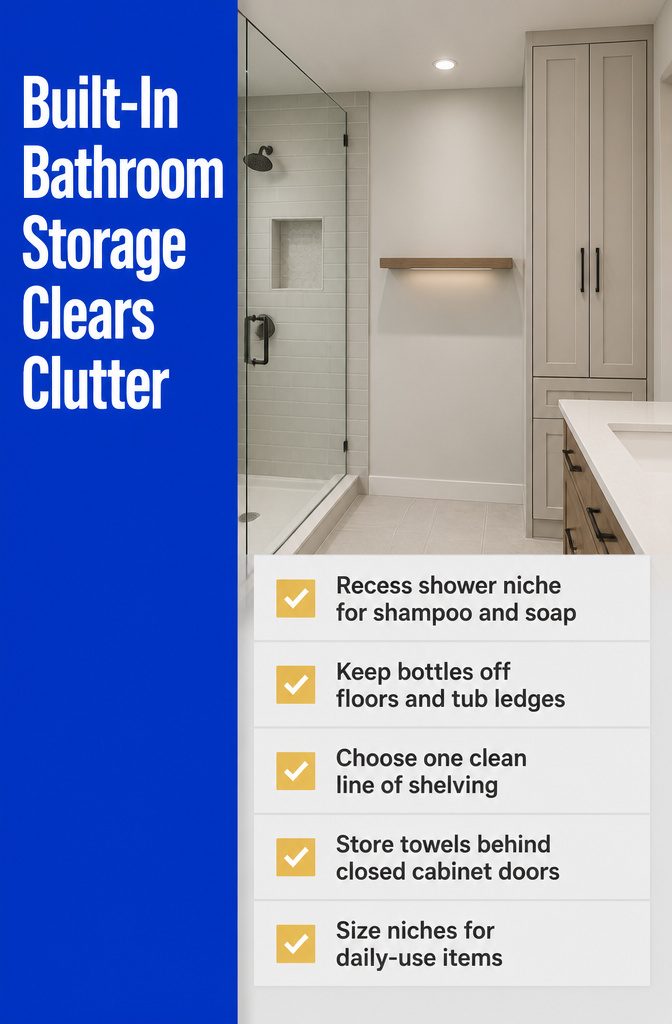
Clutter is one of the fastest ways to strip a bathroom of its elevated feel, so give everyday items a fixed home built into the walls.
- Recess a niche in the shower wall for shampoo and soap. Bottles stay off the floor and the tub ledge, and the glass stays clear.
- Choose streamlined shelving over freestanding racks. A single clean line of shelf keeps the wall calm.
- Store towels in tall storage or built-in cabinetry, not in open baskets or on a pile by the tub. Closed doors keep the room looking finished.
- Size each niche for what you use daily. Anything you don’t reach for every day belongs behind a door.
Recommended Products

Close to Ceiling Light Design: This glass flsuh mount ceiling light is made of high temperature baking process, which is not easy to peel off the paint and oxidize, and the clear glass lampshade is sturdy and durable, which can create a modern luxury and rustic vintage atmosphere for your room.

Widely Use:This ceiling light fixture could light up your room and widely to create a superior and classy atmosphere in your living room, dining room, farmhouse,kitchen ,bedroom, bathroom, foyer or any other place.

Elegant Vintage Design with Crystal & Bronze-This mini chandelier combines a luxurious oil rubbed bronze frame with dazzling teardrop crystals. Its vintage-inspired design brings a touch of timeless glamour to modern homes, making this ceiling light a stunning overhead centerpiece for your bedroom, entryway, or dining nook.
Choose a Few Focal Points
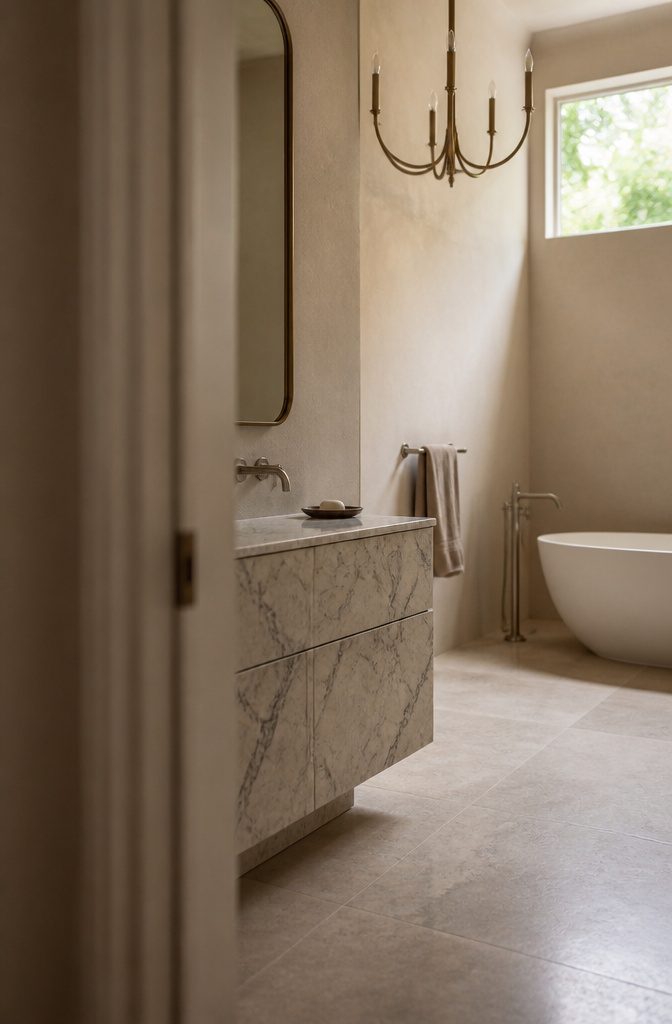
Luxury in a bathroom comes from restraint.
Choose a few focal points and let everything else stay quiet. When every surface competes, from floor to walls to fixtures, the room reads as crowded instead of high-end, and no single choice gets the attention it paid for.
Use this as the filter for the ideas above. Pick the ones you care about most, give each a strong material, and keep the surfaces around them plain so they have room to work.
Skipping an idea is fine. On a tight budget, a few strong choices also go further than many weak ones, and the finished room feels calm and intentional.
Frequently Asked Questions
What makes a bathroom feel luxurious?
A layout that is easy to use, layered lighting, good proportions, quality materials and storage that hides everyday items.
Layout comes first, because a settled plan makes plain materials look more expensive, while an awkward one stays awkward under costly tile.
Expensive finishes alone don’t produce the feel. A calm, comfortable, thoughtfully planned room does.
Are freestanding tubs worth it in a luxury bathroom?
Not always. A freestanding tub pays off only when the room has enough space for it to stand alone, such as the center of a primary bath.
In a tight room it throws off the proportions and looks forced, and a larger Roman shower gives a high-end look without taking over the floor.
Do luxury bathrooms need a lot of statement finishes?
No.
Choose 2 or 3 strong materials and let them carry the room, because a few good ones read as higher quality than many. When every surface competes for attention, the room looks crowded and no single choice gets noticed.
What matters more in a luxury bathroom, style or function?
Function comes first, and the best luxury bathrooms deliver both. A bathroom has to work on an ordinary weekday morning, so open floor and an easy path between the door, vanity and shower matter more than any finish.