
The ideas range from a patterned rug to a $1,699 oak TV stand, and the right starting point is whichever piece has enough visual weight to lead while everything else stays plain.
Anything with drawers or doors needs wall anchoring so it can’t tip, and loose joints or lifting veneer should be priced as repairs.
1. Vintage Furniture as a Focal Point
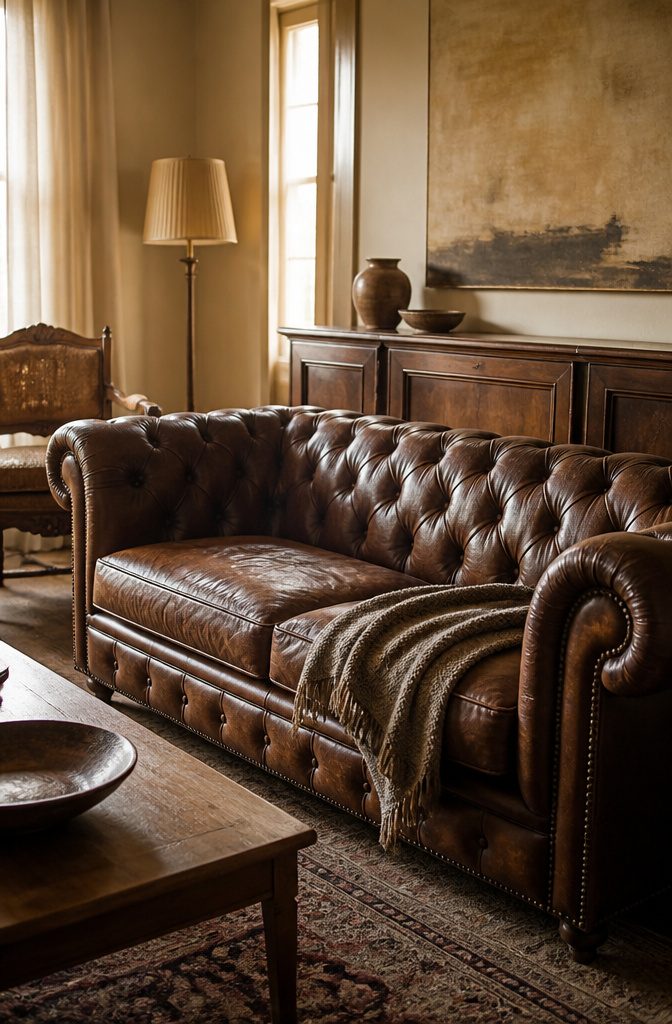
A tall walnut cabinet can shape a room more than 10 small vintage accessories, so choose one substantial piece to carry the look.
A chesterfield sofa with a tufted back and nailhead trim is the classic pick. Fabric gives soft, lived-in comfort, and leather ages well.
The sofa doesn’t have to be the anchor. If yours is comfortable and the right size, a carved wood chair, sideboard, mirror, or lamp sets the vintage tone for less money and with less hidden construction risk.
Judge the piece by its visual weight, not its era.
A delicate side chair looks stranded next to an oversized sofa. A dense cabinet on one wall balances with a substantial sofa, a tall floor lamp, or one large artwork across the room.
2. Patterned Rugs
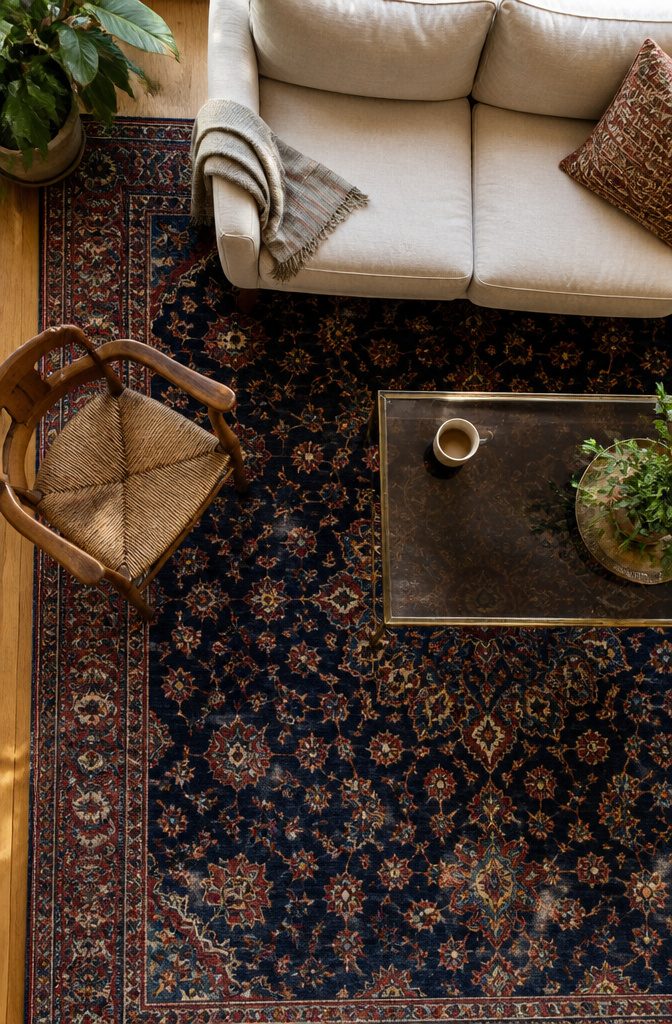
A Persian-style rug is among the cheapest ways to change the mood of a living room. The reds, blues, and golds in a Persian, Turkish, or Oriental pattern add color, texture, and warmth in one purchase.
A rug also does what no single piece of furniture can: it ties the sofa, chair, and coffee table into one group.
Set at least the front legs of each piece on it, and the separate furnishings read as one seating area.
Choose the rug’s colors from what you already own. Warm tones suit light upholstery and brass accents, and a deep navy rug adds depth to a room that feels flat.
Hand-knotted wool is the traditional material. Layering a second rug on top adds more texture.
3. Layered Vintage Lighting
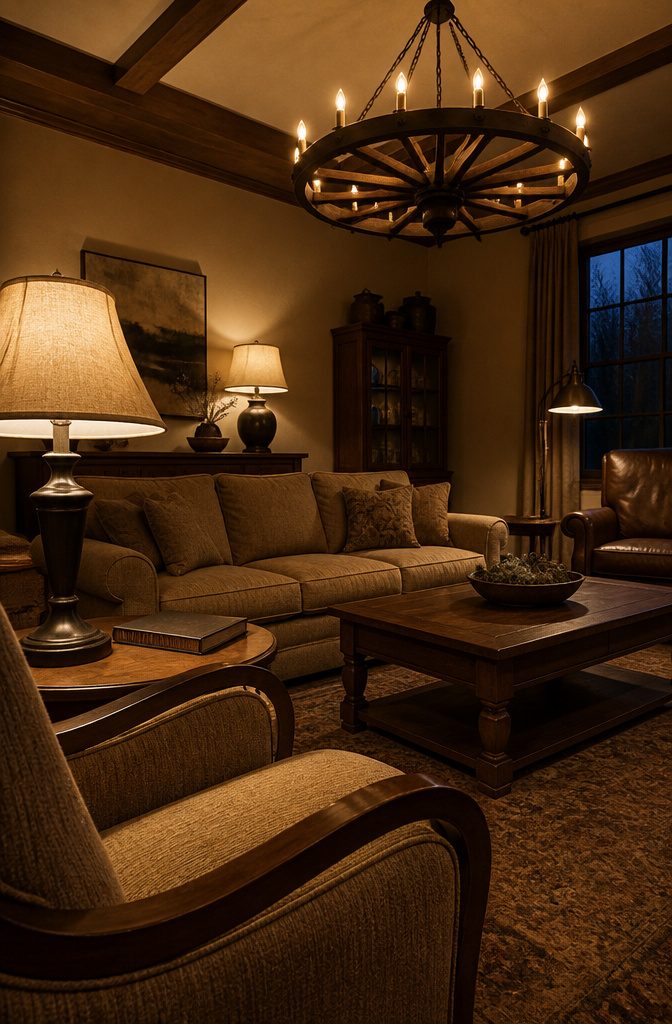
A wagon wheel chandelier with a rustic finish, centered over the coffee table, anchors the room. A candelabra style with antiqued metal suits a more traditional look.
Add lower light where people sit: a fabric-shade table lamp on a side table for reading, a second lamp on a console behind the sofa, and a retro floor lamp beside the reading chair.
Wall sconces give conversation a softer glow and wash across wood grain and upholstery.
Start bulb testing at 2700K, the usual warm white, then adjust once you see how it lands on your wood and fabric. Give each fixture a job: overhead for company, lamps for reading, sconces for mood.
4. Wood Details and Reclaimed Wood
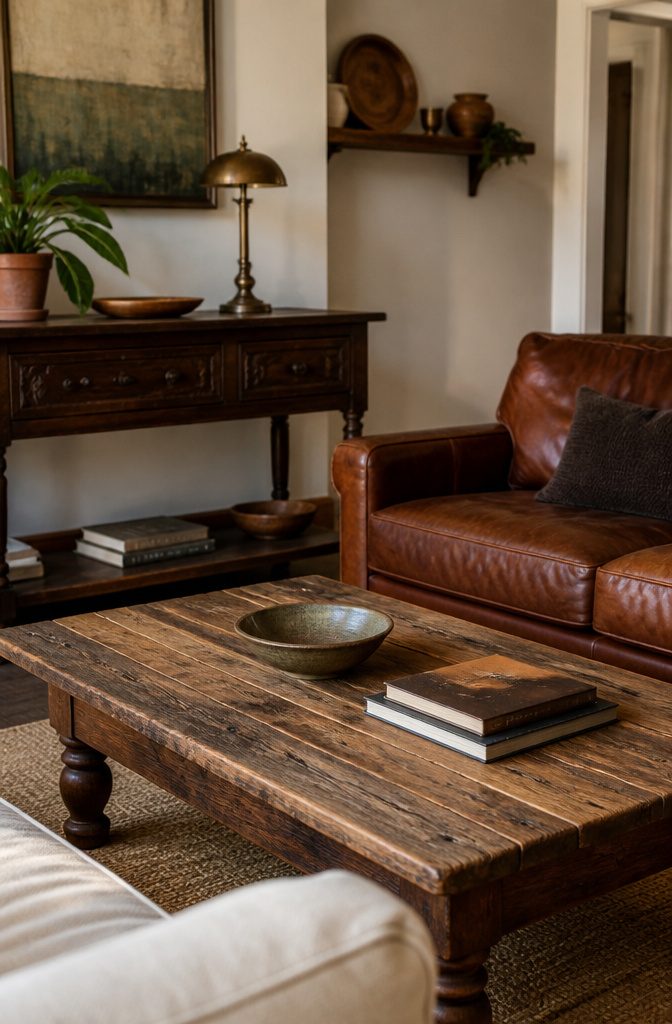
Turned legs and carved drawer fronts give a room age that paint can’t fake, and solid-wood construction keeps a console or writing desk behind the sofa lasting.
Reclaimed wood adds a weathered surface that new boards lack. Use it for a coffee table, a shelf, or a single wall accent, then fill the shelves with artisan-made pieces built from reclaimed materials.
Different wood tones can share a room. Let one broad temperature lead, then repeat related warmth once or twice, such as tobacco leather or aged brass beside dark walnut.
Grain and stain can differ, and a clear contrast looks more deliberate than several near-matches. Balance visual mass too: a dark cabinet can dominate pale furniture even when the undertones agree.
5. Floral and Vintage Patterns
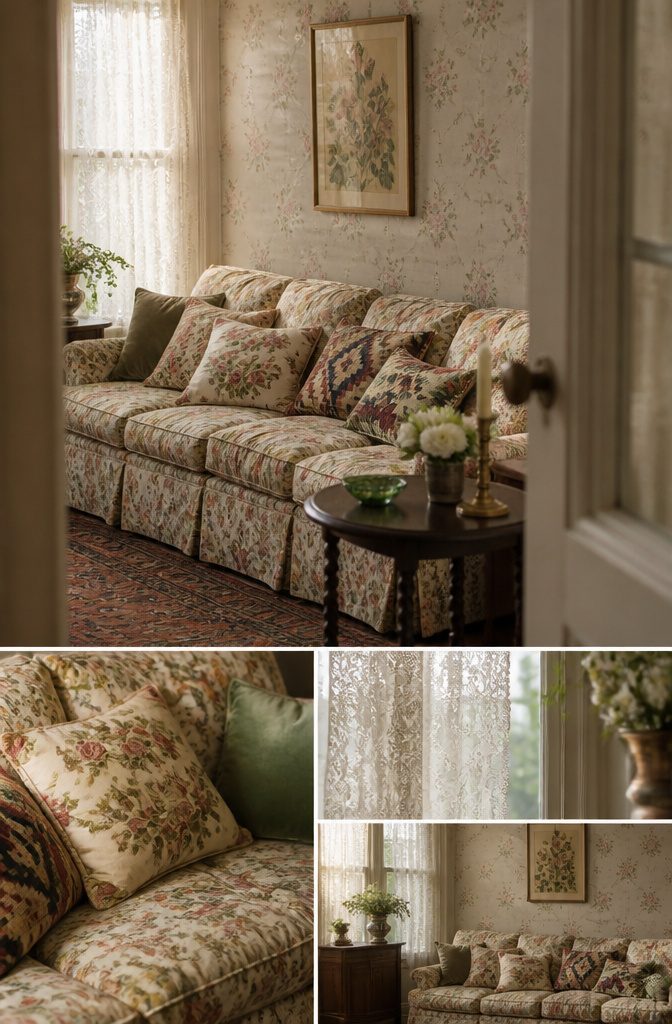
Lace curtains are the easiest place to start.
They give privacy and still let natural light through, and the delicate pattern reads romantic without tipping into shabby chic. For a fuller look, try soft pastel florals on the walls and furniture, with a sofa and curtains that match.
Pillows are the cheapest way to layer pattern, and you can swap them by season. Start with solid pillows that have piped edges, ruffles, or embroidery, then add chintz florals or Turkish Kilim-style prints on top.
Velvet or wool gives the pile some texture. If wallpaper feels like too much, pastel floral cushions and one piece of floral art carry the look.
6. Gallery Walls and Vintage Posters
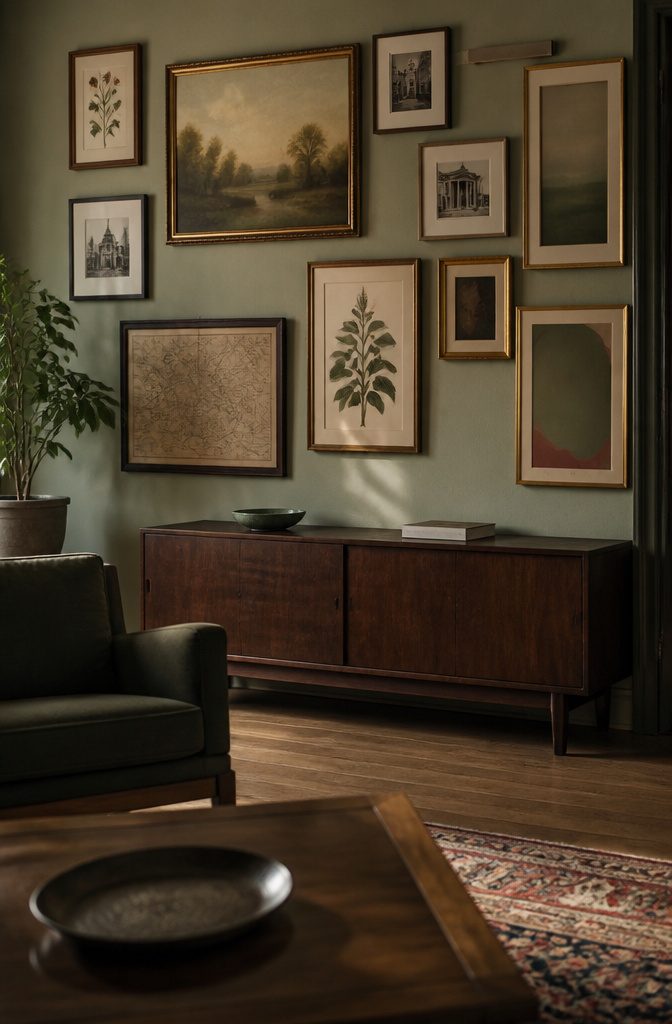
Lay every piece out on the floor or a table before you put a nail in the wall. Shifting a frame on the rug costs nothing, and shifting it on drywall leaves holes.
Mix the media: a classic painting, a few botanical prints, an old map, black-and-white photographs. Keep the colors close across the whole group so the mix reads as one collection.
Let the frames be the mismatched part, ideally with carved edges or brass details. Family photographs in vintage frames give the wall a personal subject.
If you’re starting from nothing, vintage posters are a low-cost, high-impact first piece.
7. Keepsakes and Decorative Objects
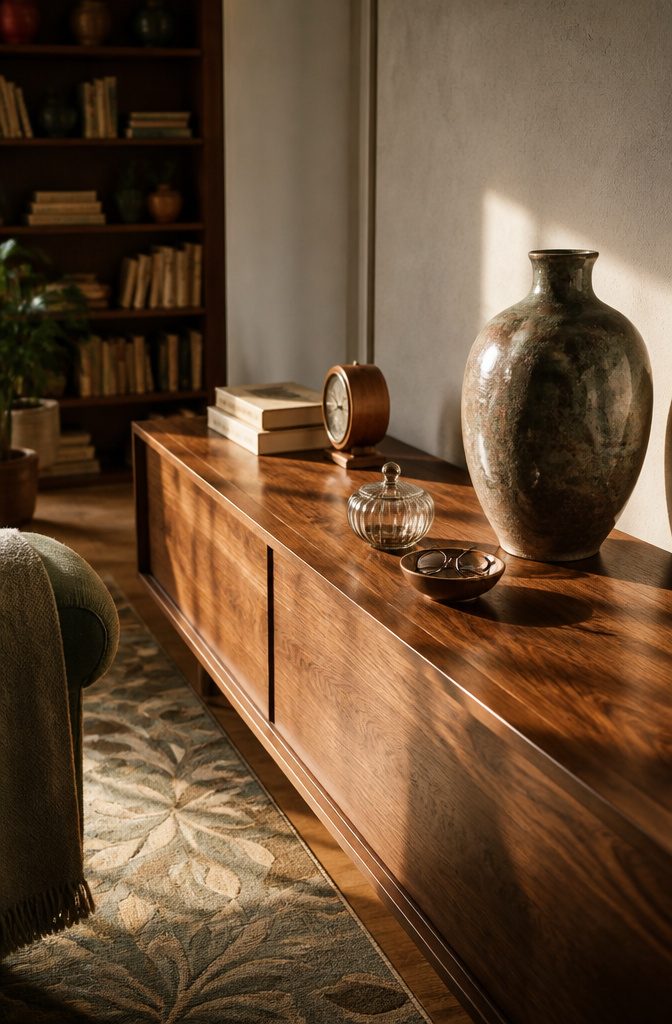
Heirlooms, handcrafted ceramic vases, antique clocks and retro glass jars make a room look gathered over time. A bookcase or console table is the easiest place to start.
Fill it with what you already own, like vacation mementos and gifts from relatives. On a console, stack a few books neatly, add a ginger jar, and set out a small bowl for keys or eyeglasses.
In a small room, spend the character on one substantial piece, such as a large vase or a clock, and keep floor and surface space visible.
A shelf crowded with small objects reads as clutter. Group items in odd numbers and leave open gaps between the groups.
8. Plants and Planters
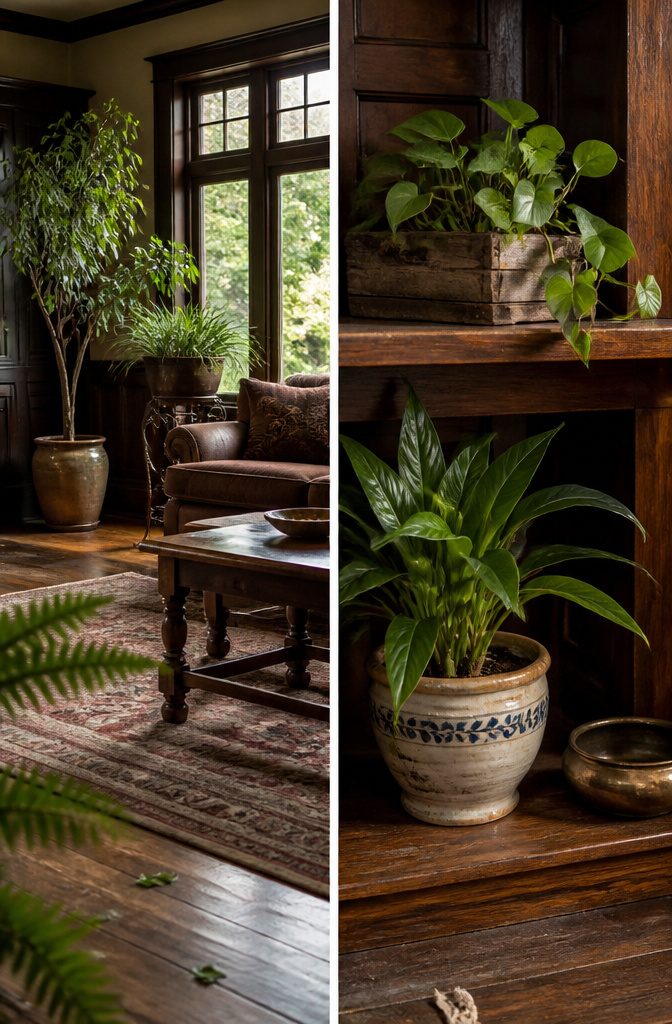
Planters count as vintage decor too. Ceramic pots, wrought iron stands, and reclaimed wooden boxes all suit a collected room, and they make the plants look like they belong next to older furniture.
Dark wood and heavy upholstered pieces can make a room feel dense, and green leaves break that up.
Group plants at varying heights instead of lining pots up on one level: a tall plant on the floor, a mid-size pot on a side table, a small one on a shelf.
In a dim room, or if you forget to water, dried flowers or faux ones give the same nostalgic look with no care at all.
9. A Bar Cart or Console Vignette
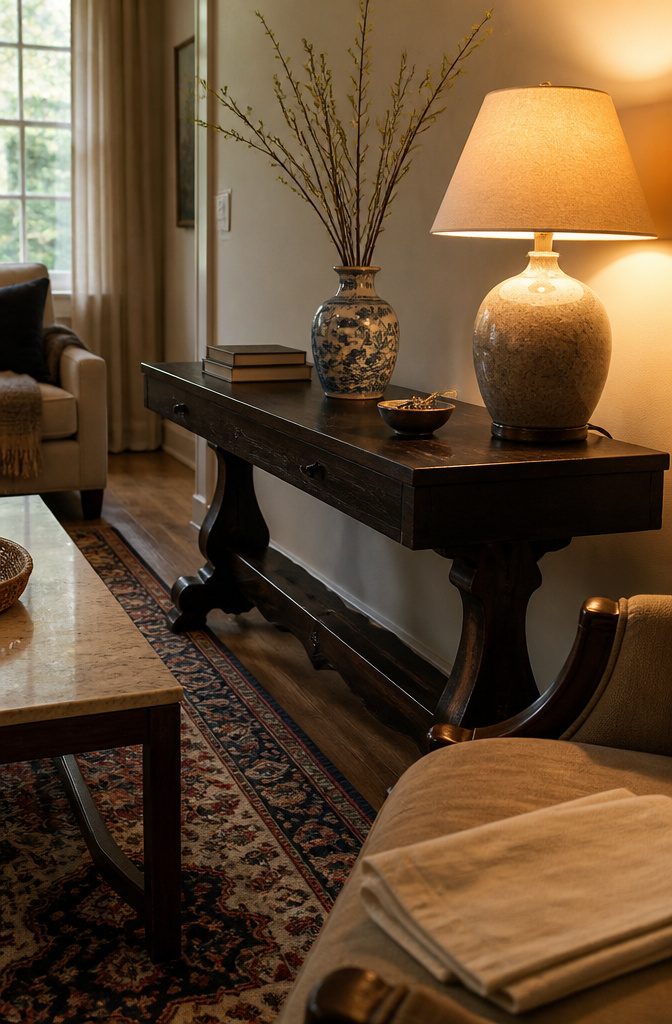
A vintage console, sideboard, or bar cart earns its spot when it stores or serves something and also gives you a surface to style. A deep espresso finish reads as classic.
A 70" dark brown console with a trestle base is a useful size to tape out on your wall before you buy, because that length holds a lamp and a small grouping with room left at both ends.
Put the lamp at one end, then add a chinoiserie-style ginger jar, a neat stack of books, and a small bowl that catches keys or eyeglasses.
Keep the top to 3 or 4 objects, with trimmed branches or seasonal flowers for height. If the piece has drawers or doors, anchor it to the wall, as the Consumer Product Safety Commission recommends.
10. Retro Media Furniture
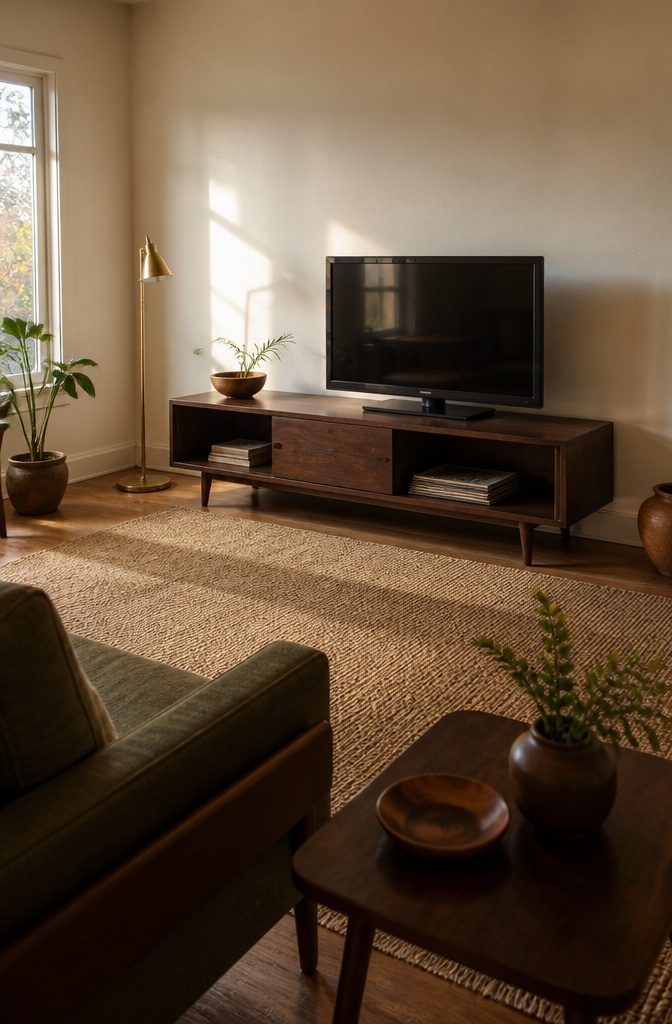
Your media unit sets the era of the room. In the late 1940s, families gathered around the television, and by the 1990s a built-in entertainment center was the ultimate living room upgrade.
Pick one period and commit: a low wood console for the earlier look, or a full wall unit with cabinet doors for the later one.
Furniture this size is heavy and can tip. A 79" dark brown oak TV stand console, listed at $1,699, is the kind of piece to secure.
Anchor tall or heavy media furniture to the wall, as the U.S. Consumer Product Safety Commission’s Anchor It guidance recommends for anything with drawers, doors, or shelves.
Renters should check with the landlord first, since anchoring means small screw holes.
11. Mix Vintage With Modern
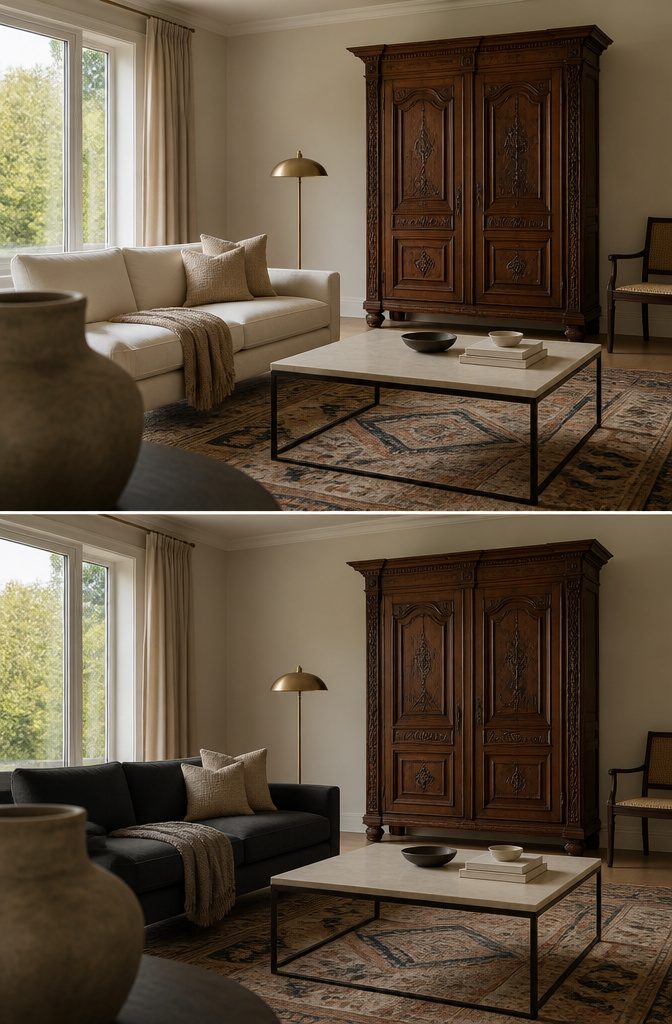
A 70/30 split of vintage to modern is a quick check: keep one modern anchor, such as a sofa, neutral walls, or a clean-lined coffee table, and bring in the older pieces through rugs, lighting, a sideboard, and art.
Counting items rarely matches how a room looks, though. One substantial cabinet or an expressive chair can carry enough history that everything else stays simple and newer, even if the tally looks lopsided.
Judging by hierarchy and visual weight is the more useful method.
Decide which piece leads, then buy the rest plain. Don’t style new purchases to copy one era, because they should sit back and let the old piece lead.
Warm Neutrals With Deep Accents
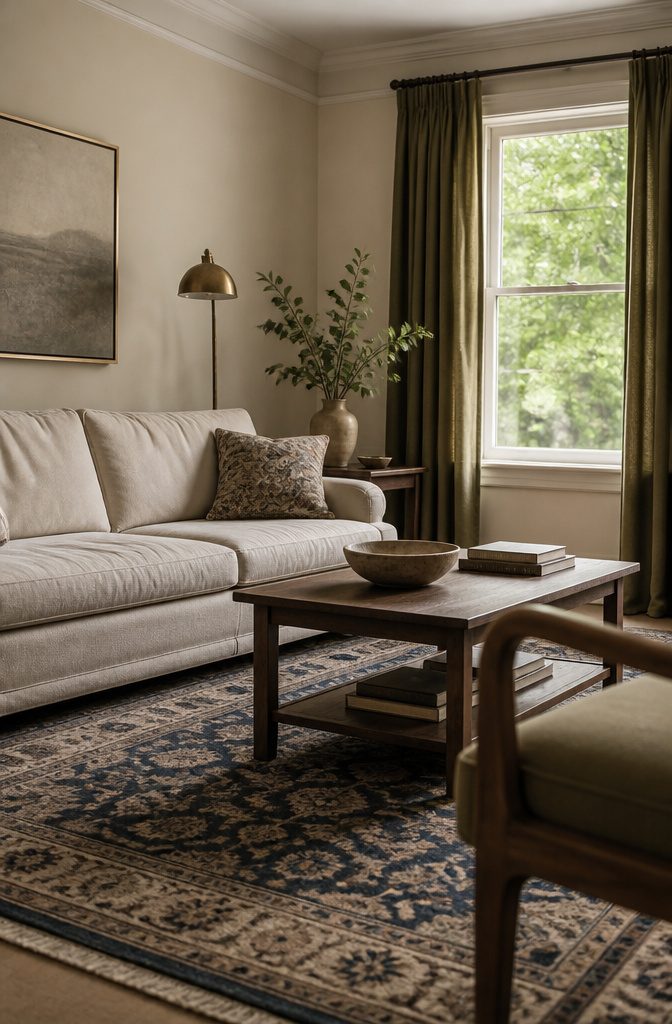
Build the base from cream, beige, and taupe, then add deeper accents: olive green, burgundy, navy, or mustard. Pick two accents and let the neutrals do the rest.
Navy is the strongest choice for a rug.
It adds depth under a light-colored sofa and looks good next to brass. A warm-toned rug also works if your upholstery is pale.
Burgundy or olive suits curtains, where one deep color covers a lot of wall.
Mustard is easiest to handle in small doses, such as velvet or wool pillows. A painted cabinet in olive gives you a deep color without covering the floor or the sofa.
Go for muted versions of each color. Faded, slightly dusty shades look older than saturated ones.
Check Vintage Furniture Before You Pay
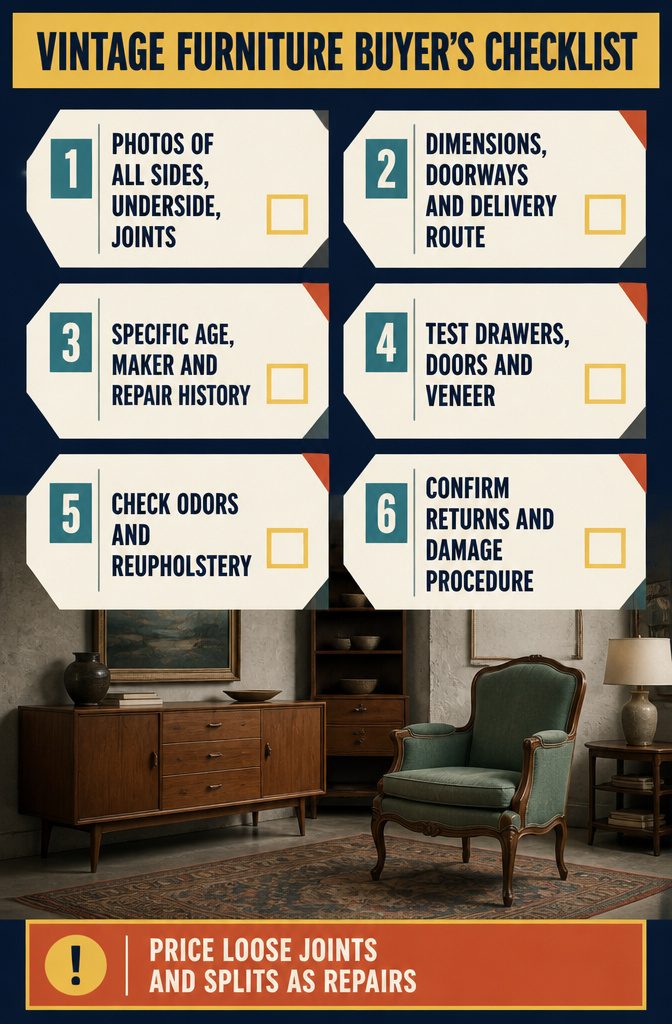
Ask for these before you pay:
- Photos of every side, the underside, hardware and joints, plus close shots of any damage.
- Full dimensions, checked against your doorways, stairs and final spot, plus the delivery route and access.
- Age, maker and repair history. "Antique," "vintage" and "retro" are used loosely, so ask for specifics.
- Drawers that slide, doors that close, veneer that lies flat.
- Odors and past reupholstery on any upholstered piece.
- Return terms and the damage procedure.
Patina changes a piece’s look while it stays stable and usable. Loose joints, lifting veneer, active splits, failing upholstery and stuck doors are damage, so price them as repairs.
Frequently Asked Questions
How do I make my living room look vintage?
Pick one substantial piece to carry the look, such as a tall walnut cabinet or a tufted chesterfield.
Then add a patterned rug, lamps at several heights, and wood with turned legs or carved fronts. One strong piece reads better than 10 small accessories.
Does the sofa have to be the vintage anchor?
No. If your current sofa is comfortable and the right size, a carved wood chair, sideboard, mirror, or lamp can set the vintage tone for less money and with less hidden construction risk.
Choose by visual weight, since a delicate chair looks lost beside an oversized sofa.
How do I mix vintage and modern so the room doesn’t look old-fashioned?
Keep one modern anchor, such as a sofa, neutral walls, or a clean-lined coffee table, and bring the older pieces in through rugs, lighting, a sideboard, and art.
A 70/30 split of vintage to modern is a handy check, but there is no fixed ratio that works for every room.
Decide which piece leads and keep everything else plain, because one substantial cabinet or expressive chair can carry the history alone.
Can different wood tones work in the same living room?
Yes. Let one broad temperature lead, then repeat related warmth once or twice, like tobacco leather or aged brass beside dark walnut.
Grain and stain can differ. Also compare visual mass, since a dark cabinet can overpower pale furniture even when the undertones agree.
Which colors work best in a vintage living room?
Build the base from warm neutrals like cream, beige, and taupe, then add deeper accents such as olive green, burgundy, navy, or mustard.
Choose 2 accents and let the neutrals cover the rest. Muted, slightly dusty versions of each color look older than saturated ones.
How do I combine florals, Persian rugs, and wallpaper without making the room look messy?
Pull the rug’s colors from what you already own, so the pattern matches your upholstery and accents.
Layer the rest through pillows: start with solid ones that have piped edges, ruffles, or embroidery, then add chintz florals or Kilim-style prints on top.
If wallpaper feels like too much, pastel floral cushions and one piece of floral art carry the look.
What are the best vintage decor pieces to start with on a budget?
A Persian-style rug, vintage posters, a retro floor lamp, lace curtains, and a bar cart are low-cost items that change the mood without new furniture.
Pillows are another cheap option, and you can swap them by season. Lay out any gallery wall on the floor first so you don’t put extra holes in the drywall.
How can I tell patina from damage on vintage furniture?
Patina changes how a piece looks while it stays stable and usable.
Damage affects structure, movement, or comfort, or keeps getting worse. Loose joints, lifting veneer, active splits, failing upholstery, and stuck doors count as damage, so price them as repairs.
What should I ask before buying vintage furniture online?
Ask for photos of every side, the underside, the hardware and joints, plus close shots of any damage.
Get full dimensions and check them against your doorways, stairs, and final spot. Ask for the age, maker, and repair history, since "antique," "vintage," and "retro" are used loosely, and confirm the return terms and damage procedure.