
Keep the traditional sofa and swap the coffee table for a glass top on black metal legs.
One heavier classic piece paired with one lighter modern piece, against neutral walls, gives the room its balance. That balance breaks when you add many small decor items, which push the room back toward traditional.
1. Start With a Neutral Base
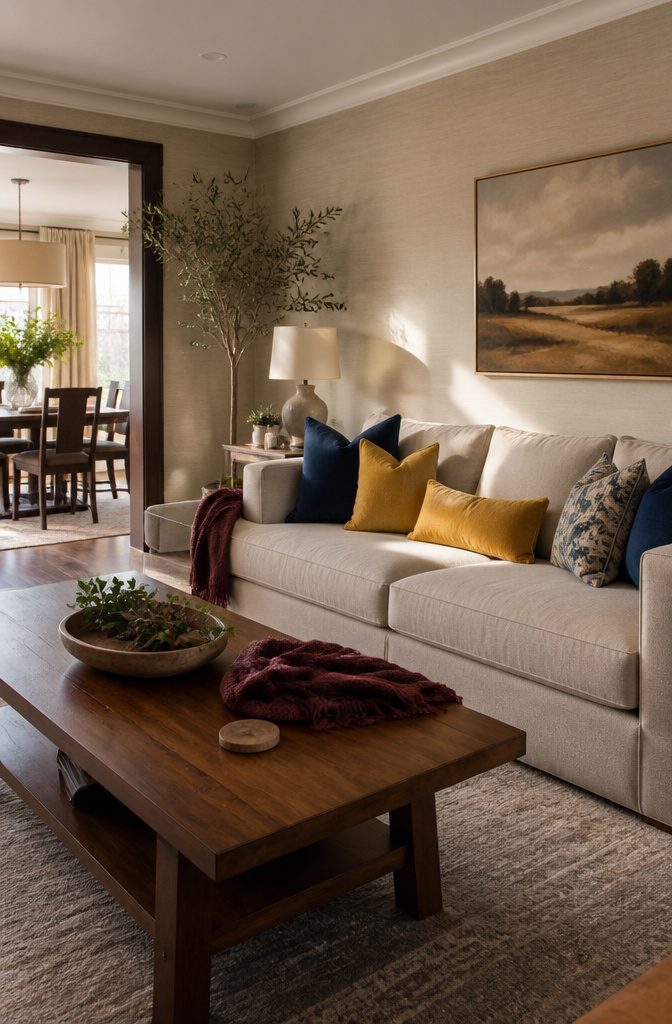
Paint the walls and buy the sofa in beige, gray, taupe, or ivory.
Whites, creams, and tans work too, and warm greige is the softer pick if straight gray feels cold. These shades keep the room calm and give mixed styles a backdrop that doesn’t look busy.
Color comes in through pillows, throw blankets, rugs, and artwork.
Sapphire blue, mustard yellow, and burgundy are easy starting points. Muted browns, greens, and golds sit quietly beside neutrals, and a deep brown or caramel coffee table adds contrast against a cream sofa.
Bold color belongs in accents only, while neutrals or muted pastels hold the walls and the big furniture.
2. Mix Classic and Modern Pieces
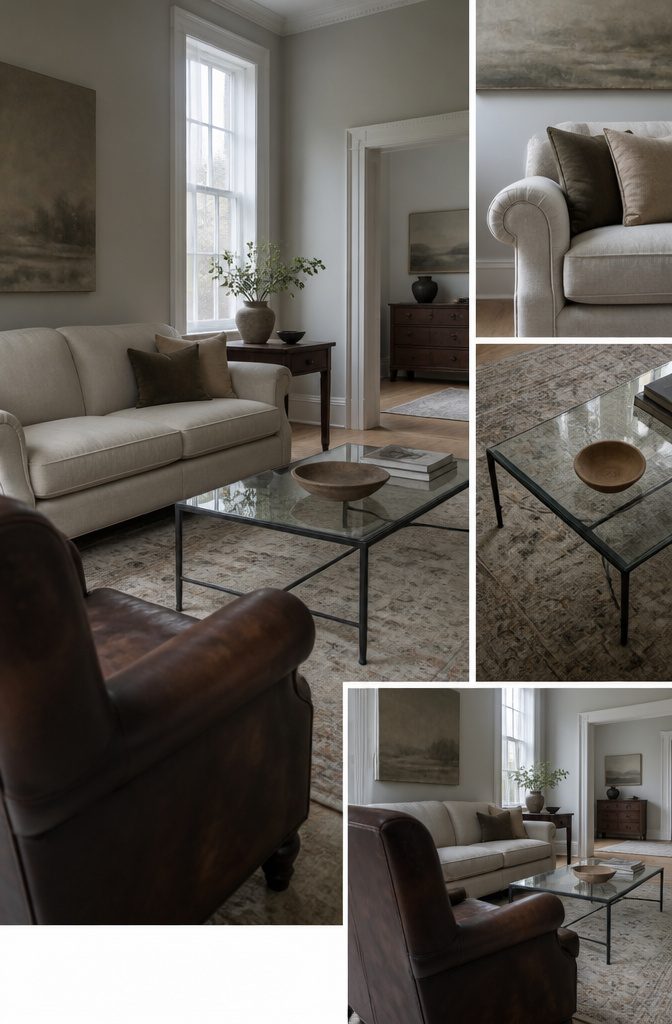
Keep the traditional sofa and replace the coffee table.
A classic sofa with clean lines, even one inherited from a grandparent, looks current next to a new glass table on black metal legs, and the table costs far less than a new couch.
That is the best return on a small budget.
For the other pairings, match one heavier traditional piece with one lighter modern piece.
Put a wingback beside a glass coffee table, or an upholstered chaise lounge beside a wood one. A leather armchair adds a darker tone to a light sofa.
The ratio doesn’t have to be 50/50. A mostly vintage room with a couple of new pieces works, and a worn side table sits fine beside them.
Recommended Products
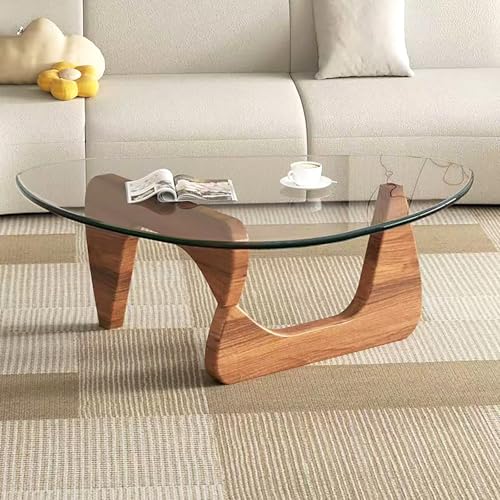
MODERN AND STYLISH LOOK:Drawing inspiration from minimalist design, this triangular coffee table sets a modern foundation for your casual living room dining space. This mid-century modern coffee table will elevate your furniture and home style to a whole new level coffee tables for living room, reception room or office

Elegant Design: This coffee table features a sleek, modern design with a tempered glass triangle top and MDF legs for a touch of sophistication.

Elegant Modern Design: Our Rectangular Gold Glass Coffee Table features a sleek, minimalist design that adds sophistication to any living room.
3. Layer Textures and Materials
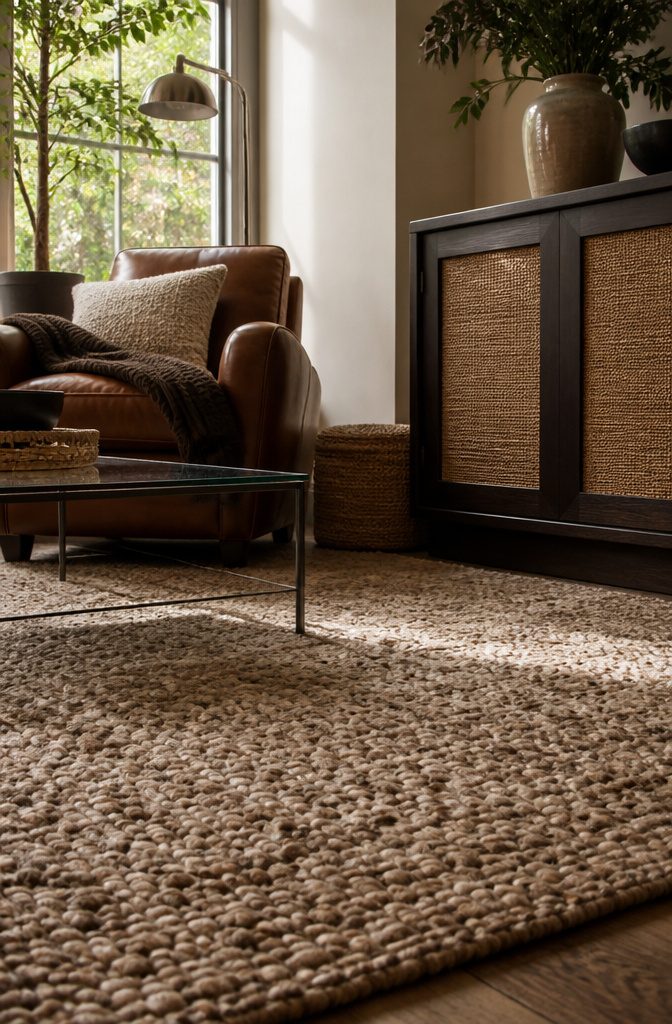
A neutral palette gives the eye nothing to rest on until the surfaces change, and texture supplies that depth.
Set soft against hard: a plush rug under a leather armchair beside a glass coffee table, or a soft rug under metal lighting.
Wood, steel, metal, and glass cover the hard side. Nubby chenille, corduroy, and suede pillows and throws cover the soft side, and they’re easy to swap each season.
For a bolder pairing, put cane next to dark wood. If your palette runs warm, go coarse and organic, with rattan and a textured rug instead of anything slick.
4. Choose Clean-Lined Furniture
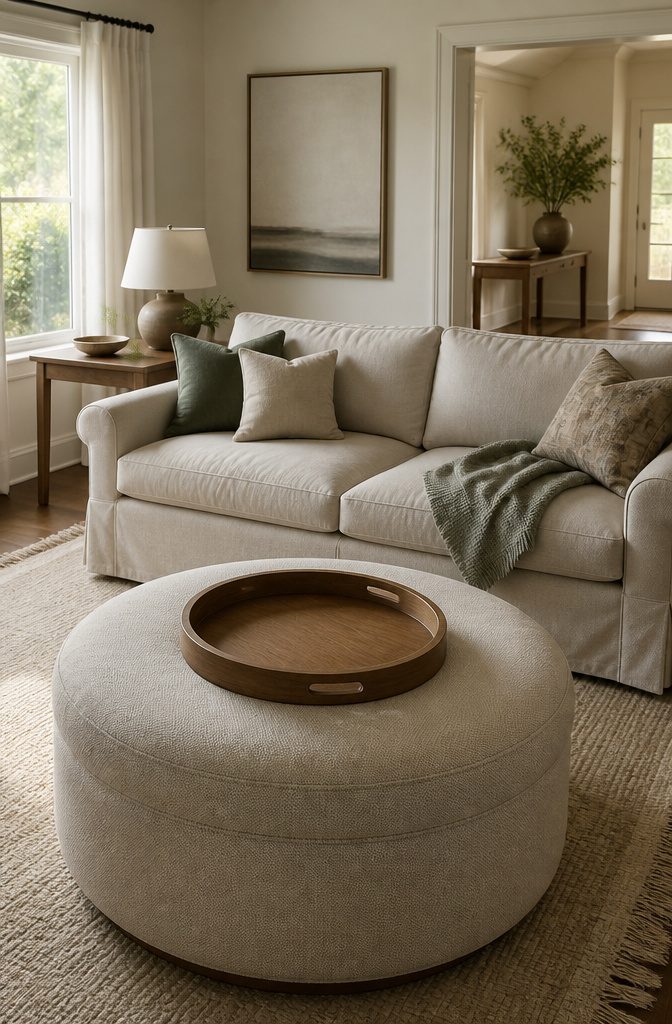
A sofa with a simple outline and a soft edge is the base of this look.
A roll arm or a slipcovered sofa gives you traditional comfort without skirts, heavy tufting, or carved legs. Slipcovers also come off for washing, which helps if you have pets or kids.
Mix curves with straight lines so the room doesn’t feel stiff. Pair a straight-backed sofa with a round ottoman, and the circle softens the boxy shapes around it.
The ottoman also works as a coffee table with no corners to catch your shins. Set a tray on top for drinks.
Comfort sometimes beats sleek. A deep, slightly slouchy cushion you actually sit in is a better buy than a razor-edged sofa everyone avoids.
5. Add Metallic Accents and Lighting
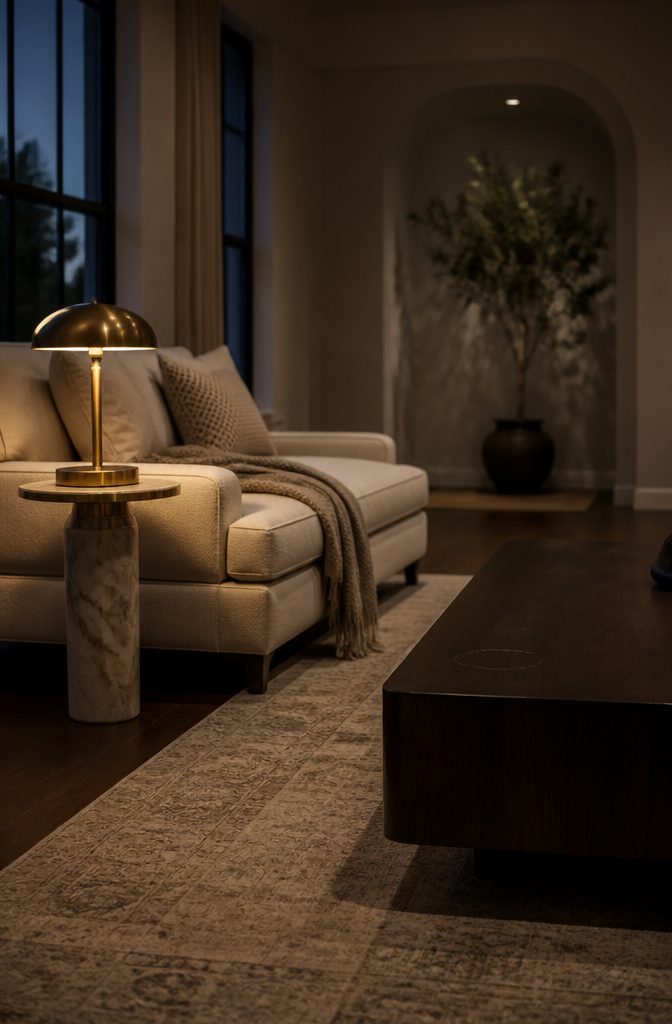
Swapping fixtures is the cheapest way to add a modern edge to a classic room.
Change a dated light or a set of drawer and door knobs to brass, copper, or gold, and mix two metals if you want a richer look. A gold pendant over the coffee table makes a strong focal point.
A metallic table lamp does a similar job with no wiring. Choose lamps that give real light, such as a marble base with quiet tones.
Metal looks best set against soft, classic pieces, like a plush rug under a metal fixture or an upholstered chaise beside a brass lamp.
A geometric pattern on a pillow or shade adds a modern note, but a little goes a long way.
6. Keep Decor Limited
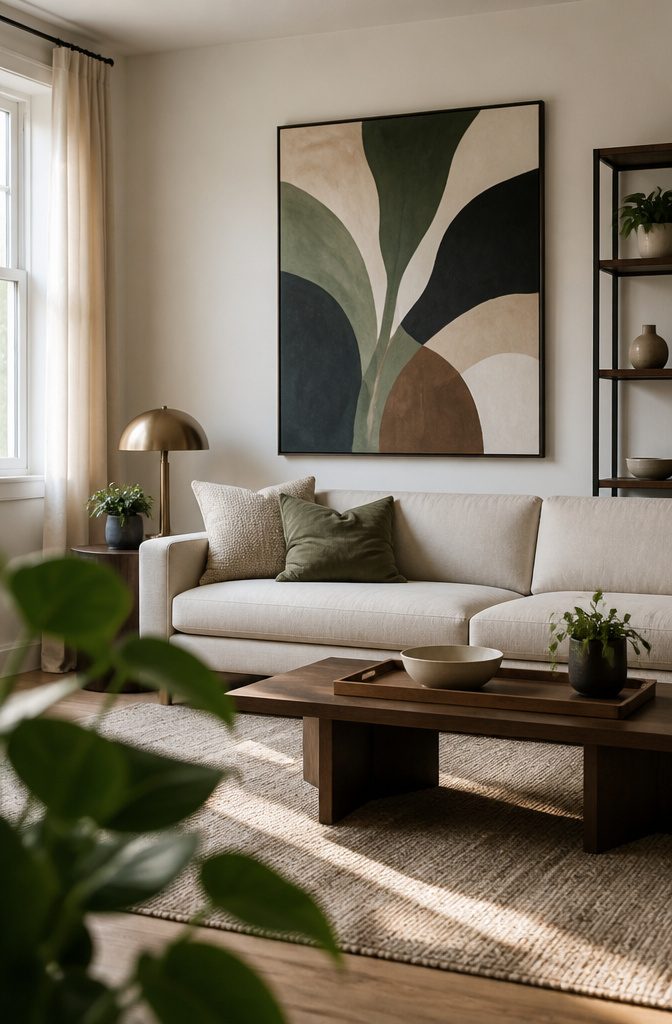
Pick one or two large pieces and let them carry the room.
An oversized mirror or a single piece of abstract art does more than a cluster of small frames. A colorful painting or a metal sculpture also works on a bare wall and gives it a focal point.
Then add only a few small things: a wooden tray, a metallic table lamp, a few plants. Books, vases, bowls and baskets can fill a shelf or coffee table, as long as each one has empty space around it.
Overloading is the main risk. Many small items make the room look busy and push it toward traditional, which undoes the clean, sophisticated look you’re building.
7. Plan the Layout for Comfort
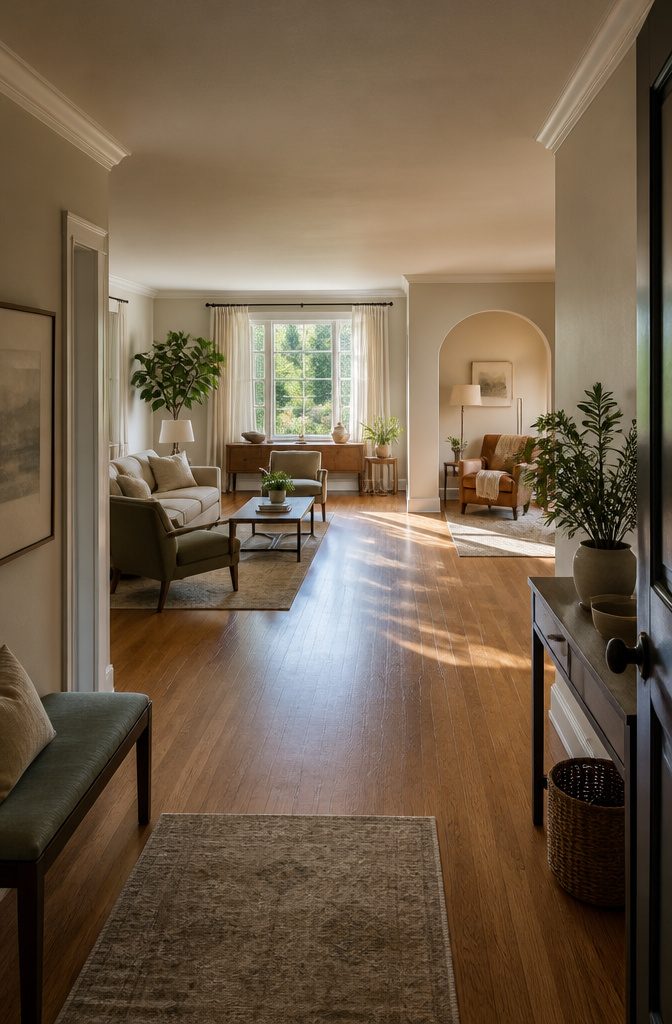
Group the seating so people face each other, such as a sofa with two chairs angled toward it, instead of lining everything along the walls. A room pushed to its edges leaves guests talking across empty floor.
Measure the room, the doorways, and the path from the entry to the windows before you buy anything.
A sofa that fits the wall can still crowd the room if it’s out of scale with the chairs and tables around it. Leave a clear walking path through the room, so nobody has to squeeze past a coffee table.
Then give each use its own corner. A reading nook needs one chair, a side table, and a lamp.
A family room may also need a second grouping for games or TV. Plan the zones around how you actually use the space.
Recommended Products

[Easy Assembly] - The small glass coffee table with the detailed instructions and clearly numbered parts, so even people with no experience in installation can easily assemble the table in no time.

MODERN AND STYLISH LOOK:Drawing inspiration from minimalist design, this triangular coffee table sets a modern foundation for your casual living room dining space. This mid-century modern coffee table will elevate your furniture and home style to a whole new level coffee tables for living room, reception room or office
8. Keep Personal Pieces
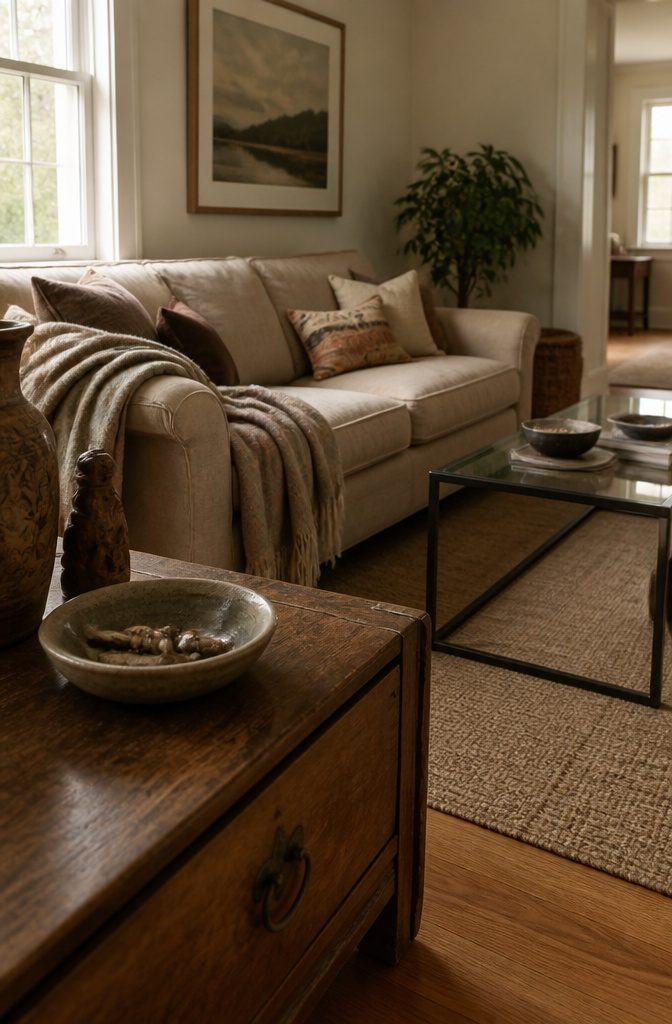
Family photos, heirloom pieces and travel souvenirs keep a transitional room from looking like a showroom. Each addition still has to fit the room’s color palette and style, so group items that share its tones instead of scattering them.
Check any furniture you already own before replacing it. Ask whether it’s comfortable and whether it suits the look.
A comfortable inherited sofa is worth keeping, and a new coffee table with black metal legs and a glass top updates it without a new couch. Worn-in side tables and solid antiques can stay too.
To fill gaps, search Etsy for vintage objects, then check local flea markets and thrift stores.
What Makes a Room Transitional
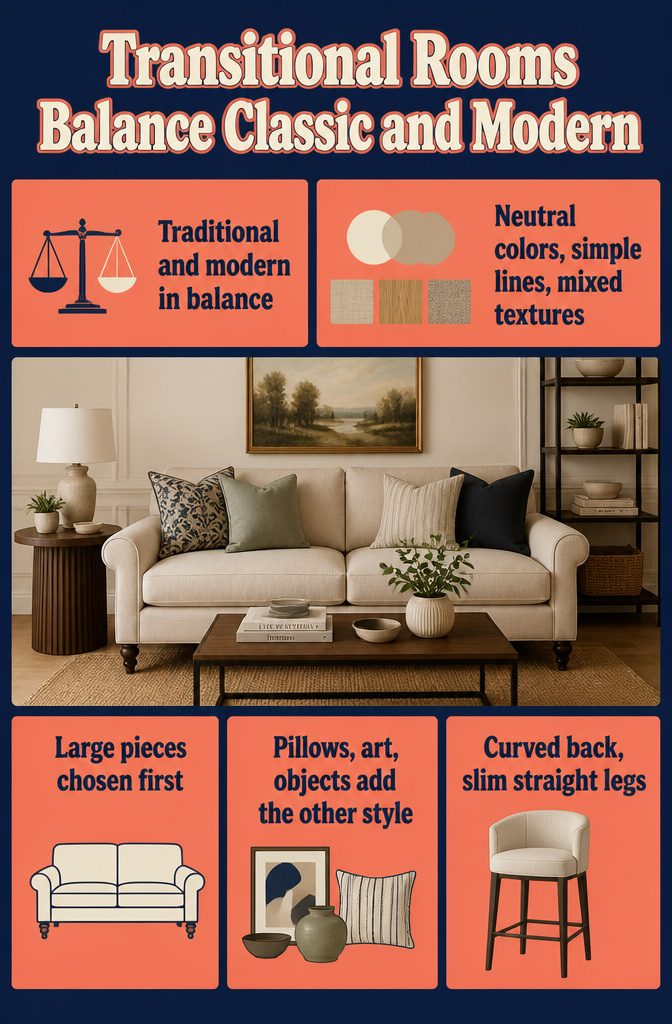
Transitional style pairs traditional and contemporary pieces in a room built on neutral colors, simple lines, and mixed textures.
Neither side wins. That balance is why the room feels timeless, approachable, and cohesive instead of locked to one decade.
Yes, you can mix furniture, and mixing classic and modern pieces is the core of the style. Choose the large pieces first, like the sofa, in whichever look you like most.
Then bring in the other style through throw pillows, wall art, and decorative objects. A single piece can do both, such as a bar stool with slim, straight legs and a curved, upholstered back.
Transitional Versus Contemporary
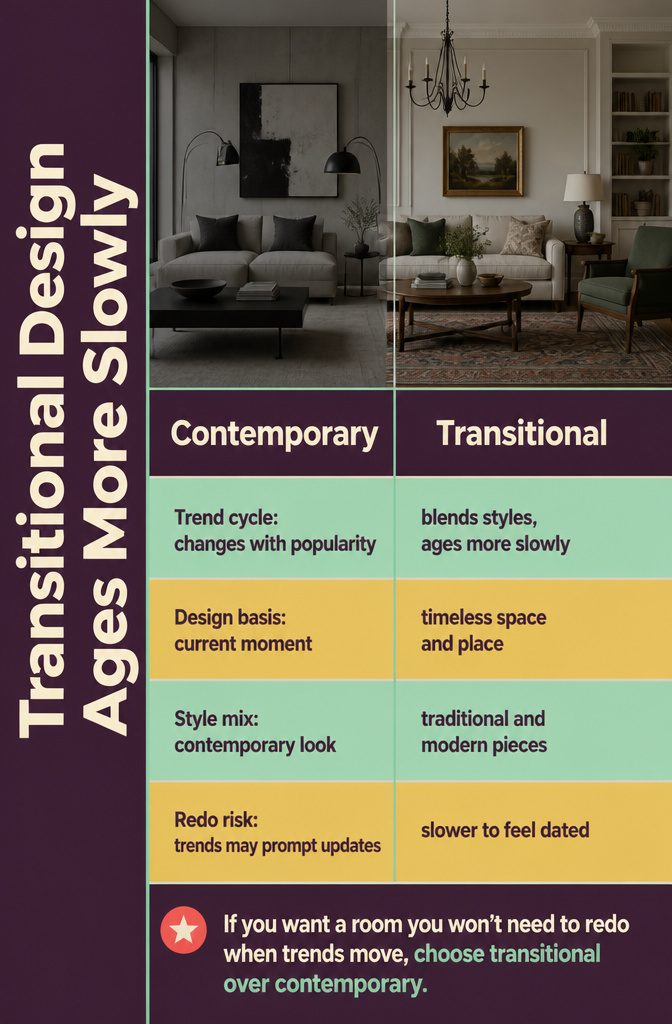
Contemporary design follows whatever is popular right now, so it changes as trends do. Transitional design blends traditional and modern pieces and ages more slowly.
Traditional design dates to the 1700s and 1800s, with roots across Europe, and brings chandeliers, crown molding, and ornate rugs.
In the middle of the 20th century, minimalism pushed back against that ornamentation. Transitional style emerged as the two looks merged, and midcentury modern is a related term.
Designer Feldman draws the line this way:
"Contemporary interiors define a moment in time; transitional interiors define space and place that is timeless."
If you want a room you won’t need to redo when trends move, choose transitional over contemporary.
Frequently Asked Questions
What is a transitional living room?
A transitional living room blends traditional and contemporary pieces in a space built on neutral colors, simple lines, and mixed textures.
Neither style dominates. That balance keeps the room from looking tied to one decade.
Can I mix different furniture in a transitional living room?
Yes, mixing is the core of the style. Choose the large pieces, such as the sofa, in the look you like most, then bring in the other style through pillows, wall art, and decorative objects.
A simple pairing is one heavier traditional piece with one lighter modern piece, like a wingback chair beside a glass coffee table.
Can I use bold colors in a transitional living room?
Yes, as accents only.
Keep the walls and big furniture in neutrals or muted pastels, and add bold color through pillows, throw blankets, rugs, and artwork. Sapphire blue, mustard yellow, and burgundy are easy colors to start with.
What are some examples of transitional style home decor?
A classic sofa paired with a glass coffee table on black metal legs is a common example.
Others include a brass or gold pendant light, a plush rug under metal lighting, cane next to dark wood, and a bar stool with slim straight legs and a curved upholstered back.
An oversized mirror or a single piece of abstract art works well as the focal point on a wall.