
These ideas run from a one-sitting swap of shampoo bottles into label-free containers to a full wet room with floor-to-ceiling tile.
Whether you’re remodeling decides which ones are yours. Anything touching plumbing, like a waterfall tub filler, needs a plumber, and wet room waterproofing is where you shouldn’t cut costs.
1. Wet Room and Soaking Tub
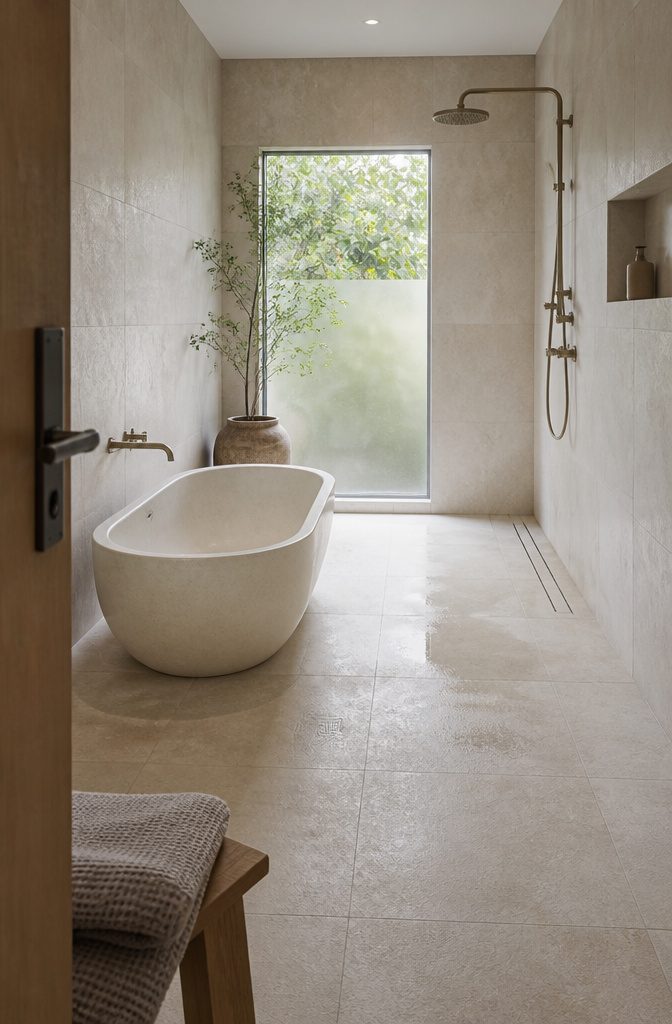
A full wet room puts showerheads on one side and a large soaking tub on the other, with discreet drains at both ends and tile running floor to ceiling.
That is major renovation work, and the waterproofing is the one place not to cut costs. Plan on hiring it out if you own, and skip it if you rent.
A first-time owner can get part of the effect with smaller moves.
A rain or storm showerhead is the simplest swap. A waterfall tub filler or a deck-mount filler with a gooseneck spout means changing the plumbing, so budget for a plumber.
A built-in shower bench and heated tiles outside the wet area both come with tearing up and re-tiling, so save them for a full remodel.
2. Natural Materials
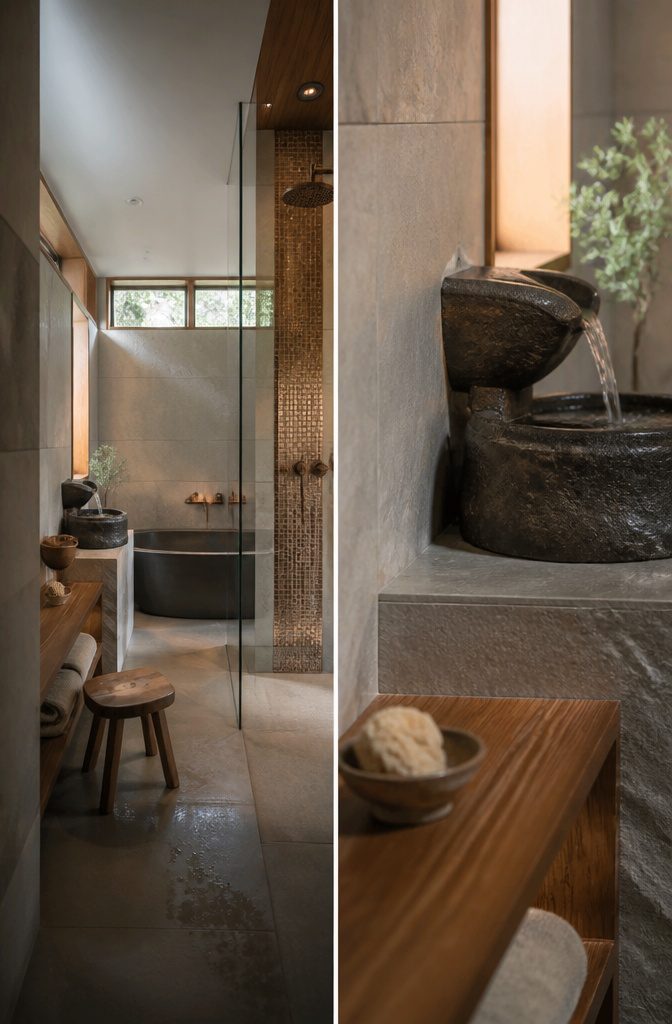
Stone kills the sterile look because no two pieces match, and wood adds warmth and grain that contrast well with white walls. Both are porous, so seal them regularly.
Bronze on a shower head or faucet is durable and develops a patina over time. Bronze tile stands in when sealing sounds like a chore.
On a small budget, add a wood shelf or stool and a small fountain, whose sound brings in nature for the cost of one purchase.
Iridescent glass tile works best as a single accent panel in the shower. A Japanese soaking tub gives a hot-spring feel, but skip it unless you’re already remodeling.
3. Layered Lighting
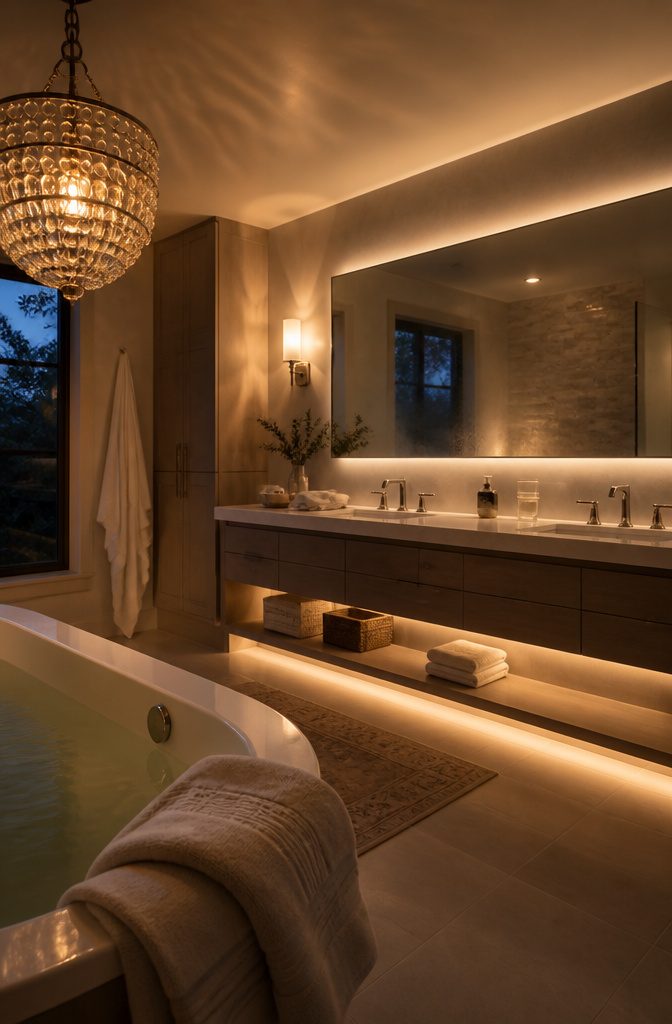
Light sets the mood faster than any finish, and a spa bathroom layers three kinds: ambient for the overall glow, task for the mirror, and accent for texture.
Natural light comes first if you can get it, but skylights and bigger windows are not a weekend job.
On a budget, add dimmable task lighting at the vanity first. It gives clear light for grooming in the morning and drops low for an evening bath, so one fixture does two jobs.
Accent lighting comes next: flush LED soft white behind a mirror, under the vanity, or in a niche.
A small chandelier visible from the tub is a good splurge later. Adjustable color helps too, since harsh light feels clinical.
4. Vanity and Storage
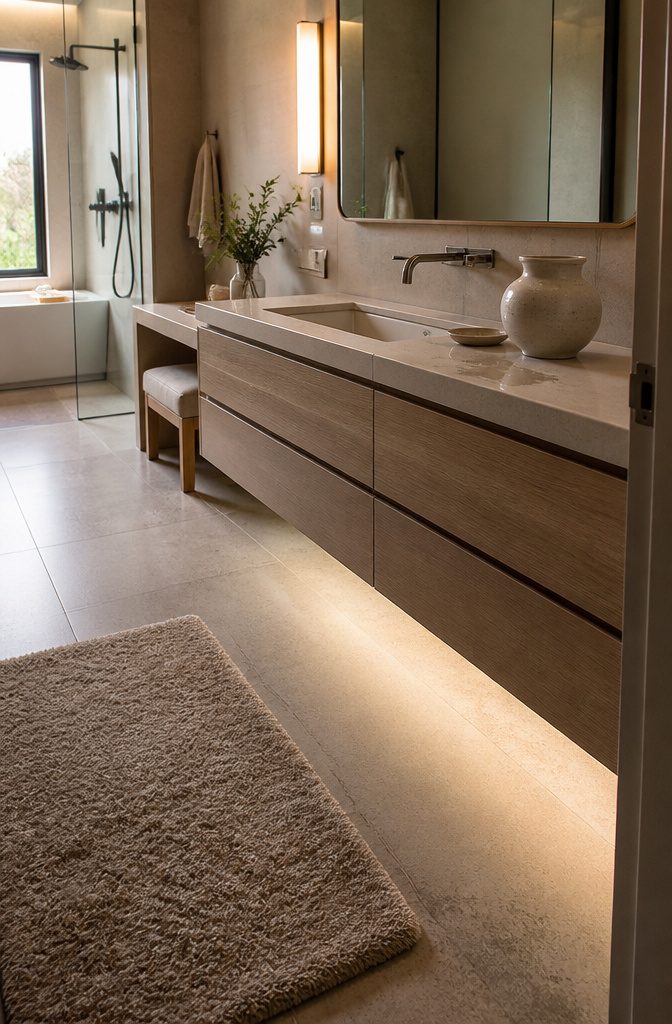
A floating vanity is the best choice for a small bathroom.
With the floor visible wall to wall, the room reads as airier. It costs effort rather than space: the wall behind it must be solid enough to carry the cabinet, the sink, and everything stored inside.
Choose drawers over doors for toiletries, because you see every item at once instead of digging through a cabinet. Hidden compartments with small organizers hold daily items out of sight and take no floor area.
A separate makeup station costs real floor space, since it needs a table and a stool, but it keeps products off the sink counter. Skip it in a tight room unless the stool tucks fully under.
5. Textured Towels and Mats
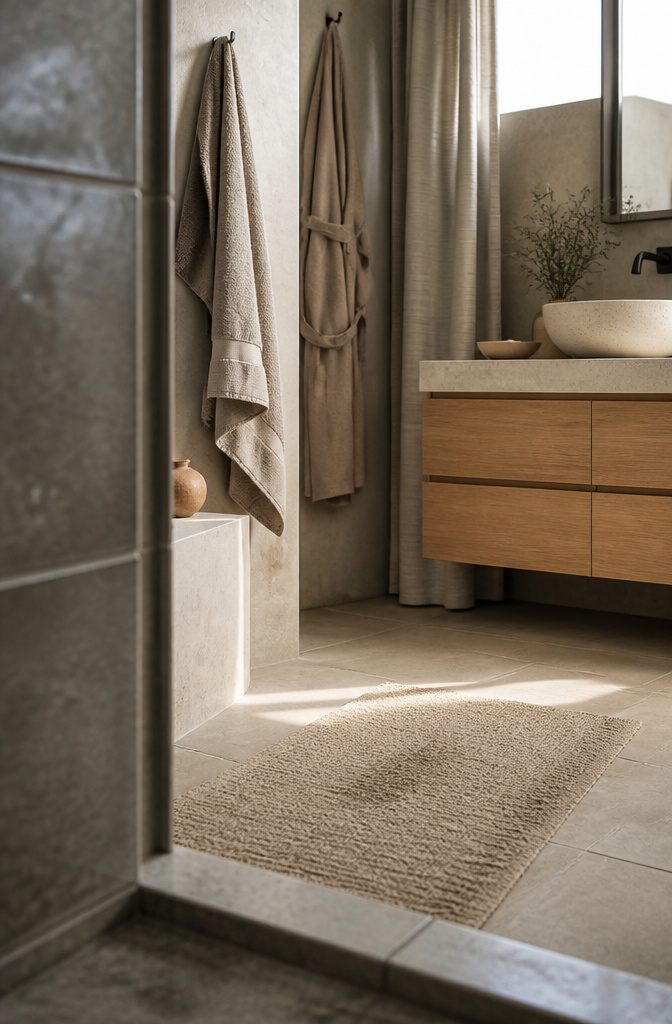
Hard surfaces like tile, stone, and concrete need something soft against them, and towels, a woven mat, and a robe do that work.
Keep the shower curtain, bathrobe, and towels in neutral tones that match the surrounding materials, so the texture comes from the weave and not from competing colors.
A plush bath towel beside a flat-woven mat gives you two textures in one color family, which reads as depth instead of clutter.
Repeat one material in the small pieces too.
A ceramic soap dish and a ceramic vessel by the sink echo each other and tie the textiles to the rest of the room. Skip busy patterns, which break the calm fast.
6. Soft Neutral Palette
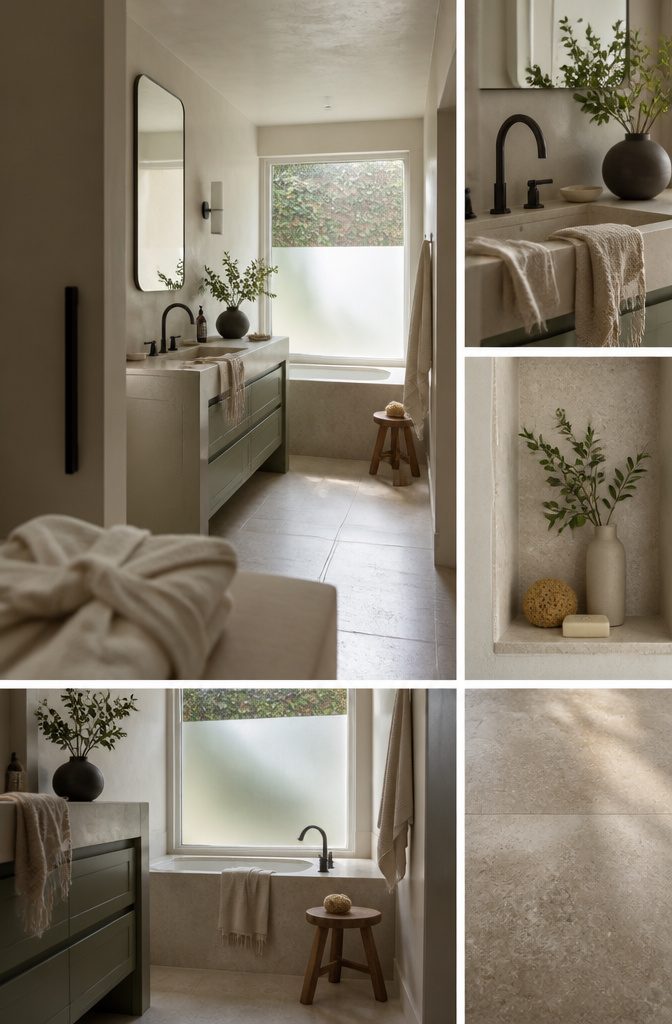
Build the palette in two layers: a quiet base and a few dark accents.
- Put beige, cream, and warm grey on the walls and other large surfaces. They reflect light gently and set a calm tone.
- Use deep clay, muted olive, and charcoal sparingly, on one or two pieces such as the faucet, cabinetry, a feature wall, or the floor. They add depth and richness, and too many of them weigh the room down.
- An all-white scheme works too. It is the simplest option if you’re unsure about color.
- In a compact bathroom, keep the walls light. Pale colors make a small room feel open and airy.
7. Paint Colors and Finishes
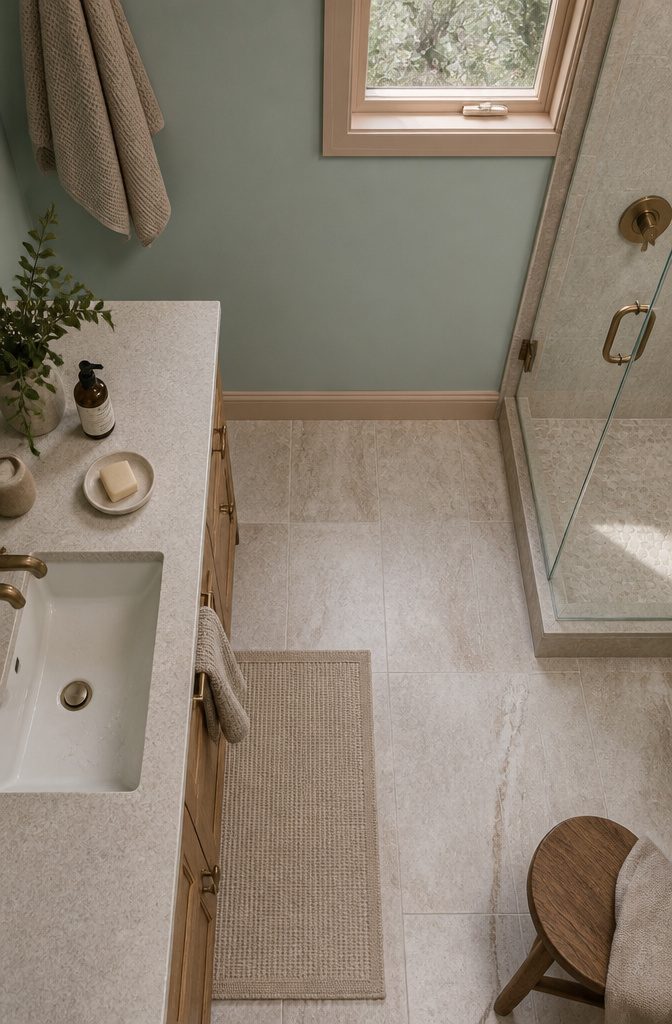
Pick the sheen first, then the color. These are the choices that matter on the can:
- Matte or eggshell soften light and give subtle tonal shifts across the wall.
- Muted blues and greens read as sky, water and plants. They sit well next to light wood tones and stone tile floors.
- A soft white or beige-pink with a warm undertone is the safer pick. Pure white can look sterile.
- Skip overly bright or stark colors. They break the quiet you are painting for.
- Hold the swatch beside your tile, wood and fixtures, under your bathroom’s own lighting, before you buy a gallon. Paint that clashes with the materials around it undoes the calm.
8. Plants and Greenery
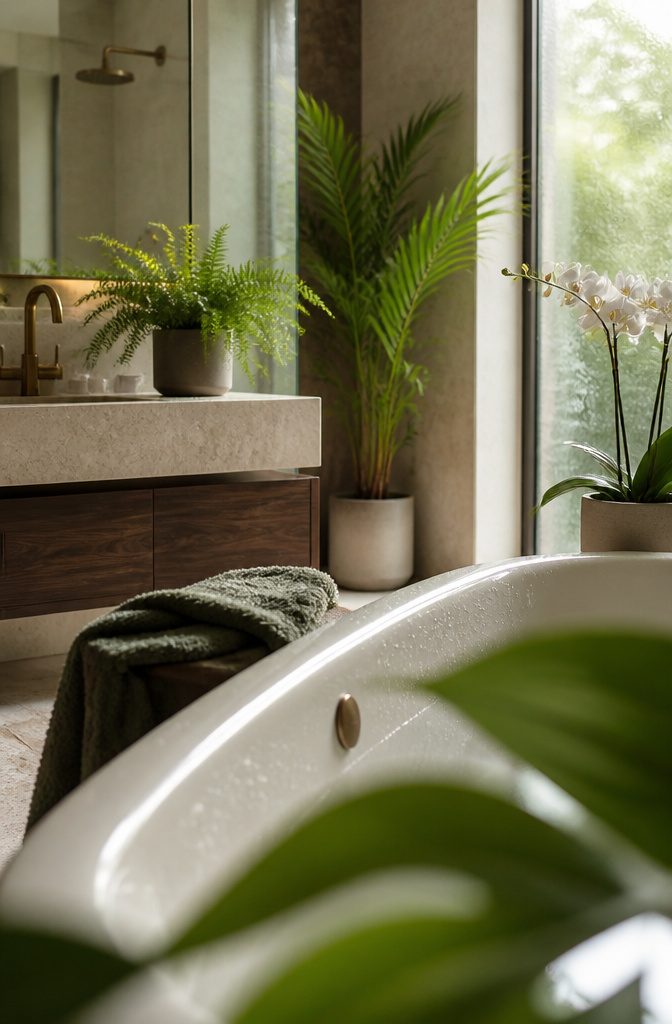
Soft green against tile, stone, and glass is the quickest way to give a bathroom a spa feel.
Ferns, orchids, and small palms handle the humidity from hot showers and need little care, so one of them on the counter or beside the tub is enough to start.
Pick a pot that matches your fixtures in finish and scale so the plant looks like part of the room.
Skip live plants in a windowless bathroom, since they struggle without daylight.
Faux greenery works there and fills the same spots: empty corners, the floor beneath a vanity, countertops, and the edge of the tub. It adds color and texture with no watering.
9. Trays and Decorative Objects
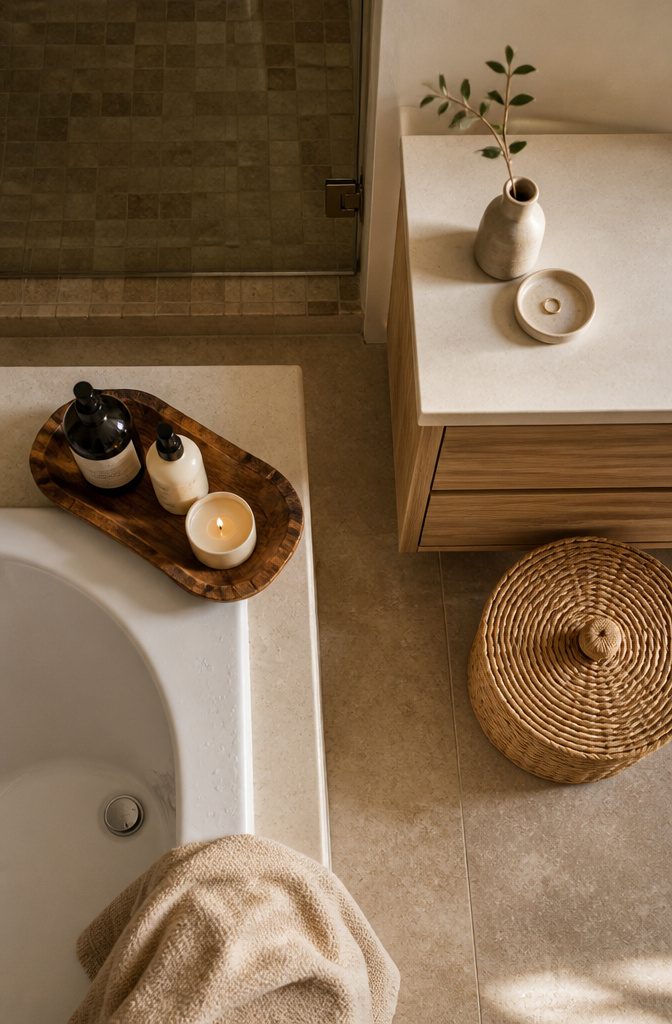
A tray turns a cluster of bottles into one object.
Set it on the vanity or the tub ledge and group the soap pump, a hand lotion, and a candle on it, so the eye reads a single arrangement instead of separate items.
Wood or stone suits the spa look better than shiny plastic.
A wicker basket with a lid handles the least attractive thing in the room, the trash. The lid hides the contents, and the woven texture reads as decor rather than a bin.
For character, pick a couple of pieces, such as a ceramic vase with a single stem and a small dish for rings.
Leave bare counter around each grouping, because empty space is what makes the room feel calm. If a surface looks crowded, take something off.
10. Bronze and Brushed Hardware
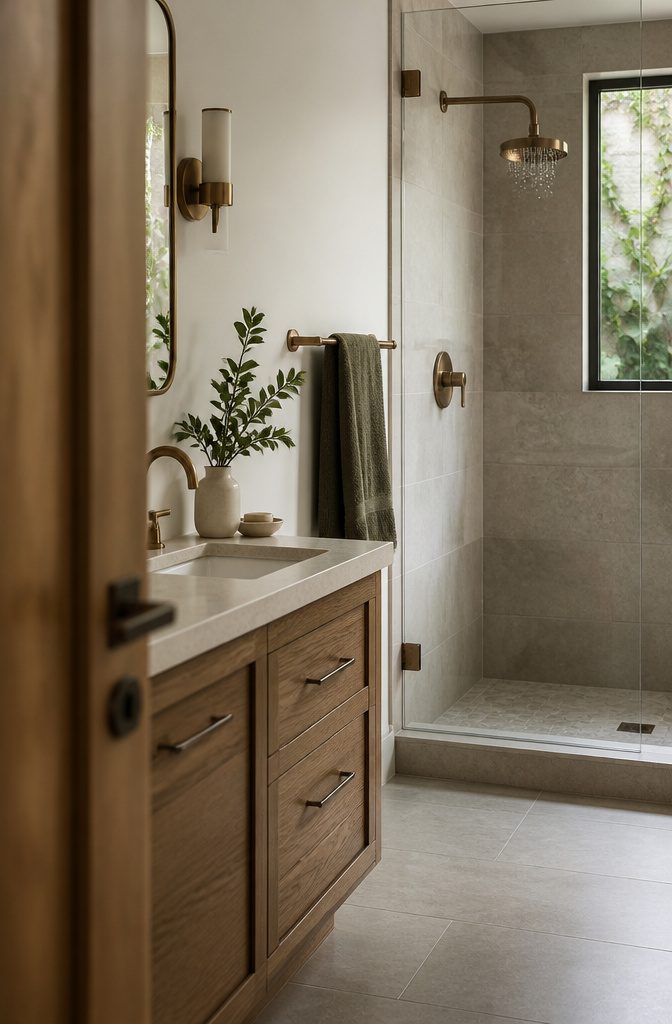
Bronze gives a bathroom an aged, elegant look that sits well against wood, white walls, and both neutral and dark palettes. Brushed and satin metals are the quieter option, adding warm accents that work with most color schemes.
For a spa feel, choose hardware with solid construction and a brass or aged-metal finish. It stands up to daily use and looks understated rather than flashy.
Pick one finish and repeat it on the faucet, towel bars, drawer pulls, and showerhead.
Mixed metals break up the calm a spa look depends on. Let the wood, tile, and lighting already in the room decide which finish wins.
11. Clear Surfaces
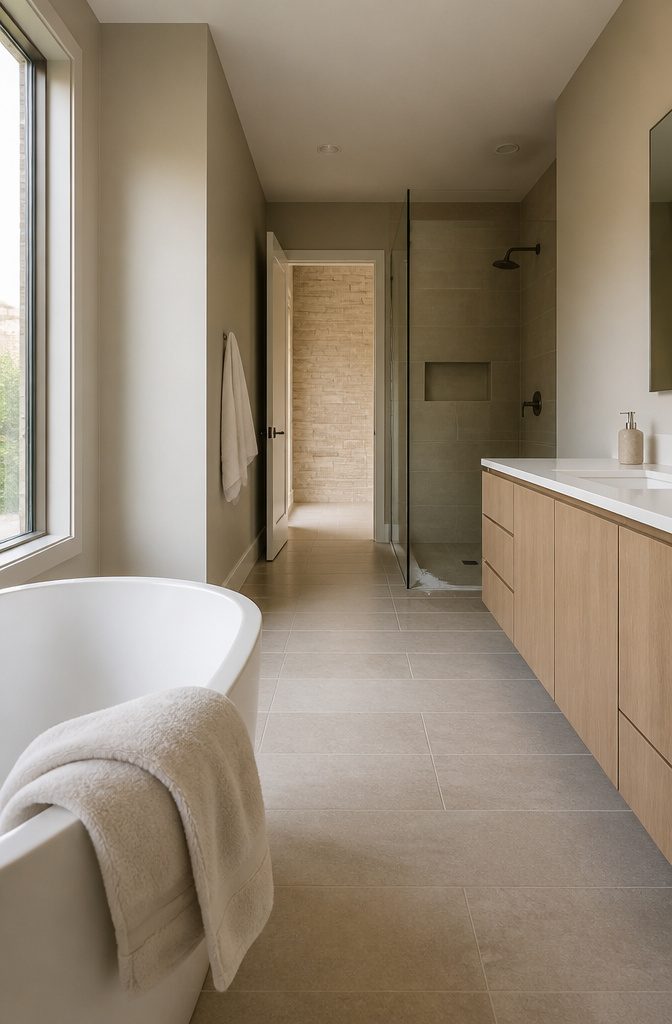
Clear sightlines calm a bathroom faster than any new material. Keep the path from the door to the tub and shower open, and keep wet and dry zones visibly separate.
Open shelving and partitions earn their place only when they free up floor or view; otherwise they add more to look at, so cut any that serve no purpose.
The counter gets a firm rule: only what you use every day stays out, and everything else goes behind a door or in a drawer.
Pour soap and lotion into reusable containers with no labels, so brand packaging stops competing for attention. Architect Ludwig Mies Van Der Rohe’s "Less is more" works as a counter test: if the top looks busy, remove one item.
12. Steam Shower or Sauna
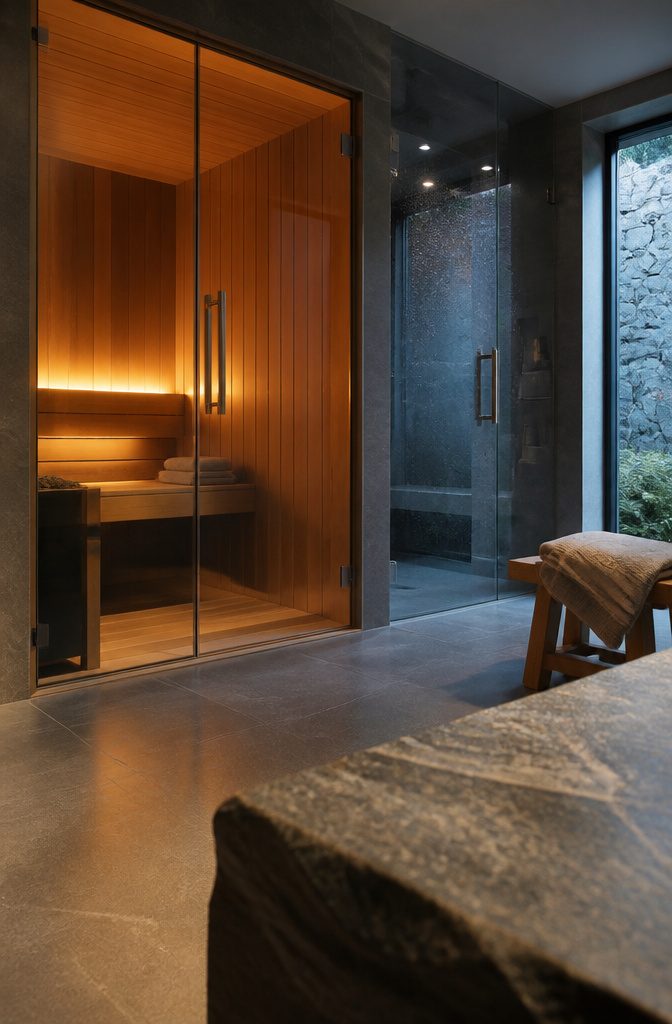
Space permitting, a sauna is the strongest spa feature you can add, and one Finnish study backs it up:
Regular sauna use by middle-aged men in Finland reduced the rates of death by 24 to 40 percent, depending on how many times a week the sauna was used over an average time period of twenty years.
The study covered middle-aged men, so treat it as a bonus rather than a prescription.
Infrared saunas install more easily than traditional wet or dry units.
If a sauna won’t fit, a steam shower is the compromise to pick. Either one is a bigger project than a weekend job.
13. Small Functional Upgrades
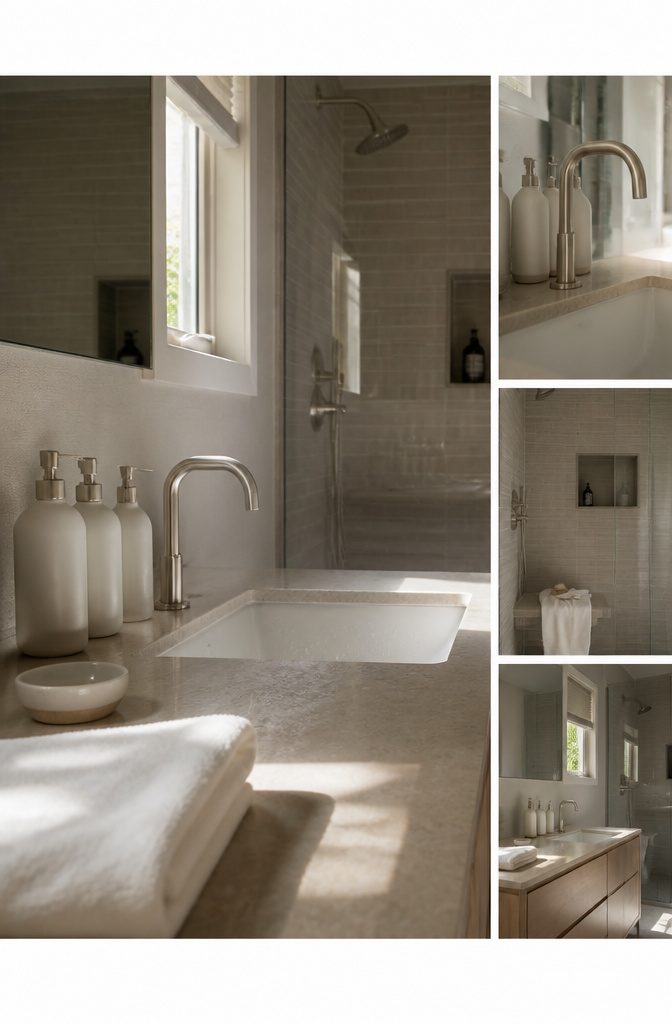
Two small changes cut clutter and add convenience without taking up counter space:
- Move shampoo, body wash, and hand soap into reusable, label-free containers. Matching bottles remove the mixed logos and colors, so the shelf gives your eye less to sort and looks calmer.
- Add a voice- or touch-activated faucet for a touch of luxury that needs no extra room. It sits where the old faucet did, so the layout stays the same.
- Start with the containers if money is tight. They cost far less than replacing a faucet, and you can do the swap in one sitting.
Materials That Hold Up
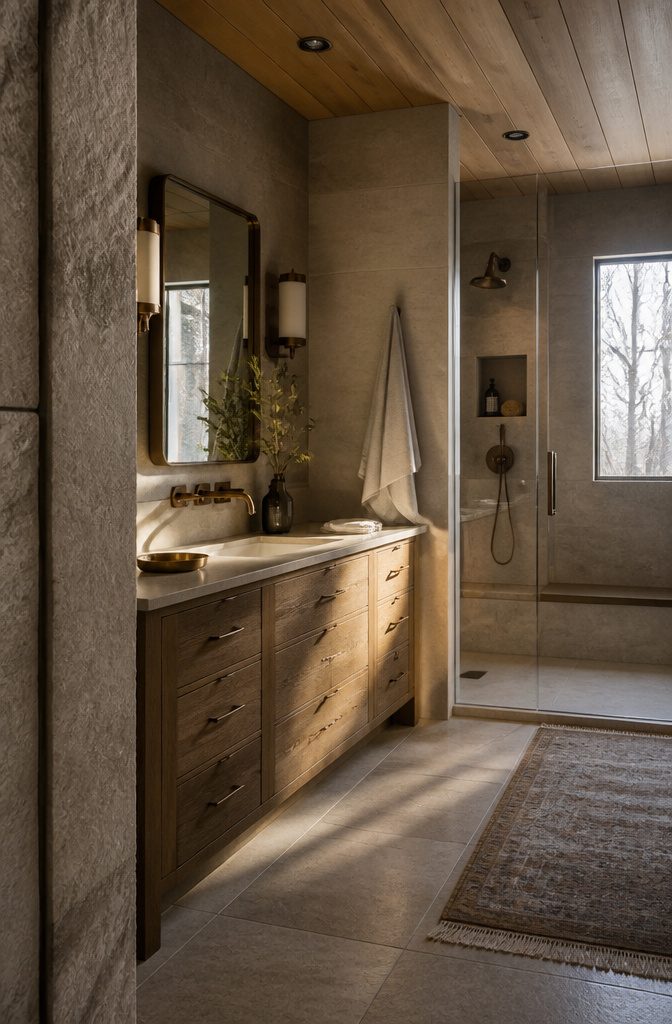
Judge a surface by how it looks after a year of steam and wet towels, not by how it looks in the store.
Materials that develop patina soften with use. Synthetic finishes tend to feel sterile, catch light harshly, and show wear quickly, so skip anything that only looks good new.
Natural stone and wood need upkeep to stay that way.
Seal them regularly to keep the surface from turning porous, because a porous surface soaks up water and stains. Check the sealant label for how often to reapply.
Keep the number of materials on the floor, walls, and ceiling low. A short list reads as one calm room instead of a crowded sample board, and it leaves you with fewer surfaces to maintain.
Large-Format Tile
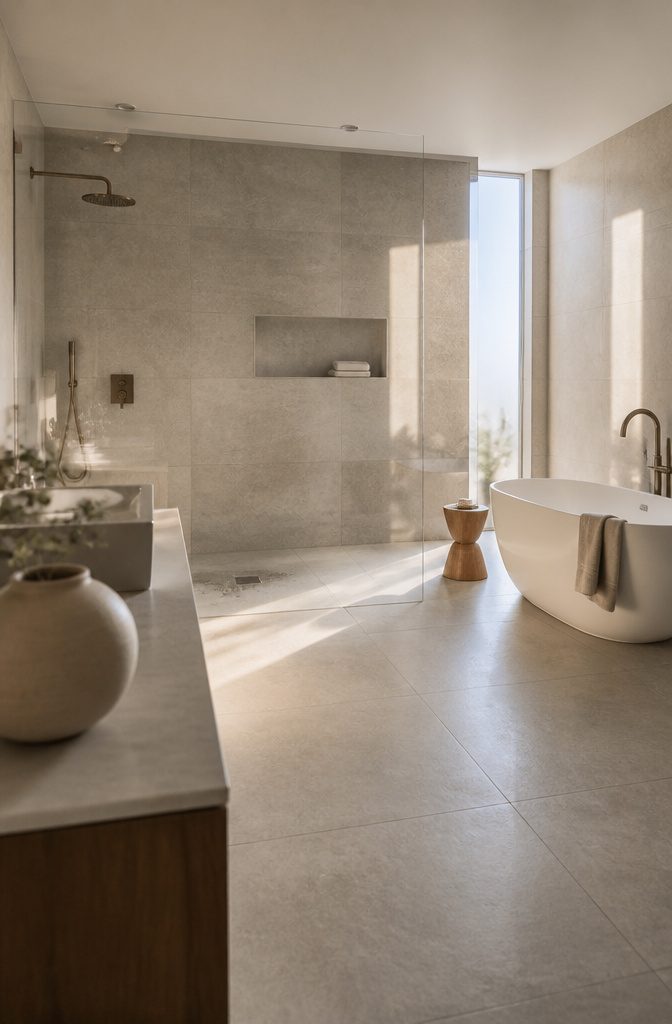
Fewer grout lines make a bathroom look quieter. Tiles in 24 by 36 inch or 24 by 48 inch sizes cover a wall or floor in far fewer pieces than standard squares, so the eye reads one calm surface instead of a grid.
Running the same tile up the wall and across the floor keeps the room looking like one uncluttered shell.
Choose a grout color close to the tile so the seams nearly disappear.
Slabs this size are heavy and unforgiving on uneven surfaces, so the wall or floor underneath has to be flat, and a pro tiler is usually the better call than a weekend DIY.
If a full retile is out of budget, use them on the shower wall alone, where the effect is strongest.
Frequently Asked Questions
How do I make my bathroom feel like a spa?
Start with the cheap changes: clear the counter so only daily-use items stay out, put dimmable task lighting at the vanity, and soften hard surfaces with neutral towels and a woven mat.
Natural materials such as wood and stone, plus a soft neutral palette, carry the rest of the look. A plant or two finishes it.
What does spa inspired bathroom mean?
It means a bathroom designed to feel calm and pampering instead of purely functional.
The look relies on natural materials, layered soft lighting, a quiet palette, and very little visual clutter. It can be a full wet room or steam shower, or as small as a houseplant and a bamboo bath mat.
What is the best color for a spa bathroom?
Beige, cream, and warm grey work best on walls and other large surfaces, and muted blues and greens are good alternatives.
A white or beige-pink with a warm undertone is safer than pure white, which can look sterile. Hold a swatch next to your tile and fixtures under the bathroom’s own lighting before you buy paint.
Do I need a large bathroom to get a spa-like feel?
No. In a compact bathroom, keep the walls light, mount a floating vanity so the floor shows from wall to wall, and use mirrors or clear glass walls to open up the room.
A larger room only gives you more space to work with.
What type of hardware works best in a spa bathroom?
Solid hardware in a brass or aged-metal finish, such as bronze or brushed and satin metals, suits a spa look and holds up to daily use.
Pick one finish and repeat it on the faucet, towel bars, drawer pulls, and showerhead, because mixing metals disturbs the calm. Let the wood, tile, and lighting already in the room decide which finish fits.
What are some ideas for spa-like bathroom decor?
Group soap, lotion, and a candle on a wood or stone tray, and add a fern, orchid, or small palm.
A wicker basket with a lid hides the trash and reads as decor. Repeat one material, such as a ceramic soap dish and a ceramic vase with a single stem, and leave bare counter around each grouping.