
Projects here run from a dimmer under $20 to a wet room with a freestanding tub, which means opening floors and walls.
What sorts them is whether the bathroom’s bones are sound. Surface upgrades cost roughly $600–$3,000, but over failing tile or a spongy floor they let damage worsen behind the walls.
1. Matching Fixtures and Hardware
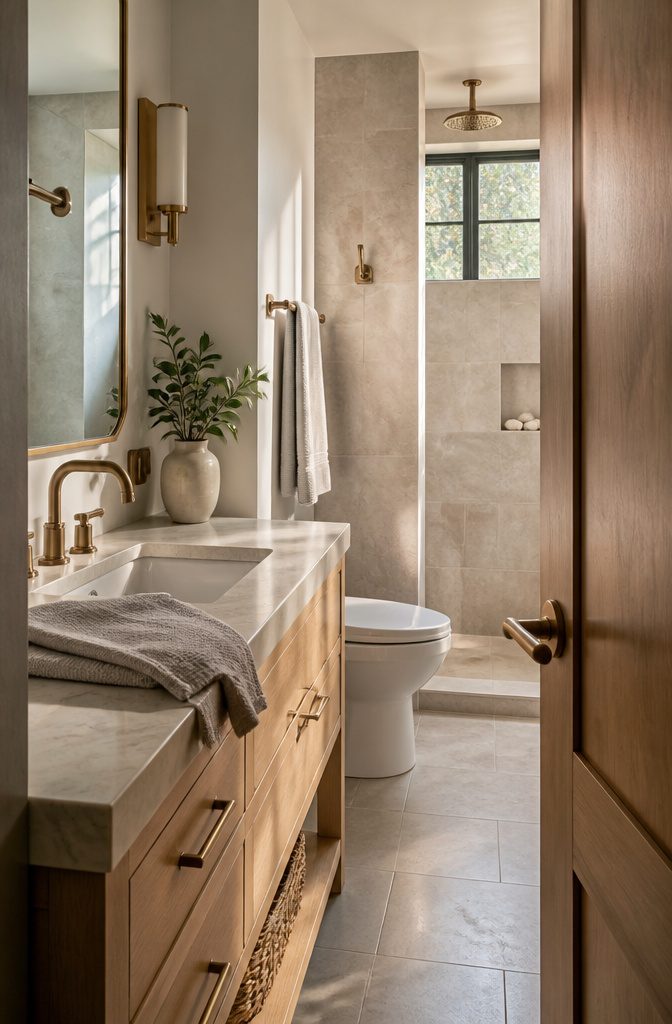
A quality faucet at $200–$400 changes a vanity more than any other single swap, because builder-grade parts are the first thing your hands and eyes land on.
Add new pulls, towel bars, and hooks for about $120, and a rainfall or multi-function showerhead for well under $150.
Then pick one metal and repeat that finish on every piece.
Bronze gives an aged look that suits wood, neutral palettes, and dark ones. Brushed and satin finishes add a warmer accent and work with most color schemes.
Mismatched metals make a bathroom look assembled over the years, and a two-metal mix only works when it is deliberate. For hardware with solid construction, Rocky Mountain Hardware is a high-end name to price against.
2. Layered Lighting
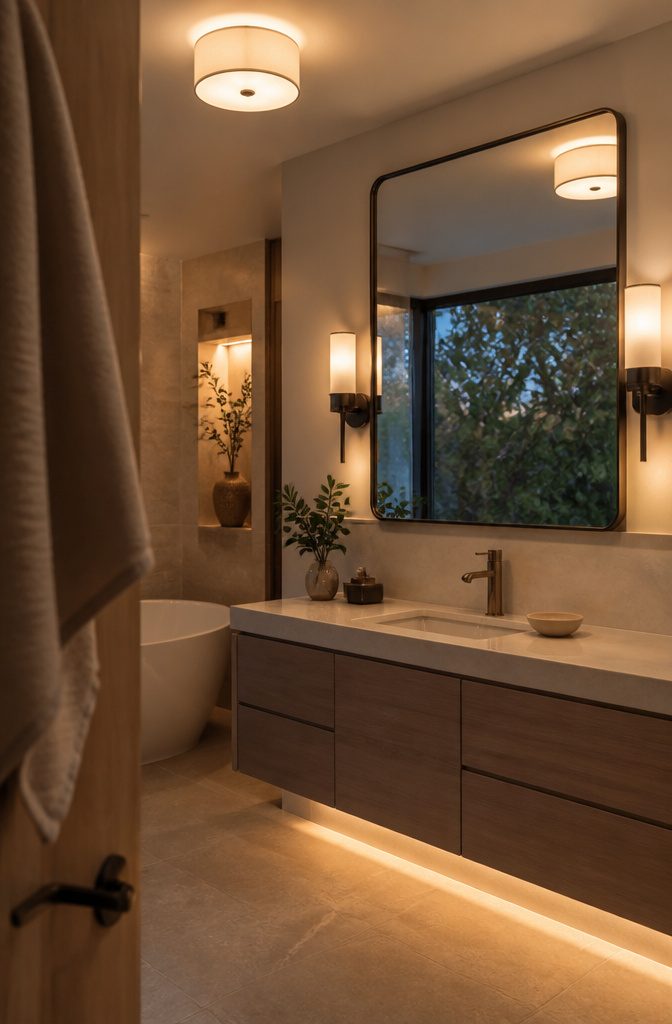
A single overhead fixture flattens a bathroom and throws shadows across your face at the mirror.
Layer three kinds of light instead: ambient for the overall glow, task light at the vanity for grooming, and accent light for a niche, a shelf, or the space beneath the vanity.
Put sconces on both sides of the mirror, since side lighting removes the shadows an overhead light creates.
For the least money, swap cool white bulbs for 2700K–3000K warm white and add a dimmer, usually under $20.
Warm light makes finishes and skin tones look richer, and the dimmer takes the room from bright in the morning to soft at night. Sconces cost more and can wait.
3. Hidden Storage
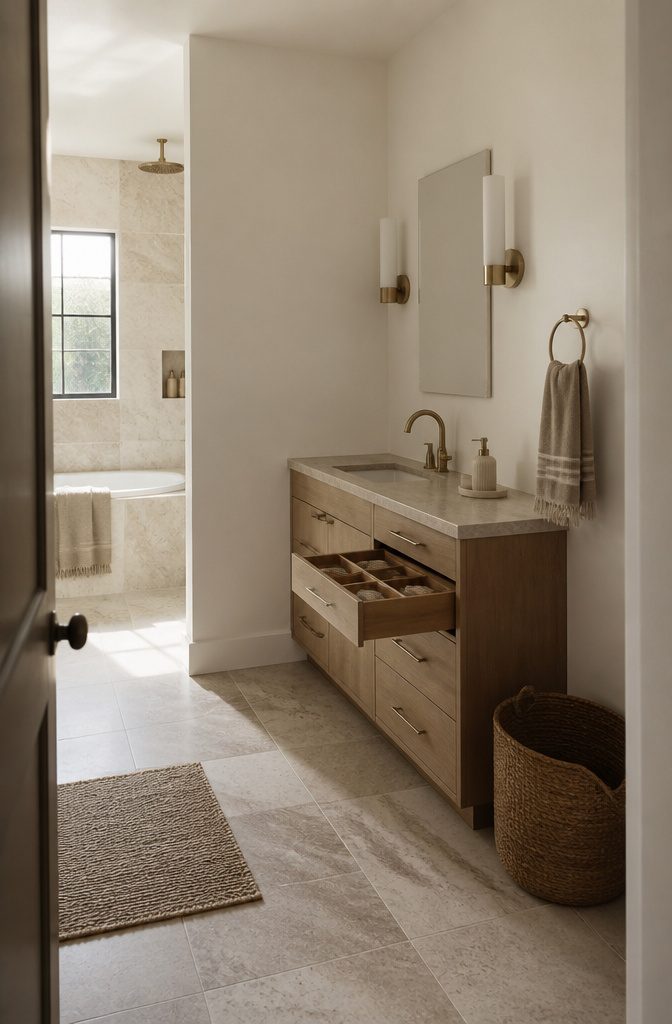
Hotel bathrooms feel expensive mostly because the counters are empty, and you can copy that for about $180 with a medicine cabinet or a set of floating shelves.
A recessed or surface-mounted medicine cabinet hides daily products behind the mirror, so they stay out of the sightline from the doorway.
Inside the vanity, drawer organizers let one drawer hold more without turning into a jumble. An over-the-toilet cabinet or floating shelves put unused wall space to work.
Leave only a few items in view: soap and lotion decanted into matching containers, plus a natural fiber basket for overflow. Everything else gets a home behind a door or in a drawer.
4. Natural Materials and Texture
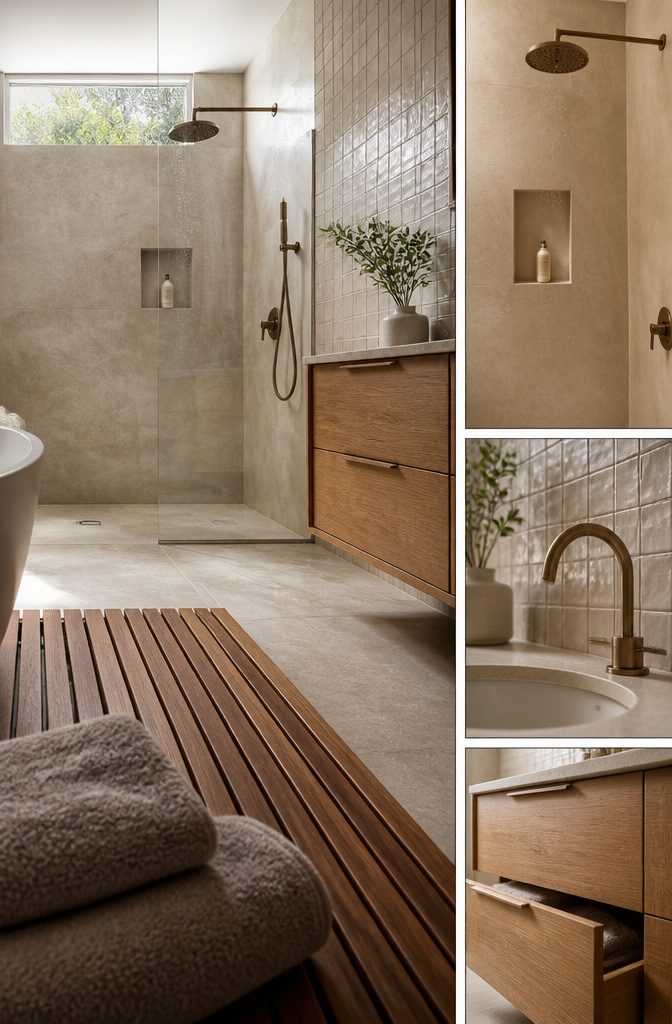
Stone, wood and bronze bring warmth and depth that painted drywall and chrome can’t. Stone adds durability and natural variation, and large slabs or tiles keep the surface continuous.
Wood adds grain against stone and white walls. Bronze works on shower heads, sinks and other fixtures, and it develops a patina over time.
Expect more upkeep: stone and wood need regular sealing in a humid room so they don’t absorb moisture. If that sounds like a chore, bronze-look tile is a lower-maintenance alternative.
For texture, choose one small accent: a section of zellige tile, beadboard, or a limewashed wall.
Then add plush towels in a single color and a natural fiber or wooden bath mat. Keep the total number of materials low, or the room stops feeling cohesive.
5. A Calm Palette of 2–3 Colors
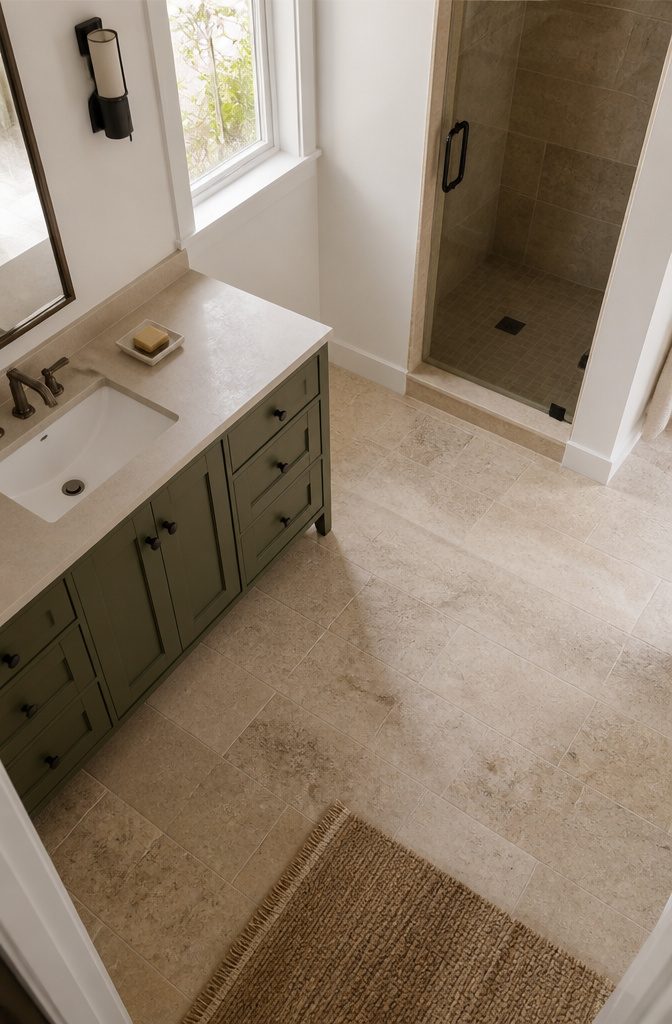
Paint the walls a warm white or cream, add one soft neutral such as beige or warm grey, and limit the room to 2–3 colors.
Soft neutrals reflect light gently and suit large surfaces. Deep clay, muted olive, or charcoal works best as a single anchor on the vanity, a feature wall, or the faucet.
Soft whites and beige pink have warm undertones.
Muted blues and greens read as sky, water, and plants, and they sit well beside light wood and stone tile. Pure white can look sterile, so skip it.
Choose a matte or eggshell finish, which softens light and shows subtle shifts in tone. Paint and supplies come to about $60.
6. Restrained Accessories
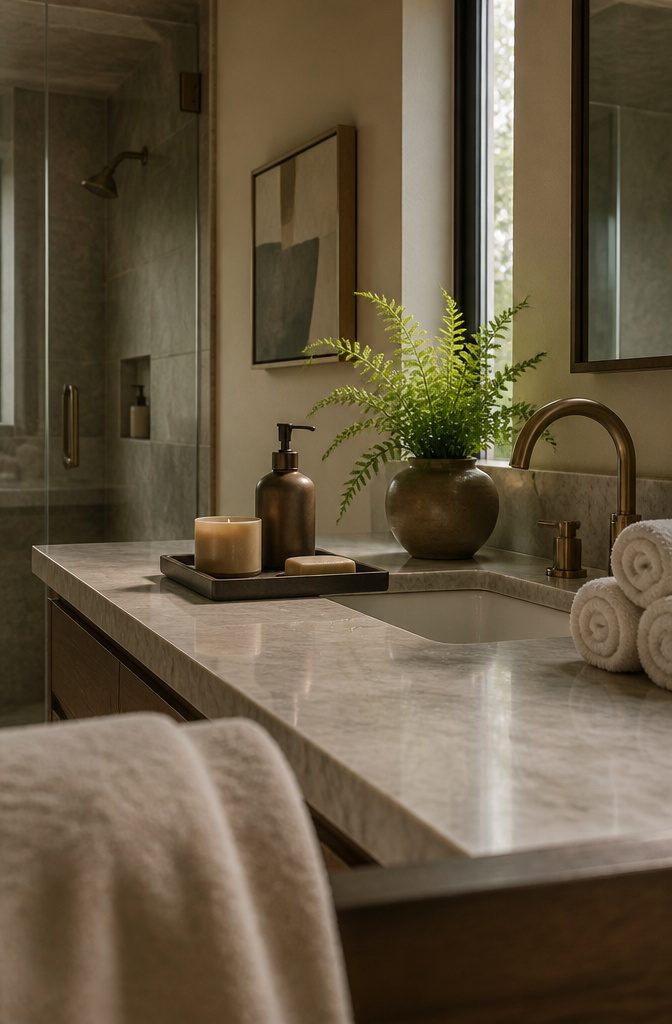
Five items finish the room: a tray, one piece of art, a candle, rolled towels, and a single plant. Set the candle and a soap dispenser on the tray so the vanity reads as one arrangement instead of scattered bottles.
Stack the rolled towels where they show, hotel style. For the plant, choose something that tolerates steam and needs little care: a fern, an orchid, or a small palm.
Then stop, and leave plenty of counter empty.
Extra jars, baskets, and figurines bring back the clutter you just removed, and open space reads as luxury on its own. Towels, a mat, the tray, the plant, and the small accessories run about $250 together.
7. A Wet Room With a Freestanding Tub
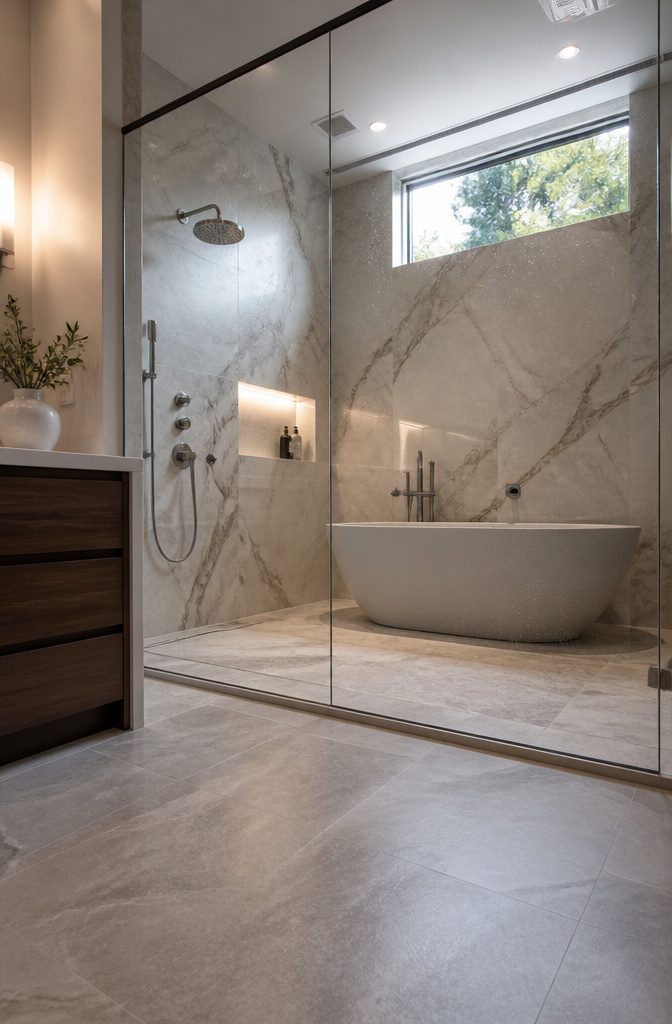
A wet room puts the shower and a freestanding tub in one tiled zone and keeps the rest of the bathroom dry.
Showerheads go on one side, the soaking tub on the other, with a discreet drain at each end. Tile the wet area floor to ceiling and drop the glass enclosure so nothing interrupts the space.
Make the tub the focal point, and keep it in view from the doorway. Clear the walkways, check that the door swings out of the way, and remove any partition or bulky open shelf that blocks the sightline.
This is a layout change, not a cosmetic one.
Moving drains and fixtures means opening the floor and walls, so it sits well outside a weekend budget. Treat it as a full remodel.
8. Spend Here, Save There
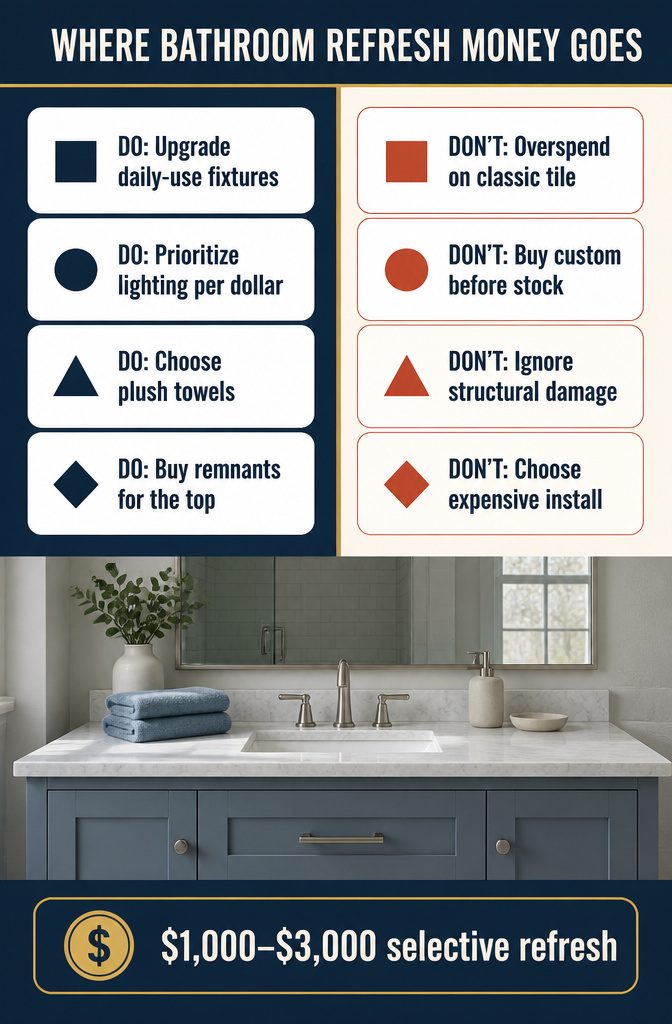
A selective refresh puts the money where you touch and see it daily: the faucet, shower fixtures, lighting and towels. Lighting delivers the biggest change per dollar in the room, and plush towels are a modest one-time cost.
Save on everything else. Affordable porcelain in a classic pattern looks right, and a well-laid budget tile beats a badly installed expensive one.
A stock vanity with upgraded hardware reads as custom. For the top, ask a fabricator about remnants, since a vanity is small enough that a leftover piece of quartz or stone often covers it at a steep discount.
This kind of refresh runs $1,000–$3,000, far below a full remodel. It won’t fix structural problems, so deal with those first.
A $1,500 Sample Budget
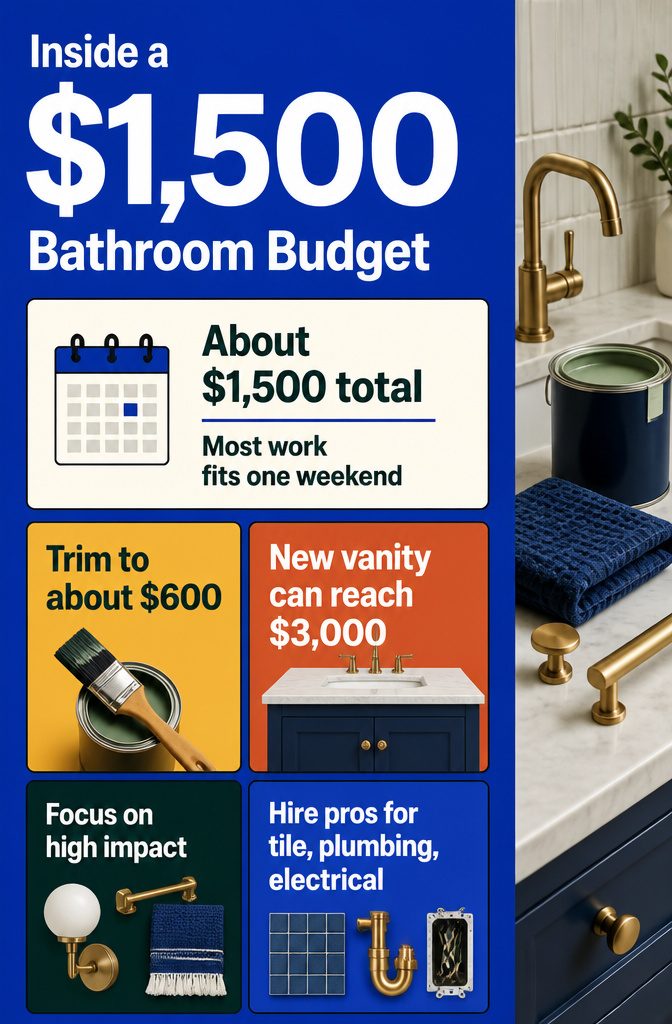
The full list comes to about $1,500, and most of it fits in one weekend.
| Item | Cost |
|---|---|
| Faucet | $200–$400 |
| Hardware, towel bars, hooks | $120 |
| Sconces and dimmer | $250 |
| Showerhead | $100 |
| Mirror | $200 |
| Storage | $180 |
| Textiles and accessories | $250 |
| Paint and supplies | $60 |
Trim to about $600 by keeping only lighting, hardware, paint, and textiles.
Push toward $3,000 with a new vanity or a tiled accent wall. Hire a pro for tiling, plumbing changes, and any electrical work beyond a simple fixture swap.
Luxury in a Small Bathroom
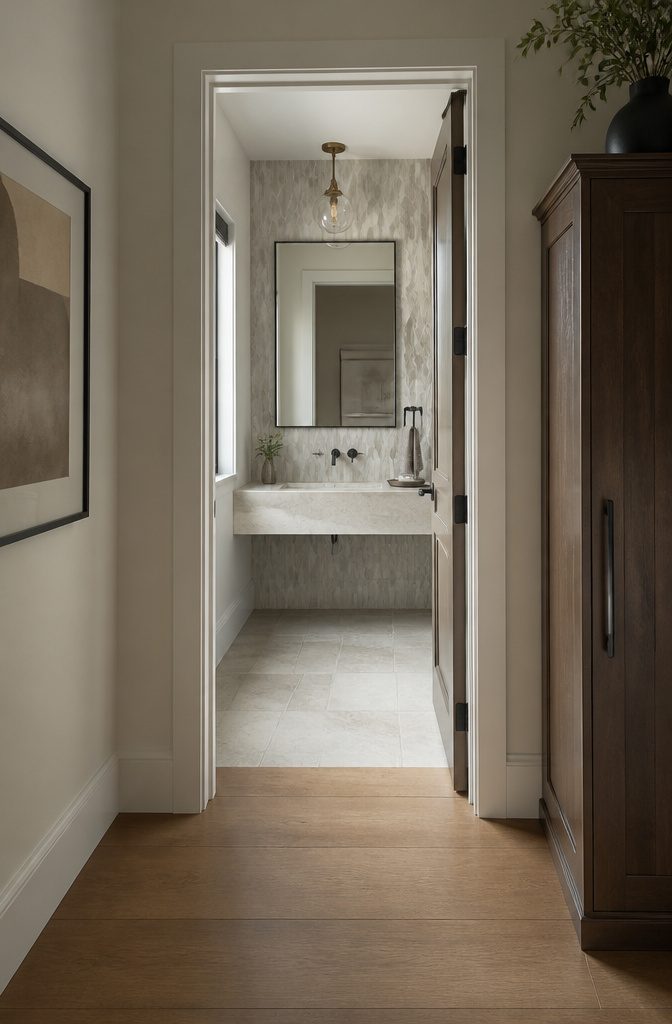
Size does not decide whether a bathroom feels high-end.
A small room is the cheapest place to get that look, because there is less square footage to cover. A striking tile or wallpaper that would cost too much across a large bathroom becomes affordable in a powder room.
For the vanity top, ask a stone yard about a remnant, since a small vanity often fits within a single leftover piece.
Then keep the room open. A wall-mounted or pedestal sink leaves the floor visible, and clear glass in place of a shower curtain lets the eye travel to the back wall.
Hang one large mirror to bounce light, and stay with light colors and two shades total, letting texture do the rest.
Signs You Need a Full Remodel
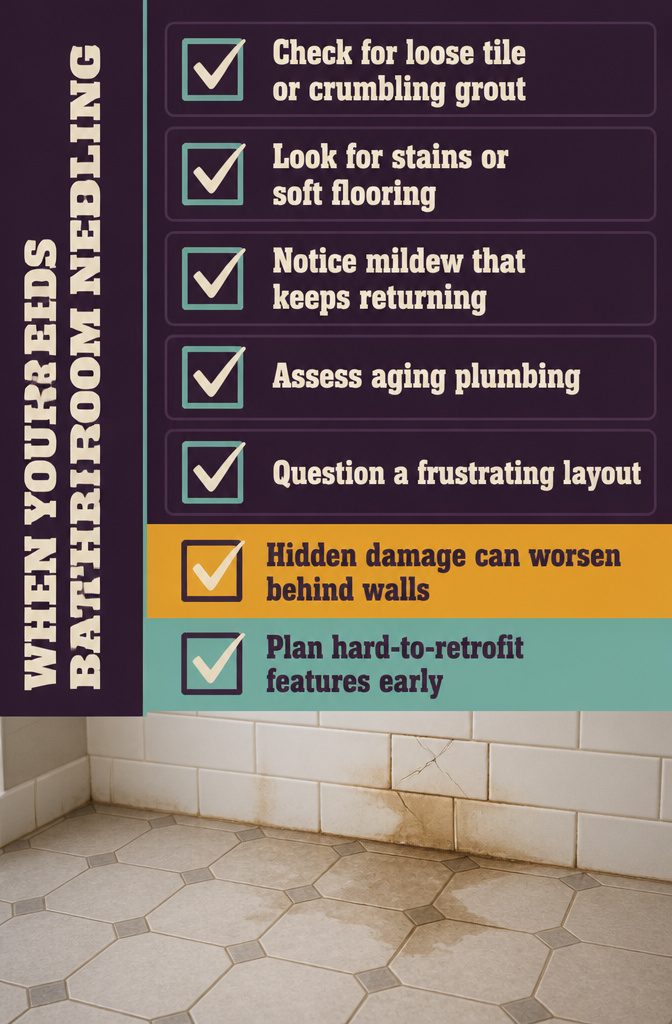
Budget upgrades only work when the bathroom’s bones are sound. Plan a full remodel if you see any of these:
- Failing tile: loose or cracked tile and crumbling grout let water in, and new paint won’t stop it.
- Water damage: stains, soft spots, or a spongy floor mean the trouble is behind the surface.
- Persistent moisture: mildew that keeps coming back after cleaning has a cause that accessories can’t touch.
- Plumbing at the end of its life: replacing it later means tearing into a finished room.
- A layout that doesn’t work: new fixtures won’t fix a floor plan you fight every day.
New hardware and towels over these problems can quietly let damage worsen behind the walls.
If you plan to stay for years, a remodel also makes sense for features that are hard to retrofit cheaply: a curbless shower, heated floors, or a reconfigured layout.
Frequently Asked Questions
How can I make my bathroom look luxurious on a budget?
Plan on $1,000–$3,000 for a selective refresh, and expect a sample shopping list to total about $1,500. Start with the cheapest change: replace cool white bulbs with 2700K–3000K warm white and add a dimmer, usually under $20.
After that, add a faucet and hardware in one matching finish, storage that clears the counters, plush towels, and a few restrained accessories.
Where should I spend and where should I save in a luxury bathroom remodel?
Spend on what you touch and see every day: the faucet, shower fixtures, lighting, and towels. Save on tile, the vanity, and the countertop.
Classic porcelain, a stock vanity with upgraded hardware, and a quartz or stone remnant for the top all look right at a lower price, and a well-laid budget tile beats a badly installed expensive one.
Can I do luxury bathroom upgrades myself?
Yes, most of them. Painting, swapping hardware, hanging towel bars, changing a showerhead, adding shelving, and styling accessories are all DIY friendly, and most of a $1,500 refresh fits in one weekend.
Hire a professional for tiling, plumbing changes, and any electrical work beyond a simple fixture swap.
What is the best color for a spa-like luxury bathroom?
Limit the room to 2–3 colors: warm white or cream on the walls, one soft neutral such as beige or warm grey, and if you want contrast, a single anchor like deep clay, muted olive, or charcoal.
Muted blues and greens also work because they read as sky, water, and plants next to light wood and stone. Skip pure white, which can look sterile, and choose a matte or eggshell finish.
Do I need a large bathroom to get a luxury look?
No. A small room is the cheapest place to get the look, since there is less area to cover, and it can afford a striking tile or wallpaper that would cost too much in a big bathroom.
Stay with light colors in two shades, hang one large mirror, choose a wall-mounted or pedestal sink, and use clear glass instead of a shower curtain.
What type of hardware works best in a luxury bathroom?
Choose solidly built pieces and use one metal finish on every fixture.
Bronze gives an aged look that suits wood and neutral palettes, while brushed or satin finishes add a warmer accent. Expect about $200–$400 for the faucet and about $120 for pulls, towel bars, and hooks.