
The ideas range from stacking hardback books as a bedside table to building in storage around the bed, and the deciding factor is whether you own the room.
Renters can use under-bed bins, a leaned body-length mirror, and dark color in bedding. Wall niches and accent walls mean cutting drywall or repainting before you move out.
1. Slim, Multipurpose Furniture
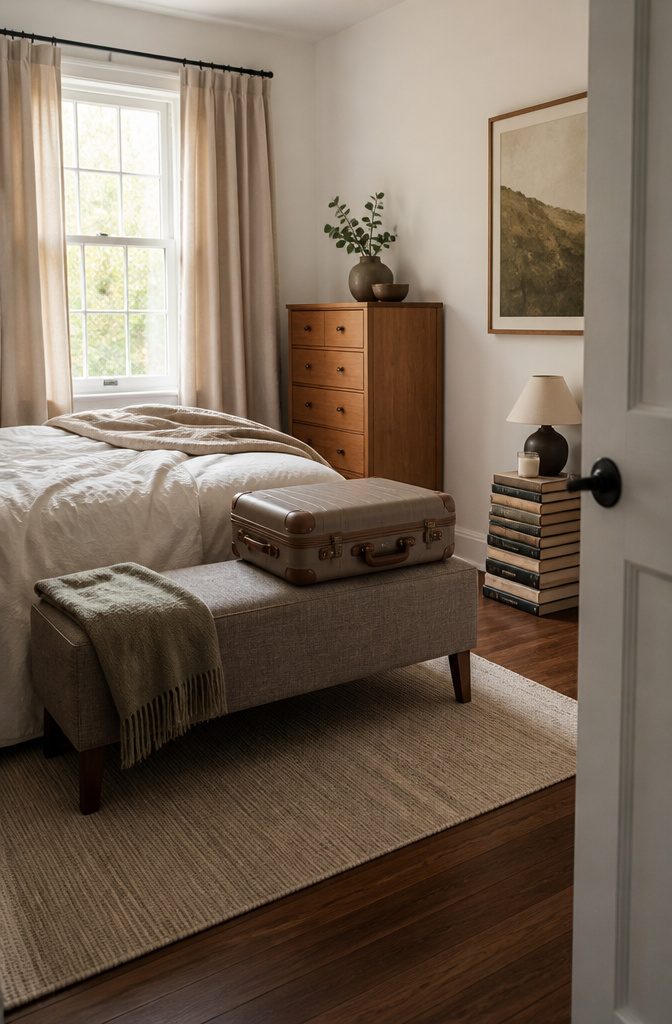
Oversized accent chairs, massive dressers and sleigh beds fight a small room, even if you love them.
A room can look bigger than it is, so a piece that seemed fine in a showroom ends up crowding the floor. Measure first and keep walkways clear, then choose slim pieces with unfussy lines.
Pick furniture that does two jobs: a nightstand with drawers, a slim dresser instead of a bulky one, a bench instead of a chair.
A bench is narrower than a chair and fits flat at the foot of the bed or against a wall. It also holds a guest’s suitcase.
For a free bedside table, stack hardback books. Use durable covers in varied sizes so the pile stays stable.
2. Vertical Space on the Walls
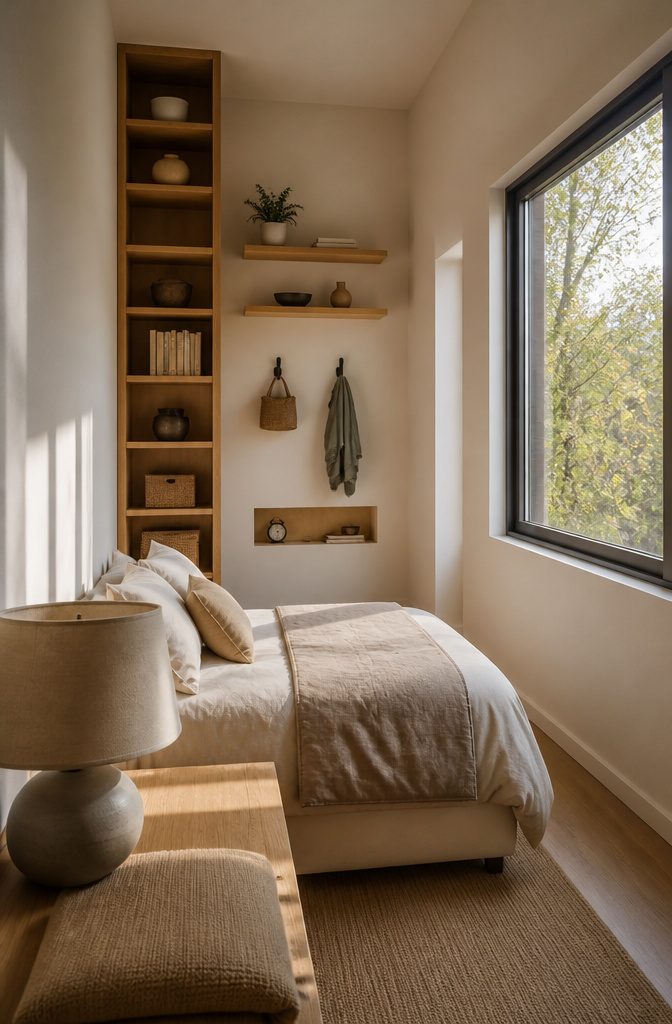
Floating shelves above the nightstands, wall hooks, and a tall bookcase move storage up the wall and leave the floor clear.
A unit that runs to the ceiling also draws the eye up, which helps in a narrow room. Anything above eye level collects dust quickly, so wipe it down each season.
A wall niche takes no floor space at all. It won’t be deep, but it holds an alarm clock or a few personal items.
Choose a non-exterior wall and find the studs with a stud finder before you cut. In newer buildings the drywall is hollow, framed by vertical 2 x 4 beams 16 inches apart.
3. Storage That Clears the Floor
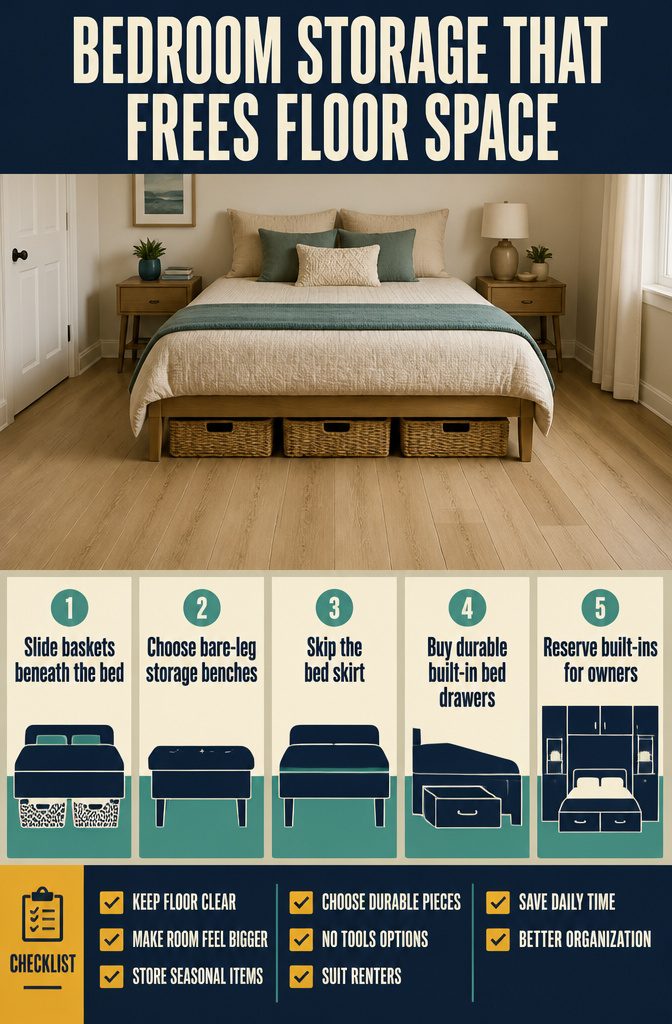
Four ways to keep belongings off the floor, from no tools to real construction:
- Bins and baskets under the bed suit renters. Woven baskets or decorative bins hold seasonal clothes, bed linens and shoes. Bins also work where there isn’t room for drawers to open.
- Storage benches and ottomans hide extra items and need no installation. Choose ones with bare legs, and skip the bed skirt. Visible floor underneath makes the room feel bigger.
- A bed frame with built-in drawers works for renters too, but buy a durable one. It will be used daily.
- Built-ins around the bed create a sleeping nook and hide plenty of storage. They require construction, so they suit owners better than renters.
4. Mirrors and Natural Light
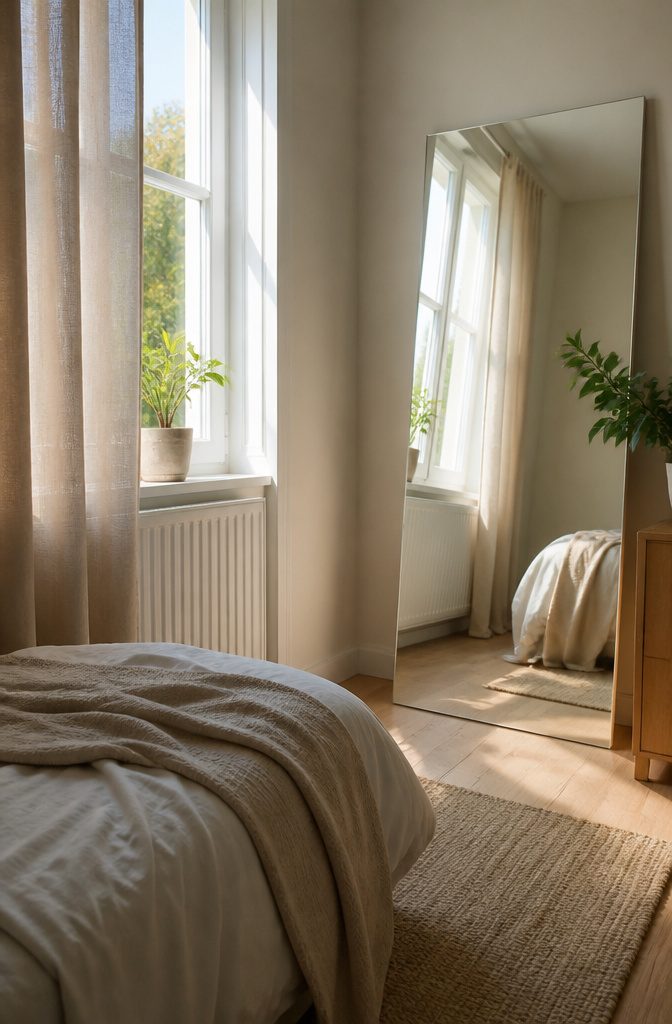
Place a mirror directly across from the window so daylight bounces into the darker half of the room instead of stopping at the glass.
A body-length mirror leaned against the wall needs no holes, and a bit of wall tacky behind it keeps it from sliding.
If a mirror facing the bed feels like too much to wake up to, move it to a corner or the side wall.
Treat the mirror as decor too.
A frameless one stays quiet, while a framed floor mirror or an oversized one gives a plain wall some shape. Keep window treatments minimal and furniture out of the window’s path so the light can reach the mirror.
5. A Deliberate Color Palette
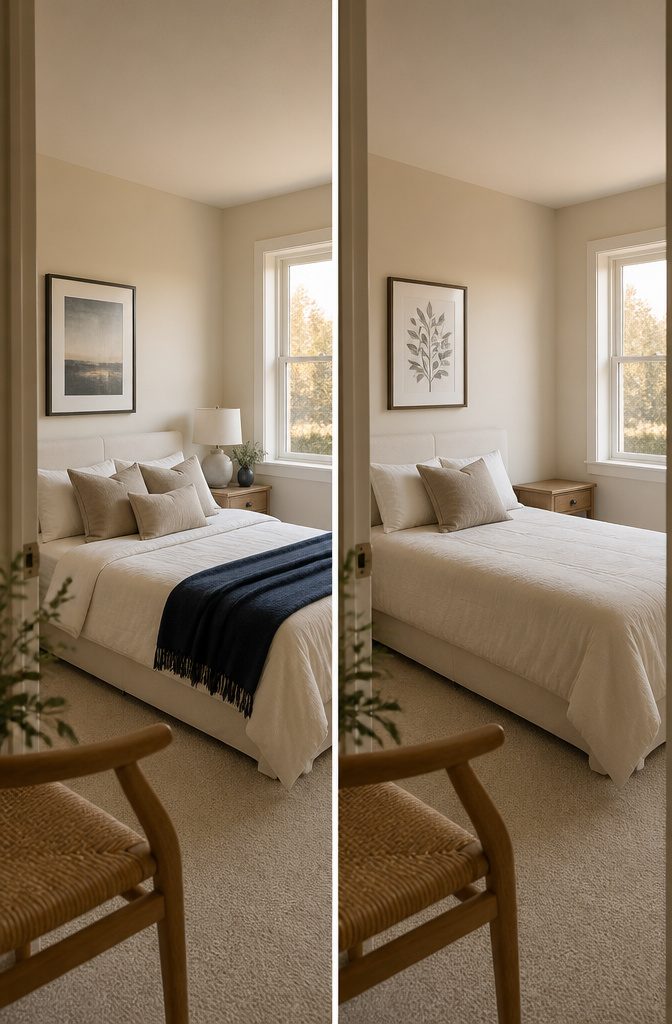
Lighter paint wins in a small bedroom because light colors reflect more light, so the room reads brighter and larger. White is the obvious pick, but soft greige, pale blue and warm neutrals work just as well.
Dark color still works in small doses. One deep accent wall with lighter tones on the other three makes a cozy focal point, while navy on all four walls makes a small room feel closed in.
For a rental on a weekend budget, keep the walls light and put dark color in things you can take with you: picture frames, drawer pulls, bedding, a throw. An accent wall means repainting before you move out.
6. Keep Clutter in Check
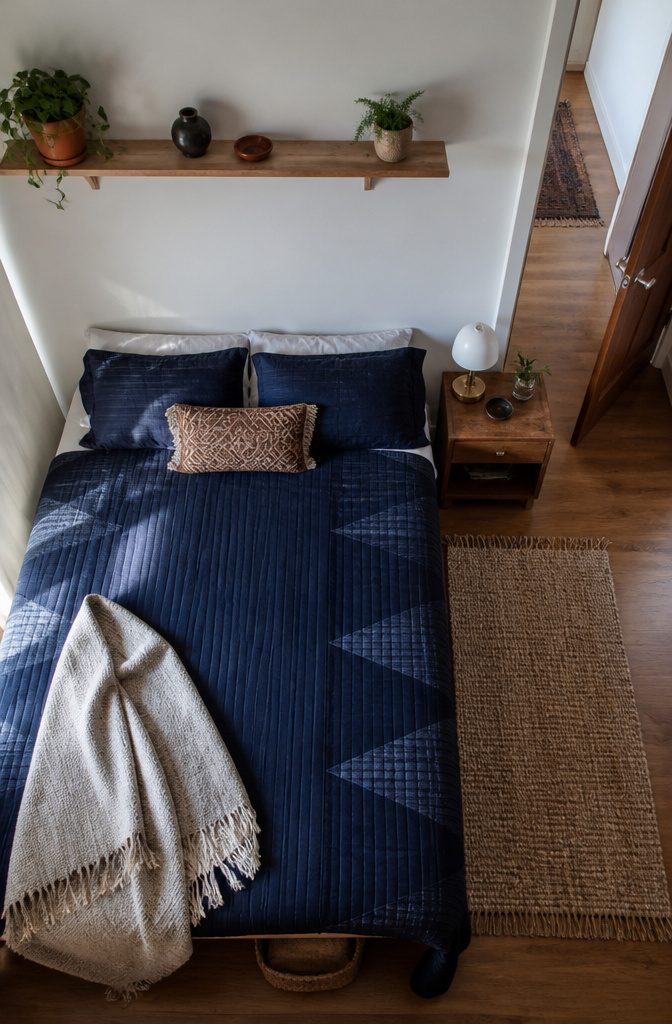
Clutter makes a small bedroom feel smaller.
Start with a reset: take out every piece of decor, every extra pillow, and every "just because" item. Put back only what you use or love, and send the rest to a donation bag or an under-bed bin.
On shelves, leave a couple of inches between items so the eye has somewhere to rest. A shelf packed edge to edge reads as storage, while one with gaps reads as display.
Walls can stay bare too.
A blank wall makes the room feel open and lets a bold bedspread or a single statement piece stand out. If you want more personality, add it slowly, one piece at a time, once the bed and bedding are comfortable.
7. Bed Placement and Frame
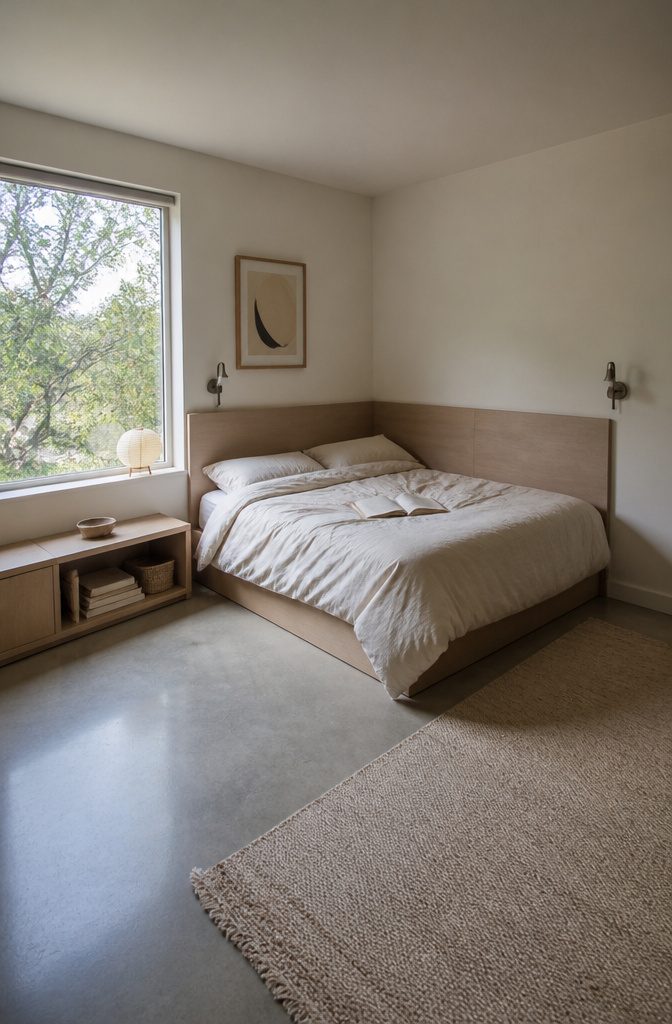
Tuck the bed into a corner or against one wall instead of centering it. This frees floor space and makes a snug sleeping nook, and a two-headboard corner setup keeps it from looking like a dorm.
Choose a plain frame no bigger than the mattress. Sleigh, pedestal and canopy beds take up room physically and visually, while a platform or storage frame looks lighter and hides belongings underneath.
Keep the bed off your largest window so daylight fills the room, and leave space to walk around at least one side. A king can work if nightstands are slim, lighting is wall-mounted and everything else stays low.
If it blocks the walkway, a queen is the better call. Feng Shui holds that bed placement affects perceived stress, but that is the practice’s view.
8. Beds That Fold or Lift
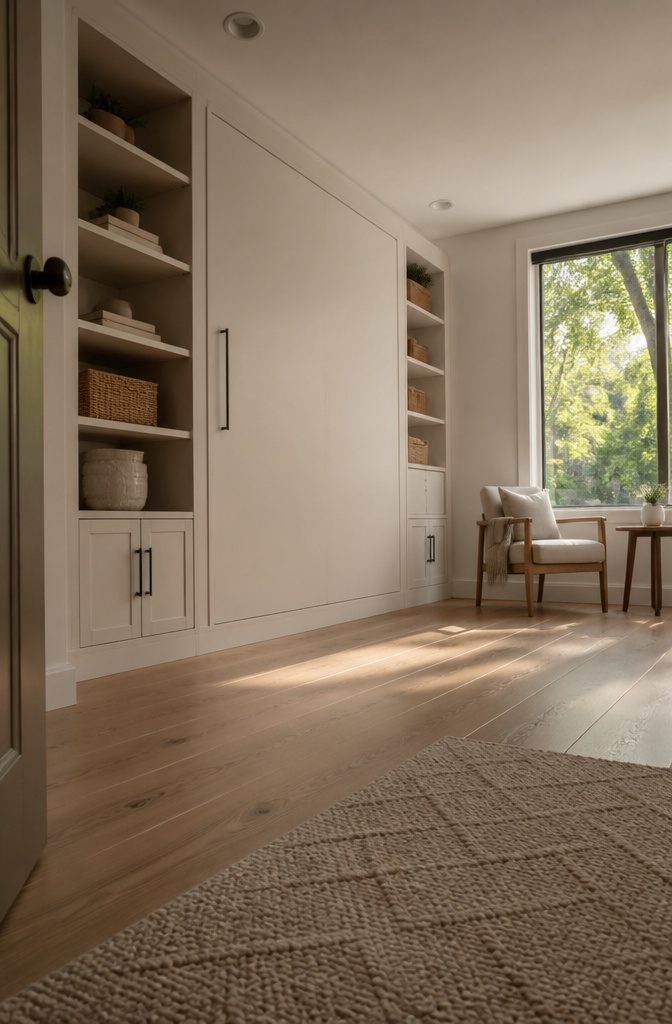
A Murphy bed folds into the wall, which frees the floor all day, but the room still needs a clear patch when the bed is down. Keep the other furniture easy to move.
It suits a guest room or office best. A kit set between two enclosed shelving units adds storage, and those units can double as closets.
A daybed pushed against a wall removes the walkways on both sides, and many have drawers underneath. A wall-hung style leaves the floor visible, so the room looks bigger.
Loft and bunk beds use height instead of floor. They only work if the ceiling lets you sit up in bed without hitting it, so measure before you buy.
9. Layered Lighting
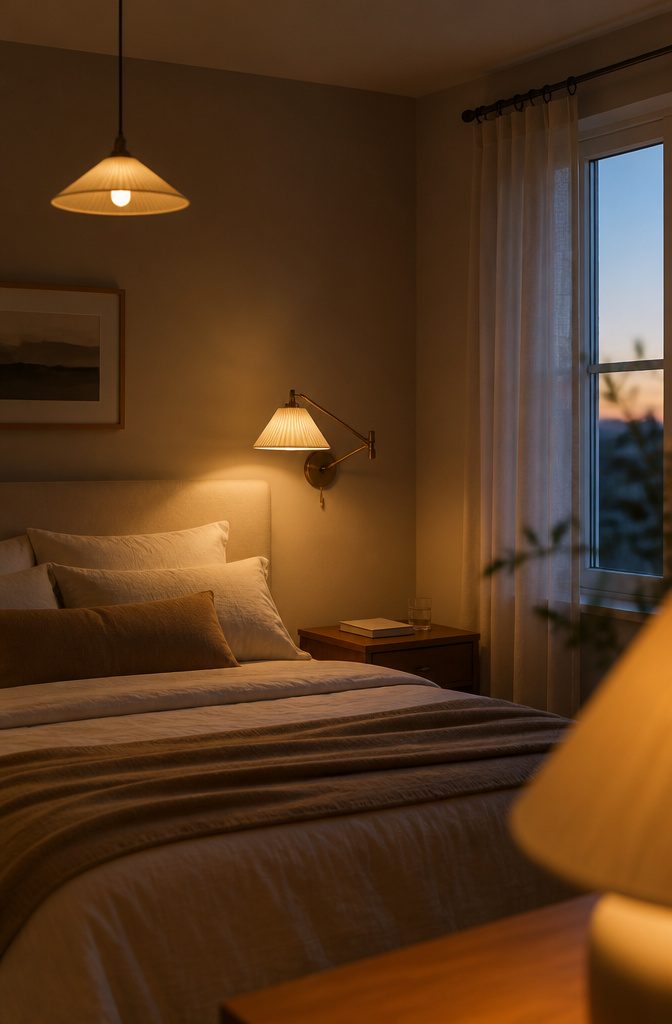
A single ceiling fixture flattens a small bedroom and throws harsh shadows. Add an ambient layer, such as a pendant or sconce, and a task layer for reading, such as a bedside lamp.
Picture lights over artwork add accent light and depth. Put a warm bulb on a dimmer, and skip cool white bulbs, which make the room look stark and sometimes tint it blue.
Wall-mounted and hanging lights free the most space. A swing arm sconce lets you aim the light exactly where you read, and a mini chandelier over the nightstand replaces a lamp entirely.
Either one leaves the tabletop open. Make sure you can reach the switch from bed.
10. A Focal Point
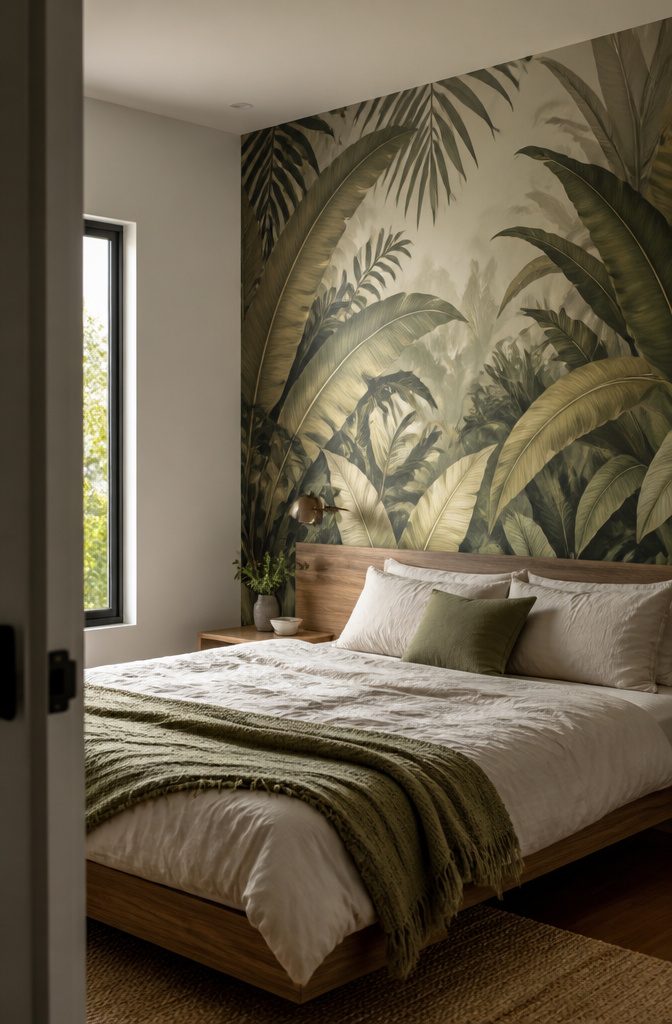
Small rooms read as busy when every surface competes for attention.
Give the eye one place to land and keep everything else quiet. The wall behind the bed is the natural spot, and a bold headboard, a large piece of art, wallpaper, or a distinctive light fixture can all anchor it.
Choose one focal point, because a second one competing with it makes the room louder, not larger.
A large-scale mural that reflects your interests gives the most personality, but it is the priciest option and hard to undo in a rental. A wall stencil is the cheaper route.
Stencils come in sizes up to 74 inches wide, big enough to cover a headboard wall with a can of paint and a weekend. Leave the other walls plain so the pattern stands out.
11. Texture and Textiles
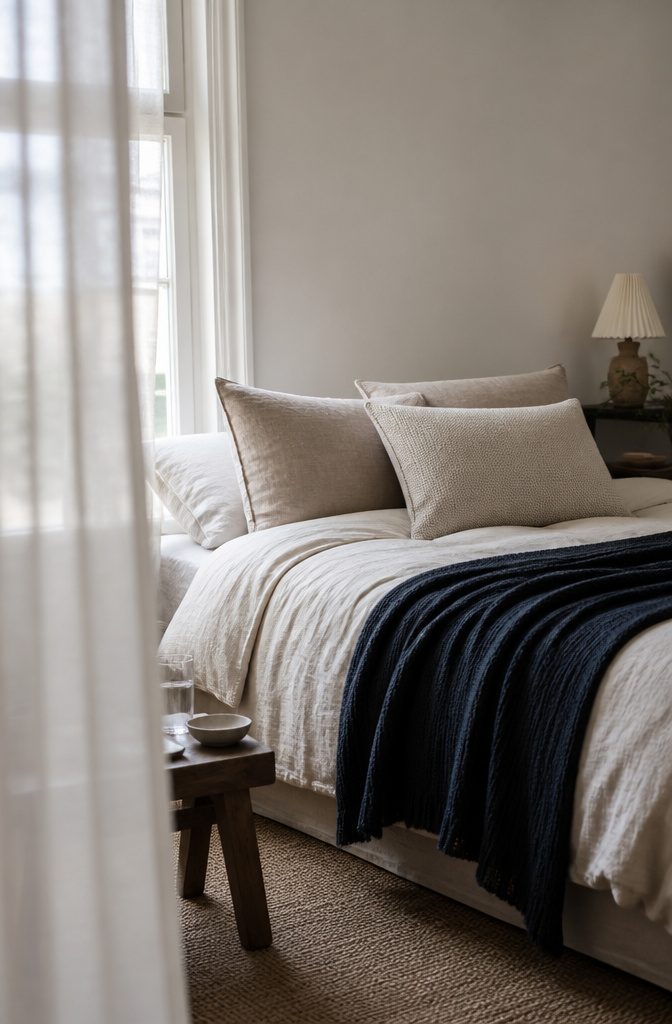
Keep the bedding base neutral and change the mood with the cheapest pieces. A soft set that comes in several colors lets you swap pillowcases, a throw, and curtains without replacing the whole bed.
Layer pillows in light tan and oatmeal. The shades are close, so texture adds the depth and the bed doesn’t look crowded.
Choose bedding that is plush but not bulky. A puffy comforter makes the bed look too big for the room, while linen paired with lightweight curtains adds depth and keeps things open.
If you want a bold throw or pillow, set it against the neutrals so one color stands out instead of several competing.
12. Plants on Walls and Sills
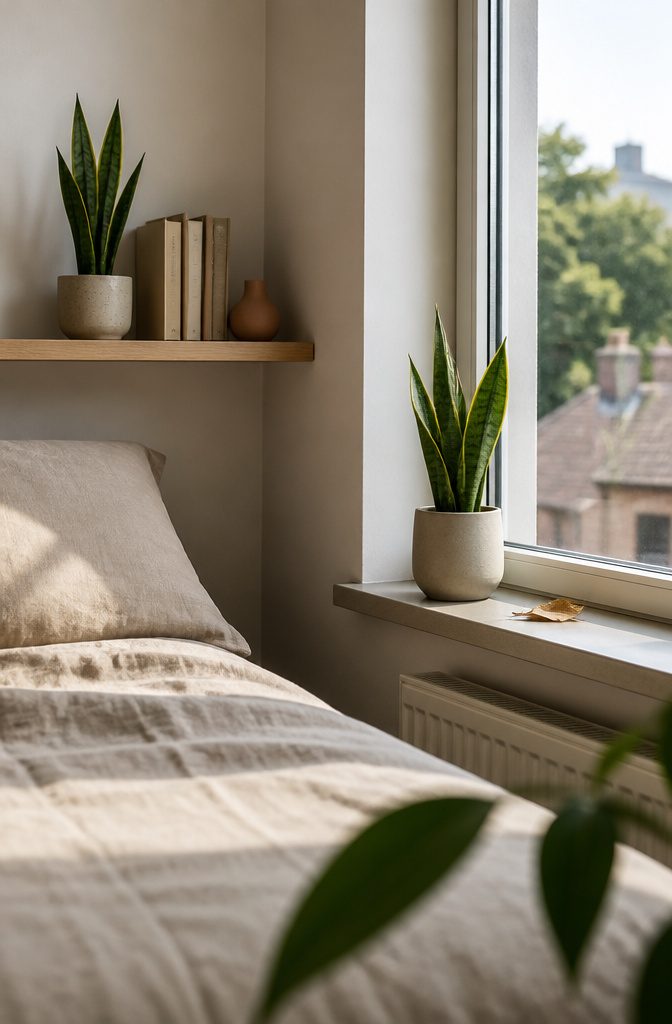
Plants don’t need floor space.
A floating shelf, a windowsill, or a wall planter can hold them all. For a bedroom, succulents and snake plants are the safest picks because they handle indoor conditions with little care.
A small pot on a floating shelf sits easily beside books and decor, and on a windowsill a pot can act as a bookend at the end of a row.
Wall planters suit the tightest rooms.
They keep every surface clear and read as art rather than clutter. Hanging plants do the same job if you’d rather draw the eye upward.
13. A Bedroom Workspace
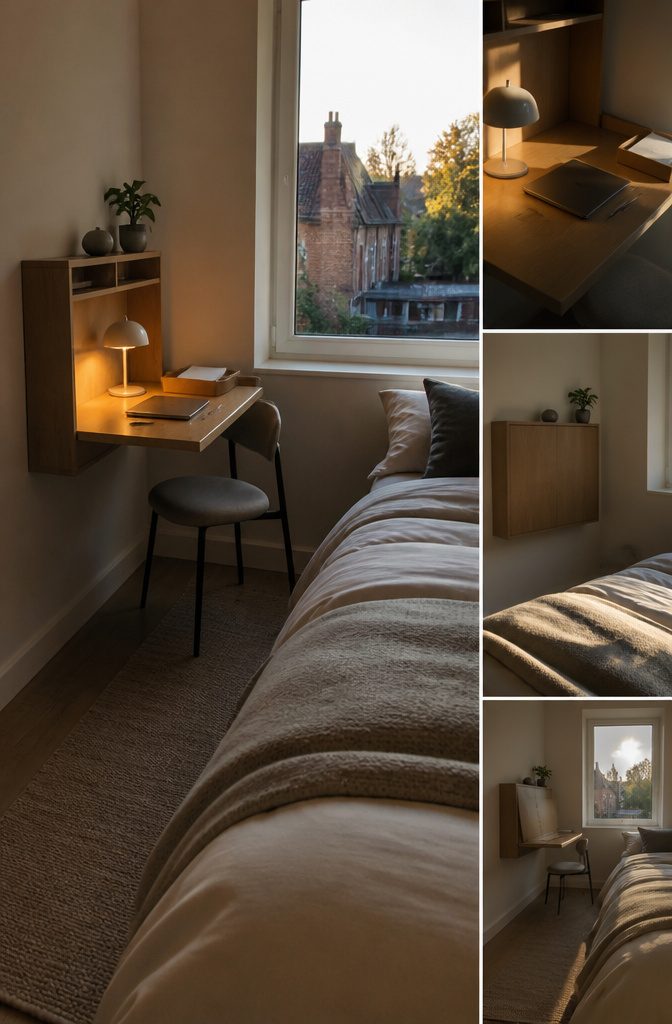
A bedroom can hold a workspace if the work surface takes almost no floor.
A floating desk mounted to the wall leaves the space beneath it open, and a foldable surface tucks away when the workday ends. Both beat a full-size desk, which makes the rest of the room feel tight.
A built-in desk looks the most finished but suits owners better than renters, since it stays when you move. A slim console table also works, and it doubles as a vanity or a display shelf once the laptop is closed.
Keep the setup small: a laptop, a lamp, one tray for papers.
Clear the surface at the end of each day so the room reads as a bedroom at night, not an office with a bed in it. A fold-down desk makes this easy, because closing it hides the whole setup.
14. Curtains as Dividers
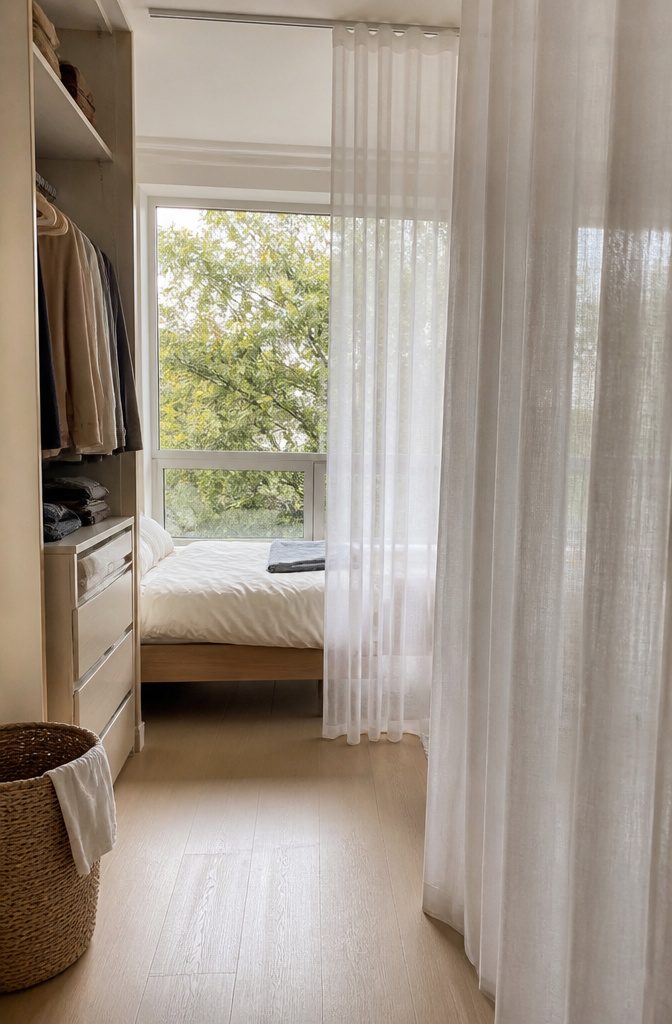
A curtain hung across a small bedroom can mark off sleeping, dressing, and working zones without a permanent wall or bulky furniture. Choose soft colors or sheer fabric so light passes through and the room doesn’t feel stuffed.
Curtains can also replace closet doors, and unlike a hinged door they never swing into the floor space. Sliding barn doors solve the same problem on a closet or bathroom and add a modern look.
For sleep, white blackout panels stay bright and soft by day, then turn the room pitch dark when closed.
Curtains versus blinds on the windows is a toss-up, so decide by the look you want and how much light control you need.
Rug Size and Placement
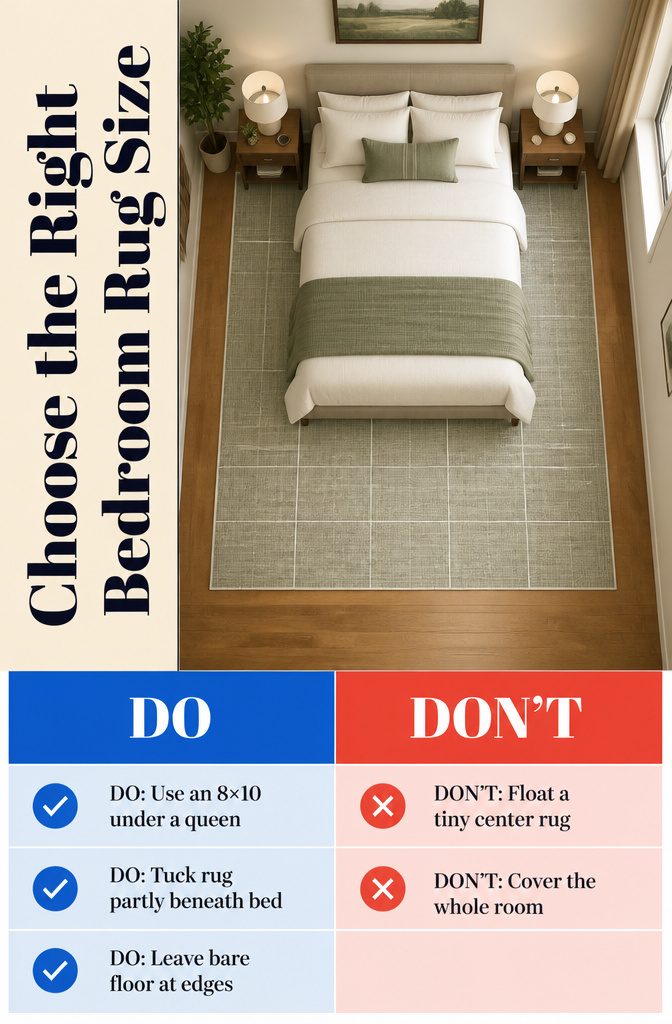
A tiny rug floating in the middle of the floor makes a small bedroom feel smaller.
Go bigger than you think. A large rug that fits under several pieces of furniture reads as one continuous floor, because it adds no extra edges to chop up the space.
Let the rug slide partway under the bed so the proportions look intentional.
An 8×10 rug under a queen bed in a 10×12 room anchors the space without overwhelming it. Too large works against you as well, so leave a strip of bare floor around the edges.
Frequently Asked Questions
How can I make my small bedroom look bigger?
Combine light paint, slim furniture, a cleared floor, and a mirror placed across from the window. Light colors reflect more light, and the mirror sends daylight into the darker half of the room.
Take out extra decor and keep only what you use or love. Move storage up onto the walls so the floor stays open.
What color should I paint a small bedroom?
Go light: white, soft greige, pale blue, or a warm neutral.
Light colors reflect more light, so the room looks brighter and larger. One deep accent wall with lighter tones on the other three adds a cozy focal point, while navy on all four walls makes the room feel closed in.
In a rental, keep the walls light and bring in dark color through bedding, frames, and drawer pulls.
Where should the bed go in a small bedroom?
Tuck it into a corner or against one wall instead of centering it, and keep it off your largest window.
That frees floor space and creates a snug sleeping nook. Leave enough room to walk around at least one side of the bed.
Can you put a king bed in a small bedroom?
Yes, if everything else in the room stays slim and low.
Slim nightstands and wall-mounted lighting keep the bed from crowding the floor. If a king blocks the walkway, a queen is the better choice.
What are the best storage solutions for a small bedroom?
Use storage that clears the floor. Under the bed, bins and baskets suit renters, and a bed frame with built-in drawers or a storage bench adds more.
On the walls, floating shelves, hooks, and a tall bookcase keep things up and out of the way. Built-ins around the bed hold the most but require construction, so they suit owners better than renters.
Can you fit a workspace in a small bedroom?
Yes, as long as the work surface takes almost no floor space.
A wall-mounted floating desk, a foldable surface, or a slim console table all work. Keep the setup to a laptop, a lamp, and one tray, and clear it each day so the room still reads as a bedroom at night.
What plants work in a small bedroom?
Succulents and snake plants are the safest picks because they handle indoor conditions with little care.
Put them on a floating shelf, a windowsill, or a wall planter so they use no floor space. Hanging plants work too if you want to draw the eye upward.
What lighting is best for a small bedroom?
Layer your lighting instead of relying on one ceiling fixture. Use a pendant or sconce for general light, a bedside lamp or swing arm sconce for reading, and picture lights over art for accent.
Choose warm bulbs on a dimmer and skip cool white, which looks stark. Wall-mounted and hanging fixtures leave tabletops open.
What is a cheap way to refresh a small bedroom?
Swap the textiles.
New pillowcases, a throw, and curtains change the mood without replacing the whole bed, especially if the base bedding stays neutral. Pick plush but not bulky pieces so the bed doesn’t look too big for the room.