
The styles run from a nearly empty minimalist room to a layered bohemian one, and the right pick depends on how much upkeep you tolerate and what you already own.
Each look fails when pushed too far: bare minimalism turns cold, and too much polished concrete turns austere. One concrete side table gives the industrial look without the chill.
1. Minimalist Clean Lines
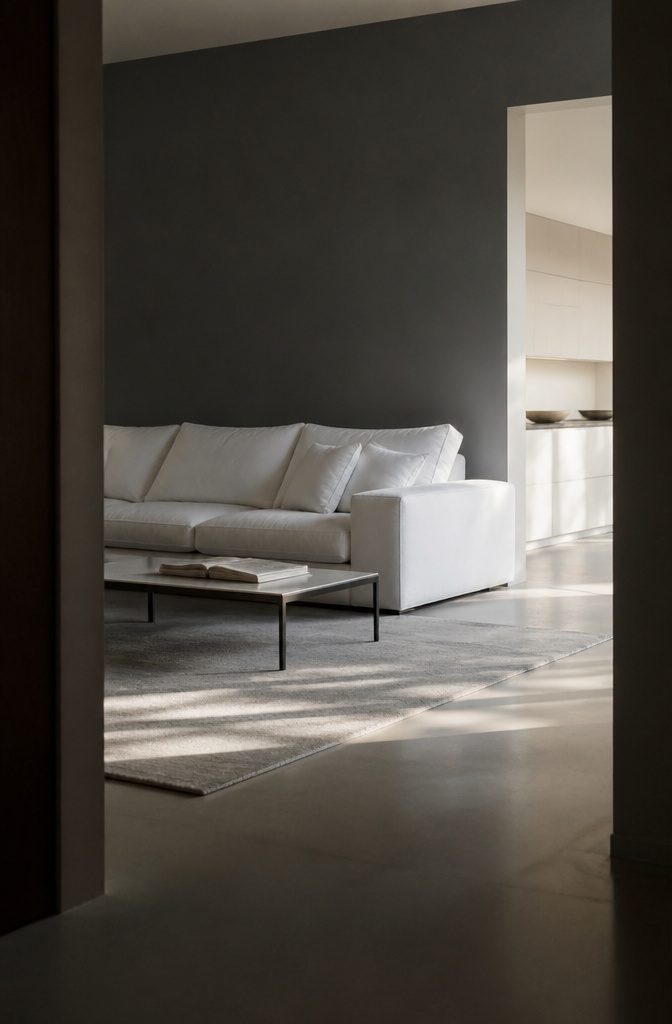
Minimalism rests on clean lines and a palette of clean whites and deep greys.
Keep one sofa, one table, and one rug, and let a single piece carry the room, whether that’s the sofa, a large piece of art, or a sculptural object. Skip patterns.
If you want color, add it in solid blocks through a cushion or a print. Leave coffee tables and shelves nearly empty, and don’t fill the open floor, because empty space is part of the look.
Take it too far, with every surface bare and every tone cool, and the room turns cold and uninviting. The next idea, warm minimalism, fixes that without adding clutter.
Recommended Products

Modern Minimalist Style: Elevate any space with this contemporary minimalist rug, featuring a modern bordered design and neutral tones that blend effortlessly with both classic and modern décor. Perfect as an accent rug for indoor spaces

【Natural Comfort & Unique Foot Feel】:Inspired by nature's pebble paths, this 6x9 washable area rug has an irregular stone grid pattern with a 3D texture. It offers you a luxurious and comfy underfoot feel. With a neutral yet warm color, the living room rug is a nice upgrade to your home
2. Warm Minimalism
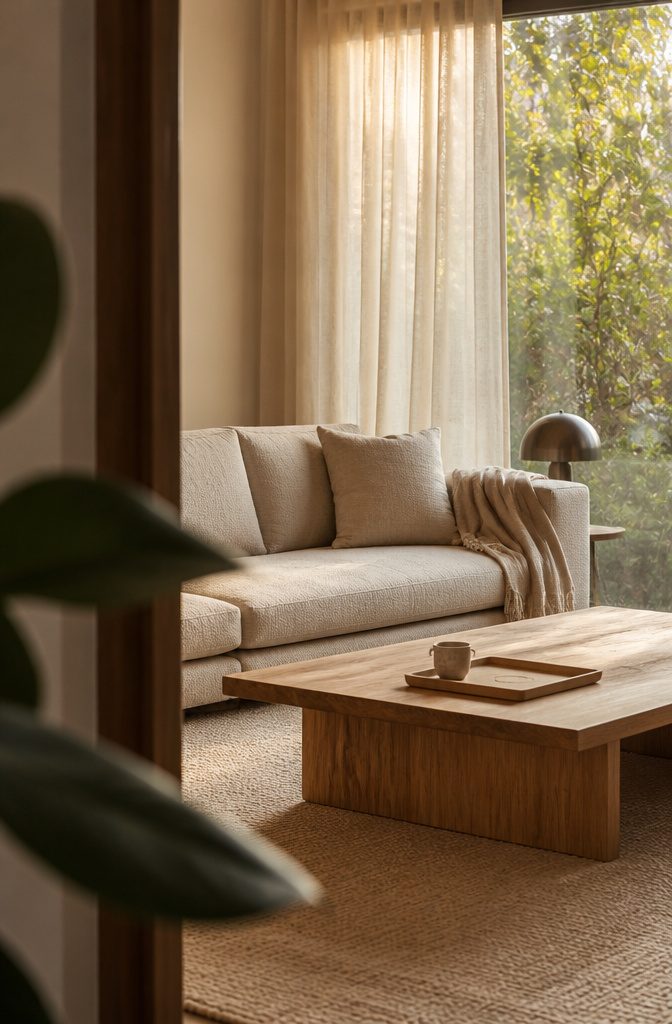
A pared-back room turns stark when every surface is the same flat white or gray.
Keep the palette to neutrals, then run one warm tone through them, such as cream, oatmeal, or tan. Pick one warm undertone and repeat it in every neutral, so the room reads as one calm scheme.
Texture adds the interest, and a renter can add it in a weekend. Hang linen curtains, drape a wool throw over the sofa arm, and set a wood tray or side table where you need a surface.
A plant adds greenery, and a metal lamp base gives a small contrast. One oversized coffee table also makes the room feel more spacious than several small ones.
Recommended Products

Versatile Hanging Options: Set of 2 Panels.Each panel measures 52 inches wide by 84 inches long, with a back tab and loop pocket top design that provides three hanging options: an elegant pleated look from the back patch, a classic gathered effect with rod pocket style, or the ability to hang with clip rings (not included).

SIZE & MATERIAL:Set includes 2 panels blackout curtains(52" Wide by 84" Long). Each panel has 8 grommets.The interior diameter of hole is 1.6 inch.It's easy to hang. Curtains are made by quality faux linen.

Basic Information: Includes 2 curtain panels, each measuring 50 inches wide for a total of 100 inches. Easy care for machine washable in cold water, do not bleach, tumble dry low, iron on low heat if needed.
3. Color Through a Focal Point
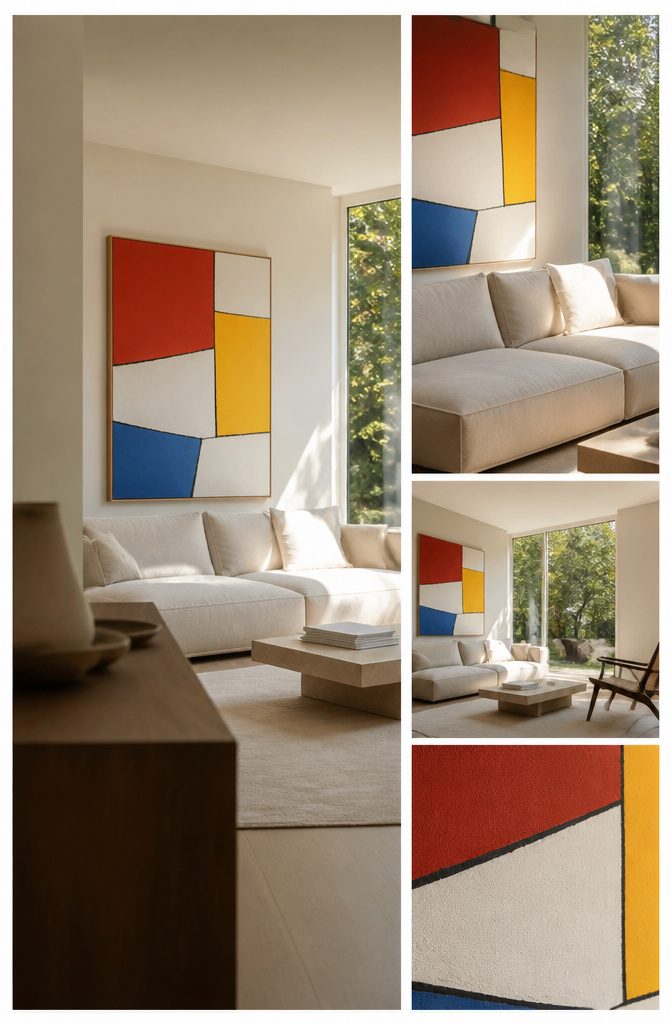
Build the palette around one expressive piece, such as a colorful sofa or a large work of art, and keep everything else coordinated and quiet. Designer Jenkins gives the rule:
"Start with one decision first and build around that."
Choose that piece first, then pick paint and textiles that support it.
Abstract art is the easiest way to add color. Mondrian’s Composition with red, yellow, and blue is the reference: blocks of primary color against neutrals, so look for affordable works in that style.
Hang art after the furniture is in place, and skip anything that looks too perfectly matched to the sofa.
4. Bohemian Color and Texture
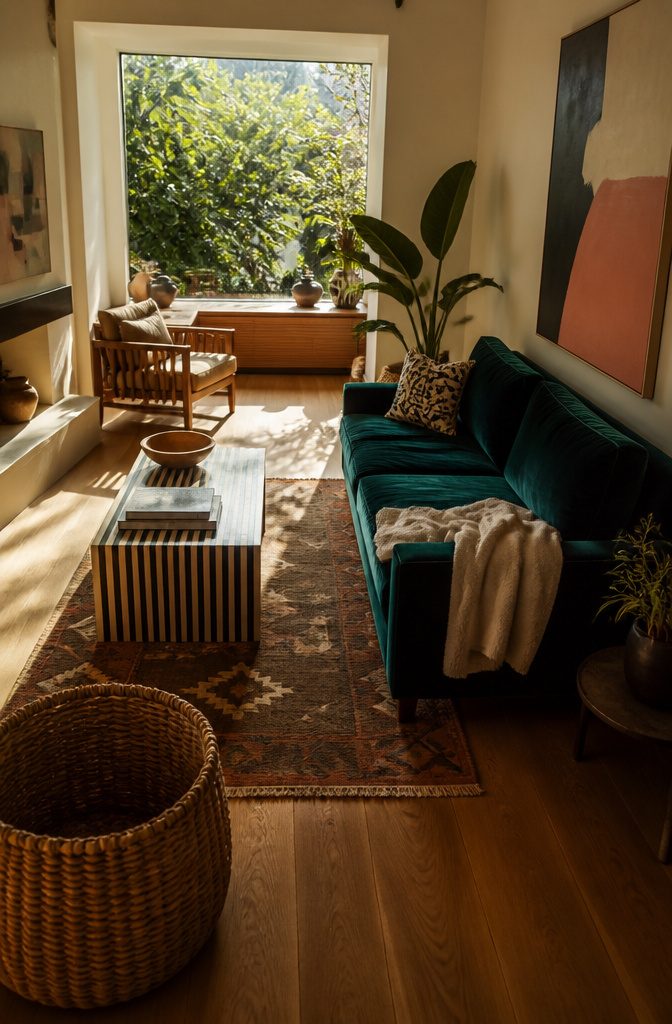
Velvet and suede do most of the work in this look.
Pair those heavy fabrics with ethnic weaves, and the room gets its layered, expressive feel. A striped center table adds a second pattern, so the eye has something to read besides the sofa.
Paintings and art can go bold on the walls, and you can use as many colors as you like or keep the palette small.
This is the busiest look on the list, and the hardest to keep tidy.
Every textile, print and frame is one more thing to straighten and dust. Anchor the room with one heavy fabric and one clear pattern, then add color and art only as the room can hold them.
5. Mid-Century Modern
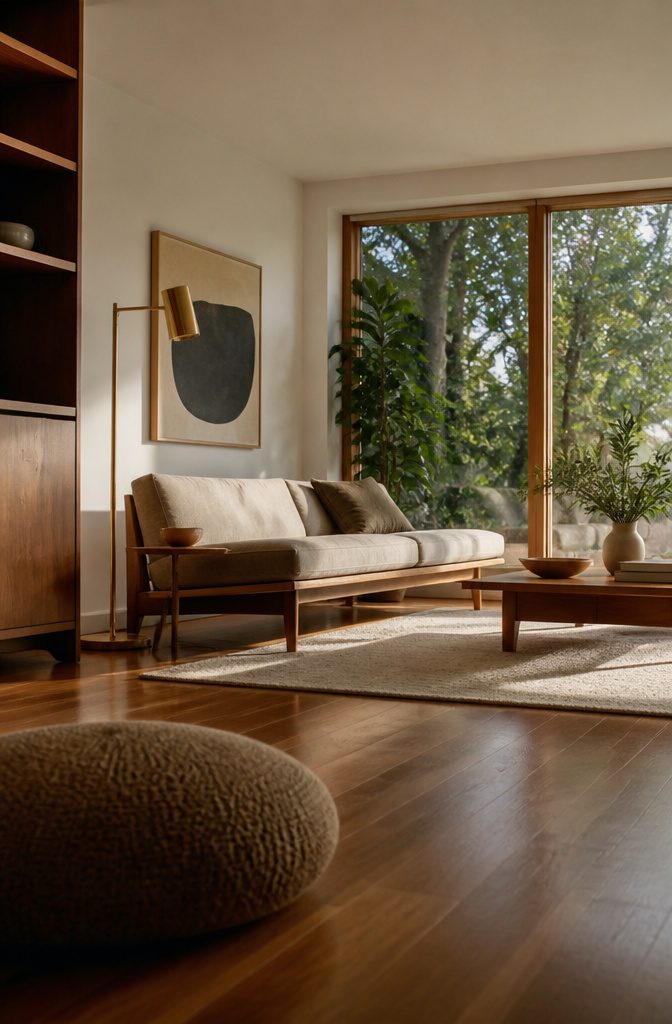
Mid-century modern grew out of a push in the mid-1950s to revive furniture and art, and the look still depends on wood paired with metal.
Start with a sofa that has a wide seat, then add a pouf, which is back in style.
Color is open to play, but put at least one metal accent in the room, such as a brass lamp or brass-framed armchairs, because the metal is what makes the room read as mid-century.
Designers to search for include Florence Knoll (sofas) and Harvey Probber (brass armchairs).
Thrift stores and secondhand listings are the budget route. Buy a solid frame in a shape you like, and reupholster or cover it later if the fabric is tired.
6. Rustic and Reused Materials
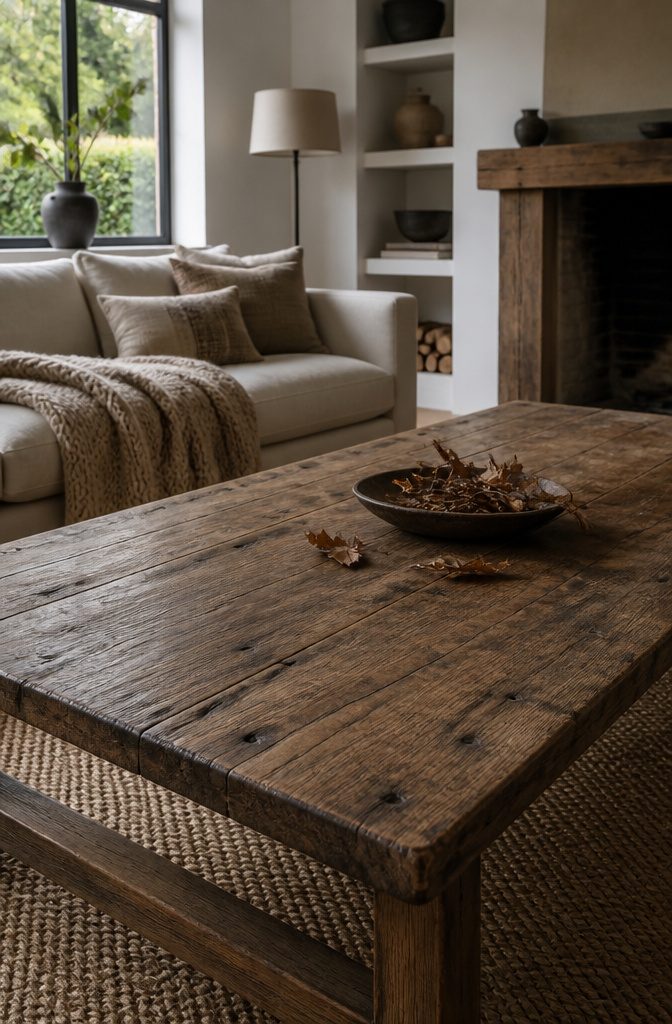
Wood accents carry the rustic look, so put them where the eye lands first: a coffee table, a mantel, open shelves.
Keep the walls and sofa in a neutral palette so the grain stands out. Soft furnishings and cozy textiles, like a chunky throw, a few pillows, and a rug, soften the wood’s hard edges.
An old family piece, such as a grandparent’s side table or a dresser you already own, adds age and history that a showroom set can’t fake, and it costs nothing.
Mix it with just a couple of modern pieces, like a clean-lined sofa, so the room reads as modern with a rustic touch instead of a period set.
7. Tropical or Coastal Touches
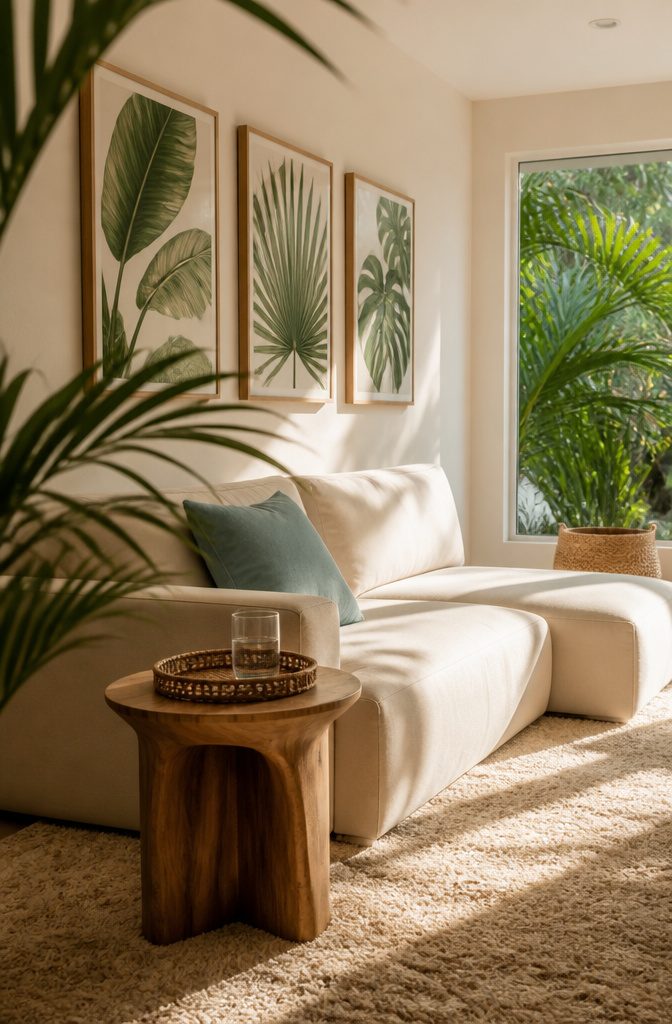
Tropical in a modern room starts with plain furniture. Pick solid-colored sofas and rugs in peaches, creams, and beiges, choose a plush rug, and let framed leaf prints do the tropical work.
A leaf-print accent wall is the bolder route, and a neon light fixture adds drama. Choose one of those, not both, or the room starts to look like a theme restaurant.
Soft blue tones give you a coastal version without shells or anchors. Pair them with low-profile furniture, clean lines, and a little natural wood.
A rug with a ripple pattern or a crystal coffee table hints at water. Keep the theme to a few pieces; the plain furniture around them is what keeps the room modern.
8. Industrial Materials
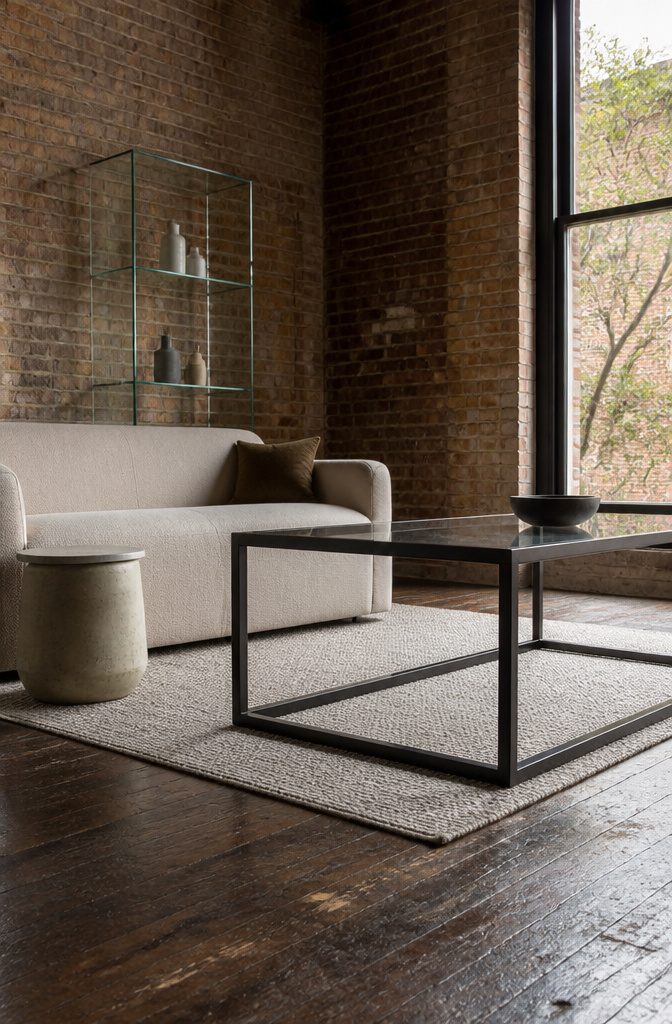
Concrete, glass, and steel are the materials that define modern design, so build the industrial look around them. If your place has exposed brick or wood floorboards, show them off: keep rugs small enough to leave the boards visible.
Polished concrete looks good, but use it sparingly in a living room, because too much turns austere. One concrete side table or planter gives you the look without the chill.
Renters can skip the walls entirely.
A steel and glass coffee table is the classic piece, and a metal-framed table in a similar style works just as well. Freestanding glass shelving brings in the same materials without a single drill hole.
9. Modern Meets Your Existing Style
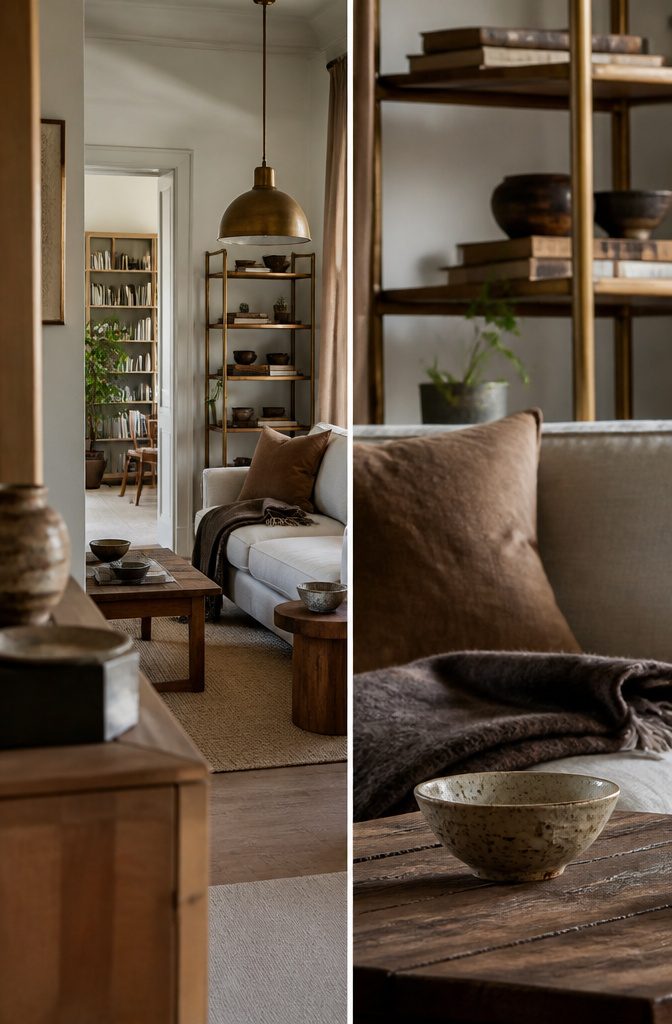
Modern is not one fixed look. It borrows from minimalist, bohemian, eclectic, rustic, tropical, and industrial rooms, so you can add modern cues to the style you already own.
In an industrial room, bring in low-profile, mid-century style furniture or replace the light fixture with a sculptural chandelier. In a rustic room, keep the wood accents, neutral palette, and cozy textiles, then add a couple of modern pieces.
Old and new need common ground.
Repeat one metal finish, hue, or pattern across both, such as the same metal on the new fixture and your existing shelving. Without that link, the room looks like a mess that is neither style.
10. Statement Furniture
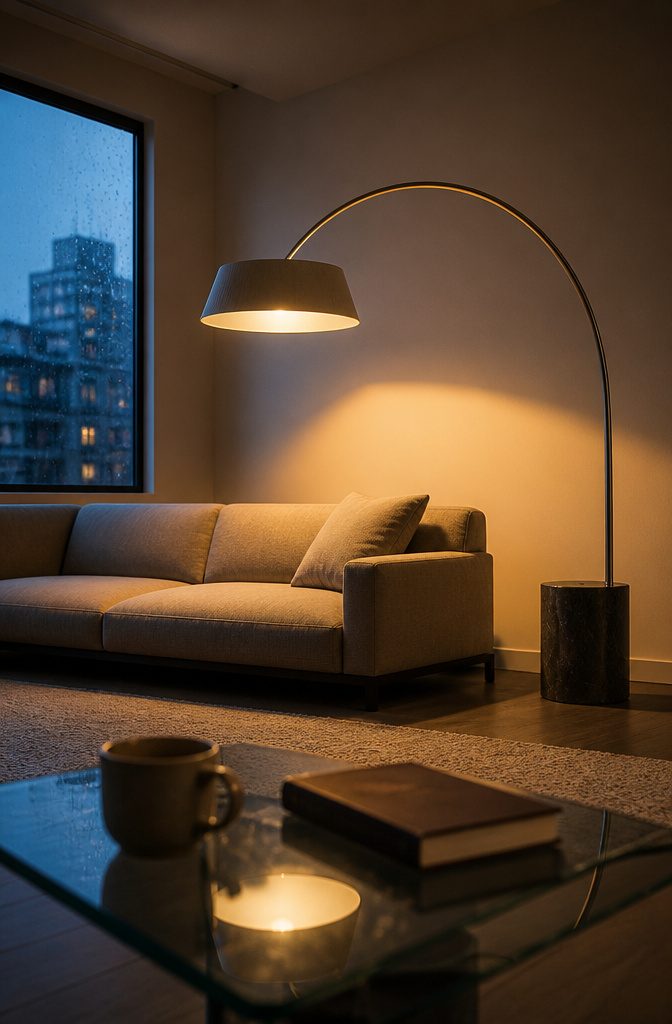
Modern rooms skip ornament, so the furniture does the talking.
Pieces by Le Corbusier, Marcel Breuer and Florence Knoll still anchor the look, and the Barcelona chair, a large leather sofa or a sleek glass table can each be the one piece the room is built around.
A sculptural chandelier, like the bold ones Apparatus Studio makes, does the same job overhead.
Designer seating is a stretch for most budgets, so a sculptural lamp is the cheapest way in.
Pick one statement and keep everything else quiet, because a second loud piece competes with the first. If you’re unsure where to begin, start with lighting: choose the fixture first, then build fabrics and art around it.
Choosing a Color Palette
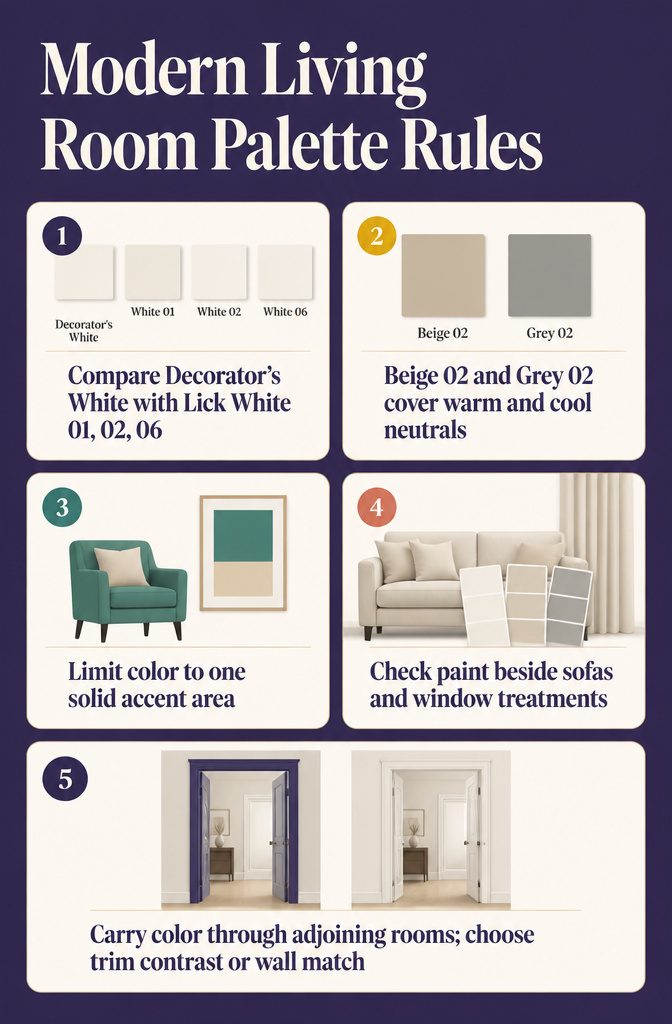
Clean whites and deep grays suit a modern living room, and a few checks keep the palette working.
- Start with neutrals. Benjamin Moore’s Decorator’s White and Lick’s White 01, White 02 and White 06 are the white options to compare. Lick’s Beige 02 and Grey 02 cover the beige and gray side.
- Add color sparingly, in solid blocks rather than patterns. An armchair, a pillow set, or one large piece of art is enough.
- Test against your biggest pieces. Hold each paint sample next to the sofa and the window treatments before you commit.
- Look at the adjoining rooms. Color carries from one room into the next, so check each sample from the doorway.
- Treat the trim as a choice. Paint it the wall color, or keep the walls neutral and contrast the trim.
Layout and Built-In Storage
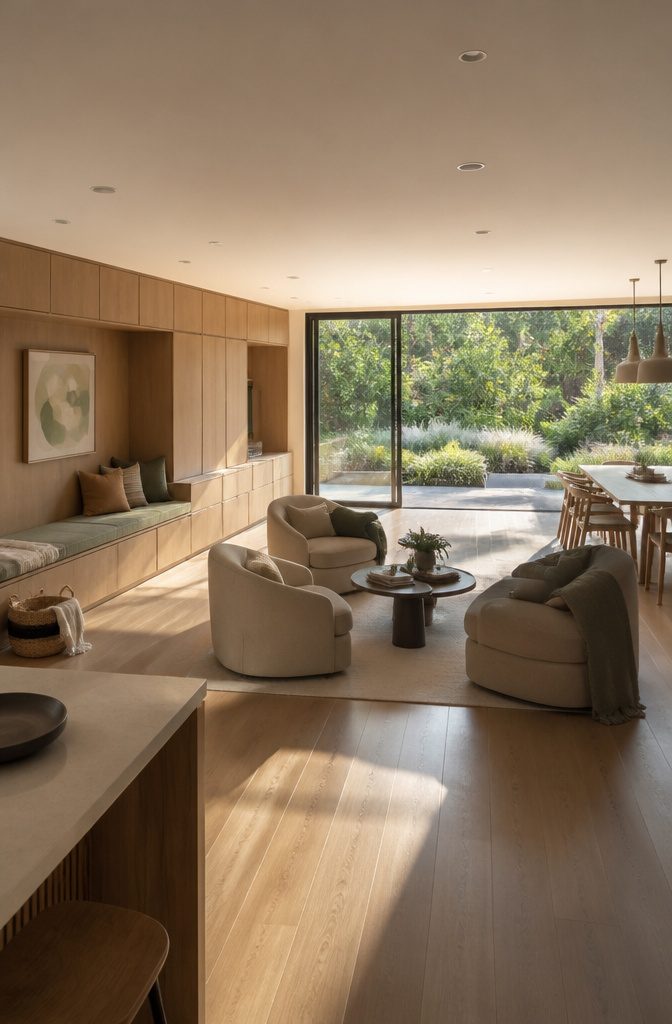
Clutter is what keeps a room from reading as modern, so give everything a home behind streamlined built-in storage.
"Shy tech," meaning screens and gear hidden from view, follows the same logic. Keep cushions and throws to a few, because a sofa buried in them undoes the clean look.
Layout carries as much weight.
Skip the single seating group around one central coffee table and split the room into smaller gathering areas. A salon-style seating cluster facing a long banquette along one wall is one way to do it.
Smaller groups suit conversation, and they work well in an open-plan space, where the flow of the room matters. If you have large sliding doors, leave them bare.
Frequently Asked Questions
How do I approach modern living room design?
Make one decision first, such as the sofa, a large piece of art, or the light fixture, and build the rest of the room around it.
Keep everything else quiet, because a second loud piece competes with the first. Hang art after the furniture is in place, and avoid pieces that look too perfectly matched to the sofa.
How do I pick a color scheme for a modern living room?
Begin with neutrals such as clean whites and deep grays, then add color in solid blocks like an armchair, a pillow set, or one large piece of art.
Hold each paint sample next to your sofa and window treatments, and check it from the doorway, since color carries into the adjoining rooms.
Trim can match the walls, or you can keep the walls neutral and paint the trim a contrasting color.