
The choices run from concrete-look porcelain that nobody notices to glossy yellow or burgundy tile that everyone does, and what decides yours is what your counters already do.
Heavy veining or a pattern on the counter calls for plain tile; keep one busy surface. Tape a sample beside your cabinets, because white can turn yellow or blue at home.
1. Slab Backsplashes
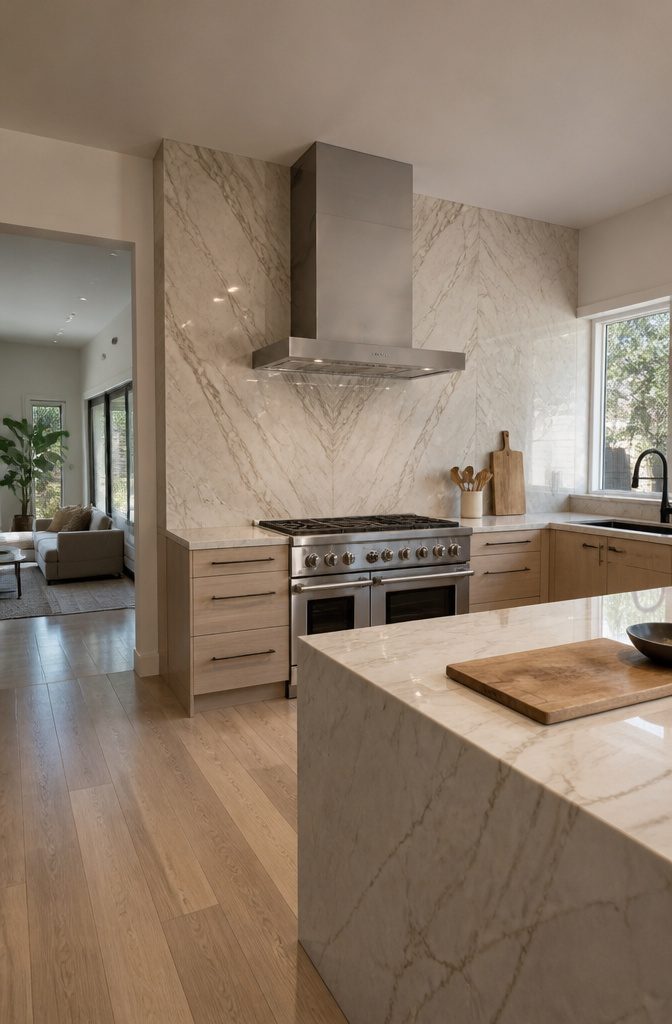
A slab backsplash carries the countertop material up the wall, so the eye reads one continuous plane instead of a counter plus a wall.
Porcelain, quartz, and natural stone all work, and running the same piece along the stove and sink wall trims visible seams.
Go full height to the ceiling behind a range hood or open shelving, with a single piece behind the stovetop and side returns.
Plan the cuts for the stove and sink so joints land away from the sink splash zone, and bookmatch veined stone so the pattern mirrors itself.
For an industrial look, Blaze Iron porcelain has an oxidized metal finish. Premium stone can push a remodel budget fast, so price the slab before you commit.
2. White and Light Neutrals
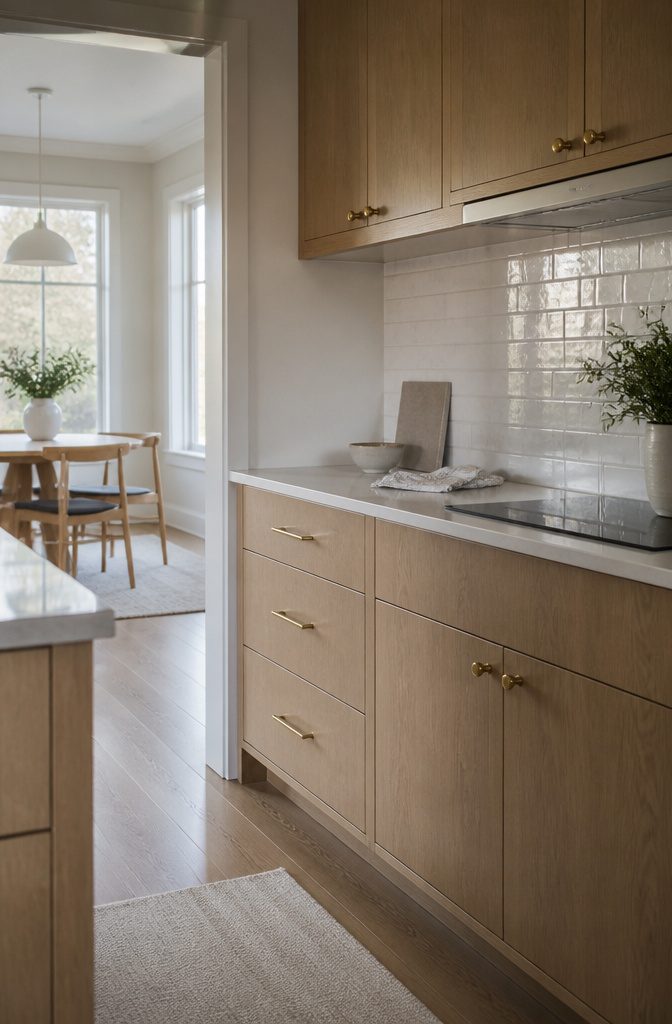
Light neutrals keep a kitchen quiet and bounce daylight back onto the counter. Cream and beige read warm, which softens wood cabinets and brass hardware.
Bright white and cool gray read cool, and they suit stainless steel, black fixtures, and flat-front cabinets. Greige sits between the two, so it’s the safer choice when you can’t tell your counter’s undertone.
Classic white subway tile is still a popular pick. Marble-look stoneware gives you the veining without the sealing and etching that real marble needs.
Tape a sample next to your counter and cabinets and check it in your kitchen’s own light, because a white that looks clean in the store can turn yellow or blue at home.
3. Black and Dark Backsplashes
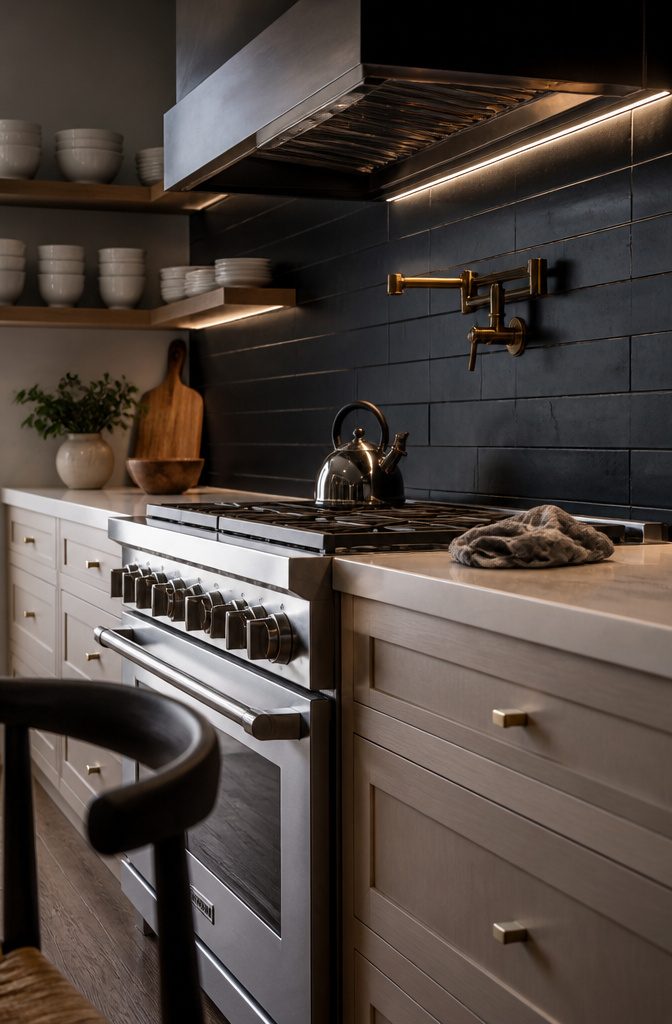
Black is among the backsplash colors named for 2026, and it works best against light cabinets, where the contrast does the work. Matte black subway tile gives a minimalist, industrial look, especially beside stainless steel appliances.
Black marble with white veining, black textured ceramic, and large-format black stone or porcelain panels are other routes. A black-and-white pattern makes a focal point if solid black feels heavy.
Dark surfaces show every splash, so expect to wipe water spots and grease more often than on a pale wall.
They also soak up light, so plan on good task lighting over the counter. Brushed brass fixtures soften the contrast and add warmth.
4. Green Backsplashes
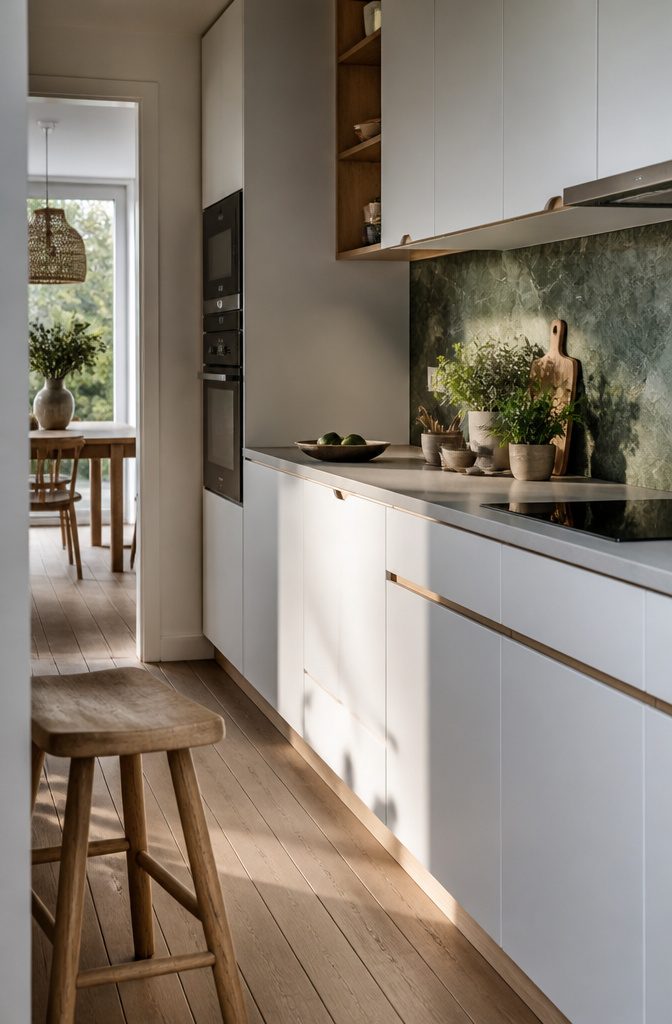
Sage green is one of the 2026 colors, and it’s the easiest green to live with.
It’s soft enough to read almost as a neutral, so it won’t crowd a small kitchen. Olive runs darker and earthier, and a fluted olive tile adds shadow lines that flat tile lacks.
For the strongest statement, run a green marble, granite, or quartz slab up the wall. The natural variation in the stone gives the color depth.
Pair any of these greens with white or light cabinets and natural wood accents. Oak and walnut both suit green, and neutral countertops keep the look balanced.
Brown and beige echo the earthy mood. Potted herbs on the counter finish it.
5. Blue Backsplashes
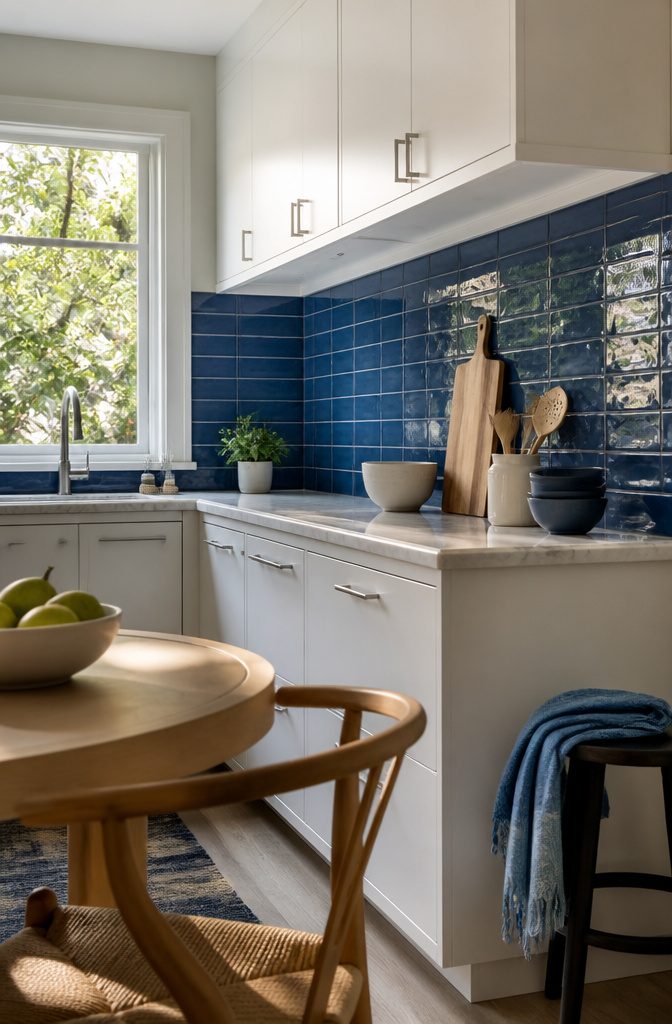
Blue and white ceramic works best when the pattern is the focal point.
Moroccan or Portuguese designs carry enough detail to anchor the whole room, so keep everything around them plain: white cabinets and marble countertops, with no second pattern on the counter or in the paint.
If you want less going on, choose solid blue instead. Glossy glazed ceramic or porcelain field tile with a simple edge profile in deep blue or teal wipes clean easily and reads as a deliberate choice.
Echo the color once or twice elsewhere, in stools, art, or textiles, and then stop. A patterned wall beside a busy counter turns into noise.
6. Bold-Color Backsplashes
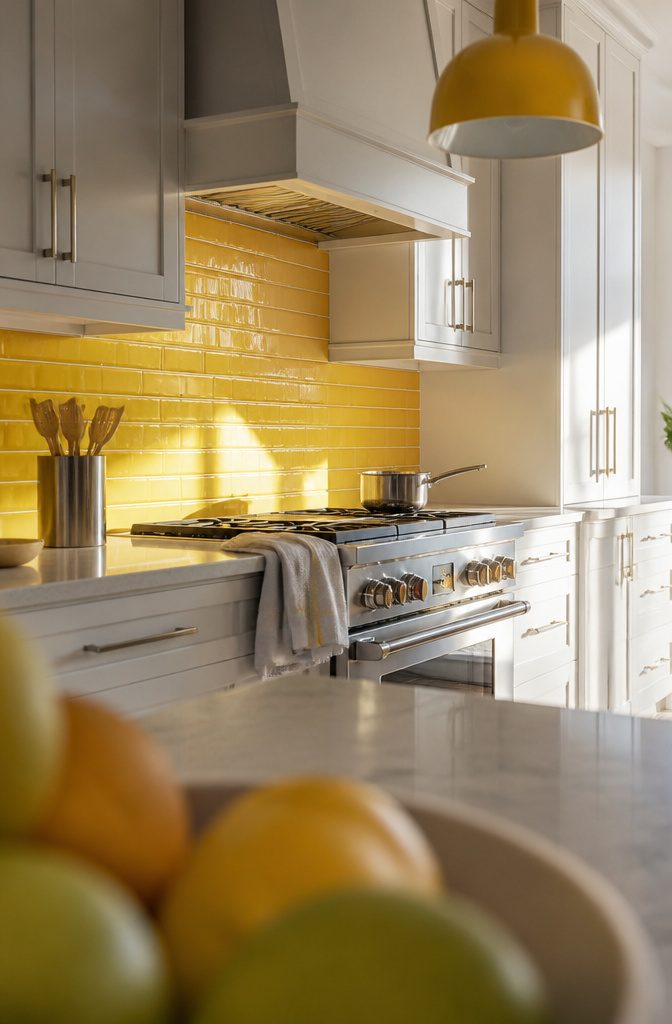
Glossy yellow subway tile or glossy burgundy tile makes the backsplash the first thing anyone sees.
Saturated color works as the focal point because everything else can stay simple: white cabinets, neutral counters, a few metallic accents. Keep the counters plain so no second pattern competes with the tile.
Choose single-color field tile with a simple edge. Glazed ceramic or porcelain wipes clean easily, which matters beside the stove, where a bold backsplash makes the most sense.
Repeat the color once or twice, no more.
Yellow bar stools or pendant lights work, as does burgundy in art or textiles. An island painted or stained to echo the tile ties it together.
7. Handmade and Textured Tile
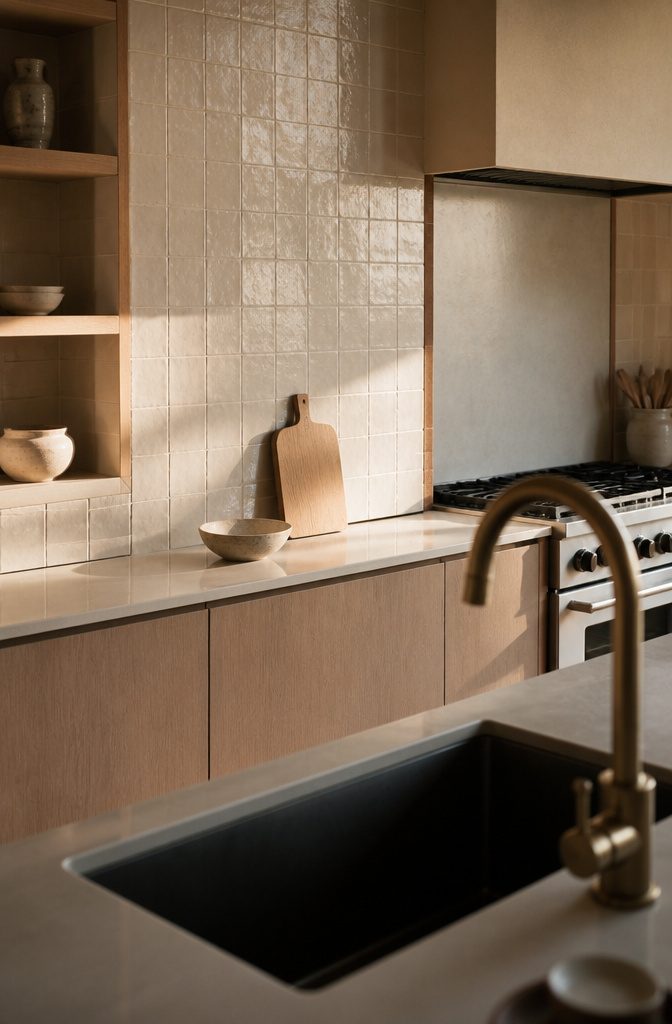
Zellige is the strongest choice here. Its small irregularities let light play across the wall, and the glaze variation adds movement without a loud pattern.
It works best in a kitchen with simple slab fronts and quiet counters. Use warm white grout to soften color shifts, a straight stack layout for a calmer field, and edge trim in the same clay tone for clean ends.
Handmade mosaics come in ceramic, glass, or stone. Handcrafted ceramic and textured porcelain give a similar artisanal look and suit Japandi and mid-century modern kitchens.
Uneven surfaces catch light, but they are harder to wipe than flat tile. Behind the stove, a smoother glaze is easier to live with.
8. Herringbone and Stacked Layouts
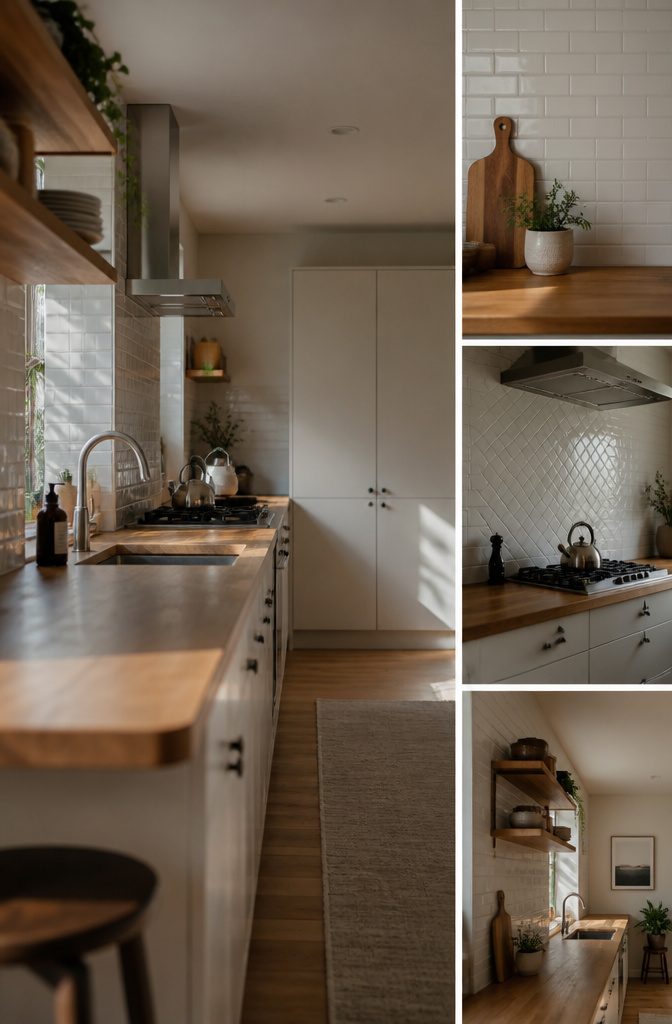
Subway tile still works in a modern kitchen, and a new layout is the cheapest way to update it.
The material stays the same, but the pattern changes how the wall reads. Stacked rows make a clean grid that looks modern.
Herringbone adds motion and a tailored look. If a full grid feels stiff, half-offset the rows for a softer version.
Stacked rows running horizontally along the long wall of a galley kitchen make the room look wider. Herringbone is busier, so limit it to the range wall.
Finish the edges with bullnose or metal trim for a crisp line. Warm white tile next to butcher block gives balanced contrast.
9. Marble-Look and Natural Stone
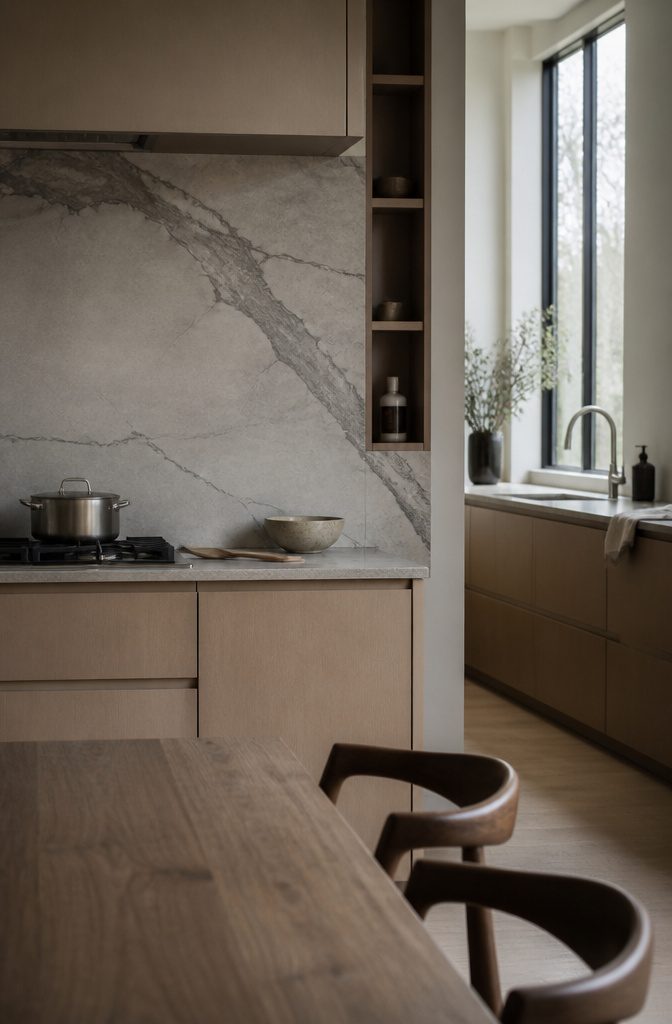
Marble, quartzite and granite give you veining that no two slabs repeat, and bold movement turns a backsplash into a feature wall. Of the real stones, quartzite is the one to pick: it pairs high-contrast movement with durability.
A honed finish softens the reflection. Real stone needs regular sealing to keep its look and resist stains, and that includes limestone and travertine.
Before you buy, ask your contractor which sealer the stone needs and where the seams will land. Premium slabs can push a budget past the average remodel cost fast.
For a busy kitchen, marble-look porcelain stoneware wins.
It is heat-resistant and long-lasting, and you skip the sealing routine. Shades from milk white to beige keep the look warm.
10. Concrete-Look Backsplashes
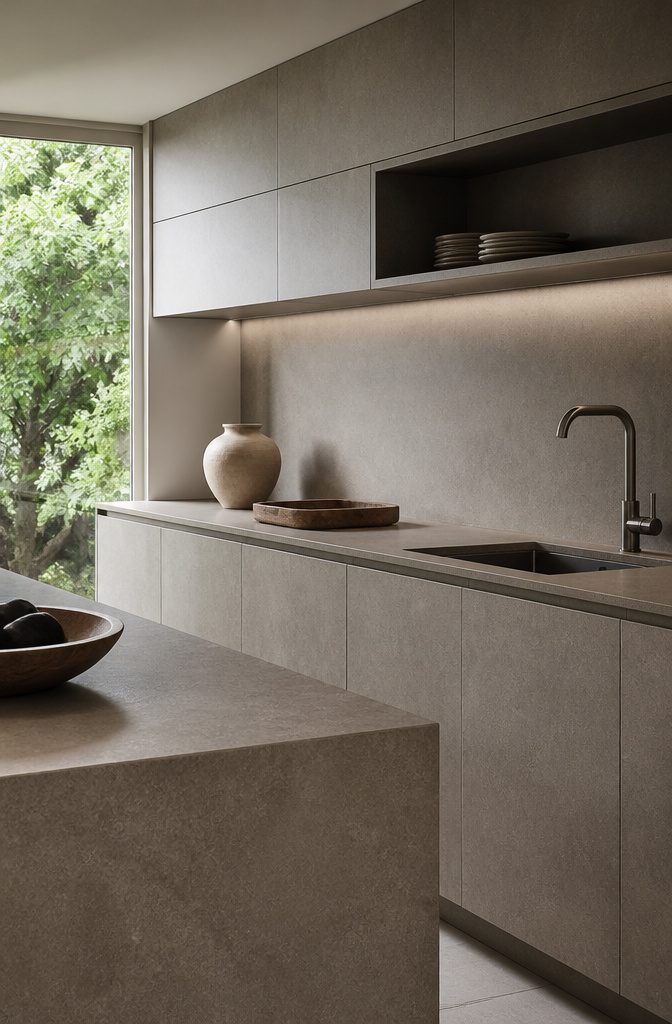
Concrete-look porcelain stoneware is the quietest backsplash you can put in a modern kitchen.
It reads as plain gray from across the room, and the interest sits in fine texture up close. White cement-look stoneware does the same in a lighter tone.
For a little more pattern, stone-look slabs borrow the markings of Ceppo di Gré, the pebble rock of Lombardy.
The cool gray suits kitchens that are already restrained, especially ones where concrete-look material runs across doors, wall units, tops and backsplash for one minimal look.
It also works in a beige kitchen, where the best backsplash is the one nobody notices. Skip it if you want the backsplash to be the focal point.
11. Metal Backsplashes
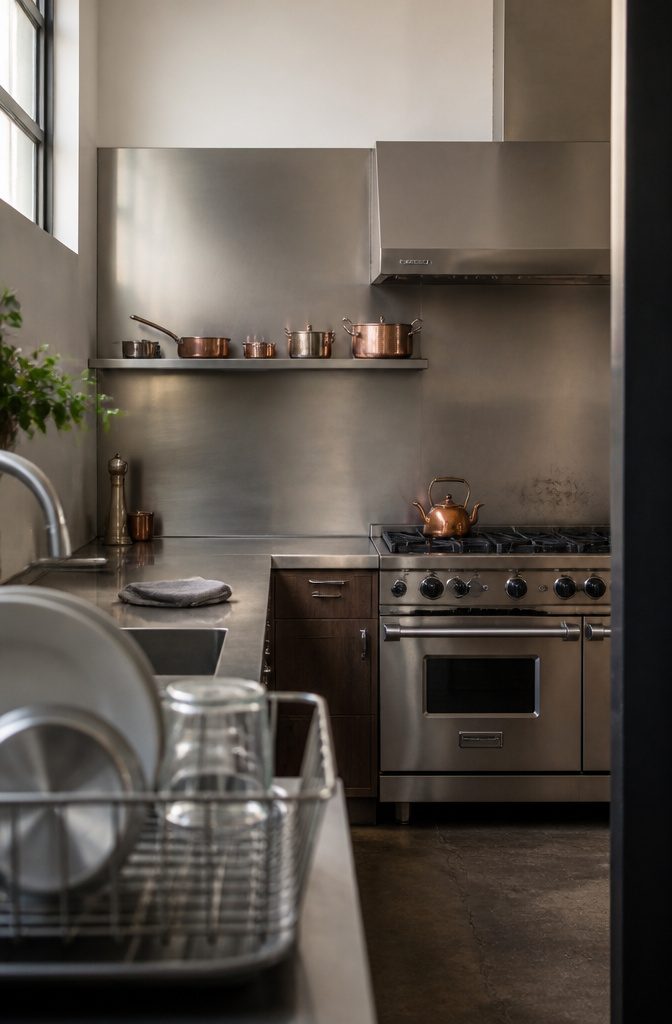
Stainless steel gives an industrial kitchen a sleek, professional look, especially next to steel appliances.
It also shows fingerprints and grease splatter behind the range, so choose a brushed finish over a mirror polish. Keep a microfiber cloth handy either way.
For a distinctive kitchen, copper is the pick.
It develops a patina over time and adds warmth that steel can’t. It won’t stay penny-bright, so choose it only if you like a surface that keeps changing.
If you want the look without real metal, Blaze Iron porcelain stoneware slabs mimic oxidized metal and recall industrial interiors. Because the surface is stoneware, it stays put: no patina to wait on, and a wipe handles grease.
12. Terrazzo and Checkered Tile
Terrazzo gives you a speckled surface made from recycled marble, granite and glass, and it reads mid-century without feeling like a costume.
Subtle specks sit quietly behind a stove, while colorful ones get loud fast. Either way, keep the cabinets neutral and the countertops white so the speckles carry the wall.
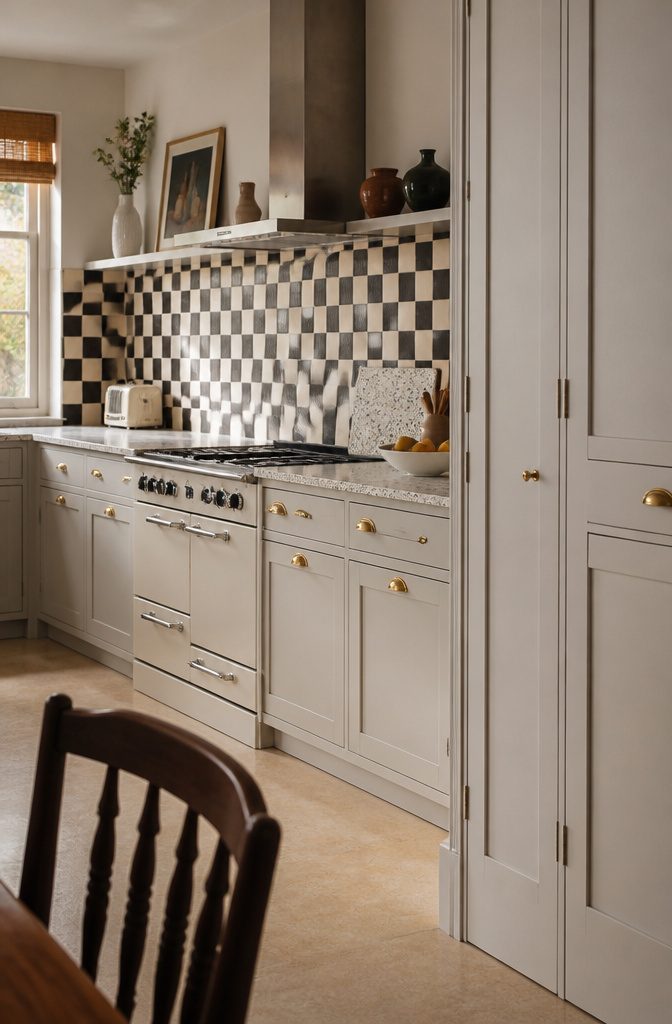
Checkered tile is the louder choice.
Black and white is the safe pick, and mustard and white is the braver one. Give the pattern one wall and keep everything near it plain.
Vintage-style appliances and a few retro accessories suit a checkerboard, but stop there. A patterned floor or printed curtains in the same room will compete with it.
What a Backsplash Protects
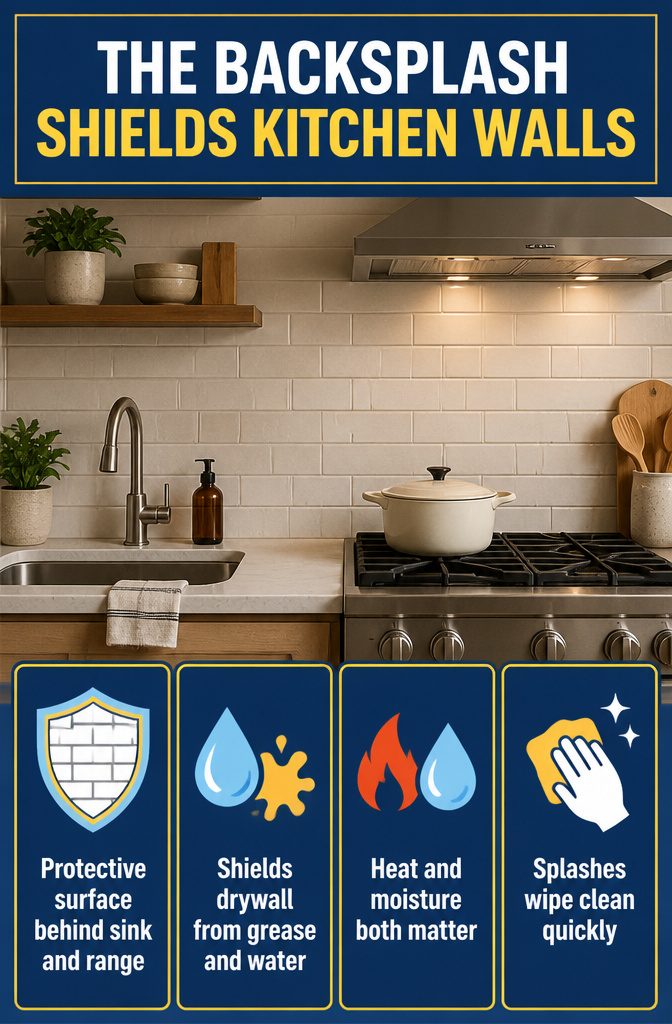
A backsplash is a protective surface behind the sink and range, and the design comes second. It shields drywall from grease, water, and splashes, and it turns cleanup into a quick wipe.
Atlas Plan describes the strain this wall takes:
One of the most often underestimated surfaces in the kitchen is the one behind the stove: cooking vapors, splashes and temperature fluctuations put a strain on this work area.
Heat hits the wall behind the range and moisture hits it at the sink, so any look you pick has to handle both before it earns a place in your kitchen.
Choosing Material and Finish
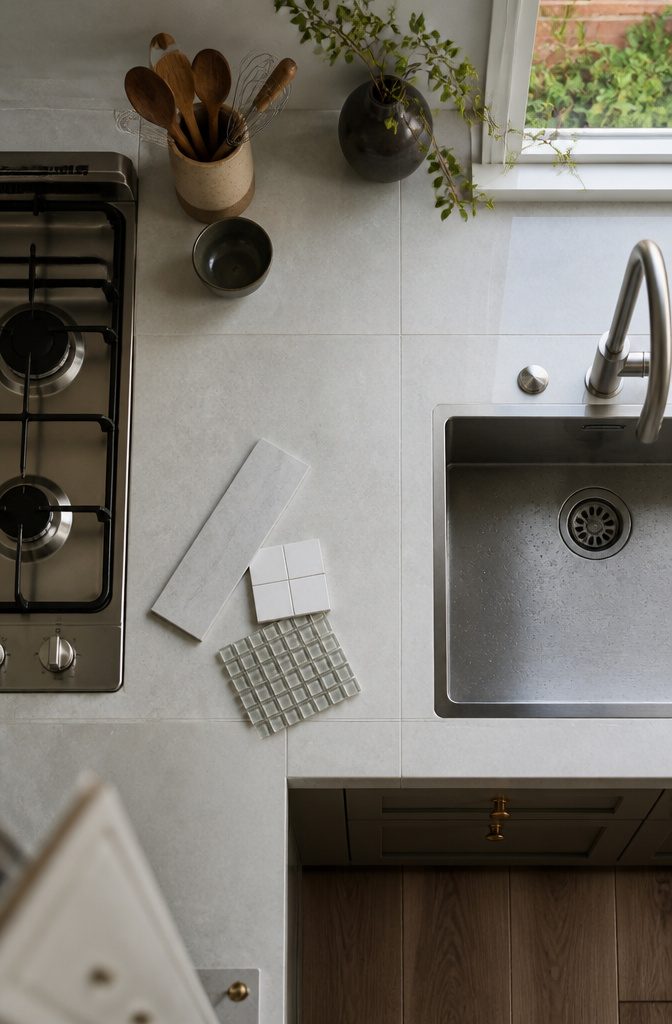
Porcelain stoneware wins for working kitchens: it is waterproof, impact-resistant, and safe for food contact, so it copes with heat behind the range and splashes at the sink.
Ceramic and glass tile also wipe clean and come in many colors and shapes.
Natural stone looks richer but needs sealer to resist stains. Pick the durable, low-maintenance material if you cook daily.
For a DIY tile job, smooth the wall, measure and mark the area, spread adhesive as the manufacturer directs, and set each tile level and aligned.
Grout after the adhesive dries and wipe off the excess. Slabs usually call for a professional.
Matching Cabinets and Counters
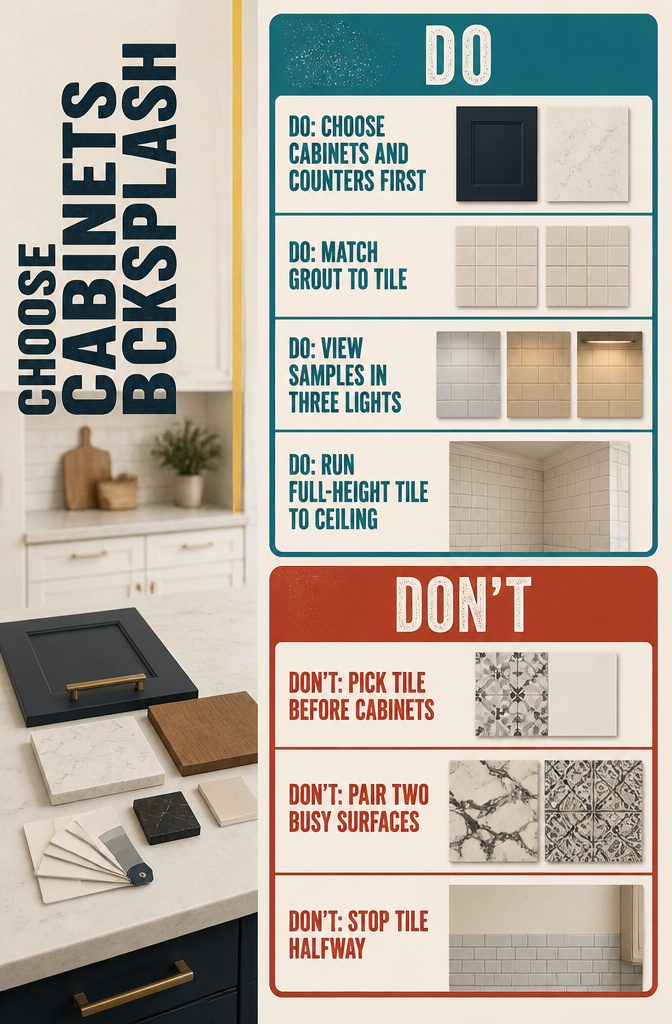
Choose cabinets and counters first, then the backsplash.
Picking tile first forces everything else to match one small wall. From there you have two routes.
Continuity, with a tone close to the counters and a tight grout match, keeps the room calm. Contrast, such as a light backsplash over dark cabinets, brings light into a kitchen that could otherwise feel enclosed.
Keep to one busy surface.
Heavily veined counters want plain tile, and patterned tile wants a solid counter. Grout color changes how a pattern reads, so choose it with the tile.
Bring samples home and view them in morning light, evening light, and under-cabinet LEDs, because texture and grout color shift in each. Where full height fits, run the tile to the ceiling instead of stopping halfway.
Frequently Asked Questions
What are the current kitchen backsplash trends in 2026?
No single look dominates.
Full-height slabs, large-format tiles with few grout lines, handmade zellige, metal, and herringbone or stacked layouts all show up. The most popular picks are classic white subway tile, handmade mosaics, and bold colored tile.
What are some modern backsplash ideas?
A slab that carries the countertop material up the wall leaves no visible seam or grout line between counter and backsplash.
Other modern choices are large-format porcelain, stacked or herringbone subway tile, zellige, concrete-look porcelain, stainless steel or copper, and terrazzo. Keep one busy surface per kitchen, so pair a patterned tile with plain counters.
Can I use subway tile for a modern kitchen backsplash?
Yes.
Changing the layout is the cheapest way to update it: stacked rows make a clean modern grid, and herringbone adds motion. Herringbone is busier, so limit it to the range wall.
What is replacing backsplashes in kitchens?
Nothing replaces them, because the wall behind the sink and range still needs a surface that handles grease and water.
What is changing is the material and the height. Slabs now run from the counter to the ceiling, so the backsplash reads as part of the wall instead of a separate strip.
What is a kitchen backsplash?
A backsplash is a protective surface on the wall behind the sink, range, and countertops.
It catches splashes, grease, and stains. It is also a design feature, since you can finish it in tile, slab, stone, or metal.
What are the benefits of a kitchen backsplash?
A backsplash makes cleanup a quick wipe and shields the drywall from grease and water. It also gives you a place to add color, texture, or stone without redoing the whole kitchen.