
The ideas run from clearing a window to paneling a wall, and whether you own or rent decides where to start.
Owners can run horizontal wood panels behind the sofa or leave original brick alone. Renters get most of the look from a dark wood sideboard, then angle a vintage chair toward the sofa.
1. A Neutral Backdrop
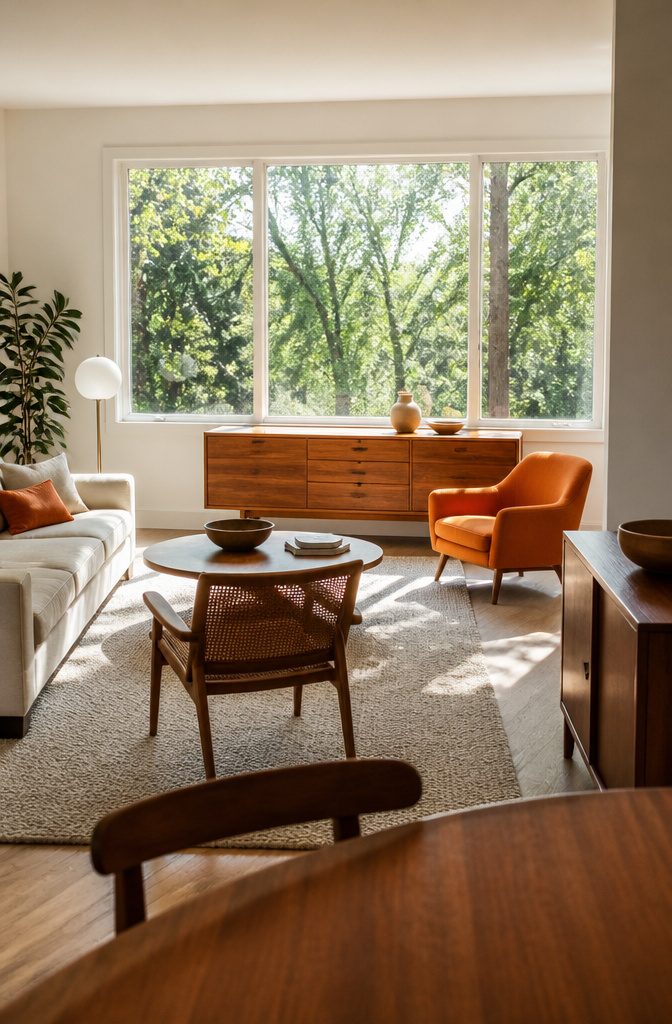
White walls do the most work in a mid-century living room.
They carry natural light across the space, and they give warm wood, sculptural furniture, and colorful upholstery a plain background to stand against. Bare windows help in the same way.
Add color in a few chosen spots.
Orange is the shade most tied to the era, and it arrives easily through upholstered chairs, pillows, a rug, or a globe light. Start with one strong color instead of a full palette.
If you want pattern, pick one backdrop: a geometric wallpaper or a textured wall finish, on a single wall. It takes over some of the color’s job, so keep the orange to a pillow or two.
Recommended Products

Solid Wood Frame: Crafted with premium solid wood in the armrests, backrest, and seat, this chair offers exceptional durability and a timeless natural aesthetic. The sturdy build supports up to 275 lbs, ensuring long-lasting use.

【REAL WOOD】– Made of 100% dried fir wood imitating vintage reclaimed barnwood appearance for interior finish. The colors will vary from browns to grays depending on the batch.

Solid Wood Frame: Crafted with premium solid wood in the armrests, backrest, and seat, this chair offers exceptional durability and a timeless natural aesthetic. The sturdy build supports up to 275 lbs, ensuring long-lasting use.
2. Warm Wood
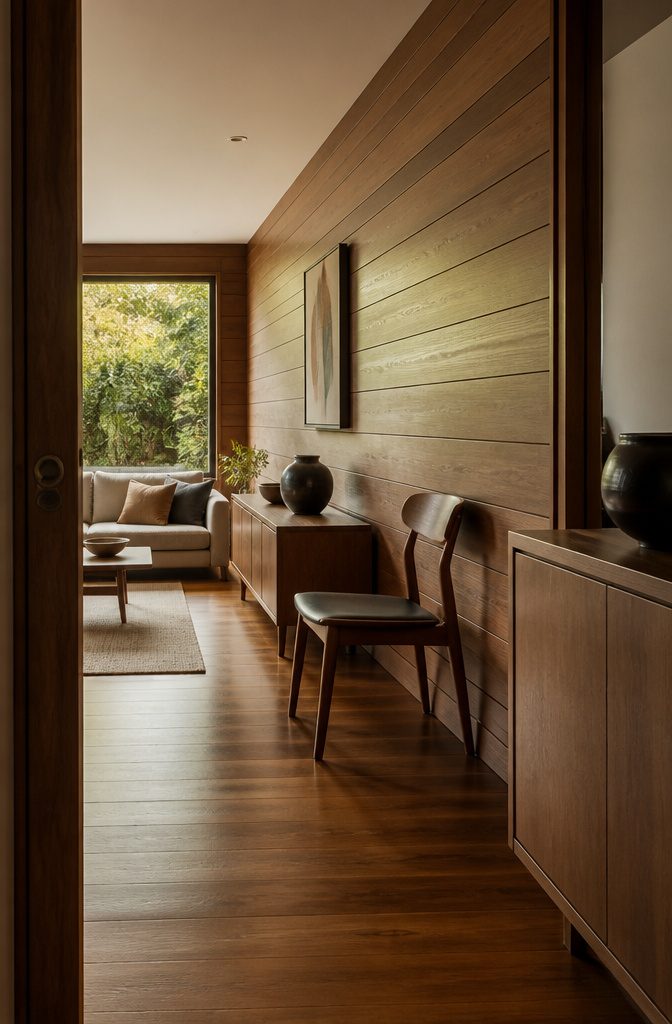
Wood paneling does the most work in a mid-century living room, and running the panels horizontally makes the room look larger, which helps in a small space.
Panels in rich, warm tones also hold up to daily use, so the wall takes scuffs from chairs and bags without looking worn. One paneled wall behind the sofa is enough.
Repeat that warmth in the furniture, trim, and flooring so the wood reads as a plan rather than a single feature. Dark, warm finishes work best on the largest pieces.
Built-in cabinetry in wood carries the same effect, as a custom-cabinet kitchen shows. If you rent and can’t panel a wall, a dark wood sideboard or media console gets you most of the look.
Recommended Products

US SELLER – MADE IN VIETNAM: Crafted by skilled artisans in Vietnam, this nightstand reflects thoughtful construction and attention to detail, with fulfillment from the U.S. for efficient delivery

MID CENTURY MODERN SIDEBOARD WITH ELEGANT TEXTURE - Designed with a unique geometric pattern, this sideboard buffet cabinet adds warmth and sophistication to any dining room or living space.

MID CENTURY MODERN SIDEBOARD WITH ELEGANT TEXTURE - Designed with a unique geometric pattern, this sideboard buffet cabinet adds warmth and sophistication to any dining room or living space.
3. Iconic Furniture
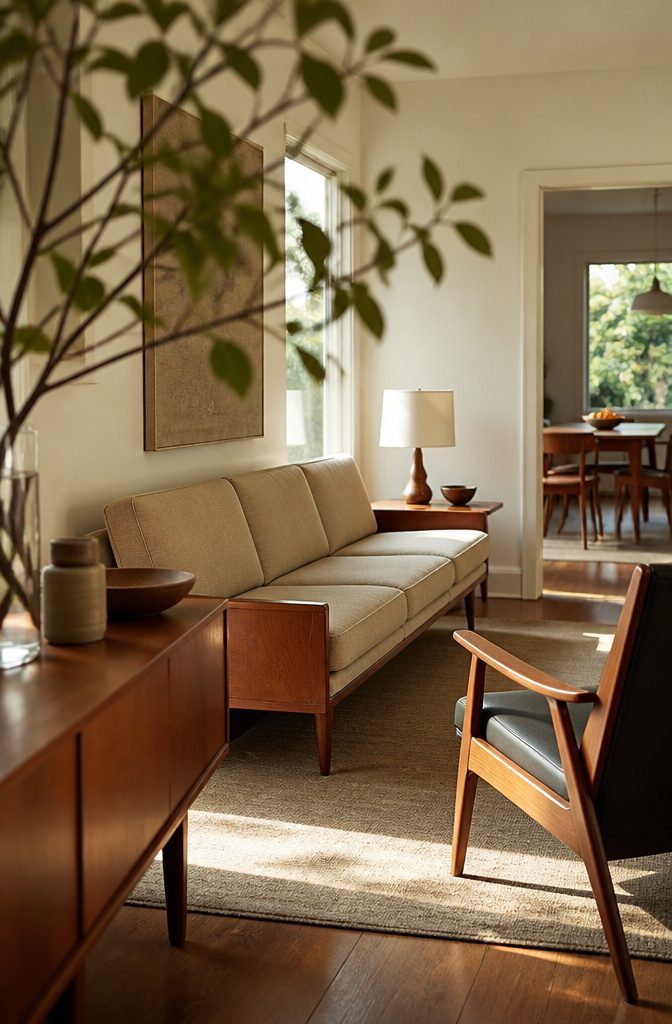
A recognizable lounge chair or sofa sets the era faster than any accessory.
A 1960 Illum Wikkelso sofa with a 1965 Ib Kofod-Larsen armchair is a full living room seating plan. So is a 1962 Fabricius & Kastholm chair facing a sofa, with nothing else competing.
Copy that restraint. One or two statement pieces do more than a room full of them, and a crowded floor reads as a showroom instead of a place to sit.
You can start with a single piece. Add a lounge chair, wood credenza, or side table next to the sofa you already own, then build around it with warm wood and simple lighting.
Recommended Products

Mid-Century Charm - This lounge chair has a mid-century charm with its extra pillows, widened arms, and flared legs. The green color of the fabric complements the walnut color of the frame, which will fit in with any of your home decor styles.

PREMIUM FABRIC: Eco-Ancheng shell chair covers are made of high quality spandex and polyester fabric with high elasticity, jacquard dining chair slipcover are soft, smooth and comfortable, wrinkle resistant and durable, no pilling, fast recovery, sewn into the elastic bottom to make chair covers for dining chairs fit perfectly with the chair.

PREMIUM FABRIC: Eco-Ancheng shell chair covers are made of high quality spandex and polyester fabric with high elasticity, jacquard dining chair slipcover are soft, smooth and comfortable, wrinkle resistant and durable, no pilling, fast recovery, sewn into the elastic bottom to make chair covers for dining chairs fit perfectly with the chair.
4. Vintage Plus Reproductions
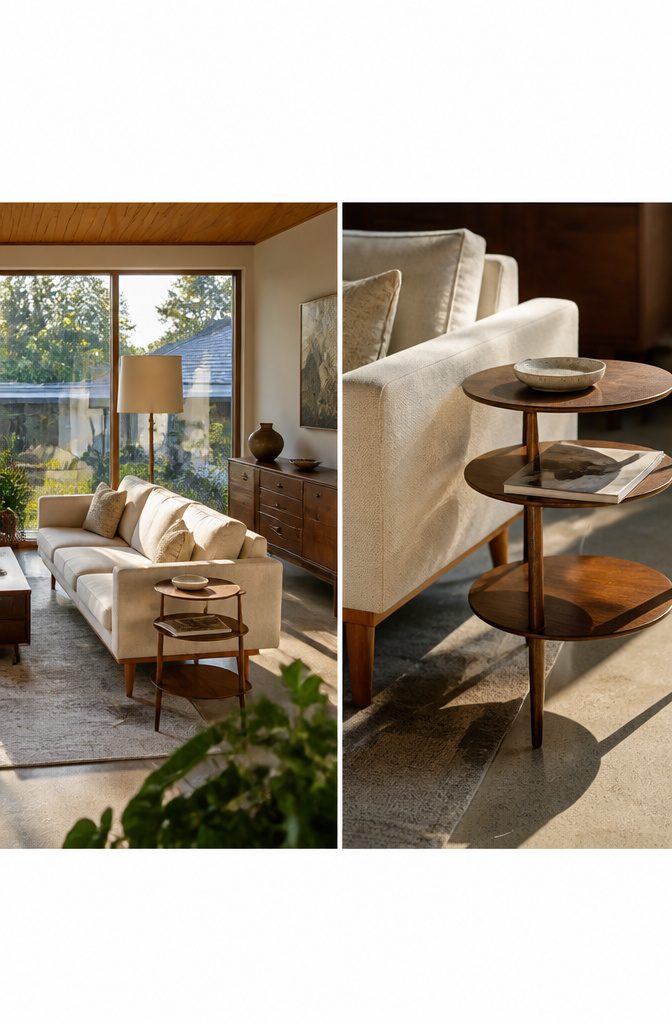
Midcentury furniture comes as originals and as reproductions at different price points, and a room can use both.
Let one or two older pieces carry the period character: a credenza, a tiered side table, or a retro armchair. Then fill in with newer furniture, which keeps the space practical for everyday use.
A single vintage find beside a new sofa is a budget-friendly way to start, since you spend on one standout piece instead of furnishing the whole room with originals.
A reproduction can stand in wherever an original costs more than you want to pay. Mixing ages also gives the room a collected, layered look that a matched set can’t.
Recommended Products

🏠DETAILS: Size 17.5 X276 Inch , total 33.5 sq.ft(44.5cmX7m), Self adhesive (no extra glue needed). Made of durable vinyl, retro peel and stick wallpaper, Matte, Waterproof, Removable.


Packaging content🔸🔹You will receive a roll of 15.7 "x 118.1" colored retro peel and stick wallpaper, covers 12.9 square feet. Our wallpaper is pattern-matched to ensure a seamless finish. Say goodbye to messy glue and frustrating installation processes! Our high-quality PVC wallpaper is easy to install without the need for additional tools or professional help
5. Low, Curved Forms
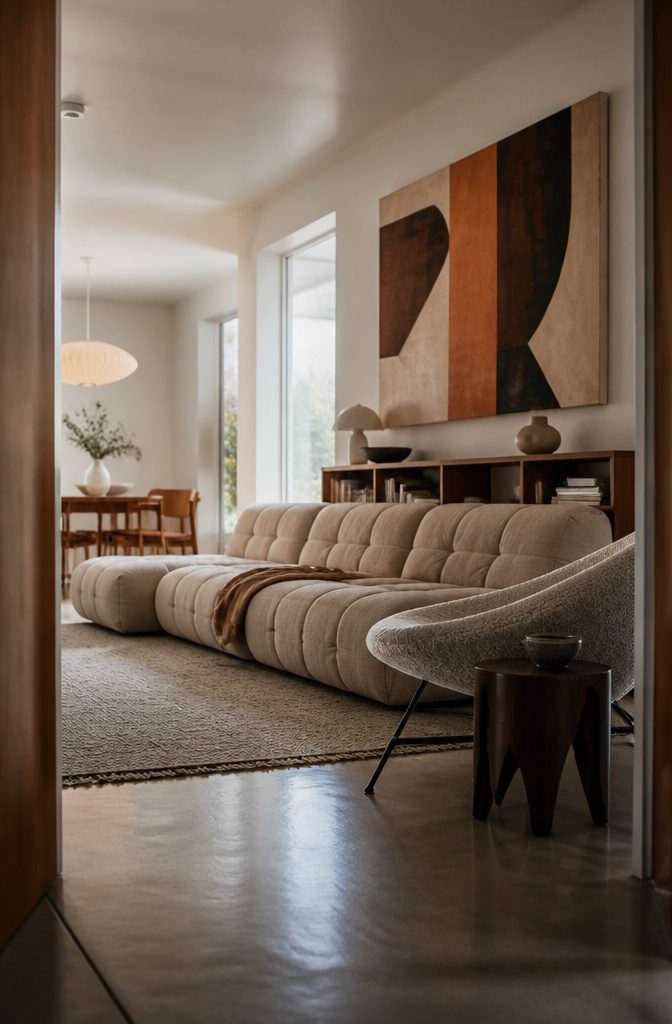
Low, streamlined furniture sets the mid-century shape: a deep sofa, an accent chair on metal legs, and wooden pieces that sit close to the floor. Choose one substantial sofa or sectional and keep everything around it simple.
Curves come next.
The modular Togo sofa, first designed by Michel Ducaroy in 1973, is the example to copy, and modular seating also helps define a larger room. Let one curved piece lead, then pair it with bold artwork for the retro-modern mix.
Compact vintage pieces suit small rooms, because original mid-century furniture often runs smaller than what’s made today.
Recommended Products
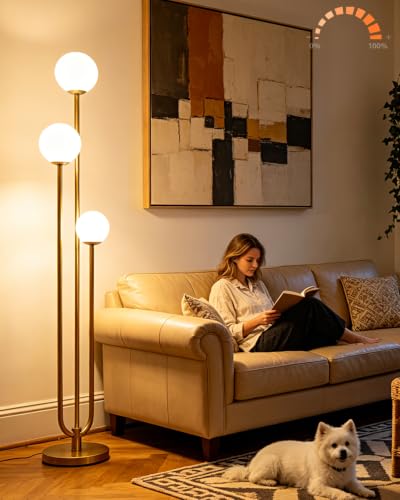
Unique & Exquisite Design: The Dimmable floor lamp measures 63IN. 3 sphere lights are scattered on U-shaped 3 metal pole, combined with elegant and minimalist metal structure, which can perfectly match various home decor styles.

1—100% stepless dimmer:Modern Gold floor lamp is fully dimmable with stepless adjustment of 0-100% brightness, you can choose any brightness from dim & eye protection to full brightness by rotary the dimmer knob on the pole.

【Metal Floor Lamp Includes Globe Bulb】A unique and decorative light bulb makes your lamp more personal. Each bulb is hand blown and feactures with a spiral-shaped filament that spreads shine through its gradient black glass shades, creating a warm ambiance. Perfect for bedrooms, living rooms, rec rooms, and home offices
6. Statement Lighting
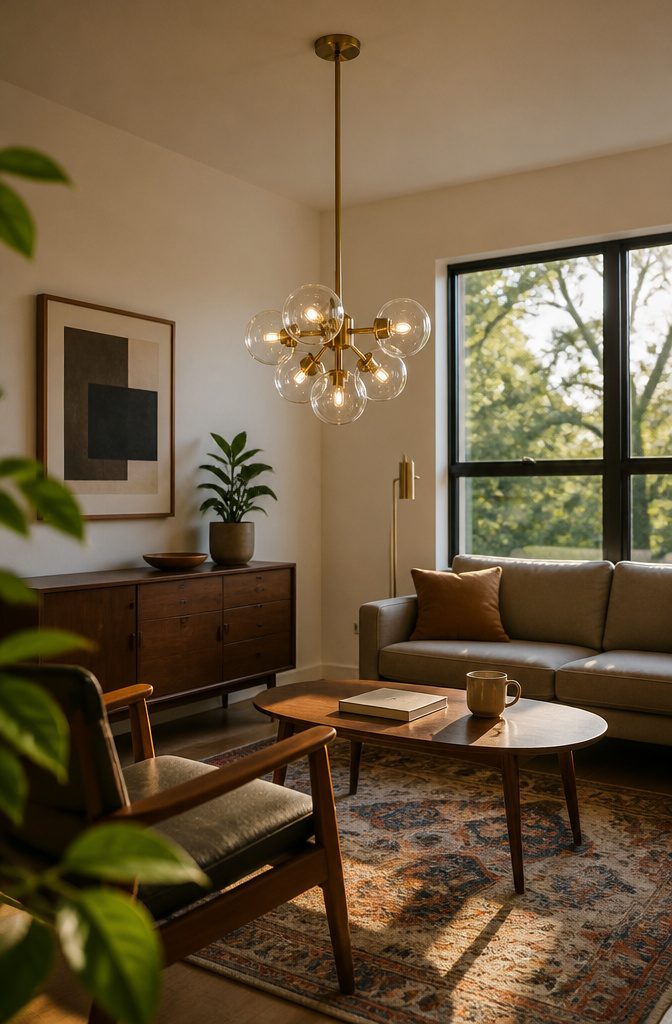
Choose one statement fixture and let it carry the room. A globe pendant, a Sputnik, or a polished brass multi-globe light each gives a clear period reference, and a pair of globe lights works if you want symmetry.
Look for a clear shape and a simple profile, and skip crowding every surface with extra decor.
In a small living room, the Grasshopper floor lamp by Greta Grossmann is the one to buy because of its slim profile. It adds a period piece without eating floor space.
Brass and gold finishes give wood and muted walls a warm, reflective contrast. The shine also bounces natural light around the room, so a brass fixture does double duty.
Recommended Products

Modern Fluted Design: This oak nightstand features a striking blend of fluted paneling and smooth flat surfaces, creating visual depth that elevates any bedroom or living space. The 24.4-inch tall silhouette and curved edges bring a mid century modern touch while the handless design add understated texture. No bulky hardware or overly ornate details, just clean, modern lines that complement existing décor

Superior Acoustic Performance — Welcome an unparalleled auditory experience with our sound proof panels for walls. Designed for superior noise-cancellation, these slat wall paneling redefine acoustic excellence. Our wood wall panels are tailored for a variety of settings, including homes, offices, and studios. Avana white oak wood slat wall panel creates an acoustically balanced environment, enhancing sound clarity. Experience functionality and style with our art3d wall panels.

Spacious 6-Drawer Organizer and TV Stand Function: This 49.6" wide oak dresser offers abundant horizontal storage, ideal for clothing in the bedroom. Its large, flat top surface also serves perfectly as a TV stand or media console in the living room, supporting most TVs up to 55 inches.
7. A Bar Cart
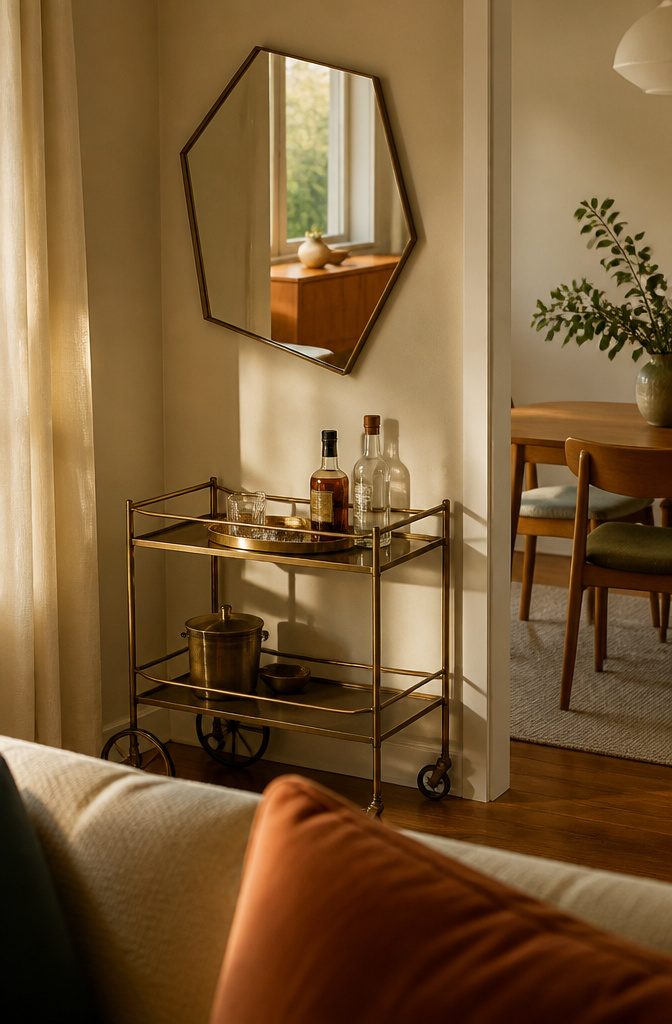
An empty corner is the easiest place to put a bar cart. Pair a bronze cart with a geometric mirror above it, and the corner gets a job and a retro reference at once.
The cart takes little floor space and rolls out when guests arrive, so it suits a small room better than a built-in bar. If you have the wall and the budget, a small wood-paneled bar is the other route.
Keep the top edited: a tray, a few glasses, and the bottles you actually pour. A crowded cart reads as clutter instead of a focal point.
Choose a bronze, brass, or wood finish that repeats something already in the room, such as a lamp base or a credenza, so the cart looks planned rather than added.
Recommended Products

Mid-Century Modern Design Credenza: This mid-century modern Sideboard Cabinet features smooth curved edges and hinged double doors that glide effortlessly, this piece seamlessly blends with various interior styles while elevating the visual appeal of your living room, kitchen, hallway, entryway or office

MID CENTURY MODERN SIDEBOARD WITH ELEGANT TEXTURE - Designed with a unique geometric pattern, this sideboard buffet cabinet adds warmth and sophistication to any dining room or living space.

MID-CENTURY MODERN STYLE: This elegant sideboard showcases a mid-century modern design, perfect for adding a touch of sophistication to your space.
8. Geometric Textiles and Rugs
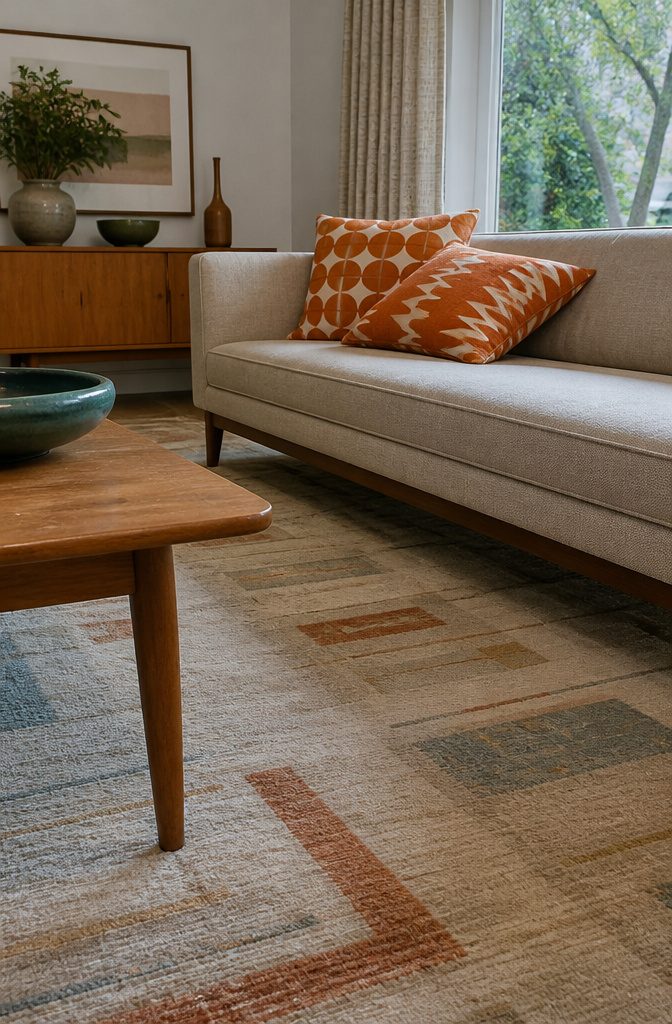
Geometric prints on curtains and throw pillows are the quickest way to bring mid-century pattern into a living room.
Choose one strong accent color instead of a full palette. Orange is closely tied to the era and works on pillows, a rug, or an upholstered chair.
A retro-inspired area rug adds warmth and personality, especially in high-traffic areas. Rotate it regularly so it wears evenly, and keep it out of direct sunlight and away from moisture to preserve its vintage look.
If your curtains already carry a bold geometric print, let the rug be the quieter piece, or the reverse. Two loud patterns compete, and one is plenty.
Recommended Products

Mid-Century Modern Charm: This accent chair features gracefully curved arms and flared legs, capturing the timeless mid-century aesthetic. The breathable linen upholstery beautifully complements the natural wood grain finish, making it a versatile statement piece that blends seamlessly with farmhouse, boho, or contemporary decor.

【Modern Design Club Chair】Our club chair seamlessly blends iconic splayed legs with beautifully tufted upholstery, providing a stunning mid-century look that elevates your lounge space while complementing various décor styles

Mid-Century Charm - This lounge chair has a mid-century charm with its extra pillows, widened arms, and flared legs. The beige color of the fabric complements the walnut color of the frame, which will fit in with any of your home decor styles.
9. Wall Art, Mirrors, and Clocks
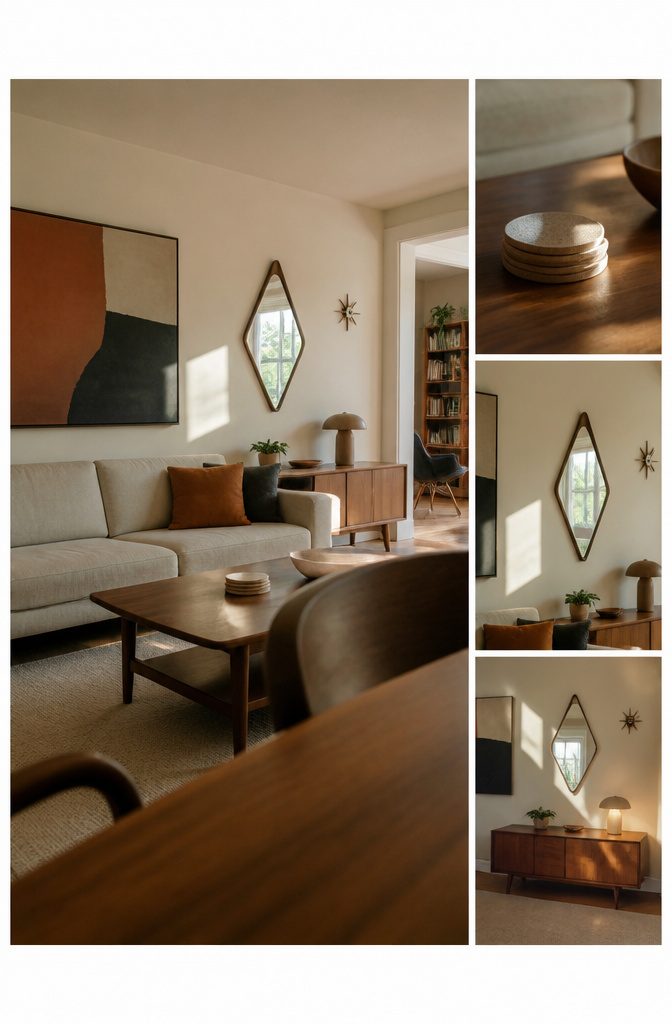
Abstract or retro artwork earns the most wall. It brings bold color and period character that a mirror or clock can’t, so give your largest open stretch to art, such as the wall behind the sofa.
Prints and secondhand finds keep this affordable, and one big piece reads better than a cluster of small ones.
A geometric or minimalist mirror takes second place. It creates a focal point and reflects light, so hang it where it catches the window’s glow and bounces it deeper into the room.
A statement clock comes last. Its geometric shape works as a small art piece, which makes it a good fit for a narrow gap or a spot beside a doorway, not the main wall.
Recommended Products

【Geometric Peel and Stick Wallpaper】–This geometric wallpaper uses thick textured vinyl with soft stone-like detail, ideal for rental upgrades, kitchen backsplash, bathroom accents, or bookshelf panels, offering smooth trimming and clean application on flat walls

MID-CENTURY BEADS DESIGN - Brown tones and the mid-century beads pattern bring distinctive style and personality to your space.

【Easy to Paste】: Our blue wallpaper peel and stick is designed by ourselves and you can be paste along the white line on the edge in the removable wallpaper, you don't need to waste too much time to match removable wallpaper. Not suitable for use on frosted, grainy, uneven surfaces, otherwise it will affect viscosity
10. Shelving and Records
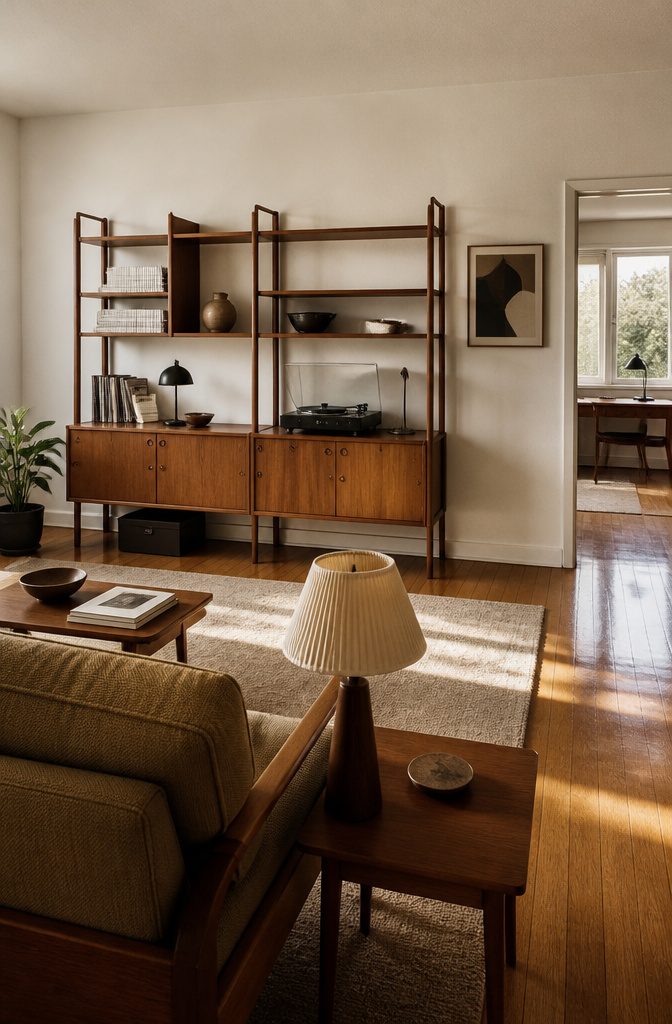
Rich wood shelving does two jobs in a mid-century living room: it hides what you need to store and displays what you want seen.
A vintage modular wall unit set opposite the seating area suits a room that doubles as a home office, because work supplies live in the same piece as your books.
Renters can skip built-ins and look for a freestanding modular unit in a similar wood tone.
Open shelves read as lighter than closed cabinets, but only if you leave some shelf space empty and group a few objects instead of filling every row.
Give the record player and a short stack of vinyl a spot at eye level, and hang a framed record cover nearby. Art and records added over time look more personal than a set bought all at once.
Recommended Products

Stepless Dimmable Floor Lamp: Gold Pole floor lamp is dimmable with stepless adjustment of 0-100% brightness. According to different scene needs, you can choose any brightness from dim & eye protection to full brightness by turning the dimmer knob.

Stepless Dimmable & Eye-Caring Lighting✨ The Gold floor lamp can be adjust brightness from 0% to 100% with a smooth rotary knob—ideal for movie nights, reading, or creating ambient lighting. According to different scene needs, you can choose any brightness from dim & eye protection to full brightness by turning the dimmer knob.

Mid Century Modern Floor Lamp With 2 Frosted Glass Globes: Get the Brightech Sphere for a stunning look that's easy to create. The simple stem and unembellished globes create an upscale feel that matches midcentury as well as contemporary, Asian and modern décor schemes. The shiny gleam of the brass finish pairs beautifully with the frosted diffusing shades to create gorgeous ambience.
11. Open Windows
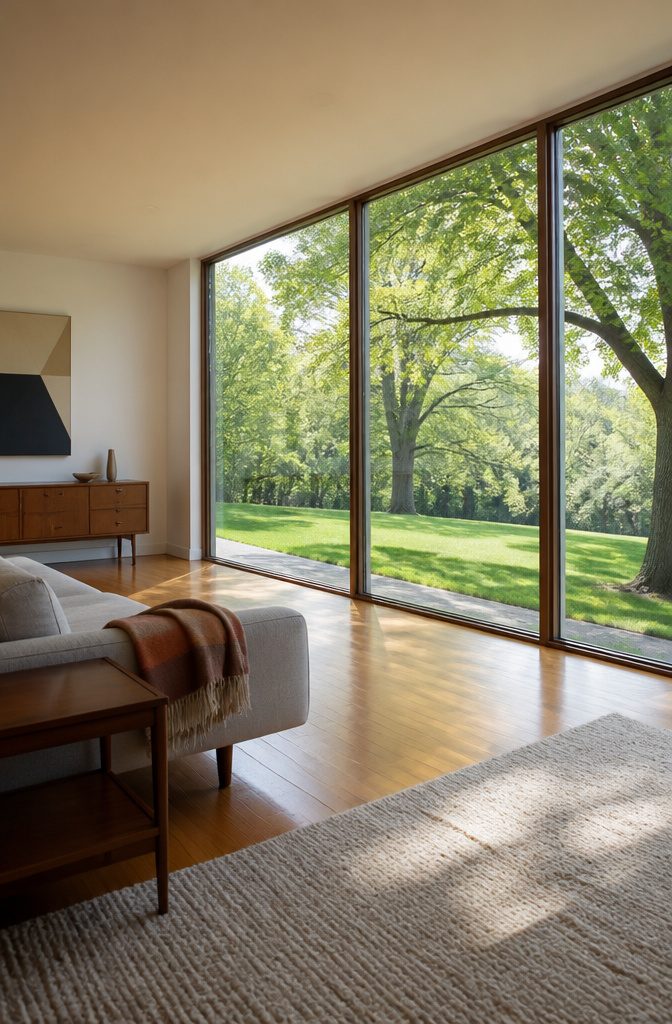
Mid-century rooms treat the view as part of the decor, so the window is the first thing to protect. Tall windows with bare or minimal window treatments bring in daylight and keep a lawn, pool, or lake in sight.
That indoor-outdoor link is what the style is built on. White walls help the light carry deeper into the room.
Smaller windows can’t be swapped out in a rental, but you can change what covers them. Replace heavy drapes with lighter treatments, pull them fully to the sides, and keep the glass clear of plants, stacked books, and clutter.
Skip anything that blocks the view just to fill the frame. A window you can see through does more than a dressed one.
12. A Conversation Area
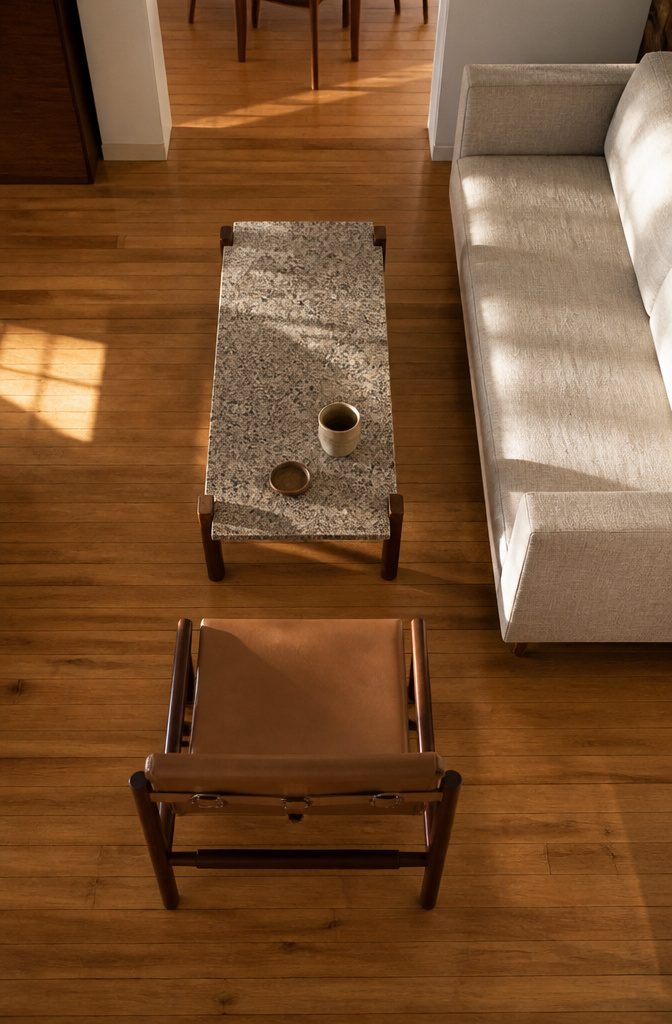
Turn the seating toward each other instead of lining it up along a wall. Seats that face inward are what make a mid-century living room feel built for talking.
One room sets a 1962 Fabricius & Kastholm chair directly across from a sofa in Belgian linen, with a granite-top cocktail table between them. A chair, a sofa and a table are enough to form the group.
Low furniture suits this layout. When everything sits close to the floor, you can see across the group and no tall back blocks the view.
If you own only one statement chair, aim it at the sofa rather than pushing it against a wall, and keep the table in the middle where both seats can reach it.
Small Living Rooms
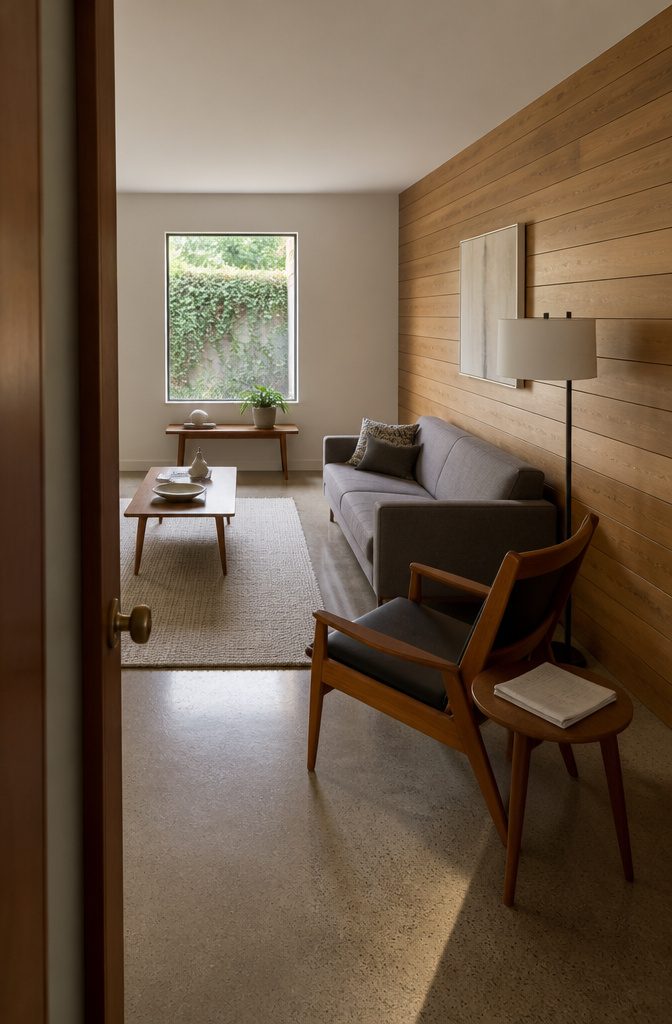
Mid-century style suits a small living room because original pieces from the era often run smaller than furniture made today.
A vintage Danish chair or compact lounge chair takes up less floor than most new seating, so shop older pieces first. A small side table, a floor lamp, or a built-in shelf adds function without crowding the room.
If you add wood paneling, run the panels horizontally to make the room feel larger and more spacious.
Maple, teak, walnut, and beech all bring the right warmth. Keep the furniture footprint modest and leave open floor for walking through, since a clear path does as much for a small room as any trick on the walls.
Fireplaces and Original Details
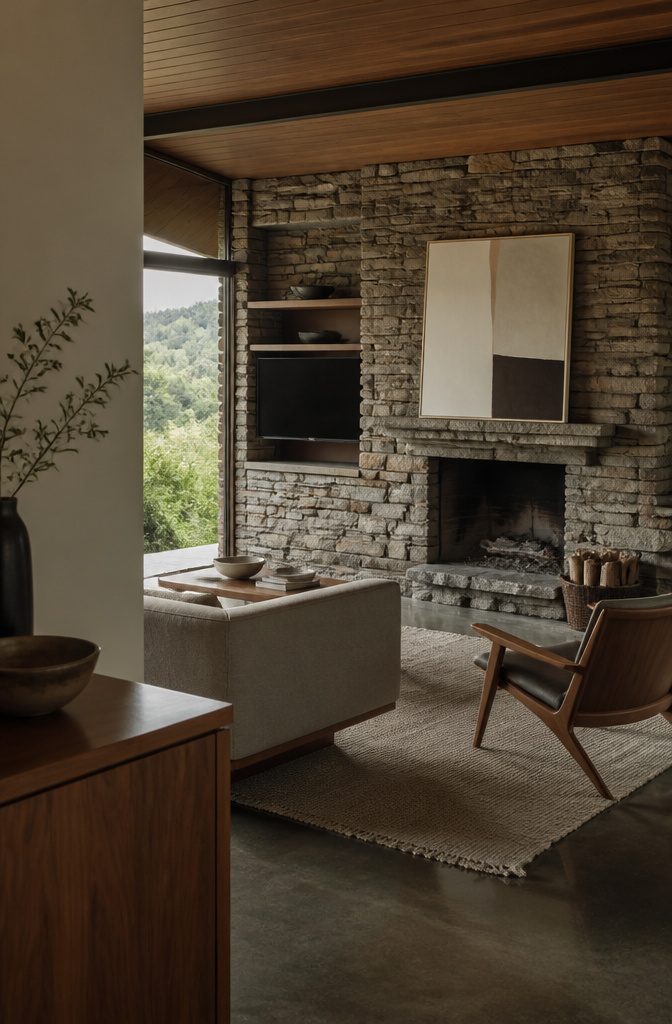
Original brick or stacked stone is the one period detail you can’t buy back, so leave it as it is.
A fireplace faced in antique Belgian brick, like the one in a Santa Monica Mountains cabin, anchors a mid century room before any furniture arrives.
In another room with an original stacked stone fireplace, a custom niche was added for the flat screen, so the TV got a place and the stone kept its role.
Keep the original masonry and add the modern piece beside it.
If you rent, you can’t build a niche, but you can angle the sofa and a single chair toward the fireplace and hang art on the mantel.
Wood Species to Look For
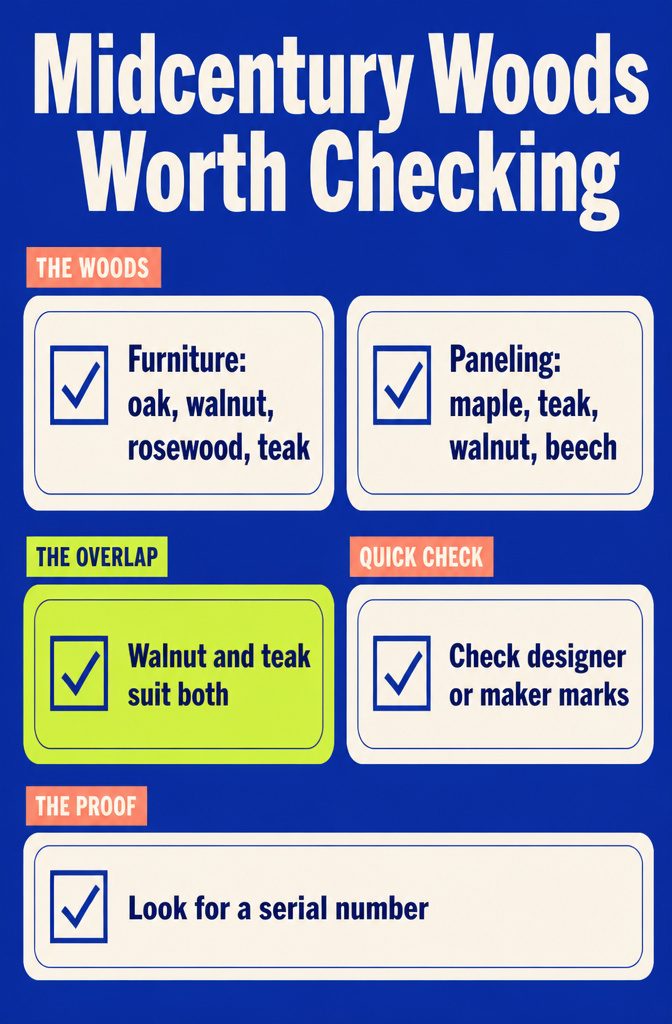
Use this as a quick checklist at thrift stores and secondhand sales:
- Furniture: oak, walnut, rosewood, and teak are the woods to look for when you want authentic pieces.
- Wood paneling: maple, teak, walnut, and beech give rich tones and hold up to daily use.
- Overlap: walnut and teak appear on both lists, so they are the safest pick whichever you’re buying.
- Proof: on older furniture, look for a designer name, a manufacturer’s mark, or a serial number. A mark tells you more than a wood match alone, since many later pieces copy the look.
Frequently Asked Questions
What defines a mid century modern living room?
A mid century modern living room combines clean lines, warm wood, and low furniture with plenty of daylight.
White walls, one strong accent color such as orange, and a single statement light fixture complete the look. Seating usually faces inward for conversation, and large windows with minimal coverings connect the room to the outdoors.
How do you add mid century style without replacing all your furniture?
Start with one or two recognizable pieces, such as a lounge chair, wood credenza, or side table, placed beside the sofa you already own.
Then build around them with warm wood and simple lighting. One vintage find next to a new sofa costs less than furnishing the room with originals, and a reproduction can fill in where an original is too expensive.
What wood types suit mid century modern furniture?
For furniture, look for oak, walnut, rosewood, and teak. For wood paneling, maple, teak, walnut, and beech give the right warmth.
Walnut and teak appear on both lists. On older pieces, check for a designer name, a manufacturer’s mark, or a serial number, because many later pieces copy the look.
Does mid century modern work in a small living room?
Yes. Original pieces from the era often run smaller than furniture made today, so a vintage Danish chair or compact lounge chair takes up less floor space.
A small side table, floor lamp, or built-in shelf adds function without crowding the room. Horizontal wood paneling makes the walls feel larger, and a clear path through the room helps as much.