
Green runs from pale mint to deep forest, and the light in your room decides where you land.
Soft sage suits small or low-light rooms; dark walls absorb light, so they need good daylight or warm lamps. Renters can play it safe with Farrow & Ball’s Green Smoke, a grayish tone.
1. Soft Sage and Mint Walls
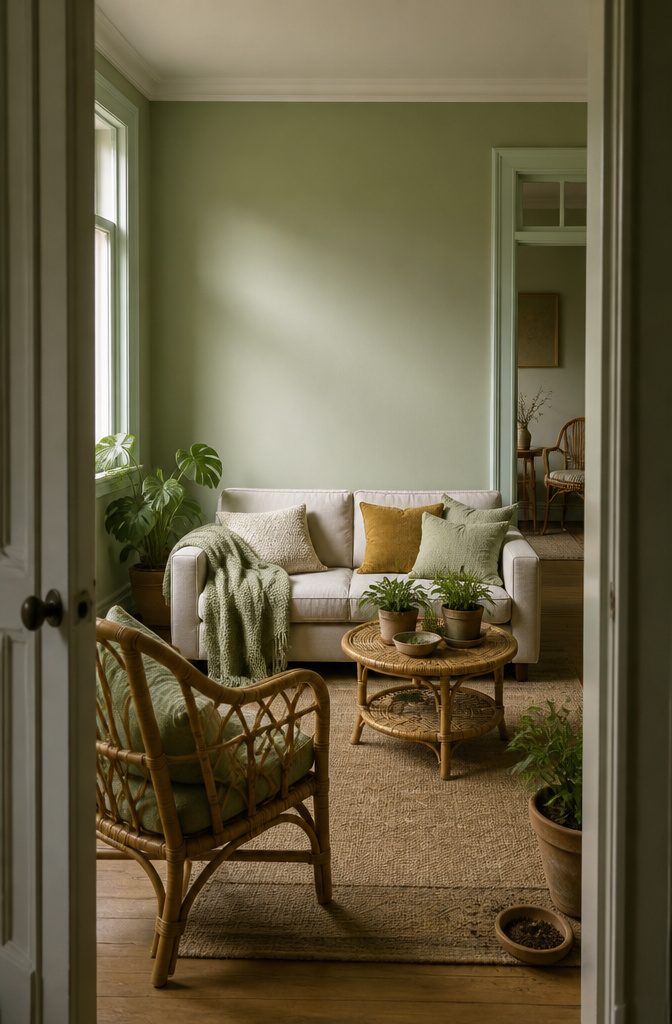
Pale sage, mint, and worn-in greens suit small or low-light rooms where you want the space to feel relaxed.
A shade this light reflects daylight, yet it still reads as a real color on the wall, so the room feels calm without going flat.
Dulux Tranquil Dawn is a calming mix of green, blue, and gray.
Pair it with rattan furniture, then add mustard and ruby accents in a pillow or a throw for a cozy feel. For a quieter look, stay with light neutrals, linen, knitted throws, textured cushions, and a few leafy houseplants.
Mint works best with a paler green on the trim. The slight contrast shows without distracting.
Recommended Products

Boho Chic & Striped Design: Elevate your home decor with our stylish striped corduroy pillow covers, bringing a touch of Boho elegance and warmth. The unique pattern seamlessly blends with various interior styles, from modern to farmhouse, creating a relaxed and inviting atmosphere in any room.
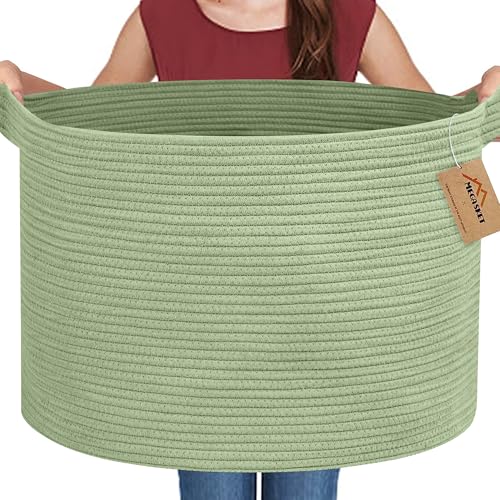
SOFT GREEN COTTON ROPE BASKET: The green fabric basket is braided from natural cotton rope, making it a super soft but sturdy, textured bin. The sage green bedroom decor storage basket is huge and doesn't have a smell at all. No hard edges are safe for your kids allowing them to climb into these wick basket and won't scratches or damage the floors.

Luxurious Softness & Modern Style: Experience the unparalleled comfort of MIULEE's premium faux fur pillow covers. Featuring a unique wide-strip design, these irresistibly soft plush fluffy pillows instantly add a modern, cozy, and luxurious touch, good for elevating any living space
2. A Bold Green Focal Wall
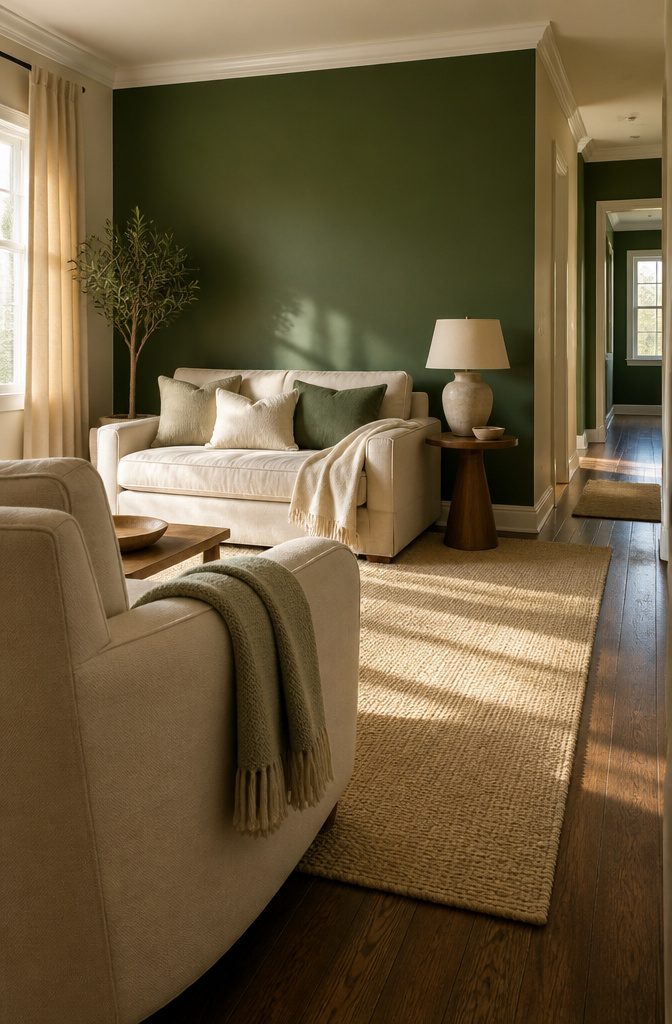
A strong green on one wall adds visual interest to a small room.
When the green is dramatic, keep every other wall in white, cream, or beige, and choose the sofa and textiles from the same neutrals. Floor-length curtains also break up the green in a natural way.
A bold wall takes over fast. Add a second loud color nearby and the room feels crowded, so keep everything else quiet.
If you like olive, you don’t have to stop at one wall. Carry it down a hallway or into the next room, and the color reads as part of the whole home instead of a single statement.
Recommended Products

Ready to Hang: Size : 12x16in(30x40cm),wall art is already perfectly stretched over solid wooden frame and hooks have been mounted on panel, you could easily hang the framed canvas wall art on at any time

Practical Sizes & Easy Decor:Available in 9×11 inch and 12×16 inch to fit varied wall spaces, this gold-framed canvas wall art comes with a full set of damage-free mounting accessories. No drilling or nailing required—Effortlessly hang this artwork on the wall or place it directly on tabletops for flexible display.

Unique Design: This metal pine wall decoration features a pine design that embodies a simple and modern style that adds a natural touch to your living space; The decor of the metal tree wall is divided into two parts, and you can display them independently or connect them to decorate them to make it look better. Perfect for indoor and outdoor spaces.
3. Green With Blue or Teal
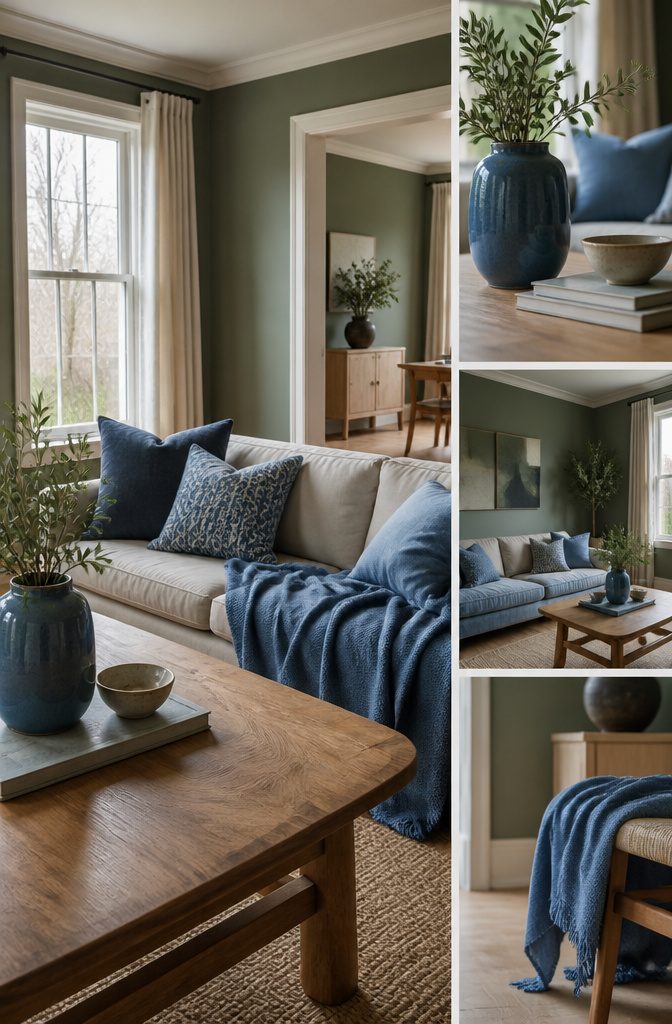
Blue accessories on green walls are the easiest version on a budget, since pillows, a throw, or a vase can be swapped without repainting.
Smoky green walls take soft blue well, and a wood floor or beige coffee table keeps the mix from feeling cold.
Teal and white is the cleaner look. Paint one feature wall teal, keep the rest crisp white, and add green cushions to tie the two together.
Green-blue walls with contrasting furniture is the boldest option.
Farrow & Ball’s Teresa’s Green, a crisp aqua shade, suits it. Try a lime green sofa with a blue coffee table, then use dark brown and bronze accents to ground the color.
Recommended Products

This product is Non-toxic

Acrylic leather paint

PAINT + PRIMER IN ONE: Signature formula delivers flawless coverage from the first stroke, sealing surfaces and minimizing coats for a refined finish.
4. Layered Shades of Green
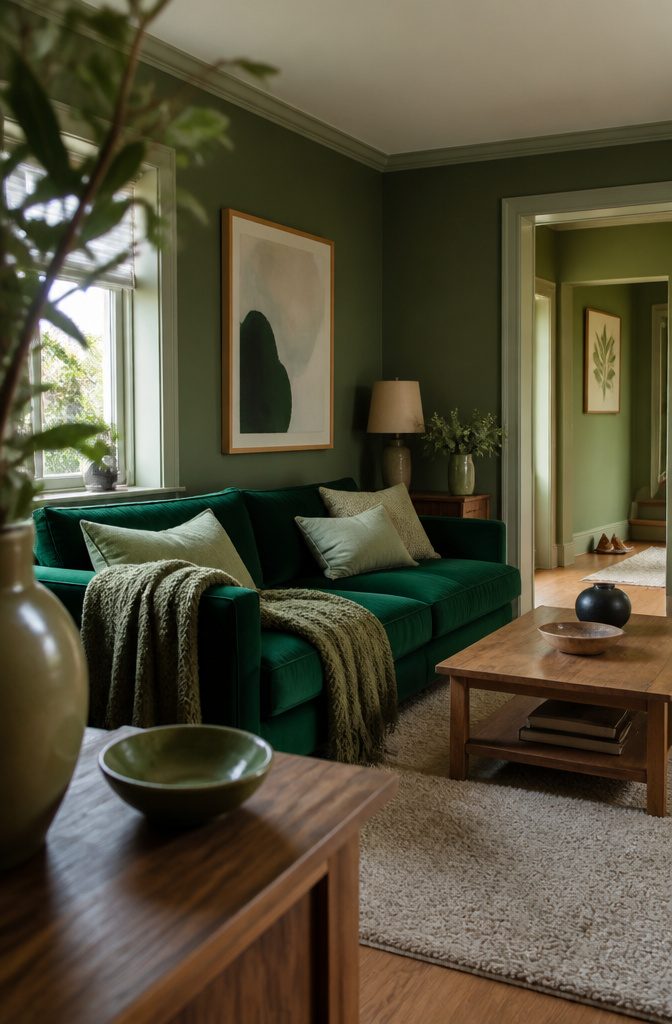
Layered greens look planned when one shade carries the walls and the others appear in smaller doses. Ottilie by Craig & Rose, a savoury garden green, works well as that base.
Pair a bold emerald sofa with soft sage wallpaper, or set pistachio cushions against olive-green walls. For a deeper version, use pistachio walls with forest green furniture and olive accents.
On trim, keep the contrast gentle.
Light green walls with pale green woodwork read as different without distracting. With floral green wallpaper, paint the woodwork to match for a tonal look with more depth.
Carry the green past one wall, down a hallway or into the next room. Plush rugs, knitted throws and wooden furniture keep all those layers cozy.
Recommended Products

QUALITY MATERIAL: The pillow cover is composed of a soft and comfy corduroy which is a kind of polyester fabric, features a cute and elegant boho stripe design. Our pillow covers are of good workmanship, they are tightly sewn without loose threads.


5. Green With Warm Brown
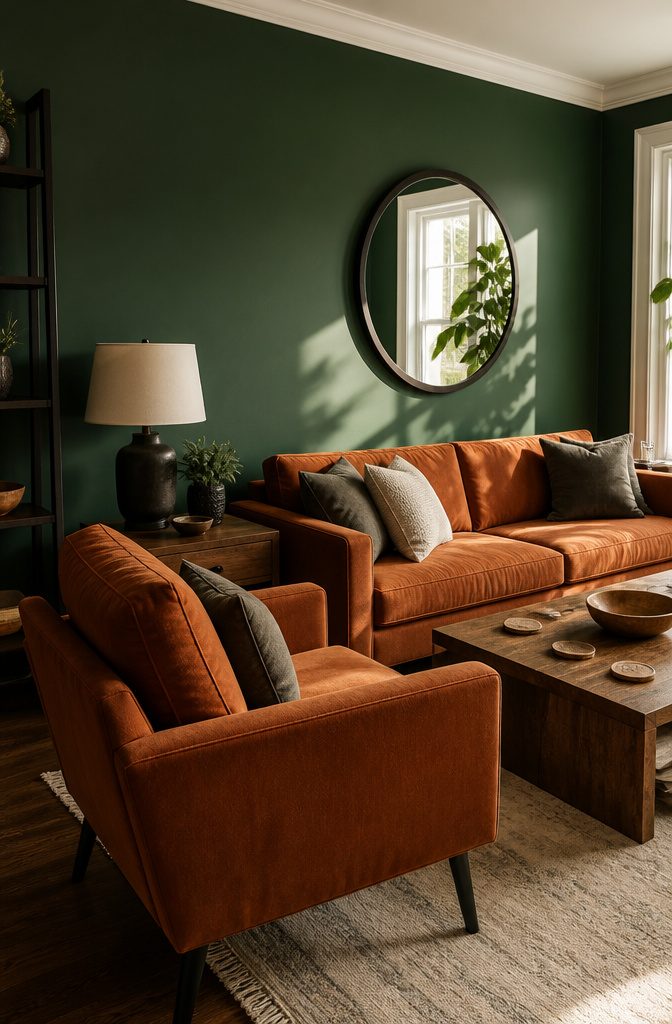
Brown grounds green and makes it feel natural. It works with muted greens and deep ones alike.
Against a soft green wall, light brown wood furniture and a leather armchair look relaxed, and a black-framed mirror adds a modern edge. The warm brown and cool green balance each other.
For more contrast, try deep forest green with burnt orange furniture and touches of gray. Bright white accents placed directly against the wall make the green pop, and the mix keeps your eye moving so the color never feels heavy.
Umber suits the lower half of a room, such as a band below leaf-print green. Keep the furniture light and neutral there so the colors carry.
Recommended Products

1. PREMIUM 3D TEXTURED DESIGN: Crafted with a unique raised bubble pattern, these 4-pack 18 x 18 pillow covers offer an ultra-soft, cozy feel that is thicker than flat cotton; tight stitching makes them a practical choice for homes with pets, a stylish accent option for daily use on indoor couch, sofa, loveseat, or bed (inserts not included)

Package includes: 1 throw pillow. (Please Note: PILLOW COVER ONLY, NO CUSHION INSERT)

Size and Materia: Our floral throw pillows is 18x18 inch (45 cm X 45 cm); Made of durable polyester linen material, soft fabric, breathable; Sage Green Throw Pillow Case is comfortable to touch and lay on (Not Contains Insert)
6. Green Wallpaper
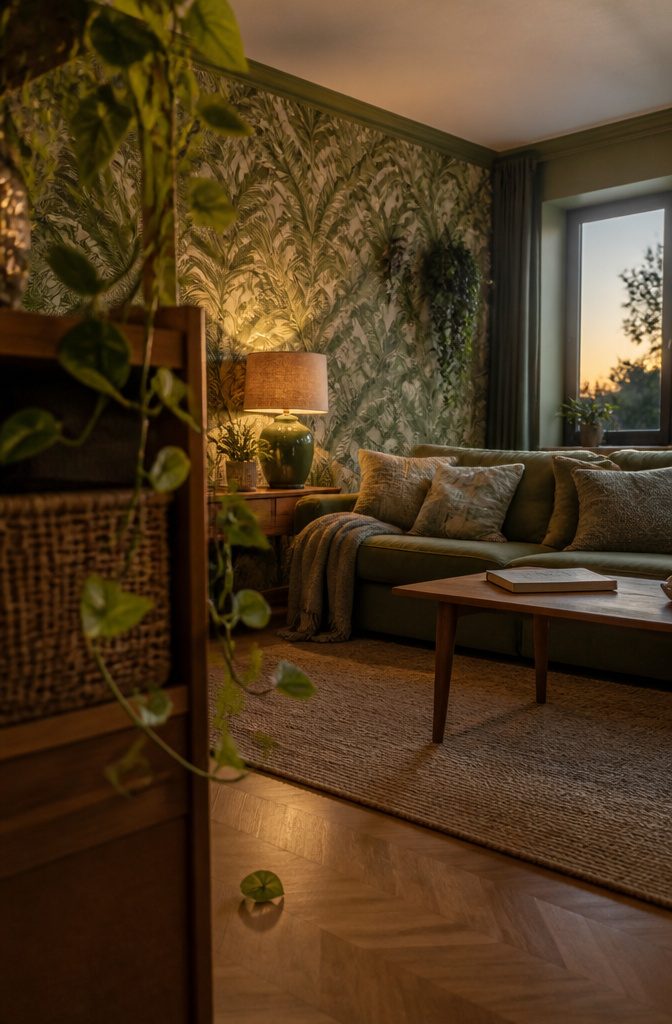
Green wallpaper covers a wider range than paint.
A tropical leaf print makes a bold statement wall, while a plain mint or an embossed pale green barely announces itself and adds texture instead of pattern. Botanical florals and geometrics sit in between.
Painted trim in a coordinating shade makes the paper look finished and planned. A leaf print also pairs well with trailing plants, earthy textures and soft lighting.
The cost is permanence. Wallpaper gives you pattern and texture that paint can’t, but it is harder to remove than paint, so renters should check the lease first or keep it to one wall.
Recommended Products

Stylish and Soft:The blanket is very soft silky lightweight, even and fine pile, rich and full, breathable, not easy to fade and pilling, with excellent quality and long-lasting durability,bringing a warm and cozy home atmosphere. It's perfect for all seasons, kids and adults will love it.

Package & Size: Package includes 2 brand new square pillow covers, each 18x18 inches (45x45cm). Please allow a 1–2 cm deviation due to handmade sewing. Pillow inserts are not included. The go-to standard for effortless styling—fits most sofa cushions, bed shams, and dining chairs for instant room refresh.

NEW THICKENED & DEEP TRAY DESIGN: The thickening coaster's thickness is [ 0.28''/ 7 mm], the deep hem design can hold more overflow of water, juice and liquor from the cup. [ Diameter: 3.9''/ 10 cm. ] Big size suits all normal cups or mugs, also enough for large mason jars, flask, tumbler or glassware like beer stein, bourbon glass, cola bottle and pitcher jug
7. Dark Green Walls
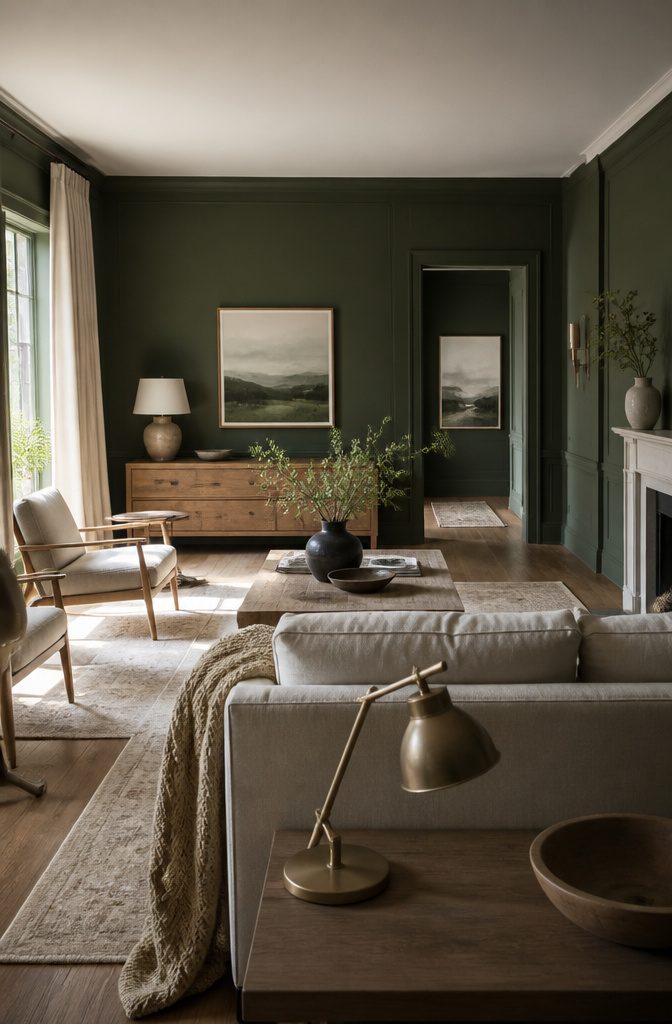
Deep green gives a living room a hushed, sophisticated look.
Craig & Rose’s Ottilie is a good reference: a savory garden green with a powdery softness that keeps it from reading harsh. Keep everything else light.
Pale furniture, natural wood and beige accents stop the walls from feeling heavy, and floor-length curtains break up the green. Gold or brass touches add warmth.
Dark teal wallpaper pushes the mood further. Put it on one feature wall, or run it across all 4 for a bold, moody finish.
Dark walls absorb light, so they suit rooms with good daylight or warm lamps. In a dim room, skip them or plan the lighting first.
Recommended Products

Long Lasting Metal Wall Art: the leaf metal wall art is made of painted metal material, not easy to break, corrode or fade, no bad smell and reliable to use; The side and edge contact is smooth, without burr or sawdust, bringing you a nice using experience; Note: Products tend to stack together, please take care to unpack all packages when receiving

➤Green Forest Canvas Wall Art Size: 12'' x 16''(30 x 40CM), total 1 panel. please measure the hanging position. Spring green forest cascade wall art, great ideal for creating a natural landscape atmosphere in your home.

High quality printed artwork stretched to fit on durable and shrink-resistant canvas.
8. Green Stripes and Painted Shapes
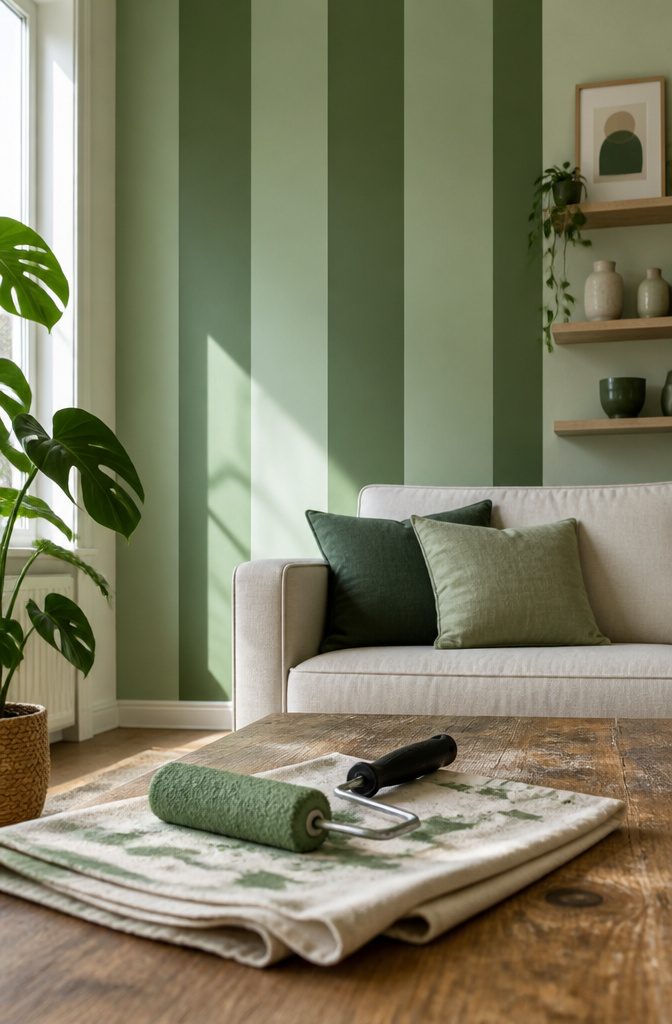
Painted shapes give a plain green wall a focal point without new furniture.
Stripes are the easiest place to start: grab masking tape and lay out your own stripes, then paint between the lines in a green that stands apart from the base coat.
The supplies are tape, paint, and a roller, so it’s a low-cost weekend job.
Layered arches use the same tape-and-paint approach with curves. Nesting several arches inside one another makes a focal point that looks custom, and it’s simple enough to DIY.
Color blocks, which are large flat sections of green, suit a room that wants personality without pattern. Stick to one shape per wall, because two competing designs make a living room feel busy.
Recommended Products

This product is Non-toxic

PAINT & PRIMER-IN-ONE: Cascadia ZERO is an Ultra-Low VOC, Acrylic Blend Paint & Primer-in-One; save time with less coats

Extremely durable interior paint ideal for use on properly prepared interior walls, ceilings or trim composed of new or previously painted drywall, plaster, masonry, wood and metal
9. An Industrial Green Room
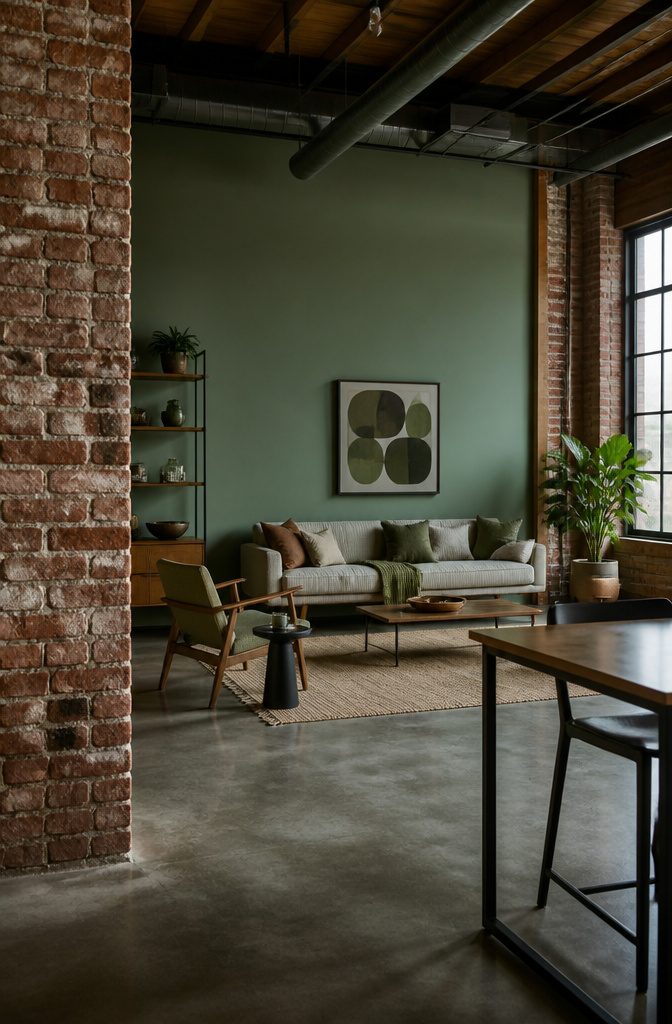
Green softens hard materials without hiding them. Farrow & Ball’s Teresa’s Green is a crisp aqua with soft green undertones, and on the flat walls beside exposed brick it adds warmth to a room that could otherwise read cold and sharp.
Paint the flat walls and leave the brick and metal bare, so the room keeps its edge.
Metal accents stay the hard counterpoint to the paint.
Mid-century furniture brings in rounded, warmer shapes, and textured fabrics on the sofa, pillows, or a throw keep the whole room from feeling stark. Skip a second green on the furniture here; the wall color already carries it.
Recommended Products

Functional&Decorative: The modern area rugs can function as carpets or cushions for walking or sitting, but also can connect two separate parts together for handsome decoration

Long Lasting Metal Wall Art: the leaf metal wall art is made of painted metal material, not easy to break, corrode or fade, no bad smell and reliable to use; The side and edge contact is smooth, without burr or sawdust, bringing you a nice using experience; Note: Products tend to stack together, please take care to unpack all packages when receiving

Premium Velvet Fabric: Crafted from high-quality, skin-friendly velvet, our velvet pillow covers offer a gentle touch, perfect for lounging. Experience exquisite texture and vibrant color, bringing warmth and sophistication to any room
10. Green Wall Panels
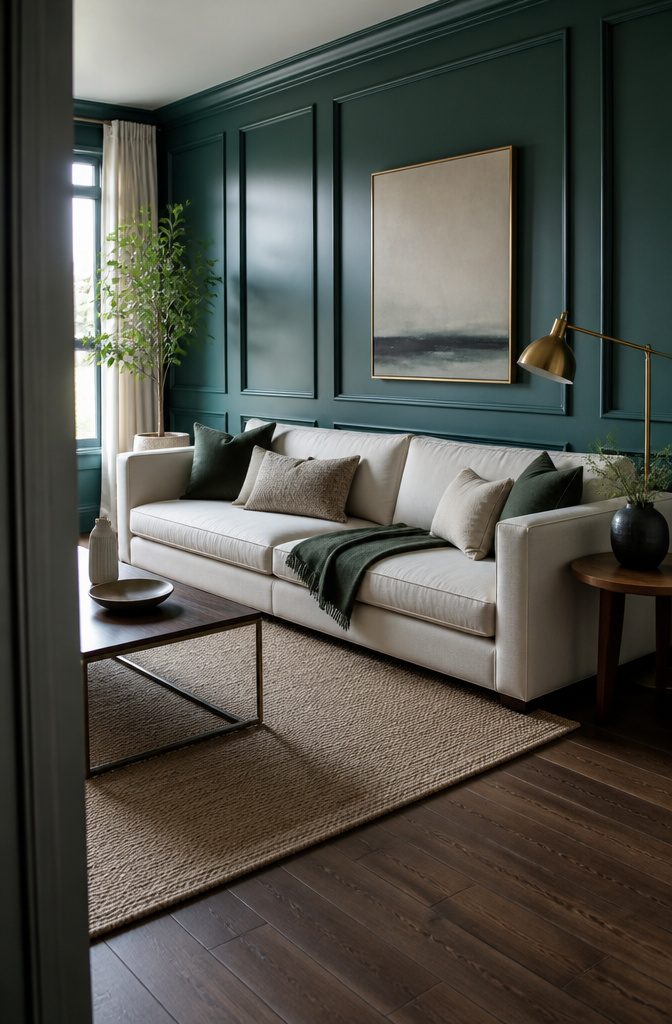
Panels give a wall painted in a single color depth that flat paint can’t. The raised edges catch light and cast shadow, so one green reads as layered without a second shade.
Teal panels are the stronger choice for a feature wall. They bring a classic look with a modern twist, and modern furniture with plush cushions keeps the room from feeling formal.
For less work, wallpaper styled to look like wall panels gives the effect without any building. Acoustic panel wallpaper in olive green adds subtle texture and works well with a light grey sofa, dark wooden flooring and minimalist wall art.
Recommended Products

Double Layer Premier Leather

Sage Green Paisley Pillow Covers 18x18 Set of 2 Vintage Floral Decor: These decorative throw pillow covers feature elegant paisley patterns, delicate floral details, and soft sage green botanical artwork, bringing timeless vintage charm to your couch, sofa, bed, or accent chair. The graceful boho inspired design creates a calm natural atmosphere that blends beautifully with farmhouse, cottage, shabby chic, and neutral home décor styles

Transform Your Living Space Instantly: Discover the magic of our floral pillow covers designed to elevate any sofa into a boho-chic sanctuary. These farmhouse-inspired boho pillow covers feature delicate botanical patterns that bring artistic elegance to your couch, creating a cozy atmosphere where every moment feels special
11. Plants for a Leafy Look
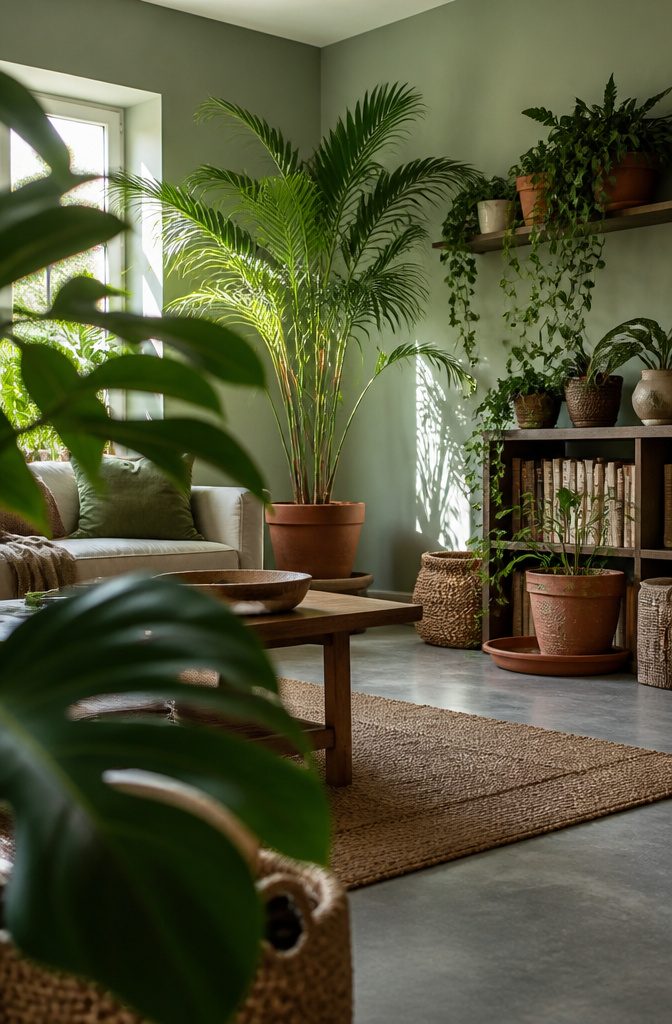
Leaf green against a wall of nearly the same green turns into a shadow, and the plants vanish.
Choose a wall shade lighter than your foliage, or one with a different undertone, so each leaf reads as its own shape. A pale wall makes a dark palm frond look sharp.
Mix plant types for the jungle effect.
A towering palm fills a corner, while trailing ivy softens a shelf or the top of a bookcase. Terracotta pots add a warm, earthy color that contrasts with green.
Woven baskets bring texture and hide plain plastic nursery pots. Use one or the other across the room so the containers look like a set.
12. Green With Dark Floors
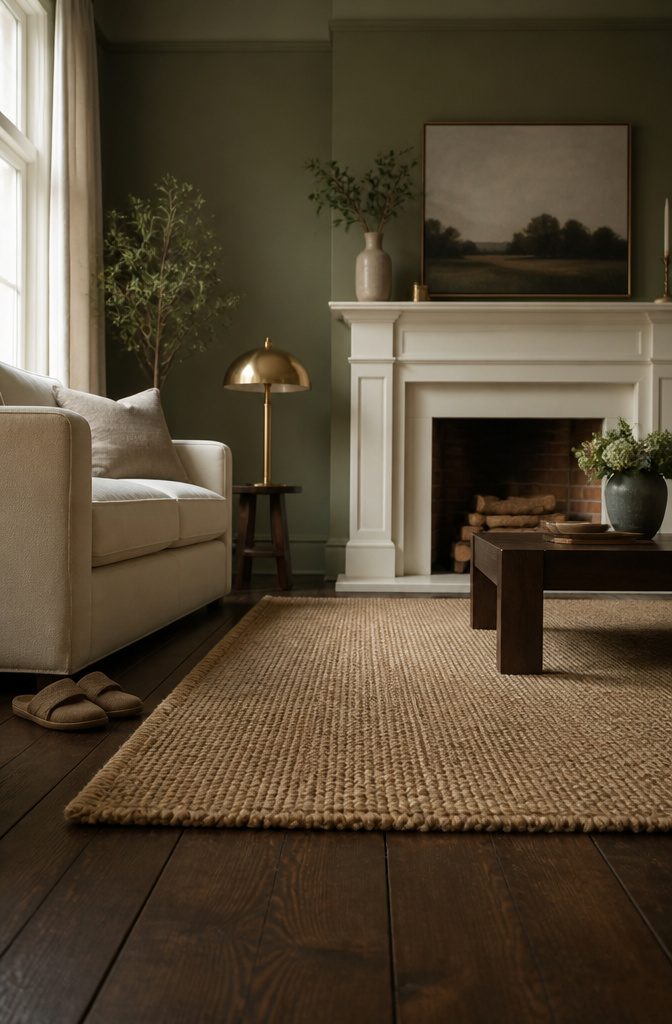
A dark shade of sage looks grounded over dark wood floors, because the wall and floor frame the room from both ends.
Repeat the floor in one or two pieces, like a coffee table or media console, then use cream for the sofa and pillows so the eye has somewhere light to rest.
A white fireplace or trim stands out sharply against the dark wall and becomes the focal point without extra decor.
Keep the sofa and rug light when both the floor and walls are dark.
Dark floor, dark wall, and a dark sofa together make a small living room feel closed in, and the room loses its edges. Brass or gold on a lamp or frame adds a little shine.
13. A Green Statement Sofa
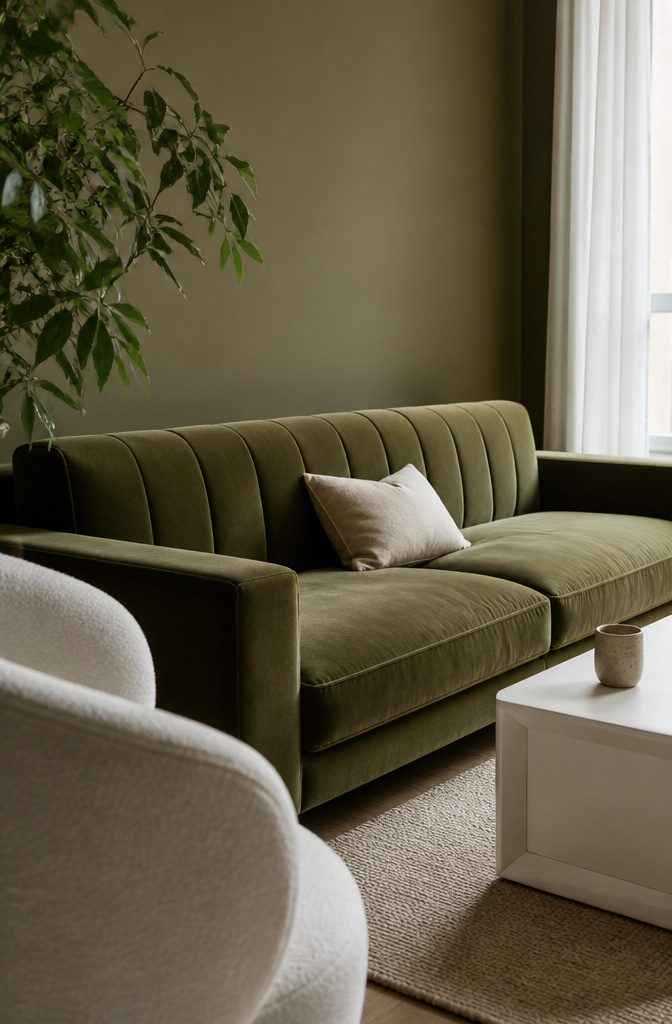
Olive walls with a green velvet sofa look planned, and white furnishings around them make the green pieces stand out.
A white coffee table, white curtains, or a white side chair supply the contrast, and a plant or two repeats the green.
Forest green furniture against pistachio walls is a layered version of the same idea: the dark sofa anchors the room while the pale wall stays light.
The olive pairing is easier to live with, because both greens sit in the same muted family and there is less to get wrong.
A sofa is the bigger spend, and repainting takes a weekend. Choose the wall color you are sure of first, then buy the sofa to match it.
14. Green as a Supporting Color
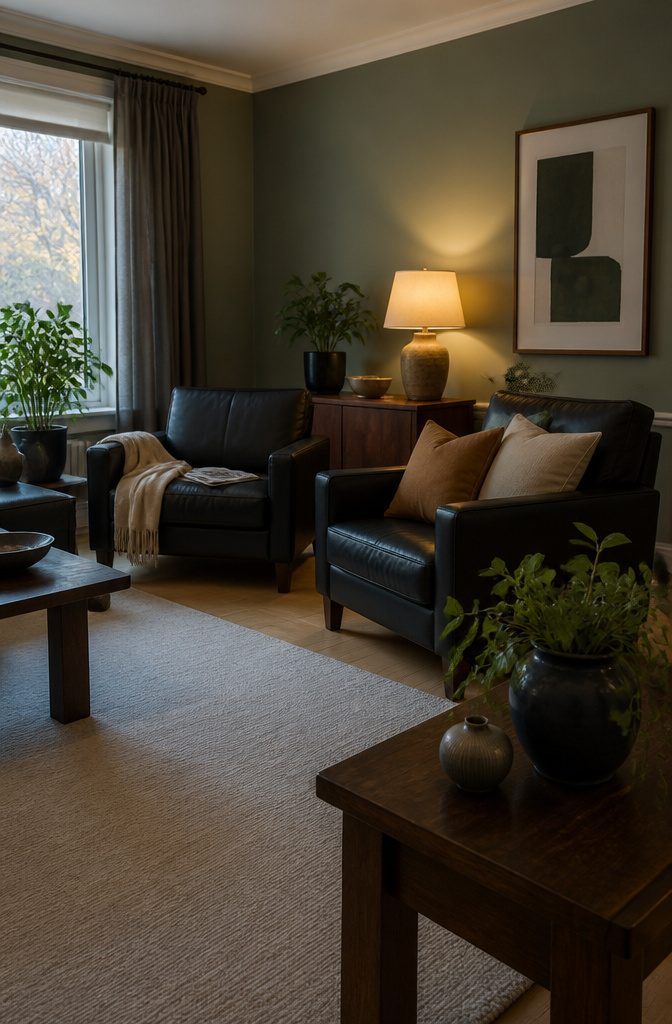
Push the green toward gray and it stops acting like a color and starts acting like a backdrop.
Pair walls like that with light furniture and flooring, add dark wood, and the walls and your plants read as green accents instead of the main event.
Farrow & Ball’s Green Smoke shows the smokier end of this: with black armchairs and inky illustrations, the room feels warm and inviting rather than loud.
This is the safest green for renters and first-time painters.
A grayish tone sits comfortably beside most sofas, rugs, and wood you already own, so a clash is hard to produce. Add more than one accent chair and throw pillows in different colors to make the room feel welcoming.
Natural Materials and Texture
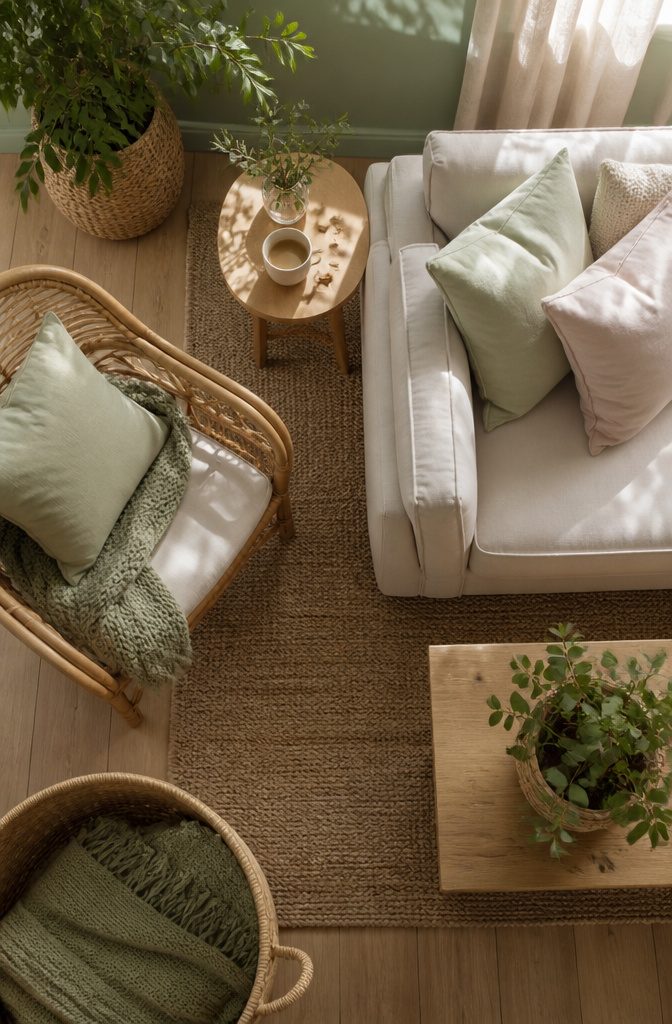
Texture keeps a green wall from looking flat, and the cheapest layers are the ones you can swap in an afternoon.
- Rattan: One woven piece, like a basket, tray, or accent chair, adds pattern without a big spend.
- Wood: A light wood side table or shelf warms green. Keep the finishes close in tone.
- Linen: Curtains or pillow covers in linen soften the wall and cut the paint’s flat look.
- Knitted throw: A chunky knit draped over the sofa arm is the lowest-cost change, and you can swap it by season.
- Plants: Set them in woven baskets so the green repeats in a rougher texture.
Match the textiles to the wall.
Soft greens take pastel tones in pillows and throws. Stronger greens look better with cream or beige, which keeps the room from feeling heavy.
Frequently Asked Questions
Is green a good color to paint your living room?
Yes. Green is calming and brings a sense of balance, and it suits both traditional and modern living rooms.
It also covers a wide range, from pale sage to deep forest, so there is a version for small rooms, dark rooms, and rooms with lots of daylight.
Sage green in particular has grown popular in living rooms over the last few years.
Which green is best for a living room?
It depends on the room. Pale sage or mint works best in small or low-light rooms, while deep forest or other dark greens suit rooms with good daylight or warm lamps.
A gray-leaning green is the safest pick for renters and first-time painters, since it sits comfortably next to most sofas, rugs, and wood you already own.