
For a busy kitchen, quartz is the low-worry choice: its non-porous surface lets a red wine spill come up with one pass of a towel.
Marble looks richer but is porous, so it only works if you’ll wipe spills at once. Butcher block also needs more upkeep than quartz, particularly where you prep food.
1. Natural Stone Countertops
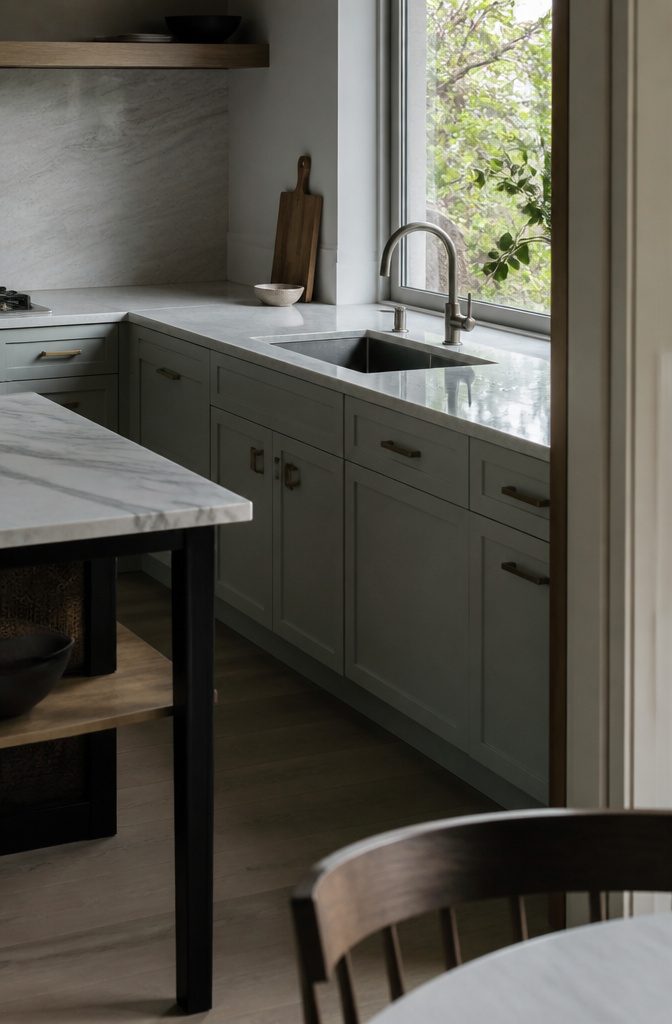
For a busy kitchen, quartzite is the safest natural stone. It resists stains and is easy to maintain, which suits a counter that handles daily cooking, homework, and spilled drinks.
Granite is a close second. It holds up against scratches and comes in many colors and patterns, so it’s easy to match to cabinets you already own.
Soapstone asks for less upkeep than marble, which makes it a calmer choice if you want something less demanding.
Marble is the showpiece.
It looks sleek and luxurious, but it’s porous and needs extra care. Pick it only if you’ll wipe up a spilled glass of red wine right away.
Recommended Products

No Unnecessary Ingredients: HOPE'S Perfect Quartz is free of sunscreen, silicone, and oil to create a unique residue-free formula that leaves your quartz countertops perfectly clean and spotless

2 Pack Counter Protector Mats - These silicone mats protect quartz and granite kitchen counters, among other materials and surfaces, against spills, scratches, grease, and high temperatures

SAFE ON GRANITE, MARBLE, QUARTZ & NATURAL STONE: Includes one 32oz spray bottle; pH-balanced formula cleans granite, limestone, marble, slate, travertine, quartz, and all other natural-stone countertops without the harsh chemicals in everyday cleaners that can dull or etch your stone
2. Quartz and Porcelain
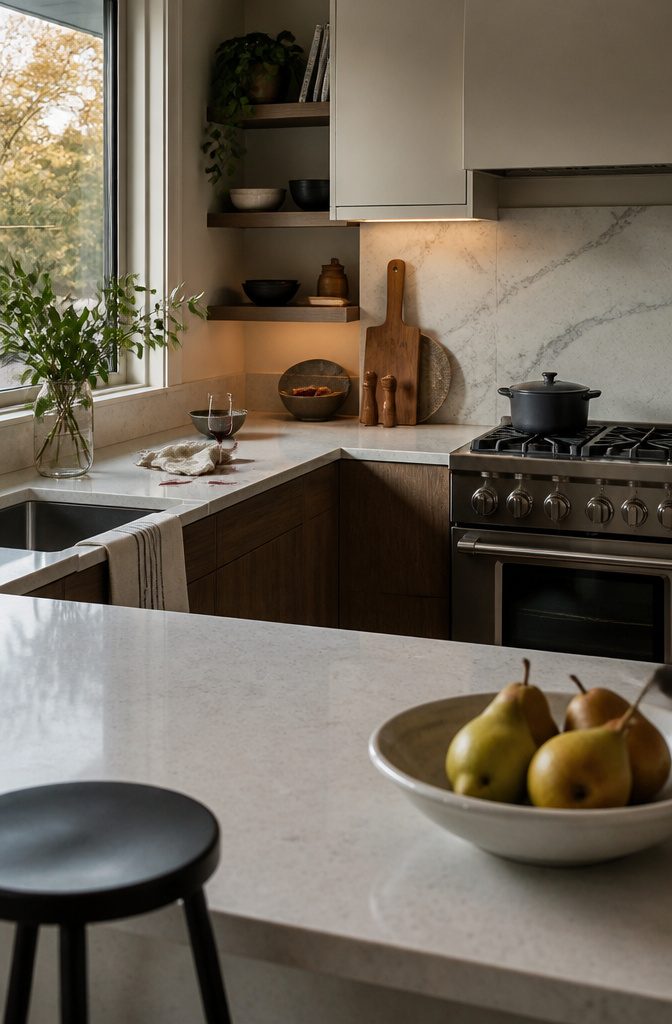
Quartz suits a busy kitchen. It comes in a wide range of patterns and colors, and its non-porous surface resists stains and scratches, so a spilled glass of red wine wipes up with a towel.
It also needs less upkeep than marble or butcher block, especially in heavy food prep areas.
Porcelain resists heat, stains and scratches, and it can imitate marble and wood. That makes it the safer pick beside a range, and a way to get the marble look without marble’s maintenance.
Both are manufactured, so what you give up against natural stone is uniqueness. The pattern is designed, not found in the slab.
If you want veining no one else has, stone wins. If you want a counter you can stop worrying about, choose one of these.
3. Wood, Concrete, Steel, and Glass
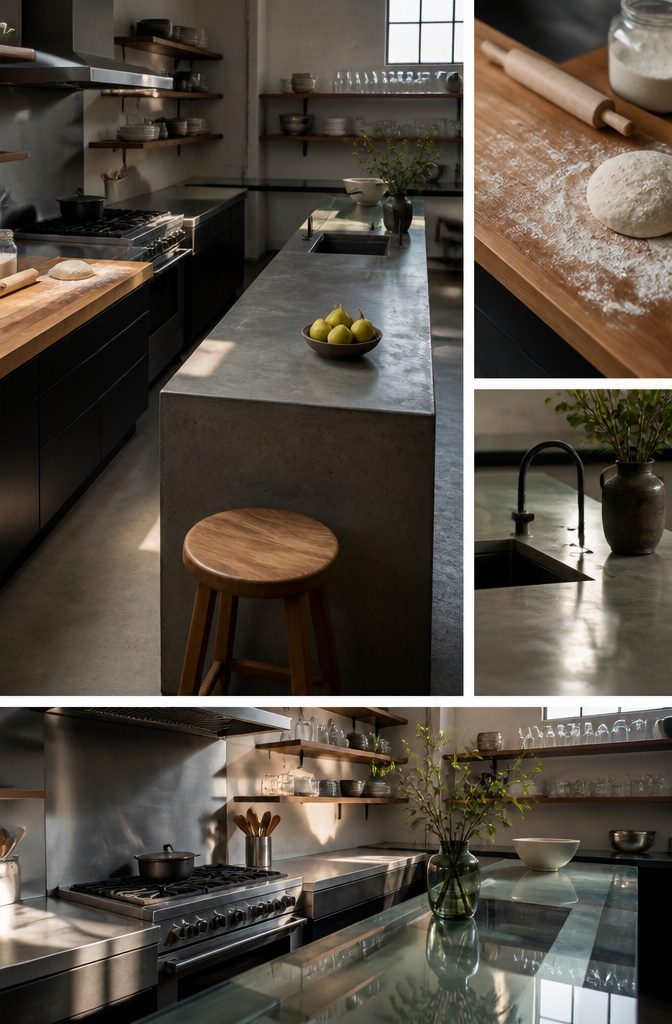
Four specialty surfaces suit kitchens that skip the usual stone look:
- Butcher block adds warmth, but it needs more upkeep than quartz, granite or soapstone, especially where you prep food. Pick it only if you will keep up with the care.
- Concrete gives an industrial look, and you can customize both the texture and the color. Polished concrete reads edgy and modern.
- Stainless steel is durable, heat resistant and easy to clean. It may scratch over time, so it works best in contemporary or industrial kitchens where wear looks like part of the style.
- Glass is modern, customizable and easy to maintain, which makes it the low-effort choice for a sleek kitchen.
4. Six Countertop Layouts
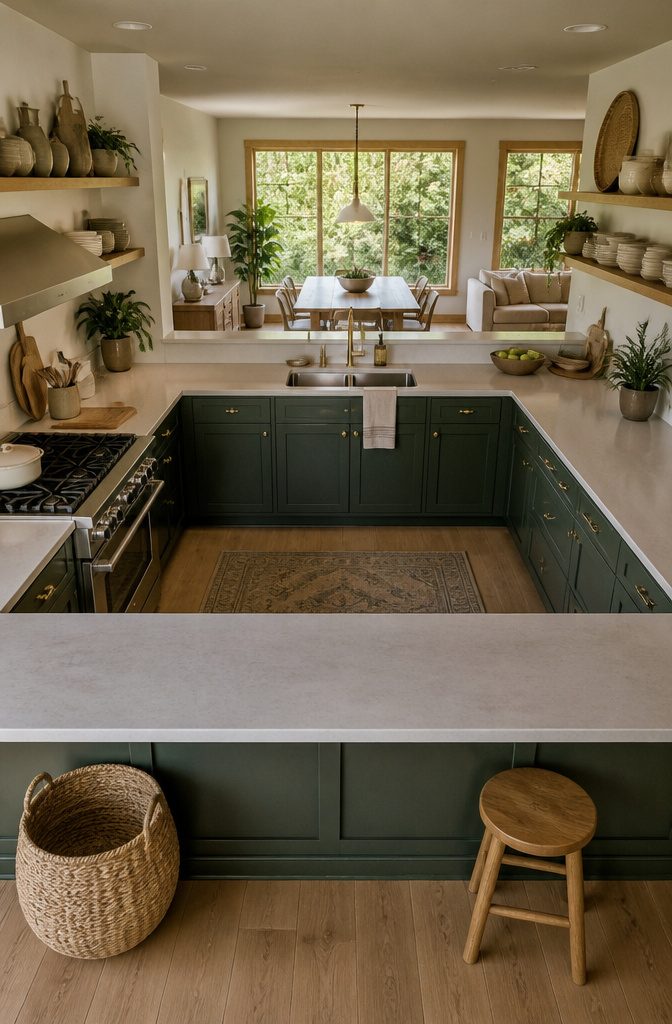
Match the layout to how many people cook at once and whether the kitchen opens onto another room. In a U, lighter counters or open shelving above them keep three walls from feeling boxed in.
| Layout | Shape | What it adds |
|---|---|---|
| Straight-line | One wall | Compact run; suits small kitchens or open plans |
| L-shaped | Two adjoining walls | Sink-stove-fridge work triangle, casual seating; small or large kitchens |
| U-shaped | Three walls | Surface and storage, room for several cooks; larger kitchens |
| Island | Freestanding block | Workspace, possibly a sink or stovetop |
| Double islands | Two freestanding blocks | Prep separated from serving |
| Peninsula | Attached to a wall or run | Helps define an open kitchen |
5. Mix Materials and Colors
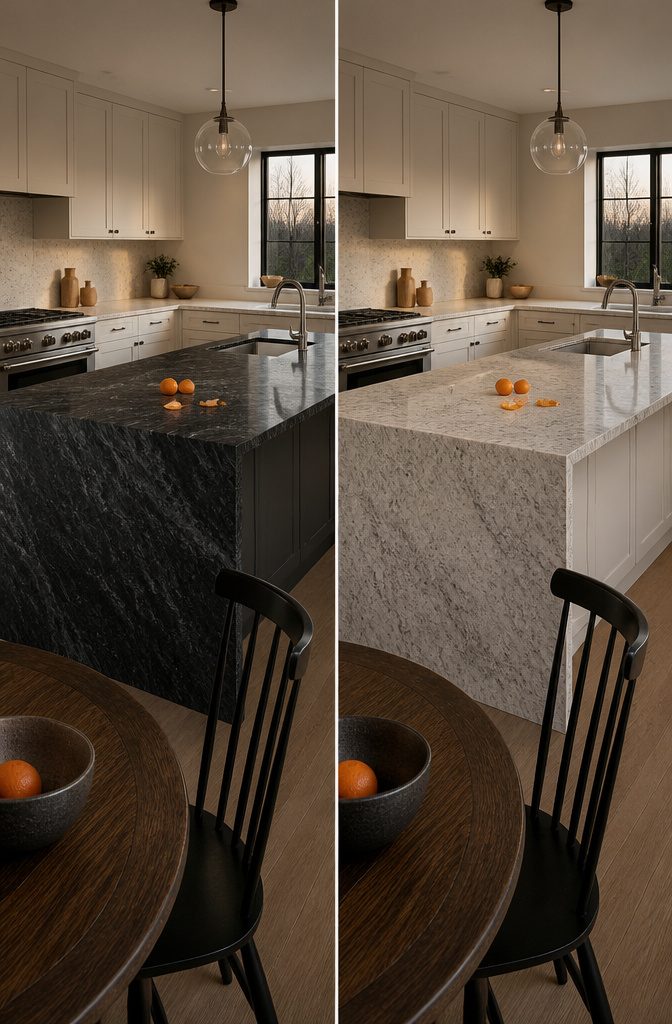
Mixing surfaces works in three ways. For household needs, a butcher-block island beside quartz perimeter counters adds warmth and contrast.
For looks, a dark island against a light perimeter is the classic move: Silver Cloud Dark black granite on the island with Classical White granite around the edges.
If that feels loud, stay in one color family, such as a lighter and a darker gray.
The island is where you can be boldest. Choose strong veining or color, or pick an edge: rounded, bullnose, beveled, ogee, or chiseled.
A waterfall counter flows over the sides and reaches the floor. Some combinations clash, especially two busy patterns side by side, so set samples next to each other before you buy.
Recommended Products
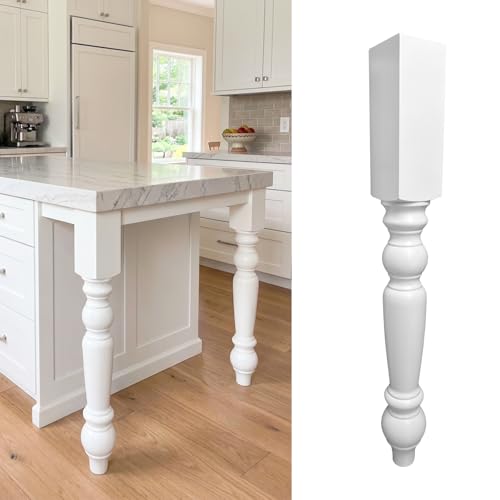
Designed For Kitchen Island Support: Specifically designed to support kitchen islands, peninsulas, and countertop overhangs, this island leg provides both structural stability and a finished built-in look. The standard 34.5" height fits most base cabinet setups for seamless integration

Foldable Kitchen Counter: This kitchen island's innovative foldable top effortlessly unfolds into 23.7"L x 15.8"W and stands 33.3" high. The top can easily fold away to save space when not in use, offering flexibility in any kitchen layout

Foldable Kitchen Counter: This kitchen island's innovative foldable top effortlessly unfolds into 23.7"L x 15.8"W and stands 33.3" high. The top can easily fold away to save space when not in use, offering flexibility in any kitchen layout
6. Style Counters You Already Have
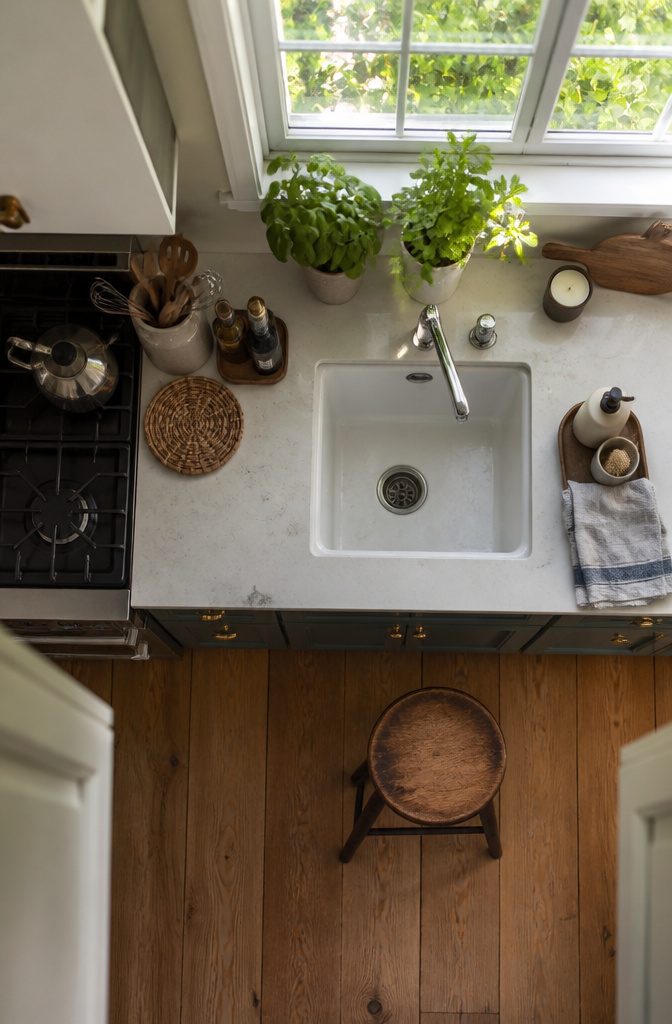
Clear the counters completely, then put back only what you use daily. Unused appliances, dirty dishes, mail and cleaning supplies stay off the surface.
Build zones around how you work.
A cooking station holds a crock of utensils, a trivet and your oils by the stove. A sink station needs a soap dispenser, a scrub brush in a small crock and a folded dish towel.
Coffee, baking and drink stations follow the same logic. Set each group on a tray, so wiping down means lifting one thing.
Choose pieces that work and look good: canisters, a dish rack, a utensil holder, and 2 or 3 small potted herbs such as basil or mint by the sink.
Add texture with a wooden board, and a candle for light. Rotate only one spot with the seasons: pumpkins, branches, fresh flowers, fruit, or a few small flags for the Fourth of July.
Recommended Products

【Clear Silicone Mat】Silicone mat for kitchen counter is made of 100% food grade silicone. Transparent silicone mats keep clearly see the surface and patterns of your countertop

COMPLETE DIY KIT: Everything you need to transform your countertops, from primer to mineral paints to epoxy topcoat.

Crystal Clear & Invisible Protection: This clear silicone countertop protector mat is ultra-transparent, acting as an invisible shield for your quartz, granite, or marble surfaces. Unlike other protective mats for kitchen counters, it won’t hide the beauty of your countertops, making it the perfect clear countertop mat for any decor
Balance Function and Looks
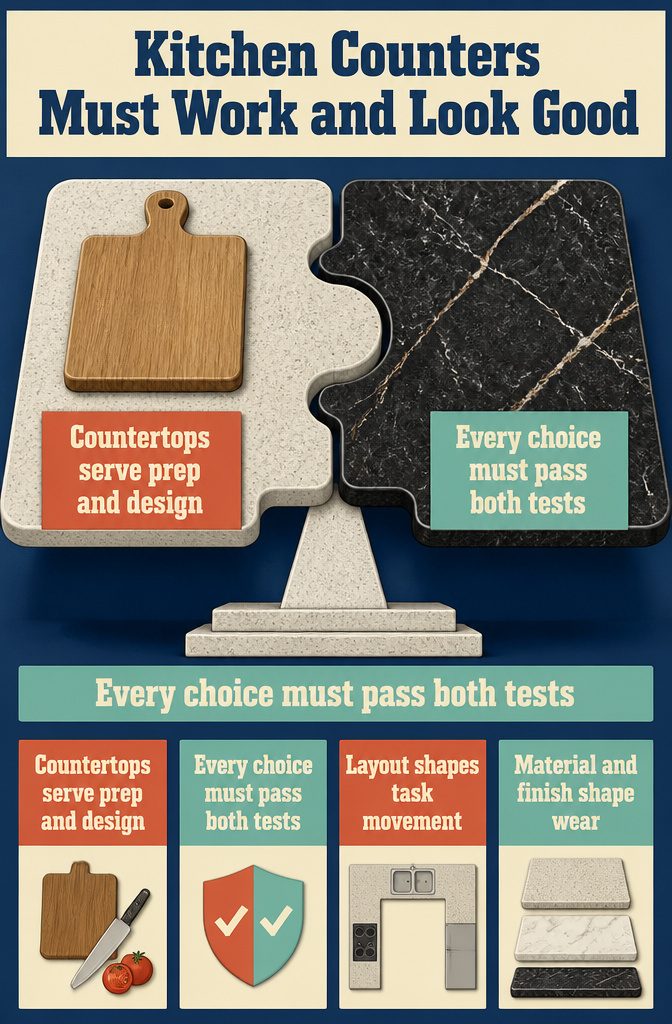
A countertop is where you chop, roll dough and set down groceries, and it is also a central design element that sets the look of the whole kitchen.
Three choices decide how well it does both jobs: the layout, the material and the finish.
The layout sets the shape and how easily you move between tasks. The material and finish complete the look and decide how the surface wears.
A counter that photographs well but is awkward to work on gets annoying fast.
One that works hard but looks flat drags the room down. Decorating advice says counters should be attractive and useful, so treat that as a two-part test every option has to pass before you commit.
Recommended Products

Perfect Design Created for the Modern Home, to make life clean, comfortable and orderly.

CLEAN & PROTECT - MORE Stone & Quartz spray is a 2-in-1 daily cleaner and protector formulated specifically for natural stone and quartz surfaces.

Trusted #1 granite and stone cleaner brand: Gently lifts and removes dirt, grease, grime, and watermarks while restoring a polished shine. Weiman granite and stone cleaner 3 in 1 features a pH-balanced formula that safely cleans luxury countertops without etching or damage. Infused with silicones & wax to create a smooth protective barrier, our Stain Shield Technology defends your surfaces against discoloration.
Match Counters to Your Household
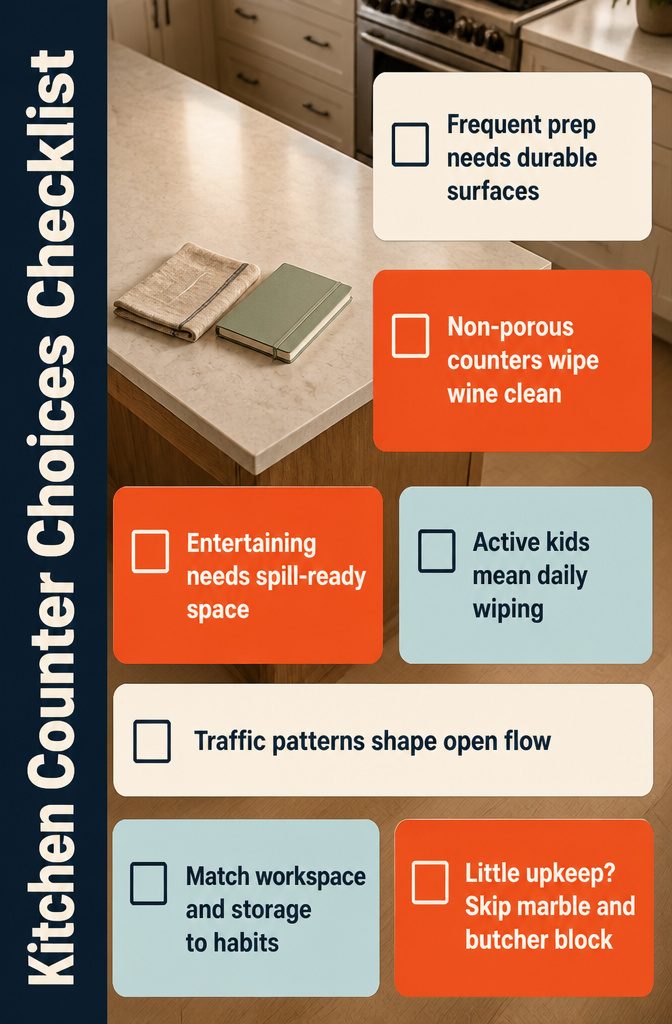
Answer these before you pick a material or a layout:
- Do you cook a lot? Heavy food prep is hard on marble and butcher block, which need more upkeep than quartz, granite, or soapstone.
- Does someone spill drinks? A non-porous surface lets you wipe up wine with a towel and move on.
- Do you entertain? Guests mean spills and crowds, so you want an easy-wipe surface and room for people to stand.
- Are your kids young or active? Expect daily wiping, and choose a surface that tolerates it.
- How do people move through the kitchen? Traffic patterns decide whether a layout feels open or crowded.
- Where do you work most? Match workspace and storage to your cooking habits.
- How much maintenance will you accept? If the answer is little, skip marble and butcher block.
Recommended Products

SPECS: Made of microfiber, ultra absorbent and fast drying dish drying mat.

BUTTER YOUR DAY: Getting a butter dish that lets you spruce up your morning toast is nothing less than buying happiness! This white butter dish not only adds a touch of elegance to your dining table but also stores the butter stick at that perfect room temperature, so you don’t have to wait to spread some goodness on the toast.

SIZE & COLOR: The rectangle tray outside size: 8.07"x4.21"x0.74",set of 1; Color: White
Test Samples at Home
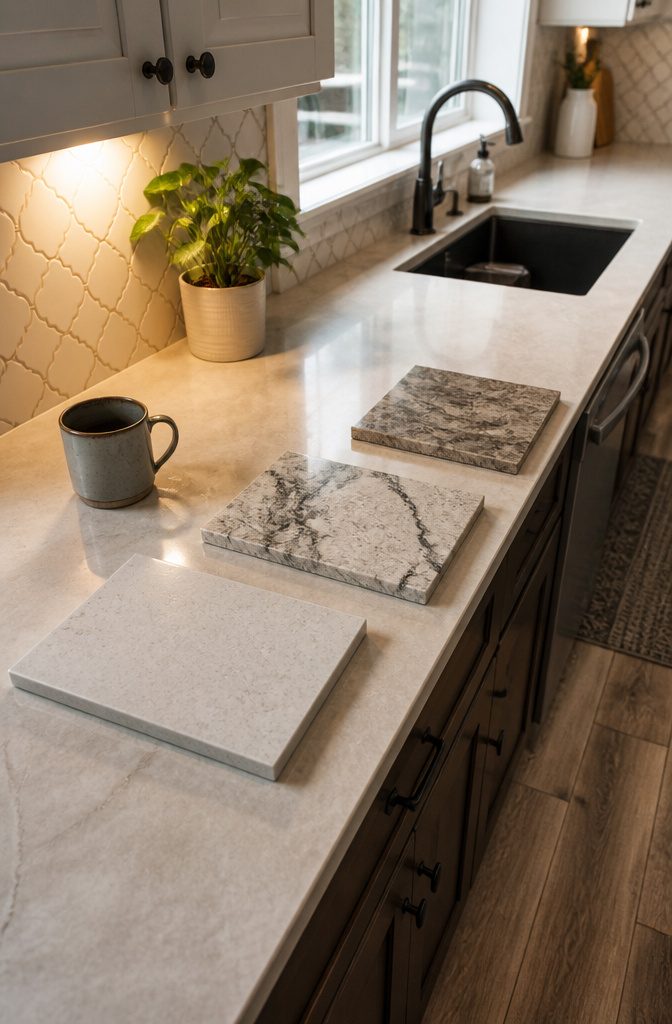
Bring home a sample of every material you’re considering and set it next to your cabinets, backsplash, and floor.
Color and pattern shift between a showroom and your kitchen, so leave each sample out for a full day and check it in morning light, under the evening bulbs, and on a cloudy afternoon.
Veining that looks subtle in a store can look busy beside patterned tile.
Then look at upkeep. Every material has its own cleaning and maintenance routine, and you should be comfortable with it before you buy.
Also check how the surface sits with the other materials in the room: laminate and granite clash, while two granite colors, or quartz with granite, can work together.
The material and finish are what complete a good layout.
Recommended Products

🌳UNFINISHED HIGH-QUALITY HEVEA WOOD: Our butcher block island is crafted from solid sustainable hevea wood of the maple family with strong grains; Well known material for its exceptional durability and strength, ideal for DIY and home renovation

PREMIUM BIRCH HARDWOOD: Crafted from 100% solid birch wood, the butcher block countertop offers a light golden tone and even grain, beauty and functionality. It is a perfect addition to add the warmth of wood to your home.
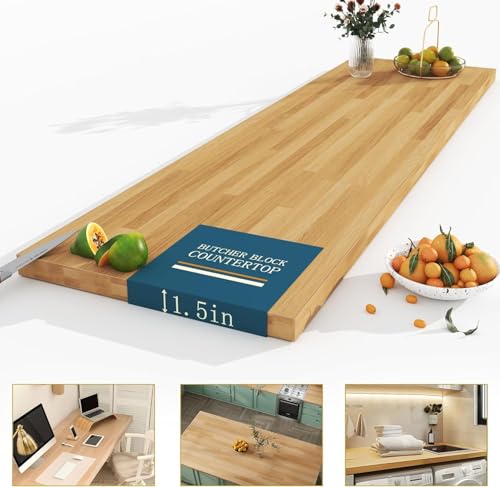
SOLID WOOD CONSTRUCTION: Crafted from finger-jointed solid wood panels, this butcher block countertop delivers lasting durability and a natural, warm aesthetic
Frequently Asked Questions
Recommended Products

Solid wood top for increased durability and longevity contrasts with the clean white finish seamlessly; 50lbs (shelf); 5lbs (drawer); Assembly Required Yes; Capacity 100lbs (top); Warranty 30 days limited; Construction Material Solid wood; Country Of Origin Thailand; Dimensions 20D x 40W x 36.5H

Effortless Food Prep: The stainless steel countertop of this kitchen island on wheels provides a smooth and safe surface for all your chopping and cutting tasks. Cleanup is a breeze, as a simple wipe with a kitchen towel or cloth leaves it spotless and ready for your next culinary adventure

Flexible Mobile Dining Bar: Featuring a foldable drop leaf, this island cart effortlessly transforms into a convenient dining bar. Expand it whenever you require additional dining space, or simply fold it down to reduce its footprint and optimize room capacity.
What are the different styles of kitchen countertops?
Countertop materials fall into three groups: natural stone (quartzite, granite, soapstone, marble), manufactured surfaces (quartz, porcelain), and specialty surfaces (butcher block, concrete, stainless steel, glass).
Layout is a second style choice, with 6 common shapes: straight-line, L-shaped, U-shaped, island, double islands, and peninsula.
What countertops are heat resistant?
Porcelain and stainless steel both resist heat.
Porcelain is the safer pick beside a range, and it also resists stains and scratches. Stainless steel may scratch over time, so it suits contemporary or industrial kitchens where wear looks like part of the style.
How do I tell if my counter is quartz or quartzite?
Quartz is a manufactured surface with a designed pattern, while quartzite is natural stone with veining formed in the slab itself. Quartzite is the safest natural stone for a busy kitchen, and quartz is non-porous, so both resist stains well.
How can I make my kitchen countertops look nice without replacing them?
Clear the counters, then put back only what you use daily in pieces that look good, such as canisters, a dish rack, and a utensil holder.
Add 2 or 3 small potted herbs like basil or mint by the sink, a wooden board for texture, and a candle. Setting each group of items on a tray also makes wiping down quick.
How do I decorate my kitchen countertops seasonally?
Rotate only one spot with the seasons instead of redoing the whole counter. Fall can bring pumpkins, winter can bring pinecones or evergreen sprigs, and spring and summer suit fresh flowers or a bowl of fruit.
What should you never leave on kitchen countertops?
Keep appliances you don’t use daily, dirty dishes, mail, and cleaning supplies off the counter. Give each a home elsewhere, so the surface holds only what you use every day.