
These ideas run from a wool throw over the sofa arm to a wall-mounted TV and a living room drenched in emerald, woodwork and ceiling included.
Your lease decides which ones are yours. Rugs, lamps, curtains and textiles leave with you, while drilling for floating units or repainting every surface needs a lease check first.
1. Two Smaller Armchairs
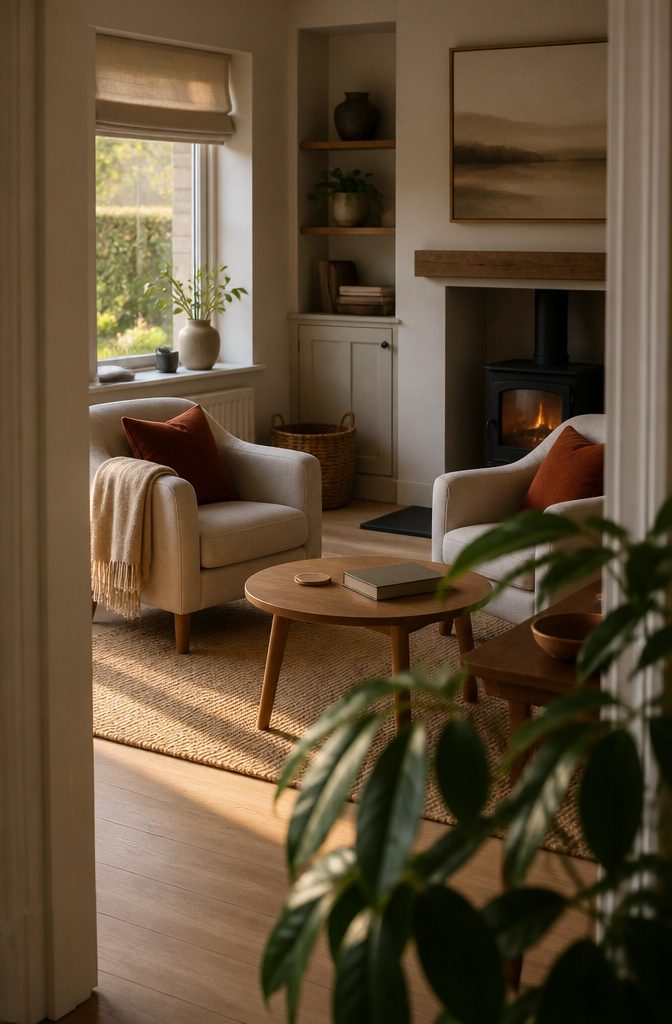
Two smaller armchairs take up less floor than a large sectional or a pair of sofas, so the room keeps its open feel. Angle them toward a focal point such as the fireplace, the entertainment center, or the coffee table.
Turn each chair slightly inward instead of pushing it flat against a wall, and the pair reads as a conversation grouping rather than furniture parked along the edges.
You give up seating for a crowd. Two chairs hold two people, so a third and fourth guest will be perching somewhere else.
In a small room used mostly by one to three people, that is a fair trade for walkable floor space and a spot where people face each other.
2. Flexible Furniture
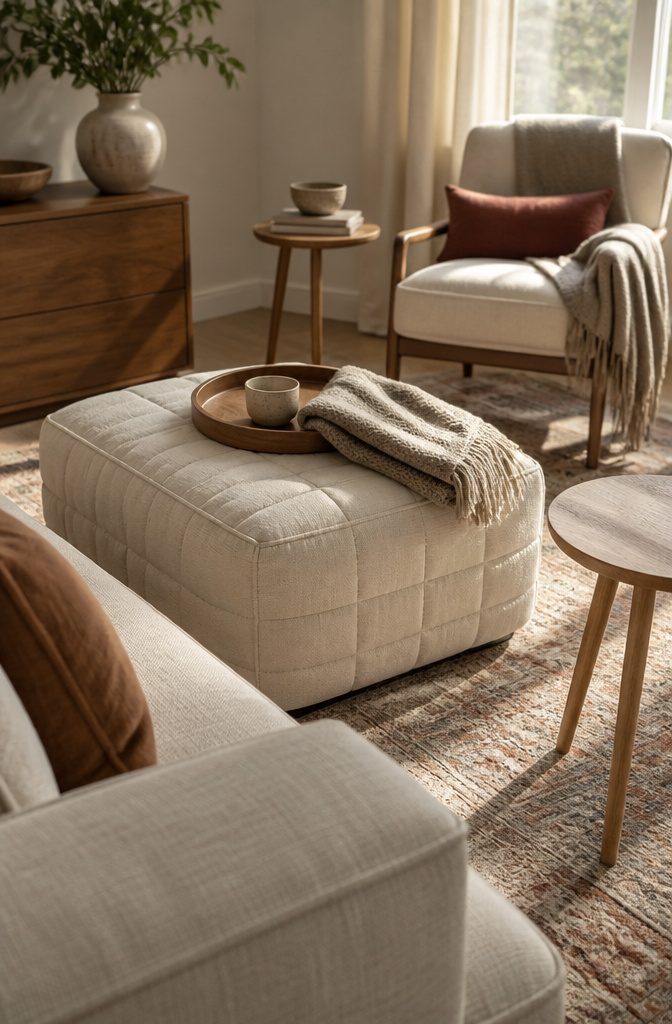
A single ottoman can hold blankets, seat an extra guest, or work as a coffee table with a tray on top, so it covers three jobs in a room with space for one piece.
Small quilted ottomans in a warm white room also add texture.
Pair it with end tables that move from one corner to another: beside the sofa for a movie night, next to a chair for reading.
Movable pieces need a quick reshuffle when guests arrive.
The ottoman goes back to the center and the tables return to the seats. That takes about a minute, and it beats a fixed layout that suits only one activity.
3. A Floating Media Center
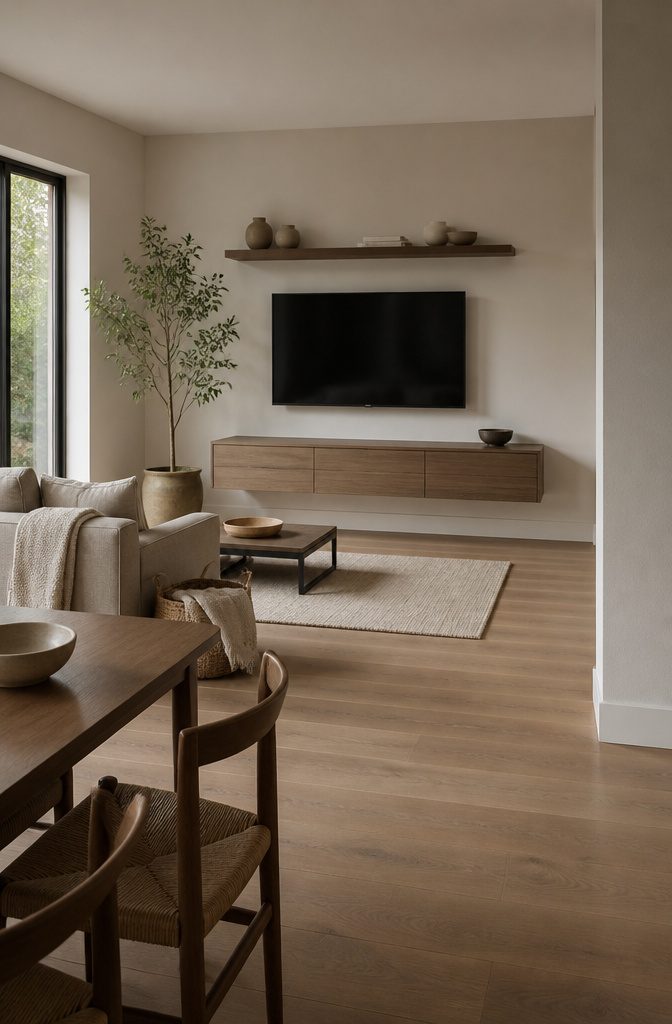
A bulky media console takes up floor space a small room can’t spare. Mounting the TV on the wall and attaching floating units above and below it clears that floor entirely, so the room looks lighter and more open.
Use the units for storage or for a few small decor pieces. Because the whole setup hangs on the wall, it reads as minimalist, and you can style the shelves to match your taste.
This is a bigger job than swapping a lamp or adding pillows.
The TV and every unit go into the wall, so renters should check their lease before drilling. If you can’t put holes in the wall, a different idea from this article will do more for you.
4. An Anchoring Rug
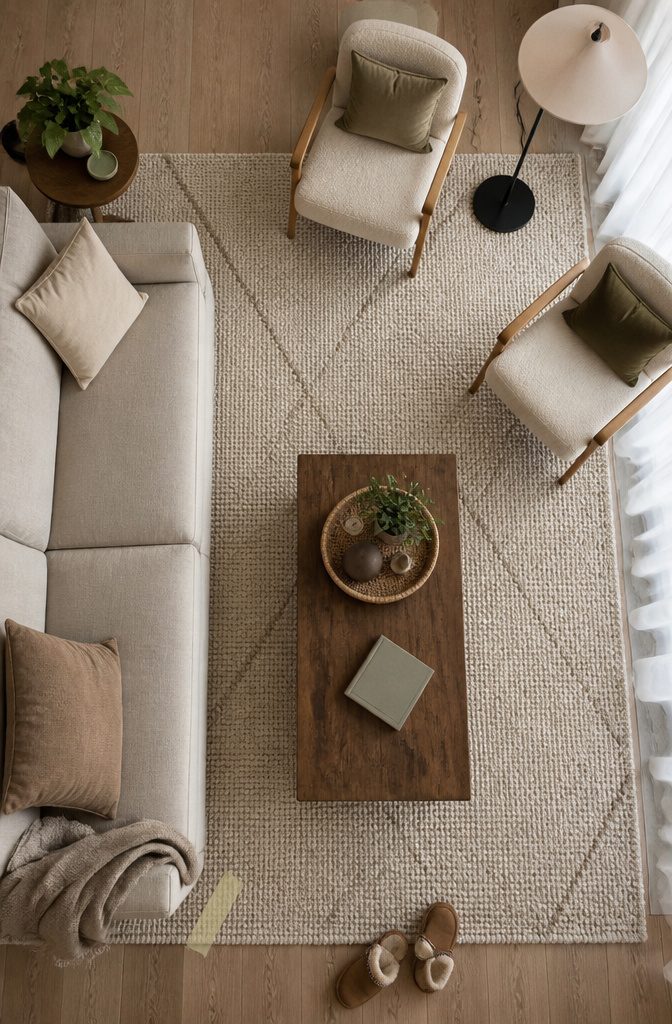
A small rug floating in the middle of the room cuts the floor into pieces and makes the space look choppy.
A larger rug that sits under the seating ties the furniture into one zone, and the room reads as more spacious.
Tape out several outlines on the floor before you buy.
Try a few shapes and sizes, then see which one covers the seating area and looks most polished. Moving tape costs nothing, and it settles the question faster than guessing from a product listing.
Choose natural fibers: wool, sisal and jute work best. Wool is the warmest underfoot, and sisal or jute adds texture that suits a layered, cozy look.
5. Warm Layered Lighting
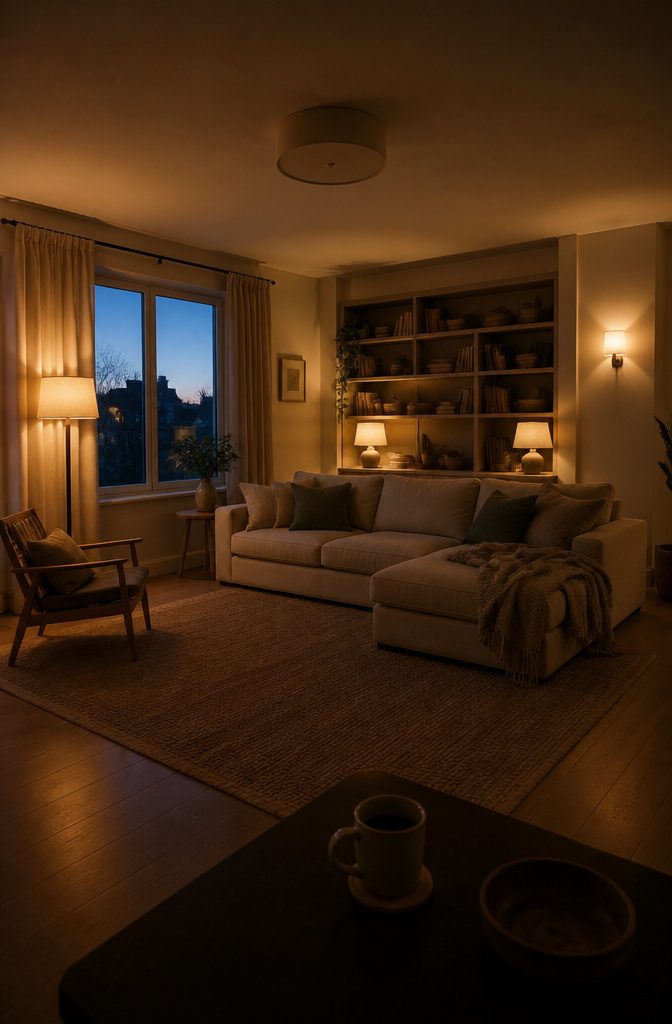
Several low light sources feel warmer than one overhead fixture, so build the room in layers and turn the ceiling light off once evening starts:
- Ceiling fixture: It brightens the whole room and draws the eye first. Save it for cleaning and daytime tasks.
- Floor lamps: Use different heights so light lands at more than one level. A corner is a good spot for one.
- Lamps behind the couch: They add a soft glow from behind the seating, which keeps the center of the room uncluttered.
- Wall sconces: These replace table lamps beside the couch, add a design detail, and free up surface space.
- Natural light: It’s the best source during the day, so keep the windows clear.
6. Mirrors With a Lamp
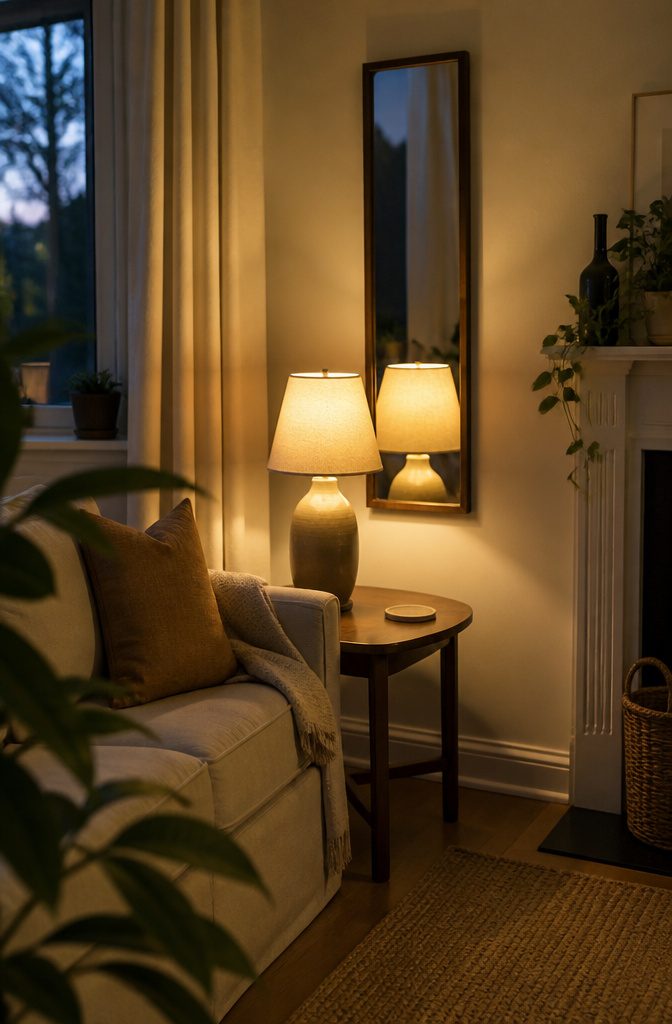
A mirror only brightens a room when it has something to reflect.
Hang it beside or across from a table lamp or wall sconce, and the glass bounces that glow back into the room. A mirror facing a blank wall or a dark corner just shows you more of the dark.
Keep the frame modest. A huge, ornate frame overpowers a small living room and takes up the visual space the mirror was supposed to open.
A plain, slim frame reads lighter and lets the reflected light do the work. If you’re planning a gallery wall, use a smaller mirror as one piece among the frames instead of a single oversized statement.
7. Layered Curtains
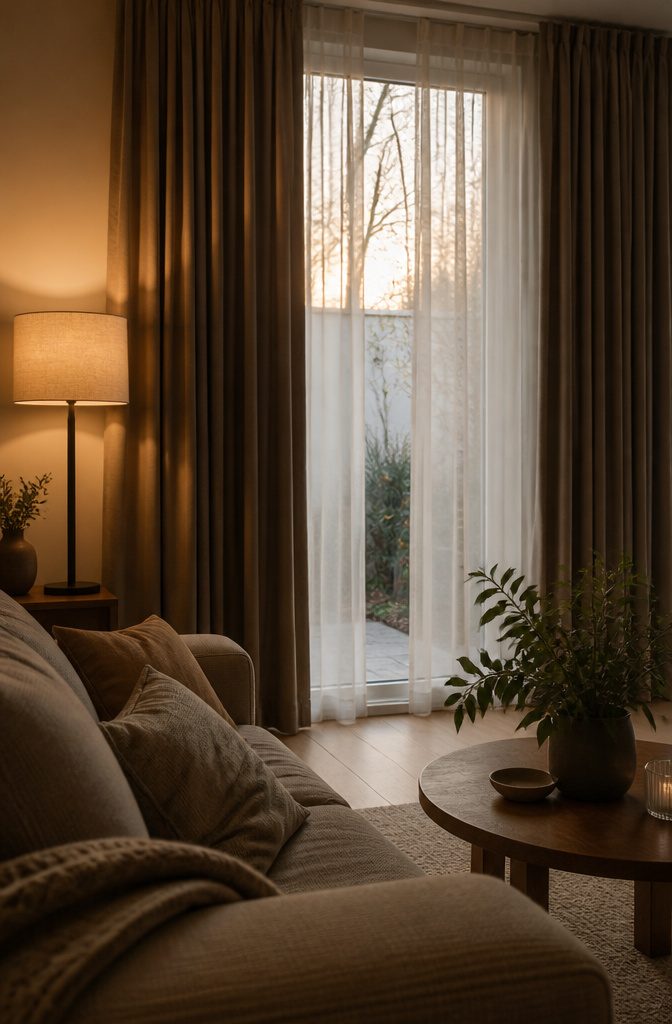
Layered curtains soften the light and add texture in one move, which makes them the best single upgrade for a small living room.
Use a wool-blend panel as the main layer. Wool-blend fabric hangs with a full, even drape and filters daylight into a warm glow instead of blocking it.
Add a sheer panel as the second layer. Pull it across the window in the evening, and it diffuses lamplight and the last of the daylight so the room feels softer and more enclosed.
In the morning, draw the sheer aside and open the wool panel to bring the brightness back.
8. Vertical Shelves
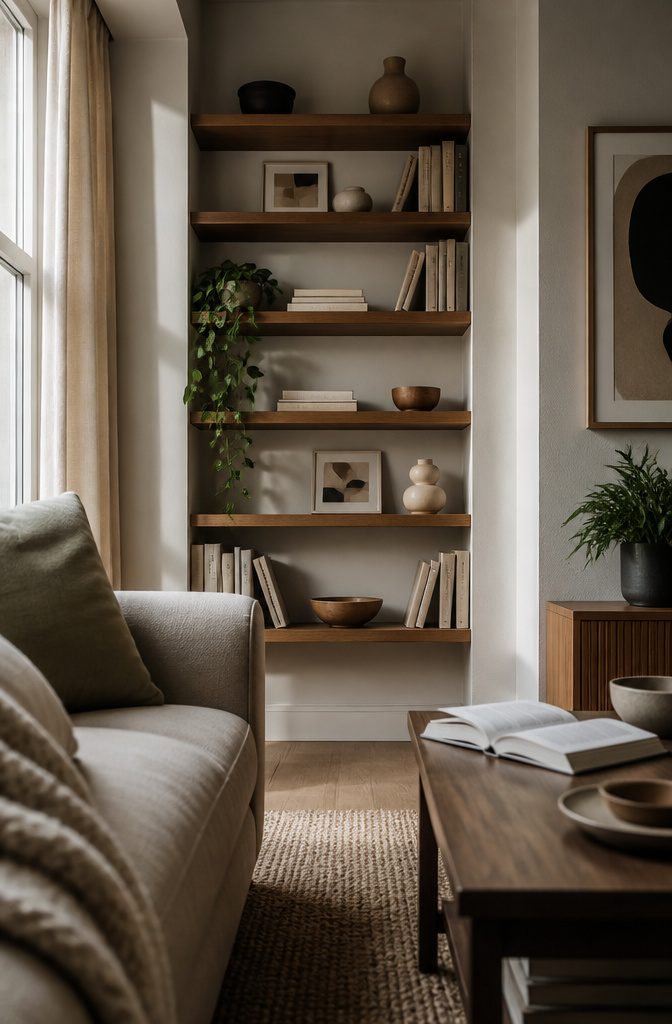
Tall floating shelves suit an alcove or an angled wall, two spots that are awkward for furniture.
If your living room has no built-ins, a floating unit on the wall gives you the same storage and display. Because the shelves sit on the wall, they take no floor space, which leaves room for a rug and seating.
Decorate them from top to bottom, with books, small art, and a plant or two on the upper shelves as well as the lower ones.
Filling the full height pulls the eye upward and makes the room look more spacious. They are also one of the cheapest ways to add storage and personality to a small room.
9. Color Drenching
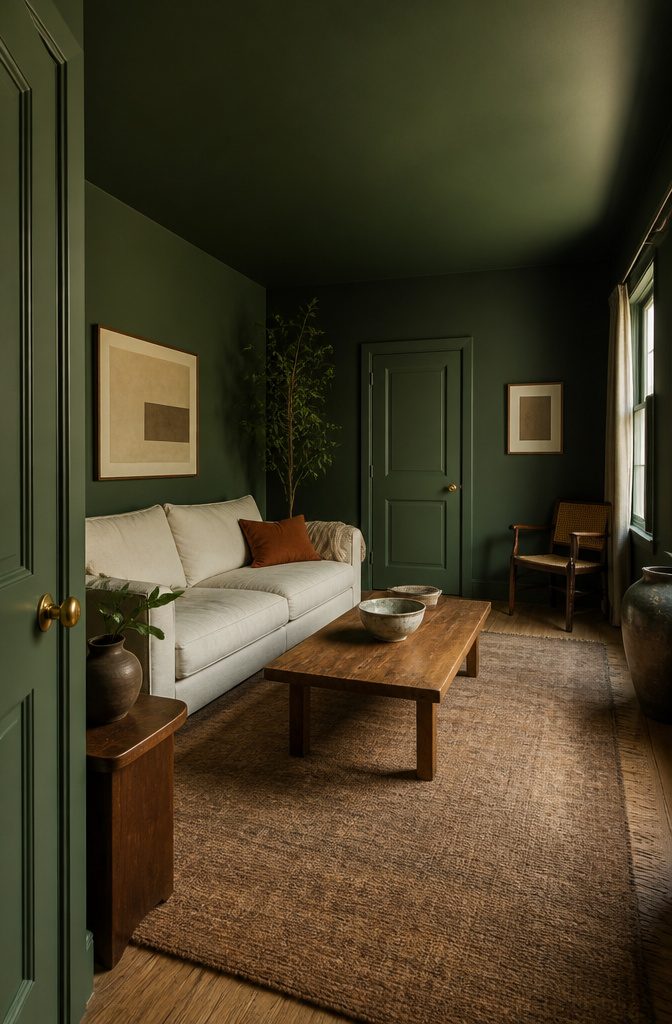
Color drenching means painting the walls, woodwork and ceiling the same color. With no contrast line where wall meets trim or ceiling, the edges of a small room blur, and attention shifts from the room’s size to the color.
An emerald green apartment living room shows the effect: the look is bold, yet the space feels warm and inviting.
It is a bigger commitment than an accent wall. Every surface gets the same paint, so a color you tire of means repainting all of it, which matters most if you rent.
If emerald feels like too much, drench the room in beige or warm pink for a more muted version of the same effect.
10. Color Through Accents
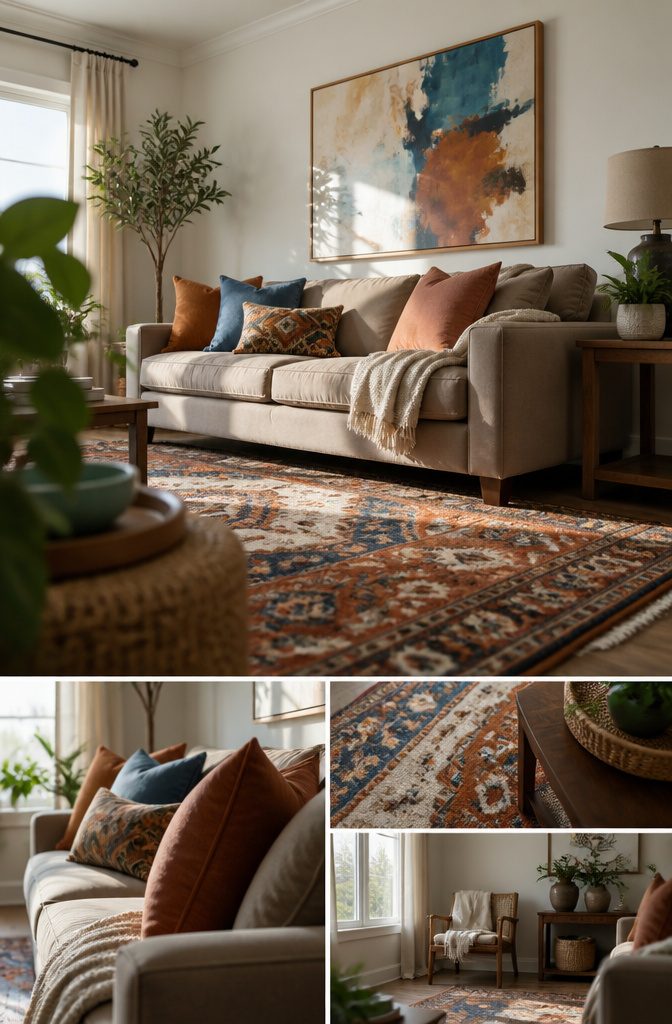
Muted walls and ceiling keep a small room looking open, and accents carry the color.
Pillows, a patterned rug, large art and plants all add it without paint, which makes this the easier route for renters: every piece leaves with you.
Placement matters more than quantity. When the couch, rug and walls are nearly the same shade, the couch blends into the wall and the room loses definition.
Hang one large piece of art above the couch and add bolder pillows to break that up. A bigger rug with a pattern in your accent color pulls color down to floor level, and plants fill in the rest.
If a rug is out of budget, a local Buy Nothing group on Facebook is one place to look.
11. Warm Tones and Natural Fibers
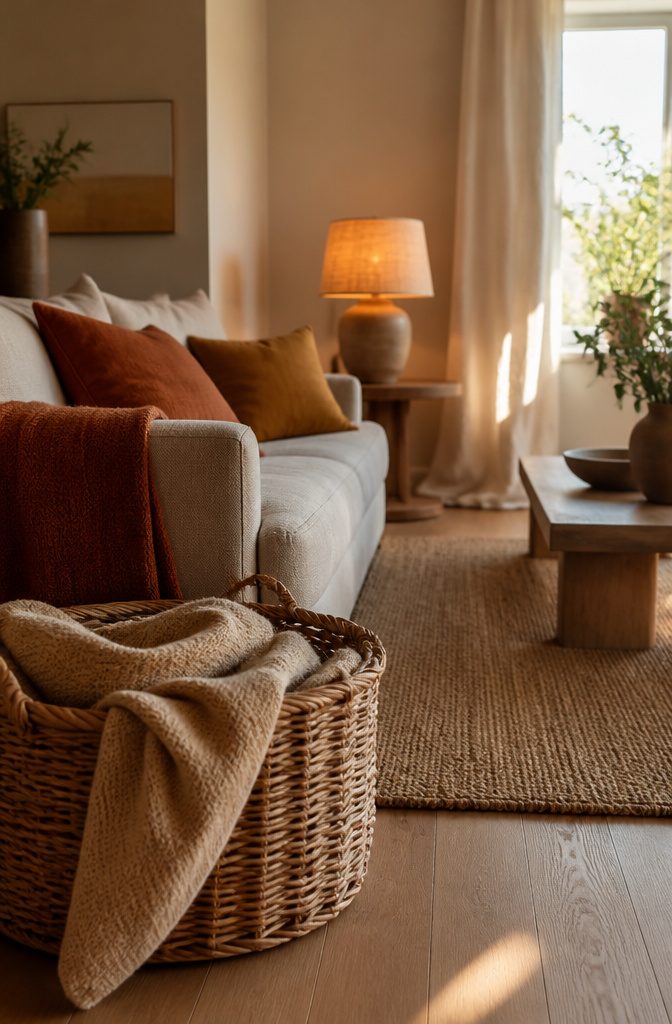
Warm hues run from red through yellow-green, and the pairings that layer best are browns with oranges and yellows, or purples with reds and pinks.
Put natural materials on top of that color: rattan, wood, wool, grasscloth and linen. Together they give a room a soothing, lived-in feel that flat synthetics don’t.
Renters can start with the easy swaps: a rattan or woven basket, linen cushion covers, a wool throw over the sofa arm, and a wood side table. All of them leave with you when you move.
Grasscloth is the hard one, since it goes on the wall as a covering. Skip it unless your lease allows wall work.
12. Soft Textiles
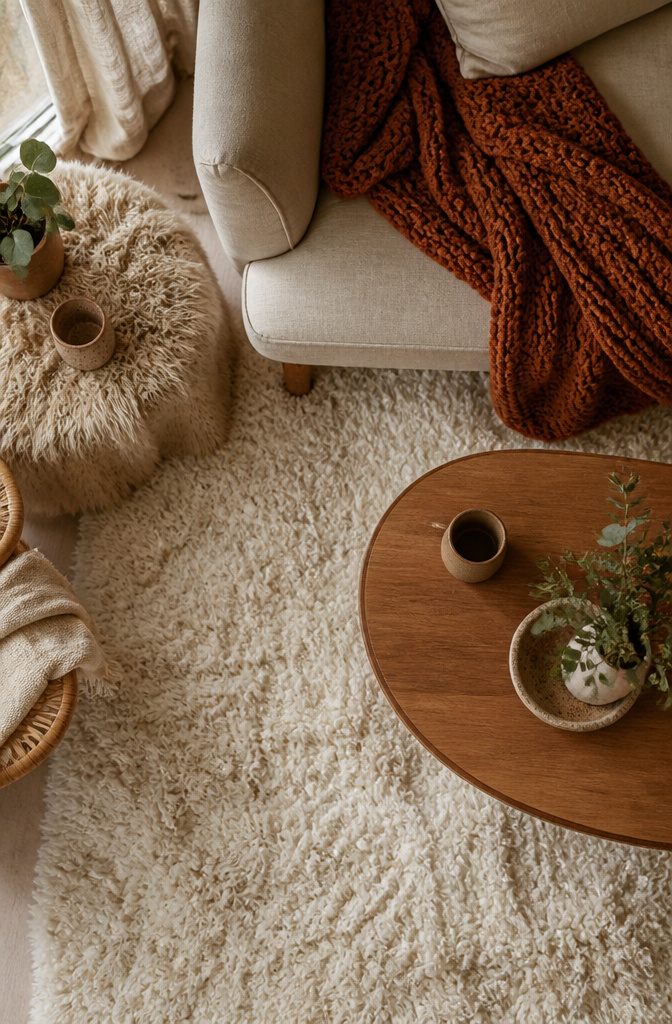
Cozy comes from touch, so layer at least 3 different textures: a chunky knitted blanket on the sofa, a faux-fur cloth on the side table, and a soft, fluffy rug underfoot.
Set something smooth next to something shaggy so each one stands out.
For the rug, wool, sisal and jute are the natural materials that work best. Add one bold texture on top of them so the look doesn’t go flat.
Soft pieces collect dust.
Shake the blanket and fur cloth out regularly and wash them on a schedule, checking the care tag first. The fluffy rug is the most work, because deep pile needs more vacuuming than a flat weave.
13. A Reading Nook
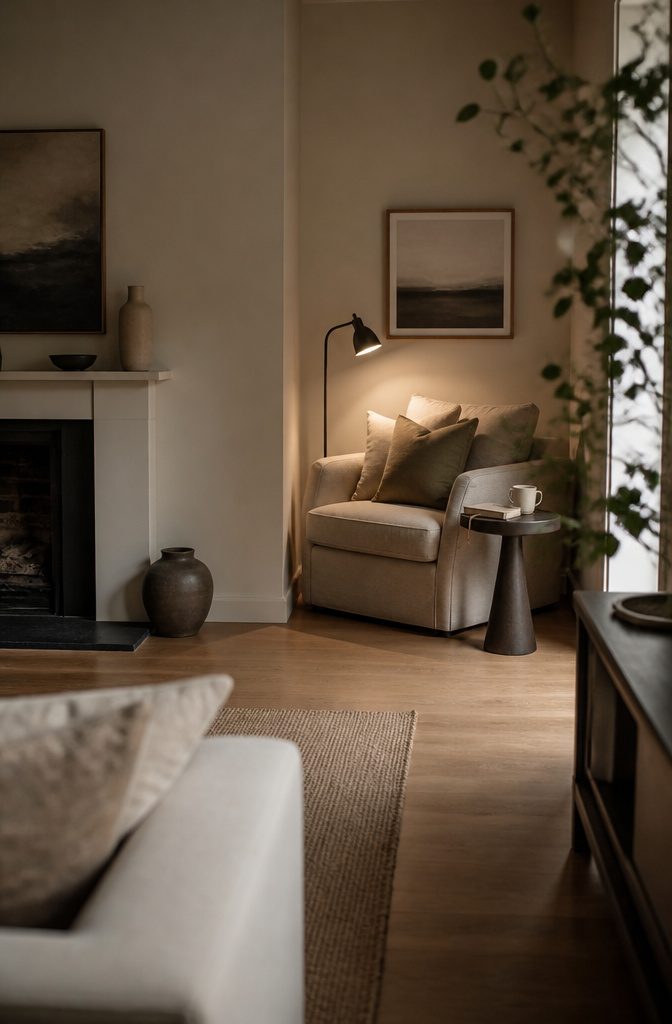
An awkward corner is floor space you already pay for, and a nook puts it to work without taking anything from the middle of the room.
Angle a comfortable armchair into the corner, then add cushions so the seat invites you to stay. An armchair and a few cushions are enough to turn a dead corner into a spot you head for after a long day.
Give the nook one job.
Reading is the obvious choice, but the same corner can hold a music-listening spot or a small painting station. Choosing a single purpose keeps it from becoming a place where mail and bags pile up.
Shades That Feel Cosy
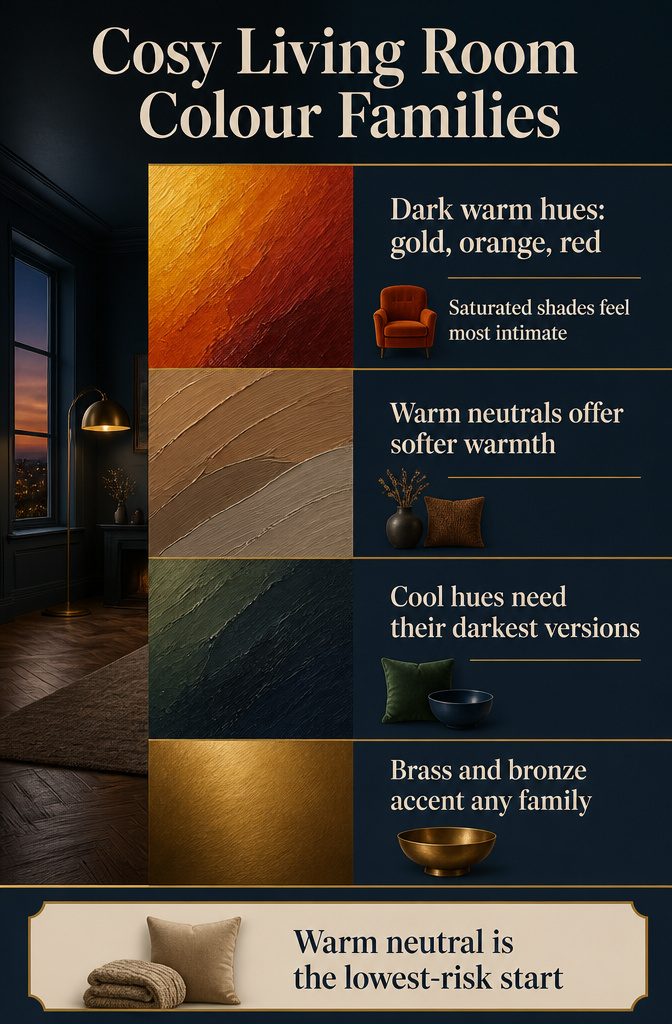
Dark warm hues and warm neutrals are the obvious picks, but deep cool colors work too if you go as dark as the shade allows.
A pale blue or sage stays cool, while navy and moss turn snug. Painting the ceiling in the same deep shade adds intimacy by pulling the top of the room closer.
| Family | Shades | Effect |
|---|---|---|
| Dark warm hues | Gold, orange, red | Saturated, most intimate |
| Warm neutrals | Caramel, chocolate brown, charcoal, fawn | Softer warmth |
| Deep cool colors | Moss, navy, dark green | Warm only in the darkest versions |
| Warm metals | Antique brass, oil-rubbed bronze | Accent finish for any row above |
If you want the lowest-risk choice, start with a warm neutral.
Keep a Small Room Open
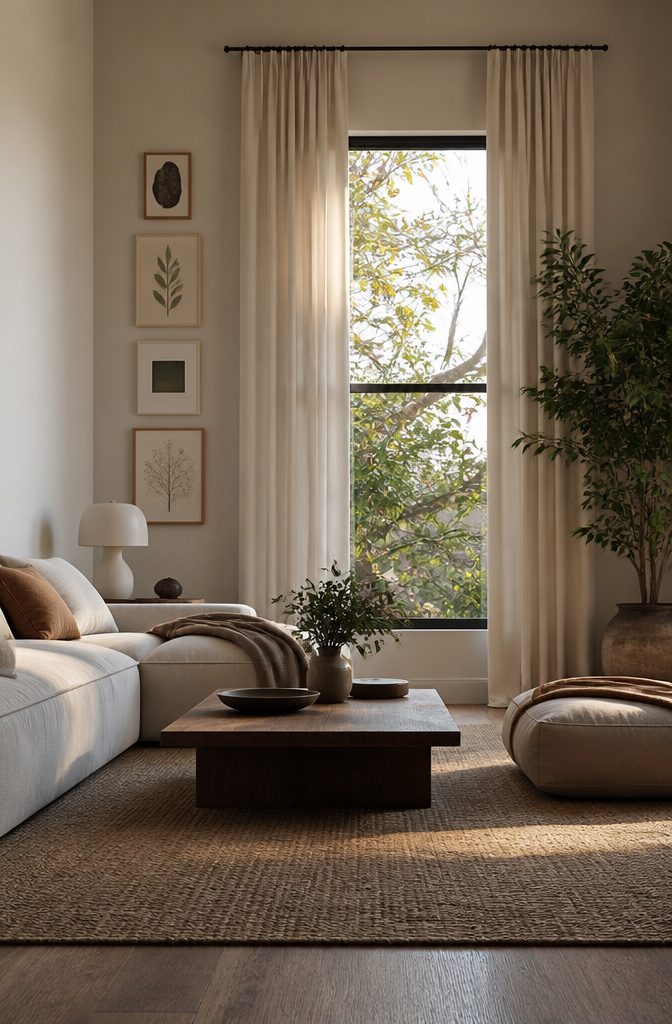
A cozy room stays open when the eye travels up instead of stopping at the middle of the wall. Three moves do it:
- Hang the curtain rod close to the ceiling instead of just above the window frame. The room reads taller and the window looks larger.
- Order curtains long enough for that higher rod. A panel that stops short looks like a mistake at this height.
- Build wall art and décor upward toward the ceiling. Your eye follows it up, and the room looks bigger.
- Balance the height with low furniture: ottomans, a coffee table close to the floor, and a low chair or couch. The contrast between high and low is what creates the illusion of extra space.
Frequently Asked Questions
How can I decorate a small living room?
Draw the eye upward. Hang the curtain rod close to the ceiling, order curtains long enough to reach it, and place wall art and décor high on the wall.
Then keep the furniture low, with ottomans, a coffee table near the floor, and a low chair or couch. The mix of high and low is what makes the room look bigger.
How do you make a small living room feel cozy?
Layer at least 3 different textures, such as a chunky knit blanket, a faux-fur cloth, and a fluffy rug.
In the evening, switch off the ceiling light and use lamps at different heights instead. Layered curtains (a wool-blend panel plus a sheer) soften the light, and a deep paint color, ceiling included, makes the room feel snug.
What colors make a living room cozy?
Dark warm hues such as gold, orange, and red feel the most intimate. Warm neutrals like caramel, chocolate brown, charcoal, and fawn give a softer warmth.
Deep cool colors such as moss, navy, and dark green also work, but only in their darkest versions, since pale blue or sage stays cool. Antique brass or oil-rubbed bronze accents suit any of these.
How do I arrange furniture in a small living room?
Use 2 smaller armchairs, turned slightly inward toward a focal point like the fireplace or coffee table, instead of one large sectional.
Choose pieces that move, such as an ottoman and end tables you can shift between the sofa and a reading chair.
Mounting the TV on the wall with floating units clears the floor space a media console would use, though renters should check their lease before drilling.