
These ideas run from one black wardrobe in a white room to walls, trim, and ceiling painted a single black.
Daylight decides how far to go: black absorbs light, and a low ceiling with few windows feels tighter still. Plan layered lamps with 2700K bulbs before you buy paint.
1. Black Furniture as the Anchor
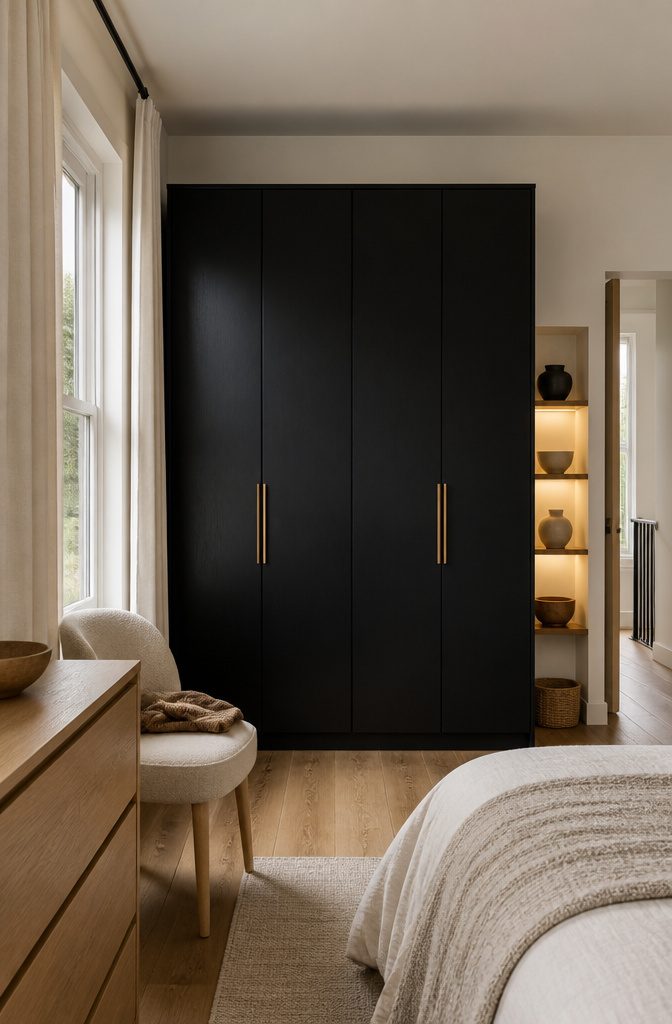
One large black piece sets the tone for the whole room, so let the wardrobe, dresser, chest, or bed frame you notice first carry the darkness.
The walls can then stay light. A wardrobe with a clean silhouette and flat doors reads calm rather than heavy.
Built-ins push the effect further.
Black built-ins blend into the walls and look like part of the architecture, so the room looks custom. For a budget version, buy simple cabinets, paint them black, and add wood or brass handles.
Painting them the same color as the wall hides the seams and gives a continuous, unbroken finish. Lights inside the shelves turn storage into display.
One big black piece anchors a room. Several of them need lighter pieces nearby, or the room starts to feel heavy.
Recommended Products

Quality Material: The frame made of premium-grade solid wood, middle part is made of a solid thick fiberboard, size is 40'' 15'' 1''

【Harp Design Platform Bed】Luxurious gold plated metal trim combined with elegant velvet upholstery, harp silhouette headboard & footboard to steal the spotlight in your bedroom decor.

【Luxurious Black-Gold Textured Design】Elevate your space with a sophisticated black-gold metallic finish—perfect for modern, industrial, or glam interiors. The distressed abstract pattern adds depth, warmth, and a touch of luxuryto bedrooms, living rooms, offices, or accent walls. Ideal for renters, homeowners, or DIY enthusiasts!
2. Black Bed and Layered Bedding
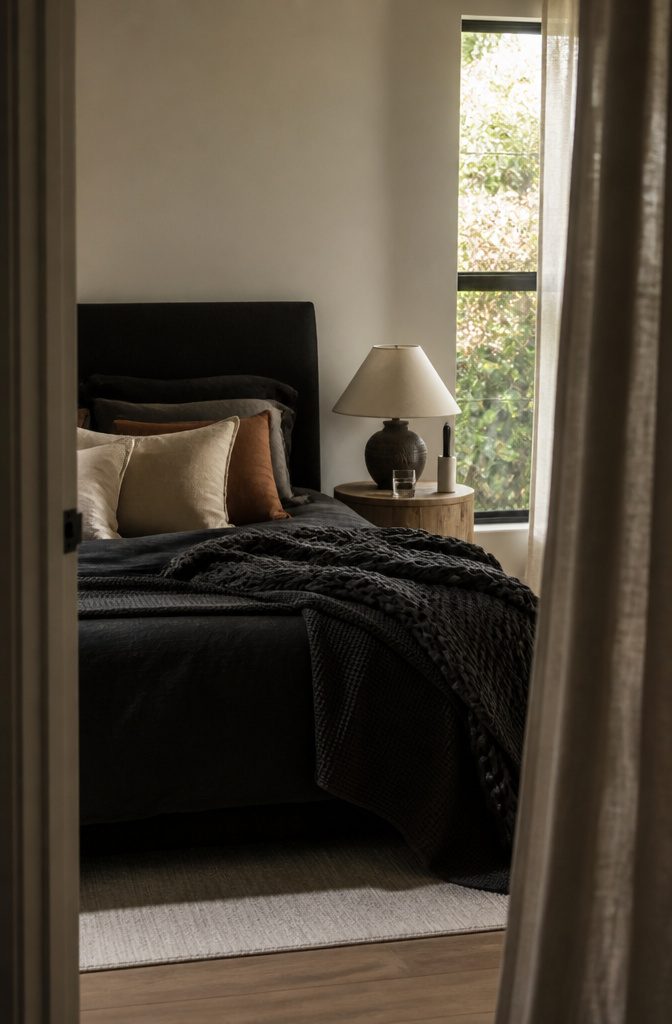
A black bed or headboard against warm white or soft gray walls becomes the focal point with no extra decoration, because the contrast frames it like a picture.
If you aren’t ready to paint, a black headboard in velvet, bouclé, or painted wood panels is an easy way in.
The bed is where texture does the most work. Layer different weaves in the same black: a linen duvet, a waffle blanket, and a knit throw catch light differently, so the bed doesn’t read as one flat block.
Add pillows in cream, rust, or sage, and stop at two accent shades.
Black hides stains but shows lint and pet hair, so keep a lint roller nearby.
Recommended Products

Black Wallpaper--Embossing Process- It can effectively reduce the generation of bubbles. The solid color gives the room a more advanced texture, and enhance the ambiance of any room with the stylish and understated matt luxury black finish. This dark textured walls sticker papers complements both modern and traditional decor styles elevates any room instantly

Product Description: 15.7 inch X 118.1 inch, covering an area of about 12.9 square feet. Material is PVC with self adhesive backing. Size markings on the back for easy measuring and cutting

[Easy to Handle and to Install] One of the best things about the contact paper is that almost anyone can install it or attach it. Choose a table, a piece of old furniture or use it even as wallpaper. The paper is self-adhesive and with 2–3 moves its ready. Choose the size you want, cut it, and then stick it on the specific object
3. A Black Accent Wall
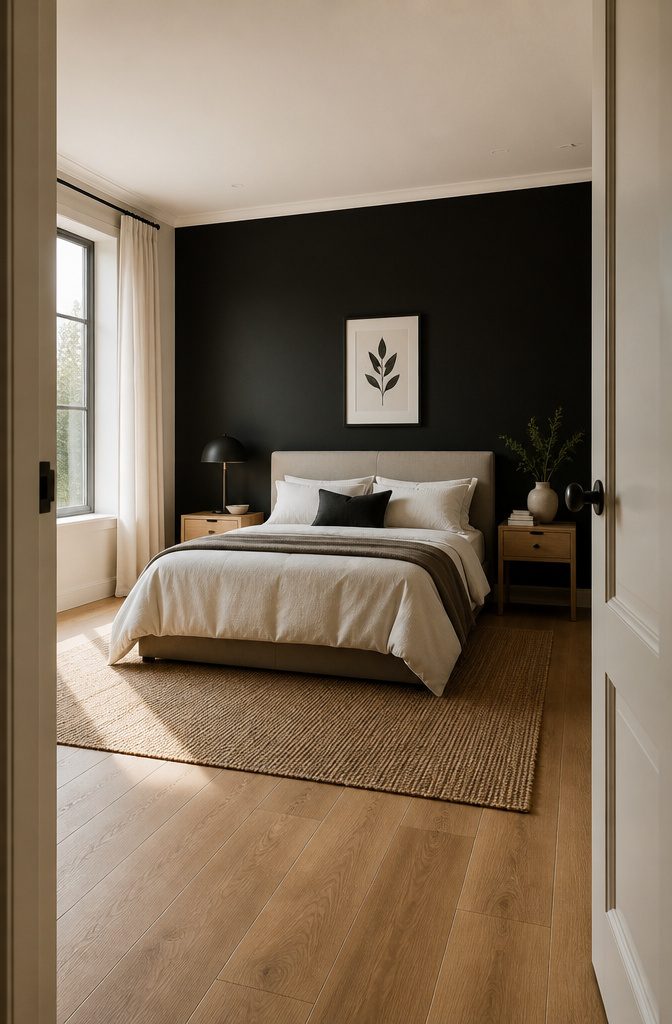
Paint only the wall behind the bed black and keep the other three walls light.
The bed wall is usually the largest uninterrupted surface in the room, and it’s the one you face least while lying down, so the dark color reads as calm instead of heavy.
The headboard and nightstands frame it, which pulls the eye to the center of the room.
Use matte or eggshell paint, since the low sheen hides wall flaws that a glossier finish exaggerates. Pick a low-VOC formula and keep the windows open while it dries.
Warm white, greige, or soft cream works on the other walls.
Repeat black in 2 or 3 small spots, like a lamp, a picture frame, and a pillow. Renters can use removable black wallpaper or a peel-and-stick panel kit.
Recommended Products

Ready to use, pre-mixed door and trim paint offers a fresh new look on interior or exterior metal, wood and fiberglass

Made in United States

May be used on bare or painted interior surfaces like drywall, wood, cured plaster, concrete, masonry, stucco, aluminum, vinyl, galvanized steel, PVC and more
4. A Black Ceiling
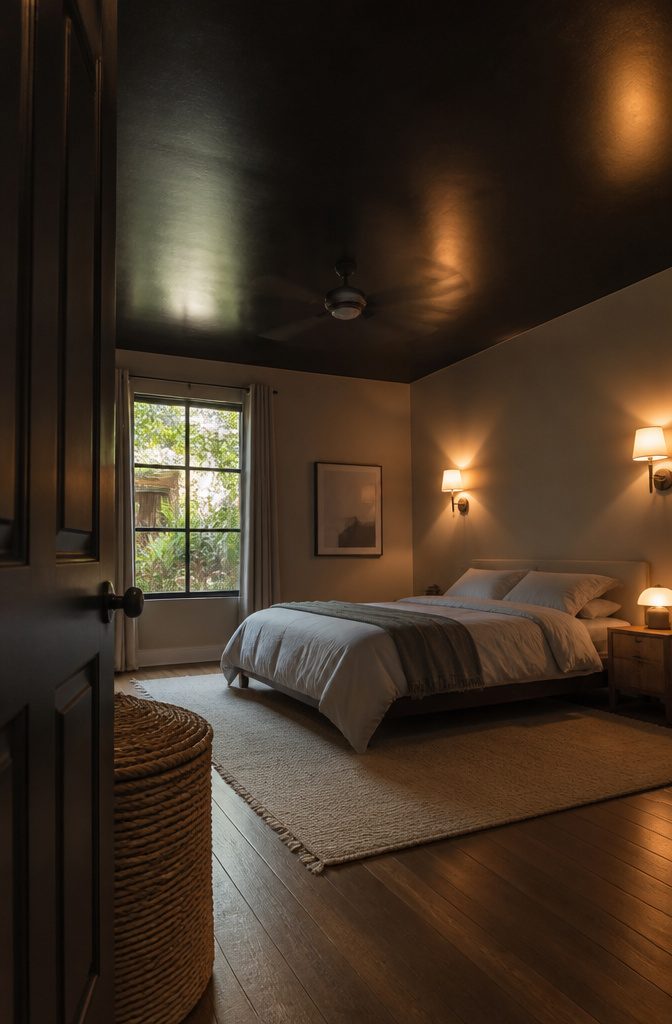
A black ceiling is the most overlooked surface in a bedroom, and it changes the room more than you’d expect.
Two versions work. Paint the walls, trim, and ceiling in one black for a cocoon effect, or keep the walls lighter and paint only the ceiling, which draws the eye upward through contrast.
Either way the room feels lower and more enclosed, and that effect is strongest in a room with a low ceiling.
If your room is also short on daylight, it will feel tighter still. Use wall sconces and lamps instead of a single center light, and choose a satin or gloss ceiling finish, which bounces more light than flat paint.
If a full coat feels like too much, a black ceiling fan or a dark beam hints at the look.
Recommended Products
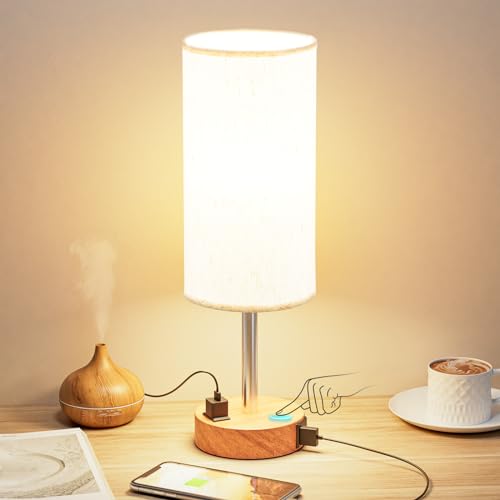
Touch Control Bedside Lamp - This smooth dimmable touch control table lamp featured with touch-sensitive sensor, to make quick changes to 3 different level brightness (Low, Medium, High), and soften the atmosphere quickly. Simply a touch or a pat on the bedside lamps' base or lamps' supporting pole when you want the nightstand lamp On/Off, brighter/dimmer. (used as a night lamp at low brightness, medium/high is enough to meet your needs for reading/working)
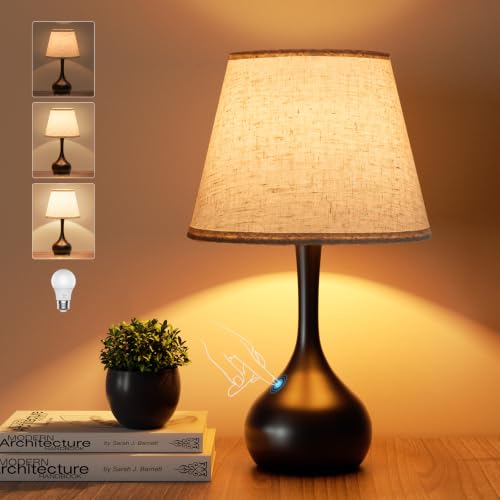
【Touch Control Dimmable Beside Lamp】The entire metal base of this dimmable touch lamp is touch sensitive, touch any position to quickly change 3 levels of brightness (low, medium, high) to meet your different needs. You can use it as a cute night light at low brightness, ambient lighting at medium brightness, and high brightness for working and reading lamp.This lamp is powered by a corded electric source and is not compatible with smart plugs or smart bulbs

❤️【3-Way Dimmable Touch Bedside Lamp】―The dimmable lamp has 3 levels of brightness. (Low, Medium, High), simply tap any metal part of the nightstand lamp to switch settings from low to bright, bright enough to read or use as a soothing night light. Super convenient for use, just tap and turn it on or off.
5. Pick a Black Paint Shade
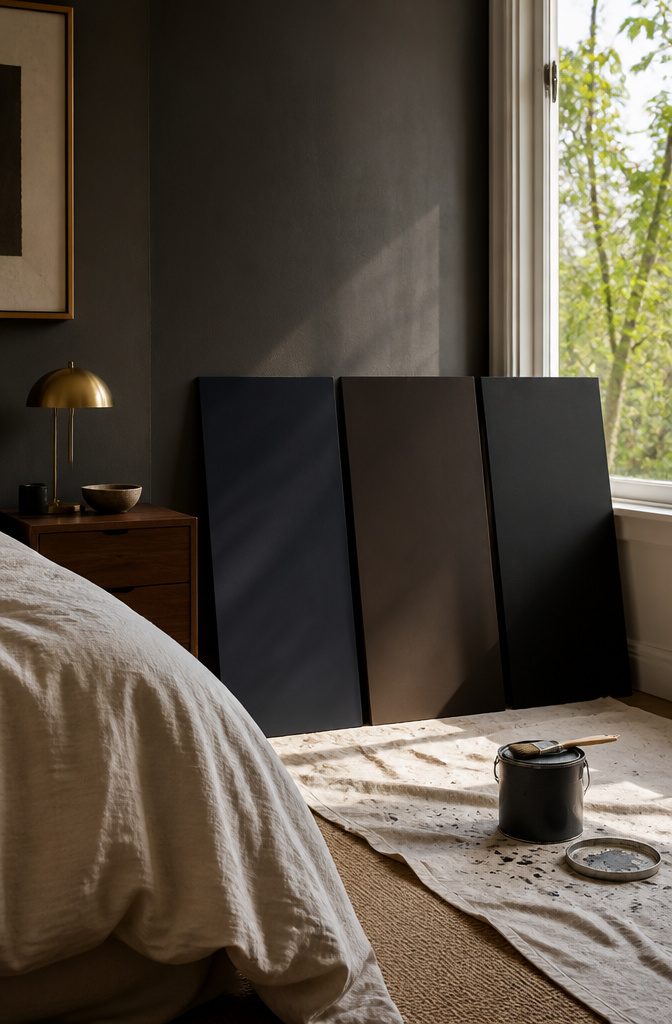
Black paints lean in different directions: some read blue, some brown, and some look almost green in certain light. That undertone matters more than the name on the can.
Warm blacks (brown base) pair with wood, beige, and brass, but can look muddy in low light. Cool blacks (blue base) suit gray, white, and chrome, but can feel cold on a north-facing wall.
Widely available options are Sherwin-Williams Tricorn Black and Iron Ore, and Benjamin Moore Black Beauty and Wrought Iron. If you’re nervous, start with a soft black or charcoal, which looks rich without the harshness of pure black.
Paint large sample boards and check them in the morning, at noon, and at night, plus under lamplight. Choose a matte or eggshell finish to hide wall flaws, and use low-VOC paint with the windows open while it dries.
Recommended Products

Smart App & Voice Control: Control your lighting from your phone with the smart app-turn lights on/off, adjust brightness, change color temperature, and create the desired mood. Compatible with voice control for hands-free operation, making daily use easier and more convenient

72.44" EXTRA-TALL HEADBOARD FOR A GRAND BEDROOM LOOK: Make a bold statement with this tall headboard queen bed frame featuring a 72.44" ultra-tall headboard that transforms your bedroom into a luxurious retreat. The oversized design creates an elegant focal point while providing a comfortable backdrop for reading, relaxing, or enjoying quiet moments in bed

UPHOLSTERED QUEEN SIZE HEADBOARD: Boasts an elegant design featuring a soft black fabric upholstery with button tufting and a diamond stitch pattern to add contemporary style to any master bedroom or guest bedroom in your home
6. Black With Deep Colors and Neutrals
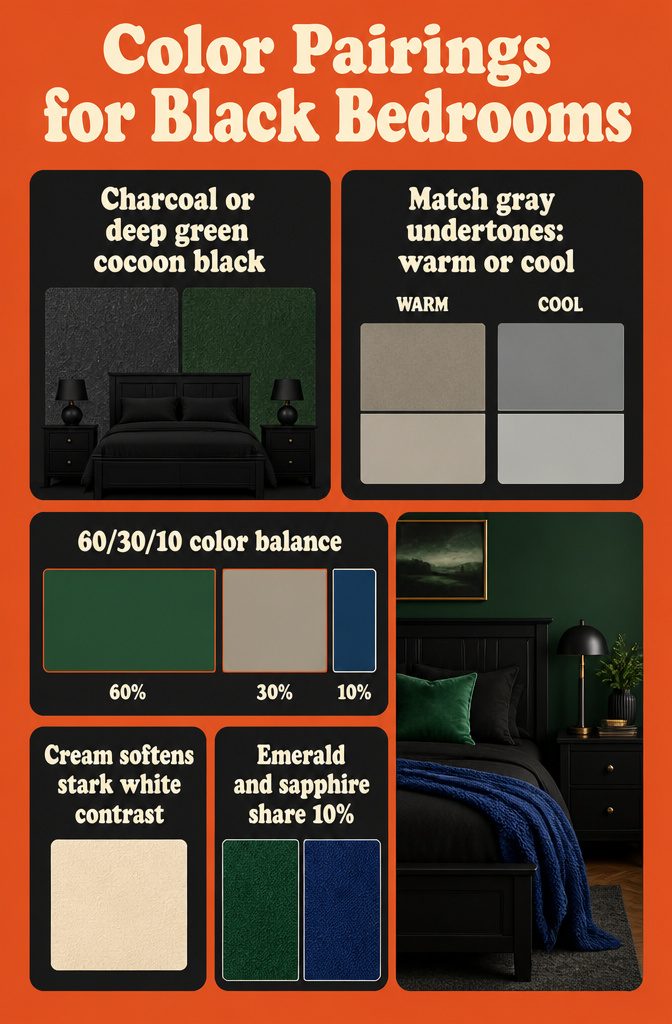
Dark neighbors keep black from reading flat, and these pairings do it:
- Charcoal or deep green walls behind black furniture give a cocooning, layered look.
- Gray sits between black and white and softens the contrast. Keep undertones matched, all warm or all cool.
- Cream or warm white replaces stark white.
- Split the room 60/30/10: 60 percent one color, 30 percent the other, 10 percent accent. Two accent shades are plenty.
Jewel tones belong in that last 10 percent.
Jewel-tone accents in emerald or sapphire can introduce subtle vibrancy, adding richness without overpowering the space.
An emerald pillow and a sapphire throw cover both shades.
Recommended Products

Peel and Stick Wallpaper: Compared to traditional wallpaper, this peel and stick wallpaper can be installed/removed quickly and without residue, making it ideal for renters or those who update their decor frequently

【SIMPLE AND ELEGANT】- Matte Black textured contact paper can add a simple but more elegant style to your home. Find the old wall or cabinets you want to refurbish, peel and stick, knowing the perfect decorative wallpaper is already with you!

When you open the wallpaper and if see wrinkles, don't worry. It won't affect the pasting effect. You can simply use a scraper when pasting the wallpaper to solve the problem, Press edges firmly with a scraper after installation —keeps thicker vinyl securely in place
7. Texture in a Monochrome Room
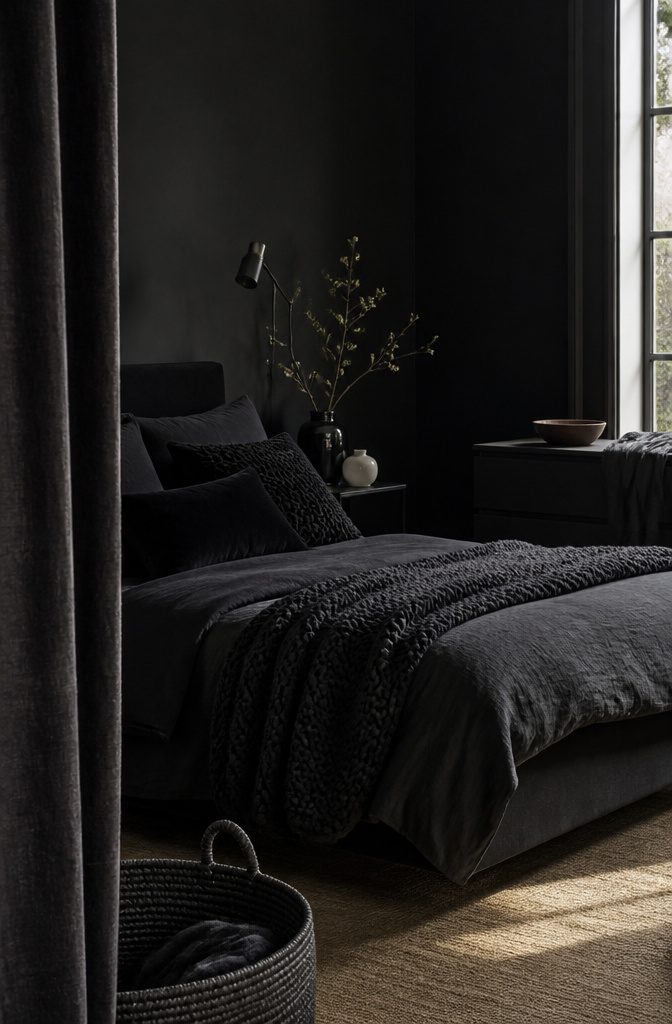
A black room goes flat when every surface reflects light the same way, so mix fabrics and finishes in similar dark tones.
Put velvet on the pillows, and drape a chunky knit or wool throw across the foot of the bed. Bouclé or leather suits an upholstered headboard, and linen curtains add a dry, softer texture against the smoother pieces.
Then vary the sheen. A matte wall, a satin lamp, and a glossy vase each catch light differently, which gives the eye something to move across.
A glazed ceramic lamp does this well. Add one contrast piece, like a white ceramic vase or a gold frame, so the room has a place to rest.
Recommended Products

ALL-IN-1 PAINT & PRIMER: A hardy multi-purpose and multi-surface one-coat paint and primer in one for almost any indoor or outdoor surface. A wall, ceiling, floor, skirting board, cabinet, furniture and door paint for your bathroom, kitchen, home and garden.

EASY TO USE, EVEN FOR BEGINNERS: Whether you’re new to DIY or a pro, Rust-Oleum Chalked makes painting easy and enjoyable. Minimal prep required means you can jump right into your project confidently and focus on creativity—not complicated steps

PREMIUM EXTERIOR & INTERIOR BLACK PAINT: Kompozit ONE Paint & Primer is a high-quality, Made in USA, 100% acrylic coating, perfect for both exterior paint and interior paint projects, offering exceptional durability and finish.
8. Warm Wood and Natural Materials
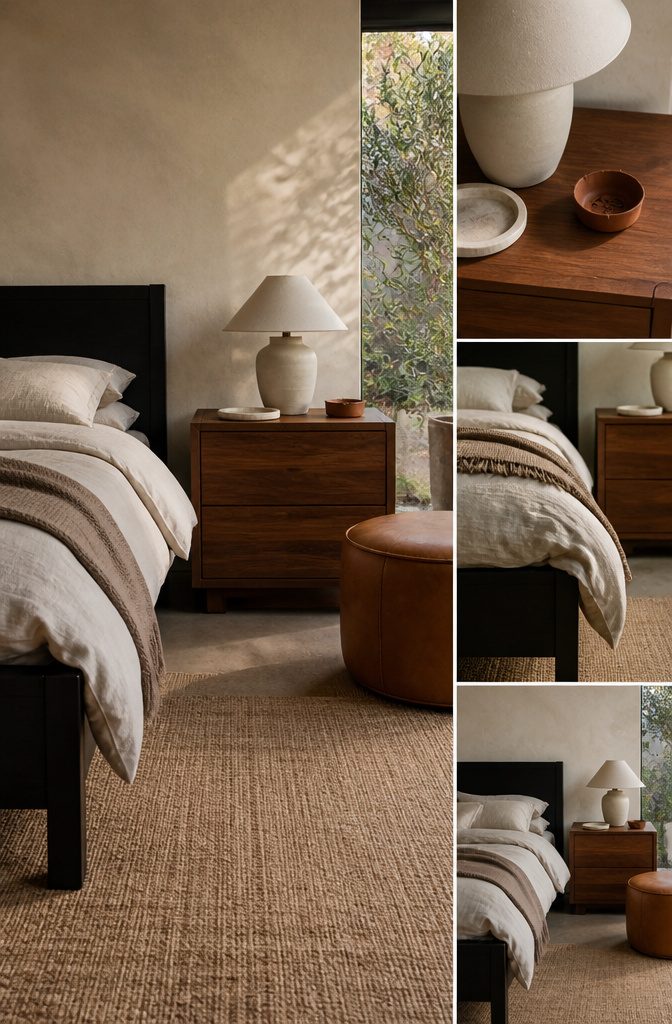
Black turns stark when everything around it is smooth and cool. Oak, walnut, and teak fix that fastest, so a wood nightstand next to a black bed is the cheapest place to start.
Then add one woven or leather piece: rattan has a golden tone, and tan or cognac leather looks especially good against black.
Pick one or two of rattan, wicker, and leather, not all three, because too many textures at once look busy.
Stone and ceramic add weight.
A stone tray or a ceramic lamp base in cream or terracotta sits well against warm wood. Group objects in odd numbers, such as three, and vary their heights.
Recommended Products

Touch Control - Unlike some traditional lighting systems, this cute touch lamp provides instant control. There's no waiting for the light to warm up or fumbling for a switch in the dark. Ease of use, you can easily turn it on, off, or adjust the brightness with a simple tap or slide of your finger, making it user-friendly for people of all ages.

Rustic Lamps Set of 2:This bedroom table lamp features a unique design, with a classic jar-shaped silhouette paired with a rough-textured finish, creating a strong artistic vibe. The beige linen lampshade casts a soft and warm glow, making it perfect for various home styles such as modern, farmhouse, rustic, and coastal.

Built-in USB C/A Ports & AC Outlet Charging Function: This touch bedside lamp is equipped with dual USB A + USB C charging ports (5V/2.1A each) and an AC power outlet, eliminating the need for extra power strips. Charge 3 devices simultaneously-phones, headsets, laptops, humidifiers, or speakers-whether the lamp is turned on or off. The built-in charging hub keeps your space clutter-free and power-accessible anywhere.
9. Layered Lighting at 2700K
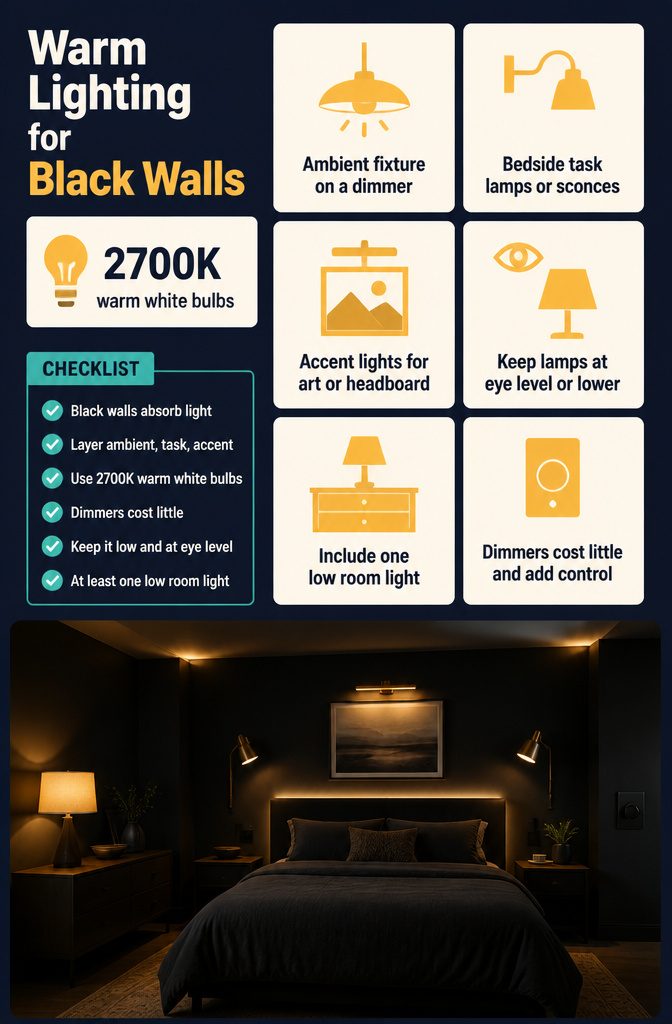
Black walls absorb light, so a single overhead fixture leaves a bedroom flat and cave-like. Use three layers together:
- Ambient: a ceiling fixture or soft wall washers, on a dimmer.
- Task: bedside reading lamps or swing-arm sconces.
- Accent: small lamps, LED strips behind a headboard, or picture lights over art.
Fit every fixture with 2700K warm white bulbs. Cool white bulbs make black walls look flat and slightly blue.
- Dimmers cost little and let the room shift from bright morning to candle-soft evening.
- Keep lamps at eye level or lower, and put at least one light low in the room, such as a table lamp on a dresser. Low pools of light make dark walls glow.
Recommended Products

Dual rows of chrome nailhead trim along the headboard edge add a touch of elegance and sophistication.

MID-CENTURY HEADBOARD - Refresh a guest bedroom or teenager's bedroom with the retro modern style of this full headboard featuring wood paneling, organic aesthetics, and contemporary accents

Boho Wall Decor Design: Features the romance of modern gold metal materials, the playfulness of fringes and tassels, and modern-art aesthetic to create beautiful, handmade wall hangings and accessories
10. Matte Black, Brass, and Chrome
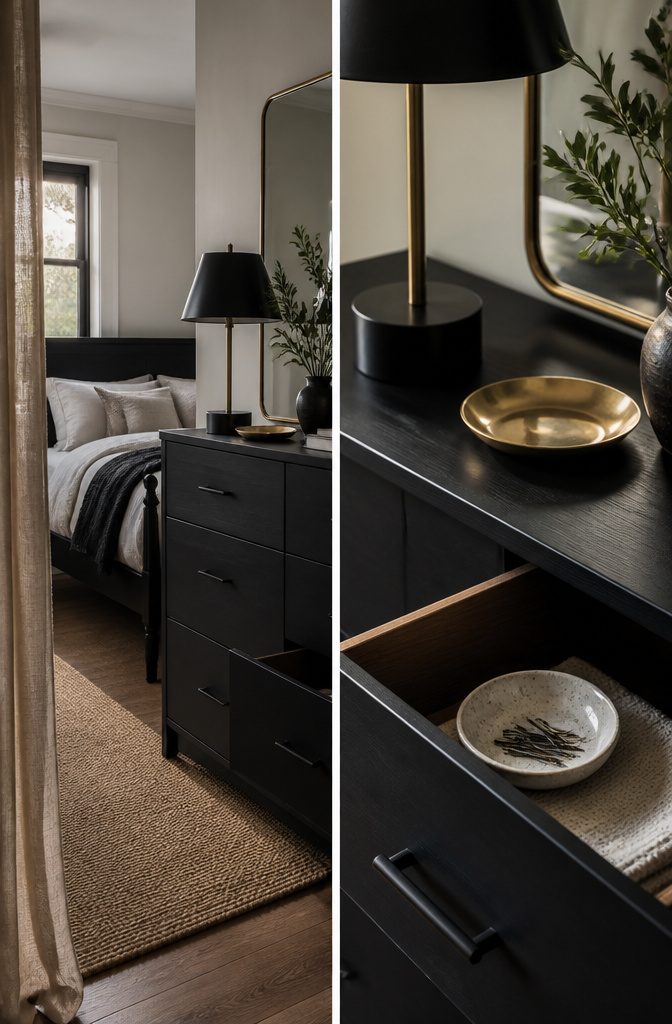
Matte black hardware and lamp bases give a black bedroom a sleek, modern, quiet look, and the flat finish hides fingerprints and glare. Brushed brass or gold adds warmth and a touch of glamour.
Antique bronze feels aged and rich. Chrome is the coolest and sharpest of the four.
Pick one metal and repeat it in small doses: lamp bases, drawer pulls, picture frames, and a mirror edge.
A second finish can work if one clearly dominates. Four finishes in one room looks scattered.
Save shiny metal for small accents where a little sparkle helps, like a lamp base or a tray on the dresser.
If you want one pairing to try, matte black with a bit of brass keeps the room calm and still warms all that dark color.
Recommended Products

Complete Tool Kit: Includes a large smoothing tool, blue squeegee, utility knife, replacement blades, and measuring tape for installation tasks.

【DESIGN】:The black floral embossed wallpaper and ordinary black wallpaper compared to the addition of flowers as a decoration, embossed form so that the monotonous wallpaper added some connotation, more ornamental. The black color looks more regal

PRODUCT DETAILS – Dimensions: 17.7in×118in / Roll (14.5 Square Feet / Roll) black wood wallpaper. Material: Vinyl / PVC black wood peel and stick wallpaper. Material thickness: Our black wood wallpaper is made of heavy-duty vinyl (0.15mm thick). Adhesive & Packaging: Features repositionable adhesive with no residue, and reinforced protective packaging to minimize transportation damage
11. Art, Patterns, and Wallpaper
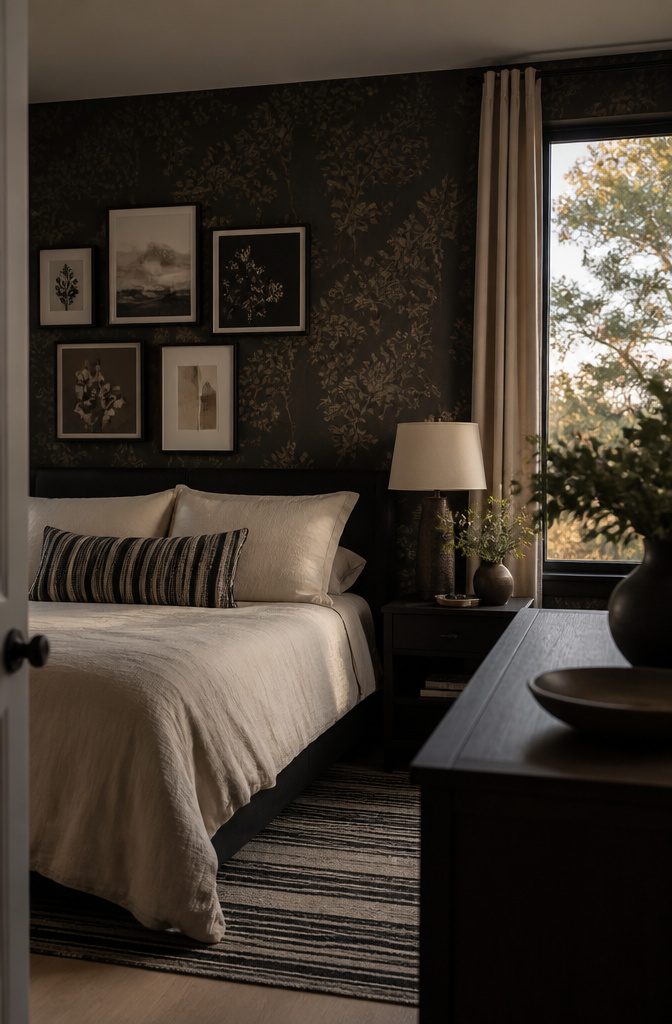
A gallery wall gives a black room its focal point. Hang the frames about 2 inches apart, and set the center of the whole arrangement around 57 inches from the floor.
Dark wallpaper works best on one wall, usually behind the bed, with solid bedding so the patterns don’t compete. Renters can use peel-and-stick, but smooth the wall first, because dark paper shows every bump.
Keep other pattern soft: tonal stripes, subtle herringbone, or small geometrics.
Limit pattern to two or three places, such as a rug and a pair of pillows, in two or three shades, not five. A cream-and-charcoal striped pillow looks calm; a loud multicolor print fights the dark backdrop.
12. Rugs, Curtains, and Mirrors
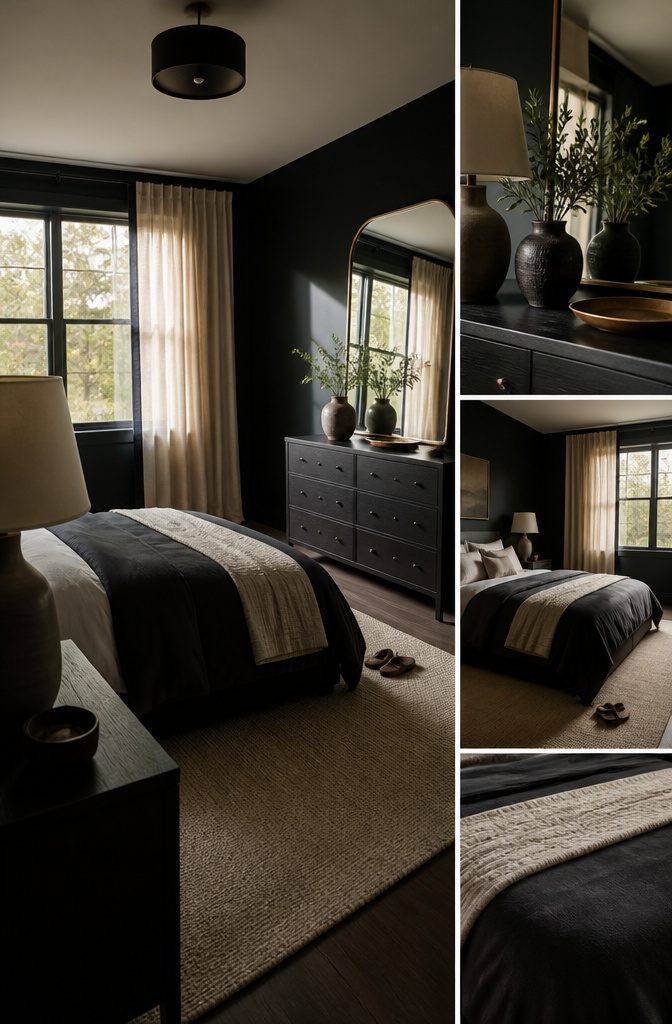
A queen bed usually works with an 8×10 rug, with 18 to 24 inches showing on each side.
Pick cream, oatmeal, or gray so the floor reads lighter than the walls. Low pile cleans easily, and shag feels warmer underfoot.
Hang linen curtains on a rod close to the ceiling, extending past the window frame, with hems that just touch the floor.
Add blackout lining behind the linen for sleep. The fabric still looks airy.
Windows bring in the light, so set a mirror where it catches that daylight and bounces it across the dark walls. On the dresser, group accessories in threes at varied heights, such as a lamp, a vase, and a tray.
13. Black in a Small Room
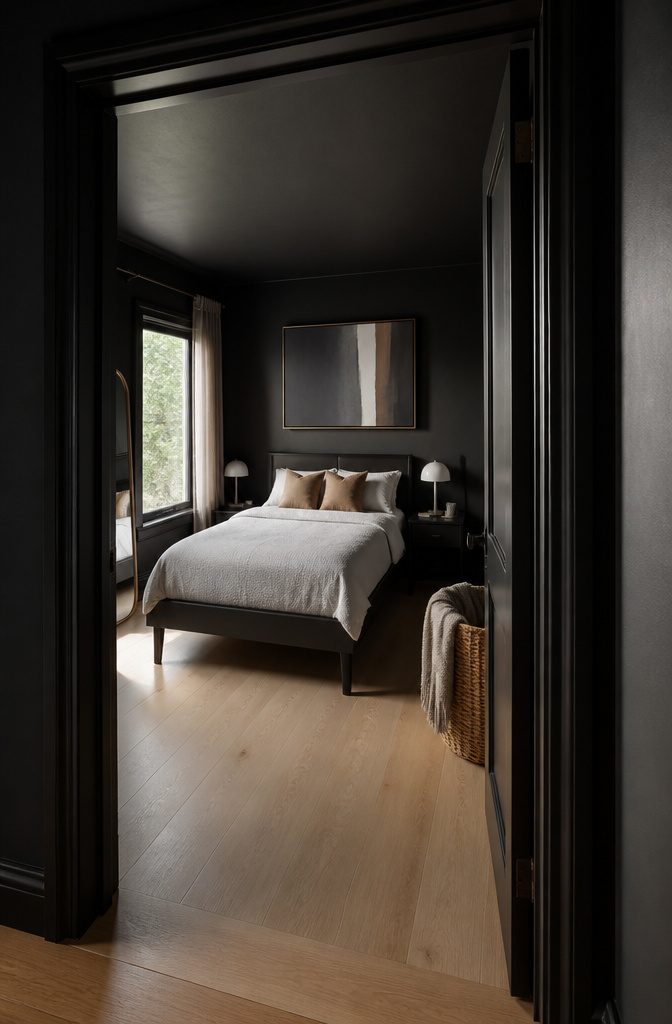
Dark walls blur corners and edges, so a small room seems to fall back instead of closing in. Paint the trim, and sometimes the ceiling, the same black as the walls so no visible borders chop the room into pieces.
Light and contrast do the rest. Hang a large mirror to bounce light around, and mount curtains high and wide so the window looks bigger.
Keep the floor and bedding lighter than the walls; that contrast keeps the bed from vanishing. Pick a bed and nightstands with visible legs so more floor shows, and skip heavy pieces and clusters of small accessories.
A very dark, windowless room stays snug whatever you do.
14. A Mid-Century Black Bedroom
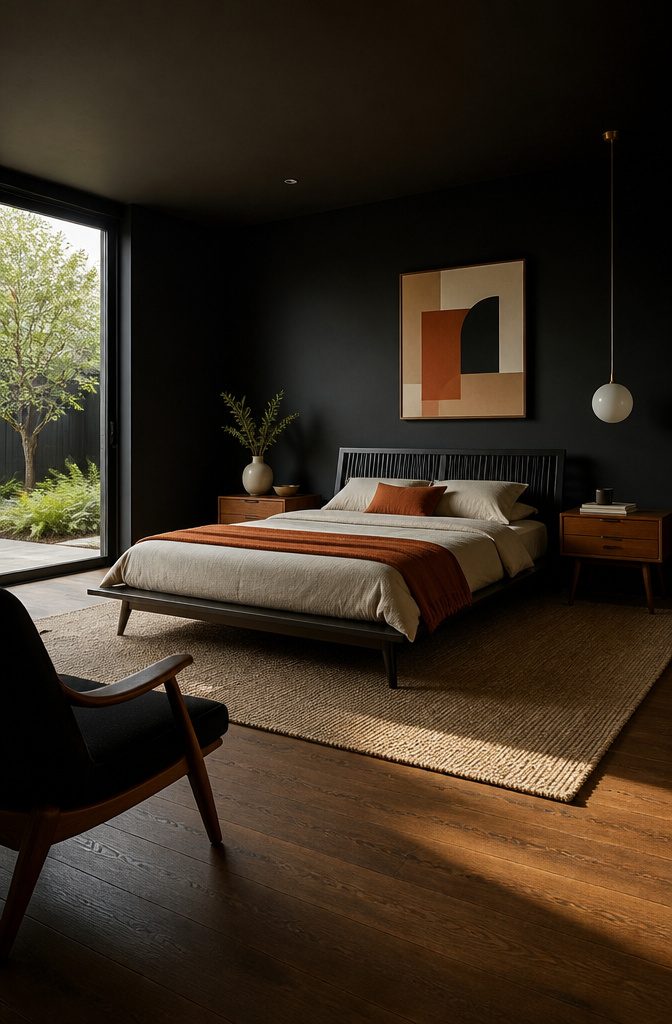
Mid-century style suits black because clean lines and tapered legs look sharp against a dark backdrop. Start with a low-profile bed and a simple black headboard, slatted if you can find one.
Add walnut or teak nightstands with tapered legs, then bring in warmth through the bedding. Mustard, olive, or burnt orange in a duvet or throw keeps the black from feeling heavy.
Choosing the style first makes every later decision easier. A sputnik or globe pendant, geometric art, and one lounge chair in a corner all fit.
A shelf of small accessories does not. If your woods differ, stay in one family, all warm, so the room looks planned.
How Black Changes a Room
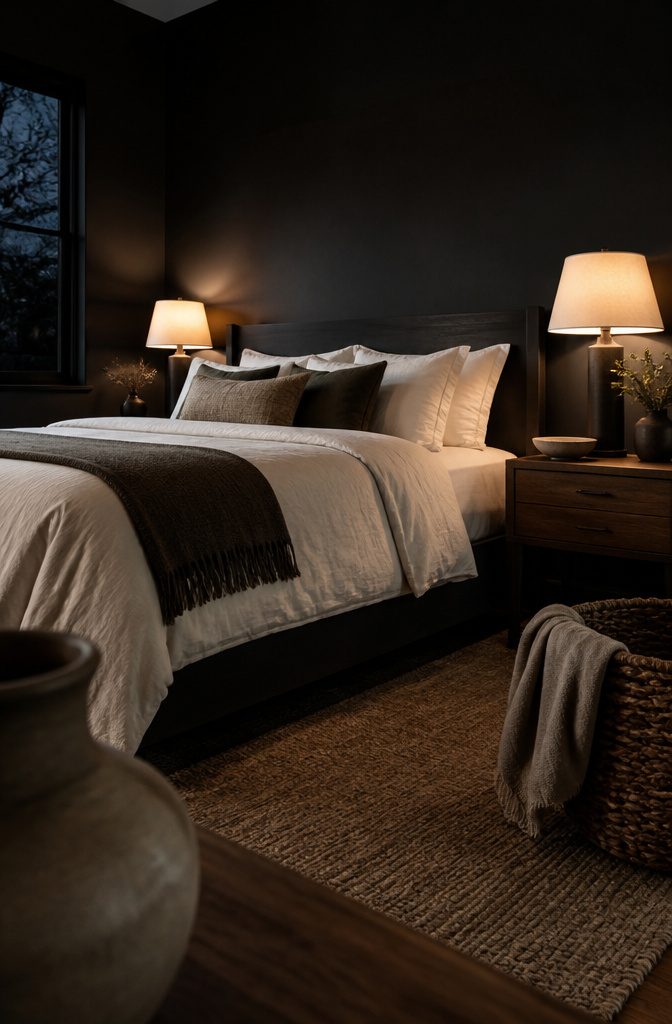
Black adds depth that lighter colors can’t.
Corners soften, edges recede, and the room feels composed and enclosed, like a cocoon. It also looks refined and works with almost any style.
Black absorbs light, so the room reads darker than the same space in white, especially at night.
Plan your lamps and contrast before you buy anything. One overhead fixture makes a dark room feel flat, not cozy.
For a cozy result, use black as the base, then add warm light, soft textures, and natural materials. Keep some light contrast, such as white linen or a cream lamp shade, so the eye has somewhere to rest.
Frequently Asked Questions
How do you make a black bedroom feel cozy?
Treat black as the base layer and add four things: warm light, soft textures, natural materials, and some light contrast. Fit 2700K bulbs on dimmers and put at least one lamp low in the room.
Add velvet, wool, or bouclé, wood like oak or walnut, and cream or warm white linen. Black absorbs light, so one overhead fixture leaves the room flat.