
These ideas run from a roll of painter’s tape for mapping walkways to a $999.00 sleeper chair, and what the room does most days decides which ones are yours.
Renters face one limit: if the lease bans paint or drilling, peel-and-stick wallpaper, plug-in sconces, and freestanding shelves stand in.
1. Define Zones by Daily Use
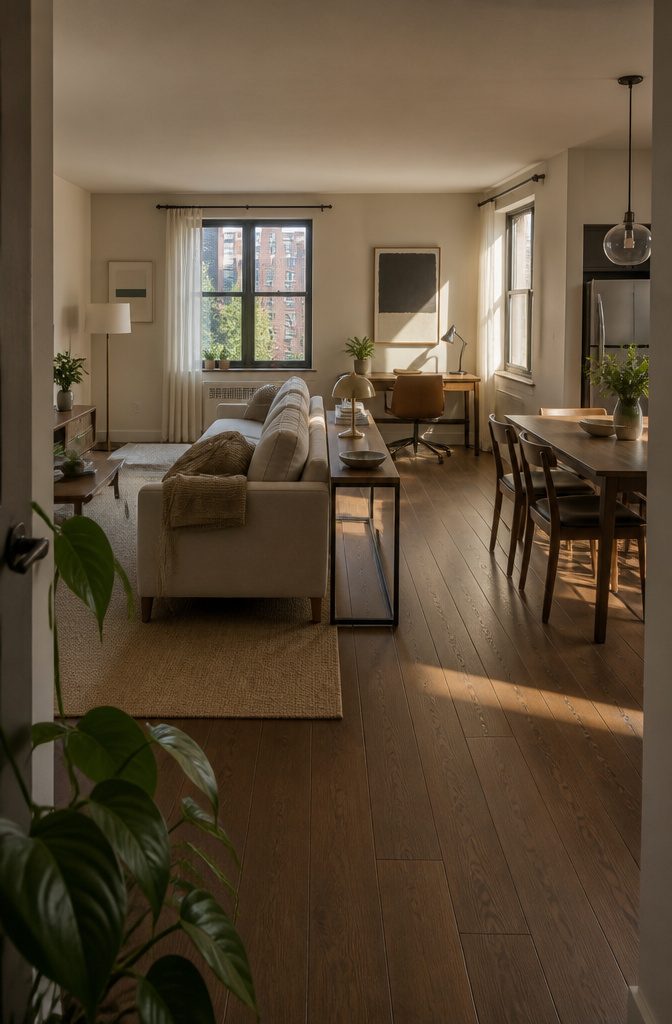
Start with what the room does most days. If the evenings are movies and the weekends are friends, seating and a clear walking path come first; if a laptop shares the room, that needs its own spot.
A common split puts the seating zone near the TV wall and a desk or small dining table behind it.
Float the sofa slightly off the wall with its back toward the table, so the sofa back works as the wall between the two zones.
A slim console table behind it holds a lamp, books, or keys and gives the living area a clean edge.
A rug under the seating group marks its footprint, and a floor lamp lights a reading corner. Where the sofa can’t reach, a see-through bookcase or folding room divider does the same job.
2. Scaled, Flexible Furniture
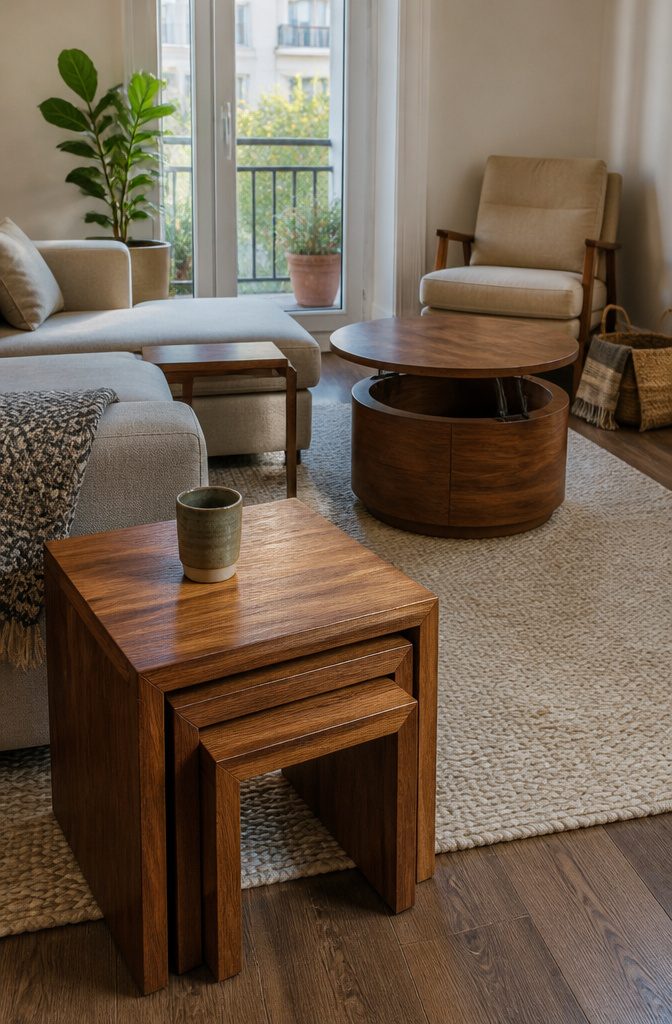
Nesting tables come in sets of 2–4 that stack under one another, so a single footprint gives you a coffee table, side tables, and extra surface when guests arrive.
The Cassian Concrete Top set costs $1,098.00, but a budget set only needs tables that slide fully under each other and tops sturdy enough for a drink.
The Sven Tufted Velvet Sleeper Chair ($999.00) looks like an armchair and unfolds larger than a twin mattress.
A cheaper chair should do the same in a few simple moves. A 2–3 seat modular sofa with movable sections lets you change the layout.
A round coffee table with a lifting top works as a laptop desk or dining surface. Casters or light weight make any of these easier to shift.
3. Keep the Floor Open
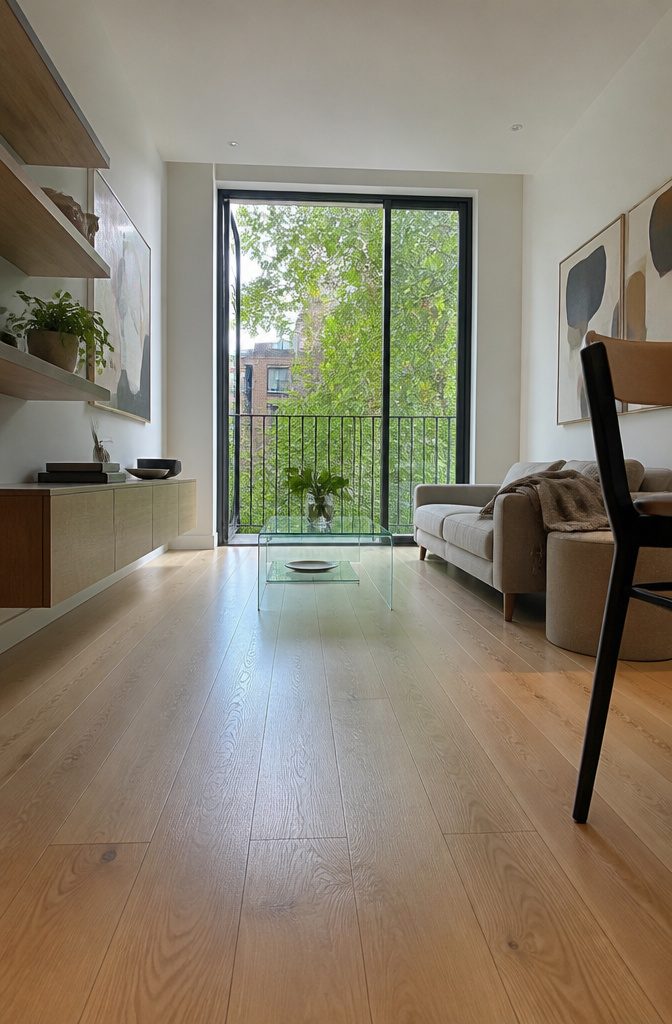
Furniture that shows the floor makes a small room read larger. Choose a sofa with visible tapered legs and low arms, an open-base or glass coffee table, and wall-mounted shelves or floating cabinets instead of bulky storage.
Glass and acrylic let light and sight lines pass straight through. A round or oval coffee table also eases the walk around it.
Leave 24–30 inches clear along main paths, such as door to sofa or kitchen to balcony. Mark the route with painter’s tape before you buy.
Keep tall pieces away from windows, and don’t let a sofa back cut across a traffic line. A movable ottoman is a safer choice than a fixed piece in a walkway.
4. Use Vertical Space
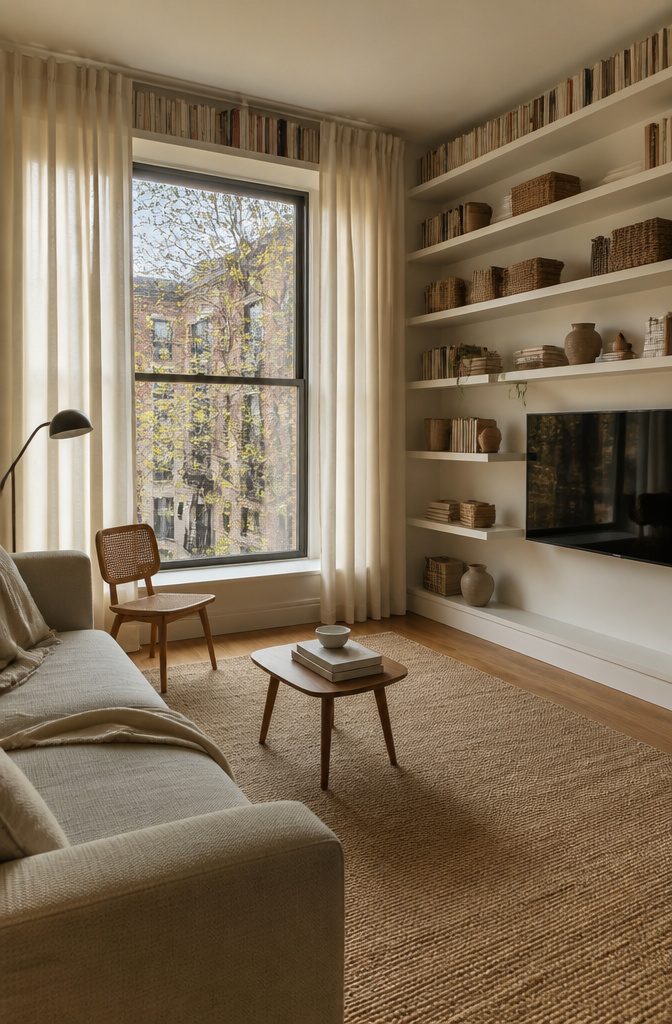
Hang curtains as close to the ceiling as the wall allows, not just above the window frame. The panels make the walls look taller.
Light, airy fabric adds to the effect, while heavier fabric brings warmth and privacy. Tall bookcases and floating shelves move storage off the floor, and the empty strip above a window can hold a row of paperbacks.
Mounting the TV flush to the wall frees the floor where a media console would sit, and lets you choose a bigger screen without crowding the room.
Wall storage turns into clutter quickly, so decide what each shelf will hold before you buy it: books on one, baskets on another, a few objects on a third.
5. Control Clutter
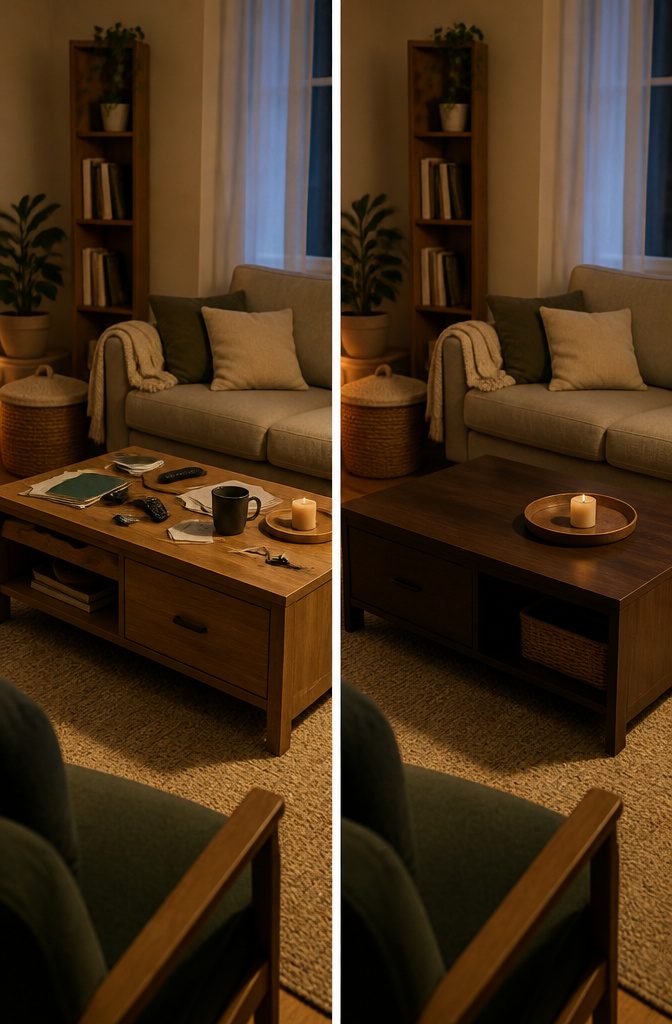
Open shelves look good when styled and turn messy fast in a small apartment.
Remotes, chargers, game controllers, pet toys, paperwork, and blankets belong in drawers or behind doors. A coffee table with storage catches them right where they pile up.
Picture the table with a remote, a tangle of cords, a mug, and a stack of mail on top.
Now picture it with one tray and one candle. The second version is what you get from editing: remove anything that blocks movement, duplicates another item’s job, or competes with your focal point.
Match storage to habits: a basket for soft items, a drawer for electronics, and one surface that stays mostly clear.
Then reset the room for 2 minutes before bed: fold the throw, clear the table, hide the remotes, and straighten the pillows.
6. Set a Focal Point
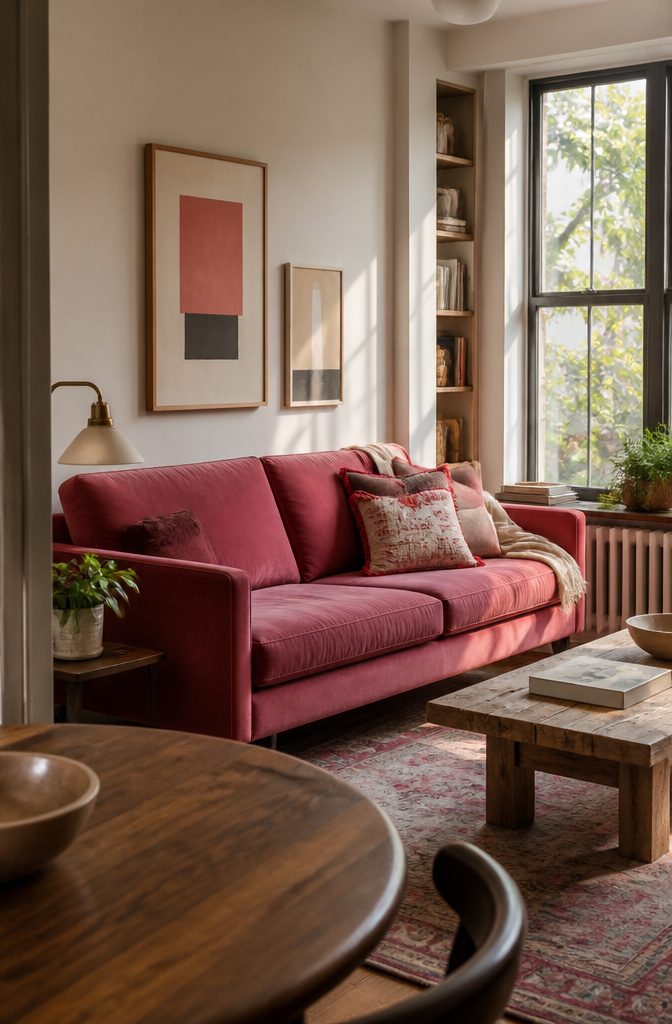
A small room looks chaotic when the sofa, TV, gallery wall, windows, and shelves all compete. Pick one anchor first: the TV wall, a large piece of art, a fireplace, a window with a good view, or a statement sofa.
Then arrange everything else to support it. A pink sofa anchored one 1920s living room, and a rustic coffee table and a patterned textile were chosen to match it.
Sofa direction follows how you use the room. If you watch TV most nights, face the sofa toward the TV wall.
If the window has the better view, angle seating toward the light. In a studio, turn the sofa inward to mark off the living zone.
7. Color, Pattern, and Material
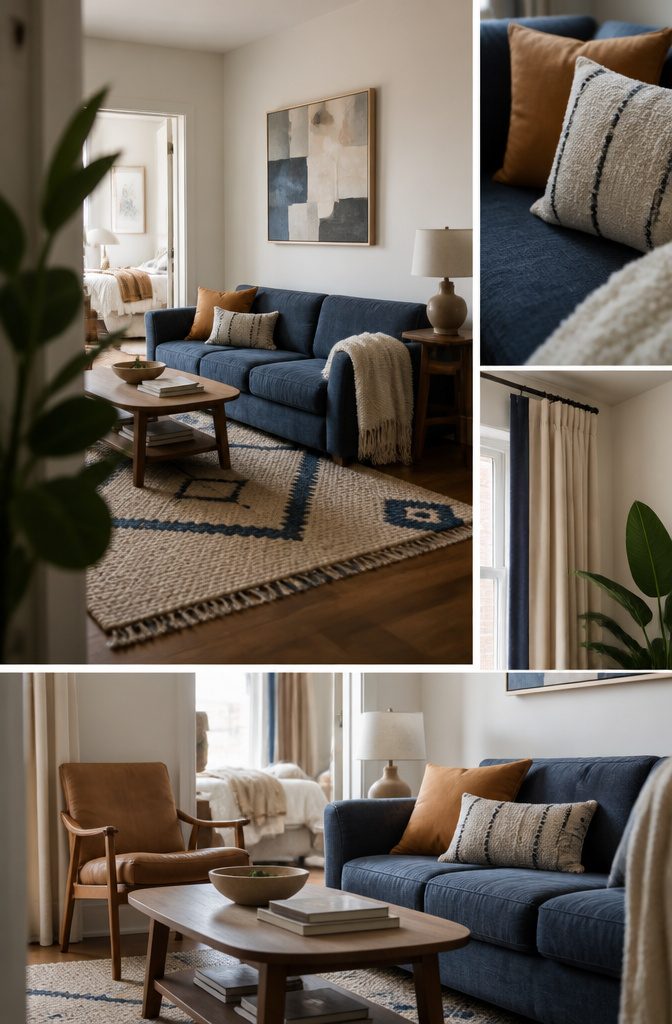
Start with a calm base for a small rental: Benjamin Moore’s Decorator’s White, warm white, cream, or taupe, with one or two accent colors added through pillows, art, or a rug.
Pale walls keep the room open and leave nothing to repaint at move-out. Their weakness is a flat look, so mix in walnut, camel, or a chunky throw.
Bold color suits a room you’ll stay in a while. A saturated blue like Bermuda Blue or a cherry red or citron velvet sofa can make a small room feel like a jewel box.
If the lease bans paint, peel-and-stick wallpaper leaves no damage, and a colored sofa gets you most of the way.
Repeat each accent in at least two places, such as the sofa and curtains, so the color reads as a plan. Pick colors that also work with the room next door.
8. Layer Rugs and Textiles
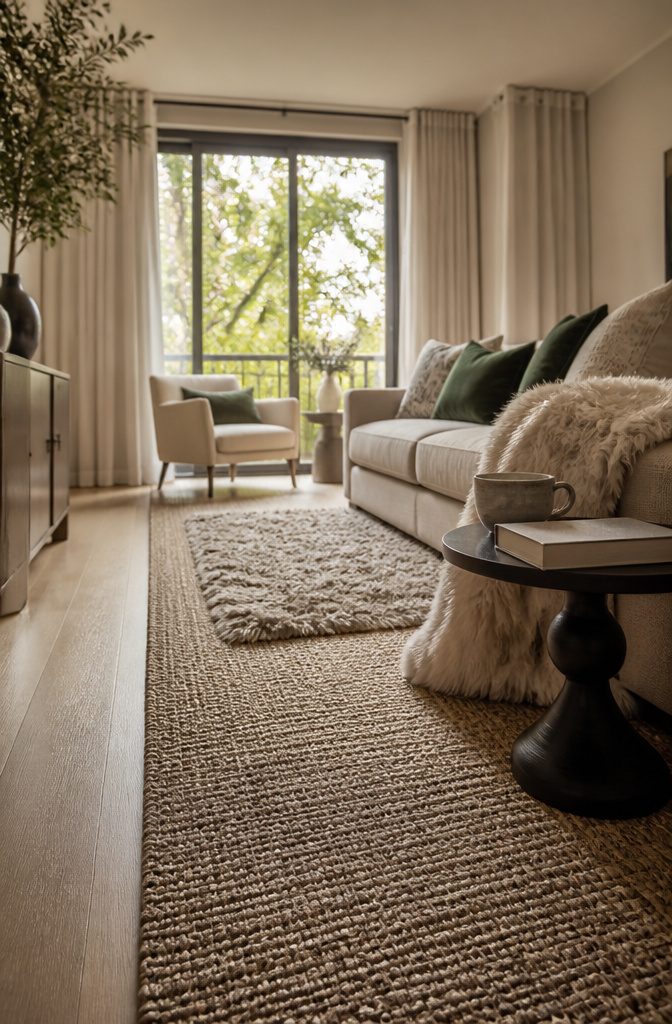
A large rug does the most work in the room. Set it so at least the front legs of the sofa and chairs sit on it, and the seating reads as one zone.
For a high-traffic living room, pick wool, which is durable and easier to clean. Shag feels better underfoot, but it suits the spot in front of the sofa more than the path to the door.
Then layer texture on top.
Velvet or mohair on the sofa, a faux fur throw over an arm, and full-length curtains (silk if you want a sheen) add warmth without painting or drilling. Keep the palette neutral and let the textures carry the interest.
9. Lighting and Mirrors
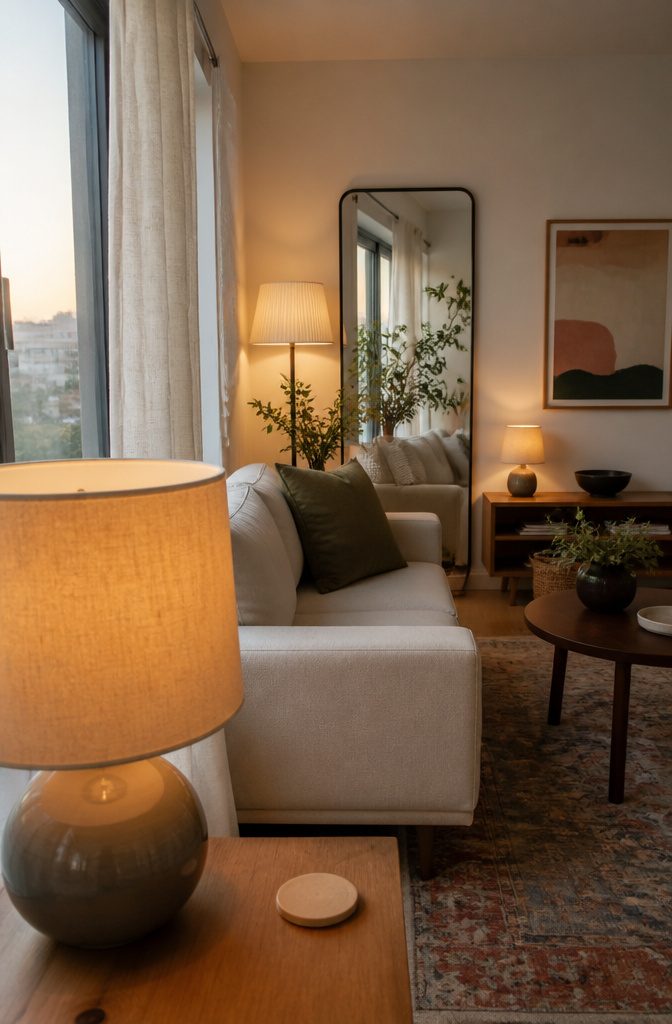
Clean windows and sheer curtains get daylight deeper into the room, and the best light should set your other choices.
"If there is beautiful natural light, we lean into lighter walls and bring in color through the fabrics and art."
Keep the walls light and put your color in pillows and art.
Hang a mirror near a window or across from a light source. It adds the look of depth, not floor area.
One overhead light is rarely enough, so mix floor lamps, table lamps, and warm bulbs at different heights. If you can’t wire anything, the Greta Scalloped Accordian Plug-in Sconce Wall Light ($278.00) works anywhere near an outlet.
10. Art, Books, and Plants
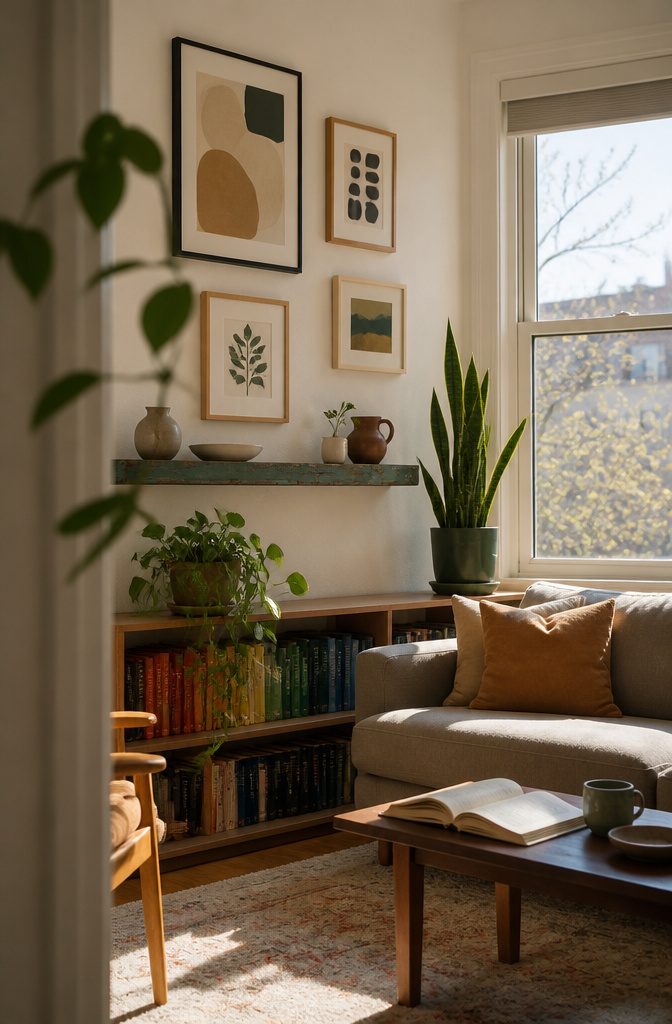
Hang art as one gallery wall of inexpensive prints, favorite photos, and framed quotes, so the personality sits in a single spot instead of scattered across every surface.
Books count as decor when you choose covers that complement or contrast with your color scheme. Stack them on a shelf, in an entertainment center, or on the floor beside a chair, grouped by color.
For greenery, snake plants and pothos are the low-maintenance picks for apartments. Pair a tall snake plant with a trailing pothos for varied height and texture, and stop at a few pots.
Add one DIY piece, such as an old shelf with a fresh coat of paint.
Cluster meaningful objects together in one spot. Each display should have a clear edge; once the shelf is full, something comes out before anything goes in.
11. Rental-Friendly Changes
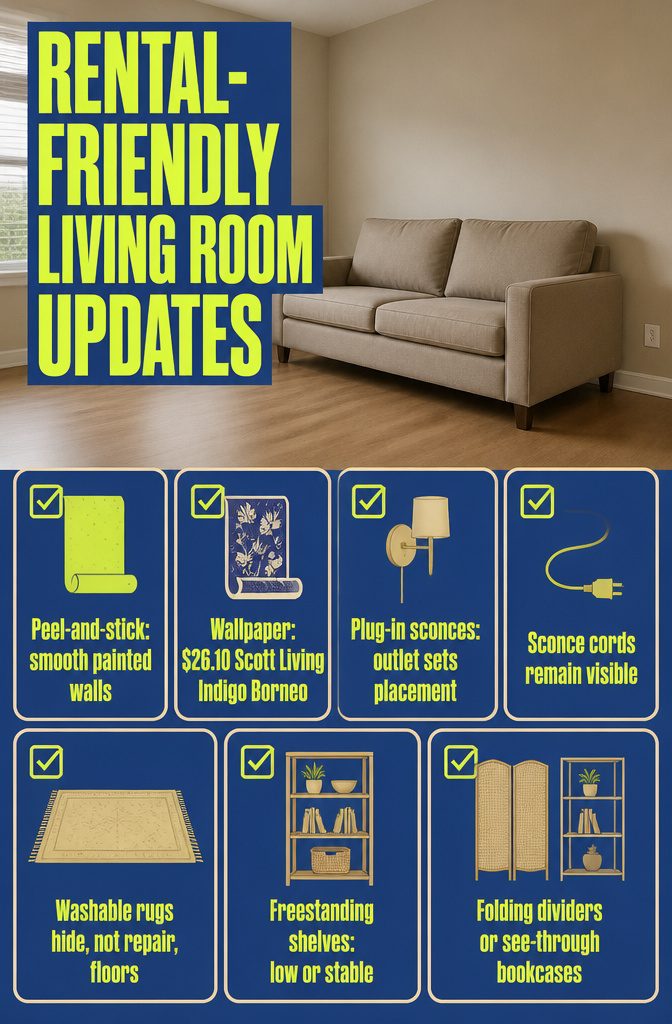
These changes need no permission and leave no marks when you move out:
- Peel-and-stick wallpaper behind the sofa gives you a designed wall without risking your deposit. Scott Living’s Indigo Borneo runs $26.10. It needs a smooth painted surface, so skip textured walls.
- Plug-in sconces add light with no wiring. Your outlet placement sets where they can go, and the cord will show.
- Washable rugs cover basic flooring and survive spills. They only hide the floor, so they won’t fix its condition.
- Freestanding shelves need no drilling. Nothing fastens them to the wall, so keep them low or stable.
- Folding dividers separate zones, and a see-through bookcase does the same job while letting light through.
Plan Before You Buy
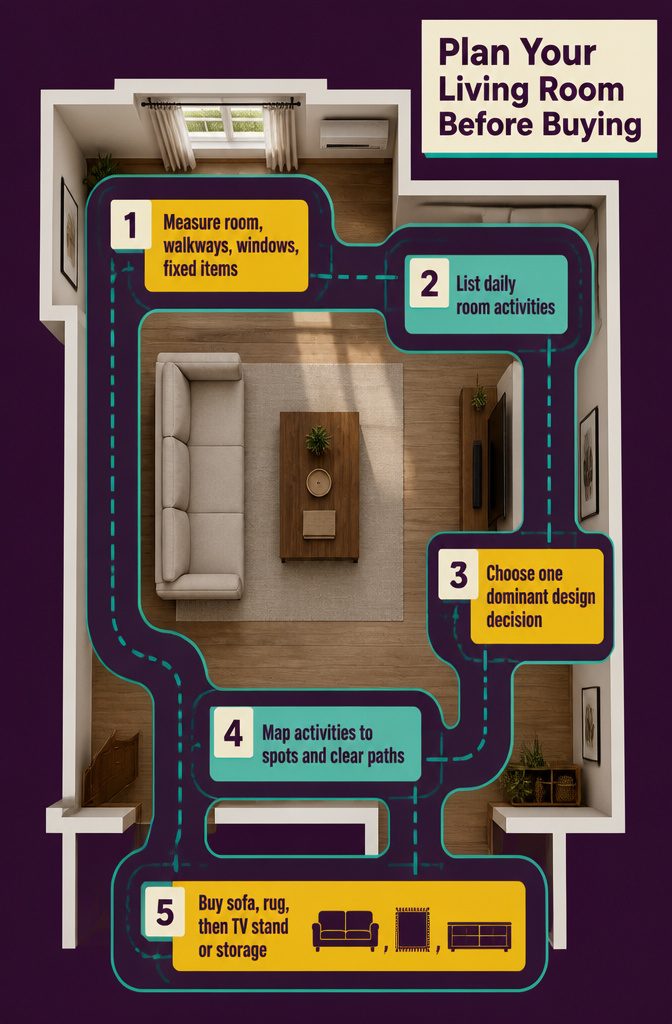
- Measure the room, including walkways, windows, and fixed items like A/C units that a renter can’t move.
- List what the room has to handle: movie nights, working from the sofa, hosting, eating in front of the TV.
- Pick one design decision to build around, such as the TV wall. One dominant idea per view makes a small room easier to read.
- Map the layout to your daily routine. Each activity should get its own spot with a clear path to it.
- Buy in this order: sofa, rug, then TV stand or storage unit. These set the layout, color direction, and walking space. Pillows, art, lamps, and trays come last, so they match the room instead of cluttering it.
Thrifted and DIY Decor
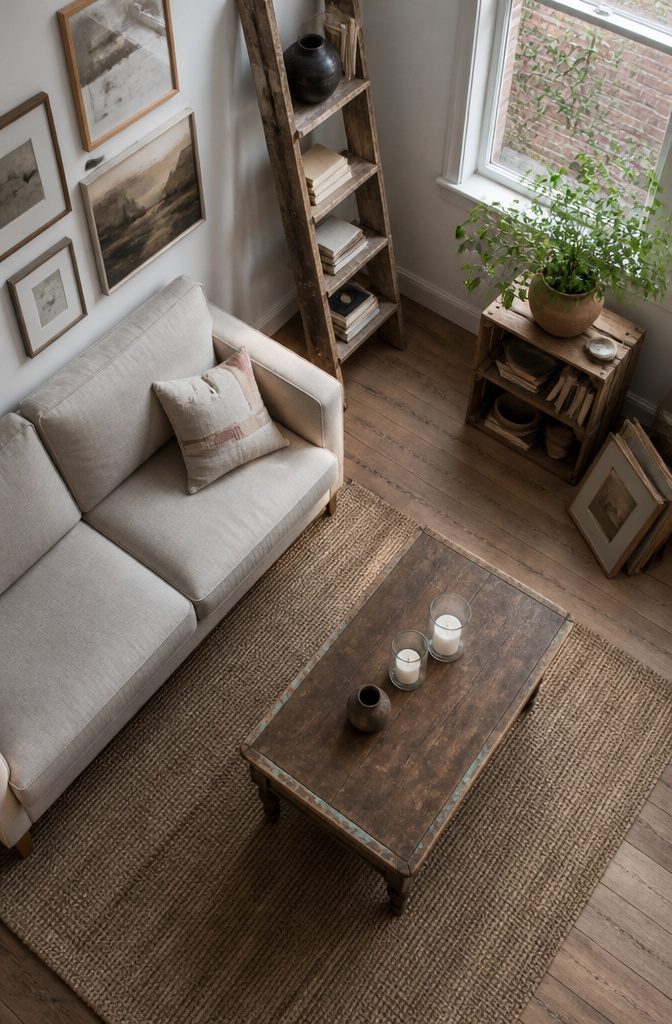
Facebook Marketplace, Craigslist, thrift stores, and flea markets work best for hard goods: vintage coffee tables, lamps, vases, picture frames, and secondhand art. Buy upholstered sofas and chairs new, since you can’t see what’s inside the cushions.
For the walls, print free art from Unsplash or Pexels and frame it in inexpensive discount-store frames. Mixing prints and photos gives you a gallery wall for the cost of paper and frames.
Then use what you already have.
Fabric remnants can make new covers for old cushions. Mason jars become candle holders, crates become shelves, and an old ladder leans against a wall as a bookshelf.
Cleaning and Upkeep
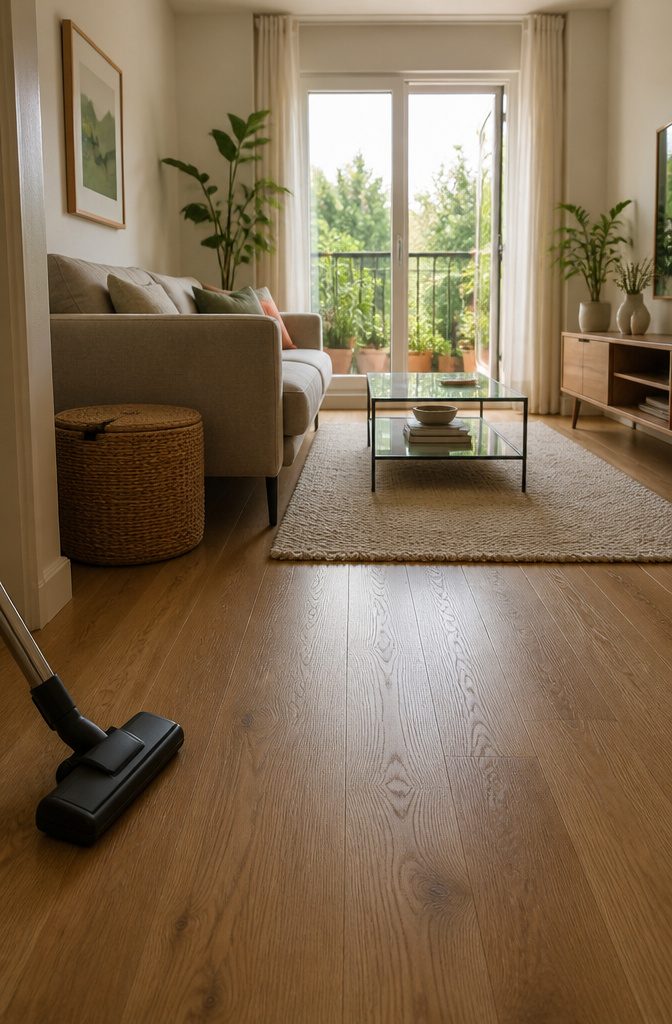
Furniture that sits flush to the floor collects dust where you can’t reach it. Leave a gap under the sofa and media console wide enough for a vacuum head, and favor pieces on legs over skirted or boxed bases.
If the vacuum can’t get under and around a piece, it won’t get cleaned, so test access before you settle on a layout.
Surfaces matter just as much. A glass coffee table wipes clean in seconds, and a wool rug releases most dirt to a vacuum and handles spills better than many people expect.
For storage, choose lidded baskets or a console with doors, so tidying means dropping things in, not sorting them. Put one container where clutter already lands, beside the sofa or near the entry.
Frequently Asked Questions
How do I design my living room?
Pick one decision first and build the room around it, such as the TV wall, a large piece of art, or a statement sofa.
Strong natural light points toward pale walls, with color coming from fabrics and art. If you rent, neutral upholstery will also work in your next place.
How do I pick a color scheme for my living room?
Start with a calm base like warm white, cream, or taupe, then add 1 or 2 accent colors through pillows, art, or a rug.
Use each accent in at least 2 places, such as the sofa and the curtains, so the color looks planned. Check that your choices also work with the room next door.
What is the best layout for an apartment living room?
The best layout matches what you do in the room most days. If evenings are movies, put seating and a clear walking path first; if you work there, give the laptop its own spot.
In a larger room, a floated sofa can separate the seating area from a desk or small dining table.
How much walking space should I leave in a small apartment living room?
Leave 24–30 inches clear along main paths, such as door to sofa or kitchen to balcony. Mark the route with painter’s tape before you buy furniture to see whether the pieces fit.
Should my sofa face the TV, the window, or the room entrance?
Face it the way you use the room most. If you watch TV most nights, point the sofa at the TV wall.
If the window has the better view, angle the seating toward the light. In a studio, turning the sofa inward marks off the living area.
What should I buy first when decorating an apartment living room?
Buy the sofa first, then the rug, then the TV stand or storage unit.
These pieces set the layout, color direction, and walking space. Pillows, art, lamps, and trays come last so they match the room.