
These ideas run from leaning an oversized mirror against the wall, which needs no hardware, to anchoring a swing chair into a ceiling joist.
Whether you rent decides which end suits you. Renters can still hang a canopy using removable ceiling hooks, but should check the hooks’ weight rating against the canopy and garland first.
1. Clear the Clutter First
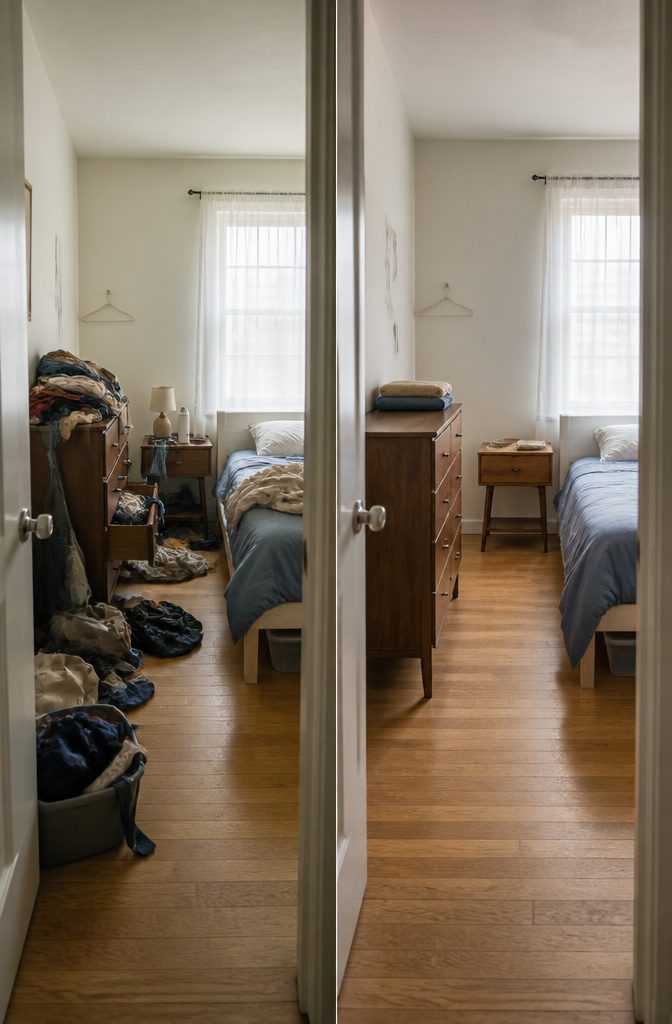
No bedroom looks good under a pile of stuff, so sort the room before you buy furniture or make any big change.
Clutter builds when things have no place to return to, so give every belonging an assigned spot, such as a drawer, a bin under the bed, or a hook behind the door.
Then purge. For anything you’re unsure about, ask whether you’ve used it at all in the past year.
If the answer is no, it goes. Items you’ve owned for years are the hardest to part with, but clearing them frees up floor and shelf space right away.
Check worn furniture before you replace it.
A wobbly dresser or scuffed nightstand may be fixable. If the damage can’t be repaired, let it go.
2. Pick a Bed That Fits
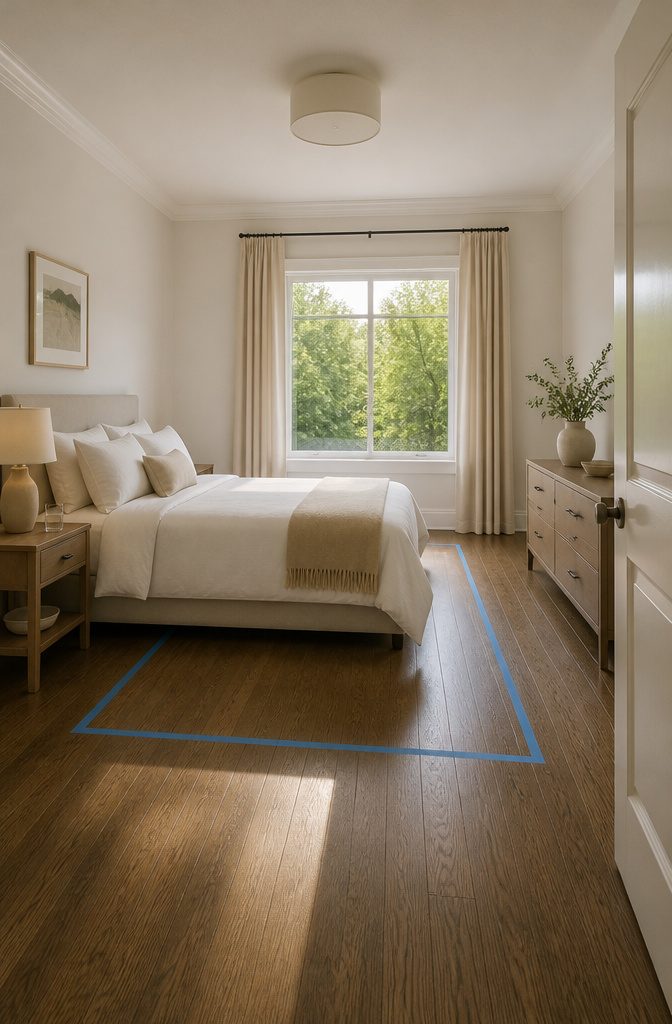
Measure the room first, then look up the actual dimensions of each mattress size you’re considering.
The bed is the biggest piece in the room, and one that’s too large makes everything else look squeezed around it. A bed sized to the room looks intentional.
Mark the bed’s footprint on the floor with painter’s tape, then set a nightstand, dresser, or bench beside it.
Check that the other furniture still fits with the bed in place, and that you can walk around it and open drawers and doors.
If the room feels tight, drop down a size. A smaller bed with room for a dresser and a lamp looks better than a bigger bed standing alone.
3. Choose a Color Palette
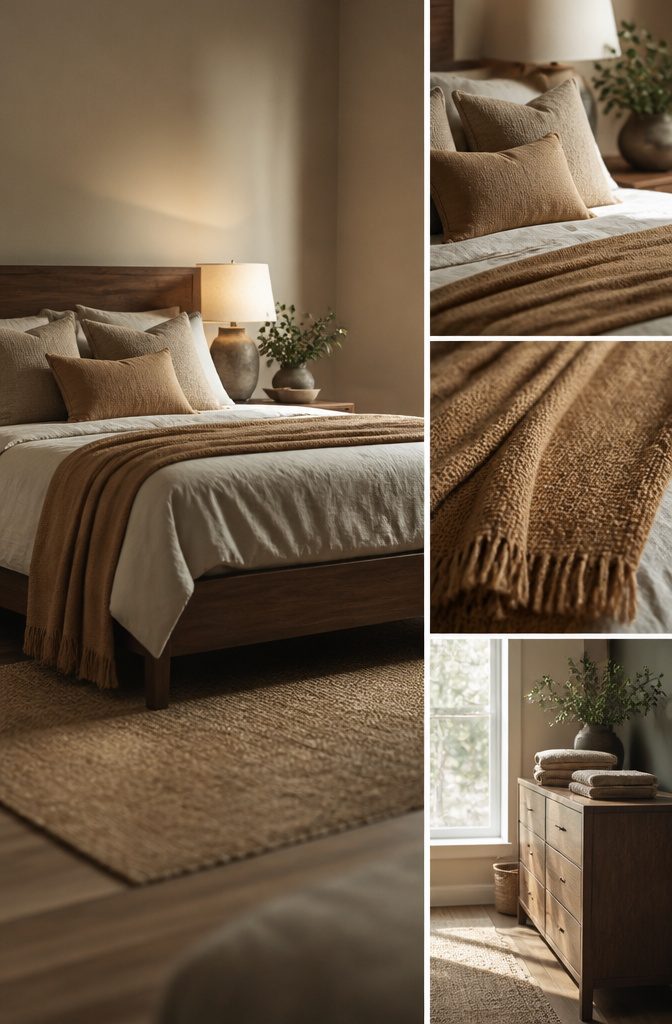
Pick your colors before you buy a single pillow or lamp. A set palette shrinks the shopping list fast, because anything outside it gets skipped.
If you’re unsure, go neutral. Beige, brown, tan, camel, and khaki all read as calm, and they pair with almost any furniture.
A room in one neutral can look flat, so layer several shades of neutral. With beige walls, bring in brown, tan, camel, or khaki through throws, pillows, and a rug.
For a bolder room, try navy, yellow, or green. Navy is the easiest of the three to live with, since it sits closest to a neutral.
4. Layer the Bedding
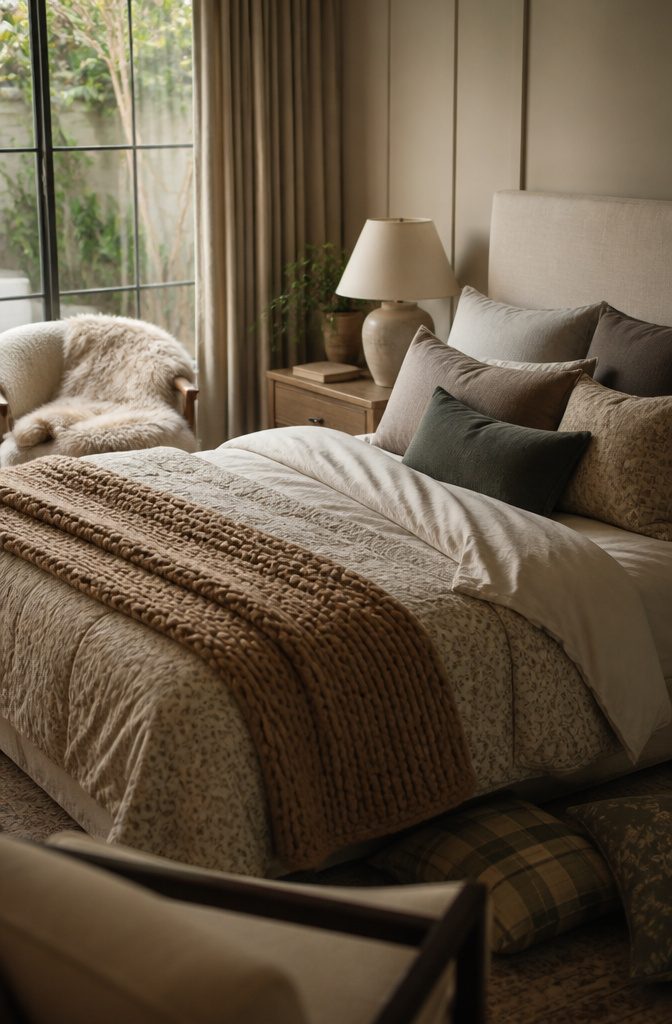
The bed is the first thing anyone sees in a bedroom, so layering your linens there adds the most depth.
Put a blanket with a different texture over your base sheets, such as a chunky knit over smooth cotton. Mix textures freely, but keep to one or two patterns so the bed looks layered rather than busy.
Fold a throw across the foot and let the pillows sit slightly uneven. That is what gives the bed a lived-in look.
The same approach works away from the bed. Drape a faux-fur blanket over an armchair, and the soft texture carries across the room.
For a makeshift seating area, pile a few different throw pillows on the floor. It costs nothing if you already own the pillows.
5. Layer Your Lighting
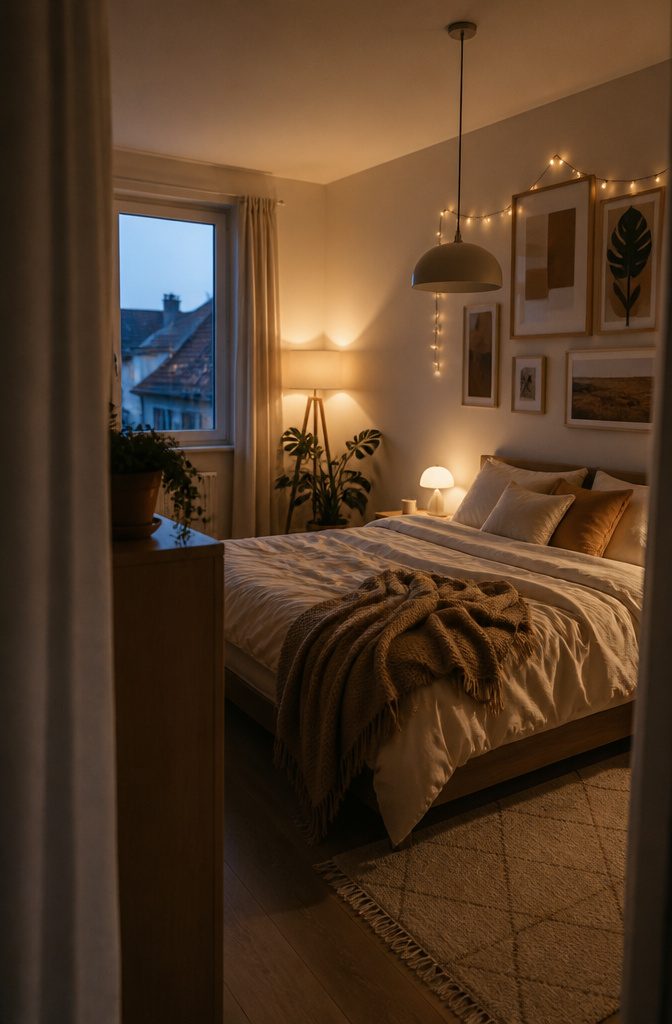
Spread the light across several sources instead of relying on one overhead fixture: a small bedside lamp, a floor lamp in a corner, and a pendant if you want one dramatic piece.
Use warm white bulbs in all of them. Hotel rooms and most bedrooms use that color because it is easy on the eyes and suits winding down before sleep.
String lights are inexpensive and give off an inviting glow, but treat them as an accent, not the main light.
Hang them over the bed, along a gallery wall to spotlight your best art, or around a mirror or a plant. Aiming light at a wall or feature pulls the eye to it.
6. Add a Mirror
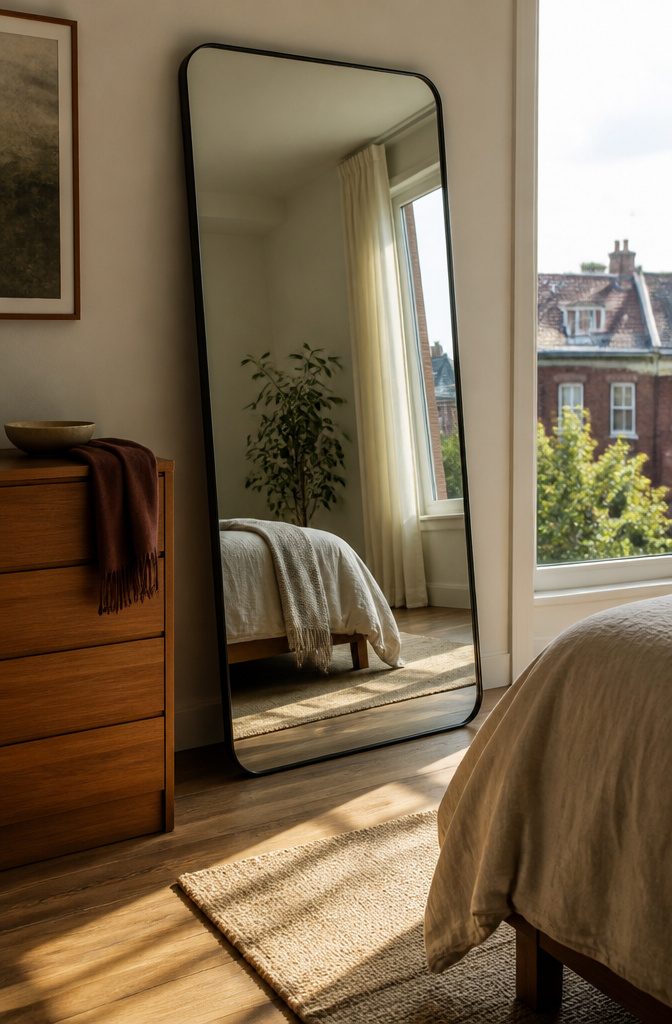
A mirror makes a bedroom look bigger and bounces light around, so it earns a spot as the focal point. For one strong piece, lean an oversized floor-length mirror against the wall.
It needs no hanging hardware, which suits renters, and it doubles as your outfit check. Set it where it catches window light.
For a plain wall, group mirrors in mixed shapes and sizes. Vintage mirrors with detailed frames turn up at thrift stores for an affordable price, and a mismatched set looks collected rather than bought in one go.
If you want a glow at night, lean a large lighted mirror against a wall of posters, or wrap string lights around the frame of a plain one.
7. Hang Plants High
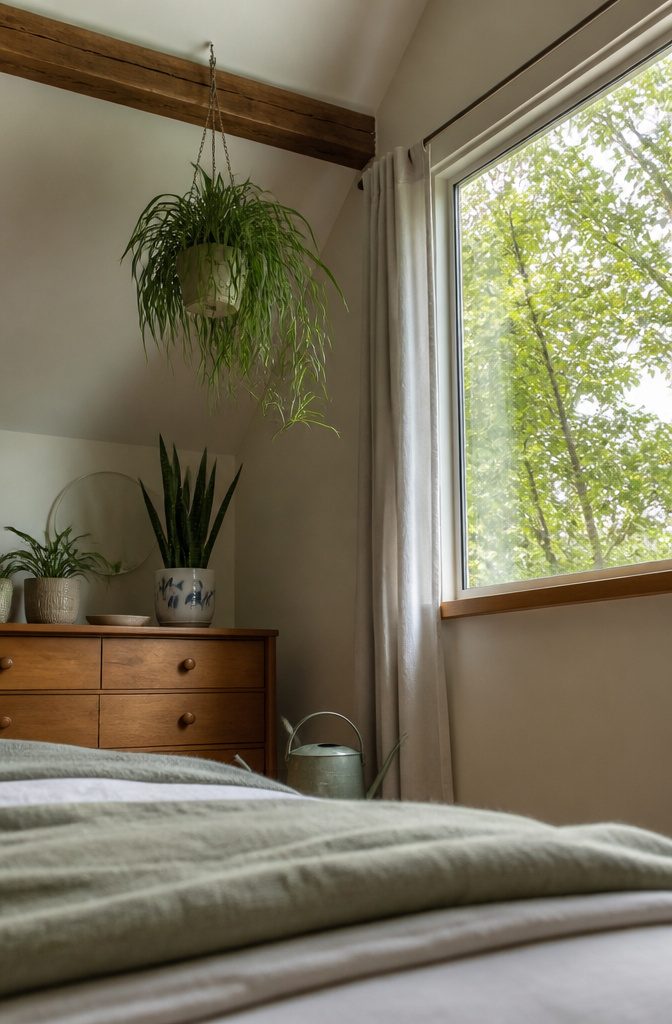
Hanging planters from the ceiling or from exposed wood beams pulls the eye upward, and a room that reads taller feels bigger.
Beams also give you a solid anchor for a hook. Without beams, screw the hook into a ceiling joist, since drywall alone won’t hold a watered pot.
Of the air-purifying bedroom plants, spider plant is the one to hang, because its long shoots spill over the pot’s edge. Snake plant, areca palm, and aloe vera grow upright, so they do better on a dresser or the floor.
Hand-painted pots make a good accent up there. One painted pot among plain ones reads as a deliberate choice rather than clutter.
8. Hang a Bed Canopy
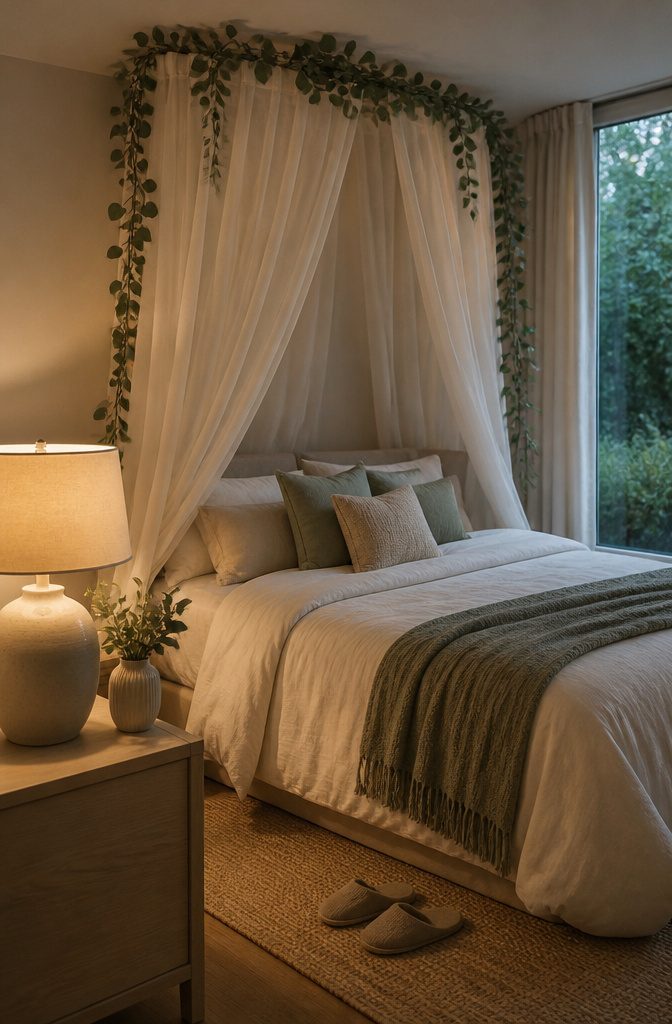
A canopy pulls the eye up to the ceiling line and marks the bed as the center of the room, the way a frame sets off a painting.
Greenery gives it the cottagecore look. Drape a faux ivy or eucalyptus garland over the frame or a hung rod, and let a few strands trail down the sides.
Faux stems beat real vines here, since real ones drop leaves on your pillows and need more light than most bedsides get.
Center the canopy on the headboard so the fabric falls evenly on both sides. If you rent, use removable ceiling hooks, and check their weight rating against the canopy and garland before you hang anything.
9. A High Shelf Above the Bed
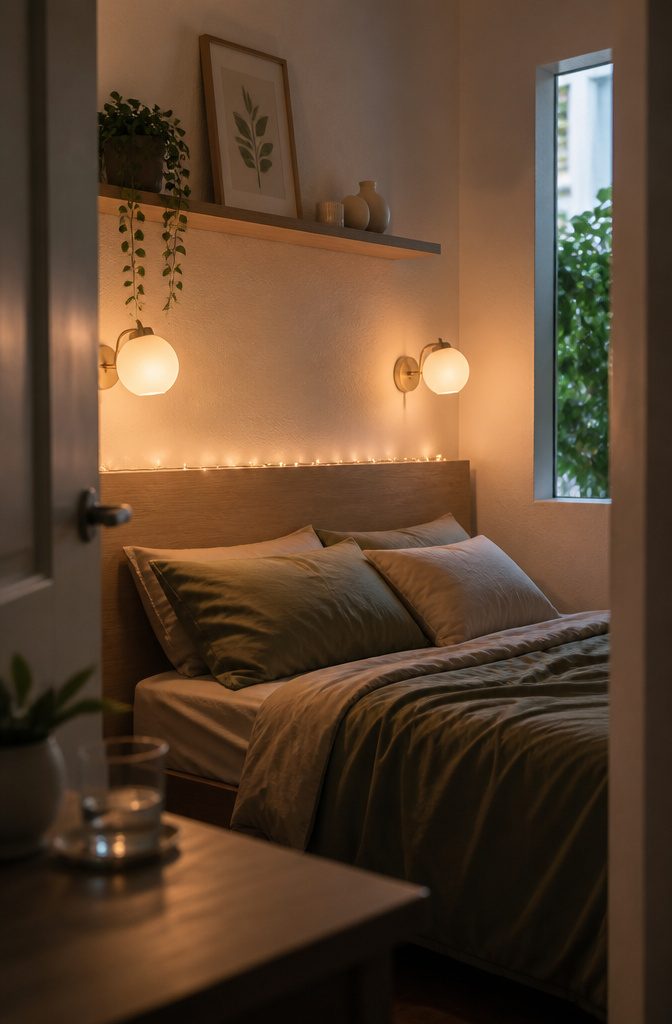
A shelf mounted above the bed gives plants and small artwork a home without using a nightstand or dresser, which is why it suits a small room.
Keep what sits on it light, since it hangs over your head: a trailing plant, a small framed print leaned against the wall, one or two objects you like.
A basic headboard looks far more finished with layers. Combine sconces, an over-bed shelf, and string lights along the top of the headboard.
The sconces can stand in for bedside lamps and free up nightstand space. The shelf holds the decorative pieces, and the string lights soften the whole wall at night.
10. Build a Reading Nook
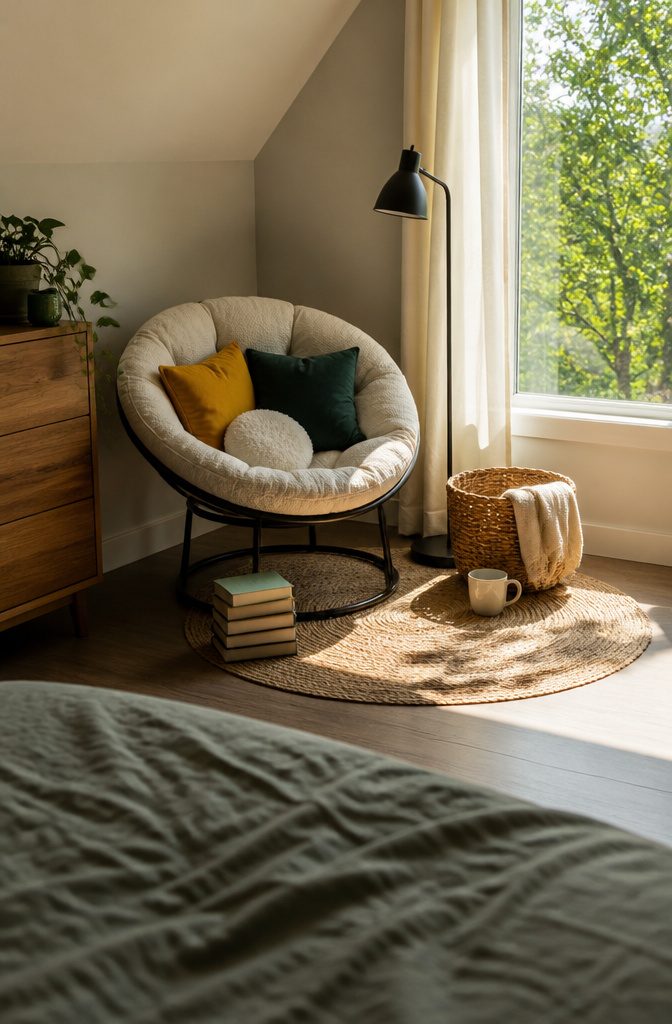
A saucer chair topped with a few playful throw pillows makes a reading spot out of a bare corner.
The round, bowl-shaped seat lets you curl up sideways with a book, and the pillows soften the hard edge of the frame.
A swing chair hung near the bed gives the same relaxed feel, and it keeps the floor open.
It also has to be anchored into a ceiling joist, which means drilling, and it needs clearance to swing without clipping the bed.
For a small room, the saucer chair wins, especially if you rent.
It needs no hardware, moves wherever the light is better, and can sit beside the bed or slide into a corner. Choose the swing chair only if you own the place and have a clear stretch of ceiling.
11. Try a Faux-Brick Wall
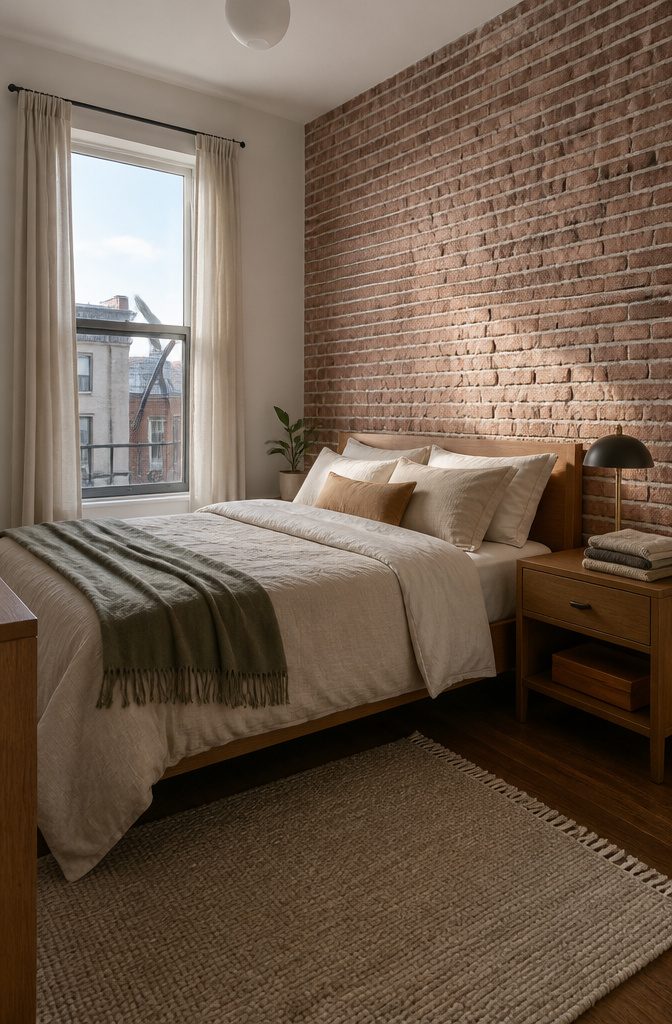
Faux brick wallpaper gives a bedroom the exposed-brick look of a city apartment without the move. Keep it to one accent wall.
The wall behind the bed is usually the best choice, since it’s the focal point of the room. Covering all four walls makes a bedroom feel heavy and busy, while a single wall adds texture and leaves the rest calm.
Renters should choose a removable wallpaper and read the lease first, because some landlords limit what can go on the walls. Test a small, hidden patch before you commit to the full wall.
12. Pinboard or Portrait Wall
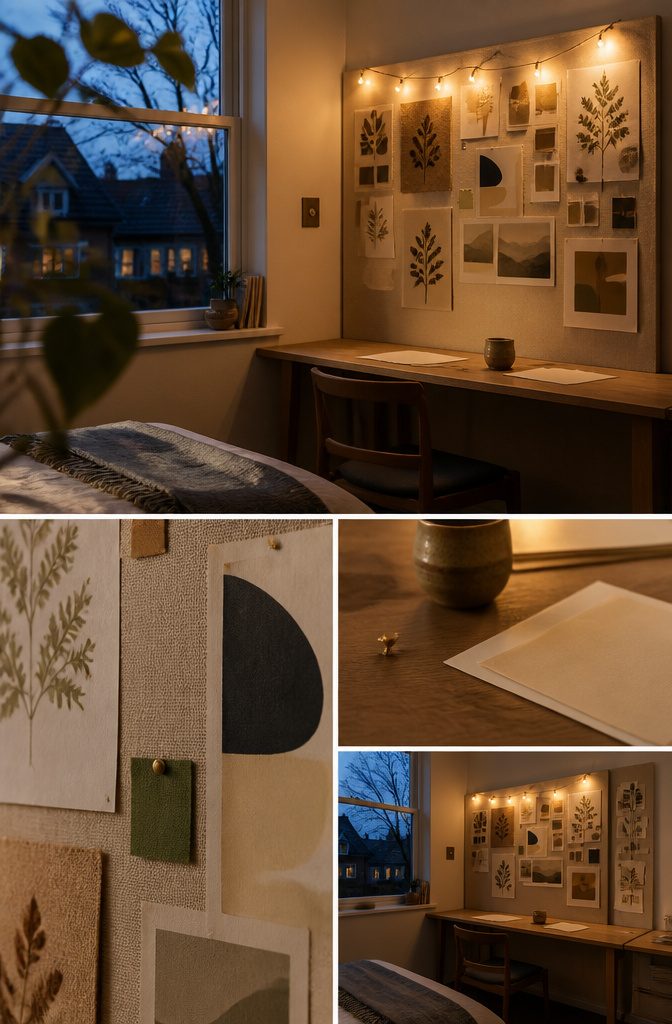
A pinboard suits a set of photos that keeps changing.
Pin up new prints as they come in and take old ones down without touching the wall. Drape a short run of string lights right above the board so the photos pick up a warm glow in the evening.
A portrait wall suits a fixed set. It works when you can’t narrow your favorites to a few, because you hang them all and the group becomes the statement.
Every frame means another nail, so renters should plan the layout before hanging anything. Choose the portrait wall for photos you won’t swap, and the pinboard for everything still in rotation.
13. Posters and Tapestries
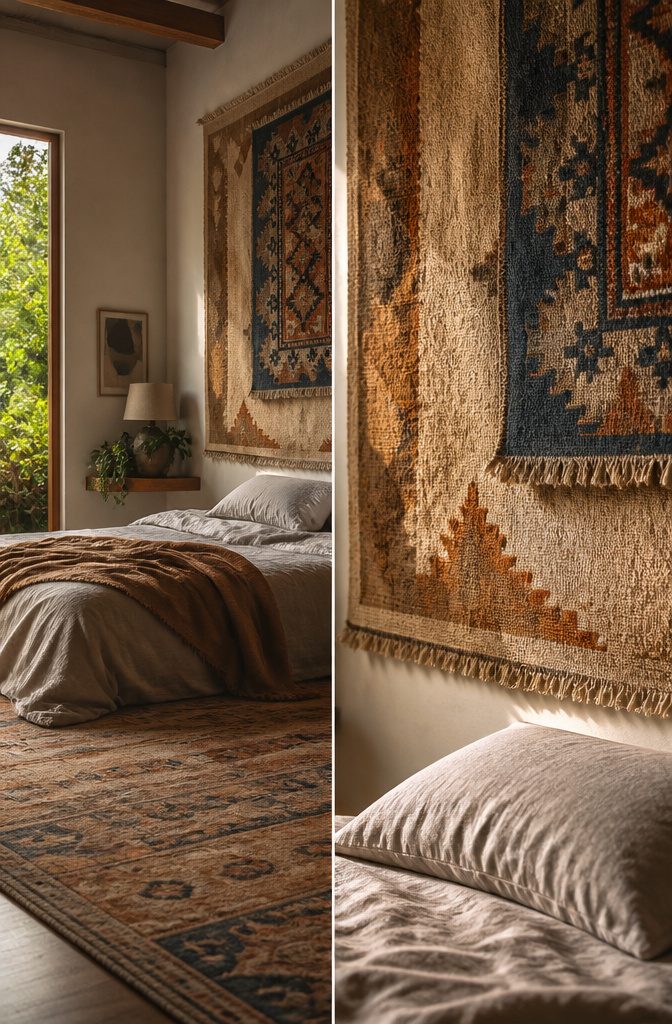
If you collect posters, hang them on the wall beside the bed instead of over the headboard.
You see them from the pillow, and the wall above the bed stays free for a shelf or canopy. Use one frame style or one mounting method throughout so a mixed set looks chosen.
Tapestries are the graphic alternative. Layer them: hang the largest first, then overlap a smaller one across a corner so the edges stagger and the patterns stack.
Posters look sharper and more personal, but every piece needs framing or careful mounting.
Tapestries look softer and bolder, and a single hanger or a few tacks covers a lot of wall. Choose posters for a collection you love, and tapestries when you want pattern with less work.
14. Make It Personal
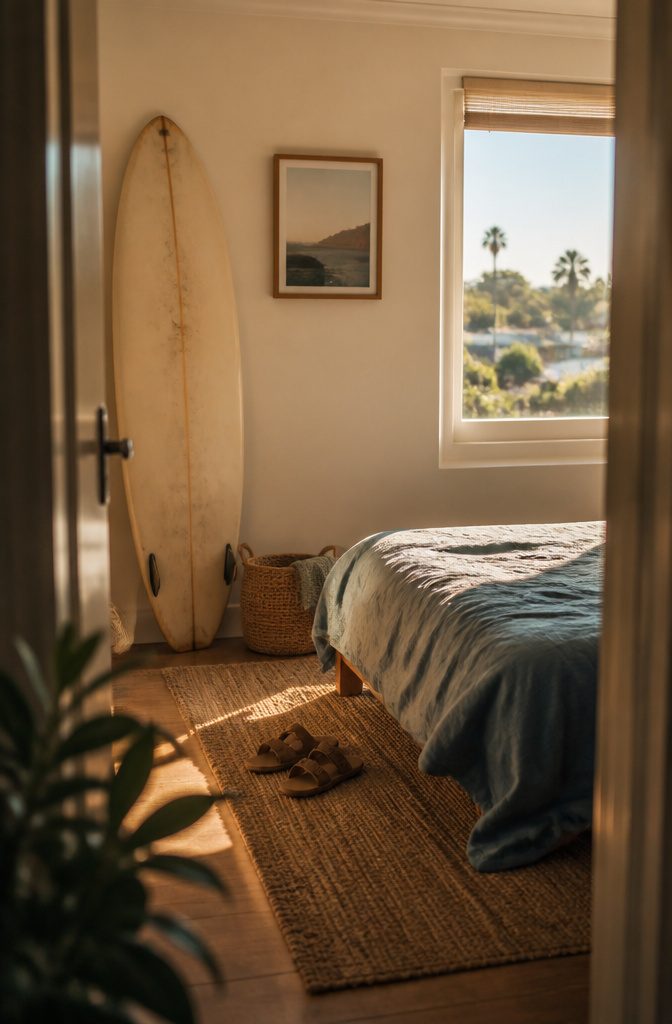
A bedroom feels like yours when it holds things only you would put there. Family photos, a souvenir from a trip, or a favorite color on the walls or bedding all do the job.
School pride works too: a college poster, a mural, or an oversized blanket draped over the bed ties a room together with a single piece.
Sports can carry the same weight in a small room. A surfboard propped against the wall brings personality to a petite space, and it reads as tall, graphic art while using almost no floor.
Pick the one object that says the most about you and give it clear wall space instead of scattering ten small ones.
Frequently Asked Questions
How can I make my bedroom look aesthetic on a budget?
Start by clearing clutter and giving every item an assigned spot, which costs nothing.
String lights are inexpensive, vintage framed mirrors turn up at thrift stores, and throw pillows you already own can be piled on the floor as makeshift seating.
Choosing a color palette before you shop also shortens the list, since anything outside it gets skipped.
What aesthetic bedroom ideas work for a small room?
Choose a bed that leaves space for a dresser and a lamp, and drop down a mattress size if the room feels tight. A shelf above the bed holds plants and small art without taking up a nightstand.
A saucer chair needs no hardware and can slide into a corner, and a mirror placed where it catches window light makes the room look bigger.
What aesthetic bedroom ideas are good for renters?
Lean an oversized floor-length mirror against the wall, since it needs no hanging hardware. Use removable wallpaper for a faux-brick accent wall, and removable ceiling hooks for a canopy after checking their weight rating.
A saucer chair is a better fit than a swing chair, which has to be anchored into a ceiling joist. Read your lease first, because some landlords limit what can go on the walls.
What colors work best for an aesthetic bedroom?
Neutrals are the safest choice: beige, brown, tan, camel, and khaki all read as calm. Layer several shades, such as brown, tan, and camel throws, pillows, and a rug against beige walls, so the room doesn’t look flat.
For something bolder, navy, yellow, and green work, and navy is the easiest to live with because it sits closest to a neutral.
What kind of lighting makes a bedroom look aesthetic?
Use several light sources instead of one overhead fixture, such as a bedside lamp, a floor lamp, and a pendant if you want one dramatic piece.
Put warm white bulbs in all of them, because that color is easy on the eyes and suits winding down.
String lights add an inviting glow over the bed, along a gallery wall, or around a mirror or plant, but treat them as an accent rather than the main light.