
Pick the steam oven by your cabinet opening first.
The Miele DG6600 is the only one here with published dimensions (18 in high, 23.44 in wide, 21.63 in deep), but it’s an open-box listing, so service and reliability are unknown. Thermador is the pick if you need 2 cavities.
Top Picks
| Product | Award | Best for | Why it won | ||
|---|---|---|---|---|---|
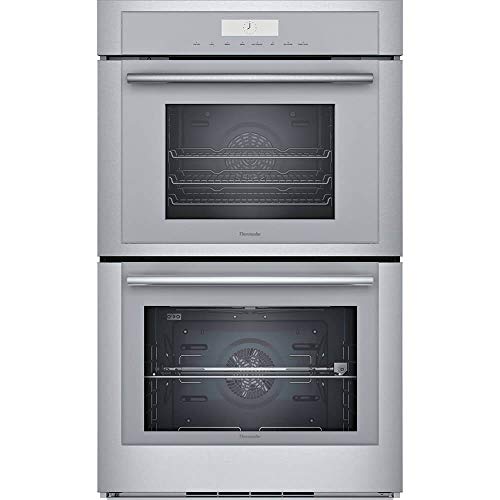 | Thermador steam oven | Best for Buyers Requiring a Double Steam Oven | Needing two steam ovens in one wall | It is the only option with a documented double model, plus a single-oven version. | Check price |
| Miele steam oven | Best for Buyers Seeking a Documented Built-In Steam Oven with MultiSteam | Wanting built-in steam with MultiSteam | Miele's product page documents the DG6600 and its MultiSteam technology, with exterior dimensions listed. | Check price | |
| Gaggenau convection steam oven | Best for Buyers Considering a Gaggenau Convection Steam Oven | Set on the Gaggenau brand | It is the only Gaggenau steam oven choice, though no specific model details were available. | Check price |


Recommended Products

5 Working Functions-The sensor probe in the oven precisely monitors the internal temperature, offering exclusive temperature for every kind of food, the maximum temperature can be up to 480℉. The wall oven has 5 different working modes that meet a variety of requirements for Broiling, Baking, Grilling, Keeping warm.

SAVE TIME W/ DUAL CONVECTION: Dual convection saves you time by cooking food quickly and more evenly, ensuring that your food is cooked evenly and to perfection
Best for Buyers Requiring a Double Steam Oven: Thermador steam oven
Quick Verdict
A kitchen plan that calls for 2 steam-oven cavities in one built-in setup has few documented options, and Thermador is the one with a double model on record.
Its documentation also covers a single model. The weak spot is evidence: there is less published on service, parts, and reliability than you would want for a high-cost built-in.
What It Does Well
- Double model is documented. If your layout needs 2 steam cavities, you can shop a specific product for it instead of guessing.
- Single model is documented too. If the double turns out not to fit your plan, you can stay with the same brand’s steam line.
- Built-in format. The oven is designed to sit in cabinetry, so it suits a planned kitchen layout rather than a countertop workaround.
Where It Falls Short
- Thin service and parts evidence. For an appliance this costly, repair access matters. Ask local dealers about technician availability and parts before you commit.
- Little detail beyond the lineup. Performance and reliability questions stay open, because the supplied evidence mostly confirms which configurations exist.
- No hands-on testing here. This review rests on documentation, not on time spent cooking with the oven.
Who It’s For
A built-in plan with room for 2 steam cavities is the situation this oven answers best. A buyer who puts long-term repair support ahead of layout will find the sparse service and parts record the detail that decides it.
How It Compares
The Miele DG6600 is a built-in electric steam oven with MultiSteam technology and listed exterior dimensions, but the product page was an open-box listing and nothing supplied shows a double configuration.
Miele fits a buyer planning a single cavity. Thermador fits a buyer who needs 2.
— *Note for the editor: the approved-claims list and key specs came through empty, and the width in the brief was blank ("-inch").
I wrote only from the selection notes and left out specs. Please supply the claims if you want more specific bullets.*
Where to buy: Amazon · juddblack.com
Best for Buyers Seeking a Documented Built-In Steam Oven with MultiSteam: Miele steam oven
Image: auroracirc.com
Recommended Products
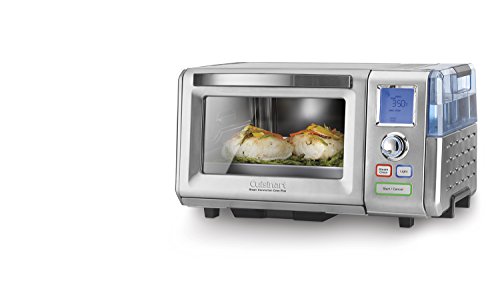
1800 Watt Rating

[14-in-1 Multifunctional Cooking] Enjoy the versatility of the ROBAM R-Box CT763 with 14 different cooking modes, including Air Fry, Convection, Steam, Roast, Bake, and more. Perfect for a variety of culinary techniques, this countertop combi steam oven can handle any meal with ease
Quick Verdict
Buyers who want a built-in electric steam oven with documented MultiSteam get the clearest paper trail here, since the listing names the DG6600 and gives its dimensions. The weakness is the open-box condition.
Key Specifications
- Depth: 21.63 in
- Height: 18 in
- Width: 23.44 in
What It Does Well
- Specific model and size: The listing names a Miele DG6600 and gives width, height, and depth, so you can check your cabinet opening before anything else.
- MultiSteam: Aurora Circ describes external steam generation through multiple ports and claims fast heat-up and even steam distribution.
- Flush design: The listing describes a handleless, flush-mount finish in stainless steel and black glass, which keeps the front free of hardware.
Where It Falls Short
- Open-box unit: The evidence does not establish ownership cost, service access, or reliability.
- Unverified claims: The heat-up and steam claims come from the listing, and this guide has no independent measurements to confirm them.
Who It’s For
A kitchen planned around a handleless, flush front and a measured cabinet opening suits this listing, since the full dimensions are given.
Buyers who need a known service path or predictable long-term costs will find no answers here, because the listing is silent on both.
How It Compares
Thermador documents two 30-inch models, the MEDS301BS single and the MEDS302BS double, but the supplied sources do not identify MultiSteam on either.
The Miele suits a buyer who wants that steam system documented on one named model. Thermador suits a buyer deciding between a single and a double oven.
Where to buy: auroracirc.com
Best for Buyers Considering a Gaggenau Convection Steam Oven: Gaggenau convection steam oven
Image: gaggenau.com
Recommended Products

STEAM BAKE AND AIR FRY IN ONE: More than a standard electric wall oven, this built in oven combines dedicated steam cooking, steam and grill, multiple baking modes and air fry functions. 108 preset recipes give home cooks more ways to prepare vegetables, seafood, meat, bread and everyday meals.

STEAM BAKE AND AIR FRY IN ONE: More than a standard electric wall oven, this built in oven combines dedicated steam cooking, steam and grill, multiple baking modes and air fry functions. 108 preset recipes give home cooks more ways to prepare vegetables, seafood, meat, bread and everyday meals.
Quick Verdict
Shoppers already set on Gaggenau’s convection steam ovens have a reason to look here, but the sources behind this guide name no specific model.
That makes this a brand-interest pick, not a proven performer. The brand’s focus on convection and steam is its draw, and the missing detail on fit, performance, running cost and support is its real weakness.
What It Does Well
- A defined range: Gaggenau sells convection steam ovens as a line, so a brand-loyal buyer has a clear place to start.
- Two cooking modes by design: A convection steam oven pairs steam with fan-driven heat, so any model you consider should list both.
- Room to compare: With no model fixed, you can request spec sheets and judge them against your own cabinet and budget tier.
Where It Falls Short
- No model identified: Dimensions, capacity and features cannot be checked from the available sources.
- Installation fit is unknown: Built-in ovens need a matching cabinet opening and the right electrical setup, and neither is confirmed.
- Ownership cost and support are unverified: Nothing in the sources covers service, warranty or upkeep.
Who It’s For
A buyer who has already chosen Gaggenau for the rest of a kitchen, and wants the steam oven to match, is the one this fits.
Anyone working to a fixed budget or a weekend timeline will find the missing model detail decisive, because an oven with unconfirmed fit and ownership cost is hard to plan around.
How It Compares
The Miele DG6600 is listed as an open-box, built-in electric steam oven, with basic exterior dimensions and MultiSteam technology on its product page.
That gives you something concrete to measure against your cabinet before you commit. The Gaggenau suits the buyer committed to the brand, while the Miele suits the buyer who wants a named model to check first.
Where to buy: gaggenau.com
How the Picks Were Chosen for the Best Luxury Kitchen Appliances
This guide evaluated 32 models available to U.S. buyers and researched 3 of them in depth, drawing on 2 sources: manufacturer specifications and owner discussions on Reddit.
Each product was scored against the factors that matter most for this use case (category specific performance, fit and installation, ownership cost, service and parts, capacity and layout), with every score tied to documented evidence.
What to Look for When Buying Luxury Kitchen Appliances
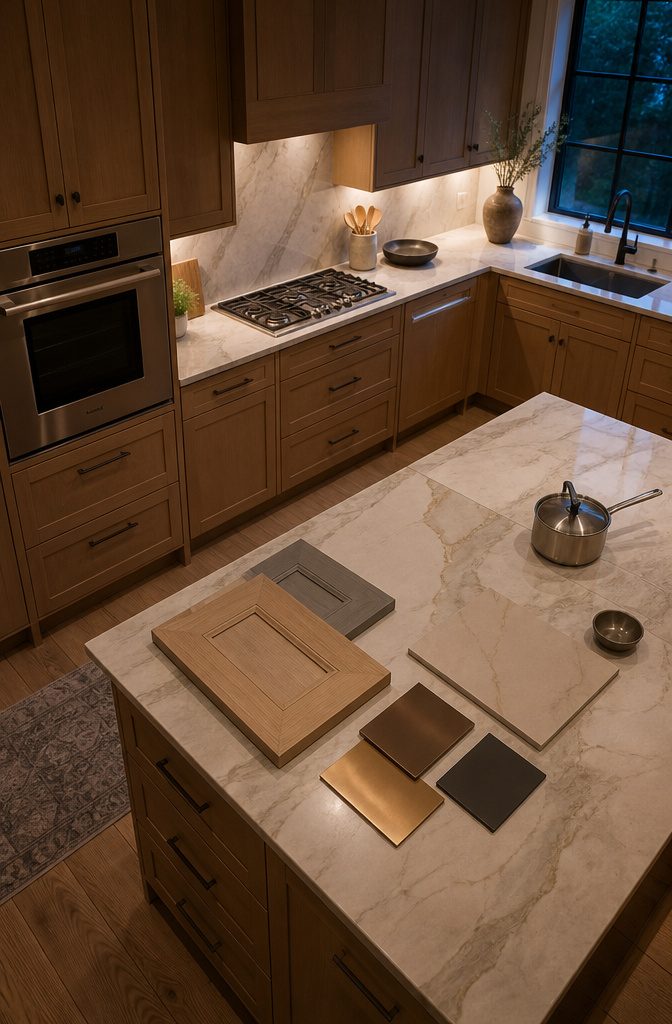
For a range, compare simmer control, baking evenness across two racks, and how quickly induction responds to heat changes.
Recommended Products

【3000W Professional Convection System】 Powered by a high-performance 3000W element and precision fan, our advanced 3D convection technology circulates superheated air evenly across every rack. Achieve golden-brown baked goods, crispy roasted vegetables, and juicy meats—no need to rotate trays.

【Double Baking Capacity】Our double dutch oven features two square compartments, each 6.4 inches wide. This practical, time-saving design allows you to bake two loaves of bread at once. Perfect for mini sourdough loaves, it’s ideal for busy bakers or anyone who wants to bake multiple loaves simultaneously!
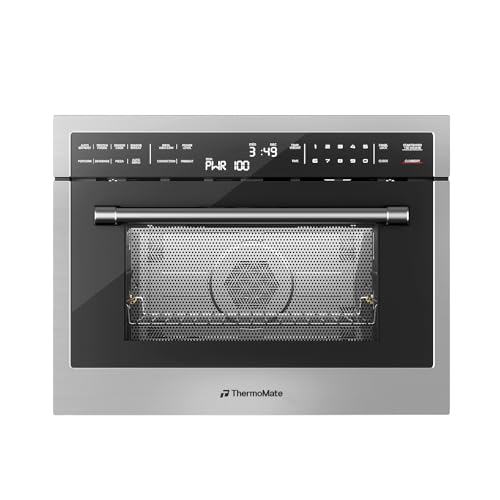
Convection and Microwave Modes: A dual microwave and convection oven, which includes convection, broil, sensor cooking, reheat, defrost, rapid pre-heat, and microwave cooking settings, expands your food prep options for optimal dish results.
Cooking and preservation performance
This factor decides whether the premium shows up in daily results.
On a range, check how low the burners can hold a simmer, how evenly the oven bakes across 2 racks, and how quickly induction controls respond when you change the heat.
On a refrigerator, check how well it holds temperature and humidity in the produce drawers.
Spec sheets list features, while independent tests and owner reports describe results, and the two don’t always agree. Some owners say the everyday difference is smaller than the price gap suggests.
Weigh this most if you sear, bake, or make sauces several times a week. If you mostly reheat and boil water, a mid-range model may serve you just as well.
Dimensions and installation fit
Compare each model’s listed width, depth, and height with your cabinet cutout.
Then check the required clearances at the sides and back, the door swing, and the panel-ready specs. Ranges and cooktops also need ventilation, and a pro-style unit may call for a stronger hood.
Match the electrical and gas requirements to what your walls already have: voltage, amperage, outlet location, and gas line size. A miss here can mean new cabinetry or a new circuit, and that erases any savings.
Renters and owners keeping their current cabinets should care most. If you’re gutting the kitchen and the plans aren’t final, you can pick by performance first, but get the installation drawings before you order.
Total purchase and ownership cost
The sticker price is only the first line of the bill.
Add delivery, installation, ventilation upgrades, trim kits or custom panels, and any gas or electrical work. Then read the warranty: how long it lasts, whether it covers both parts and labor, and whether it requires an authorized installer.
Set the total next to a mid-range model and ask what the extra spend buys. It might be better results, a better look, or mostly the name.
First-home owners working to a fixed budget should care most, because add-ons stack up fast. If the budget is already set aside and you plan to stay for years, this matters less, though you should still tally the extras.
Local service and parts access
Before you buy, look up authorized service providers in your area.
Check which technicians list the brand, how long parts usually take, and how warranty visits are handled. Owner comments describe a local repair company closing, which left parts and labor hard to find.
That risk weighs most if you live in a small town or outside a major metro area, or if the appliance is your only fridge or range.
In a large city with several authorized providers, this drops down the list. A quick phone call to a local shop still tells you more than a brand’s service page.
Usable capacity and interior layout
Stated capacity in cubic feet is only a starting number. What counts is how the space is laid out: adjustable shelves, drawer depth, freezer design, oven rack positions, and burner spacing.
Owners have flagged a freezer compartment that felt small, even on a large refrigerator. For a range, check that your biggest sheet pan or roasting pan fits the oven, and that 2 large pots fit side by side on the cooktop.
Big households, bulk shoppers, and meal preppers should care most. If you shop a few times a week and cook for 1 or 2 people, a smaller freezer or oven is unlikely to bother you.
Reliability and recurring repairs
A famous name doesn’t tell you how the current model holds up.
Look at the exact model or product line: its warranty, independent reliability reporting if any exists, and complaints that repeat across owners, such as the same part failing or repeated service visits.
More electronics and sensors mean more parts that can fail. This matters most if one appliance carries your whole kitchen, like a single refrigerator or a range with no backup.
If you plan to sell in a few years and the warranty covers that stretch, a few scattered reports of minor issues deserve less weight.
Finish, integration, and specialized features
Look at finish options, handle styles, and panel-ready configurations against your cabinets and layout. In an open-plan kitchen, a built-in look can matter a lot.
Then list the extras: a center griddle, dual-zone wine storage, steam or speed-oven modes, air purification, app control. For each one, ask whether you’d use it every week.
A feature you’d touch twice a year is a poor reason to pay more. You can skip this whole topic if the kitchen is closed off from the living space, or if you plan to remodel again soon.
With more than 1,000 color options and 10 different metal trim choices, you can design a range that’s completely unique—whether that means a deep emerald green with copper accents or a bright citrus orange with brushed stainless.
How the Top Picks Compare
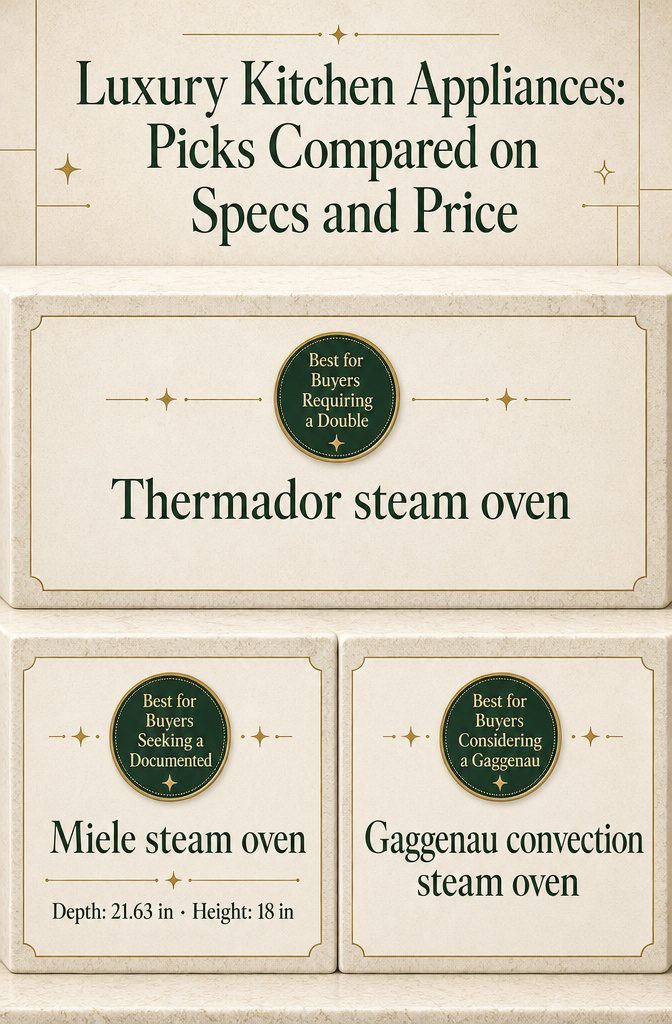
Thermador is the only double oven among the picks, allowing two dishes to cook at different temperatures at once.
Recommended Products

【Spacious 2.5 Cu.ft Capacity】The 24-inch built-in steam wall oven offers a generous 2.5 cubic feet interior, accommodating up to 5 racks at once. Ideal for family feasts, holiday dinners or party prep, it enables you to prepare multiple dishes efficiently in one go, eliminating the hassle of batch cooking.

【70 L Electric Convection Oven】This powerful convection oven features a cooking system that circulates heated air above, below, and around the food for quick preheating and even cooking. Operating on a 220V power supply with a maximum output power of 3000W, this oven also offers steam cooking capability in addition to baking. With a spacious 2.5 Cu. Ft. cooking capacity, 5 rack positions, and included baking sheet and rack.

5 WORKING FUNCTIONS-The sensor probe in the oven precisely monitors the internal temperature, offering exclusive temperature for every kind of food, the maximum temperature can be up to 480℉. The wall oven has 5 different working modes that meet a variety of requirements for Broiling, Baking, Grilling, Keeping warm.
One oven or two
The Thermador is the only pick built as a double, so it has 2 cooking cavities.
The Miele and the Gaggenau have one each. With 2 cavities, you can steam fish in one while the other runs a different temperature for a side dish or a reheat.
That matters if you host or cook full dinners most nights. If you cook for 1 or 2 people, the second cavity mostly adds cost, since a double sits in the premium tier, and takes cabinet space you may never use.
Fit and planning
The Miele is the only pick with published dimensions here: 18 inches high, 23.44 inches wide and 21.63 inches deep. Those numbers let you measure your cabinet opening before you order.
At 18 inches tall, it can stack with a standard wall oven or sit in a tall cabinet column. A double steam oven needs more vertical room than that, so the Thermador usually means a dedicated, taller cutout.
The 21.63-inch depth also stays inside a standard 24-inch cabinet. If you’re working with an existing layout in a first home, that makes the Miele the lowest-risk choice.
For the Thermador and Gaggenau, pull the installation sheet from the manufacturer before you commit, because this comparison can’t confirm their cutout sizes.
Steam alone or steam plus hot air
The Gaggenau pairs steam with convection, which means a fan moves hot air around the cavity. Steam alone cooks gently but won’t brown, so this model can roast a chicken with crisp skin and also steam vegetables.
That helps you if the steam oven will be your main oven. If you already have a good range oven, the overlap is wasted, and the Miele is the better fit.
Its MultiSteam system is built to spread steam through the cavity, which should give you steady results with bread, fish and reheated leftovers.
Choose the Thermador for volume, the Miele for fit and a steam-focused job, and the Gaggenau when 1 appliance has to do both.
Frequently Asked Questions
Which luxury appliance upgrades make a difference in everyday use?
The ones that control heat and temperature: burner simmer control, oven convection and baking consistency, induction controls, and refrigerator temperature and humidity management.
Finish and styling mostly change how the kitchen looks. Buyers often can’t tell whether the premium produces a visible difference, so check independent or owner-reported results for the specific appliance instead of relying on a feature list.
What should you check on a luxury refrigerator before buying?
Start with stated capacity and the shelf, drawer, and freezer layout, and compare them with how you actually store food.
Owners have flagged a freezer compartment that felt small. Then compare preservation features such as dual compressors, air purification, and temperature control, and confirm that a panel-ready version exists if you want the fridge to blend into cabinetry.
Which cooking format fits your habits: gas, induction, griddle, convection, steam, or speed oven?
Pick the format that matches what you cook most often, and pay for a specialty feature only if you will use it. A center griddle is a common example, because owners can end up using it differently than they expected.
Steam is another: one listing for a built-in steam oven claims external steam generation through multiple ports for fast heat-up and even steam, which is a maker claim to weigh against owner reports.
How do you know a luxury appliance will fit your kitchen?
Check the product dimensions, required clearances, cutout sizes, ventilation, and electrical or gas requirements against your plans before ordering. As one example, a built-in steam oven listing gives 23 7/16 inches wide, 18 inches high, and 21 5/8 inches deep.
A premium appliance that doesn’t fit the cabinetry or utility layout can force a costly redesign, and long project timelines make it worth confirming that the model and its specifications will still be available when you need it.
Can you get a luxury appliance repaired near you?
Find out before you buy by researching authorized service coverage, technician availability, parts access, and how warranty claims are handled in your area.
Owner comments describe a local repair provider closing, which left parts and labor hard to get. A strong warranty is less useful if no one nearby can perform the work.
Does a well-known luxury brand mean fewer repairs?
Not on its own. Brand reputation doesn’t establish that a current model is reliable, so look at the warranty coverage, independent reliability reporting where it exists, and recurring owner-reported failures for the exact model or product line.
What does a luxury appliance cost beyond the purchase price?
Installation needs, required accessories or panels, warranty terms, and likely service costs all add to the total. Compare these against less expensive alternatives to judge whether the performance, design, or features justify the premium.
Should you buy a matched suite or mix brands?
Judge each appliance on its own terms, because priorities differ across refrigeration, cooking, dishwashing, and specialty appliances. If a different brand has the cooking or storage features you will use, mixing brands can serve you better.