
These kitchens run from painting only the lower cabinets black to black-on-black, with walls, handles and a chalkboard splashback all in one shade.
Your pick depends on how much dark you can live with. The risk at the far end is flatness: without leathered granite counters or brass accents, the room reads as a single dark block.
1. Pair Black With White
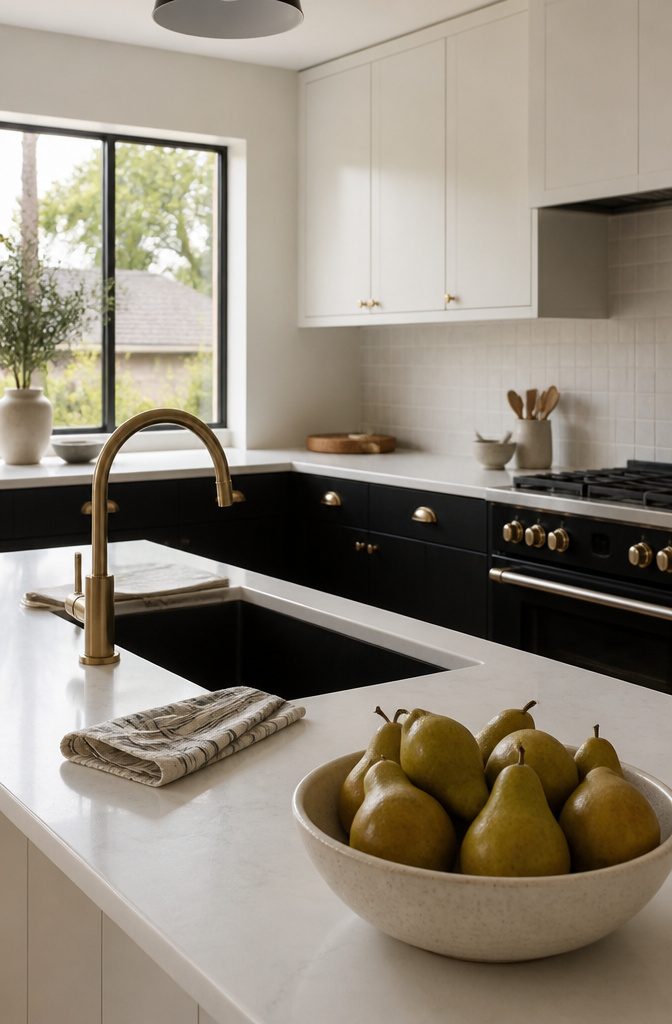
Black lower cabinets with white above them is the most reliable way to go dark.
The classic contrast looks dramatic and modernist, and white surfaces reflect daylight, so the black doesn’t make the room feel smaller. A white island and white wall cabinets over black base cabinets and drawers is one way to do it.
Choose a warm white for the walls over a stark one. Against deep charcoal, a cozy white keeps the room grounded instead of cold.
If you’re nervous about committing, paint only the lower cabinets dark and leave your existing white uppers alone.
You can go darker later. Hardware adds another layer of interest on the black fronts.
Recommended Products
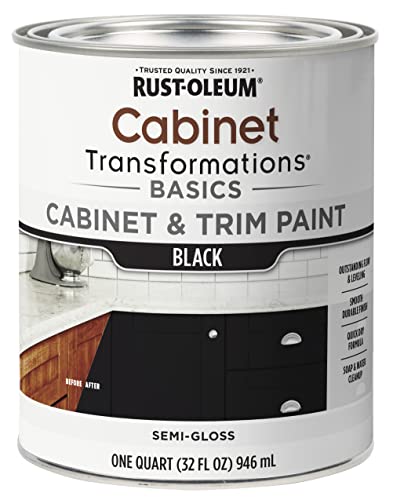
CABINET TRANSFORMATION: Refresh outdated cabinets, vanities, furniture and trim with rich Black color and a smooth semi-gloss finish

𝙉𝙊𝙏𝙀: Intentional headspace allows room for stirring, dipping, and transit. The stated paint quantity remains unchanged. If you have any questions, please contact our customer service team.

Ready to use, pre-mixed door and trim paint offers a fresh new look on interior or exterior metal, wood and fiberglass
2. Black With Natural Wood
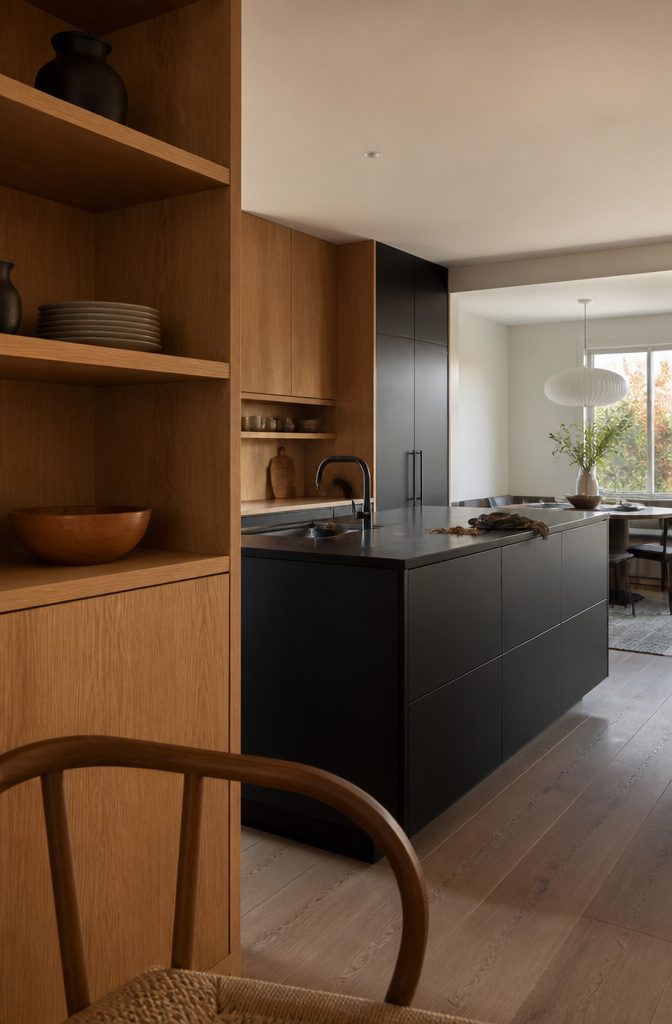
Black reads cold on its own, and wood adds the grain and color it lacks.
In the Cranbrook kitchen from Naked Kitchens, a black island and larder sit against natural oak cabinets and shelves in a Scandi style. The result is modern without feeling clinical.
The tactile texture of wood softens the black while keeping it a strong design choice.
That means you can use a lot of black and still get a warm room.
Put black on one or two big pieces and leave the rest in natural wood, or try a walnut and black island. Black-stained oak plywood fronts are a third route, since the grain still shows through.
Recommended Products

Products include: you will receive 2 pieces door kitchen towel rack that can be quickly and easily hung over the kitchen door, ideal for small spaces with limited storage space, and provide the convenience you need to dry your towels; Note: suitable for doors up to 2 cm/ 0.8 inch thick

STYLE: Easily update your kitchen and bathroom cabinets or furniture with our casual cabinet hardware collection.

Effortless Food Prep: The stainless steel countertop of this kitchen island on wheels provides a smooth and safe surface for all your chopping and cutting tasks. Cleanup is a breeze, as a simple wipe with a kitchen towel or cloth leaves it spotless and ready for your next culinary adventure
3. Brass or Gold Hardware
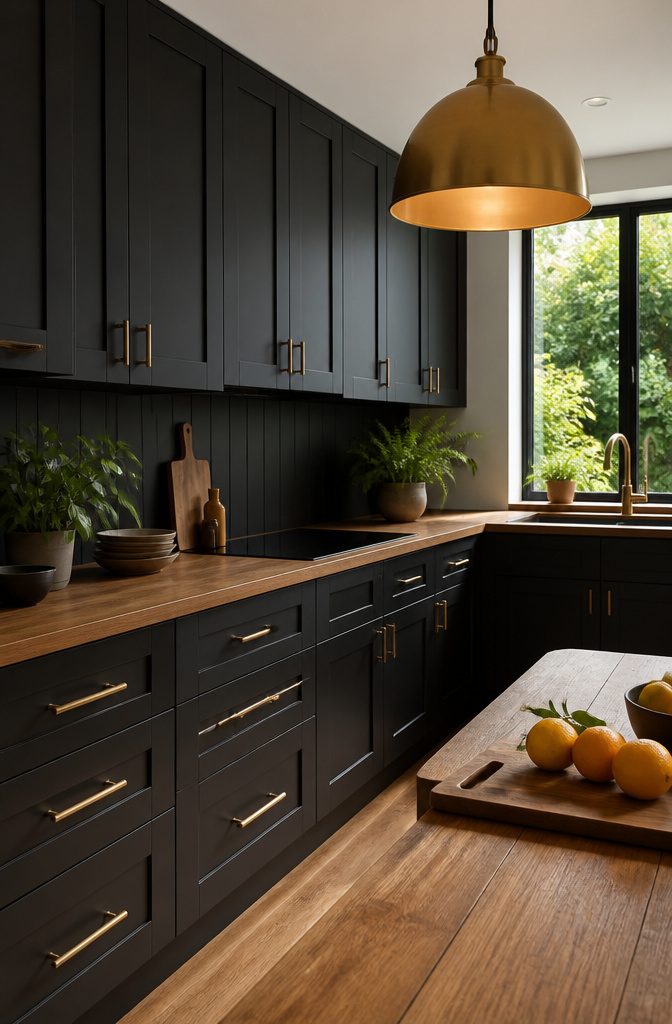
Brass is the easiest metal to put on black cabinets because it adds warmth right where the surface is darkest.
Industrial brass pulls, like those from Buster & Punch, work in a midcentury layout with a walnut and black island. On black Shaker doors, brass detailing and honey-colored timber worktops give the kitchen a luxurious look.
For something glossier, gold hardware with statement lighting gives the room a show-stopping moment. Match the pendant finish to the pulls so they read as one choice.
Blackened steel hardware, such as Nick Lippert Furniture’s, is the darker alternative. It keeps the cabinets uniform, but you give up the contrast that makes brass worth the money.
Recommended Products

STYLE: Easily update your kitchen and bathroom cabinets or furniture with our modern cabinet hardware collection.

Stylish & Versatile Design: Transform your kitchen cabinets, dresser drawers, and furniture with the sleek and modern look of Franklin Brass Francisco handles. Perfect for any home improvement project, these cabinet pulls add a touch of modern elegance with their Matte Black finish.

Provide round-the-clock customer care, responding to any product issues via email within 24 hours.
4. Black-on-Black
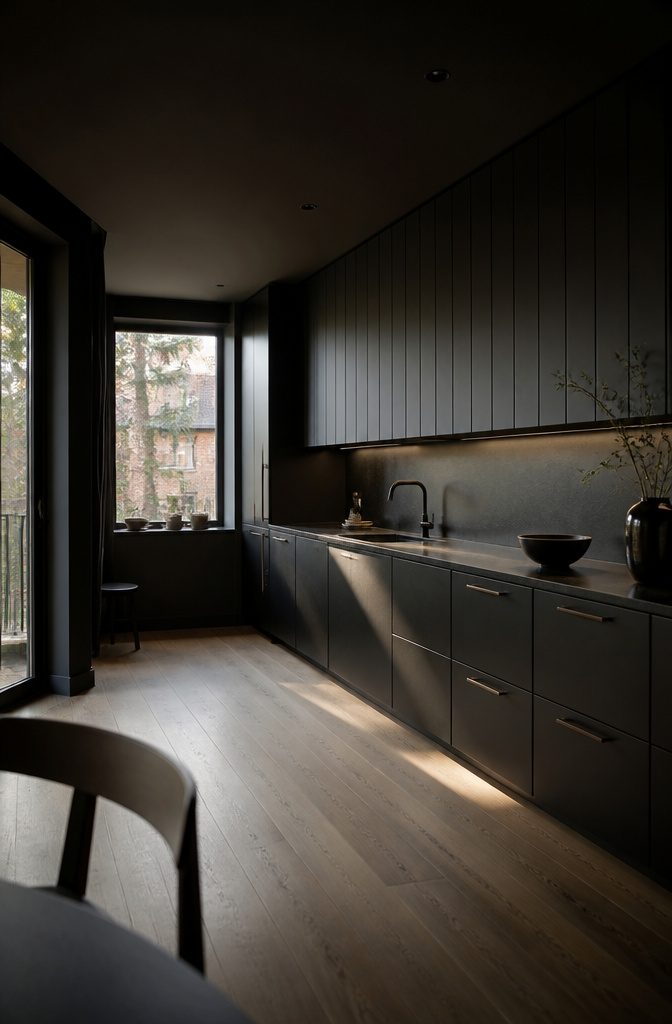
Black-on-black is the boldest way to use a dark kitchen: cabinets, walls, handles and even the splashback all go black.
A chalkboard splashback carries the color onto the wall, and a true, deep black paint on the doors keeps the whole room reading as one shade.
Flatness is the risk, and finish variation fixes it.
Leathered black granite counters have a textured surface that reads differently from smooth cabinet doors. V-groove doors add shadow lines.
Brass accents punctuate the black, as they do in a custom-cabinet Chicago condo kitchen. Skip both texture and metal, and the room looks like a single dark block.
Recommended Products

Swivel & Adjustable: The civama bar stools set offers 360° rotation for convenient chatting with nearby friends. The seat height can be adjusted from 26" to 32.9" to accommodate various counter heights. Simply sit on the stool and lift the handle to choose the desired height

【52in Black Linear Light】- This Caraluxe modern led linear pendant Light, a fusion of minimalist geometry and fine artistry, suspends like an stylish ribbon and features sophisticated black walnut wood-printed metal panels. Making it an outstanding and stylish farmhouse led linear chandelier for dining room, kitchen island, bedroom, home office and study.

【Modern Black & Walnut Pendant Light Design】This hanging pendant light fixture features a sleek black metal canopy with walnut wood accents and elegant gray gradient glass shades, creating a warm and sophisticated atmosphere. The stylish design blends perfectly with modern, farmhouse, industrial, and contemporary home décor, making it an eye-catching kitchen island pendant lighting or dining room centerpiece.
5. Black Shaker Cabinets
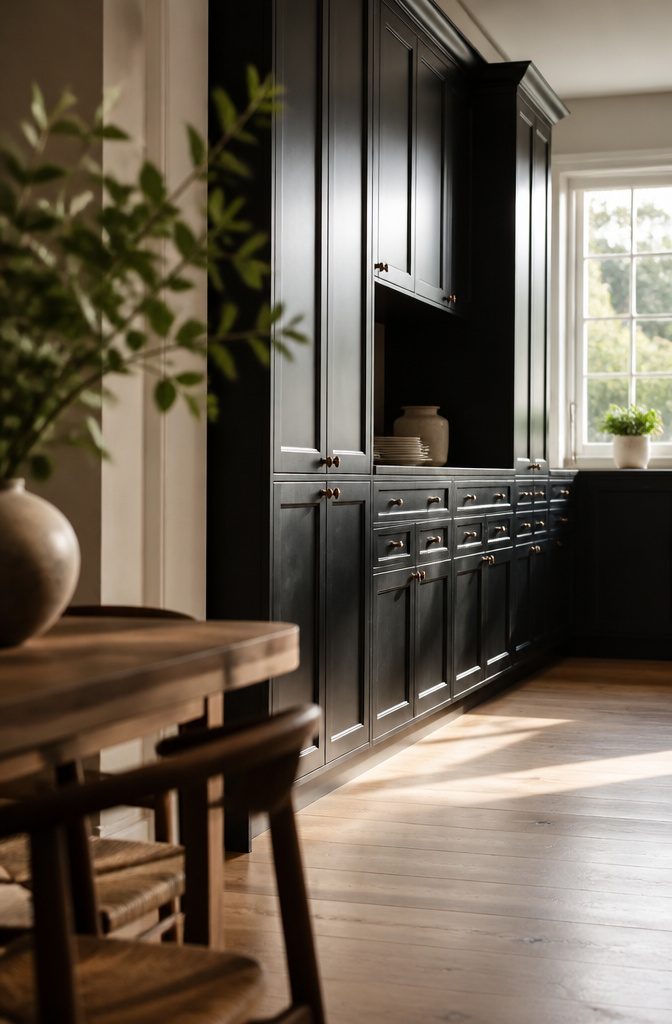
In-frame Shaker doors and drawers look traditional and handcrafted, and a deep, rich black is what makes them feel contemporary. The door profile stays the same, so the paint color does all the updating.
Pick a black that is truly black.
Naked Kitchens’ Oyster Catcher is a good reference shade: it is a true, deep black, named for the seabirds on the North Norfolk coast. A grayed-down black reads as charcoal and loses the contrast with the classic profile.
Recommended Products

Minimalist Design: The simple design is timeless and won't cause aesthetic fatigue, as simplicity often exudes a more sophisticated charm

What You Get:10 sheets black self-adhesive wall tiles,12.6" x 10.6" each tile, total covers around 9.3 square feet area

𝐏𝐫𝐞𝐦𝐢𝐮𝐦 𝐌𝐚𝐭𝐞𝐫𝐢𝐚𝐥𝐬:Made of PVC composite laminate, anti-scratch, high impact, color fadeless, more durable and stronger than other plastic self-adhesive tiles. Brushed surface finishing with realistic look, high waterproof and stain-resistant performance, protect the walls from splash and iol.
6. Marble and Light Counters
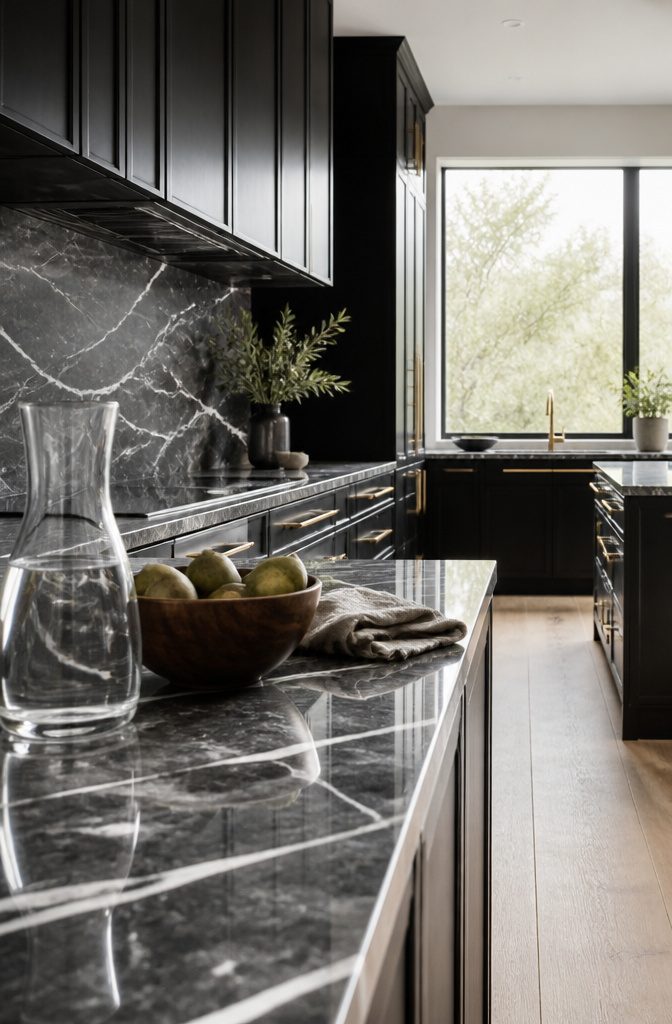
Black cabinets look best against marble with bold white veining, and reflective white counters are what keep the room from feeling heavy. The light bounces off the stone, so the cabinets read as rich instead of dense.
If the marble is busy, keep the backsplash simple. White subway tile lets the cabinets and counters do the work.
For a calmer, matched look, run the same white marble up the wall, then add light white oak floors and brass hardware. The brass also separates each row of cabinets so the doors don’t blend into the dark paint.
Black marble worktops are the darker version. They suit a moodier kitchen, but they lose the brightening effect of white stone.
Recommended Products

Bold Ultra Black: Black Deco offers an intense, ultra-black shade, evoking the dense hardwood of the West African Ebony tree, perfect for contemporary decor.

𝐂𝐎𝐌𝐏𝐋𝐄𝐓𝐄 𝐓𝐎𝐎𝐋 𝐒𝐄𝐓:Save time with our wood paint kit, including all the necessary tools for your painting needs

ALL-IN-ONE Paint - NO Sanding, NO Priming, NO Top Coat Required, Low Luster, Velvet Sheen Finish
7. Matte or Charcoal Finishes
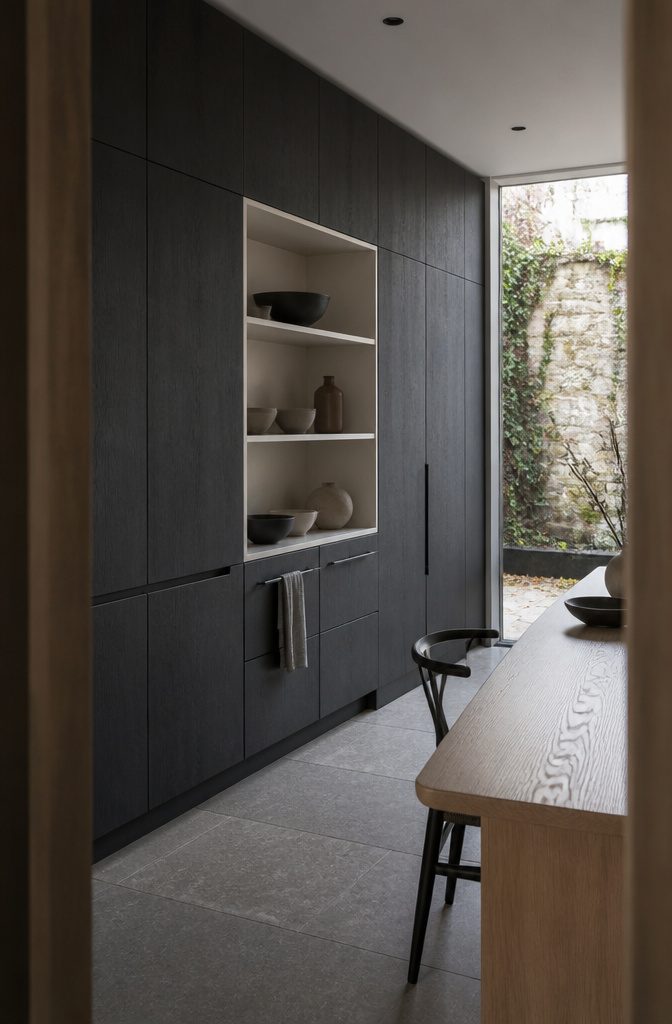
Black comes in more shades than the paint aisle suggests, and charcoal reads a little softer than pure black. The hint of gray keeps a full wall of cabinets from looking like a hole in the room.
Two examples show how to use it.
One is an oak cabinet system by Bontempo from Armazem, finished in matte black lacquer in charcoal. The other is custom walnut cabinets stained charcoal with a matte black finish, run all the way up to the ductwork.
Matte skips the glare of gloss, so the color does the work instead of the reflections. In the walnut kitchen, a Corian box inset with open shelving contrasts the matte cabinets and gives you a spot for display.
Recommended Products

Spacious Kitchen Island Countertop: Perfect for entertaining, this kitchen island features a durable white faux marble tabletop that sets a warm and inviting stage for meals and conversation. The generous 47.2" W x 23.6" D surface provides ample space for food prep, dining, or working on a laptop. Wear and scratch resistant, this island table for kitchen becomes a versatile hub for everyday use—ideal as a coffee bar cabinet or casual dining spot


[Large Worktop] The 23.6”D x 47.2”W surface of this kitchen island allows you to prepare food while being spacious to keep a toaster or coffee machine close by. Large worktop for great convenience!
8. Jewel Tones Like Emerald and Navy
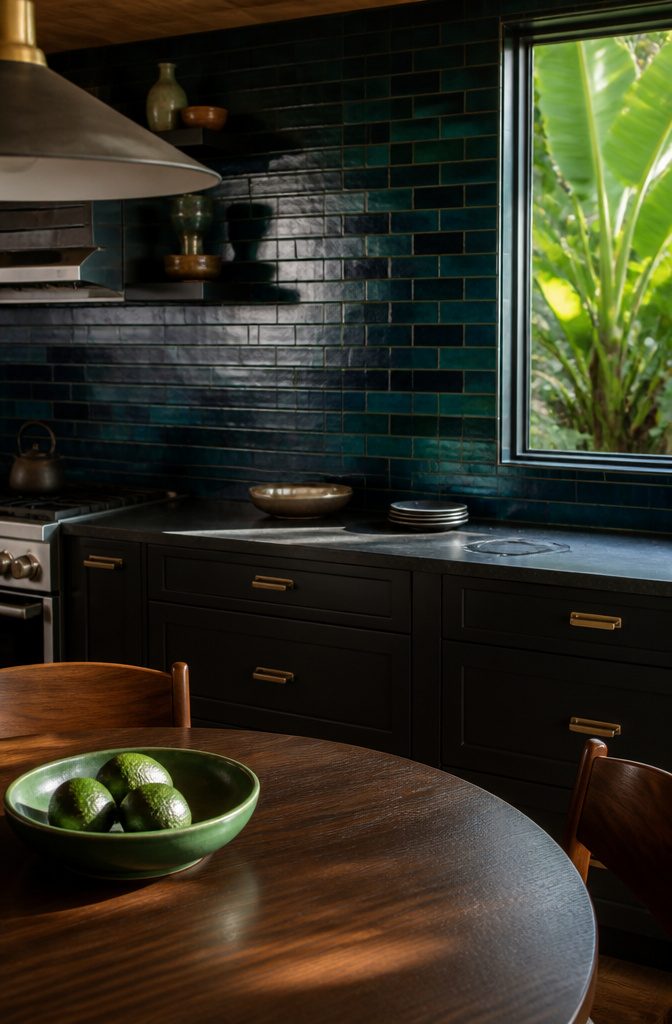
Black cabinets paired with emerald green or deep navy give the kitchen a striking, luxurious mood. Both colors are nearly as deep as black, so the room reads as one rich, dark palette rather than a clash.
A midcentury kitchen shows how far this can go. Black built-ins sit beside navy and teal backsplash tiles (Patricia Urquiola for Mutina), and the two shades together give the wall more depth than a single color would.
On a weekend budget, keep the jewel tone to one surface, such as the backsplash or a single painted wall, and let the black cabinets anchor everything else.
Recommended Products

【Product Size】:Center-to-Center=5 inch(128mm); Length=6.4inch(164mm);Projection=0.7 inch(18mm),Diameter:0.7inch(18mm)

STYLE: Easily update your kitchen and bathroom cabinets or furniture with our casual cabinet hardware collection.

Euro Style: The cabinets knobs is an ideal way to beautify an entire room. Make cabinet hardware a part of your home décor today
9. Dual-Tone Cabinets
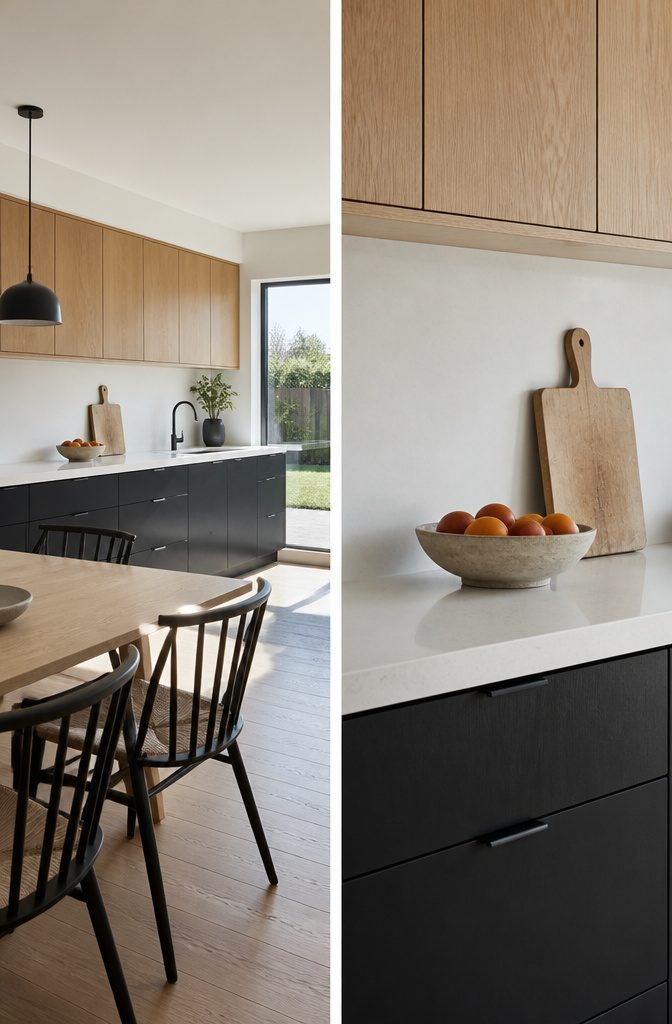
Splitting the color keeps black from taking over the room. When black cabinets share the space with natural wood, the eye has somewhere to rest.
One Las Vegas kitchen pairs brown walnut with blackened wood on flush-panel doors and drawers, then adds a white stone top and crisp walls around it.
A black island and larder next to oak cabinets also keeps a kitchen modern without making it feel clinical.
If full commitment feels risky, start with black lower cabinets and lighter uppers. The room keeps its brightness at eye level, and you can change the uppers later without redoing the whole kitchen.
Recommended Products

Fits 34"–37" Counter Heights: Designed with a 24-inch seat height, these LUE BONA counter height bar stools are a practical match for 34"–37" kitchen islands, counters, dining spaces, and home bars. The 16.2" W × 15.7" D seat offers a comfortable seating area for everyday use, and the set is available in 2-piece, 3-piece, and 4-piece options

【360°Swivel Bar Stools】This barstool features a 360-degree swivel seat, allowing users to effortlessly turn in any direction—perfect for chatting with friends or using at a kitchen island. With a seat height of 26 inches, it's perfectly suited for countertops ranging from 36 to 40 inches high.

【Upholstered Seat & Walnut Bentwood Frame】The 26" upholstered swivel bar stools are padded with high-density sponge, and the seat cushion thickness reaches 3.5", providing excellent comfort. The walnut veneer covers the leg and back surface of this counter stools, showcasing a stunning natural grain pattern that will withstand daily wear and tear.
10. Black as a Door Accent
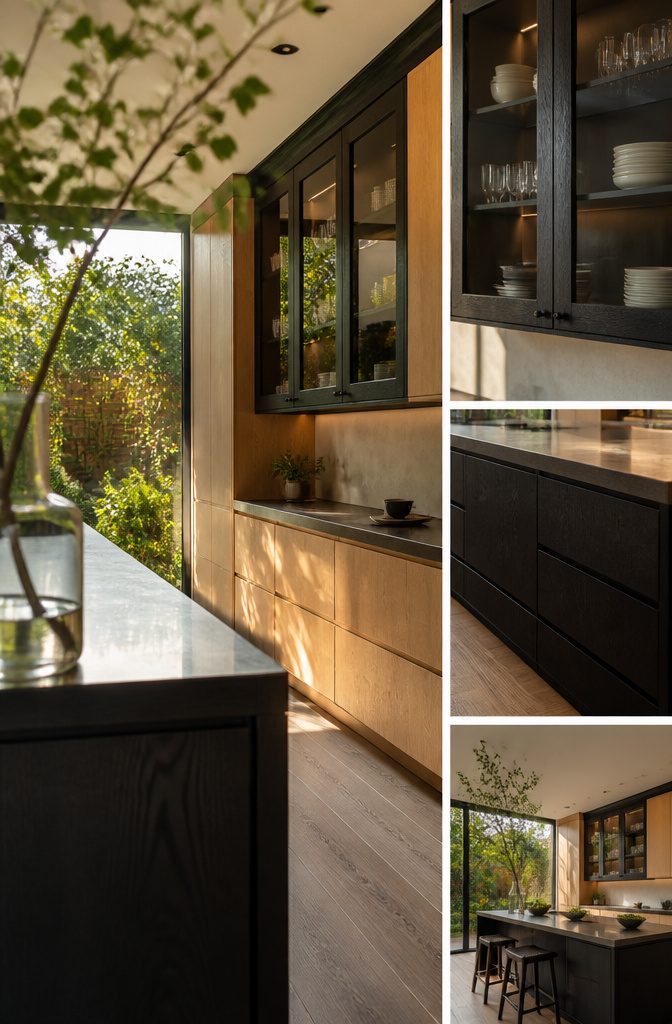
Black doesn’t have to cover every cabinet. One designer-built kitchen uses it in three places: black-grained oak frames around the glass cabinet doors, recessed black base cabinets under the island, and a black detail at the crown.
The frames and crown pull the eye upward, and the dark island base anchors the room without darkening the cabinets around it.
This is the lowest-risk way to try black. Keep the black to a few small spots so each one reads as a focal point instead of a heavy mass.
If you tire of it, you’re redoing frames or trim, not a whole wall of cabinets. Oak grain also helps: the texture makes black look less formal than flat paint.
Recommended Products

CREARREDA kitchen splashbacks are resistant to heat sources, grease, water and can be washed with common kitchen detergents (non-abrasive).

❃STRONGER UPGRADE ADHESIVE: 5X Stronger backing glue than ordinary cheap vinyl kitchen backsplash, not only stick firmly to the smooth & clean surface, but also available on lightly textured wall. Don't worry falling off.

Premium Vinyl Material – Safe & Durable: Crafted from high-quality EVA material, our peel and stick panels are lightweight, flexible, and eco-friendly. They are odorless, safe for families, and built to last, offering excellent durability without cracking or fading.
11. Tile, Stone, and Open Shelving
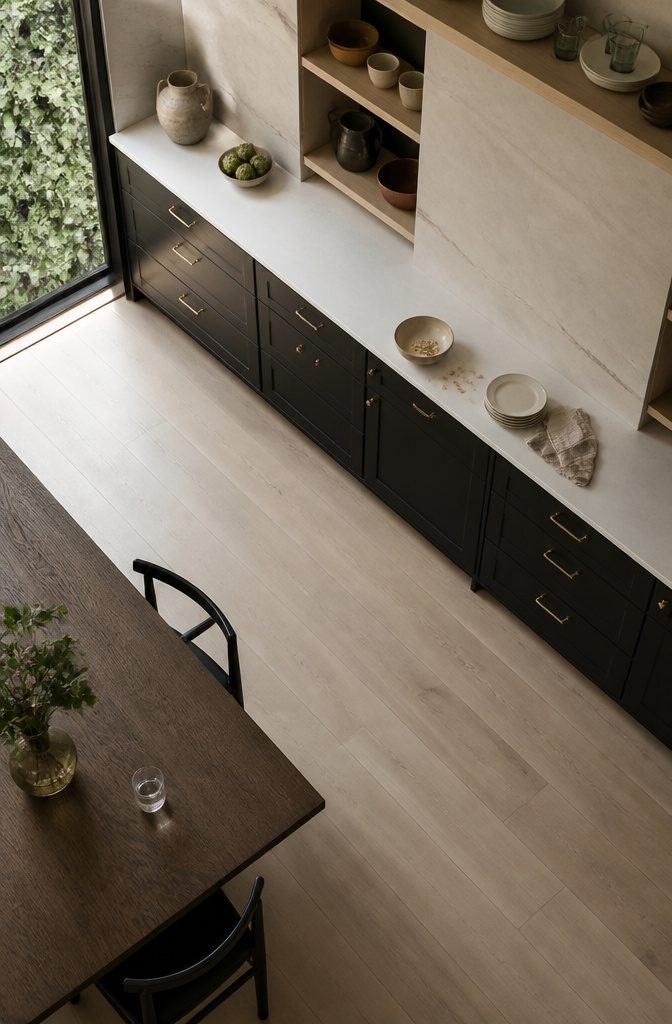
A long run of black cabinets reads as one heavy block until something interrupts it. Open shelving is the simplest break: swapping a few upper cabinets for open shelves keeps the wall from looking solid.
Stone and ceramics add variation too. A stone backsplash, or ceramics styled on those shelves, blends traditional and modern looks.
Add reflective white countertops, which bounce light back toward the dark cabinets.
Then choose hardware that contrasts with the paint, such as brass, so each row of cabinets stays distinct instead of melting into the black. A pale backsplash and light flooring also lift the eye and keep the room looking clean.
Keep Black From Feeling Dark
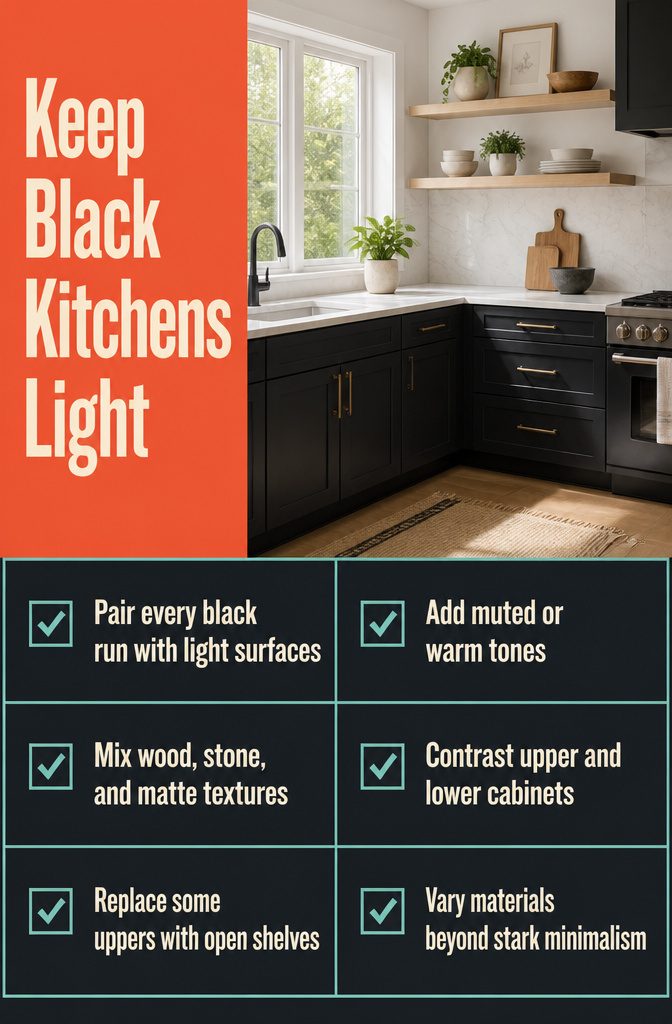
Black cabinets read as dramatic, so the rest of the kitchen has to supply the lightness. These moves do that:
- Put a light surface next to every black run. White reflects daylight, so black cabinets beside a big window don’t dim the room.
- Add softer tones. A muted or warm shade beside black takes the edge off.
- Mix textures. Wood grain, stone and matte finishes give your eye somewhere to rest.
- Use contrasting surfaces for uppers and lowers instead of one black block.
- Swap some upper cabinets for open shelving, which breaks up a solid wall of black.
- Skip the stark, all-minimal look. A few varied materials make black feel layered rather than heavy.
Still in Style and Practical
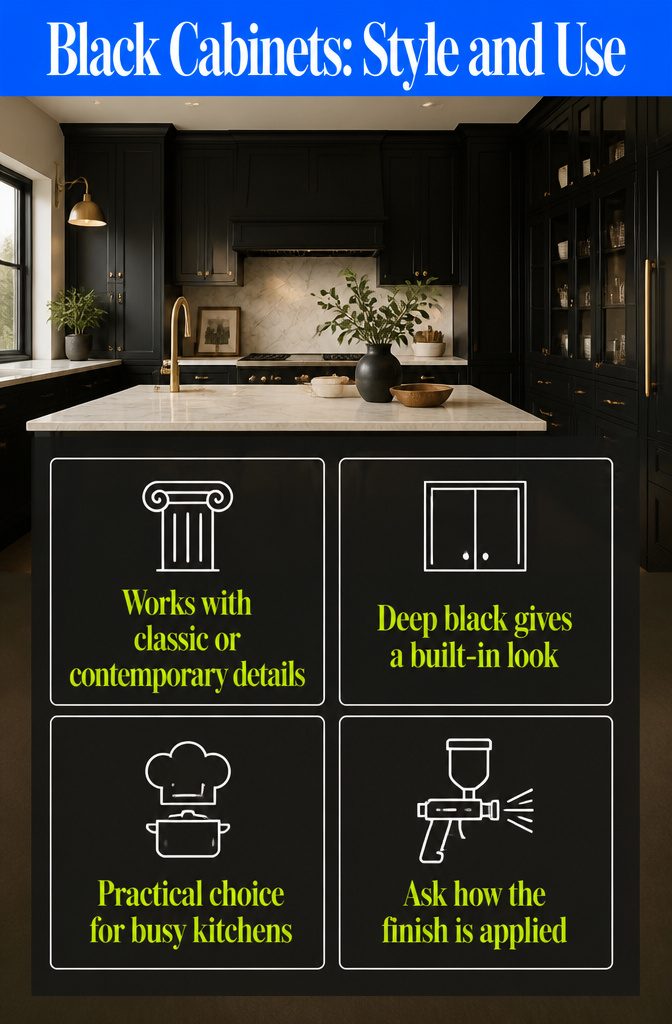
Black cabinets are still in style.
They add drama and sophistication, and a deep black gives the cabinets a custom, built-in look that feels polished yet warm. The color pairs with both contemporary and classic details, so it doesn’t pin a kitchen to one moment.
Black also suits the hardest-working room in the house.
Kitchens see constant traffic and get worn or messy fast, which makes black a practical pick for a busy kitchen as well as a handsome one. The finish matters as much as the color.
Naked Kitchens, for example, sprays its cabinets on a dedicated line meant to deliver a durable, flawless finish. If you’re buying cabinets or hiring a painter, ask how the finish is applied.
Frequently Asked Questions
Are black kitchen cabinets still in style?
Yes.
A deep black gives cabinets a custom, built-in look that feels polished but still warm. It also works with both contemporary and classic details, so it doesn’t tie the kitchen to one era.
What are the downsides of black kitchen cabinets?
Black can make a kitchen feel heavy, and many people find it intimidating to design around.
A long run of one flat black reads as a single dark block. Balance it with white or light counters, warm wood, mixed textures and a few open shelves in place of upper cabinets.
Do black-stained wood cabinets look good?
Yes. Stain lets the grain show through, so you get the depth of black along with the texture and warmth of wood.
Black-stained oak fronts look less formal than flat black paint, which makes them a good choice if you want a dark kitchen that still feels natural.
Are black kitchen cabinets and marble a good combination?
Yes. Marble with bold white veining gives black cabinets strong contrast, and the light stone bounces light around so the room doesn’t feel dense.
If the marble is busy, keep the backsplash plain. Black marble counters suit a moodier kitchen but lose that brightening effect.