
These curtains range from sheer white panels to a full wall of fabric on a ceiling track.
What else in your room is already loud decides which one suits you: a busy rug or patterned sofa rules out florals and bold color, since two strong looks compete.
Hang a fuchsia swatch in the window for a full day first.
1. Curtain Wall for Movie Nights
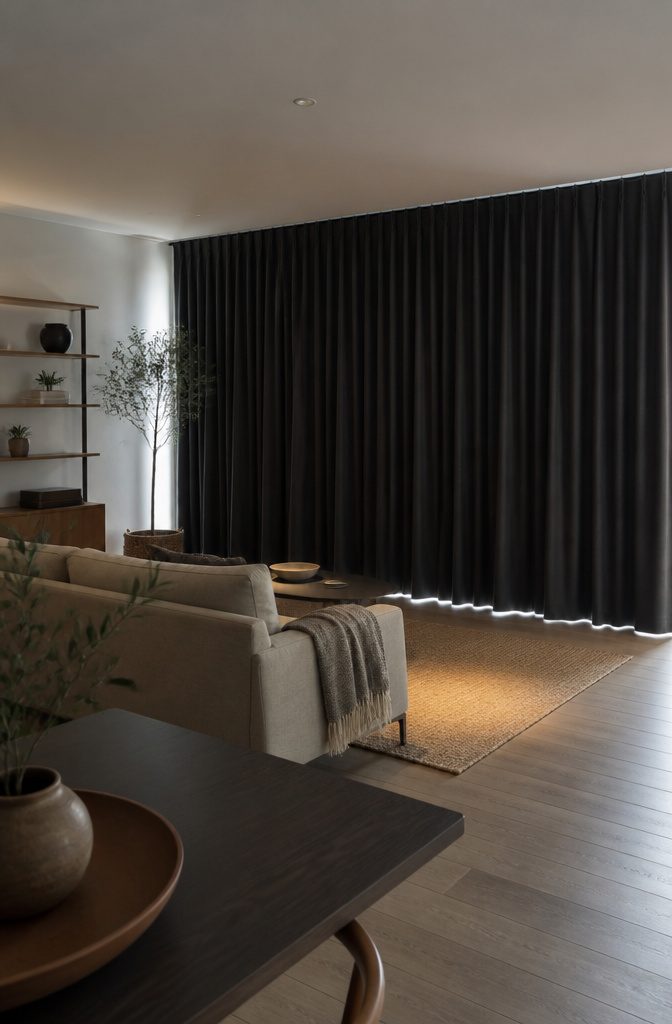
A curtain that covers an entire wall blocks outside light and sound, which is what makes a movie night in the living room feel like a private theater.
Fabric across that much width is heavy and hard to move by hand. A standard rod would have you tugging and bunching the panels every time you open or close them.
Hang the curtain from a ceiling track and the whole wall glides along with one hand. Skip the rod for this look.
If you rent, check your lease before drilling into the ceiling, since a track needs to be screwed in. Leave the curtain closed and the room stays dark enough to watch in the afternoon.
2. Pretty Florals
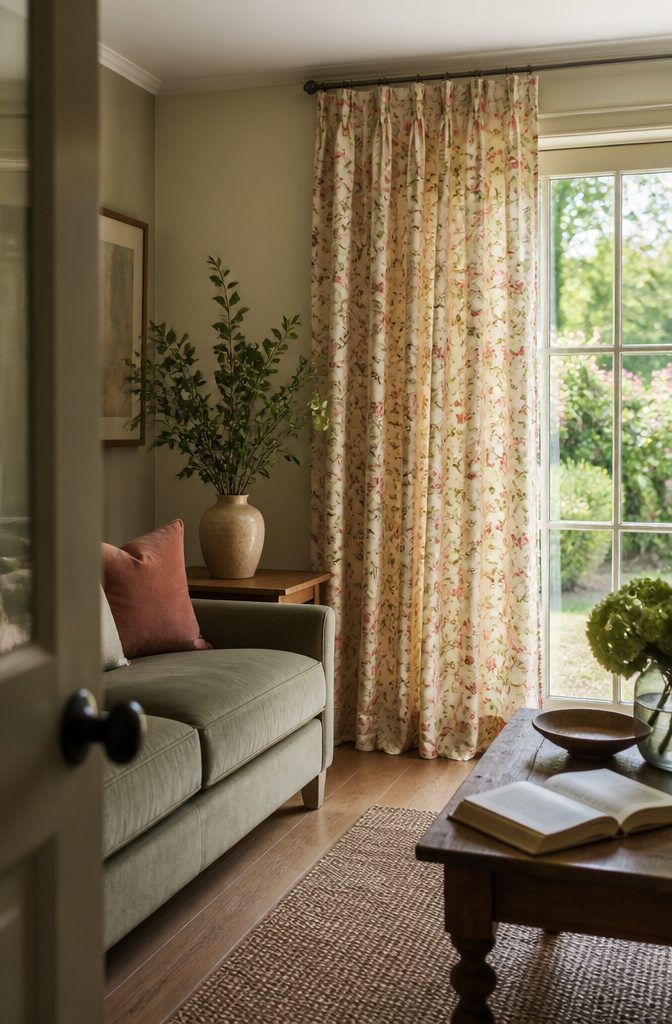
Choose florals printed on a soft neutral ground, like cream, ivory, or pale gray. A gentle neutral background lets the flower colors stand out without turning the curtains into the focal point of the room.
A print with dense, saturated color all the way across does the opposite. It takes over the window wall and competes with everything else you own.
This look suits anyone who wants a softer, more traditional living room without committing to a full cottage style. It pairs best with solid-color sofas, plain walls, and wood or woven textures.
Pull one flower color into a pillow or a vase so the curtains look planned. If your sofa or rug already has a busy pattern, skip florals or choose prints at very different scales.
3. Bold Plaid
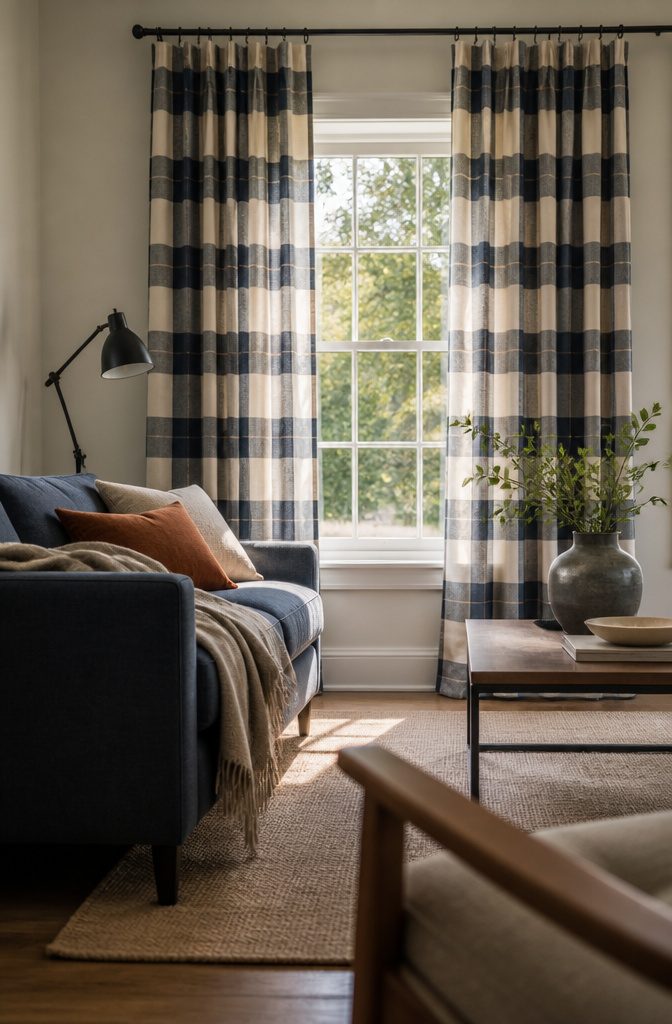
A plaid curtain makes the window the focal point of the room, because crossing lines pull the eye faster than a solid fabric does.
Scale decides the effect. A large check reads as bold from across the room, while a tight plaid blurs into a textured solid.
Plaid works best next to solid furniture.
Pick a plain sofa in one of the plaid’s colors, add a neutral rug, and pull the second color into a throw pillow. Keep plaid to one surface per room, since a second pattern nearby competes with the lines.
In a small living room, choose a plaid on a light background so the panels don’t feel heavy. Hang the rod high and let the panels fall straight so the stripes stay vertical.
4. Lovely Lace
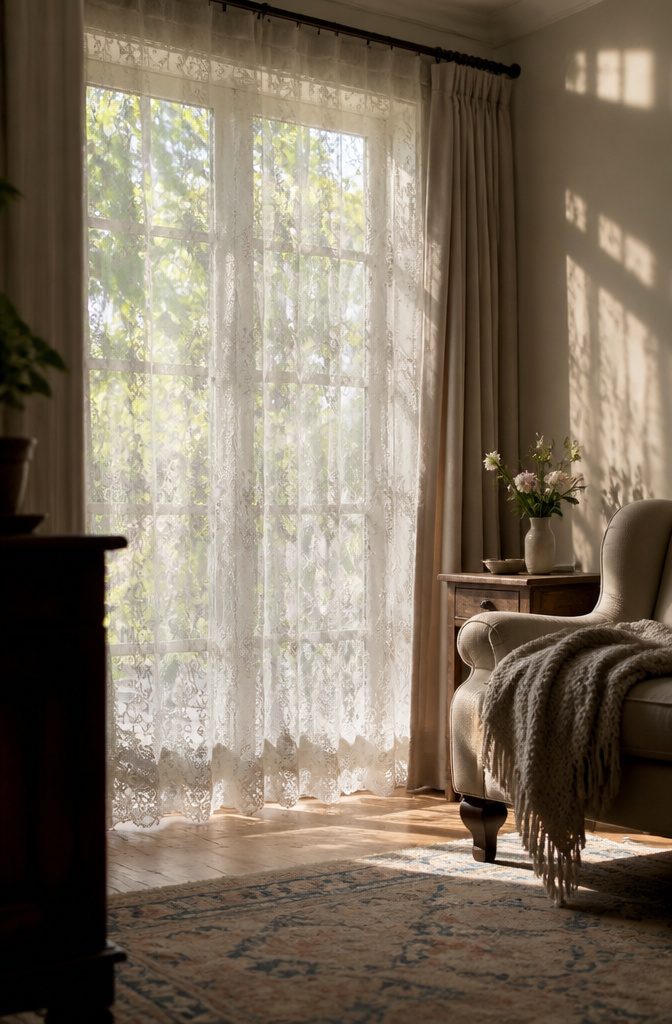
Lace is openwork, so the pattern comes from small gaps as much as from thread: florals, scrollwork, scalloped edges, or a fine geometric grid.
Daylight passes through those gaps and spreads out, which gives the room an even, soft glow and faint patterned shadows on the floor and walls instead of hard glare.
That diffused light is why lace feels gentle and a little old-fashioned, and why it suits traditional furniture or a cottage look.
Lace screens the view by day but not after dark, once lamps are on.
On a street-facing window, layer lace over a solid curtain or blind you can close at night. On its own, lace works best where the view is a garden or side yard.
5. Two-Toned
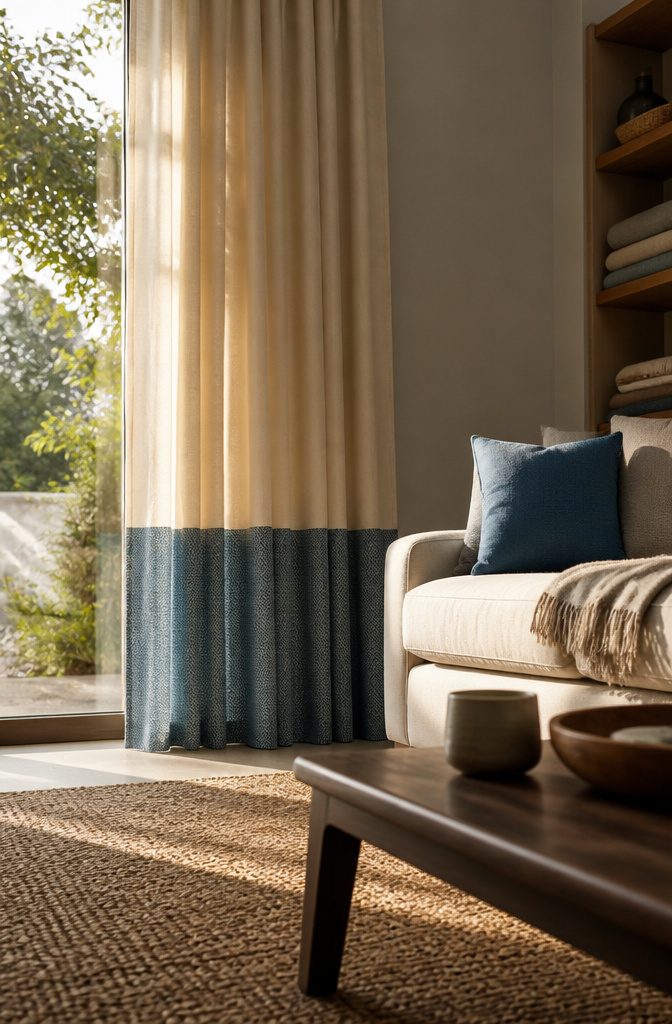
A two-toned curtain pairs two contrasting colors or fabrics in one panel.
A solid top with a patterned band at the hem is one version, and a sheer layer over a heavier panel is another. The contrast does the decorating, so the rest of the room can stay quiet.
This works best in a living room with plain walls and a neutral sofa, where the window is the only spot for color.
Pull one shade from a pillow or rug and pair it with a neutral like gray or cream. Keep one tone bold and the other calm, because two loud colors compete across a wide window.
Renters can get the look by sewing a contrasting band onto ready-made panels.
6. Mixing Colors
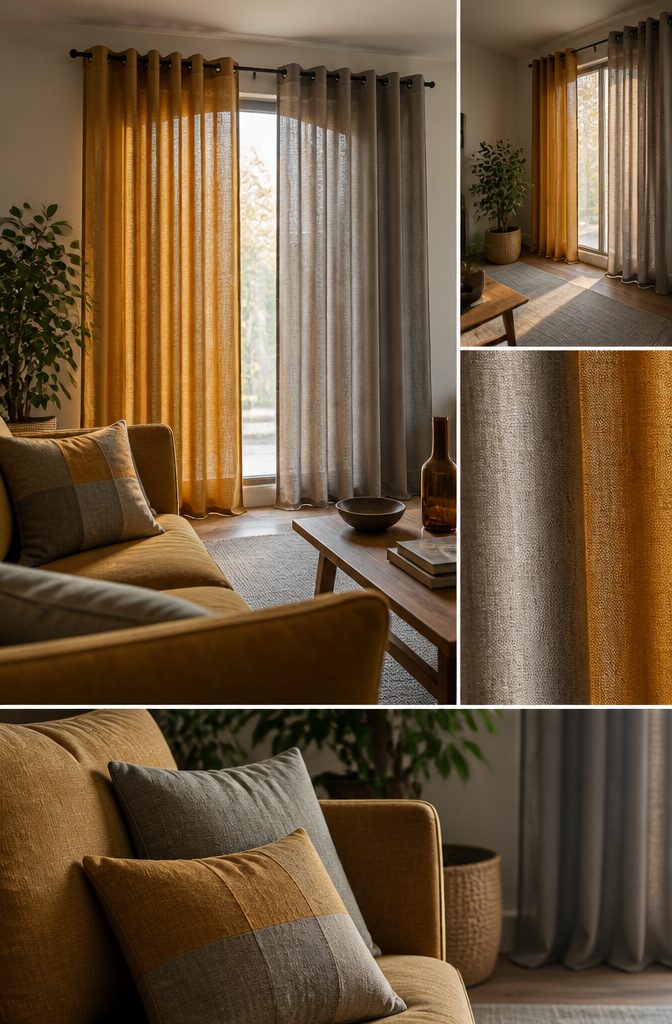
Anchor the mix with one color the room already has, like the sofa, a rug or an accent wall, and repeat it in at least one panel.
Pair one bold curtain color with a quieter neutral so a single panel does the talking, since two loud colors side by side compete for the eye.
Across a window group, keep the same fabric weight and the same rod finish.
Matching texture and hardware make different colors look planned instead of accidental. Then repeat the curtain colors once elsewhere, in a pillow or a throw, so the palette carries across the room.
7. Bright Fuchsia
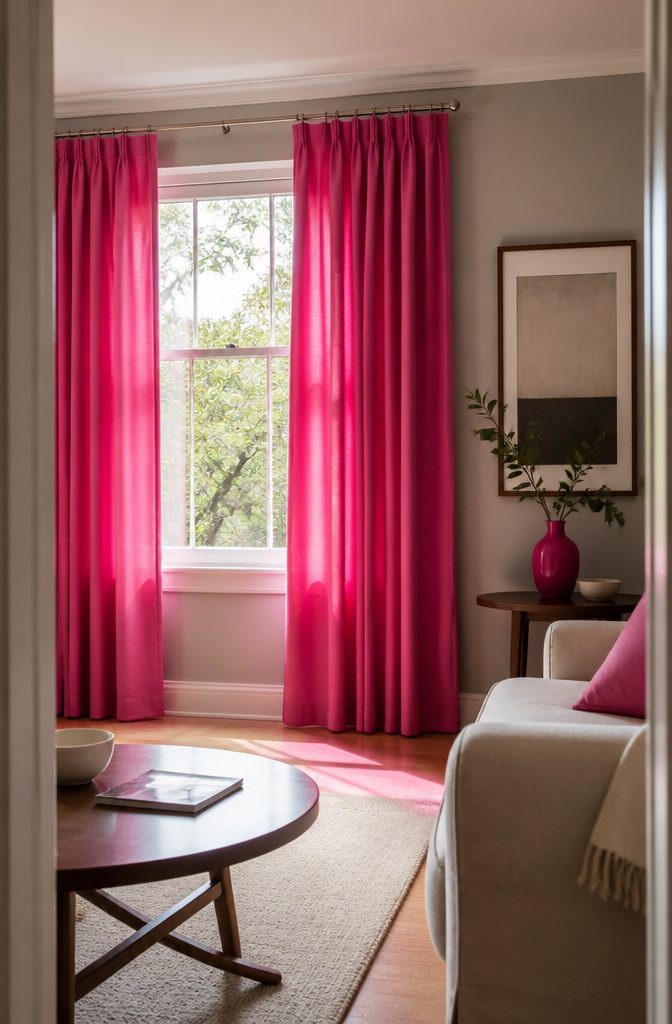
Fuchsia curtains work as the one loud thing in the room, so keep everything else around them neutral.
White, cream or soft gray walls and a plain sofa let the color read as a choice. Repeat the pink once more in a pillow, a vase or a small rug stripe so the curtains look planned and not accidental.
Pick a solid fabric. A pattern layered over this much color gets noisy fast.
The risk is real. A saturated pink fills a room and can wear on you after a few months, and afternoon sun will throw a pink tint across the floor and walls.
Hang a fabric swatch in the window for a full day before you buy, and think about whether you’d still like it in winter light.
8. Brilliant Turquoise
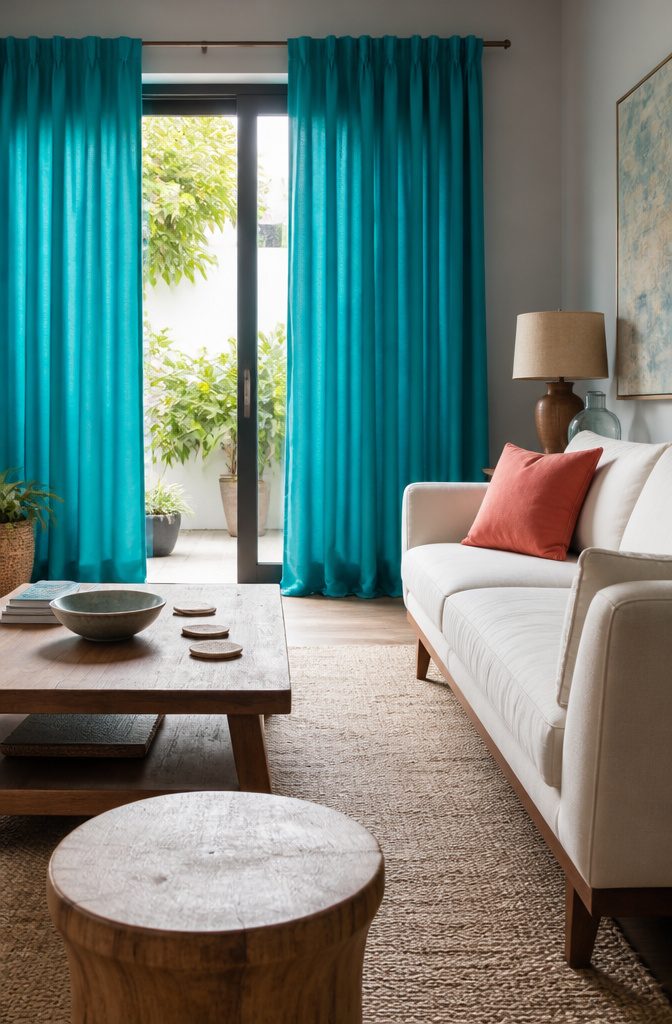
Turquoise sits between blue and green, and at full saturation it reads as a cool, loud color. That makes it an accent, so it suits a living room where the sofa and walls are quiet.
White, cream, and light gray walls let it stand out without crowding the space. Natural wood, tan, and camel add warmth against the chill, and a coral or orange pillow gives the pairing a sharper edge.
Keep the rest of the palette neutral and the panels become the focal point. Skip turquoise if the room already has a bold rug or a patterned sofa, because two strong colors will compete.
9. Delicate Blush
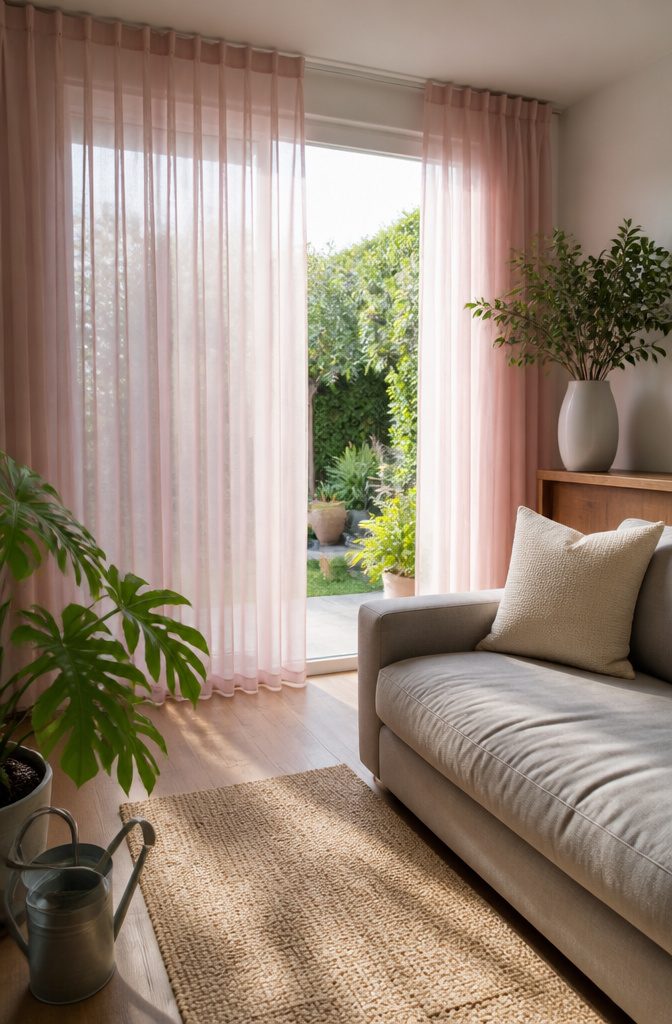
Soft blush reads as a neutral with a pulse. It warms a living room the way cream does, but a faint pink undertone keeps white walls and gray sofas from looking flat.
Pick a sheer or lightweight weave so daylight passes through and tints the room a gentle rose. Heavy blush fabric goes dusty and dull.
Keep the rest of the palette quiet. Blush works beside white, warm wood, and soft gray, and it turns sugary next to other pinks.
Mount the rod close to the ceiling so the pale panels stretch the wall and the room feels lighter. Hold a swatch at the window first, since blush can lean peach in warm light.
10. Bright White
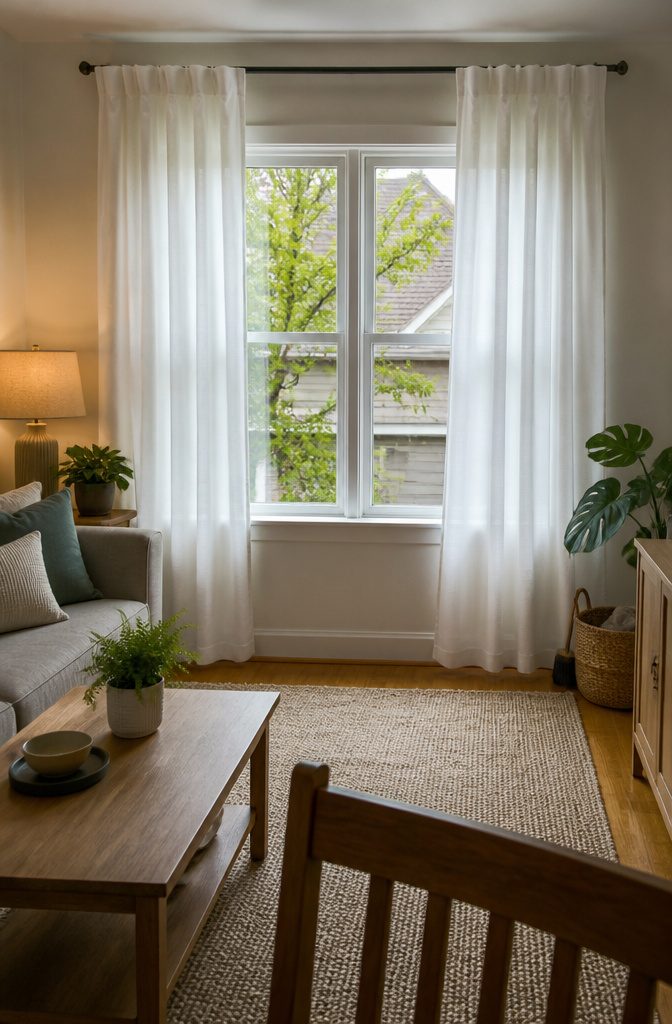
White curtains bounce daylight back into the room, so a small or north-facing living room looks larger and brighter right away.
Sheer white lets in the most light. A lined white panel cuts glare and keeps the room private after dark, which matters if your window faces the street.
The cost is upkeep. White shows dust, pet hair, and cooking haze faster than any other color, and the hem darkens where it brushes the floor.
Choose a fabric you can machine wash, such as cotton or a polyester blend, and skip dry-clean-only linen if you have kids or a dog. Hanging the panels so they stop just above the floor keeps the hems cleaner.
11. Classy Cream and Black
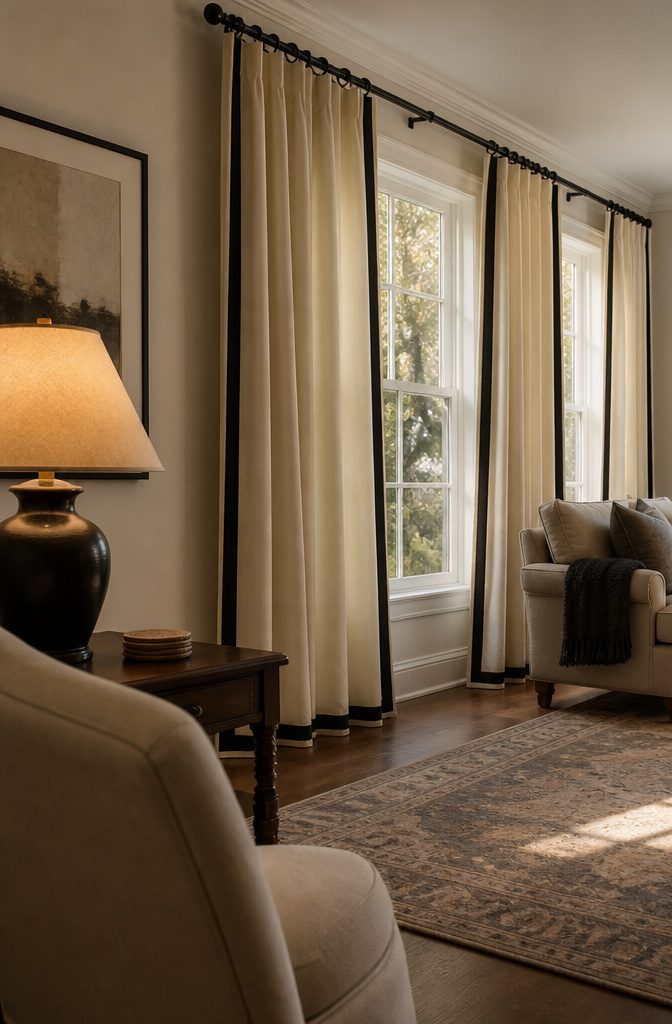
Cream panels with black trim read as formal because the contrast draws a clean outline around the window.
A black border down the leading edge, or a wide black band at the hem, frames the cream the way a mat frames a print.
Cream is softer than pure white, so the black stays crisp without making the room feel stark.
Keep black to the trim and let cream carry the panel. Solid black across the whole curtain makes a living room feel smaller and shows every bit of lint and dust.
A black rod and finials echo the trim, and they tie the window to other black accents like a picture frame or lamp base. This pairing suits traditional rooms best, and it can feel stiff in a casual, cluttered space.
12. Monochromatic Curtains
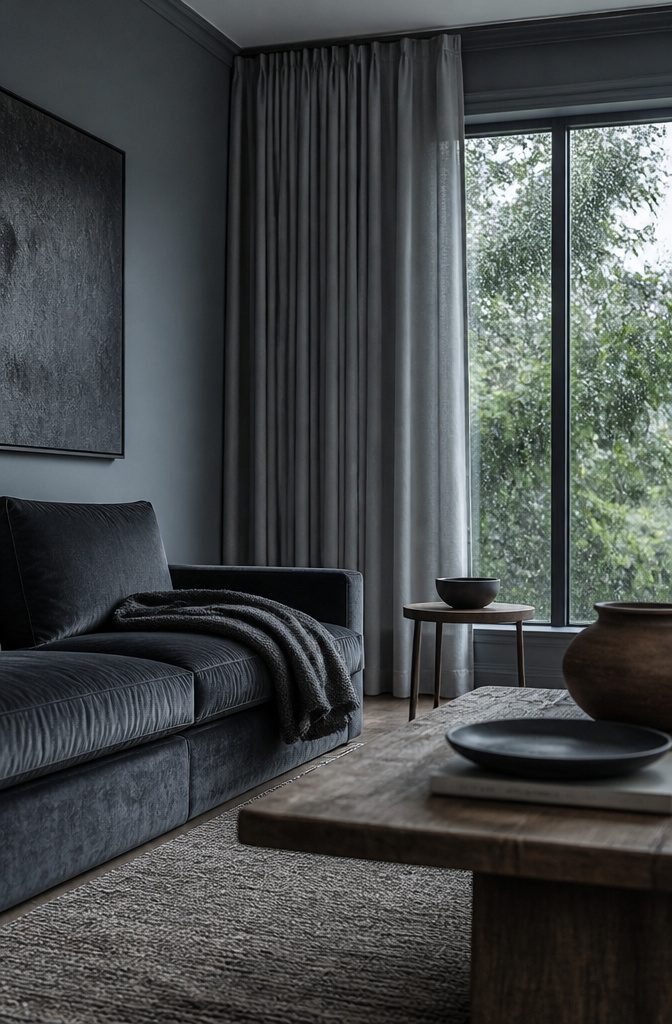
Curtains in a shade close to the walls keep the eye from stopping at the window, so the room reads as one calm surface instead of a wall with a hole in it.
You can match the sofa or rug instead of the wall. Choose a color one step lighter or darker than the target rather than an exact match, because a perfect match can look like a mistake.
Vary the texture to keep the look from going flat: linen against smooth paint, or a nubby cotton beside a velvet sofa.
For height, mount the rod close to the ceiling and let the panels reach the floor. This works best in small or dim rooms, and it can feel dull where the walls are already plain.
13. Dramatic Drapery
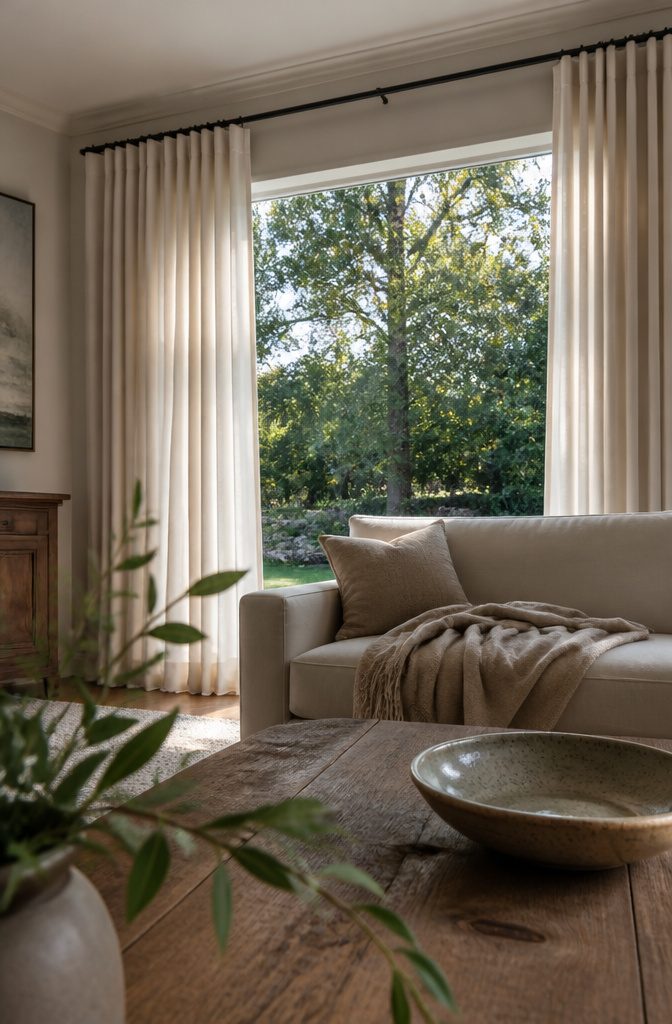
Dramatic drapery comes down to length and fullness.
Panels that fall to the floor in deep, even folds make the window the focal point of the living room, and a soft ivory linen can do it with no trim or fringe.
Hang the rod up near the ceiling instead of just above the frame, and the window reads taller.
Set every rod in the room at the same height, matched to the tallest window, and buy the same panel length for each so the hems form one line along the floor.
Then stack the open panels so they cover only the wall beside the window or an inch or two of glass. That keeps the light and lets the folds hang straight.
14. Exaggerated Elegance
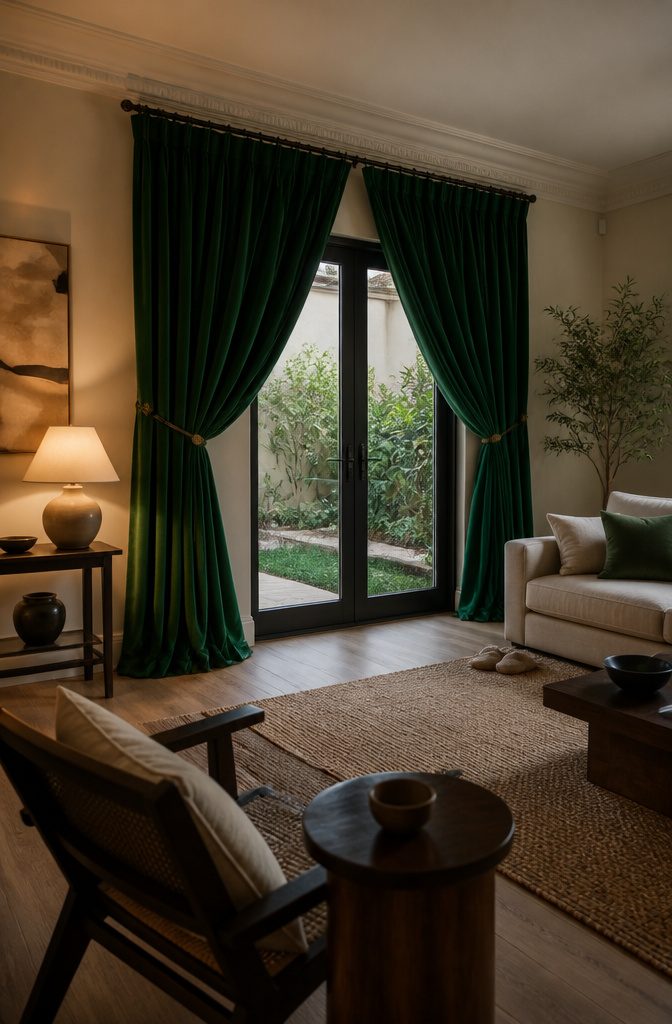
Volume does the work here.
Pick a bright color and buy generously, so the panels fall in full folds instead of hanging flat. Anything skimpy reads as a mistake, not a statement.
Where you put the tie-back depends on the opening: side tie-backs for glass doors, center tie-backs for windows.
Large sweeping panels pulled to the sides frame a doorway like a stage entrance. A tie-back at the center of each panel pinches the fabric and draws attention to the window itself.
Smaller windows can’t carry that much fabric, so layer two panels instead.
Tie one back and let the other hang, or drape them differently, until the proportions suit the room. Keep the rest of the decor quiet, since the curtains are the focal point.
15. Statement Windows
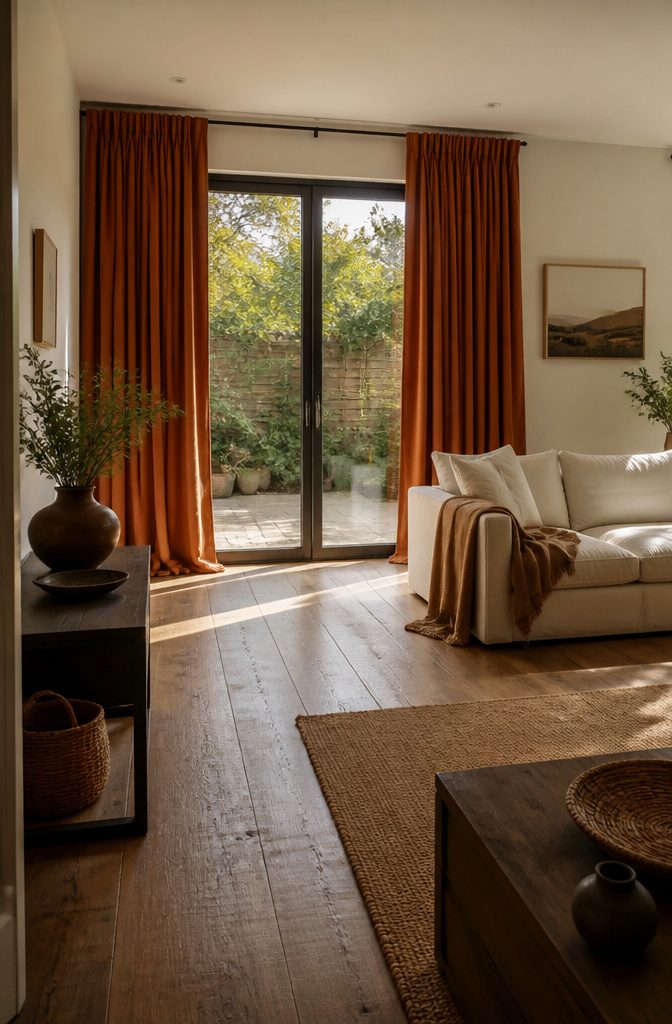
A large window or glass doorway already pulls the eye, so the curtains should finish the job instead of hiding it.
Choose a bright color and buy generously: lots of fabric in a saturated shade looks theatrical, while a thin, sparse pair looks like an afterthought.
Keep the sofa and wall art quieter so the window is the loudest thing in the room.
Smaller windows can take the spotlight too.
Hang two layered panels and the window gets depth it lacks on its own. Layering costs more than a single pair, so on a tight budget spend it on the one window people see first when they walk in.
Frequently Asked Questions
How do I choose curtain designs for a living room that already has a patterned sofa or rug?
Go with a solid color, or keep the curtains as the only patterned surface.
If you still want florals, choose a print at a very different scale from the pattern on the sofa or rug. Plaid and bold turquoise also compete with other strong patterns or colors nearby, so limit each room to one.
How high should I hang living room curtains?
Mount the rod close to the ceiling instead of just above the window frame.
That makes the window look taller and the room lighter. If the room has several windows, set every rod at the same height, matched to the tallest window, and buy the same panel length for each.
What curtains give privacy in a living room that faces the street?
Layer lace over a solid curtain or a blind you can close at night.
Lace screens the view by day, but it shows through once the lamps are on. A lined white panel is another option, since it cuts glare and keeps the room private after dark.
What is the best curtain setup for a living room movie night?
Hang a curtain that covers the whole wall from a ceiling track, not a rod.
The track lets the heavy fabric glide with one hand, and the closed curtain blocks outside light and sound. If you rent, check your lease first, because the track has to be screwed into the ceiling.
What should I pair with bold curtains like fuchsia or turquoise?
Keep everything else neutral: white, cream, or soft gray walls and a plain sofa.
Repeat the curtain color once in a pillow, vase, or small rug stripe so it looks planned. For fuchsia, hang a fabric swatch in the window for a full day before buying.
Are white living room curtains hard to keep clean?
They show dust, pet hair, and cooking haze faster than other colors, and the hems darken where they touch the floor.
Choose a machine-washable fabric such as cotton or a polyester blend. Skip dry-clean-only linen if you have kids or a dog.