
Cabinet prices run from $80 per linear foot for stock to $500 for custom, and the shape of your kitchen decides which you need.
Skip custom unless the layout is odd. Style comes mostly from finish and hardware: a Shaker door reads as farmhouse in white and industrial in matte black.
1. Shaker Cabinets
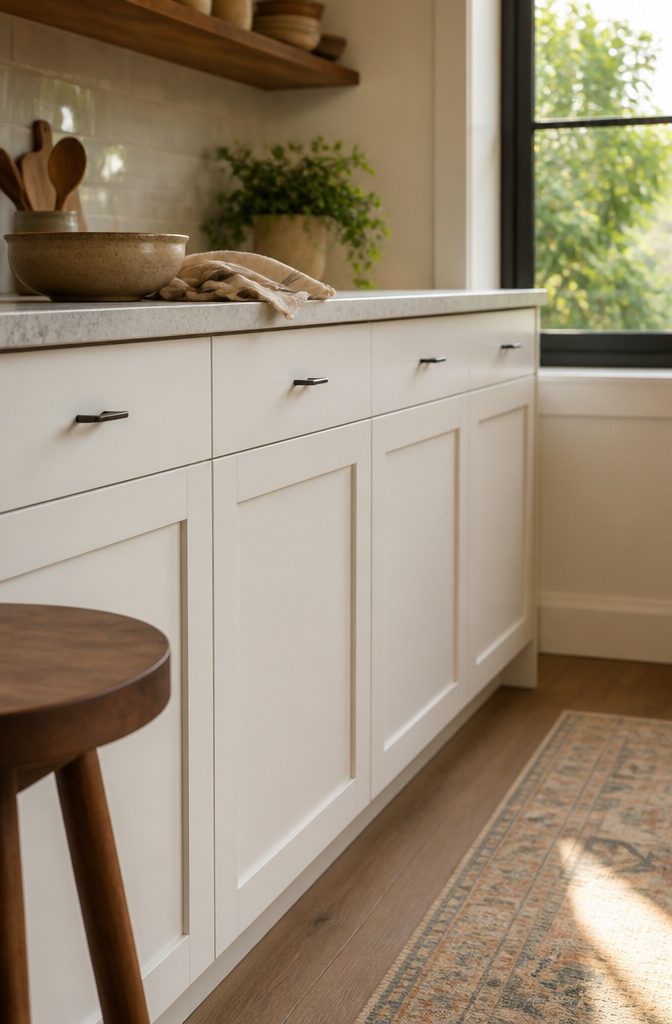
A Shaker door is a flat, square-framed door with a recessed center panel.
It is the most popular cabinet style because the plain profile works with nearly any hardware and suits both traditional and modern kitchens. It is also usually in stock and reasonably priced.
A door with no detail takes on the look of everything around it. Finish and hardware do the styling: the same door reads as farmhouse in white, industrial in matte black, or bohemian in dark green.
In a small kitchen, slim Shaker doors with thinner rails and stiles show more flat panel and look quieter.
2. Slab Cabinets
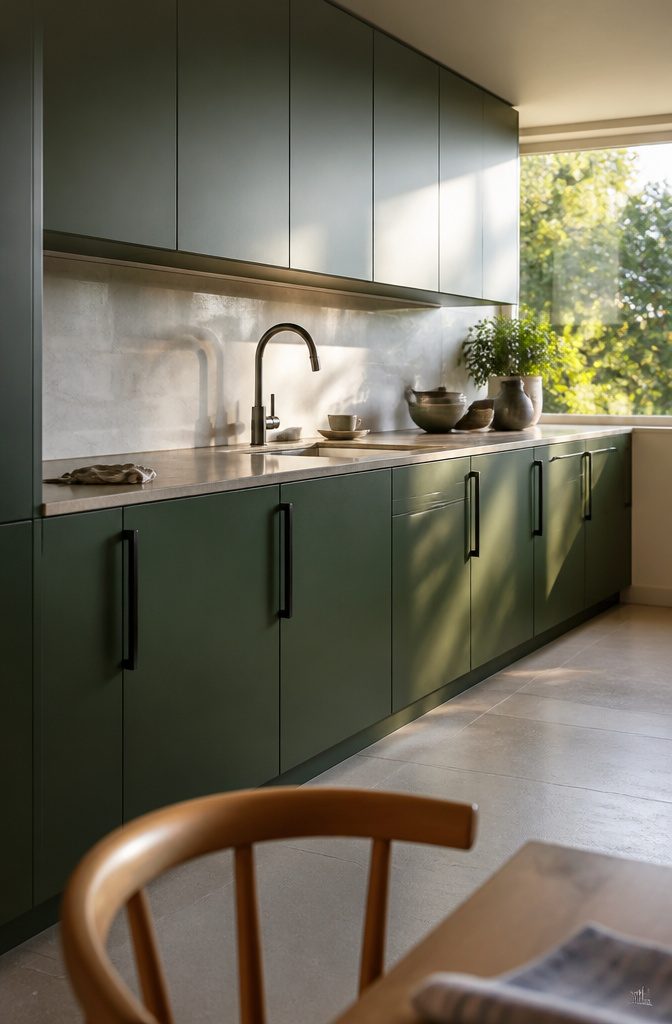
Slab doors are a single flat slab with no frame and no raised panel.
That makes them one of the lowest-priced cabinet styles, and a cloth crosses the face in one pass with no grooves to clean around. They suit contemporary and minimalist kitchens, and they pair well with open-concept layouts.
With no detail to hide behind, the door is only as good as its surface. Choose a color you love or a wood grain worth looking at, whether that’s a bold paint, a stain, or an exotic veneer.
High-gloss looks sleek but picks up fingerprints, so add hand pulls to keep your hands off the finish. Oversized handles give plain doors some depth, while touch-latch or integrated pulls keep the look fully minimal.
3. Color and Finish Choices
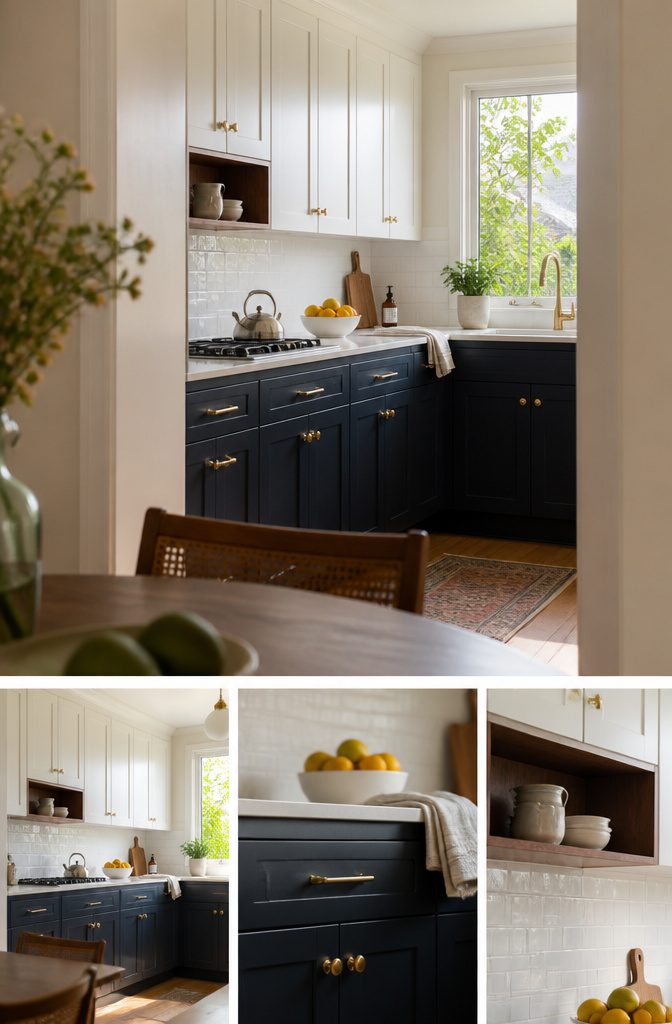
White is still the top painted choice, with gray second, and it keeps a small kitchen airy. In a small kitchen, go white, or two-tone with white uppers, and put navy, forest green, or charcoal on the lowers.
The dark base adds weight while the top stays light. Big kitchens can carry navy throughout, or black and dark gray for a sleek look.
Navy pairs well with white quartz and brass hardware. Walnut base cabinets under light gray uppers bring in natural wood warmth.
Glossy fronts look sleek and wipe clean, but they show fingerprints; hand pulls keep your hands off the surface. Low-VOC paints and stains cut emissions and come in matte, satin, and gloss.
4. Glass-Front and Open Cabinets
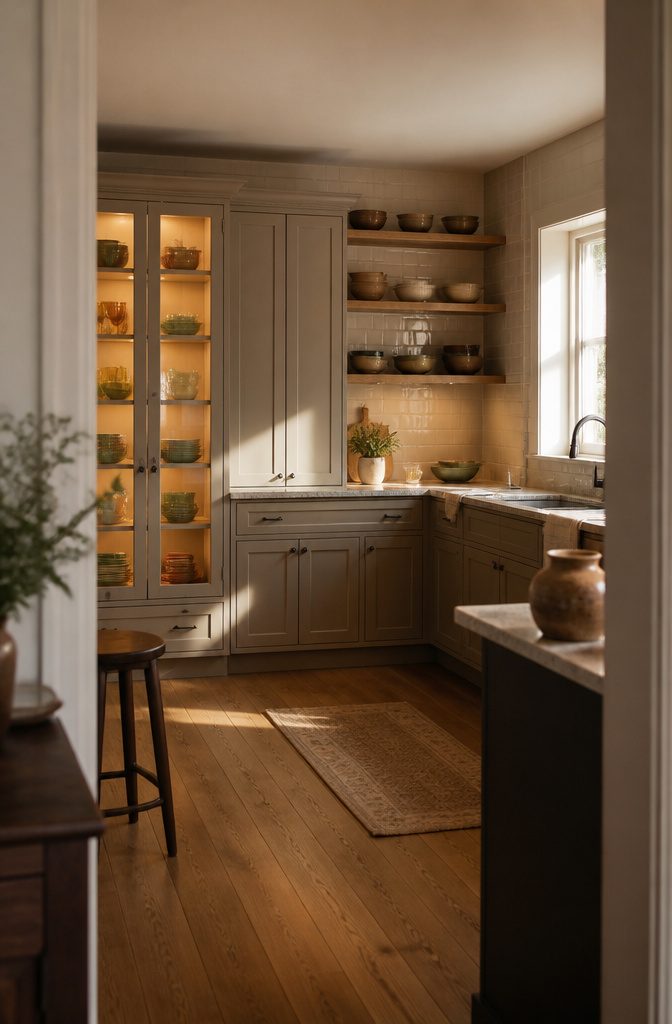
Glass-front doors suit dishes you want to see but keep free of dust. Limit them to one wall cabinet or one tall cabinet, and let shaker, raised, or inset doors cover the rest.
LED lighting inside works well for colorful ceramics and vintage glassware. Glass is more delicate and harder to clean than solid doors.
Open shelves carry more risk. Replace upper cabinets only in select areas, and stock the shelves with attractive items you use often.
Less attractive necessities stay behind closed doors. Match the material to the room: wood for warmth, metal for an industrial look, glass for a contemporary one.
Line shelves up with neighboring cabinet height and space them evenly. Skip fragile or valuable pieces, which can get knocked off, and expect to wipe dust more often.
5. Raised-Panel and Inset Doors
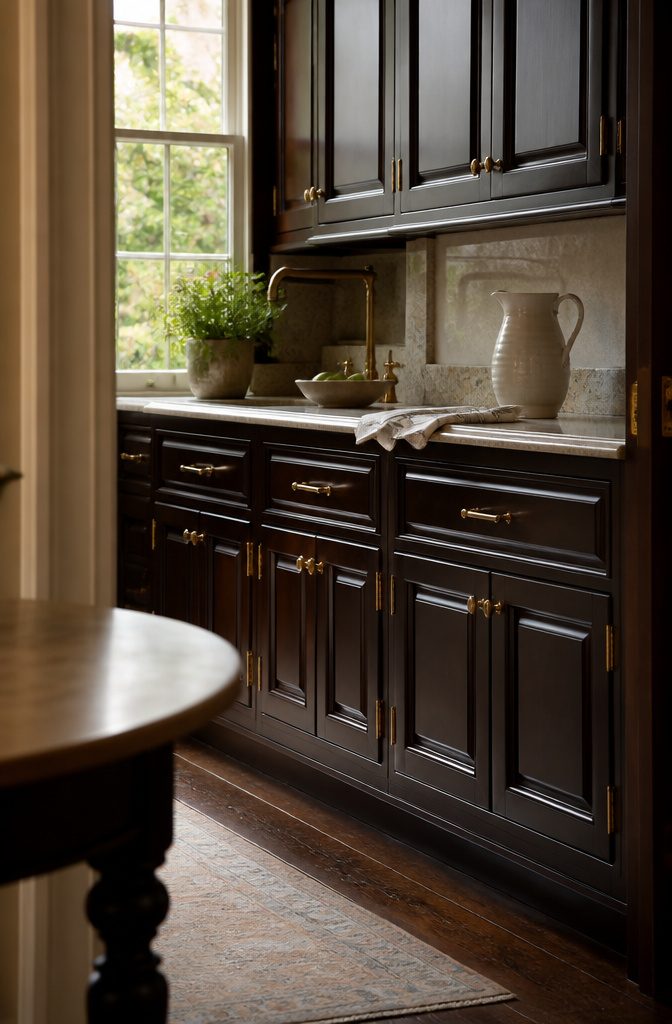
Raised-panel doors have a center panel that sits slightly proud of the frame around it, which gives the door a decorative, three-dimensional look.
They work in any wood or color. Dark espresso with light granite reads cozy and traditional, while two-tone white and blue leans coastal.
Inset doors sit flush inside the face frame for a smooth, crafted look.
Both styles suit older homes and traditional kitchens. Inset is more exacting to build and install, so it usually costs more, and a small error leaves a messy finish.
The hinges stay visible between door and frame, so pick ones you like and match their metal to your pulls. Beaded inset doors add an outline that hides the hinges.
6. Distressed Cottage Cabinets
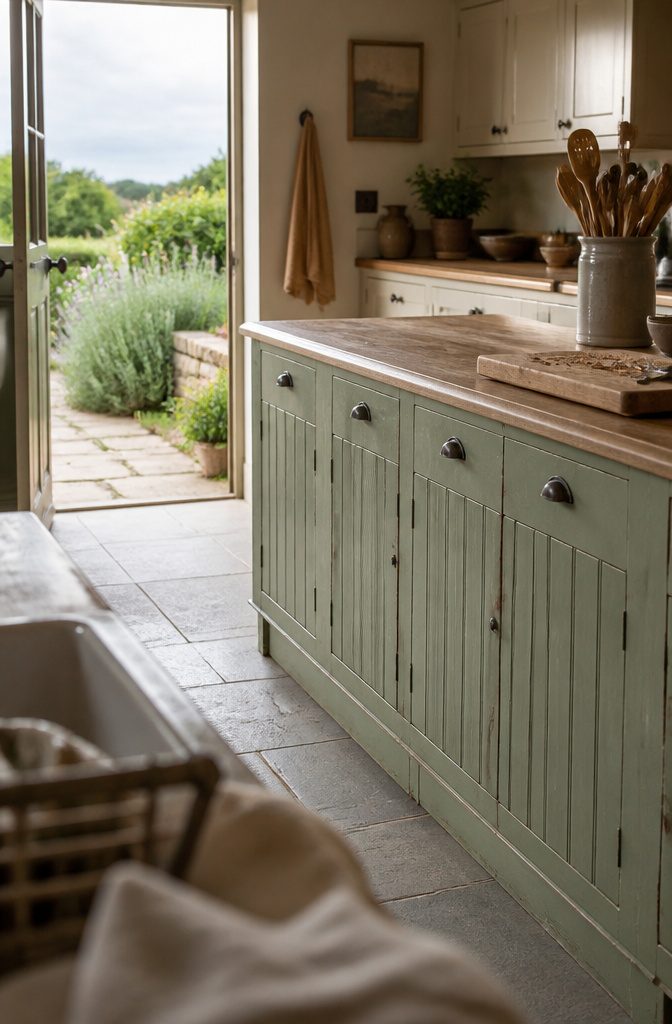
Distressed paint suits a kitchen that gets heavy use, because a scuff or ding disappears into a finish that was sanded down in places on purpose.
The easy route is to paint your existing cabinets, then sand through the paint along edges and corners.
Buying distressed wood for a custom set also works, but a distressed material is hard to refinish if you tire of the look, so paint is the safer bet.
For a cottage feel, use sage green, robin’s egg blue, or cream white.
Beadboard fronts and vintage-style hardware finish it. Beadboard’s vertical slats can feel busy in a minimal kitchen, so try it on the island alone.
7. Floating Cabinets
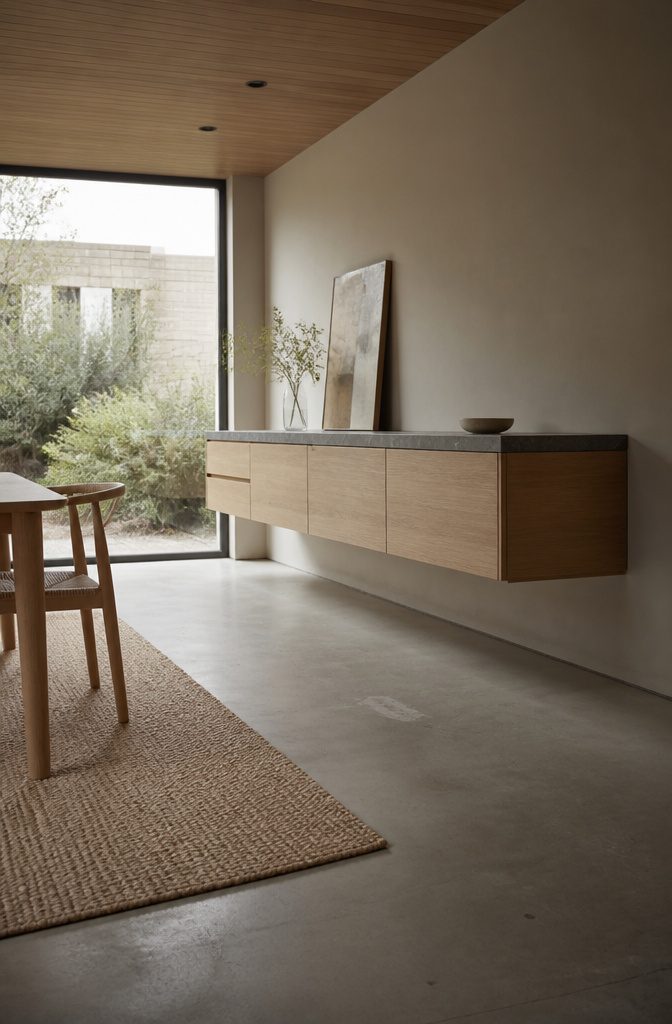
Floating cabinets hang from the wall with no toe kick below them, so the floor runs visibly underneath and the box looks like it’s hovering.
They show up more often in bathrooms, but they work in a kitchen too, and they suit modern spaces best.
Because the wall carries the whole cabinet, you can set the height wherever you need it. That makes them a good choice for a household that uses a walker or wheelchair, where standard heights don’t work.
You give up the shallow storage some base cabinets hide in the toe kick.
The wall behind a floating cabinet has to be solid enough to carry the box plus everything you load into it. If you can’t anchor into the framing, skip this style.
8. Floor-to-Ceiling Cabinets
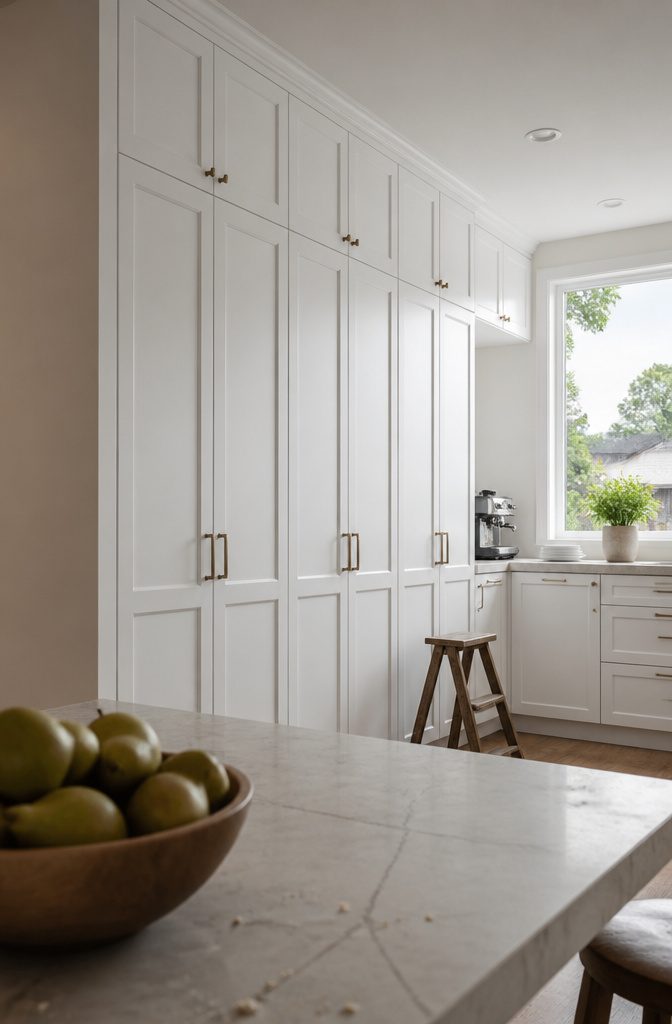
Running upper cabinets all the way to the ceiling closes the gap on top, where dust and grease settle.
You get clean, unbroken lines and a built-in look. It works especially well under a standard 8-foot ceiling, because the tall run of doors pulls the eye up and makes the room look taller.
It works in any cabinet style, and the extra height holds dishes, pantry items, and small appliances.
Reach suffers: the top shelves sit well past arm’s length and need a step stool or ladder. Keep the top shelves for things you use rarely, like holiday platters or a backup slow cooker.
You will need a step stool for those shelves and for cleaning the upper cabinets, so store it where you can grab it easily.
9. Textured and Louvered Fronts
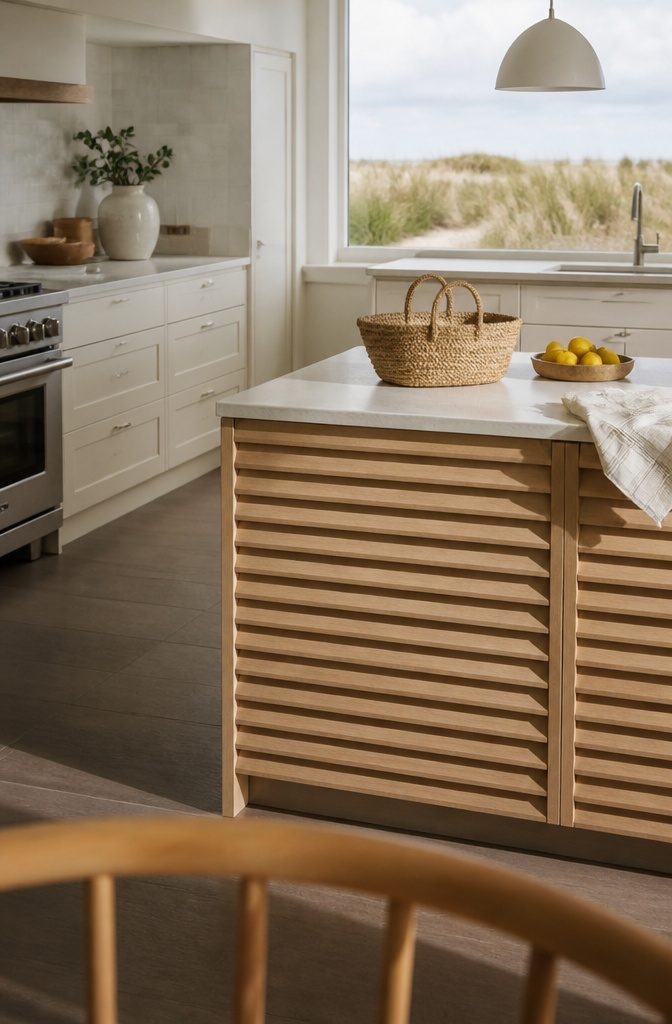
Fluting, reeding, cane and beadboard add depth to a plain door, and they work best in one place rather than on every cabinet. A single run or an island is enough.
Fluted wood panels make clean linear patterns, cane webbing inserts bring a woven, natural texture, and beadboard’s vertical slats suit cottage or rustic kitchens. Even a minimalist kitchen can take a beadboard island as a subtle twist.
Louvered fronts, built from layered horizontal slats, look airy and give the illusion of more space.
They suit bohemian, Asian zen and coastal kitchens, and they can cover base, upper or tall cabinets. Grooves and slats are harder to clean than a flat door, so skip them beside the stove, where grease collects.
10. Plywood and Mixed Materials
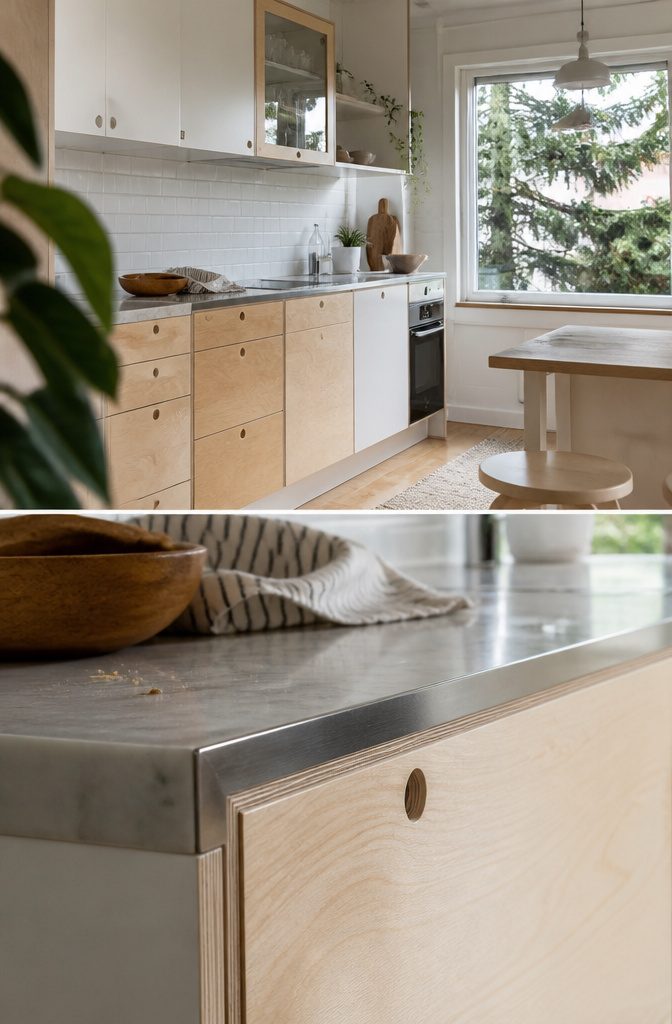
Plywood doors with a clear finish show off the grain and protect the panel. Plywood is also an inexpensive choice, so it suits a budget remodel.
It looks best in minimalist, bohemian, and Scandinavian kitchens, especially beside white subway tile or marble countertops. If you want a responsible-forestry option, look for FSC-certified plywood.
For contrast, pair painted doors with natural wood drawer fronts, or put glass-front uppers over solid base cabinets. A metal accent can add a third layer.
Limit the mix to 2 or 3 materials, or the kitchen starts to look busy. Reclaimed wood, bamboo, and recycled-content metal each add character while cutting environmental impact.
11. Hardware and Hidden Pulls
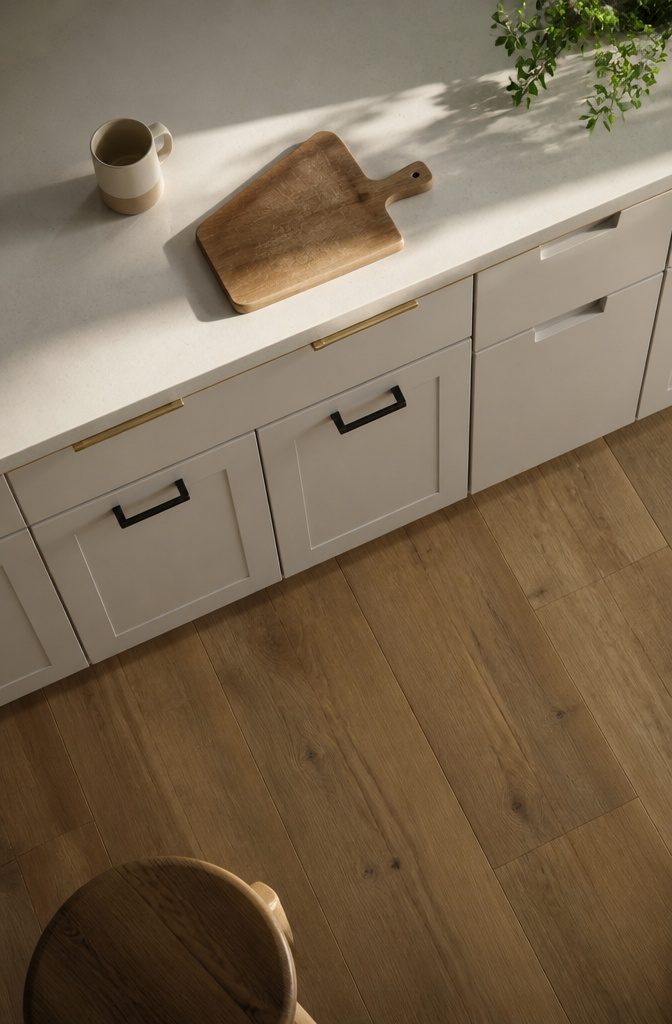
Hardware either stands out against a plain door or disappears into it.
- Black metal pulls on light cabinets give a modern contrast.
- Brass adds warmth and a dressier look.
- Bar pulls set on the bottom edge of upper doors are easier to reach than knobs in the center of the door, so skip center knobs up high.
- Hidden or integrated pulls give the sleekest front and are the most popular choice right now. They pair well with flat panel doors in a minimalist kitchen.
- Wide cut-outs replace hardware altogether. They keep the front completely clean and are easy to grip, which also helps if you plan to stay in the house as you age.
Shaker doors take any of these, so you can change your mind later without redoing the look.
12. Built-In Storage Features
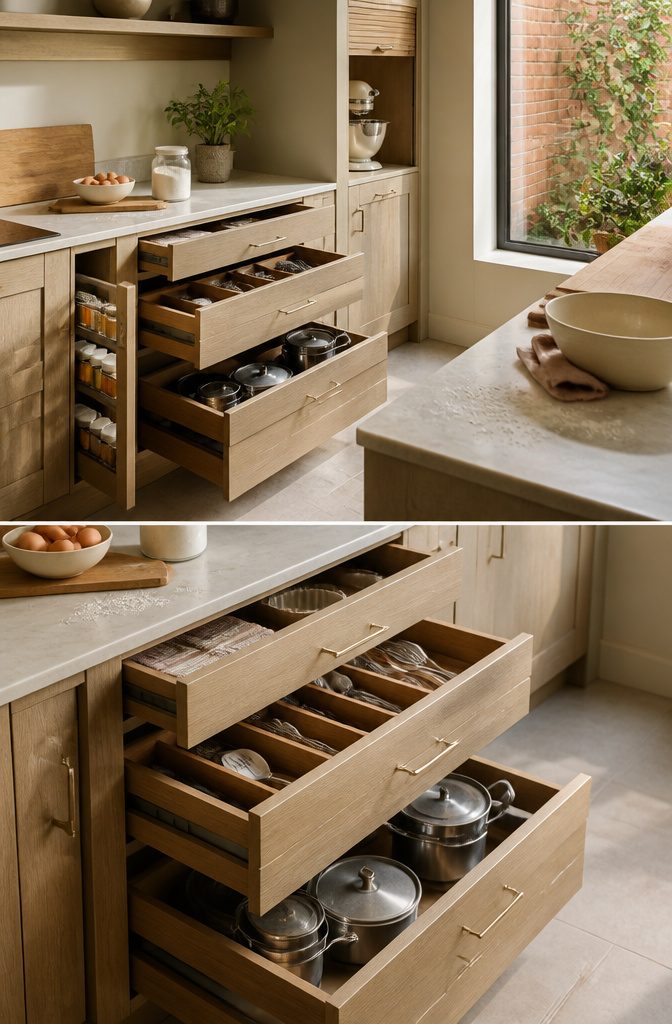
Storage features earn their cost when they fix one daily annoyance.
- Drawer dividers and deep drawers: Dividers keep utensils sorted, and deep drawers hold pots and pans better than shelves. Start here if your budget is small.
- Lazy Susan: It makes a blind corner cabinet reachable.
- Pull-out spice racks and toe-kick drawers: Both use space that otherwise sits idle.
- Appliance garage: A roll-up door or tilt-out tray hides a stand mixer. It costs more, so add it last.
Low-rise drawers on the counter are the least obvious option:
A mere four extra inches of height keeps essentials like hot pads, trivets, spoon rests, and tea towels where the action is without blocking views over the island.
— Sunset
That keeps your daily-use items within reach of the stove.
13. Cabinet Lighting
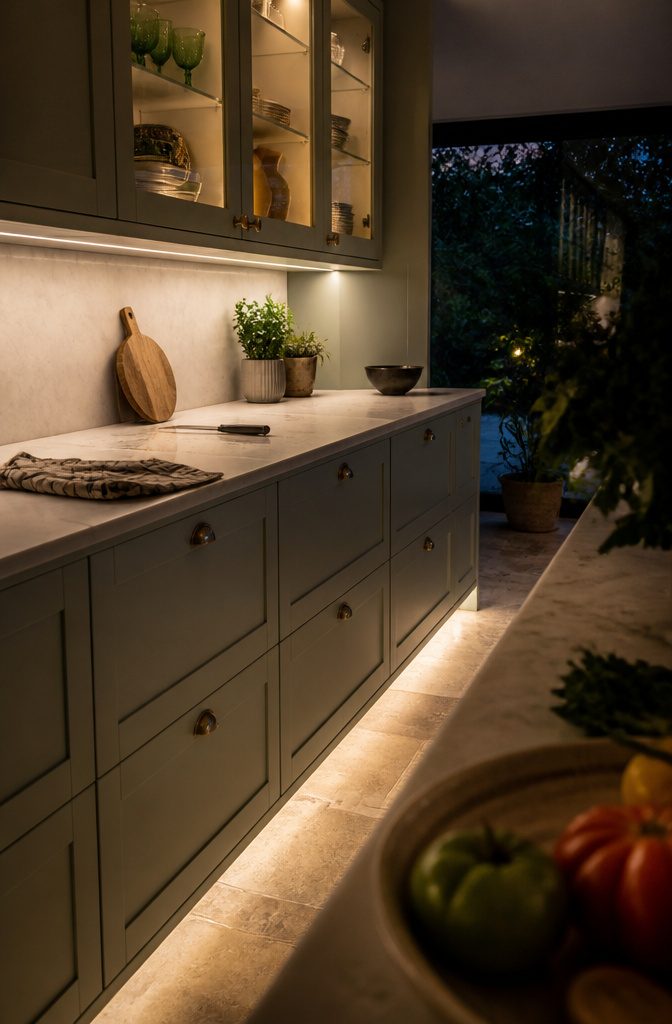
Under-cabinet LED strips are the first lights to add. They put light directly on the counter where you chop and read recipes, and they give the rest of the kitchen a gentle ambient glow.
LED is also the energy-efficient choice, which counts toward a more sustainable kitchen, so use it in all three spots.
Interior lighting earns its place in glass-front cabinets.
It lights up colorful ceramics and vintage glassware and makes items easier to find. Behind solid doors, it matters much less.
Toe-kick lighting comes last.
It makes base cabinets look like they float and leaves a dim path across the floor for a late-night glass of water. Treat it as a bonus once the counter is well lit.
Stock, Semi-Stock, and Custom Cabinets
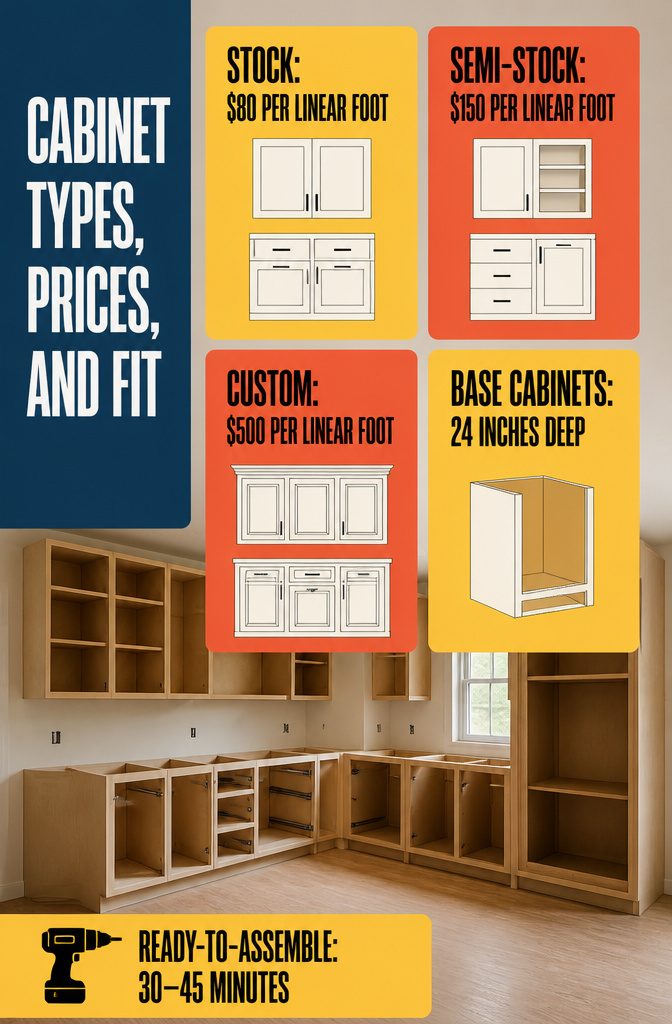
Stock cabinets start at $80 per linear foot, the best fit for a weekend budget. Skip custom unless your layout is odd.
| Type | Starting price | Sizing |
|---|---|---|
| Stock | $80/linear foot | Standard sizes |
| Semi-stock | $150/linear foot | Standard boxes; drawers, doors, depth tailored |
| Custom | $500/linear foot | Built to your space |
Every kitchen mixes four unit types. Wall cabinets run 12–24 inches deep.
Base cabinets are 24 inches deep and 34.5 inches tall. Tall cabinets, usually pantries, stand 84–96 inches.
Specialty units cover corners, bottle racks, and appliance garages. A novice’s first ready-to-assemble cabinet takes about 30–45 minutes.
Solid Wood, Plywood, and MDF
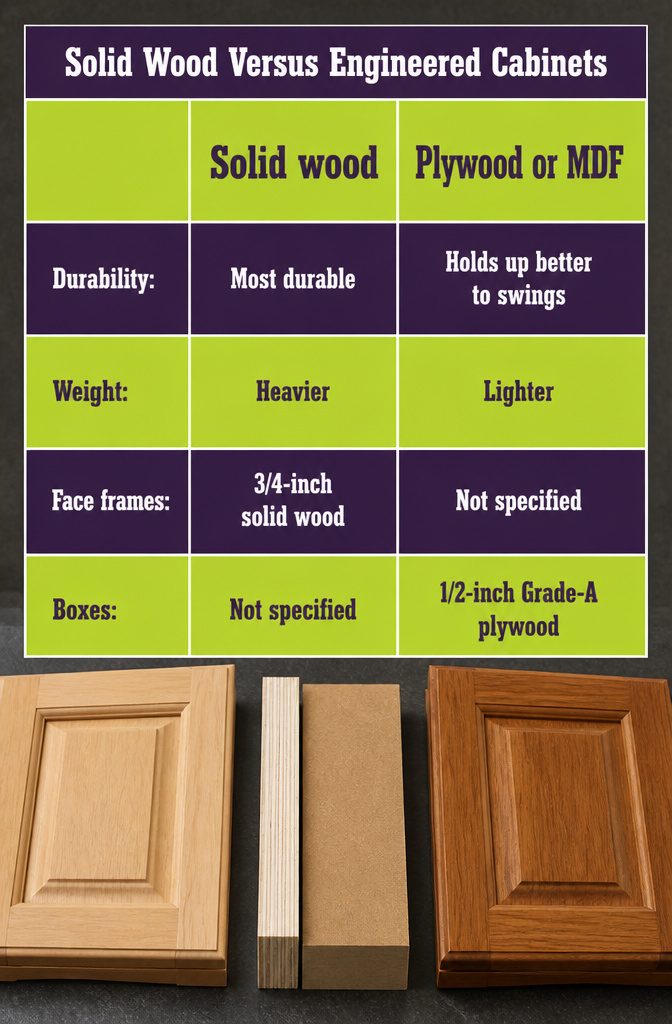
Solid wood in maple, oak, or cherry is the most durable choice for doors and face frames, and with the right finish it can last a lifetime.
Cabinet boxes are usually plywood or MDF, which hold up better than solid wood when temperature and humidity swing. Engineered boxes also weigh less, so they are easier to hang.
When you compare quotes or ready-to-assemble lines, look for 3/4-inch solid wood face frames, 1/2-inch Grade-A plywood boxes, and 3/4-inch Grade-A plywood shelves.
MDF or HDF doors resist water and cracking. Skip particle board boxes.
Frequently Asked Questions
What is the most popular kitchen cabinet style?
Shaker.
The flat, square-framed door with a recessed center panel works with nearly any hardware and suits both traditional and modern kitchens. Because the door itself is plain, your paint color and pulls set the style.
Which kitchen cabinet style is best, and how do I choose?
No single style is best; the right one depends on your taste, budget, and timeline.
Research your options and consider working with a designer. If you want a safe default, Shaker fits most kitchens and is usually in stock at a reasonable price.
What are the most durable kitchen cabinets?
Solid wood in maple, oak, or cherry is the most durable choice for doors and face frames, and with the right finish it can last a lifetime.
For the cabinet boxes, plywood or MDF handles swings in temperature and humidity better than solid wood. Avoid particle board boxes.
What color kitchen cabinets are trending in 2026?
White is still the top painted choice, with gray second.
For a two-tone look, pair white uppers with navy, forest green, or charcoal lowers. Larger kitchens can run navy throughout, or go with black or dark gray for a sleek finish.
How can I make cheap cabinets look better?
Change the finish and the hardware, since those do the styling on a plain door.
Paint the existing cabinets, then swap in new pulls: black metal on light cabinets for contrast, or brass for warmth. Adding under-cabinet LED strips also lights the counter and gives the room a softer glow.
How can I add open shelving to my kitchen cabinet design?
Replace upper cabinets with open shelves only in select areas, and stock them with attractive items you use often.
Keep less attractive necessities behind closed doors, and pick a shelf material that suits the room: wood for warmth, metal for an industrial look, or glass for a contemporary one.
Expect to dust more often and skip fragile or valuable pieces.
Are there sustainable kitchen cabinet design trends?
Yes.
Common choices include reclaimed wood, bamboo, FSC-certified timber, and metal with recycled content. Low-VOC or zero-VOC paints and stains cut emissions, LED lighting saves energy, and durable construction or modular layouts that can be reconfigured extend a cabinet’s life.
How do I know if my kitchen cabinet design is outdated?
Common signs are highly ornate details, dark cherry or honey oak finishes from the early 2000s, bulky soffits above the cabinets, and dated hardware.
Missing organizers, pull-out shelves, or soft-close mechanisms also point to an older design, as does a layout that makes cooking less efficient.