
The ideas run from a single copper kettle to a full stone floor, and the one that fits depends on what your kitchen already has.
Keep original beams and plank floors, and replace what works poorly. Butcher block looks right but suits few households today; a Connecticut barn conversion kept its beams and used zinc-and-marble counters instead.
1. Vintage Lighting
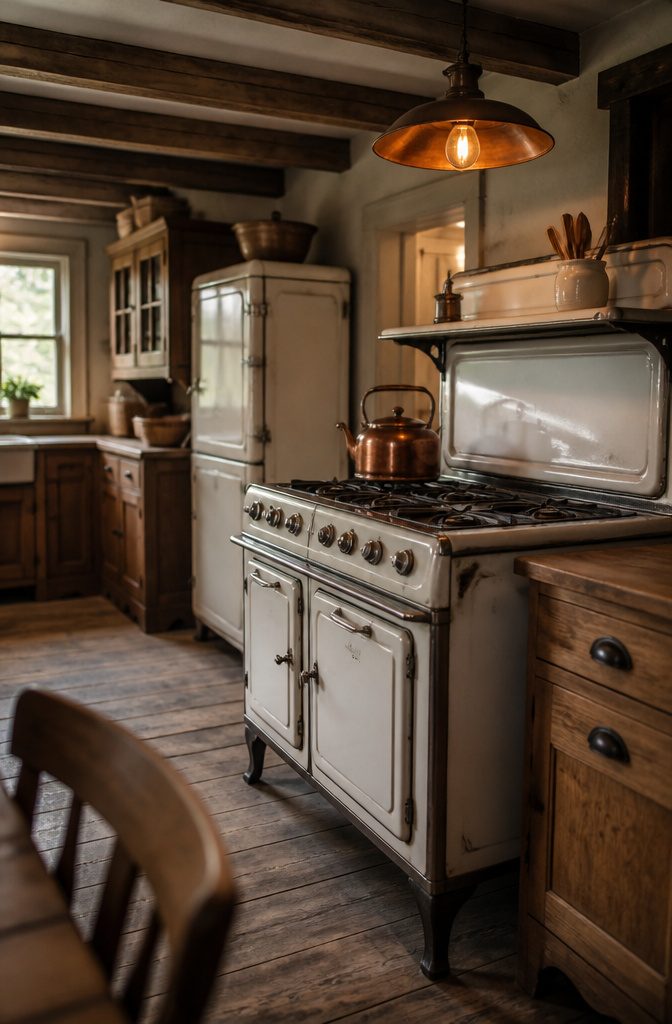
A salvage shop or antiques store is the best first stop for kitchen lighting. One Minnesota farmhouse kitchen hangs a ceiling fixture that came from a local salvage shop and was originally in a Victorian home.
The same room has a reconditioned stove and icebox from the 1930s, so the light looks like it belongs with them.
Keep the fixture simple, because an old piece already carries plenty of character. Copper is a good finish if you buy new, and it looks good even when the light is off.
For bulbs, warm incandescent suits the look best. Choose CFLs if energy efficiency matters more to you than the glow.
Recommended Products
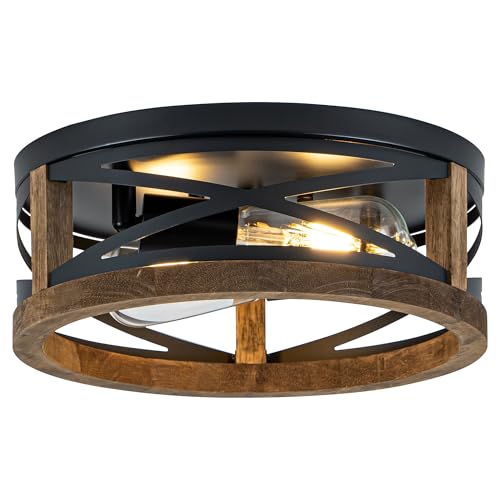
Rustic Farmhouse Design - Farmhouse ceiling light featuring a round solid wood frame paired with black matte metal, this 2-light flush mount ceiling light adds a warm farmhouse charm with industrial style, perfect for modern rustic or vintage interiors.

MATERIAL & DIMENSIONS - The pendant light is made of metal. The fixture caliber is 16.14 in, height is 13.78 in, mounting diameter is 4.72 in, and the maximum length of the chain is 31.5 in (Adjustable).

【Vintage Elegant Design】 Crafted with a sturdy metal base and a hand-blown vintage glass shade featuring engraved floral engravings, this semi-flush mount light combines elegance with vintage, which can create a romantic atmosphere suitable for a vintage-themed home, can cast a beautiful shadow on the ceiling when it's on.
2. A Table as an Island
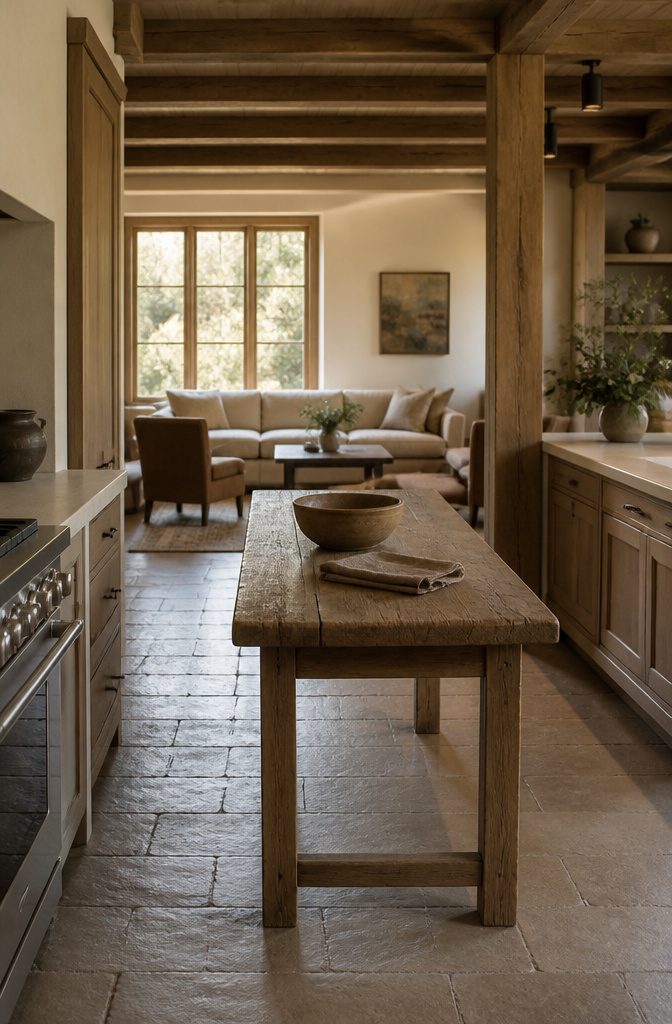
Without room or budget for a built island, a vintage wooden table does the same job as a free-standing work surface.
Worn wood suits a rustic kitchen better than a new cabinet run, and you can move the table if the layout changes.
In an open plan, a table can also divide the space.
An antique baking table from Ireland separates the kitchen from the living area in one Napa Valley home, marking the two zones without a wall. Larger kitchens often include tables alongside islands and breakfast bars.
Look at how the top is made before you buy. A rustic table is typically cut from a single plank, and its edge profile and finish decide whether it reads as traditional rustic or contemporary.
Recommended Products
【Coppper Pendant Light】 - This matte black metal and wood pendant light exudes an artistic vibe, elevating the ambiance of your kitchen. It serves not only as a pendant lamp but also as a captivating decoration for dining room and kitchens. Its timeless appeal effortlessly complements any style

【Coppper Pendant Light】 - This matte black metal and wood pendant light exudes an artistic vibe, elevating the ambiance of your kitchen. It serves not only as a pendant lamp but also as a captivating decoration for dining room and kitchens. Its timeless appeal effortlessly complements any style

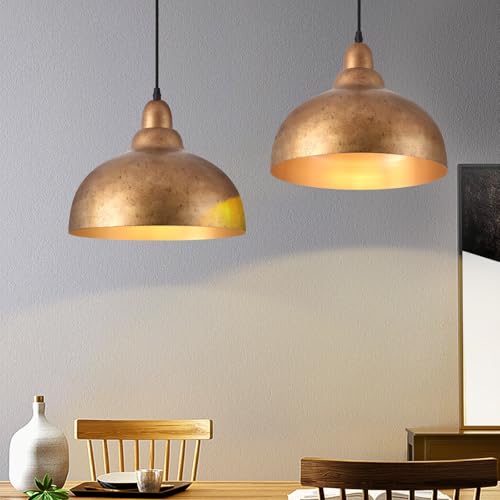
Industrial&Vintage Design: This copper pendant light is crafted from natural iron ore melted at an ultra-high temperature, this retro dome pendant light features a rusty color finish, is free from impurities, Surface baking paint undergoes a dust-free constant temperature process, ensuring a pure, crack-free, and durable color.
3. Open Shelves
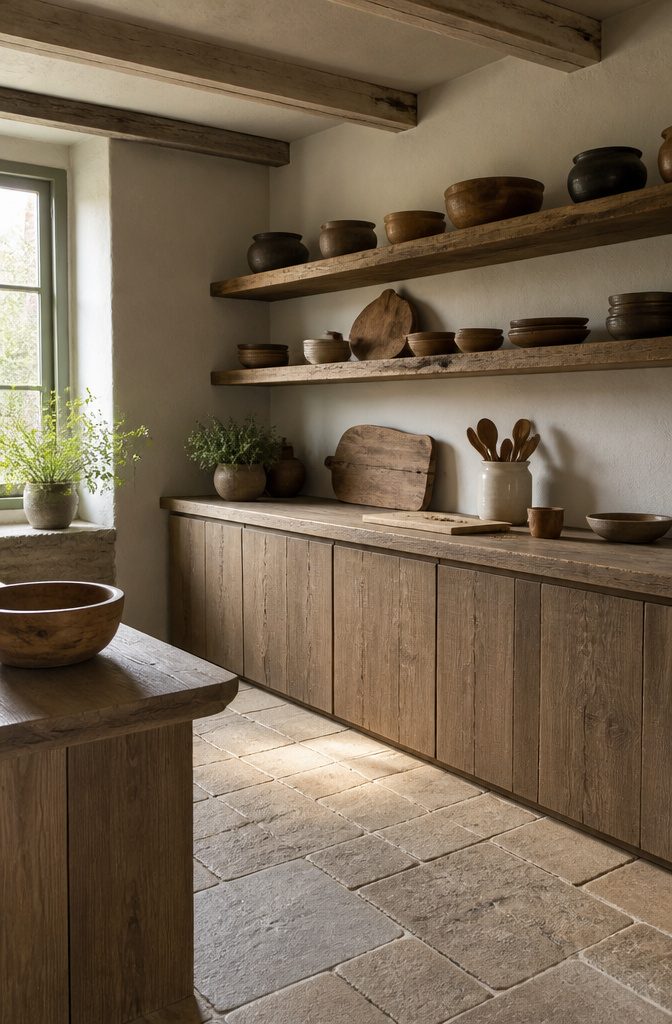
Open shelves earn their place in a rustic kitchen by holding the materials that make it feel lived in: clay pottery, cutting boards made from reclaimed wood, and other natural or antique pieces.
Stock them with things you actually reach for, like everyday bowls, a few boards, and a crock of wooden spoons, so the shelves read as storage instead of a display case.
The cost is editing. Open shelving shows everything, so mismatched mugs and plastic containers have to move into cabinets.
Plain, solid-fronted cupboards below keep the look humble and give the overflow somewhere to go. If you won’t keep the shelves tidy, skip them and set the pottery on the counter.
Recommended Products

Kitchen Island with Storage: Boasting a spacious 55.1" x 31.5" countertop plus two open shelves, this kitchen island easily holds utensils, microwaves, toasters and other kitchen essentials. It keeps your workspace neat and fully functional.

Measuring 23.62 x 15.74 x 30 inches, the spacious top shelf easily accommodates standard microwaves, while the lower tiers support heavy appliances.Engineered for long-lasting durability, this kitchen shelf organizer is constructed from high-quality MDF wood and a reinforced metal frame. The scratch-resistant, waterproof

Quality Materials, Timeless Look: Made of a varnished rubberwood countertop and P2-grade MDF frame, this kitchen island is water-resistant, and easy to wipe clean. The stylish gray and natural wood effect appearance elevates any kitchen
4. Mix Old and New
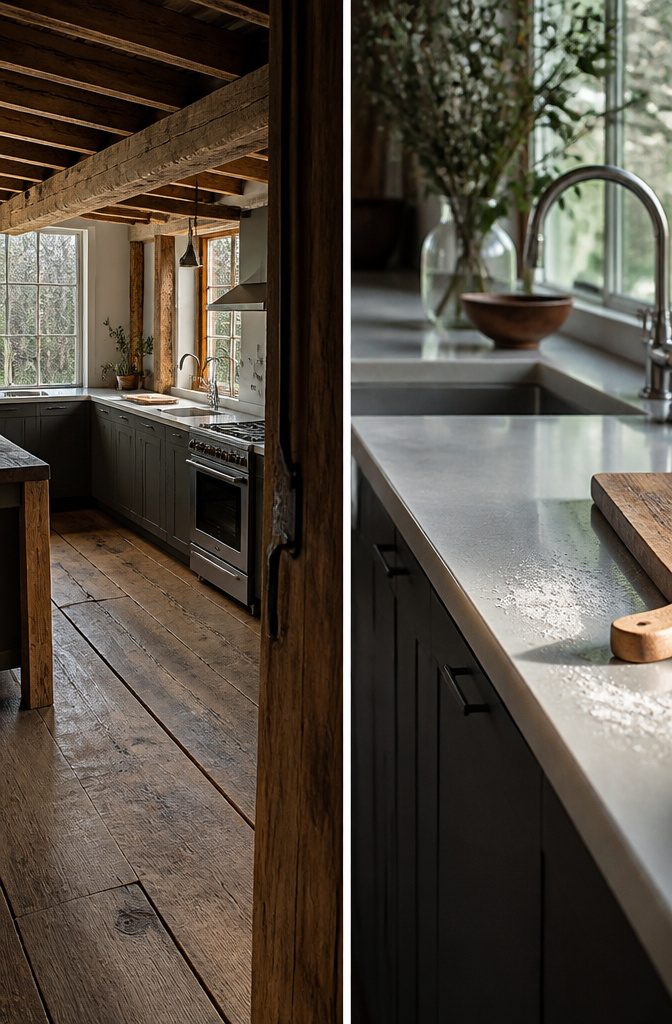
Keep the charming features you already have, such as exposed beams, posts, and old plank floors, and replace the parts of the kitchen that work poorly.
Russell Groves took this approach with a 19th-century barn moved from Canada to Connecticut and converted into a 15-room house. The original wood beams, posts, and flooring stayed, and modern appliances and zinc-and-marble countertops contrast with them.
Countertops are the easiest place to make the swap.
Butcher block suits a traditional rustic kitchen but is less practical for most households today. Quartz, such as Caesarstone, gives you modern function while the wood overhead and underfoot carries the rustic look.
Recommended Products

Do you love barn wood? You want real weathered wood? This is it! The real deal!

Real Wood Wall Planks: 100% Real Barn Wood Wall Planks With Natural Knots and Dents, the Surface Of Wood Shiplap Planks Is Processed With High Temperature Carbonization, the Real Wood Wall Shiplap Planks Is Non-Toxic, Sterilized and More Safe For Children, Voc Free Process Ensures These Stick on Shiplap Planks For Walls Are Safe To Use In Home

Solid reclaimed wood construction. Each shelf is made from real reclaimed wood with natural variation in color, grain, and character due to previous use and aging
5. Warm Wood Finishes
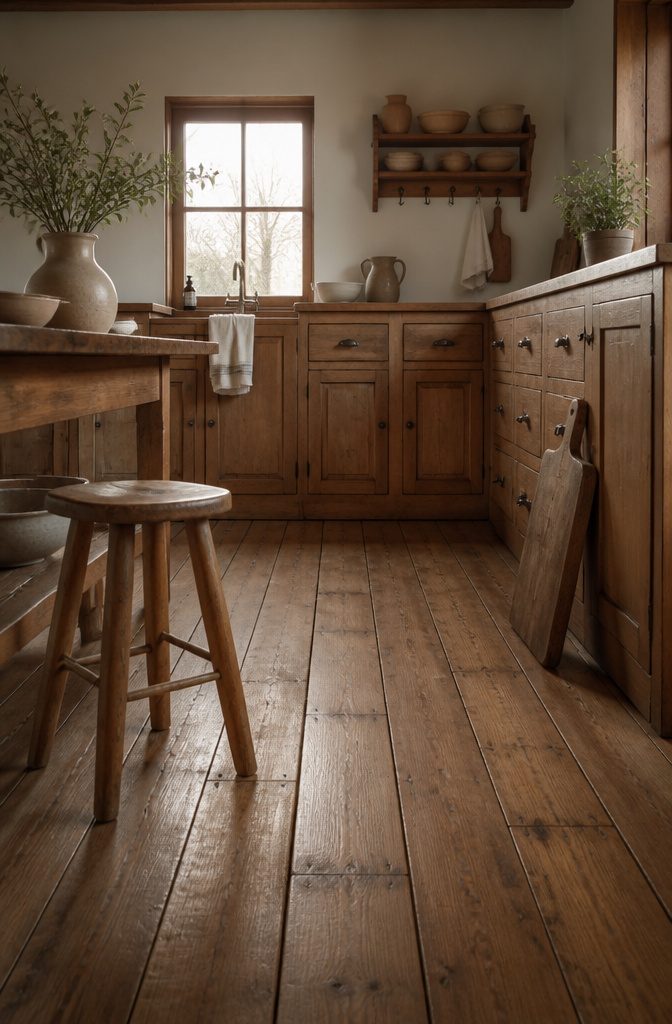
Warm wood works best on the biggest surfaces: cabinetry first, then flooring, then smaller pieces like stools, shelves, and cutting boards.
In a muted kitchen, let wood be the dominant color and keep walls and hardware quiet so the grain does the work. Pine is the familiar farmhouse choice for cabinet doors.
You have two palettes to pick from.
Natural wood throughout gives the deepest, coziest room. White cabinets with wood accents are lighter, and a black-and-white base with rich wood tones layered on top also holds together.
A weathered finish looks aged and worn, while a raw one shows plain grain.
Reclaimed boards give the rustic look, and newer wood reads more refined. Skip wood countertops if you want a modern rustic feel.
Recommended Products

CONCENTRATED FLOOR CLEANER – Granite Gold Stone and Tile Floor Cleaner is a cleaning solution specially formulated for your stone, slate and tile floors. It comes in a cost-saving, concentrated 32 ounce bottle.

Safe for All Natural Stone – Gently cleans marble, travertine, granite, slate, limestone, ceramic, and porcelain tile without damage or dulling the surface.

Safe for All Natural Stone Floors: Specially formulated for limestone, travertine, marble, granite, slate, sandstone, quartzite, flagstone, and all other sealed and unsealed natural stone flooring
6. Copper Accents
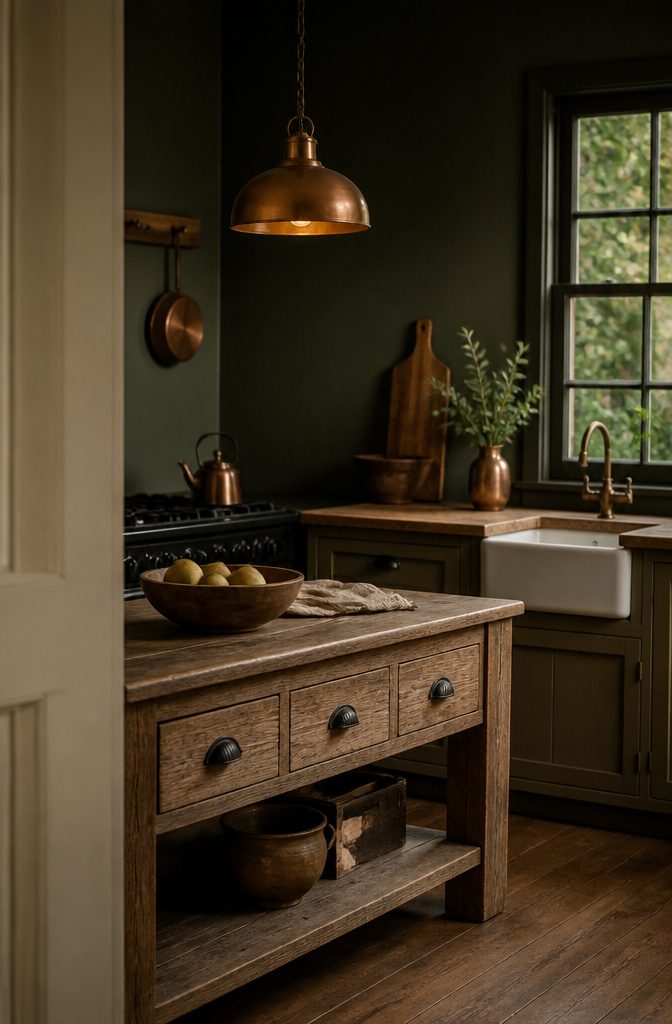
Copper works hardest in small pieces you see every day: hanging pots, a tea kettle, a vase by the sink, even a timer above the stove.
Antique pots suit a rustic kitchen better than shiny new ones, because worn surfaces are part of the look. Deep green walls, such as Farrow & Ball’s Studio Green, make the warm metal stand out.
For fixtures, choose one large piece, either a farmhouse sink or a simple copper pendant. A plain pendant still looks good with the lights off.
Pair it with warm incandescent bulbs, or CFLs if energy use matters more to you. Stick to one fixture plus a handful of small accessories, since more than that starts to look like a cookware shop.
Recommended Products

𝐒𝐞𝐦𝐢 𝐅𝐥𝐮𝐬𝐡 𝐌𝐨𝐮𝐧𝐭 𝐂𝐞𝐢𝐥𝐢𝐧𝐠 𝐋𝐢𝐠𝐡𝐭& 𝐎𝐩𝐞𝐧 𝐃𝐞𝐬𝐢𝐠𝐧:The light fixtures ceiling mount is an innovative lighting solution that is perfect for spaces with low ceilings. The lampshade with cage structure makes the light transmittance of the whole black chandelier very high, which meets the lighting requirements of most scenes. In addition, the ingenious combination of wood decoration and metal frame on the lampshade and the perfect interweaving of industrial style and farm style can play a very good decorative rustic light fixtures role no matter where in the room.

【Unique 3-Light Ceiling Light】We have deliberately scratched the metal to give it a vintage charm, and the black metal finish adds a modern touch to create this industrial-meets-farmhouse ceiling light fixtures flush mount. In addition, the glassless design is easy to clean and replace the bulb.

Pendant Lights for Kitchen: 10.83"-46.26" height adjustment; 90° swivel heads perfectly center light over countertopseliminate shadows while cooking, enhancing both task lighting and farmhouse aesthetics
7. Keep It Simple
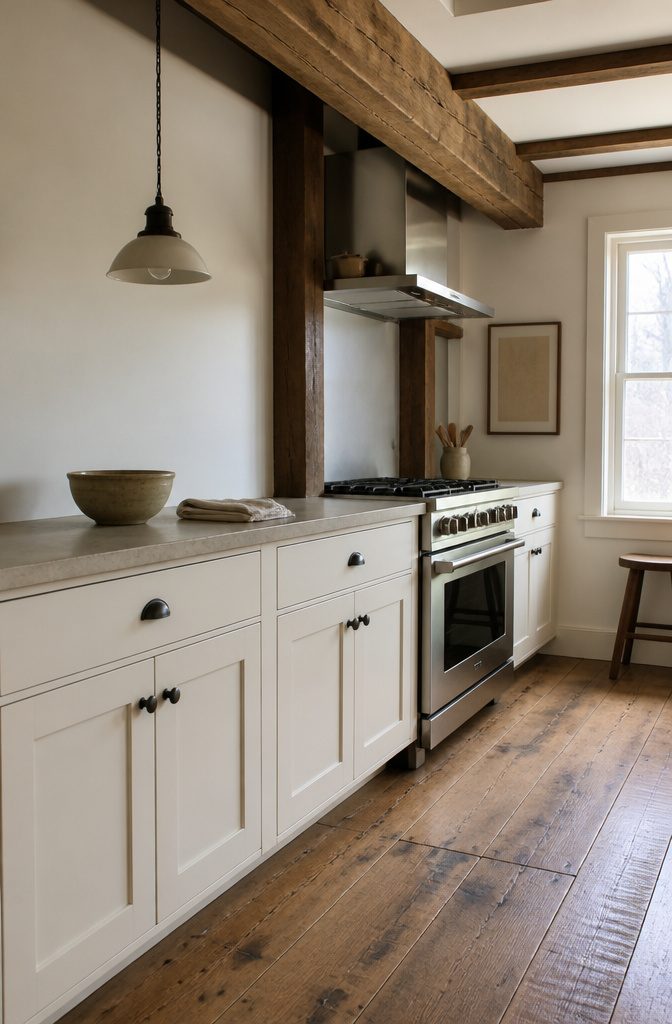
Rustic kitchens look best when they hold back.
Natural materials, clear counters, and very little decoration give the room its honest, uncluttered feel. Cupboards should be plain-fronted and a little humble, not carved or fussy.
Shaker-style cabinets are the easiest way to get there, because the lack of ornate detail keeps them clean and understated. Paint them a solid color or leave the wood natural.
Keep the lighting just as simple. A mini barrel pendant works, and so does a single copper fixture.
Warm incandescent bulbs suit the look, and CFLs are a fair swap if energy use matters more to you. Your modern fridge or stainless range can stay, since plain surroundings keep it from taking over.
Recommended Products

MATERIAL & DIMENSIONS - The 2Pcs farmhouse pendant light is made of metal. The fixture width is 7in/18cm, fixture height is 7in/18cm, chain length is 39.37in/100cm. It is a small light. Please check the size clearly
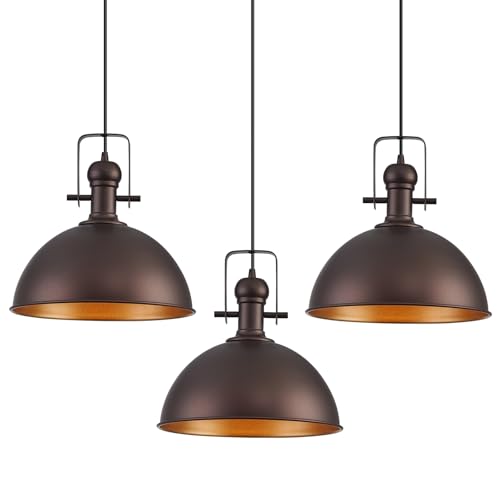
[Industrial & Vintage Design]: 3-Light industrial farmhouse pendant light fixtures with adjustable cord, Oil Rubbed Bronze finish featuring retro-style dome shade, this antique pendant lighting is made of sturdy metal construction in black finish and inner gold finish.The vintage pendant lights is ideal for home, dining room, kitchen island, warehouse, entryway, corridor, restaurant, cafe, bar, club, barn, working bench.

[Industrial & Vintage Design]: 3-Light industrial farmhouse pendant light fixtures with adjustable cord,Hammered mattle black finish featuring retro-style dome shade, this antique pendant lighting is made of sturdy metal construction in black finish and inner gold finish.The vintage pendant lights is ideal for home, dining room, kitchen island, warehouse, entryway, corridor, restaurant, cafe, bar, club, barn, working bench.
8. Make the Range Hood the Hero
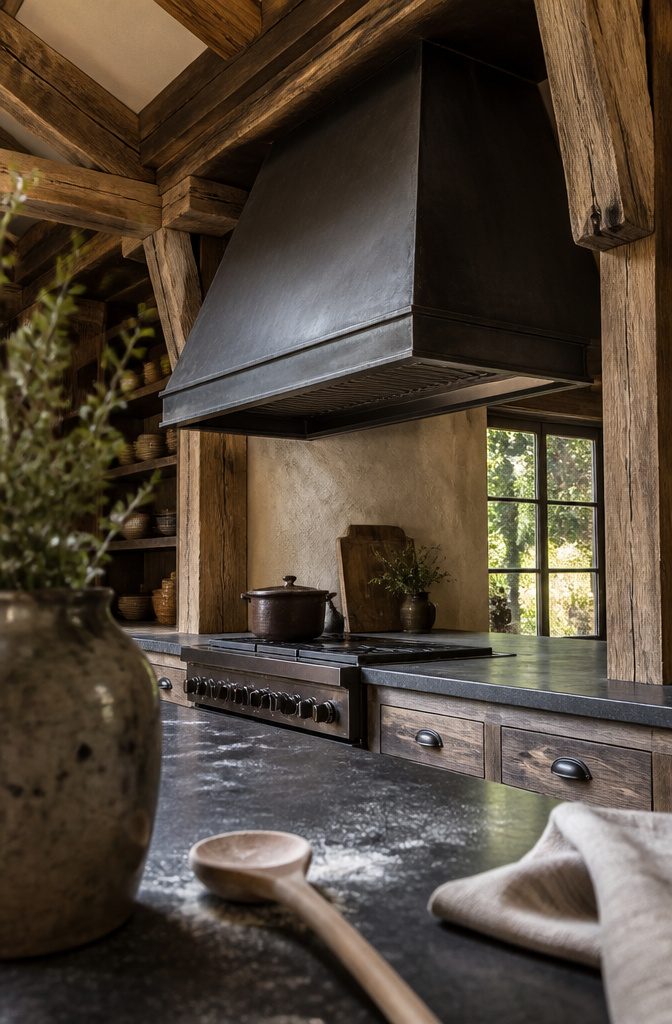
Tim Pfeiffer of Hoedemaker Pfeiffer, a Seattle design firm, puts the idea simply:
“A rustic kitchen will visually and practically focus on the essentials and purpose: the hearth.”
In a modern kitchen, that hearth is the range and hood, so they deserve the biggest share of your attention and budget.
Build contrast around them. A blackened steel hood beside soapstone countertops and dark bronze hardware anchors a Wyoming kitchen by that firm.
For a warmer version, frame the hood in antique beams, as a remodeled Tuscan farmhouse does, so it reads like a chimney. Drawers and shelves can wait; the eye lands here first.
Recommended Products

Spacious Worktop & Ample Storage: This 55-inch kitchen island features a large rectangular worktop for meal prep, plus a 2-tier shelf. Keep cookware, spices, or dining essentials organized—ideal for cluttered kitchens
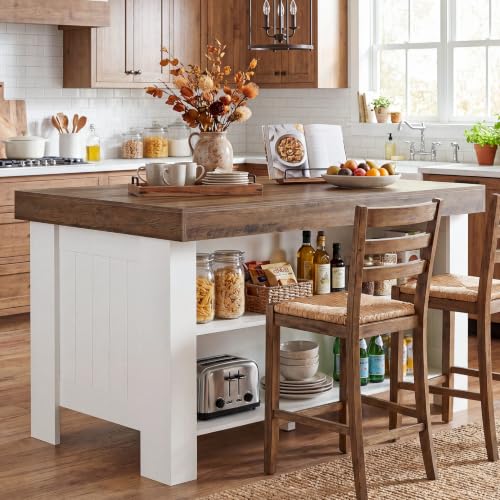
Spacious Counter Height Tabletop: The generous 55-inch surface offers plenty of room for meal prep, serving, and everyday dining. Seamlessly doubling as a breakfast bar or extra prep station, it maximizes your kitchen workspace without overcrowding your home

2-Tier Storage & Large Countertop: Two open shelving units provide ample storage for cookware, tableware, and kitchen essentials, keeping your kitchen tidy and organized. The 55.1" × 31.5" island table offers generous space for food preparation and meals
9. Style With Stone
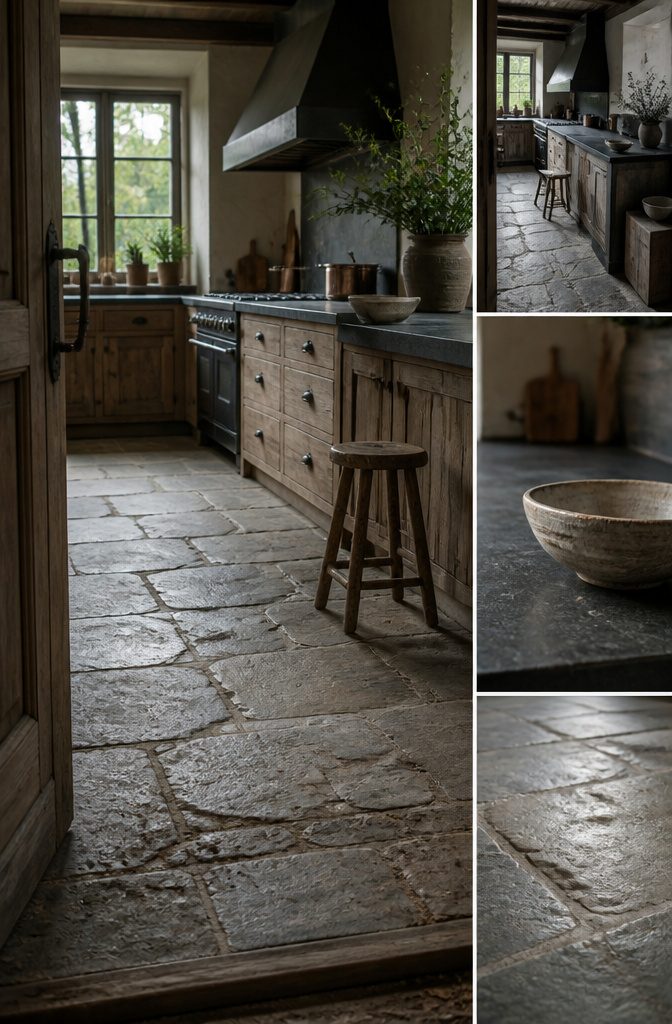
A stone floor sets the tone of a rustic kitchen the moment you step in.
One 18th-century Tuscan farmhouse kitchen pairs a bold stone floor with a hood framed in antique beams, and the rough stone against aged wood is a combination worth copying.
If a full floor is out of budget, bring stone in through the counters instead. Soapstone, marble, and zinc all suit the style, and soapstone beside a blackened steel hood looks dark and grounded.
For a lighter room, a veined quartz like 5151 Empira White gives a classic touch and works with white cabinets and natural wood floors. Natural materials are generally durable and low maintenance.
Recommended Products
Solid reclaimed wood construction. Each shelf is made from real reclaimed wood with natural variation in color, grain, and character due to previous use and aging
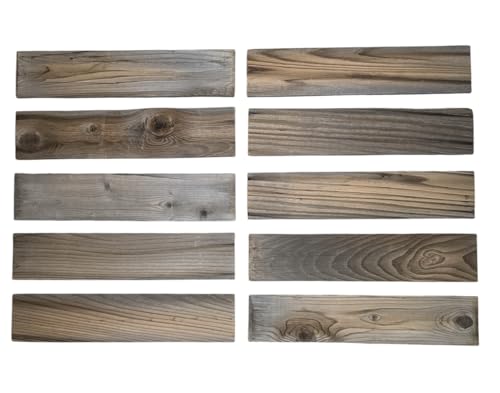
REAL RECLAIMED WOOD – Authentic weathered barnwood boards with natural patina, knots, and character.
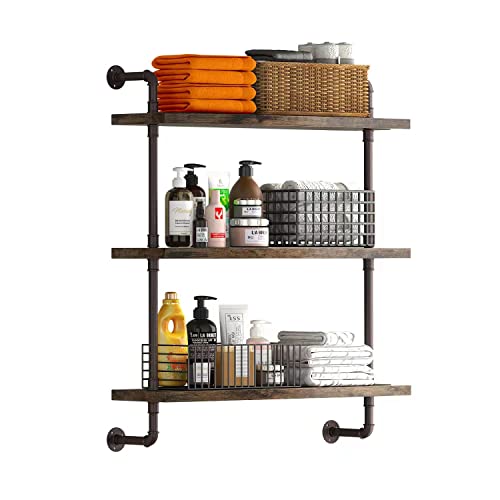
【Retro Style】Rustic industrial pipe shelf in bronze finish. Iron pipes and wood composition in vintage style. great for storage and decorations. It can also be used outdoors. Extensively anti-rust treatment.
10. Rustic With Radiant Color
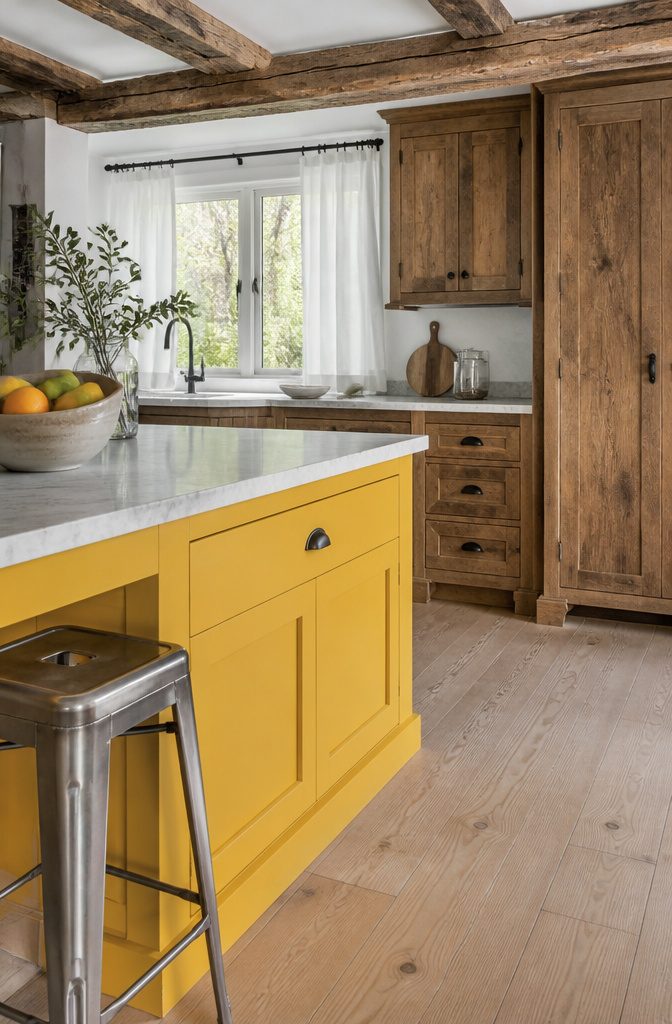
Start with black and white, then add one color from nature: warm wood, hunter green, buttercup yellow, or burnt orange.
Buttercup yellow looks deliberate against reclaimed wood cabinets. A brightly painted Shaker-style island does the same job in a kitchen with worn beams.
If dark, heavy rustic isn’t your look, go lighter.
White walls and cabinets with wood accents in the cabinetry, decor, or flooring keep the room cozy but modern. A veined white countertop adds a classic touch, and white curtains carry the color to the windows.
For an industrial edge, use stainless steel stools and lighting, then repeat the look with matte black accents. The mix of materials seems impractical on paper, but the black ties the metals together.
Recommended Products

POWERFUL NON-ACID CLEANER: Effectively removes grout haze, grease, and dirt from ceramic, porcelain, glass, grout, and natural stone surfaces without harsh acids

20 sheets solid PVC tiles, 5.75"x12.2"x0.12" each, cover about 9.75 square feet. This simple subway pattern is easier to install and plans the layout freely to your imagination.

On very porous surfaces like Travertine, use 511 Porous Plus.
11. Head Outdoors
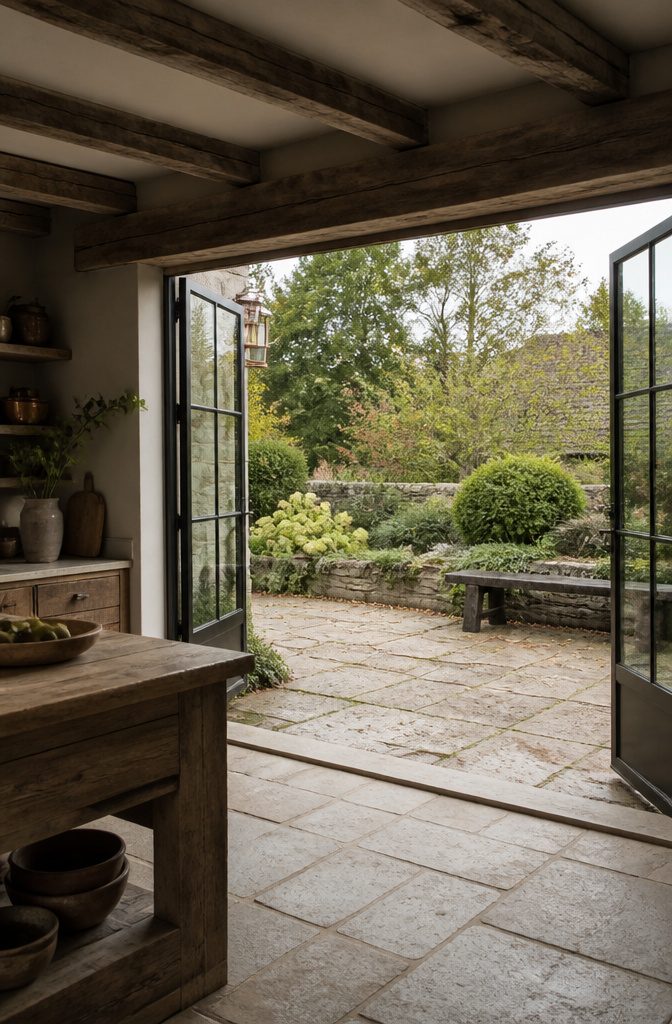
A wide opening does more for a rustic kitchen than any outdoor furniture. If the layout allows, swap a standard door for French or sliding glass doors so the patio or deck reads as part of the room.
Then repeat one material on both sides of the threshold.
The stone from your counters or hearth can return as patio pavers or a low wall, and the wood from your shelves or beams can return as a bench, pergola, or dining table.
Match the tone, too. A pale new deck outside dark aged beams looks like two unrelated houses.
Copper works well outside in lanterns or a planter by the door. It will weather to green over time, so decide whether you want that.
12. Antique Chairs
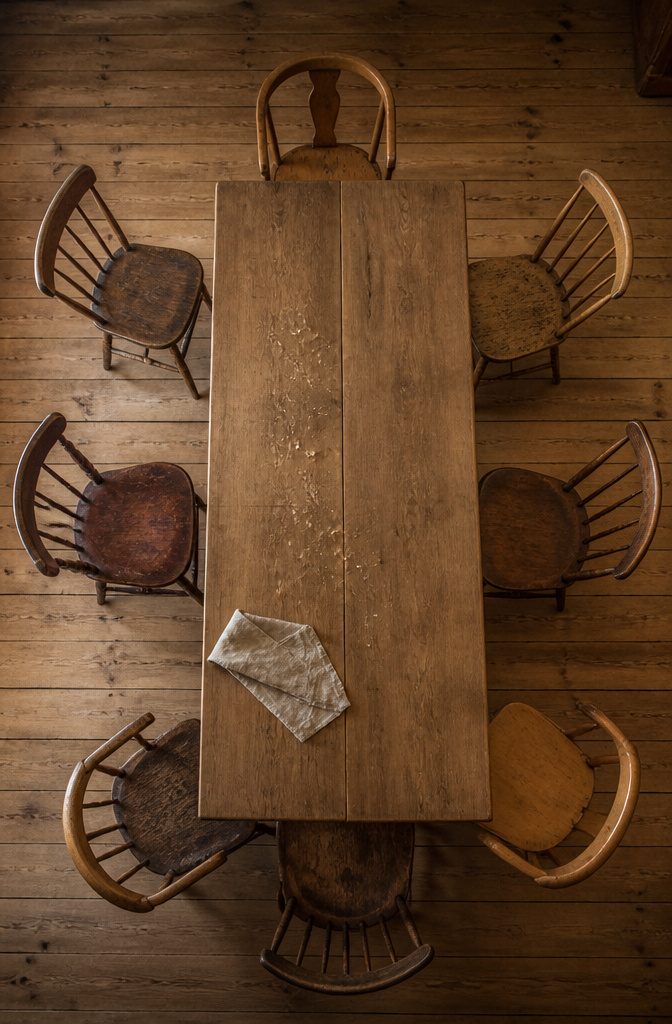
A single plank table is the right partner for mismatched antique chairs. The long, unbroken surface gives chairs of different woods, seat shapes, and ages a calm backdrop, so they read as collected rather than cluttered.
Keep the table itself plain, because its edge profile and finish decide whether it leans traditional rustic or contemporary, and the chairs can supply the age.
For a history-filled look, hang a portrait above the table.
In a Cape Dutch–inspired home in Baton Rouge, Louisiana, a 17th-century portrait overlooks a kitchen table surrounded by antique French chairs. One old portrait over the table is enough; it sets the tone without a gallery wall.
13. A Tiled Backsplash
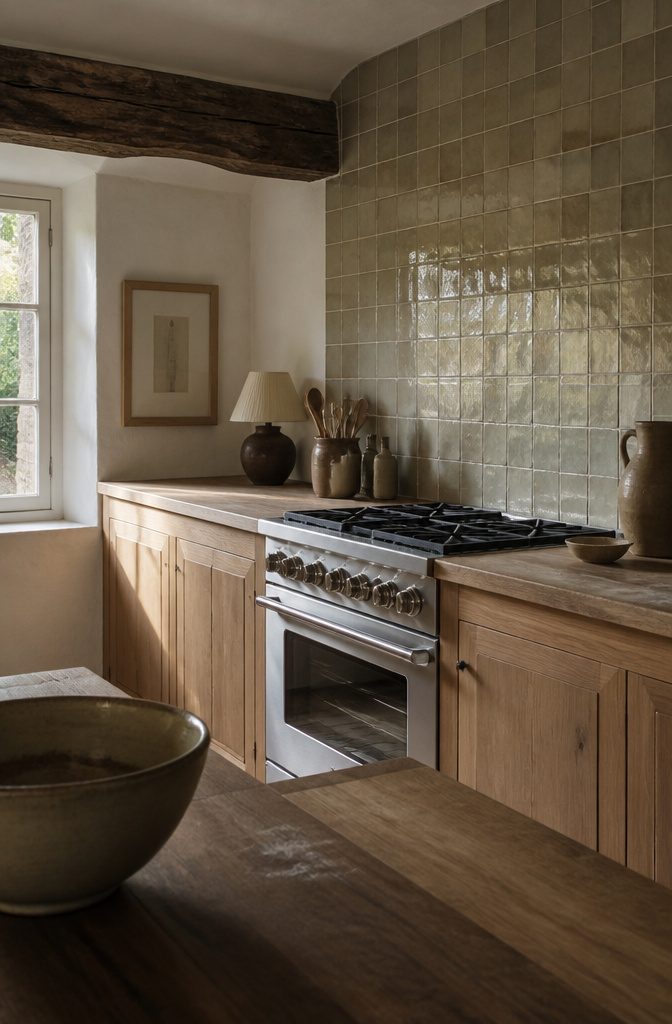
Antique Italian tile on the backsplash lets a modern range sit comfortably in a rustic kitchen.
In a Georgian-style house in Richmond, Virginia, designer Bunny Williams covered the backsplash in antique Italian tiles from Michael Trapp and set a modern La Cornue range against them. The range is new, yet it matches the tile.
Copy that split: put the age in the wall and keep the appliance clean-lined.
One tiled surface behind a modern range ties old and new together, because the worn, uneven tile makes the polished metal look deliberate instead of out of place.
Let the tile carry the pattern and color, and choose a plain range so the two don’t compete.
What Makes a Kitchen Rustic
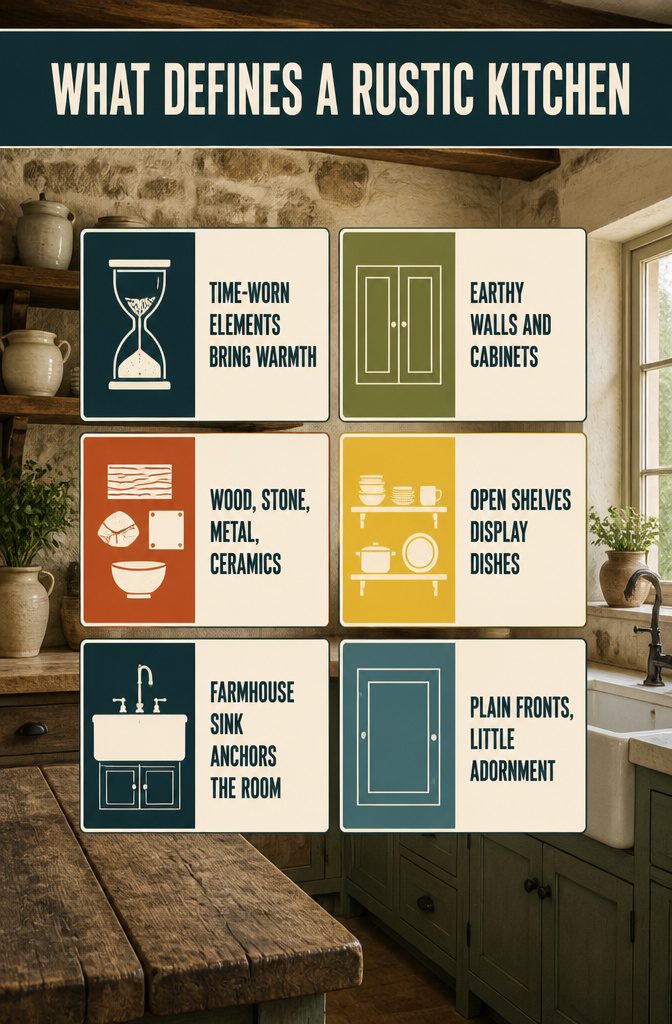
A rustic kitchen is built from time-worn elements that give the room warmth and a sense of history.
The style is timeless and still in style, and if one room in a home should have history and soul, it’s the kitchen. Look for these elements:
- Earthy tones on walls and cabinets.
- Natural materials: wood, stone, metals, ceramics, and natural fabrics.
- Open shelves that keep dishes and pans on display.
- A farmhouse sink.
- Vintage decor.
- Simple, plain-fronted cabinets with very little adornment.
Modern appliances still fit, and a stainless-steel range adds an urban edge. Rustic kitchens feel homely and calming, and natural materials are often durable and low-maintenance.
Country, Farmhouse, or Contemporary
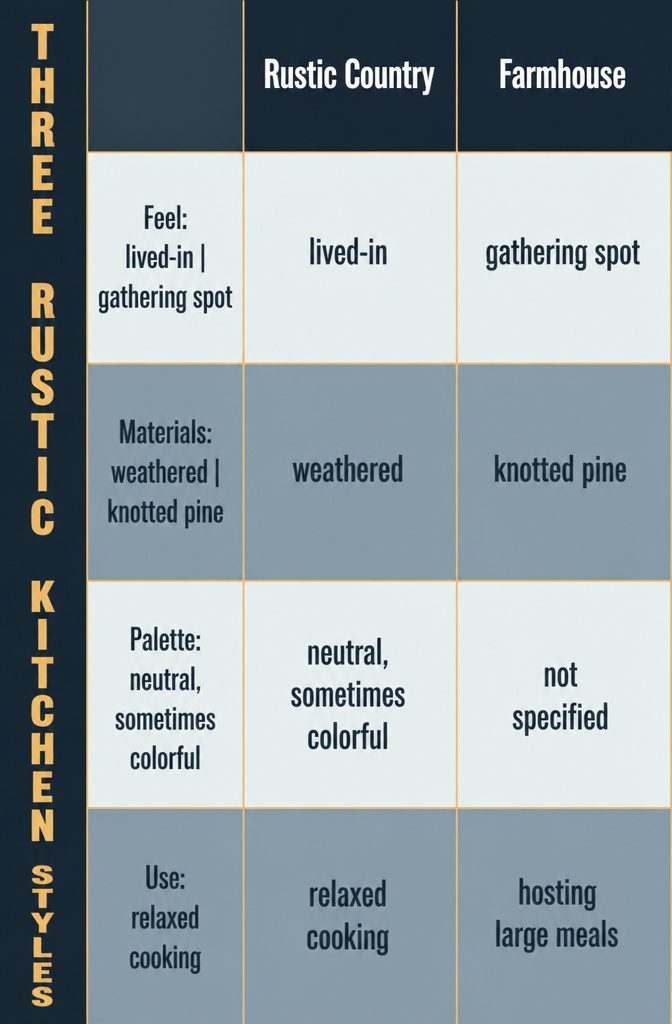
Choose by how you use the room. Country suits a relaxed, lived-in kitchen, and French country and cottage kitchens both fall under it.
Farmhouse fits a kitchen built for hosting large meals. Rustic contemporary suits you if you want natural materials with current design features and modern comfort.
| Style | Feel | Materials | Palette |
|---|---|---|---|
| Rustic country | Relaxed, lived-in, inviting | Weathered materials | Neutral; traditional versions use more color |
| Farmhouse | Spacious gathering spot | Pine, with visible knots | n/a |
| Rustic contemporary | Modern comfort | Natural materials | n/a |
Frequently Asked Questions
What is a rustic kitchen?
A rustic kitchen is a room built from time-worn elements that give it warmth and a sense of history. Wood, stone, and copper do most of the work, and modern appliances such as a stainless range can still fit in.
What color palette works best in a rustic kitchen?
Start with black and white, then add one color from nature: warm wood, hunter green, buttercup yellow, or burnt orange. For a lighter room, white walls and cabinets with wood accents keep the space cozy but modern.
Are rustic kitchens still in style?
Yes. Designers describe the style as timeless, and they argue that if one room in a home should have history and soul, it’s the kitchen.
How can I update an outdated kitchen with a rustic look?
Keep the features that already have charm, such as exposed beams, posts, and old plank floors, and replace the parts that work poorly.
Countertops are the easiest swap: quartz gives modern function while the wood above and below carries the rustic look.
How is a rustic kitchen table made?
A rustic kitchen table is typically cut from a single plank of wood. Its edge profile and finish decide whether it reads as traditional rustic or contemporary, so choose those two details with care before you buy.