
Most standard bedrooms fit a chair under about 30 inches deep. Anything bigger, like a round corduroy lounger listed at 55 inches, needs its own corner.
People check the footprint and miss the door and closet swing, which usually limits a chair more. Tape the spot on the floor and open every door before you buy.
1. Round, Armless Lounger
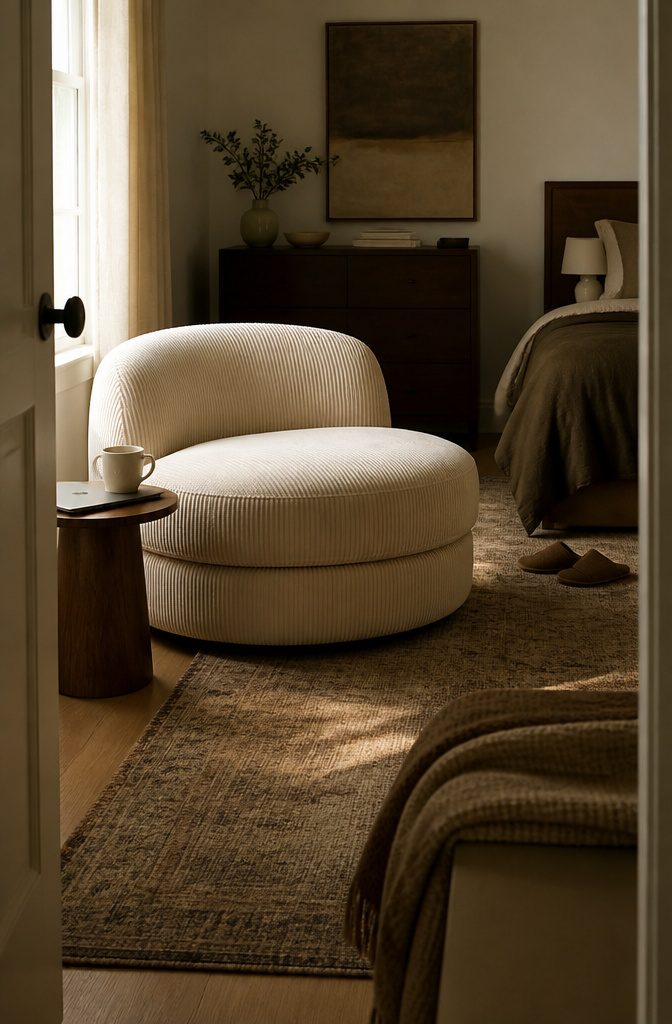
A round, armless lounger is the easier fit in most standard bedrooms.
With no arms to catch on a nightstand or dresser, it slides into a corner, and you can climb in from the left, the right, or the front. That makes it the default pick for most bedrooms.
Size is the exception. An oversized round corduroy lounger listed at 55 inches deep takes a lot of floor, so a big round needs a dedicated corner, not a gap beside the bed.
You give up arm support. Reading with a mug or a laptop is harder with nothing to rest an elbow on, so keep a small side table within reach.
2. Chaise Lounge Chair
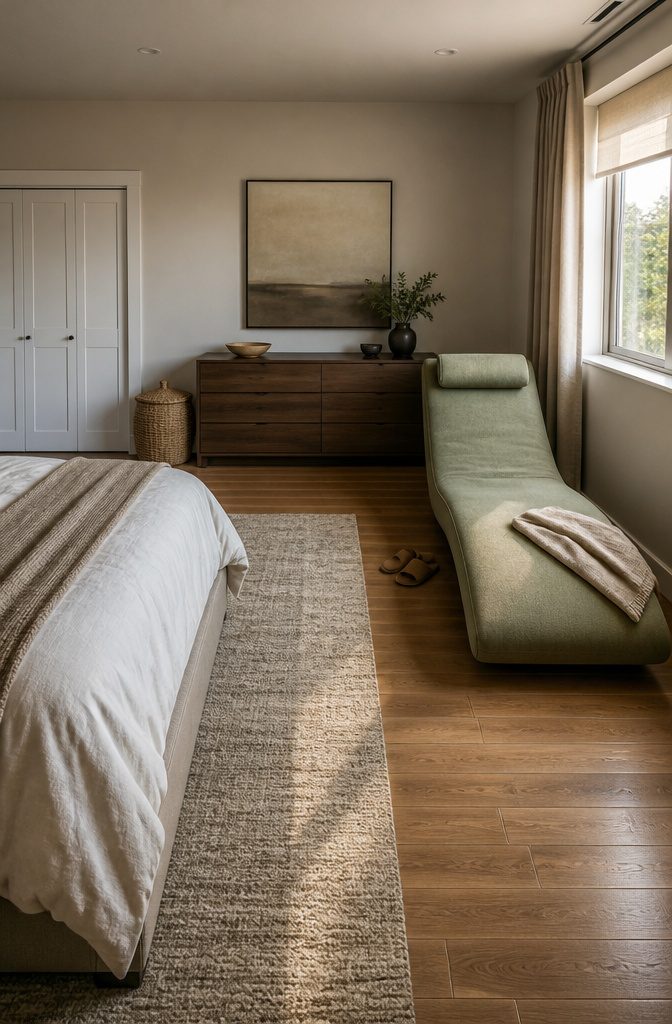
A chaise stretches out further than it is wide, so it only works in a bedroom with a long, unbroken wall to sit against.
Its job is to give you a place to prop your feet up, not to act as a compact reading chair.
That length costs floor space, and you pay for it every time you cross the room.
A chaise is a poor fit for a short wall. It is a worse fit when the door and closet share the same side, because the chair lands in the door swing or the path to your clothes.
In that room, a smaller chair tucked into a corner is the better buy.
Recommended Products
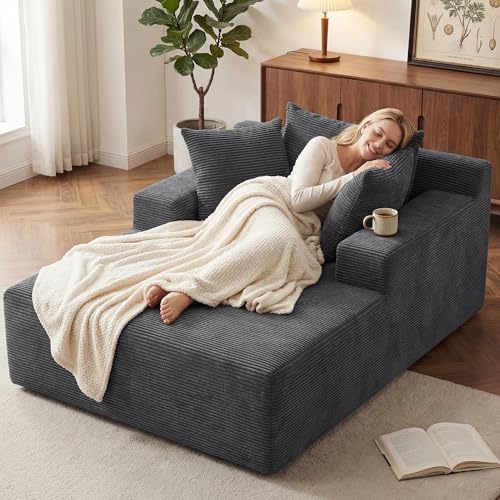
【Boneless Cloud Frame】: This boneless chair combines high - resilience foam, memory foam, and cotton layers, achieving a perfect balance between support and elasticity. Designed for long - lasting durability, it offers an exceptional seating comfort experience.
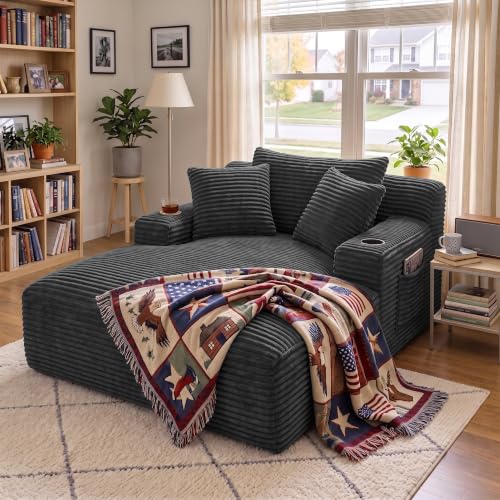
【Deep Seat Boneless Sofa for Cloud-Like Comfort】Designed with an oversized deep seat chair, this boneless sofa delivers exceptional comfort with high-density resilient foam that gently supports your entire body. Whether you're stretching out on the chaise lounge, relaxing after work, or enjoying a quiet weekend, this cozy cloud chair creates the perfect retreat for everyday lounging in your living room.

Deep Seat for Full-Body Relaxation — Featuring an oversized seat depth and high-density, high-resilience foam, this indoor boneless chaise lounge offers plenty of room to stretch out, curl up with a book, enjoy movie nights, or simply unwind after a long day.
3. Wingback or Structured Armchair
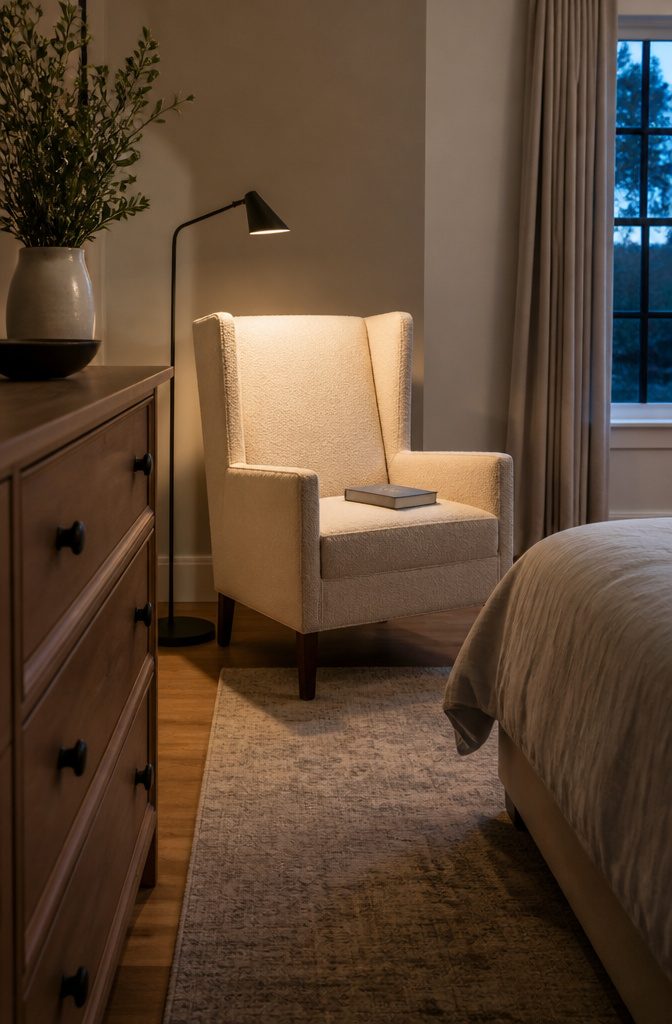
A wingback or structured armchair keeps your back and neck upright, which suits you if you read sitting straight rather than curled sideways. It also looks like proper furniture, so a bedroom corner reads as furnished instead of improvised.
The cost is floor space. The arms need clearance on both sides, so a structured chair takes more room than a round lounger with the same seat width.
A chair that looks compact in a photo can still be too big for a 30-inch gap beside a dresser, so measure the spot before you shop.
Skip it in a very small room, where the arms crowd the walkway and a round, armless lounger fits better. Choose it when you can leave both sides open, ideally near a lamp and away from the door swing.
4. Pet-Friendly Chair With a Nook
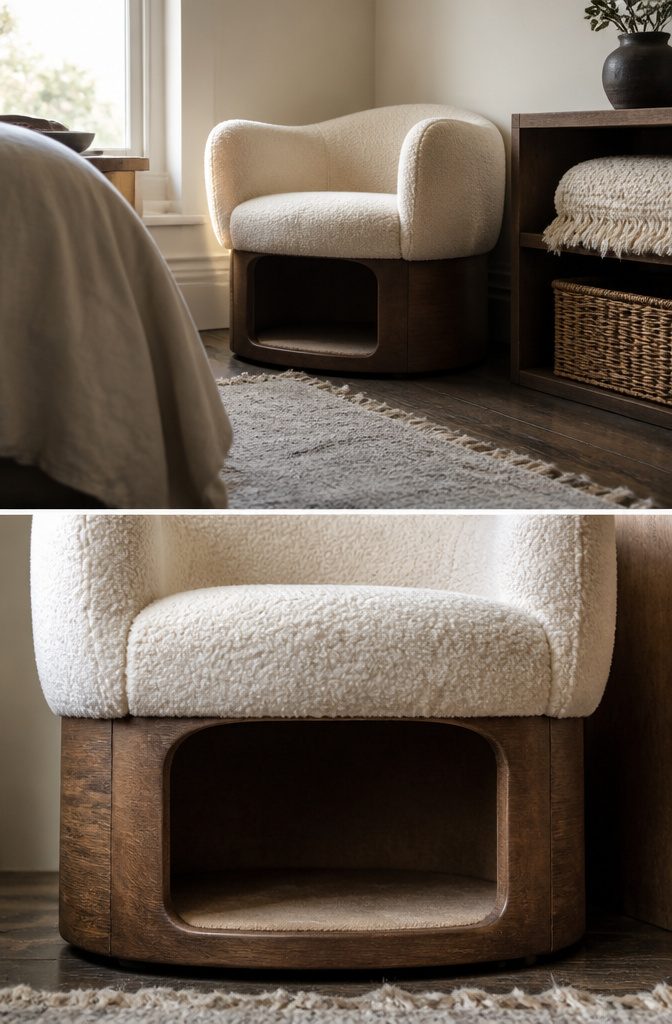
A chair with an enclosed den built into the base gives a cat or small dog its own spot and gives you a seat, all in one footprint.
In a tight bedroom that matters, because a separate pet bed usually becomes one more thing to step around at night. Look for a real enclosed nook underneath, not a regular chair in pet-tolerant fabric.
The 2-in-1 pet-friendly accent armchair with a hidden cat house and storage fits that description, and the sherpa version puts a soft, plush seat on top of the den.
The convertible 3-in-1 sleeper chair in cream does a different job.
It folds flat into a single bed, which suits overnight guests, and a standard lounge chair can’t do that. Buy it for the guest room role, not as a pet solution.
Measure Depth and Clearance
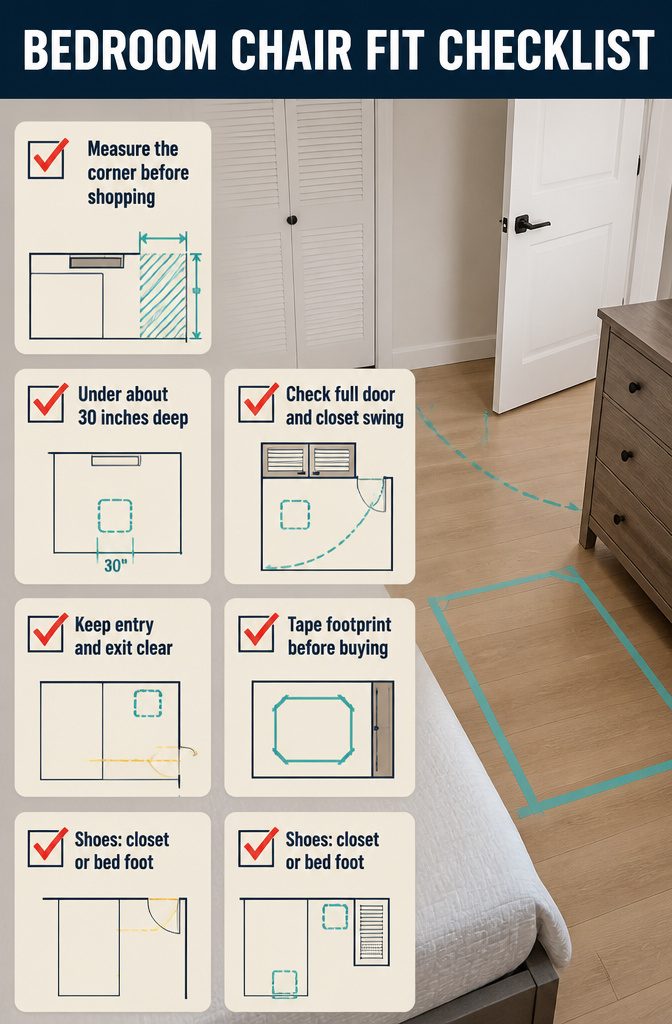
Measure the intended corner before you shop, then check the chair’s listed dimensions against three things:
- Depth: A chair under about 30 inches deep works in most standard bedrooms. Anything bigger needs a dedicated corner.
- Sitting clearance: Leave room to get in and out without catching the bed frame or a dresser.
- Door and closet swing: Swing room, more than the footprint, is usually what limits a chair. Open every door fully with the chair’s spot taped out on the floor.
A true 30-inch gap beside a dresser can still be too tight for a chair that looks compact in a photo. Tape the footprint before you buy.
Then place it by use:
- A chair for putting on shoes goes near the closet or at the foot of the bed.
- A reading chair goes beside a lamp, out of the door’s path.
Fabric and Color
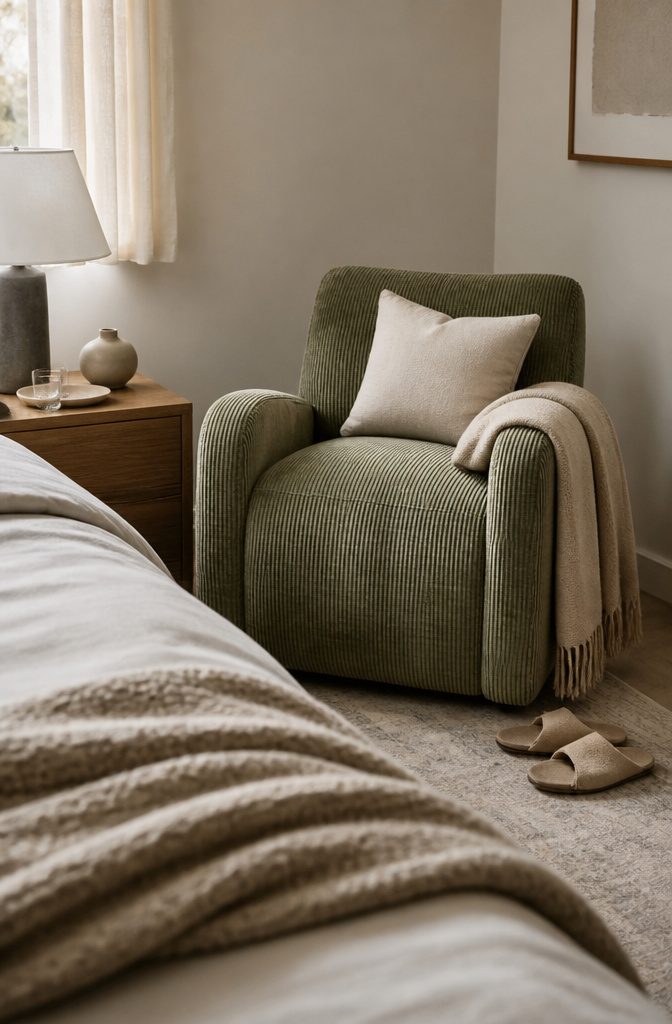
Choose corduroy, chenille, or sherpa over a stiffer performance weave. Performance weaves are built for a busy family room, but a bedroom chair gets used barefoot and in pajamas right before bed.
Texture does more than color to set the mood. A nubby corduroy or plush sherpa reads calmer than slick faux-leather, even in the same neutral shade.
For color, stay quiet: cream, oatmeal, dove grey, or muted sage.
Bold prints and saturated colors suit a living room, where a chair is meant to be the focal point. In a bedroom, a soft palette in a soft texture lets the chair recede into a room built for winding down.
Frequently Asked Questions
What size lounge chair fits a small bedroom?
Look for a chair under about 30 inches deep, which suits most standard bedrooms. Deeper chairs, such as a round lounger listed at 55 inches, need a dedicated corner.
Door and closet swing usually limits a chair more than its footprint does, so tape the chair’s outline on the floor and open every door fully before you buy.
Chaise, round, or wingback: which lounge chair in a bedroom is best?
A round, armless lounger is the easiest fit in most standard bedrooms, since you can get in from any side and it tucks into a corner.
A chaise needs a long, unbroken wall, and a wingback needs open space on both sides for its arms. In a very small room, choose the round lounger.
Can a lounge chair in a bedroom double as a guest bed?
A regular lounge chair can’t, but the convertible 3-in-1 sleeper chair in cream folds flat into a single bed for overnight guests.
It works as an everyday armchair the rest of the time, which suits a bedroom that occasionally serves as a guest room. Buy it for that guest role, not as a pet solution.
Is there a pet-friendly lounge chair for a bedroom?
Yes. The 2-in-1 pet-friendly accent armchair has a hidden cat house and storage, and its sherpa version adds a plush seat on top of the den.
The den is sized for a cat or small dog. Look for a real enclosed nook underneath, not an ordinary chair covered in pet-tolerant fabric.
What fabric works best for a lounge chair in a bedroom?
Corduroy, chenille, or sherpa. A bedroom chair gets used barefoot and in pajamas, so a soft texture suits it better than a stiff performance weave made for a busy family room.
For color, stay with quiet shades like cream, oatmeal, dove grey, or muted sage.