
Organic modern pairs natural, earthy materials with clean, modern lines.
The ratio decides whether it works: aim for 70% streamlined silhouettes and 30% organic elements. A track-arm sofa covers the 70%, and a woven jute rug covers the 30%.
Reverse it and the room turns heavy and rustic. Drop the organic side and it feels cold.
A Calm, Earthy Palette
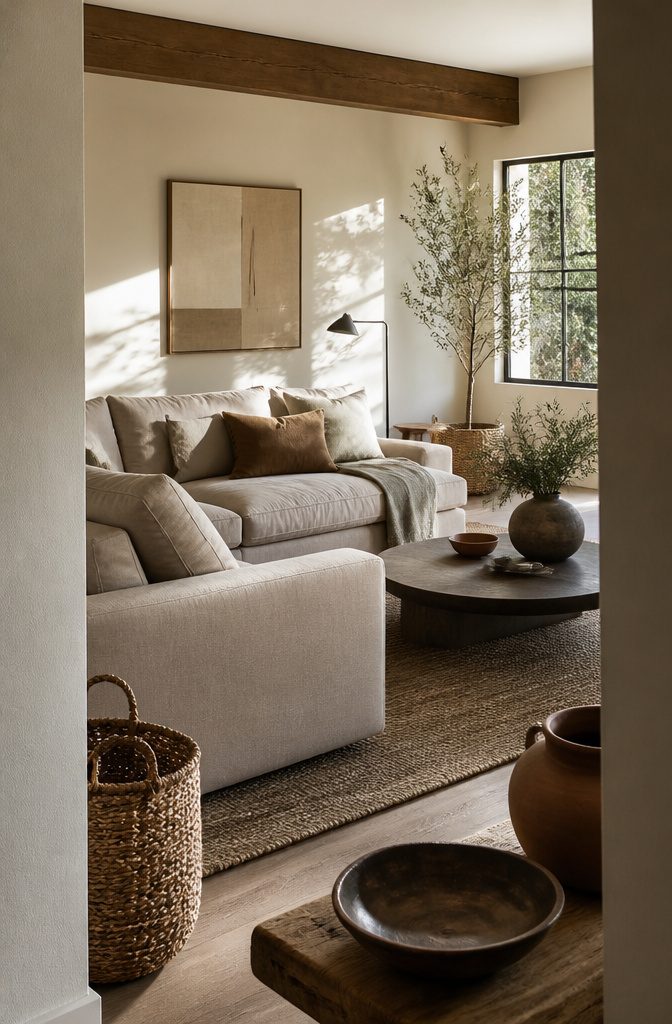
Build the palette in layers, starting with the walls:
- Base: creamy white, beige, soft gray or earthy brown. Benjamin Moore Chantilly Lace in a Satin finish is one wall option.
- Mid-tones: a taupe linen sofa, a mushroom area rug.
- Darks: matte black accents or charcoal cushions.
- Muted accents: sage green, terracotta, deep blue, olive greenery, honey rattan.
Don’t match every neutral exactly.
A seagrass basket a shade warmer than your linen cushions looks more natural than a perfect match. A honey-toned rattan mirror against cream walls adds warmth without any paint.
Keep the color quiet so the wood, rattan, linen and ceramics are what people notice.
Natural Materials and Texture
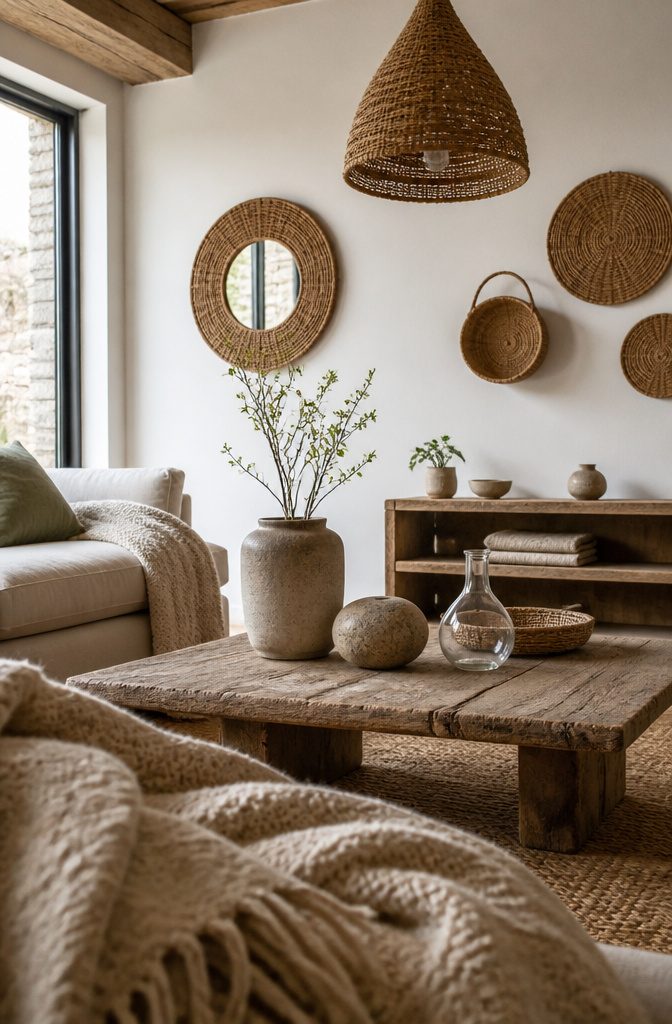
Wood, stone, linen and cotton add warmth to a modern room, and glass keeps it crisp.
Woven pieces in seagrass, rattan, water hyacinth or bamboo add depth. Leave materials close to their natural state, like weathered wood or chipped stone, so the room reads organic instead of polished.
Repeat one woven material across categories.
A seagrass pendant, woven wall baskets and a rattan mirror look unified because the weave connects them. Handwoven pieces vary, so the set never looks matched.
For a quick texture formula, use the 3–5–7 rule. Group 3 objects at different heights, such as vases, stones or ceramics.
Combine 5 textures, like linen, wool, wood, stone and rattan. Finish with 7 small accents, such as plants, prints or curios.
Clean-Lined, Sculptural Furniture
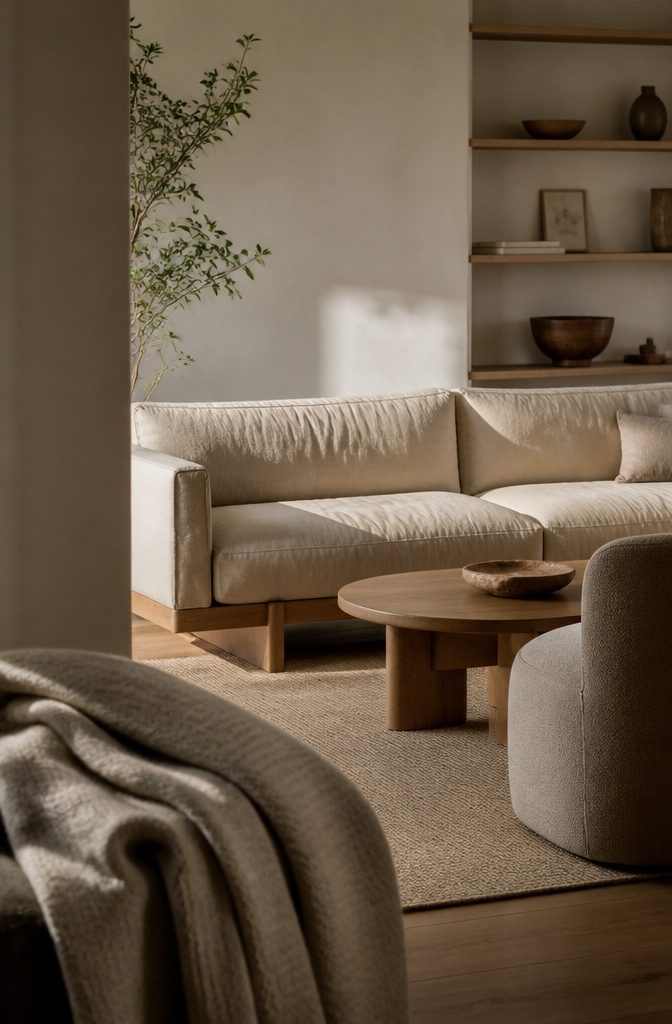
A straight-lined sofa looks best next to something that curves. Set a round or oval wood coffee table in front of it, or add one chair with a rounded back, and the sofa’s hard edges have something to play against.
Look for pieces with a clear shape and little ornament, such as a low track arm, simple legs, or a solid wood base.
Upholstery softens the rest.
A heavy-weight Belgian linen slipcover wrinkles naturally, and those creases blur crisp lines without changing the sofa’s shape. In a room this simple, one curved piece and one rumpled, tactile fabric do more than a pile of accents.
Layered Rugs and Textiles
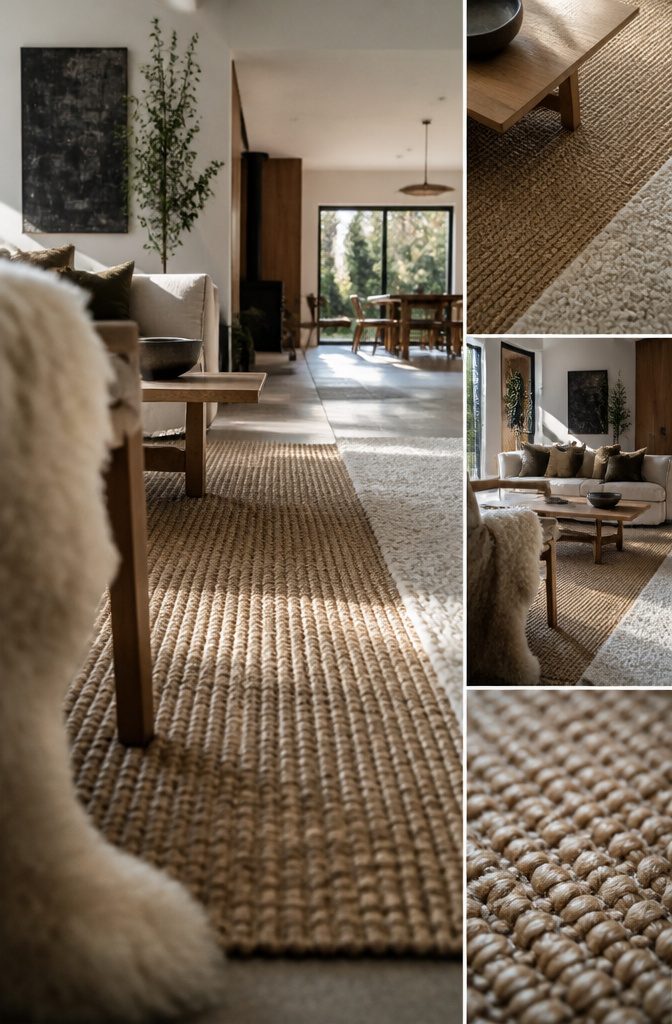
Start with the rug, and make it a natural fiber.
Sisal is the best pick for a living room, with wool, jute and hemp as the other good options. A rug softens an angular space, and in an open plan it marks where the seating area begins and ends.
On a budget, buy a 10 × 14 foot rug and have it cut down to 10 × 10 feet for $250. That is a better route than paying for a bigger rug you then have to fit around.
Throws, cushions and upholstery make the room feel relaxed. Raw shearling draped over an armchair or the end of the sofa adds a shaggy, uneven texture that sits well against smooth, clean-lined furniture.
Greenery
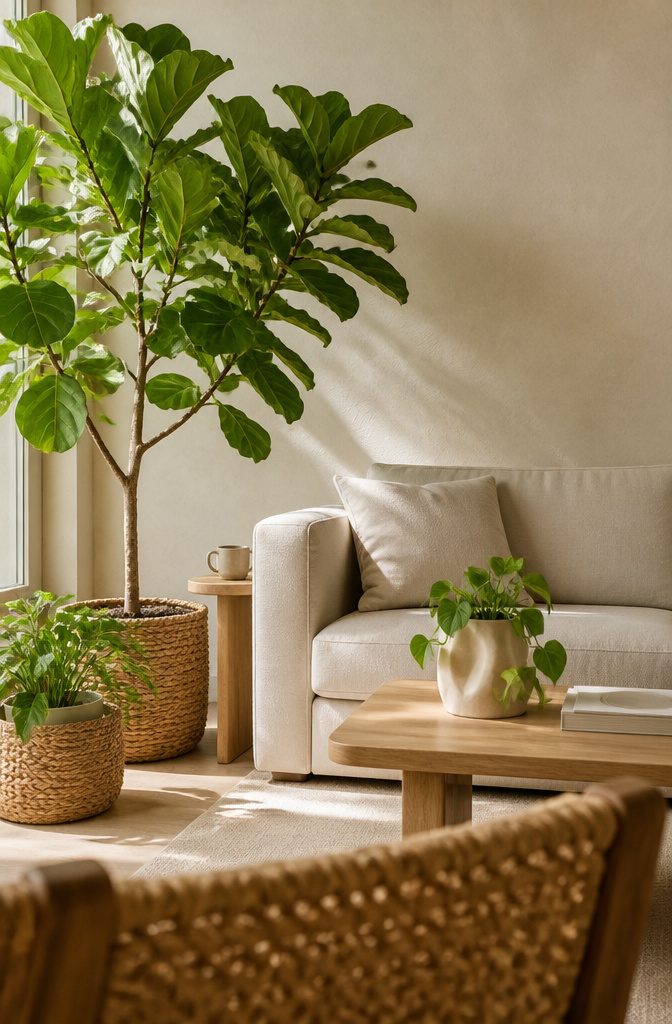
Choose one large plant with a strong shape, such as a fiddle leaf fig, bird of paradise, or olive tree, and treat it as a sculpture beside clean-lined seating. Its leaves soften the straight edges around it.
For smaller plants, set the plastic nursery pot inside a woven basket. Water hyacinth baskets work well, and you skip repotting.
The basket’s texture echoes the living texture of the leaves. Buy baskets in a few sizes, mix floor plants with tabletop ones for varied height, and keep the grouping asymmetrical rather than matched pairs.
Stop before the room feels busy. A pothos or succulent in a distinctly modern vase on the coffee table is often enough.
Natural Light and Lamps
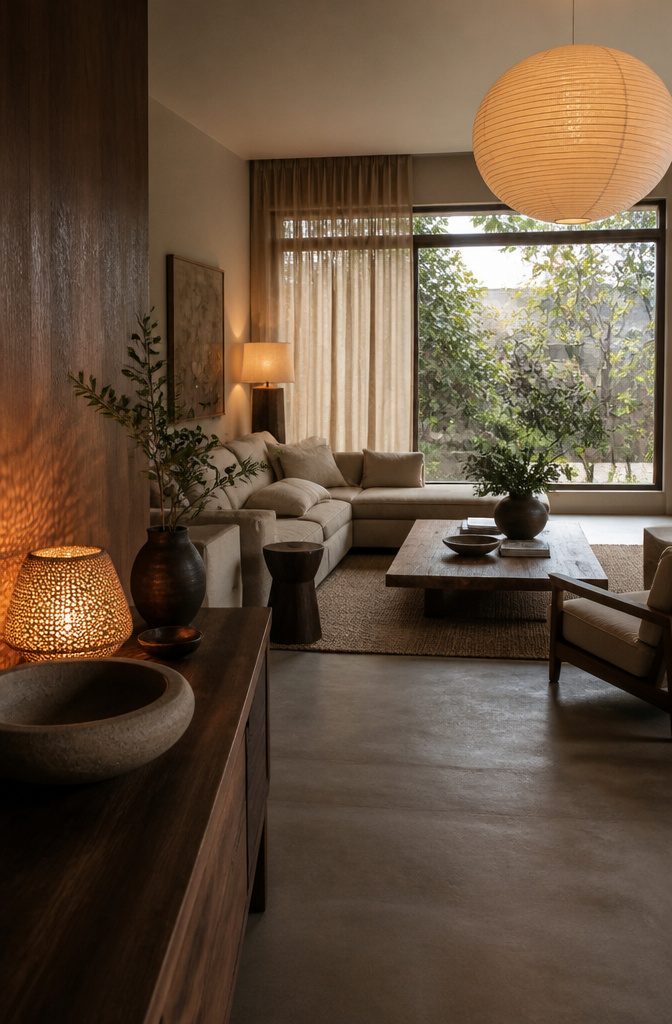
Swap every bulb for a warm white, then switch off the ceiling fixture for a week.
Light from low in the room shows the surface of wood and textured fabric, and an overhead fixture flattens both. Table and floor lamps with linen or paper shades do this job well.
For one statement piece, hang an oversized Isamu Noguchi Akari paper light sculpture.
Its ribbed washi paper turns the bulb into a soft halo and gives the heavier wood and stone below a weightless counterpart. A rattan or seagrass table lamp works too, casting dappled patterns on the nearby wall.
Keep window treatments thin and light so daylight does most of the work. Warm lamps then carry the same calm after dark.
Storage That Adds Texture
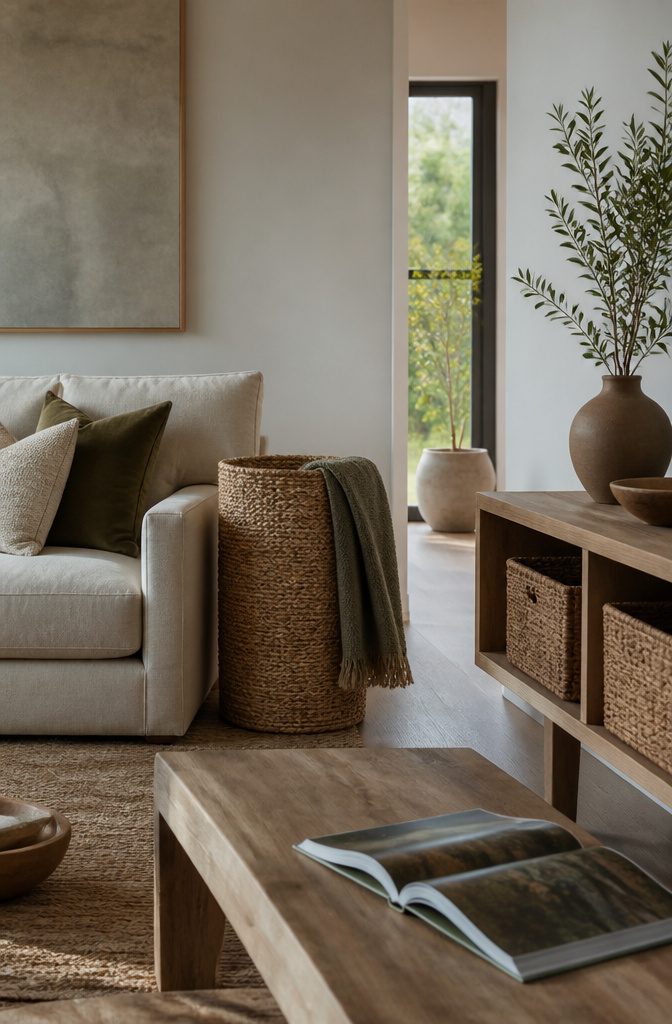
A tall, round water hyacinth hamper beside the sofa swallows throw blankets and magazines, and its vertical cylinder breaks up the long horizontal lines of the sofa, coffee table and media console.
The handwoven surface also catches daylight and scatters it, so the basket reads as texture instead of a storage bin.
On a shelf or console, a set of rectangular wicker baskets with a structured shape beats soft fabric bins.
They hold their edges when half empty, and they hide remotes, chargers and loose papers behind woven sides. Foldable sets also pack flat, which helps if you rent and move often.
Pick one tall basket for the floor and a matching set for the shelves. Mixing 4 different weaves in one room starts to look cluttered.
Mirrors and Artwork
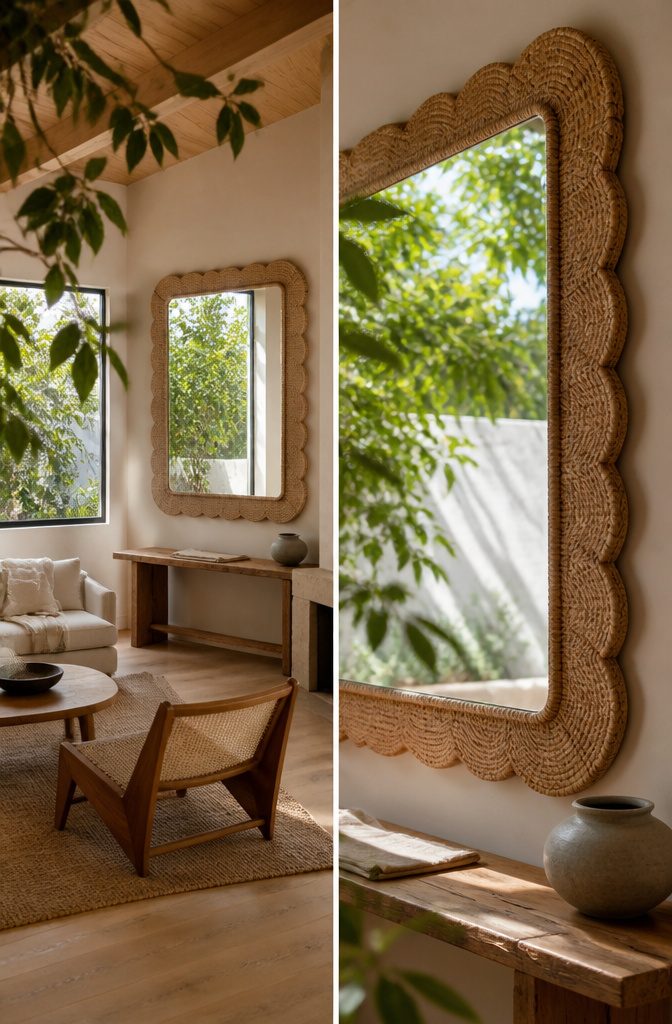
One large mirror in a wood or rattan frame does more for a living room than a cluster of small ones.
Hang it directly across from a window, with its top edge level with the top of the window, and it visually doubles that light.
Check what it will reflect first. Windows and greenery are good; clutter and dark corners are not.
Skip glossy or metallic frames, which fight the matte, natural look. A handwoven frame with a scalloped edge scatters reflected light into a softer glow than flat glass does.
If you’d rather use art, pick one big, simple piece instead of a gallery of small frames. Hang it above a console as the single focal point.
Furniture Flow and Zones
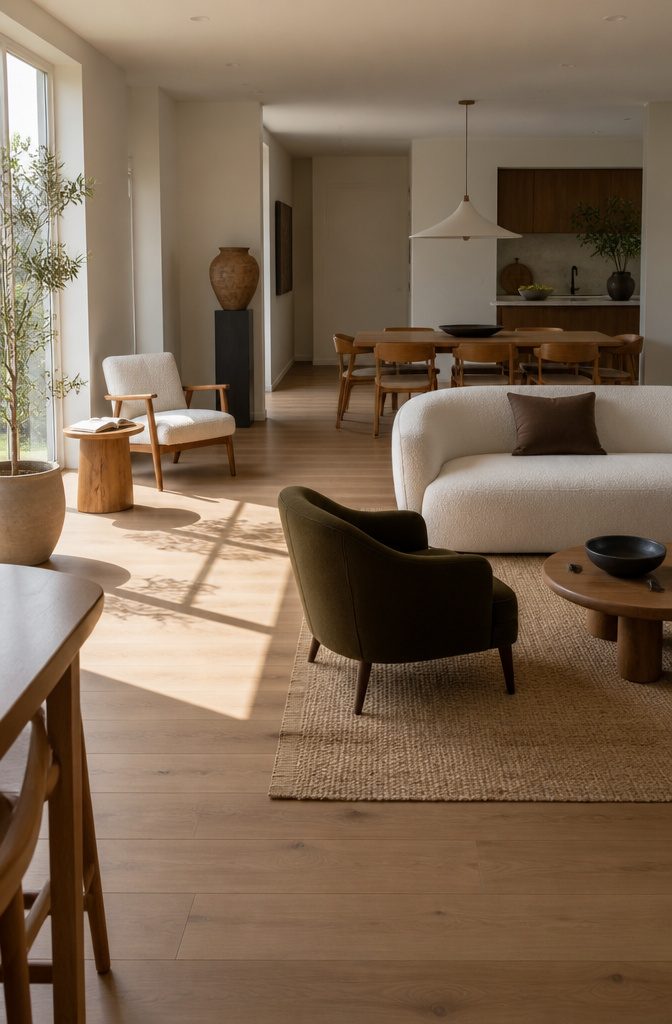
In an open plan, furniture does the job walls used to do.
A lounge chair near a window marks a reading corner, and a dining table at the center of its area marks where meals happen, so zones form without blocking the path between them.
Leave walkways clear of chair backs and table corners so people can cross the room without sidestepping.
Within the living zone, angle the sofa and chairs toward each other so everyone can talk at a normal volume. Pull seating off the walls into a loose group, since lining it along the edges leaves a dead middle.
A rug then ties the group together. Rest at least the front legs of each piece on it, and the seating reads as one island, separate from the kitchen and dining areas.
An Edited Room
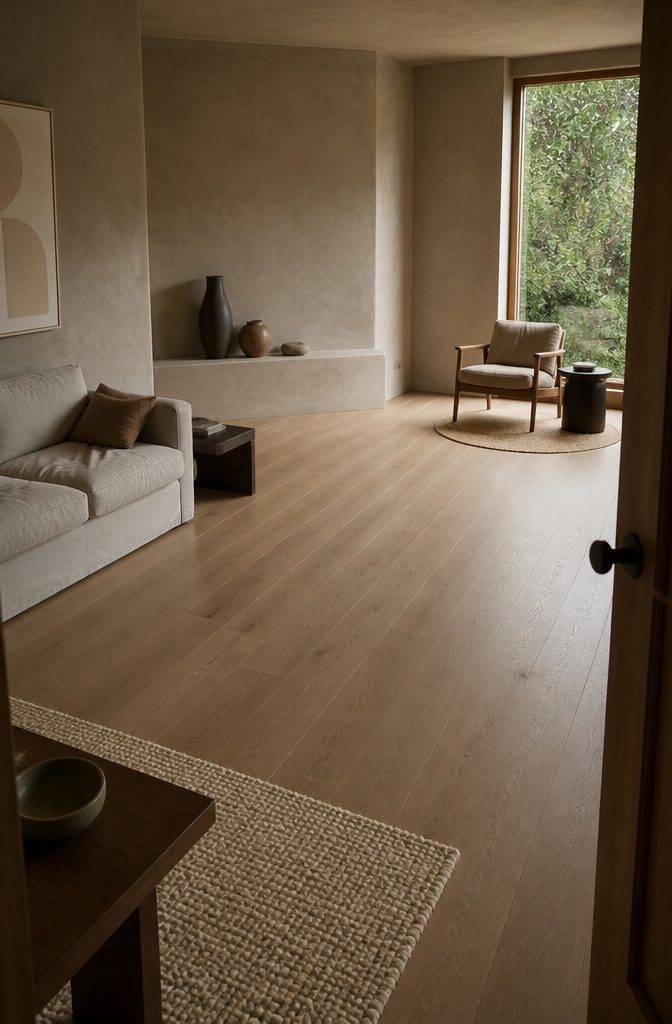
Choose fewer pieces and make each one earn its spot through texture, shape, or a real job in the room. A bare corner or an empty stretch of plaster wall is part of the design, not a gap to fill.
Negative space also divides a room. Put a chair and side table in one small hub, a sofa group in another, and leave open floor between them so each reads as its own area.
On shelves and tables, group 3 objects at varying heights instead of scattering single items around.
A tall vase, a mid-height ceramic, and a low stone make one unit. Skip the trailing macramé planters and the knick-knack on every surface, because clutter breaks the calm.
Mixed Materials and Finishes
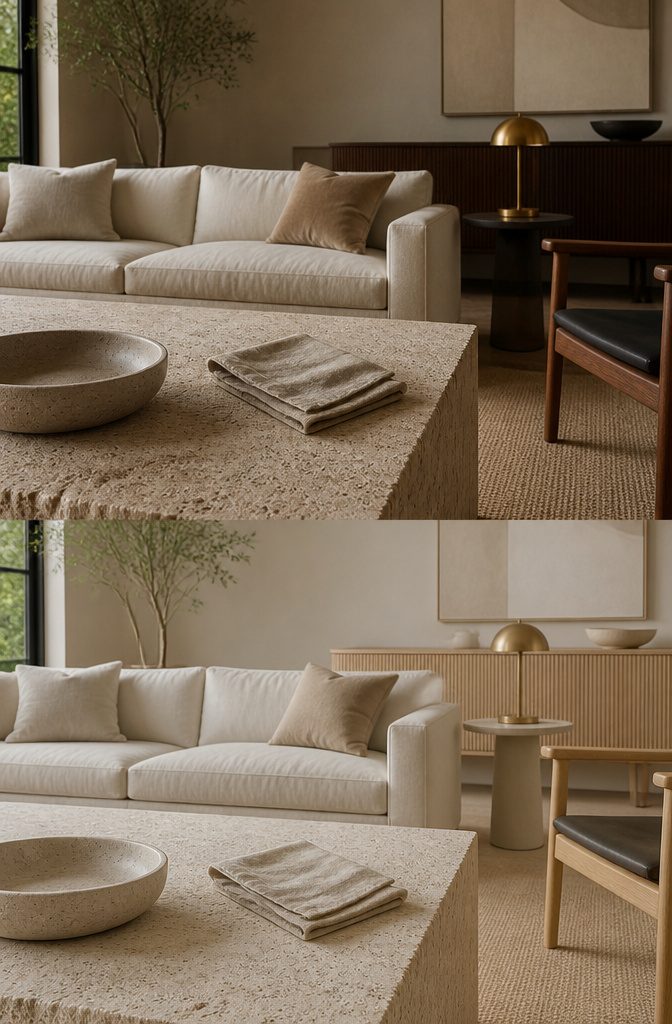
Pair every rough surface with a smooth one.
A honed travertine coffee table, with its matte, pitted face, looks right beside heavy-weight linen upholstery and a matte blackened steel frame. Skip polished marble and high-gloss lacquer, because the shine fights the porous stone.
Wood should never arrive as a matching set. Mix 3 wood tones, such as pale fluted oak, rich walnut and charred ash, so the room looks collected over time instead of bought in one trip.
For metal, choose unlacquered brass or oil-rubbed bronze over chrome or brushed nickel. Those finishes darken with handling, and that patina is what makes the room look lived in.
A Natural-Material Feature
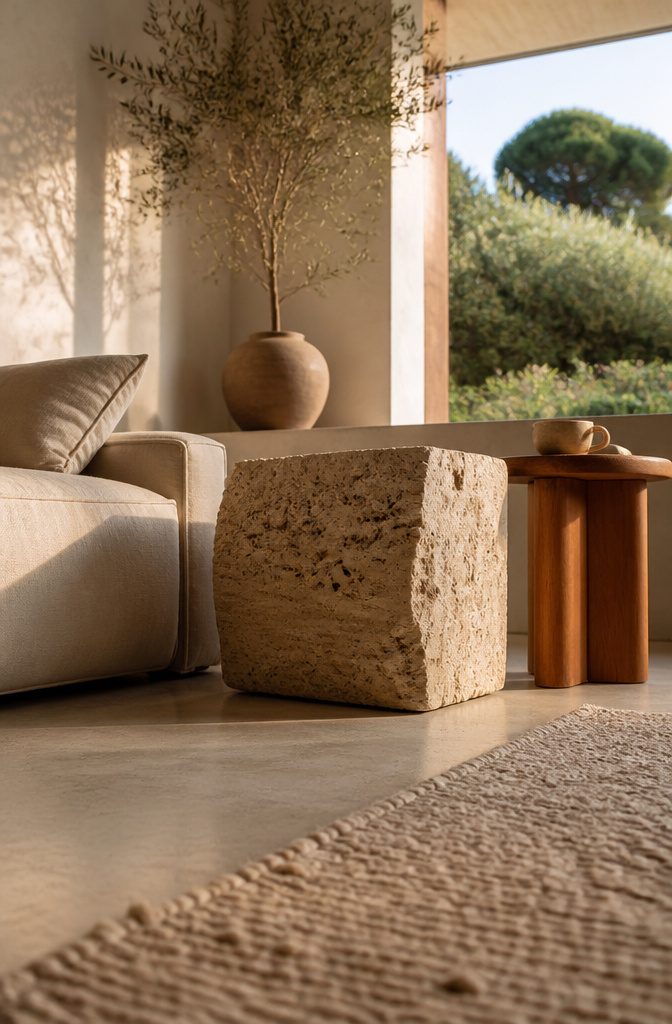
Choose one anchor and keep everything else quiet.
Limewash or Roman clay gives walls a cloudy, plaster-like finish that shifts as the sun moves across the room. You can brush limewash on yourself, while Roman clay is typically commissioned.
Both change the walls, so a renter needs the landlord’s okay first. Renters get more from a movable anchor: a Carrara marble, travertine or slate centerpiece, or a concrete stool.
Homeowners can go bigger.
A floor-to-ceiling plaster or raw concrete fireplace replaces a fussy mantel with one solid mass. At floor level, Shaw’s Floorté Hardwood Series in Brightened Oak floats over existing wood, so no demolition is needed.
The 70/30 Balance
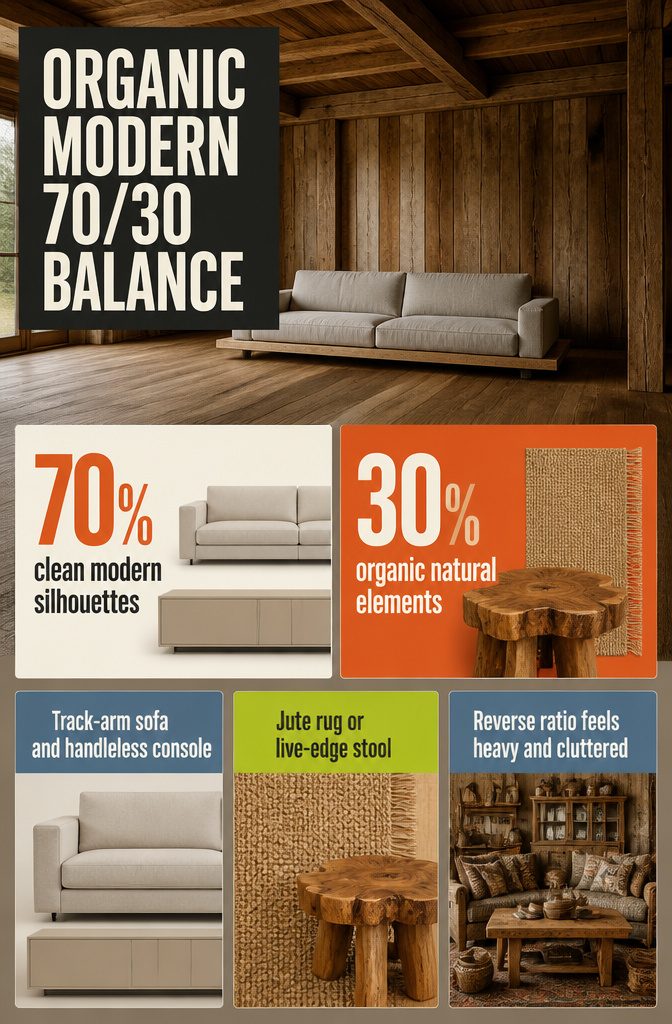
Organic modern pairs natural, earthy materials with clean, modern lines, so a room feels cozy and sophisticated at once. Aim for 70% clean, streamlined silhouettes and 30% organic elements.
A track-arm sofa and a handleless media console carry the 70%; a woven jute rug or a live-edge stool covers the 30%. Reverse the ratio and the room turns heavy, rustic and cluttered.
Drop the organic side and it feels cold. Set the modern base first, because adding texture to a sleek room is easier than adding sleekness to a timber-heavy one.
Farmhouse leans on reclaimed wood, distressed metal and vintage touches. Mid-century modern is more form-driven and less tied to nature.
Comfort and Easy Cleaning
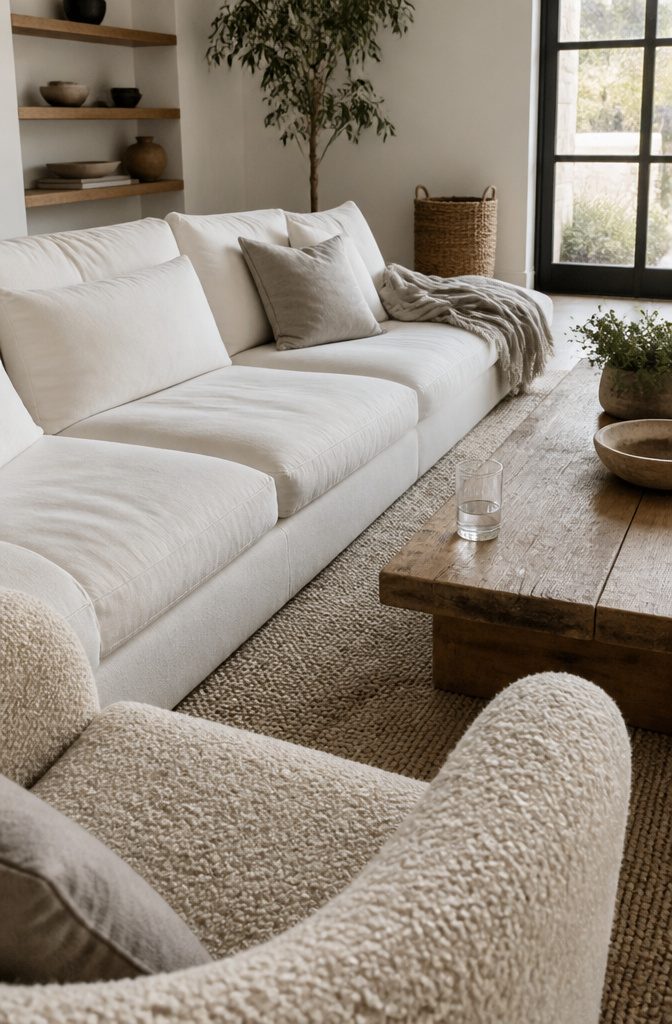
Organic modern is meant to be sat on, so choose upholstery for your household before you choose it for the photo. A white sectional covered in Crypton is stain resistant, not stain proof.
Spills still need prompt attention, and marinara won’t float away on its own. Cleanup takes about 5 minutes with water and a little liquid detergent.
With kids or dogs, white leather is the other practical route. It gives you the same brightness and wipes clean.
Skip boucle on the main sofa.
Boucle pills, snags on dog claws and holds crumbs, so limit it to one accent chair or a pair of pillows. A solid wood coffee table carries more of the look anyway.
Start With What You Own
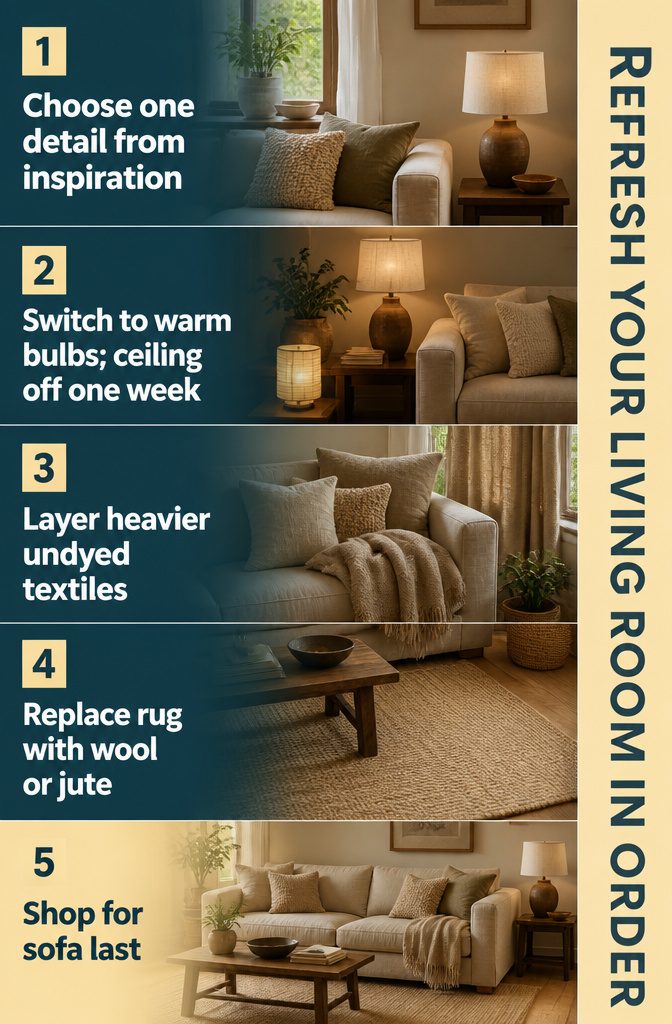
- Pick one element from your inspiration photo, such as the linen lamp shade or the nubby throw, and skip copying the whole room.
- Swap every bulb to a warm white and turn off the ceiling light for a week. Add light low in the room with table and floor lamps in linen or paper shades. Wood and textured fabric need side light to show their surface, and this step costs the least.
- Change the cushion covers, throw and curtains to heavier, rougher weaves in undyed tones: nubby wool, washed linen, a little jute or cotton rope. Texture matters more than color.
- Replace the rug if it still feels wrong. Wool or jute is the easiest to live with before you commit further.
- Shop for a new sofa last, after the light and textiles show what the room still lacks.
Frequently Asked Questions
What is the difference between organic modern and mid-century modern?
Organic modern is a more contemporary, nature-centered evolution of mid-century modern. Mid-century design is more form-driven, while organic modern puts greater weight on organic shapes, natural textures and a connection to the outdoors.
What is the difference between organic modern and farmhouse style?
Organic modern feels polished and serene, and farmhouse feels cozy, lived-in and full of character.
Organic modern pairs sleek lines with light wood, stone and ceramics. Farmhouse relies on reclaimed wood, distressed metal and vintage touches.
What colors are used in an organic modern living room?
Start with warm neutrals like creamy white, beige, soft gray or earthy brown on the walls.
Add mid-tones such as taupe and mushroom, then muted accents like sage green, terracotta, deep blue, olive and honey rattan, with matte black for contrast. Keep the color quiet so the materials get the attention.
Can you mix walnut and oak in the same room?
Yes.
Mixing 3 wood tones, such as pale fluted oak, rich walnut and charred ash, makes a room look collected over time. A single matching wood set tends to look like it was bought in one trip.