
Ideas here run from a $26.10 peel-and-stick wallpaper to a $1,142.58 Murphy bed, and the one that fits depends on what your room lacks most: floor space, light or storage.
The Murphy bed makes sense only if it becomes your main bed. Otherwise a cheaper piece, like a folding screen, usually covers the same need.
1. Color and Peel-and-Stick Wallpaper
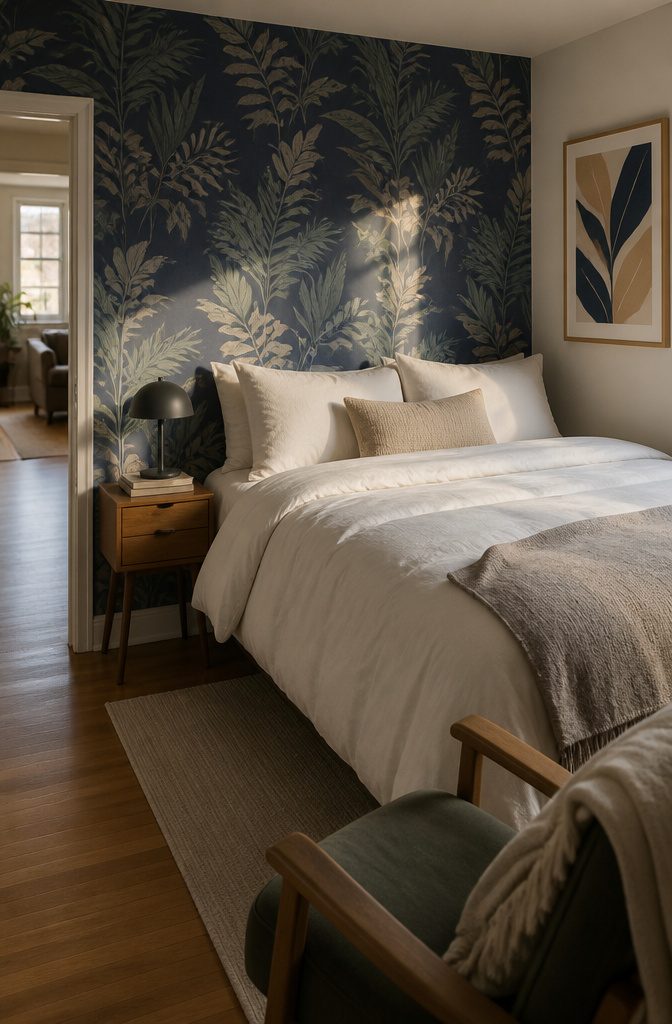
Traditional wallpaper rarely gets a landlord’s okay, so peel-and-stick wallpaper is the renter’s route to pattern.
The Scott Living Indigo Borneo at Amazon costs $26.10 (prices may change). It goes up easily and comes off without damage when you move or want a change.
Use it on one wall only: behind the bed, around a breakfast nook, or in a small entryway.
A single deep indigo accent wall adds color and personality without shrinking the rest of the room. Pair it with artwork on the other walls so the pattern doesn’t compete.
Recommended Products

3D faux brick wall panels are made of high quality PE foam.Tasteless, non-toxic, formaldehyde free, no release of harmful substances.The surface is waterproof and dustproof, easy to clean.

Unique Design: This boho wallpaper features a soft beige and light brown leaf pattern on a white background, accented with geometric lines, adding natural elegance and vibrant energy to your space
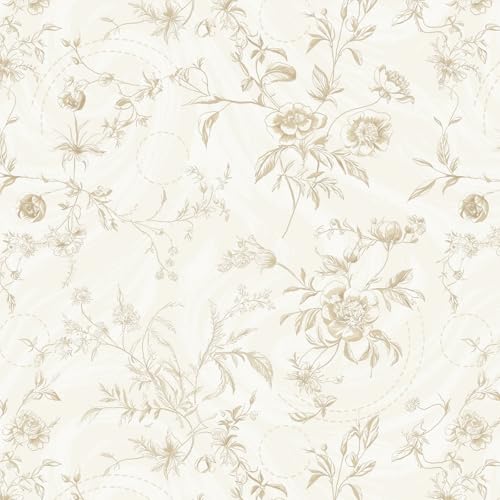
Design: Inspired by French gardens, exuding elegance and romance, a soft beige background features light brown floral branches and leaves in a scattered, natural arrangement. Delicate brushstrokes form varied floral patterns, while the harmonious color scheme captures the romantic essence of a French garden, bringing warmth and an inviting atmosphere into your home
2. A Cohesive Palette
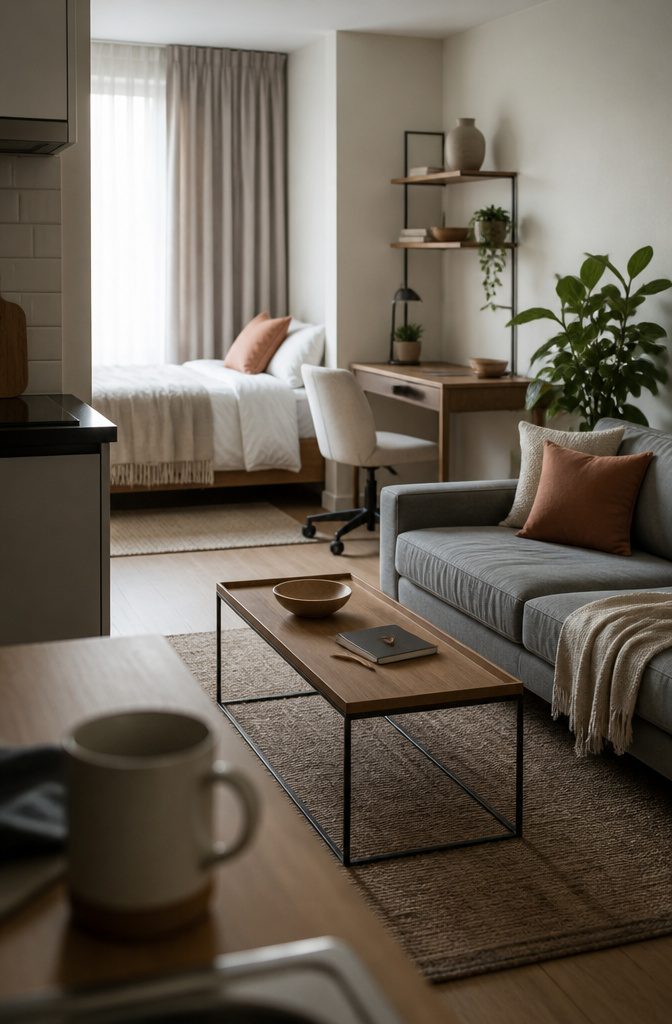
Too many contrasting colors make a small apartment feel busy, because the eye treats every clash as an edge.
A neutral or monochrome palette removes those edges, so the sleeping, working and relaxing areas read as one connected room instead of three cramped ones.
Pick one base shade and one or two companions, then repeat them in every zone.
The same warm white can show up on the bedding and the desk chair, and the same gray on the sofa and the curtains. Repeat each shade in at least two zones, so nothing looks like a one-off.
Vary texture instead of color, or the room goes flat. Save bolder choices for one accent spot.
Recommended Products

Instant Setup & Space-Saving Storage: No assembly required - simply unfold this freestanding 4-panel bamboo room divider. Expands to 67"H x 61.4"W (each panel: 15.35"W) for large spaces. Folds flat in seconds when not in use, making it ideal for apartments, studios, or seasonal room adjustments.

Dimensions & Ready-to-Use Design - This 5-panel brown bamboo divider expands to 67" H x 76.75" W; each panel measures 15.35" W. Freestanding and fully assembled - no setup required.
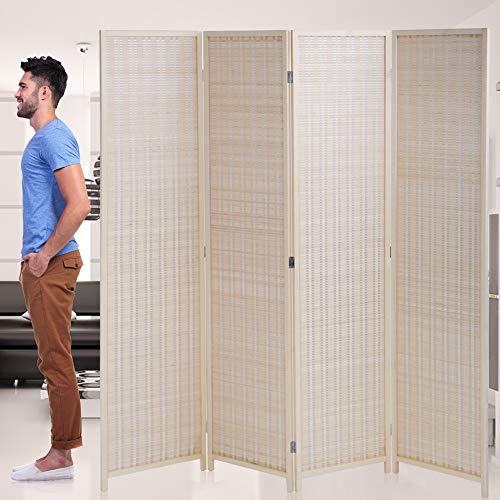
👏【PROTECTING PRIVACY】:Our 4-panel room divider is specifically designed to divide the room into different areas and create a private space, and add more decorating options to your space. while adding a touch of modern design style. Tightly woven wicker strips block nearly all light—ideal for creating sleep or study spaces. Room divider wooden privacy screen partition wall.
3. Fold-Away and Nesting Pieces
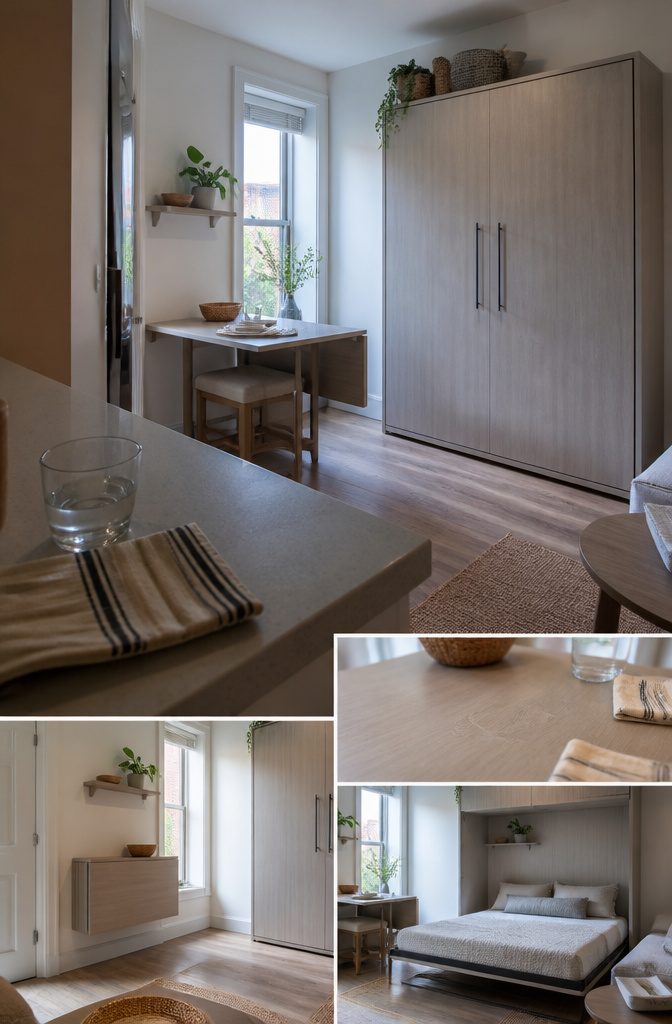
A Murphy bed frees the most floor.
The Merax Murphy Bed with Cabinet costs $1,142.58 on Amazon, and folded up it reads as decorative furniture with built-in storage, so guests aren’t lingering beside your bed. For a renter, that price only makes sense if it’s your main bed.
Drop-leaf tables fold to a narrow strip against the wall and open for meals or work.
Nesting tables come in sets of 2–4 that stack under one another. West Elm’s Cassian set of 2 is $1,098, which is a lot for two small tables.
A drop-leaf covers the same need for much less, so it wins on budget. A vanity with a stool that tucks underneath gives you a desk or dressing spot that vanishes the same way.
Recommended Products

2-in-1 Murphy Bed: This Murphy bed cabinet can be used not only as a bed at night but more importantly, it can also be used as a farmhouse storage cabinet for decoration and storage when it is stored by day. Our farmhouse cabinet bed makes good use of space, is great space optimization for small apartments, home offices, guest rooms, or living rooms.

【Dual Functionality】Bed & Storage Cabinet, maximize your space effortlessly with our Murphy bed's dual functionality. Use it as storage cabinets when folded, or unfold it into a comfortable bed when needed, ensuring clutter-free spaces

【2-in-1 Murphy Bed Queen】Retracts into a compact cabinet measuring 62.6"W x 24.2"D x 43.3"H to save space. Unfolds into a bedframe measuring 81.5"L x 62.6"W x 43.9"H to host overnight guests instantly, ideal for small homes. Mattress not included
4. Rugs That Define Zones
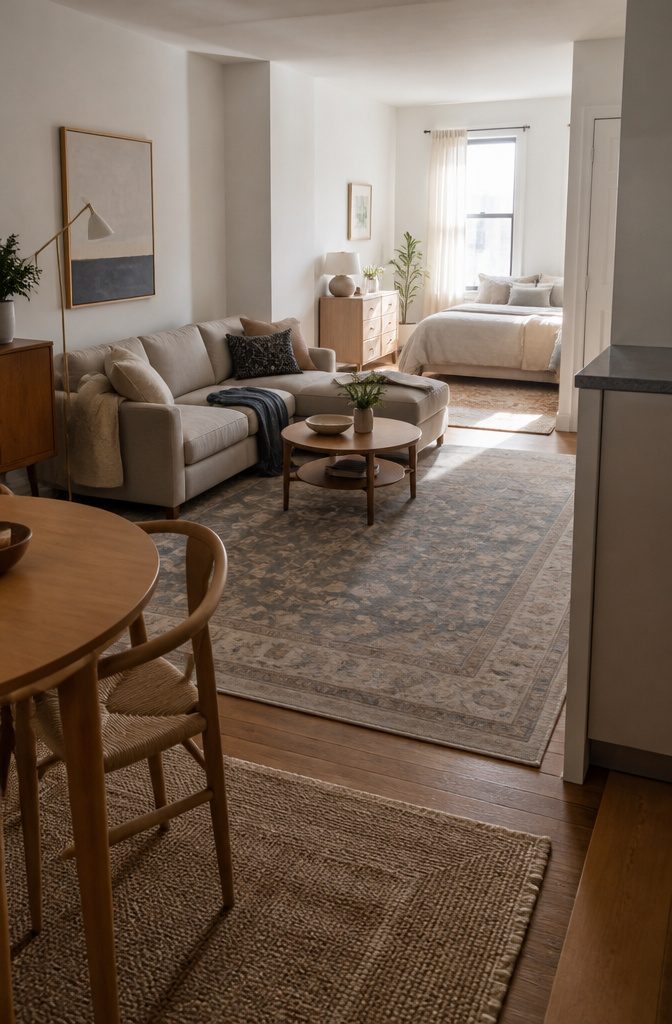
In a studio, a rug draws the boundary a wall would.
Set one under the sofa, another under the bed, and a third under the table, and the room reads as a living area, a sleeping area and a dining area instead of one open box.
Color can change from zone to zone.
A moodier tone in the living area and a lighter hue on the bed work well together when one rug carries both. A Loloi rug did this in a styled studio, and the space felt cohesive and intentional.
Buy a rug on the larger side. Small furniture is the usual instinct in tight square footage, but a bigger rug makes the room look roomier.
Recommended Products
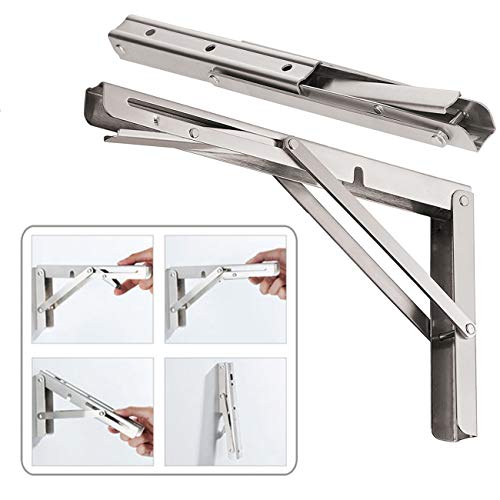
No Paint, More Durable - The folding shelf brackets are constructed of Type premium grade stainless steel, no paint off, more durable. Surface brushed treatment, build to resist daily scratches, corrosion and tarnishing. Throw away your paint shedding brackets

45" Wide Versatile Floating Desk: This wall mounted drop leaf table functions as a floating desk, kitchen shelf, garage storage, and more, making it perfect for small spaces. Simply unfold when needed and fold down to save space.

Maximize Your Living Space: The CYGJSYEA wall-mounted fold-out table offers a spacious 39.4" x 19.7" work area that neatly folds away against the wall, ideal for tight kitchens, laundry spaces, home bars, and dining quarters
5. Room Dividers
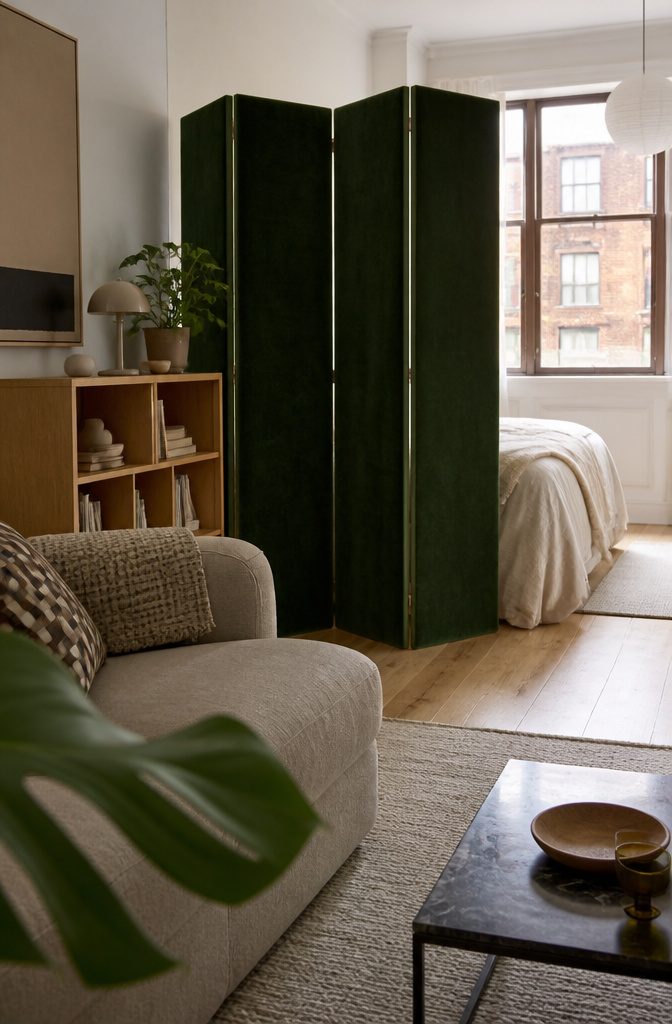
A folding screen is the cheaper way to separate your bed from your sofa.
The Everly Quinn Wayt Velvet Folding Room Divider costs $180.25 at Wayfair, and it hides a pet bed, workout gear, or a laundry pile as easily as the bed.
The IKEA Kallax Shelf Unit costs $259.99, which is $79.74 more. In return it holds books and accessories and forms a dense "wall" that gives the sleeping area real privacy.
For a weekend budget, the screen wins, and it folds flat when you want the room open. Choose the Kallax if you need storage anyway and would otherwise buy a separate bookcase.
Recommended Products

DESIGN: An optical tumbling-block grid crafted from stitched hair-on-hide patches establishes a clean, textural modern presence. Expect the tone to shift with your light and screen settings

Designed to withstand everyday wear, this 5' 1 x 8' area rug is the perfect size for living rooms, bedrooms, and home offices, or anywhere you want to add a touch of cozy luxury.

Scalloped Border, Clean Character: A softly shaped edge adds decorative interest to the simple bordered design. The deep neutral tone pairs easily with black, white, beige, wood and modern interiors.
6. Furniture With Two Jobs
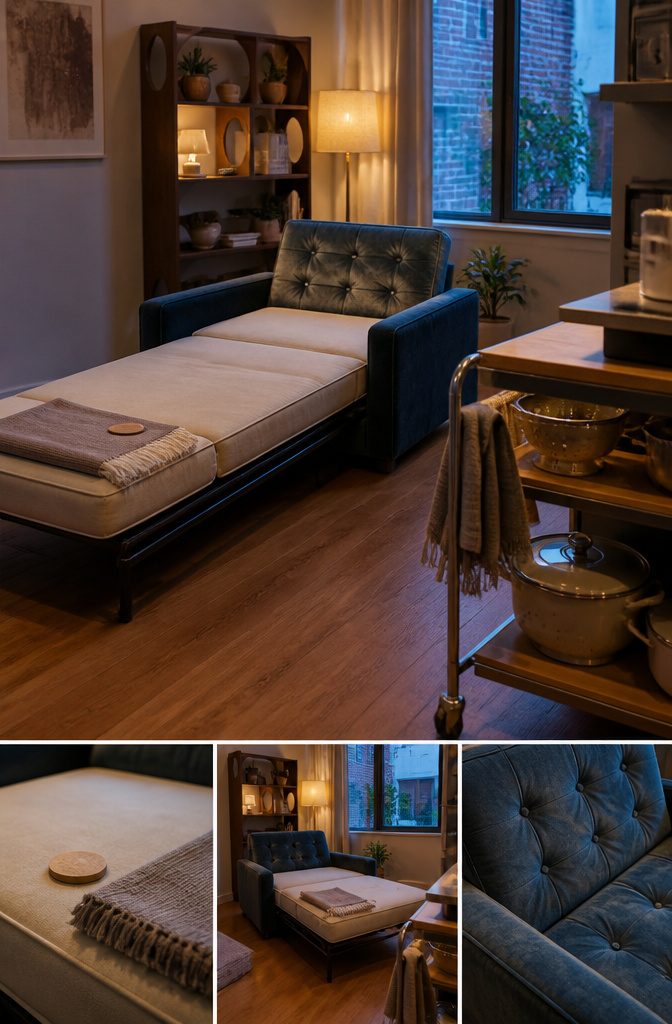
A sleeper chair is the best guest-bed move for a small living room. Article’s Sven Tufted Velvet Sleeper Chair costs $999 and looks like a regular armchair, yet it unfolds and extends larger than a twin mattress.
A daybed gives you a sofa by day and a bed at night. Put a sculptural bookcase beside it and the shelves hold a lamp and a book like a bedside table while the piece itself reads as art.
In the kitchen, a rolling cart gives you the most flexibility for the least money.
The Amazon Basics 3-Tier Metal Rolling Utility Cart is $34.17. Use it as a mobile pantry for cookware that won’t fit your cabinets, or roll it out as a serving cart for guests.
Recommended Products

Leopard Print Design: Our Leopard Print Peel and Stick Wallpaper features a stunning and trendy leopard print design, adding a touch of wild and exotic style to your space. The realistic pattern captures the beauty and elegance of these magnificent animals, creating a statement piece for any room.

Boho design: With leaves and Arch pattern, it is easy to create a casual and elegant environment, providing you with a better visual effect. Size: 118.1 "x17.3"

Product Information: Brick peel and stick wallpaper. Size: 17.3"x78.8" ,with an area of 9.45 square feet. Material: PVC/Vinyl
7. Closed Storage and a Closet Nook
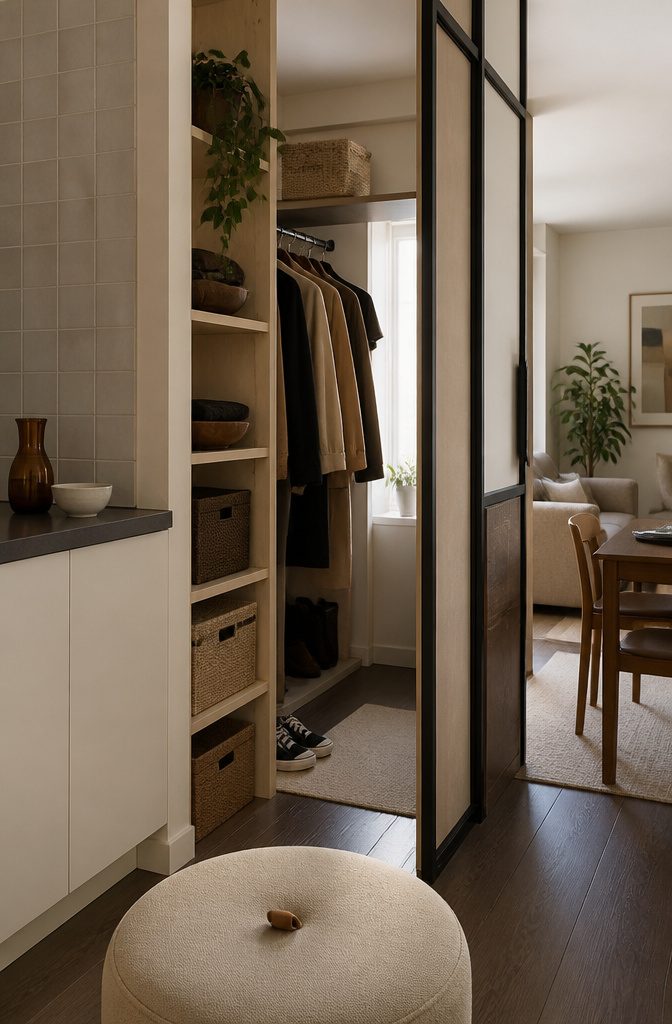
Clutter comes in two kinds. Piles of mail and stacked magazines are the obvious one.
Visual clutter is the other: a toaster, blender and coffee maker all parked on the counter, or too many chairs jammed around the table. Edit your belongings first, then store what’s left.
Keep surfaces clear, or at least pared down to a few things you use daily, and put the rest behind cabinet doors, in lidded baskets, or inside a lidded ottoman that also works as a seat.
If the apartment has no closet, build one.
Claim an unused corner or awkward niche and wall it off with a room divider or bookshelves. The result is a slim walk-in for clothes, shoes and accessories, which beats bins under the bed.
Recommended Products

☀【Flexible panel & easy to storage】Our room divider is made up of four panels of the same size, which can move the shape of your space or block the part of your room as needed. Completely folded up for storage.room divider screen wood 4 panel room divider.

NOTICE: If the fabric of the screen you receive has stains, please leave the screen in a well-ventilated area. The stains should fade over time.

Freestanding mounting: 86"W x 69"H, with each of the 4 panels spanning 21.5" wide
8. Vertical Storage
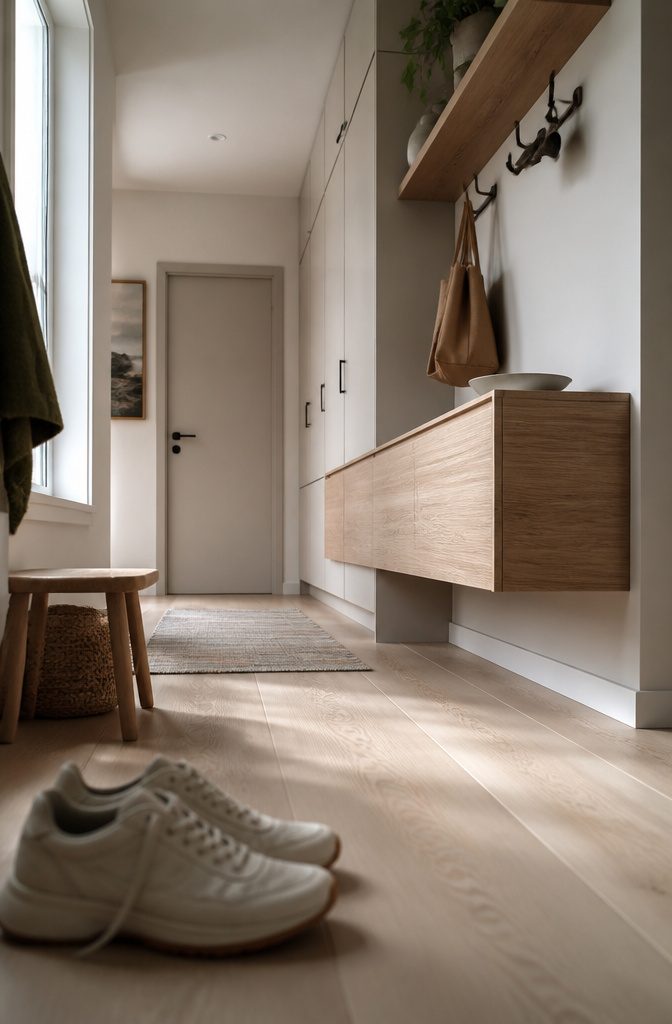
Floor space is the one thing a small apartment can’t gain, so use the wall.
Floating shelves, tall built-in cabinetry, hooks, racks and a vertical gallery wall pull the eye upward, which makes the room read taller. A wall-mounted desk gives you a work corner without a desk’s legs and footprint.
In a tight entryway, a legless wall-mounted console like the ValiaiDesign model ($124.35 on Etsy) leaves the floor below open for shoes or a pet food bowl.
In the bathroom, Pottery Barn’s over-the-toilet ladder shelf ($299) holds spare toilet paper, towels and skincare, which clears the counter and the space under the sink. At $299 it is the pricier fix, so start with the console.
Recommended Products
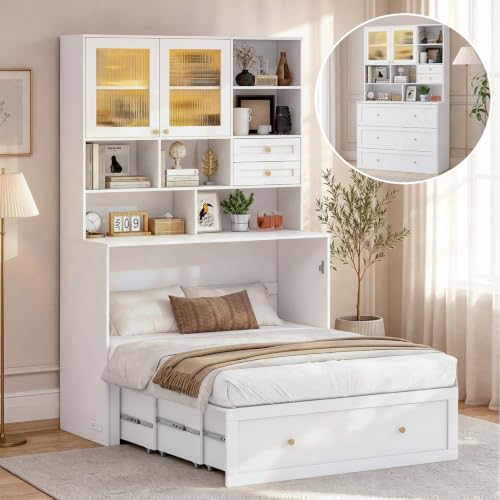
【Space-Saving Murphy Bed for Any Room】Transform your space in seconds with this modern Murphy bed. When folded, it functions as a stylish storage cabinet with open display shelves and concealed storage. Simply pull it down whenever an extra sleeping space is needed, making it perfect for guest rooms, bedrooms, apartments, or home offices.

【2-in-1 Murphy Bed Queen】Retracts into a compact cabinet measuring 62.6"W x 24.2"D x 43.3"H to save space. Unfolds into a bedframe measuring 81.5"L x 62.6"W x 43.9"H to host overnight guests instantly, ideal for small homes. Mattress not included
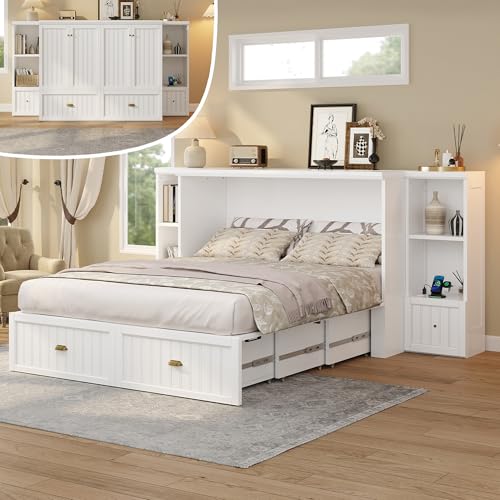
【Multifunctional Bed Cabinet】Transform a sleek cabinet into a comfortable double bed within seconds. This 2-in-2 design is an ideal solution for guest rooms, small apartments, home offices, and studio spaces
9. Layered Lighting
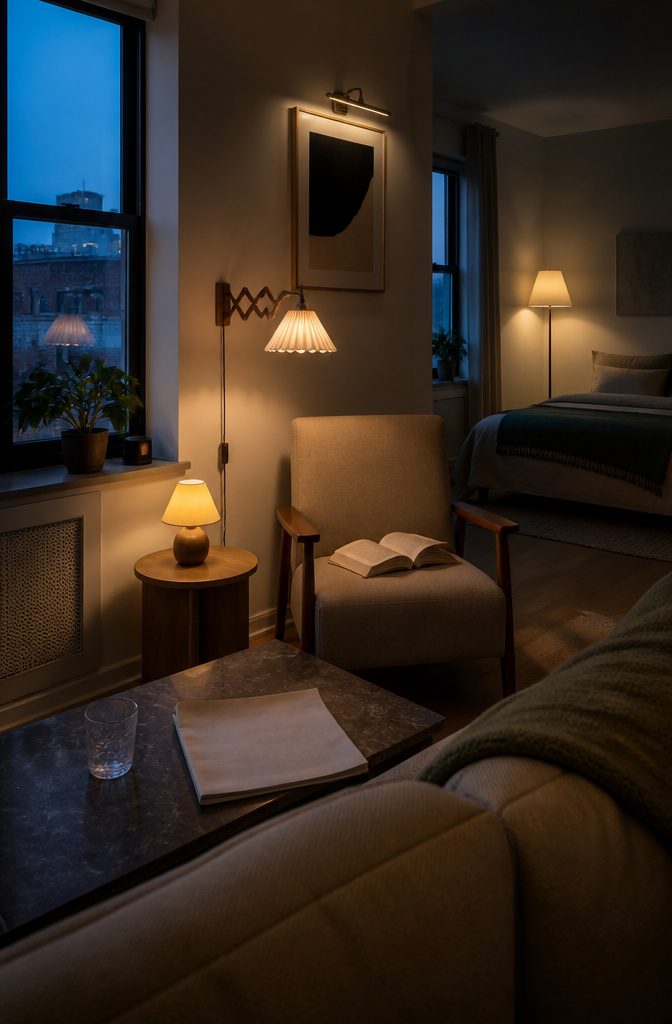
One overhead fixture flattens a small apartment. Sconces and art lights at different heights pull the eye to what you want seen, like a framed print or a reading chair, and leave a cluttered corner in shadow.
The same layers split a studio into zones, so a lamp-lit sleeping area feels separate from the kitchen, and the room reads as larger.
Renters can skip the electrician. The Anthropologie Greta Scalloped Accordion Plug-in Sconce costs $278 and needs only a nearby outlet, with no wiring or permanent change.
Place it at the bedside or next to a living room chair. That price is a splurge, so buy one for the spot you use most.
Recommended Products

【Wall Mounted Shelf】This folding table consists of heavy-duty steel supports, a sturdy bottom support structure, and medium density fiberboard, with a weight capacity of up to 80 pounds. Sized at 23.6x11.8x 5.9 inch, this versatile piece isn't just a desk—it also serves as a study area, dining spot, or display table.

Space-Saving Foldaway Design:This wall-mounted folding table can be fully folded flat against the wall when not in use, leaving no protruding parts to occupy indoor walking space. It helps you make full use of blank wall surfaces instead of placing freestanding furniture, which works perfectly for compact kitchens, small bathrooms and tiny home offices to optimize your limited interior layout.

【Space Saving】Ideal for small apartments and limited spaces. Our drop leaf table would fully folded and stored in a small corver when not in use, maximizing your space.
10. A Low Bed
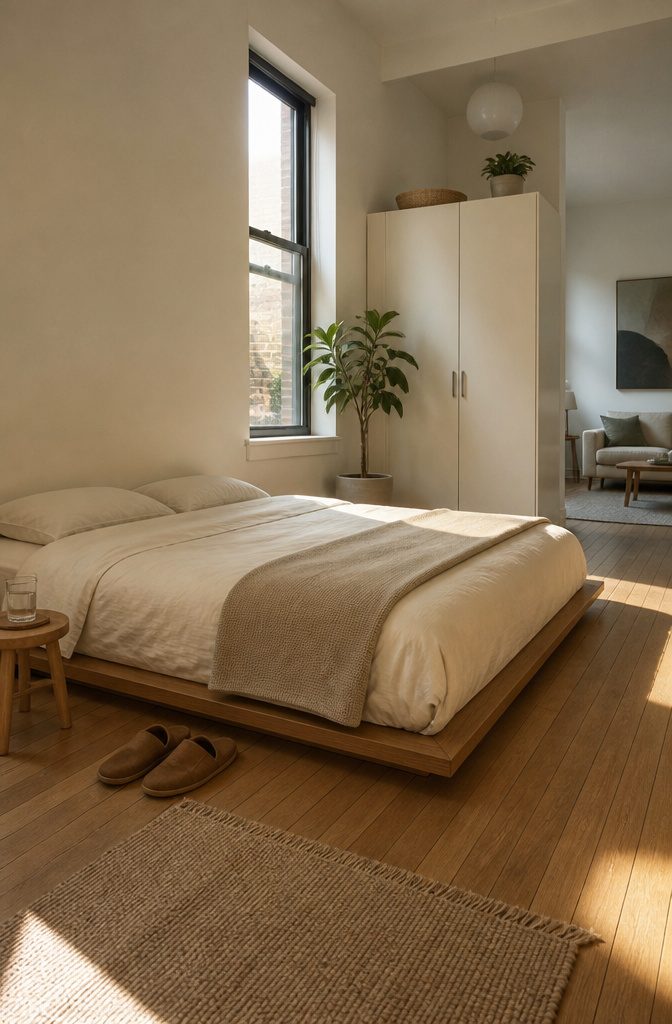
A low platform bed keeps the biggest piece of furniture in a studio close to the floor, so the walls and windows look taller by comparison.
Skip the frame and set the mattress directly on the floor, and the effect goes further: the room feels airier, calmer, and more minimal.
The cost is real. You drop down into a low bed and push up out of it, which gets old fast with stiff knees or a sore back.
There is also almost no room underneath for bins or drawers, so any storage you planned there has to move elsewhere.
If you count on under-bed storage or want an easy exit from bed, skip the floor mattress. A low frame is a safer middle step.
Recommended Products

Designed to withstand everyday wear, this 8' x 11' area rug is the perfect size for living rooms, bedrooms, and home offices, or anywhere you want to add a layer of luxurious comfort.

Designed to withstand everyday wear, this 10' x 13' 1 area rug is the perfect size for large living rooms, master bedrooms, or open floorplans, or anywhere you want to add a layer of cozy comfort.

Scalloped Border, Natural Character: A softly shaped edge adds decorative interest without making the space feel busy. The muted green tone pairs easily with cream, beige, wood and botanical accents.
11. Mirrors Opposite Windows
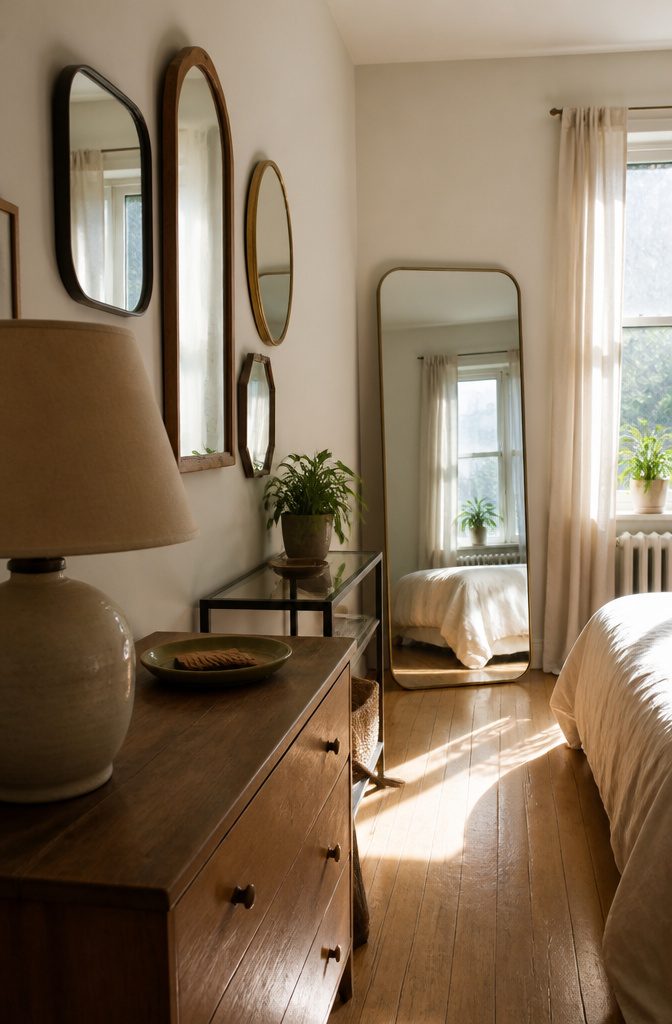
Hang or lean your largest mirror on the wall directly opposite a window, so daylight bounces back into the room instead of stopping at the far wall.
A floor-length pier mirror works well here, and leaning it against the wall means no drilling, which suits a rental.
Then add several mirrors of different sizes in the same room. Small accent mirrors over a dresser, beside the bed, or above a console spread that light around and add depth.
Change up the frames, mixing finishes and shapes, so the group reads as collected rather than matched. In a studio, the extra mirrors also amplify lamp light after dark, not just daylight.
12. Seating Near Windows
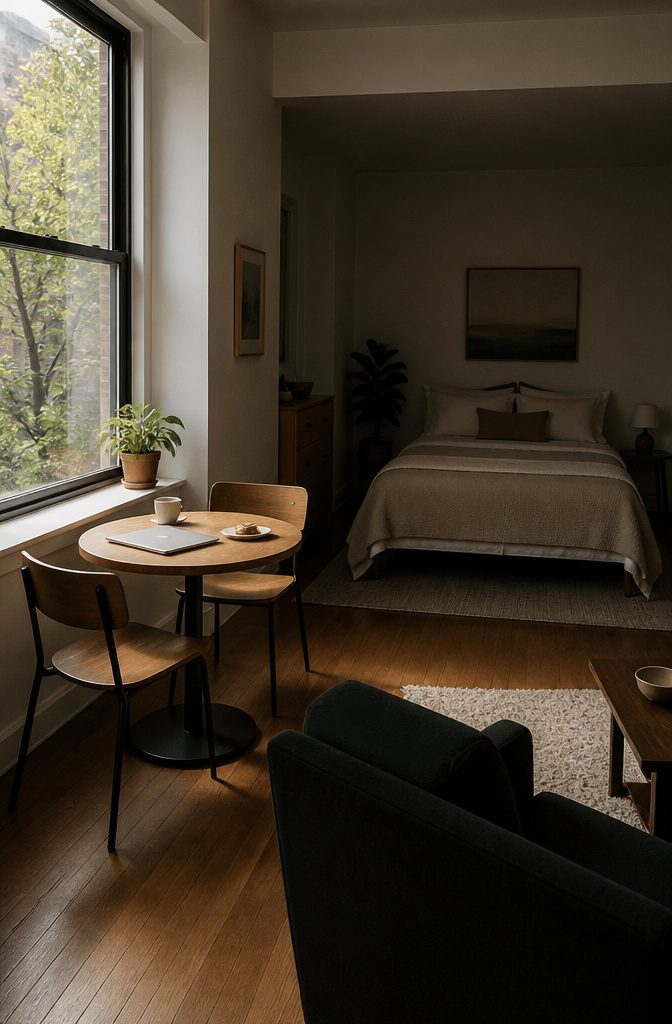
Start with the windows, not the walls. In a studio, a couch or a bistro table belongs next to the glass, because that is where you spend your daytime hours: morning coffee, laptop work, an early dinner.
Push the bed farther back into the room, where the dimmer light suits sleep and you won’t miss the sun.
If you have only one window, choose the bistro table over a full dining set.
It fits in front of the glass without blocking it and still works as a spot to eat or work. Moving furniture costs nothing, so try the layout for a few days before you buy anything new.
13. Slim and Transparent Furniture
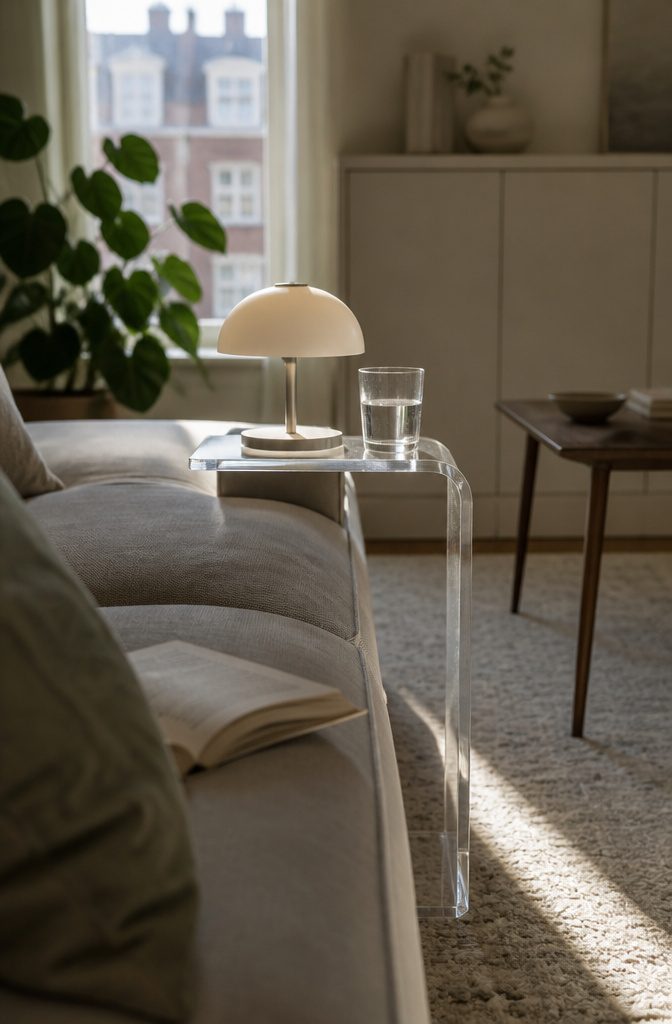
A wood side table adds a solid block of color to a tight living room, and an acrylic one adds almost none. The West Elm Acrylic C-Shaped Side Table costs $299.
It reads as clear and modern, yet it still holds a lamp and a drink. A plain wood side table will nearly always cost less, so you are paying extra for the lack of visual bulk.
Spend that premium only where the room can’t carry another wood or metal piece. In that case, a clear table is worth it.
If floor space isn’t the problem, buy the wood one. Acrylic also works as a coffee table or desk, and glass tops and slim legs follow the same rule: you can see through or under them.
14. Mixed-In Antiques
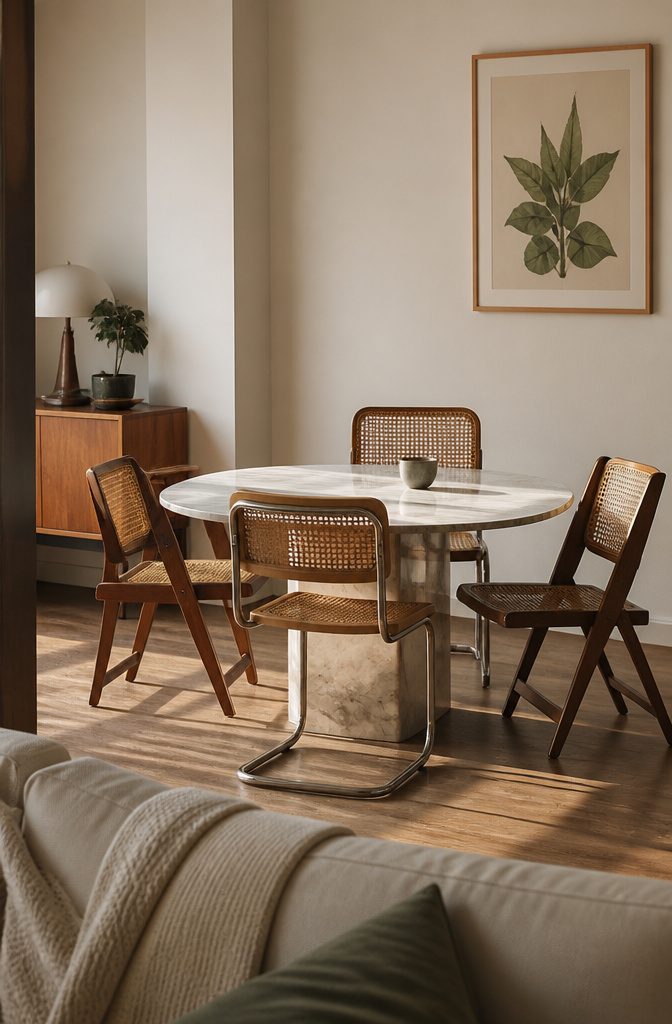
Slim modern furniture is the usual studio default, but it doesn’t have to be the only look. Many antiques and vintage pieces come in petite sizes, so shop for small chairs, side tables, and stools instead of a full-size sideboard.
Mix old with new rather than committing to one era, and the room reads as collected instead of matched from a catalog.
One pairing that works is midcentury-modern chairs in metal, wood, and cane around a simple white marble slab table.
The table stays quiet, so the chairs carry the character, and the whole setup still looks modern. Keep the new piece plain and let one or two vintage finds do the talking.
Studio Size and Layout Rules
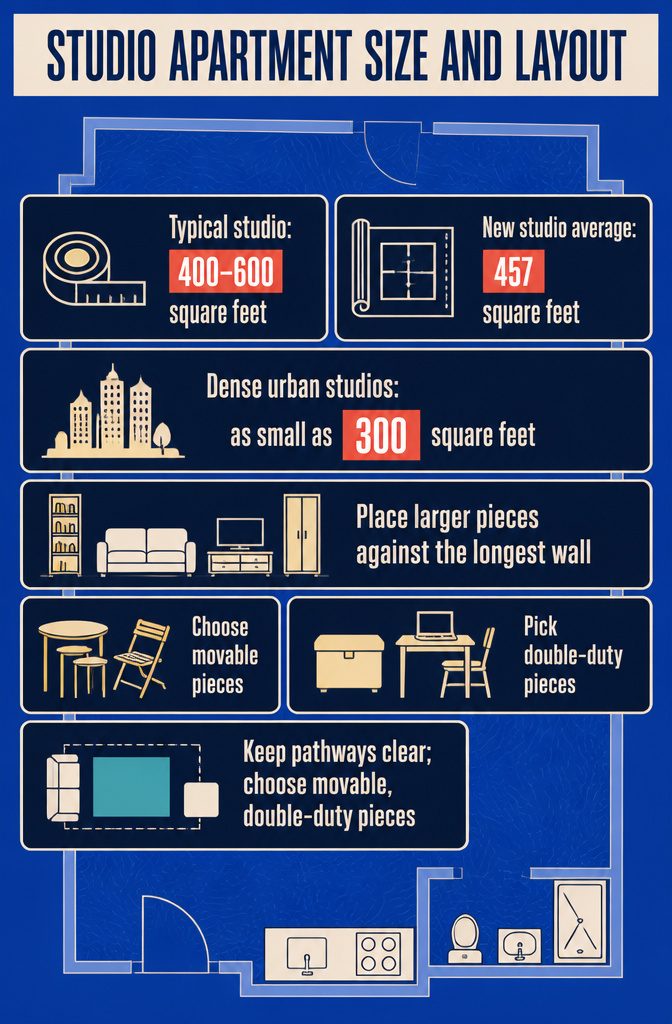
Studio size varies a lot, and the combined living, sleeping, and eating space is the norm.
Most studio apartments in the United States are between 400 and 600 square feet. In 2024, the average size of a newly built studio apartment was 457 square feet.
Dense urban studios can be 300 square feet, so measure before you buy. These layout rules hold at any size:
- Work with the open room; cohesion beats forced separation.
- Put larger pieces against the longest wall to free the center of the floor.
- Choose movable pieces, such as nesting tables or folding chairs.
- Pick double-duty pieces, like a storage ottoman or a dining table that doubles as a desk.
- Keep sight lines and pathways clear.
Frequently Asked Questions
What is the best design tip for decorating a studio apartment?
Edit before you add.
Cut furniture, decor and belongings down to an amount that fills the space without crowding it, then store what remains behind cabinet doors or in lidded baskets. A clear surface does more for a small room than another accessory.
How big is a studio apartment?
Most studios in the United States measure 400–600 square feet.
The average newly built studio in 2024 was 457 square feet, and studios in dense cities can be as small as 300 square feet. Measure your room before buying furniture.
How should you arrange furniture in a studio apartment?
Place your largest pieces against the longest wall so the center of the floor stays open.
Favor movable and double-duty items such as nesting tables, folding chairs and a storage ottoman, and keep walkways and sight lines clear. Work with the open layout instead of forcing walls into it.