
Make the marble the only loud surface in the kitchen: pair polished stone with matte, quiet tile, and keep cabinets, walls and borders plain.
The cost is upkeep. Marble is soft and stains quickly, and dark stone like Black Marquina shows etching and dust, so marble-finish porcelain is the lower-maintenance option.
1. Subtle Tile Borders
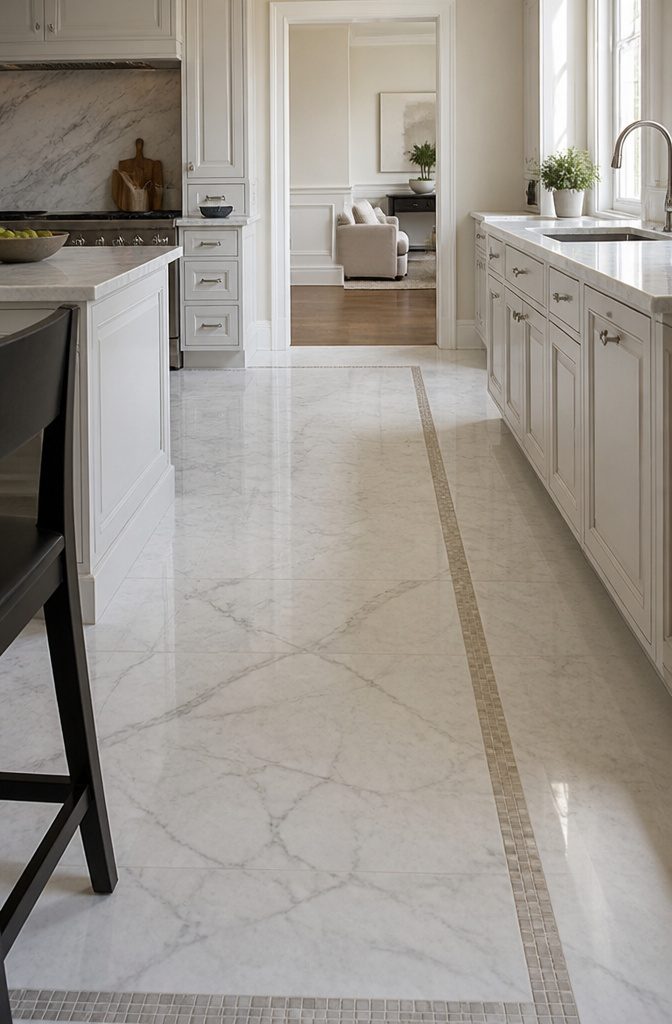
A narrow border tile sets the edge of a marble floor and marks where the kitchen zone starts and stops.
It works best in a larger kitchen, where an open field of marble can drift into the next room without a clear boundary. The gentle contrast also frames the stone, so the eye lands on the veining.
Keep the border plain: one narrow band in a quiet tone close to the marble’s own color.
A busy pattern or a high-contrast strip competes with the veining and makes the floor look like a rug. The border also adds grip underfoot, a small safety gain in a room where spills are routine.
Recommended Products

𝗣𝗿𝗼𝗱𝘂𝗰𝘁 𝗗𝗶𝗺𝗲𝗻𝘀𝗶𝗼𝗻𝘀 - 12"(L)x2.5"(H)x0.8"(D), 305mmx64mmx22mm, 5 picecs/Box.

DESIGNER COLLABORATION - CHRIS LOVES JULIA - A Grey and White Marble colorway; highlights the Bonneville design; with recognizable Chris Loves Julia collection details.

2. Marble With Wood
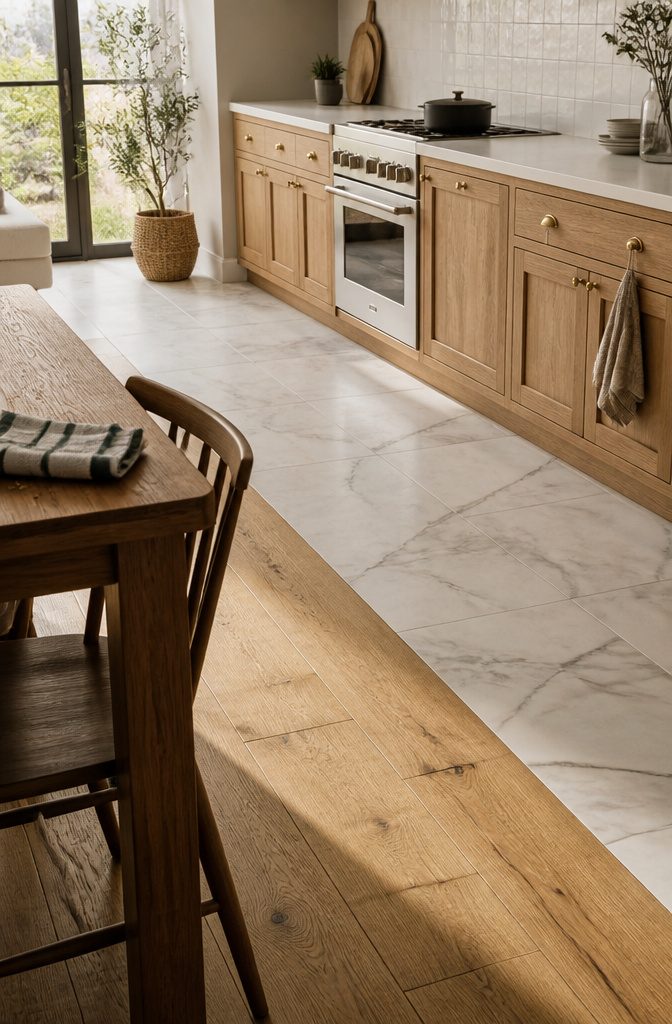
Wood cabinets over a marble floor are the easiest way to use this pairing. The stone keeps the room cool and bright, and walnut or oak along the walls adds the warmth that stops white marble from feeling clinical.
Wood-look flooring can share the floor with marble too: marble in the cooking zone, planks running into the eating area, joined by a flat threshold strip so nobody trips on a lip.
Color decides whether it works.
Warm woods like oak, walnut and cherry sit best beside clean white or cool gray-veined marble, where the contrast stays crisp. Cream or beige marble suits honey and pale woods but turns muddy next to red-toned wood.
Recommended Products

[Realistic Marble Pattern with DIY Options]: With a super realistic marble appearance and various color options, these tiles meet personalized decorative needs. They are versatile enough for use in homes or commercial spaces, suitable for shop decoration, rental renovations, and RV flooring projects.
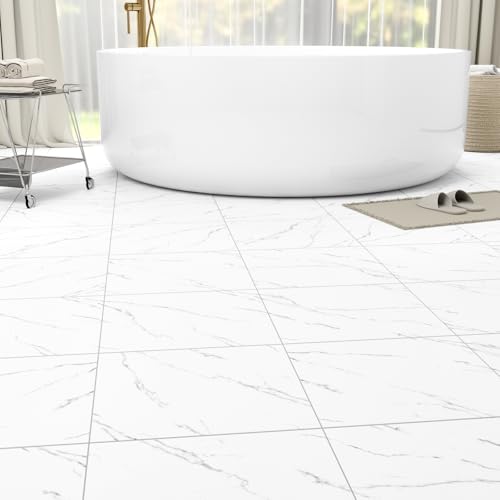
[Ultra-realistic Surface Texture Restoration]: Realistic texture and a durable surface with excellent wear resistance; the surface won't scratch easily, doesn't retain stains, and is easy to clean.

⌛ Timeless Charm - Stylish wood finishes offer an authentic and natural look that brings the beauty and warmth of nature into your flooring décor.
3. Terracotta and Earthy Tones
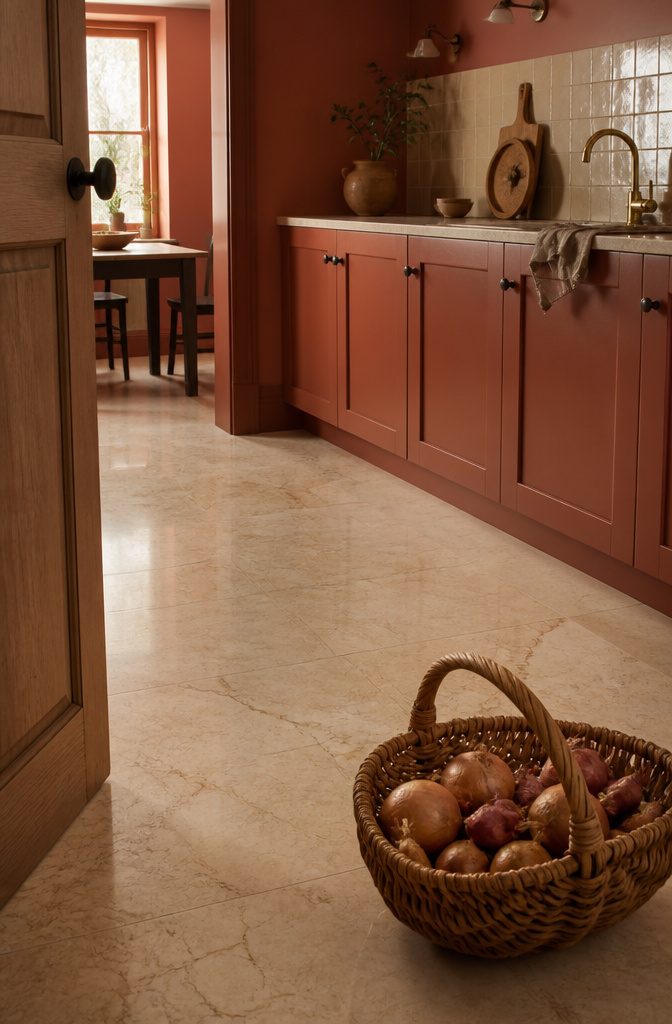
Terracotta and cool marble pull in opposite directions.
Gray or blue-gray veining makes orange-red clay look muddy, and the clay makes the marble look flat and chilly. Choose marble with beige, cream or gold undertones instead.
Crema Marfil is the easy pick.
Its beige field sits quietly under terracotta cabinets or muted red paint and adds gentle warmth without competing. Calacatta Gold brings warm veining to the same palette, which suits you if you want more movement underfoot.
Rojo Alicante is a red marble and works in a bolder room, but keep the cabinets and walls softer so the floor isn’t fighting them. Matte beige tile, such as on a backsplash, keeps the whole kitchen cozy.
Recommended Products

Features: Peel and stick floor tile with faux marble look, self adhesive, removable flooring, renter friendly. No sticky residue left, not damage the floor. Durable vinyl floor tiles, thickened, waterproof, moisture-proof, easy to clean

🏠 Marble peel and stick floor tile: Stick on floor tile to any flat and dry flooring,no grout or special tools needed. It is groutable if you like. Give your room a brand new look at inexpensive cost.
4. Neutral, Simple Tiles
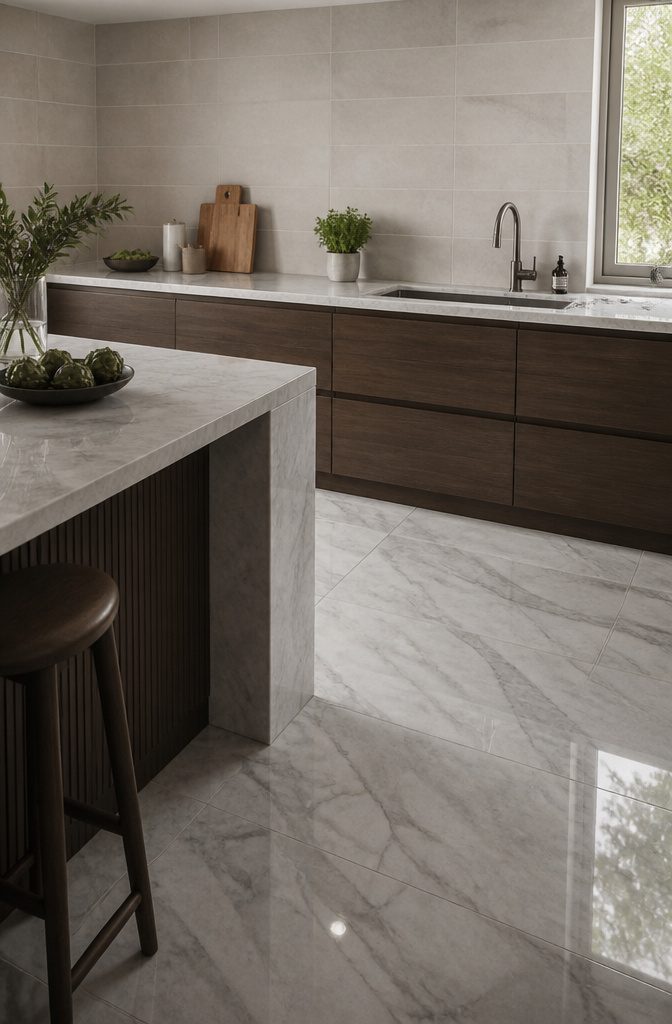
Marble already does the talking, so the tile beside it should stay quiet. Matte wall tiles or subtle floor tiles in neutral or muted tones balance marble’s gloss and leave its veining as the focal point.
Impatto and Prozzo are two tile lines that suit this job, particularly next to marble-look counters, where they bring harmony without clutter.
For a first project, this is the lowest-risk pairing. A plain tile has no pattern to match and no color to clash with the stone.
Choose a matte or lightly textured surface for practicality and durability, and pick a tile size and layout that follow the marble instead of competing with it.
Recommended Products

High-Quality & Durable: Premium PVC construction with multi-layer waterproofing and a wear-resistant layer ensures long-lasting performance. Waterproof and stain-resistant, ideal for kitchens, bathrooms, living rooms, and any indoor space
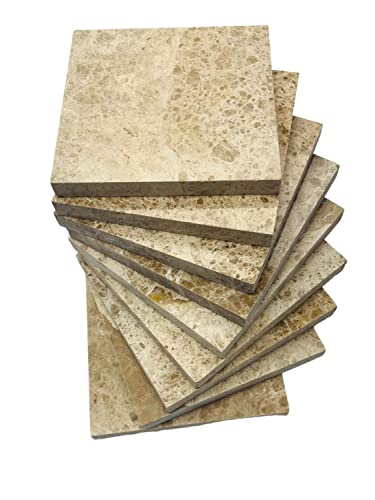
Light Emperador marble typically features a creamy beige or light brown base color. This base color serves as the foundation for the stone's overall appearance, providing a warm and neutral backdrop.
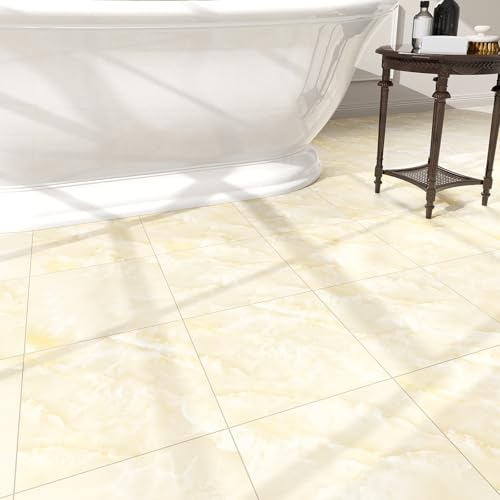
[Ultra-realistic Surface Texture Restoration]: Realistic texture and a durable surface with excellent wear resistance; the surface won't scratch easily, doesn't retain stains, and is easy to clean.
5. Patterned and Geometric Tiles
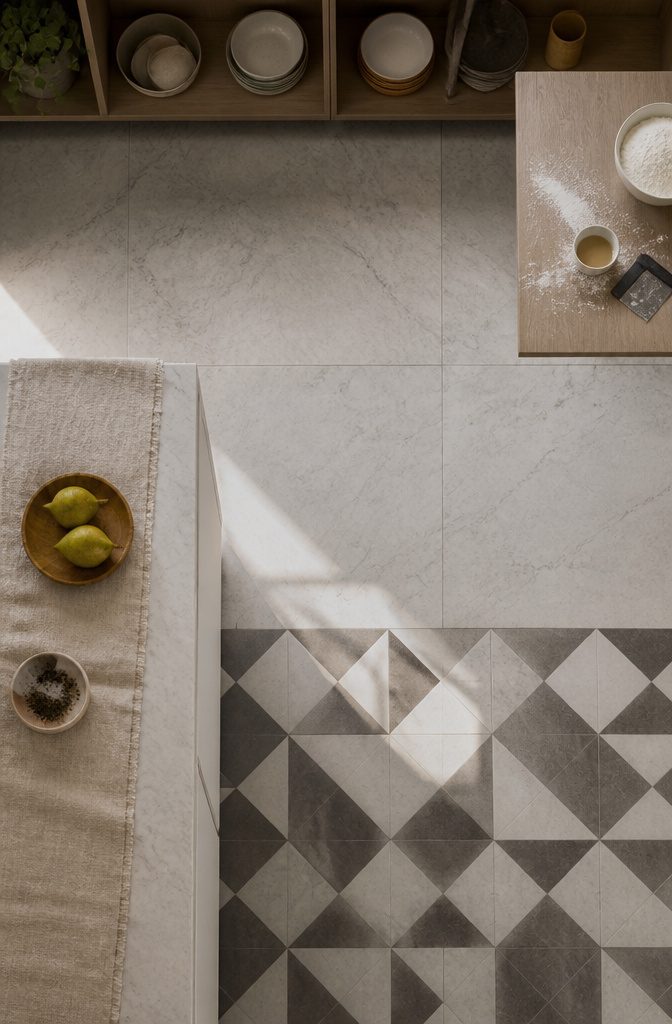
Veined marble already supplies the movement, so the tile beside it should play the quieter part.
Designed tiles come in four common shapes: long subway tiles, small patterned tiles, mosaics and thin tiles. Each can be one color or a mix, and a single color is the safer match for heavy veining.
Geometric patterns cut into marble give a contemporary kitchen a modern twist, and they read best next to plain, simple tile. Skip busy patterned tile around bold marble, because two loud surfaces cancel each other.
Match the tile’s size and layout to the scale of the marble, so neither fights the other. A tiny mosaic beside large slabs looks cluttered.
Recommended Products

Features a sophisticated "checkerboard" design by alternating colors of each 12"x12" piece.

Features a sophisticated "checkerboard" design by alternating colors of each 12"x12" piece.
6. Bold Black Contrast
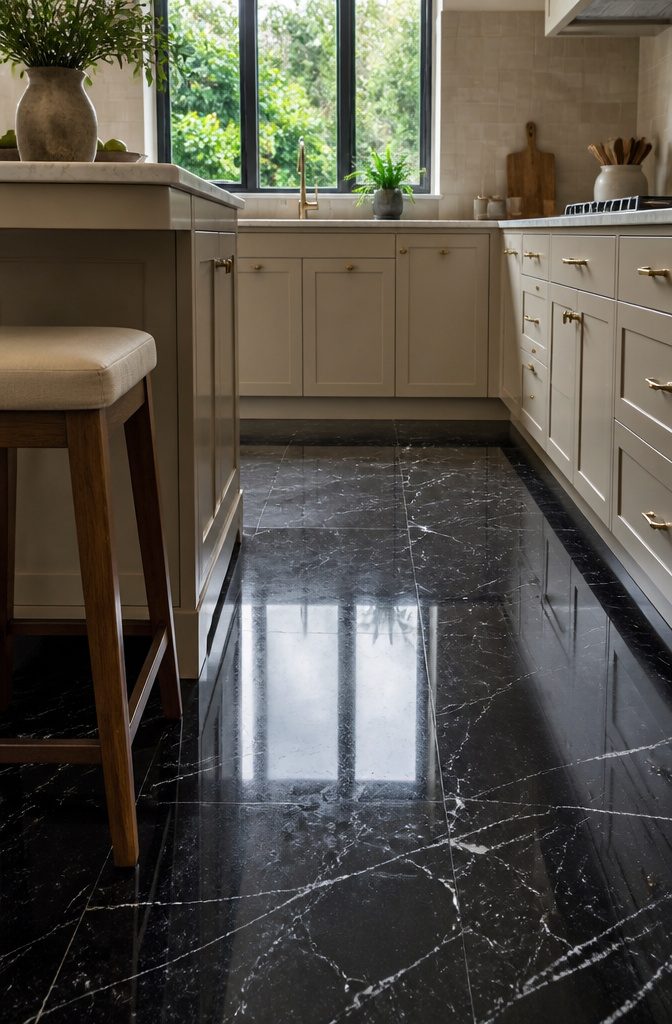
Black Marquina is the classic clean-color marble, and on a kitchen floor it gives you a graphic, high-contrast base under lighter cabinets.
To keep the black from feeling heavy, add beige or black tile nearby. A glossy finish adds dimension and keeps the room bright.
Upkeep runs higher, since etching, dust, and water spots show up fast on dark stone.
Marble is soft, has low durability, and stains quickly. Dark stone also shows etching and dust more readily than pale stone, so dull spots and dusty footprints stand out.
Sweep often and wipe spills right away. If that sounds like too much, use black marble as a smaller accent, such as a backsplash, and put something tougher underfoot.
Recommended Products

Super Strong Adhesive: Stronger backing glue than ordinary vinyl pee and stick backsplash tile. It has a strong stickiness, so please confirm the installation position, otherwise it will be difficult to tear off and cause waste.

Nexus Tiles: Refresh your home for a low cost and no hassle with the Nexus Vinyl Floor Tiles. These tiles can be used in any room in your home from the kitchen to the bedroom. No messy glue or adhesives needed. Includes 20 vinyl tiles.

【Versatile Usage】: Polish Black marble peel and stick flooring stickers are very versatile in matching, can be blended with various interior decoration styles to create a stylish and comfortable space, such as modern light luxury style, modern minimalist style or art deco. Adhesive and peel-and-stick floor tiles are perfect for enhancing indoor floors and surfaces, including laundry rooms, living rooms, offices, furniture, cabinets, RVs floors and other flooring applications.
7. Matte-Finish Tiles
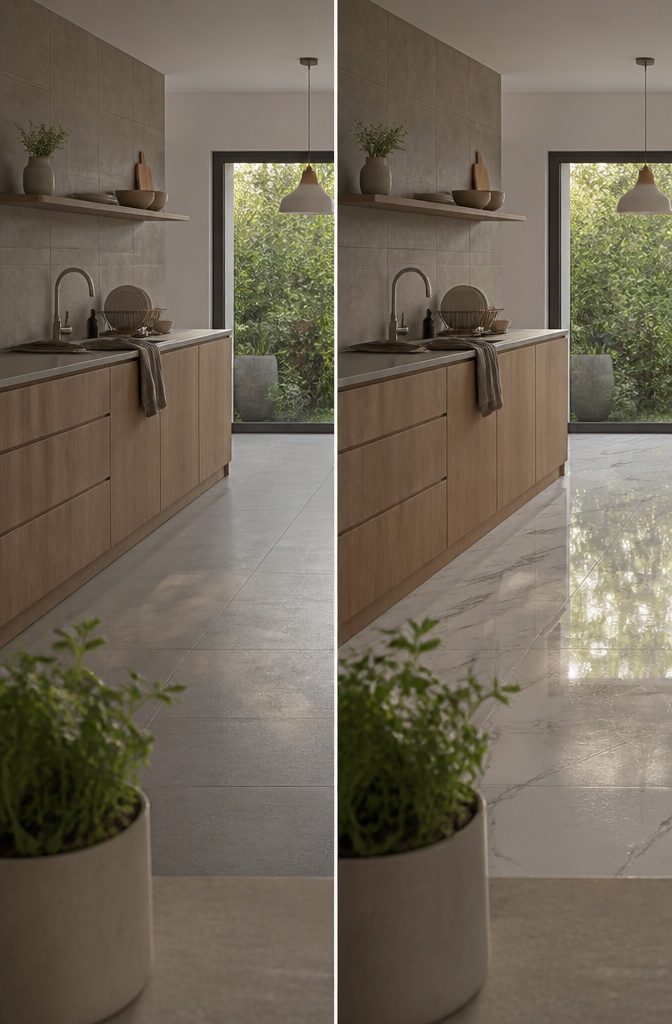
Polished marble throws light back at you, while a matte tile absorbs it. Set side by side, the marble reads as the shiny, dramatic surface and the matte tile as a soft, flat backdrop that doesn’t compete with it.
Pair polished marble with a matte tile in a quiet tone and the gloss feels intentional instead of overwhelming.
Matte also wins on upkeep. Water spots, fingerprints, and scuffs blend into a low-sheen surface, but on a glossy one they catch the light and show up fast.
For a kitchen floor you walk across daily, that means less wiping and a room that looks tidy between cleanings.
Keep the matte tile simple. Plain colors let bold marble veining stay the focus and keep the space from looking cluttered.
Recommended Products

Waterproof & Non-Slip: GreenFullHouse flooring peel and stick waterproof tiles feature an anti-slip surface that keeps your footing steady even when wet. The moisture-resistant vinyl top layer handles spills, splashes, and humidity, making these peel and stick floor tiles dependable in kitchens, bathrooms, and laundry rooms.

Authentic Wood Look: Fresh Natural Oak is bright, fresh and delicate. Soft tones run through this flooring, giving it depth and movement; This oak-look vinyl plank flooring brings a timeless warmth and elegance to any room

Sleek & Modern Black Finish:Featuring a deep matte black surface with subtle wood-like texture, this flooring adds a contemporary, elegant touch to any space—perfect for modern, industrial, or minimalist home decor styles.
8. A Statement Pattern
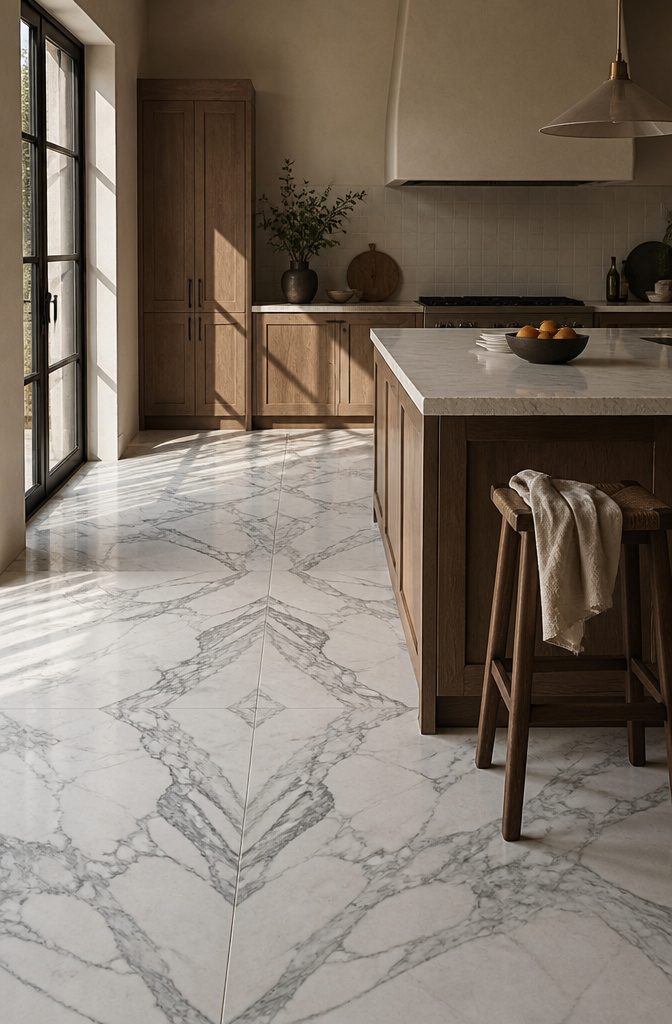
Pick the focal point first, and make it the floor.
Bookmatched marble tiles mirror each other’s veining, so the pattern reads as one continuous design instead of a repeat. Carrara- or Calacatta-style veining both work here, as long as the veining is bold enough to read from across the room.
Everything around it should stay quiet. Pair the marble with plain or muted tiles on the walls and any border so the pattern stays the highlight.
A second busy pattern next to the veining makes the room feel cluttered, and the marble loses its edge. One strong feature on a clean background looks luxurious without overwhelming the space.
Recommended Products

Details: 12x12 inch peel and stick floor tile, included 18 tiles, upgraded thickness is 0.06in/tile (1.5mm), more durable for high traffic area, not easy to break, scratch resistant, anti-silp, wear resistant for high traffic residential areas

Simple Coverage Calculation: 1 tile equals 1 square foot, allowing you to count the tiles, match your room size, and order exactly what you need without guessing

Mesh Backing - This marble mosaic tiles mounted on a sturdy mesh, easy to install
9. Concrete for an Urban Look
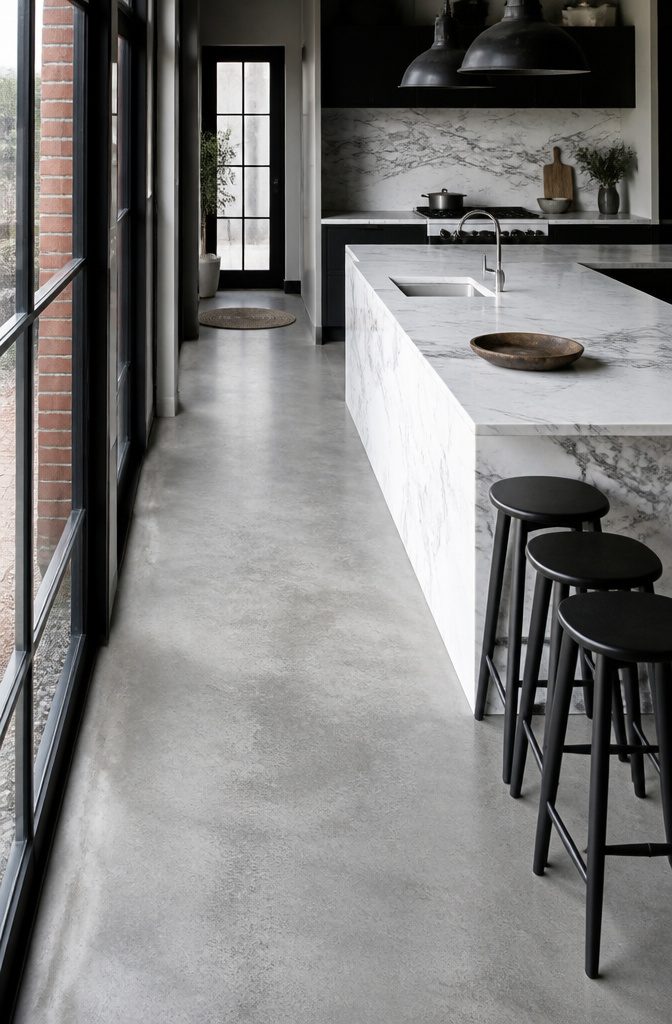
Gray concrete gives a marble kitchen a city-street look.
Concrete is a tough texture that looks perfect for urban interior designs to feel like city streets in the home. Pairing white marble countertops with the grey colors concrete keeps the city aesthetic while adding some gentle color in the room.
This pairing works best in kitchens going for an urban style. Concrete is low maintenance and handles heat well, so it also suits heated floors if your budget allows.
It can crack over time, so skip it if you want a flawless surface. For a tonal look, use gray marble counters instead.
Recommended Products
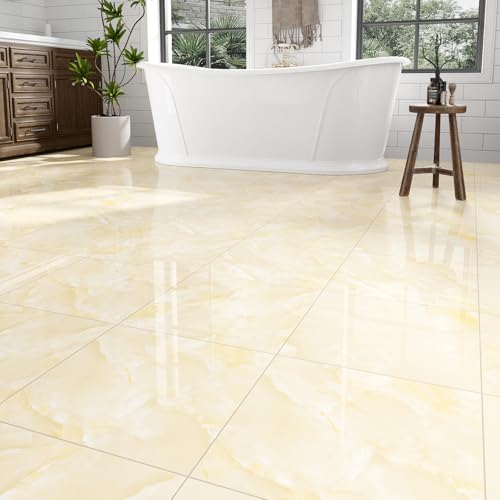
【Versatile Usage】: Polish Ivory Beige marble peel and stick flooring stickers are very versatile in matching, can be blended with various interior decoration styles to create a stylish and comfortable space, such as modern light luxury style, modern minimalist style or art deco. Adhesive and peel-and-stick floor tiles are perfect for enhancing indoor floors and surfaces, including laundry rooms, living rooms, offices, furniture, cabinets, RVs floors and other flooring applications.

Premium Grade Crema Marfil Marble Hexagon Mosaic Tile. Spanish Crema Marfil Marble Polished 2 inch Hex Mosaic Wall and Floor Tiles are perfect for any residential / commercial projects. The 2 inch Crema Marfil Marble Hexagonal Mosaic Tile can be used for kitchen backsplash, bathroom flooring, shower surround, dining room, entryway, corridor, kitchen backsplash, spa, etc.
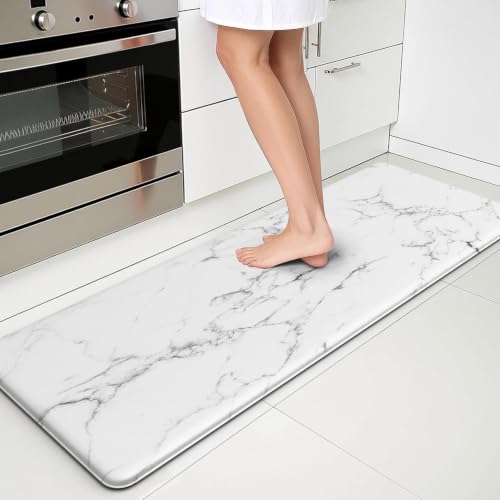
[ Anti-fatigue ] FYATHM kitchen rugs is professionally engineered to protect your feet from feeling tired for a long time standing, these anti-fatigue kitchen mats are 0.47 inches thick, soft and flexible
10. Granite, Quartz or Quartzite Floors
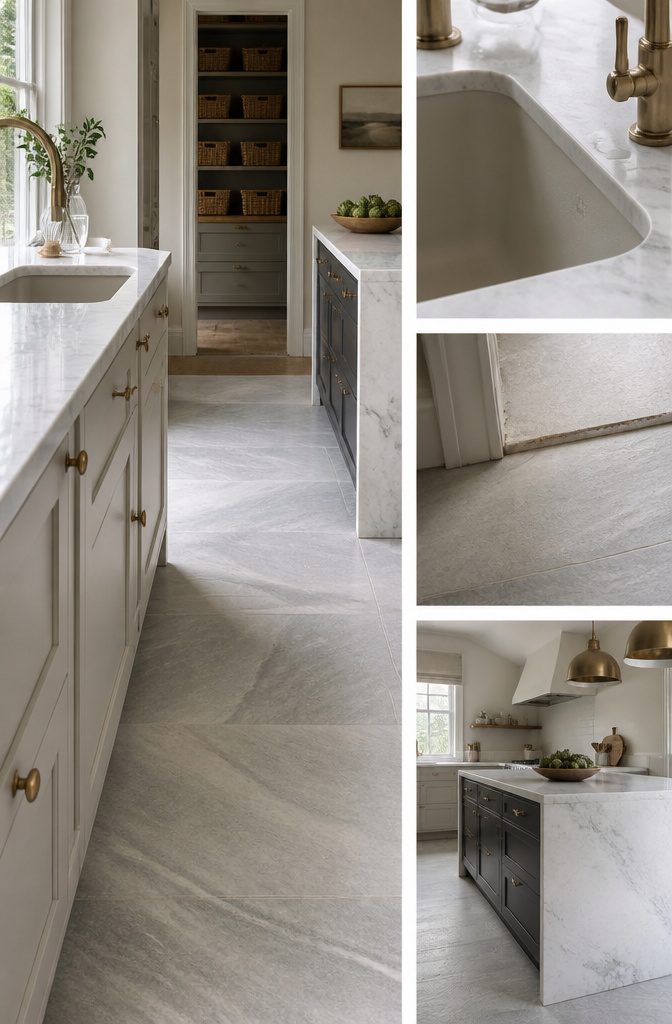
Another stone floor can sit under marble countertops, and each type behaves differently:
- Granite is very durable but porous, so wipe spills before they soak in.
- Quartz is artificial stone and durable. It suits you if you’d rather not deal with a quarried product.
- Quartzite is durable and comes in many colors. It’s the easiest of the three to match to your marble’s veining and tone.
- Sandstone and slate give a natural, earthy look, but check each sample against your marble before you commit.
- Onyx is beautiful, but it scratches easily, which makes it a poor choice for a floor that sees chairs, dropped pans and daily foot traffic.
For most kitchens, quartzite is the strongest pick.
11. Porcelain or Ceramic Tile
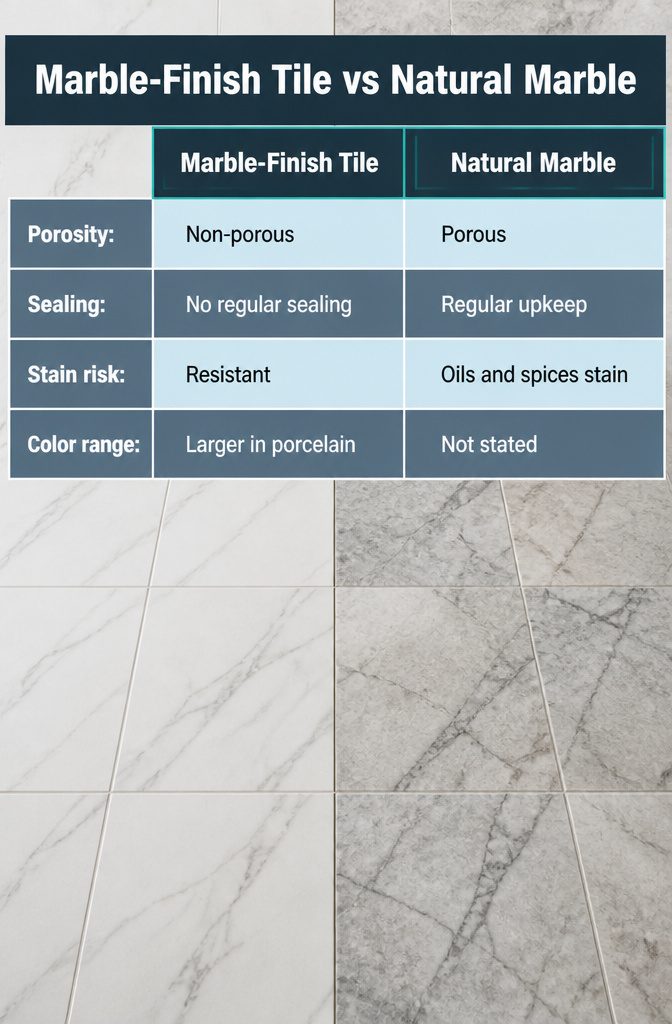
Marble-finish tile gives you the look of marble without the upkeep.
It is non-porous and needs no regular sealing, while natural marble stains from the oils and spices that end up on a kitchen floor. Ceramic is very durable and comes in many colors.
Porcelain is ceramic tile coated in feldspar dust or sand and melted into a glass-like surface. It is also durable and stain resistant, with an even larger range of colors, so porcelain is the safer choice near the stove.
Choose large-format tiles if you can.
They pass for a marble floor with barely visible grout lines, are stronger, and are easier to clean. A mild cleaner and a damp cloth are enough.
12. Marble With Marble
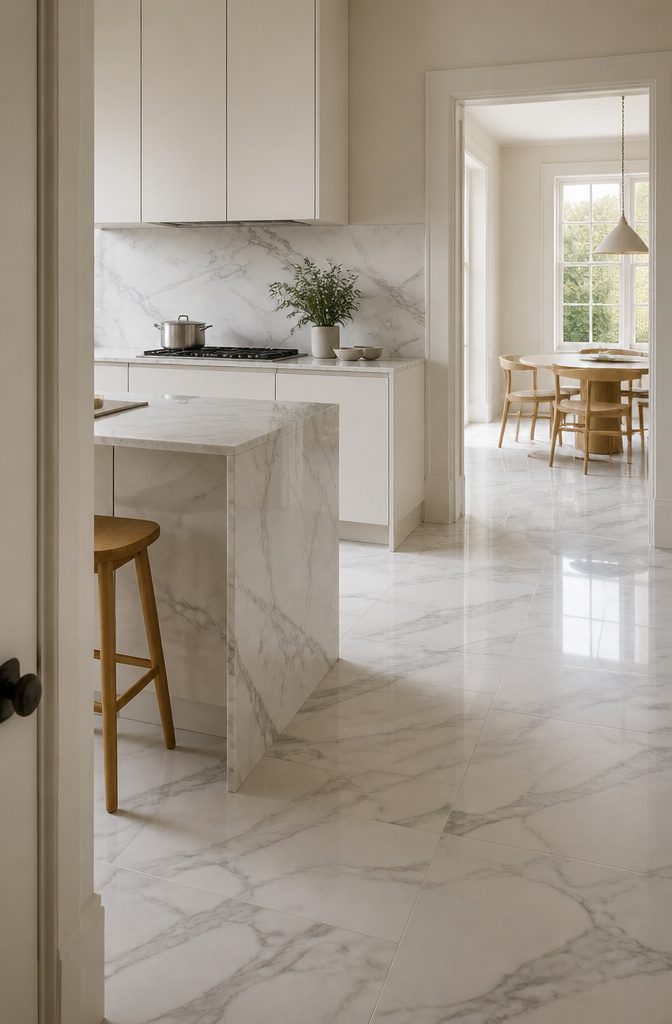
Using the same marble on the floor and the counters is the easiest pairing to get right, because the color and veining already agree.
The cost shows up underfoot. Marble is very soft, has low durability, and stains quickly, so a spill that sits overnight can leave a mark, and anything dragged across it can scuff the surface.
If full marble is out of budget, use marble only in corners or on the backsplash and keep everything around it plain.
Simple, understated tile next to the marble lets the stone stand out. You still get a luxurious look without paying to cover the whole room.
Clean, Warm and Neutral Marble
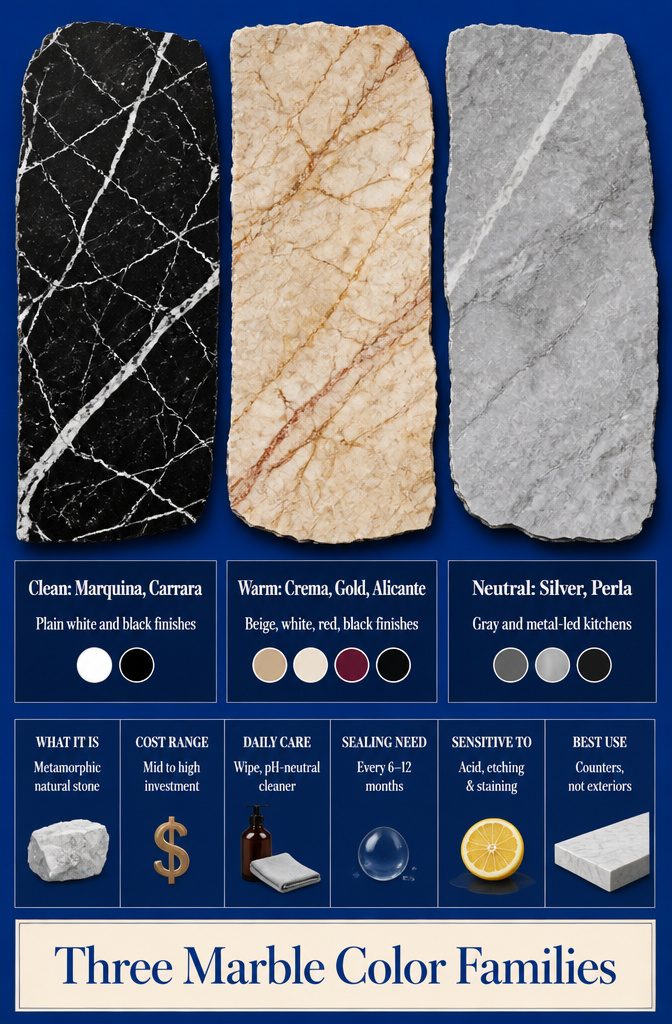
Choose the color family first, then match cabinets, walls and metals to that family before you commit to a specific stone.
- Clean: Black Marquina and White Carrara suit minimalist and contemporary kitchens built on plain white and black. Keep cabinets and walls simple so the stone is the only pattern in the room.
- Warm: Crema Marfil, Calacatta Gold and Rojo Alicante carry a subtle tint that reads cozy. They sit best with beige, white, red or black finishes.
- Neutral: Carrara Silver and Bianco Perla have a faded look in grays, white and black. They fit urban-modern kitchens where gray and metal lead, and they are the safest pick if you want the floor to stay quiet.
Start With the Room’s Mood
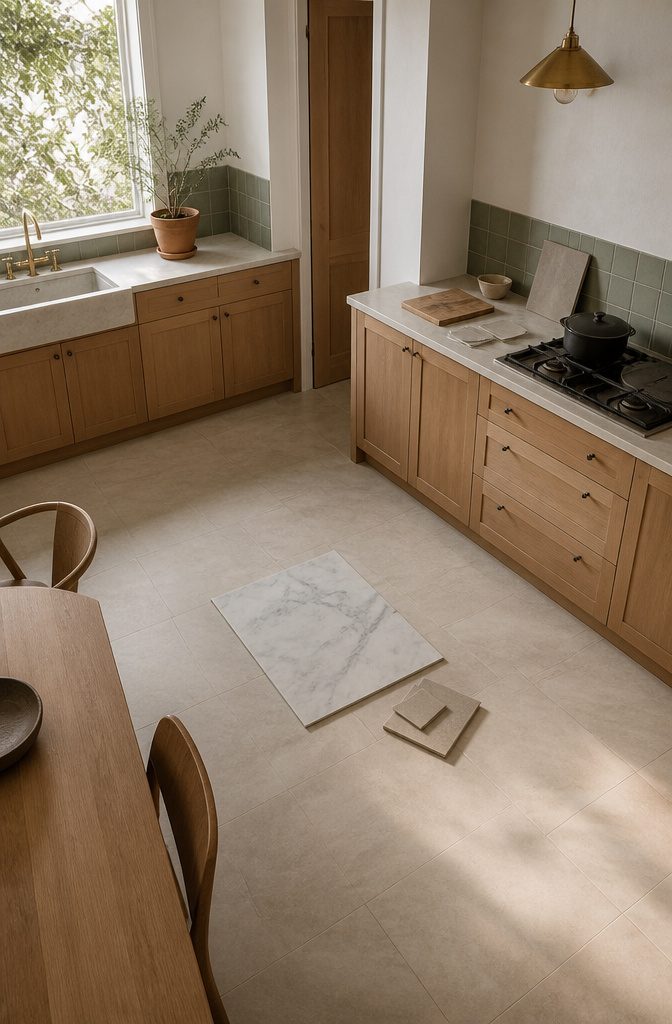
Four questions narrow the choice before you look at a single tile. What tone should the kitchen have?
What feeling should you get when you walk in? What should a guest see first, and what should fade into the background?
Then list the colors already in the room: countertop, backsplash, cabinets, walls, lighting and decor. Those colors set the mood whether you intend it or not, so the floor has to agree with them.
Next, test combinations on screen.
Getty alone lists 606 marble kitchen floor tile images, enough to show which pairings match your list and which fight it. Save the ones that hold up.
Keep Floor and Counter in Balance
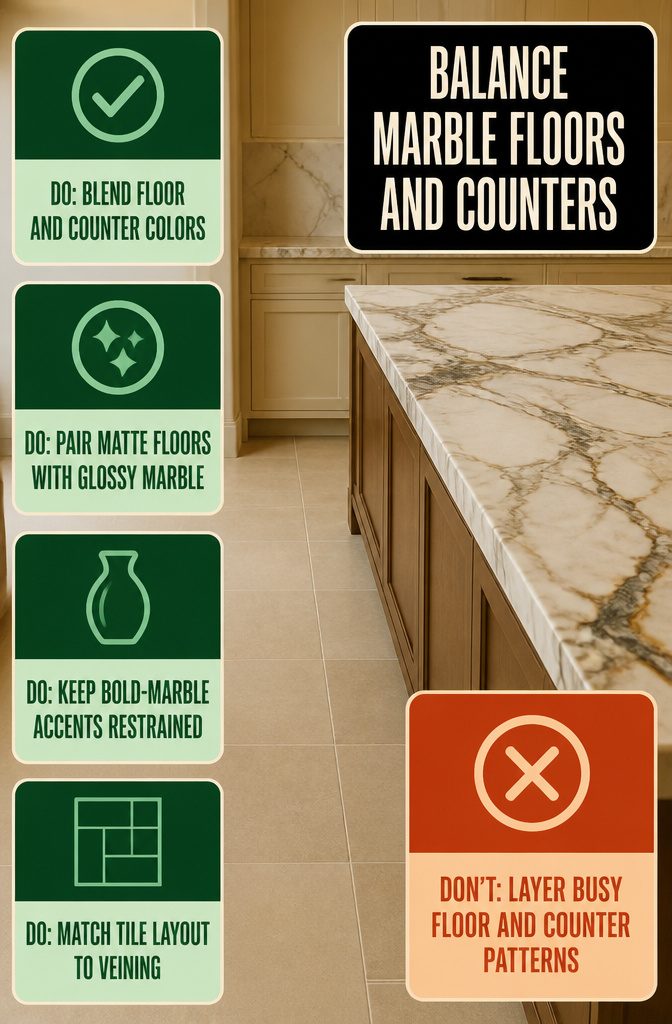
Pick one surface to be the loud one and let the other support it.
- Do choose colors that blend. A floor that picks up a tone already in the counter looks planned.
- Do use matte or subtle floor tile under glossy marble. The dull finish balances the shine without crowding the room.
- Do keep accents restrained around bold marble. One quiet border or a single accent color is enough.
- Do match tile size and layout to the marble surface, so grout lines support the veining instead of cutting across it.
- Don’t run a busy floor pattern beneath a busy counter. If guests end up staring at the floor, the pattern is competing with the countertop.
Frequently Asked Questions
Can simple tile complement a marble floor in the kitchen?
Yes. Plain matte tile in a neutral or muted tone tones down marble’s shine and keeps the veining as the focus, on the wall or the floor.
Impatto and Prozzo are two tile lines that fit, especially beside marble-look counters. Plain tile has no pattern to match, which makes it the lowest-risk pairing.
Do marble-look tiles need sealing like natural marble?
No.
Marble-finish tile is non-porous, so it needs no regular sealing. Natural marble absorbs the oils and spices that end up on a kitchen floor and stains.
Is marble-finish tile durable enough for a busy kitchen floor?
Yes. Ceramic is very durable, and porcelain adds stain resistance, so porcelain is the safer pick near the stove.
Large-format tiles are stronger than small ones, and cost-effective marble-finish tile holds up better than natural marble, which is soft and stains quickly. A subtle border also adds grip underfoot.
How do you clean a marble-finish tile kitchen floor?
A mild cleaner and a damp cloth are enough. Large-format tiles are also easier to keep clean than smaller ones.