
The ideas run from new 2700K–3000K bulbs to stone surfaces and built-ins, and one rule sorts them: pick a single hero piece, then keep the room to 3 or 4 primary materials.
Past 4, even expensive furniture looks chaotic. Repeat one finish instead, such as brushed brass on the chandelier, table lamps and cabinet handles.
1. Start With an Anchor
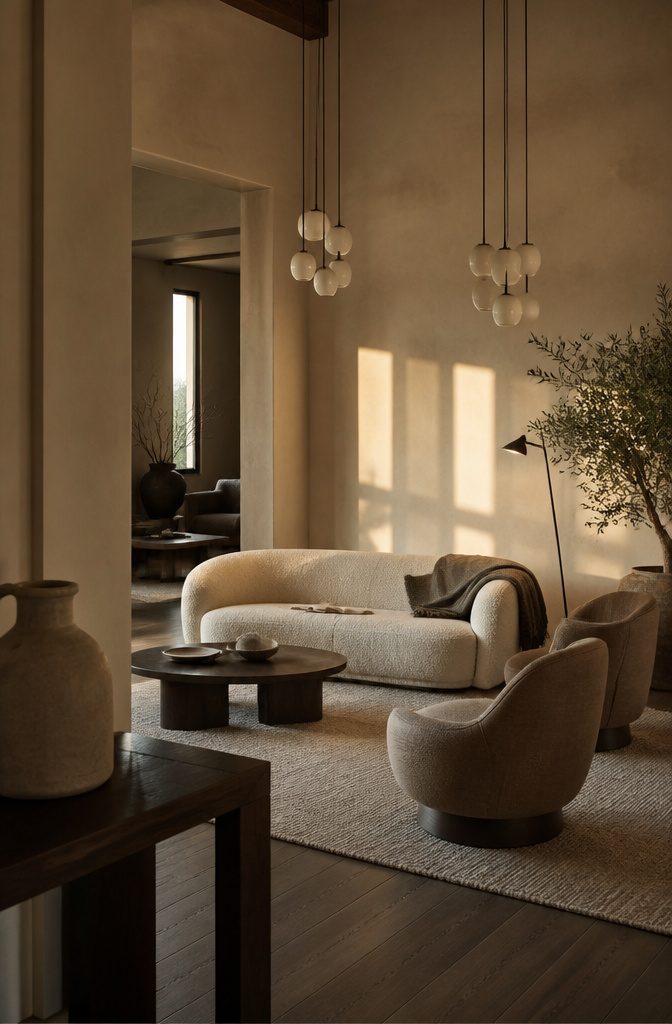
Pick one hero piece first (a sofa, artwork, fireplace or chandelier) and let everything else answer to it. A sofa can soften a stark room:
Cleo Murnane opted to soften stark Roman clay walls with a warm but tranquil "European hotel" design style, complete with a Pierre Augustin Rose sofa.
One warm piece does the work of a whole set.
Skip the matched set.
A pair of Blasco Clichy swivel chairs brings casualness to a formal room, and mixed pieces look collected, not staged. With a 30-foot ceiling, two light clusters are enough to draw the eye up.
Recommended Products

SUPER SOFT & COZY: Get cozy and warm with this extremely soft and luxurious reversible rabbit fur blanket, perfect for snuggling up on the couch, bed, chilly movie theater, park or perfect personal gift for any occasion

Ultimate Comfort & Warmth: Wrap yourself in the luxurious softness of our bubble faux fur throw blanket. Made with 800GSM fluffy faux rabbit fur on one side, providing an incredibly plush and warm touch, while the other side features a crystal super soft short plush, offering additional smoothness and comfort. This dual-sided blanket ensures unparalleled warmth without causing overheating, making it perfect for chilly nights on your couch or bedroom.

Ultimate Comfort & Warmth: Wrap yourself in the luxurious softness of our bubble faux fur throw blanket. Made with 800GSM fluffy faux rabbit fur on one side, providing an incredibly plush and warm touch, while the other side features a crystal super soft short plush, offering additional smoothness and comfort. This dual-sided blanket ensures unparalleled warmth without causing overheating, making it perfect for chilly nights on your couch or bedroom.
2. Build a Considered Color Palette
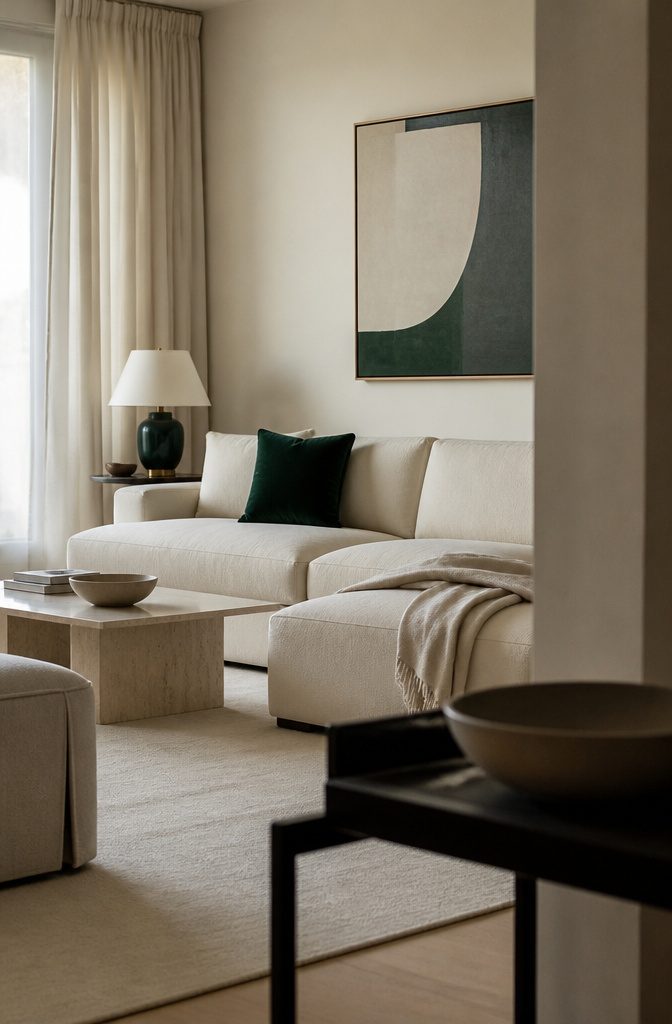
Start with one foundation color taken from a favorite artwork or furniture piece, then build tonal or complementary shades around it.
Ivory, warm white, oatmeal, taupe, mushroom gray and soft beige make a quiet base. Add emerald, navy, burgundy or matte black in small doses, such as a pillow, a lamp base or a frame.
In a small room, keep the palette to 3 colors that harmonize.
Larger rooms can handle a looser mix: India Mahdavi’s projects use at least 5 shades and often 10. Check how the colors meet across the sofa, the curtains and the walls, and how they look from the doorway of the next room.
Recommended Products

Velvet Fabric: Gold color with throw pillow covers is made of 280gsm thick premium velvet fabric - super soft and comfortable to use, durable long-lasting and fade-resistant shrink-resistant.The square pillow covers paired with gold chic solid color - suitable for spring, summer, autumn, and winter season, is luxury and minimalist - used for couch sofa decoration.

Materials : High Quality Polyester Velvet Fabric, Soft and Comfortable, Skin Friendly. 4-pack of Decorative Throw Pillow Covers for Couch. 2 Gold and 2 Black, Simple and Luxurious.

AMAZING VELVET THROW PILLOWCASES: They will show two very different glosses if you look in two different directions, one is bright and smooth, the other is soft and plush
3. Layer Materials and Textures
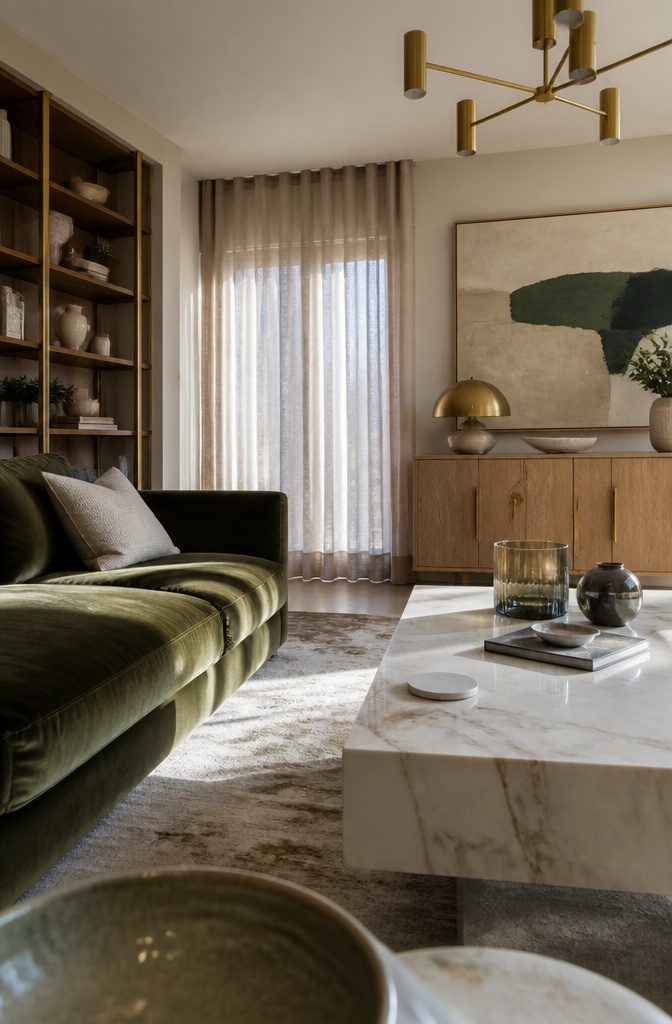
Pair a soft surface with a hard one in every corner of the room.
A velvet sofa beside a marble coffee table, linen curtains against an oak media console, and a wool and silk rug under glass accessories give the eye something to read and keep a neutral palette from going flat.
Bouclé, leather, silk, and cashmere do the same job.
Limit the primary materials to 3 or 4. More than that and even expensive furniture looks chaotic.
Repeat one finish instead: if the chandelier is brushed brass, carry it into table lamps and cabinet handles. Quality ceramics, bronze, and visible craftsmanship read as luxury because the finishes contrast on purpose.
Recommended Products

[Minimalist Modern Style] A marble white table top, bright tempered glass shelf underneath, and elegant golden steel legs—everything is a perfect match designed for your exquisite life

[SCULPTURAL MODERNITY]: This coffee table features a unique design with graceful sculptural lines and beautiful natural faux marble accents. Its innovative double-pillar construction and T-shaped base combine artful craftsmanship with exceptional stability, creating a striking balance of form and function.

Classic Tambour Design: Onbrill round coffee table adopts the classic tambour design, matched with the classic walnut color, providing a classic mid-century modern atmosphere sense for your living room.
4. Layer Lighting at 2700K–3000K
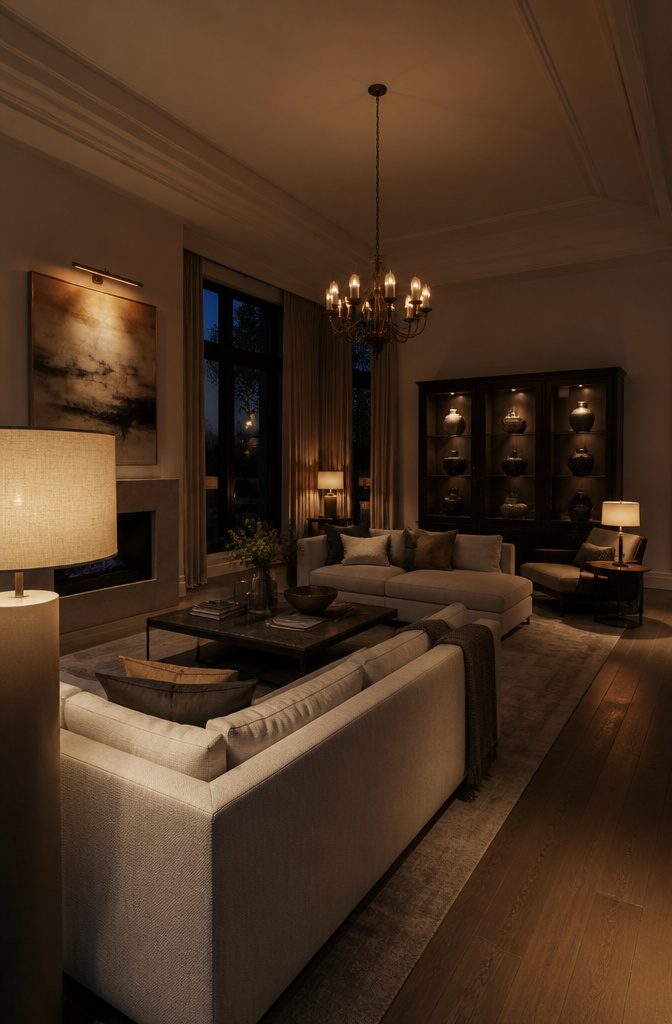
A single ceiling light flattens a living room.
Split the job across three layers: ambient light from table and floor lamps, accent light on art or shelving, and one statement fixture overhead. Buy bulbs rated 2700K–3000K, a warm white that makes wood, fabric and furniture look richer.
Put the overhead fixture on a dimmer, so it runs bright for guests and low in the evening. Under a tall ceiling, a chandelier or a cluster of pendants draws the eye upward and becomes the focal piece.
Any wall light with an articulated arm can double as a picture light, and a lit painting also bounces glow back into the room.
Recommended Products

INSTALLATION REQUIRED FOR LAMPSHADE: To minimize unnecessary packaging waste and to save transport fees, we have meticulously sought out the most efficient packing method. This enables us to give customers more cost-effective products, allowing you to buy high-quality items at a more affordable price. The ceramic table lamp comes with all the necessary installation accessories and a manual in the package. Following the instructions, you can set up the farmhouse table lamp easily. If you need any help, 24/7 customer service is here for you.

Warm Soft Glow to Your Home: A nice, warm and romantic atmosphere will be created thanks to the 2700K warm white color temperature and the linen fabric lampshade. SEESINY small table lamp with soft ambient light makes you feel comfortable alone or together with your beloved.

Versatile RGB Touch Lamp: The table lamp create a cozy and inviting atmosphere with the gentle, flicker-free light. Adjust the small table lamp color to match your mood with the cycle RGB mod, dimmable and perfect for illuminating any space for every occasion.
5. Size the Rug Right
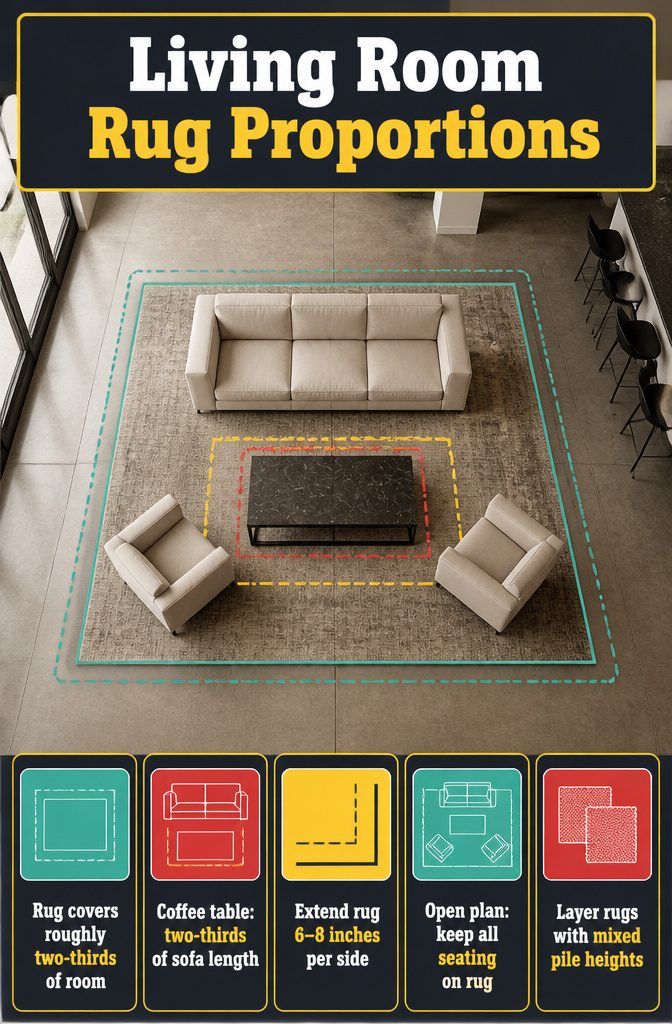
A large rug anchors the seating area, and the 2/3 rule sets its size: the rug should cover roughly two-thirds of the room, and the coffee table should run about two-thirds the length of the sofa.
If your floor plan allows, let the rug extend 6–8 inches on each side.
In an open-plan room, place all the seating on the rug. That marks off the living area and ties mismatched pieces together, so the sofa and chairs read as one group instead of separate islands.
Layering adds the final touch.
A second rug over the first brings texture and depth to a hard floor, and mixing pile heights works best. For a high-end example, a wool and silk layer by Jan Kath softens a stony, industrial-leaning room.
Recommended Products

Modern Crystal Chandelier: Beyond its beauty, this tree branch chandelier is an ambiance creator. Expertly crafted from high-quality metal and shell-shaped crystals, it serves as an elegant decoration when off. When lit, it fills your room with the warm romance of a coastal shore

Nature-Inspired Elegance: This elegant gold crystal chandelier features high-quality, rust-resistant metal branches with a subtle, luxurious gold finish, adorned with sparkling K9 crystal leaf pendants. It seamlessly blends organic charm with modern style to create a warm and inviting ambiance

【Large Gold Chandelier for High Ceiling】Golden round glass chandeliers waterfall chandelier lighting. Features a painted gold finish frame along with 7 tiers clear glass rods, creating a dramatic play of light and a softly diffused glow.Absolutely will be wow at this spectacular statement piece.
6. Arrange Seating for Conversation
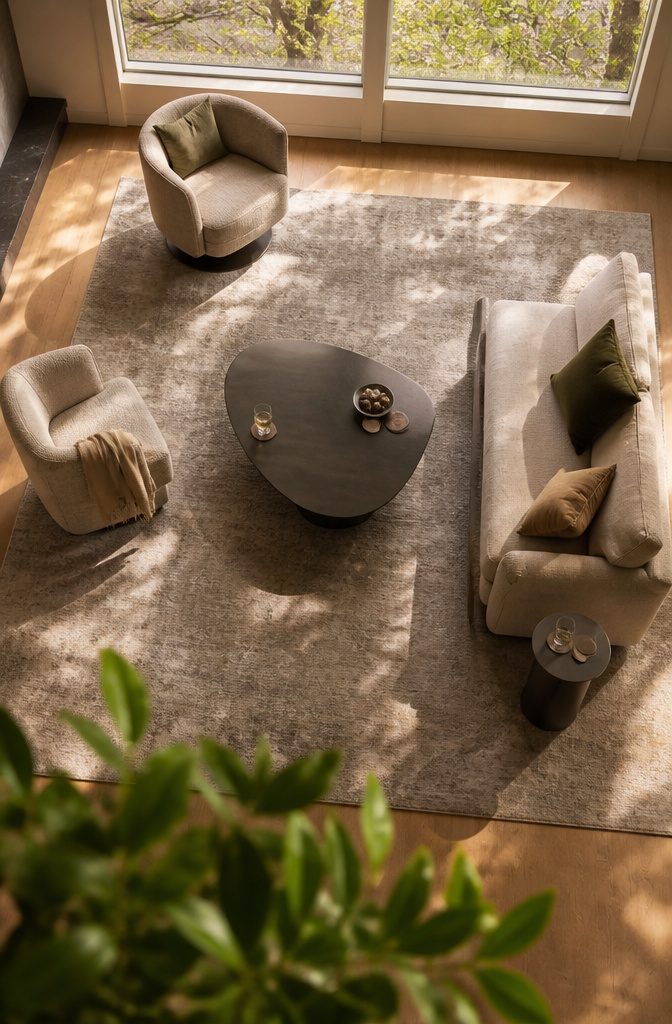
Pull the seating off the walls and into a loose circle. Two armchairs facing each other across a central table, with the sofa closing the third side, make the most formal and intimate setup.
Everyone sits close enough to talk without raising their voice, and the table gives each person a place to set a drink. Angle the chairs inward toward the table so they face each other rather than the TV.
Swivel chairs suit the open side of that grouping.
They turn in to join the conversation, then rotate toward a window or screen when the evening changes. Choose swivels over fixed chairs if your room serves for both entertaining and everyday use.
Recommended Products


SUPER SOFT & COZY: Get cozy and warm with this extremely soft and luxurious double side rabbit fur blanket, perfect for snuggling up on the couch, bed, chilly movie theater, park or perfect personal gift for any occasion

Ultimate Comfort & Warmth: Wrap yourself in the luxurious softness of our bubble faux fur throw blanket. Made with 800GSM fluffy faux rabbit fur on one side, providing an incredibly plush and warm touch, while the other side features a crystal super soft short plush, offering additional smoothness and comfort. This dual-sided blanket ensures unparalleled warmth without causing overheating, making it perfect for chilly nights on your couch or bedroom.
7. Dress the Windows
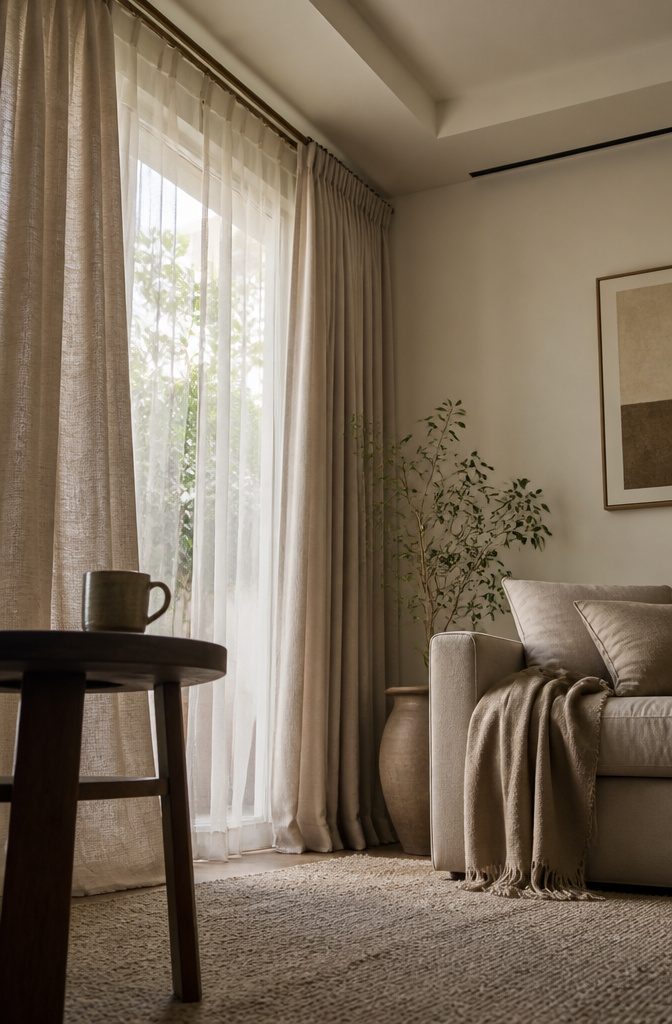
Hang the rod close to the ceiling and let the panels fall to the floor.
A rod set just above the window frame cuts the wall short, while a high one makes the ceiling look taller. The hem should lightly touch the floor or pool gently, and short panels undercut the whole effect.
Linen, cotton blends, and velvet drape well. Sheer voile layered behind heavier panels lets you adjust daylight and privacy.
Pull the color from your palette: white, cream, oatmeal, sand, and light gray suit almost any room, and in a small room the curtains can be one of your 3 main colors.
Save bold, large-scale patterns for big windows and use small-scale prints on small ones.
Recommended Products

Premium Velvet Fabric: Crafted from high-quality, skin-friendly velvet, our velvet pillow covers offer a gentle touch, perfect for lounging. Experience exquisite texture and vibrant color, bringing warmth and sophistication to any room

SOFT VELVET : Grineed Pack of 2 Fall Burnt Orange 18*18 inch/45*45cm Throw Pillow Covers made of cozy and durable Velvet. Bring your Home sweet as Decor. PILLOW COVERS ONLY, NO INSERTS.

AMAZING VELVET THROW PILLOWCASES: They will show two very different glosses if you look in two different directions, one is bright and smooth, the other is soft and plush
8. Art and Personal Objects
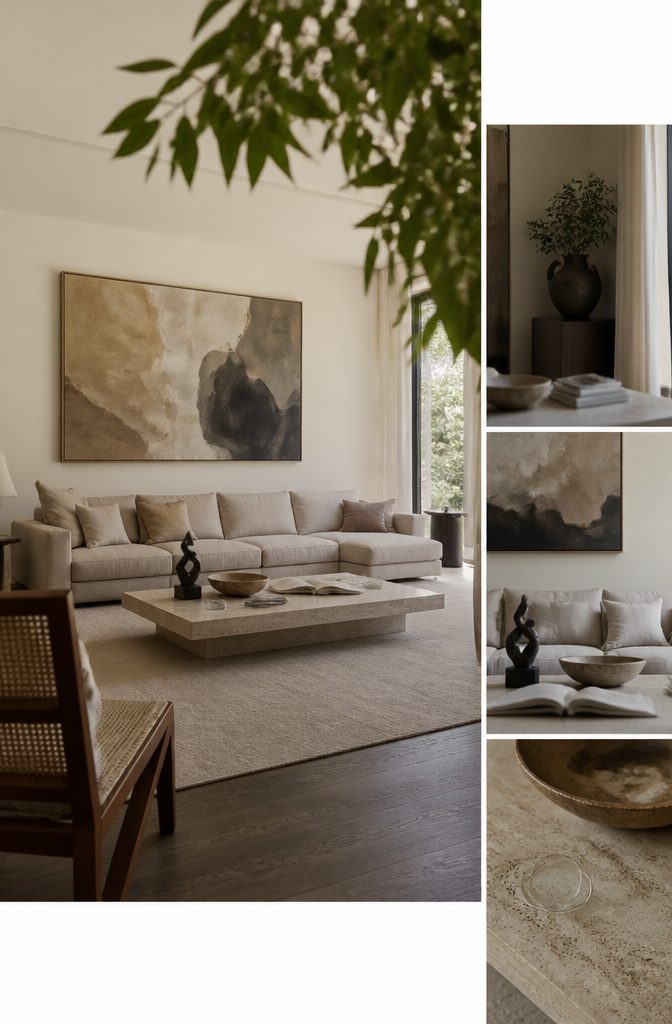
One large piece does more than a wall of matching frames. Hang art above the sofa so it spans about two-thirds of the sofa’s width.
Smaller than that and it floats; much wider and it overwhelms the seating. A statement piece also needs bare wall around it, so keep sconces, mirrors and small prints off its edges.
Personal objects look intentional when they are grouped. On the coffee table, set them in 3 or 5: a stack of books, a bowl, a small sculpture.
Vary the heights and leave open tabletop around the group. A collection of ceramics or travel finds reads as luxury when it sits together, not one piece per shelf.
Recommended Products

【FASHION & ELEGANCE 】This rectangular coffee table is made up of faux composite board top with marble grain and black metal legs, showing the natural beauty of the coffee table with a modern design and simple structure. Classic white tables and high-quality materials can be paired with any style of room, simple and stylish.

Sophisticated Modern Coffee Table: With a cultured white marble veneer top and gold geometric metal legs, adding a touch of modern luxury to the entire coffee table, create a cozy, warm feel in your living space

【COMBINE AS YOU LIKE】 Nesting white round coffee table include a large table (Φ 23.6 × 17.7 inch) and a small table (Φ 15.7 × 15.7 inch). A small table can be placed under the bigger one to save spaces . You can combine them as you like.
9. Style Shelves With Restraint
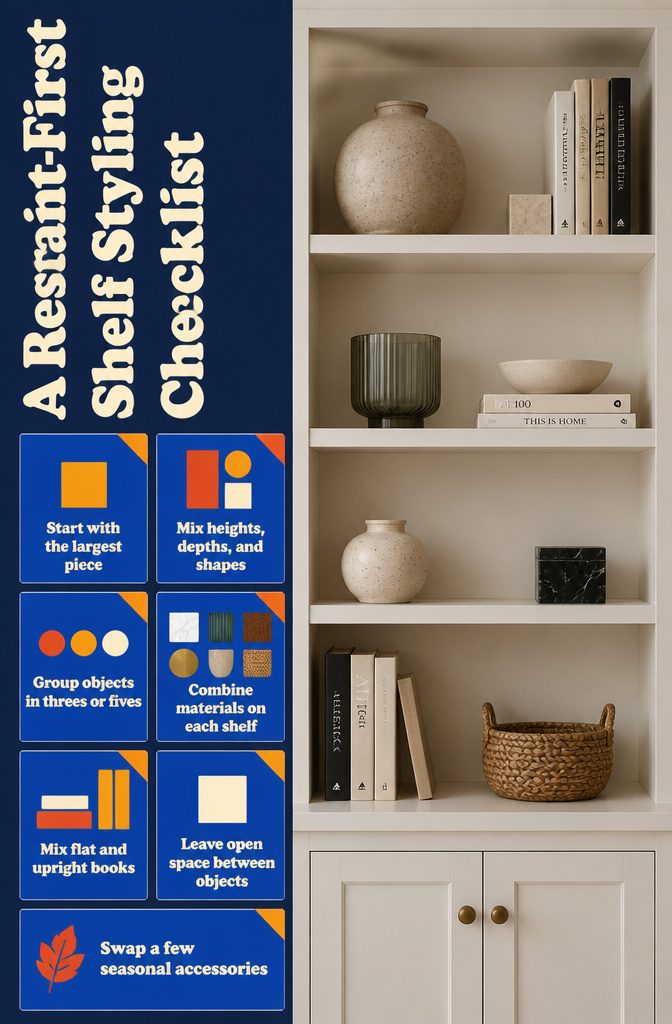
Start each shelf with its largest piece, then build smaller items around it. Use these rules as you go:
- Mix heights and depths. Pull some objects to the front edge, push others back, and pair tall pieces with low ones and round shapes with square.
- Group objects in odd numbers, such as 3 or 5. Pairs look stiff.
- Combine materials on a single shelf: marble, glass, wood, metal, ceramics, a woven basket.
- Stack some books flat and stand others upright.
- Leave open space between objects. Each piece looks chosen, and your eye moves along the shelf without snagging.
- Swap a few accessories with the seasons rather than restyling the whole shelf.
Fewer, better objects look more expensive than a full shelf.
Recommended Products
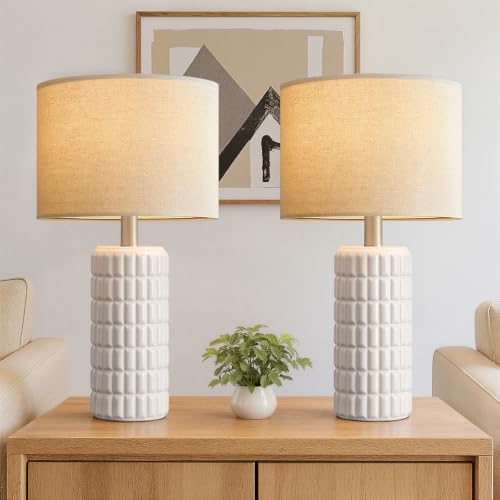
Sleek Design: Elevate your home decor with our exquisite ceramic lamps set of 2, featuring a chic beige-white finish that complements any style, from modern to rustic. The minimalist design, paired with a sophisticated linen lampshade, adds elegance to your nightstand or living room, creating a serene atmosphere that enhances your space and reflects your taste.

Modern & Practical Design: The bedroom lamps features a textured ceramic base that blends modern and farmhouse styles, adding an artistic touch to any room. A perfect gift for family and friends, it works beautifully as a nightstand lamp, bedside lamps, or living room accent
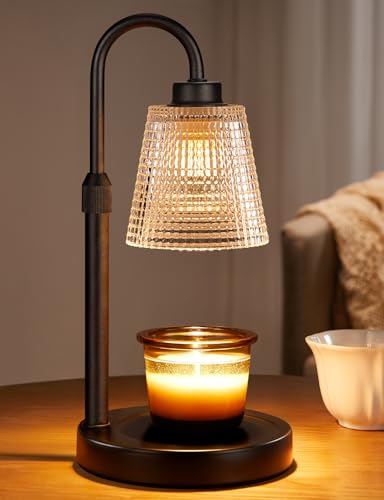
【Flame-Free & Eco-Safe Candle Warmer】Unlike traditional candles, our candle lamp warmer uses light source to melt the candle evenly. No Flame.No Smoke.No Soot. It makes candle lamps ideal for households with children and pets. Our wax warmer also extends the life of jar candles, making them both environmentally friendly and economical
10. Natural Materials and Greenery
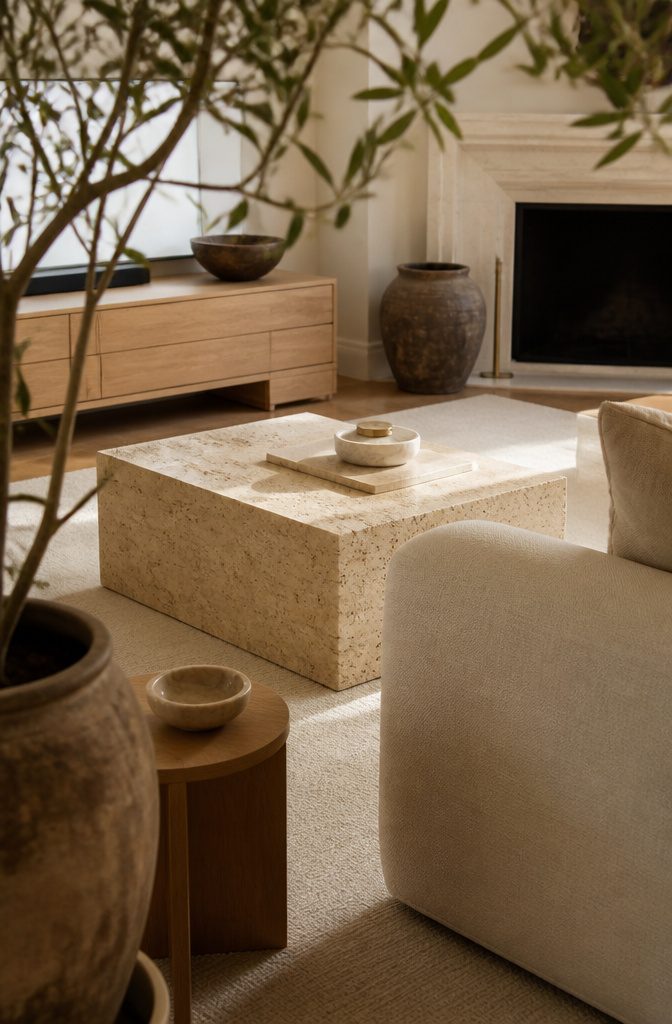
Stone and wood do the heavy lifting on large surfaces: a marble coffee table, a stone fireplace surround, an oak media console.
Choose one stone statement piece instead of several, because a single focal point reads as more expensive than stone scattered everywhere.
Travertine is the warmest option, with an organic texture that sits well beside oak, brass and soft fabrics. On a tight budget, stone-look porcelain or engineered quartz gives a similar appearance with less upkeep.
Marble trays and decorative stone bowls are the right scale for accents, and an oak side table works the same way. Plants come last.
An indoor olive tree softens the hard edges of stone and wood. Stay within 3 or 4 primary materials overall.
Recommended Products

💎 Timeless Crystal Design: Durable & Eye-Catching Crystal Chandelier This exquisite crystal chandelier features high-transparency crystal pendants adorning golden candlesticks—crafted to never fall off or fade over time for long-lasting elegance. When lit, the crystal refracts warm, sparkling light across ceilings, elevating the charm of any space, whether it’s a crystal chandelier for bedrooms or a statement piece in living areas. Unlike ordinary chandeliers, its unique crystal design and pearls chains add a touch of luxury that complements both modern and classic decor.

ELEGANT GOLD STARBURST SPUTNIK STRUCTURE: Modern branching sputnik chandelier with brass gold metal frame. Symmetrical multi arm starburst design delivers classic mid century modern charm, works as stunning statement decor for spacious rooms

【Tree Branch Crystal Chandelier】- The meticulously crafted frame is constructed from premium electroplate, offering corrosion resistance and durability. Branches can be manually adjusted. Distinctive branch design combined with dazzling, elegant crystals, creates an atmosphere of refined luxury and vibrant energy within any space.
11. Use Mirrors for Light
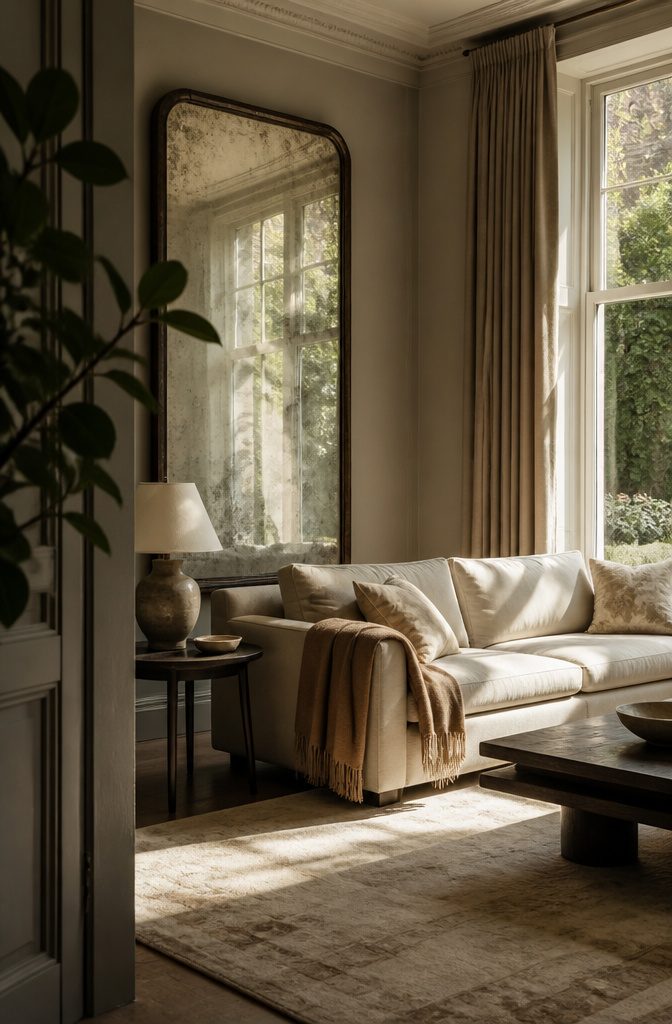
A mirror throws daylight back into the room, which brightens dark corners and makes the walls feel farther apart.
A wall-wide mirror or a pair of mirrored side tables does the most in a small living room. Hang the glass opposite or beside a window so it catches sun instead of reflecting a blank wall.
Finish matters more as the mirror gets bigger. At large scale, choose an antiqued or slumped mirror over a perfectly smooth, bright one.
The aged surface softens the glow, while a flawless expanse of glass can tip into hair salon territory. A single large antiqued mirror in each alcove carries sunlight across the room and adds atmosphere instead of glare.
12. Architectural Details
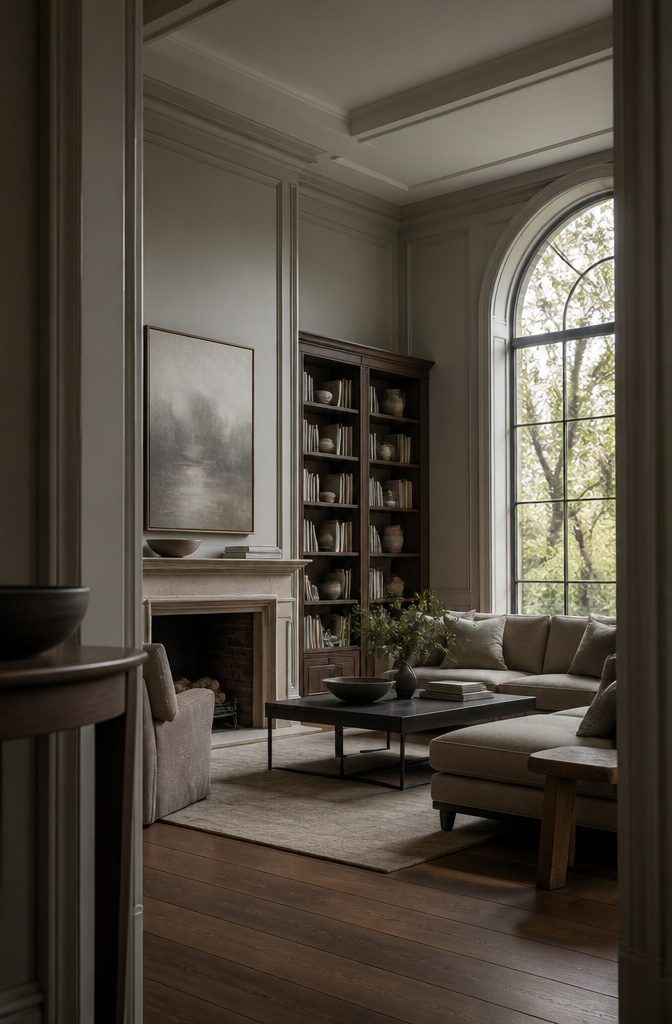
A fireplace, built-in shelving, arched windows and a high ceiling give a room character before any furniture arrives, so arrange the room around whichever one you have.
Crown molding, wainscoting and true built-ins are homeowner projects. They involve cutting, nailing and filling, and they stay with the house.
Renters can get most of the look without touching the walls.
Slim wood strips or lightweight trim held with removable adhesive can mimic wainscoting, and painting the trim the same color as the wall lets shadow, not contrast, define the detail.
A freestanding bookcase pushed wall to wall reads as a built-in. Check your lease first.
Arched windows and tall ceilings can’t be faked, so keep them uncluttered.
13. Curved and Sculptural Furniture
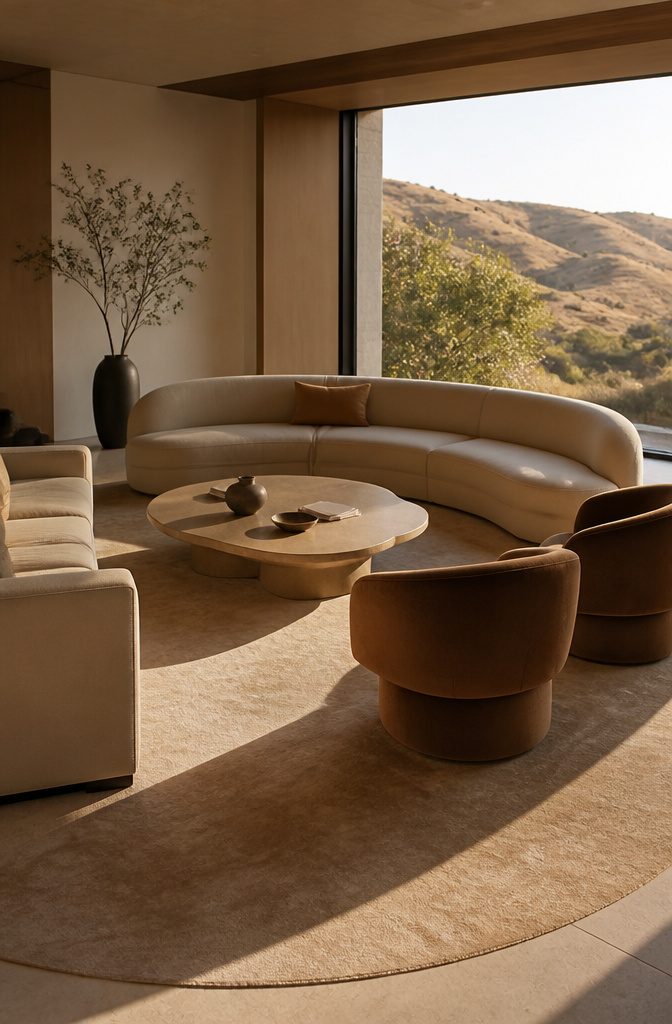
Most living rooms are built from right angles: a rectangular sofa, a square coffee table, a boxy media console.
A curved sofa breaks that grid. In a minimal Indian Wells, California, desert retreat, a curved Vladimir Kagan sofa and puff lounge chairs keep the room sophisticated without adding a single ornament.
Swivel chairs loosen things up.
A pair of Blasco Clichy swivel chairs gave an Upper East Side apartment a casual edge that suits movie nights with friends. A room carries about one curved sofa or one pair of swivel chairs, plus a sculptural table.
Past that, the shapes compete instead of softening the room. Keep the remaining seating straight-lined so the curves read as a choice.
14. Symmetry or Contrast
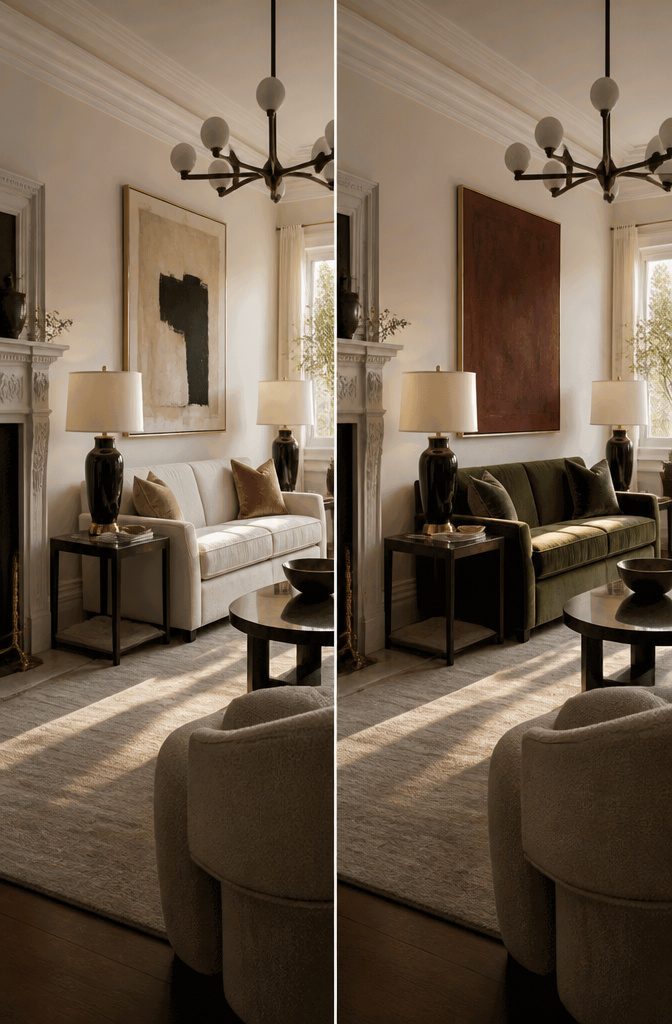
For a first-time decorator, symmetry wins. Pick a fixed feature such as a fireplace, a pair of identical windows or a central table, then mirror the furniture around it.
Two sofas can face each other across a marble fireplace wall, or two matching lamps can flank a mirror or a piece of art.
The room reads as calm and tailored, even when it’s small. The cost is predictability, and a fully matched room can feel formal.
Contrast adds dimension. A sculptural chandelier against prewar fireplace details, or velvet and mohair upholstery beside glossy sconces, gives the eye more to look at.
It slides into chaos without balance, so set the symmetrical layout first and add one clash at a time.
15. Keep Luxury Comfortable
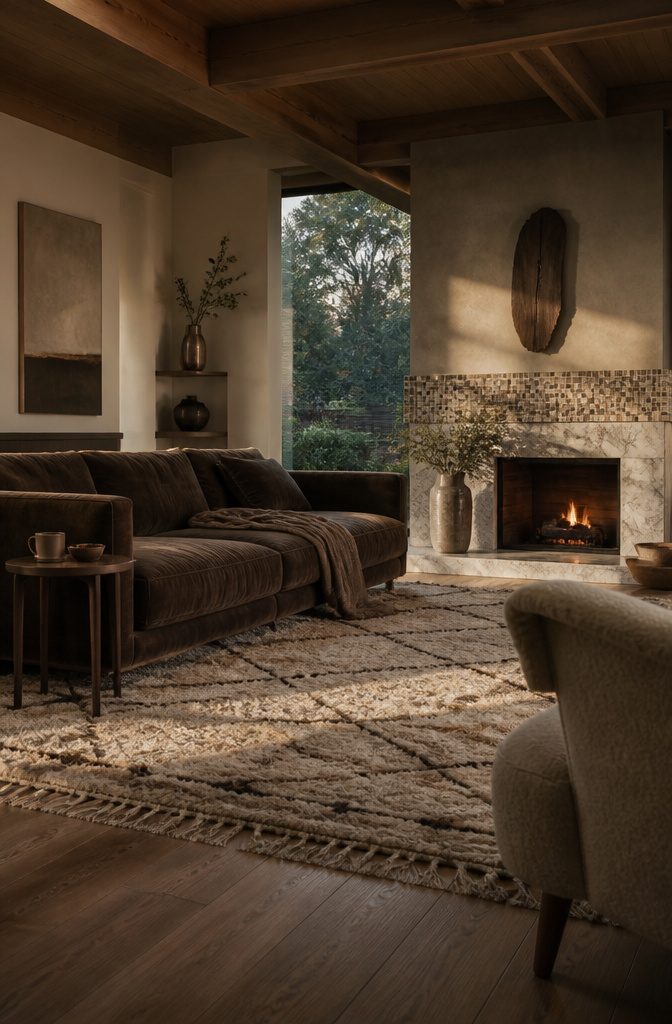
Luxury in a living room comes from thoughtful design and good materials, not from a showroom look.
A marble fireplace or handcrafted mosaic tile can carry the polish, as long as the seating in front of it is somewhere you would actually stay.
Choose a deep sofa in a soft, rich fabric like mohair, and put a plush rug underfoot so the hard surfaces have something to balance them.
A room looks expensive when a few good pieces do the work. Spend on the sofa and one standout surface rather than filling shelves and tables with decor.
Skip anything you would hesitate to put a mug or your feet near. A room people sink into reads as richer than one they are afraid to touch.
Frequently Asked Questions
What is a luxury living room?
A luxury living room is one built on thoughtful design and good materials, not on expensive or flashy decor.
A marble fireplace or handcrafted tile can supply the polish, as long as the seating in front of it is comfortable enough to stay in. A room people sink into reads as richer than one they are afraid to touch.
Where do I start when designing a luxury living room?
Start with one hero piece, such as a sofa, artwork, fireplace or chandelier, and let the other choices answer to it.
Lighting can be that first decision too. Mixing the remaining pieces, instead of buying a matched set, makes the room look collected rather than staged.
How do I make my living room look rich and luxurious?
Use a few good pieces and spend on the sofa and one standout surface, instead of filling every shelf and table.
Pair soft and hard textures, such as a velvet sofa beside a marble coffee table, and add warm 2700K–3000K lighting with the overhead fixture on a dimmer. A large rug and one big piece of art finish the look.
What colors work for a luxury living room?
Build on quiet neutrals such as ivory, warm white, oatmeal, taupe, mushroom gray and soft beige, then add emerald, navy, burgundy or matte black in small doses like a pillow or lamp base.
Pick one foundation color from a favorite artwork or furniture piece and build around it. In a small room, keep the palette to 3 colors that harmonize.
What are luxury materials for a living room?
Natural stone such as marble or travertine, hardwoods like oak, brass and bronze, quality ceramics, and plush fabrics like velvet, silk, leather, bouclé and cashmere all read as luxury.
Limit the primary materials in the room to 3 or 4. Repeating one finish, such as brushed brass on the chandelier, lamps and cabinet handles, keeps the mix looking intentional.
What is the 2/3 rule for a living room?
The rug should cover roughly two-thirds of the room, and the coffee table should be about two-thirds the length of the sofa. These proportions keep the seating area balanced and make the furniture read as one group.