
These ideas range from a single corner shelf set to replacing the upper cabinets, and the right one depends on how much you will display and wipe down.
Dust and cooking grease settle on anything left out, so plan a weekly wipe with mild soap solution; mismatched dishes make the shelves feel like a chore.
1. Shelves Above Counters
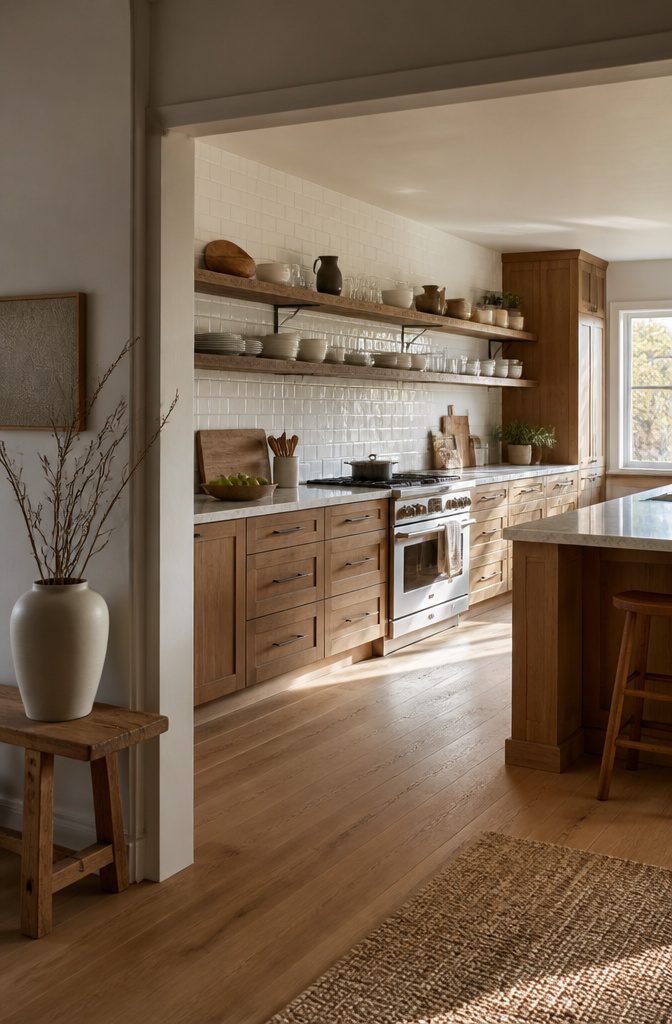
Replacing the upper cabinets along your counter run is the most traditional way to add open shelving.
Keep the wall behind them quiet, either painted white or covered in subway tile, so your glassware and serveware are what the eye lands on.
For a cohesive look, match the finish of the shelves and the lower cabinets to your island. Rustic wood shelves pair well with shiny appliances, while matte black appliances work with gold-mirrored shelves.
Leave a few closed cabinets in the run, or keep a bank of them nearby. Mismatched food containers and everyday clutter look messy on display and are better behind a door.
2. Shelves Over the Sink
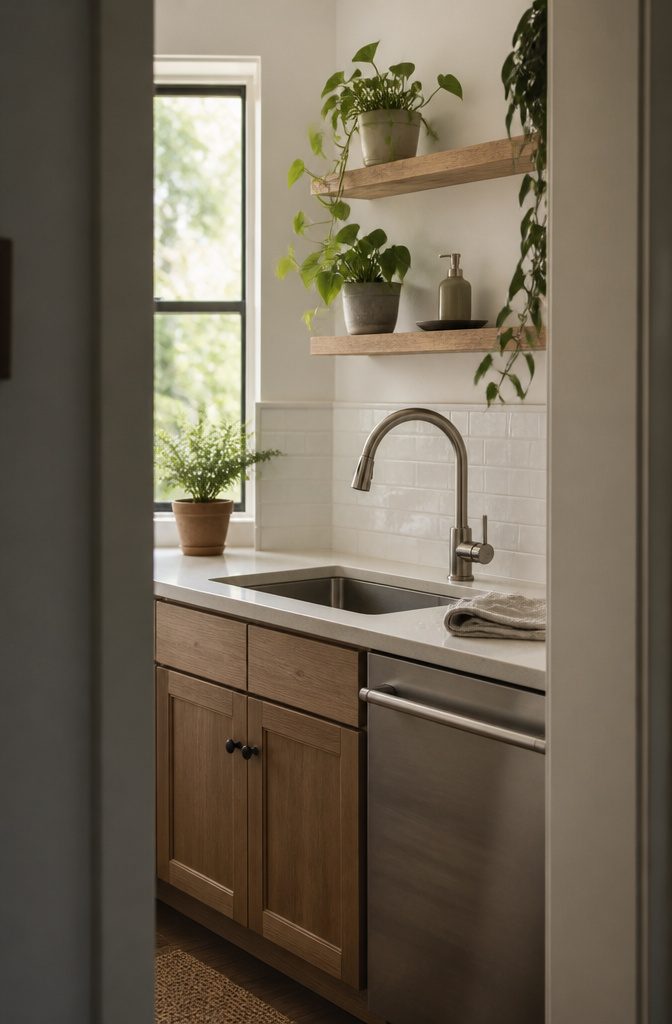
If the cabinet above your sink is a shorter one, take it out and hang open shelving there. Dish soap stays within arm’s reach, and a couple of houseplants will do well in the humidity from the sink.
The cost is grease and dust, which shelves near a sink collect faster than shelves elsewhere.
Wipe them with a damp cloth, and use a mild soap solution weekly. Wood with a natural texture hides dust better than a glossy finish, so it suits this spot.
Keep the shelf to soap and a few plants. The more you set out, the longer the wipe-down takes, and a shelf that is a chore to clean is the one that gets skipped.
3. A Corner Shelf Set
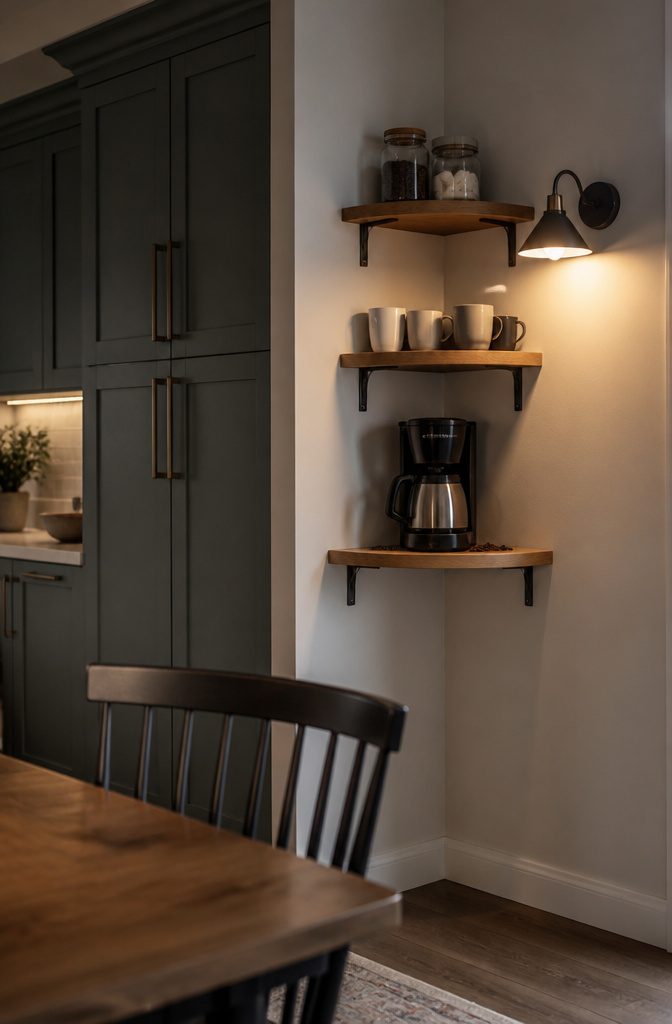
A single set of shelves in a corner is the smallest commitment open shelving asks of you, which makes it a good first step if you rent or aren’t sure you’ll like the look.
Dish towels can stay hidden in the cabinets, and the shelves only have to hold what you want seen.
A coffee corner suits this setup best.
Put the coffee maker on the lowest shelf, mugs above it, and a few jars of beans or sugar on top. Stop at those three things, because a small corner looks crowded fast.
Lighting is simpler here too. Overhead fixtures leave shelves looking flat, and a corner may need only one wall sconce to light the whole set.
Recommended Products

Optimal Size for Diverse Collectibles: the vintage wall shelf comes in a smart size offering 22 slots, ideal to exhibit a variety of collectibles, from miniature artworks and trinkets to cars and shot glasses, it ensures that the exhibit remains no clutter and organized

Space-Saving Corner Design – This Coffee Mug Organizer Corner is specially designed to fit neatly into unused cabinet corners, making full use of wasted space while keeping your kitchen organized and clutter-free.

Maximize Counter Space: This 3 tier coffee mug display shelf helps organize mugs vertically, making full use of limited kitchen countertop, coffee station, and cabinet space while keeping your area neat and stylish.
4. Breakfast Nook Shelves
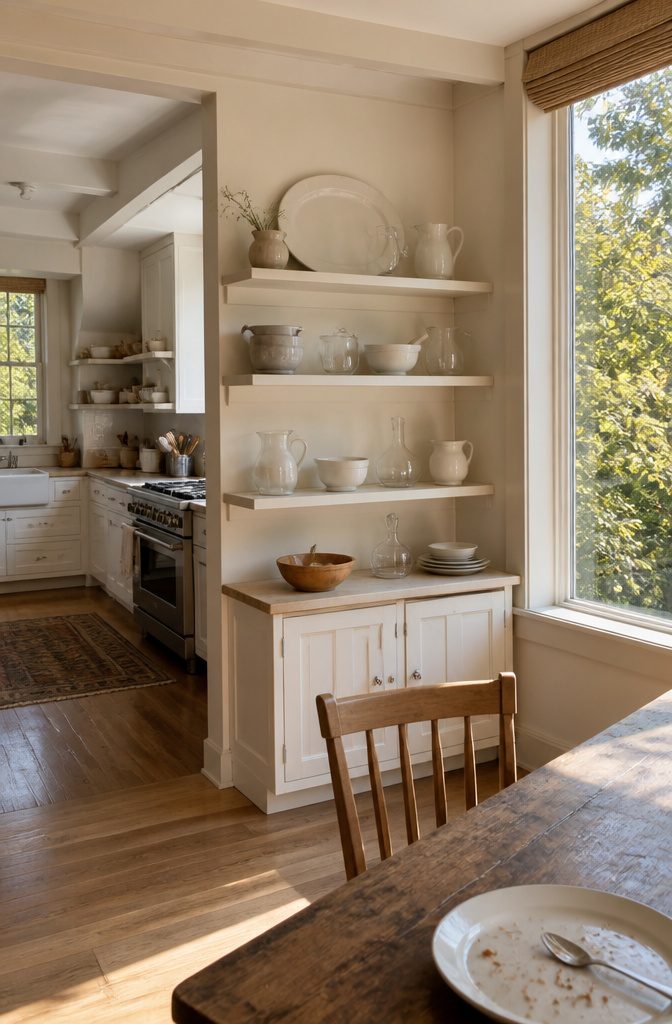
A breakfast nook is the best place for the bulky pieces you pull out a few times a year: platters, serving bowls, pitchers, a sangria carafe, even a mortar and pestle.
Keep everyday dishes near the stove and give the nook shelves to the big, occasional items.
Nobody is reaching past them while cooking, so wide platters can sit upright without getting bumped, and the bowls you rarely use stay out of the way.
Check the light before you choose what goes up.
A tall or picture window floods a nook with sunlight, which suits glass pitchers and glazed serving bowls. In a dim nook, pick matte or lighter pieces so nothing reads as a dark clump.
Recommended Products

2-3 Times Thickness: Each tile is 2mm-2.5mm thick, offering durability and solidity, providing a high-quality alternative to soft sticker tiles

𝐏𝐫𝐞𝐦𝐢𝐮𝐦 𝐌𝐚𝐭𝐞𝐫𝐢𝐚𝐥𝐬:Made of PVC composite laminate, anti-scratch, high impact, color fadeless, more durable and stronger than other plastic self-adhesive tiles. Glossy/Poished surface finishing with realistic ceramic look, high waterproof and stain-resistant performance, protect the walls from splash and iol.

100 sheets solid PVC tiles, 2.95"x5.9"x0.12" each, cover 12.11 square feet. This simple subway pattern is easier to install and plans the layout freely to your imagination.
5. Open Shelves as a Pantry
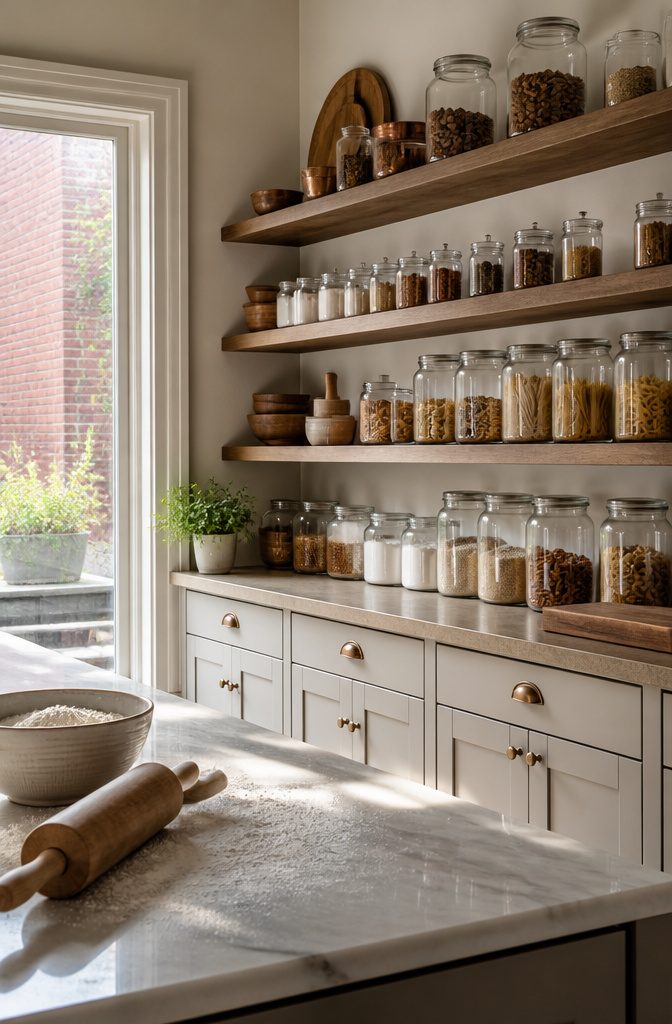
Open shelves work as a pantry when food lives in jars and canisters instead of original bags.
Nuts, spices, baking necessities and dried pasta suit this best, since they are all dry staples that look good lined up. Clear glass lets you see what’s left at a glance.
Opaque ceramic looks sleek, but you can’t see inside, so label every ceramic canister. Flour and sugar look identical from across the room.
Stick to one or two matching container styles. Mismatched boxes, bags and jars read as clutter on an open shelf, while uniform containers read as a deliberate display.
Styling Open Shelves
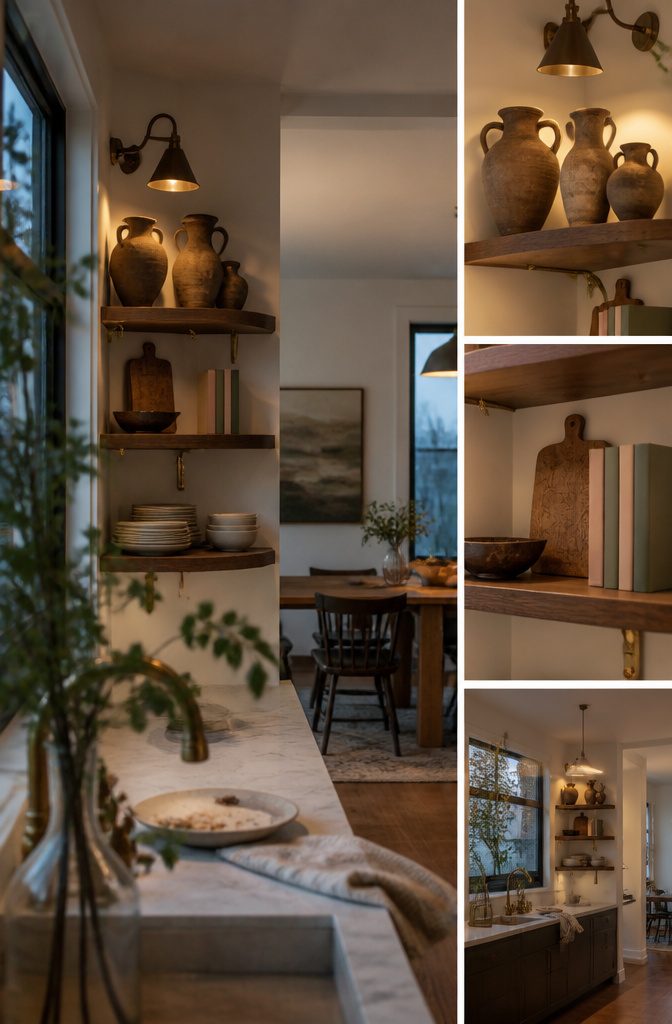
Keep everyday dishes on the bottom shelves so they’re easy to grab, and save the upper shelves for display: a trio of amphora vases, a few colorful cookbooks, or an intricate cutting board propped upright.
Pull out anything you no longer use so the arrangement stays fresh.
Match the finish to the kitchen. Sparse floating shelves suit an industrial look and make a small room feel brighter and airier, especially near windows.
Natural wood on brass brackets reads warmer and more vintage. Gold-mirrored shelves pair well with matte black appliances.
Soft neutrals feel calm, while bold shades add contrast. Wall sconces aimed at the shelves light the display after dark.
Is Open Shelving Right for You
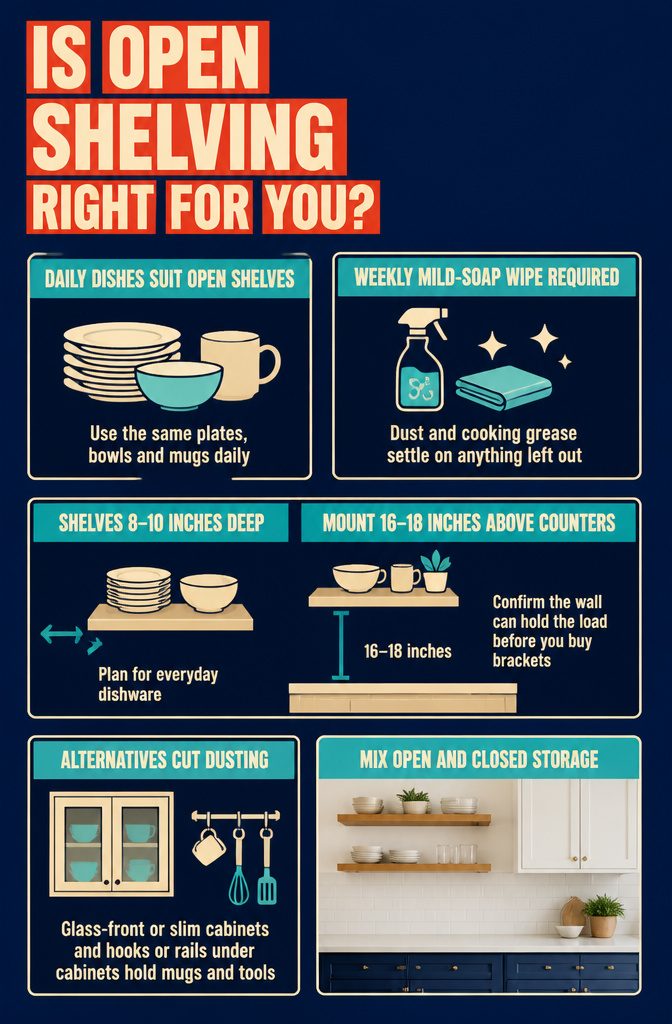
Open shelving suits you if you use the same plates, bowls and mugs daily and will do a weekly wipe with a mild soap solution, because dust and cooking grease settle on anything left out.
If you rarely dust or own mismatched dishes, it will feel like a chore.
Plan shelves 8–10 inches deep for everyday dishware, and mount them at least 16–18 inches above the countertop. Confirm the wall can hold the load before you buy brackets.
If you’re unsure, take the doors off a few cabinets and paint the interiors.
Glass-front or slim cabinets cut the dusting, and hooks or rails under cabinets hold mugs and tools. Mixing open and closed storage is the safest compromise.
Frequently Asked Questions
What should I put on the shelves in a kitchen with open shelving?
Put everyday dishes on the bottom shelves where they’re easy to reach, and use the upper shelves for display pieces like vases, cookbooks or a cutting board.
Store mismatched food containers and clutter behind closed doors. Remove items you no longer use so the arrangement stays fresh.
How deep should open kitchen shelves be?
Plan on 8–10 inches deep for everyday dishware. That fits standard plates and bowls without the shelf sticking out far into the room.
How high should open shelves be mounted above the counter?
Mount them at least 16–18 inches above the countertop. Check that the wall can carry the weight of your dishes before you buy brackets.
How do you keep open kitchen shelves clean?
Wipe them weekly with a mild soap solution, since dust and cooking grease settle on anything left out.
Shelves near the sink get dirty fastest. Wood with a natural texture hides dust better than a glossy finish, and fewer items on the shelf means a quicker wipe-down.
Can I use open shelves as a pantry?
Yes, if you decant dry staples such as nuts, spices, baking supplies and pasta into jars or canisters.
Clear glass shows what’s left, while opaque ceramic looks sleek but needs labels because flour and sugar look alike. Stick to one or two matching container styles so the shelf looks deliberate.
Is open shelving a good idea if I rent or I’m not sure I’ll like it?
A single corner shelf set is the smallest commitment and a sensible way to try the look.
A coffee station with the machine, mugs and a few jars suits it well. Another low-risk option is to take the doors off a few cabinets and paint the interiors.
How do I light open kitchen shelves?
Use wall sconces aimed at the shelves. Overhead fixtures tend to leave the display looking flat, and in a corner setup a single sconce may light the whole set.