
The ideas range from rotating 3 sets of bedlinen to tenting the walls, and the light in your room decides where to start.
A north- or east-facing bedroom reads cool and flat in white, so choose an off-white with a yellow or red undertone, such as Benjamin Moore’s Simply White, before buying anything else.
1. Choose Your White Tone
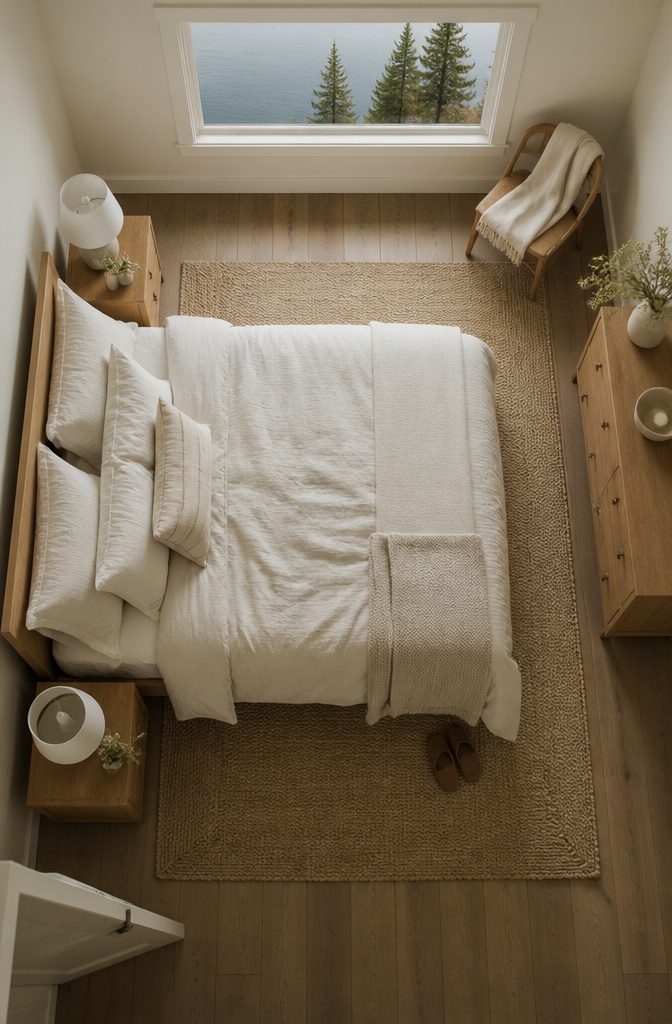
Skip Brilliant White. It reads harsh, too bright and a little sterile once it covers four walls.
Pick an off-white, a white with an undertone of another color, because that undertone decides whether the room feels calm or clinical. Ivory, cream, warm white and very pale gray all work, and each pulls slightly differently.
Benjamin Moore’s Simply White is a warm white that gives a soft glow. For more warmth, Little Greene’s Eau de Violette is red-based and Capuchin is ochre-based, and both suit a restful bedroom.
Benjamin Moore’s Mountain Peak White covers the walls and ceiling of a lakeside cabin bedroom in Michigan, so one white can wrap the whole room.
2. Match White to Your Light
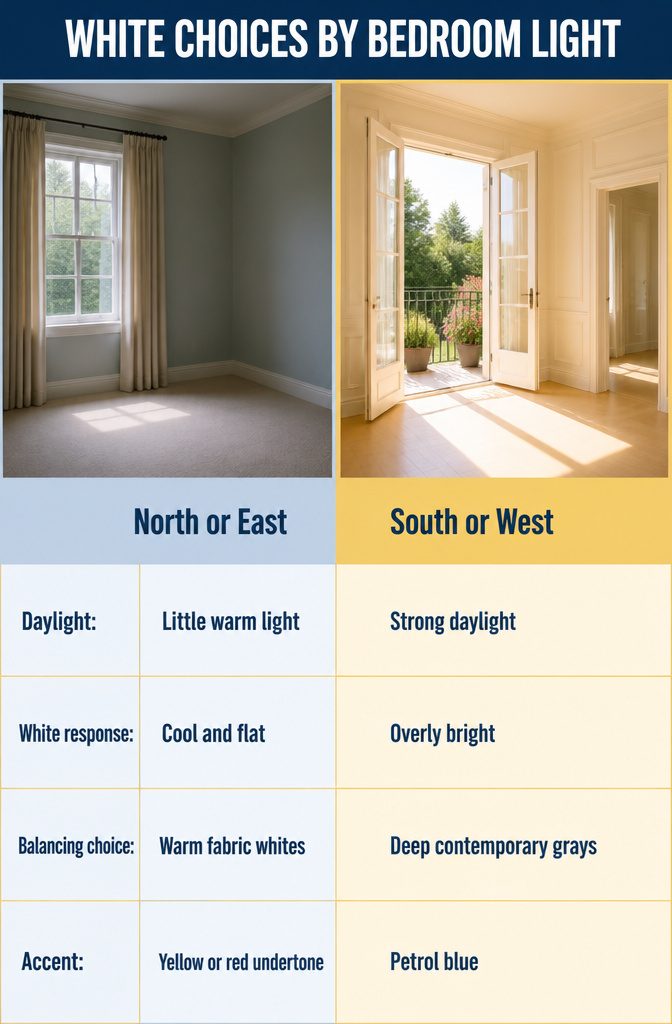
A north- or east-facing bedroom gets little warm light, so white can read cool and flat. Lean on warm fabric colors, such as bedding and curtains in whites with a yellow or red undertone.
A south- or west-facing room has the opposite problem. Deep contemporary grays tone down strong daylight, and a touch of petrol blue gives the room a finished look.
When the light is good, build the room around it. In one Alabama bedroom, French doors open onto a flower garden, and quiet neutrals keep your eye on the plants outside.
In a 19th-century Paris bedroom, doors on a pivot let terrace light bounce off white walls and into the corridor.
3. Pick a Style
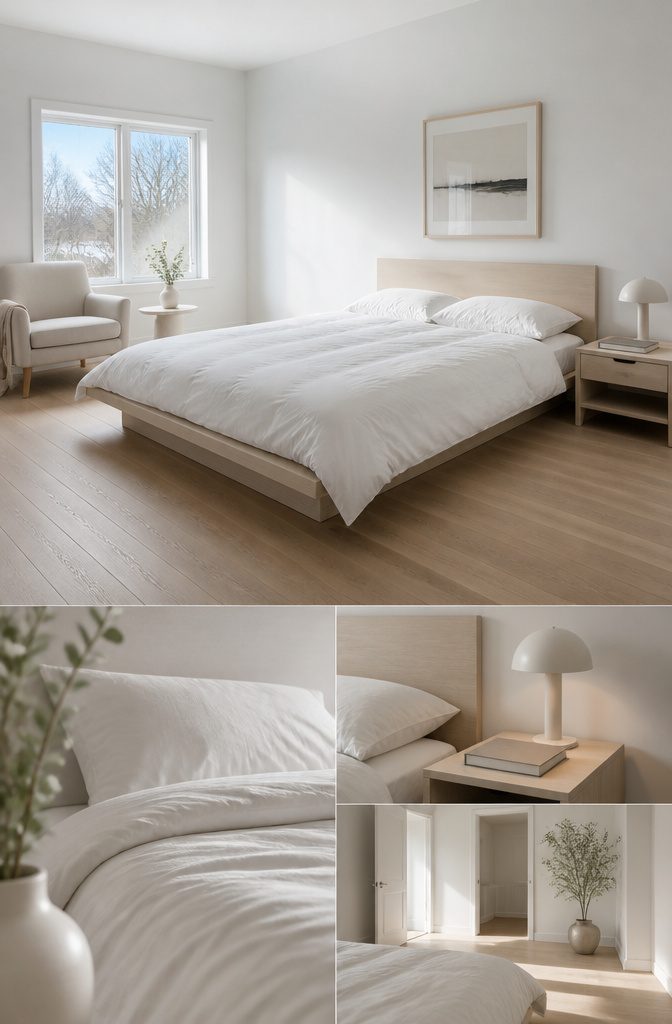
Scandinavian treats white as a bright base and warms it with pale wood and soft layers, so the room feels airy without turning stark. Minimalist uses white for emptiness: clean lines, few objects, and nothing competing with the walls.
Farmhouse pairs white with worn, familiar pieces like painted furniture and woven textures for a lived-in feel. Modern rustic keeps the white crisp and sets raw wood against it.
On a few hundred dollars, minimalist is the easiest to pull off. It mostly asks you to remove things, so the budget goes to one good set of bedding or a lamp.
Scandinavian comes second if you already own light wood. Farmhouse and modern rustic lean on furniture and wood, which is where costs climb.
4. Layer Fabrics and Texture
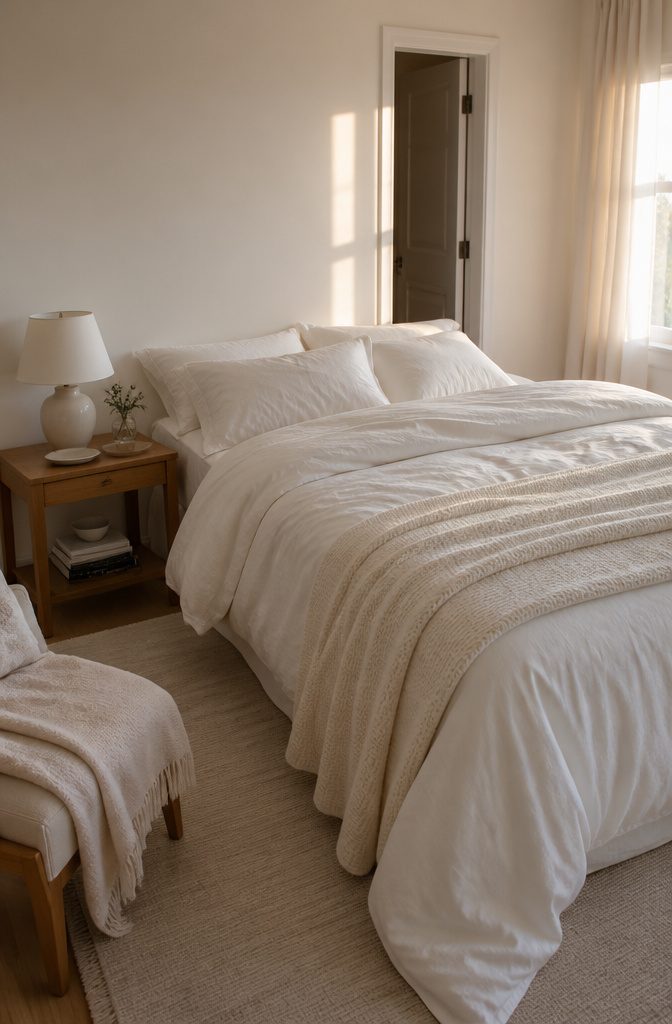
White stays warm when the layers differ in texture more than in color. Start with sheets in high-quality white cotton such as Egyptian cotton.
Then add wool and linen on top, like a throw at the foot of the bed or a blanket folded over the duvet. Cream and off-white pieces soften the look more than another layer of bright white.
Designers use the same approach at full scale.
One bed pairs Matouk linens with a Brahms Mount blanket. Another has Nives by Baldini e Cecchi linens and a Monica James & Co. rug underneath.
White is also easy to update on a budget. Keep 3 very different sets of bedlinen and rotate them to change the whole room without buying anything larger.
5. Wood and Natural Materials
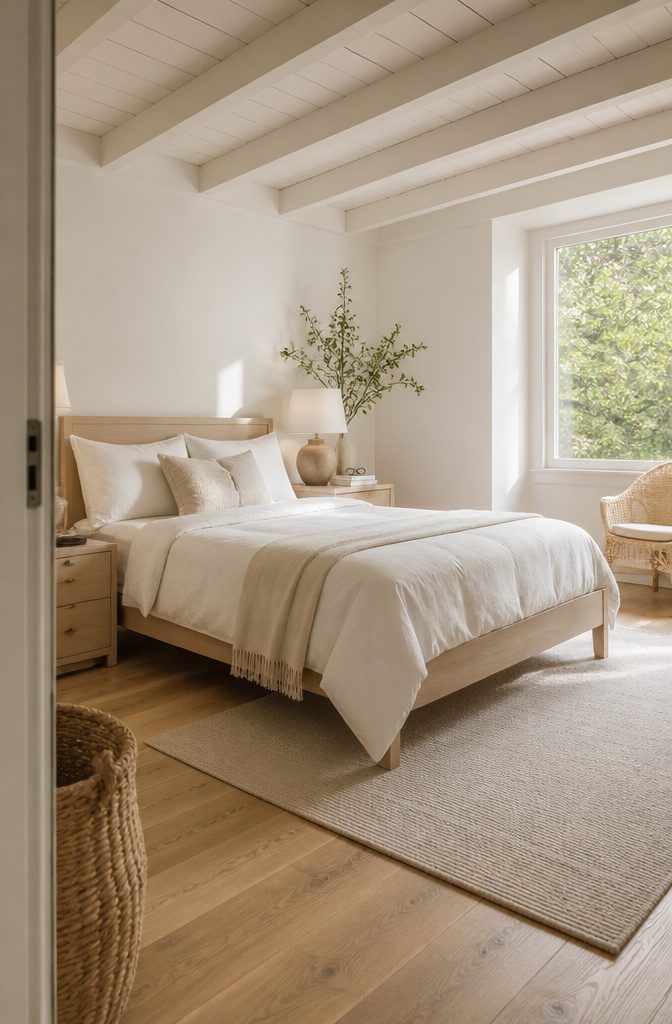
Fabric alone can’t give a white room weight, and wood can. Pale blond wood suits a contemporary look: a four-poster in that tone keeps the room airy and draws the eye away from a low ceiling.
Use the same wood tone on the bed, floor and tables, then add a pale rug. Black bedside tables add contrast if their lines stay modern.
Natural flooring brings warm tones underfoot that bedding can’t.
Wooden ceiling beams painted white take on a youthful air and still give the room structure overhead. Rattan, in a chair or a headboard, adds woven texture, and one piece is enough.
6. Accent Colors
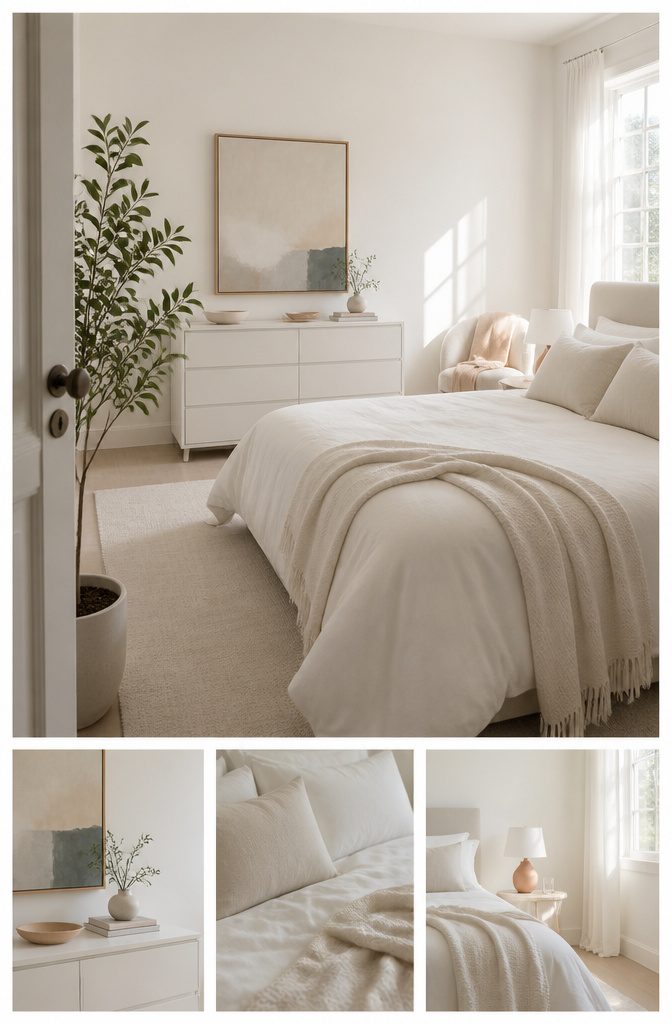
Cream is the easiest accent for a white bedroom. Its yellowy undertone adds warmth without breaking the all-white scheme, so a cream throw or set of pillowcases reads as softness, not as a second color.
For a touch of contrast, add very pale pastels like blush pink, powder blue, or soft peach. A peachy-ivory white bedroom with a single oil painting shows how little it takes.
Stronger colors work best as accessories. Keep orange, green, gold, black, and gray to small pieces such as a lamp base, a framed print, or a plant, so you can swap them without repainting.
Black frames give the sharpest contrast, and gold is warmer. Limit yourself to one bold color plus natural tones.
7. Wallpaper, Paneling and Millwork
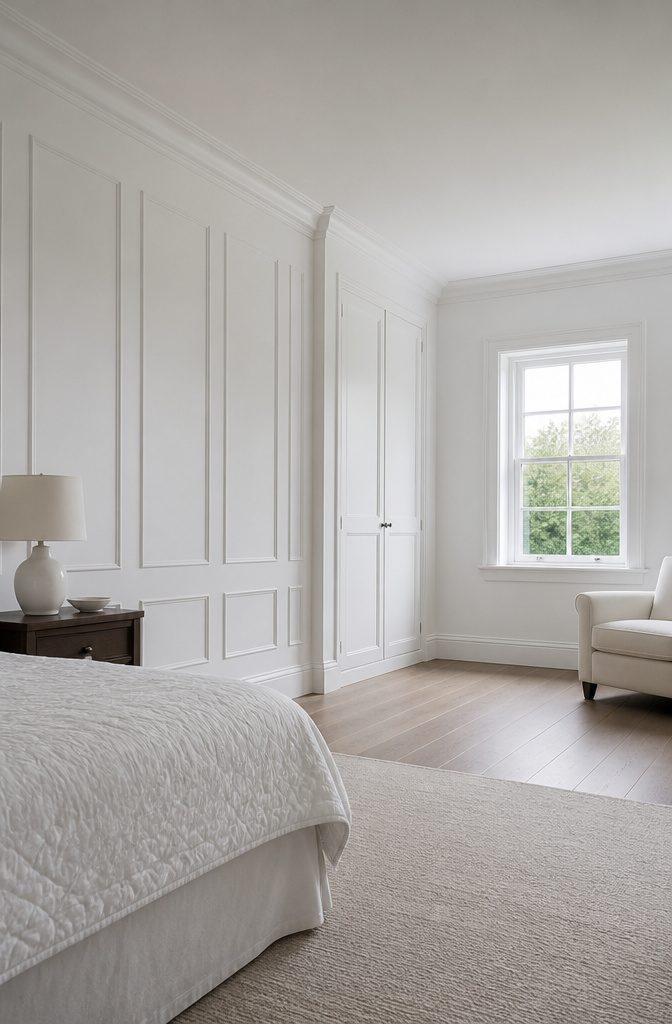
White paint makes existing architectural detail show.
Coving, deep skirting boards and classic paneling in a period home read as clean shadow lines once they match the walls. In a large room, paneling adds the texture that plain walls lack, which can look bare and clinical.
If your walls have no detail, a white or off-white wallpaper adds a focal point without breaking the scheme. Photo-realistic prints that mimic brick, paneling or fabric look contemporary, and traditional patterns work too.
Built-in Gustavian-style millwork gave a new main bedroom in a Connecticut colonial a sense of age. Fully tented walls, as in Sarah Bartholomew’s Kips Bay Dallas guest room, are the dramatic option, and they take more than a weekend.
8. Make the Bed the Focal Point
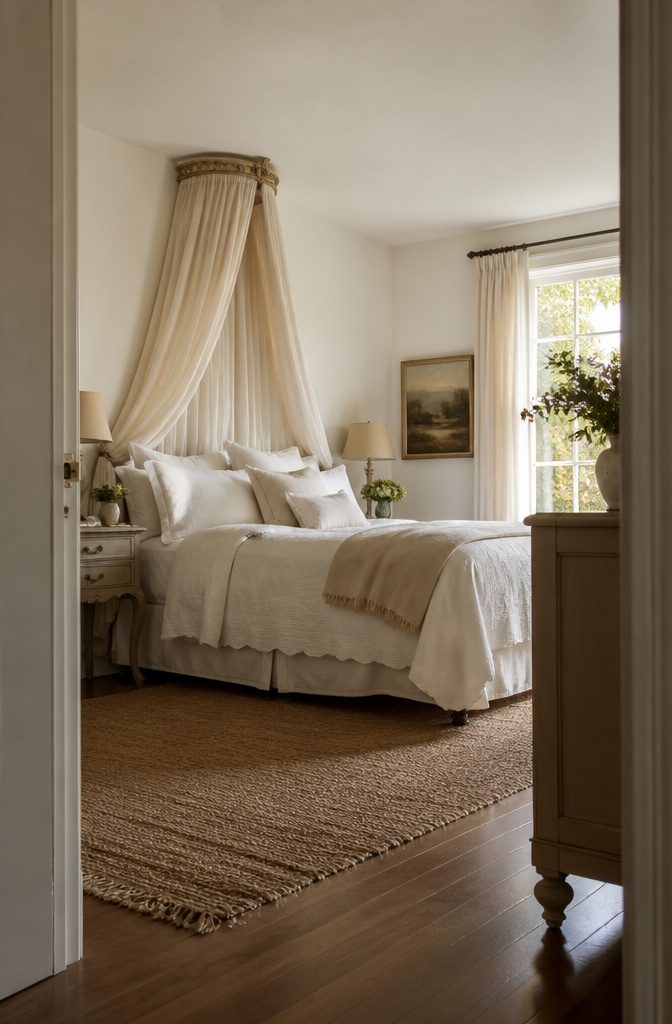
A white room needs one piece with weight, and the bed is the obvious choice.
A canopy frame set in an arched nook, like the custom wood-and-iron bed in a Charlotte penthouse, makes the bed feel enclosed, and using the same fabric for canopy and curtains keeps it calm.
A coronet is the easier route for renters.
Mounted above the bed, it adds grandeur, and the swathes of fabric take it from stately to cozy. Pair it with a warmer white and cream bedding for a traditional look.
For more pattern, a 1930s Aiken, South Carolina farmhouse bedroom combines floral bed panels with painted latticework and ribbon motifs. Skip the painted floor unless you own.
9. Pattern and Artwork
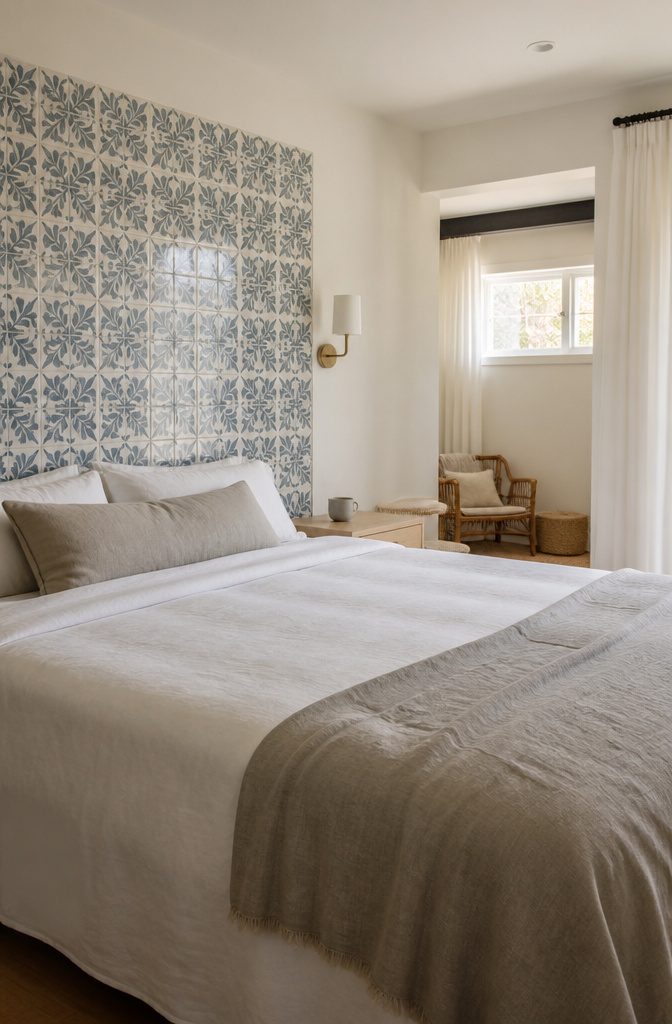
Patterned tile used as a headboard gives a high-ceilinged white bedroom one strong focal point without a single printed fabric.
A large piece of art or one accent wall does the same job. Pick one spot for pattern and keep everything else plain, because a mostly white room goes busy fast once several prints compete.
If you want print in the textiles, limit it to a pillow or throw set against solid linens.
Pair that with very few, very soft shades of color, so the room feels warm rather than cluttered. Rustic wood and rattan add depth without adding another pattern.
10. Use Mirrors
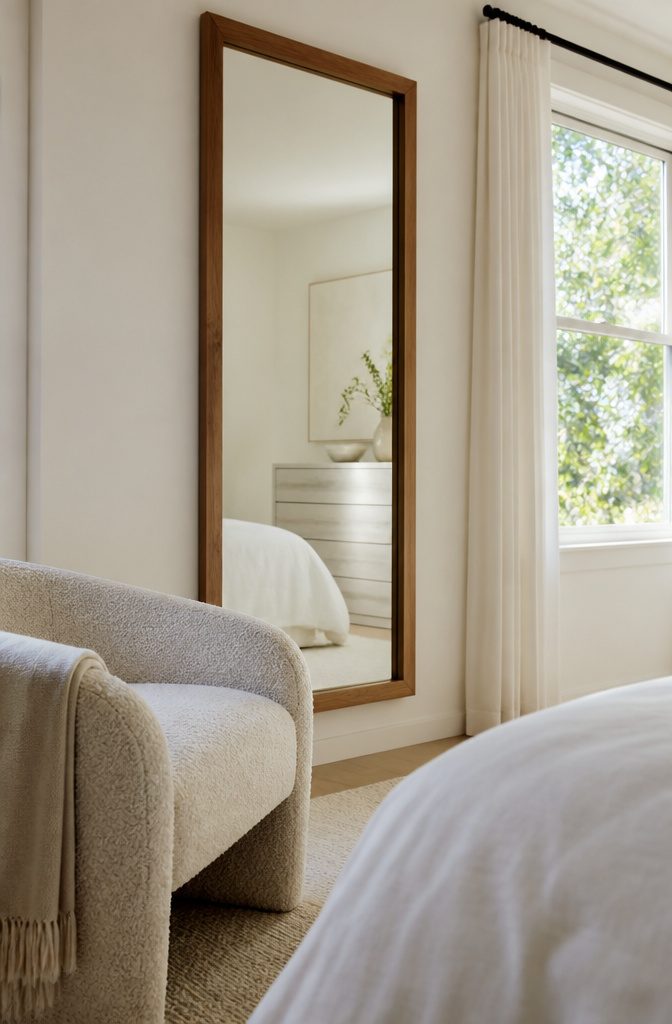
A mirror does two jobs in a white bedroom: it bounces daylight around and gives a plain wall something to look at.
Hang it on the wall facing the window, or on the side wall right next to it, so the glass catches daylight instead of reflecting a dim corner.
Small or light-starved rooms gain the most, because the reflected light makes the space read brighter.
Against stark white, a mirror can feel cold, especially in a north-facing room.
Pair it with a warm white such as Simply White, which has a yellow or red undertone, and put something highly textured nearby, like a white bouclé chair.
11. Window Treatments
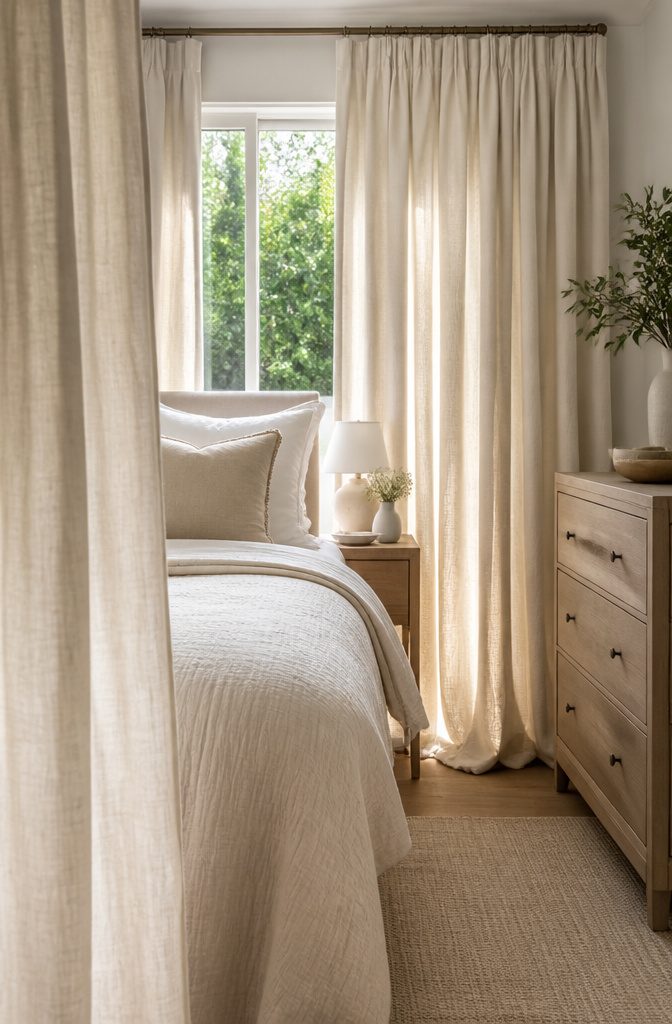
Ivory linen drapery is the safest choice for a white bedroom.
It adds texture without adding color, and panels hung generously around the bed cocoon the space and give it a sense of privacy. Ivory also reads softer than stark white against white walls.
Unlined linen filters light instead of stopping it, so a window that catches bright morning sun needs a heavier layer. Choose a lined panel, or add a blackout lining behind the linen.
From inside, a lined ivory panel looks the same as an unlined one. Hang the rod higher and wider than the window frame so the panels clear the glass when open and the room keeps its daylight.
12. Small Room Ideas
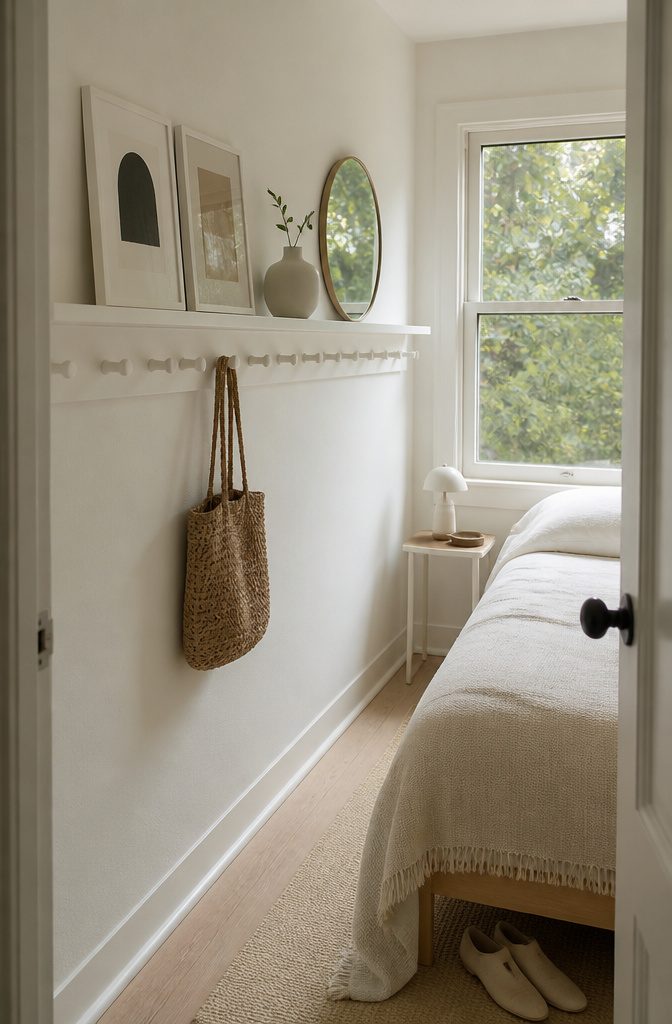
White suits a small bedroom that needs to feel lighter and more airy, but a bare white room can look blank, so give the walls a job.
A peg rail with a shelf above it is the best fit for a tight space because it is useful and decorative at once.
The shelf holds prints and small decorative pieces as a feature wall, and the pegs hold bags, which add color and texture against the white.
Mirrors are the second move.
Hang one or two within a gallery wall and they reflect light while giving the eye a focal point. That helps most in a room that is small, light-starved, or short on architectural detail.
Why White Feels Calm
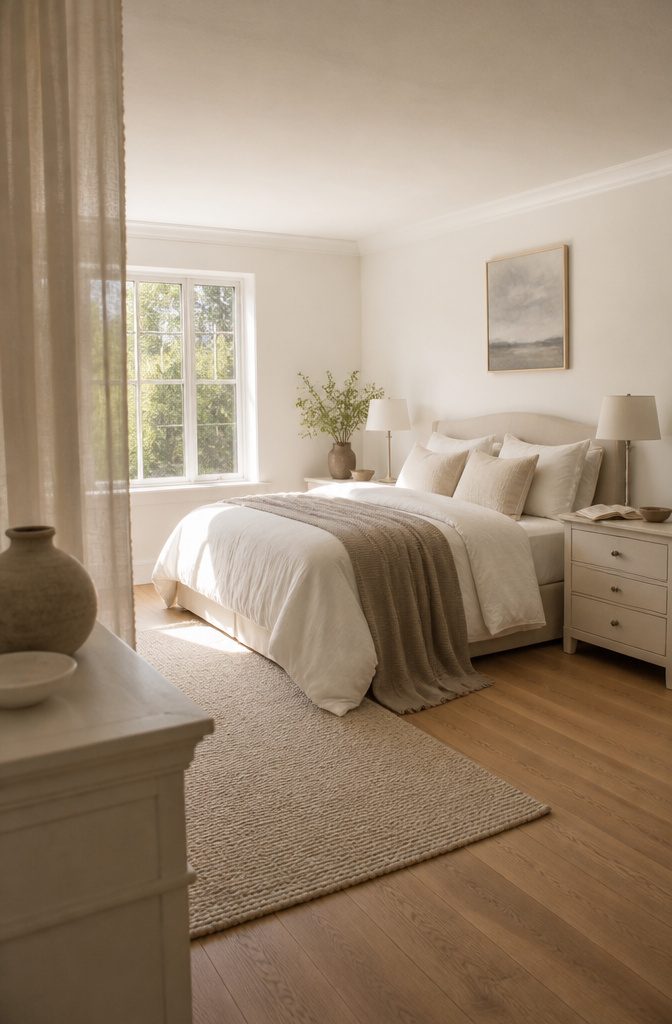
White works as a calm backdrop because it gives the eye nothing to sort through.
When the walls, bedding and furniture sit in the same pale family, the room reads as one quiet field instead of a set of competing pieces.
That makes white a classic, versatile choice for a clean, neutral bedroom, and it suits modern and traditional rooms alike.
A warmer, muted white feels softer than a stark one.
Layered with creams, taupes and earthy tones, it takes on a gentle glow, especially in natural daylight. A stark white with nothing to warm it can feel clinical, so if your room feels cold, shift toward cream first.
Frequently Asked Questions
How can I add warmth to an all white bedroom?
Use a warm white with a yellow or red undertone, such as Benjamin Moore’s Simply White, which gives the walls a soft glow.
Then add texture, like wool and linen layers on the bed or a white bouclé chair. A mirror placed to catch daylight also brightens a cool, north-facing room.
How can I make my white bedroom look better?
Replace any Brilliant White with an off-white such as ivory, cream or warm white, because stark white reads harsh and sterile across four walls.
Add a cream throw or a very pale pastel like blush pink, powder blue or soft peach for softness.
Keep stronger colors to small pieces such as a lamp base, framed print or plant, and pick just one spot for pattern.
Is a white bedroom calming?
Yes, when the white is warm and muted. Walls, bedding and furniture in the same pale family read as one quiet field, and layers of cream, taupe and earthy tones add a gentle glow, especially in natural daylight.
A stark white with nothing to warm it can feel clinical, so shift toward cream if the room feels cold.