
Black counters come in quartz, granite, laminate, dark wood, or marble, and each asks for different care.
Quartz never needs sealing, while granite needs sealant every 2 to 3 years and laminate can’t take hot pans. Whatever the material, black shows every smear, so plan on frequent wiping.
The Look of Black Counters
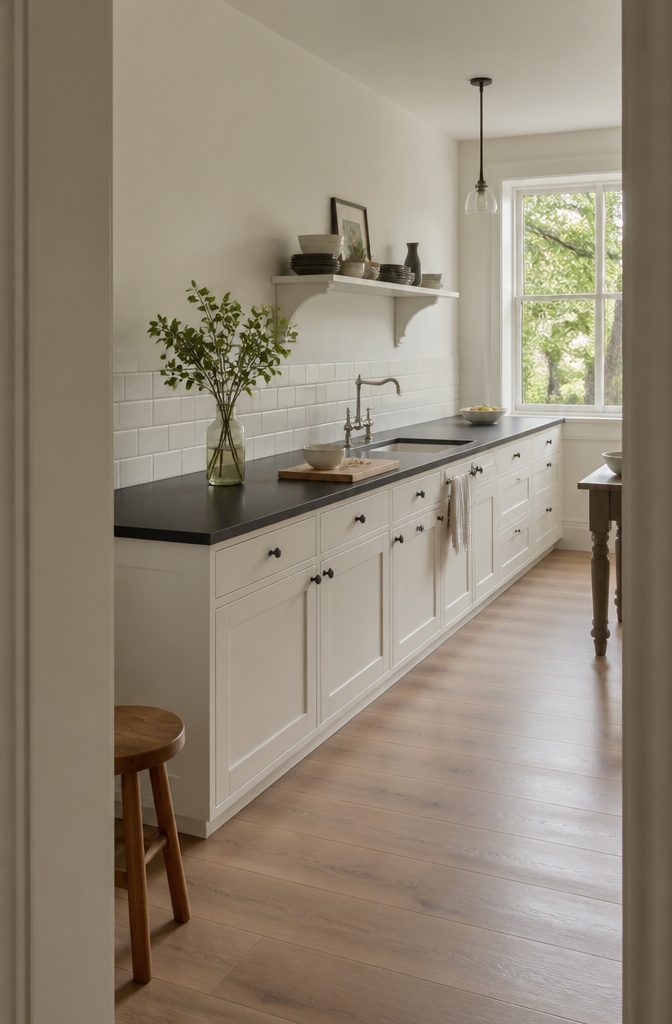
Black counters pull the eye first. Against white cabinets, a dark worktop adds depth and contrast that an all-light kitchen lacks, and it reads as dramatic and a little formal.
That weight also helps in a room that gets used hard every day, because the dark surface keeps the space interesting after the novelty of a new kitchen wears off.
The idea that black makes a kitchen gloomy holds only when it’s overdone. Black counters, black cabinets, and a dark floor together swallow the light and make the room feel smaller.
Keep black to one main surface and let lighter cabinets, walls, or backsplash carry the rest, so the counters stand out as the focal point instead of taking over the room.
Black Countertop Materials
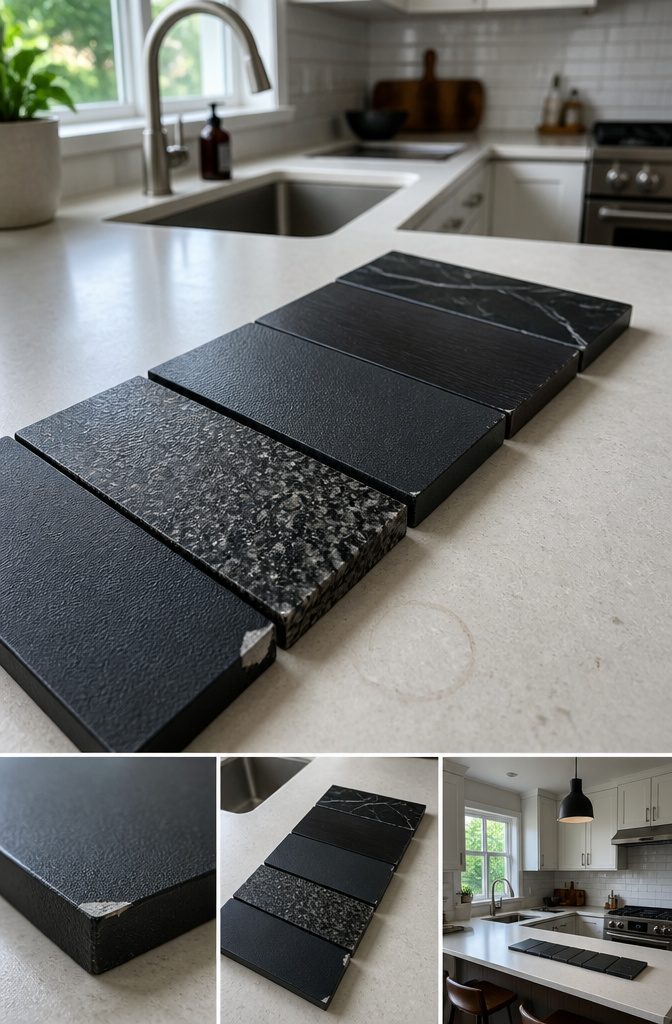
Five materials come in black or close to it:
- Quartz: nonporous, heat resistant, and never sealed. The easiest to live with.
- Granite: naturally porous, so it needs sealant every 2 to 3 years.
- Laminate: the budget pick, but not heat resistant.
- Dark wood: reads almost black, yet stains and shows heat marks.
- Marble: nonporous, resists heat and scratches, but costs more.
Cambria explains what quartz is made of:
Cambria surfaces are made of exceptionally pure quartz, binder, and pigment. Quartz is one of the strongest materials, with a Mohs hardness scale score of 7 (diamonds score a 10).
— Cambria
That hardness resists scratches, but a hit at a sink edge can still chip it.
Cleaning and Care by Material
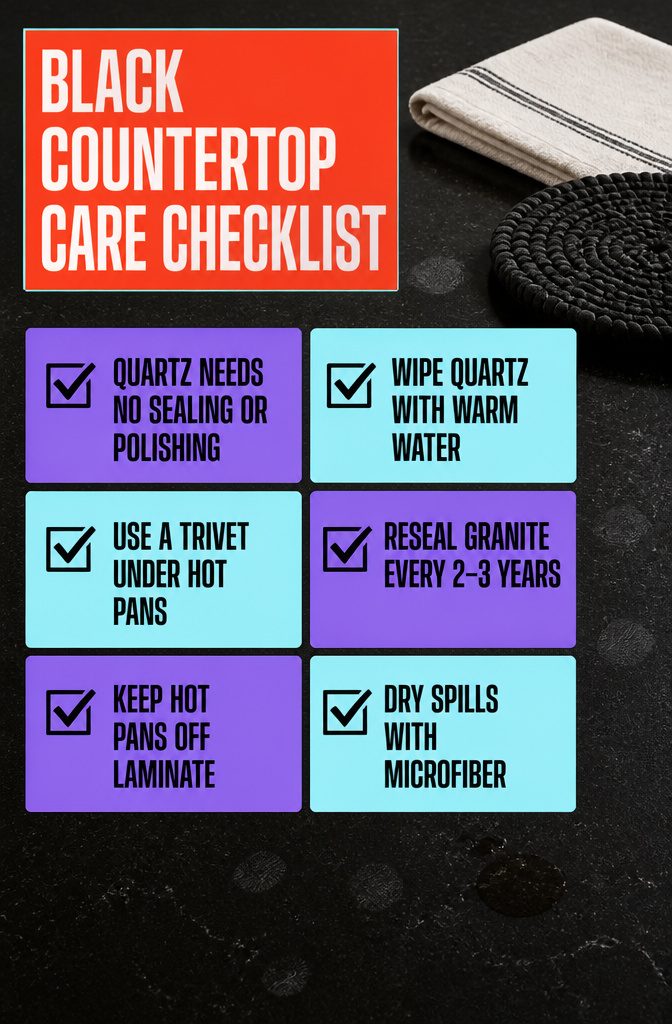
Black shows every smear, so a short routine does more than any product. Care differs by material:
- Quartz (Cambria): No sealing, polishing, or reconditioning. Wipe with warm water and a soft cotton cloth, and keep the pressure light, since fingerprints show more on black. Put a closed-weave hot pad or solid trivet under hot pans.
- Granite: Reseal every 2–3 years.
- Laminate: Keep hot pans off the surface.
- Any material: Clean spills right away and dry with a microfiber cloth. Use baking soda on oil stains. Clear the counter once a week for a deep clean.
Pairing Black Counters
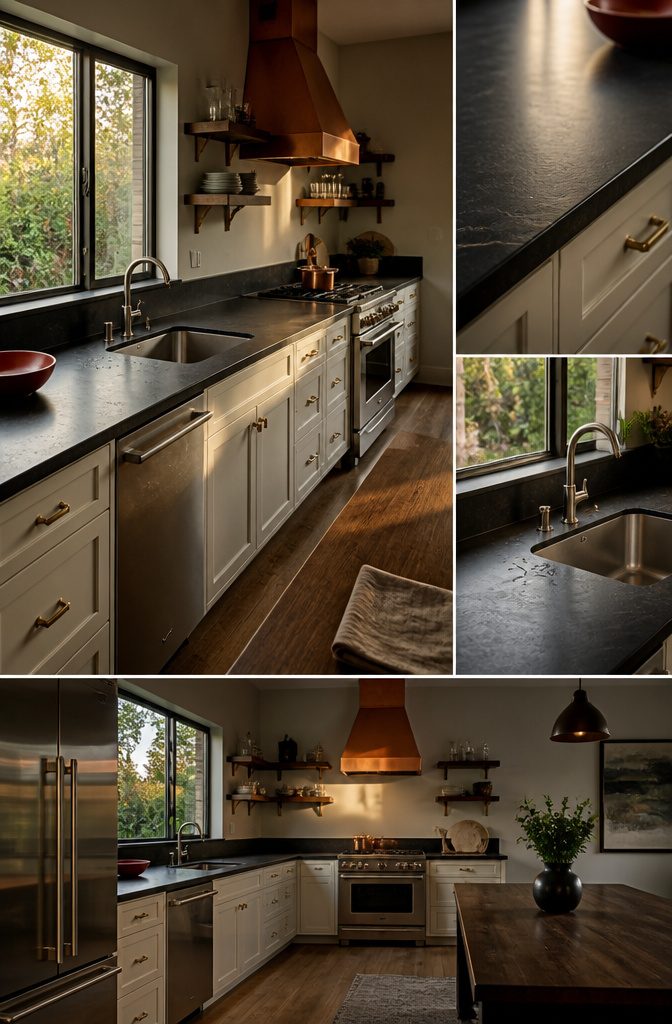
White cabinets are the easiest offset for black counters, and they keep a dark surface from swallowing the room.
Your range hood sets the mood: a black hood echoes the counters, while a white one lets them stand alone as the focal point.
Stainless appliances and a stainless sink soften the black, and mixing grays and steels gives a gradual shift instead of a hard edge.
For warmth, copper or brass on the range hood, plus dark, oily wood, balances the weight of the black. Red makes a bold accent, and dark green suits veined counters.
Pick one of these, not all three. Stacking contrasts brings back the imbalance a black surface already risks.
Preview Before You Choose
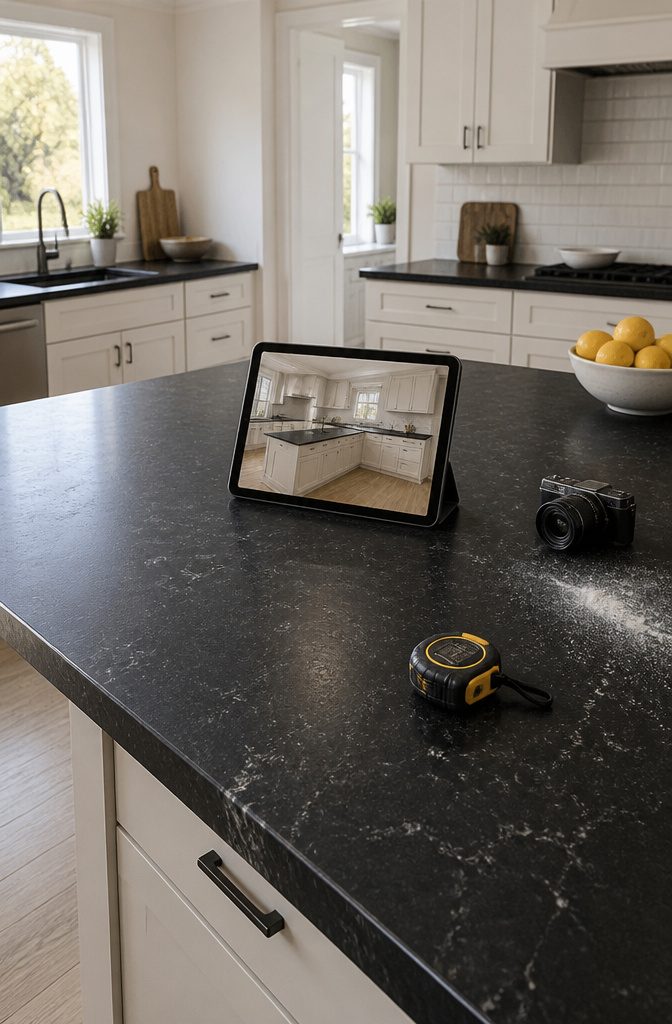
A 3D configurator shows how black counters change the room you already have, so you can judge them against your cabinets and walls before spending anything. Visualizers that accept your own photos go a step further.
Check the limits before you upload: JPG or PDF, up to 30 MB per file, 3 files, 50 MB total. Compress a large phone photo, and shoot in daylight with the counters cleared.
Stone sellers such as Marble.com also offer a visualizer for customizing black granite, so run more than one brand.
Treat every preview as a first filter, not the final call. Screens shift color and flatten sheen, so use them to drop what clashes, then judge the survivors in person.
Finishes and Named Designs
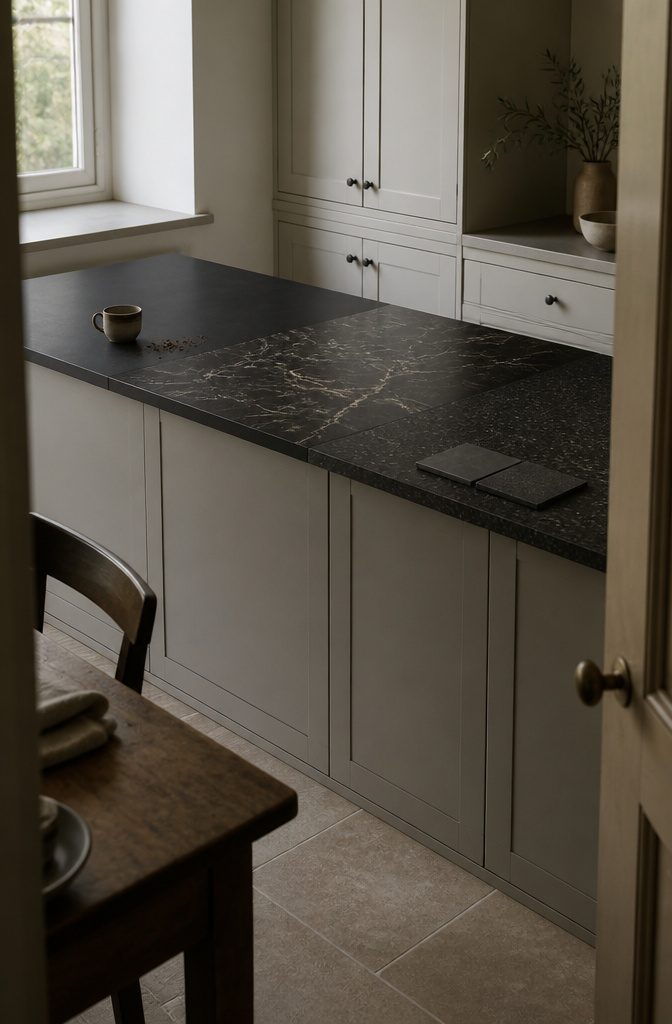
Black counters come in 3 looks: solid, veined and granular.
Solid reads as one flat dark plane, veined adds white or gray lines of movement, and granular scatters flecks through the surface. Choose the look before the brand, because it sets how busy the counter feels against your cabinets.
Finish is the second choice.
Matte gives black a softer, low-glare surface, and Cambria offers both Matte and Satin finishes, so ask for a sample of each. Designs worth looking up include Inverness Stonestreet, Mersey and Black Rock.
In granite, a catalog of 127 countertops lists Negresco, Black Galaxy and Absolute Black among its blacks. Source 4 calls black a modern classic in its Dark Collection, and that suits both new and older kitchens.
Quartz Versus Soapstone
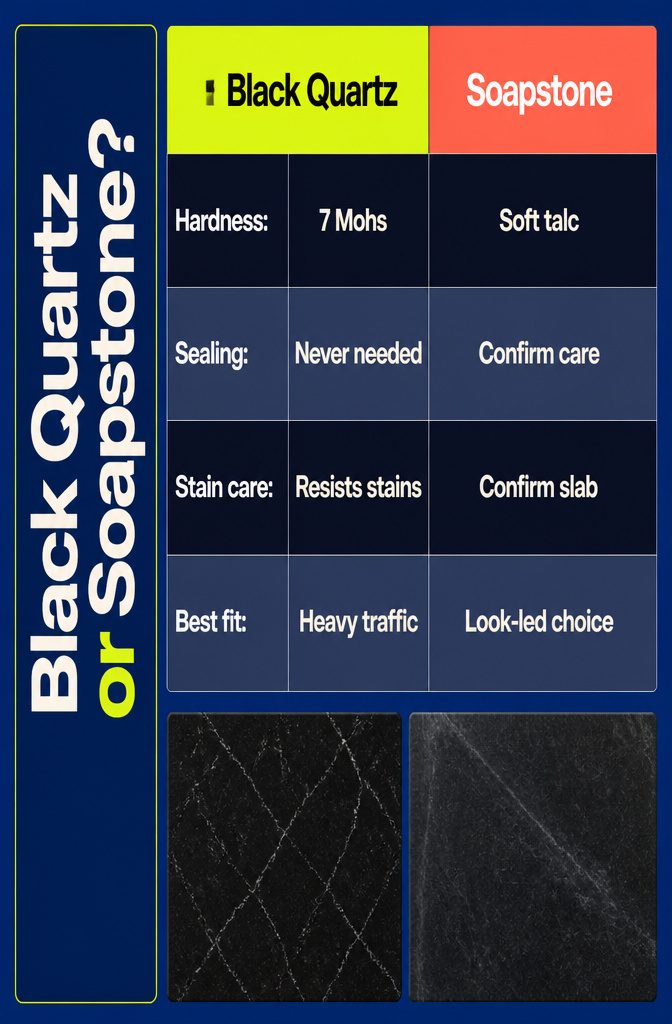
Black quartz can pass for soapstone at a glance, so the choice comes down to hardness. Soapstone is made of talc, one of the softest materials on Earth.
Quartz is one of the hardest minerals, rating 7 on the Mohs scale. It resists stains, wipes clean, never needs sealing, and keeps its finish without special upkeep.
Soapstone’s strength is the look itself, which black quartz imitates.
How a particular soapstone slab handles stains, and what care it asks for, is worth confirming with the fabricator before you commit. For a kitchen with daily cooking and heavy traffic, quartz is the safer pick.
Sample Kits and Full Slabs
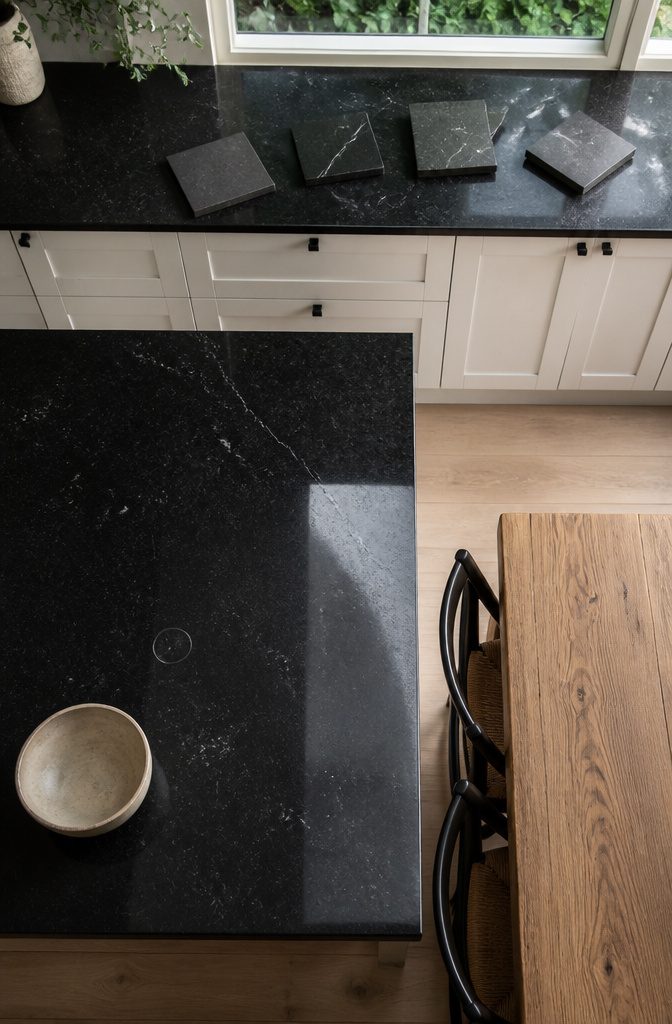
Order physical samples before you commit, because black changes more with light and finish than any other counter color.
A honed black can read charcoal beside a window and flat ink under pendant lights, while a polished one picks up reflections and shows flecks or veining that photos hide.
Source 4’s sample kit holds up to 4 designs and ships for a flat $35, with standard delivery in 3–5 business days. Set the pieces on your cabinets and check them in morning light and again at night.
A small square still isn’t the final product, and the real slab may differ slightly from it. View a full slab before you buy, since pattern and finish only show across a large surface.
Frequently Asked Questions
What is the most popular black granite?
Black granite has no standard popularity ranking, and favorites vary by region and supplier, so compare slabs in person.
A catalog of 127 countertops lists Negresco, Black Galaxy and Absolute Black among its blacks, so those are good names to start with.
Granite is porous, so plan to reseal it every 2–3 years, and look at a full slab before you buy.
Which brand of quartz countertop is best?
No single quartz brand is best for everyone; compare samples, warranty terms, and price for the black shade you want.
Cambria is the one covered here: its quartz is pure quartz, binder and pigment, rates 7 on the Mohs scale, and never needs sealing.
It comes in Matte and Satin finishes, and black designs to look up include Inverness Stonestreet, Mersey and Black Rock.