
Keep a japandi living room to 3 base colors: warm white walls, natural wood, and charcoal in small doses.
Sage or terracotta can join as an accent, but only on throws, cushion covers and plants. A primary red or bright yellow anywhere else catches the eye and breaks the calm.
1. Contemporary Calm
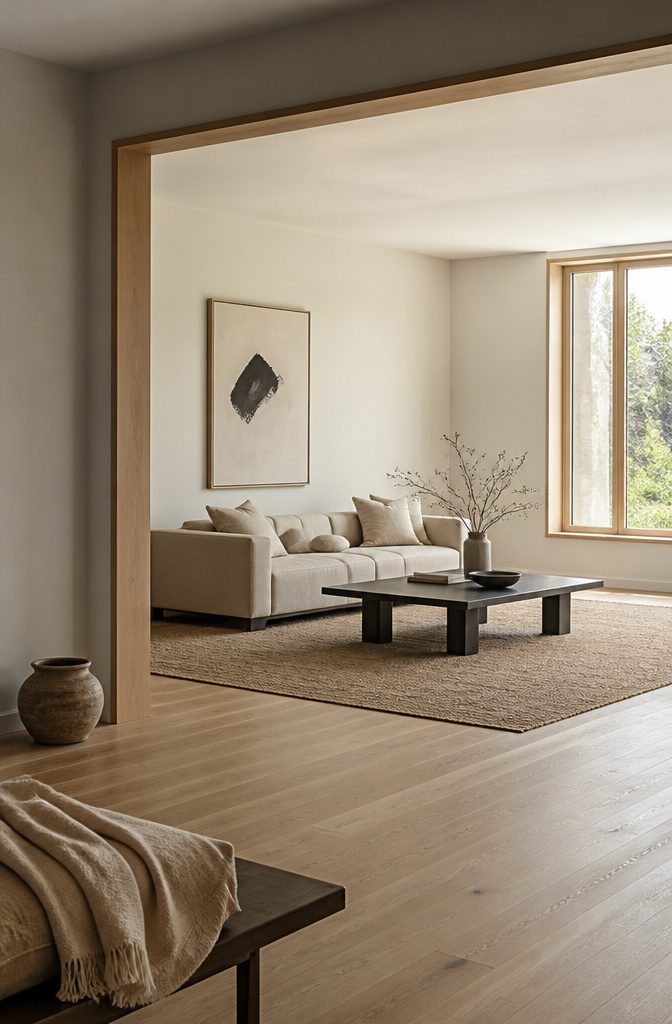
Start with a structured beige sofa and keep everything around it pale.
A simple black coffee table is the one dark piece, and it gives the eye a place to land so the neutrals read as calm instead of washed out. A second black piece would start to compete with it.
Under both, lay a jute rug.
Choose 8×10 feet for a standard living room, not 5×8, so the front legs of the sofa rest on it. A smaller rug floats mid-room and looks unmoored.
Hang one piece of restrained art, such as a soft black ink painting, and leave the wall around it bare. Keep surfaces clear and let in as much natural light as the windows allow.
Recommended Products

Elegant Japanese Crane Design – Features a traditional crane bird motif, symbolizing longevity and grace, perfect for Japandi, Asian, and oriental-inspired home décor.
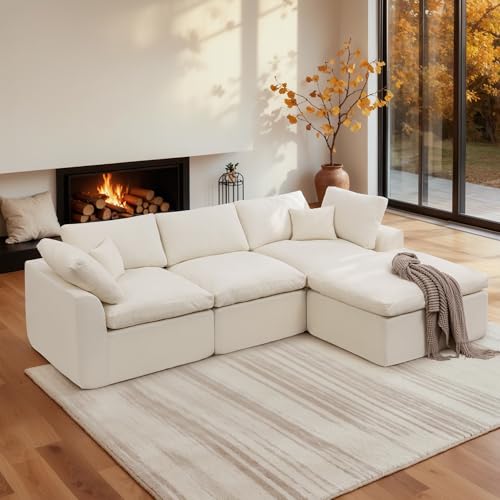
【ONE-STEP ASSEMBLY】Forget complicated setup—your couches for living room are designed for effortless assembly. Simply place the cushion onto the base, where a strong magic tape strip locks it securely into place. Allow 48–72 hours for the boneless couch to fully expand into its fluffy form. Gently pat the cushions or use an ironing machine to help regain its cloud-like shape. Then, get ready to sink in and relax. No extra tools or complicated steps are needed—Your comfort is moments away.
2. Compact Harmony
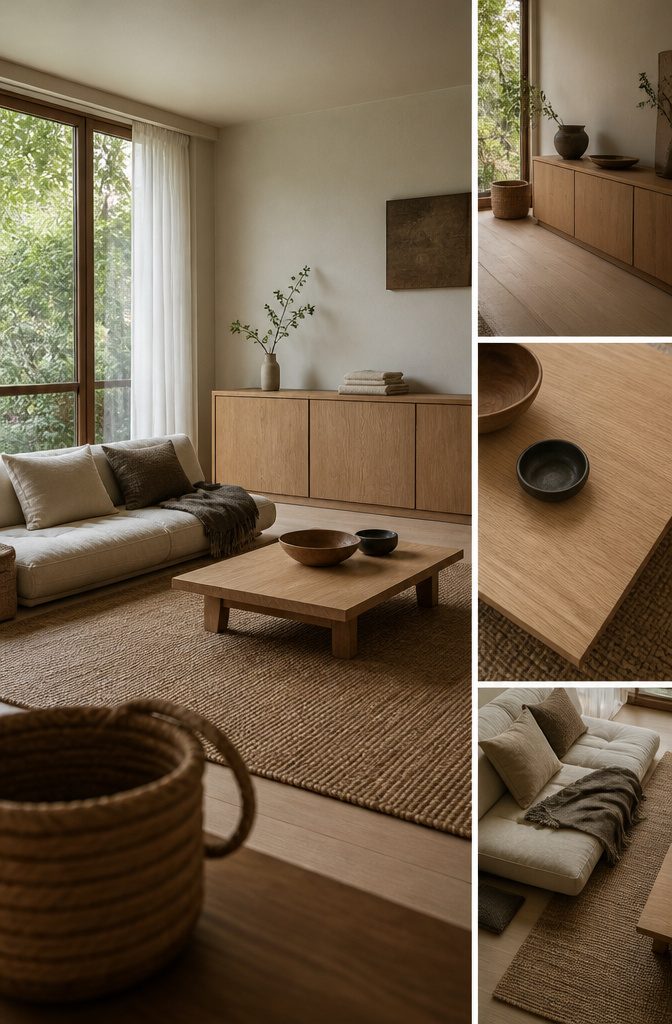
Small rooms stay open when the furniture sits low and the storage stays shut.
Low-profile pieces keep sightlines clear, so pick a futon-style sofa and a simple wooden coffee table in a pale wood tone, and keep only the furniture the room needs.
Closed cabinets hide clutter, which leaves surfaces clear. That clear space is what lets negative space read as calm instead of bare.
Built-in cabinetry is the cleanest version, but it costs more and a lease may not allow it. If you rent, freestanding closed cabinets in a matching wood tone are the fallback.
Leave the windows uncovered for natural light. Then anchor the seating with one large natural-fiber rug so the room feels grounded rather than sparse.
Recommended Products

Premium 100% Cotton Material: Crafted from high-quality, breathable cotton, these throw pillow covers offer natural softness and durability. Perfect for those seeking a luxurious yet eco-friendly touch to their home decor.

AMAZING VELVET THROW PILLOWCASES: They will show two very different glosses if you look in two different directions, one is bright and smooth, the other is soft and plush

QUALITY MATERIAL: The pillow cover is composed of a soft and comfy corduroy which is a kind of polyester fabric, features a cute and elegant boho stripe design. Our pillow covers are of good workmanship, they are tightly sewn without loose threads.
3. Fireside Serenity
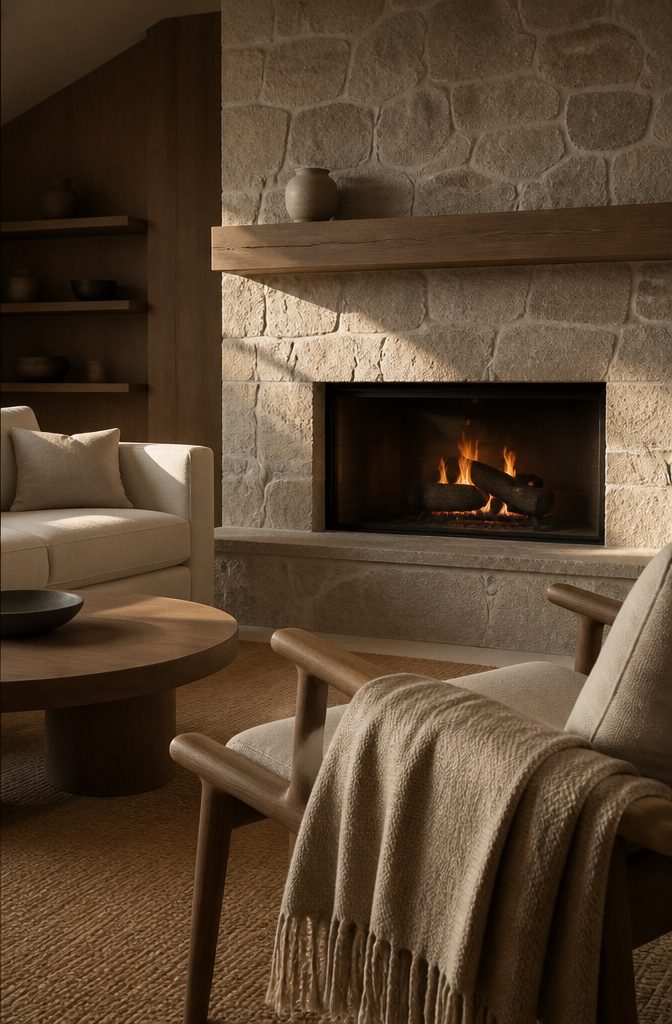
Smooth stone or concrete around the hearth gives the fireplace weight, and a plain wooden mantel adds warmth above it.
Limit the mantel to a single object or two, such as one ceramic piece or a branch in a vase, so the fireplace stays the focal point and doesn’t compete with the art or shelves nearby.
Face it with a clean-lined sofa and a low, simply designed easy chair. A neutral rug, a wool lap blanket and cushions in cream, sand or charcoal add softness without clutter.
If you rent and have no fireplace, a low wood bench along the main wall can anchor the room. A stone-look surround also works as a stand-in.
Recommended Products

[Easy Assembly] - The small glass coffee table with the detailed instructions and clearly numbered parts, so even people with no experience in installation can easily assemble the table in no time.

【Modern Minimalist Design】Comes with this sleek rectangular coffee table, featuring clean lines and minimalist block legs. The contemporary low-profile design (12.6"H) creates an elegant floating effect that complements any decor style.

Modern Coffee Table Design: Boasting a rustic-modern aesthetic, this coffee table eaturing meticulously crafted edge grooves, adds stylish look to your living room.
4. Layered Warmth
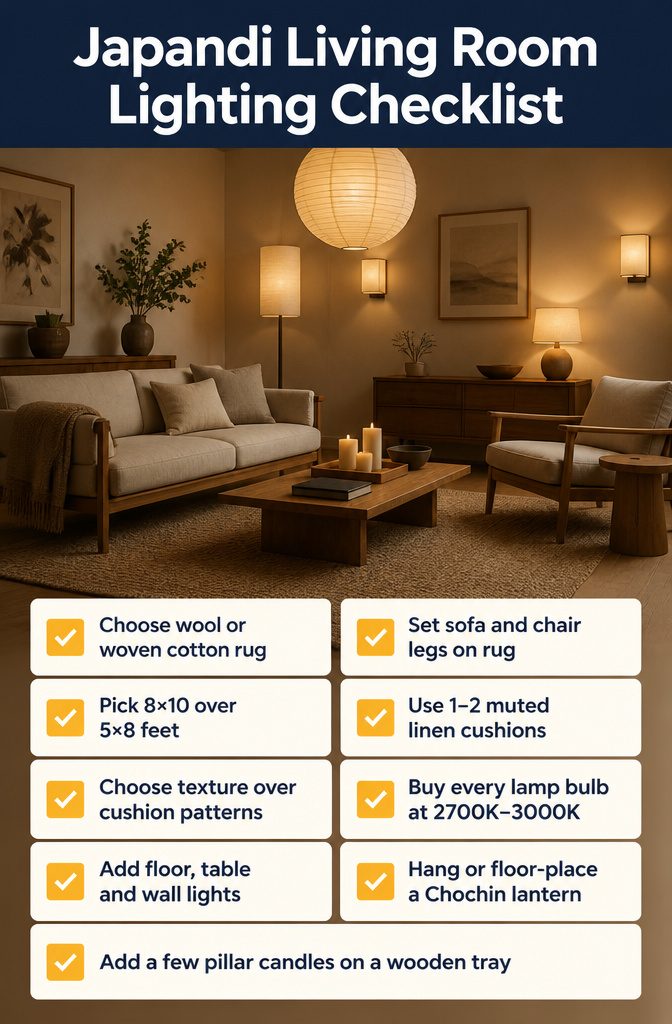
Replace the single ceiling fixture with texture underfoot and light at several heights.
- Rug: choose wool or woven cotton, large enough that the front legs of the sofa and chairs rest on it. For a standard living room, pick 8×10 feet over 5×8.
- Cushions: use 1 or 2 linen ones in muted tones, and vary texture instead of pattern.
- Throw: fold one wool lap blanket over a sofa arm.
- Bulbs: buy 2700K–3000K in every lamp. Cool daylight bulbs make wood and linen look grey. Dimmable ones let the room shift from day to evening.
- Lamps: add a floor lamp, a table lamp and wall sconces, with paper or linen shades.
- Chochin: a paper lantern, hung as a pendant or set on the floor, is the most Japandi light you can buy.
- Candles: a few pillar candles on a wooden tray add evening warmth.
Recommended Products

[COLOR & DESIGN]: SAFAVIEH's Natural Fiber area rug features a chunky, loop-woven jute texture in a soft neutral tone; actual color may appear darker or lighter than shown, depending on lighting and screen settings.

[COLOR & DESIGN]: SAFAVIEH's Natural Fiber area rug features a chunky, loop-woven jute texture in a soft neutral and ivory tone; actual color may appear darker or lighter than shown, depending on lighting and screen settings.

{ INDOOR & OUTDOOR USE } Enhance bedrooms, kitchens, entryways, and patios with this versatile Natural jute-style rug in 8x10. Natural woven look offers rustic charm and warmth to both modern and classic living environments effortlessly.
5. Nature-Infused Calm
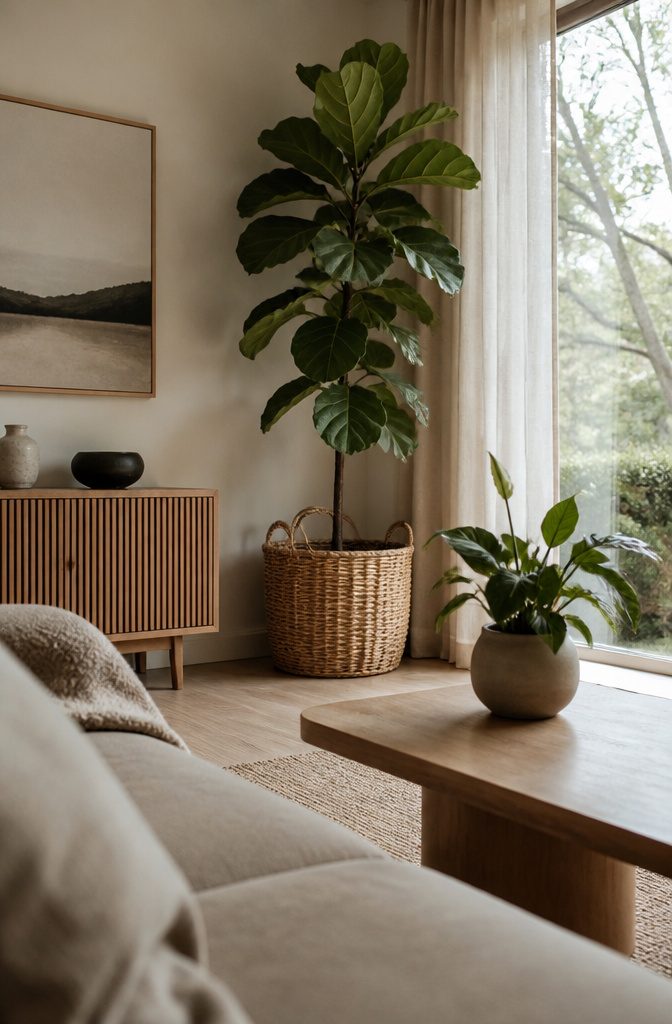
Stick to one large plant and one or two small ones. A fiddle leaf fig, bird of paradise, or mature monstera in a floor-level corner anchors the room.
Add a bonsai, peace lily, or Chinese money plant on a shelf or the coffee table. Three large plants make a jungle, and five small ones on windowsills start to look like a hobby.
Pot them in rattan or unglazed ceramic, which match the muted, natural tones of the room. Large tropical plants need bright light, so put the big one next to a window and hang sheer curtains to let the light through.
If the brightest window is on the wrong side of the room, the plant’s needs win over the layout.
Recommended Products

VERSATILE LIGHTING: E12 base LED corn bulb perfect for indoor lighting in kitchens, bedrooms, living rooms, and other home spaces

Smooth dimming: Compatible with most dimmers on the market, these LED bulbs provide smooth dimming control from 10% to 100% without flickering or buzzing, giving you the perfect brightness for any moment

💡 Technical Features -- These warm white(3000k) A19 LED bulbs make an energy-efficient replacement and substitute for standard 100 watt incandescent lamps. At 13.5 watts, each bulb emits the bright light output of 1600 lumens
Wabi-Sabi Meets Hygge
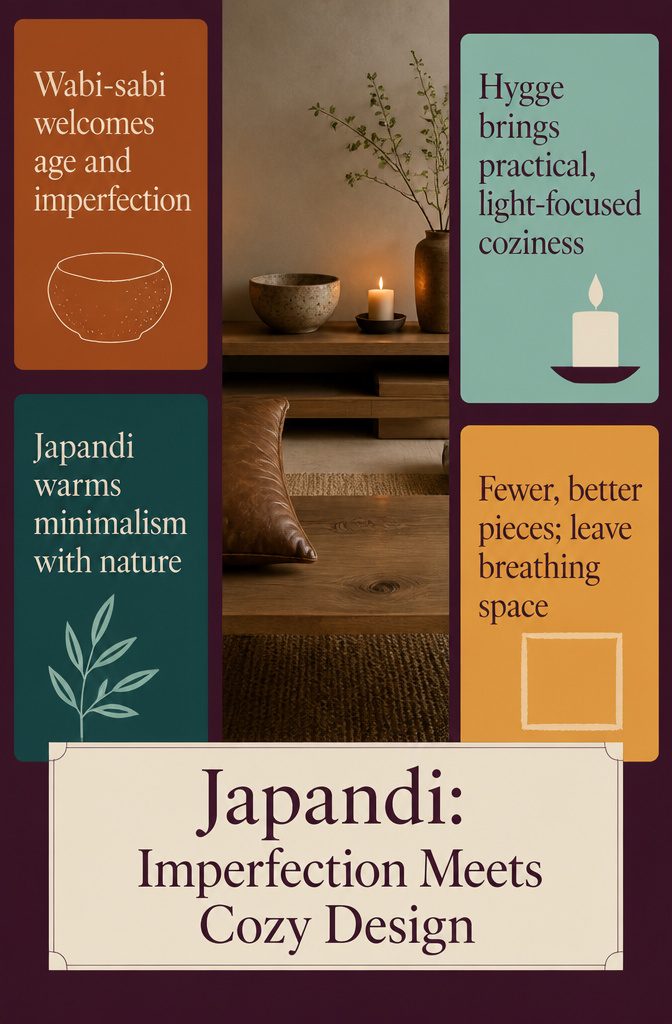
Japandi pairs Japanese wabi-sabi with Scandinavian hygge.
Wabi-sabi accepts imperfection and age: a worn leather cushion, a handmade ceramic bowl, a knot in the wood of a coffee table. Hygge adds coziness and practical, light-focused design built for cold climates.
Plain minimalism strips a room down and often stops at sleek. Japandi cuts visual clutter too, then adds warmth back with natural materials, candlelight and plants.
Fewer, better pieces is the working rule, with enough empty space (the Japanese call it ma) that the room can breathe. A bare wall counts as part of the design, so leave it alone.
Recommended Products

Delivered in 3 Separate Packages: Considering the large volume of product packaging, in order to meet practical needs and facilitate transportation, this 4-seater L-shaped couch will be divided into 3 separate packages for delivery, so they may not arrive at the same time. Package 1: one single sofa and one ottoman. Package 2: 2 single sofas and 2 throw pillows. Package 3: left and right armrests for the couch

Modern design - Our minimalist modular sectional sofa featuring smooth velvet fabric and sleek, curved lines that add an appealing touch to your living space. The L-shape 4 seater corner couch with movable ottoman design makes it suitable for relaxing with your family.

Cloud-Like Comfort: Featuring 3D cutting technology, the memory foam sofa is filled with 30D elastic foam, providing excellent support and resilience for a more comfortable seating experience. Experience cloud-like comfort the moment you sit down
Three Base Colors, Natural Materials
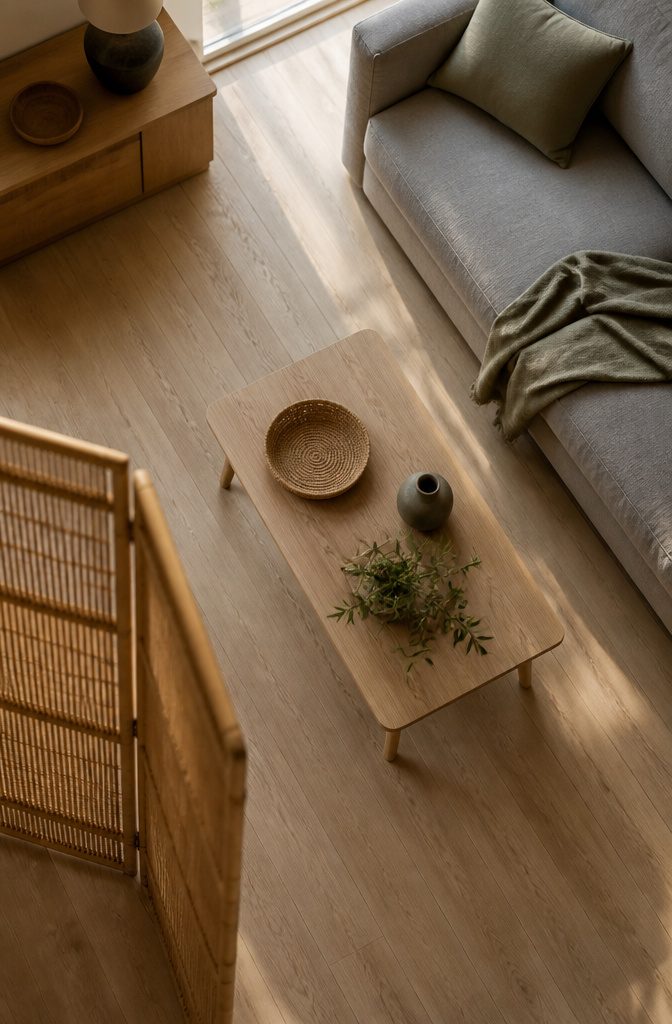
Limit the room to three base colors plus one or two accent tones. If you can’t name every color within a few seconds of standing in the room, you have too many.
- Base colors: warm or linen white on walls, natural wood, and charcoal in small doses, such as a lamp base or an accent cushion. Warm grey or taupe works for a large sofa.
- Accent tones: sage, moss, or dusty terracotta and clay. Keep them to throws, cushion covers, and plants.
- Woods: light or medium-toned oak, ash, or walnut for the coffee table, shelving, or flooring.
- Soft materials: linen and cotton.
- Other materials: rattan, bamboo, stone, and ceramic.
- Colors to skip: primary red, bright yellow, or any loud or highly varied color. They make the eye snag, and that breaks the calm.
Recommended Products

【Timeless Boucle】Popular amongst mid-century designers of the 1940s, Bouclé is a trendy yet timeless loop detailing texture

Premium Fabric: Made of high quality linen-like fabric with beautiful texture. Thick and durable enough for long-term use.

【Timeless Boucle】Popular amongst mid-century designers of the 1940s, Bouclé is a trendy yet timeless loop detailing texture
Low Furniture, Fewer Objects
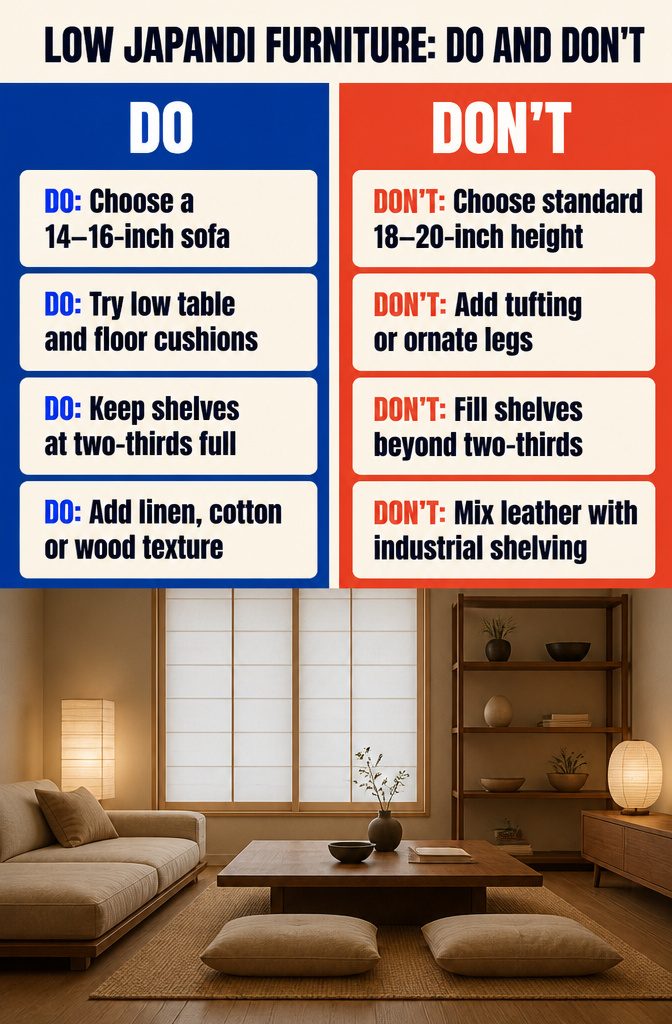
A sofa with a seat height of 14–16 inches instead of the standard 18–20 lowers the whole room’s eye line. If replacing it isn’t in the budget, a low wood coffee table with floor cushions shifts the room almost as much.
Pick clean lines, skip tufting, ornate legs, and bulky arms, and make sure every piece suits how you actually sit, eat, and set down a mug.
Keep shelves no more than two-thirds full, and let each object earn its place through a use or a meaning.
If the room feels bare, add texture with linen, cotton, or wood grain instead of more objects. If it reads too Scandinavian, bring in a darker wood like walnut.
Stay with one style, because a leather sofa beside industrial shelving adds visual noise. Keep the lighting soft.
Recommended Products

Artificial Plant with Ceramic Vase: No extra vases or greenery needed! This set includes everything you need: artificial greenery stems and a ceramic vase. Just insert the stems, bend them to your perfect shape, and enjoy an elegant decor piece that instantly brings natural charm to any room.

Modern Coffee Table Design: Boasting a rustic-modern aesthetic, this coffee table eaturing meticulously crafted edge grooves, adds stylish look to your living room.

ARTISANAL: This festive season, bring home table runners that have been artisanally crafted from the yarns to the finished product and add a touch of coastal luxury to your dining tables.
Frequently Asked Questions
Recommended Products


Modern geometric rug in classic ivory and silver grey
What is a Japandi living room?
It is a living room that blends Japanese wabi-sabi with Scandinavian hygge.
Wabi-sabi accepts imperfection and age, and hygge adds coziness. The result is a calm, warm, uncluttered space built from natural materials, muted colors, low furniture, and deliberate empty space.
What furniture works best in a Japandi living room?
Low, clean-lined pieces work best, such as a sofa with a 14–16 inch seat height instead of the standard 18–20 inches, and a simple wooden coffee table in oak, ash, or walnut.
Avoid tufting, ornate legs, and bulky arms. If you can’t replace your sofa, a low wood coffee table with floor cushions shifts the room almost as much.
What colors should a Japandi living room be?
Use 3 base colors plus 1 or 2 accent tones. The base is warm or linen white on the walls, natural wood, and small touches of charcoal, with warm grey or taupe for a large sofa.
Accents are sage, moss, dusty terracotta, or clay, kept to throws, cushion covers, and plants. Skip primary red, bright yellow, and other loud colors.
How do I make a small living room look Japandi?
Choose low-profile furniture, such as a futon-style sofa and a pale wooden coffee table, and keep only the pieces the room needs.
Closed cabinets hide clutter, and renters can use freestanding ones in a matching wood tone. Leave the windows uncovered for light and anchor the seating with one large natural-fiber rug.
How many plants should a Japandi living room have, and how should I display them?
Use one large plant and one or two small ones.
Put the large one, such as a fiddle leaf fig, bird of paradise, or mature monstera, next to a window, and set a bonsai, peace lily, or Chinese money plant on a shelf or the coffee table.
Pot them in rattan or unglazed ceramic.
Is Japandi the same as minimalism?
No.
Both cut visual clutter, but minimalism often stops at sleek. Japandi adds warmth back with natural materials, candlelight, and plants.
What are common mistakes to avoid in a Japandi living room?
Overcrowding, loud or highly varied colors, bulky furniture, and harsh lighting are the usual ones.
Cool daylight bulbs turn wood and linen grey, and shelves filled past two-thirds look cluttered. Mixing styles, such as a leather sofa beside industrial shelving, adds visual noise.
What textures and textiles add warmth to a Japandi living room?
Start with a wool or woven cotton rug, 8×10 feet in a standard living room, so the front legs of the sofa and chairs rest on it.
Add 1 or 2 linen cushions in muted tones and fold a wool lap blanket over a sofa arm. Vary the texture rather than the pattern.
What lighting should I use instead of a harsh ceiling light in a Japandi living room?
Layer light at several heights with a floor lamp, a table lamp, and wall sconces, all with paper or linen shades.
Use dimmable 2700K–3000K bulbs so the room moves from day to evening. A paper lantern (chochin) and a few pillar candles on a wooden tray add more warmth.
How do I balance a fireplace in a Japandi living room?
Surround the hearth with smooth stone or concrete and top it with a plain wooden mantel holding only a single object or two.
That keeps the fireplace as the focal point. Face it with a clean-lined sofa and a low, simply designed easy chair.