
The ideas range from swapping pillow covers on a Saturday morning to painting a wall deep brown, and the choice depends on whether you want the sofa to recede or stand out.
Light walls and rugs lighten it; dark walls make it the focal point, but only in rooms with tall windows and plenty of daylight.
1. Light Walls and Rugs
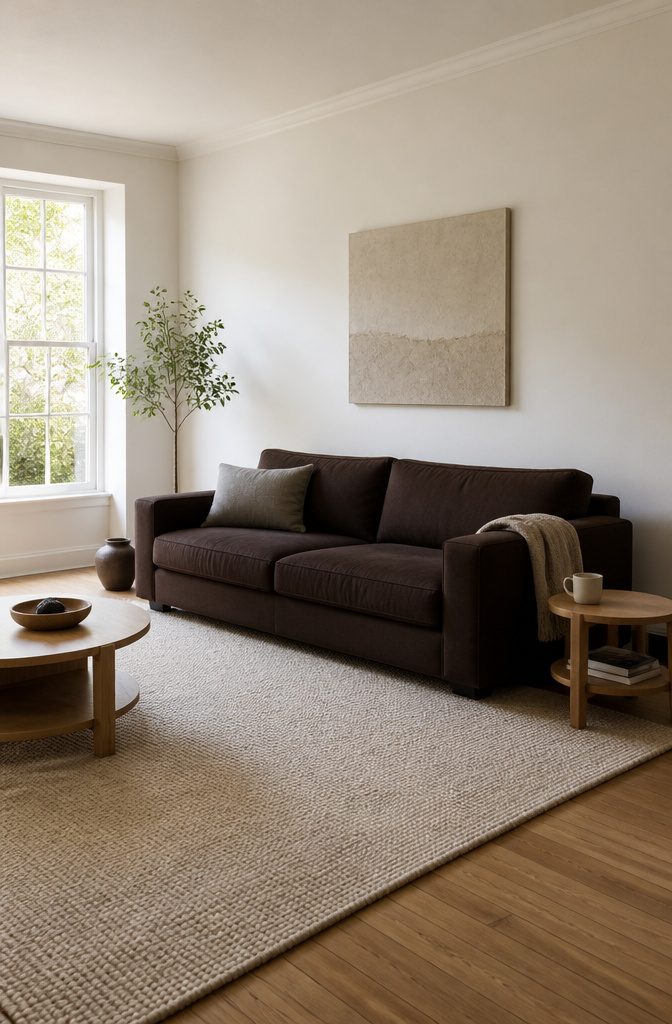
A dark brown couch looks lighter against crisp white, soft gray, warm white, beige, or light greige walls. Crisp white gives the sharpest contrast and makes the couch stand out.
Soft gray is gentler. Warm white, beige, and greige suit a room that already leans cozy.
Pale walls keep the couch from reading as one heavy block, because you can see its outline against the surface behind it.
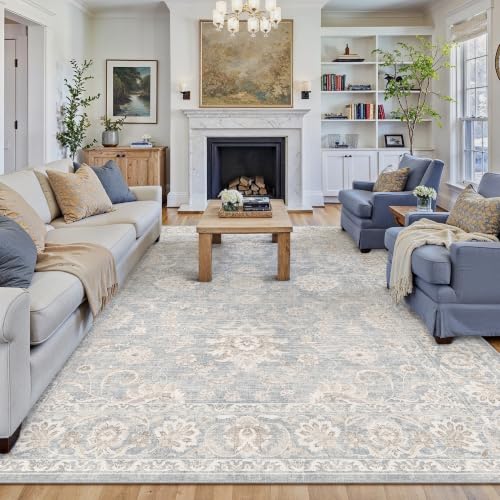
For the floor, choose a cream, beige, faded gray, or gray rug.
A light rug with soft contrast balances the couch’s weight and ties the walls and sofa together without making the room look busy or dark. A dark rug adds one more heavy shape under the couch, so skip it.
Recommended Products

Neutral Abstract Rug: This 8'×10' rug features a distressed abstract design in subtle tones, adding a modern, artistic touch to your space. It blends effortlessly with any...
2. Warm Earthy Colors
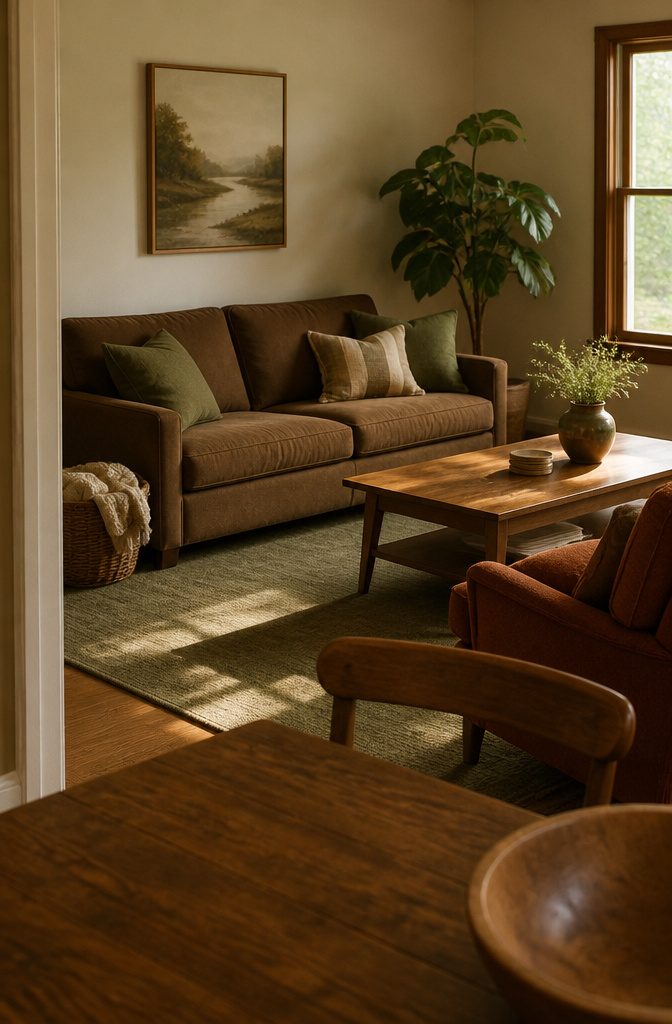
Earth tones sit well beside brown because they share its warm undertone, so no single color competes for attention.
Olive and moss work best in rugs and large pillows, especially in a room with good natural light and warm wood furniture.
Beige suits walls or a throw, and it brightens a dark couch without the chill of a cool gray.
Rust and soft clay are the stronger notes.
Limit them to one accent chair or two pillows, which adds contrast without making the room feel cold. A wicker basket beside the sofa adds texture and keeps the palette looking natural instead of busy.
Recommended Products

Vintage Antique Decoration: Our vintage pillow covers are printed with antique vintage flower print patterns on both sides to fill your home with a strong spring atmosphere. Vintage floral pillow covers are suitable for beds, sofas, chairs, bedrooms, living rooms, porches, offices, cafes

Premium Cotton Fabric - High-quality and breathable premium beige cotton fabric offer natural softness and durability.Eco-friendly to touch. Ideal for daily use.
3. Deep Blue Contrast
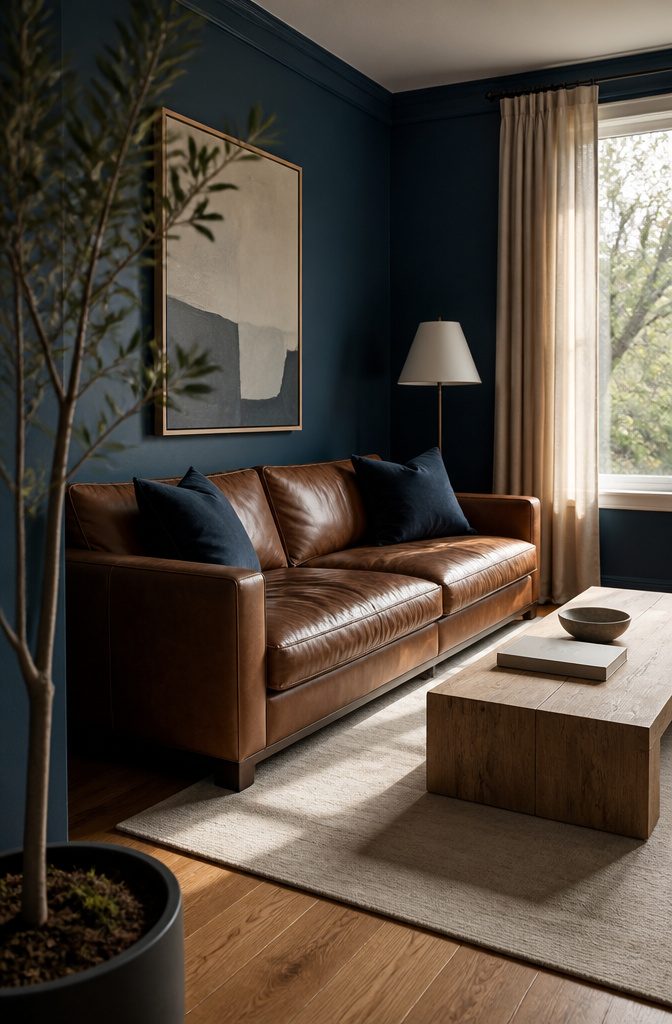
Blue makes brown look richer.
Deep blue walls give a dark brown couch a dramatic backdrop, and the sofa’s warmth stands out against the cool color. If you can’t paint, get the same contrast from blue art, pillows, and other accents placed near the sofa.
Keep the rest of the furnishings and accessories neutral when the walls are deep blue. Otherwise the room gets heavy fast.
Curtains follow the same split. Beige, gray, or white keeps the look neutral.
For a bolder room, choose deep blue or green. Deep blue curtains are also a renter-friendly way to bring the contrast in without touching the walls.
Recommended Products

Stunning Watercolor Botanical Design: Features hand-painted blue eucalyptus leaves and gold accents for an elegant, nature-inspired look.Soft blue-and-white watercolor hues create a serene, spring/summer vibe—perfect for brightening any space.

ELegant Design: Package includes 2 panels set of W 52” x L 84” each, and W 104” x L 84” in total. Craft from super soft and heavy weight velvet which gives a plush and vertical sense. They can easily match with different decor themes, and style up your room with vintage and luxury.

Package Includes: Our package includes 2 panels, each measuring 52 inches Wide by 84 inches long, designed to perfectly fit your window space. Ideal for any room or individual needing a total blackout environment, such as children's and elderly people's bedrooms, home studios, and theaters.
4. Dark Dramatic Backdrop
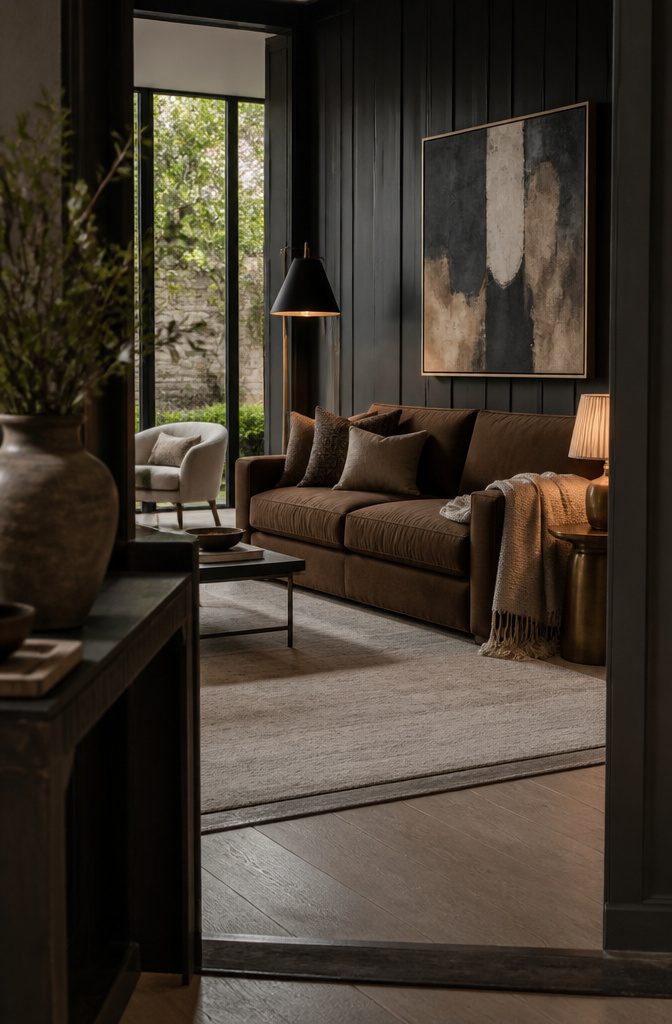
Dark walls work against the light-wall advice in this list, so save them for rooms with tall windows and plenty of daylight.
Paint one wall deep brown, or choose deep blue walls or charcoal paneling behind the couch, and the sofa becomes the focal point instead of blending in.
Keep the rug light, hang one oversized art piece, and add brass or gold touches for warmth without heaviness. Larger rooms handle this best, with layered lamps and warm bulbs to soften the evening.
If deep blue feels like too much, balance it with neutral furnishings and accessories. You get drama, not brightness.
Recommended Products

Updated Stepless Dimming( 0-100% ) Floor Lamp: Unlike the traditional non-dimmable floor lamps for living room, our dimmable floor lamp is fully Stepless Dimmable. Just simply twist it and then you can adjust the industrial floor lamp in the brightness range of 0 to 100% according to the needs of different scenes.

Powerful 4800mAh Rechargeable Battery: Say goodbye to battery swaps and messy cords! Built-in 4800mAh battery offers 11 hours of continuous lighting use. EZVALO 16'' wireless LED picture light charges in just 5 hours via USB-C. Use your power bank, phone charger, or laptop – always ready to light up your favorite art.

【Compact Ideal Size for Any Space】- This 2-pack PoKat bedside table lamp measures 21.5’’ in height, featuring a compact, well-balanced size that fits beautifully in any space. The nightstand lamps' ideal small-scale design makes these table lamps set highly versatile, suitable for TV stands, hallways, console tables, end tables, side tables, bedroom nightstands, buffets, workspaces, and kids' rooms. Without occupying too much tabletop space, these bedroom lamps combine practicality and style beautifully for any corner.
5. Bright Accent Colors
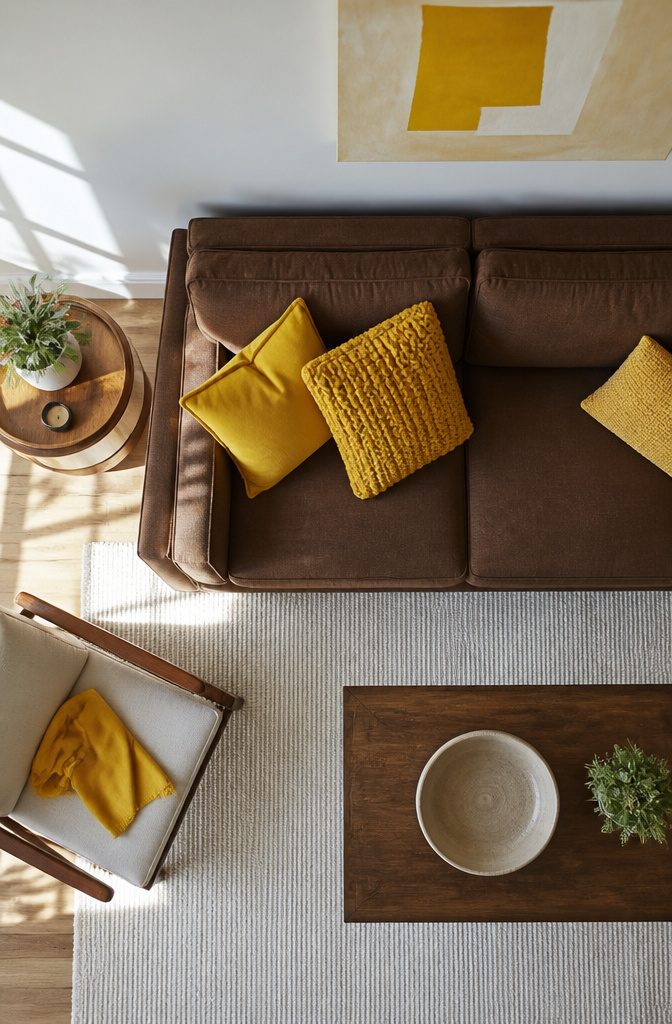
Pillows in mustard yellow, teal, or burnt orange are the quickest, cheapest way to make a brown couch stand out.
The contrast draws the eye to the sofa and gives the room more energy. Pick one color rather than all three, and mix shapes and textures, like a smooth cotton square next to a chunky knit.
Swapping pillow covers is a same-day, low-cost change, so you can try a color on a Saturday morning and switch it if it looks off. Keep your inserts and replace only the covers.
Crisp white or light pillows are the quieter option. Bold artwork on the wall behind the couch also pulls the eye without adding anything to the sofa itself.
Recommended Products

Stain Resistant Rug Surface: The living room rug is made of anti stain material, conventional liquids such as water, coffee, milk, and pet urine will not permeate the carpet, you just need to wipe it clean easily.
Home Decor: This WondRg rug features a neutral retro design that's highly versatile. It blends seamlessly with any interior style and fits perfectly in every room of your home from living room bedroom hallway kitchen to home office.

[Striking Abstract Design]: Our abstract modern rug stands out with a striking mix of bold color blocks and eye-catching organic textures. It brings a touch of cutting‑edge elegance to living rooms, bedrooms, kids’ rooms and more, and fits right in with minimalist styles without even trying.
6. Mixed Patterns
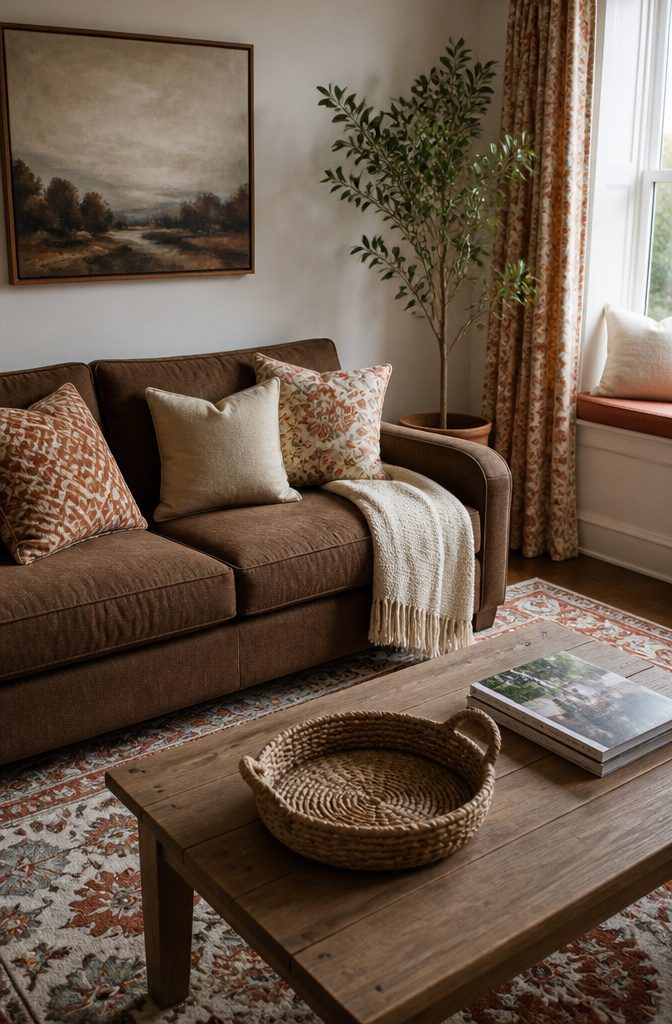
Geometric and floral prints both work against a brown sofa, and they can show up on the rug, curtains, throws and cushions.
Choose one color palette and pull every pattern from it. If the rug mixes rust and cream, the curtains and throw should repeat those same colors, ideally in a different scale or motif.
On the sofa itself, keep it to one or two patterned pillows and fill out the seat with solids.
A dark couch already carries a lot of visual weight, so four or five competing prints around it read as clutter instead of layers. If the room feels busy, take a pattern out before you add anything else.
Recommended Products

PACKAGE & SIZE: 18x18 inches (45x45cm) Topfinel OliveGreen Corduroy Decorative Throw Pillow Covers Set of 2, foldable and lightweight, easy to store and reusable. ONLY PILLOW COVERS(NO INSERT).

BOHO CHIC DESIGN: Elevate your home decor with this beautifully crafted KOOLIFE Brand boho throw pillow cover. Features a farmhouse striped design in different color combinations, it adds a stylish yet cozy touch to any living space.

Premium Multi-Material Contrast: Featuring a striking three-panel blocked design, this set of two 18x18 inch decorative throw pillow covers seamlessly unites rich texture with everyday comfort. The center strip showcases a supple, heavy-duty vintage brown panel, flanked by heavy-weight cotton canvas sides that feel remarkably soft yet exceptionally breathable.
7. Layered Textures
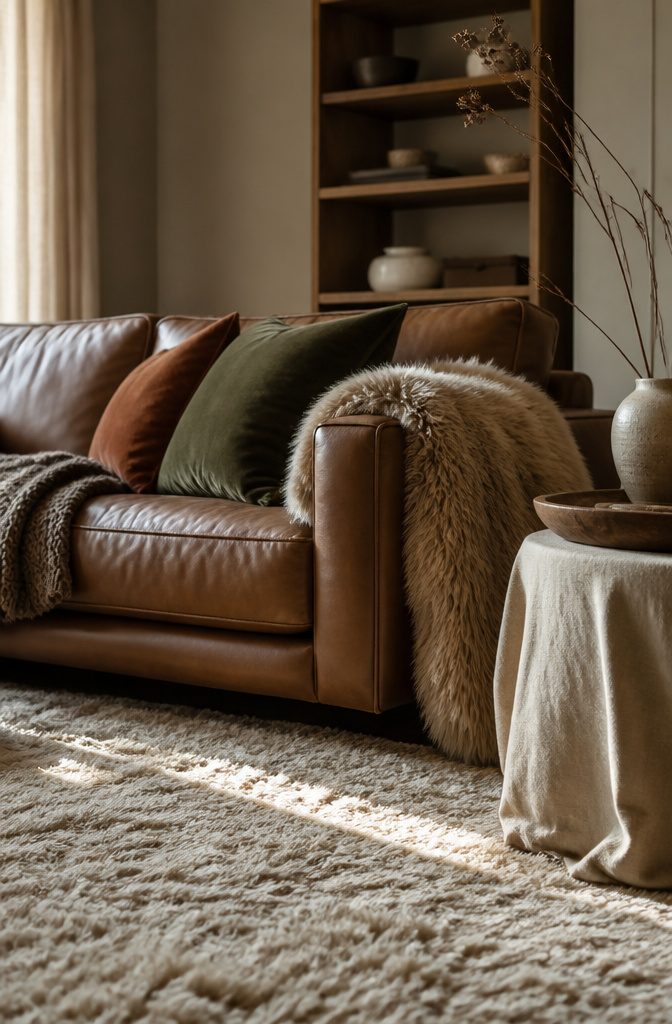
Start with a plush, shaggy rug. It gives the couch a soft base, and everything else layers on top of it.
Drape a knitted or chunky knit throw over one arm of the couch, then add velvet cushions in rich colors that complement the brown. Velvet’s sheen reads as a different surface from a chunky knit, so use both.
If the couch is leather, set it against something fluffy. Smooth leather next to soft faux fur gives you the contrast that keeps a brown couch from looking flat.
In a room with warm beige walls, texture does the work color would do elsewhere. Linen, wood and dried stems keep the look relaxed and unfussy, and none of them adds a bold hue.
Recommended Products

Pair Sold: Each package includes 2 panels of blackout curtains. Each panel measures 40"W x 63"L, with a pair measuring 80"W x 63"L. Each panel has 6 anti-rust silver grommets(1.6 inch inner diameter) which would fit most standard curtain rods

Amazing Triple Weave Fabric: These soft and durable window curtains adopt special triple weave technology. The black light-blocking yarns are woven between the two colored yarns. Our light blocking curtain with no liner, both side are the same color.

MODERN OMBRE DESIGN: MIULEE curtains feature a beautifully smooth color transition, as simple yet sophisticated as a canvas. This classic design blends effortlessly into any home décor and becomes a focal point. 52Wx84L each set of curtains 2 panels, two hanging options are available, allowing you to freely change the shades and create a personalized space
8. Complementary Furniture
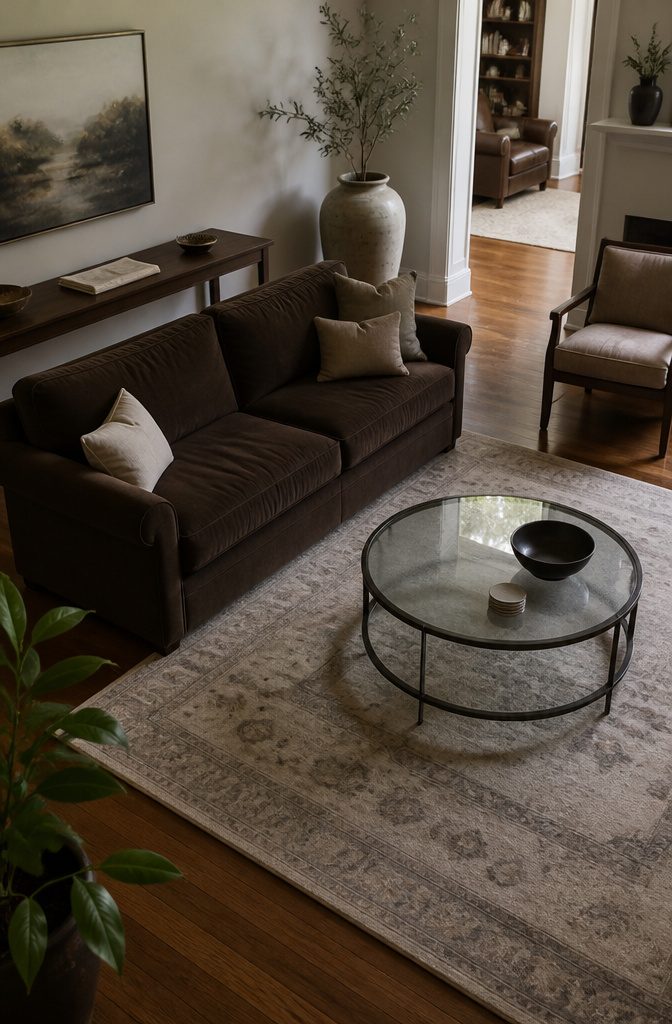
A dark brown couch is a heavy block, so the pieces around it should be low and slim. A glass-topped coffee table adds lightness because you can see through it, and a marble top brings elegance.
For a relaxed room, a raw wood table adds texture without crowding, and a low round table keeps the seating from feeling stiff or formal. Pick one table, not two.
Keep everything else at the same scale, such as a slim console behind or beside the couch and an accent chair or two.
Get height from a large floor vase or a statement mirror, not from bulky furniture. That way the couch stays the anchor and the room still has space to move.
Recommended Products

QUALITY CONSTRUCTION: JONATHAN Y table lamps designed to illuminate your home, stylish addition to any room; included LED bulbs and our lamps fit standard light bulbs too! ETL Listed and meets 120-volt UL standards for safety and quality

Wireless & Easy to Install: Depuley wall sconces set of two battery operated with two E26 USB charging led bulb, say goodbye to outlet and wired limitations, only takes 20 min to install. Our sconces wall decor set of 2 will elevate your room with a sleek and modern design. Great for halloween decoration.

Gold Floor Lamp:This Is A Mid Century Modern Pink Lamp Shade With Beautiful Delicate Detail And A Gorgeous Exterior. This Unique And Elegant Design Will Bring A Comfortable Atmosphere To Your Room And Beauty Your Space
9. Rounded Shapes
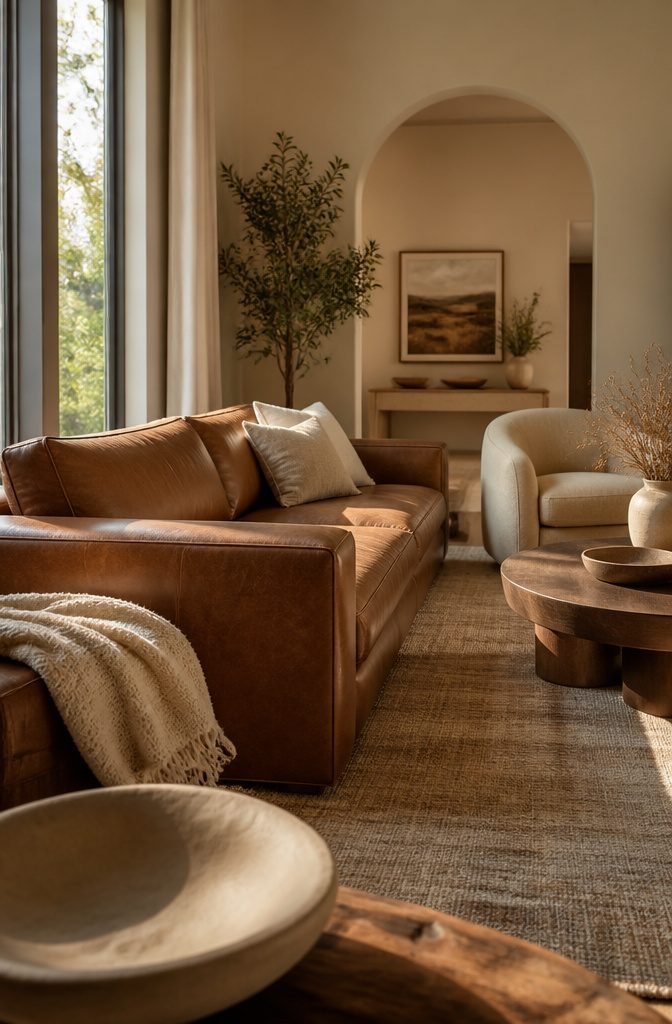
A brown couch is a big block of straight edges, and curves break that up.
Swap a square coffee table for a round one, or add a rounded armchair or side table, and a deep brown sofa stops feeling boxed in.
If your room already has arches or curved doorways, keep the furniture low and rounded so the shapes echo each other.
Keep everything around the curves quiet.
Warm beige or cream walls, plus linen, wood and a few dried stems, let the shapes read without crowding them. With a caramel-brown sofa and tall windows, the result feels gentle rather than heavy.
Recommended Products

The Darby Collection is a sophisticated area rug with a dimensional, ribbed texture that mimics the look and feel of a hand-knotted rug

Machine Washable Area Rug: Our living room rugs are washable for easy care—simply toss in the washing machine in cold water. For minor dirt, it is robot vacuum friendly or easily shaken off outdoors. For liquid spills, wipe promptly with a dry towel.

Artistic Abstract Design with Dynamic Patterns: This modern 8x10 area rug combines natural marble textures and flowing wave designs in a navy blue base, accented with gray, white, gold, and brown tones. The unique asymmetrical shapes create captivating visual changes – cool tones stand out from the front, while warm metallic hints appear from the side. Transform your floor into a versatile art piece that adapts to your view, perfect for modern living rooms, bedrooms, or creative spaces
10. Natural Materials and Plants
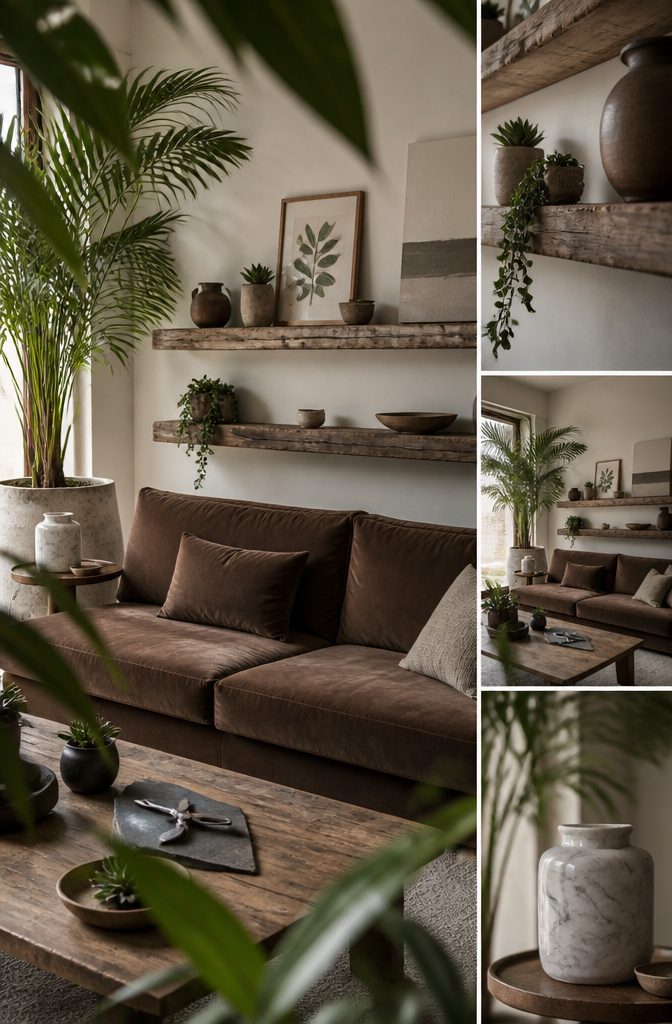
Wood does the most work next to a brown couch, because it repeats the color in a different grain and finish.
Reclaimed wood shelves on the wall behind the sofa are a good start, since their uneven tones keep the brown from looking like a matched set.
Stone cools things down a little. A marble vase on a side table or a slate centerpiece on the coffee table adds a gray or white note that the warm browns lack.
Then add green.
Mix plants of different shapes and sizes: a large potted palm in a corner, a few small succulents on a shelf or the coffee table. Identical plants in a row look flat.
Recommended Products

1.【Eco-Friendly Digital Printing】 Crafted with eco-conscious digital printing and soft organic cotton, these decorative pillow covers are as sustainable as they are...
11. Metallic Accents
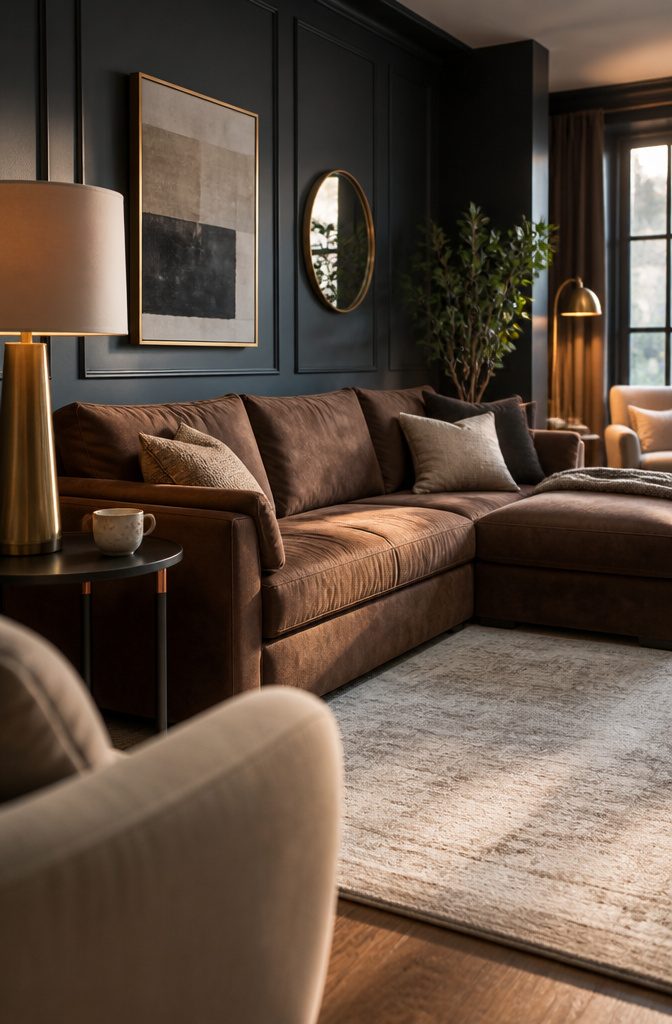
Gold, brass and copper add a touch of glamour to a brown couch, and they show up best against a dark wall.
Charcoal paneling behind a brown sectional makes the couch the focal point. Brass or gold pieces nearby then add warmth without adding weight, especially over a light rug.
Put the metal on small, visible pieces: a lamp base beside the arm of the couch, picture frames, a mirror, a coffee or side table, or cabinet hardware.
Stick to one or two finishes, such as brass with a little copper, so the room looks chosen instead of crowded. A few well-placed pieces make a bigger impact than a shelf full of them.
12. A Gallery Wall or Oversized Art
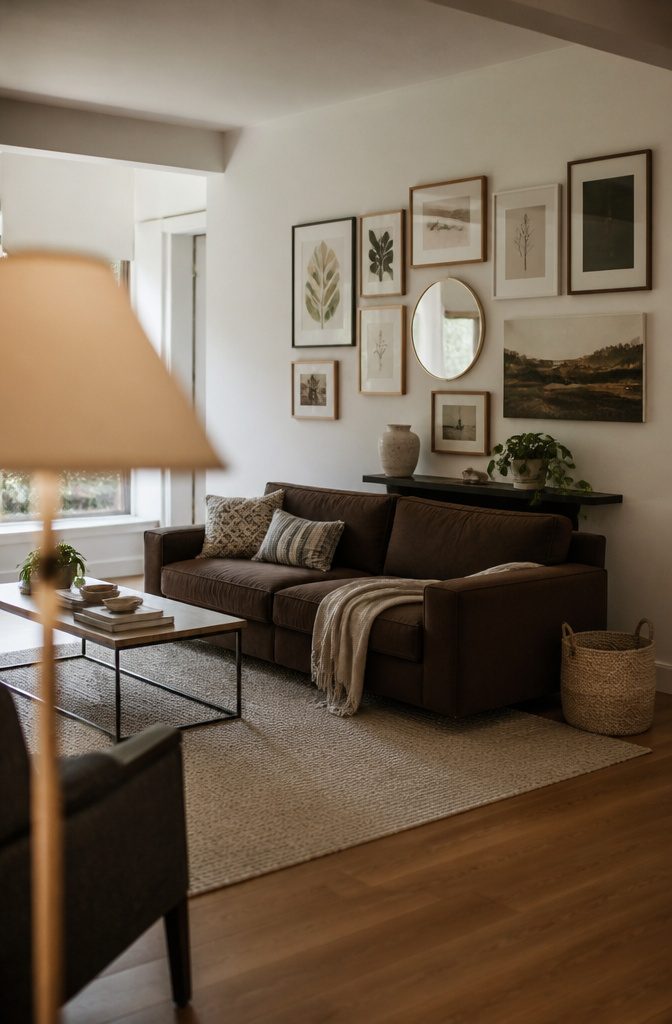
A brown couch holds a busy wall well, because the dark upholstery gives a cluster of frames something solid to sit against.
Mix framed photos, artwork and a mirror or two, and vary the frame sizes and finishes so the group looks collected rather than bought as a set.
The wall then becomes the focal point and draws the eye to the couch.
If a gallery wall means too many nail holes for a rental, one oversized piece does the same job with a single hook.
A common rule of thumb is art about two-thirds the width of the couch, hung 6–8 inches above the back cushions.
Above a low TV console, hang the art higher than feels natural. Raising it keeps the wall from looking bottom-heavy, with all the weight sitting near the floor.
13. Layered Lighting
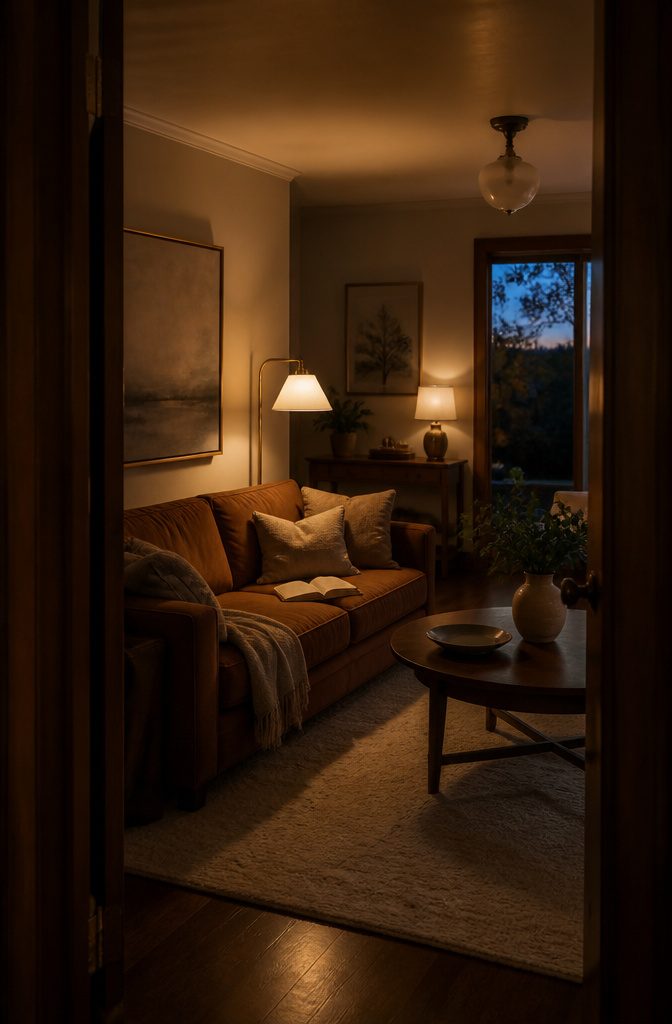
A brown couch looks best when light reaches it from more than one height.
Put a floor lamp at one end of the sofa, a table lamp on a side table or console, and a dimmable overhead light on its own switch.
That gives you low, mid-level and high light instead of one flat ceiling glow.
Choose warm bulbs, generally labeled 2700K–3000K, and skip "daylight" bulbs. Warm light picks up the red and orange undertones already in leather or fabric, so the brown reads deep and rich.
Cool light strips those undertones out and leaves the couch looking gray and flat. In the evening, turn the overhead down and let the lamps carry the room.
14. Modern Rustic
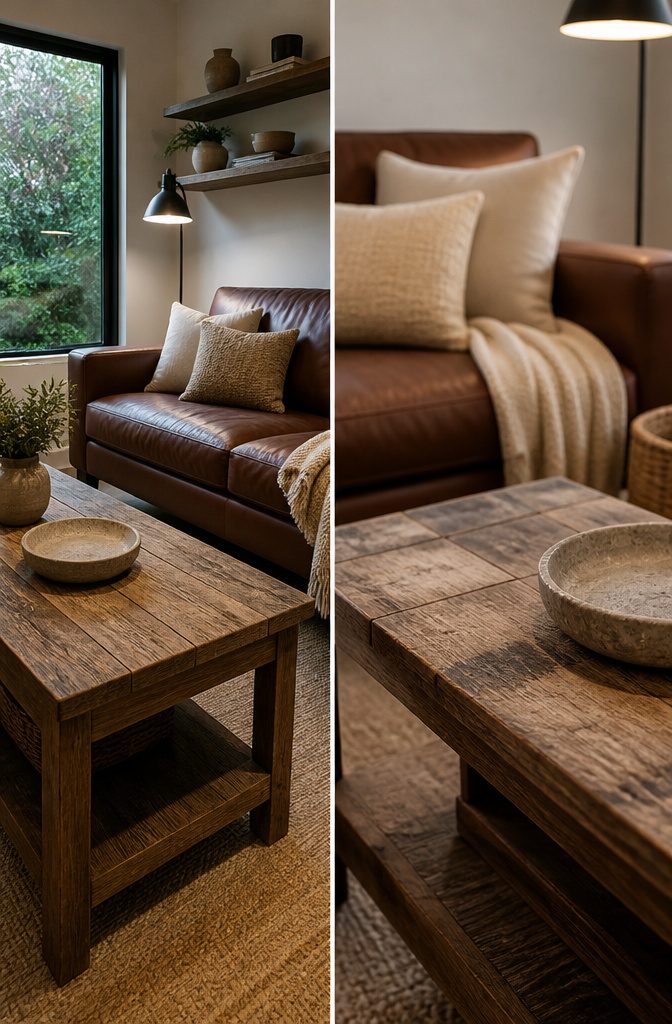
A dark brown leather couch holds its own next to distressed wood, so a weathered coffee table or side table is the easiest first piece. Keep the rest of the room clean-lined.
Metal light fixtures and minimalist shelves add straight edges that stop the wood from pulling the space toward a cabin. Rough wood against sleek metal is the pairing to aim for, and the couch sits between them as the anchor.
Fill in with neutral, textured decor, such as pillows and a throw in oatmeal or cream, so the room stays warm without adding more pattern. Skip antler mounts and heavy plaid, which tip the look back toward lodge.
A Brown Couch in a Small Room
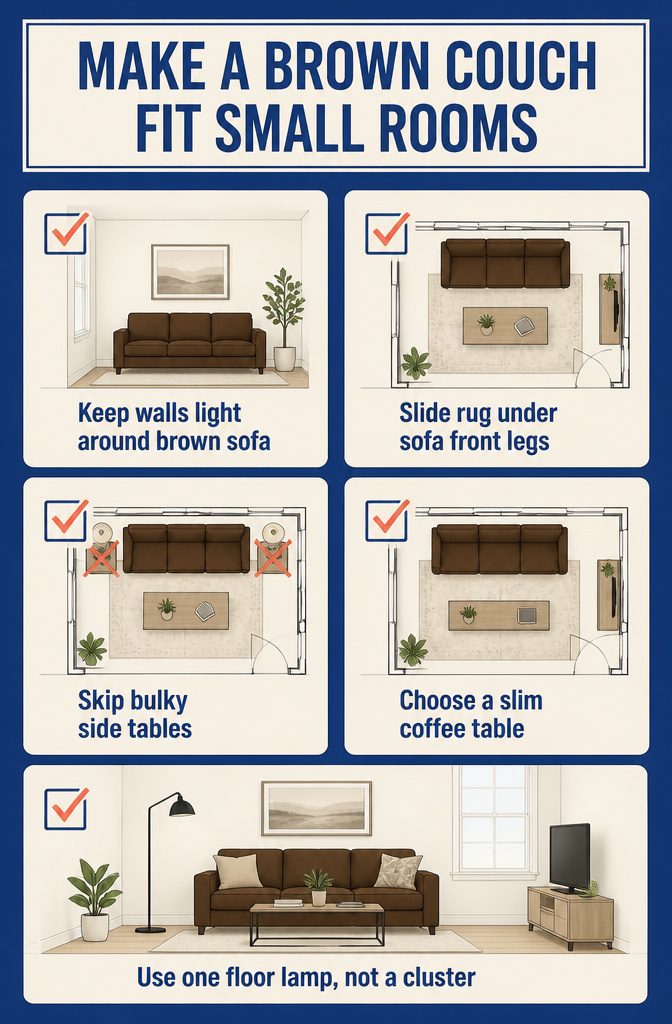
A brown couch works in a small living room when you control what surrounds it. Run through this checklist:
- Keep the walls light, so the dark sofa is the one heavy element in the room.
- Choose a rug that slides under the sofa’s front legs. Cream, beige, faded gray, or a subtle pattern gives soft contrast without making the room busy or dark.
- Skip bulky side tables. They crowd the sofa’s arms and eat floor space.
- Add a slim coffee table instead of a chunky one.
- Use one floor lamp, not a cluster of lighting.
These changes open the room up fast, and the couch itself can stay.
Frequently Asked Questions
What color curtains go with a brown couch?
Beige, gray, or white curtains keep the room neutral next to a brown couch.
For a bolder look, pick deep blue or green. Deep blue curtains also suit renters, since they bring in blue contrast without any painting.
What kind of rug looks best with a brown couch?
A light rug in cream, beige, faded gray, or gray looks best, and a subtle pattern in those shades also works.
The soft contrast balances the couch’s weight without making the room look busy or dark. Avoid dark rugs, which add another heavy shape under the sofa.
How can I make a brown couch stand out?
Add pillows in one bright color such as mustard yellow, teal, or burnt orange, which is the quickest and cheapest option.
Bold artwork on the wall behind the couch also draws the eye. Small brass or gold pieces nearby add warmth without making the couch look heavier.
Can a brown couch work in a small living room?
Yes, as long as you control what surrounds it.
Paint the walls a light color, tuck a rug under the sofa’s front legs, and skip bulky side tables. A slim coffee table and a single floor lamp open the room up without changing the couch.