
These ideas run from a stacking shelf or a painted ceiling to a curbless floor, and what decides yours is whether you can open the wall.
Renters can paint: a bottle green ceiling in an 800-square-foot West Village apartment leaves the tile alone. Niches and curbless floors are renovation jobs, and the slope and waterproofing are worth hiring out.
1. Clear or Frameless Glass
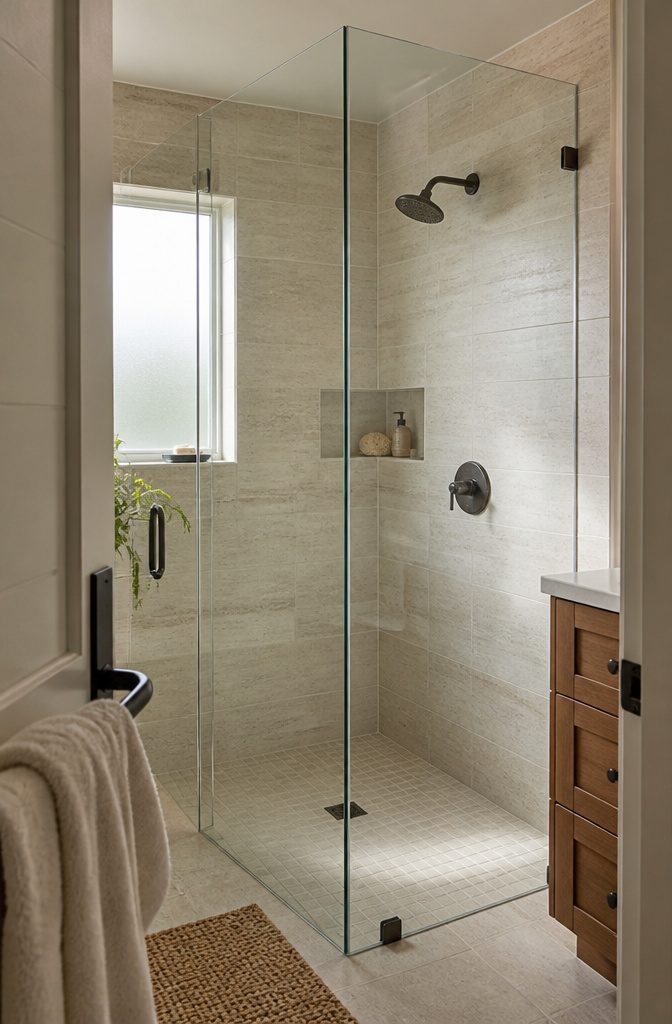
Clear glass takes up minimal visual space, so your eye travels straight to the back wall instead of stopping at a curtain. Frameless glass goes a step further.
With no metal frame to break the view, light passes through freely and the tile and fixtures behind it stay on display. In a small shower, where every detail is in plain sight, that open view is the main gain.
Glass also resists mold and mildew better than a curtain or a framed enclosure. Water spots are the usual complaint, and frameless glass can be coated to stop water spots from forming.
If you are choosing between plain and coated panels, coated is the better pick, because it cuts down how often you have to wipe the glass.
Recommended Products

【DIMENSION】GETPRO sliding shower door oversize 60” W x 72” H, the width can be adjusted from 57" to 60" by cutting guide rail,providing a customizable fit for flexible installation.

Durable and Rust-Resistant: Made of aluminum alloy with a Black epoxy coating, this shower glass door handle is designed to withstand humid bathroom environments and resist rust and corrosion. The manufacturing process has undergone rigorous factory testing to ensure long-term durability and reliability in daily use.
2. Built-In Shower Storage
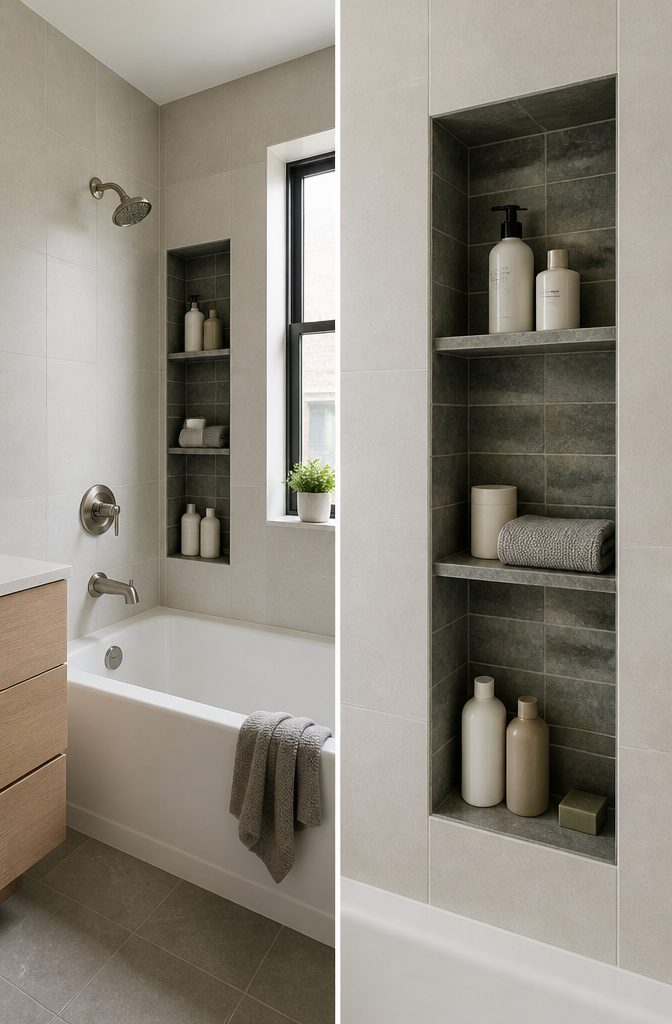
A niche, or recessed shelf, puts storage inside the wall so nothing sits on the shower floor. The largest version is a tiled, tub-to-ceiling cubby set opposite the showerhead, wide and deep enough to hold towels and bath products.
It can replace a linen closet or a set of storage bins, and it takes no floor space because it is carved out of the shower itself.
This option requires demolition, so it is a renovation job, not a weekend one. If you rent, skip it unless the landlord is already opening the wall.
A smaller version works in a tiny bathroom. A 323-square-foot Milan apartment has its shower near the window, with a small storage niche built in.
Recommended Products

Bernkot Stainless Steel Shower Niche No Tile Needed Niche

STURDY & DURABLE: Constructed from solid and rustproof 304 stainless steel, seamless welding makes it leakproof, brushed finish has stronger resistance of corrosion and scratch. Ideal for wet environments like bathroom or kitchen
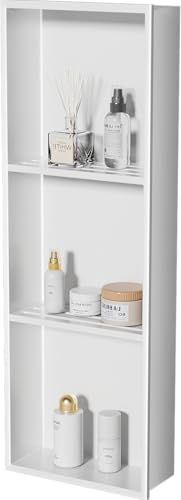
【Effortless No-Tile Installation】 Simply place this recessed niche into your pre-cut wall opening (36.2"L x 12.2"W x 4.3"D) and secure edges with silicone adhesive. No tiling required—saving installation time and costs while delivering a sleek, built-in look.
3. Bold Color
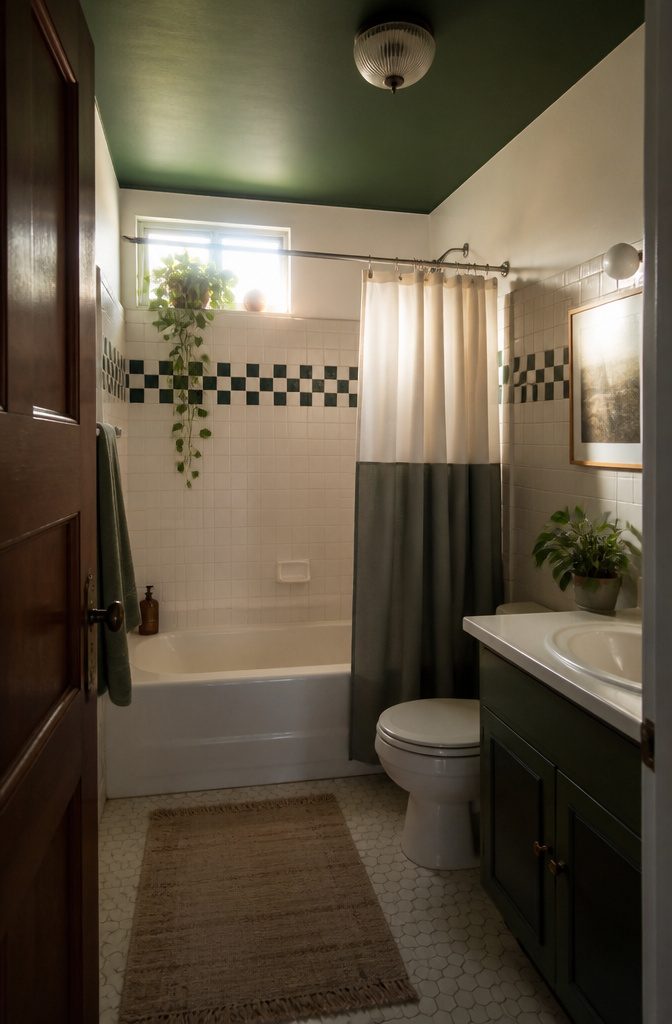
Paint the tub and walls the same color, and a small bathroom reads as one deep, moody shape instead of a white box chopped into pieces.
In a 700-square-foot Austin bungalow, Behr Light Truffle on both the tub and the walls does this, and a canvas tarp from a tractor supply store hangs as an industrial-looking curtain.
If the walls are off limits, look up. In an 800-square-foot West Village apartment, a bottle green ceiling gives the bathroom a richer feel while the existing checkerboard tile stripe stays as it is.
Add a few plants and a color-block HAY curtain, and the tub shower has a personality. Neither move touches the tile, so both suit a rental.
Recommended Products

Size: 0.55"H × 1.14"W. This silicone water dam is professionally engineered to create a reliable flood barrier, keeping shower water where it belongs. It helps achieve an organized wet-dry separation, protecting your bathroom floors and vanity cabinets from overspray and pooling water.
Size: 0.55"H × 1.14"W. This silicone water dam is professionally engineered to create a reliable flood barrier, keeping shower water where it belongs. It helps achieve an organized wet-dry separation, protecting your bathroom floors and vanity cabinets from overspray and pooling water.

4. Patterned or Mixed Tile
A small shower is the place to get a little wild with pattern, since it takes up little of your eyesight.
Alternating matte and glossy zellige tiles in caramel make a playful checkerboard, and the matte-to-gloss shift adds interest without a second color.
For a calmer version, vary the scale instead of the pattern.
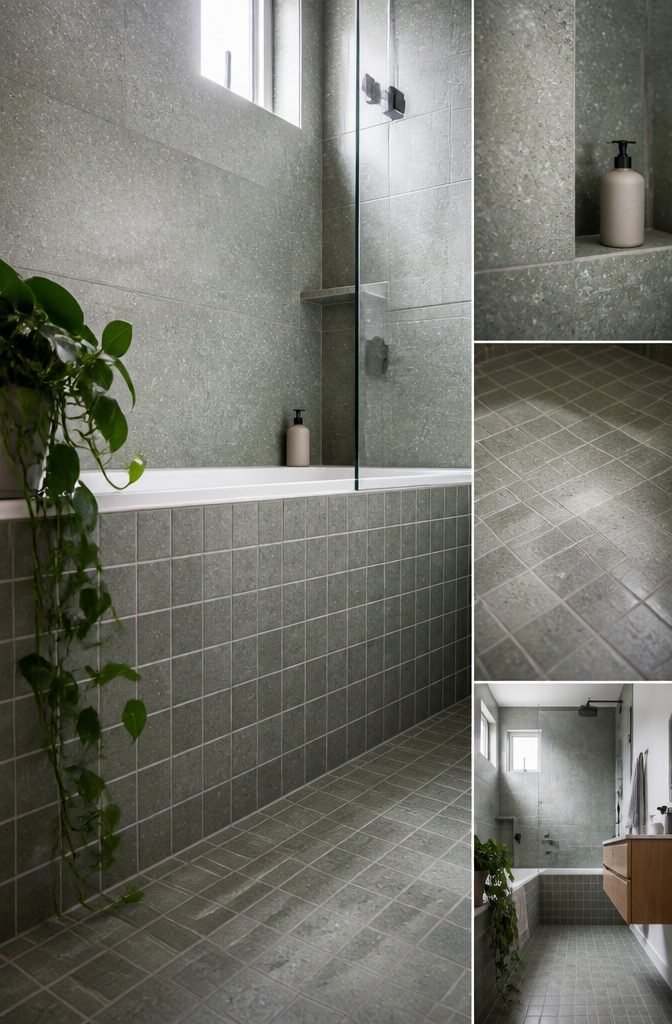
Put large-format speckled sage rectangles on the walls and small-format gray-green squares on the tub exterior and floor. The shared color family keeps the look quiet.
On the floor, penny tile suits a curved shower. It’s graphic but visually quiet, and its small grout lines give lots of anti-slip traction.
Recommended Products

Shower Tray 32mm: Enjoy long showers without worries of water leakage. Crafted with high-density HDPE waterproof membrane, double-layer 3M adhesive, and durable EPS board, creating a sturdy waterproof barrier.

【PREMIUM SHOWER TRAY】 - Our shower curb kit provides you a shower tray made of EPS high-pressure foam board. Overall size: 38 in × 60 in (965.2 mm × 1524 mm). The drainage hole is set with a 4 in (10 cm) diameter for effective water running. The shower tray is equipped with a gray water-impermeable membrane with fluffy texture on the surface, convenient for mortar brushing. The tray forms a 5° inclination from four sides to the middle, which is convenient for drainage.

Curb dimensions are 38 in. x 6 in. x 4-1/2 in.
5. Light-Reflecting Tile
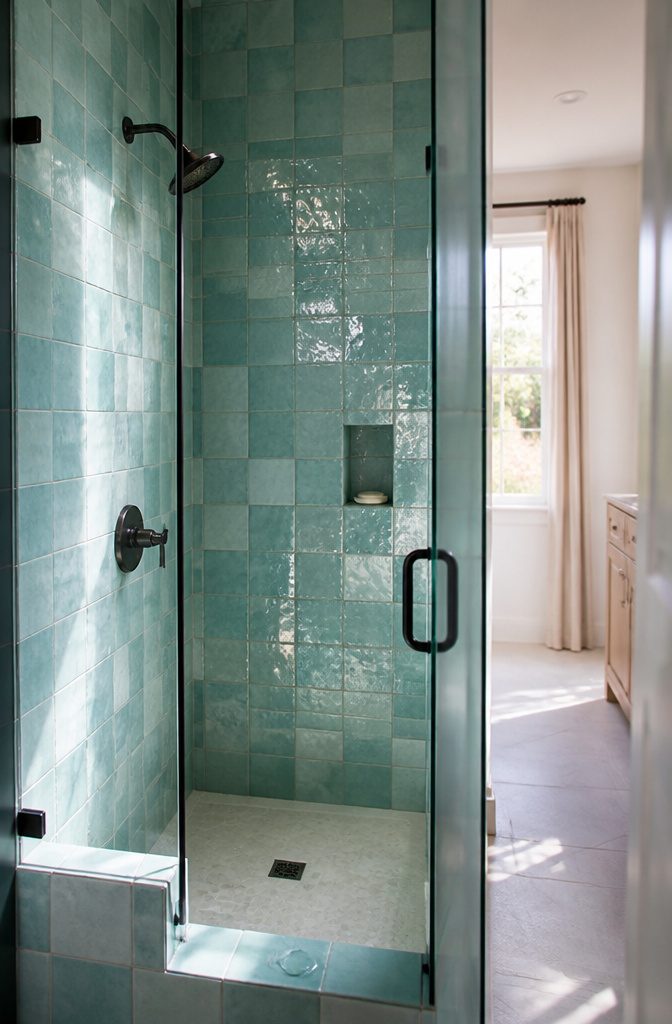
Glossy zellige does the brightening.
Its shimmery surface bounces light around a small shower, which is how turquoise zellige walls can make a windowless bathroom feel airier. Matte tile reflects far less, so it won’t give you that lift.
The cost is visual texture.
A full wall of glossy zellige reads as busy, with light shifting across every tile. Alternating matte and glossy tiles in a checkerboard, as in one tight farmhouse bathroom in upstate New York, keeps the shimmer and adds contrast.
Put glossy on the walls you want to glow and use matte as the quieter partner. In a shower this small, the pattern takes up little of what you see.
Recommended Products

2-in-1 40LBS Heavy Duty Shower Rack: Includes 2 shower shelves, 4 adhesive stickers and 2 hooks. For soap holders and toothbrush holders, please check our 3-pack and 5-pack sets

【Great Shower Organizer Set】This wall mount shower caddy can help you better organize your bathroom necessities. It is suitable for bathrooms, kitchens, Rv, living rooms and bedrooms, make your family space use to the extreme. The large storage capacity allows you to store more items, and the fence prevents items from falling.

2-in-1 Shower Shelves: This complete set includes large caddy X2, adhesive shower caddy tape X2, little hook X 2. A true shower organizer that upgrades your shower storage instantly
6. A Corner Layout
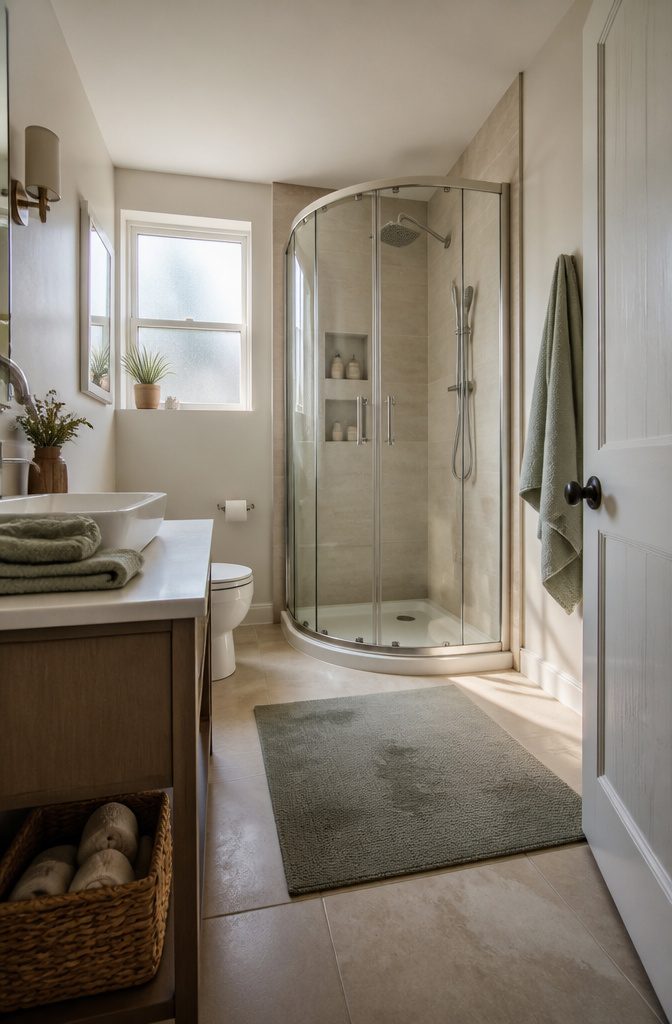
Most small bathrooms leave the corners empty, and a corner is where a shower takes up the least usable space.
Tucking the shower into a corner frees floor area for a vanity, a cabinet, or simply room to move. Two walls already form part of the enclosure, so you need less extra partitioning, and that can lower the cost.
Door choice changes how the room feels.
A curved or angled glass door softens the shape of the shower and makes the space easier to walk around. A corner shower with no door at all reads even more open, which suits a tight layout.
Recommended Products

【Framed Sliding Shower Door Bumpers】Our 4pcs shower door stops for sliding doors set includes framed sliding shower door bumpers made from durable silicone, providing long-lasting protection and seamless integration into any bathroom environment.

【Friendly Reminder】 Specifically designed for frameless glass shower doors up to 3/8" (10mm) thick; Note: Not compatible with framed shower doors; Please check the thickness of your glass doors before purchase

Sliding Shower Door Handle --- Chrome pull handle is designed as a universal sliding shower door handle, suitable for 3/16 "and 1/4" thick glass shower doors. This glass shower door replaces the handle with a frameless sliding door or frameless swing door design, suitable for frameless shower rooms and frameless bathtub fence doors, making it an ideal choice for any bathroom design.
7. Doorless or Partial Enclosure
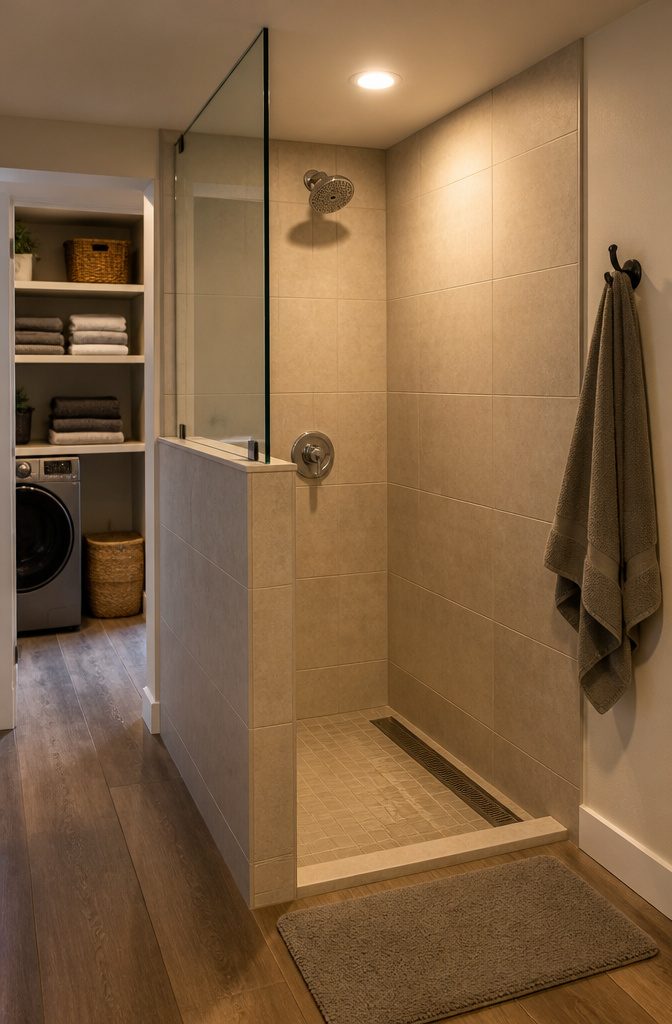
A tiled pony wall topped with partial glass replaces the full door or curtain, and it works even in a basement bathroom that measures just 6 by 8 feet.
With no full wall or curtain in the way, the room reads as more open.
Doorless layouts depend on water control.
Slope the floor gently toward a linear or center drain so runoff stays inside the shower zone. A half wall or glass panel stops most of the splash, and a slightly recessed shower floor works as a built-in basin.
Place the showerhead carefully, and aim it away from the open side so spray hits the wall instead of the bathroom floor. Used together, these keep the rest of the room dry.
Recommended Products

【Say No to Messy】Compared with normal shower shelves or shower caddies, Elefloom recessed shower niche helps you save more sapce in the bathroom, easier to install and does not require tiles, you don’t need to worry about the mess and narrow in your bathroom.

Sealed and 100% Waterproof: VEVOR shower bays use XPS extruded foam board, cement mortar, waterproof coating triple waterproof substrate, 100% sealed and waterproof, which not only can protect the wall and extend the service life of the wall but also effectively prevent water penetration into the wall, keep the indoor dry and sanitary. Note: This product is not ready for direct use. Surface layer, such as tile, must be applied to the surface before use!!!

Bernkot Stainless Steel Shower Niche No Tile Needed Niche
8. Blue or Green Tile
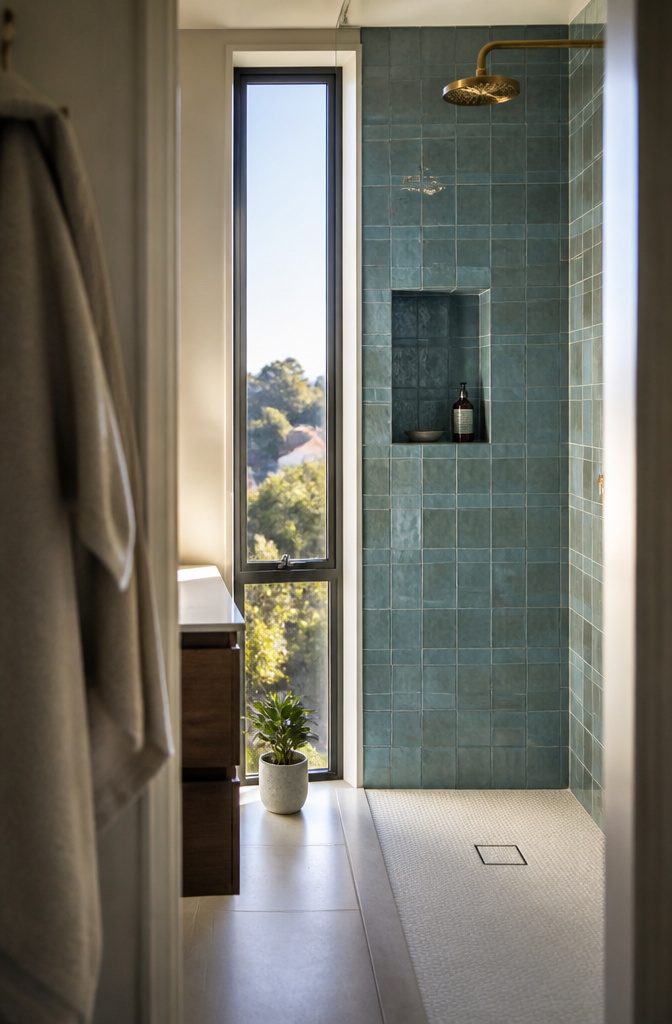
Blue and green keep showing up in small showers because both read as calm.
In the 323-square-foot Milan apartment, undulating sea blue tile sits beside a long, narrow window and a niche, so the color gets daylight. Turquoise zellige pushes the same blue family brighter.
Green is the quieter route. In the Park Slope guest bath, large speckled sage rectangles on the walls and small gray-green squares on the tub exterior and floor vary tile size while staying in one color range.
The smoke-toned glass door reads green from reflection, so the glass joins the palette. Pick blue if you have a window to feed it; pick green for a soothing, vacation feel.
Recommended Products

Size: 0.55"H × 1.14"W. This silicone water dam is professionally engineered to create a reliable flood barrier, keeping shower water where it belongs. It helps achieve an organized wet-dry separation, protecting your bathroom floors and vanity cabinets from overspray and pooling water.
Size: 0.55"H × 1.14"W. This silicone water dam is professionally engineered to create a reliable flood barrier, keeping shower water where it belongs. It helps achieve an organized wet-dry separation, protecting your bathroom floors and vanity cabinets from overspray and pooling water.
Size: 0.55"H × 1.14"W. This silicone water dam is professionally engineered to create a reliable flood barrier, keeping shower water where it belongs. It helps achieve an organized wet-dry separation, protecting your bathroom floors and vanity cabinets from overspray and pooling water.
9. Brass and Matching Hardware
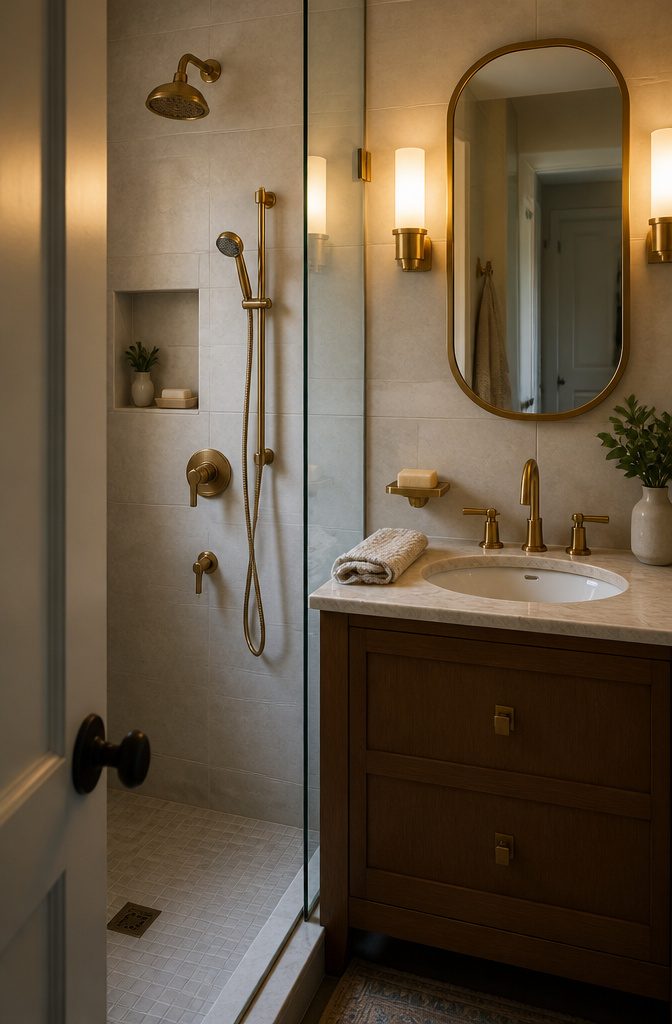
Pick one metal and repeat it on every fixture. In the orange tiled shower, the chrome rain faucet, handheld sprayer and 2 soap holders all match, so the tile color is the only loud element.
Mixed finishes in a tight space read as leftovers, while one finish across every fixture reads as calmer and looks chosen.
Brass is the warmer alternative, and it makes a shower look more luxe. Carry it beyond the shower itself.
A brass upper rim looks planned when the vanity mirror, faucet and sconces share the finish. If the budget is tight, change the small pieces first, like soap holders and hooks, and match the rest of the room to them.
Recommended Products

✔ STOPS SHOWER CURTAIN LEAKS FOR GOOD Creates a tight, watertight seal between your curtain and wall—no more puddles, drips, or water escaping onto your bathroom floor

Seamless Fit - Designed for compatibility with the Schluter-Shower System, ensuring enhanced waterproofing and reliability in shower construction.

Waterproof shower curb: Prefabricated 60 in full-foam curb is ready to tile right after install, giving bathrooms, showers and steam rooms a watertight, leak-resistant threshold.
10. A Movable Bench
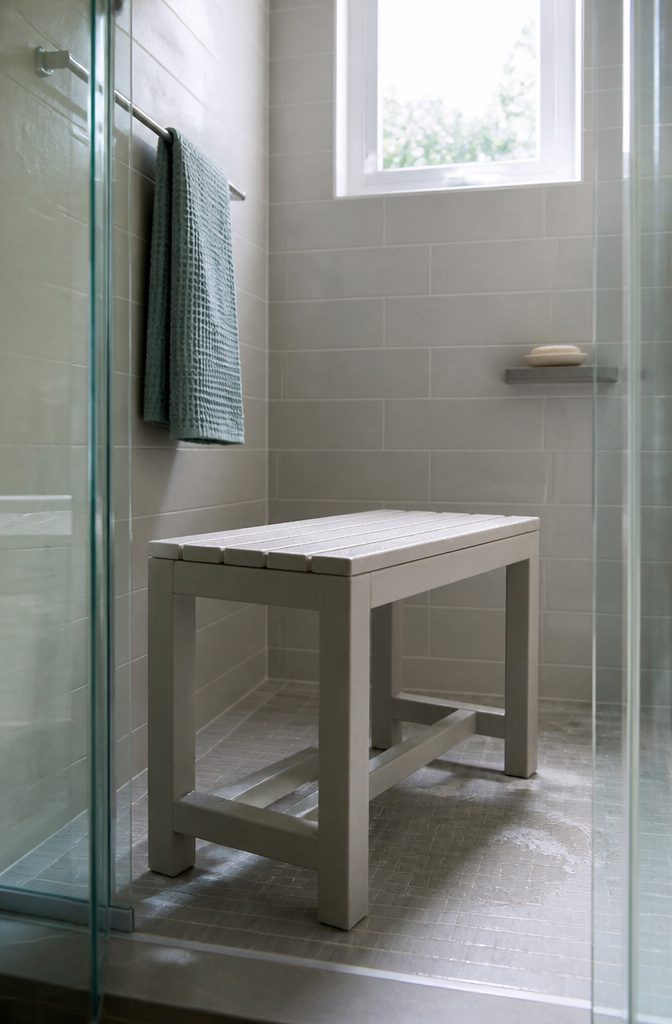
A freestanding bench gives you the seat of a built-in without the permanent footprint.
A built-in takes up floor space every minute of the day. A bench you can lift out takes it only while you’re sitting.
Choose one that is waterproof and light enough to lift out with ease, because you’ll be handling it often.
Set it inside for shaving or washing, then carry it out when you want the full floor for a quick rinse or for cleaning the shower.
Skip anything that soaks up water, like untreated wood or fabric. A small shower stays damp, and a bench that holds moisture will be the first thing to go bad.
Recommended Products

5 Hanging Shower Organizer Set for Sufficient Bathroom Storage Space:The bathroom organizer comes with 5 pieces for different uses, including 2 shower caddies, 2 soap holders,1 toothbrush holder and 5 adhesives. Accommodate wash supplies or cooking seasonings easily with large capacities to make full use of space and facilitate your life; ideal for the dorm/bathroom/kitchen/toilet/tool room.

Practical Shower Caddy Set: Our shower caddy set includes 2 shower shelves, 1 soap holder, 3 adhesives. You can use it in various places that require storage and organization, such as the bathroom, kitchen, living room, bedroom, and so on

40% Larger Capacity: 2 Pack shower shampoo holder includes 2 caddies, 2 adhesive tapes, and 16 hooks. Holds 6–8 bottles (33 FL.OZ each) plus bath balls, soap, razors, etc. Keeps all family bathroom items neatly organized in one place
11. Shower Caddy or Stacking Shelf
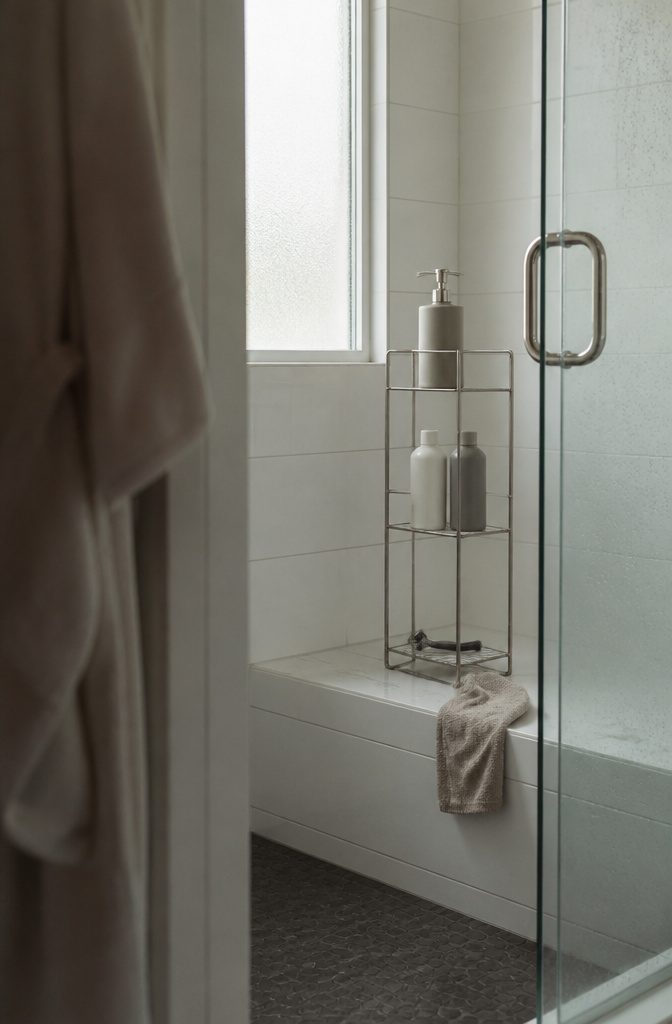
A stacking shelf set on the shower ledge holds the products you reach for mid-shower that have no other home in a small space.
It is the add-on counterpart to a built-in cubby, and it gives the extra bottle or razor a spot without any demolition.
For renters this is the better pick, because nothing gets cut into the wall, and the shelf comes with you when the lease ends. The cost is space.
A niche sits flush inside the wall, while a shelf or caddy takes up room in a stall that has little to spare. Keep it to the products you use every shower, and leave the rest outside.
12. A Curbless Shower
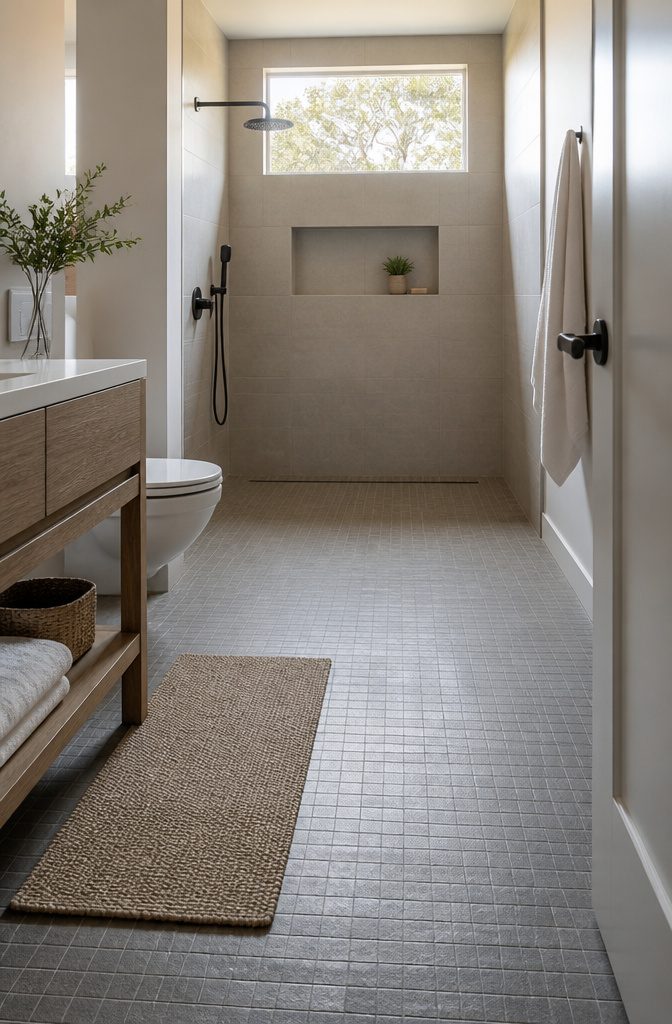
Removing the raised threshold lets one floor material run from the bathroom straight into the shower, and an unbroken surface makes a tight room read as larger.
It also gives wheelchair users easy access and suits aging-in-place renovations, since no one has to step over a curb. Non-slip tile can cover the whole floor without breaking the visual flow.
The cost is construction. The floor has to slope toward a hidden drain, and a waterproof membrane has to protect the subfloor beneath it.
This is a renovation job, not a weekend swap, and the slope and waterproofing are worth hiring out. Quality materials and professional installation cost more up front, but they keep water contained for years.
Make It Feel Open
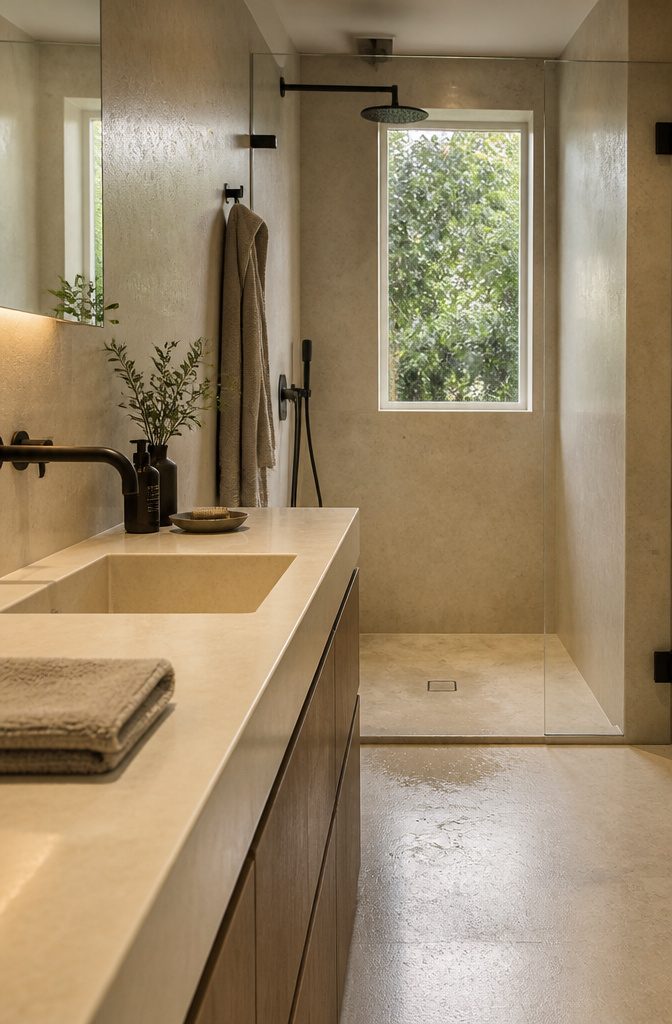
A small shower looks lavish instead of cramped when the room reads as one surface.
Run the same flooring from the shower out across the bathroom floor, and carry the wall finish past the shower onto the rest of the room where you can.
Fewer breaks between materials give your eye fewer places to stop, so the space looks wider than it is.
Lighting works the same way. Keep the light color the same in the shower and the room, so the stall doesn’t glow differently from the vanity.
Light the shower itself, because dim corners are what make a stall feel like a box. Warm, even light gives a tight shower a cozy, spa-like feel.
Pair Looks With Function
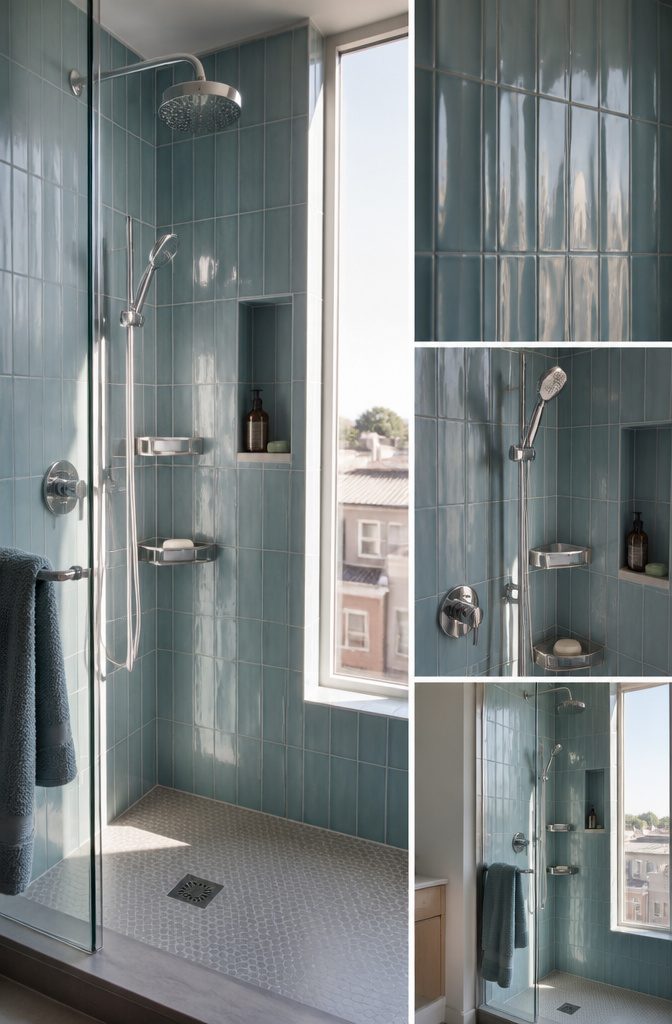
A finish works harder when it comes with a feature you’ll use daily. Three pairings to copy:
- The orange shower in a Bergamo, Italy home runs rectangular ceramic tile vertically to add height. Chrome fixtures do the daily work: a rain faucet, a handheld sprayer, and 2 soap holders.
- The sea blue shower in a 323-square-foot Milan apartment puts a small storage niche right beside the wavy tile, next to a long, narrow window.
- Keep openness and function together in the layout. A floor that slopes gently toward a linear or center drain keeps water in the shower and the rest of the room dry.
- If you want a spa feel, the usual extras are rainfall showerheads, wall jets, and heated flooring.
Frequently Asked Questions
What are some good corner shower designs for small bathrooms?
A corner shower with a curved or angled glass door, or with no door at all, suits a small bathroom well.
Two existing walls form part of the enclosure, so you need less added partitioning, which can lower the cost and frees floor space for a vanity or cabinet.
A compact square stall with clear glass and a built-in niche for products is one layout that works.