
Your wall length and floor space pick the vanity. A 24-inch or 24–30-inch unit suits a small room, while a 73-inch double sink like Floor & Decor’s Kent ($1,586–$1,958) only pays off in a larger one.
A floating cabinet also needs studs or added blocking behind the drywall to carry the load.
1. Floating Vanity
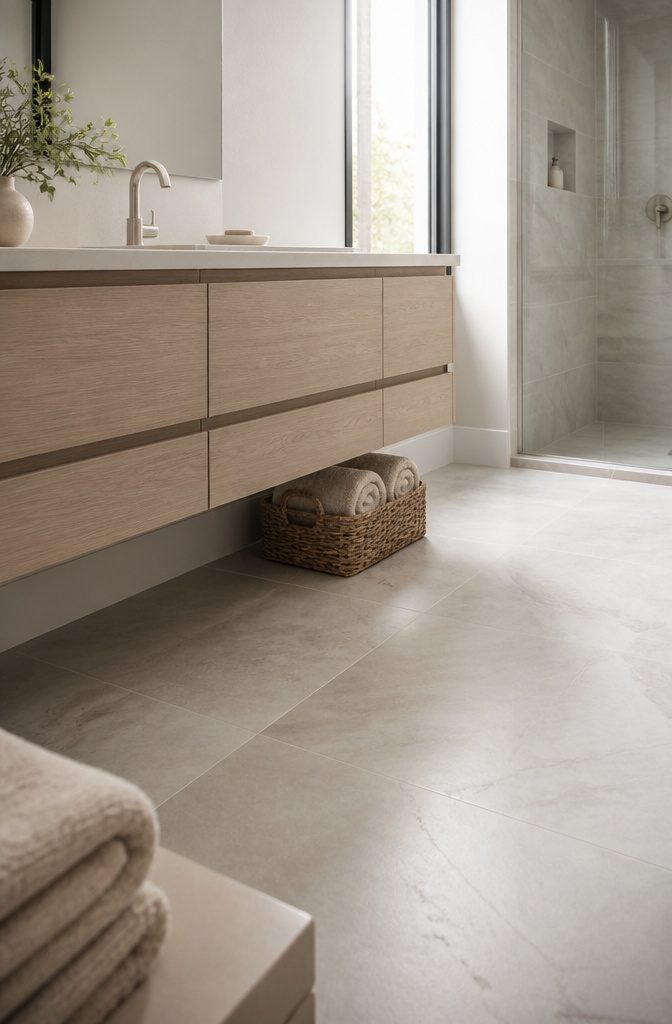
A wall-mounted cabinet leaves the floor visible all the way to the wall, and that uninterrupted floor makes a small bathroom read as more open.
Hidden drawers keep clutter out of sight, while an open space underneath holds baskets or rolled towels.
Choose drawers if the room has no other storage. The open version looks lighter, but it only stays tidy if you keep the baskets edited.
Because the floor shows, pair the vanity with neutral large-format tiles.
A marble-look tile gives you few grout lines and a calm surface. Pick the floor tile as carefully as the wall tile.
A floating vanity hangs its full weight on the wall: the cabinet, the top, and everything you store in it, so plan for studs or added blocking behind the drywall.
For small bathrooms, wall-mounted vanities and pedestal basins are the two safest picks.
2. Double-Sink Vanity
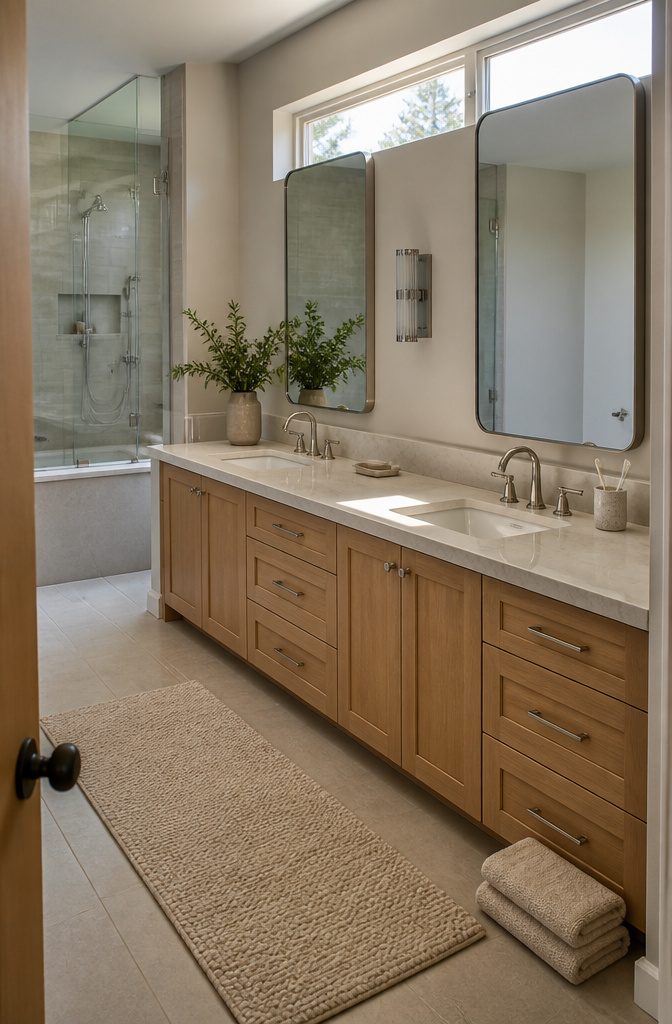
Two sinks let two people use the bathroom at the same time, and a double vanity adds counter space and storage along with them.
That only pays off in a larger bathroom. The wall-to-wall version runs one long cabinet from wall to wall, so the two basins sit side by side with room between them.
Floor & Decor’s Kent Double Sink Vanity with Engineered Top comes in a 73 in. size and is priced at $1,586–$1,958, and the store carries 93 double-sink models. In a small bathroom, skip the double sink.
Two basins take up the counter you need for a soap dish and a toothbrush cup, and a compact single vanity leaves more room to move. Measure wall length and clearance before you shop.
3. Wood-Finish Vanity
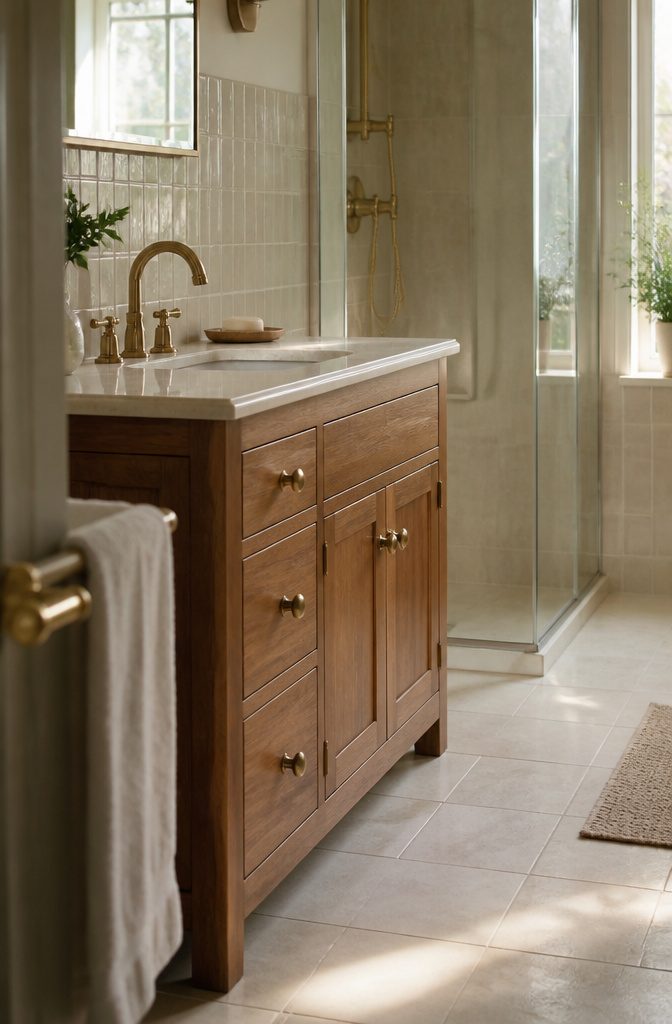
A wood-finish vanity gives a bathroom a warm, earthy look that suits traditional homes.
Add brass knobs or soft-gold handles and the cabinet looks richer right away. Matte-black pulls are the other good choice, since they sharpen a mid-tone or dark wood without competing with it.
Steam and splashes are hard on wood, so buy a cabinet with a moisture-resistant treatment, or seal an unfinished one before it goes in. Untreated wood is the one version to skip.
For tile, stay with soft tones. A light-gloss tile reflects light and makes a darker wood cabinet look deeper by contrast.
4. Monochrome Matte Vanity
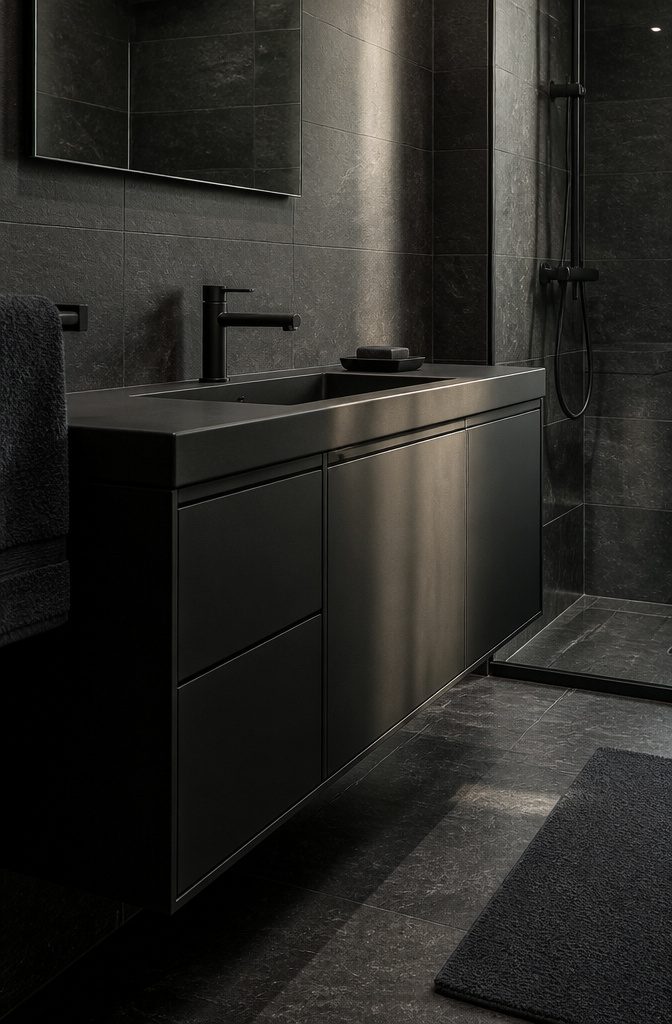
Black on black or white on white gives a bathroom a clean, sharp look that doesn’t compete with anything else in the room.
Cabinet, hardware and fixtures all share one tone in a matte finish, and repeating that single tone is what holds the look together. Matte tile with a muted texture adds a subtle premium edge.
A flat, single-tone scheme can read as blank, since nothing in it breaks up the surface.
It depends on texture or lighting to stay interesting, so pick a tile with some surface character and put a light where it will wash across the vanity. Skip either one and the room looks flat rather than calm.
5. Vintage Vanity With a Bold Mirror
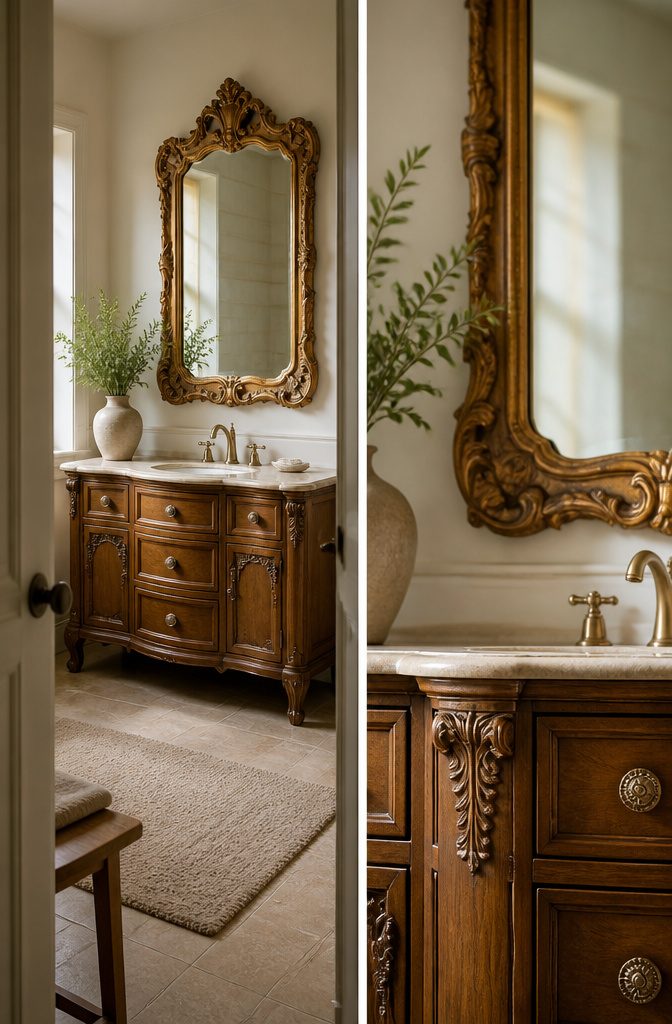
Soft curves or detailed carvings on the cabinet give a bathroom traditional charm, but the mirror decides how far that look goes.
Choose a mirror with a thick frame or ornamental edging, and it becomes the focal point. A plain, frameless mirror over the same cabinet leaves the carving with nothing to answer it.
Let the two pieces share the attention and keep everything behind them quiet.
A calm wall and simple tile keep the vintage feel intact, and the pairing reads as refined without looking overdone. Some shine in the background adds character, as long as it doesn’t compete with the frame.
6. Compact Corner Vanity
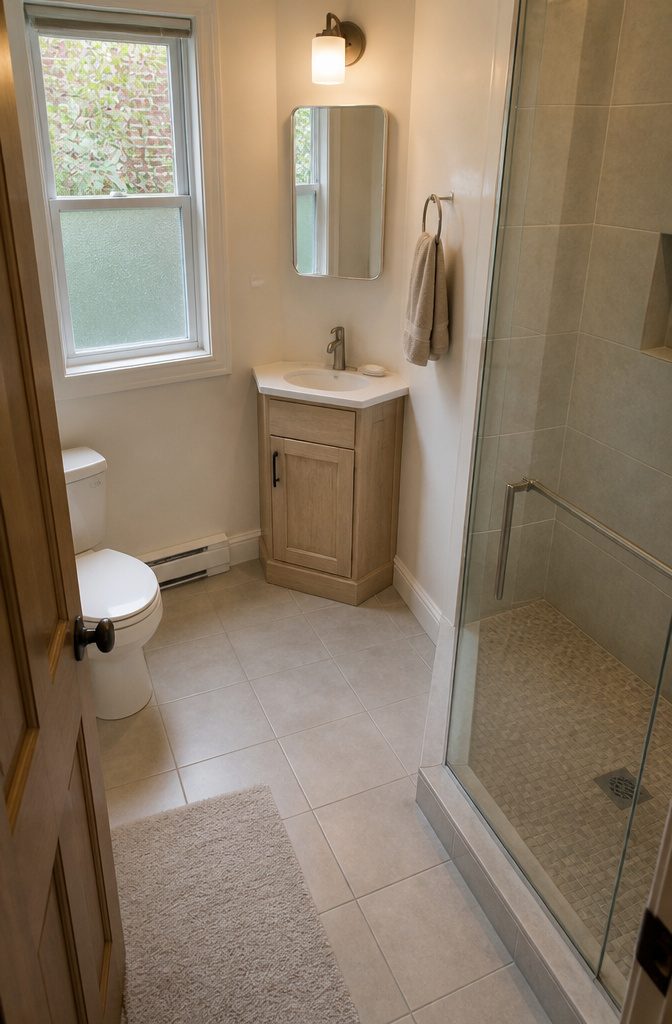
A corner vanity puts the sink in the one spot most small bathrooms waste, so the path between door, toilet, and shower stays open.
In an older flat or a guest bath, that open path matters more than extra counter. Choose a corner or wall-mounted unit, and pick a lighter finish so the room doesn’t feel crowded.
For size, shop under 24 inches or 24–30 inches. Floor & Decor’s size filters list 39 vanities in the first group and 43 in the second, so you have real choice without stepping up to a model that eats floor space.
7. Freestanding Vanity With Open Shelves
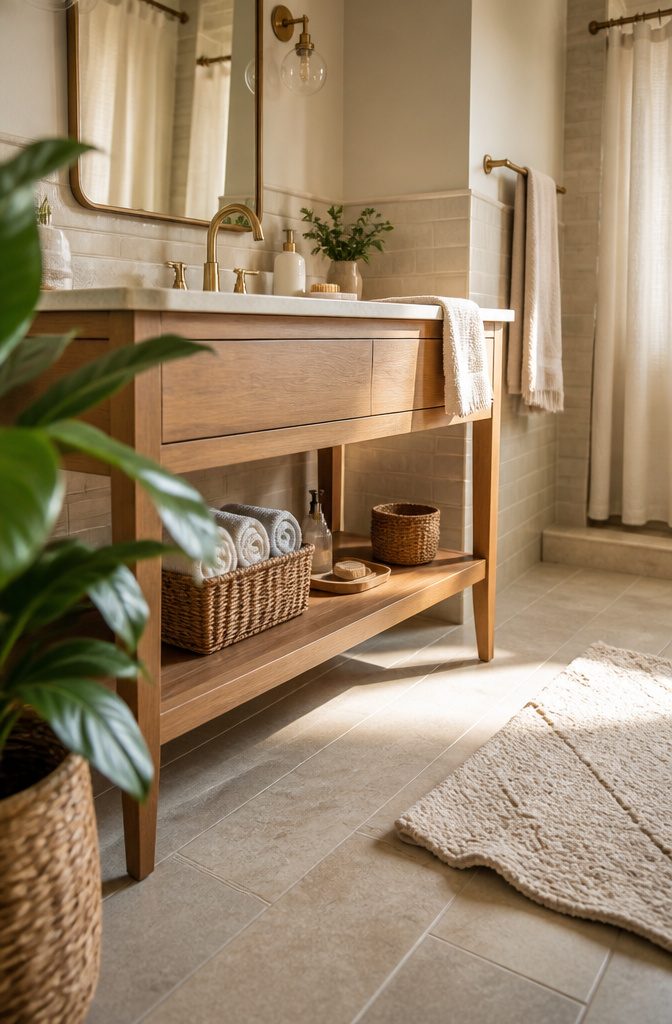
An open shelf under the sink keeps the vanity from reading as a solid block, so the room feels less boxed in.
Rolled towels fit well there, and a small planter or basket adds softness. Wooden or pastel finishes suit this style.
Baskets and trays do the job of cabinet doors. Give each category its own basket, such as hair tools, spare soap or cleaning supplies, and keep daily items on a tray.
Open shelves show everything, so a half-empty shampoo bottle or a tangle of cords stays in plain view. If you own a lot of products, pick a vanity with doors or drawers.
8. Bold-Colored Vanity
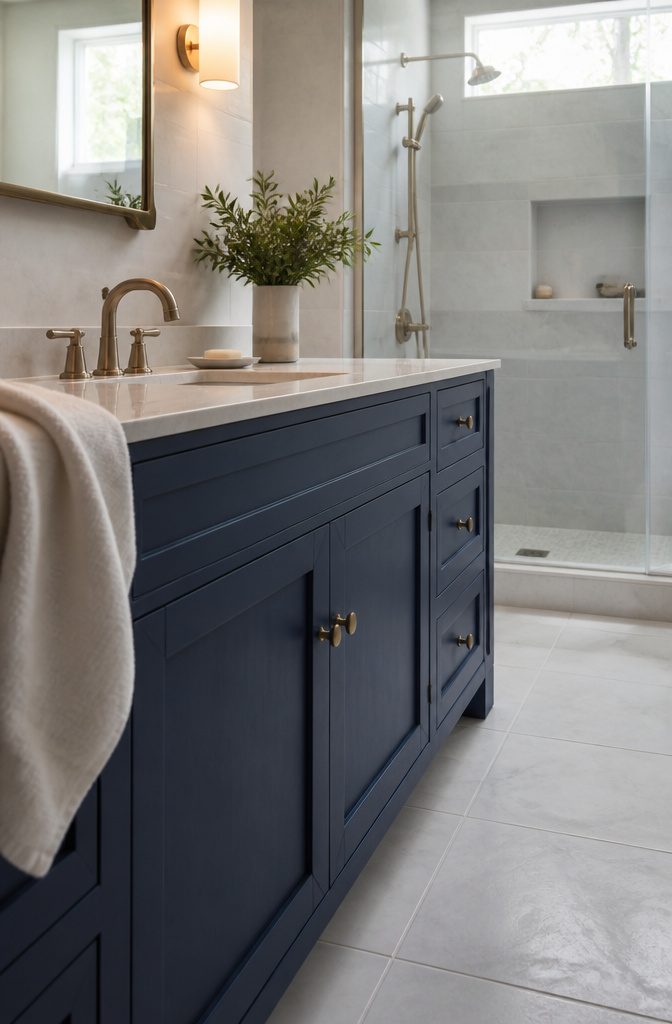
A navy or deep green vanity is one of the easiest ways to bring strong color into a bathroom, because a single piece carries the whole look. Everything around it should stay quiet.
Choose neutral tiles with a soft texture, such as a matte white, greige, or pale gray with a gentle surface pattern, so the cabinet stays the focus. Tile that is glossy, busy, or boldly patterned competes with it.
Keep the lighting soft, too.
Deep shades look best under an even, gentle glow. If the walls and floor are simple, the vanity color reads as a deliberate choice rather than a clash.
9. Underlit Vanity
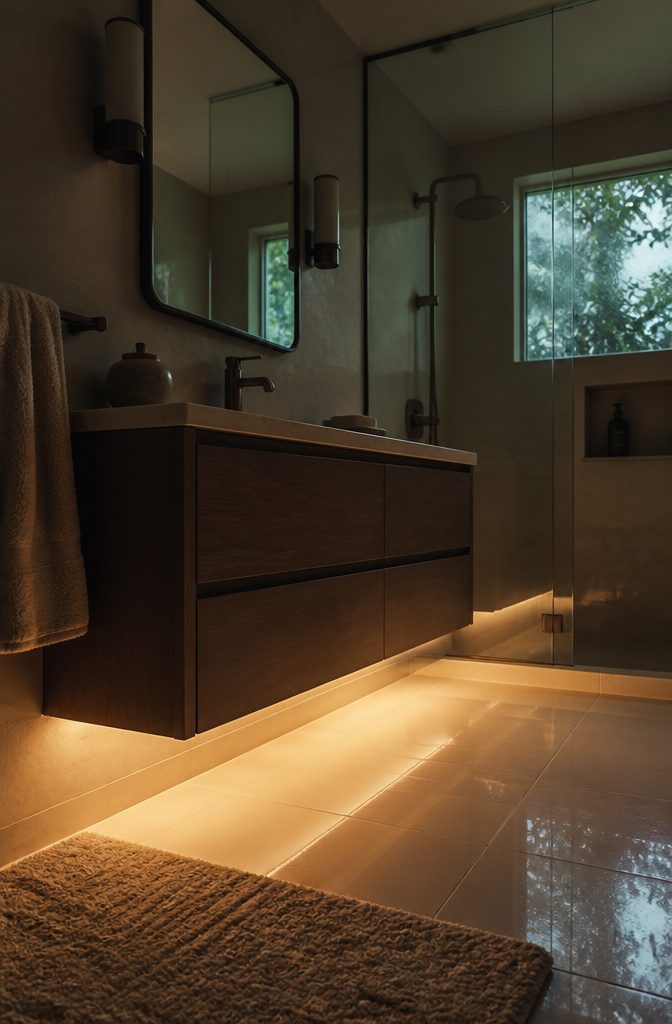
Under-cabinet lighting is both useful and decorative. The soft glow works as a nightlight, so a late trip to the bathroom doesn’t need the full overhead lights, and the same glow makes the vanity look more polished.
LED strips are the simplest way to get it: run one along the underside of a floating vanity or the toe-kick of a floor-standing one. Glossy tile nearby bounces the light around, which adds a layered effect without harshness.
A strip only provides ambient light. For tasks at the mirror, add sconces on either side or a pendant lamp over the sink, and let the strip be the low layer underneath.
10. Mirror-Cabinet Vanity
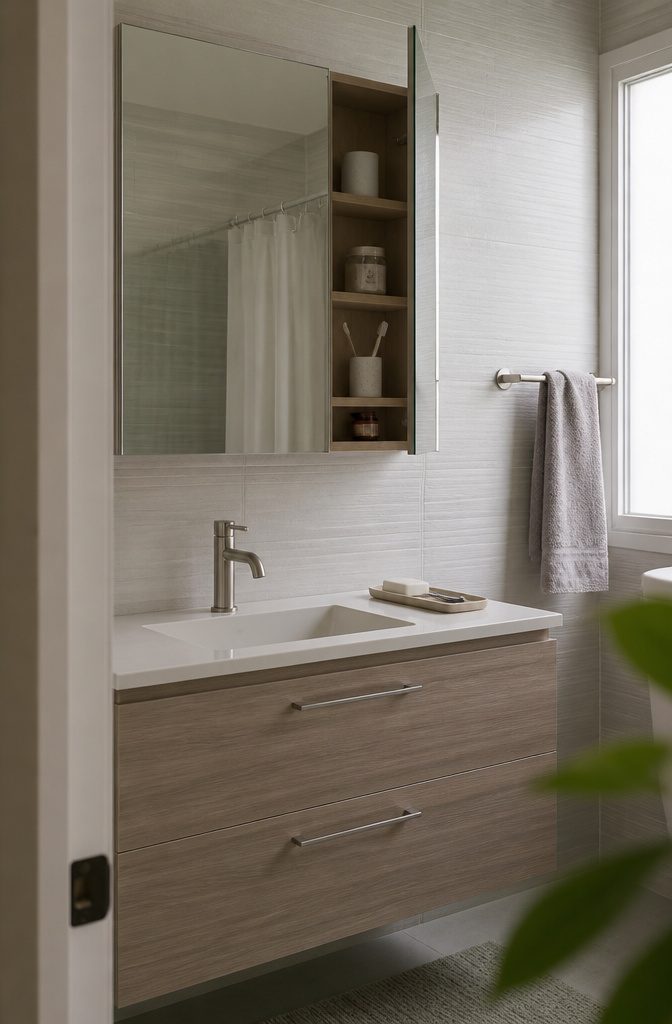
A mirror that doubles as a cabinet takes no more wall than the mirror you would hang anyway, and it replaces the open shelves you would otherwise mount beside it.
Toothbrushes, creams and razors stay behind the glass, so the wall and counter look clear.
Choose the mirror by how you use it. A backlit mirror gives even light for face tasks, a framed one lets you match the finish to your handles and faucet, and a magnifying panel helps with shaving and makeup.
Keep the tile quiet, with simple textures and plain tones like the Sparko or Marmorica collections.
Add a towel rack and a small tray for whatever won’t fit inside.
Vanity Height and Width Basics
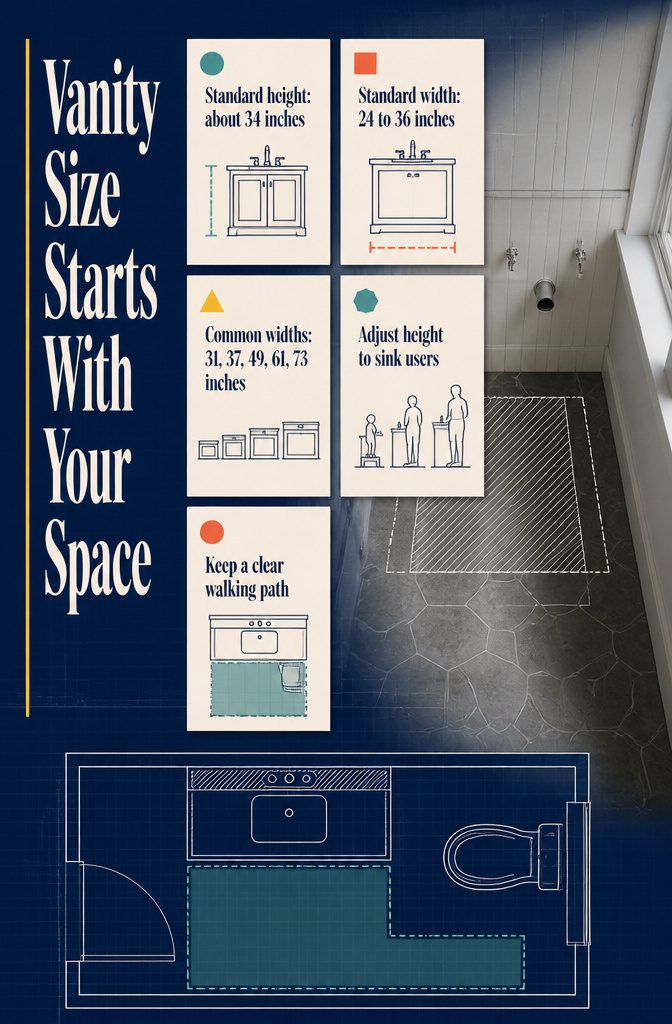
Measure the wall before you shop:
- Standard vanity height is about 34 inches. Adjust it to whoever uses the sink.
- A standard vanity needs at least 24 to 36 inches of width, and larger units need more.
- Common widths are 31, 37, 49, 61 and 73 inches. Use a retailer’s size filter to match your wall.
- Narrow rooms suit slim vanities.
- In a small bathroom, drawers with compartments or pull-out organizers hold more than an open cabinet.
- Leave enough clearance to move comfortably.
Floor & Decor covers the step people skip:
Measure the amount of space you’ve got around your sink on either side. Remember to think about depth, as well, and consider how far out the vanity will come from the wall.
Tape the vanity’s footprint on the floor and make sure you can still walk past it.
Vanity Cabinet and Top Materials
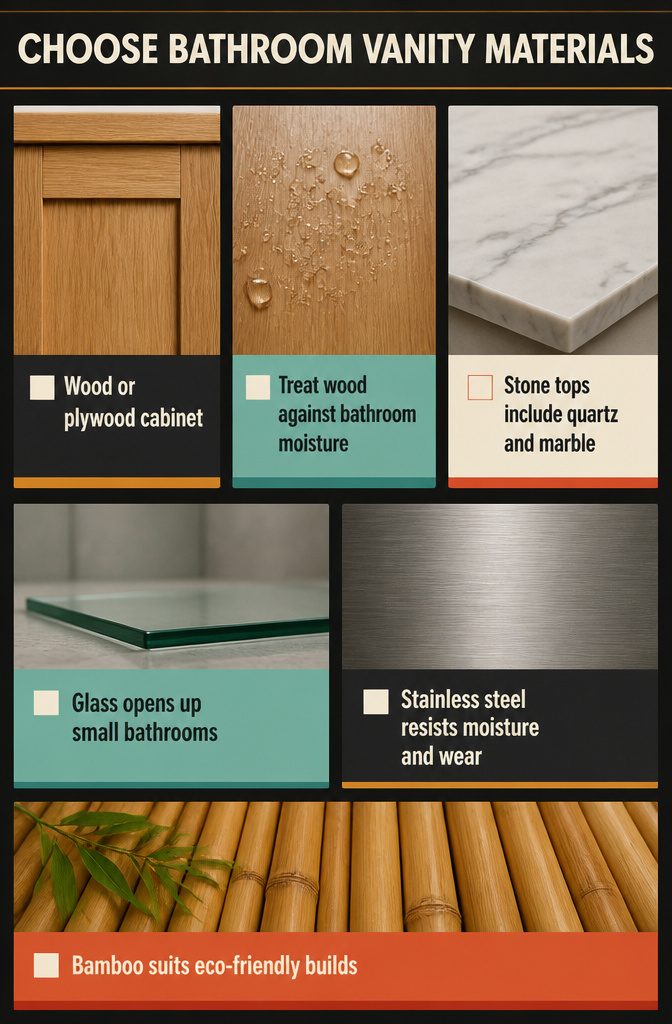
A vanity combines two materials: a cabinet below and a top above.
- Cabinet: Solid wood or plywood is standard. Wood in a bathroom needs a moisture-resistant treatment to hold up.
- Top: Stone is the usual choice, including quartz, Carrara marble, granite and engineered stone. The Piper vanity from the Studio Design Collection has an engineered stone top and is priced at $499–$1,699 per piece.
- Glass: It makes a small, contemporary bathroom feel more spacious.
- Metal: Stainless steel or brushed nickel gives an industrial look and resists moisture and wear.
- Other options: Bamboo, PVC and vitrified tile also work, and bamboo or reclaimed wood suits an eco-friendly build.
Frequently Asked Questions
What are the most popular bathroom vanity styles?
Solid wood vanities with marble tops are a common favorite for visual appeal, and a simple white vanity works well in a small, clean room.
Floating, corner, double-sink, and freestanding open-shelf vanities are other styles to consider, and the size of the room usually decides among them.
How do I choose the right size bathroom vanity?
Start with the wall.
A standard vanity needs at least 24 to 36 inches of width, larger units need more, and standard height is about 34 inches. Common widths are 31, 37, 49, 61, and 73 inches.
Measure the space on both sides of the sink and how far the vanity will stick out from the wall, then tape its footprint on the floor to check that you can still walk past it.
What materials are used for bathroom vanities?
The cabinet is usually solid wood or plywood, and wood needs a moisture-resistant treatment to last in a bathroom.
The top is most often stone, such as quartz, Carrara marble, granite, or engineered stone. Glass, metal (stainless steel or brushed nickel), bamboo, PVC, and vitrified tile are also used.
What is the best vanity for a small bathroom?
Wall-mounted vanities and pedestal basins are the two safest picks for a small bathroom. A corner vanity is a good third option because it uses a spot most small rooms waste.
Choose a lighter finish so the room doesn’t feel crowded, and skip the double sink. A floating vanity clears the floor, but the wall behind it needs studs or added blocking to carry the weight.
Is under-cabinet vanity lighting useful or just decorative?
It does both jobs. The soft glow works as a nightlight, so a late trip to the bathroom doesn’t need the overhead lights, and it makes the vanity look more polished.
An LED strip gives only ambient light, so add sconces beside the mirror or a pendant over the sink for tasks like shaving or makeup.
What tile goes best with a colored vanity?
Neutral tile with a soft texture, such as matte white, greige, or pale gray with a gentle surface pattern.
This keeps the cabinet as the focal point. Glossy, busy, or boldly patterned tile competes with a navy or deep green vanity.
Can you use glossy tile with a wood vanity?
Yes, as long as the tile is a soft tone. A light-gloss tile reflects light and makes a darker wood cabinet look deeper by contrast.
Do vanity mirrors with storage take up too much space?
No.
A mirror cabinet takes no more wall than a regular mirror, and it replaces the open shelves you would otherwise mount beside it. Toothbrushes, creams, and razors stay behind the glass, so the wall and counter look clear.
Are double vanities worth it?
In a larger bathroom, yes. Two sinks let two people use the room at once, and the long cabinet adds counter space and storage.
In a small bathroom, skip it, because two basins use up the counter you need for everyday items. Measure wall length and clearance before you buy.