
Master bedroom changes run from a roller and painter’s tape to custom wood furniture, and your lease or budget decides where to start.
Renters and anyone with only a weekend get the most from paint, warm dimmable bulbs and baskets. Paneling is permanent, and custom wood costs more up front and takes longer to arrive.
1. A Calming Color Palette
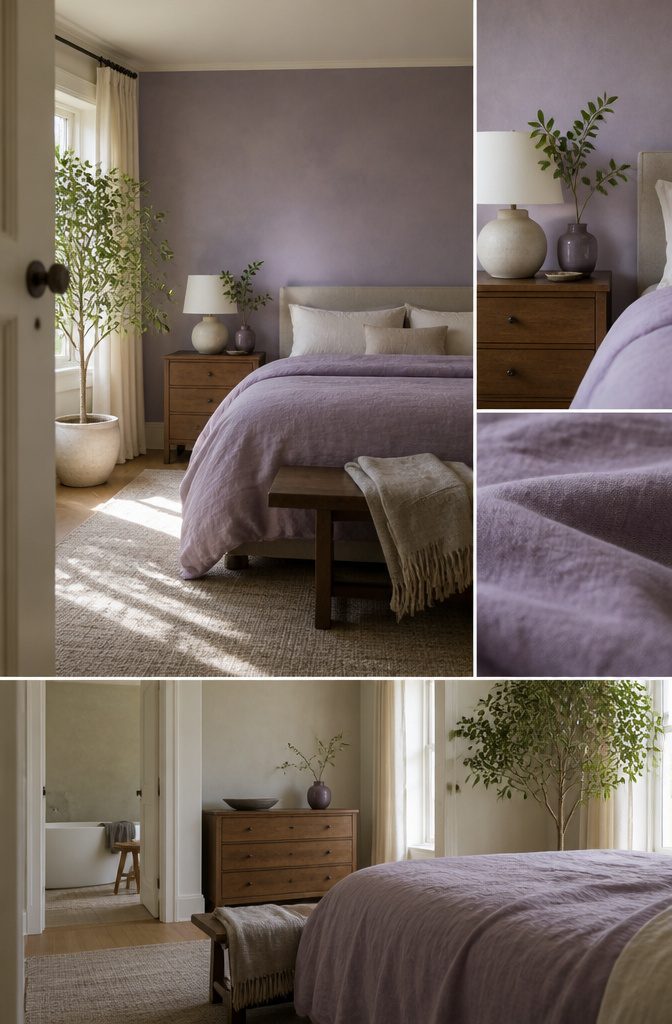
Pick one base color, then add accents in small doses. Soft neutrals, muted greens and lavender calm a room, while bright reds and oranges work against sleep.
Neutrals are what buyers actually choose:
A 2026 study analysing over 3,000 bed purchases found that 56% of King Living customers preferred neutral tones, with warmer browns also on the rise.
Start there, and let bedding or the wall behind the bed carry one accent color.
Dark can work too. Pinterest’s 2025 report had "cherry bedroom" searches up 100% and "dark cherry red" up 235%, but deep shades suit rooms with strong daylight.
Saturated colors like deep teal or terracotta can still work in a small bedroom if they stay on one wall or on the bedding. Choose shades you find soothing.
Recommended Products

Floral Design: Features a vivid flower and leaf pattern that brings a vintage aesthetic to your bedroom or college dorm decor; ideal for botanical and coquette aesthetics

Soft & Pre-Washed Comfort – Crafted from 100% polyester, this queen comforter set is pre-washed for extra softness, offering a cozy, skin-friendly touch perfect for year-round use.
2. The Bed as Focal Point
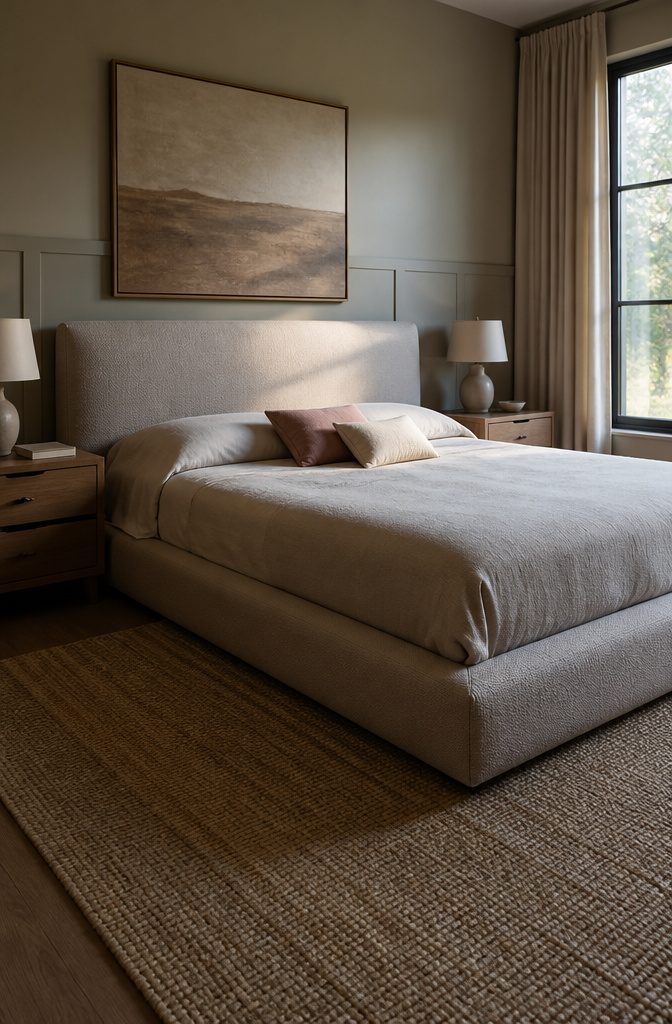
Spend on the bed before anything else. A bed that is too slight or too busy leaves the whole room feeling unsettled, no matter the wall color or bedding.
An upholstered platform bed gives the room a clear center and softens hard lines, and the padded headboard is comfortable to lean on when you read or watch TV.
If your budget covers only one upgrade, make it a statement headboard.
Keep the bed visually grounded by holding back on pillows.
Decorative pillows should take up less than a quarter of the bed, all together. Flank the bed with nightstands of similar visual weight, so the symmetry settles the eye.
Recommended Products

Designer-Grade LIVESMART Performance Upholstery:This queen size bed frame is wrapped in premium LIVESMART BIRCHBROOK Cream upholstery fabric with 50,000 double-rub durability. Water-, stain- and scratch-resistant for real-life use, this performance fabric elevates your bedroom with designer-grade texture. OEKO-TEX certified, pet-friendly and built for everyday living — without sacrificing softness. The textured fabric may appear slightly gray under cool indoor lighting and warmer cream under sunlight or warm light, adding depth and a dynamic look to your space.

Adjustable Mood Lighting: Soft adjustable light strips are integrated into the headboard to set a warm nighttime mood. This full bed frame with led lights offers 60,000 color options and various modes, including music synchronization and timer settings, gentle illumination without harsh glare for midnight trips or light reading.
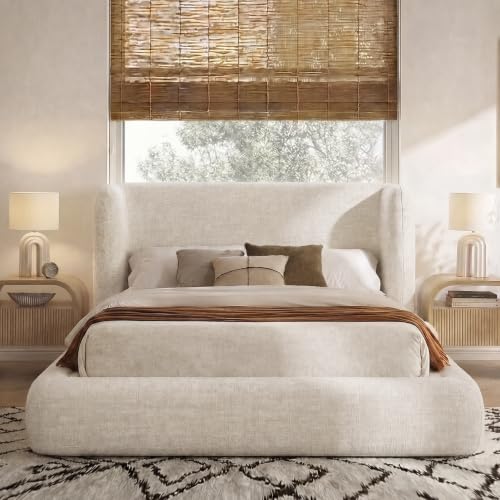
Premium Cream Performance Upholstery:Crafted with durable performance fabric in a warm cream tone, this fully upholstered queen bed frame features 50,000 double-rub durability. Water-, stain- and scratch-resistant for everyday living. Soft to the touch, structured in design, and built for modern homes with pets and families. The textured fabric may appear slightly gray under cool indoor lighting and warmer cream under sunlight or warm light, adding depth and a dynamic look to your space.
3. Layered Textures and Bedding
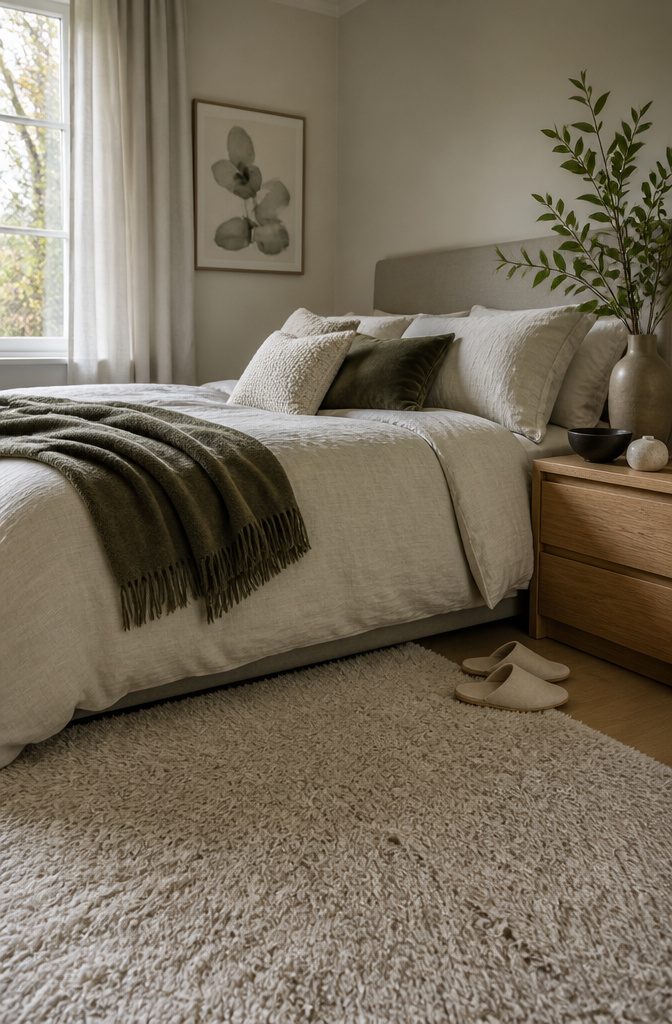
Start with the bed, because the duvet is the largest soft surface in the room.
Linen in a warm neutral like sand or ivory makes a good base. Bouclé and velvet work better as cushions and a throw than as full bedding, and they are the easiest way to add depth in one weekend.
Group cushions and small objects in threes or fives for rhythm, and keep all the pillows combined to less than a quarter of the bed.
For the rug, hand-loomed, high-pile styles feel plusher underfoot than low-pile ones.
100% New Zealand wool gives lasting softness and durability. Art Silk is a finer weave that suits lighter traffic, and a bedroom has little of that, so a pale rug is a safe choice.
Recommended Products

Ultra-Soft Milk Velvet Fabric: Crafted from premium milk velvet, this bedding set delivers exceptional softness and cozy warmth. It keeps you comfortable on cold nights while remaining breathable for year-round use.

FLUFFY DUVET COVER: The faux fur duvet cover is designed with a luxurious and fluffy 45mm microfiber faux fur on its front, creating a plush and cozy space. The reverse side is lined with a solid velvet that is soft, fine, and smooth. This fuzzy duvet cover is perfect for cuddling under during chilly days and nights. The hidden zipper design makes it easy to separate and launder, and there are 8 corner ties inside to better keep the duvet insert in place.

【Ultra Soft Velvet】WAEMDERN velvet duvet cover is made of high quality velvet , has a fluffy feel and silky touch and provides better warmth, softness and breathability. Offering you the ultimate comfortable sleeping experience, just like sleeping on a cloud, allowing you to fully relax in bed
4. Layered Lighting
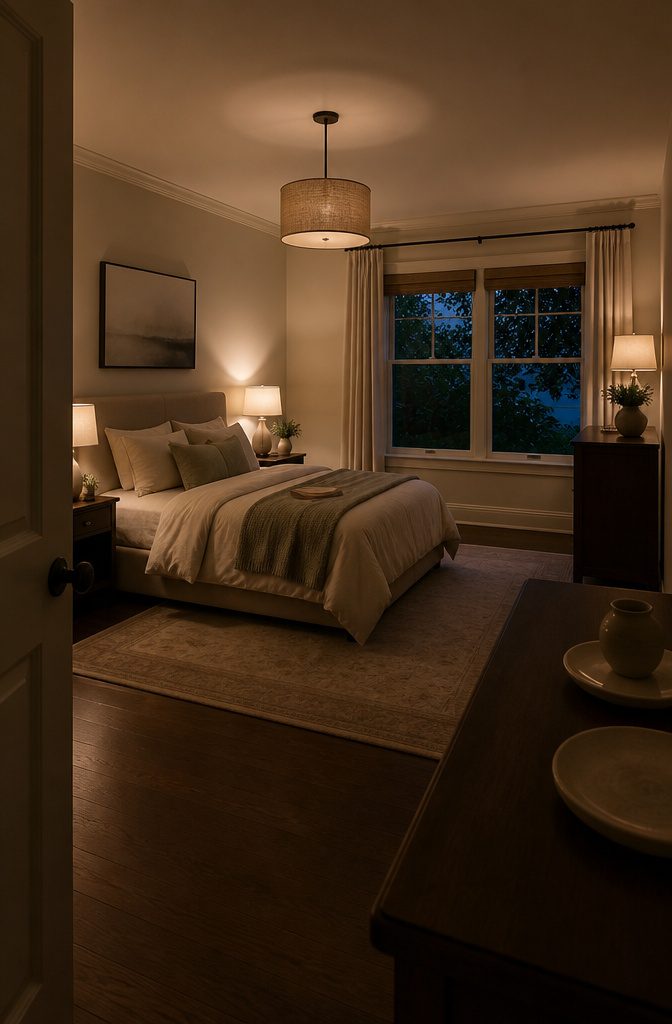
One overhead fixture flattens a bedroom and gives you the same brightness for dressing, reading, and winding down. Split the job into three layers.
Put a lamp or plug-in sconce on each side of the bed so both sleepers can read without glare. Add ambient light from the ceiling fixture, then one quiet accent, such as a small lamp on a dresser.
Put the ceiling light on a dimmer and use warm bulbs everywhere. Renters can swap bulbs freely, and a plug-in dimmer works where you can’t touch the wiring.
A drum pendant with a textured shade spreads light evenly, while a metal-cage pendant gives a vintage look over a reading spot.
Recommended Products

Traditional Area Rug: The Pace Collection is a traditional area rug with a neutral color palette that works in any room of the home; designed by Magnolia Home by Joanna Gaines x Loloi.
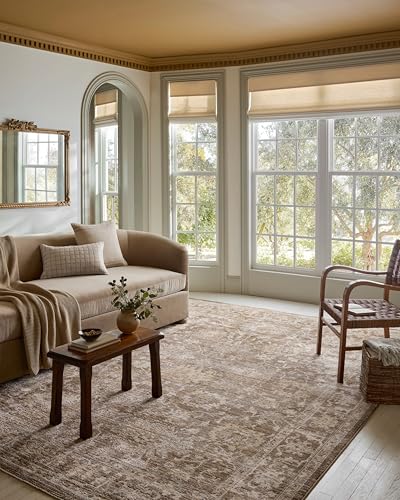
Traditional Area Rug: The Pace Collection is a traditional area rug with a neutral color palette that works in any room of the home; designed by Magnolia Home by Joanna Gaines x Loloi.

Design: A tactile pebbled loop construction brings natural warmth and understated modern texture to open floors. Tone shifts with light and screen, and the pile has a light side and a dark side - face the side you prefer toward the main entry
5. Storage That Hides Clutter
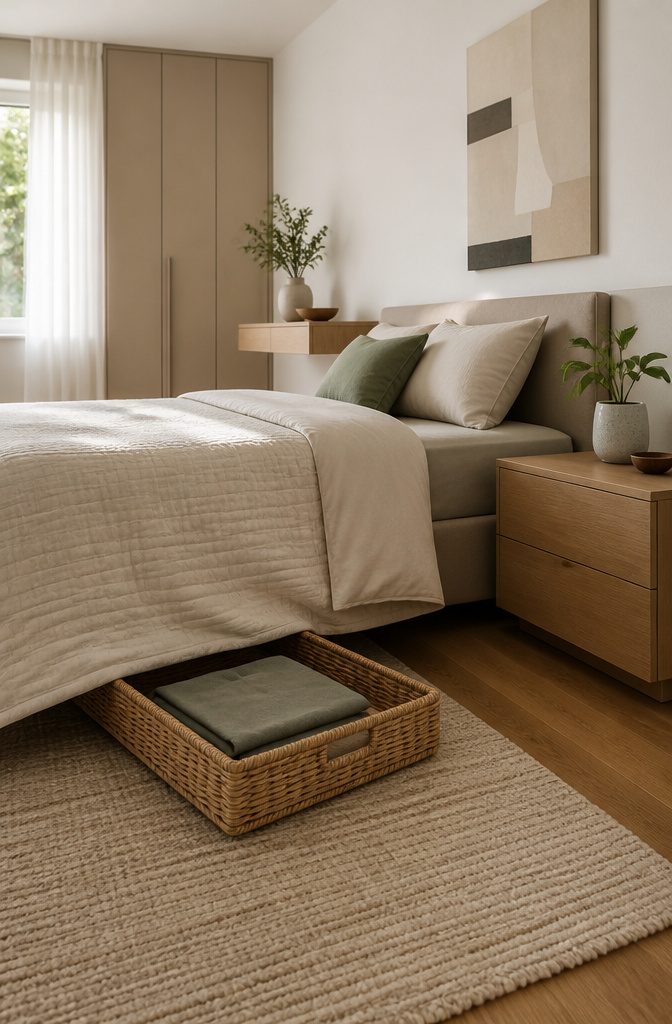
A clutter-free room supports visual calm, and your eyes have nothing left to sort when you’re trying to wind down. These are the places to hide things:
- Built-in wardrobes and floating drawers take the bulk of your clothing out of sight and keep the room’s lines clean.
- Bedside tables with drawers hold chargers, books and lotion, so the top stays clear.
- Low-profile baskets fit under the bed or on wall shelving. Pick one style so they read as a set.
- A slimline console behind the headboard adds a surface and a place to stash extras.
- Some beds, including several in the King Living collection, build concealed shelving and large internal compartments into the frame.
Baskets and drawer nightstands need no installation, so they’re the best starting point for renters.
Recommended Products
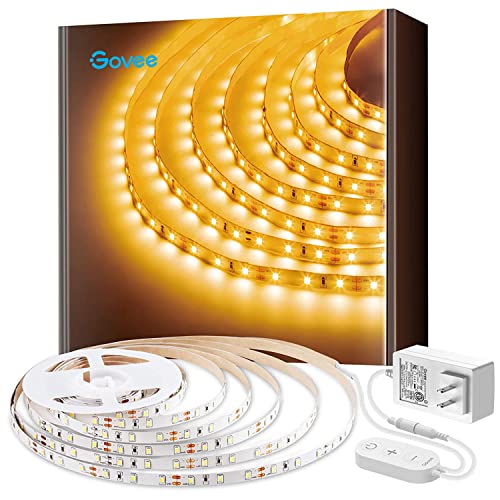
Warm White LED: With 300 LEDs and a 3000K color temperature, you'll enjoy an incredibly warm and bright illumination with improved color quality. Light up those dark rooms, cabinets and any corners with ease.

Replacement Soft White Bulbs: Make your home more energy efficient with our soft white LED light bulbs; Relax HD Light Bulbs offer a warm, soft white light that is perfect for comfortable moments and cozy spaces

【Brighter TV Backlight】With 640LEDs in total(320LEDs/m),PAUTIX warm white COB USB LED strip lights creates brighter and super even lighting performance,which is ideal for reducing eyestrain(watching TV in the dark causes the eyes to constantly adjust between a bright screen and dark surrounding area)
6. A Clear Furniture Layout
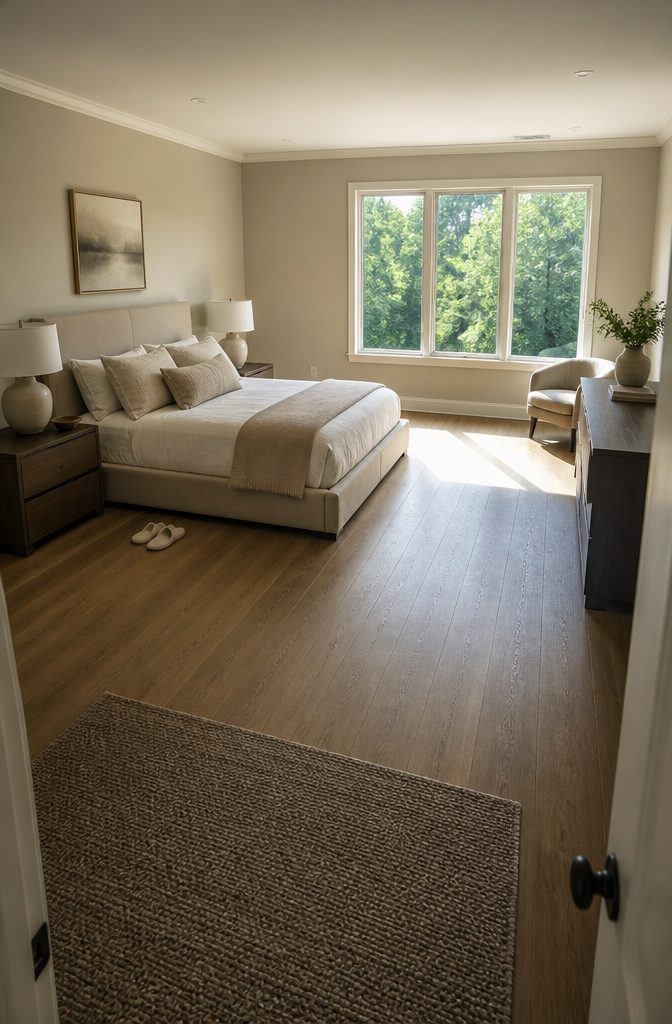
Set the bed first, then the other major pieces, and add side furniture and décor around them. A good layout beats a pile of nice items that don’t work together.
Nightstands or lamps of similar visual weight on both sides of the bed read as calming, because the eye has nothing to correct. Once the major pieces are set, add one slightly off-balance detail for interest.
Measure the bed wall, the walkway, and the space your nightstands need before you buy. A thick upholstered frame needs extra clearance, and a tight path around the bed keeps the room from settling.
Feng shui adds one rule: don’t put the bed below or directly in front of a window. Keep windows to its side.
Recommended Products

Waffle Weave Design: PHF Waffle Comforter Set features innovative 3D weaving technology that perfectly blends classic waffle texture with modern craftsmanship. The 1.8mm dimensional grid depth combined with precisely engineered 52-degree diagonal stitching creates a distinctive waffle aesthetic. The unique waffle design delivers an sophisticated elegance that complements any bedroom style - whether modern, rustic, farmhouse or minimalist decor - elevating your sleep space with luxurious style.

Luxurious Comfort: Crafted with a 100% polyester face for a soft touch, paired with a durable polyester back, ensuring a cozy night's rest.

Boho Vintage Design: Inspired by a chic boho palette and adorned with elegant embroidered tufts, adding a refined touch of sophistication to any bedroom retreat. The vintage-inspired style offers a nostalgic charm, making it the perfect gift for girls ,guys and all other loved ones seeking both comfort and timeless elegance.
7. A Reading Nook or Seating Area
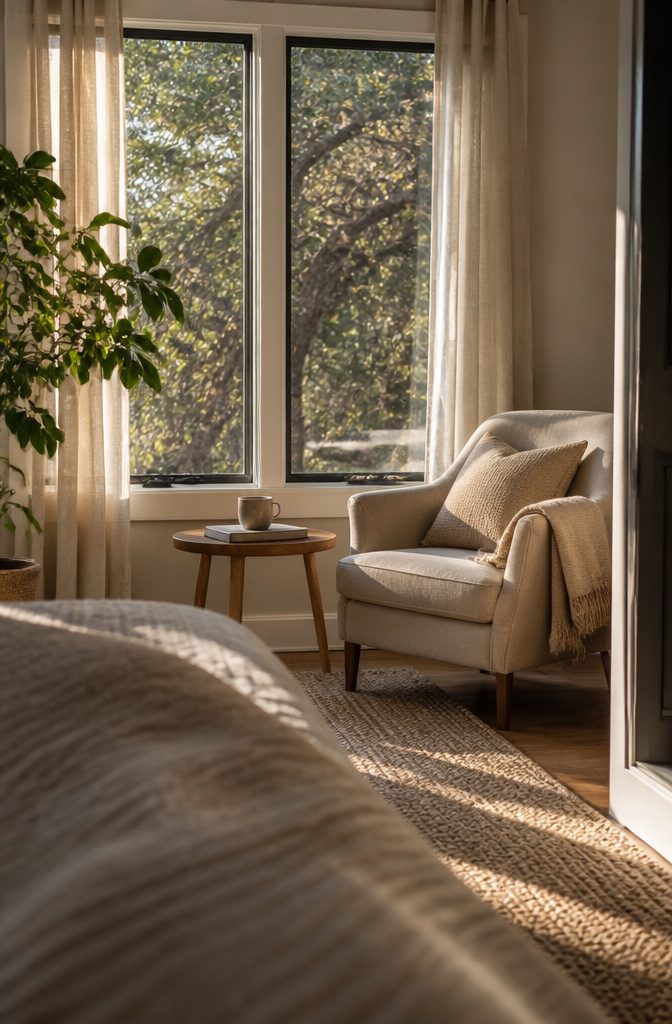
A chair with a cushion and a throw marks off a reading corner without any building.
Linen, bouclé and velvet all suit the upholstery, and a small accent table beside it gives you somewhere to set a book or a cup.
A window seat with snug upholstery and a few pillows is the coziest version, good for reading, napping or plain lounging. If the room is large, a sofa or chaise along a wall can also serve for working or exercise.
In a smaller room, a bench at the foot of the bed or a single accent chair is the realistic choice. Skip the sofa there, since it crowds the walkways.
Recommended Products

HIGH-PERFORMANCE UPHOLSTERY FABRIC – Upholstered in a soft, warm off-white performance fabric tested to withstand 50,000 double rubs. The textured surface offers water-, stain-, and scratch-resistant performance for everyday use, making it a practical choice for homes with kids or pets. The color may appear slightly cooler under cool indoor lighting and warmer or creamier in natural sunlight or warm lighting.

Quality Advantage: Queen bed frame made of high-quality metal and wood; heavy-duty support feet with plastic plugs to care for your floor; super sturdy and durable, supports up to 800 pounds

FLOATING PLATFORM QUEEN BED FRAME WITH HIDDEN SUPPORT: Designed with a recessed support structure, this floating platform bed frame creates a modern floating visual effect while keeping support legs discreetly hidden from view. The elevated platform design adds a clean, contemporary look to any bedroom while helping reduce accidental bumps around the bed. Additional under-bed space provides convenient room for storage bins, baskets, and seasonal essentials
8. Natural Materials
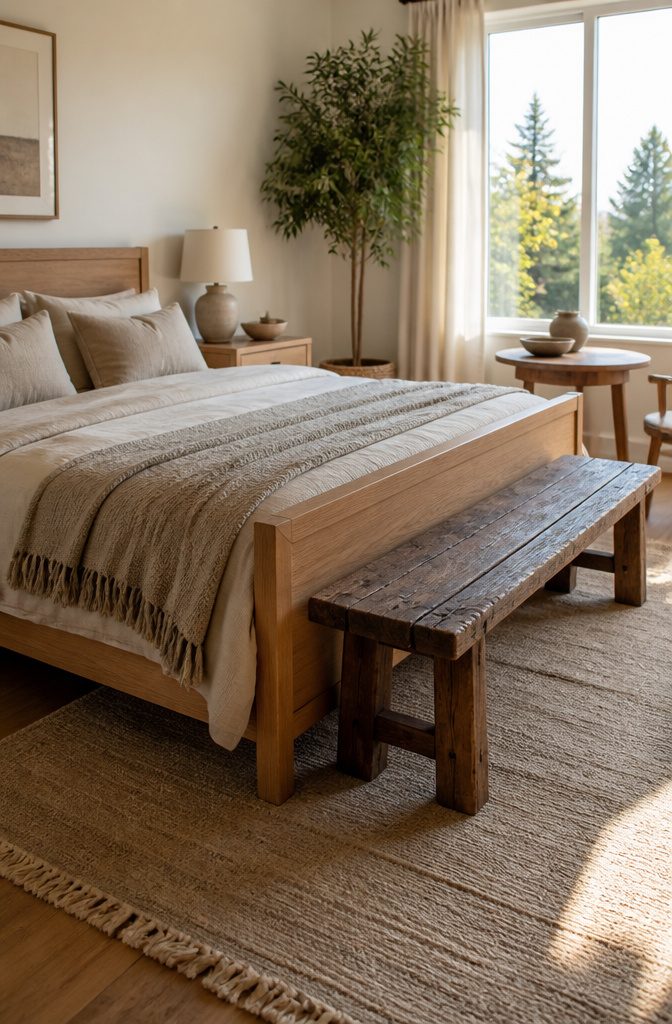
Natural oak and American walnut bring warmth and light to a bedroom, while smoked oak reads cooler and more sophisticated.
Pick one tone across the bed and nightstands for a calm room, or mix tones on purpose for a more eclectic look.
Reclaimed wood, as a headboard or bench, adds age and grain that new boards lack, and it sits well beside linen and wool in warm neutrals.
Custom wood furniture gets you your own sizing, finish and hardware, plus sturdier drawer boxes and better joinery.
It costs more up front and takes longer to arrive, so on a tight budget, make the bed the one custom piece. A plant and an oval table soften straight lines.
Recommended Products

[MASTERFUL DESIGN]: Velvet fabric can exhibit different color as it catches light in different angle,release unique elegance and luxury style,vibrant colors with beautiful Flounces Trim which make the covers can pretty match your bedroom decoration.The heavy and dense fabric,exquisite tailoring and sewing,envelope pillow shams,make the duvet cover sets more reliable and convenient to all season use,and will make your sleep more pleasent and comfy.Soothing and serene comfort offer an fashionable way to update your home.

Boho Style: A beautiful tufted design in our softest fabric, the duvet cover set creates a stunning visual effect. Perfect for layering with lots of other cozy and tactile accessories for the boho bedroom.

【Ultra Soft Velvet Duvet Cover Set】Made from 100% high quality velvet, this duvet cover is fluffy, warm, and breathable. It resists pilling and offers a cozy, luxurious feel. Enjoy a warm comfy bedroom with a King duvet cover that feels like a giant hug.
9. Pick a Design Style
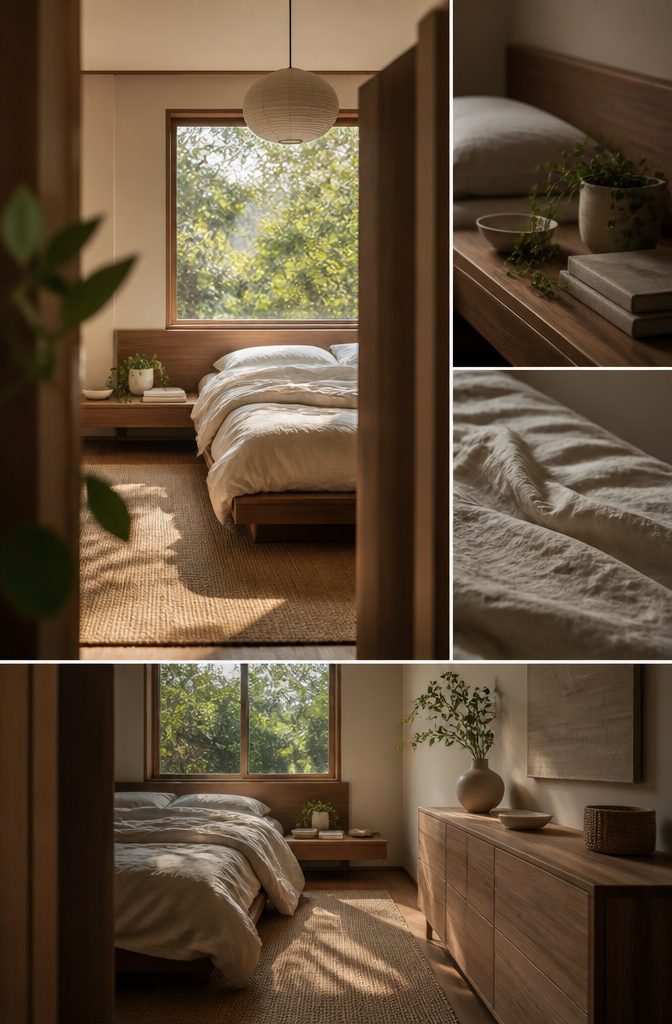
These styles are easiest to spot by their materials:
- Japandi: Japanese simplicity with Scandinavian warmth. Natural timber, organic shapes, and a few meaningful objects like a ceramic bowl, a trailing plant, or linen-bound books.
- Minimalist: cement, reclaimed wood, and warm linen tones.
- Transitional: wood beams, a plush carpet, and a handsome bed. Warm, but still fresh.
- French chic: an ornate headboard, upholstery, white paint, and refined art. Industrial pieces in place of rustic ones keep it modern.
- Mid-century modern: bold shapes and a distinct palette, with soft textures.
For a few hundred dollars, Japandi and mid-century modern are the easiest to build, because both run on small objects and textiles.
Mid-century works best as a neutral base with a few bold accents. Cement and wood beams are construction work, so copy the minimalist and transitional looks with linen and wood tones rather than the structure.
Recommended Products

DESIGN: A central medallion framed by a border gives the floor a classic focal point. Tone shifts with light and screen, and the pile has a light side and a dark side - face the side you prefer toward the main entry

Traditional Area Rug: The Pace Collection is a traditional area rug with a neutral color palette that works in any room of the home; designed by Magnolia Home by Joanna Gaines x Loloi.

The Rifle Paper Co. x Loloi Maison Collection of area rugs feature fresh and whimsical botanical designs..Product Note : Rugs may contain temporary creases upon arrival, allow time for creases to flatten and settle.Construction Type:Machine Made
10. Art and Meaningful Objects
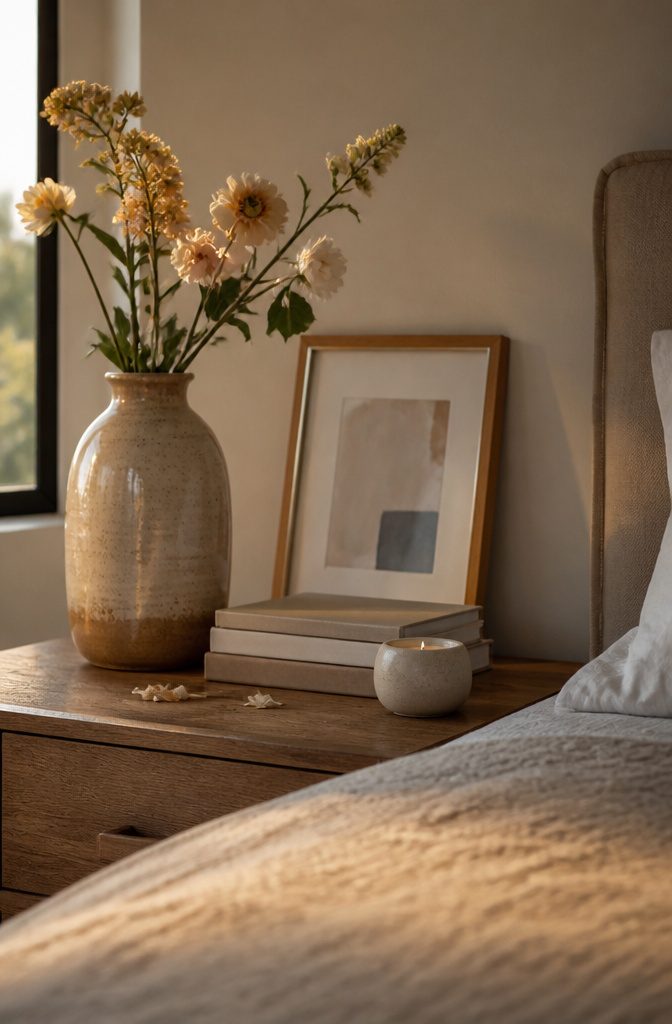
Start with what you already own. Travel finds, a ceramic from a trip, and framed photos that bring back a specific day make a bedroom read as yours, where a store-bought set reads as generic.
Give them a place you’ll see them: a side table stacked with design books, a hand-thrown vase of cut flowers, a sculptural candle to light at night.
Group items in threes or fives to give the eye a rhythm. Odd numbers look arranged rather than lined up, especially when the heights differ, like a tall vase, a book stack, and a small frame.
Keep each surface to one group. Every object should hold a memory or serve a purpose, and anything that does neither goes back in a drawer.
Recommended Products

【Timing & Brightness Adjustable & Remote Control 】The string lights for bedroom is equipped with an intelligent remote control, two timing modes (6 hours on ,18 hours off and 8 hours on ,16 hours off ), and 4 levels brightness adjustment. There are also 8 lighting modes for you to choose, such as stable, flashing, slow gradient and so on. Whether it's decorated for indoors or outdoors, this fairy lights will create a warm and romantic atmosphere for you !
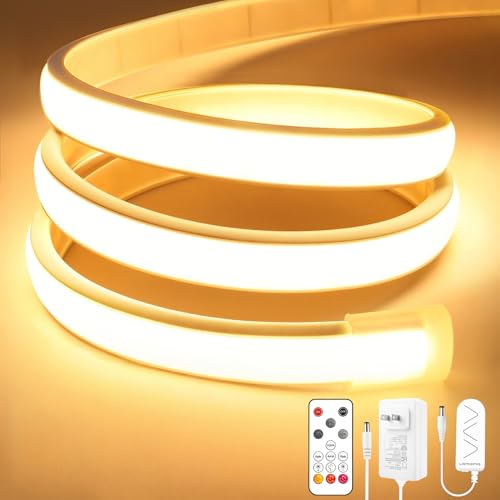
【ULTRA-BRIGHT UNIFORM LIGHT】COB Led strip features a unique transparent silicone diffuser that integrates 960 high-density micron-level LED. 180° wide-angle light cascade delivers 98% greater uniform illumination and coverage than other light strips, achieving seamless countertop lighting with zero blind spots. CRI≥90, high luminous efficacy, and rich color rendering

Replacement Soft White Bulbs: Make your home more energy efficient with our soft white LED light bulbs; Relax HD Light Bulbs offer a warm, soft white light that is perfect for comfortable moments and cozy spaces
11. Coordinate Bedding and Curtains
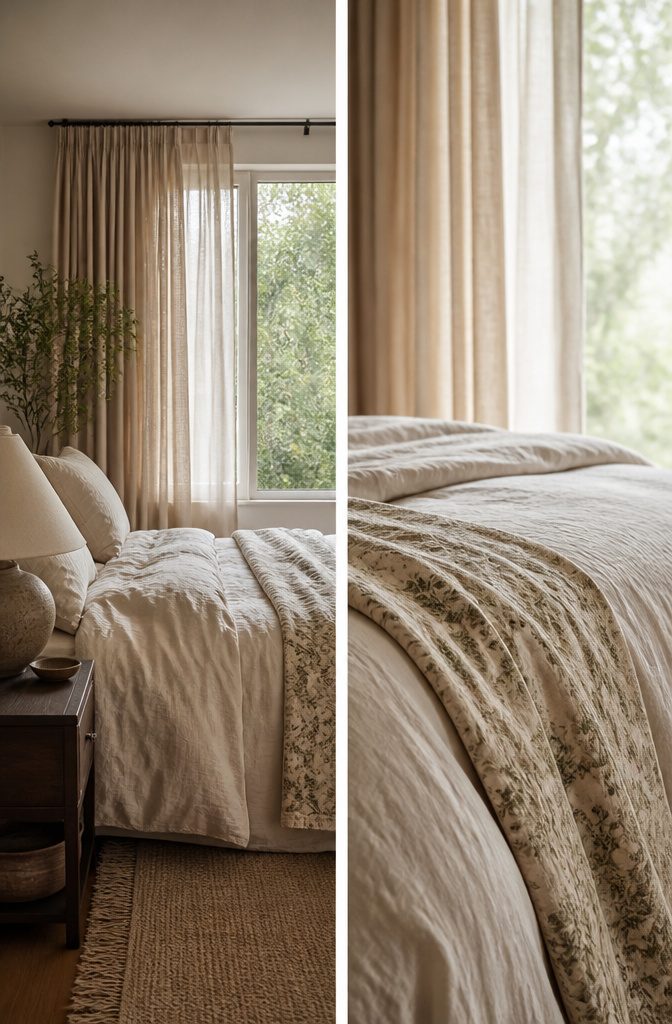
Start with the duvet or coverlet, since it is the largest soft surface in the room, then choose curtains that echo its color and weight without copying it. Exact matching tends to look dated.
Linen curtains over linen bedding in two close tones work well, and so does a floral duvet beside a quieter Roman shade. If the bedding is solid and the room feels flat, let the drapery carry the pattern.
Hang full-length curtains in linen or cotton.
They diffuse daylight, soften sound, and give you more privacy and a softer look than a bare blind. If you need tighter light control, layer the curtains over a shade.
12. A Feature Wall Behind the Bed
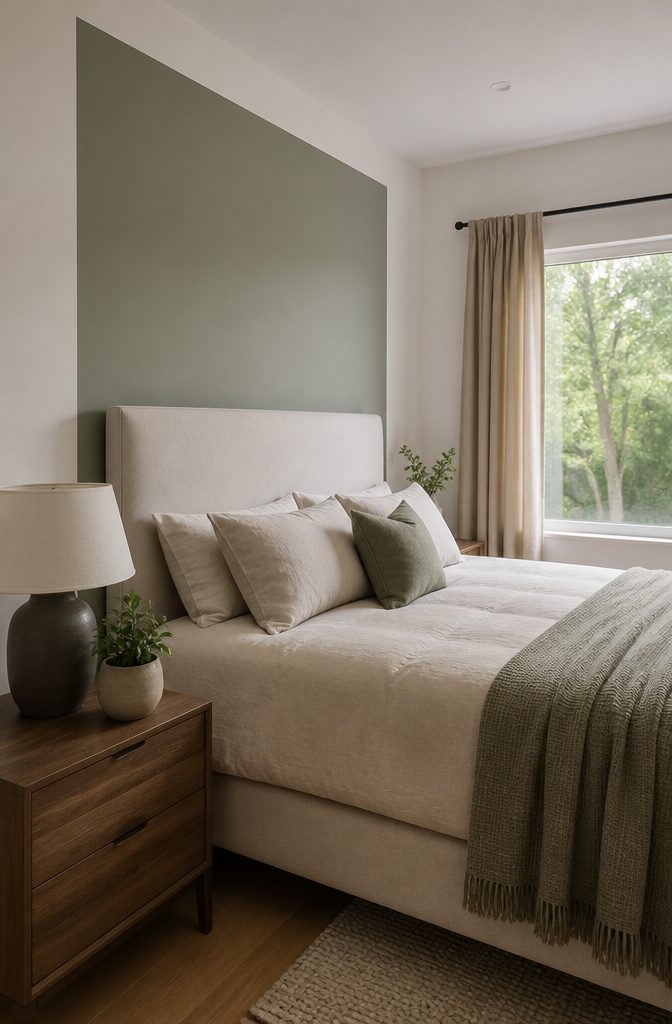
On a weekend budget, paint wins. A painted panel shape, such as a tall rectangle centered on the bed, gives a renter the definition of paneling with a roller and painter’s tape.
Peel-and-stick wallpaper adds pattern, and a large piece of art over the headboard needs no wall work at all.
Paneling and wood detail look the most finished, but they are permanent, so they suit owners with more than a weekend.
In a room that feels echoey or hard, an upholstered wall panel adds softness and pattern control. It can cover part of the wall or run wider and taller as a full backdrop.
13. Contrast in Finishes
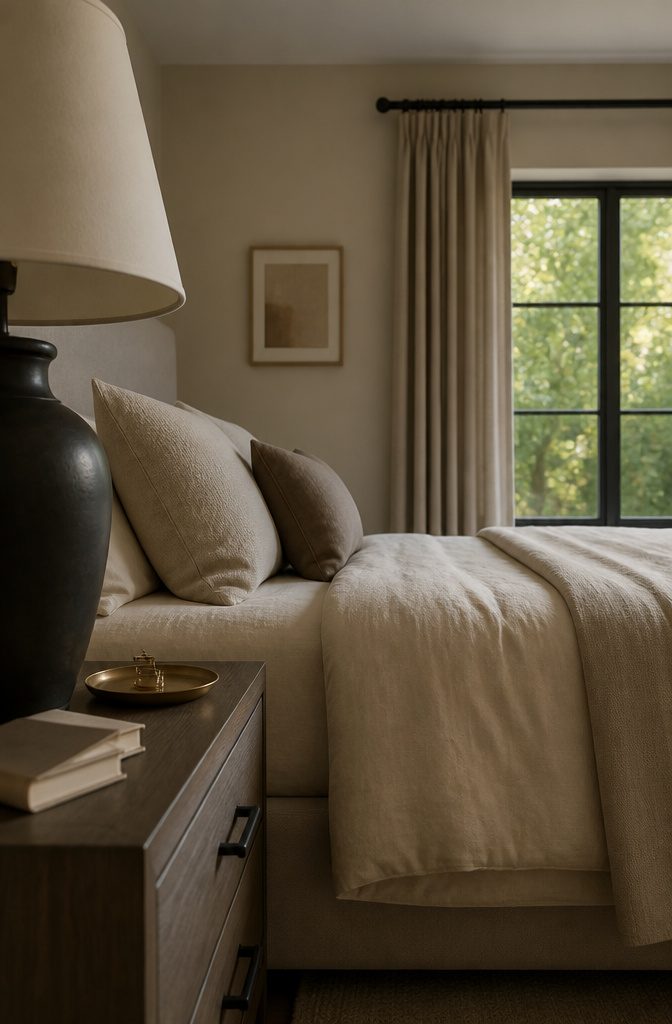
A neutral room with no dark note reads flat, because everything sits at the same value and the eye has nowhere to land.
A few small, dark or metallic finishes fix that. Black iron works on a lamp base, curtain rod, or drawer pulls.
Brass adds warmth against white and greige. A leather bench, an onyx tray, or a smoked oak nightstand each give a quiet palette an anchor.
Repeat each dark finish in more than one spot, such as iron pulls and an iron rod, so it looks planned rather than random.
Swapping hardware is the easiest move for renters: keep the original pulls in a bag and put them back when you leave. Stick to iron and brass; adding a third metal starts to look busy.
14. Smart and Built-In Features
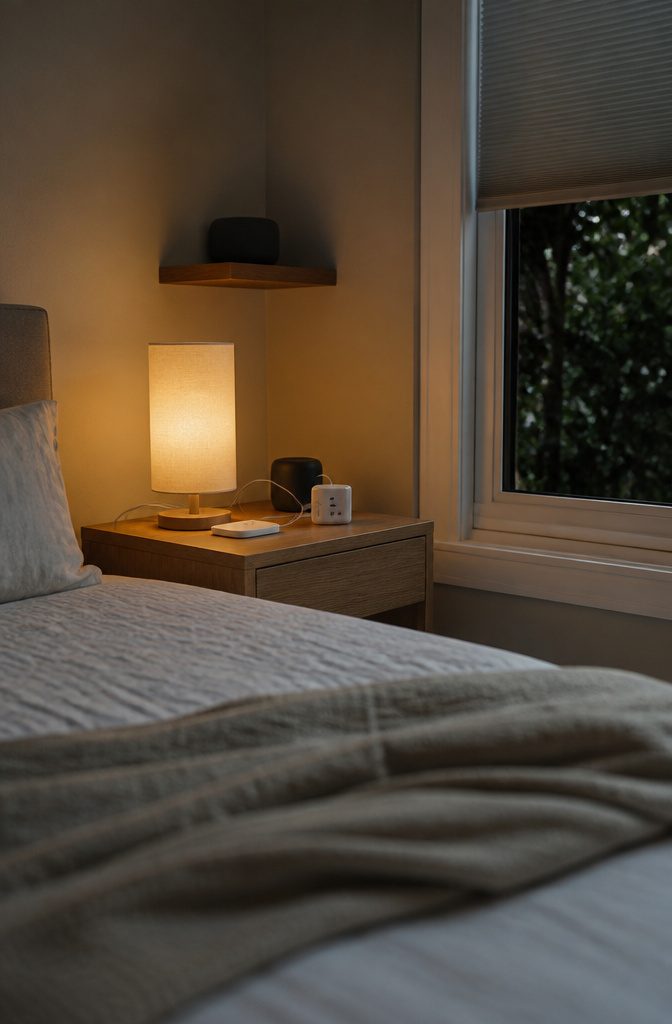
Every feature here is optional, and none of them needs an electrician or a drill.
- Smart bulbs screw into the lamps you already own. Pick dimmable, warm white bulbs so the room can run bright at sunrise and low at midnight, which supports your sleep rhythm.
- A plug-in charging pad or a multi-port USB adapter on the nightstand keeps cords off the floor and your phone within reach.
- A Bluetooth speaker on a shelf covers music. Built-in sound systems need wiring, so skip them.
- Battery-powered motorized shades or a plug-in blind opener stand in for automated window coverings. Of the four, these are the easiest to skip, since a good curtain does the same job.
Test the Mattress
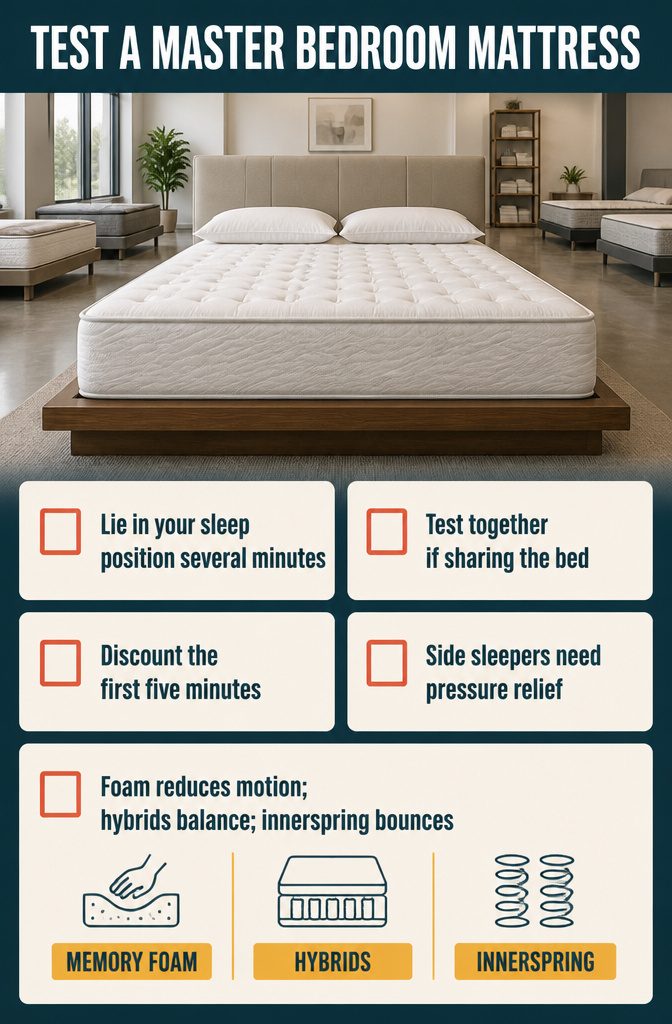
People spend over 30 years in bed, roughly a third of their lives, so the mattress deserves more of your budget than any throw or pillow. Test it before you buy:
- Lie down in your usual sleep position for several minutes, not a quick sit on the edge.
- If two people share the bed, test it together. A mattress can suit one sleeper and still transfer motion or feel too firm at the edge.
- Discount the first five minutes. Plush feels inviting but may not support you through the night.
- Side sleepers often need more pressure relief than they expect.
- Memory foam cuts partner disturbance, hybrids balance pressure relief with easy movement, and innerspring is firmer with more bounce.
Frequently Asked Questions
How should I decorate my master bedroom?
Choose the bed first, since it is the focal point, then place nightstands and other major furniture around it.
Stick to one base color with a single accent, and put the ceiling light on a dimmer with warm bulbs. Keep surfaces clear with drawers and baskets, then add a few personal objects grouped in threes or fives.
What essential elements should every master bedroom have?
A calm mood comes first, built from a soft palette and symmetry, such as matching nightstands or lamps on both sides of the bed.
Add a substantial bed as the focal point, lighting in three layers (ambient, bedside, and one accent), and storage that keeps tops clear. The room should also suit the style of the rest of the home.
What is the best color for a master bedroom?
Soft neutrals, muted greens, and lavender are the safest choices, and cool blues and grays also read as calm.
Pick one base color and let the bedding or the wall behind the bed carry one accent. Bright reds and oranges work against sleep, and deep shades like dark cherry red suit rooms with strong daylight.
How can I make my master bedroom look luxurious?
Layer textures: a linen duvet in a warm neutral, bouclé or velvet cushions and a throw, and a plush high-pile rug underfoot.
Add a few brass or other metallic details, and keep dark finishes to iron and brass so the look stays tidy. Keep all decorative pillows to less than a quarter of the bed, because too many makes it look crowded.
What are the master bedroom trends for 2026?
Neutral tones lead, with warmer browns rising. A 2026 analysis of over 3,000 bed purchases found 56% of King Living customers chose neutrals.
Dark shades are also gaining ground: Pinterest’s 2025 report showed "cherry bedroom" searches up 100% and "dark cherry red" up 235%. Japandi, natural timber, texture over color, and drapery in place of blinds are other popular choices.