
Scandinavian kitchens are pale, flat-fronted rooms with wood surfaces, designed to catch scarce winter daylight.
The look turns clinical if the white is cool or stark, or if wood is missing. A warm white such as Benjamin Moore Cloud White, plus an IKEA KARLBY oak countertop at about $189 for 8 feet, keeps it warm.
A Light, Warm Neutral Base
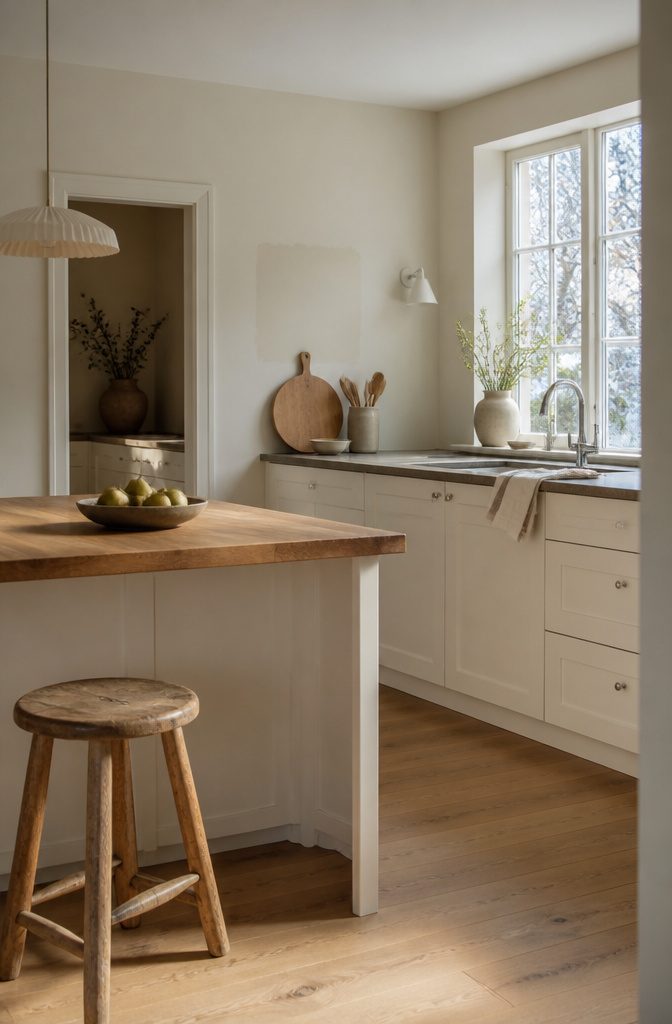
Winter days in the Nordics offer only a few hours of daylight, so kitchens there lean pale: whites, creams and soft grays that bounce around what light comes in.
Pick a warm white, not a cool or stark one. Cool white cabinets look clinical no matter what else you add, and the difference is subtle on a swatch but obvious in the room.
Test a shade first.
Benjamin Moore Cloud White costs about $5.99 per half-pint, and its cream undertone keeps walls from feeling cold. Paint a big patch and watch it through a day.
Then add wood. White cabinets, counters and tile together read cold, and a wood floor, island top or shelf fixes that.
Recommended Products
Self-Priming formula - requires no sanding

ALL-IN-ONE Paint - NO Sanding, NO Priming, NO Top Coat Required, Low Luster, Velvet Sheen Finish

Specialty Repair: Portable, quick drying, water resistant, Precise application; professional for fixing scratches and imperfections on exterior metal, wood, wall, furniture, cabinets, and enamel appliances, etc
Natural Materials and Texture
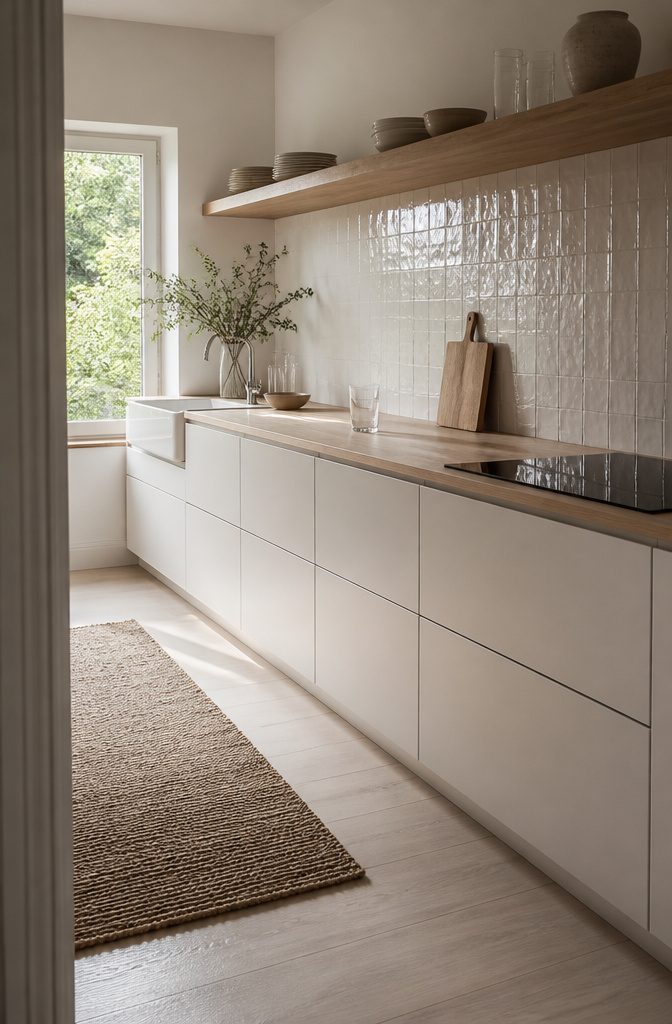
White cabinets look flat until oak, ash, beech, or walnut sits next to them. A wood countertop does the most for the least money: the IKEA KARLBY oak top runs about $189 for an 8-foot section.
Check the edge before you buy, because a reverse-bevel edge with a gap is easy to bump into and hard to clean.
Lifeproof Sterling Oak flooring costs around $2.50 per square foot, and wide, matte, light planks keep the room bright. Home Depot subway tile for the backsplash comes in under $8 per square foot.
Zellige in warm white adds slight irregularity that catches light. A ceramic farmhouse sink, glass, and a textured rug finish the mix.
Recommended Products

🌞Ⅰ.【Realistic Wood Grain Pattern】 The light brown thick wood look wallpaper is designed with a classic and elegant style, featuring a beautiful oak wood grain pattern that adds a touch of warmth and natural charm to any space. Its thickness provides excellent waterproof and heat resistance.

PREMIUM MATERIAL: Our farmhouse lazy Susan organizer is made of natural solid oak wood and strong metal, sturdy, durable and premium quality. This wooden turntable organizer is a game-changer for keeping your kitchen organized. The farmhouse oak finish gives it a rustic, charming look that will fit perfectly with your kitchen decor.

Premium Leather Valet Tray For Men - Designed to fit all of the things you carry everyday this storage tray features a stylish, rustic look in three sizes. The Extra Large Tray is 11.5 x 8 Inches, the Large Tray is 10.5 x 7 inches- big enough to fit all of your EDC essentials. The small size is 7.5 x 5.5 inches just the size for a smartphone and wallet. It comes in 6 colors: Avalanche Gray, Midnight Black, Charred Oak, Rustic Montana, Bootlegger Brown and Whiskey Barrel Brown.
Flat-Front Cabinets and Hidden Storage
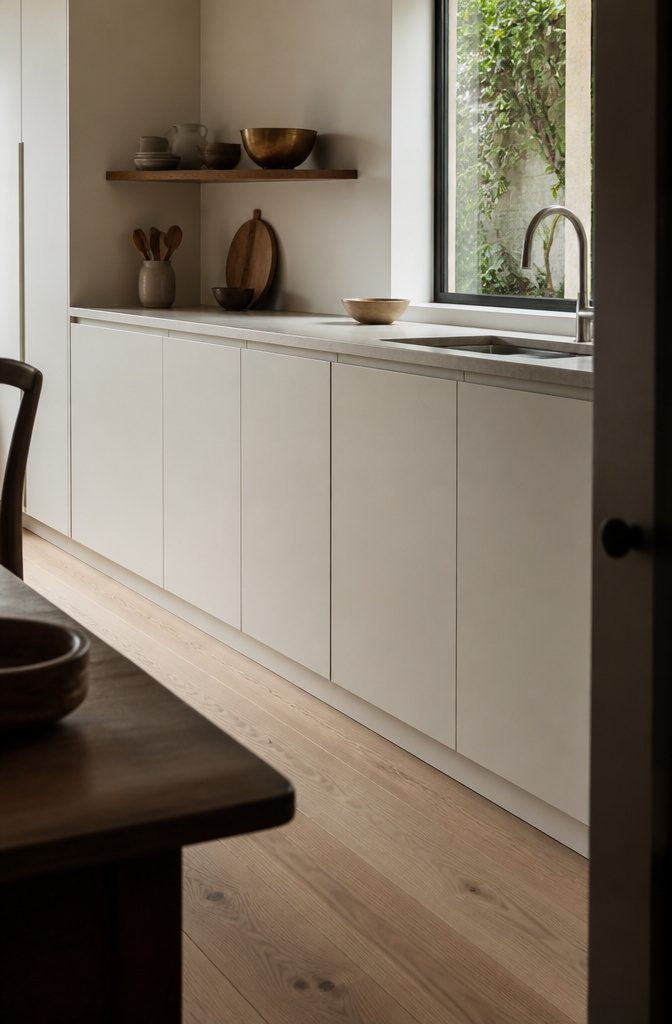
Flat-front slab doors are the most common Scandinavian choice, and they wipe clean faster than raised panels. Shaker, a five-piece panel door with no ornamentation, suits an older or craftsman-style home better.
For the least money, IKEA SEKTION boxes with HÄGGEBY fronts run under $200 per linear foot, a fraction of custom cabinetry. Skip pulls and use push-to-open, or pick brass knobs or brushed silver pulls so the fronts don’t feel cold.
A panel-ready dishwasher costs a few hundred dollars more than a standard one.
It disappears behind a matching front, which matters most in a small kitchen. Buy it last: new fronts change the look more per dollar.
Recommended Products

VERSATILE - Contemporary style adds an easy designer upgrade to any flat front cabinet door or cabinet drawer

【Rustic Farmhouse X-Shaped Door Design】This 3-door buffet cabinet features classic barn X-shaped decorative door panels paired with matte black curved handles, matched with a warm, natural wood top. Timeless farmhouse style blends seamlessly with modern, country, minimalist and cottage home decor, serving as both functional storage and decorative accent furniture.

Quality Material: This Kitchen storage cabinet is crafted from premium manufactured wood and hardware, the buffet cabinet performs excellent stability and incredible durability to serve for years. The tabletop supports up to 300lbs. Overall Dimensions: 15.7"D x 28.3"W x 31.9"H.
Layered Lighting and Daylight
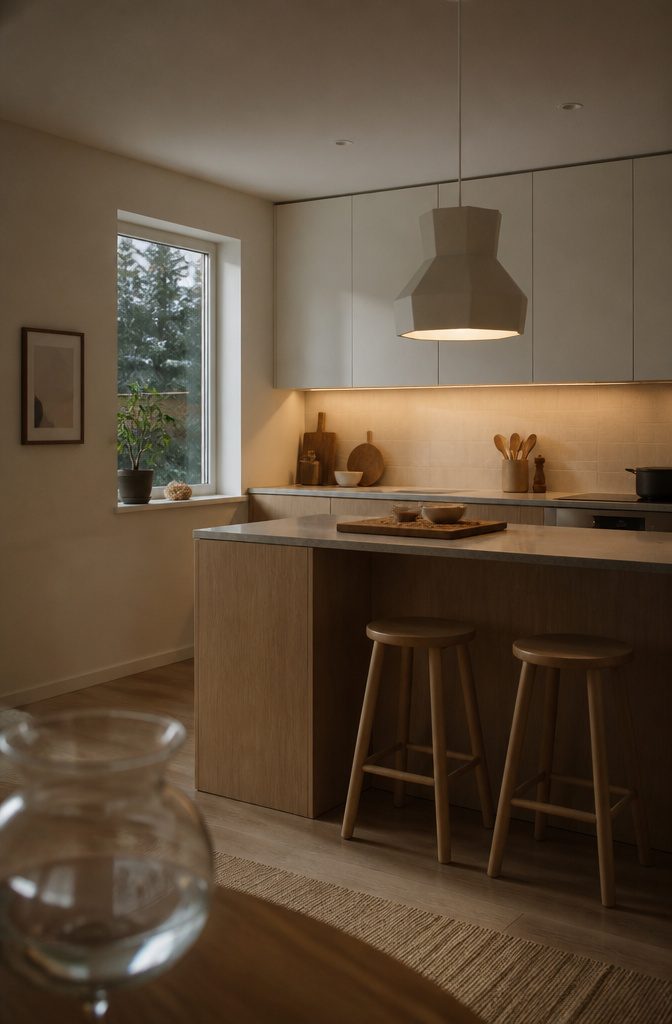
Winter daylight is scarce in the Nordic countries, so Scandinavian kitchens stack three light sources. Keep windows bare or covered with sheer fabric so daylight reaches the counters.
Hang pendants over the island or table 30 to 36 inches above the counter, which keeps them low enough to feel intimate without blocking sightlines. Statement pendants are a 2025 trend: bold shapes, rattan, metal, or simple geometric glass, wood, and ceramic.
Under the upper cabinets, add self-adhesive LED strips rated 2700K to 3000K. They are inexpensive, you can install them yourself, and they light the work surface for chopping.
With the pendants off, the strips leave a soft glow at night. Skip harsh overhead fluorescents, which flatten the warm look.
Recommended Products

【Natural Hand crafted Material】 Crafted from 100% travertine stone and quality wood, this pendant lamp combines the textured charm of stone together with the warmth of wood. Each piece is handcrafted, giving every lamp its own character and bringing a refined, organic style to your home

Minimalist Design: The sleek cream-colored lampshade topped with a natural wood cap exudes a simple, modern aesthetic that seamlessly blends with diverse interior design styles.

Adjustable Height & Versatile Use:Customize the cord length (10-67 inches) to suit any space—perfect for kitchen islands, dining tables, or bedside lighting
Hygge and Personal Touches
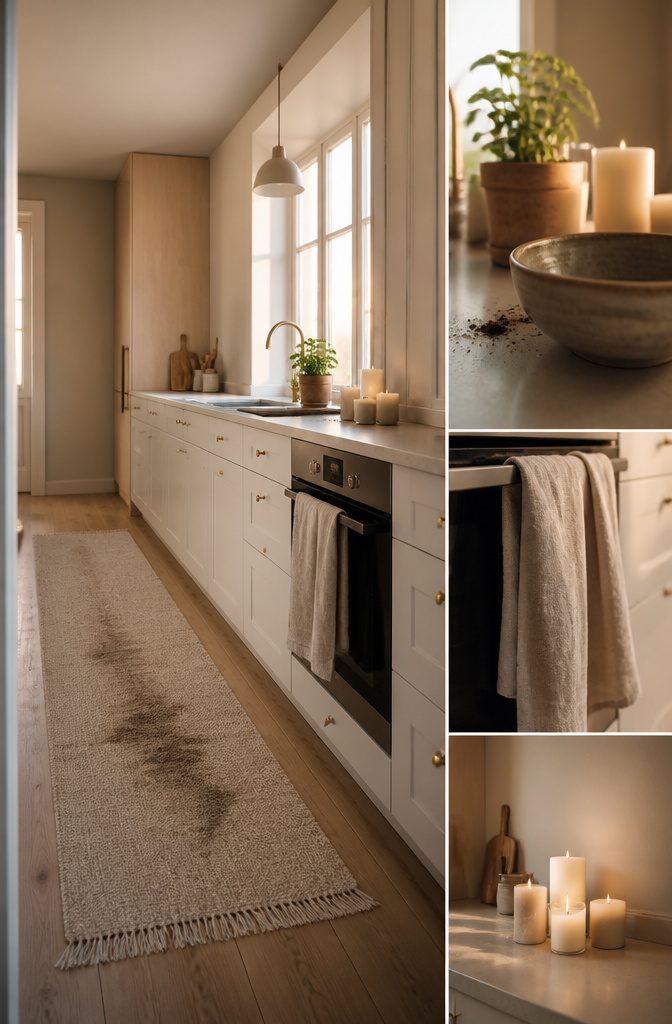
Hygge (pronounced hoo-ga) is a Danish word for a feel of coziness, built from texture, color, and small touches that make a room feel warm. In a kitchen, it keeps clean lines from reading as cold.
Lay a wool rug or runner in front of the sink, hang a linen towel on the oven handle, and put one handmade ceramic bowl or a family heirloom where you will see it. A single herb pot adds greenery.
Add a small cluster of unscented candles, because scented ones compete with food smells. Keep 2–3 decorative items on each stretch of counter and store the rest, so prep space stays clear.
Recommended Products
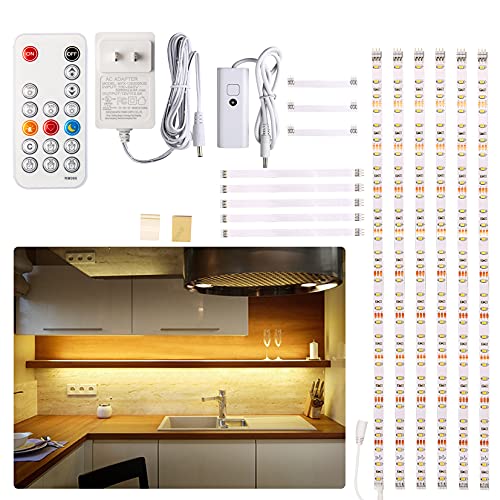
DIY LED light strip: 6 PCS pre-cut strips, total 9.8 ft,many kinds of connection option,Great way to upgrade your cabinets,closet,desk,bookshelf,bed,wardrobe,display case,bedroom,workbench etc

Smart Motion Sensing and 3 Versatile Modes: The under cabinet lighting features three intelligent modes—Always On, Off, and Night Motion Sensor. Our under cabinet lights use advanced PIR technology to detect movement within 10ft/120°. Setting it on Auto mode, in darkness, these motion sensor lights indoor automatically illuminate your path and shut off after 20 seconds of inactivity, making them the perfect energy-efficient led light solution.

Advanced Motion Sensor & Dual Lighting Modes: Motion Sensor Under Cabinet Lights with infrared motion sensor detects human movement within a 120° angle and 15ft range in dark environments. Automatically turns on in Motion Activated Mode and off after 15s of inactivity. Always-On Mode provides constant lighting for convenient, hands-free use in kitchens and households.
Open Shelving in an 80/20 Split
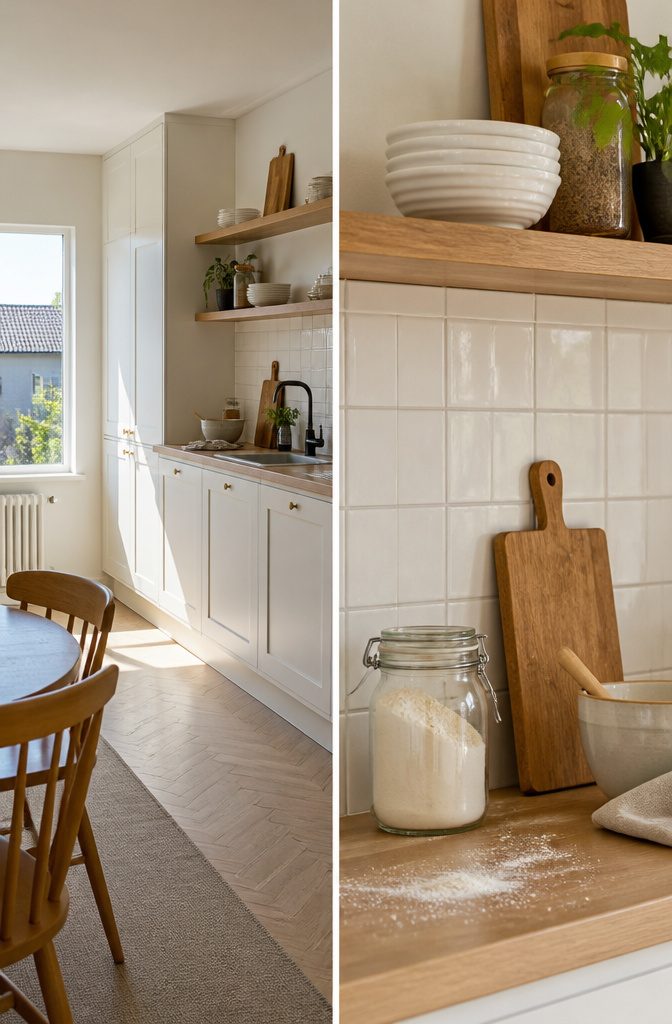
Keep about 80 percent of your storage closed and 20 percent open. Any more open than that and most households can’t maintain the look.
Use the open part for what you reach for daily or like to look at: white dishes, wooden cutting boards, glass jars of pantry staples, a plant or two.
Open shelves need deliberate editing.
Left alone, they fill with mismatched mugs and last week’s cereal box. If you know you won’t reset them, skip them and put doors on everything.
For the budget route, floating shelves made from 2×8 pine boards stained light oak cost about $15 per linear foot in materials, a fraction of the price of new upper cabinets.
Recommended Products

Easy Renovation: Our innovative bottle with a built-in brush makes your renovation projects a breeze. No need to hire professionals, as anyone can use this fast-drying, DIY-friendly product

High Coverage Wall Repair: Provides reliable, high-coverage performance to effectively conceal scratches, stains, and minor imperfections, delivering visible results fast with wall touch up paint made for real home repairs

CABINET TRANSFORMATION: Refresh outdated cabinets, vanities, furniture and trim with rich Pure White color and a smooth semi-gloss finish
Muted Accent Colors
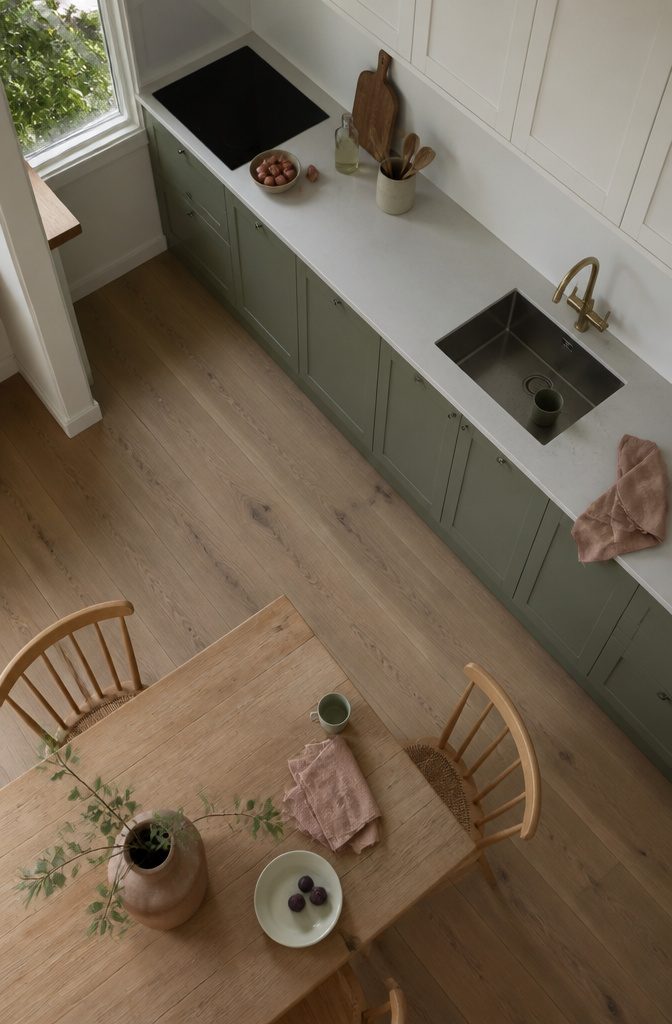
Pick one accent and let it carry the room: a sage island, soft blue lower cabinets, or terracotta, clay, or taupe on a wall or backsplash. Pink works best as a dusty blush in small doses.
Paint is the cheapest way to try this, at around $35 per gallon.
Benjamin Moore October Mist and Sherwin-Williams Clary Sage both read as earthy green, not electric. If you don’t want to repaint every cabinet, paint only the lower cabinets and keep the uppers white.
That costs about $100 in paint. Natural wood and matte finishes keep the color soft.
If painting isn’t an option, bring blush or clay in through vases, dish towels, or seat cushions.
Recommended Products

【PREMIUM MATERIAL】 This Oak Wood Contact Paper made of high-grade thicker decorative Vinly Film and safe glue, free of heavy metals, Waterproof and Oil-proof , durable and easy to clean.High quality texture looks real wood

𝐏𝐑𝐄𝐌𝐈𝐔𝐌 𝐌𝐀𝐓𝐄𝐑𝐈𝐀𝐋: Our farmhouse lazy susan made of natural solid wood, sturdy, durable, and premium quality. It will be beautiful and a completely food-safe way to decorate your food. It is known for its durability, strength, and aesthetic, as well as it can handle heavy use and resist wear and tear.

ZERO ASSEMBLY & FOLDABLE COFFEE BAR SHELF: Say goodbye to complicated setups and missing screws! This one-piece coffee bar organizer for countertop comes fully pre-assembled, Simply unfolds in seconds to create an instant coffee station organizer; The foldable design allows easy storage when not in use, making it ideal for small kitchens, apartments, dorms, and coffee bar accessory storage while helping reduce countertop clutter
Scandinavian Variations and Blends
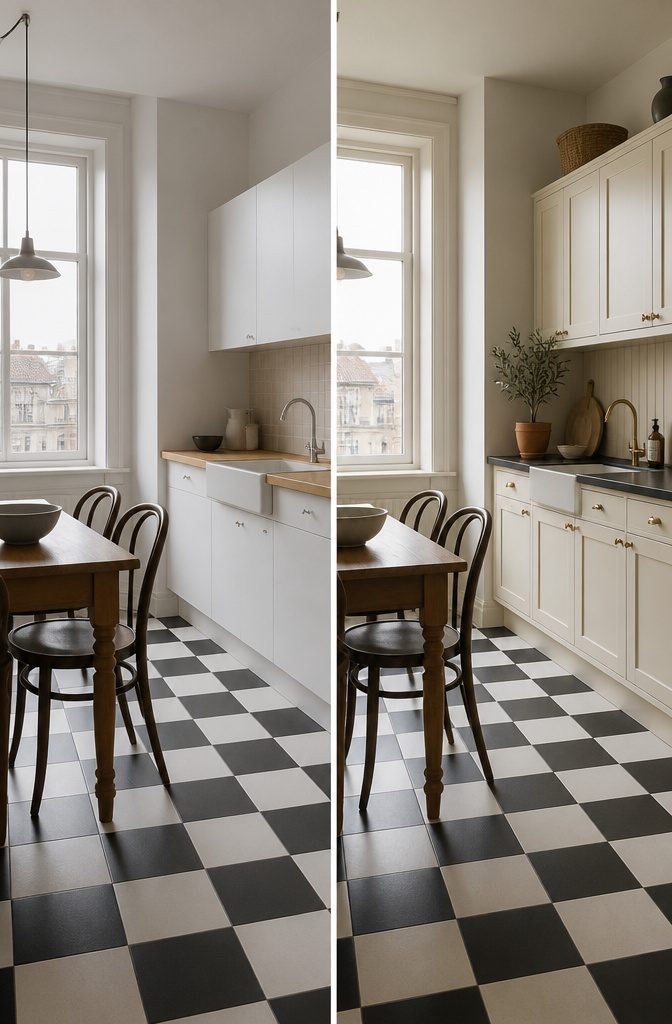
All-white is the classic, but white cabinets, quartz, and tile alone feel cold.
Add wood in more places and work in some grey. Black-and-wood stays sleek when the cabinets and floors are lighter than the black counter.
Rustic (reclaimed beams, stone counters, a farmhouse sink) and industrial (exposed brick, concrete floors) are owner projects.
Eco-friendly, meaning energy-efficient appliances and local materials, suits owners replacing appliances anyway. Renters can pull off French-influenced: a wooden table and vintage chairs against clean lines.
Keep a 1950s retro kitchen instead of gutting it. The checkered laminate floor is the bold floor that white cabinets and light wood tops are meant to sit against, and Formica needs only wood accents to calm it down.
Recommended Products

MEASUREMENTS: Measurements are EXACT. This replacement raised panel kitchen cabinet door measures 24-inches Wide, 12-inches high, and 3/4-inches thick

【Sturdy and Stable】Cabinet door is made of high quality density board material, strong and sturdy, long time to use. Special surface treatment, smooth and full, easy to clean.

Belong To Your kitchen: The kitchen cabinet features 2 large door cabinets and 2 full extension drawers great for storing coffee beans, seasoner, spare kitchen paper, or some sundries. Meanwhile, your coffee maker, toaster, can sit on our wide tabletop
Small-Kitchen Solutions
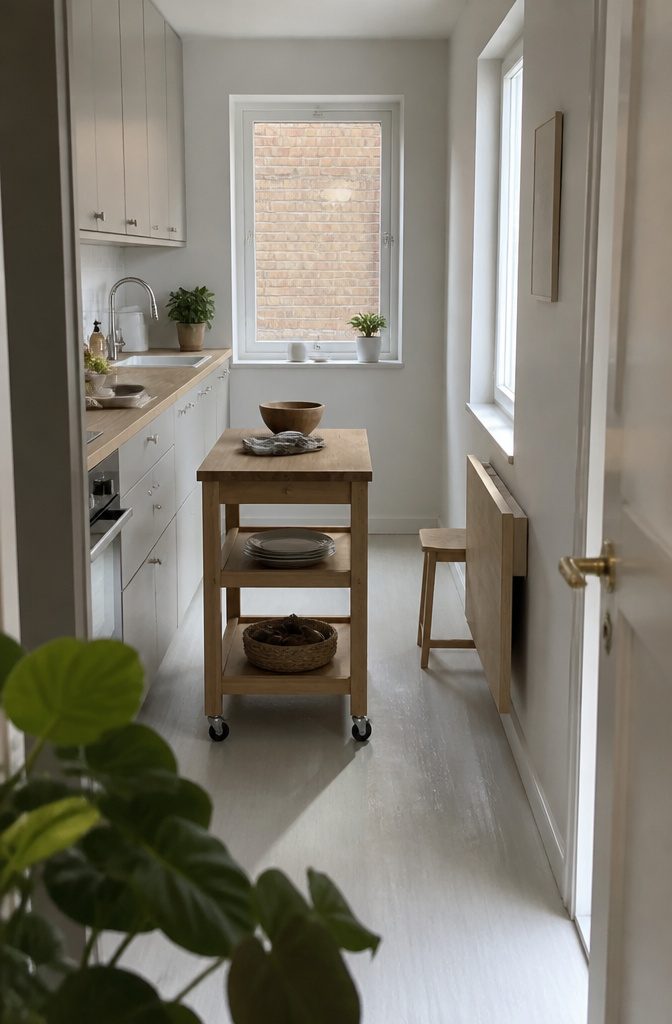
Pale surfaces do the most work in a small kitchen. White or light wood bounces daylight around the room, and flat, clean-lined fronts keep the walls from looking busy.
Furniture that moves or folds beats built-ins you can’t take with you.
The IKEA FÖRHÖJA cart, under $200, adds counter space and storage, then rolls aside. The IKEA NORBERG fold-down table, under $170, mounts to the wall and gives you a place to eat only when you need one.
A World Market tulip table, around $250, has a single pedestal, so chairs tuck in without a tangle of legs. Choose pieces that do 2 jobs and leave floor visible, so one room can serve as prep area, dining nook, and walkway.
Recommended Products

【Premium Solid Oak Wood + Hammered Metal Design】 Crafted from genuine natural oak (not rubber wood or faux wood grain), paired with a matte white hammered iron drum shade. The beautifully curved silhouette and artisanal textures create a stunning Scandinavian-industrial look that elevates any space. Each piece features unique natural wood grain, making your lamp truly one-of-a-kind.

Modern Decor: Adjustable Hanging Lampshade Island Lamp, Aluminum and Wood Finish Ceiling Chandelier Light Fixture,1-light E26 Base Pendant Lightings.

Retro industrial design pendant light: The pendant light fixtures paired with a fully metal pleated lampshade; Covered with a bright and durable varnish; Bringing home for a comfortable lighting atmosphere and desired look
Sustainable Choices
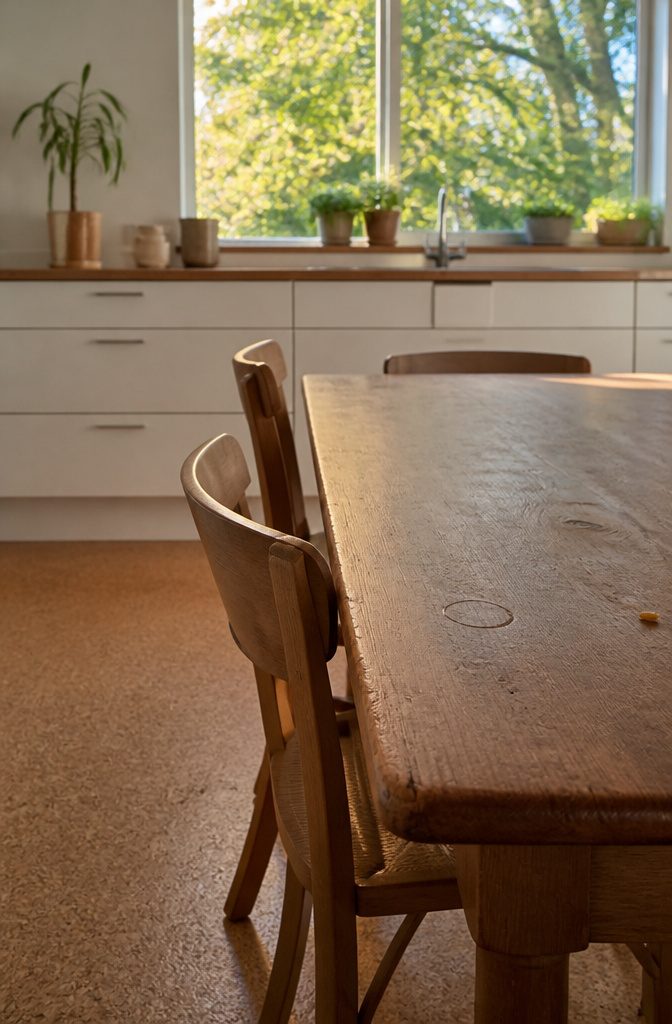
A solid wood dining table from the 1960s or 70s often suits this style better than a new one, and it costs a fraction of the price.
For cabinets, IKEA’s KUNGSBACKA fronts are made from recycled PET bottles, and one buyer reportedly saved $3,000 by using them. When you do buy new wood, look for FSC certification, or choose bamboo, which renews quickly.
Cork flooring is naturally antimicrobial and soft underfoot. Appliances with high energy ratings are worth the shopping time, since they run every day.
Biophilic design is a 2025 trend, and the cheapest version is a few countertop plants, a small herb garden on the windowsill, and wood or stone surfaces.
Recommended Products

AC120V Plug-in Easy Installation: Use tapes or clips to install the adhesive under cabinet lights quickly; just stick on the LED lights and plug into the outlet
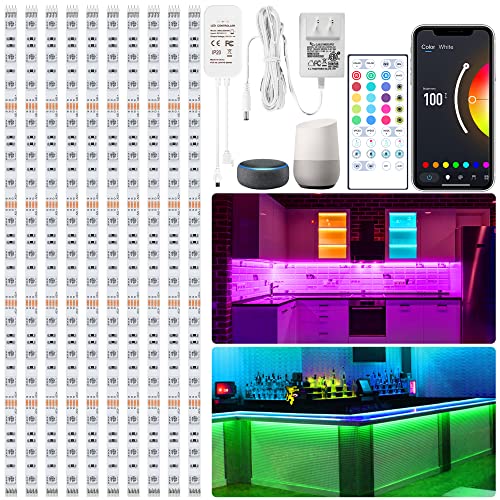
Voice Control: Hands-free Alexa and Google Assistant voice commands to control lights on and off, change colors, adjust brightness

DIY cabinet strip lights:Great way to upgrade your Cabinets,Closet,Desk,Desk-hutch,Bookshelf,Wardrobe,Bedroom,Workbench,kitchen island etc
Budget and Reversible Updates
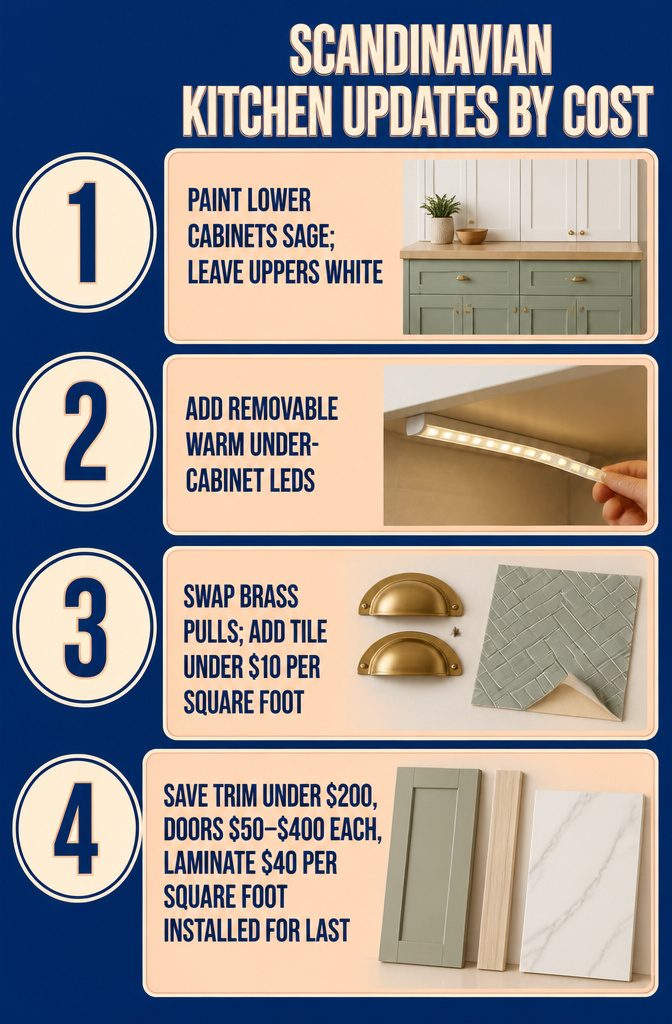
- Paint the lower cabinets sage and leave the uppers white. Paint runs about $35 per gallon, so the whole job costs around $100. Benjamin Moore October Mist and Sherwin-Williams Clary Sage both stay muted.
- Add under-cabinet LED strips for warm light. They come off when you move.
- Swap in CB2 brass cup pulls at about $8 each, then add Aspect peel-and-stick tile for the backsplash at under $10 per square foot.
- Save the bigger purchases for last:
- Shaker-style trim on dated cabinet fronts, under $200.
- Semihandmade doors, from about $50 up to $400 each.
- Formica Calacatta Marble laminate, about $40 per square foot installed, against $80 or more for real quartz.
Scandinavian vs. Modern Kitchens
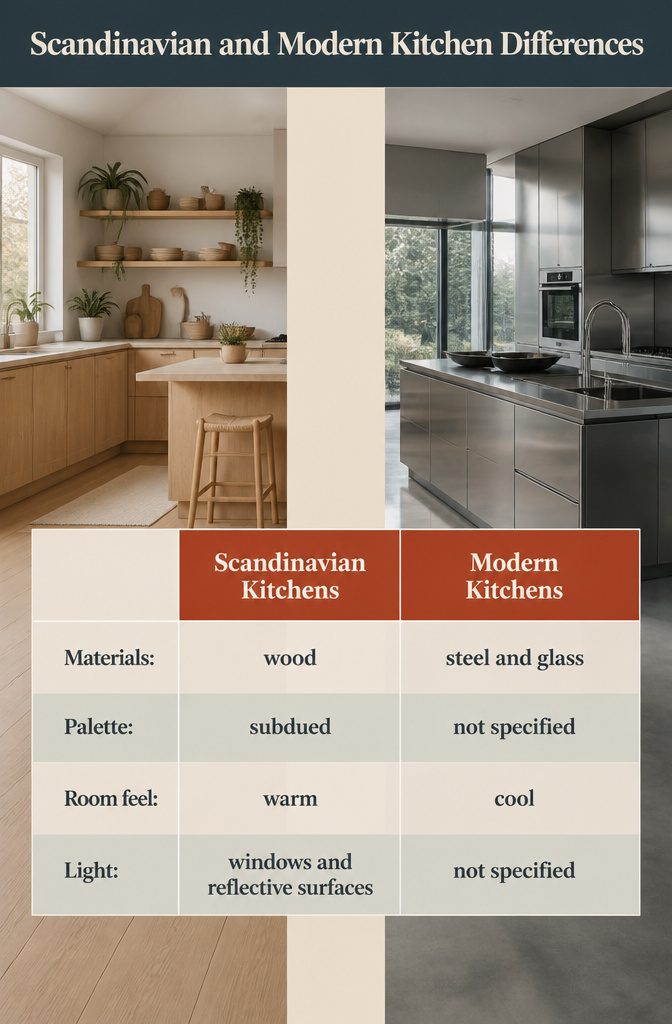
Modern kitchens follow the "form follows function" rule and lean on steel and glass. Scandinavian kitchens keep the function but use wood, soft hues, and plants, so the room feels warm instead of cool.
Mid-century Modern goes bolder, with graphic colors and obvious retro touches. A Scandinavian palette stays subdued, and large windows and reflective surfaces carry the light.
The style began in the early 20th century in Norway, Sweden, Denmark, and Finland, and it was known worldwide by the 1950s.
Short, dark winters shaped it: bright rooms that use every bit of daylight made up for the gloom. Locally the modern movement was called Functionalism, so usefulness came first and decoration stayed minimal.
Frequently Asked Questions
What does a Scandinavian kitchen look like?
It has flat-front cabinets in white or light wood, a wood countertop or floor, simple hardware or push-to-open doors, and a plain backsplash such as subway tile.
Pendant lights hang over the island or table, and a few open shelves hold everyday dishes. The overall feel is bright, clean, and warm.
What colors work best in a Scandinavian kitchen?
Start with a warm white, because cool or stark white looks clinical.
White or light wood cabinets are the classic choice, and soft gray or muted sage also work. Add one muted accent, such as sage, soft blue, terracotta, or dusty blush, and keep the rest neutral.
Should a Scandinavian kitchen have open shelving?
Yes, but in small amounts: about 80 percent of storage should be closed and 20 percent open.
Use the open shelves for things you reach for daily or like to look at, such as white dishes, wooden cutting boards, glass jars, and a plant.
If you know you won’t keep them tidy, skip them and put doors on everything.
What lighting is best for a Scandinavian kitchen?
Layer three sources: natural light, pendants, and under-cabinet LED strips.
Leave windows bare or covered with sheer fabric, hang pendants 30 to 36 inches above the counter, and choose LED strips rated 2700K to 3000K for a warm glow. Avoid harsh overhead fluorescents, which flatten the look.
What role does texture play in a Scandinavian kitchen?
Texture keeps a pale, clean-lined room from feeling cold.
Wood such as oak, ash, beech, or walnut on a counter, floor, or shelf does the most. A wool rug or runner, a linen towel, and handmade ceramics add warmth in smaller ways.
How do you keep a Scandinavian kitchen minimalist without losing function?
Keep most storage closed behind flat-front doors and limit open storage to about 20 percent.
Leave only 2–3 decorative items on each stretch of counter and store the rest, so prep space stays clear. Flat fronts also wipe clean faster than raised panels.
Can I use Scandinavian design in a small kitchen?
Yes, and the style suits small rooms. White or light wood surfaces bounce daylight around, and flat, clean-lined fronts keep the walls from looking busy.
Pieces that do 2 jobs help most, such as the IKEA FÖRHÖJA cart (under $200) or a wall-mounted IKEA NORBERG fold-down table (under $170).