
The ideas run from white walls with a few black frames to fully black walls and a black-painted TV wall, and the room’s daylight decides where you land.
Black takes light out of a room, so a dim one needs mostly white, warm bulbs, and lamps near the seating, like the Arco floor lamp‘s long arc over the sofa.
1. White Base, Black Accents
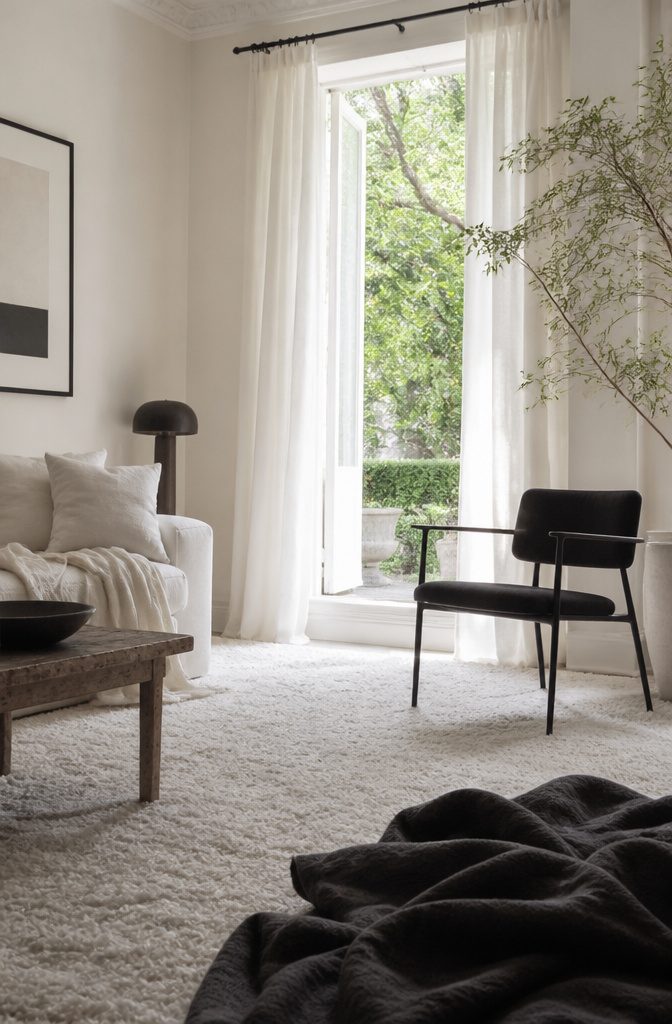
White walls, a light rug, and lighter curtains make a small or dim living room read bigger, and they leave space for black without tipping the room dark.
Let white cover most of the surface, then add black in small doses.
Picture frames and a single black chair do the most work. Lamp bases and table legs also work, and each gives the eye an outline to land on.
Pure white beside black can turn cold.
Warm white paint, a deep-pile rug, and long flowing curtains soften it. A white base also makes seasonal changes easy: add darker pillows or throws for a moodier look, then go back to airy later without redoing the room.
2. Black Walls for Drama
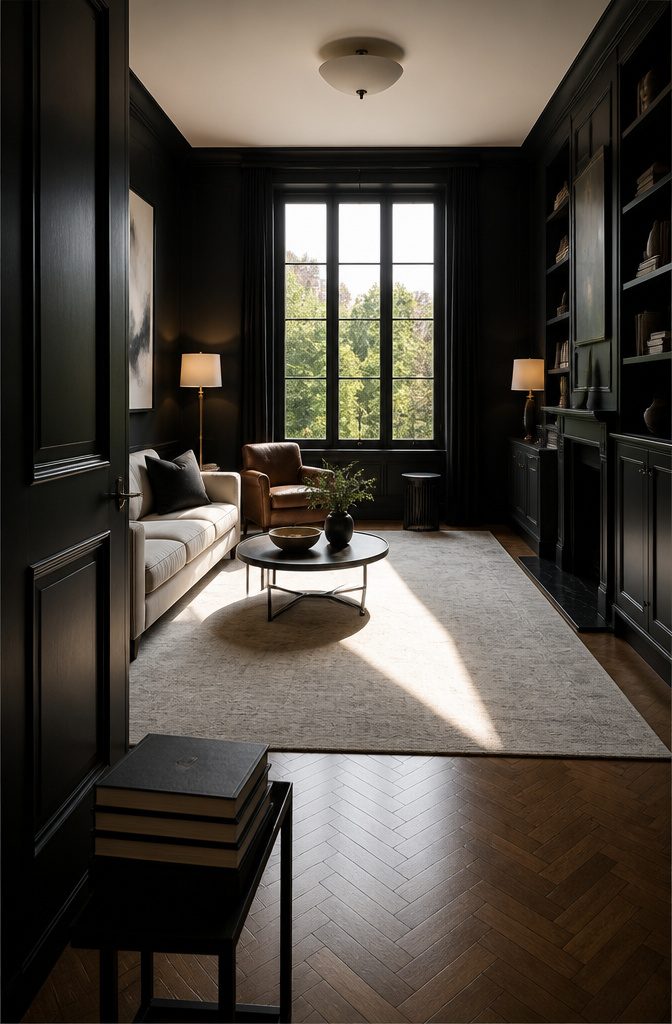
Black walls make a living room feel enclosed and cocooning, and they work in a small room too. Crown’s senior designer Justyna Korczynska describes the effect this way:
We feel black adds drama, strength and solidity to a space.
To keep the room from turning gloomy, pair it with a lighter sofa, a rug with a faded white ground, and warm white bulbs, since harsh ones flatten black and white. Brown wood or a leather chair adds warmth.
Black shelving or millwork can also mark off one zone of the room. The trade-off: black walls absorb light, so they suit rooms with decent daylight best.
3. Gray and Off-White Transitions
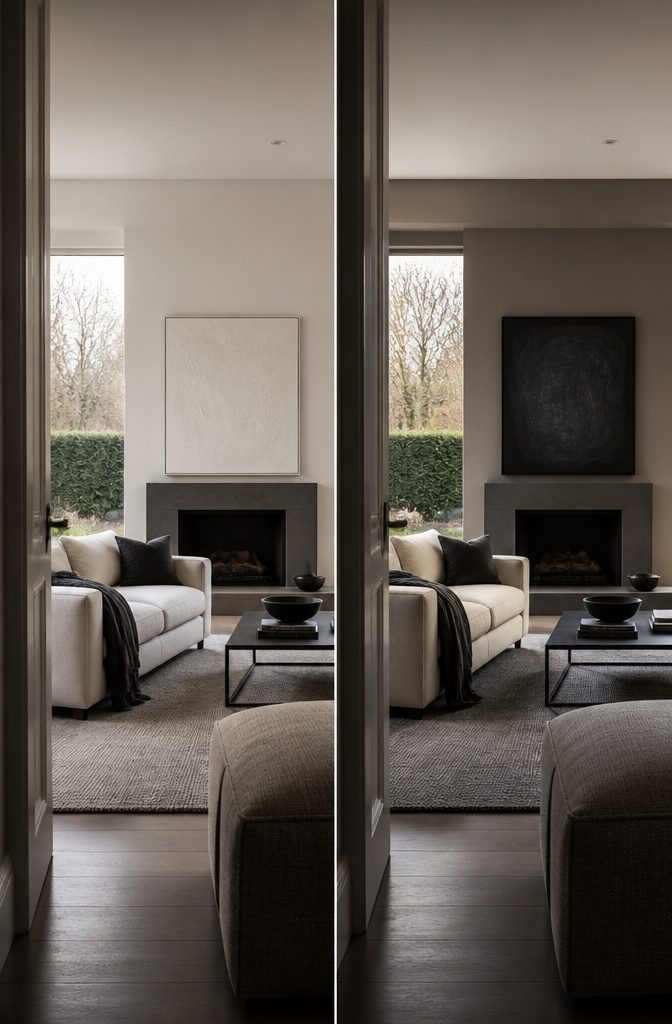
Pure white beside black reads sharp, and black furniture looks harsher against it.
If white feels cold on your walls, try warm white, soft ivory, light greige, or a very pale taupe. Each one still supports a black and white scheme but softens the contrast.
Gray works the same way in the rest of the room. A textured gray rug, warm gray walls, and a gray fireplace all take the edge off heavy black lines.
You can also repeat one off-white on the sofa and the rug, and pick up the wall gray in the rug’s pattern to tie the three together.
Avoid yellow-heavy cream if your rug, sofa, or stone surfaces have cool undertones. The warm and cool tones will clash.
4. Wood and Natural Materials
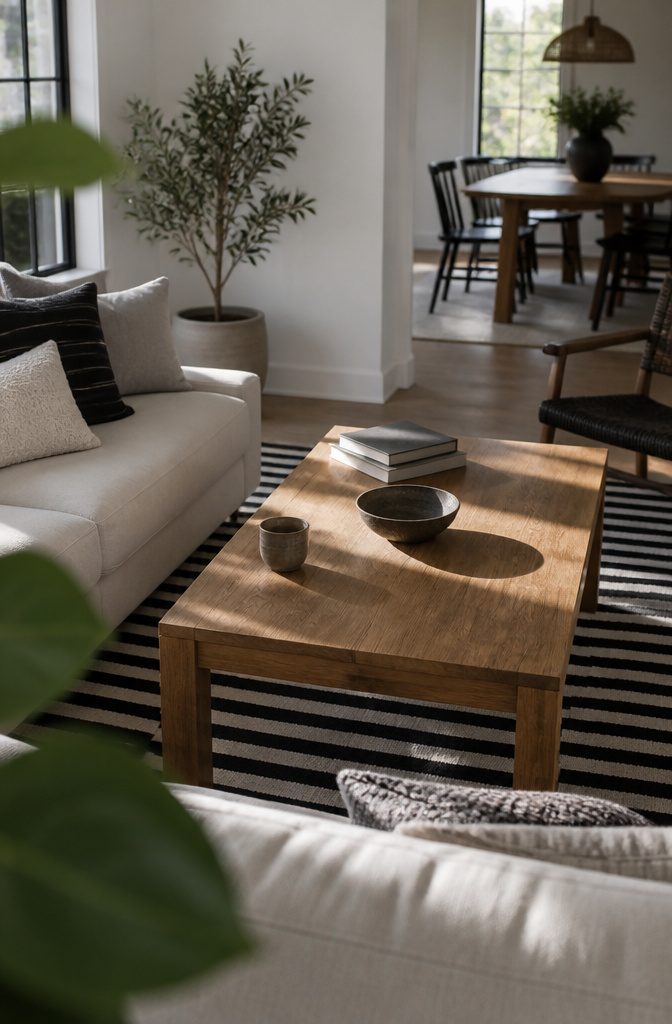
A room reads as an office when everything is straight, glossy, and high contrast. Wood adds a mid-tone between the black and the white, so the room stops looking flat.
A wood coffee table with clean lines is a low-cost place to start, and it warms the whole palette. If your rug already has a bold black-and-white pattern, pick a quieter table so the two don’t compete.
Add a plant or two next. Their organic shapes break up the straight edges of sofas and frames.
Choose a low-maintenance one in a plain, minimal pot, and set it where you’ll see it from the sofa. A woven rug, textured pillows, books, and ceramics soften the rest.
5. Accent Color or Metallics
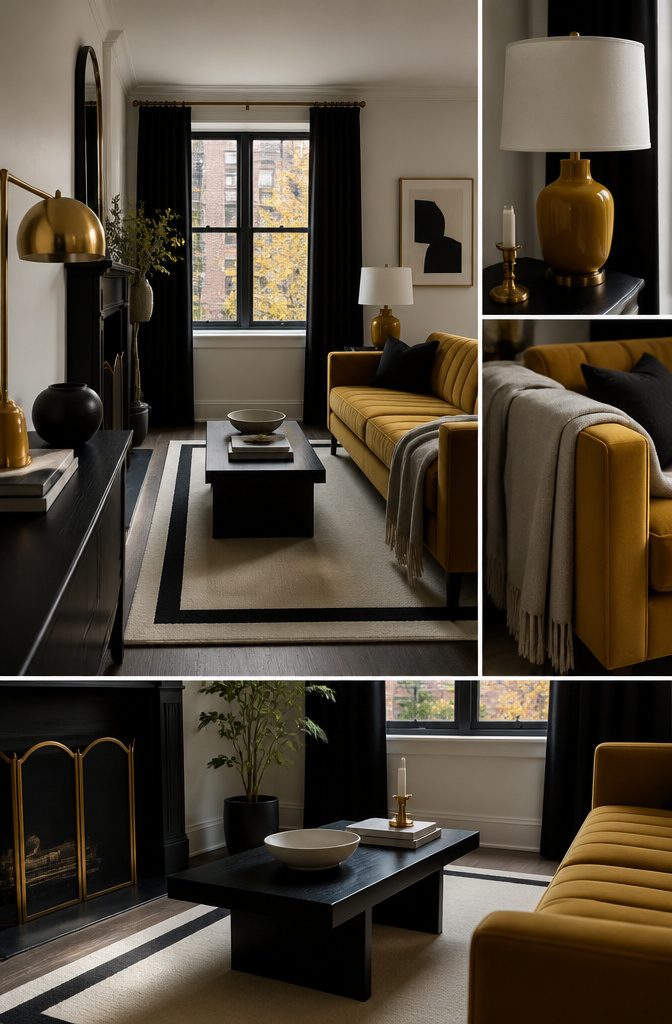
Pick one accent, either a color or a metal, and repeat it at different heights so the eye travels around the room.
Bold choices like yellow, cobalt, emerald, teal, or orange hit hard against black and white. Blush pink or soft gray calms the scheme down.
Brass or gold adds warmth without a second color. Try a lamp base, a candlestick, or a mirror frame.
Pillows and a throw are the cheapest way in. If you buy a big piece in a strong color, such as a mustard sofa, let it be the only color in the room.
6. A Rug as Focal Point
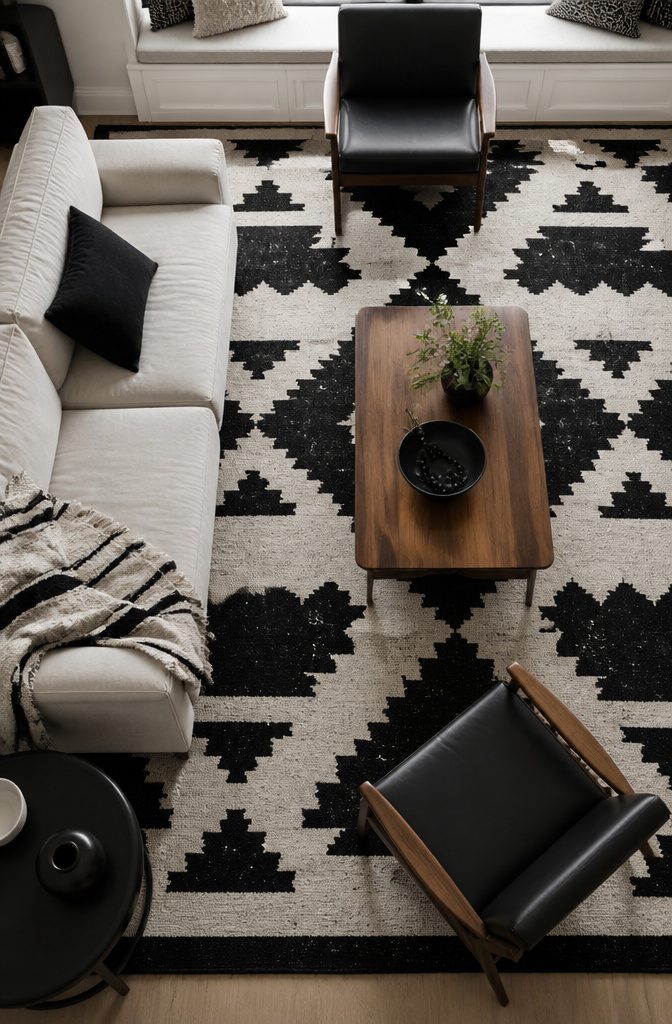
A bold rug ties black and white together because it sits where both colors meet the sofa, the curtains and the walls.
A graphic geometric pattern also disguises stains and wear, and it rolls up and swaps out if your taste changes, which wallpaper can’t do.
Rug sizes run in four groups: 2×3–4×6 feet (small), 5×8–6×9 (medium), 8×10–9×12 (large) and 10×14–12×15 (extra large).
For a typical living room, buy the 8×10–9×12 size. In a tight room, a single striking rug lets you keep the furniture and decor minimal.
A solid white rug shows every spill and footprint, so pick a black-and-white pattern if you have kids, pets or a no-shoes rule you don’t trust. For a splurge, Kasthall makes tufted Swedish rugs.
7. Pattern in Art and Textiles
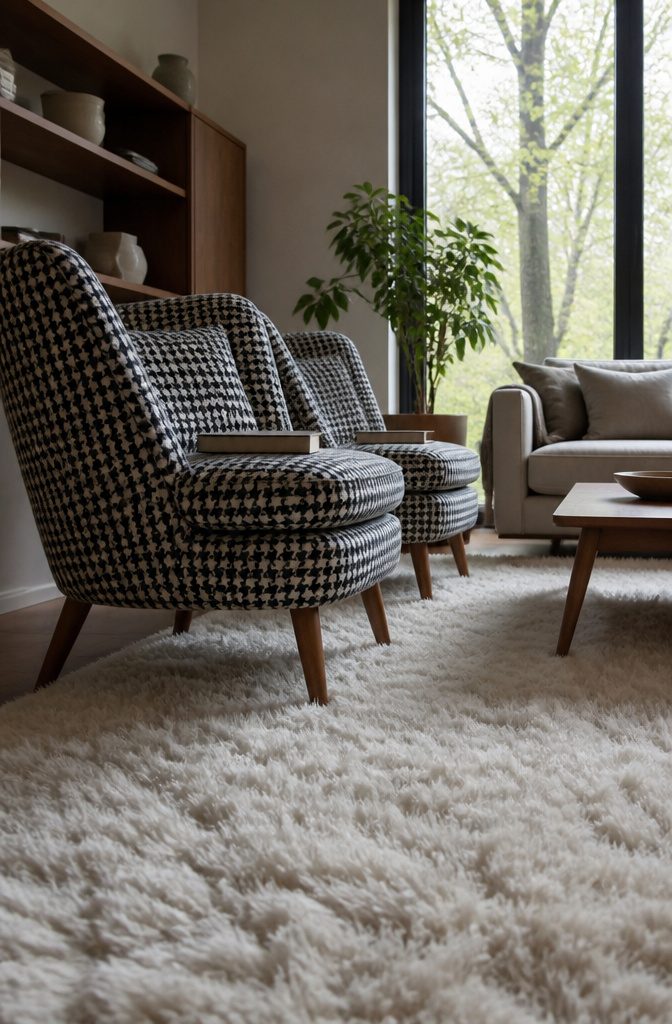
A pair of armchairs in duotone houndstooth adds pattern in a controlled dose.
The Jaggar chairs from Pure White Lines show why it works: the sharp, jagged check plays against the curved mid-century frame, and the room stays cozy because everything else is calm.
Warm wood furniture, a long pile wool rug, textured cushions and plants do that work.
Pick one main patterned piece, whether chairs, sofa or rug, and keep the rest quieter.
A striped chair, a graphic ottoman and a patterned rug together make the room feel busy. If the sofa carries the print, keep the rug, pillows and art plain.
Wary of wallpaper? A bold geometric rug rolls up when your taste changes, and the pattern hides stains.
8. Shapes and Lines
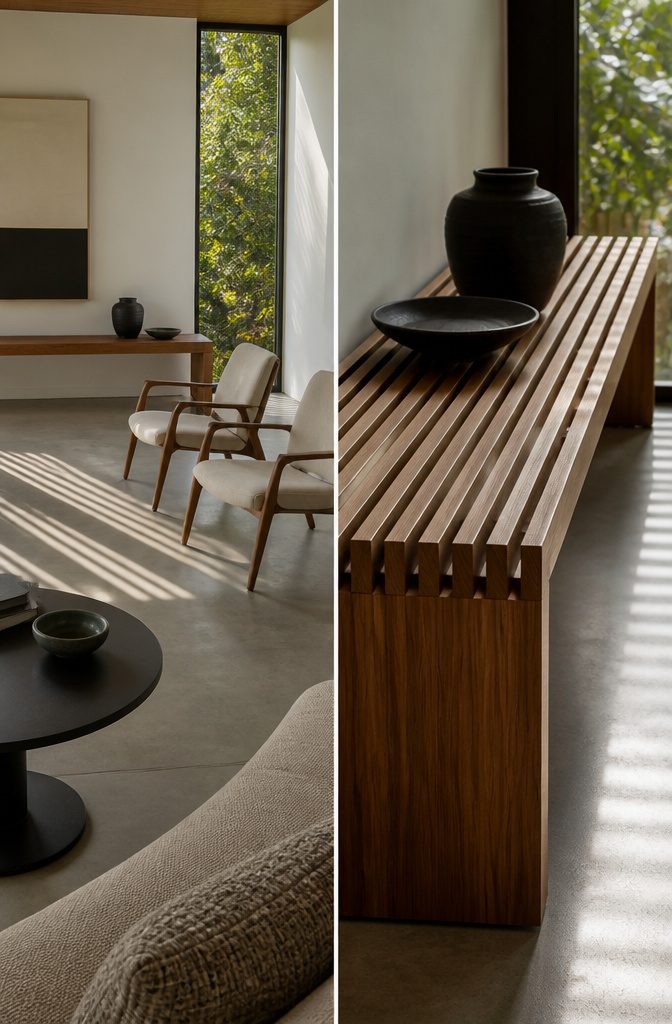
Repeated lines give a black and white room its structure.
A George Nelson slat bench delivers them through its row of slats, and vintage Arne Norell Sirocco chairs add the sculptural shapes mid-century rooms are known for. Both stand out against plain white walls.
Sharp lines need a counterweight. Add at least one curved piece: an Arne Jacobsen Egg chair as the accent chair, a round coffee table, or an arched floor lamp.
Keep everything else clean, but avoid making every piece rectangular. For a dramatic, high-contrast mood, soften the room further with tactile fabrics like tweed or velvet and plenty of cushions.
9. Artwork or a Gallery Wall
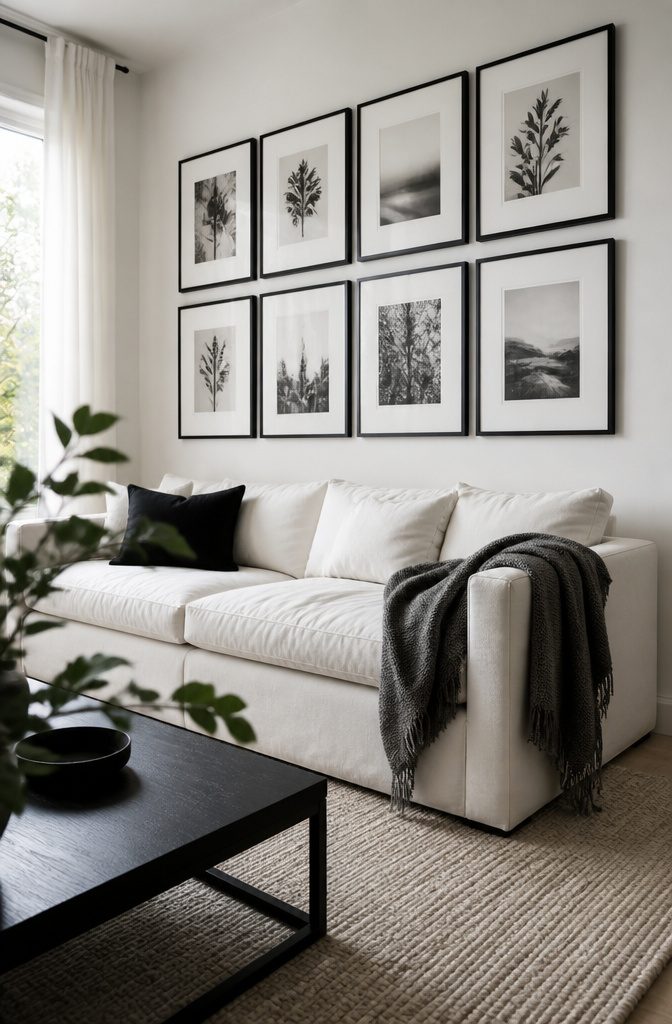
Behind the sofa is the usual spot, and the art there should feel wide enough to "hold" the couch.
Too small and it looks like it’s floating, so go slightly larger than you think. One large piece reads calmer than six small frames, and it works best with a soft white sofa and a simple rug.
For a renter on a budget, a gallery wall of black-and-white prints in matching frames wins.
Buy identical simple black frames with white mats, then leave even white space between frames and size the whole grid to the sofa as if it were one piece. Mixed frames and tight spacing turn rhythm into clutter.
10. Layered Lighting
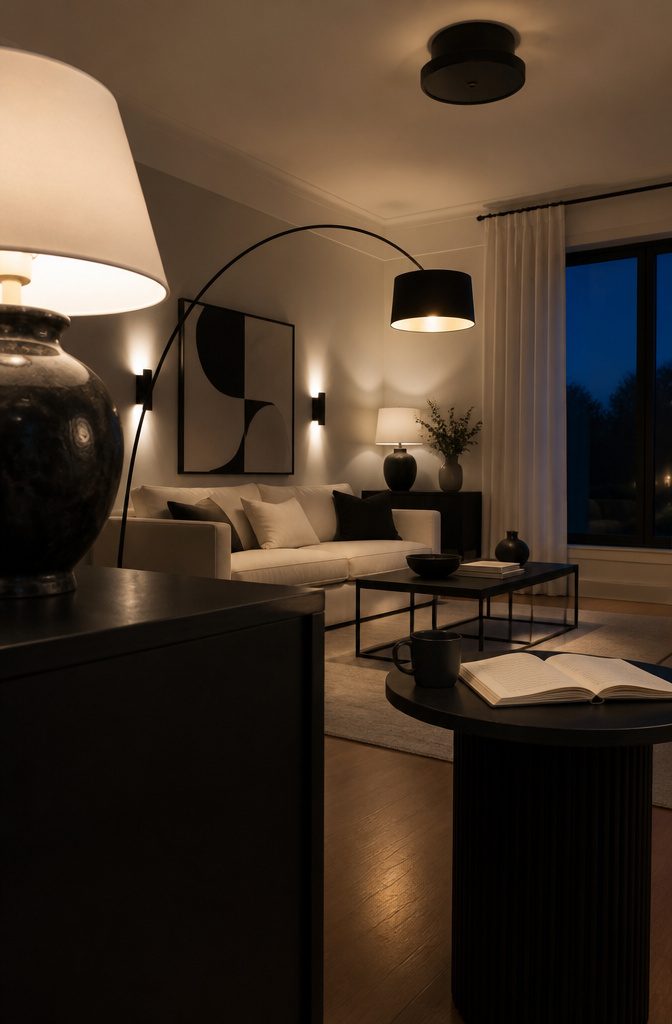
A statement fixture gives a black and white room its drama, and the Arco floor lamp by Flos is the classic example: a long arc that reaches over a sofa and puts light where you sit.
One fixture can’t do the whole job, though. Black surfaces soak up light, and a single overhead source leaves them flat.
Place light at several heights instead.
Put a floor lamp beside the sofa, table lamps on a console or side table, and wall lights on either side of art or a fireplace. Then put the ceiling fixture on a dimmer.
Use warm bulbs throughout so white doesn’t turn clinical and black picks up a soft sheen. In the evening, keep the ceiling light low and let the lamps carry the room.
11. Open Space, Less Clutter
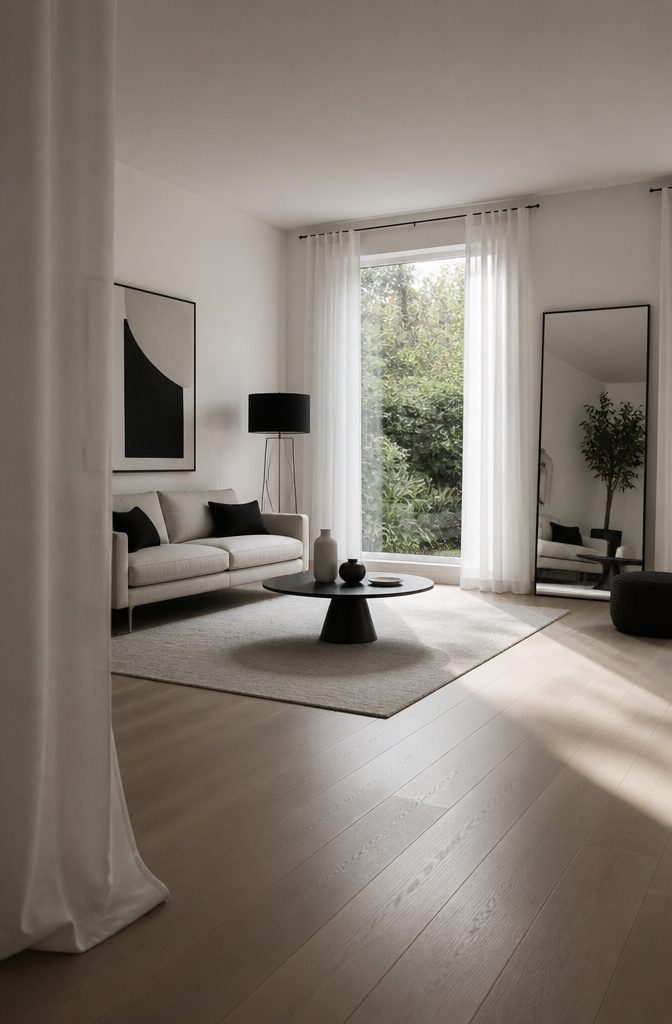
Negative space makes a small room feel bigger, so pick a sofa on thin chrome legs, a lamp with an openwork wrought-iron base, and a table with a pedestal leg.
In a small room, let white take the walls and curtains, since white curtains against white walls melt the edges away, and keep black to a few pieces rather than a whole wall.
Lean a tall mirror against the wall instead of hanging it, and aim it at something worth doubling: a window, a plant corner, a clean stretch of sofa.
Pointed at clutter, it doubles the clutter. On the coffee table or console, set one tall, one medium, and one small item and stop there.
12. Pick a Style Direction
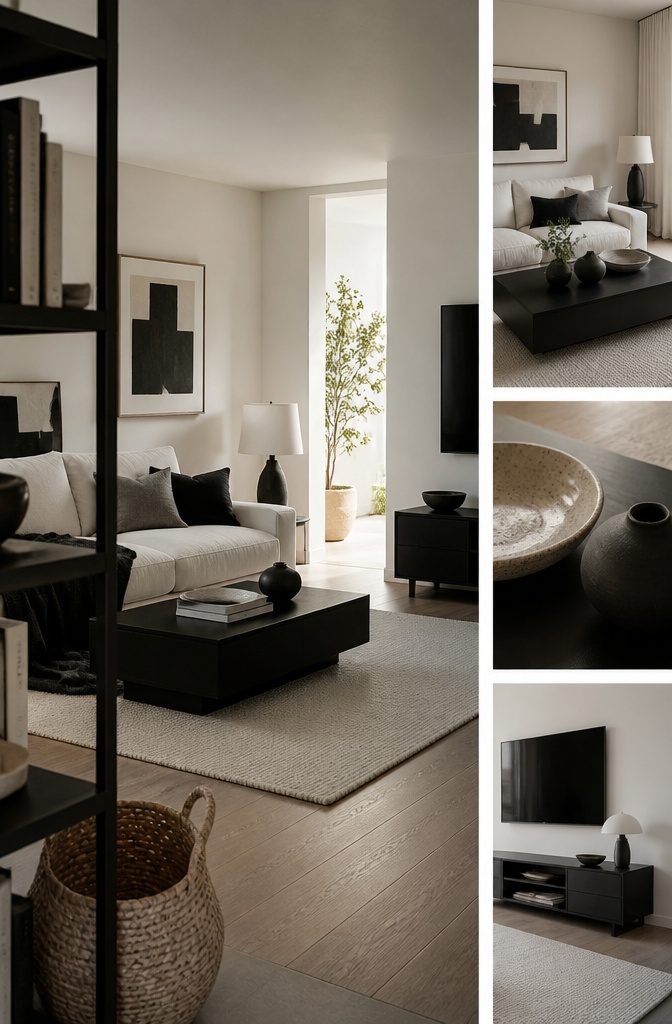
Minimalist, Scandinavian or Japandi, mid-century, traditional, farmhouse, glam, and eclectic rooms can all be black and white.
Furniture shape, material, and lighting decide which one you get. Settle on a mood (modern, cozy, dramatic, classic, or soft) before you buy anything.
To keep the option of changing styles later:
- Keep the sofa, TV stand, rug, and coffee table clean-lined. Simple large pieces are what make a restyle easy.
- Put the style in lighting, wall art, and small decor.
- Swap pillows and curtains to shift the mood without replacing furniture.
- Skip very specific shapes or finishes on big pieces. They lock you into one look, and glam, minimalist, Japandi, or farmhouse rooms become hard to change.
Plan the TV Wall
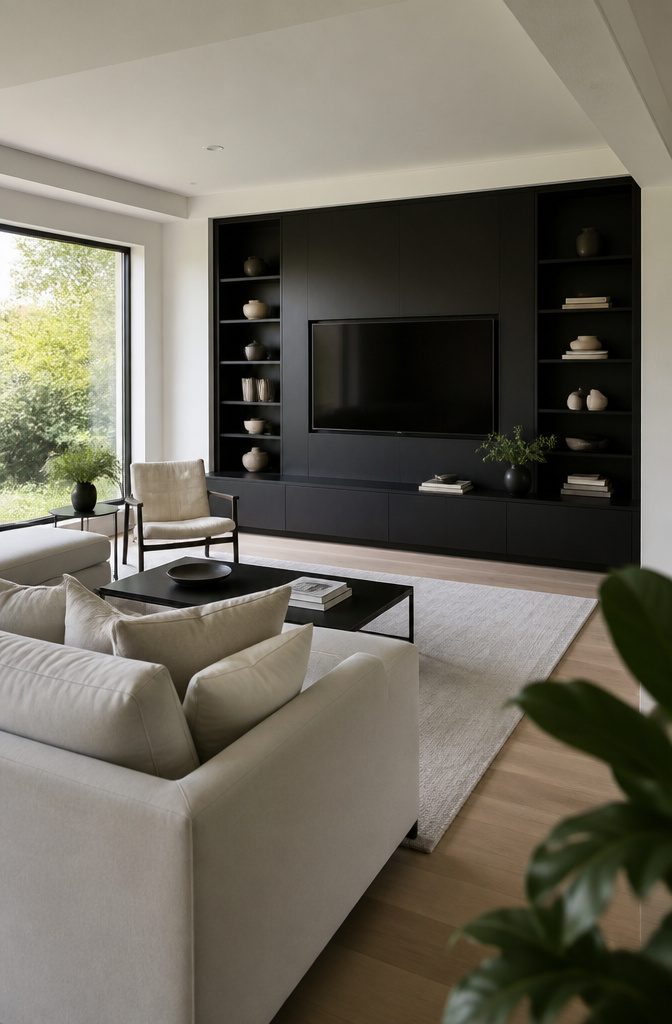
The TV is usually the largest black object in the room, so plan its wall instead of styling around whatever is left.
Two approaches work. To hide the screen in plain sight, paint the wall black and add black millwork and shelving, so the TV reads as part of a designed feature.
Commit fully to the contrast. Or go lighter: a white or light wood stand makes the black screen feel less dominant, while a black console suits a bright wall, a light floor, or strong natural light.
The Povison Merrin 63-inch black floating TV stand fits the black-console route.
The Povison Aether 71-inch modern TV stand gives you more width for a longer wall. In a compact room, choose a stand that doesn’t look heavier than the screen.
Check Daily Life Before Buying
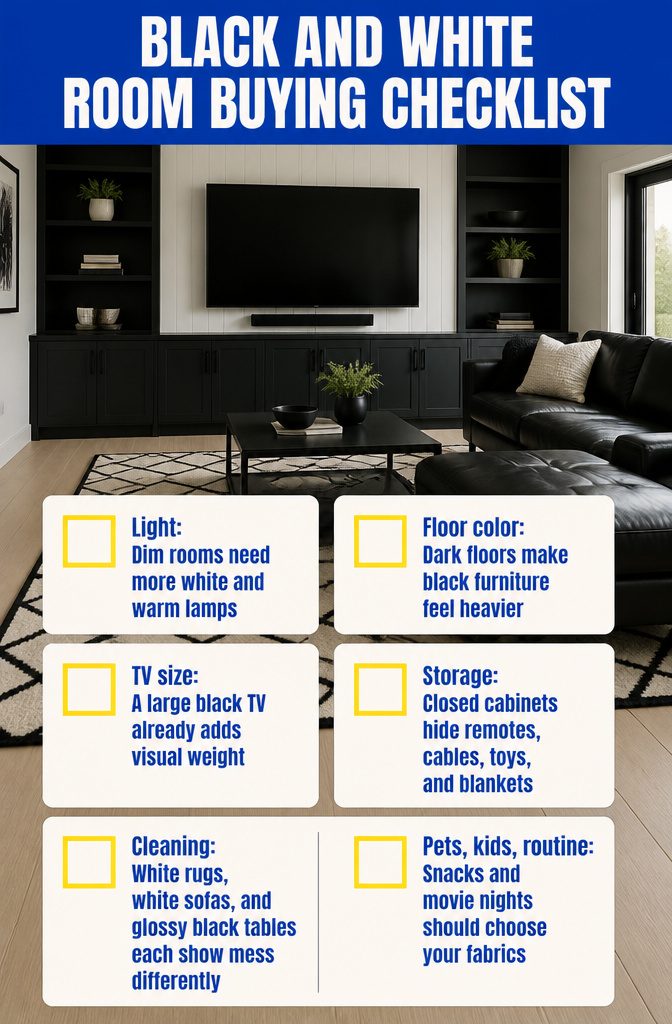
Check these before you buy:
- Light: Dim rooms need more white, cream, mirrors, and warm lamps.
- Floor color: Dark floors make black furniture feel heavier; light wood is easier.
- TV size: A large black TV already adds visual weight.
- Storage: Closed cabinets hide remotes, cables, toys, and blankets.
- Cleaning: White rugs, white sofas, and glossy black tables each show mess differently.
- Pets, kids, routine: Snacks and movie nights should choose your fabrics.
Black and white isn’t too formal for a family room when the materials fit daily use: wipeable surfaces, durable upholstery, closed storage, and rugs that hide small marks.
Skip the white sofa and white rug if people eat on the couch. A leather sofa like the Povison Cronus modular wipes clean.
Frequently Asked Questions
How do you style a black and white living room?
Choose a mood first: modern, cozy, dramatic, classic, or soft.
Then let furniture shape, material, and lighting deliver it. Curved pieces like a round coffee table or an arched floor lamp balance sharp lines, and tweed, velvet, and plenty of cushions add comfort.
What is a good accent color for a black and white living room?
Almost any shade works, because black and white are both neutral.
Yellow, cobalt, emerald, teal, and orange hit hard, while blush pink or soft gray calm the look. Pick just one accent, a color or a metal such as brass or gold, and repeat it at different heights around the room.
Can I use patterned furniture in a black and white living room?
Yes, as long as you limit it to one main patterned piece, such as chairs, a sofa, or a rug.
Keep everything else quieter. If the sofa carries the print, keep the rug, pillows, and art plain.
Is black and white too formal for a family living room?
No, provided the materials suit daily life: wipeable surfaces, durable upholstery, closed storage, and rugs that hide small marks. If people eat on the couch, skip the white sofa and white rug.
What wall color should I use if pure white feels too cold?
Try warm white, soft ivory, light greige, or a very pale taupe.
Each still supports a black and white scheme but makes black furniture look less sharp. Avoid yellow-heavy cream if your rug, sofa, or stone surfaces have cool undertones, since the tones will clash.
What lighting works best with black and white decor?
Warm bulbs work best, because harsh ones flatten black and white surfaces.
Layer light at several heights: a floor lamp by the sofa, table lamps, wall lights beside art or a fireplace, and a ceiling fixture on a dimmer. Black surfaces soak up light, so one overhead source leaves them looking flat.
How do I make a black and white room feel less like an office?
Break up the straight, glossy, high-contrast look with wood, curves, plants, and soft textures.
A wood coffee table with clean lines is a low-cost start. A woven rug, textured pillows, books, and ceramics warm up the rest.
Is it easy to switch between different black-and-white decorating styles?
Yes, when the large pieces are simple. Keep the sofa, TV stand, rug, and coffee table clean-lined, and put the style into lighting, wall art, and small decor.
Swapping pillows and curtains then shifts the mood, while very specific shapes or finishes on big pieces lock you into one look.