
The ideas run from free changes, like pulling a sofa 2–3 inches off the wall, to repainting every wall, and your lease decides which ones apply.
Renters usually need landlord approval and a repaint before move-out for bold color, and landlords may charge to patch TV mount holes. Start with scale: swap an 84-inch sofa for a 72-inch one.
1. Plan Functions and Traffic Flow
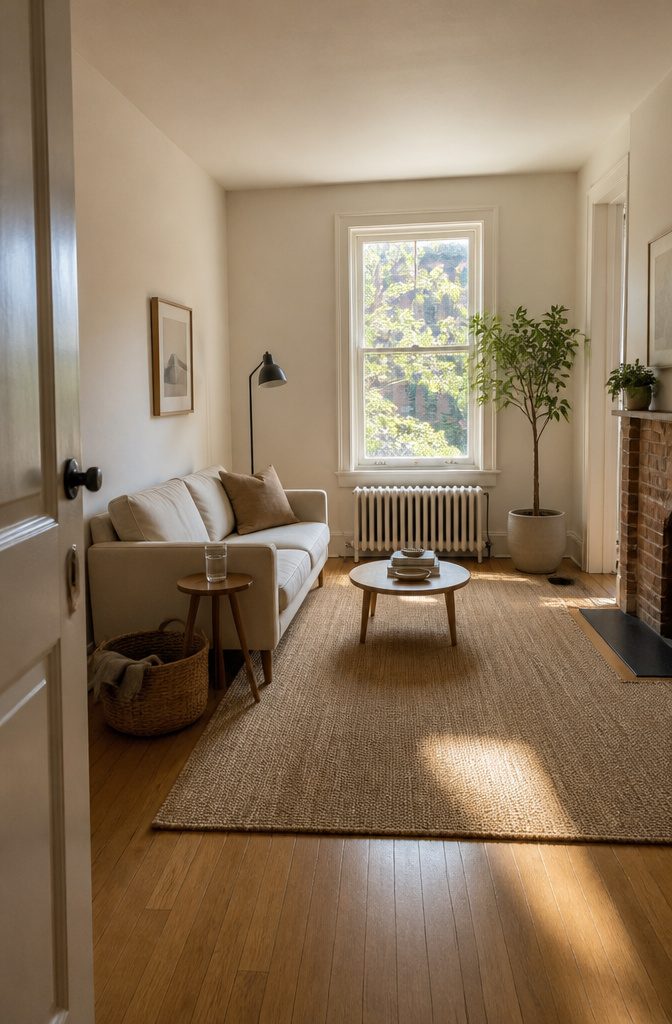
Decide what the room does before you move or buy anything. List every function you want, such as lounging, reading, TV, hosting or a laptop corner, sort them into needs and nice-to-haves, and limit the room to 2 or 3 functions.
If you watch TV nightly and host rarely, skip the desk and let a laptop use the coffee table.
Settle the layout before styling. Walk your daily paths, door to sofa and sofa to window, and keep them clear enough that you never turn sideways.
A common target for main walkways is 30–36 inches. A small side table handles drinks for guests, and books stacked under a low coffee table store things without crowding the walls.
2. Furniture Scaled to the Room
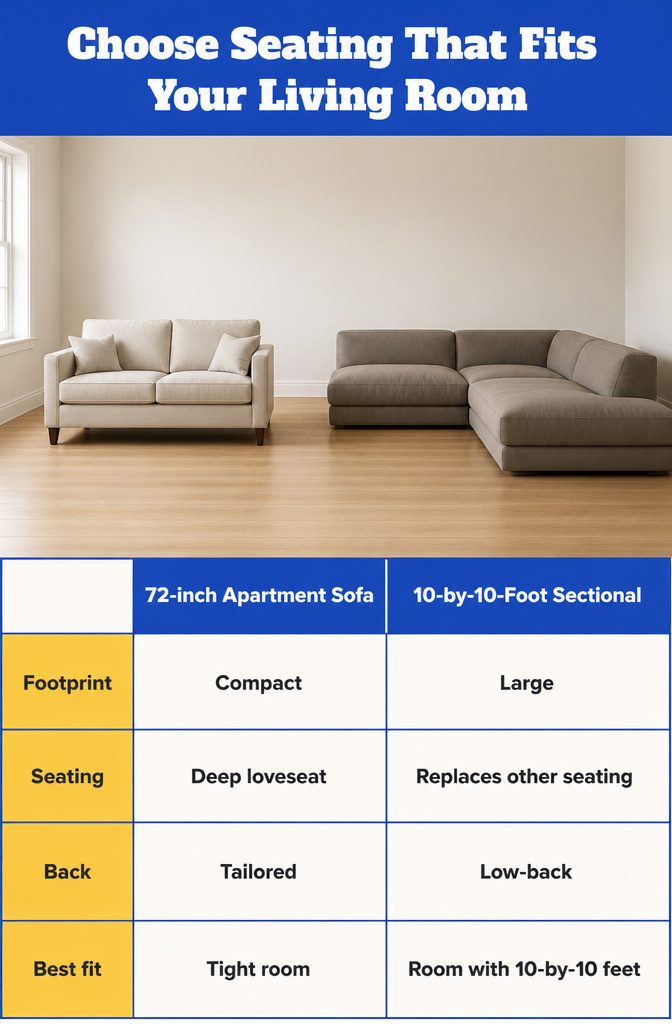
If an 84-inch sofa swallows the room, drop to a tailored 72-inch apartment sofa or a deep loveseat. Then pull it 2–3 inches off the wall, which creates a shadow line that makes the walls look deeper.
A large sectional works as the single anchor when it replaces all other seating and has a low back:
The sectional is rather large at 10 by 10 feet, but the low-back, lounge-style sofa allows the space to feel open and does not interfere with the lines of sight.
Choose the 72-inch sofa when the room can’t spare 10 by 10 feet of floor.
3. Low-Profile, Open Furniture
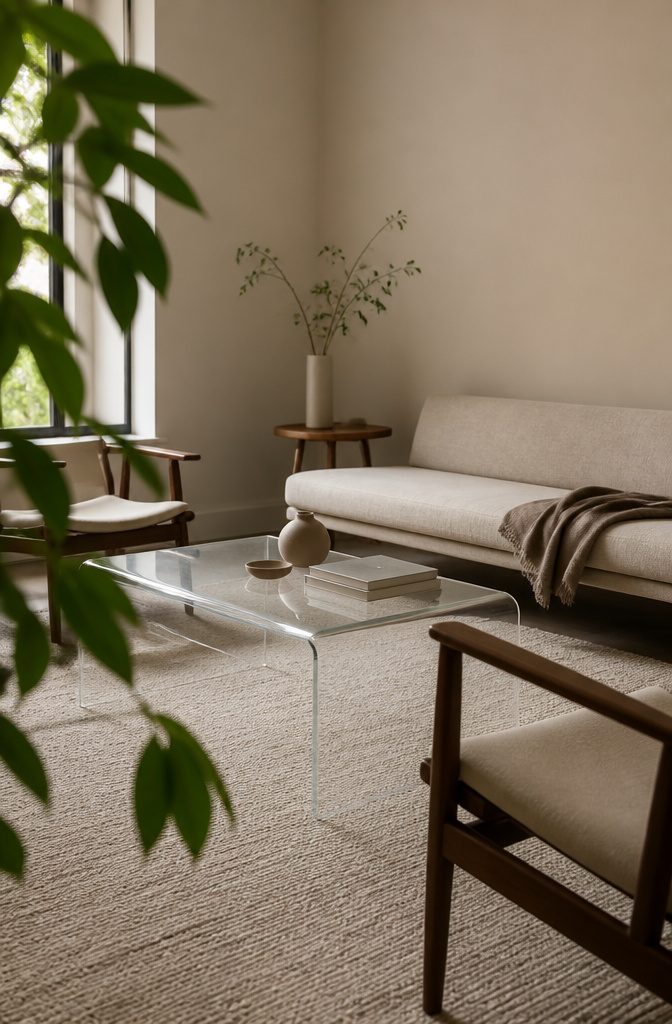
Dark, heavy pieces sitting flat on the floor shrink a room fastest. Pick a sofa with exposed, slender legs and chairs with open frames, so light and air pass underneath and the floor reads as larger than it is.
For the coffee table, a clear acrylic waterfall table or a glass top on a thin metal frame lets your eye travel straight to the rug instead of stopping at a block of wood.
Low silhouettes help too: a low-back, lounge-style sofa keeps sightlines open even as a 10 by 10 foot sectional.
You give up closed storage, since open frames and glass tops hide nothing. Anything you keep out has to look good, and the rest needs a home elsewhere.
4. Multifunctional Furniture
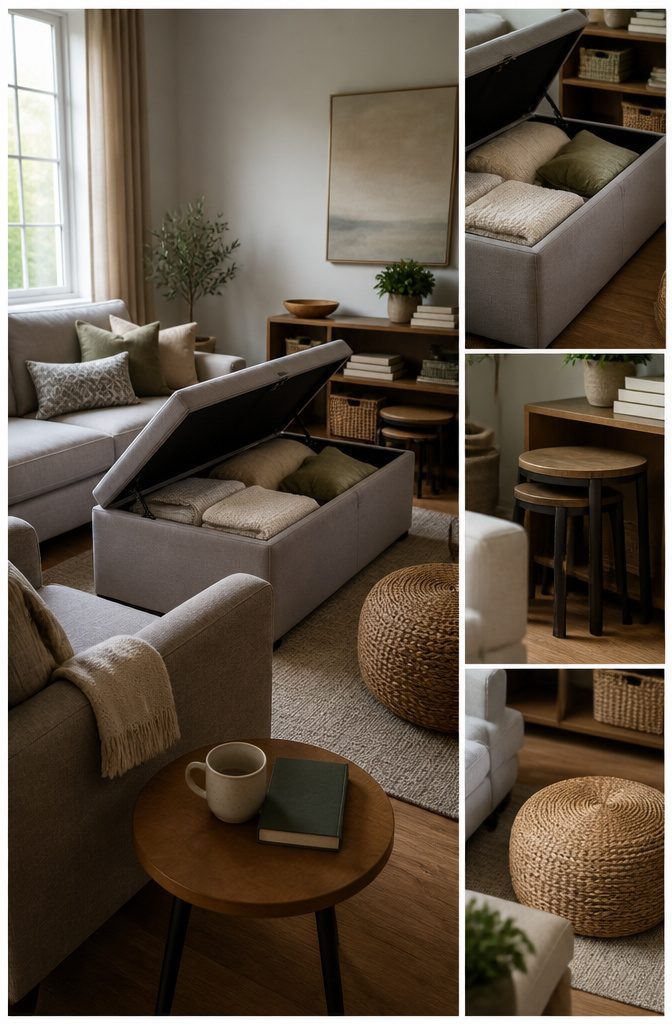
Any piece that earns floor space in a small living room should do at least two jobs.
- A storage ottoman or vintage trunk can replace the coffee table. Blankets and extra throw pillows go inside, and a hollow bench or set of wide drawers works the same way.
- A modular sofa can be split. Half a modular loveseat becomes a faux settee, and the other piece, with its back removed, becomes an oversized pouf.
- A daybed works as a sofa by day and a guest bed at night.
- Nesting stools, woven poufs, and floor cushions give guests extra seats and tuck away when nobody is using them.
5. Distinct Zones
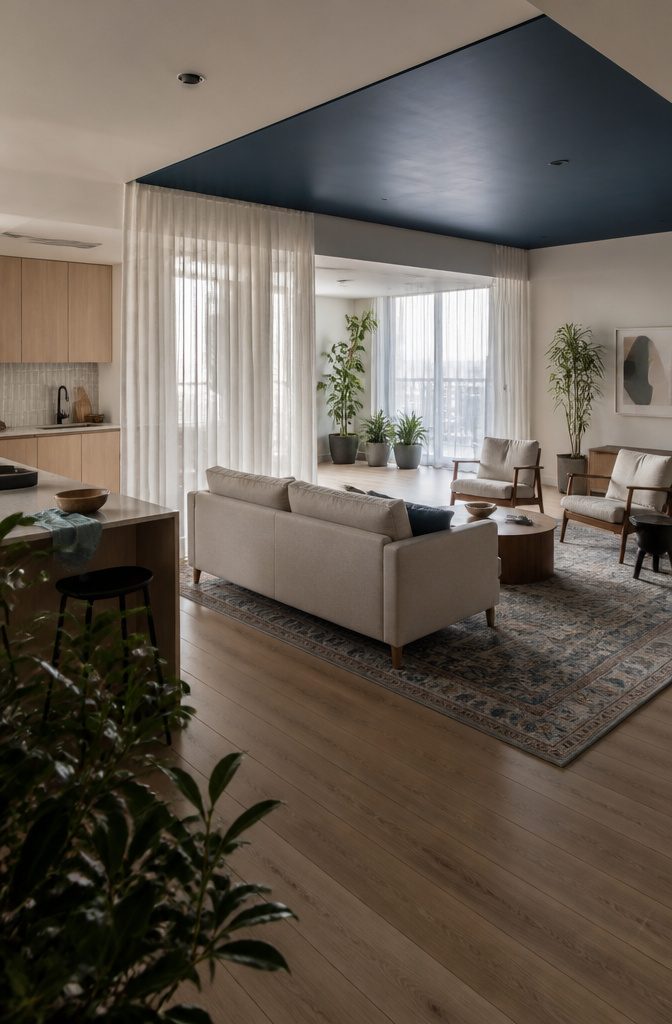
Use the back of your sofa as the wall. Float it so the seating area ends where the sofa does, and you skip the floor space a freestanding divider would eat.
Anchor it with a rug that touches the front legs of every major piece, so the sofa, chairs and table read as one group.
For a softer line, hang a floor-to-ceiling sheer curtain from a ceiling track. It separates the living area from a kitchen or desk and still lets daylight through, which matters in a 450-square-foot apartment with little direct sun.
A deep blue ceiling with a slight gloss marks off a living area in an open plan. Plants clustered along one side can mark the remaining edge.
6. Vertical Space and Storage
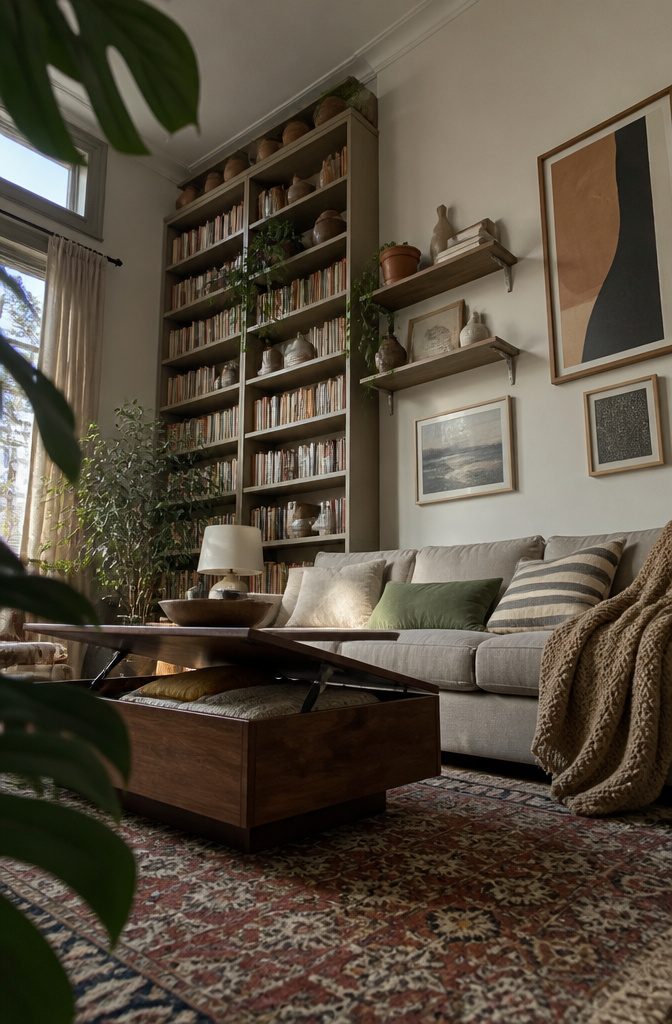
Tall bookshelves add storage without widening the footprint, and they pull the eye up the wall. Put one on your longest uninterrupted wall and fill it to the top so the room’s height does some work.
Above the sofa or TV console, floating ledges hold books, trailing plants, and small ceramics. For a renter they beat a second bookcase, since they take no floor space.
Swap the coffee table for a trunk, ottoman, hollow bench, or set of wide drawers.
A storage coffee table swallows the throw pillows and blankets that would otherwise pile up on the sofa. Hang art slightly higher than usual, and mount drapery closer to the ceiling, to stretch the wall further.
7. Light and Mirrors
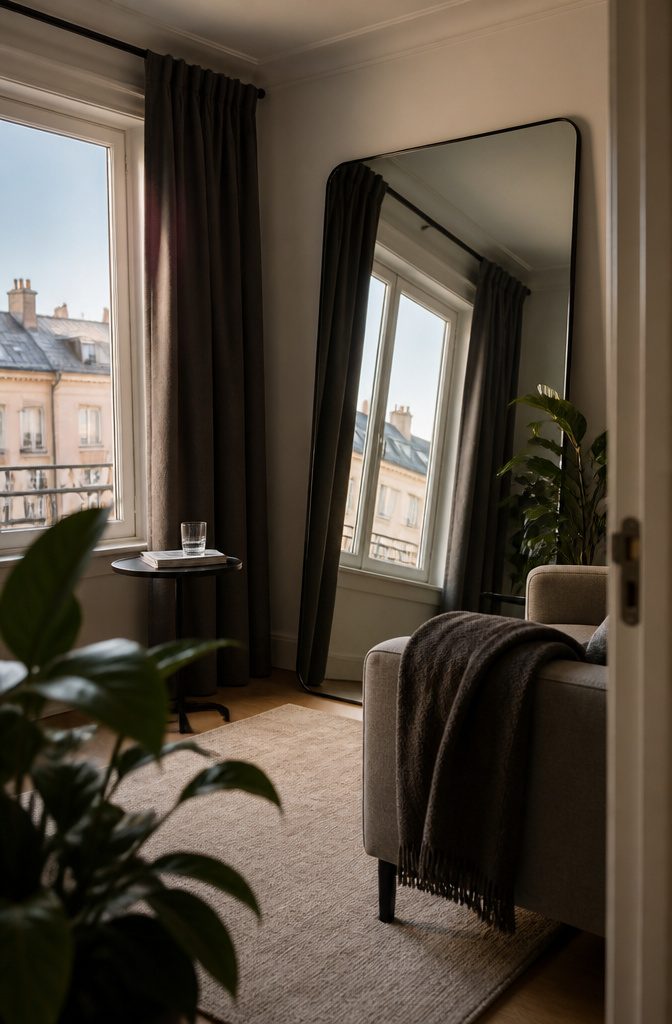
Hang curtains higher than the window frame and let them fall to the floor.
The walls read as taller because the eye travels up before it stops. A floor-length blackout curtain does two jobs.
Open, it keeps the room bright and airy. Closed, it blocks light, adds privacy, and gives the window wall extra visual height.
Place a large floor mirror directly opposite your window.
It works as a second window, bouncing daylight into dark corners and doubling the sense of depth. A mirror near a light source also works, and it adds depth without another piece of furniture.
None of this adds a square inch. It changes how bright and deep the room feels, not how big it is.
8. A Cohesive Color Scheme
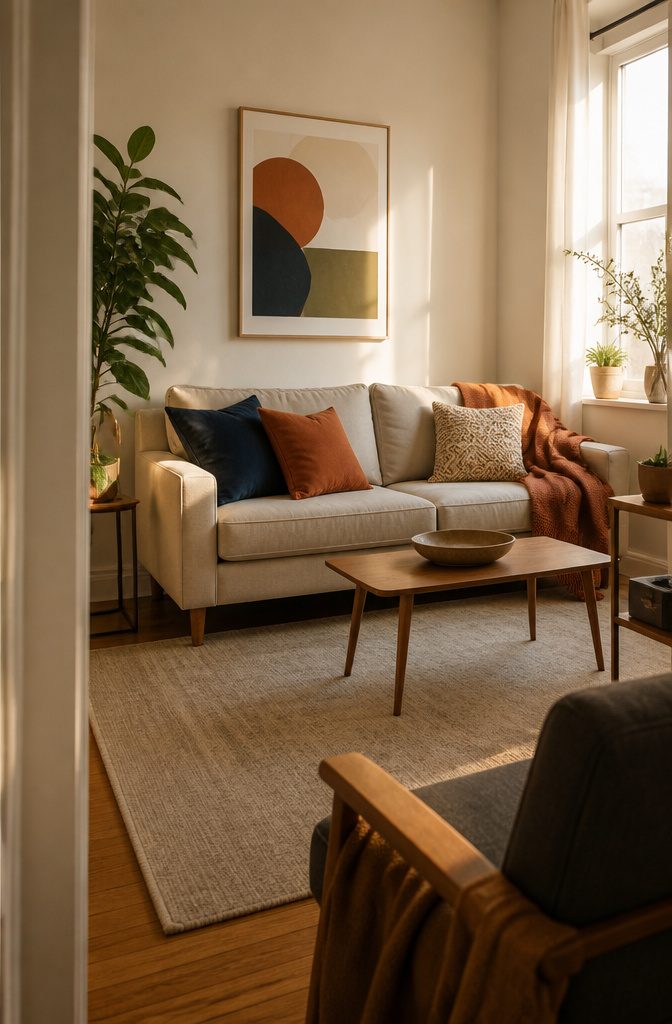
Warm, light neutrals on the walls with richer color in pillows, throws, and artwork is the safer choice for a renter on a budget. Nothing gets repainted, and the color moves with you when the lease ends.
The bold route can look striking in a small room. A deep green limewash in Ritual by Color Atelier gives one living room a moody, textured backdrop for a collection of art.
A single-color scheme in pinks and roses, or a room drenched in black, wraps the space like a cocoon instead of fighting its size.
Each of these means painting every wall, and a rental usually requires landlord approval and a repaint before move-out.
If you own, go bold. If you rent, test the idea with one large piece of art first.
9. Edit Your Decor
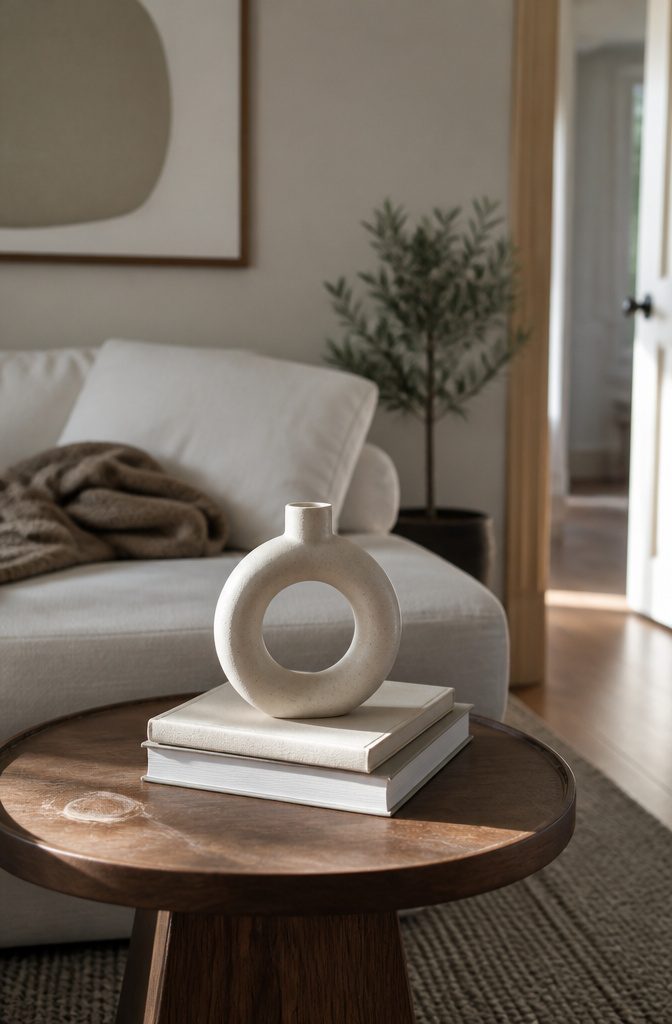
Scattered small objects read as clutter even when each one is nice. Group them instead: a short stack of books with a personal object on top turns an end table into a deliberate vignette.
A few displayed objects can work in a small room, but each one needs space around it to look intentional.
Keep the palette calm and cohesive so the mix of objects adds warmth without noise. The "two-foot rule" is the pared-back alternative, and it suits you better if you tend to add pieces one at a time.
To cut visual clutter in a weekend, clear every surface on Saturday and put everything into a box or laundry basket.
On Sunday, bring back one grouped arrangement per surface and leave the rest boxed. Anything you haven’t missed after a few weeks can go.
10. Art or Wallpaper as a Focal Point
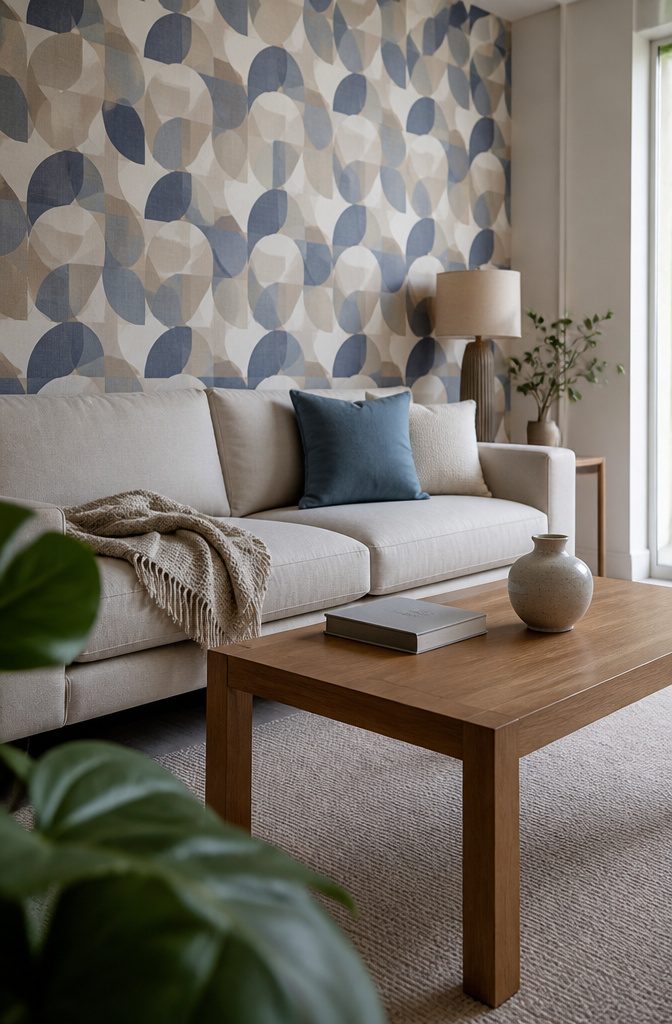
Pick one spot for the eye to land and keep the rest of the room quiet.
A gallery wall behind the sofa marks the seating area as its own zone, even in a 400-square-foot studio. One oversized piece does the same job with less fuss and takes no floor space.
For a bolder move, put pattern on a single wall. LIVDEN’s Lani geometric wallpaper is a balanced pick: bold enough to energize the room, soft enough not to overpower it.
Renters can look at peel-and-stick versions, but test a small patch first and check the removal instructions. Then repeat one color from the art or pattern in a pillow or throw so the eye keeps returning to that wall.
11. Layered Texture
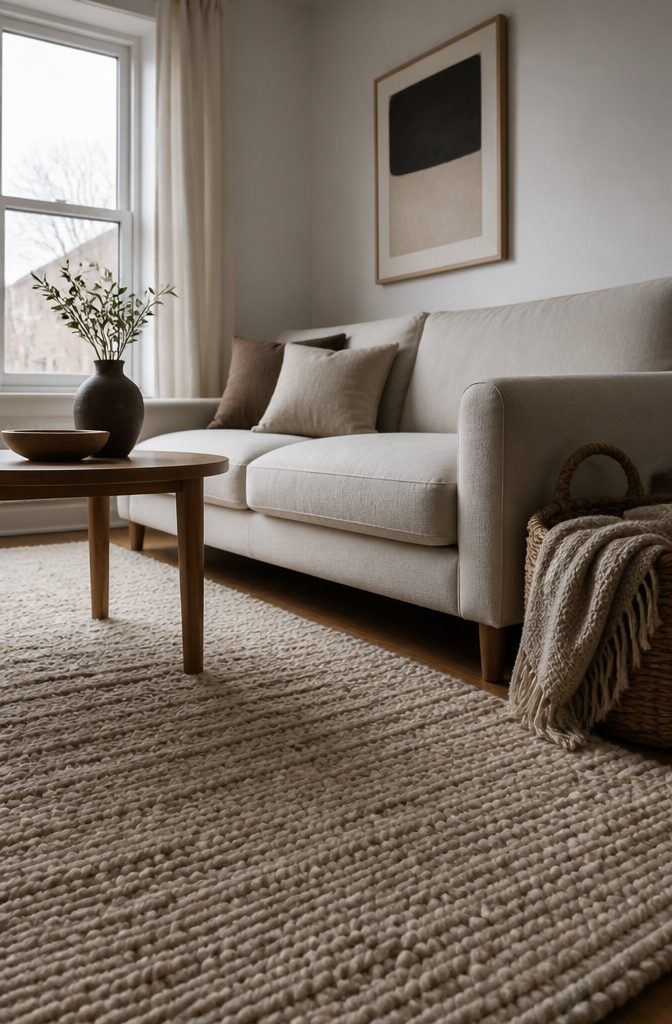
A small living room gets its warmth from materials, not from more objects. Start underfoot with a wool rug, which works as one large block of color and pattern and anchors the seating without adding a single small item.
Put linen on the sofa or chairs, and keep blankets in a woven basket so the texture also does a job.
Choose contrasts: smooth next to rough, soft next to structured. A smooth wood side table beside nubby linen reads as depth, where five small accessories read as clutter.
Pull your palette from the wood tones and upholstery already in the room, so the textures look connected and the space feels calmer.
12. Embrace the Cozy Look
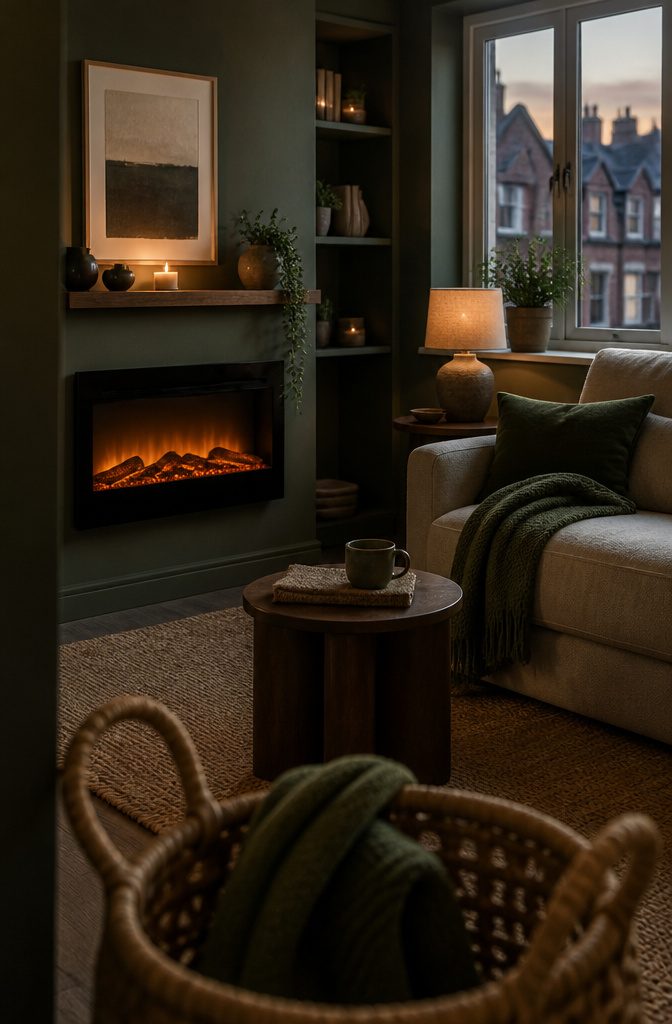
A small living room holds a cozy mood more easily than a large one, so lean into it.
Deep, saturated color does the most work: dark sage green or even black, carried across the walls, wraps the room like a cocoon.
Pick one hue family and repeat it. One New York apartment pulls soft pinks, reds, and rose from the brick buildings outside its windows, which makes the color look planned rather than just dark.
A fire adds the same warmth.
An electric fireplace needs no venting or chimney, and it comes wall-mounted or freestanding, which suits a rental. The Trade Table sells electric fireplaces for small spaces.
Sketch Before You Buy
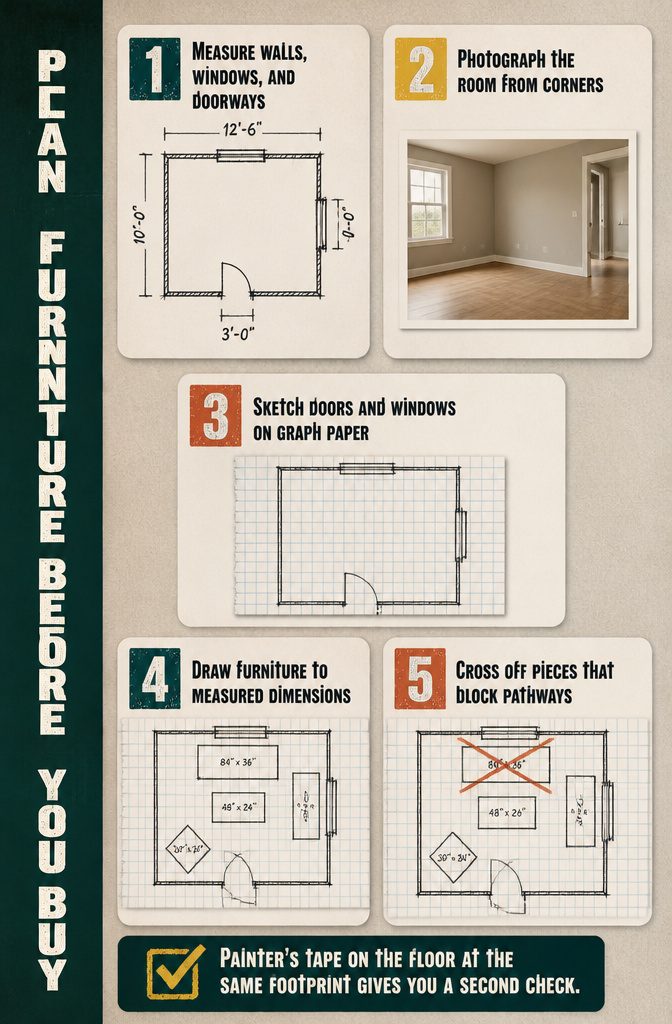
- Measure the room wall to wall, and write down the width and position of each window and doorway.
- Take a few photos of the room from the corners. They show scale and flow in ways numbers miss.
- Sketch a simple floor plan on graph paper with the doors and windows marked. A rough sketch is enough to show whether a piece fits.
- Pull the width, depth, and height of each piece you’re considering from the product page, and draw it on the plan as a rectangle.
- Decide at the sketch, not in the store. If a sofa crowds a doorway or blocks the walkway, cross it off before you spend anything.
Painter’s tape on the floor at the same footprint gives you a second check.
Wall-Mount the TV
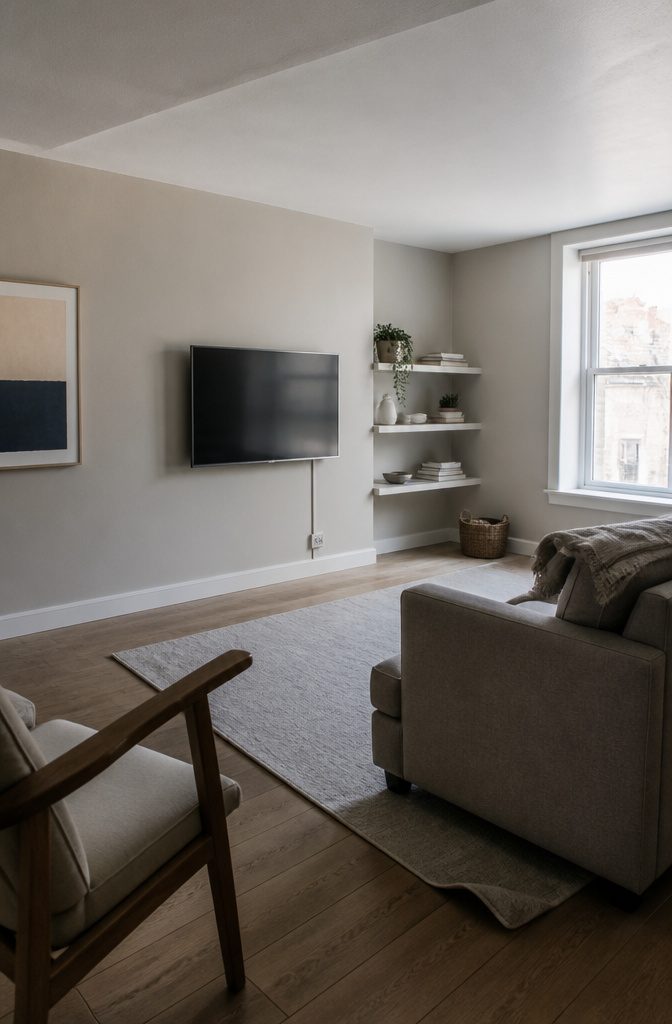
A wall-mounted TV removes the stand or media console from the floor, so the sofa can sit closer to the wall and more of the rug shows.
A ceiling mount suits a nook or corner with no wall space for a screen, putting an otherwise unused spot to work.
Both lock the screen into one position, so everyone watches from about the same angle, and you have to choose the spot before you mount anything.
Check your lease first, since landlords may charge to patch screw holes, and a ceiling mount has to anchor into a joist. If the lease says no, a slim stand pushed flat to the wall is the safer choice.
Add Greenery
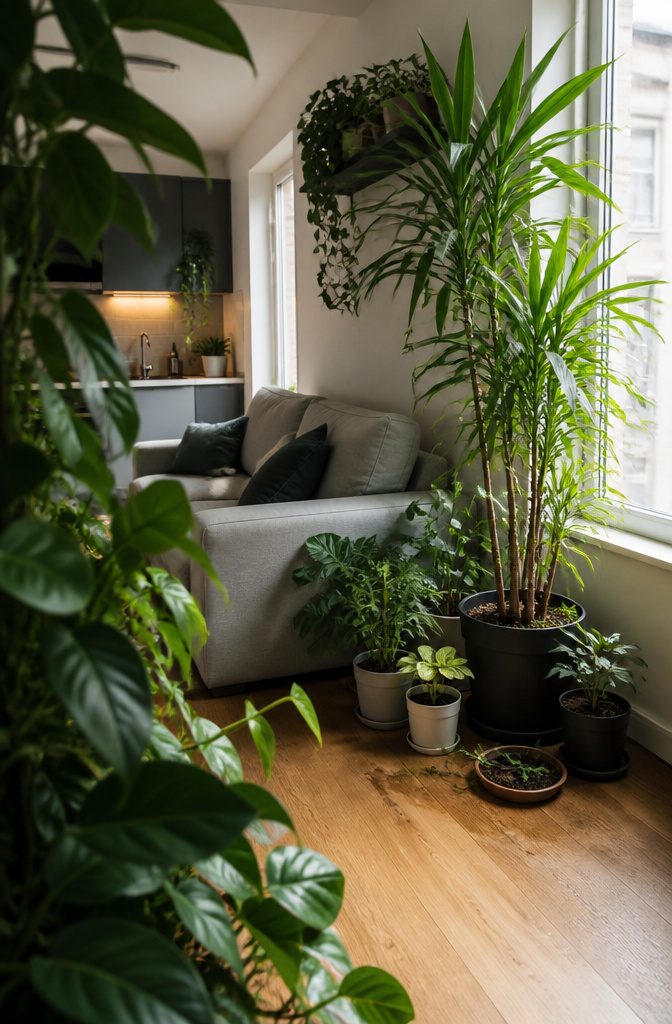
When a room has no wall to separate the sofa from the rest of the space, a cluster of potted plants around the seating can act as one.
In a 550-square-foot San Francisco apartment where pocket doors are the only divider, plants grouped around the sofa mark out the living area. Keep the group tight against the seating rather than scattering single pots around the room.
Floor plants build that edge, so use them where you want a boundary.
Shelf and windowsill plants add softness without taking any floor, which suits a room where every square foot is a walkway. A few of either make a compact room feel inviting rather than cramped.
Frequently Asked Questions
What are the best small living room ideas for maximizing seating?
Swap an 84-inch sofa for a 72-inch apartment sofa or a deep loveseat, then add seats that store away, such as nesting stools, woven poufs, or floor cushions.
A daybed gives you a sofa by day and a guest bed at night. A low-back sectional can work as the only seating if you can spare about 10 by 10 feet of floor.
How do I arrange furniture in a small living room?
Pull the sofa 2–3 inches off the wall and keep main walkways 30–36 inches wide so you never turn sideways.
Choose a rug that touches the front legs of every major piece so the seating reads as one group. A round coffee table also makes tight corners easier to pass.
Which colors work best in a small living room?
Warm, light neutrals such as soft cream, warm beige, and pale gray on the walls, with richer color in pillows, throws, and artwork.
This is the safer choice for renters, since the color moves with you. Deep greens, pinks, or black can look striking, but they mean painting every wall, so they suit owners better.
How can I add storage to a small living room?
Go up and double up. Fill a tall bookshelf on your longest wall to the top, and add floating ledges above the sofa or TV for books and small items.
Use a storage ottoman, trunk, hollow bench, or set of wide drawers as the coffee table to hold blankets and extra pillows.