
The ideas run from painting one fireplace surround charcoal to drenching walls, ceiling, and trim in a single shade, so choose by how much repainting you can face later.
Whatever you pick, test large swatches in the morning, afternoon, and evening: SW Ponder looked like a non-color in one room and was repainted.
1. Navy and Brass
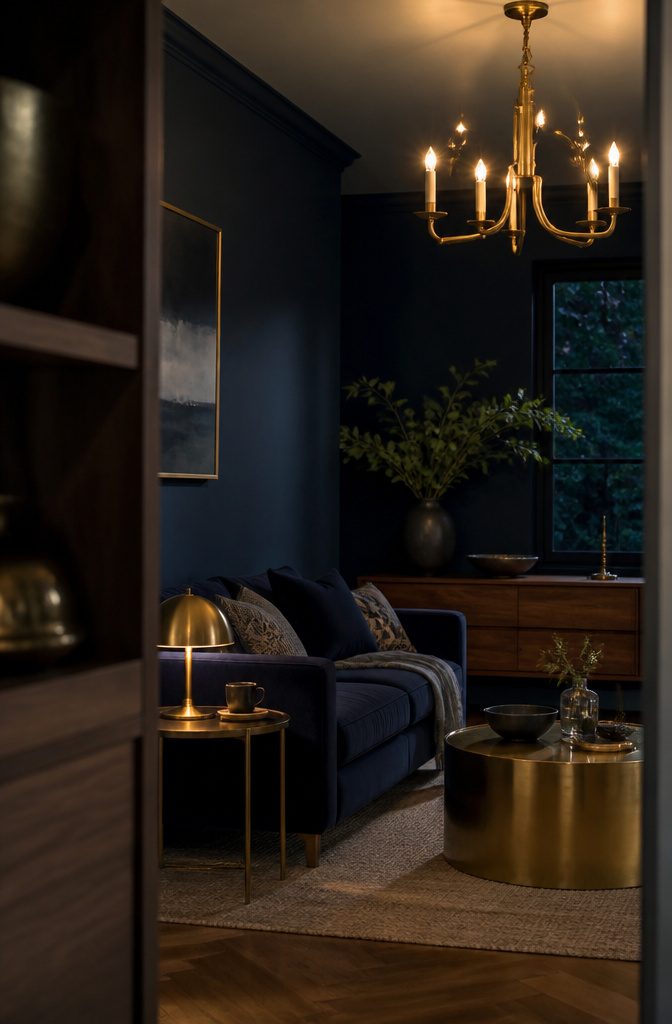
Navy is the safest dark color for a first-timer.
It reads as a deep neutral, and it sits well next to nearly any wood. Benjamin Moore’s Hale Navy and Polo Blue are both worth sampling on your wall.
Navy alone can go flat, because a single dark color absorbs light. Metal fixes that.
Brass, gold, or copper catches the light and throws it back across the walls, which breaks up the darkness. A brass chandelier does this well, and a gold one works the same way.
Spread the shine around the room.
Try a brass lamp on a side table, brass frames on the wall, and a brass or copper coffee table. Add a warm wood piece, like a walnut console, to soften the contrast.
Recommended Products

【Farmhouse Design】Chandelier is designed of 6 candle-shaped light base on each curved light arm,which makes it retro and gorgeous.The Rustic Vintage Chandelier enhances the exquisite appearance while providing sufficient lighting. Our Dining Room Lighting Fixtures Hanging can make your home more retro farmhouse style, which is perfect for farmhouse, dining room, living room, kitchen, barn,living room,entryway or foyer.
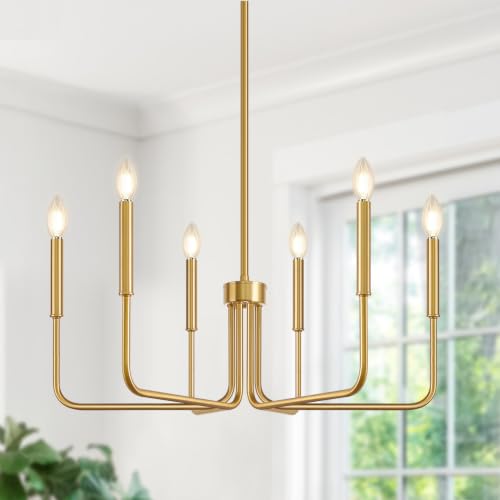
Brass Gold Farmhouse Chandelier: Elevate your space with this rustic industrial chandelier, featuring 6 elegant, brass gold lamp arms. Perfect for any setting—kitchen, bedroom, foyer, dining room, living room, entryway, farmhouse, or office.
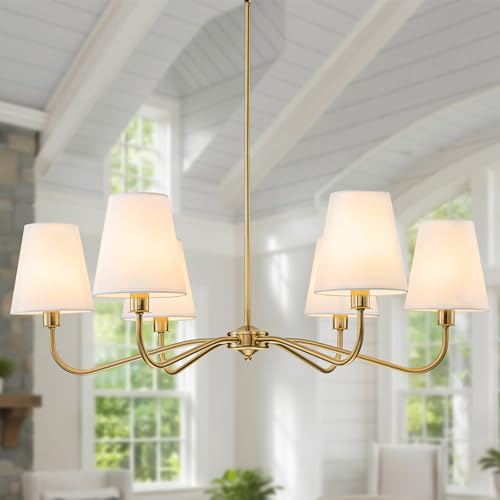
Farmhouse Dining Room Chandelier: This gold chandelier with shades features a stylish gold metal frame, paired with soft white fabric lampshades, achieving a balance between modern simplicity and classic charm. The fabric lampshade of this visual comfort lighting is made of fine and durable materials, which gently and evenly diffuse light, creating a warm and enticing glow
2. Deep Green Walls
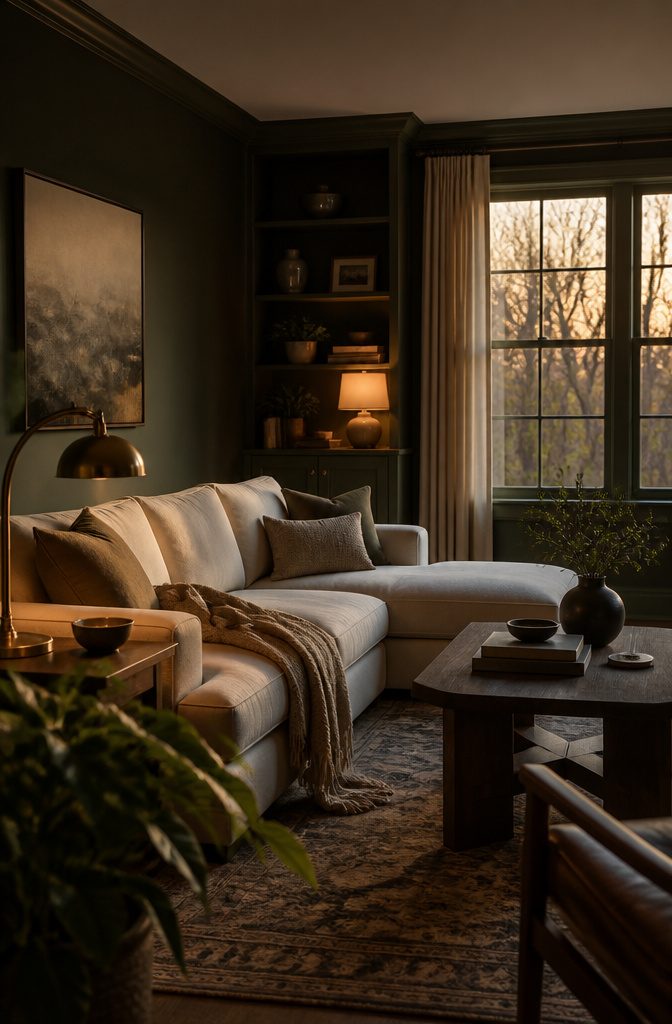
Deep green works on all four walls, on built-in shelving alone, or on a single bookcase wall, and the paint’s undertone decides whether the room feels cozy or cold.
Choose a green with a warm, slightly yellow or brown undertone if you want it to read like a forest at dusk.
A blue-leaning or gray-leaning green can turn chilly once the light fades. SW Privilege Green is a good example of why you test: it was rejected after being seen in the actual room, and the chip alone hadn’t predicted that.
Balance the color with warmth. Wood furniture, cream upholstery or curtains, and brass lamps or frames all soften green and keep it from feeling heavy.
3. Charcoal and Black
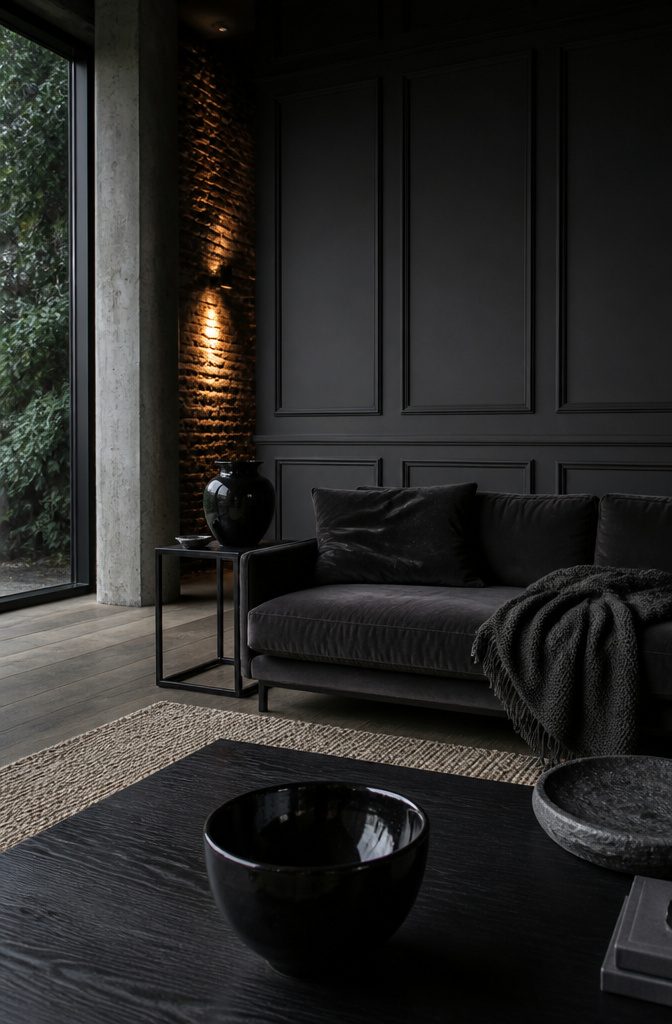
Charcoal, black, and other deep neutrals are the easiest dark colors to furnish around, because most woods, metals, and fabrics sit well against them.
For a restrained modern look, paint the walls or paneling charcoal and keep the furniture simple, with clean lines and few accessories. For the industrial version, bring in dark brick, metal, and concrete.
Deep neutrals go flat without texture. Light walls give a room natural variation, and dark ones don’t, so add surfaces that catch light differently: rough brick, a matte metal frame, a glossy ceramic, a woven throw.
Upkeep is easy, since dark walls hide scuffs and dust better than light ones. Dark velvet is the exception, because surface dust shows on it and it needs regular care.
4. Rust and Dark Red
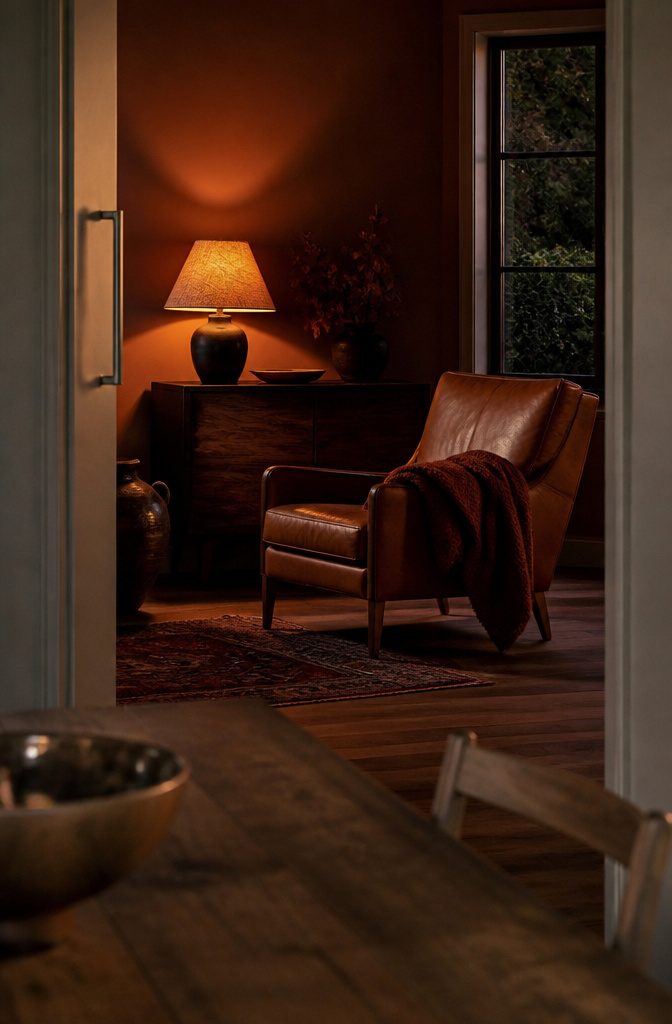
Dark red, rust, and terracotta brown are a less common choice than navy, green, or charcoal, and they suit a room that feels chilly.
Blues and greens can turn cool as daylight fades, while red-based browns stay warm after dark. Choose a red with brown in it rather than a bright cherry, which can look loud once the lights are low.
Halman Thompson’s "Rich and Rusty" room shows how a rusty, deep red palette can feel cozy instead of heavy. Pair these colors with leather and wood.
A cognac leather chair and walnut or oak furniture make the reds look like part of one warm family. Skip cool gray accents here, since they fight the warmth.
5. A Dark Focal Wall
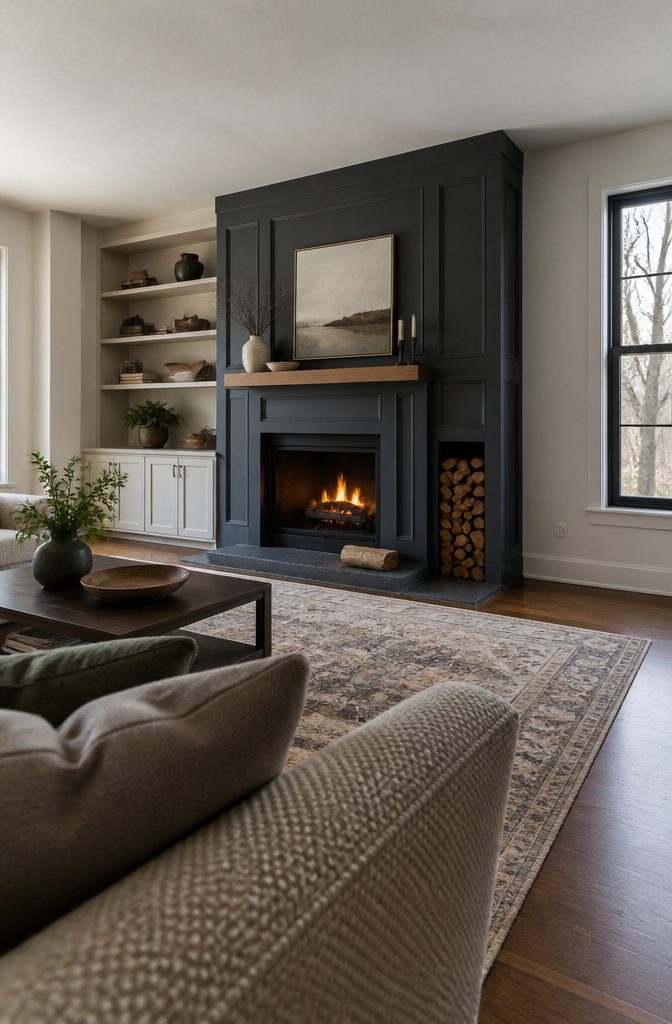
Paint one architectural feature dark and leave the other walls alone.
Paneling, molding, wainscoting, or a fireplace surround all work, and their raised edges catch shadow, which adds a depth that flat paint on a smooth wall can’t match. The result reads as layered instead of just "a dark wall."
The fireplace is the strongest candidate.
Charcoal paint on the surround and the millwork around it makes a fire glow warmer. A wood mantel or a stack of logs beside the hearth gives the dark color a natural contrast to sit against.
This is the lowest-commitment way to try a moody room. If you don’t like it, repainting one feature is an easy fix.
6. Color-Drenched Ceilings and Trim
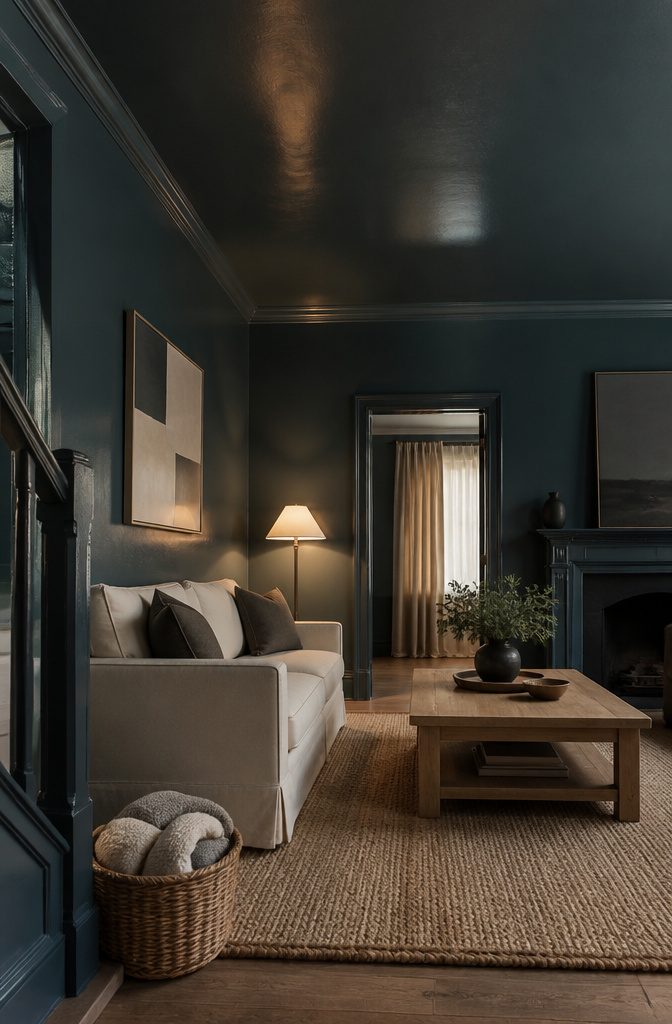
Stopping dark paint at the ceiling line cuts the effect in half.
Paint the ceiling the same shade as the walls, or one tone deeper, and the room looks finished instead of half-done. Paint the trim in that hue too, so no white outline breaks up the dark.
Vary the sheen, not the color.
Use matte or eggshell on the walls and semi-gloss or high-gloss on the trim. The walls absorb light while the trim catches it, which adds depth without a second color competing.
A dark ceiling can make a room feel smaller.
In a living room, that closed-in feel suits the mood. Still, this is the boldest option in the article and the hardest to undo, because covering dark walls, ceiling, and trim later means repainting all three.
7. Velvet and Jewel Tones
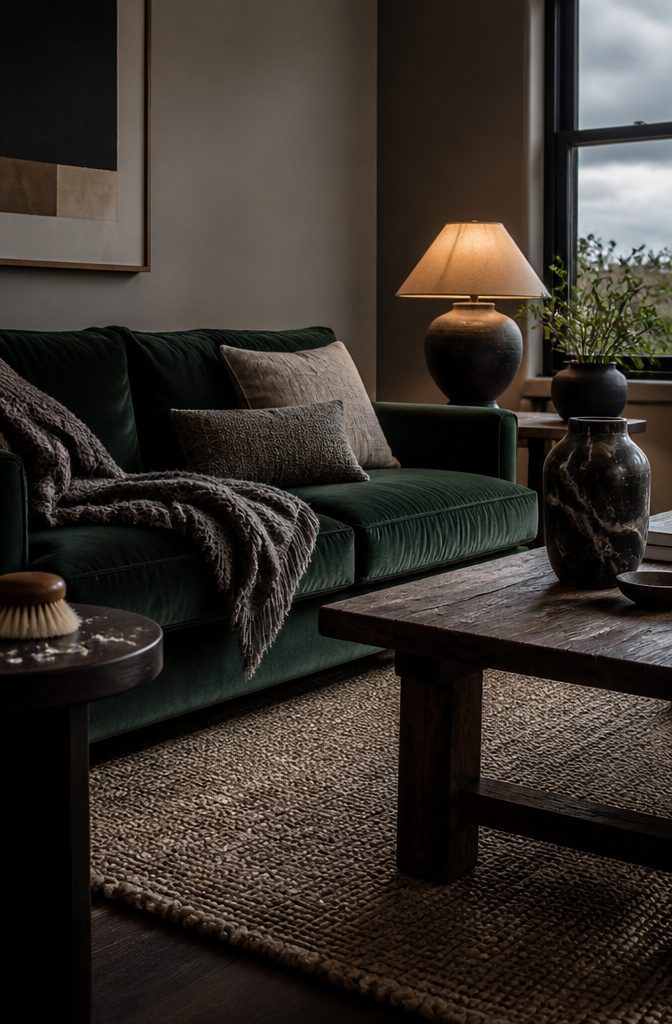
A velvet sofa in emerald, sapphire, or amethyst does most of the work in a dark room. The pile catches light at an angle, so one fabric looks nearly black in shadow and jewel-bright by a lamp.
Texture can carry the mood even when the paint is mild: a greige wall with a plush chair still reads dark.
Velvet looks best against surfaces that push back.
A rough wooden coffee table with a sleek marble vase on top puts rough and polished in the same spot. A wool throw, linen pillows, and a woven rug keep the velvet from feeling formal.
Dark velvet shows dust and lint quickly, so keep a lint roller or soft brush nearby.
8. Leather and Warm Wood
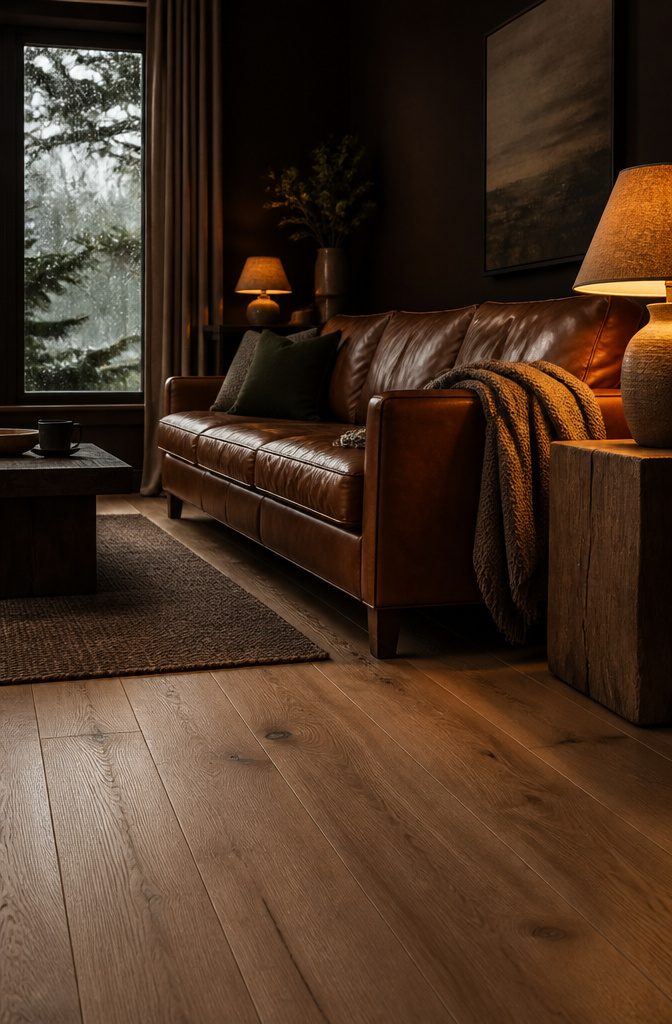
Leather and wood warm a dark room in ways paint can’t. A saddle or cognac leather sofa catches lamplight and reads as a glow rather than a heavy block against deep walls.
Wood does the same underfoot: Oregon White Oak flooring gives a moody room a grainy, natural base that keeps dark walls from feeling flat.
On a budget, faux leather paired with soft velvet gets the look for less. Use the faux leather for the sofa and add velvet pillows and a throw to break up its sheen.
For a cabin or cottage mood, stay with natural materials: a chunky wood side table, wool and knit blankets, linen curtains. Light it with warm bulbs in table lamps, not overheads.
9. Layered Warm Lighting
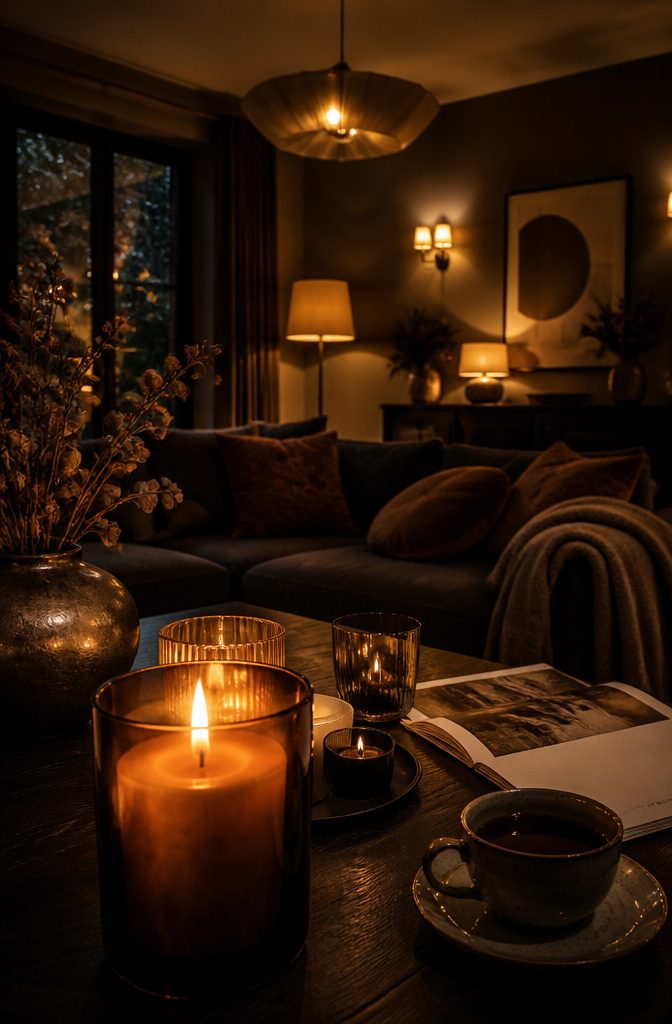
Layer light at different heights, and keep every bulb warm.
- Dimmed overhead: A central pendant or chandelier gives general light, but only on a dimmer. Switching it off and running on lamps alone is the evening mode dark rooms are built for.
- Table and floor lamps: These put light where you read or sit.
- Wall sconces: They add depth and shadow at eye level.
- Candles: Cluster them at varying heights on the coffee table or a shelf. Flameless ones work if fire is a concern.
- Statement fixture: A sculptural pendant or chandelier can anchor the room. Angling a chandelier toward the ceiling keeps it soft.
Buy bulbs rated 2200K–3000K.
Above 3000K the light turns cooler and bluer, which flattens dark walls. Swapping bulbs costs almost nothing.
10. Cream Seating Against Dark Walls
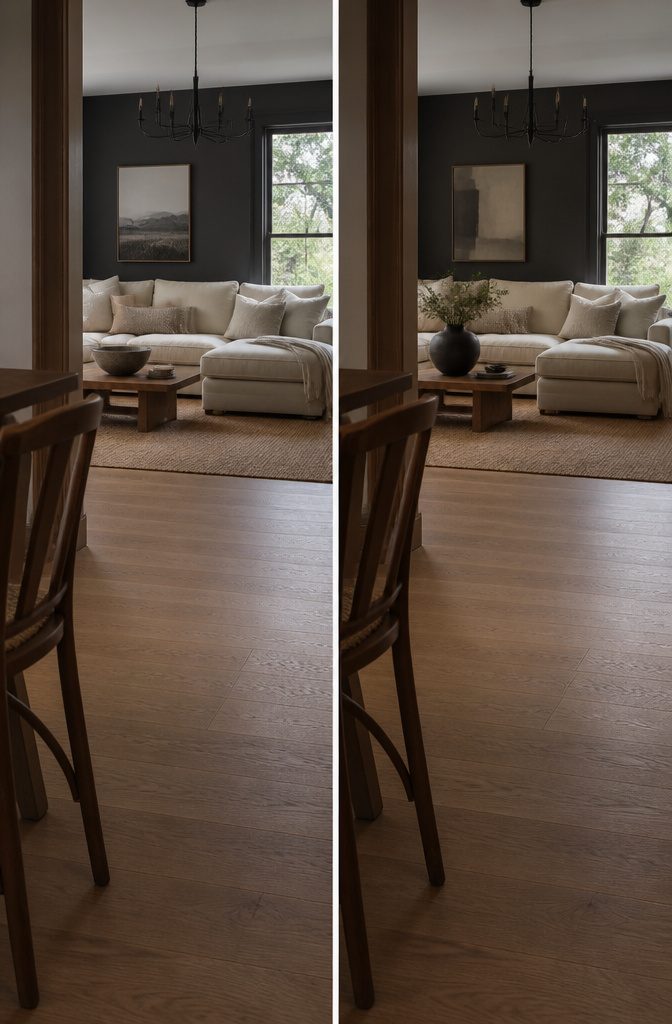
A cream sofa in front of a deep charcoal wall is the quickest way to stop a dark room from feeling heavy.
The pale upholstery and layered pillows stand out against the backdrop, so choose a sofa big enough to hold the wall, like a sectional, instead of a small loveseat that disappears.
Black accents, such as a chandelier or frames, add structure. Large windows keep the dark wall calm.
The lighter version flips this. Paint the walls a soft white like Benjamin Moore Chantilly Lace, then add dark pieces: an inky sofa, charcoal textiles, big dark art, wood tones.
All-white rooms can feel sterile without them. Renters can skip paint and hang dark art, curtains, and throws on existing light walls.
11. Wallpaper and Gallery Walls
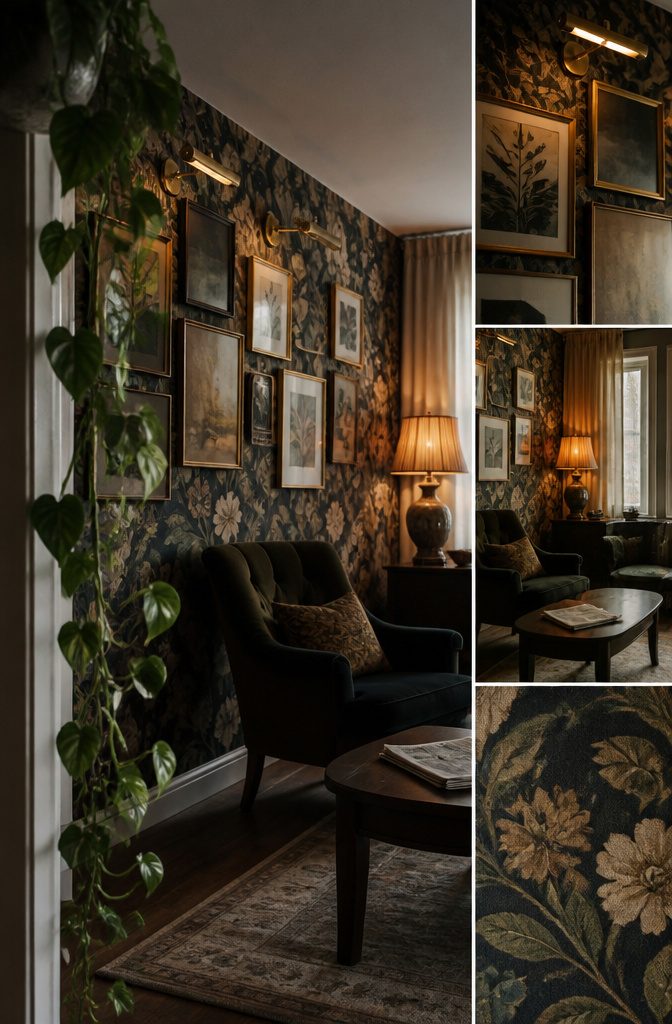
Pattern gives a dark room depth that flat paint can’t. A large-scale dark floral works best in a small room, such as a powder room, where the walls contain the repeat and make it dramatic.
In a bigger living room, a small-scale paper reads like a textured neutral, so a large-pattern sofa or rug won’t compete with it. If you rent, peel-and-stick paper is worth a look.
For a gallery wall, layer art against the wall instead of spacing it out. Mix vintage finds with newer pieces so the room looks built over years.
An oversized abstract glows against charcoal. Keep the density intentional, with nothing hung just by default.
12. Small Rooms Work Too
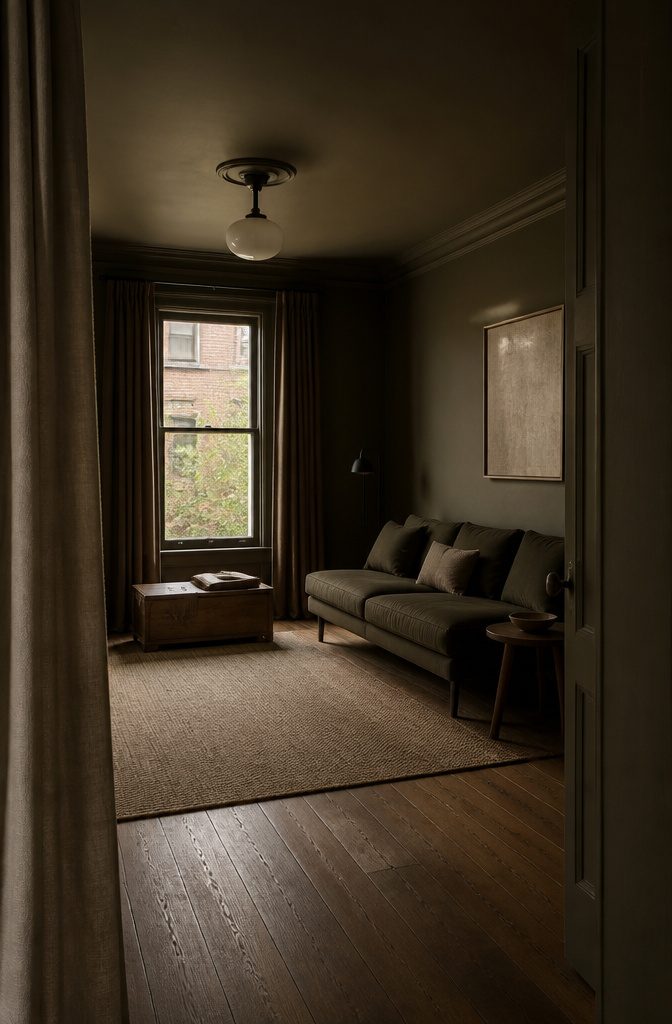
A small or dim living room works better as a cocoon than as a room you try to brighten.
Paint the walls, trim, and ceiling one deep color, and the edges of the room stop reading as boundaries. The corners will feel smaller, and that is the intended effect.
Choose fewer, larger pieces. One big sofa beats three small seats, which chop up the floor.
Pick furniture with legs so you can see floor underneath, keep it low, and pull it slightly off the walls. Lidded benches and storage ottomans hide clutter and keep surfaces clear.
Hang curtains at ceiling height to draw the eye up, and leave the window itself uncovered. Whatever daylight the room gets is the best light it will have, so keep it.
Test Paint Swatches First
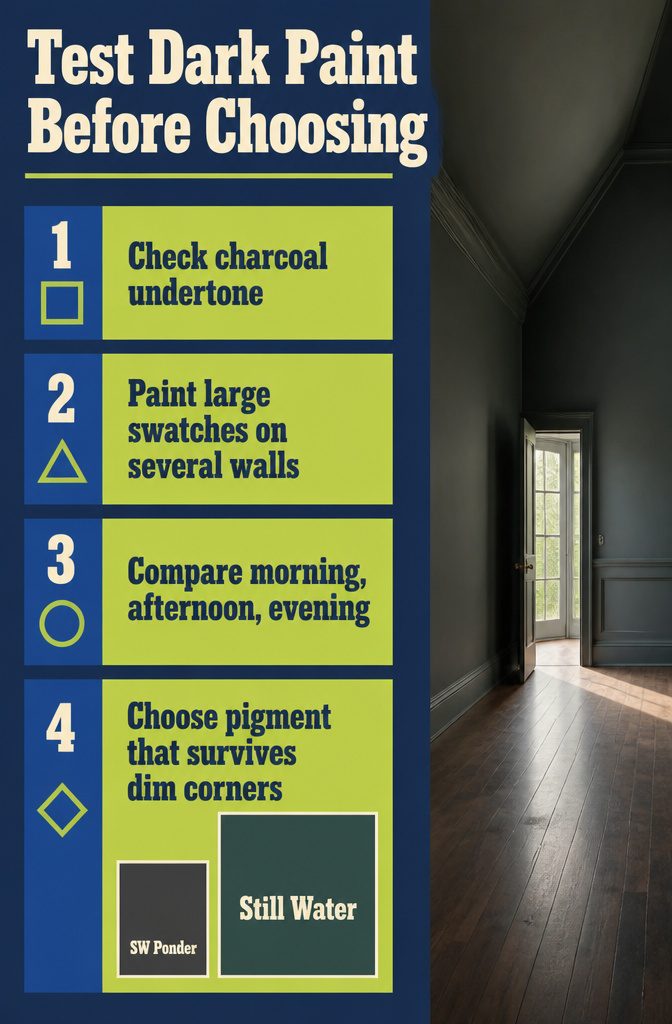
- Check the undertone before you fall for the name. A "charcoal" can pull blue, green, or purple. Blue and green read calm, red and purple read dramatic, and brown and gray read earthy.
- Paint or tape up large swatches on several walls, not one small chip. Dark colors shift with the light in each spot.
- Look at every swatch in the morning, afternoon, and evening, and cross off any that go flat.
- Pick the one that still shows pigment in your dimmest corner. SW Ponder looked like a non-color in a room with one door for light and high ceilings. The owners repainted in Still Water, which stayed dark but full of color and echoed the green in their sofa.
Plants and Mirrors
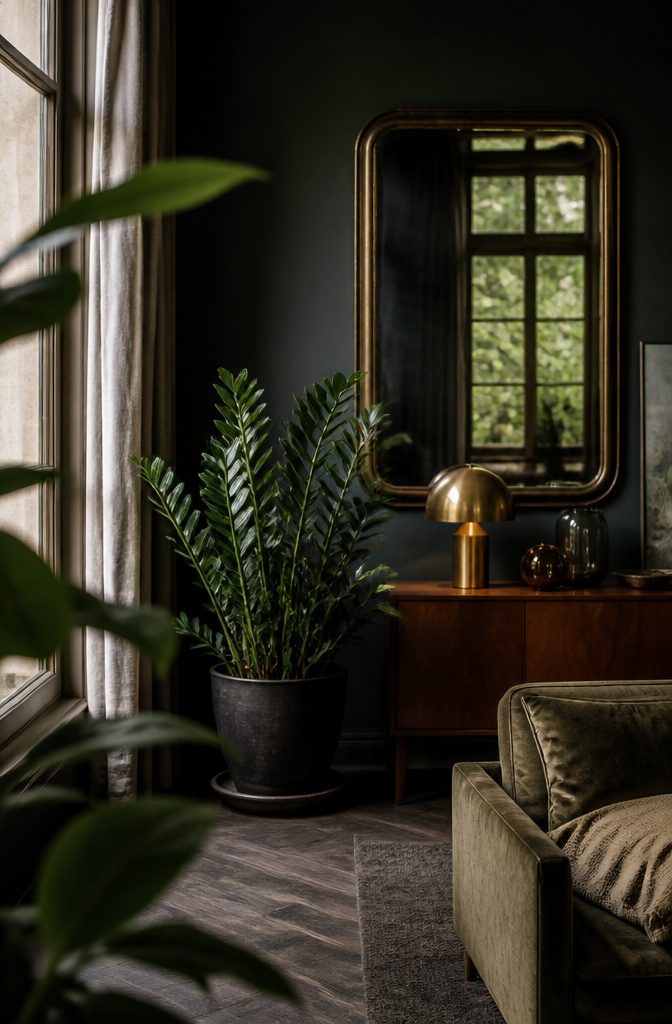
Dark-leafed plants suit a moody palette, and bright, variegated ones work against it.
Choose a ZZ plant for its deep, waxy green leaves, a dark burgundy rubber plant, or a large fiddle leaf fig. One big plant looks better than several small pots scattered without a plan.
Mirrors add the light that dark walls absorb. Hang a large one opposite a window to catch whatever daylight the room gets, or set one beside a lamp so it picks up the glow at night.
Choose an aged brass or black frame, since a large plain frameless mirror looks out of place here. Glass decor, glossy finishes, and brass accents help bounce light too, and brass adds warmth against deep colors.
Common Moody Room Mistakes
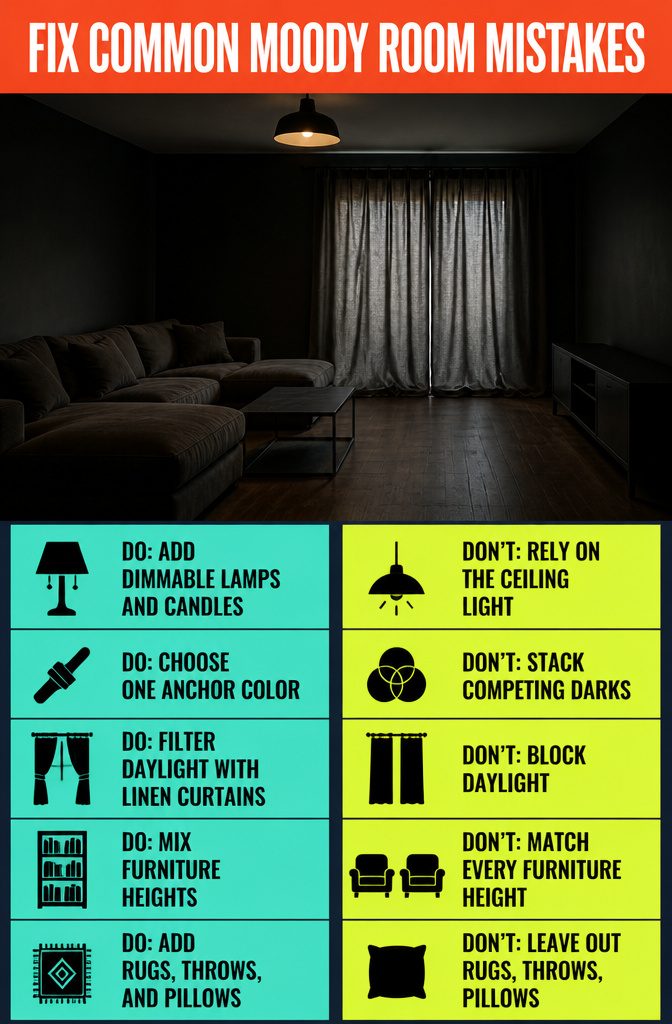
Five mistakes make a dark room look muddy, flat, or cave-like, and each has a cheap fix.
- Relying on the ceiling light. Overhead fixtures feel harsh against dark walls. Use floor lamps, table lamps, and sconces, ideally dimmable, and add candles. Flameless ones look nearly as good.
- Stacking competing darks. Green walls, a purple sofa, navy pillows, and brown floors read as muddy. Choose one anchor color and keep everything else quieter, with a few creamy white or metallic accents for contrast.
- Blocking daylight. Heavy linen curtains in a dark neutral filter the light rather than shutting it out.
- Matching furniture heights. Pair a tall bookshelf with a low sofa, or a sculptural floor lamp with a low side table.
- Skipping textiles. Dark paint alone leaves a bare room. Rugs, throws, and pillows supply the warmth.
Frequently Asked Questions
What is a moody living room?
A moody living room is built around deep, saturated wall color, layered textures, and low, warm light.
The aim is atmosphere and depth rather than brightness. Wood, velvet, leather, and metal keep the dark color from looking flat.
What colors make a living room look moody?
Navy, deep green, charcoal or black, and rust or dark red all work, and navy is the safest first try.
Check the undertone before you commit: a green with a warm, yellow or brown lean feels cozy, while blue-leaning or gray-leaning greens can turn cold at night. Dusty mauve and terracotta brown also fit the look.
Should you paint the ceiling in a moody living room?
In most cases, yes. Match the ceiling to the walls or go one tone deeper, and paint the trim the same hue so no white outline interrupts the dark.
This is the boldest option and the hardest to reverse, since undoing it means repainting walls, ceiling, and trim.
Can a moody living room work in a small space?
Yes. A small or dim room does better as a cocoon than as a space you try to brighten.
Paint the walls, trim, and ceiling one deep color, pick a few large pieces on legs, and leave the window uncovered so you keep all the daylight you get.
How do I add warmth to a dark living room?
Use warm bulbs rated 2200K–3000K and natural materials.
A cognac or saddle leather sofa, wood furniture, and a woven rug all read as warm against deep walls. Throws, pillows, and curtains in wool, linen, or velvet fill in the rest.
What lighting works best in a moody living room?
Layer several light sources at different heights instead of relying on the ceiling fixture.
Combine a dimmed overhead pendant, table and floor lamps, wall sconces, and candles. Keep every bulb at 2200K–3000K, because anything cooler than 3000K turns bluish and flattens dark walls.
Is a moody living room hard to maintain?
Not especially.
Dark walls hide everyday scuffs and dust better than light ones. Dark velvet is the one exception, since dust and lint show on it quickly, so keep a lint roller or soft brush handy.